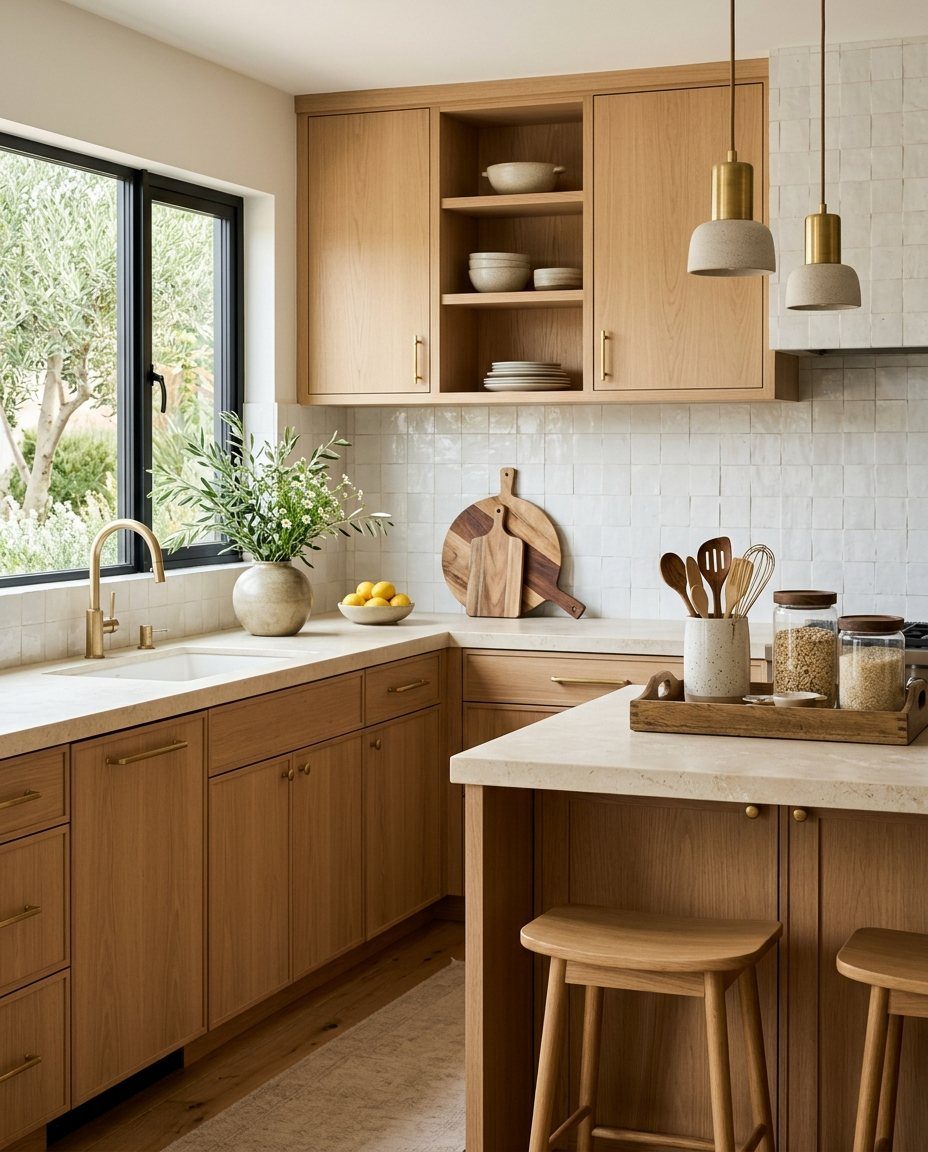
These ideas run from leaning cutting boards you already own against the backsplash to hiding a bulky appliance behind a roller shutter, so the effort and spending vary a lot.
Which of these ideas suits your kitchen depends on the surface you’re working with, so Choose Decor for the Surface is a good place to start.
Quartz, marble, granite and laminate each carry their own undertone, and a surface with strong veining or speckling wants solid colors and few pieces, while a plain one can take more pattern.
A kitchen that sees daily cooking leaves little room for decor, so Keep Counters Functional and Plan Storage Around Use should come before any styling.
1. Use Trays
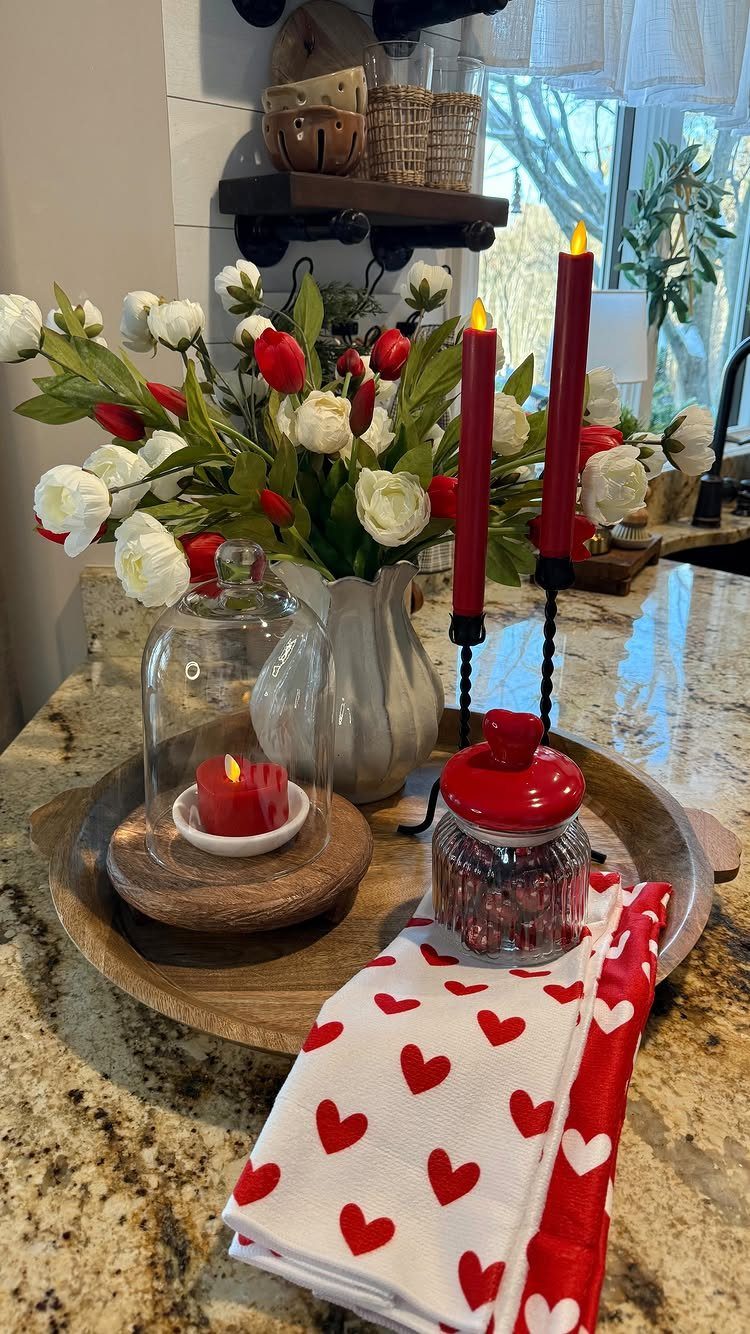
Loose candles, a jar and a vase look like clutter until they share a wooden tray. The edge of the tray makes the group read as one arrangement.
Vary the heights on a tray: tall flowers at the back, a glass cloche in the middle, and a small jar low in front so the eye steps down.
A tray makes cleanup easy, since you can carry the whole grouping to a shelf or table in one trip when you need the counter for cooking.
2. Display Cutting Boards
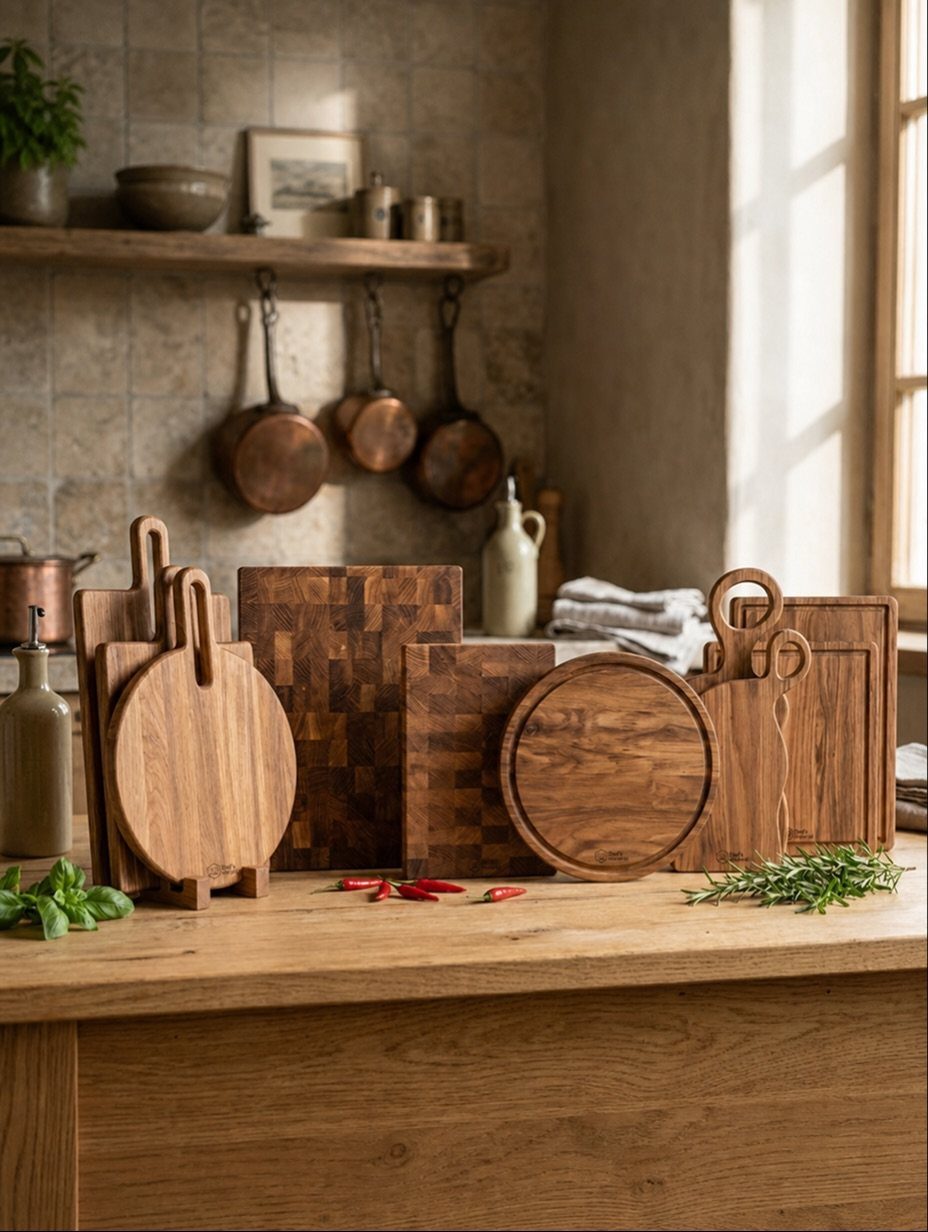
Boards you already own are enough for this one. Lean them against the backsplash with the largest at the back and the smallest in front, so the different shapes and edges show.
Keep the board you reach for most at the front. Then the display is also your storage, and nothing needs to be bought.
3. Add Fruit or Vegetables
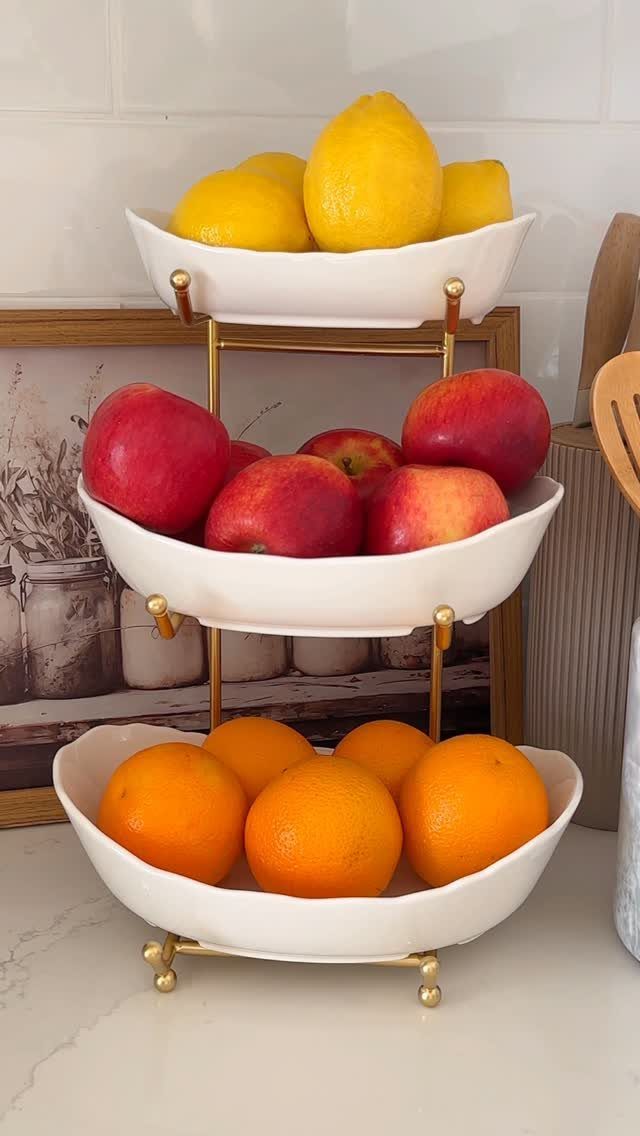
A tiered stand stacks the fruit upward, so you get height on the counter and still use the footprint of a single bowl.
The maker of this ceramic set describes it as a metal stand with 3 bowls in different sizes.
I’d put the smallest fruit on top and the largest on the bottom, the way lemons, apples and oranges are arranged here. Choose colors that sit well against a white counter.
4. Add Plants or Herbs
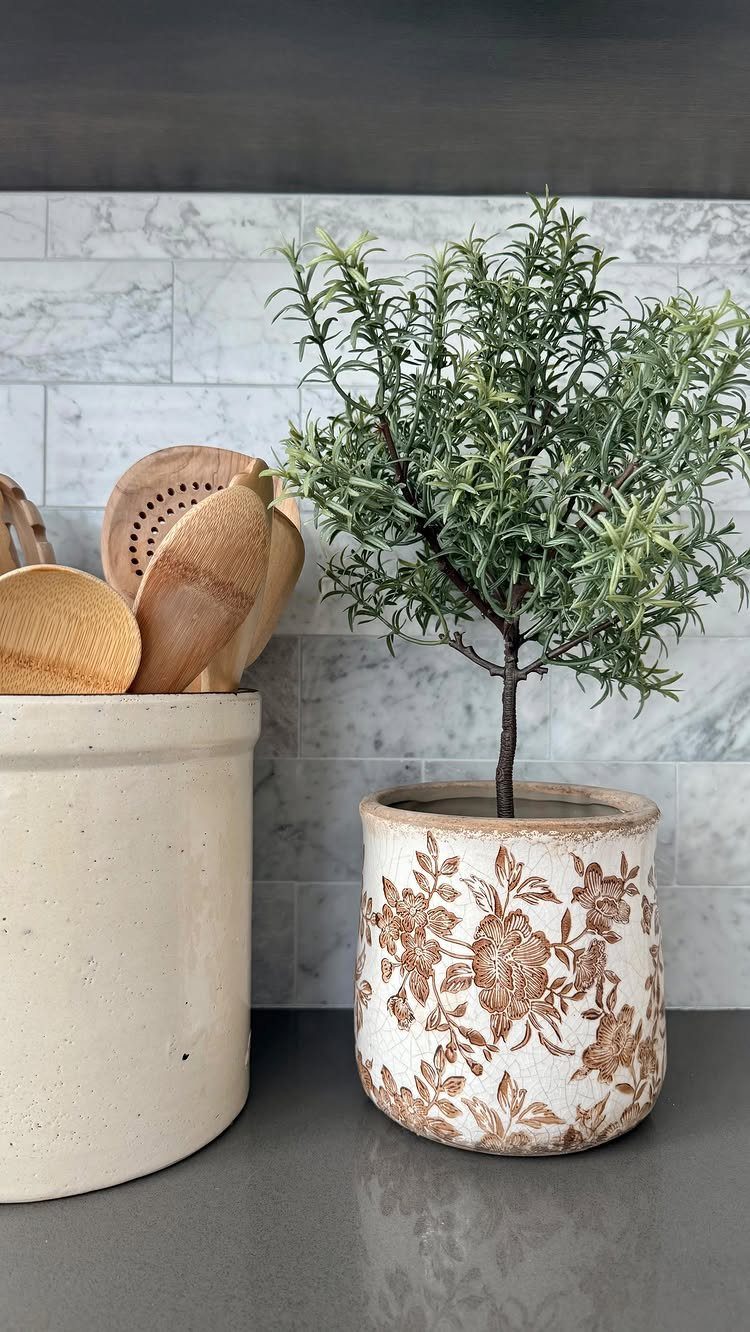
Rosemary earns its spot because you can snip it for dinner. A decorative ceramic pot makes it look like a styling choice and not a grocery store leftover.
Pick an herb you actually cook with, and set it near the stove or a crock of utensils. Then it gets used and looks good.
5. Display Flowers or Branches
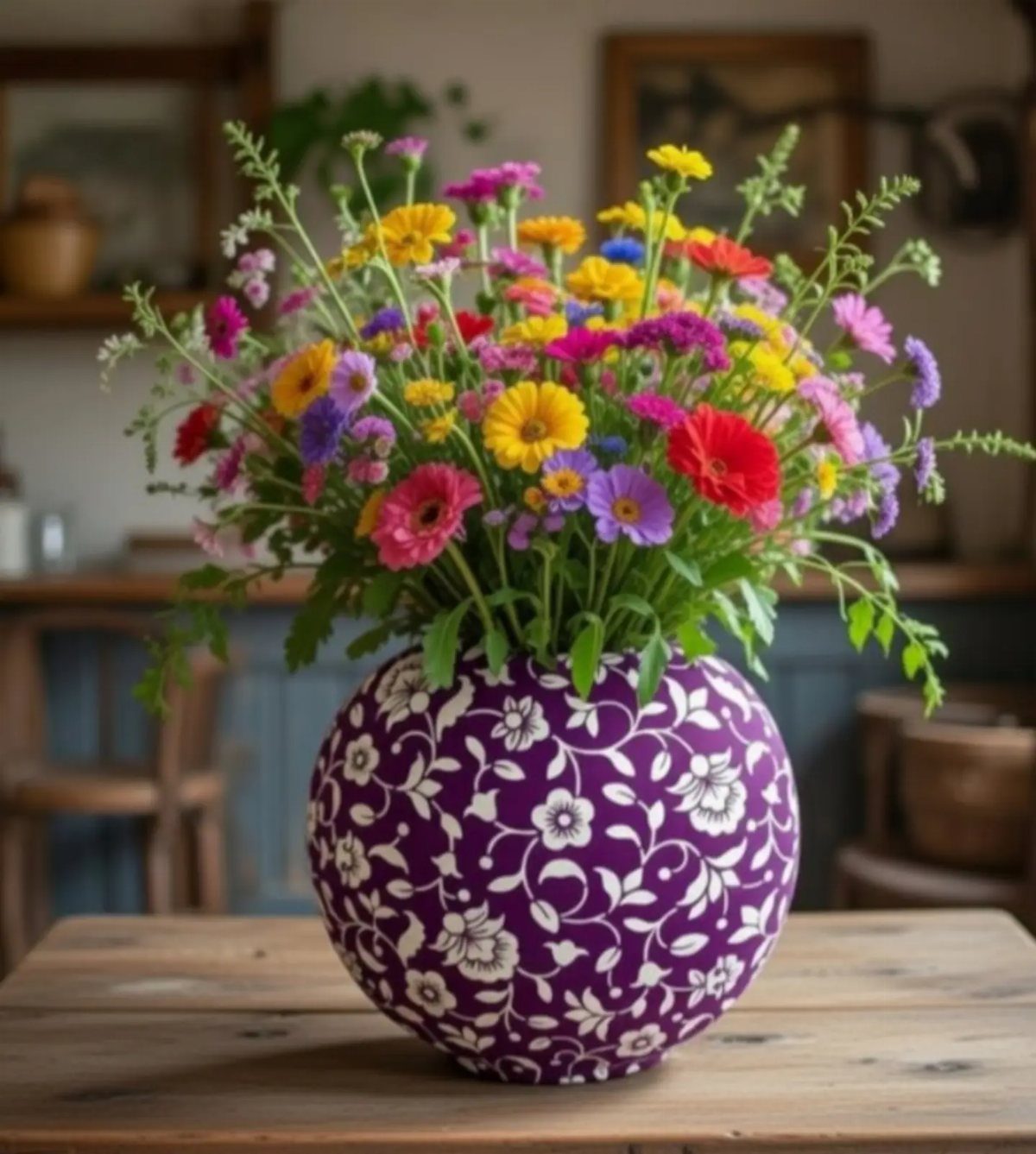
Stems give a counter something it rarely has: height. One vase of mixed wildflowers adds color and pulls the eye up from the work surface.
A patterned vase does a lot of the styling for you, so I’d let the flowers look loose and picked, not arranged. Branches work the same way if you prefer a quieter look.
6. Use Attractive Utensil Holders
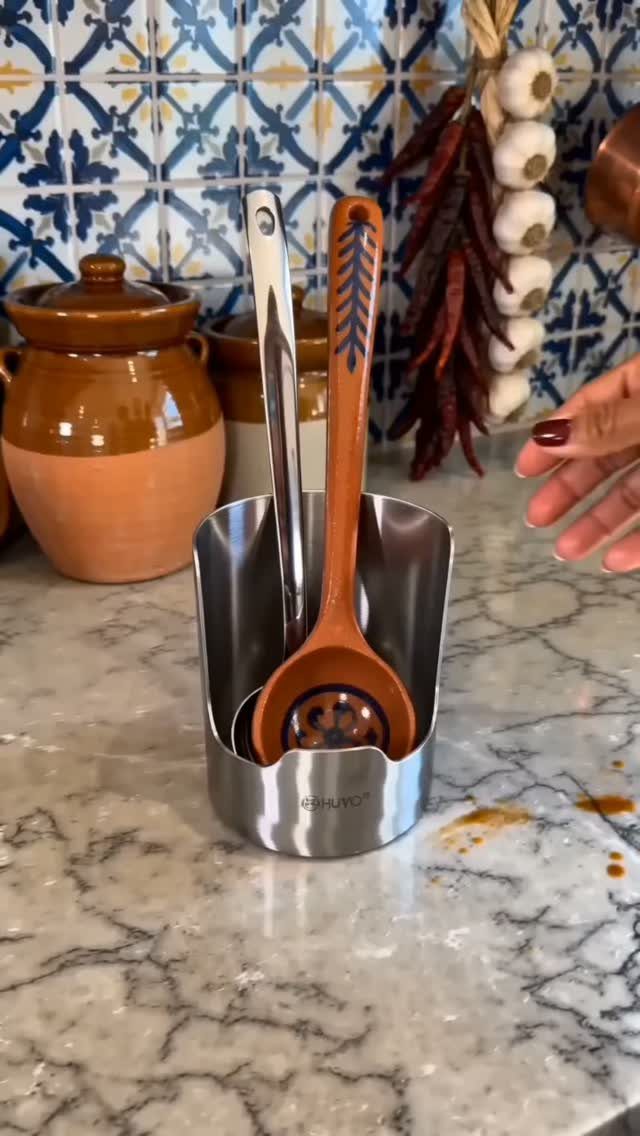
A stainless steel holder stays in plain sight, so choose one you like looking at. Mixing materials in one holder, such as a wooden spoon beside steel tongs, adds two textures to the counter with a single object.
Fill it with only what you grab daily. A crowded holder looks messy, and the rest can go in a drawer.
7. Display Cookbooks
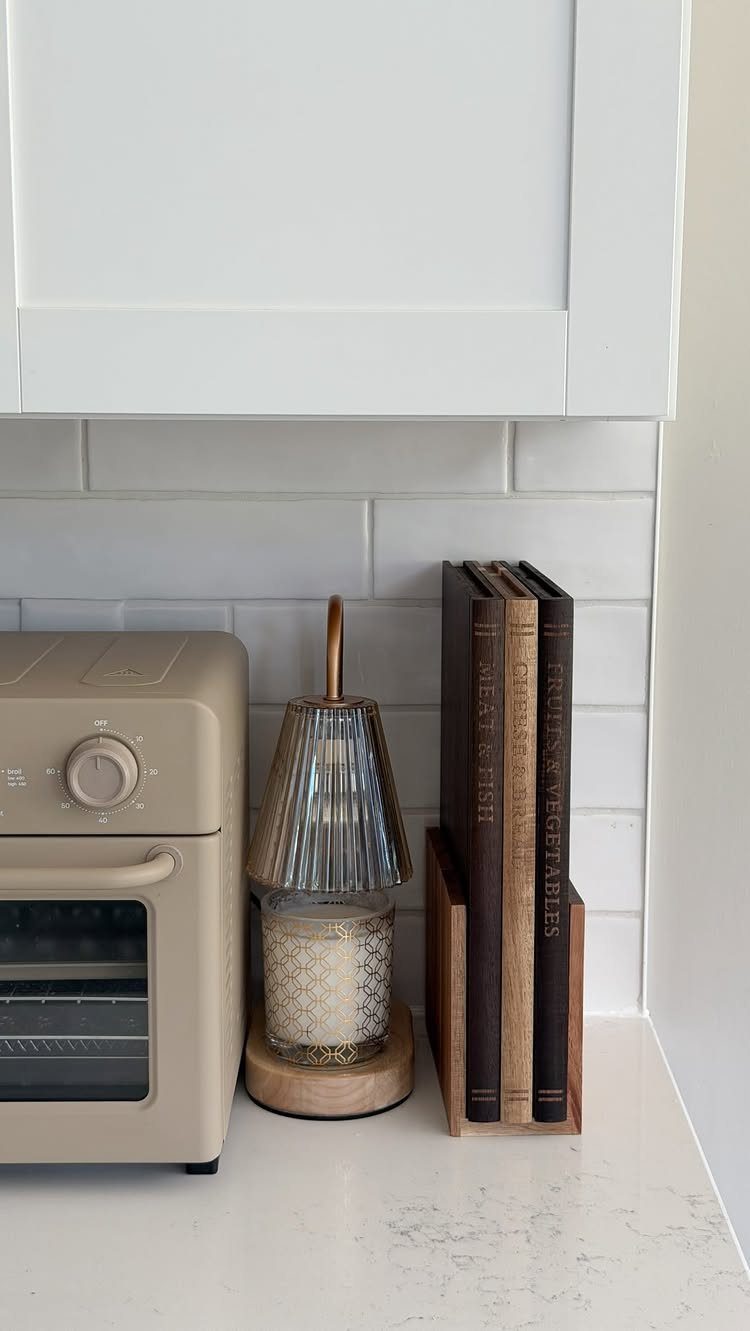
Standing upright in a wooden holder, cookbooks stop being a pile and start working as décor. The spines and covers become the color on the counter.
I’d keep only the 2–3 you cook from most. Group the cookbook holder with 1 or 2 things already on the counter, like a candle or a small appliance, so it reads as part of a deliberate cluster instead of a stray stand.
8. Add Art
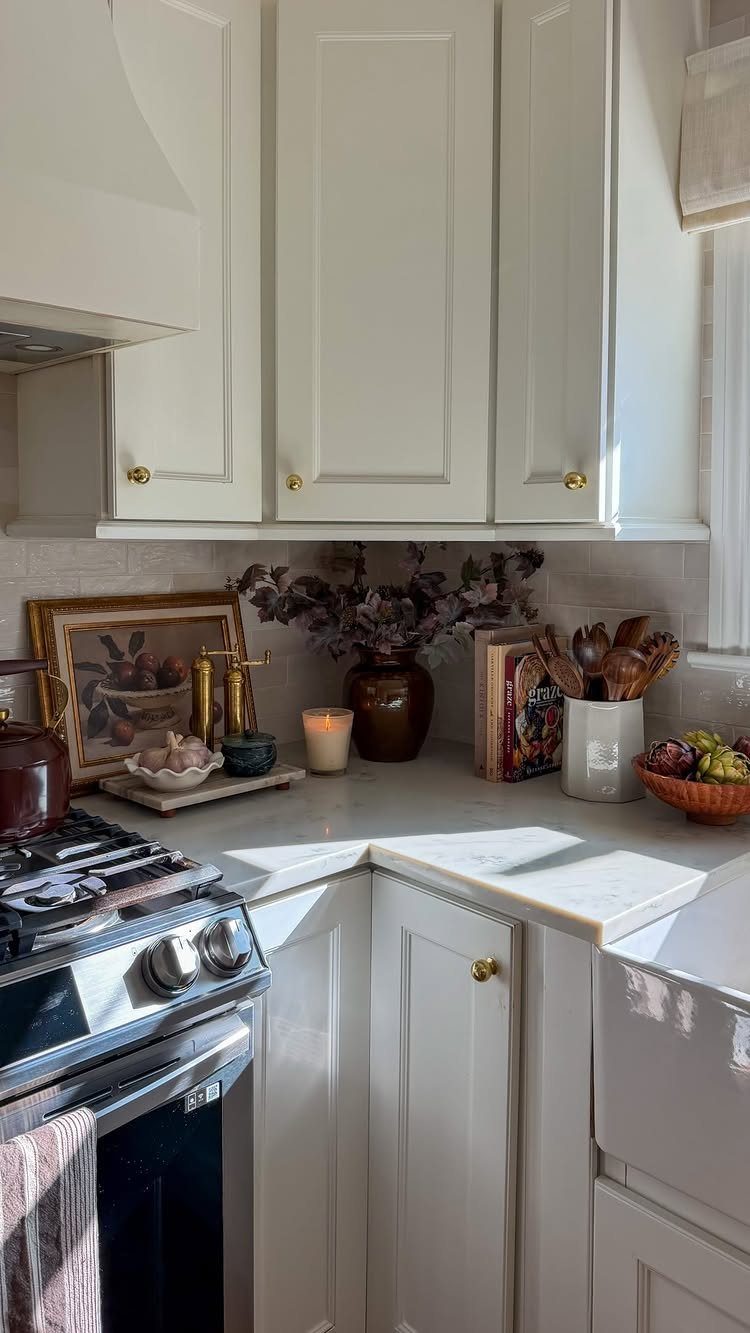
Nothing has to go into the wall for this one. Lean a framed still life against the backsplash, and it adds personality in about a minute.
Pick a frame finish that suits the cabinets, such as black against white or brass against navy, then lean it back far enough to leave room for something tall in front, like dried branches in a vase.
Cookbooks or a candle in front fill the gap at the bottom edge and keep it from looking stuck on.
9. Add Kitchen Lighting
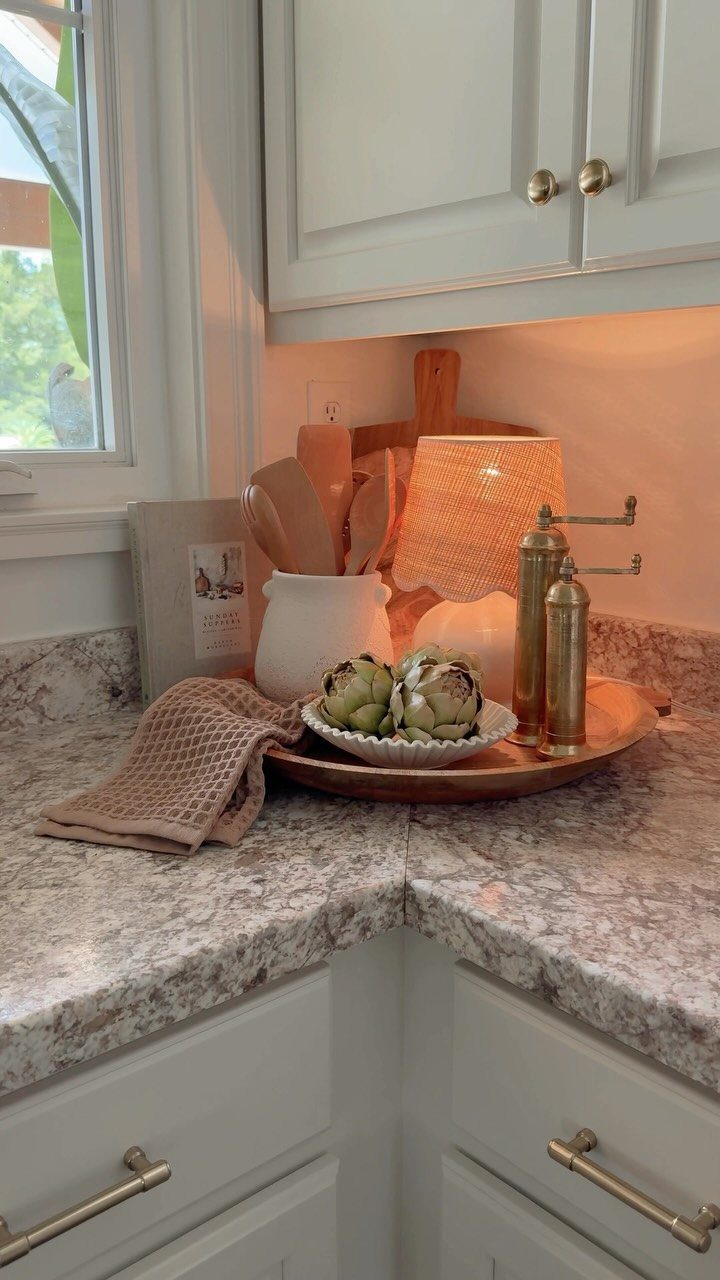
Under-cabinet lighting and one small lamp light different parts of the counter. The first washes the work surface, and the second adds a soft glow at eye level that makes the whole corner feel finished.
Put the lamp near a tray of props. The maker of this counter used artificial artichokes, which never wilt and need no care.
10. Decant Everyday Items
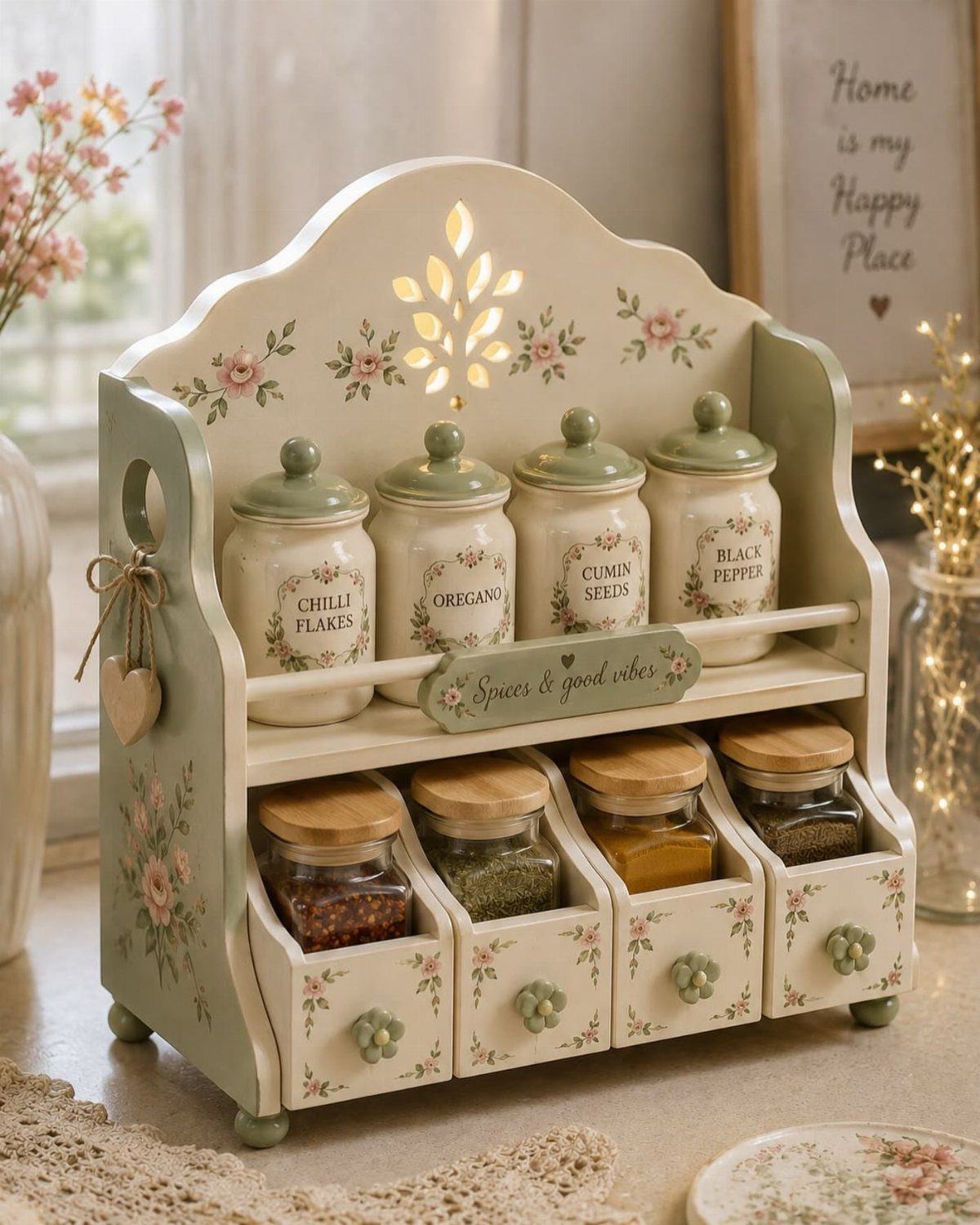
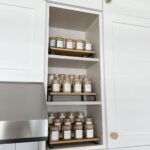
Store packaging is what makes a spice shelf look busy. Pour the contents into matching jars and the clutter drops away, because every label is the same size and style.
Label each jar clearly, with the name facing out. Start with the 4–5 you use most, and keep the rest in a cabinet until you have the jars for them.
11. Wooden Board Beside a Smooth Surface
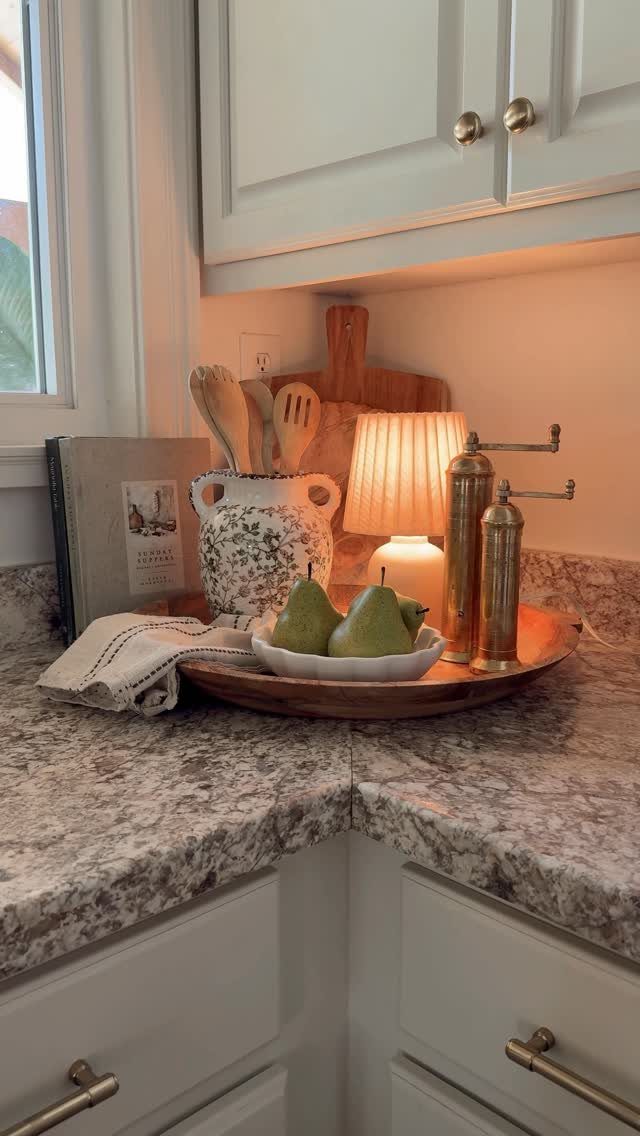
Wood looks warmer next to something hard and glossy. A board or tray set beside granite, or beside brass canisters, gives the counter 2 finishes without adding a single new color.
I like the board a little off-center, with fruit stacked on it. Pears here, or whatever you have, keep it useful as well as pretty.
12. Hide Less-Used Appliances
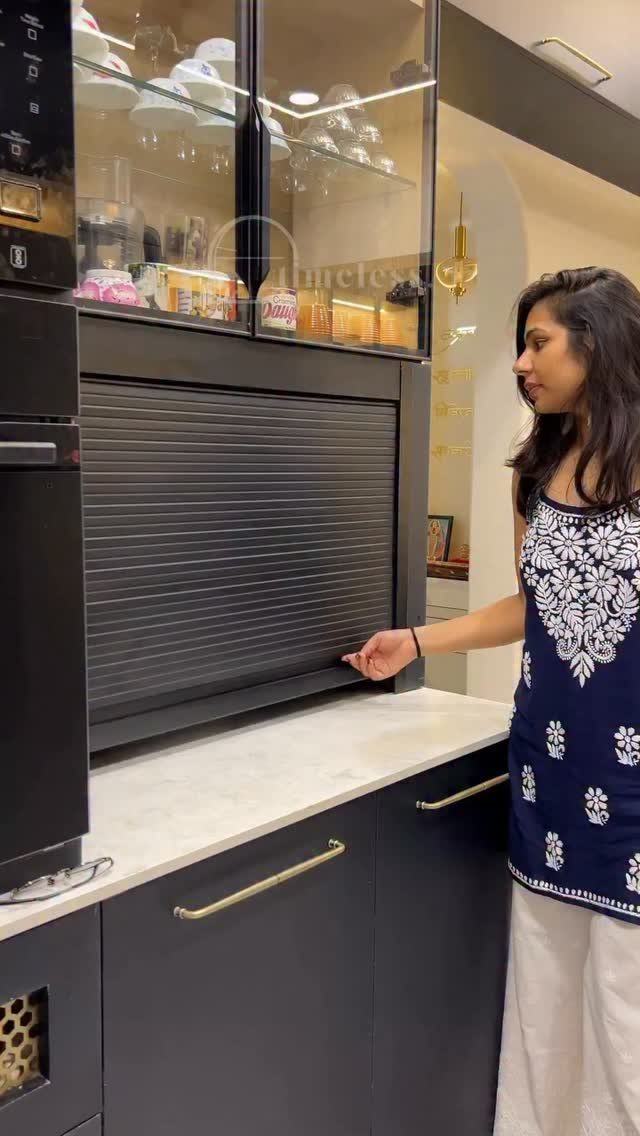
Behind a roller shutter, a bulky appliance disappears and the counter looks bare in a good way. Unlike a hinged door, the shutter slides up out of the way, so you can reach inside without anything swinging into you.
I’d hide what you use only now and then, and leave the daily coffee maker or toaster out. If your kitchen has no appliance garage, a lower cabinet or pantry shelf does the same job.
13. Seasonal Tray Vignette
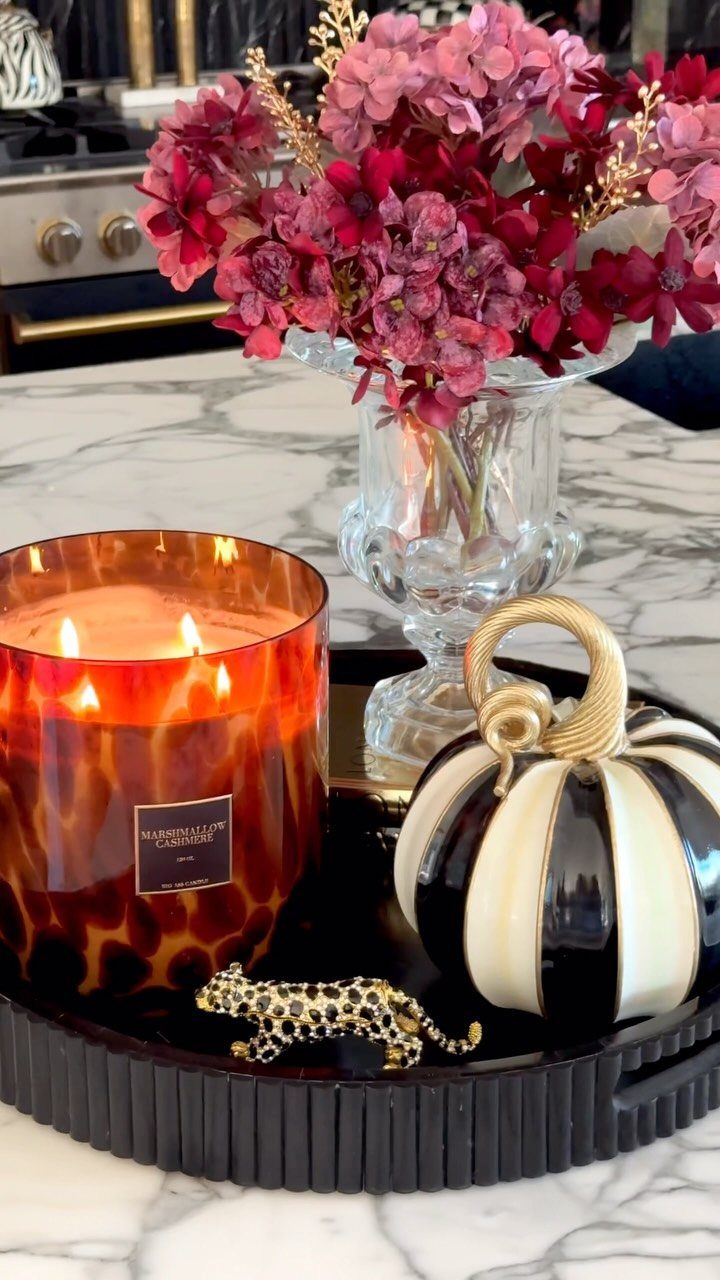
A seasonal tray vignette lets you change the counter without buying much. Swap the pumpkin for a few lemons in spring, or for a handful of pinecones in winter, and keep the tray, candle and vase where they are.
I’d keep the tray and one anchor piece, like the candle, fixed, then change only the produce and the flowers. A black tray against marble gives a clean frame, so even a small swap reads as intentional.
14. Use Pretty Soap Dispensers
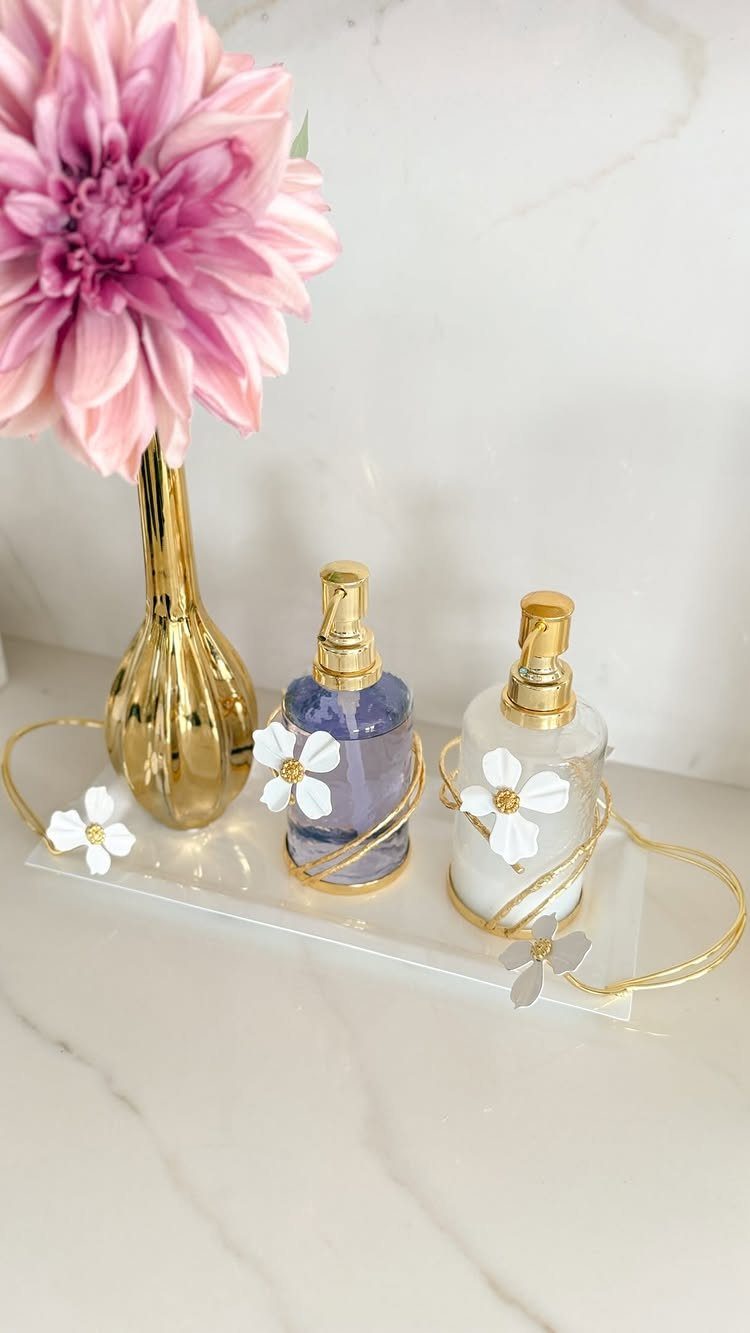
Plastic soap bottles with half-peeled labels are the first thing to go. A refillable dispenser with a gold pump looks like part of the decor, and you keep using the same soap by pouring it in from the big bottle.
Set the pair on a clear tray so they read as a group and wipe up fast when the sink splashes. I’d add a small gold vase beside them, which ties the metal finish together without adding clutter.
In decades past, countertops weren’t designed as a style feature, says Olma Fuentes, founder and principal designer of Deni + Dove Interiors. They could be made from “dull, uninspiring materials” and were meant as utilitarian spaces.
15. Warm Whites, Creams, and Wood
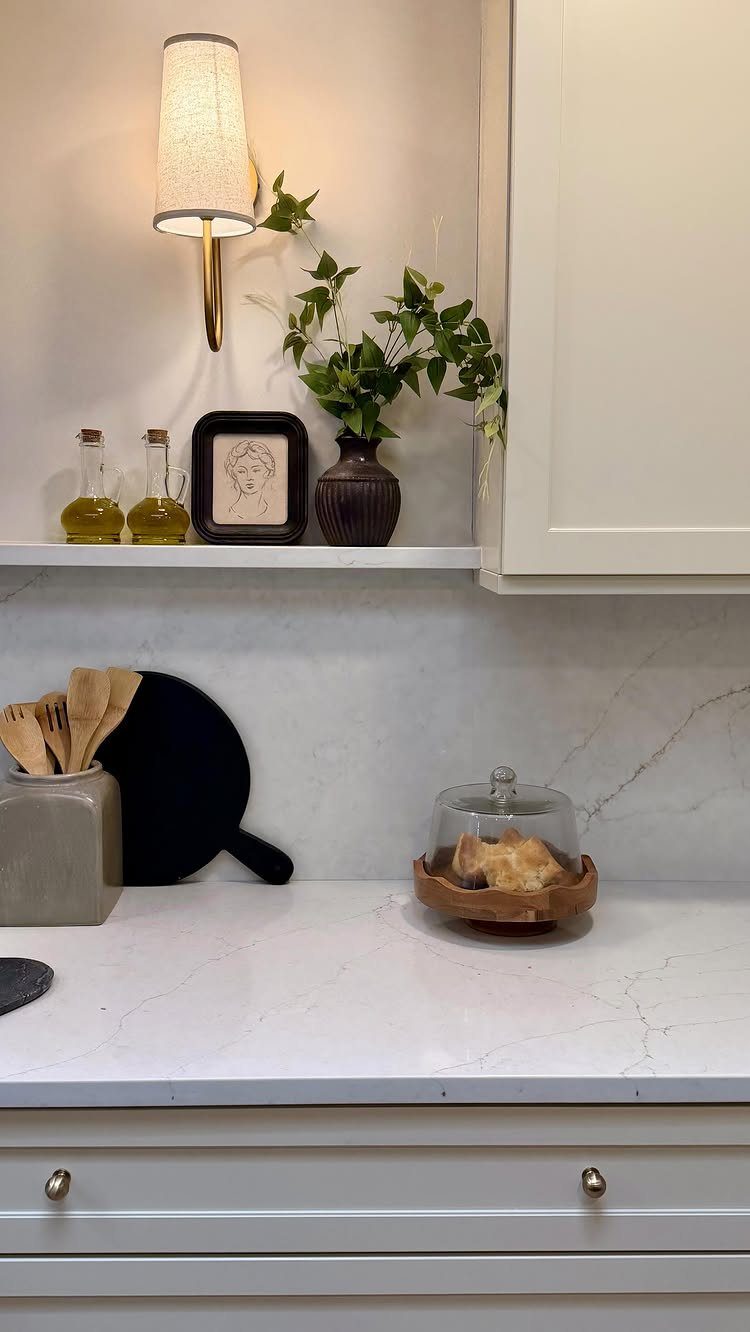
Limiting the palette to warm white, cream and wood makes a counter feel calm before you place a single thing.
I’d add one small plant for a touch of green, and stop there.
Keep Counters Functional
A countertop is a work surface first, so keep the majority of it clear for chopping, cooking and cleanup. Whatever stays out should earn its spot by being useful as well as good-looking.
Set objects along the backsplash when you can, and let the front edge stay open.
Before you add anything, stand where you prep and check that you can set down a cutting board and a hot pan without moving a thing.
Don’t turn every section into a display. One styled corner reads as deliberate; a styled corner every 2 feet reads as a shop shelf.
Choose Decor for the Surface
Your counter material should steer what goes on it. Quartz, marble, granite and laminate each carry their own undertone, so pick decor that sits comfortably against the surface instead of fighting it.
On cool-toned counters, wood or metal adds warmth. Warm-toned decor, like terracotta, cream or honey wood, looks right next to ceramic.
If the counter has strong veining or speckling, or the backsplash is busy, keep the decor simple: solid colors, plain shapes, few pieces.
A distinctive surface is the feature, so don’t bury it. A plain counter can take more pattern, and contrast with the surface is what makes each piece stand out.
Plan Storage Around Use
How much you need to store depends on how often you cook and which appliances you own. A household that bakes every weekend needs different counter real estate than one that mostly reheats.
Put deep drawers near your prep zones so pots, bowls and bulky tools stay within reach but off the surface. Apply the same test to everything: if you don’t touch it daily, it belongs behind a door.
A few daily-use items can stay out if they look tidy, such as a white breadbox with a wooden lid. Glass canisters in one matching style also work, even when the contents differ.
Mail, keys and bags tend to land on the first flat surface they meet. A drop zone in the entryway or mudroom keeps them out of the kitchen.
Frequently Asked Questions
How do I style my kitchen countertops?
Group loose items on a tray, mix tall and low pieces, and set everything toward the backsplash so most of the counter stays open for prep.
The tray’s edge makes a few objects read as one arrangement, and the varied heights keep the eye moving.
How do I choose kitchen counter decor that’s both stylish and useful?
Pick things you would use anyway and let them double as decor: a steel holder with only your daily tools, a rosemary pot near the stove, or the 2–3 cookbooks you cook from in a wooden stand.
Then match them to your counter material. Cool-toned counters gain warmth from wood or metal, while terracotta, cream and honey-colored wood sit comfortably beside ceramic.
What colors work best for modern kitchen counters?
Warm white, cream and wood make a calm base, and one small plant adds a touch of green. A white counter gives fruit and accessories a clean backdrop, so pick shades that stand out against it instead of fading in.
Repeating the same metal and wood tones across small pieces, like a utensil holder, ties the whole counter together.
Can I mix materials on my kitchen countertops?
Yes, and pairing wood with a hard, glossy surface is among the simplest combinations to pull off. You can also mix inside a single object, such as a wooden spoon next to steel tongs in the same holder.