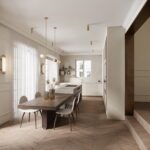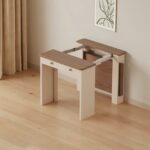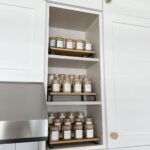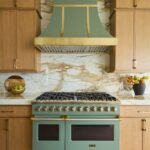
The ideas below cover espresso, mocha, light and mid-tone browns, done in paint or stain and paired with brass or matte black hardware.
North-facing light cools brown and makes it read darker, so a mid-tone that looks warm in a showroom can turn flat once it’s on your own wall.
1. Espresso Cabinets
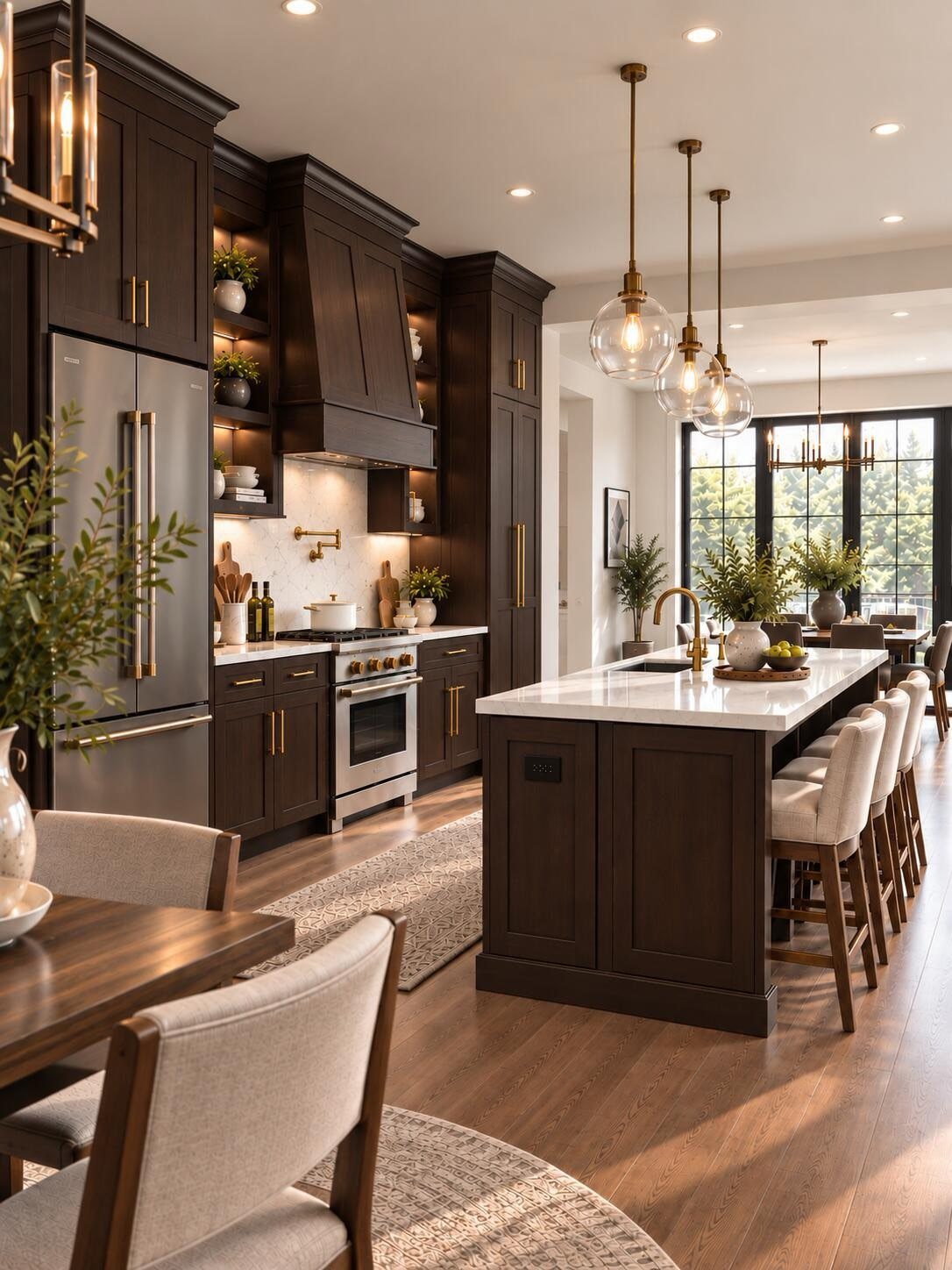
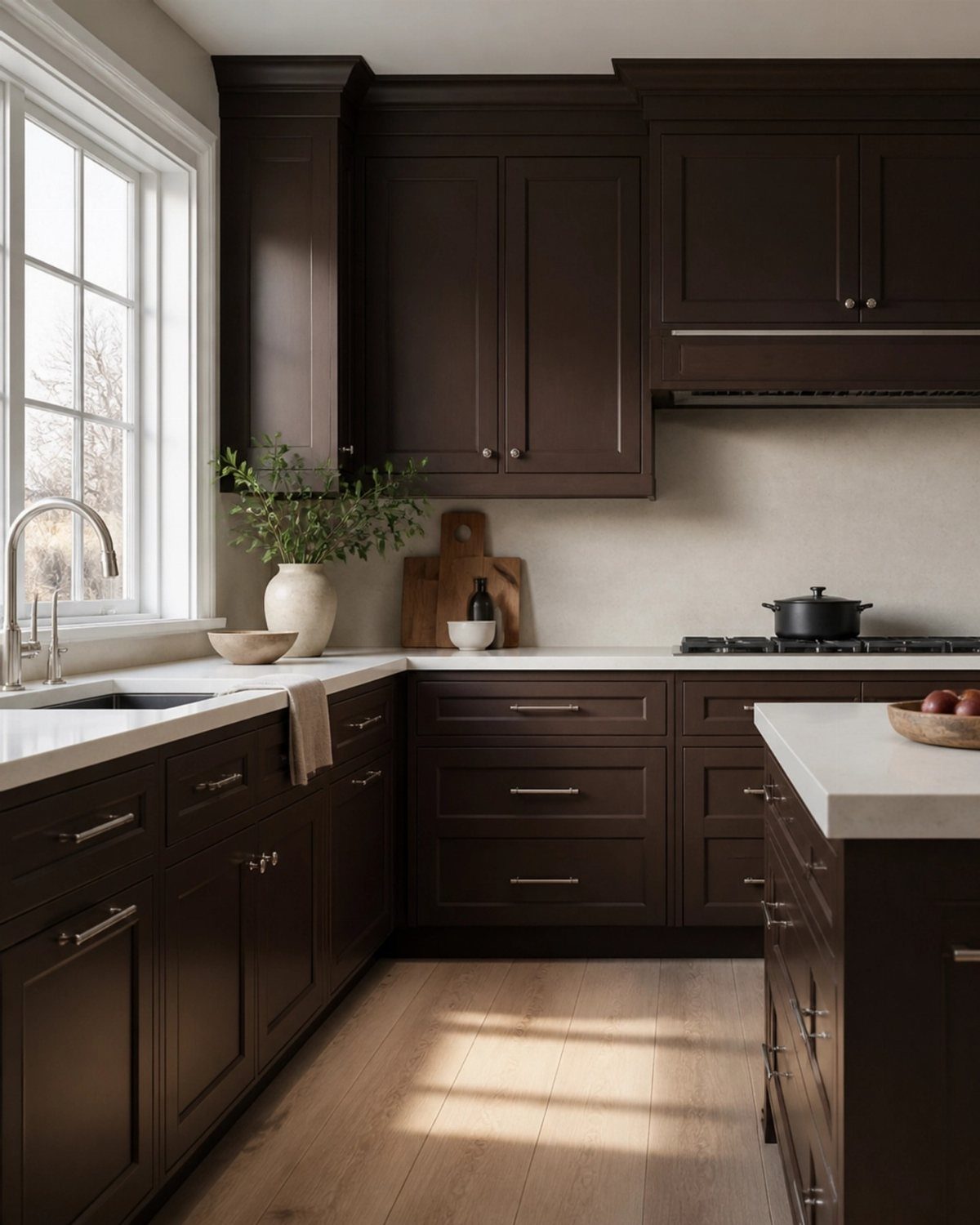
Espresso is the darkest brown that still reads as brown, and in a kitchen like this one it gives the cabinets real weight.
White marble counters and gold hardware keep it from feeling heavy, so I’d pair dark doors with that kind of contrast.
Sample a door-size piece before committing. A very dark finish can swallow light in a small or dim room, and pendants over the island help balance that.
2. Light Brown Cabinets
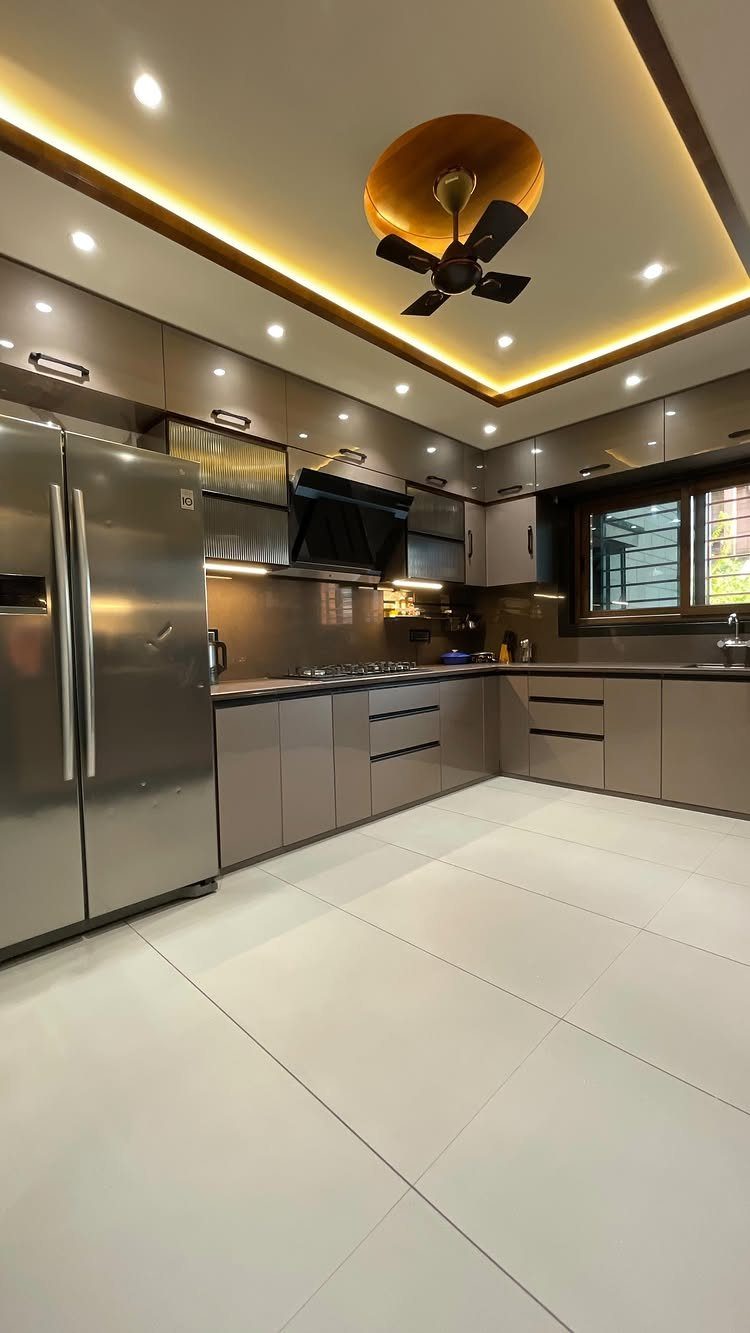
Flat-panel doors in a light, warm brown keep a kitchen calm without the starkness of all-white cabinets. Light brown cabinets sit well beside stainless appliances and pale tile floors.
For a touch of elegance, the creator suggests fluted glass doors with bronze or copper pulls. I’d take that as an optional upgrade, since it adds texture without changing the quiet palette.
Choose a brown with a little warmth in it, then check it under your own bulbs before buying.
3. Mid-Tone Brown Cabinets
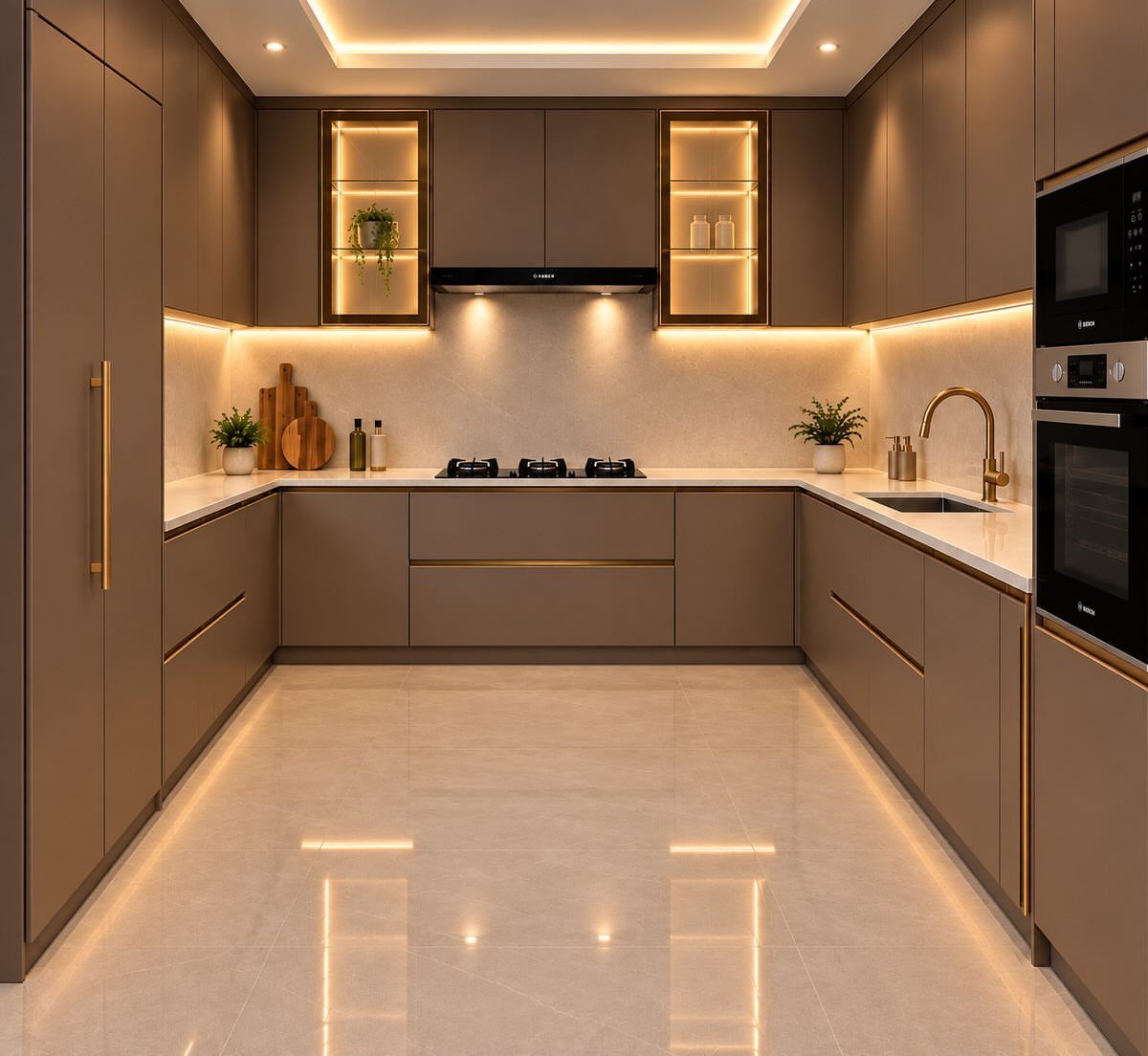
Chestnut and walnut sit in the middle of the brown range, deep enough to feel grounded and warm enough to avoid the heaviness of espresso. That makes them the safest starting point if you’re unsure how dark to go.
Gold hardware and a white countertop let the wood tone of mid-brown cabinets do the work. Low-voltage strip lighting under the uppers adds glow, but it’s an extra step, so budget for it separately.
4. Brown Shaker Cabinets
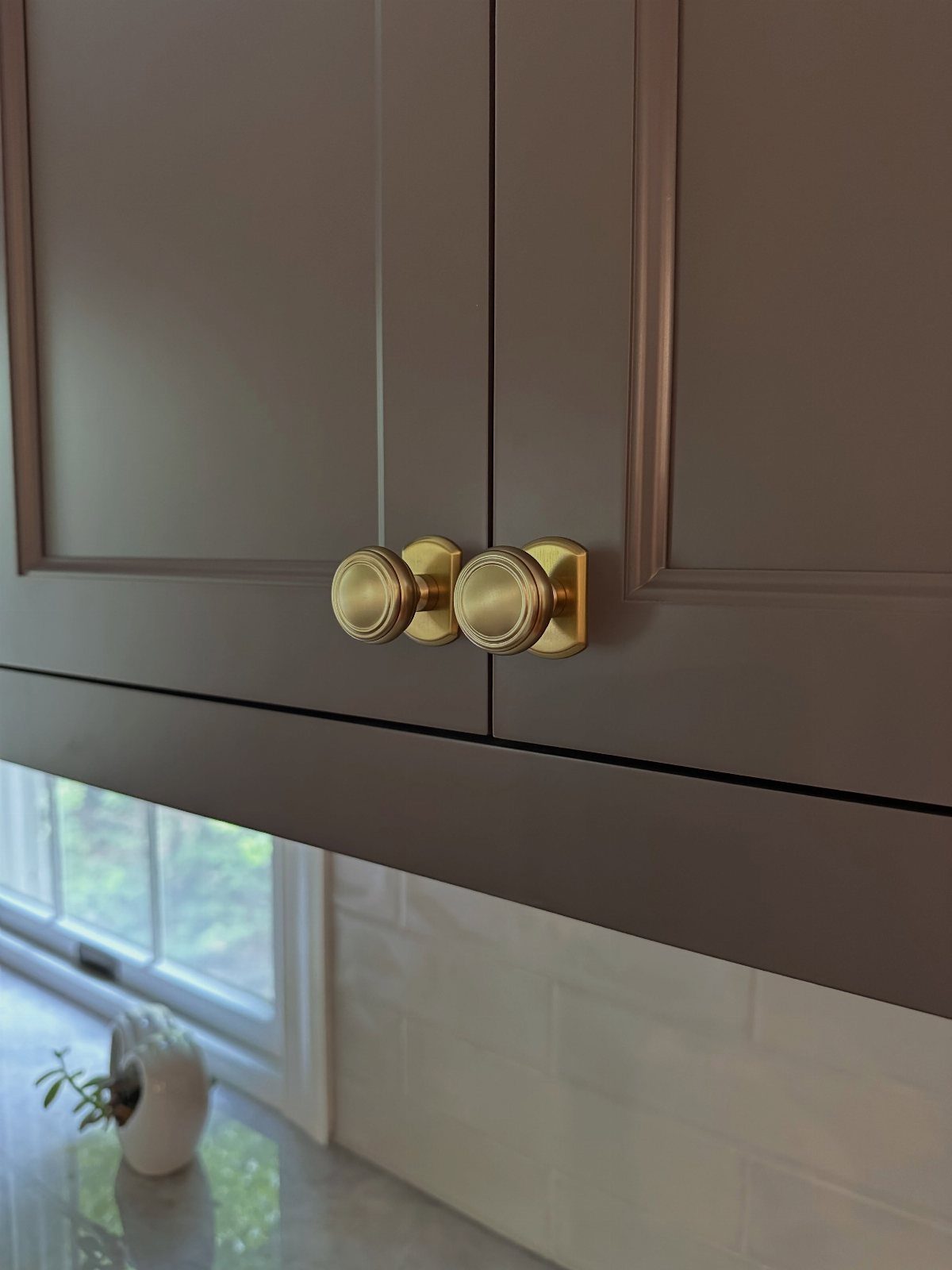
Shaker doors have a simple recessed center panel and a flat frame, and that plain shape is why they handle brown finishes so well. The grain or color gets room to show without fussy detail competing.
Round brass knobs suit Shaker doors, and swapping knobs is one of the cheapest weekend upgrades you can make. A white tile backsplash keeps brown Shaker cabinets from feeling busy.
If you rent, hardware swaps are about the only change worth making; keep the original knobs to put back.
5. Brown Lower Cabinets with White Uppers
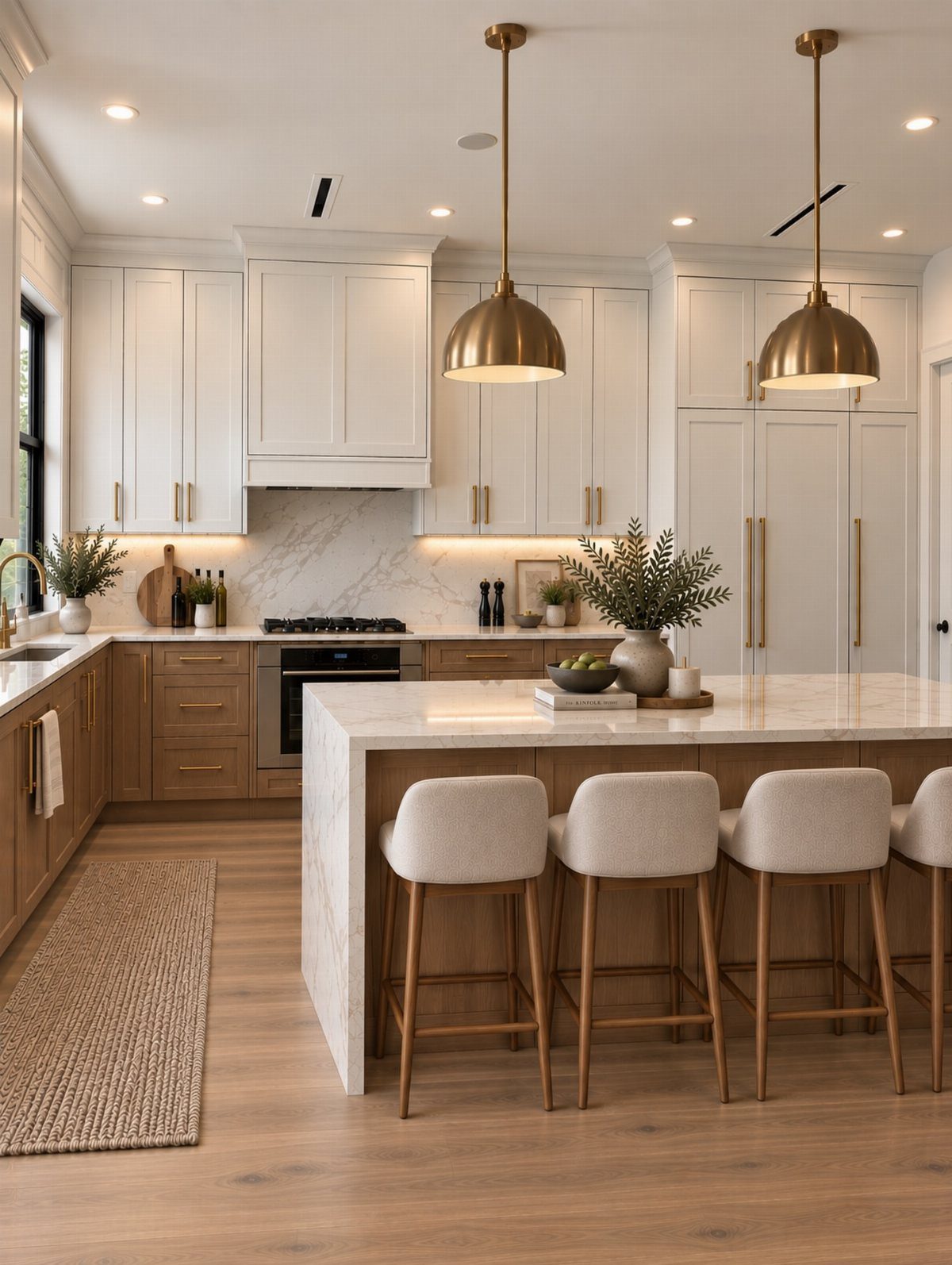
Splitting the colors by level is my favorite way to use brown on a budget: white uppers keep the walls feeling open, and the brown base anchors the room.
A marble island with gold pendants ties the brown lowers to the white uppers.
Because lower cabinets take the most scuffs, a brown finish hides wear better than white would. Paint only the lowers if the uppers are already light, which cuts the work roughly in half.
6. Brown and Black Cabinets
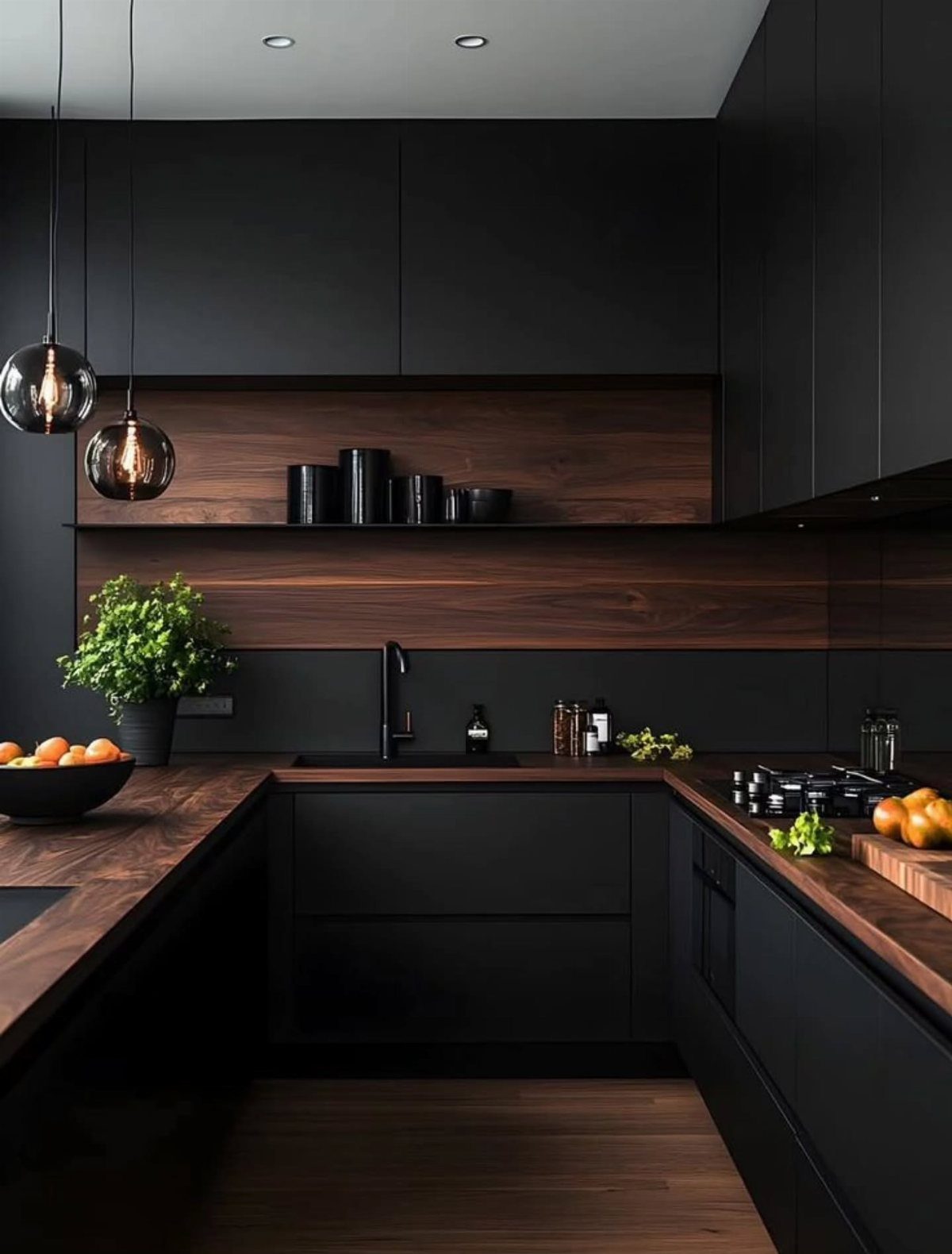
Matte black cabinets with warm brown wood surfaces make a better modern pairing than black and white, which can look cold. The wood adds grain and warmth that black alone can’t.
Here the counters and backsplash carry the brown, so the cabinets stay black. I’d keep the wood to 2 surfaces at most; more starts to compete.
Matte finishes can show fingerprints, so wipe doors with a soft damp cloth rather than letting smudges set.
7. Brown and White Two-Tone Cabinets
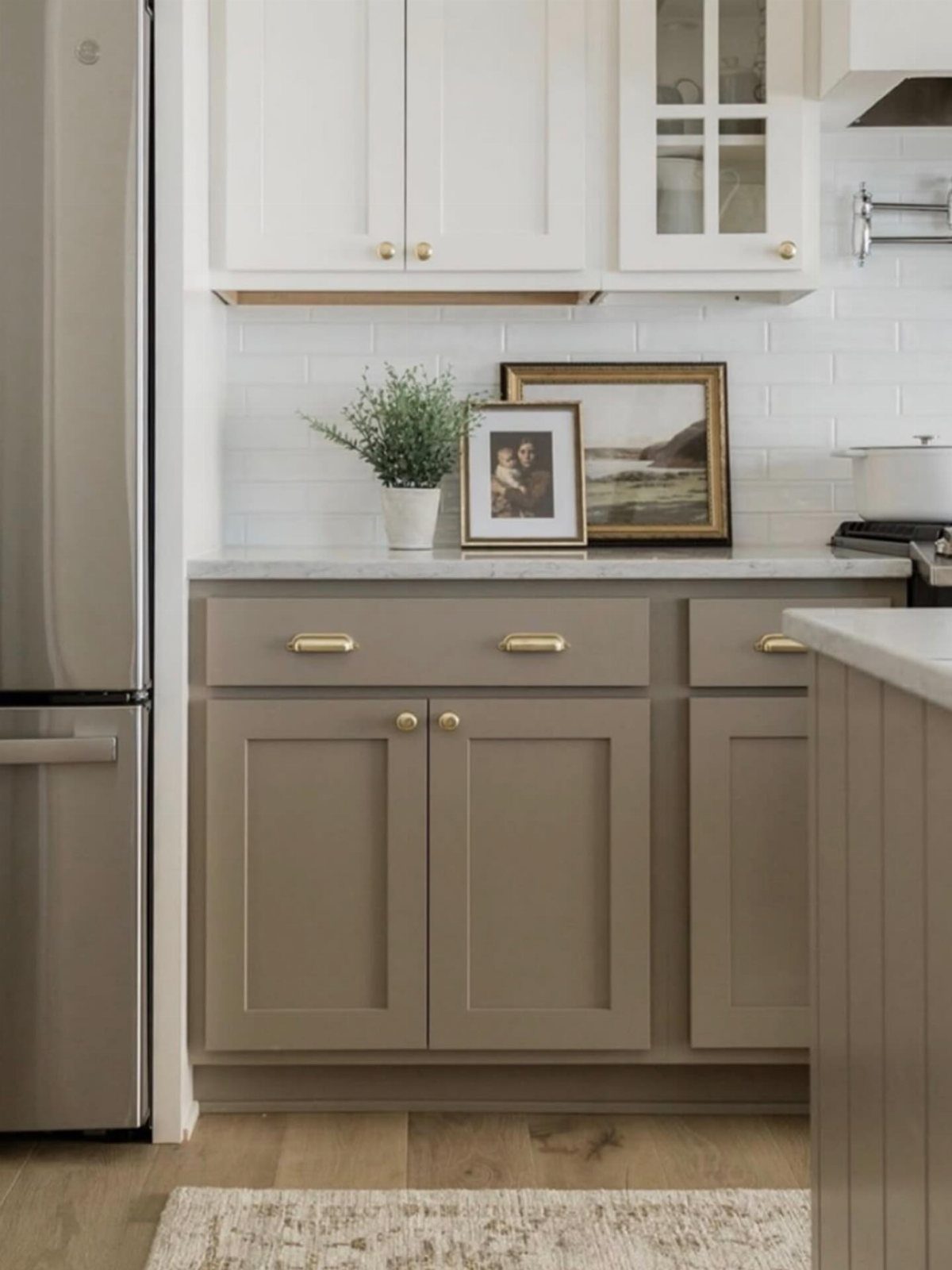
Taupe-brown lowers under white uppers split a big run of cabinets into 2 calmer halves. The white keeps the walls bright, and the brown gives the kitchen a base to stand on.
Gold hardware works on both colors, so I’d use one finish across every door and drawer. A white tile backsplash links the 2 tones, and holding a brown sample against your actual white will show whether they get along.
8. Brown and Navy
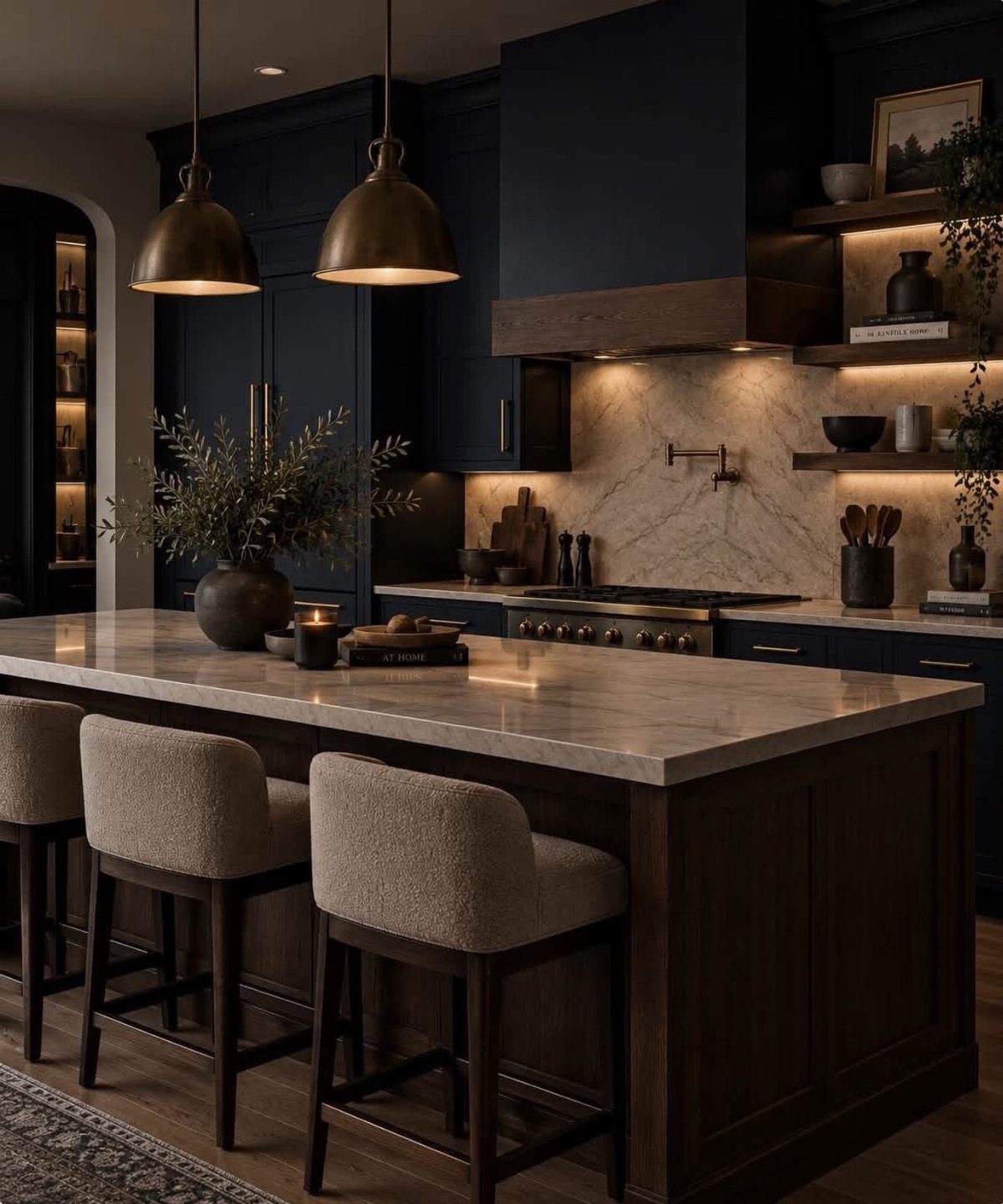
Navy and dark brown are both deep colors, so they work best when each gets its own job. Navy on the perimeter cabinets, brown wood on the island and range hood: that split keeps either one from taking over.
Both colors are dark, so a light counter like marble and warm brass pendants give the eye somewhere to rest. I’d also choose a navy with a little softness, since a very inky one can flatten next to the wood.
Test both colors side by side in your own light first.
9. Dark Brown Cabinets with Brass Accents
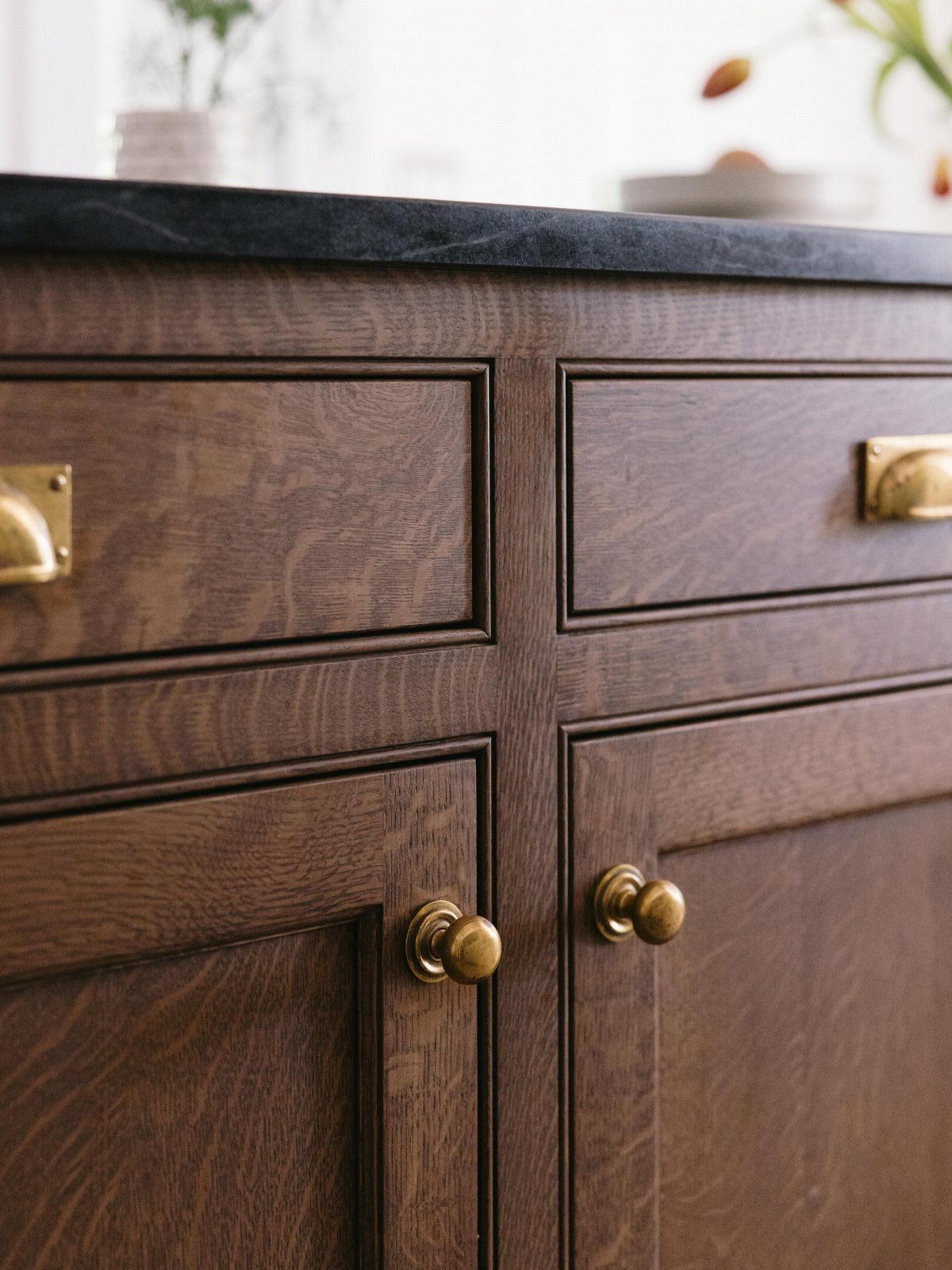
Polished brass against dark brown wood is a pairing I’d pick over nickel or chrome, which can look cold against the wood.
A dark countertop makes the brass the only bright note in the run. That suits a kitchen where you want a quiet, moody look.
Polished brass shows fingerprints, so plan on a quick wipe with a soft cloth. Knobs are also an easy weekend swap for trying the look first.
10. Light Brown Cabinets with Matte Black Hardware
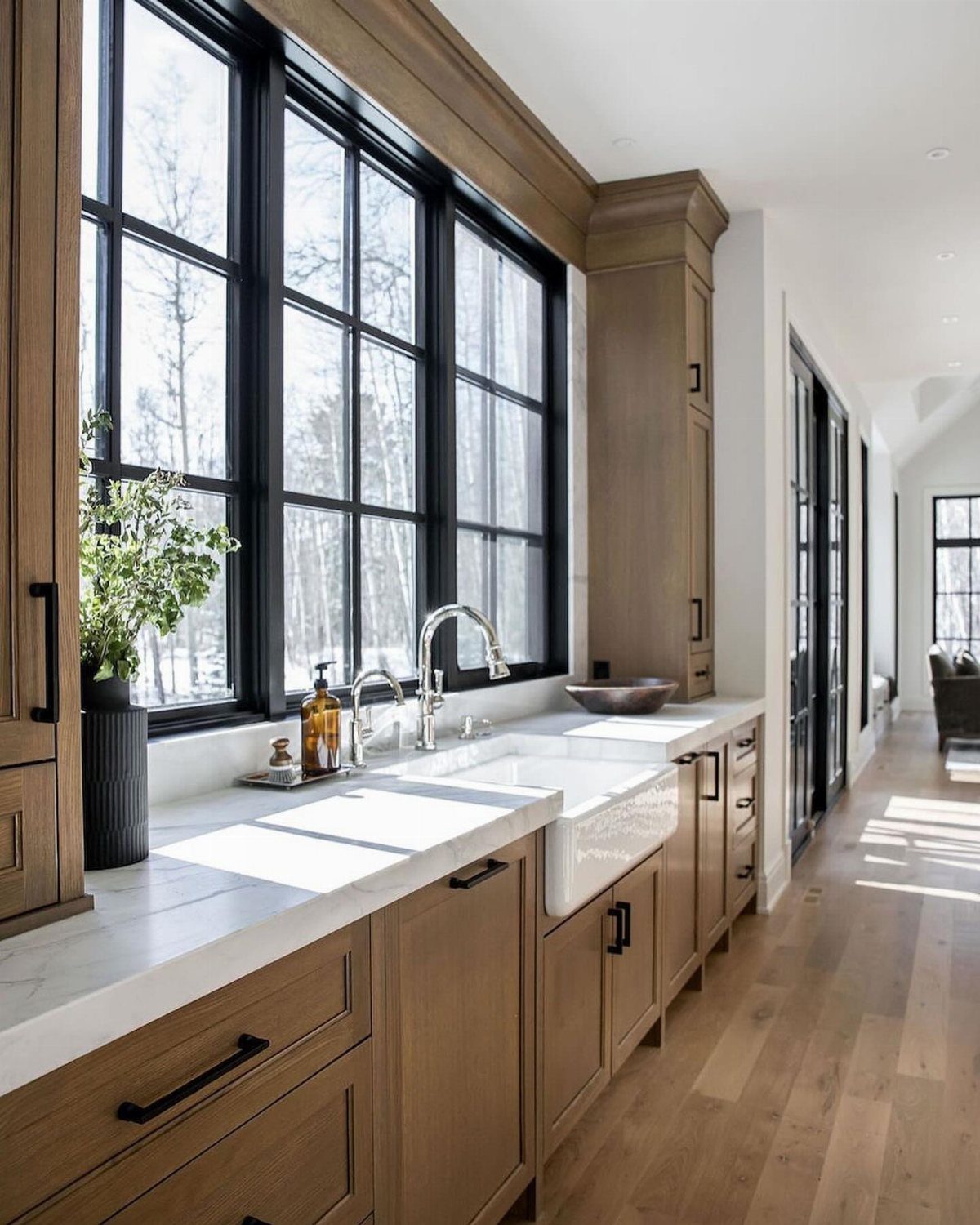
Matte black handles on light brown wood give the cabinets a crisp outline, and they read as industrial without darkening the space. The light wood keeps the kitchen airy while the black adds definition.
Black window frames and a white marble counter repeat that contrast. I’d match the black across the faucet or lighting too, so the handles look planned rather than isolated.
Hardware is the cheapest part of this look to change. Buy one handle to hold against the door before ordering a full set.
11. Painted Brown Cabinets
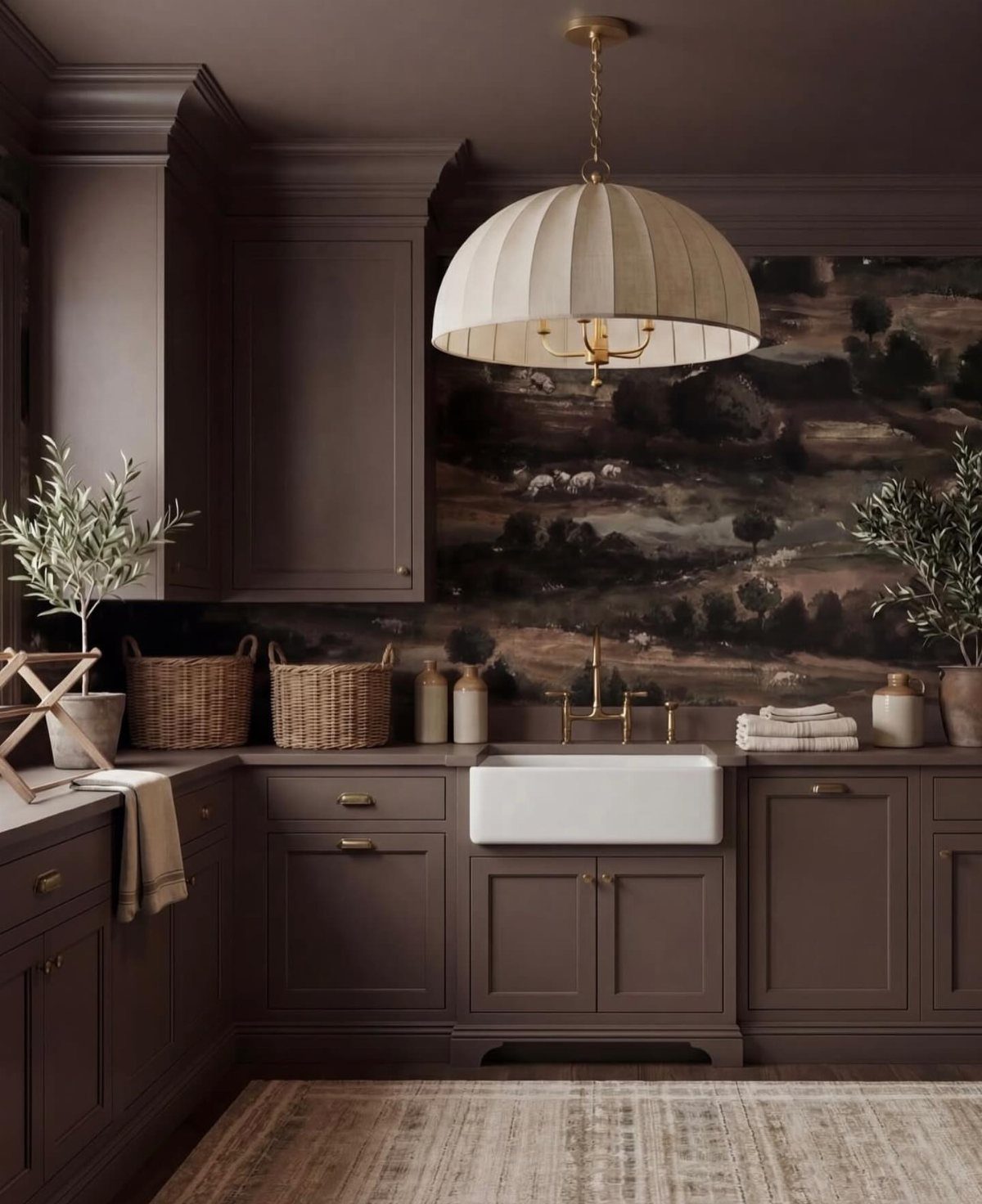
Paint gives you one even brown across every door, with no grain showing through.
That makes it the right pick when your cabinets are a mix of woods, or when the existing finish is worn and you want a clean slate.
A dark brown paint looks best with a white farmhouse sink and a bold pendant to lighten the room.
Painting is a weekend job that costs far less than new doors, but it takes patience: clean and sand first, then let each coat dry fully.
12. Stained Brown Cabinets
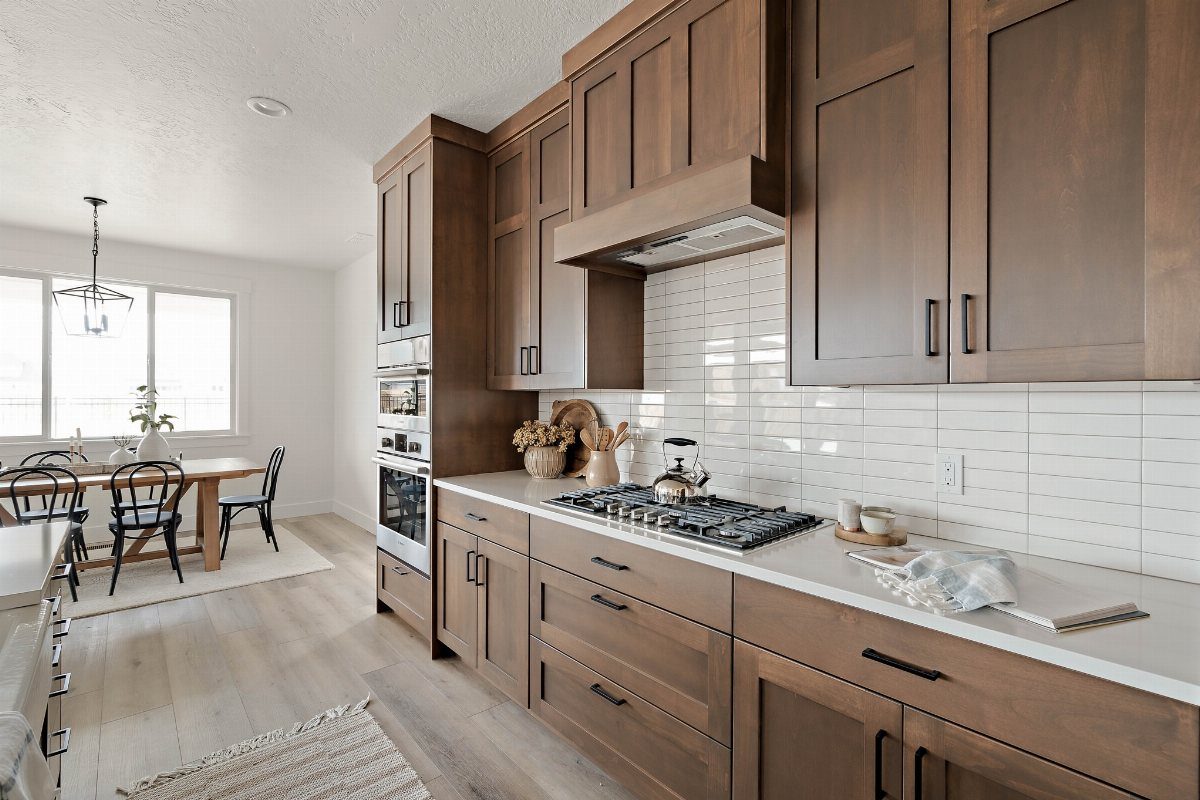
Stain colors the wood but lets the grain show through, so each door looks a little different. That variation is what I like most about it, and paint can’t copy it.
Black hardware and white counters give stained brown cabinets a crisp frame. Plain white tile behind the wood gives the grain a quiet backdrop to stand against.
Stain only works on real wood, so check what your doors are made of before choosing it. Test the color on a hidden spot, since the same stain can look different from one board to the next.
13. Mocha Cabinets
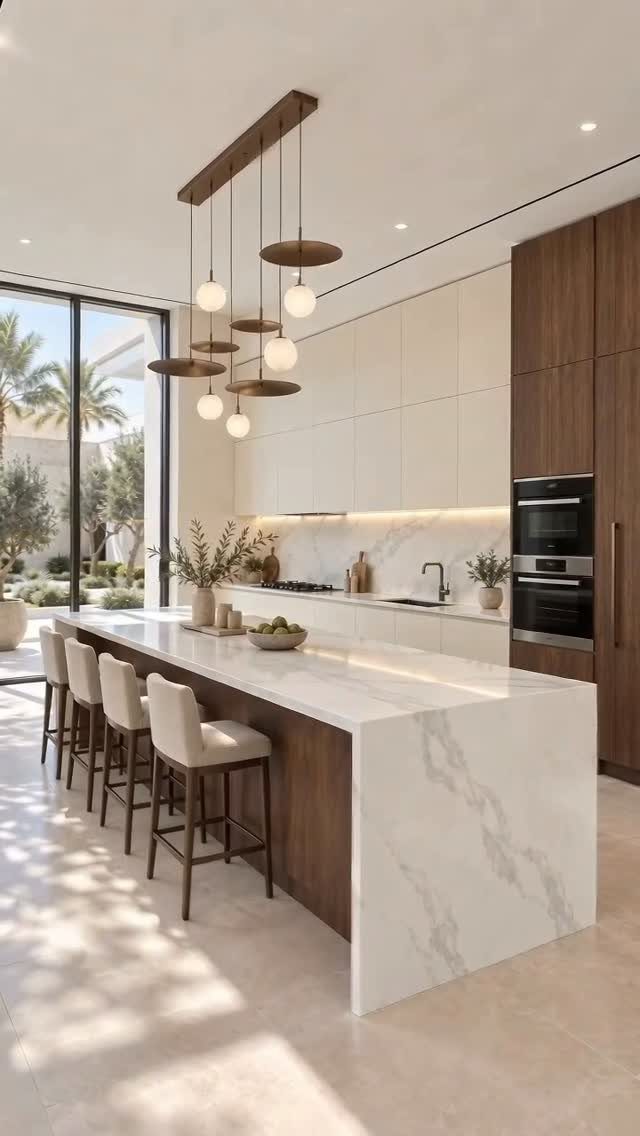
Mocha sits in the middle of the brown range, and its undertone decides everything.
A warm mocha leans toward caramel, a red one toward cherry wood, and an ashy one toward gray-brown. Hold samples against your own floor and counter before choosing, because the same name can land very differently.
Mocha base cabinets under white uppers stop the kitchen from feeling heavy, and a marble island echoes the white overhead. I’d pick the undertone that matches your floor, not the one that looks best in a showroom.
Choose by Undertone and Light
No stain is just brown. Each one leans red, golden, or neutral, and the lean is easiest to spot once it covers a whole wall of doors.
Reddish browns and coffee browns are the tones most people picture on traditional furniture.
Truffle leans chocolate-umber with a touch of amber, while Mahogany J5 pushes the look toward formal. Beside brass they look rich, but a cold blue-white wall can pull them toward orange.
Golden browns like honey, butterscotch and toffee feel relaxed and sit comfortably beside light flooring.
Shaker Honey, Butterscotch, and Timber live here. Neutral and taupe browns suit a cool palette, and espresso belongs in that group because the red is mostly gone.
Light changes all of it.
North-facing rooms cool and darken a finish, while south-facing light can exaggerate warmth. East and west light shifts through the day, so check samples morning and evening.
Bulbs matter too: 2700K deepens brown, and 3500–4000K or cooler can pull out gray.
Test Finishes in the Room
Order a physical sample before you order doors. Even a basic unfinished Shaker RTA kitchen starts from $1,600, which is a lot to risk on a color you’ve only seen on a screen.
Prop the sample upright in the exact spot the cabinets will go, then check it at 3 times of day. Stains tend to look darker in a dim room, so judge the sample in the dimmest corner too.
Also hold it next to your floor. A mid-brown cabinet over a mid-brown wood floor can blur into one heavy mass, with no line where one ends and the other begins.
If the two tones are close, go clearly lighter or darker on one of them.
Brown Cabinet Trend and Upkeep
The single-point popularity gap between brown cabinets and the other leading cabinet color is small enough to treat as even, so choose brown for your light and your floor, not for the chart.
Upkeep is a real argument for wood, though. A visible grain hides fingerprints, water spots and daily scuffs better than a flat solid color.
If sustainability matters to you, reclaimed wood cabinets are one route. Light or medium stains show off the grain best, and recycled stone or glass for the counters or backsplash fits the same idea.
Frequently Asked Questions
What are the best brown cabinet paint colors?
For lighter browns, Sherwin-Williams Accessible Beige, Benjamin Moore Shaker Beige and Sherwin-Williams Latte are the usual picks, and the range deepens through mocha and chocolate to espresso.
Most browns are really stains over real wood, so the grain shows through. Go with paint if your doors are different woods or the existing finish is tired; every door ends up the same even color.
What are the hottest kitchen cabinet colors for 2026?
Wood and white are running almost even. On the brown side, Accessible Beige is a popular light pick, Sherwin-Williams Mocha a favorite for islands and two-tone kitchens, and Benjamin Moore Espresso the deep, near-black choice.
Are brown cabinets still in style?
Yes, brown never really left. Pick a lighter or grayer brown, add white or cream counters and updated hardware, and the kitchen reads current.
What color walls go with brown cabinets?
Warm white or cream walls are the easiest pairing.
Sage and muted olive greens also suit stained doors, and pale warm greige keeps things quiet. For a deeper wall color, echo the stain’s undertone: terracotta suits red-leaning coffee browns, and cool mushroom shades suit gray-browns like Mocha.
What are the best medium brown cabinet finishes?
Fabuwood Mocha and Truffle are two reliable mid-browns, along with J&K Butterscotch and Hazel.
Mocha has a dusty, gray-leaning cast like aged furniture; Truffle runs warmer, a chocolate-umber with a hint of amber that picks up the glow of brass.
Mid-browns are deep enough to feel grounded without the heaviness of espresso, so they suit anyone unsure how dark to go.