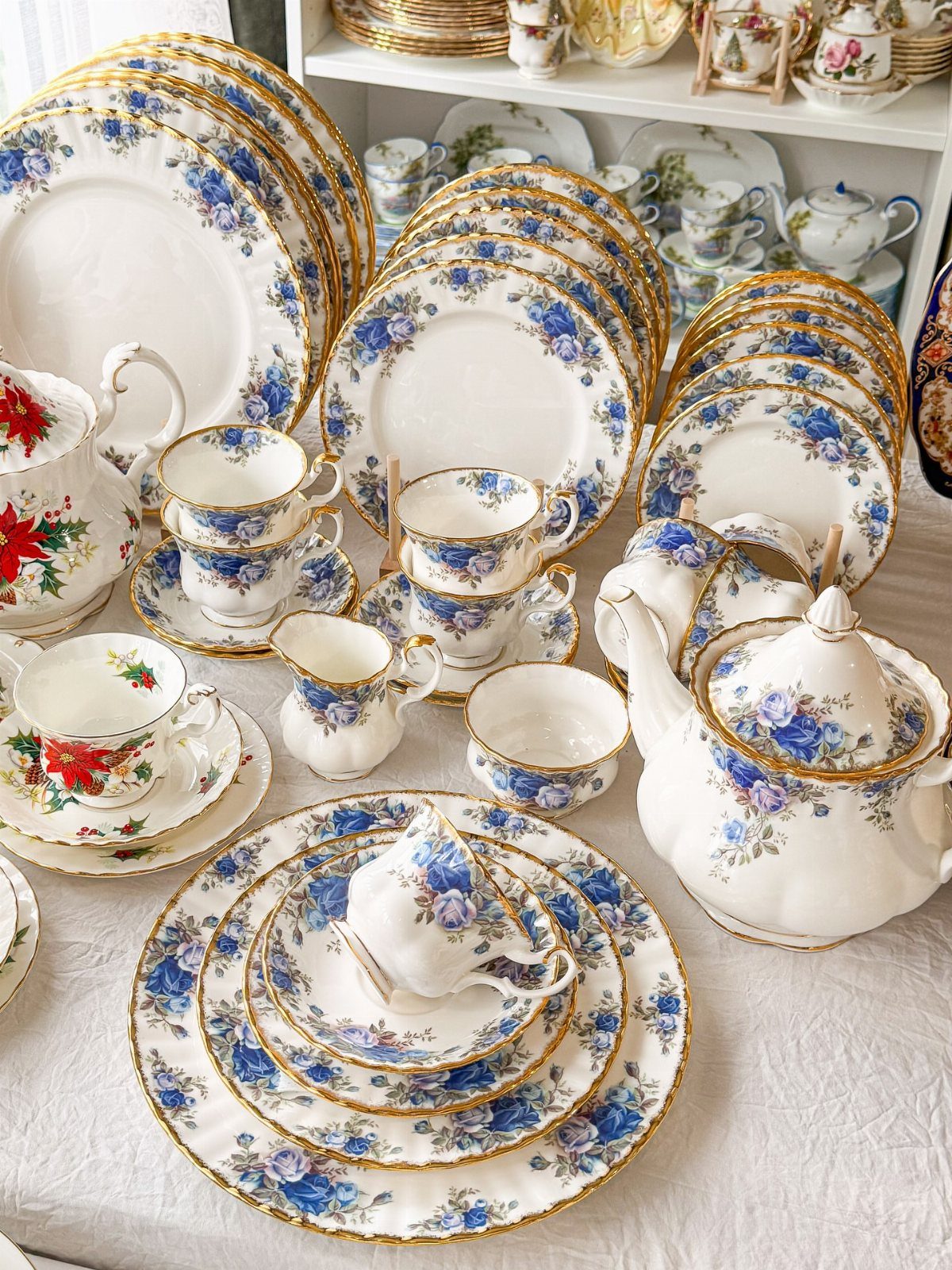
The ideas range from Limoges and Kutani plates to green stoneware and a table of mismatched blue-and-white dinner plates.
Budget and shelf space decide which idea fits your home, so read the sections on finding vintage dinnerware and on plate sizes and set formats before you buy.
Stick to one color family, like the green stoneware plates and green vintage plates here, and the pieces hang together even when the shapes and patterns differ.
1. Limoges Plates
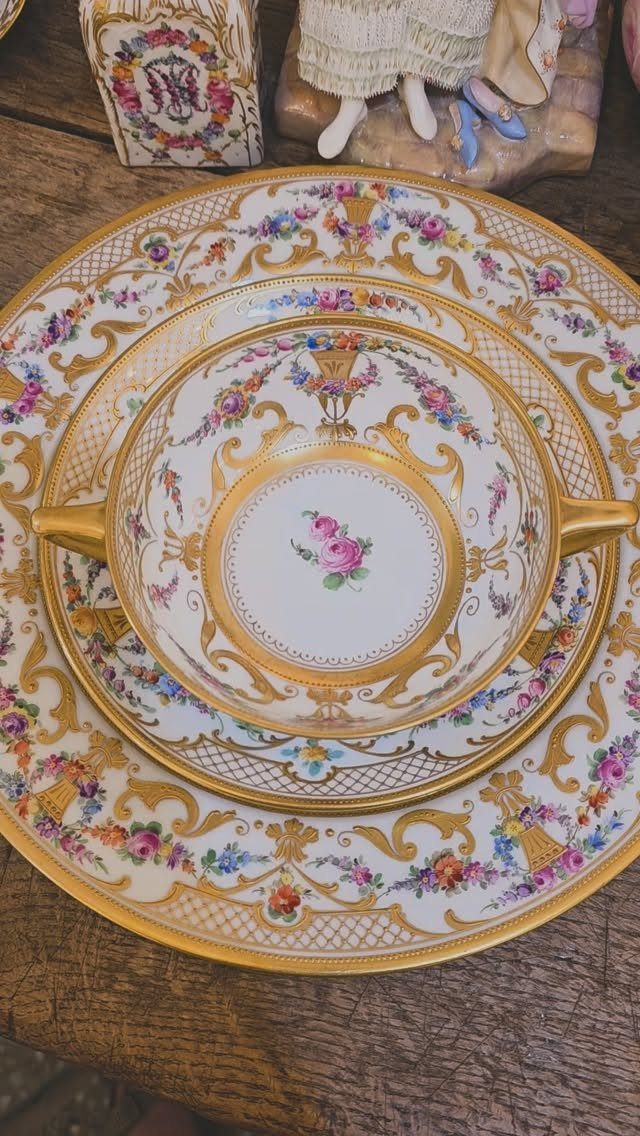
Gold gilding and hand-painted florals put Limoges at the dressed-up end of vintage plates. This is French porcelain with a long history, and highly decorated pieces like these are the ones collectors go after.
On a modest budget, I’d buy a single plate or a small stack rather than hunt for a full set. Turn each piece over and read the back before you pay collector prices.
2. Kutani Plates
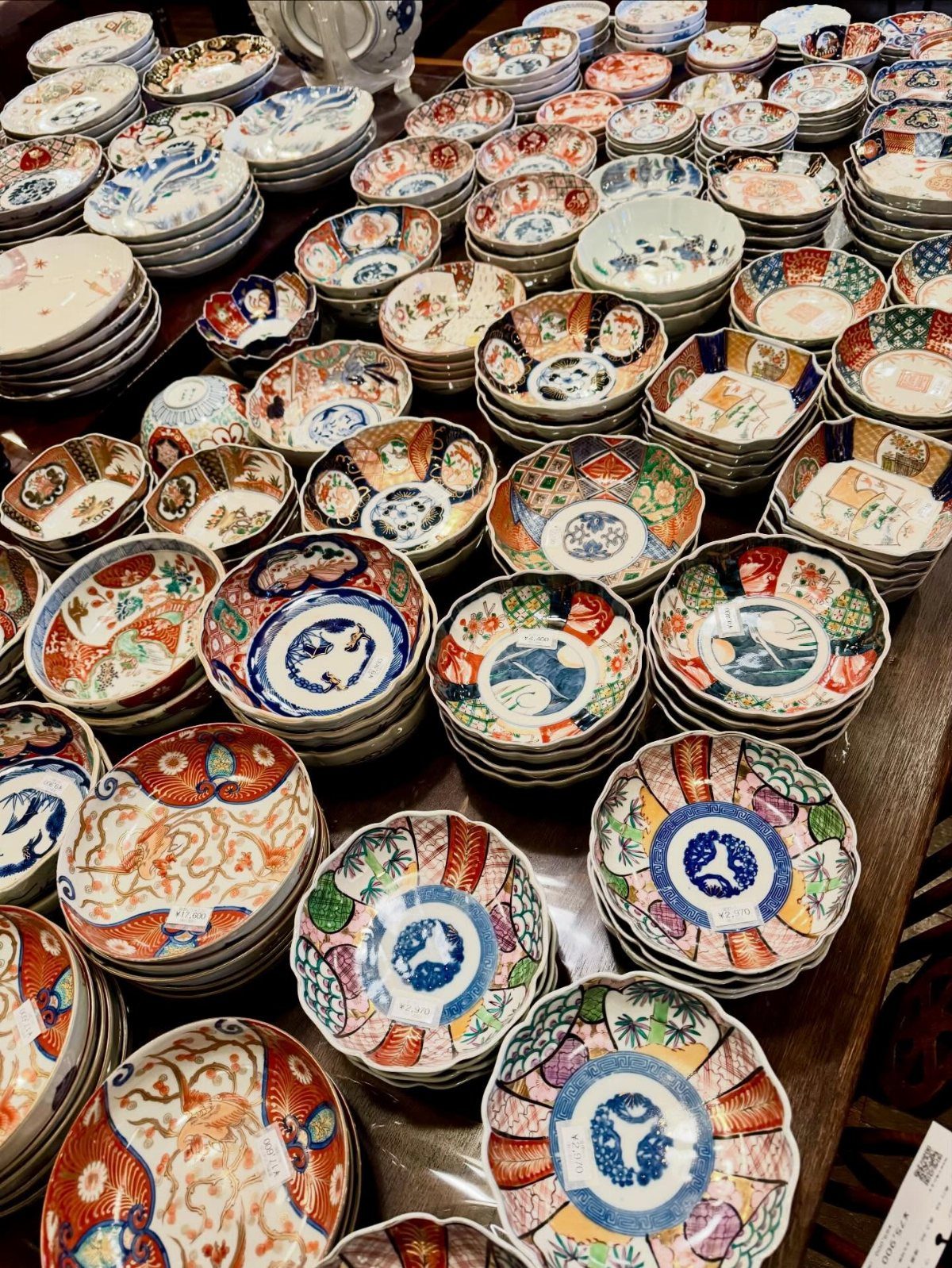
5 colors, packed edge to edge in dense patterns, are what make Kutani easy to spot across a crowded table. It’s Japanese pottery and porcelain known for that colorful decoration.
Buy by pattern, not by the pile. Pick the plates whose colors you’d actually want on your table, and check the tags, since pieces in one stack can be priced very differently.
3. Green Stoneware Plates
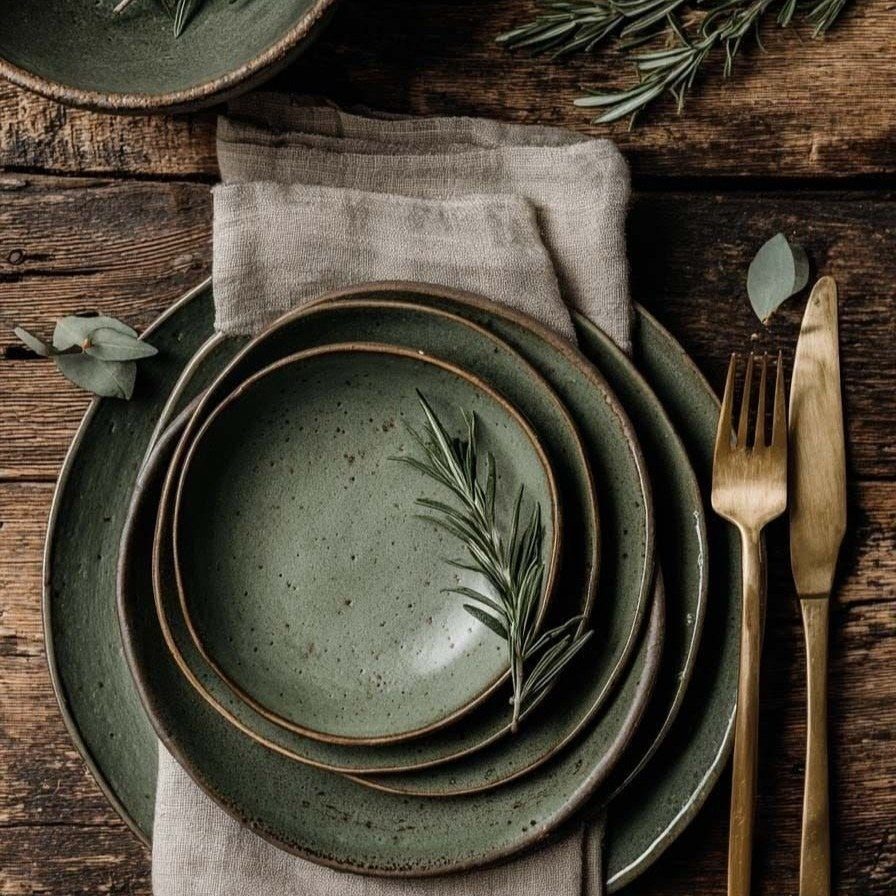
Dinner and dessert sizes in the same green give you a layered stack that looks planned.
Matte, earthy green stoneware holds its own next to linen napkins and gold flatware, and a vintage-style set keeps that look without the price of true antiques.
I’d start with 2 plates in each size and add more only if you keep reaching for them. Herbs on the plate, like the rosemary here, cost almost nothing and suit the color.
4. Blue Stoneware Plates
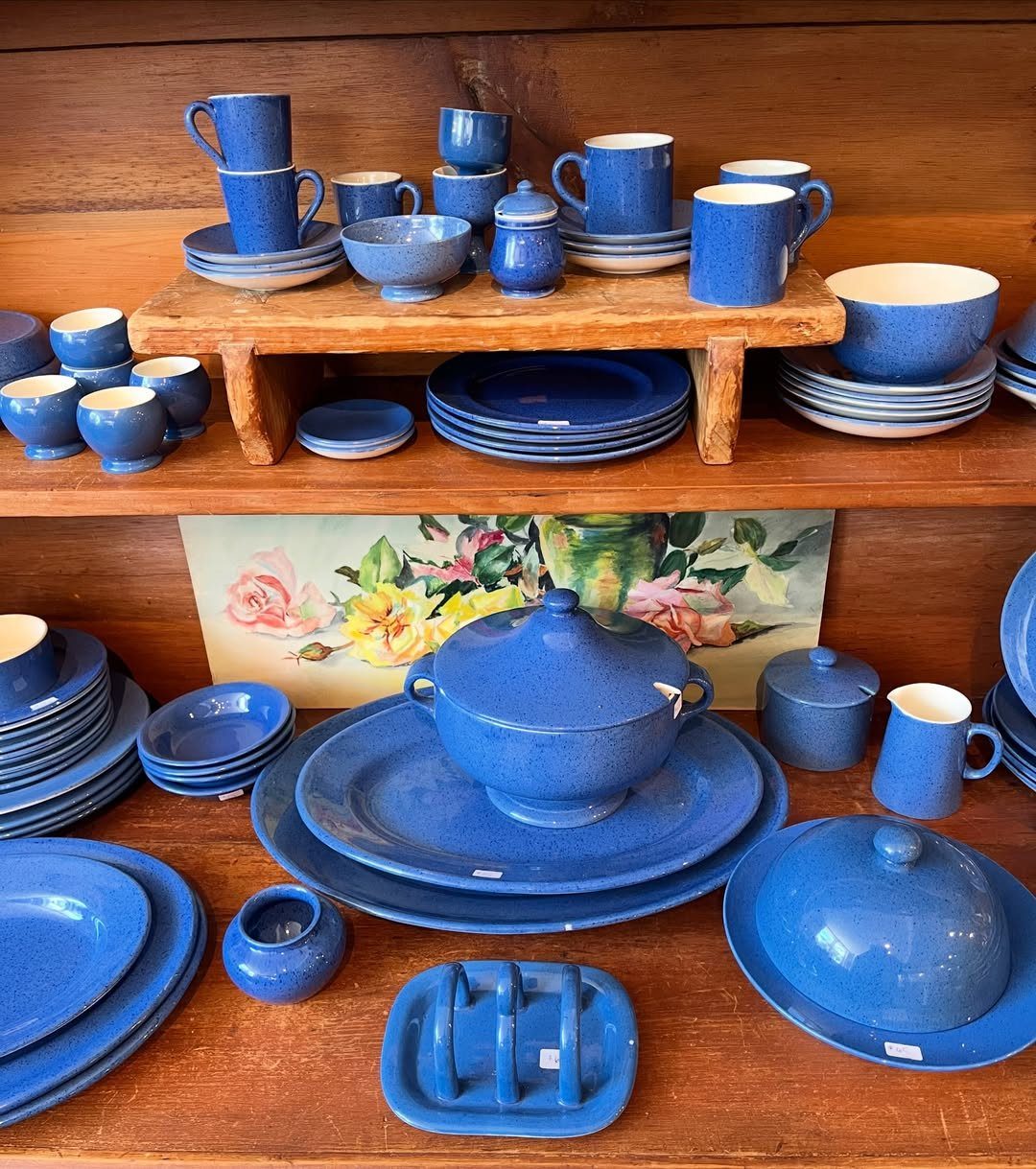
Open shelves do the most for blue stoneware. Plates, bowls and mugs in one color read as a single collection, even when the shapes differ.
This style comes in dessert plates and deep plates, and I’d pick the deep ones first, since they hold more than a flat plate. Add mugs or a tureen later if the shelf has room.
5. Pink Stoneware Plates
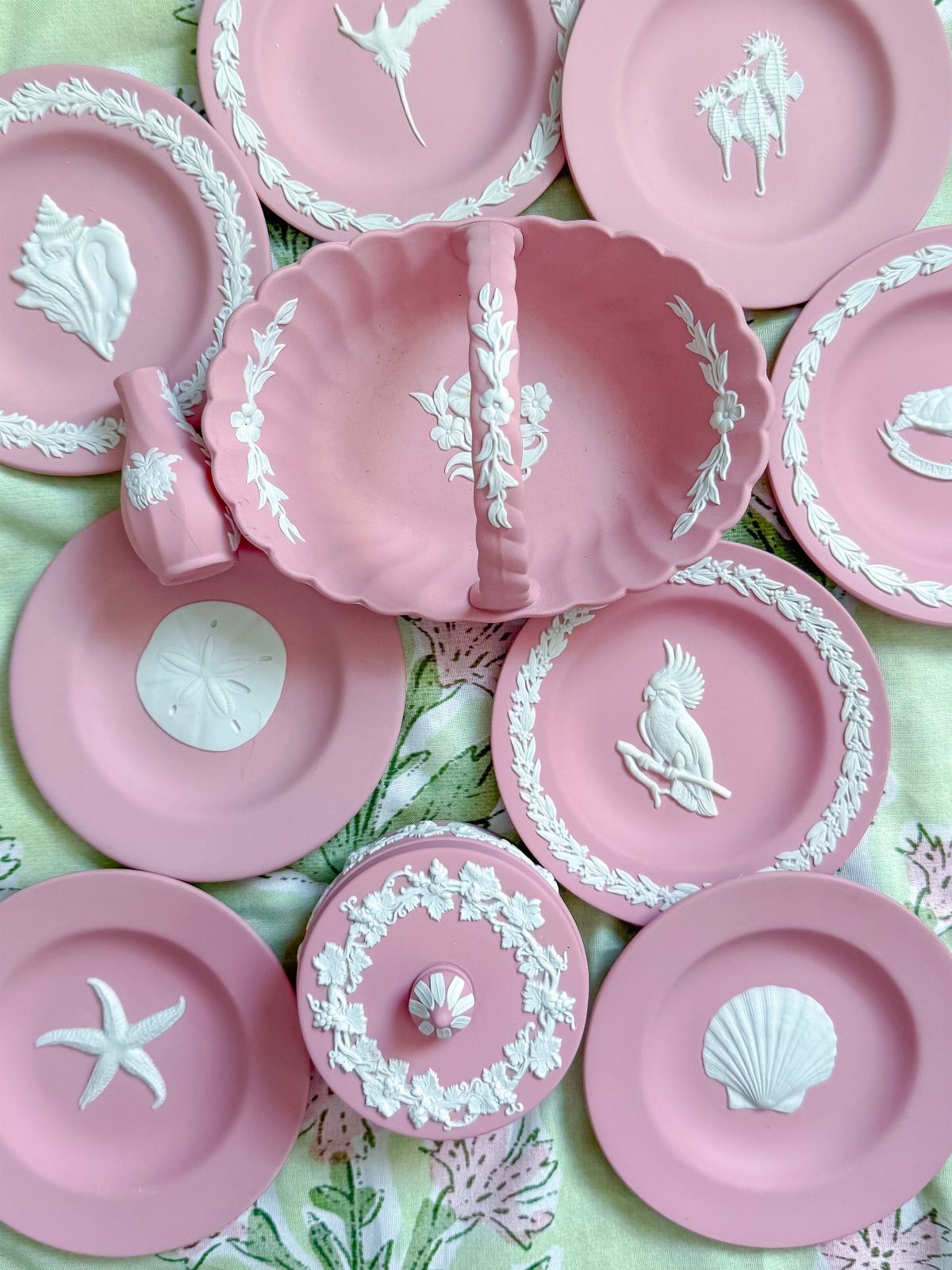
Seashells and starfish pressed into the rim in white relief give these pink stoneware plates a quiet, textured look. They’re sold as dinner or dessert plates, so you can start small.
A busy printed fabric underneath, like the green and white one here, keeps the pink from going sweet. I’d choose a serving dish in the same pink to tie a table together.
6. Mismatched Blue-and-White Dinner Plates
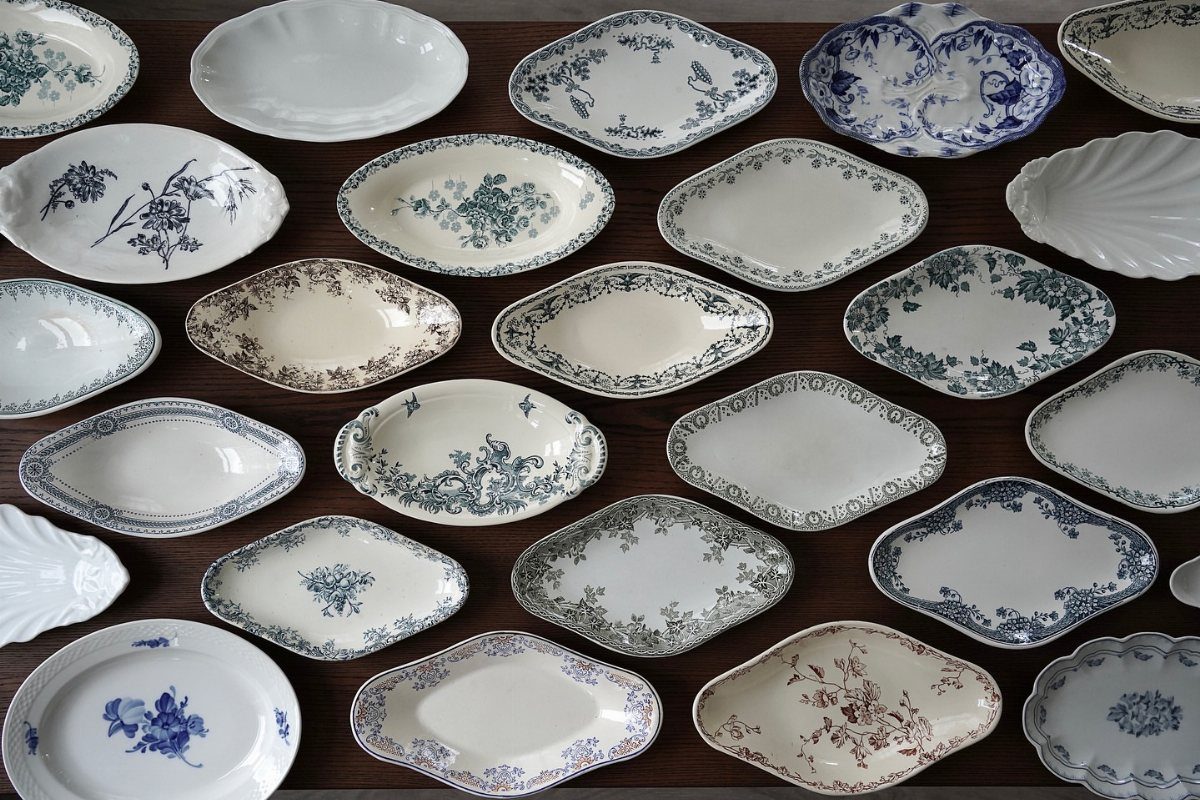
Nothing here matches, and that’s the appeal. Plates and platters in different shapes, sizes and patterns hang together because they share one palette: blue and white.
Buy them one at a time at whatever price feels fair, rather than waiting for a set.
Hold to the blue and white rule, mix in a few platters for height and variety, and the odd pieces will read as a deliberate collection.
7. Floral Vintage Plates
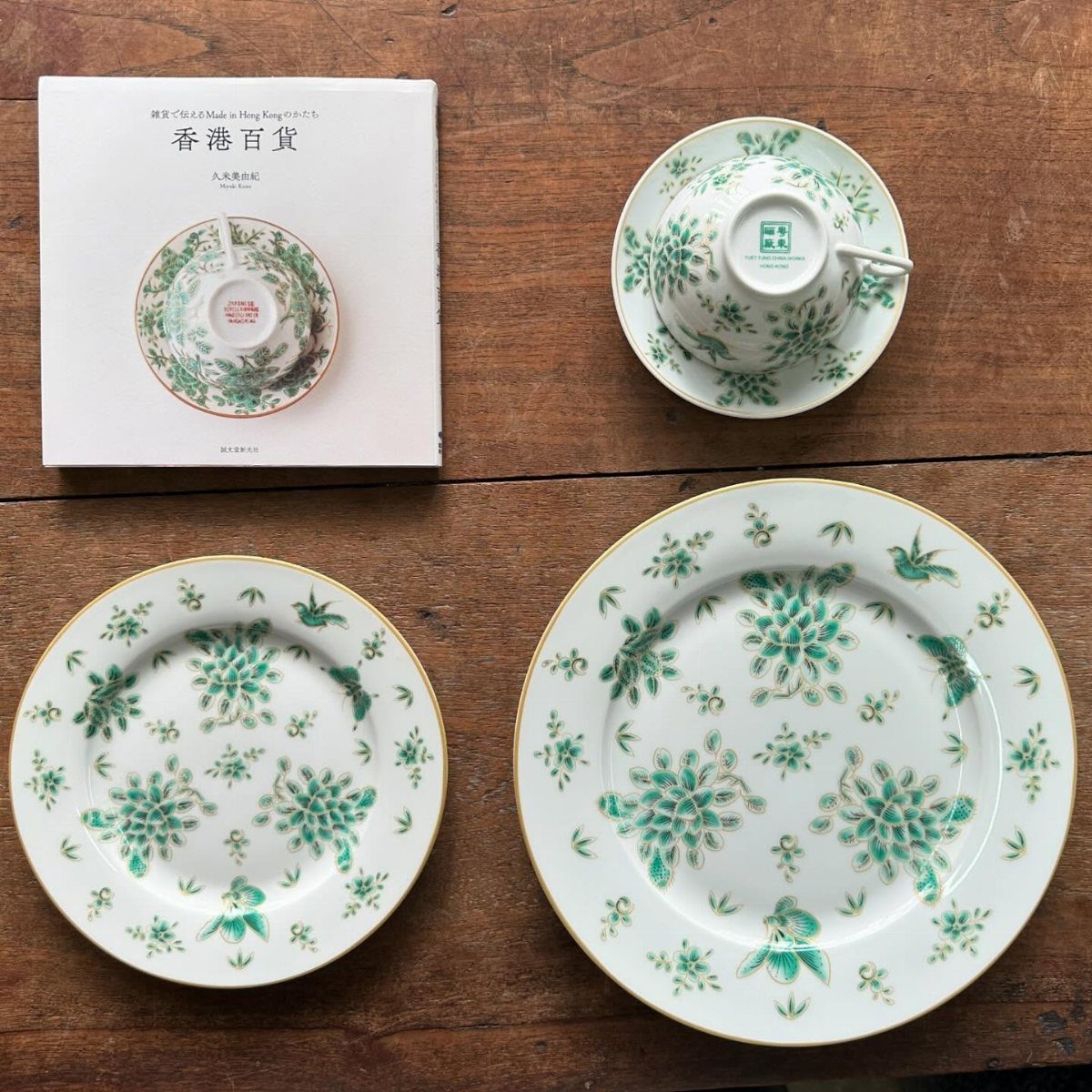
Green leaf-and-flower patterns on white ceramic read as calm rather than fussy, and a plate or 2 is enough to carry the look.
I’d buy a pair of plates first and see how they feel in daily use before chasing a full set.
Floral vintage plates are easy to mix with plain white pieces, so a small purchase still gets you a finished table.
8. Painted Bird Plate
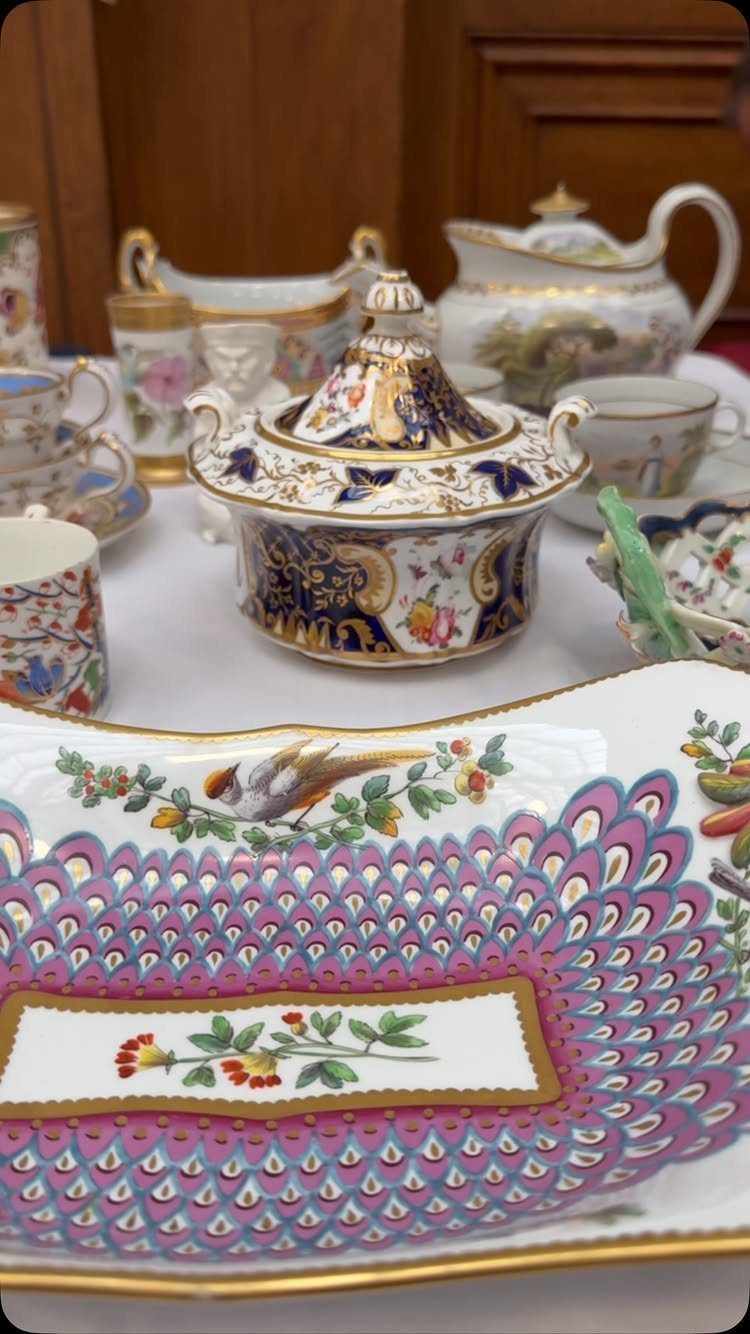
A rectangular plate breaks the usual round stack, and one with a bird at the center gives you a piece that works as a serving tray or as wall art.
Pink and blue ornament around the bird keeps it from reading as plain.
Its matching teapots and cups are what make it feel like a collection.
I’d buy the plate alone, then add a cup or a jug in a similar palette as you find them. The maker describes pieces like these as finely hand-painted, so look closely at the brushwork before you pay.
9. Purple Flower Soup Plates
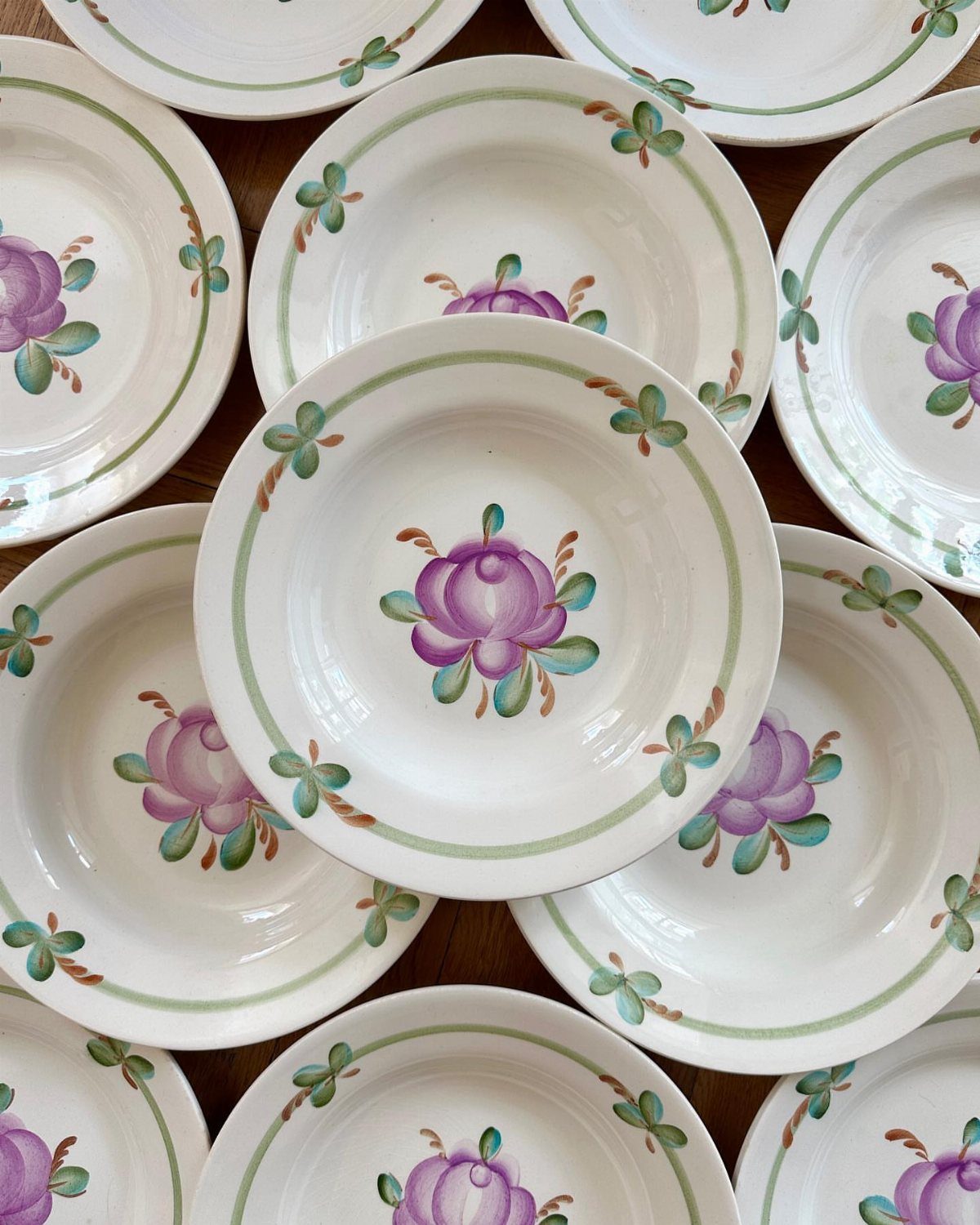
Soup plates are deeper than dinner plates, and these white ones carry purple flowers with green leaves running around the rim. Because the painting sits on the border, the middle stays clear for food.
I’d buy 4 and stack them on a wooden table or open shelf, where the rims show.
Hand-painted pieces vary slightly from one plate to the next, so check each one in person or in the listing photos instead of assuming a set matches exactly.
10. Text-Inscribed Plates
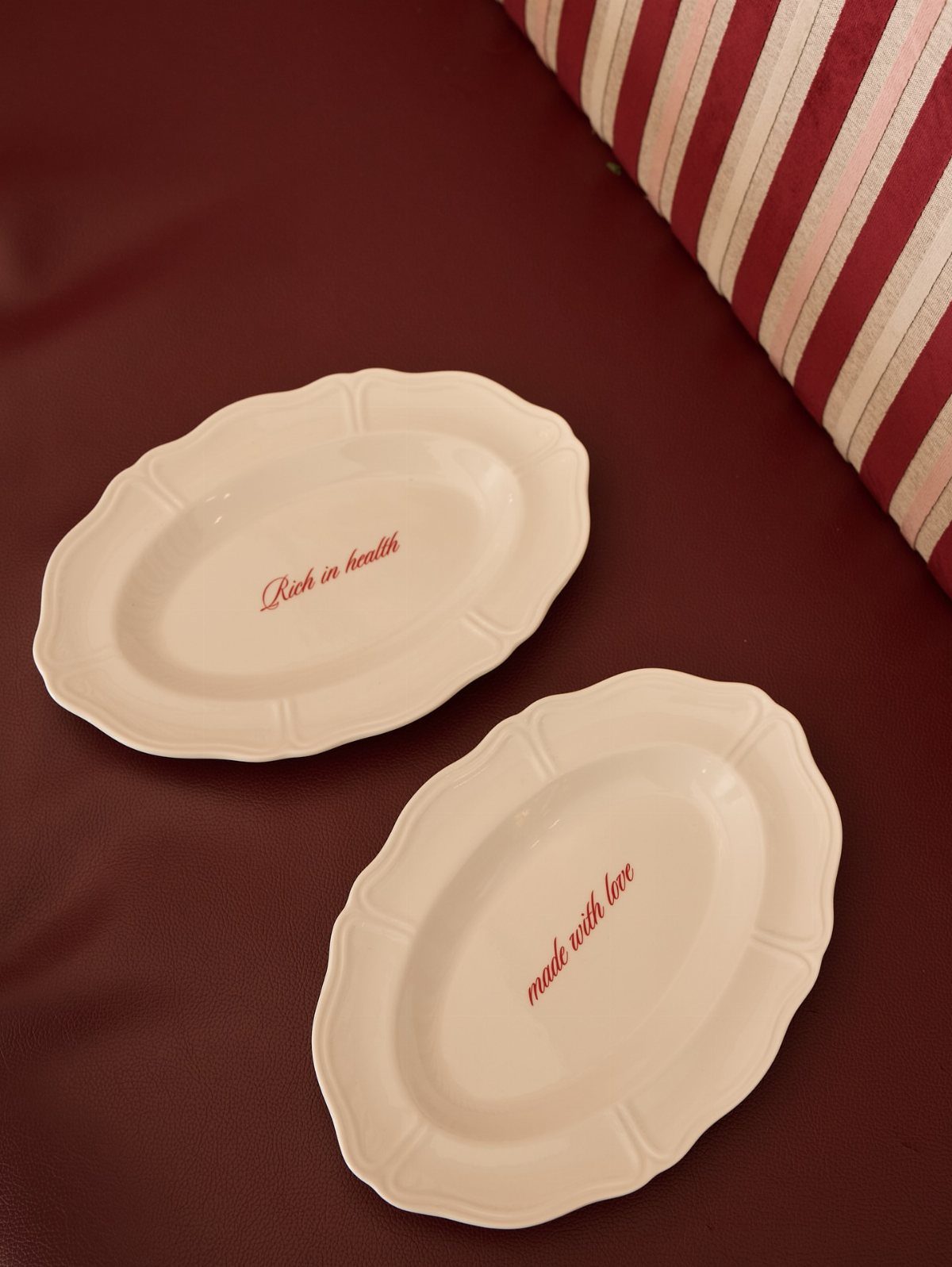
Short red cursive phrases like "Rich in health" and "made with love" turn a cream plate into something closer to a message. The scalloped edge softens the lettering and keeps it from feeling like a slogan.
These suit a kitchen wall or a table where you want a little warmth.
Red script on cream is a simple combination, so a striped pillow or a dark red cloth nearby looks natural. Pick phrases you won’t tire of; you’ll see them every day.
11. Cat-Themed Plates
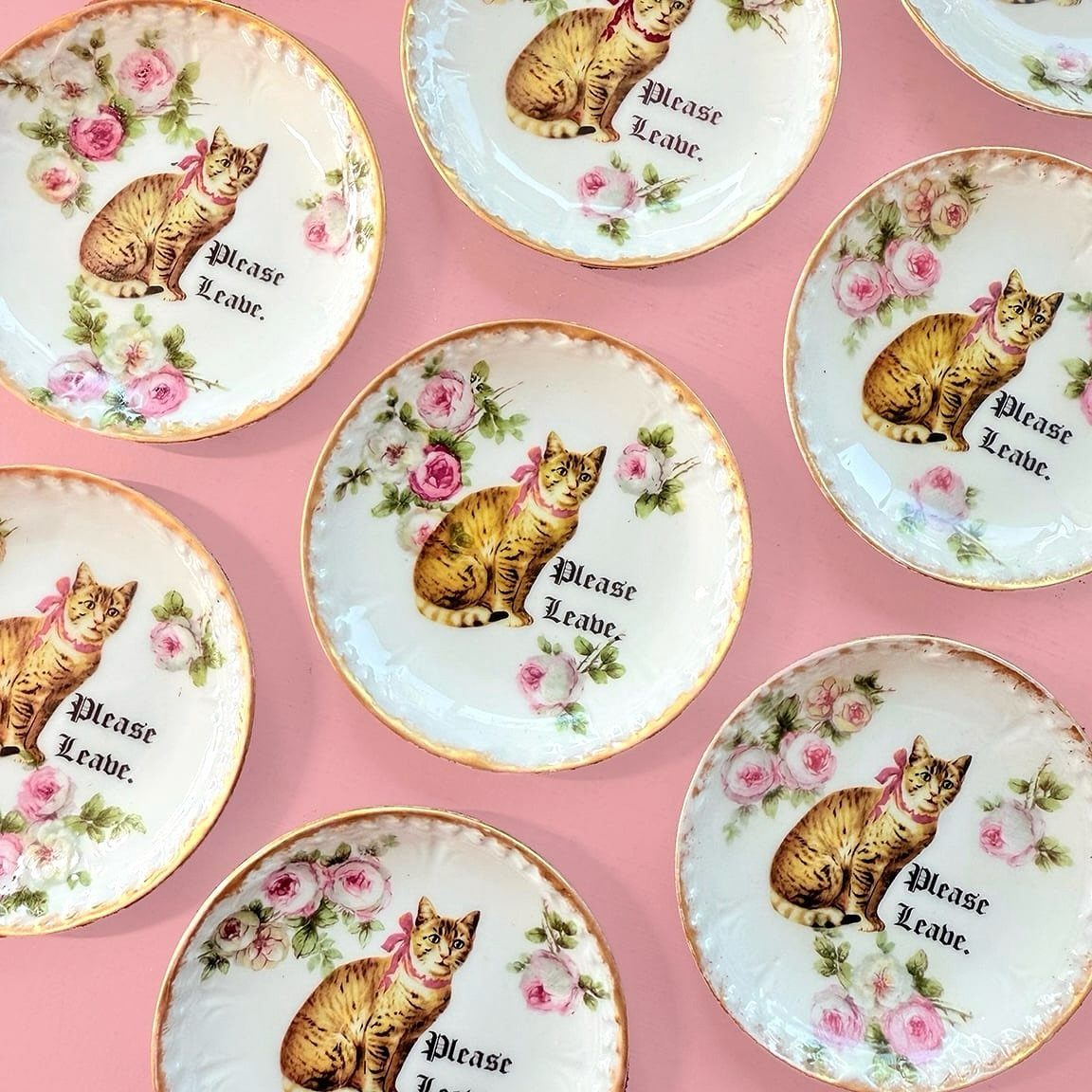
Ginger cats among pink roses, a gold rim, and the words "Please Leave" make a small plate with a sense of humor. At this size they work well as dessert plates, trinket dishes or a grouped wall display.
I’d go for a pink backdrop or tablecloth to echo the roses. Hang or stack them for a few days before deciding where they live, because the joke lands differently in different rooms.
12. Assorted Vintage Plate Patterns
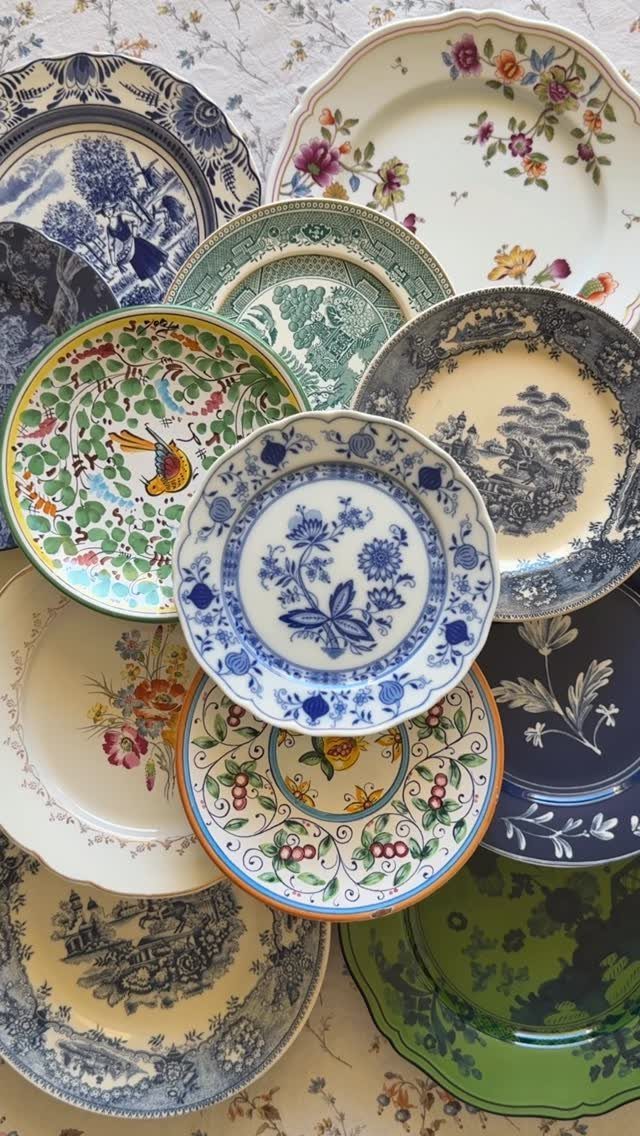
Floral, landscape and multicolored plates laid side by side look best when you stop trying to match them. Overlapping different patterns on a light tablecloth lets them share a table without competing.
Buy by color rather than by pattern. If two or three plates share a green or a pink, the rest can wander.
I’d keep the cloth plain and light so the designs carry the table, and I’d add plates one at a time, which keeps the budget small and the collection personal.
13. Gold-trimmed Pastel Plates
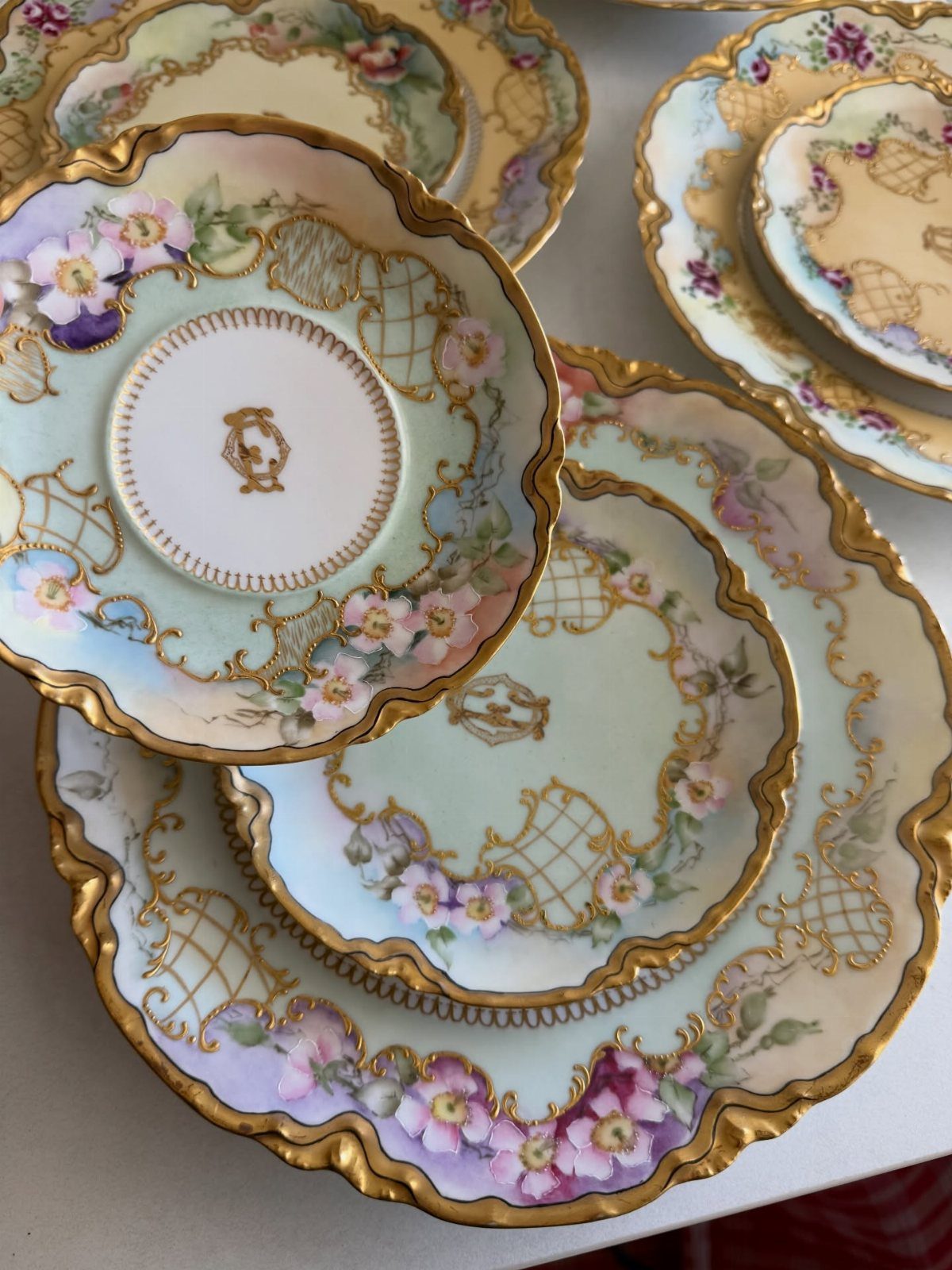
A gold monogram at the center turns a pastel floral plate into something that feels like it belongs to someone. Mint backgrounds, scalloped edges and gold trim make these ornate, but the soft colors keep them from feeling heavy.
I’d hunt for your own initial, or a close friend’s, because a stack with a reason behind it beats a random one.
Keep the surface underneath plain and light so the gold and flowers do the work. Zoom in on the gold edges in listing photos before buying, since the trim is the first place a plate shows its age.
14. Pink Formal Dinnerware
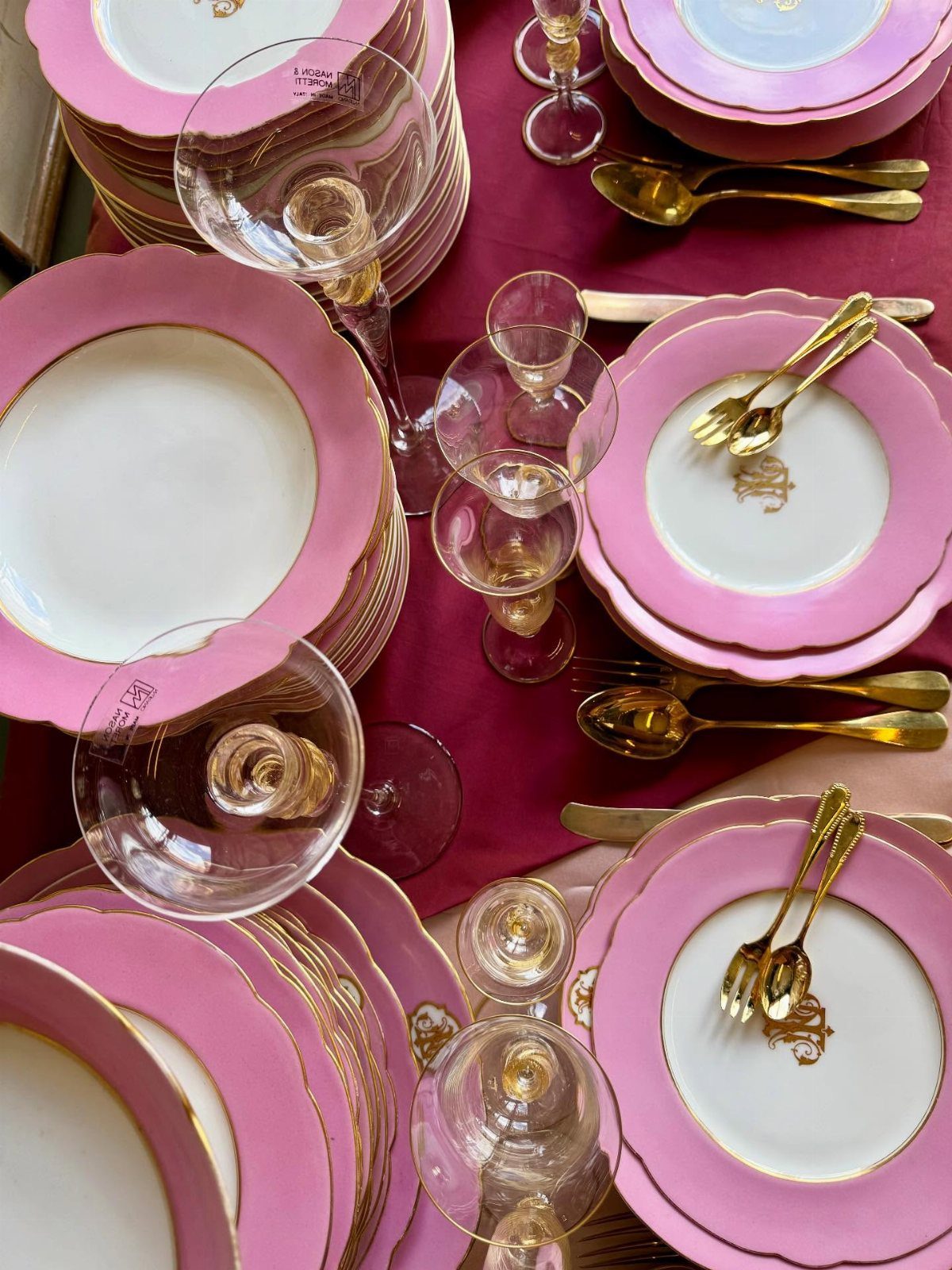
Burgundy under pale pink is a bolder move than white linen, and it makes the gold rims stand out. Pink-and-white scalloped plates, gold cutlery and clear glassware are all this table needs.
I’d match the cutlery to the rim color, since a mismatch between 2 golds is easy to spot.
Start with a setting for 2, then bring in one serving piece in the same pink and white, such as a platter or a covered dish, so the set reads as a matched collection.
Clear glasses keep the color on the plates, where it belongs.
15. Vintage Floral Table Setting
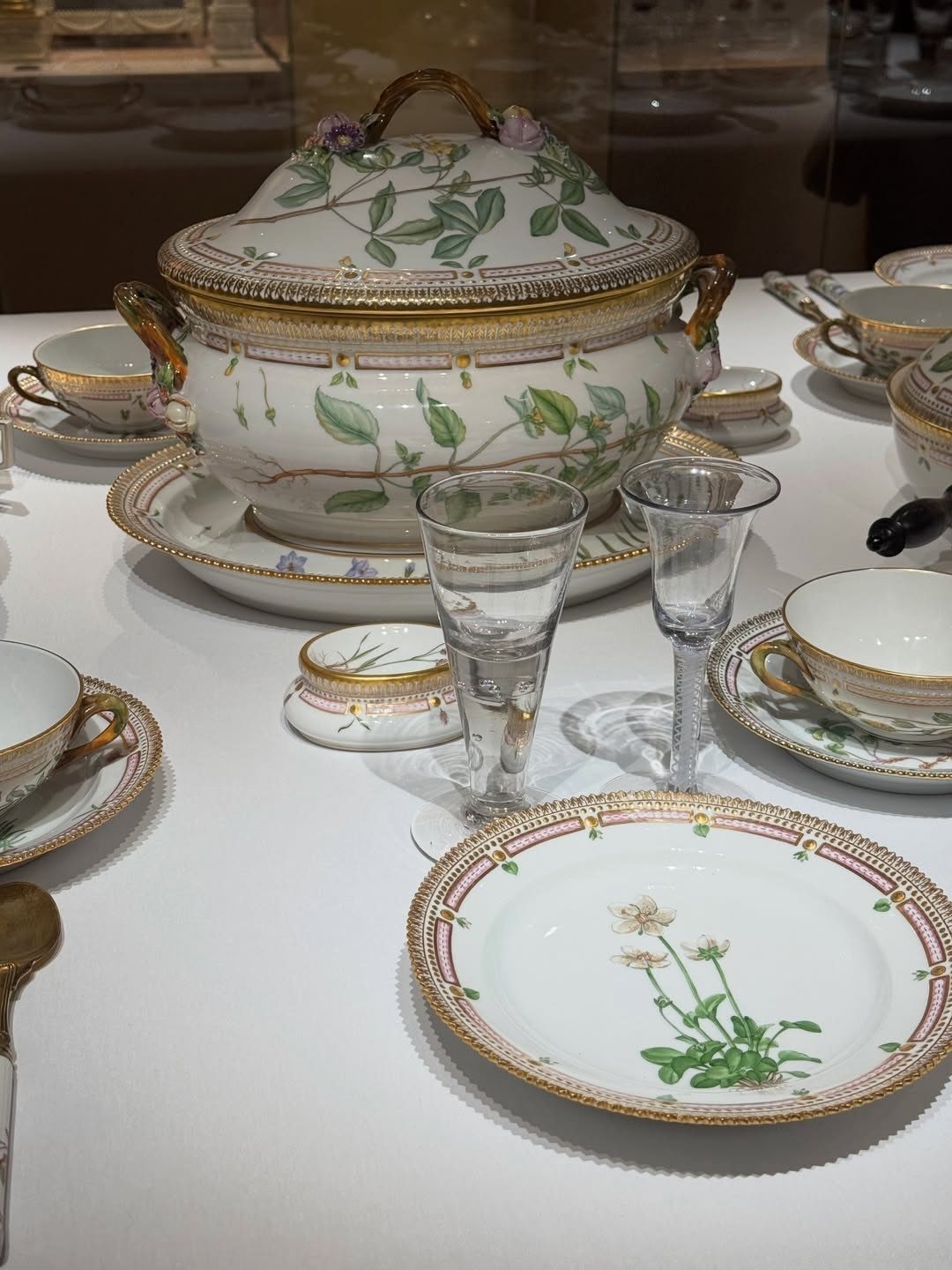
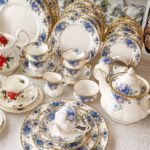
A gold-trimmed tureen is the piece that makes a handful of floral plates look like a full table.
Placed in the middle of a white cloth, it gives the eye one place to land before it travels out to the plates and cups.
On a tight budget, I’d buy the plates first and add the tureen once you find one with similar flowers.
Clear glasses and a plain white cloth leave the pattern as the only decoration. A floral tureen that is close to the plates, not identical, usually looks collected rather than copied.
While you can certainly find some inexpensive vintage Spode plates, there are some that are fairly valuable as well. In 2012, Christie’s auctioned off a set of 18 rhododendron-themed Spode plates for $6,875.
16. Green Vintage Plates
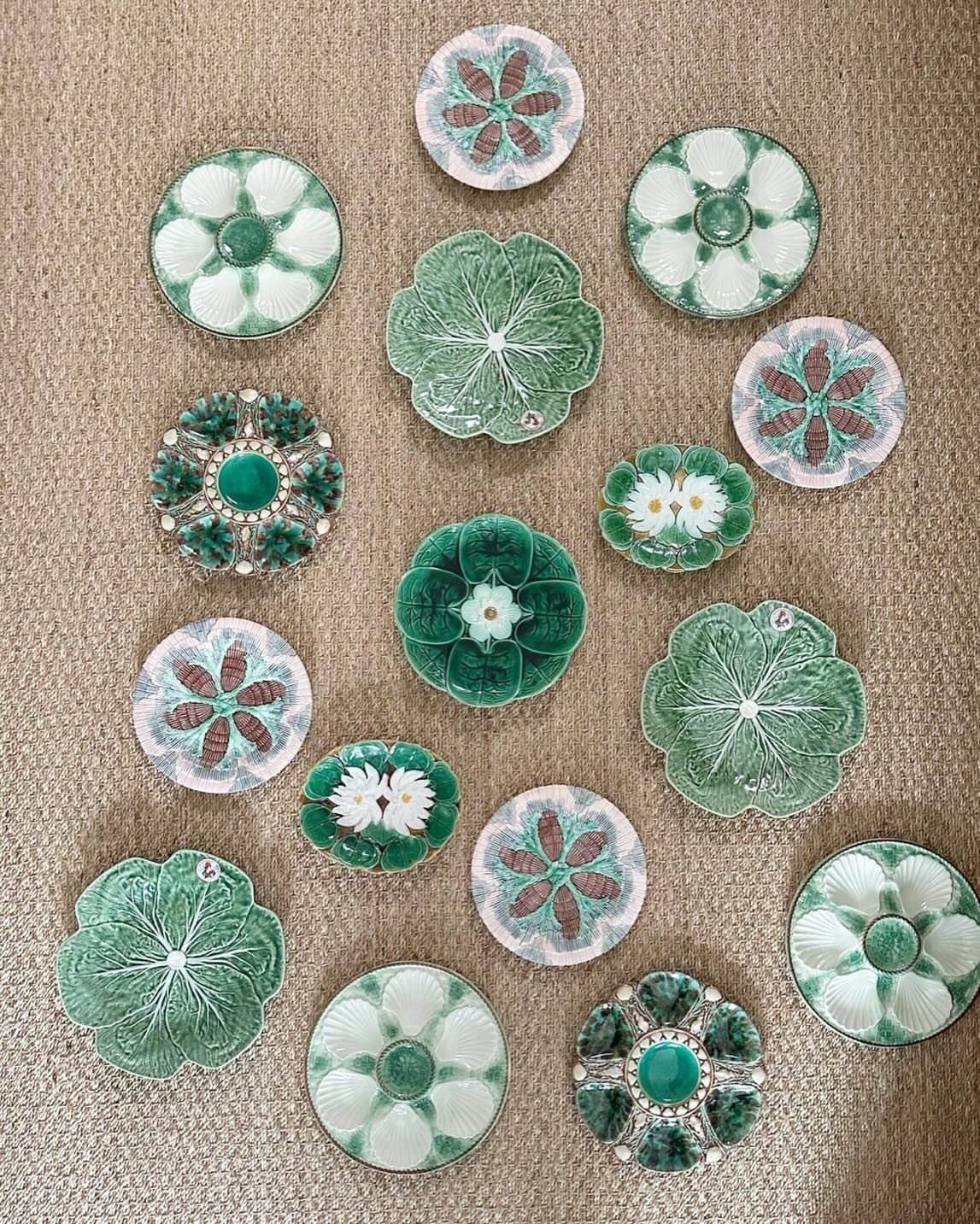
Plates and bowls with leaf, flower and tree patterns look related because they share one color pair: green and white. That makes this one of the easier looks to build a piece at a time.
Before buying more, lay what you own on a neutral surface and look at the greens side by side.
Some lean yellow, some lean blue, and I’d pick one direction and stay with it. Bowls are worth adding early; a mix of flat and deep pieces gives the collection more shape than plates alone.
17. Blue Floral Scalloped Plates
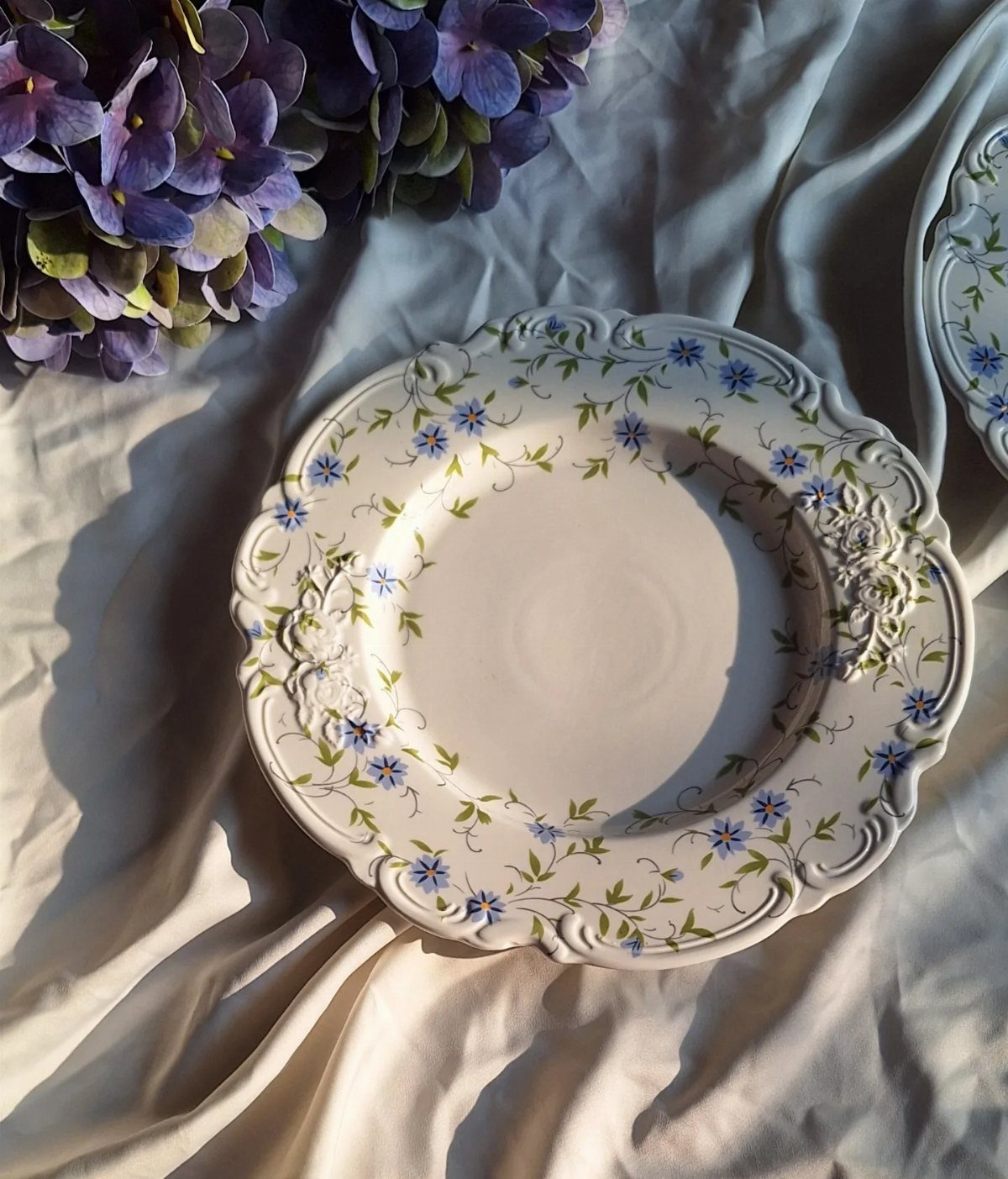
One white plate with a blue floral pattern and a scalloped edge can carry a whole corner. Set it on pale linen next to purple hydrangeas, and the blue and purple sit comfortably together.
I’d buy a single plate rather than a set, since this is a display piece first and a dinner plate second.
Keep the fabric light and the flowers in a cool purple or blue family. A simple vase beside the plate is enough; more objects only crowd the scalloped edge.
18. Pastoral Scene Platter
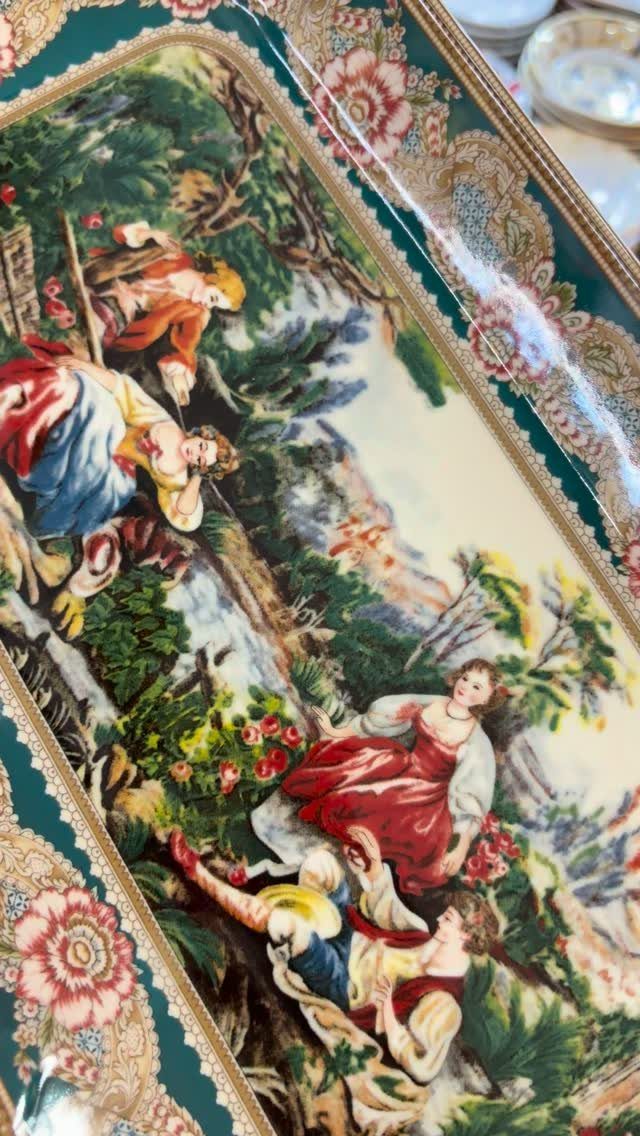
3 figures in rustic clothing, painted in a landscape and framed by a green floral border, make this rectangular platter more of a picture than a dish. The shape alone sets it apart from a round plate collection.
I’d hang it if the painting is detailed, and use it for serving only if the surface looks clean in the listing photos.
Pair it with plain white pieces so the scene stays the focus. Run a finger around the rim and look for scratches, flaking gilt or worn color, since the border frames the scene and any damage there shows right away.
Finding Vintage Dinnerware
Chairish lets you filter vintage dinnerware by color or style, and it pulls from dealers across the United States. The category holds 9,225 items, so a filter saves more time than scrolling.
Sort by Newest to catch fresh listings, or by price from low to high if the budget is fixed. If you want a particular pattern, follow that search and new arrivals will come to you.
Dealers ship from all over, so I’d enter my location and check shipping costs before falling for a plate. Heavy, fragile pieces can add a lot to the total.
Faire is built around wholesale products, so wholesale prices stay hidden until the site gives you access. That makes it a better fit for shops than for someone buying 2 plates for a table.
Plate Sizes and Set Formats
Listings sort plates into dinner, salad, dessert and soup, and they’re sold singly or as sets. Check the size line before you buy, because the same pattern can come in several diameters.
Sizes run wide.
Dessert plates in wholesale listings start at 17 cm, and dinner plates reach 27 cm. A dinner plate needs a roomier shelf or cabinet than a dessert plate does.
Set prices need a little math.
One listing for a set of 8 English bone china dinner plates is $1,185, so divide by the count before comparing it with single plates. Fornasetti is the splurge name here: a 12-plate hand-decorated set can climb to $5,750.
Divide the total by the plate count before you compare. If you only want 2 or 4, a single plate often costs less than a set.