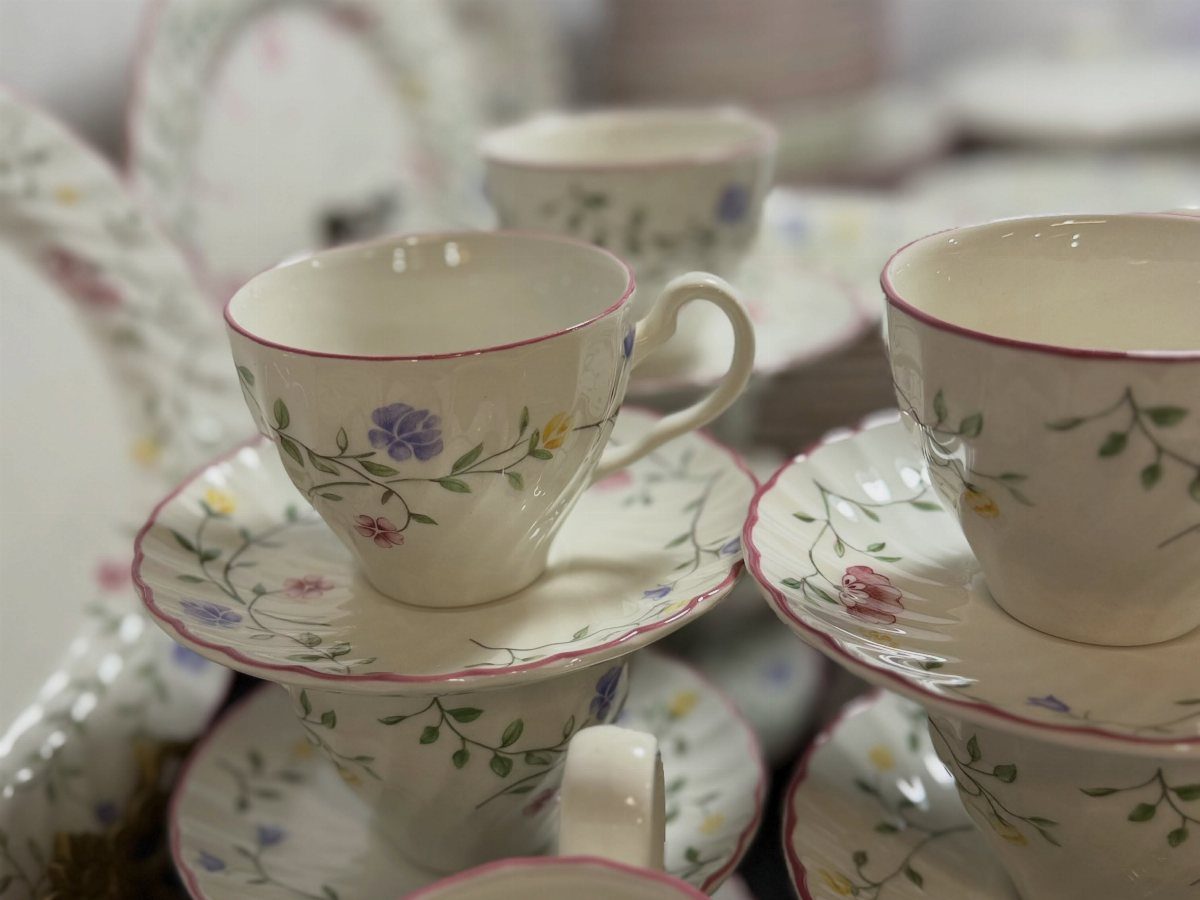
How you plan to use the dishes decides which of these is yours.
Gilt-rimmed porcelain like the Rosenthal rose decals suits display and gentle dinners, since the gold wears first, while cream stoneware with orange and yellow florals and brown rims holds up to daily use.
The ideas run from a few floral plates and little covered dishes to full china sets and tea sets, in everything from blue and green to sunny yellow, in earthenware, ceramic and stoneware.
1. Vintage Floral Plates
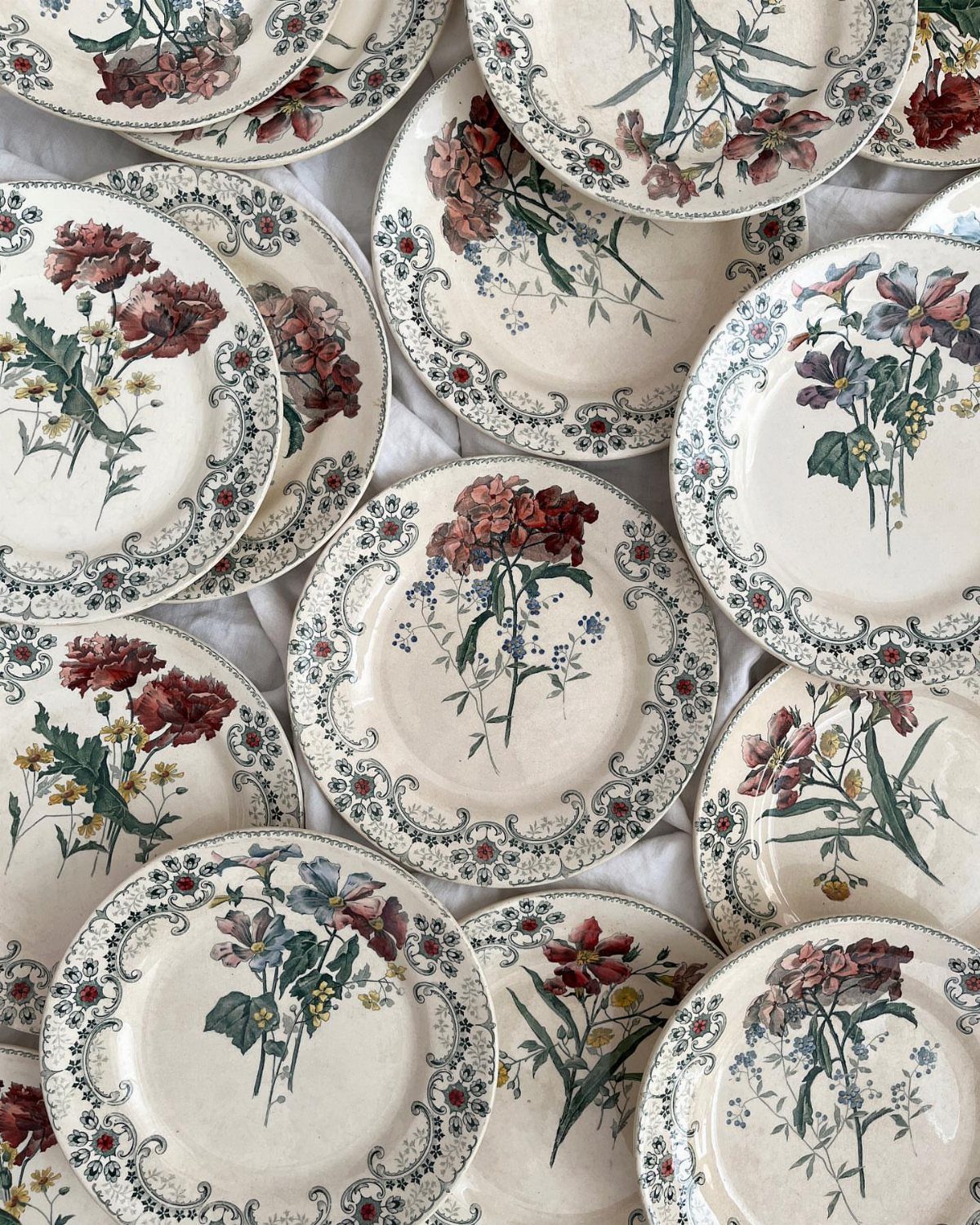
Plates are the easiest way into floral china, because the same piece works at dinner or on display. Red and blue blooms on a cream ground suit both jobs, and a stack takes up little shelf space.
I’d set a few out for meals and keep the rest stacked where you can see the borders. Hold a plate up to the light before buying to check how the pattern sits near the rim.
2. Vintage Teacups and Saucers
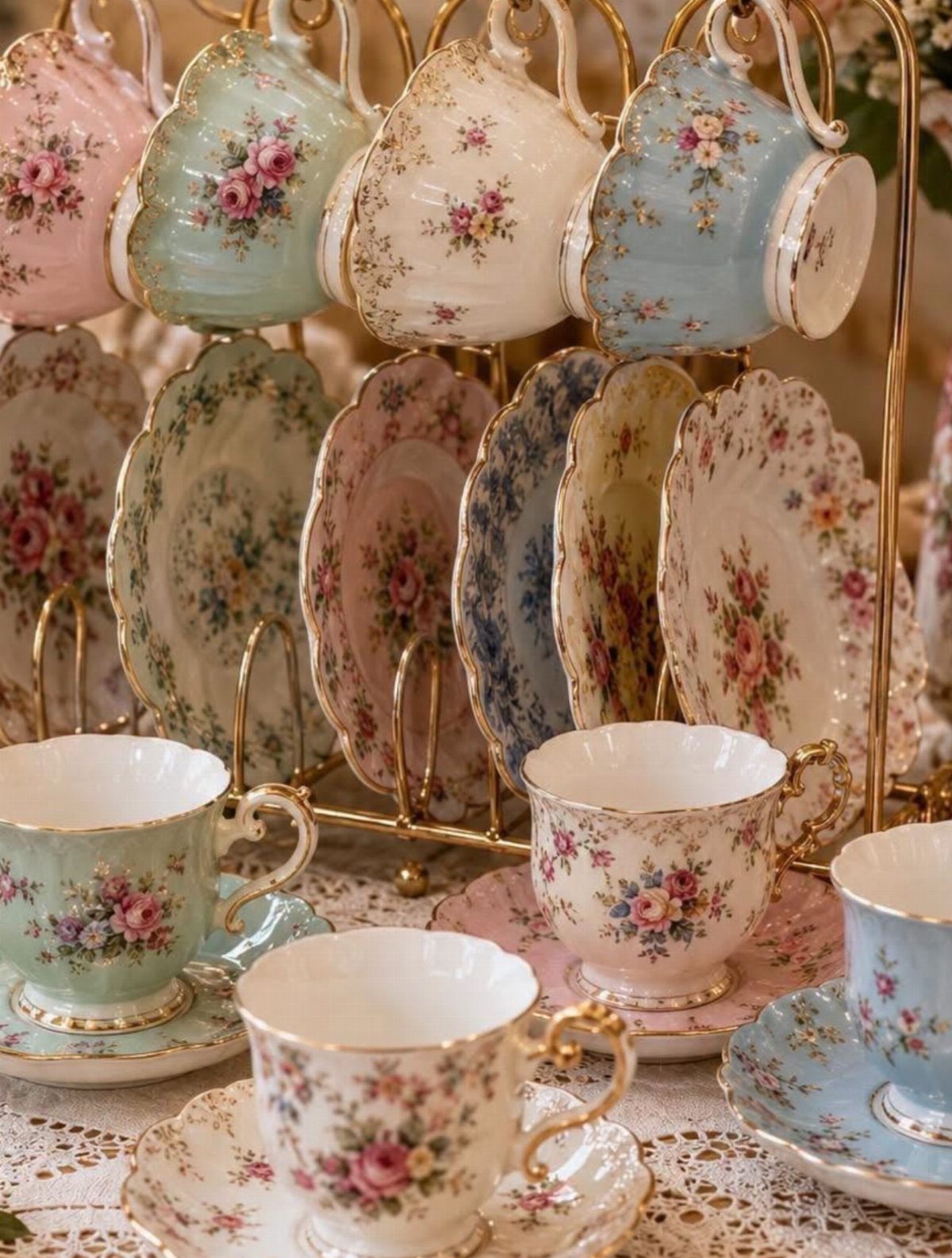
A gold rack lifts cups off the shelf and turns storage into a display, which helps if cabinet space is tight. Pastel florals look best when the cups are spread out and not stacked.
Choose by shape and style first: handle curve, cup width, saucer depth. I’d pick the cups I’d enjoy holding, then check that each saucer is a real match for its cup.
3. Small and Large Floral Bowls
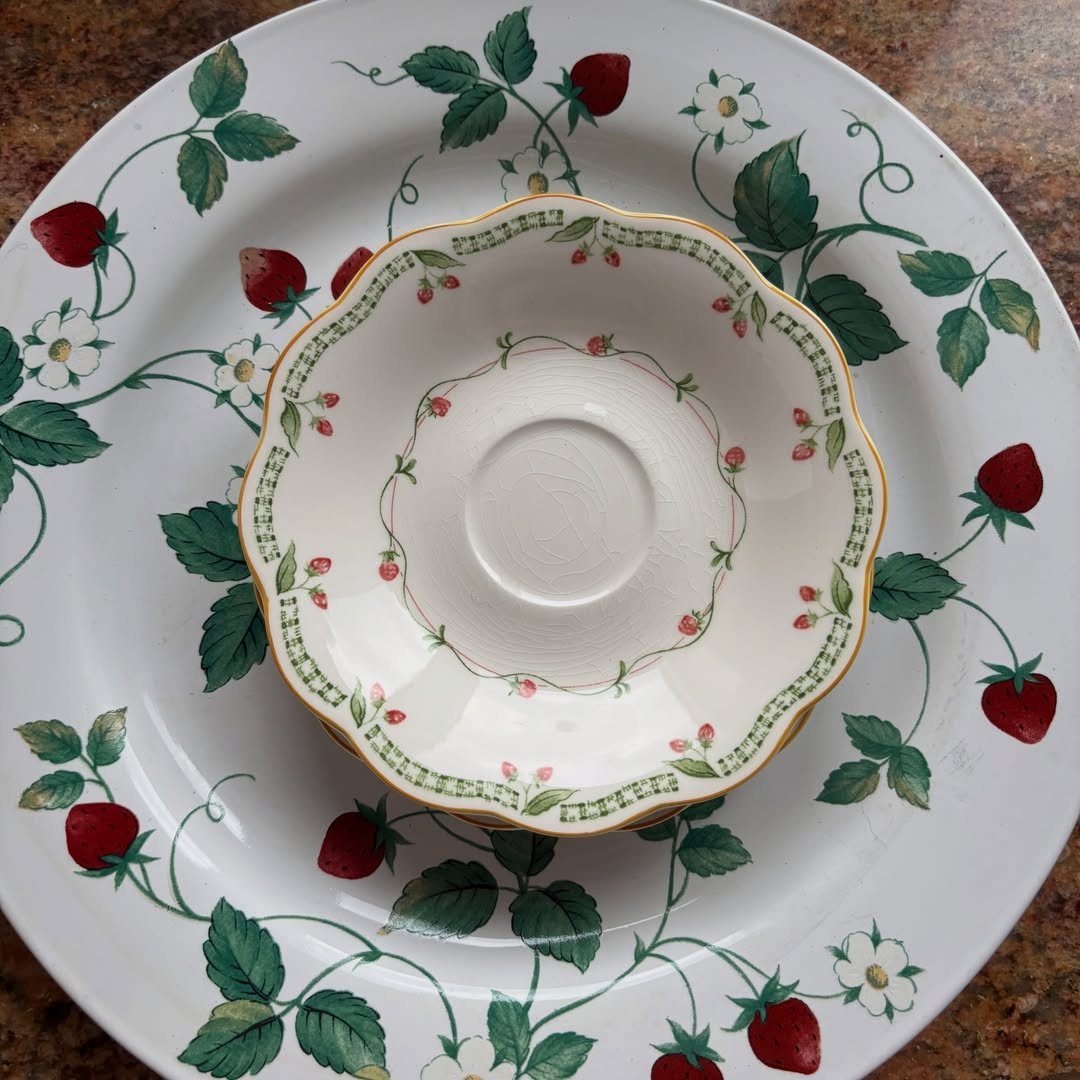
Bowls are the floral pieces I’d hunt for first. A small bowl sitting inside a larger plate of the same pattern is also a tidy way to store the pair.
Strawberry and leaf prints with gold rims read cheerful on a plain countertop. Use the small bowl for cereal or fruit, and keep the plate for serving.
4. Little Covered Dishes
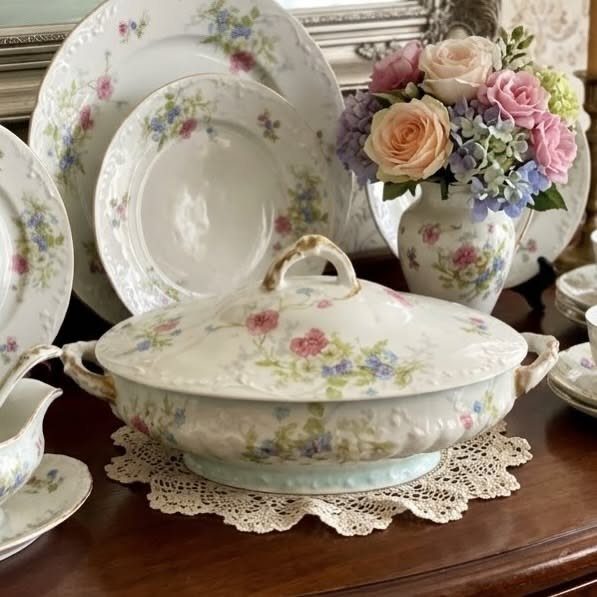
Small covered dishes are among the most collectible floral pieces, and they take up almost no room.
Lift the lid before you pay and check that it sits flat. A dish with its own lid is worth more to me than a prettier one without.
5. Vintage Pitchers
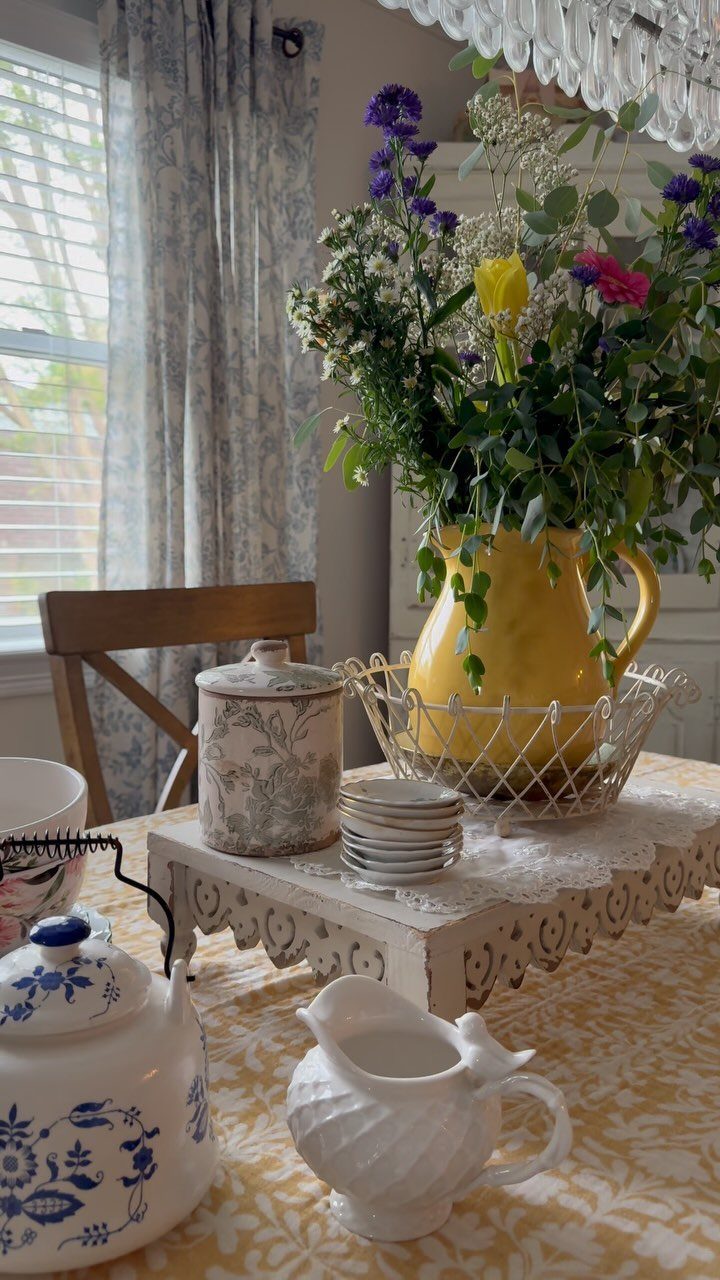
Fill a yellow pitcher with wildflowers and it becomes a centerpiece that costs a few dollars of stems. A white tray underneath keeps it grouped with a creamer, a teapot, and a canister, so the table looks planned.
The person who styled this one pairs the dishes with colorful pieces. That’s a good way to keep florals from feeling fussy.
6. Vintage China Sets
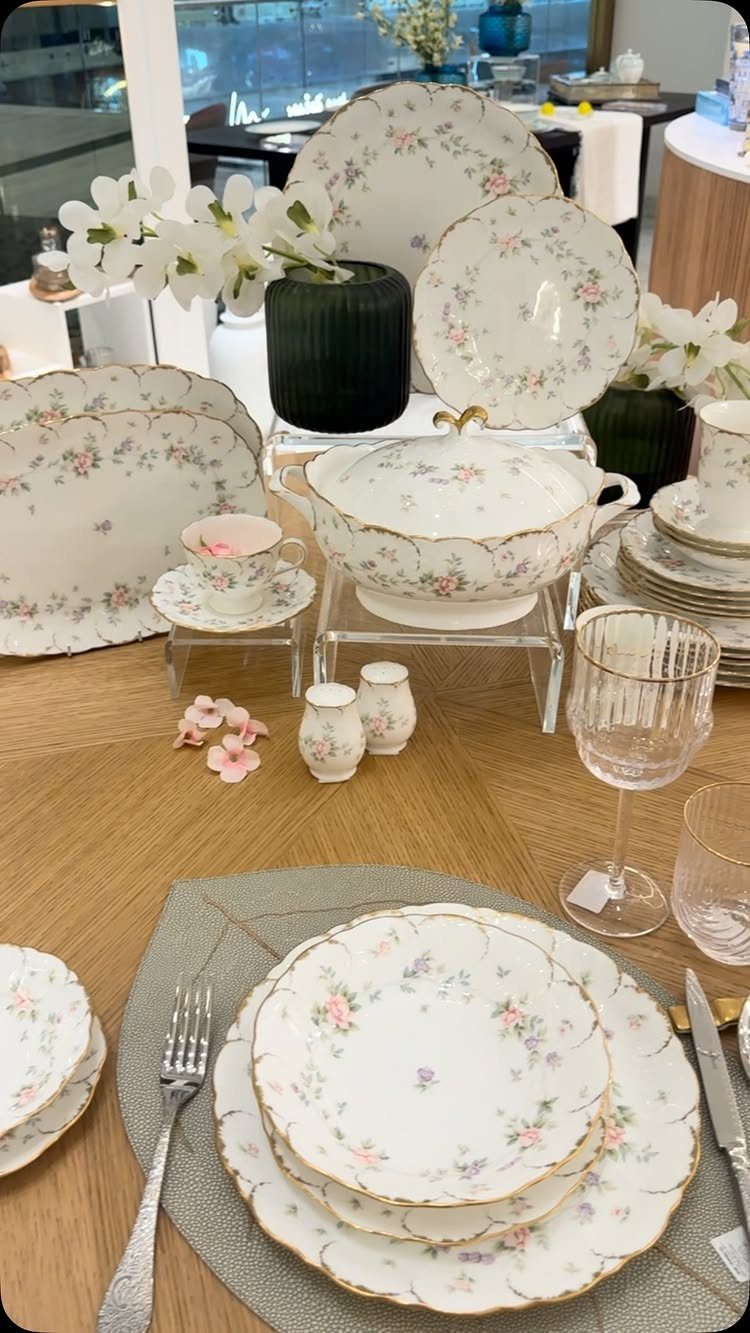
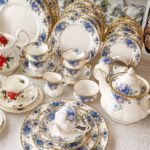
Plates, bowls, a tureen, and a teacup in one gold-rimmed floral pattern is what a set gives you: everything matches without any hunting.
Sets also take real storage room, so I’d count the pieces before buying and decide whether you need all of them.
Serving pieces like a tureen are the ones I’d keep, since they look good on the table even when empty.
And if it does- bring it home. Even if you already have 27 pieces just like it.
7. Mixed Floral Plates
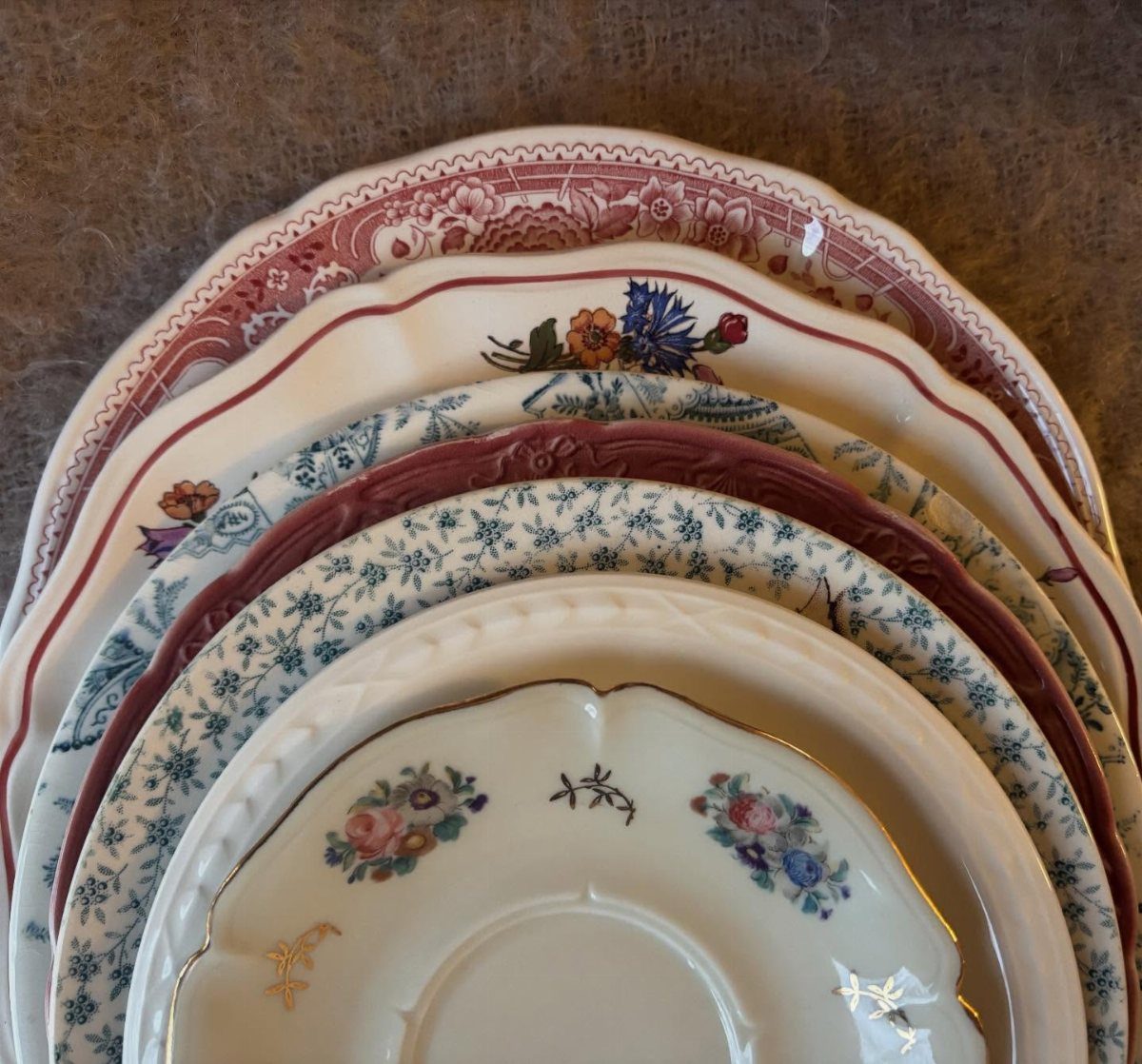
A mismatched stack is a fair answer to a set you can’t find or can’t afford.
Cream, pink, and blue grounds all sit well together when the florals share a tone, so I’d sort by color first and by pattern second.
Buy singles one at a time, and stop when the stack looks like a collection. Use them for dinner or hang a few on the wall.
8. Blue Floral Dinnerware
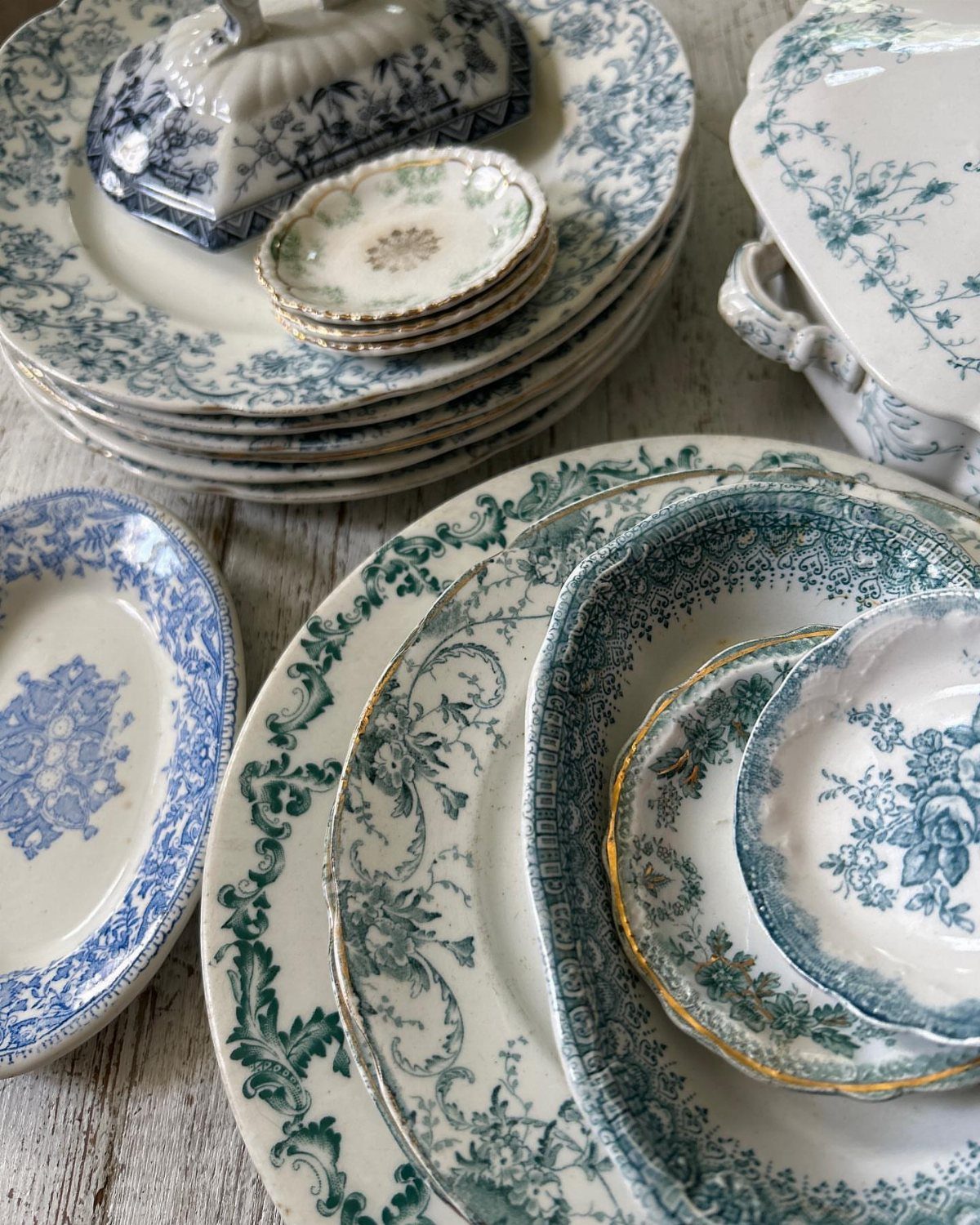
Blue florals on cream or white are the easiest to mix, since gold rims and teal accents tie different pieces together. A covered dish next to a few plates gives the shelf some height.
I’d choose by the blue itself: pick one shade family and let the gold trim do the matching. Teal against a deeper blue can look off, so lay pieces side by side in daylight before you commit.
9. Green Floral Earthenware
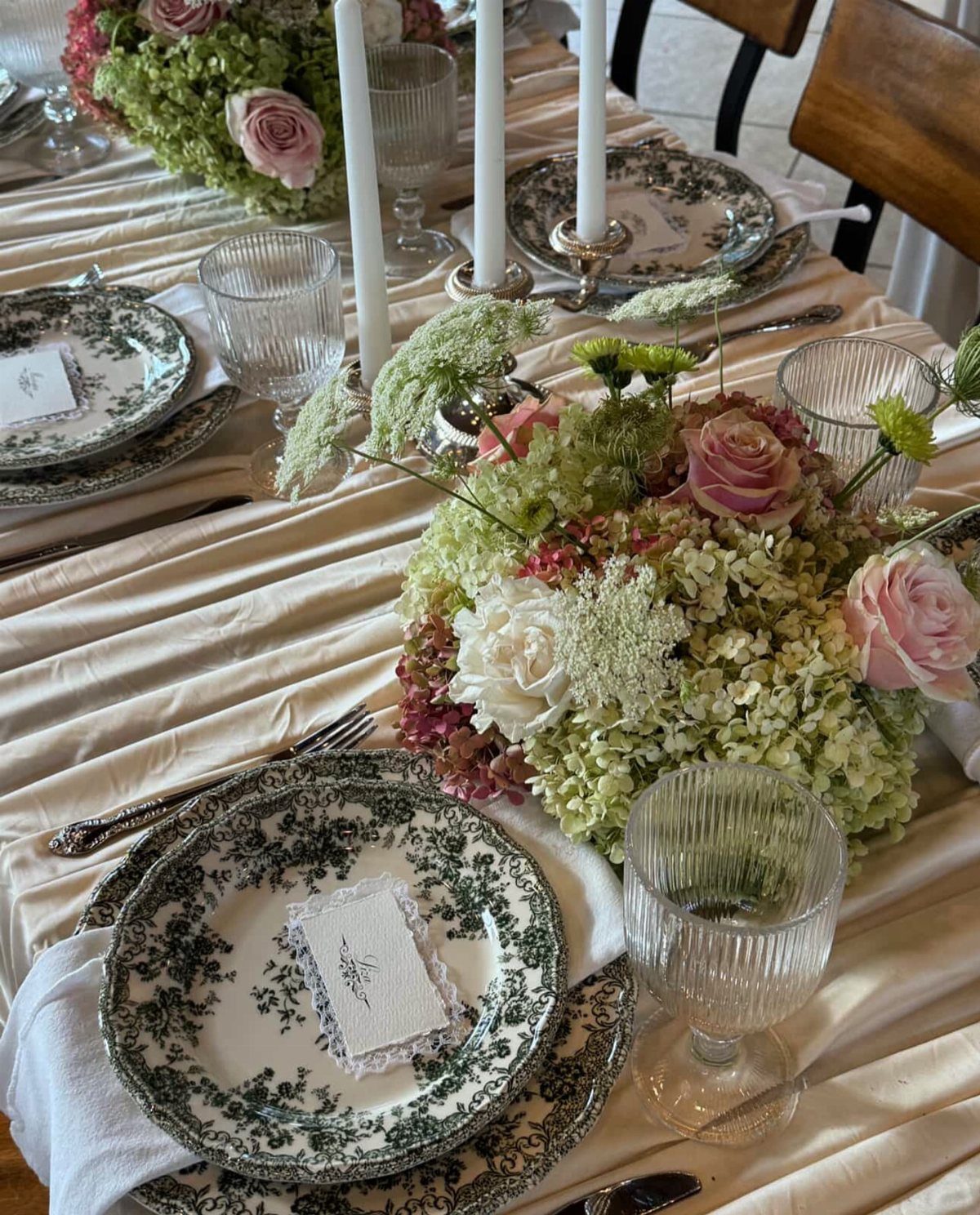
Green botanical prints on cream earthenware feel quieter than pink or red florals, which makes them easy to dress up with whatever is in bloom. Pink roses and green hydrangeas pick up the plate colors without competing with them.
Keep everything else on the table plain: a cream cloth, white candles, and clear ribbed glass. If you only own a few plates, flowers do the filling.
10. Rosenthal Continental Floral
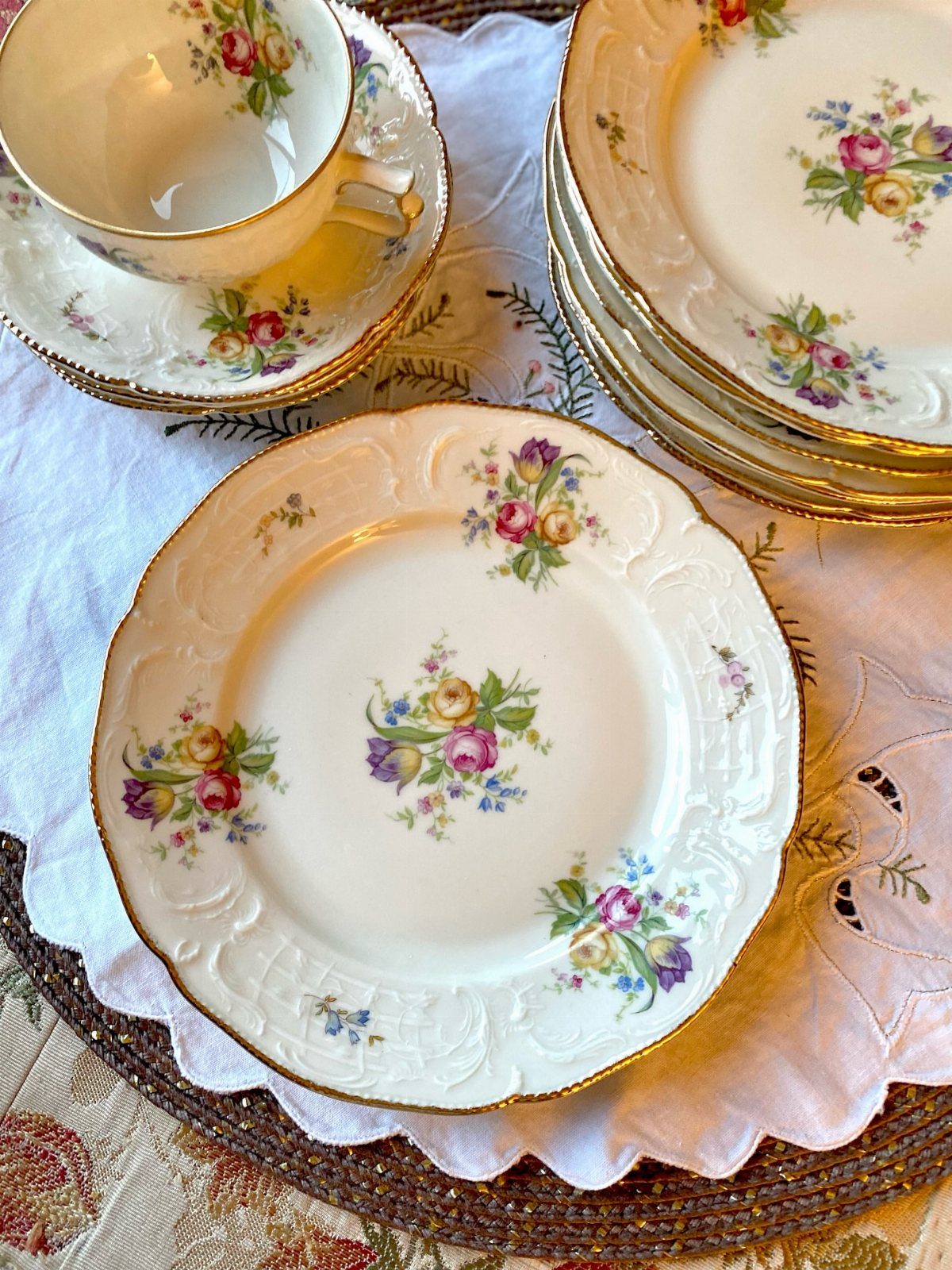
Rose decals with gilt rims are a pattern to look at closely, because the gold wears first.
Run a finger along the rim and the saucer edge before you buy, and I’d pass on any piece where the gilding is mostly gone.
Ivory porcelain looks best on lace or a plain white cloth, which leaves the floral pattern as the only color on the table. They’re worth using, but I’d keep them out of rough handling.
11. Baum Brothers Springtime
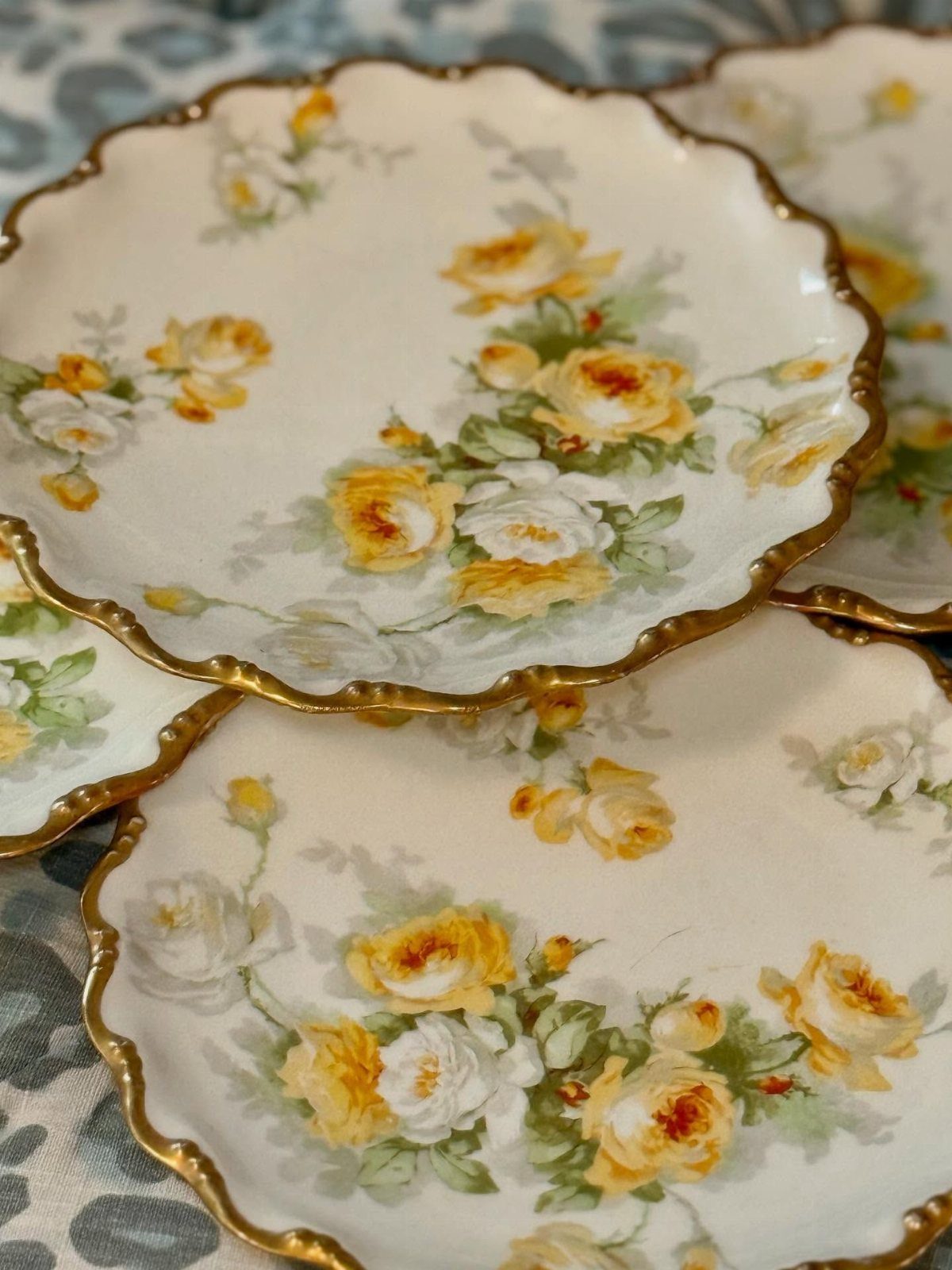
A delicate garland of yellow flowers around the rim, with a scalloped gold edge, gives a dinner plate plenty of charm without feeling heavy. White grounds keep the yellow clean and let the gilt read as a soft outline.
3 plates are enough to start. Set them over a patterned runner or fabric in blue and gray, which makes the yellow stand out.
12. Yellow Daisy Dinnerware
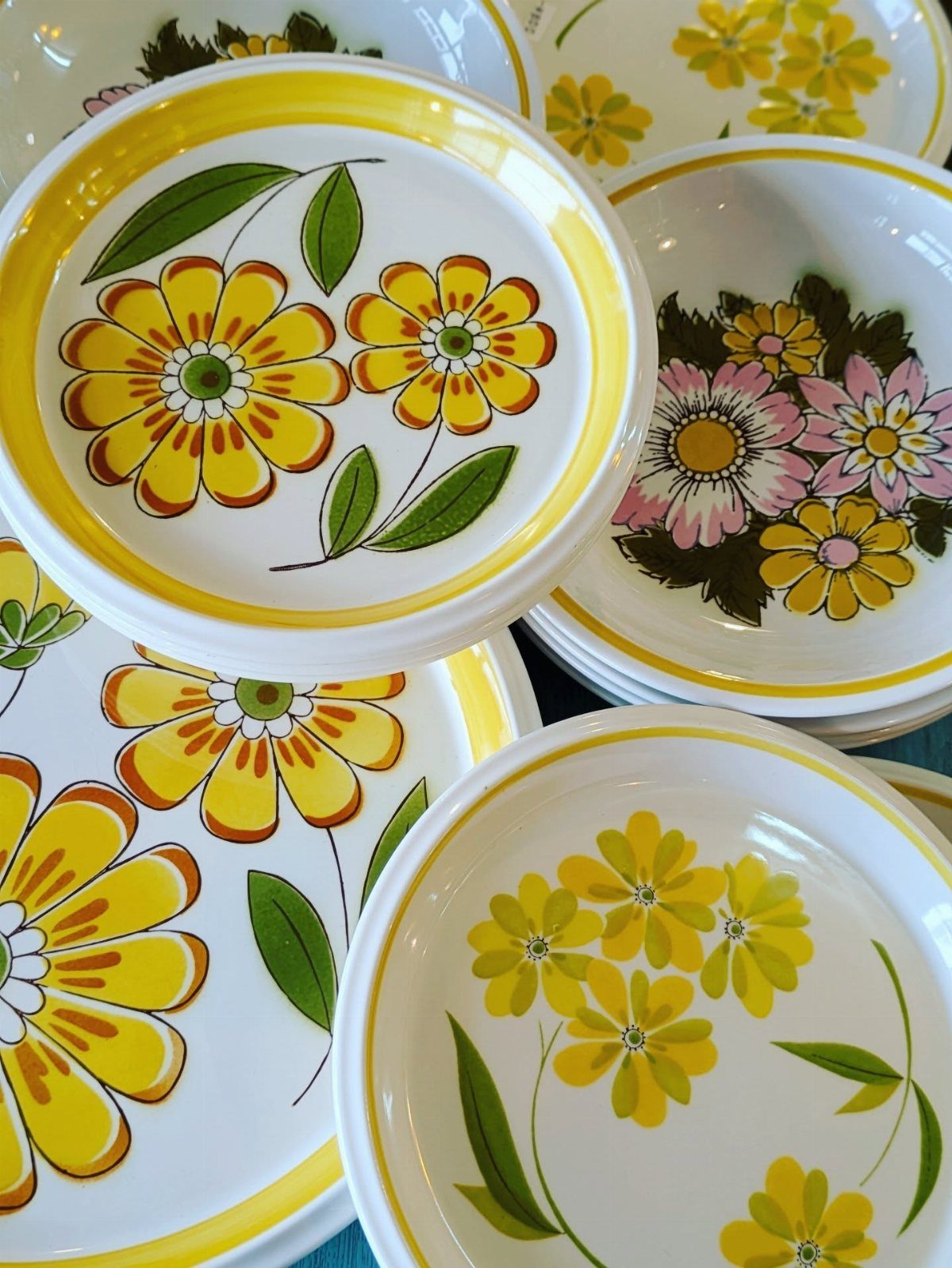
Bright yellow rims around white centers give daisy dinnerware a sunny look that holds up on an ordinary weeknight table. Green leaves keep the yellow from tipping into too sweet.
Plates and bowls in the same pattern stack neatly, which suits a small cabinet. I’d use the bowls daily and leave the plates out where the rims catch light.
13. Hearthside Sunshine Flowers
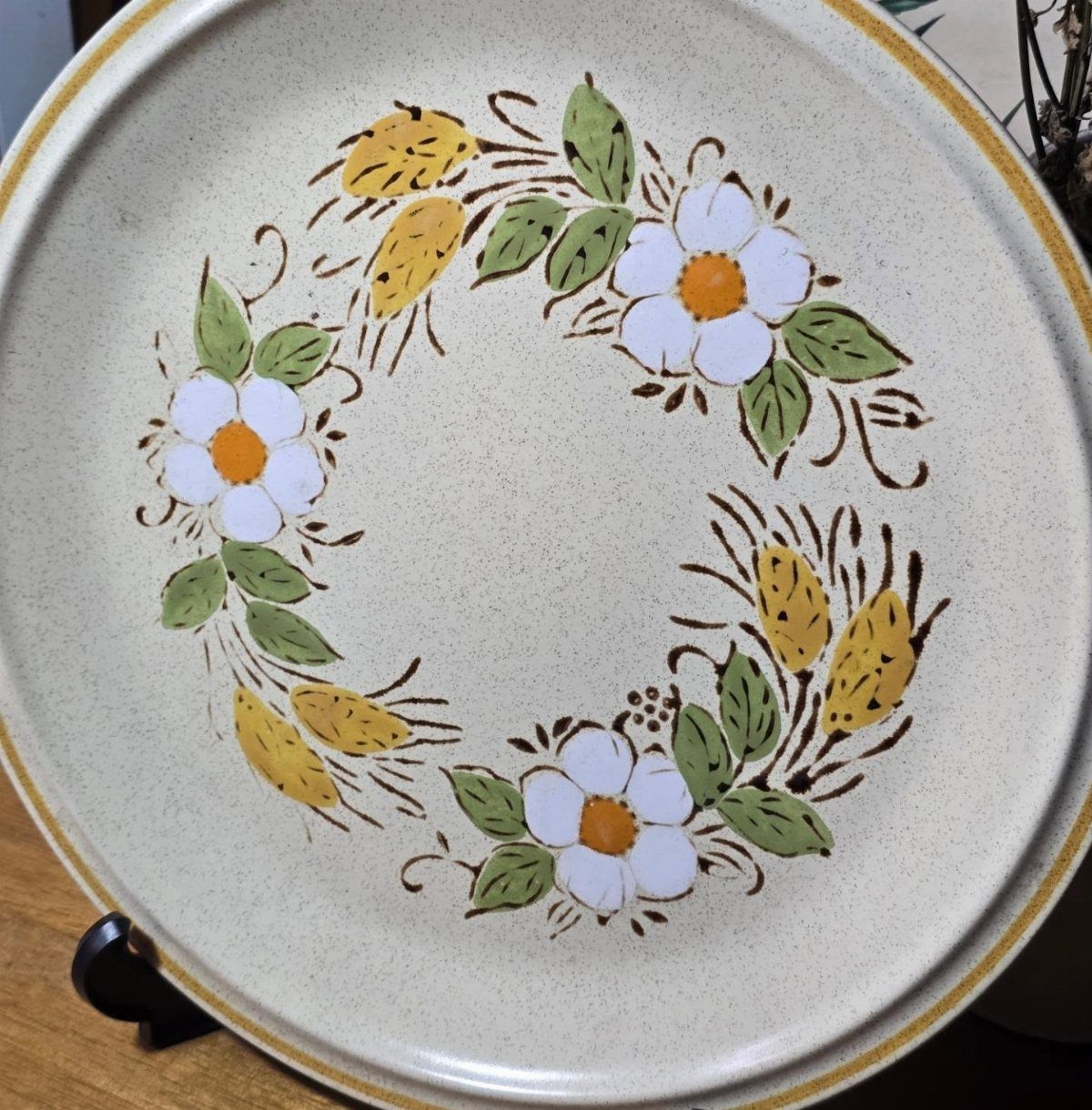
Hand-painted white blossoms and yellow leaves curve into a wreath on cream stoneware, and that circle gives the plate a finished look with nothing else on it.
Japanese stoneware dinner plates in yellow and orange florals sit comfortably next to plain white bowls.
Because the wreath fills the center, I’d keep food simple and let the painting show around it. A single plate propped on a shelf works as decor too.
14. Vintage Floral Tea Set
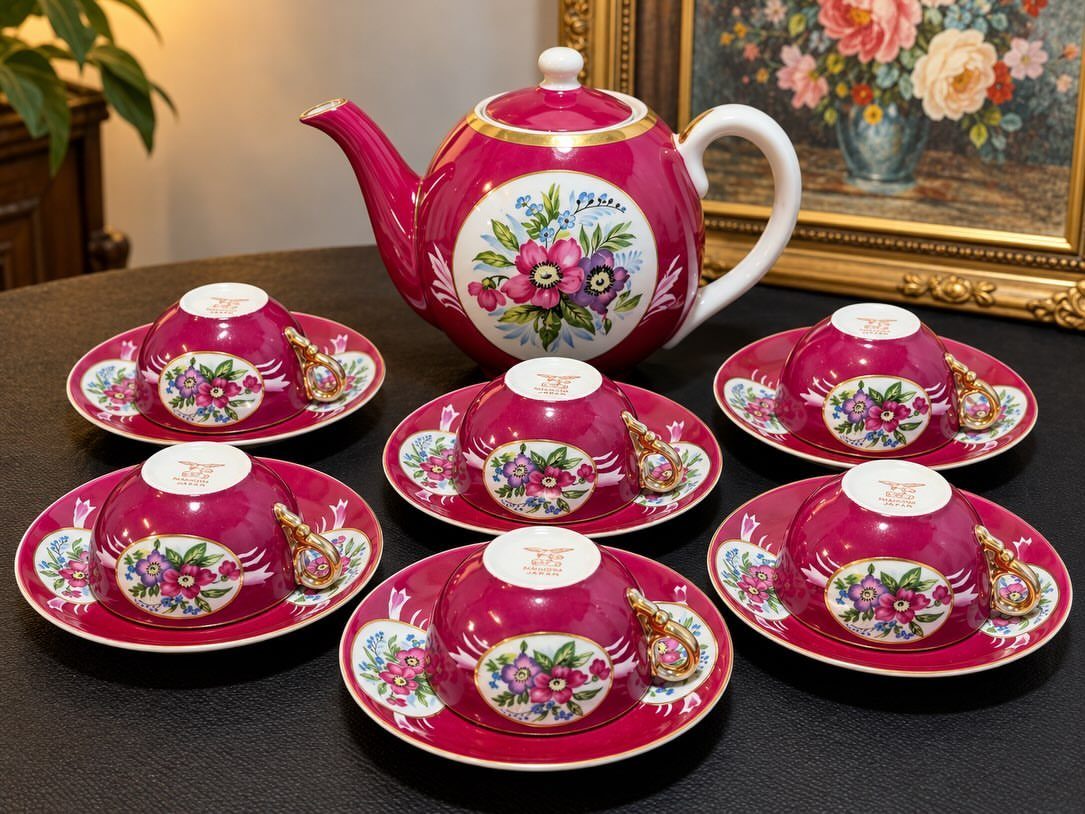
A teapot with matching cups and saucers in one magenta floral pattern is a quick route to the cottagecore look, since the porcelain details do the styling for you.
Keep the backdrop dark or plain, as it is here, so the color carries.
I’d count the cups and check each saucer against its cup before buying, then set the teapot at the center of the shelf or table with the cups around it.
15. Floral Ceramic Dinnerware
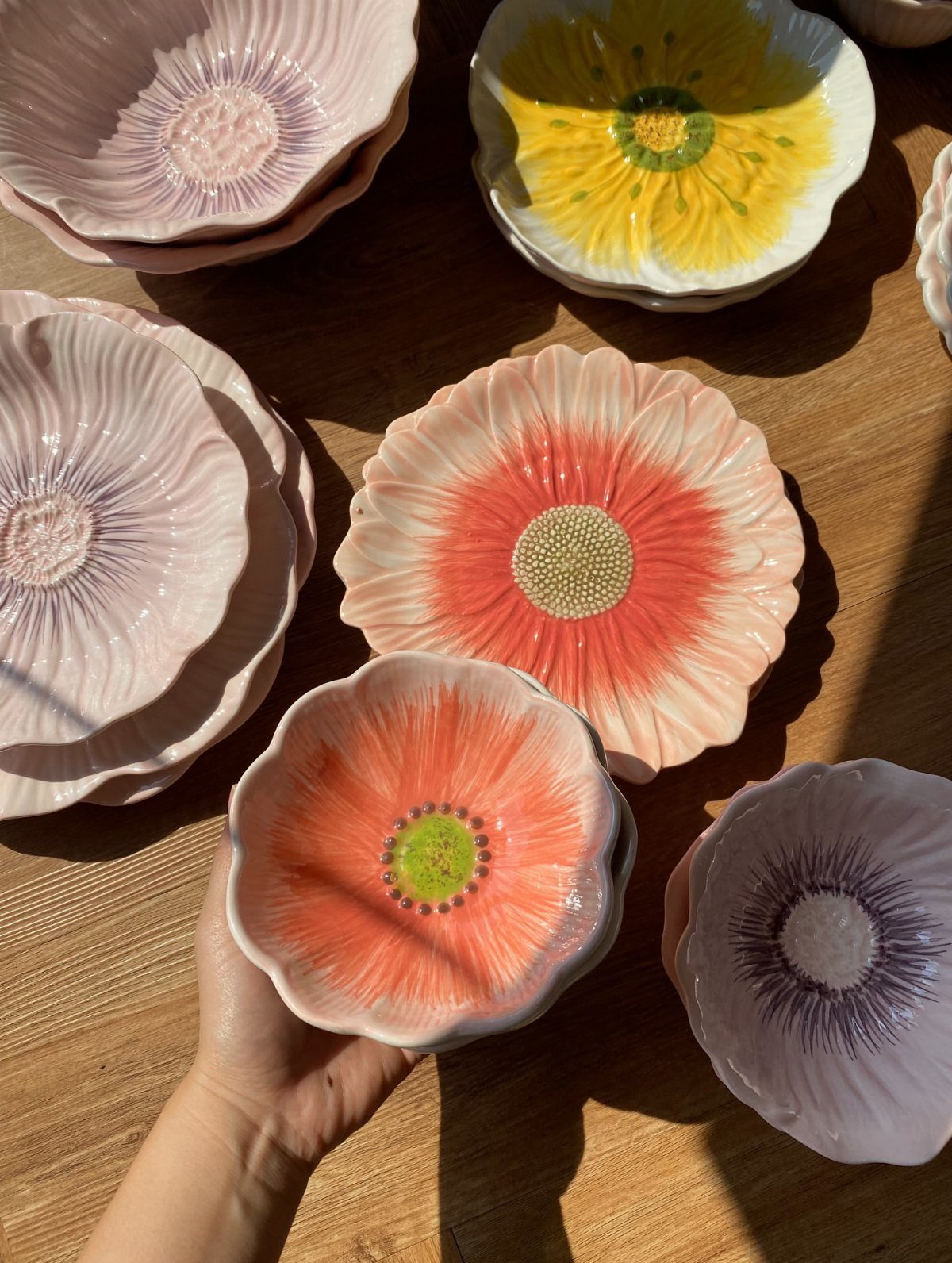
Bowls shaped like flowers, in pink, orange, and yellow, turn an everyday piece into the decoration. Pick them up for soup, snacks, or dips, and a wooden table or counter suits the warm colors well.
I’d buy a mixed handful and not a matched set. The petal shapes already supply the pattern, so each bowl can be a different color without looking random.
16. Floral Stoneware Set
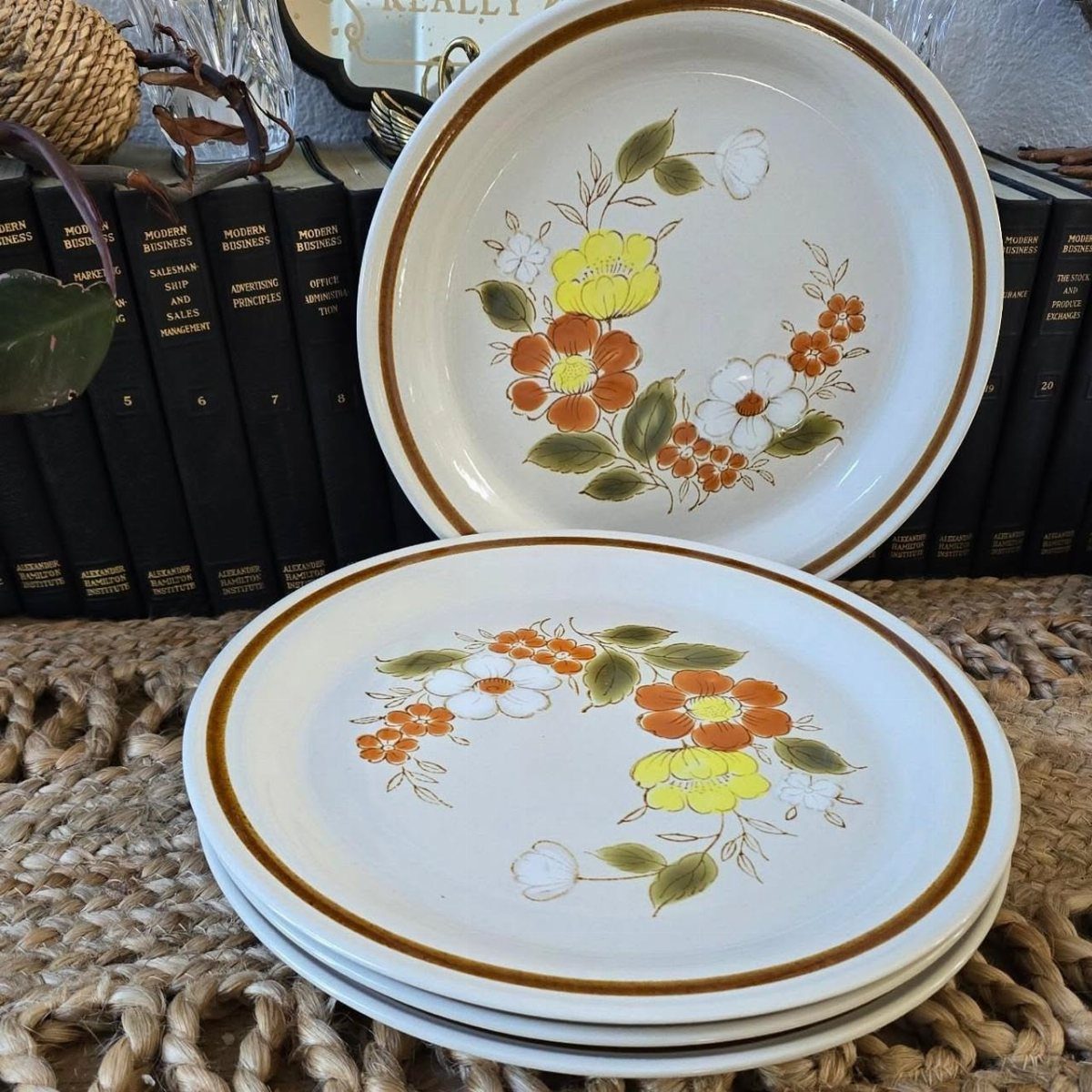
Orange and yellow florals with brown rims on cream stoneware give a warm, earthy palette that feels less formal than pastel china.
A matched set of plates and a bowl nests into one short stack, so it takes up very little cabinet room in a small kitchen.
A woven mat underneath suits the look. I’d choose these over delicate china if the dishes are going to be used every day.
17. Yellow Floral Dinnerware
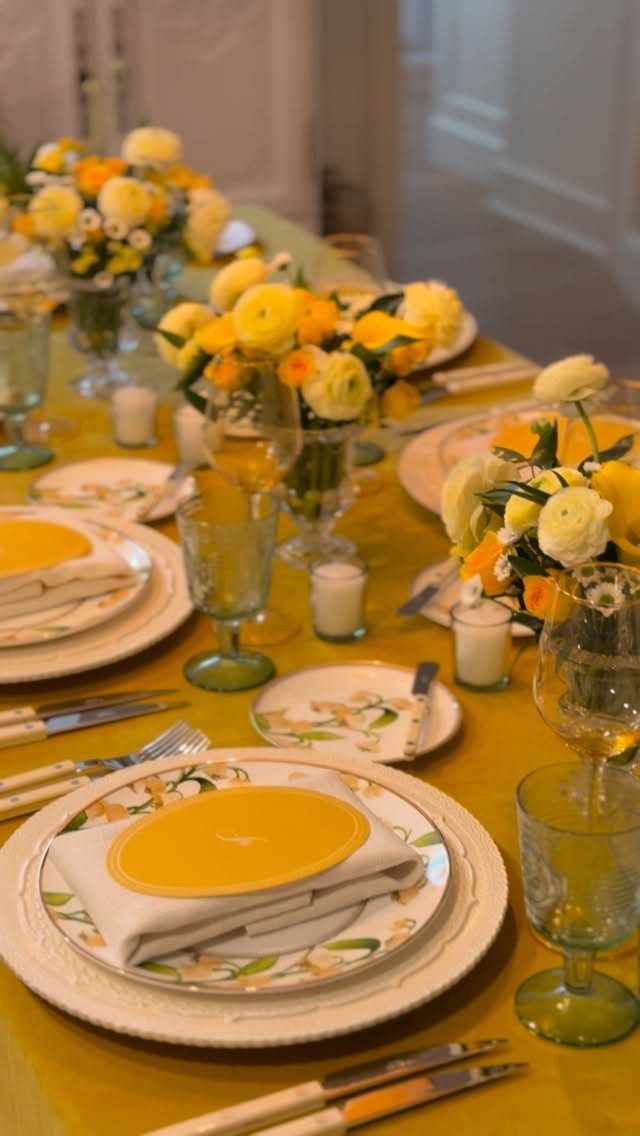
Yellow works as a table theme when the plates, glassware, and flowers all lean the same way. White napkins with yellow accents give the eye a place to rest, so the yellow doesn’t overwhelm a long table.
The range runs from vintage floral plates to modern-looking coordinated sets, so you can start with a few thrifted plates and add matching glassware later. I’d keep the linens white and let yellow stems fill the vases.
Frequently Asked Questions
Where can I find deals on vintage floral dinnerware sets?
Thrifting is a sensible place to start: a few thrifted plates can begin a collection, and you can add matching glassware later.
If a full set is out of reach, buy single plates one at a time and build a mismatched stack, sorting by color first and pattern second.
Once the stack on your shelf starts to look like a collection, that is a good moment to stop buying.
How to tell if a plate is vintage?
Look for a named maker, pattern, and country of origin, since vintage listings usually spell these out.
The Hearthside Sunshine Flowers plates, for example, are sold as Japanese-made stoneware. A floral look alone proves nothing, because new lines such as Zara Home’s floral earthenware copy the style, and some sets are sold as vintage-inspired.
What are some popular vintage plate brands?
Rosenthal Continental, Baum Brothers, and the Hearthside Sunshine Flowers pattern are 3 good names to look for.
Rosenthal makes ivory porcelain with rose decals and gilt rims, Baum Brothers’ Springtime has a yellow flower garland with a scalloped gold edge, and Hearthside is Japanese stoneware with hand-painted blossoms in a wreath.
On the gilded ones, check the rim first, since the gold wears away before anything else.