
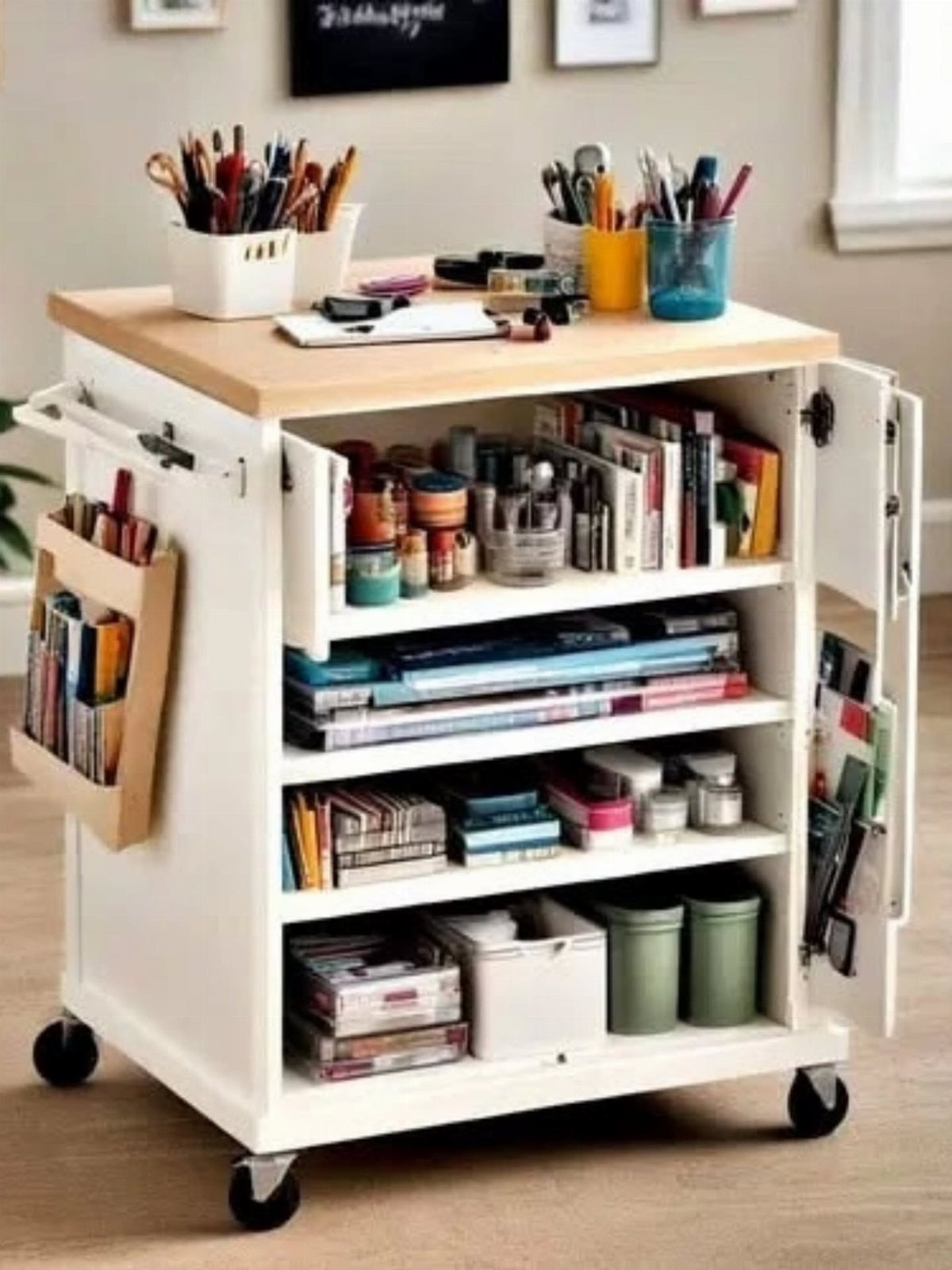
What you plan to store decides which cabinet is yours: oil-based paint, thinner and stain belong in double-wall steel, while leftover latex can sit behind wood, wire mesh or on open shelves.
The ideas here run from a self-closing steel flammable cabinet to a color-sorted rainbow of cans, and the Safety Data Sheet for each product tells you which side of that line it falls on.
1. Standard Flammable Cabinet

Oil-based paint, thinner and stain are what a steel flammable cabinet is built for; latex isn’t flammable and doesn’t need one.
For a workshop corner or a shed, I’d look for double-wall steel with self-closing doors, since that is what fire-safety cabinets commonly use.
Sizes run from a few gallons up to 90, so buy for what you actually own. Setting the cabinet on a pallet, as this one is, also keeps the base off damp ground.
2. Garage Storage Cabinet
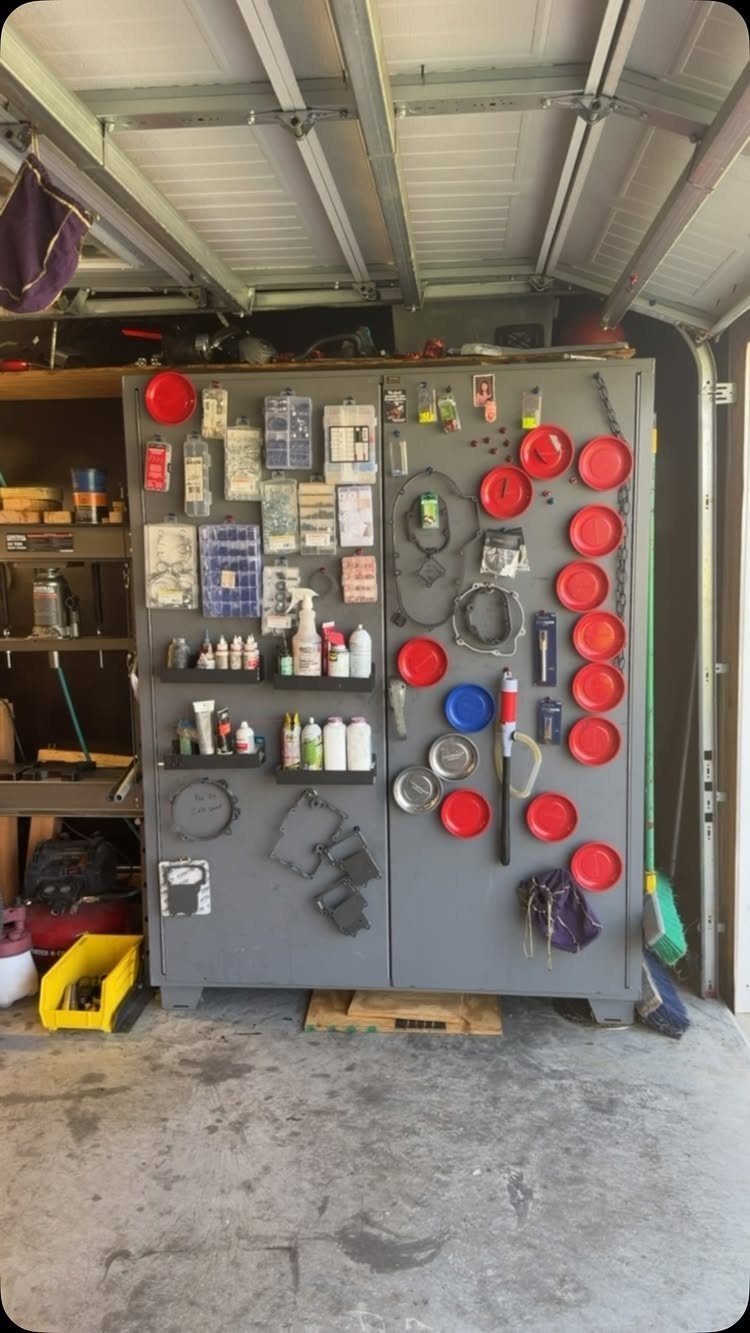
A big grey metal cabinet turns a garage wall into a paint station.
Cans, tools and supplies go on the shelves inside, and the doors carry the small things you grab mid-job. Magnetic strips or hooks on the door fronts keep stir sticks and lids within reach.
Garages swing hot and cold, and freezing can ruin latex paint. If yours does, I’d keep the cabinet against a wall shared with the house and store the cans on the lower shelves.
3. Decorative Paint-can Cabinet

Paint cans don’t have to hide. A wooden cabinet with a wire mesh door lets you read labels at a glance, and the open weave lets air move around the cans.
A painted finish like this suits leftover latex touch-up cans in a mudroom or craft room. Wood offers no fire protection, so I wouldn’t put solvents or oil-based products behind it.
Dab a swatch on each lid so you can match colors without pulling the can down.
4. Spray-can Storage Cabinet
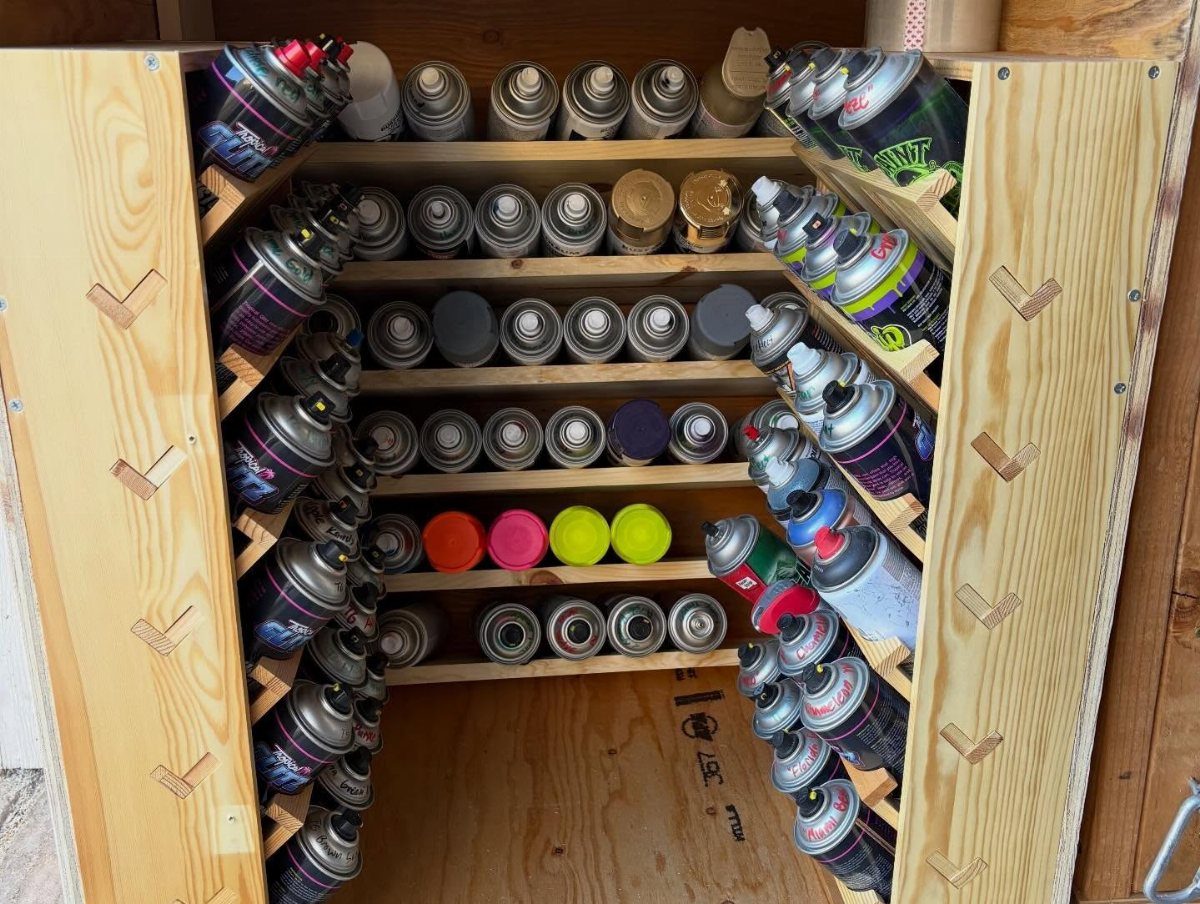
Slanted shelves are the smart part of a spray-can cabinet. Cans tilt toward you, so every nozzle and label shows without digging through a stack.
Sort by color or by finish, with primer and clear coat in their own row.
Spray paint is pressurized and flammable, so keep the cabinet away from heaters and water heaters. A wooden cabinet like this one is fine for a modest collection, but a large stash belongs in steel.
5. Paint-filled Cabinet

A color-sorted cabinet is the pick for anyone who buys paint by the shade. Arranging cans in a rainbow means you scan one band instead of reading every cap.
Spray caps often don’t match the paint inside, so label the shelf edge with the color name.
Leave a gap or two in each band, because colors fill unevenly and a packed row forces a reshuffle with every new purchase. White shelving keeps the whole thing bright.
Check Paint Hazard Classification
Before buying a cabinet, pull up the Safety Data Sheet for each product you plan to store in it. It gives the hazard classification, and that decides whether you need fire-rated storage at all.
OSHA uses flash point and boiling point to sort flammable liquids into 4 categories. Category 1 liquids are the most flammable, with a flash point under 73.4°F, and Category 4 sits at the mild end of the scale.
Once you know what you own, a few habits keep the setup compliant:
- Keep an updated inventory of every paint you store.
- Write the contents and hazard class on every can so you can tell them apart at a glance.
- Kids and visitors shouldn’t be able to reach the paint, so put the cabinet somewhere out of their way or behind a lock.
- Leftover paint you will never use belongs at a household hazardous waste drop-off site, not in the trash.
Cabinet Storage Quantity Limits
Every cabinet has a legal ceiling. NFPA caps a single cabinet at 120 gallons.
If you’re anywhere near those numbers, stop and think about a dedicated paint storage building. Past 60 gallons, that is the safer route, and most home painters never come close.
For a small collection, a mini cabinet in 2, 4 or 12 gallons is plenty, and it sits right where you work. A space saver model holds up to 45 gallons in only 18 inches of depth, with folding doors that need little swing room.
Space saver flammable storage cabinets fit into tight spaces without sacrificing quality or storage quantity. With an 18-inch depth and varying widths, space saver cabinets hold up to 45 gallons.
Frequently Asked Questions
What is a flammable cabinet?
A flammable cabinet is a steel storage cabinet built to hold flammable liquids such as oil-based paint, thinner and stain.
Typical construction is reinforced double-wall 18-gauge steel with an air space between the walls, plus self-latching doors, a raised leakproof sill, a grounding attachment and a three-point key lock. Latex paint isn’t flammable, so it doesn’t need one.
Does a flammable cabinet need to be vented?
No; NFPA 30 leaves venting optional, and the cabinet’s sealed construction is part of how it resists fire. State or local rules can differ, so check with the authority having jurisdiction in your area before you decide.
What is the best place to store flammable and combustible liquids?
Pick a cool, dry spot with good airflow, well away from heat sources and exits, and put the liquids in a fire cabinet there.
Keep it clear of heaters and water heaters, and label the contents so first responders can identify them quickly.
What can be stored in a combustible storage cabinet?
Paints and inks rated as combustible can live in a combustible storage cabinet. Anything that ignites easily at normal working temperatures, like oil-based thinner, belongs in a flammable cabinet instead.
What sizes do paint storage cabinets come in?
Capacities start at a few gallons and climb to 90.
Mini models in 2, 4 and 12 gallons suit a small collection kept right where you work. A space saver unit packs 45 gallons into a cabinet just 18 inches deep, and its folding doors need little clearance to open.
How do I choose the right paint storage cabinet?
Count how much paint you own, measure the spot where the cabinet will sit, and leave room for future purchases. Look for steel construction, self-closing doors, adjustable shelves and a secure lock.
How many gallons of paint can I store in one cabinet?
Inside a single cabinet, OSHA caps Category 1, 2 and 3 flammable liquids at 60 gallons combined, while Category 4 can go up to 120 gallons. Past 60 gallons, a separate paint storage building is the safer choice, though few home painters get anywhere near that.