Blue and white decor runs from a single patterned vase or a set of dish towels to a glossy epoxy floor and a blue range with gold knobs.
Curtains, a runner, table linens and stools come out as easily as they go in, while cabinets, tile, flooring and a blue range are projects you live with for years.
1. Two-tone Cabinets
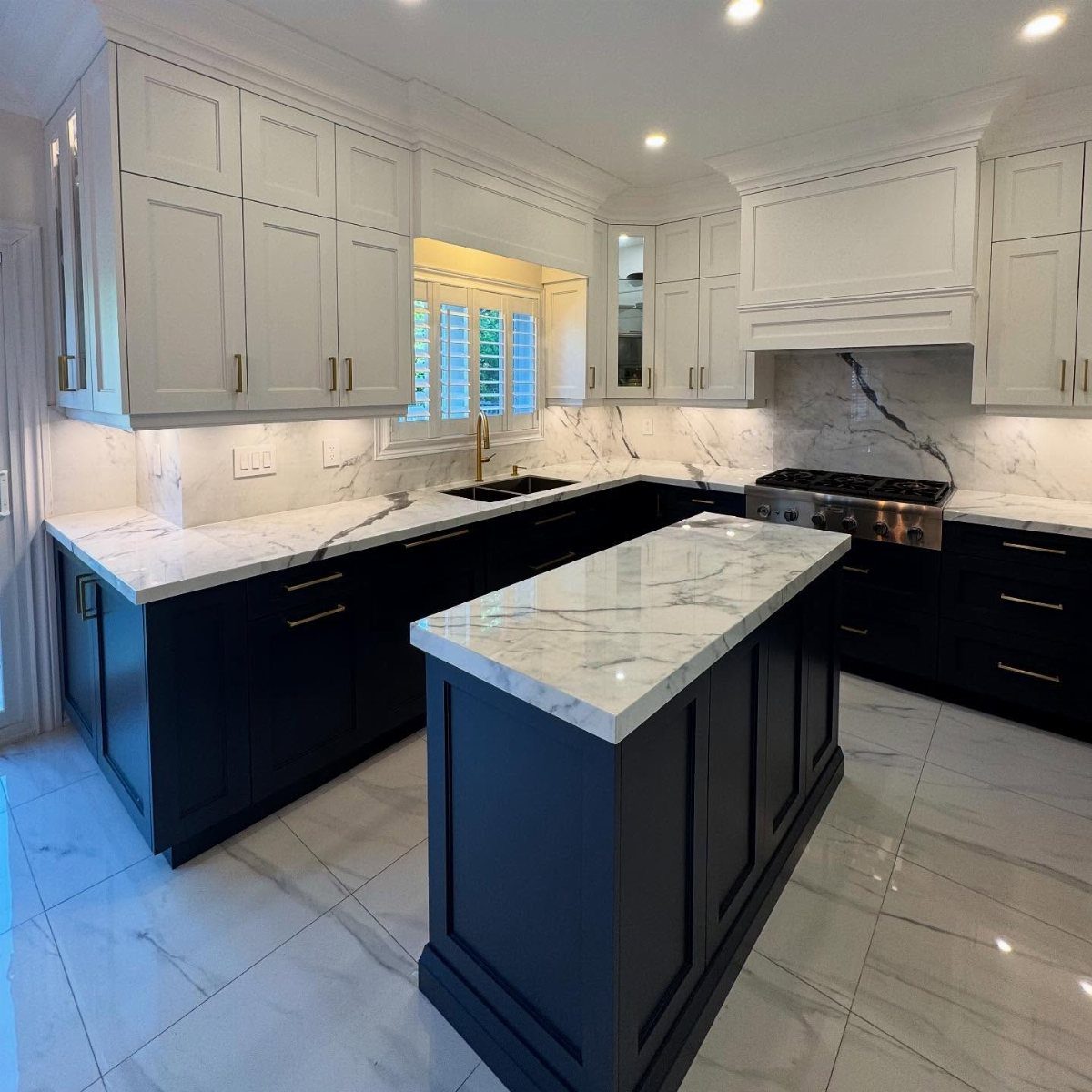
Painting the lowers navy and leaving the uppers white splits the visual weight in a way a single color can’t. A dark blue base grounds the room, and white uppers keep the walls open and bright.
Carry the navy through to the island so the two-tone reads as a plan, not an accident. I like white marble tops here because they sit between the 2 colors and soften the jump.
Repainting only the lowers is also less work than doing every door in the room.
2. Blue Kitchen Island
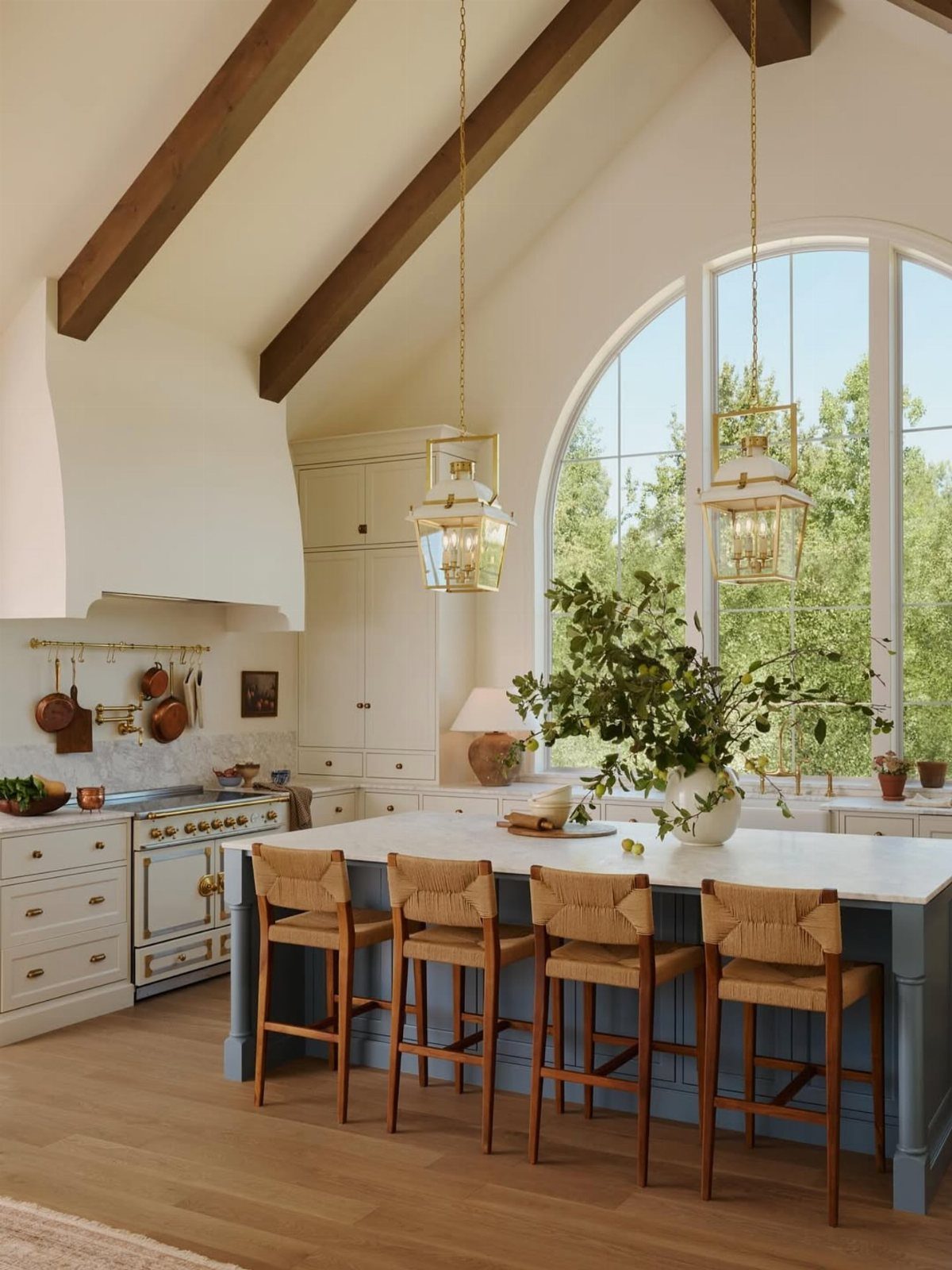
An island in blue turns one piece of furniture into the room’s anchor, and everything around it can stay white. That restraint is what makes it work: white cabinets and a white countertop let the island carry the color alone.
Wooden stools warm up the blue. If you rent, a freestanding blue cart or butcher-block table gets you a similar effect without touching the cabinets.
3. Blue Tile Backsplash
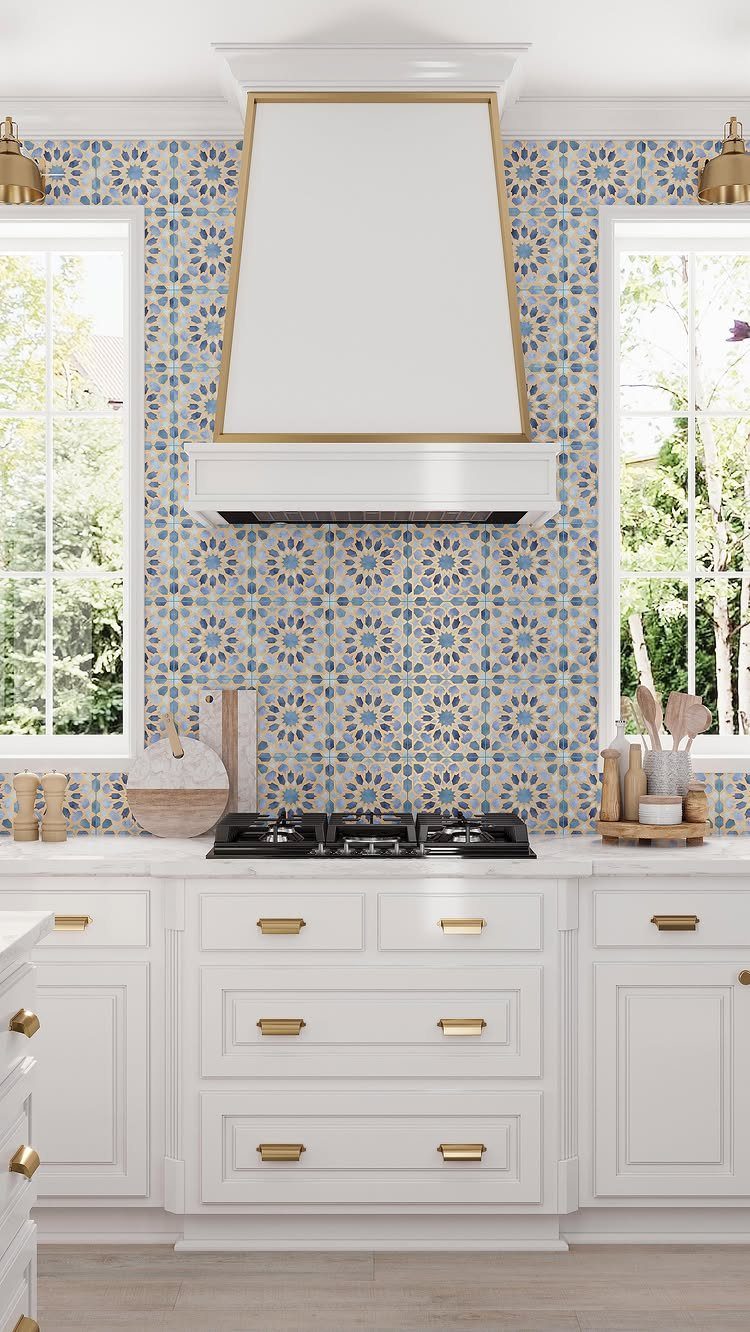
A patterned blue-and-white backsplash does the most color work in the smallest area. One wall of tile behind the stove is enough to set the scheme for the whole kitchen.
Keep everything around it quiet. White cabinets and a white range hood let the pattern lead, and gold handles add a small warm note without competing.
For a weekend project on a budget, peel-and-stick tile in a similar pattern is a reasonable stand-in for the real thing.
4. Navy and White Kitchen
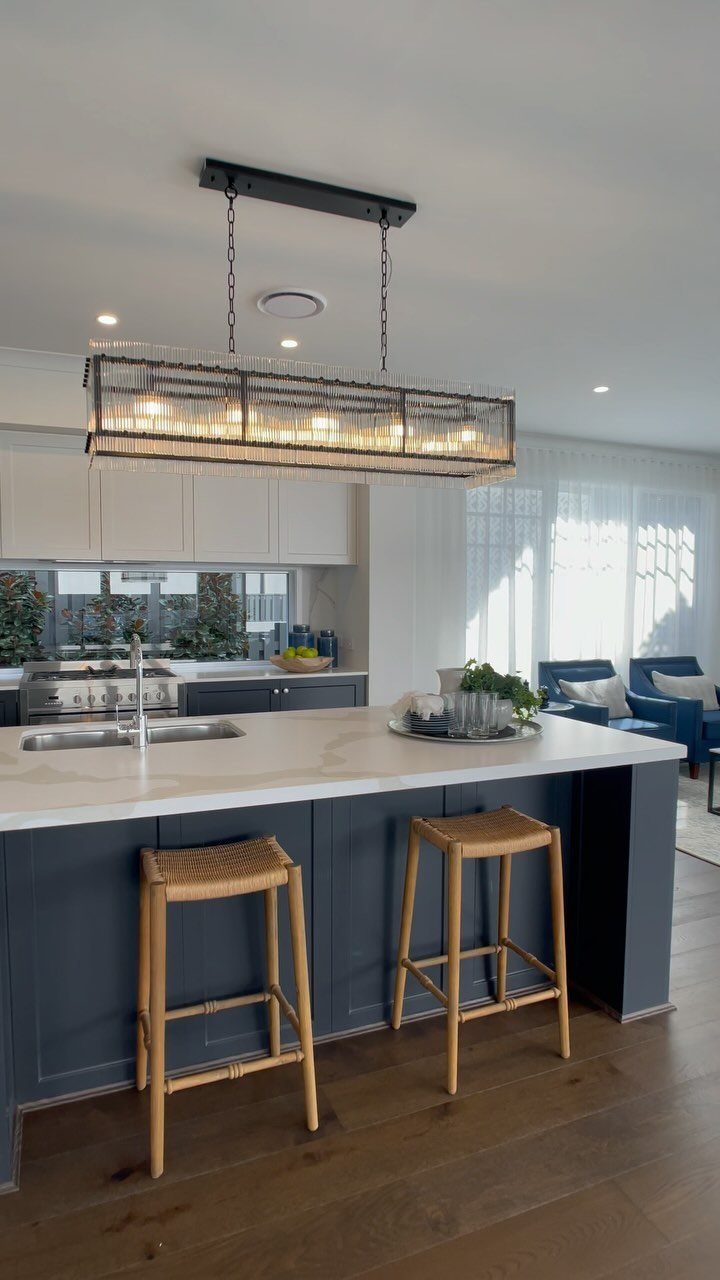
Navy is the darkest, most formal shade in the blue family, and white is what keeps it from feeling heavy. Put navy on the lower cabinets and island, then keep the uppers, countertop and walls crisp white.
A statement light over the island balances all that dark color at eye level. I’d pick one with glass or a pale finish so it adds shine, not more weight.
Wooden stools give the pairing a bit of warmth.
5. Coastal Blue and White Kitchen
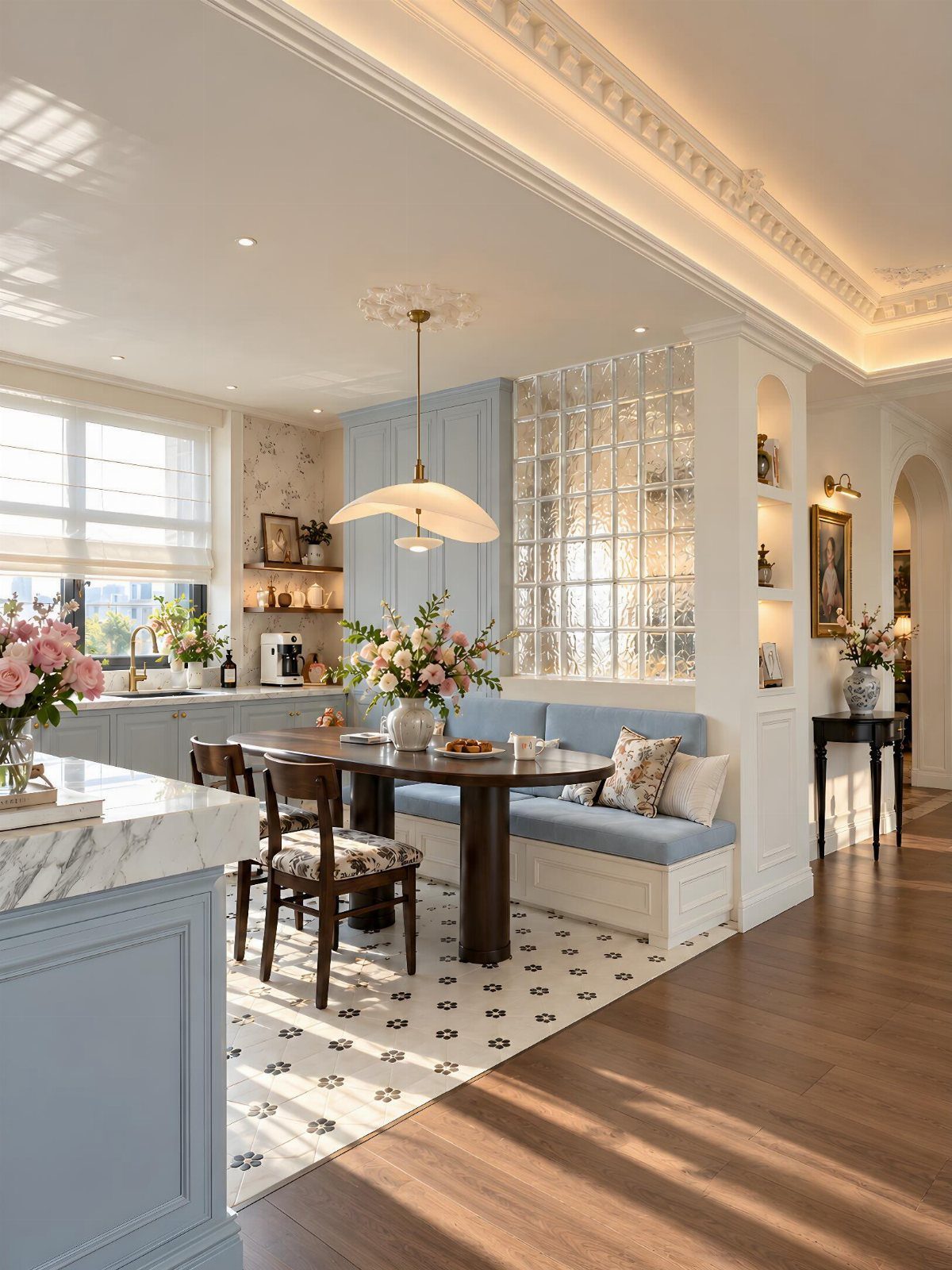
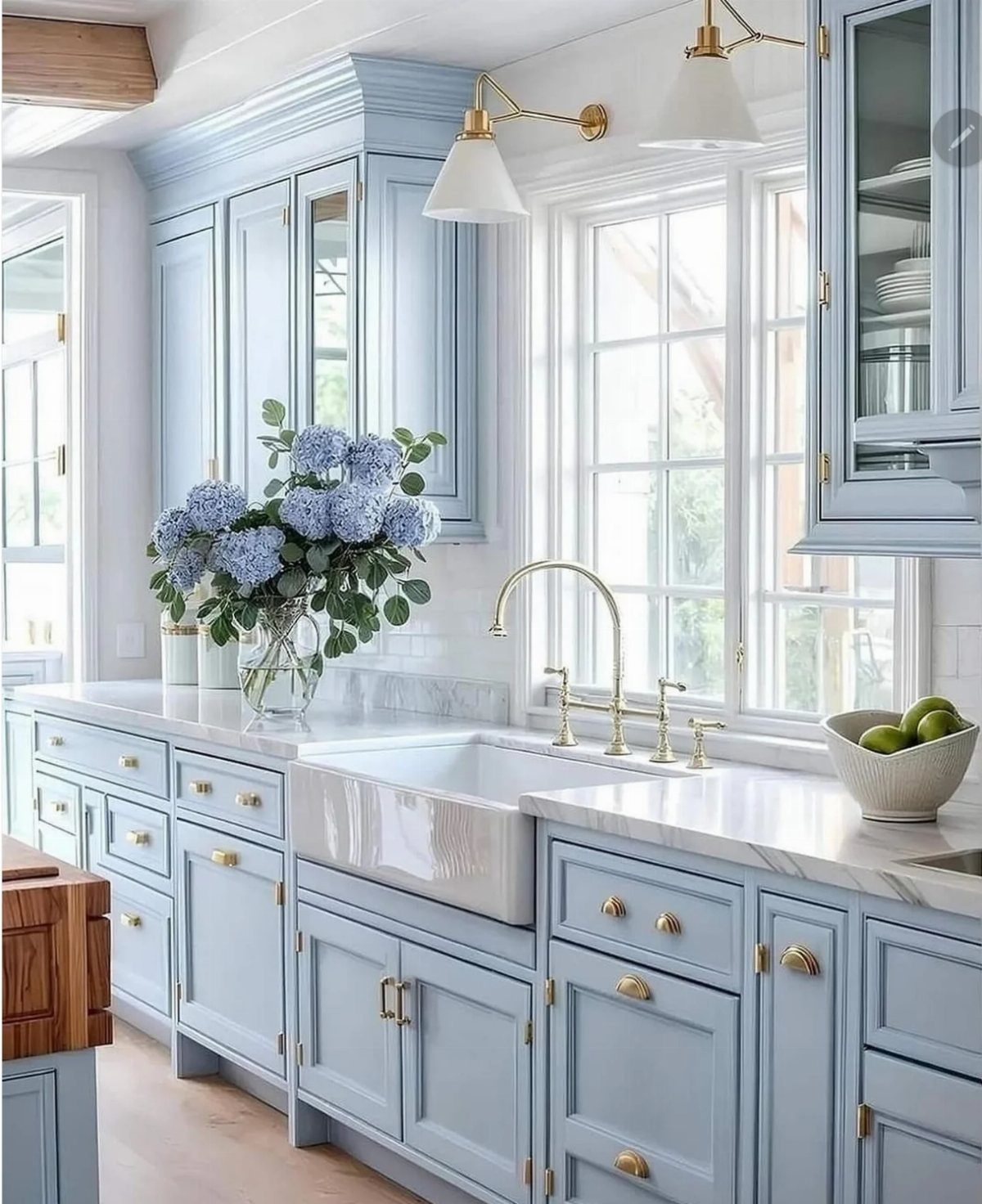
Light blue cabinets, white walls and white floor tile give a kitchen the airy, beachy feel that deeper navy can’t. Soft blue reads as a calm neutral, so it suits rooms that need to feel bigger.
A dark wood table gives a white and blue kitchen something to push against. It keeps the pale palette from drifting into washed-out, and it anchors the eating area beside the cabinets.
Repeating the cabinet blue on a banquette ties the cooking and dining zones together.
6. Blue Kitchen Cabinets
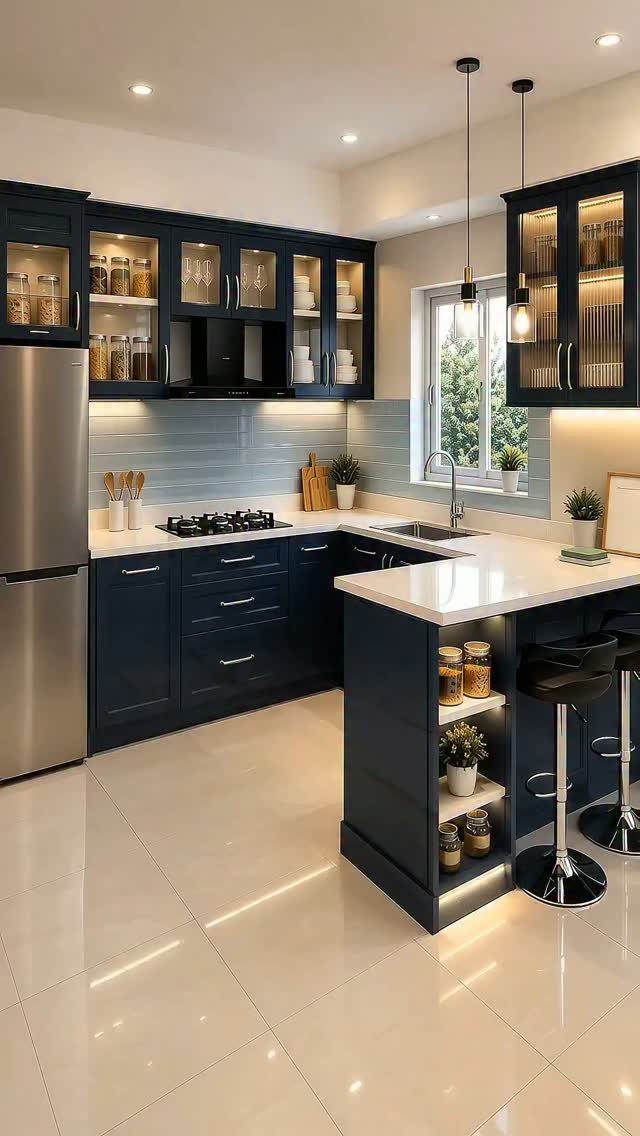
Painting the cabinets is the boldest way to make blue the main color of a kitchen, and I’d go with navy for it.
Against white countertops and light floor tile, the deep shade looks sharp and stays easy to live with.
Matching the island to the perimeter cabinets keeps the room cohesive. Stainless appliances fit right in, since their cool metal tone sits well beside the blue.
Test a sample on one door first and look at it in both morning and evening light.
7. Blue and White Tiles
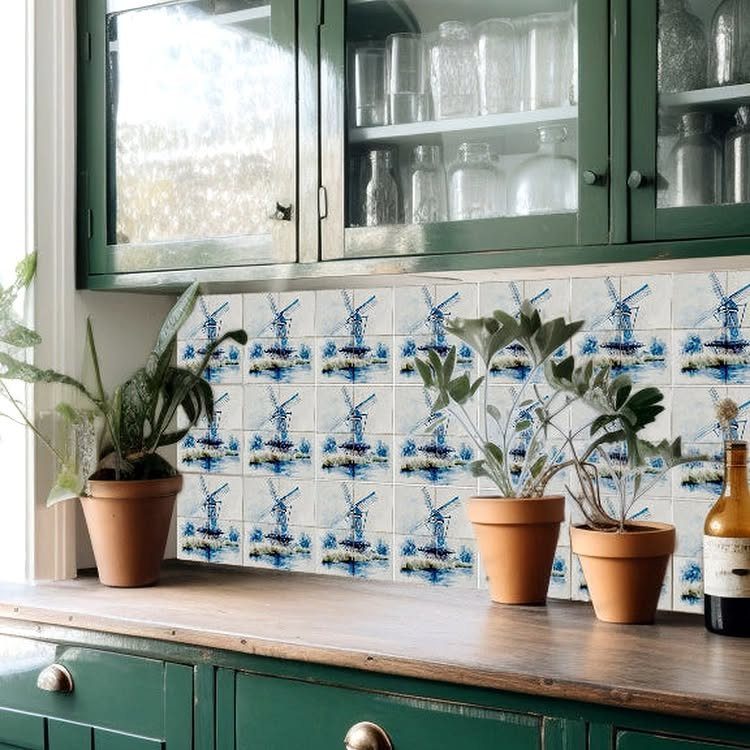
Patterned tile is the one place where blue and white can carry a kitchen’s whole personality. A windmill pattern in a single backsplash run reads as a decision, not a decoration.
Green cabinets suit it well, since the blue stays crisp against a soft, leafy color. Keep the counter clear enough that the tile gets seen, and let a few potted plants repeat the green.
8. Blue and White China
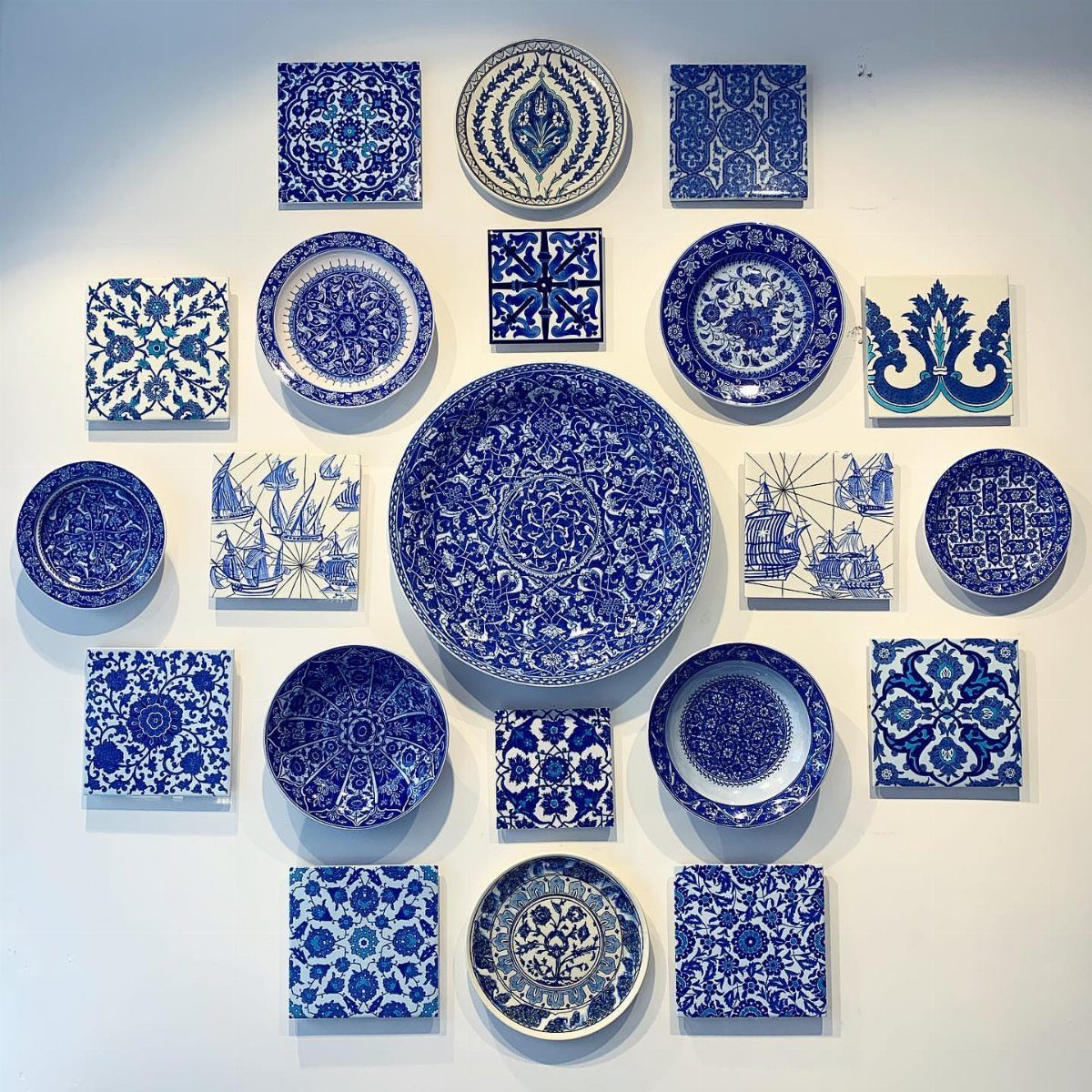
Blue-and-white china works 2 ways: on the wall as art, or on the table at dinner. Mixing plates and a few tiles in different patterns looks collected, not matched, as long as everything stays in the one color pair.
Start with a handful of plates and add as you find them. A plain white wall gives the patterns room, so skip busy paint behind them.
Pieces you plan to eat from belong on the shelf, not hung.
9. Blue Kitchen Curtains
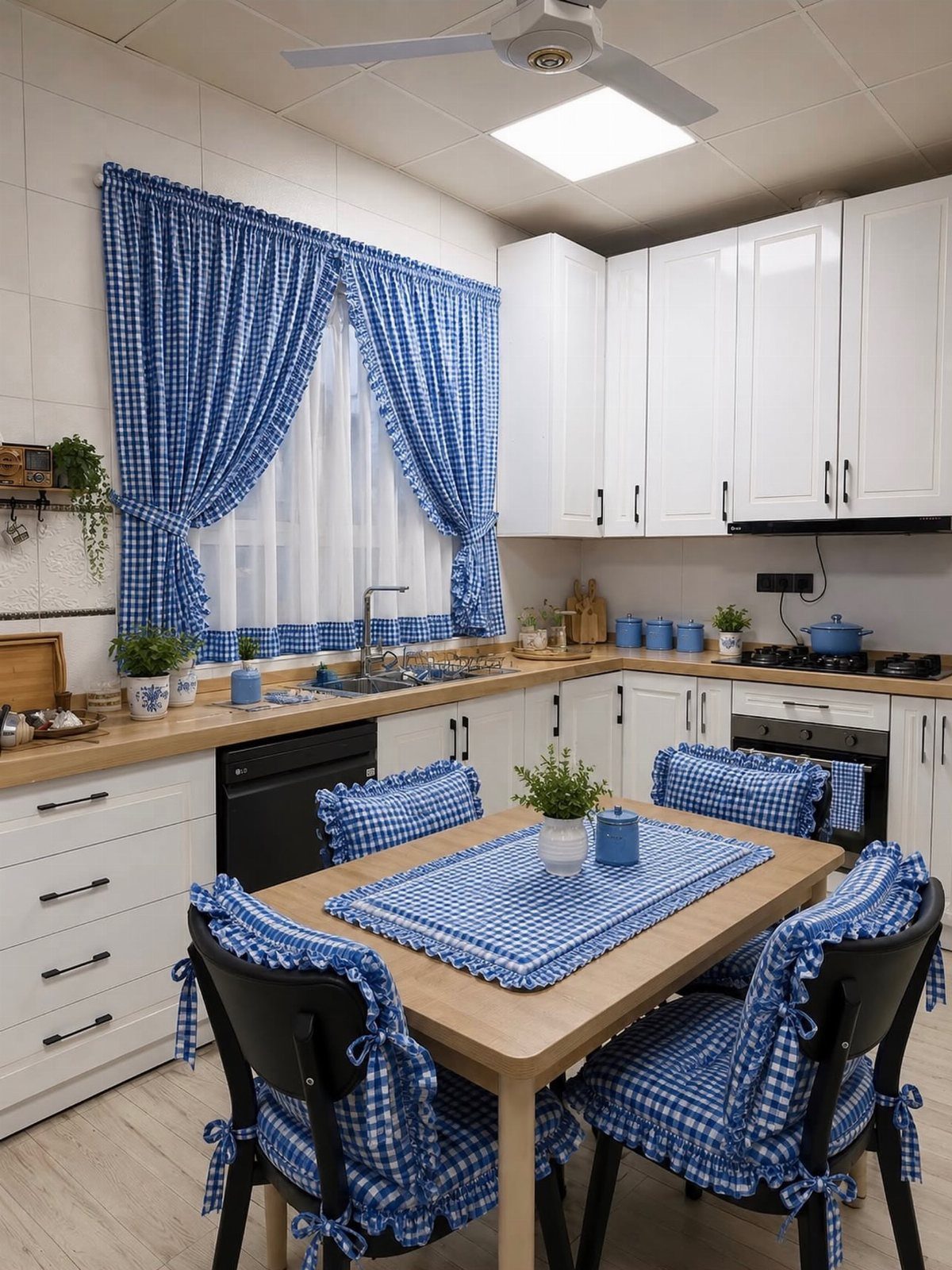
Checkered curtains put blue and white right at the window, where the light shows them off. Repeating the same check on chair covers and a tablecloth turns three small purchases into one clear look.
I’d keep the cabinets white and the table wood, so the fabric is the only pattern in the room. Fabric is also the cheapest way to try the scheme, and it comes down without a trace if you rent.
10. Blue Table Linens
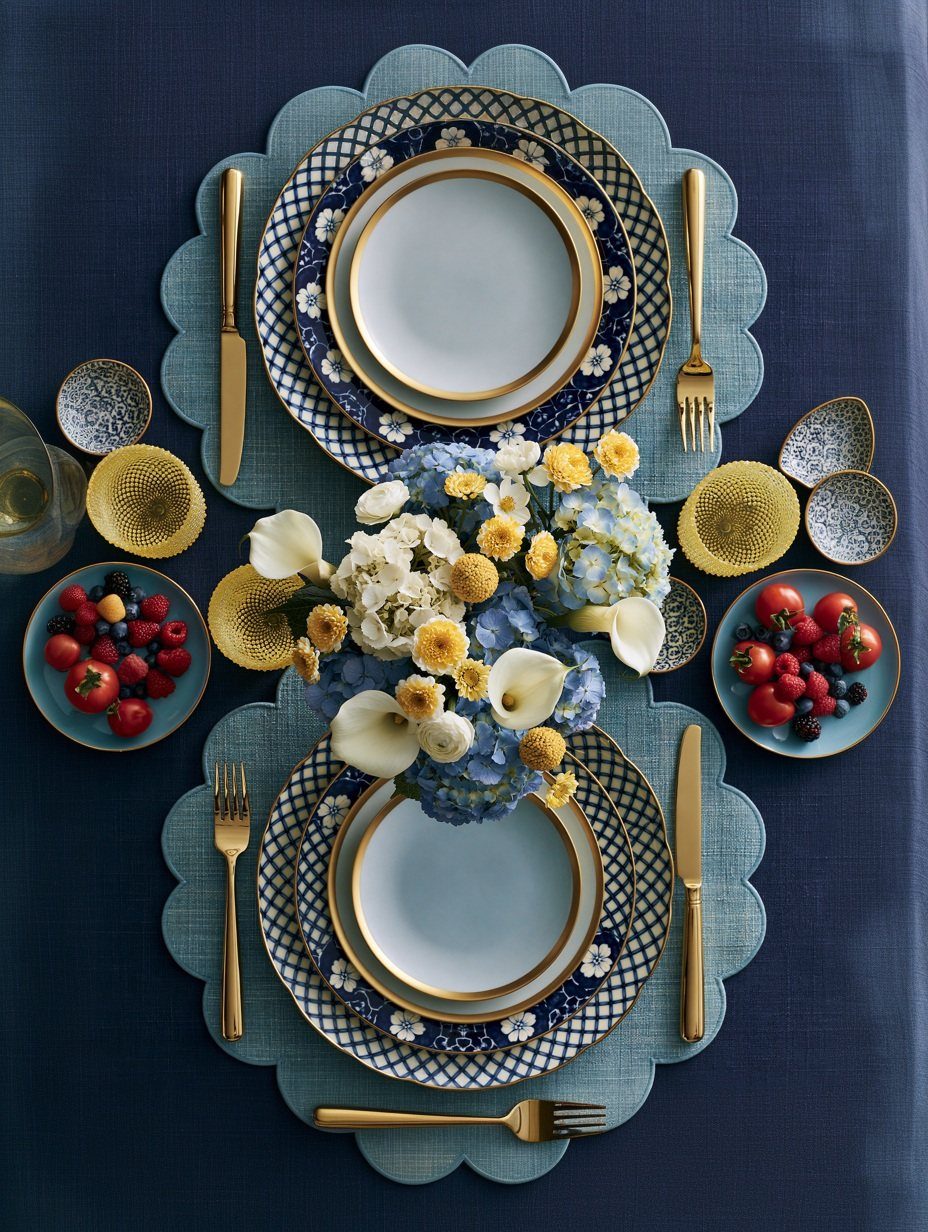
A navy tablecloth is the base layer, and lighter blue placemats on top give it depth. Scalloped edges soften all that straight-lined color.
Blue-and-white china looks sharp on navy linens, and gold flatware adds a warm accent. A low floral centerpiece keeps sightlines open across the table.
Linens are the fastest swap in a blue and white kitchen: change them with the seasons and the room follows, with no tools and no paint.
11. Blue Kitchen Stools
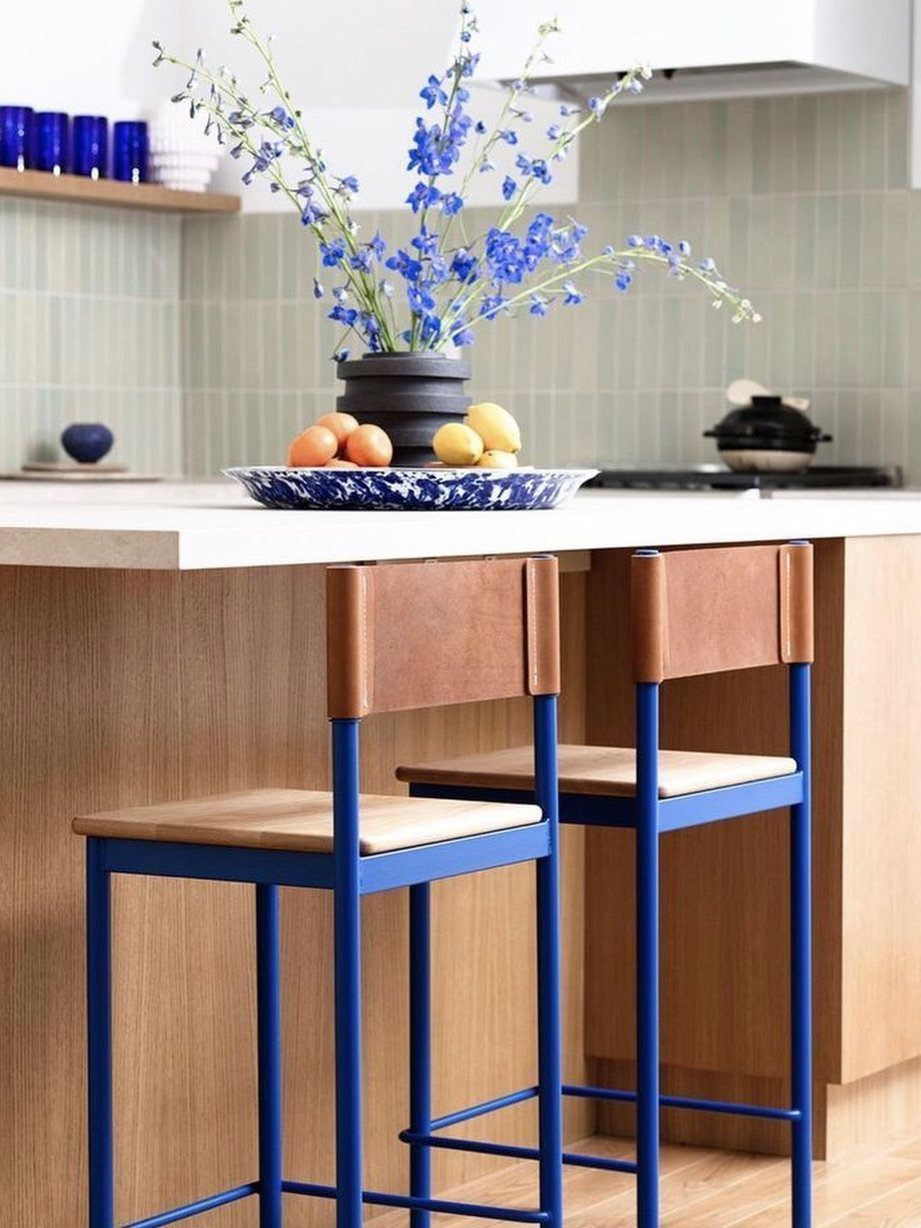
Blue metal stools with tan seats are a small dose of color that still reads as furniture. The tan keeps the blue from looking cold, and the metal frame suits a modern island.
Pair blue stools with a plain counter, and let a blue-and-white bowl of fruit echo their color. I prefer seats in a warm wood or leather tone over blue seats, which would make the stools disappear into the room.
Stools can be swapped in an afternoon and moved if you move.
12. Blue Open Shelves
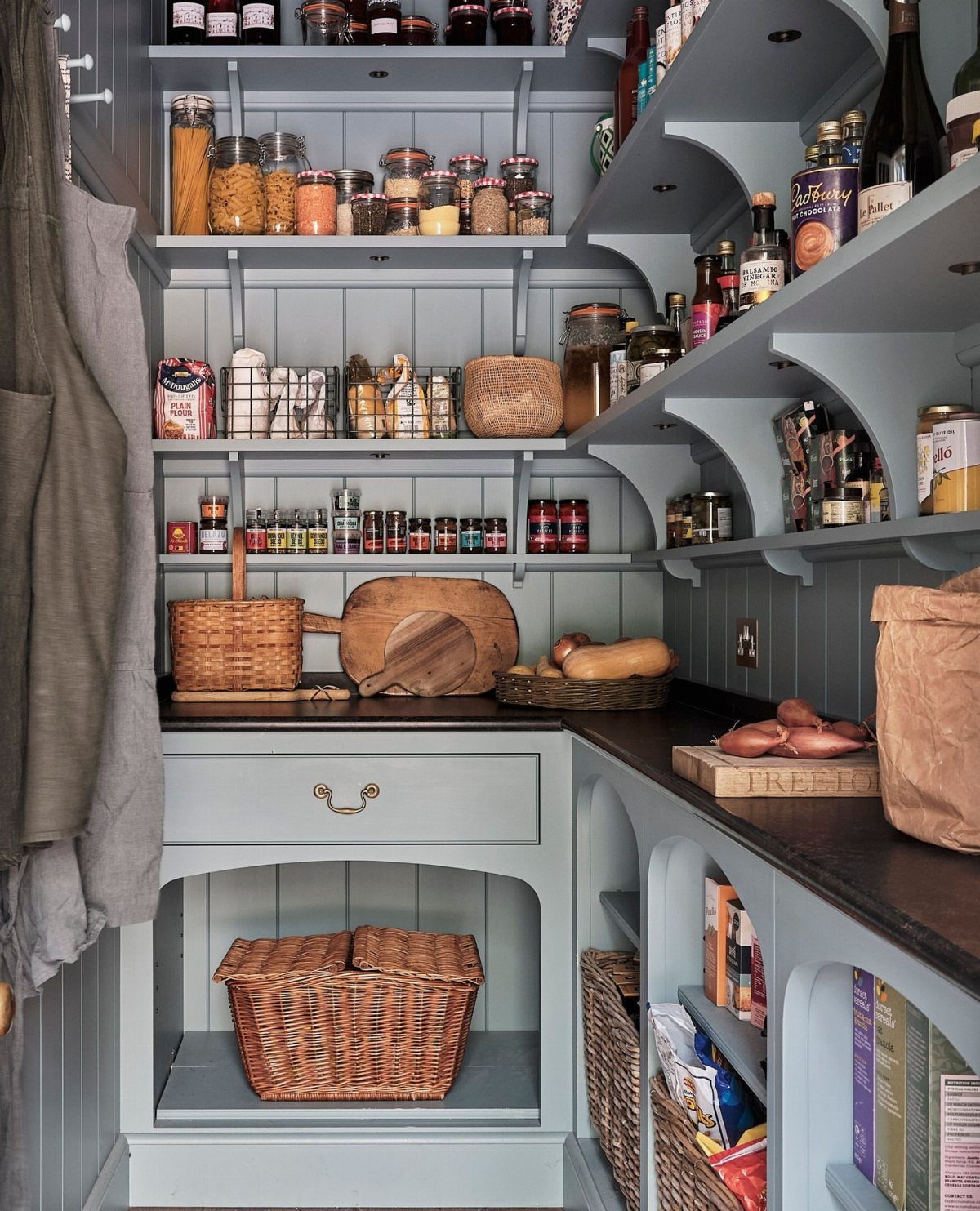
Painting a pantry’s open shelves light blue turns food storage into a color feature. Glass jars and woven baskets look better against blue shelving than against plain white.
Group items by container type so the blue stays visible between them: jars in one row, baskets in another. Leave a little empty shelf space on purpose.
A light blue reads softer than navy in a narrow pantry, and it brightens the shelves without making them feel closed in.
13. Blue Floral Kitchen
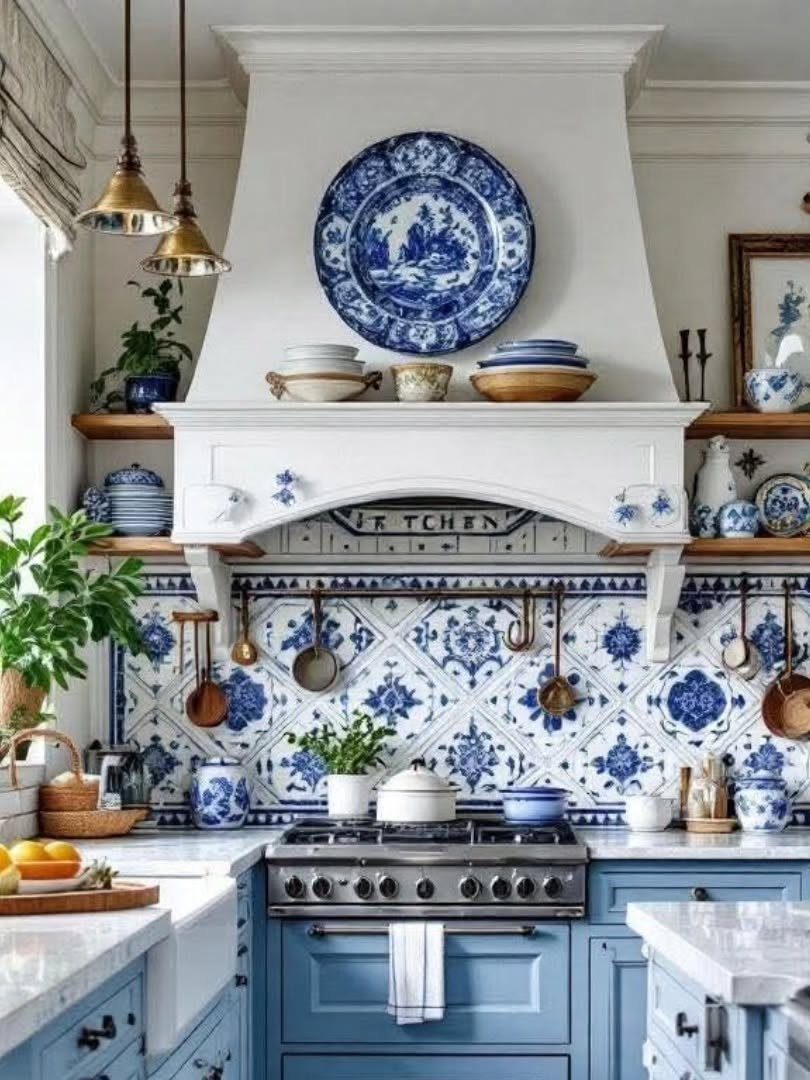
Floral tile behind the stove is what gives a blue kitchen its cottage feel. Blue cabinets on one side and loose, painted-looking blooms on the other read as relaxed, not formal.
A white range hood keeps the pattern from crowding the room. Blue-and-white pottery on the counter picks up the same colors, and I’d stop at a few pieces so the tile stays the star.
14. Moroccan Blue Pattern
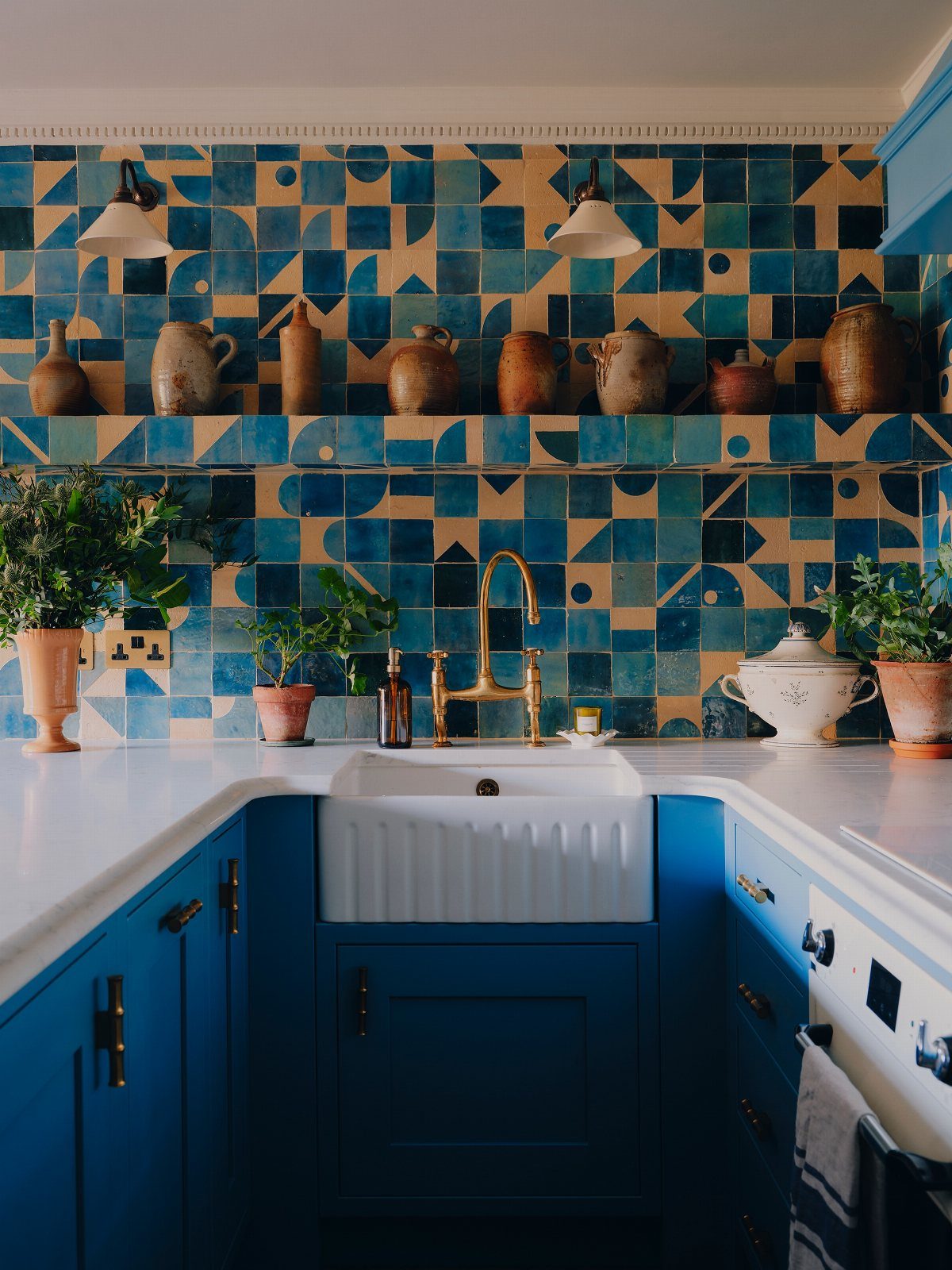
Geometric tile in blue and tan brings a Moroccan note to a kitchen that already has blue cabinets. The tan softens the pattern, so it sits comfortably beside a white farmhouse sink instead of fighting it.
Keep the tile to the wall zone and let the cabinets stay plain. A shelf of blue-and-white pottery repeats the palette without adding a second pattern.
15. Blue Kitchen Vase
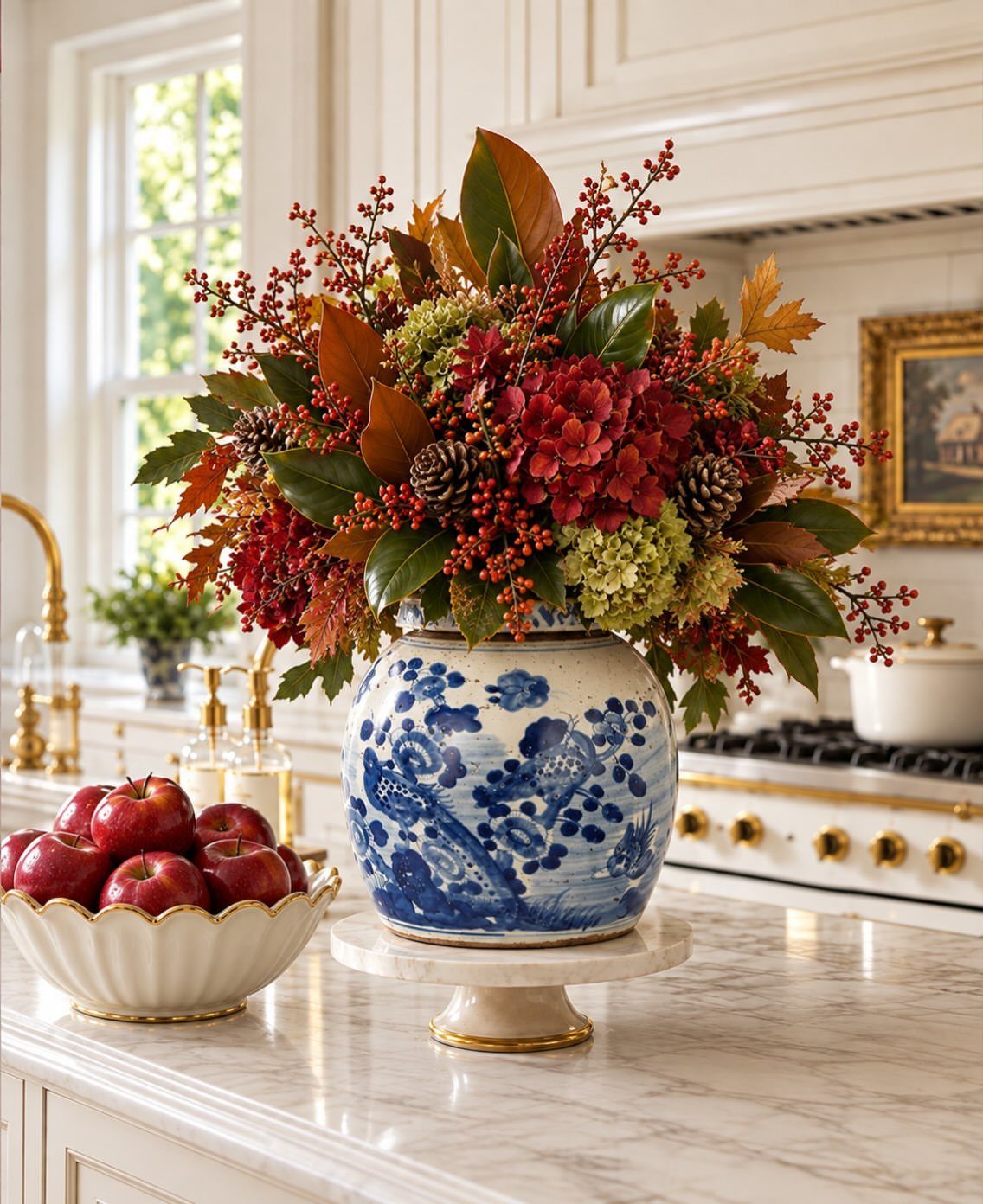
A single patterned vase is the lowest-commitment way to put blue in a white kitchen. On a marble counter it works as both a color accent and a place for flowers.
Blue ceramic or glass pairs well with warm-toned stems like autumn branches and red berries, and a bowl of red apples nearby adds contrast.
I’d choose a vase with a pattern over a solid one, since it still looks finished when empty.
Swap the flowers by season and leave the vase where it is.
16. Blue Kitchen Placemats
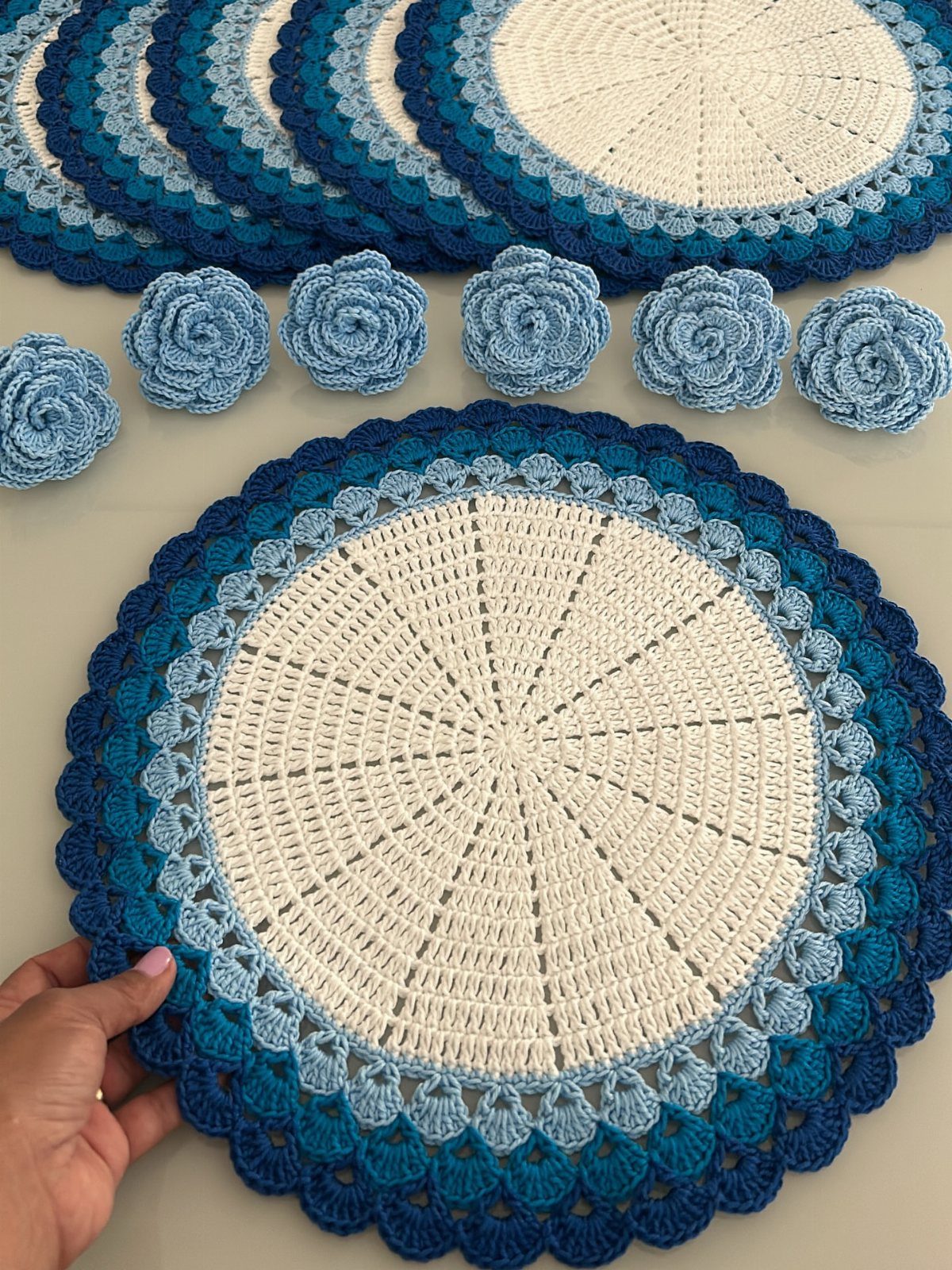
Crocheted placemats bring texture that printed fabric can’t match. Round blue-and-white ones sit well on a plain table, and small crocheted roses double as coasters.
If your tablecloth or napkins are already blue, pick placemats a shade lighter so the layers stay distinct. Handmade pieces can be added one at a time, which suits a tight budget.
Keep the table surface itself plain and let the stitching show.
17. Blue Kitchen Banquette
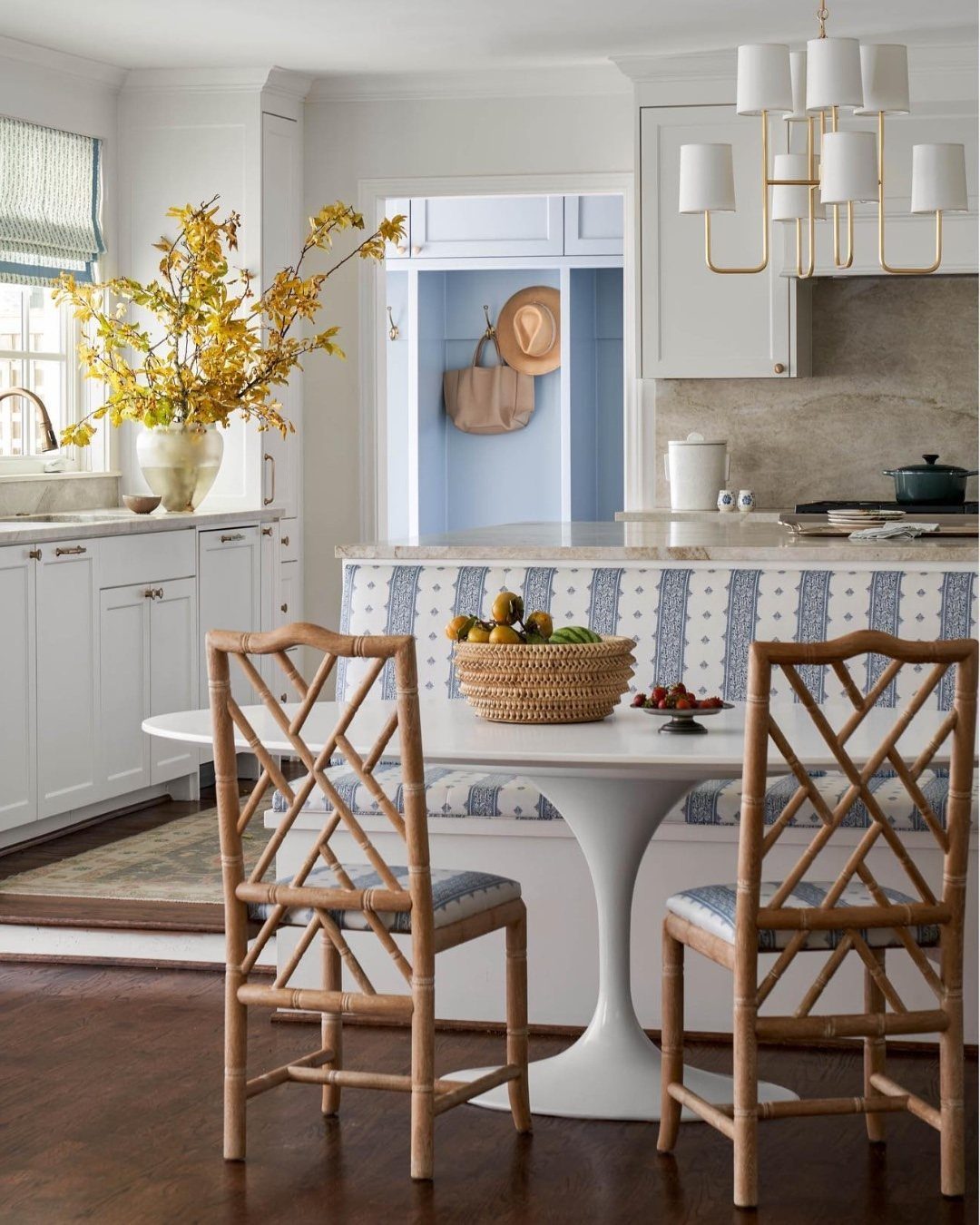
Blue-and-white stripes on a built-in banquette turn a corner of the kitchen into a seating nook. Stripes are calmer than florals, so they hold up beside a white pedestal table and wooden chairs.
I’d pick a medium stripe over a thin pinstripe, which tends to blur from across the room. Bamboo-style chairs add a natural texture against the fabric.
A bowl of fruit on the table is all the styling the nook needs.
18. Blue and White Kitchen Palette
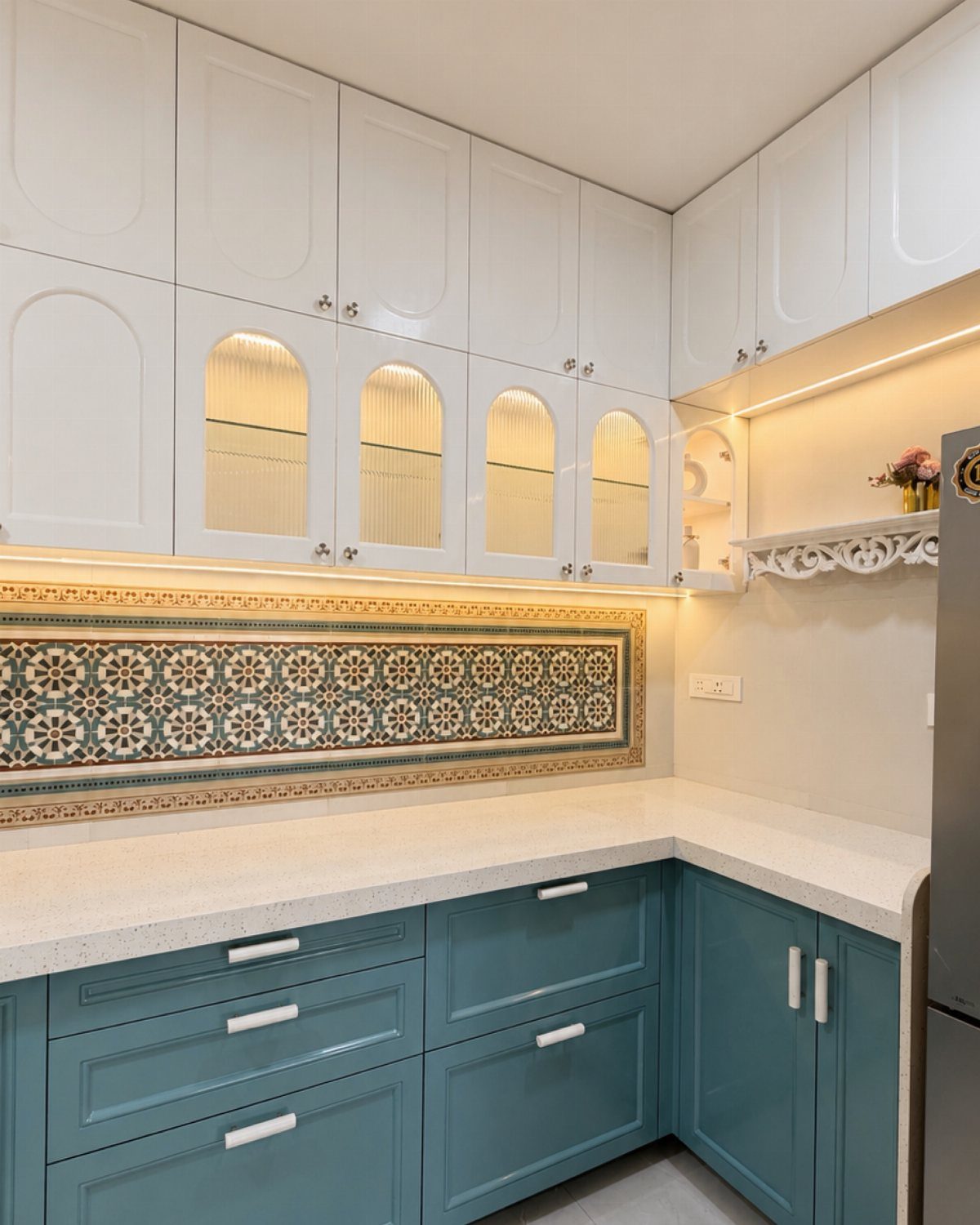
Blue lowers under white uppers is the classic split, and arched glass inserts in the upper doors add detail without adding color. White countertops keep the whole scheme light.
Keep pattern to one spot: a patterned blue-and-white tile backsplash can carry the busy part while solid white cabinets and plain blue accents stay calm. Everything else stays solid, so the room reads as organized rather than crowded.
For a traditional room, choose a tile with a softer, older-looking pattern; for a modern one, a cleaner geometric.
19. Blue-and-white Plate Display
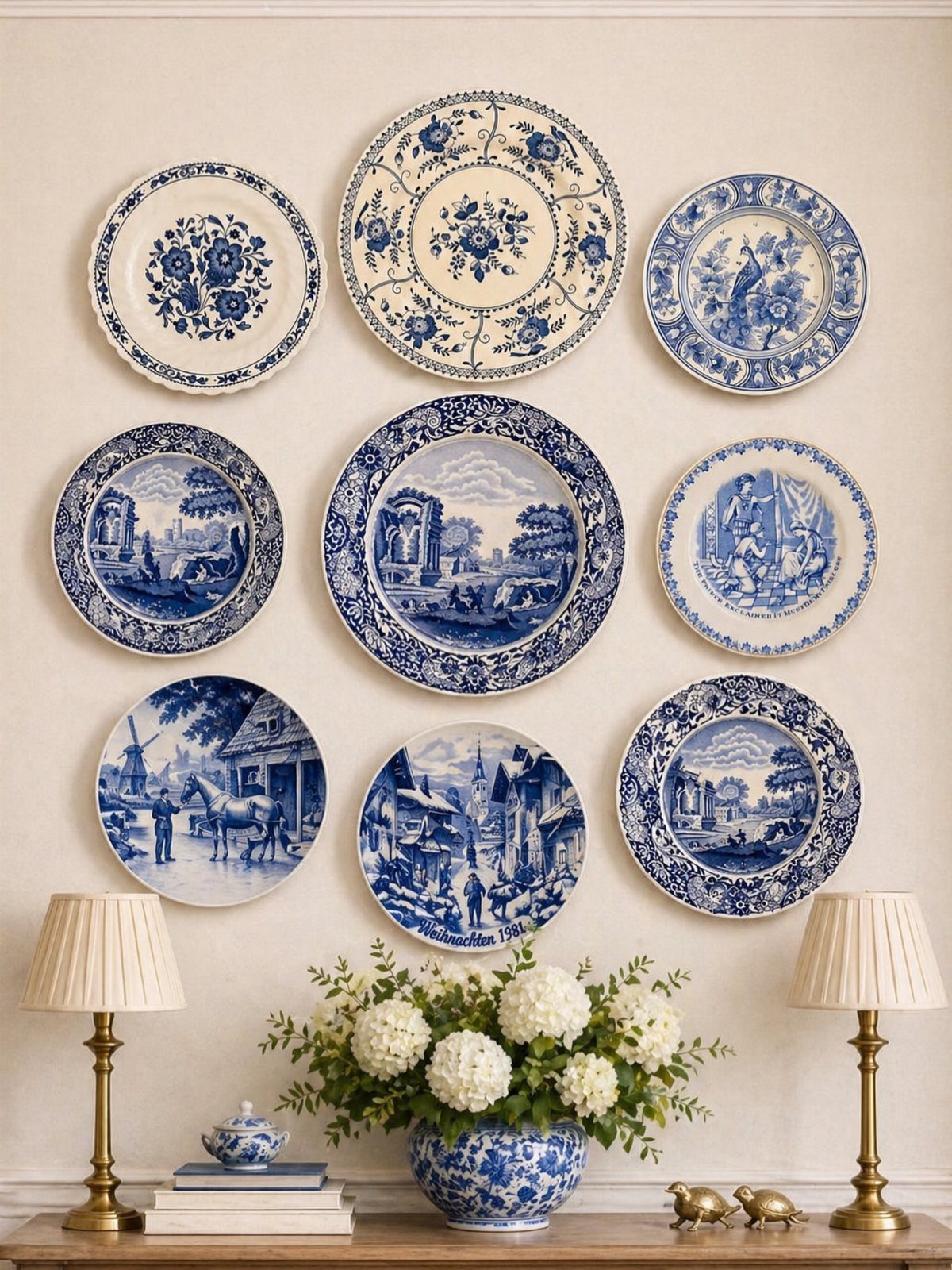
Plates grouped in one tight cluster read as a single piece of art, and the beige wall lets the blue patterns stand out. Mixing designs works as long as every plate stays in the blue-and-white pair.
Lay them out on the floor first and shuffle until the sizes feel balanced, then hang. I’d keep the table below simple, with one vase of flowers, so the wall remains the focus.
20. Blue Floral Kitchen Tools
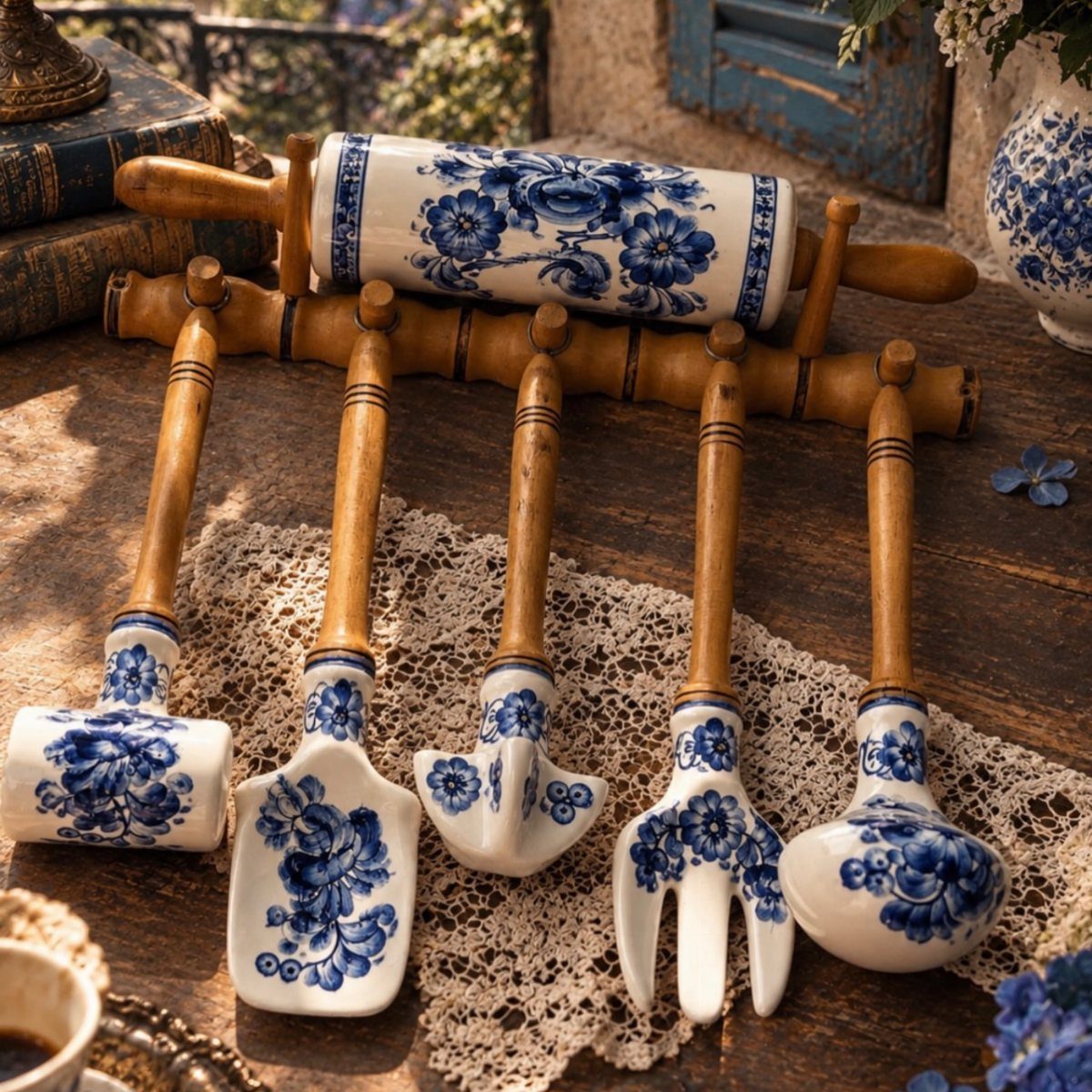
Floral ceramic tools with wooden handles are decor that still gets used. A rolling pin and a few utensils in a matching pattern look like a set, and the wood handles warm up all that blue and white.
Lay them on a lace doily on a wooden table, or keep them in a crock by the stove. I’d display the pieces you will actually cook with, since a set that sits untouched is a missed chance.
21. Blue Patterned Kitchen Floor
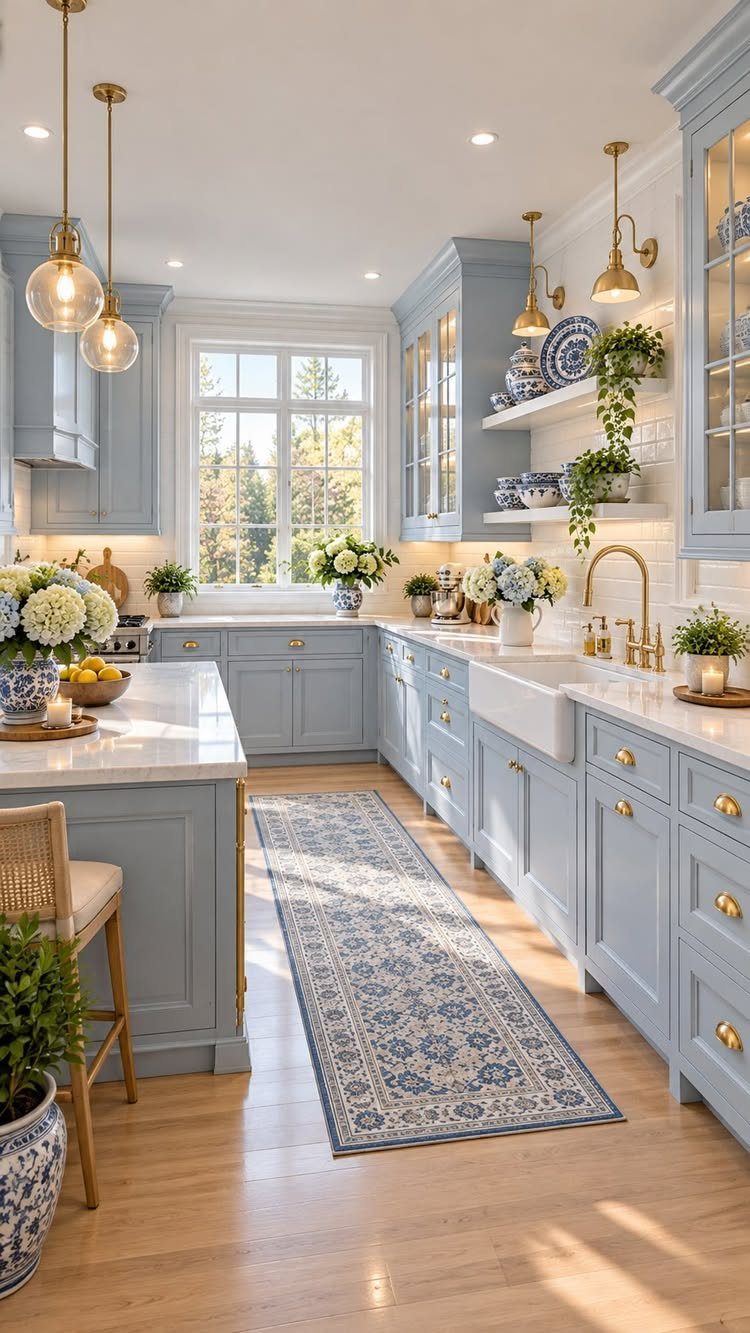
A patterned blue runner is the quickest way to add color to the floor of a kitchen with light blue cabinets and white counters.
The pattern fills the gap between the 2 colors, and gold fixtures give it a warm edge.
Choose a runner that matches the cabinet blue or sits a shade deeper, so it looks planned. A rug also lifts out when you move, which suits renters.
22. Blue and White Kitchen Appliances
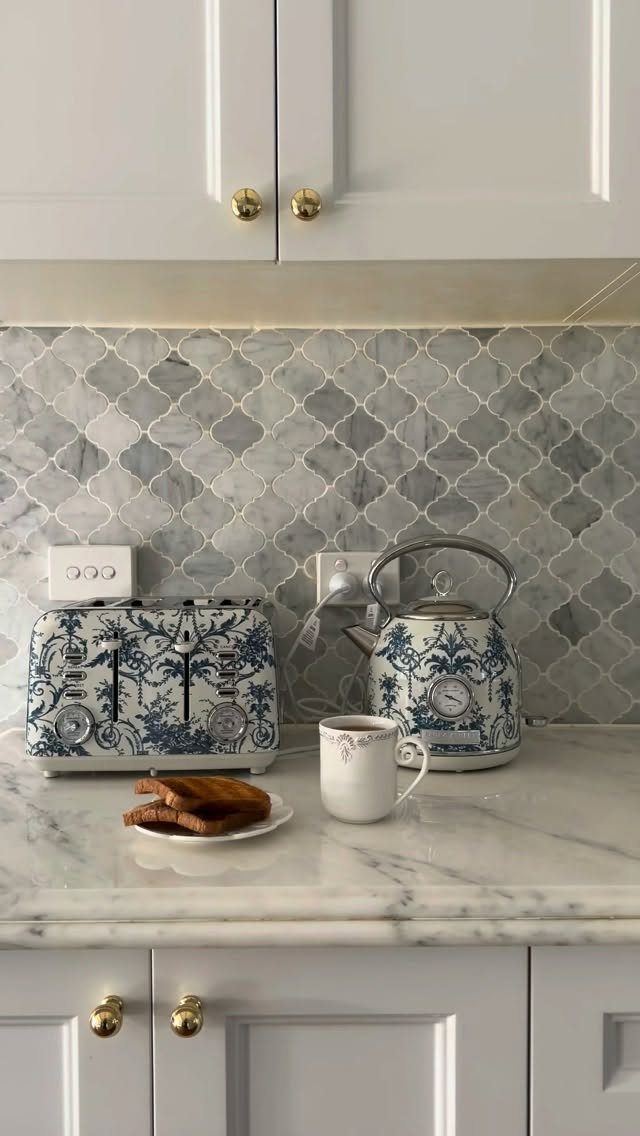
A patterned toaster and kettle in matching blue and white make small appliances part of the decor instead of something to hide. On a white marble counter with white cabinets behind, the pair becomes the one spot of color.
Buy them as a matched set and keep them side by side so they read as a single accent. I’d skip other patterned pieces nearby, because 2 appliances already carry the pattern.
23. Blue Accent Kitchen Wall
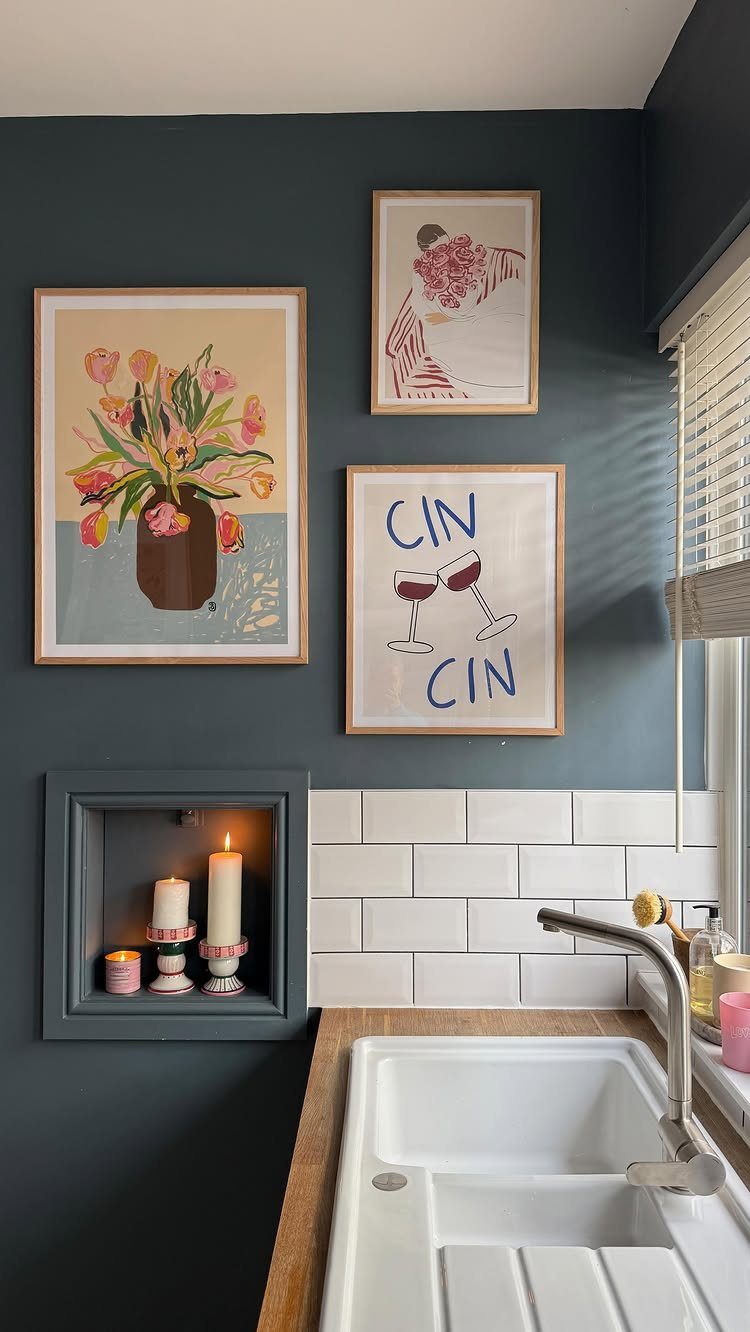
A dark blue wall beside white subway tile gives a kitchen depth without touching the cabinets. Painting one wall is a weekend job and costs little, and the white tile and sink stay crisp against it.
Hang a few framed prints at different heights to fill the blue, and set candles on a recessed shelf if you have one. I’d pick a matte finish in a deep shade, so the wall looks rich and not shiny.
24. Blue Kitchen Flooring
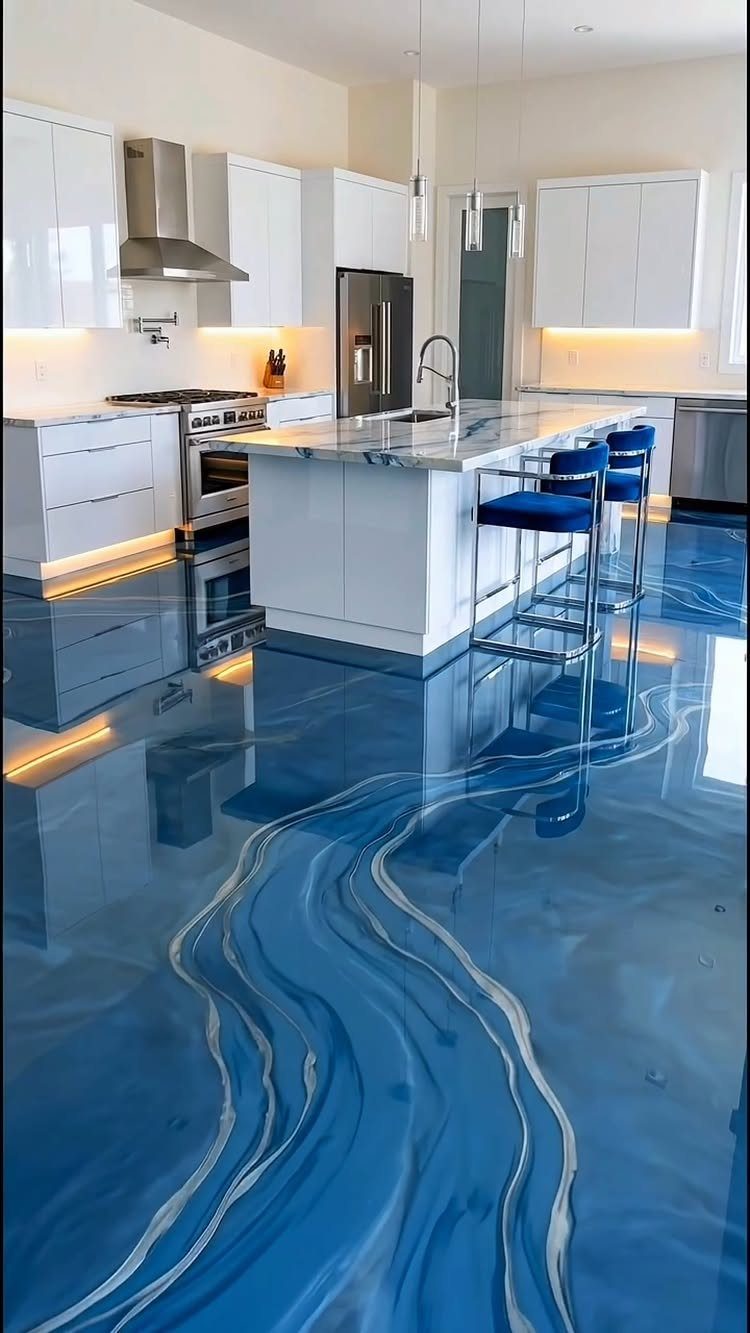
A glossy blue epoxy floor with white swirls makes the floor the star of an otherwise white kitchen. White cabinets and countertops give it plenty of room, so nothing else needs to compete.
This is a bold choice and a permanent one, so I’d think hard before committing. If you want the look without the commitment, a blue patterned rug gets you part of the way and comes up when you leave.
25. Blue-accent Kitchen Stools
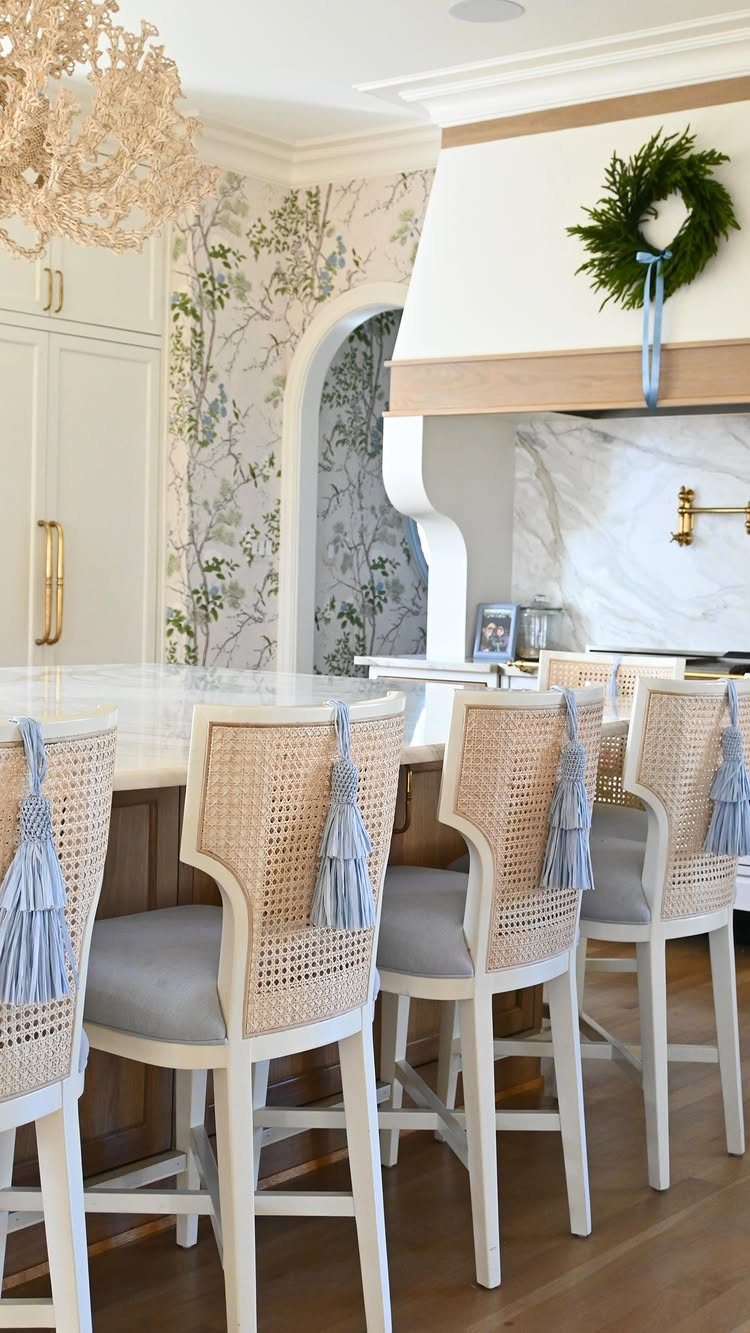
Cane backs and blue tassels are a gentle way to bring blue into a kitchen that is mostly white. The color sits in a small, soft detail, so the stools read as furniture first and as an accent second.
Floral wallpaper and a marble backsplash already carry plenty of pattern here, which is why I’d keep the stools themselves plain white. Tassels are also the easy part to change, so the blue can shift later without replacing a stool.
26. Blue Floral Tile Backsplash
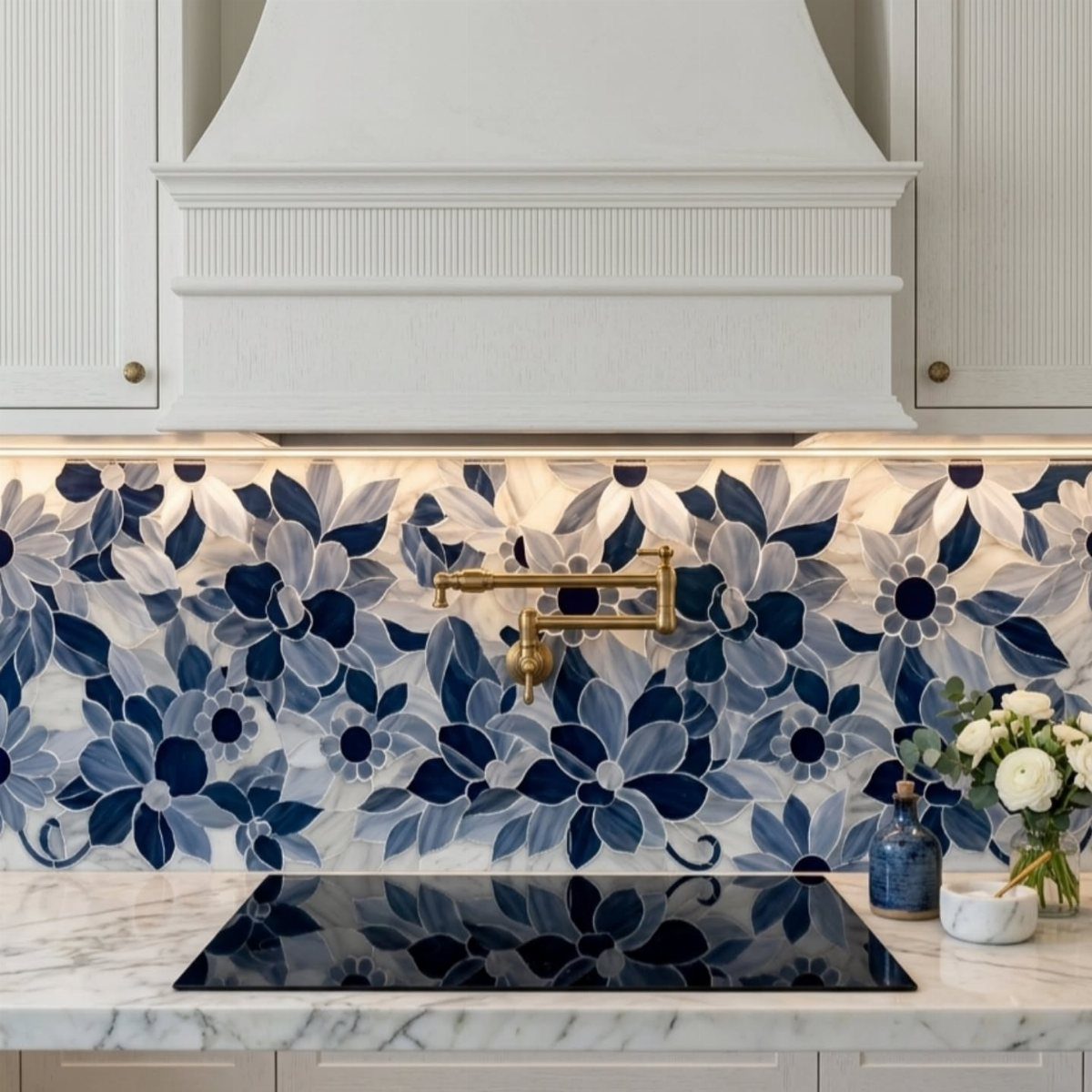
A blue-and-white floral backsplash makes the wall behind the stove the focus of an otherwise white kitchen. Marble counters and a white range hood give the pattern a quiet frame, so it feels bright rather than busy.
Gold hardware, like the pot filler faucet, adds a warm contrast to all that cool blue. I’d keep the tile to the cooking wall and let everything around it stay plain.
27. Blue Patterned Kitchen Tilework
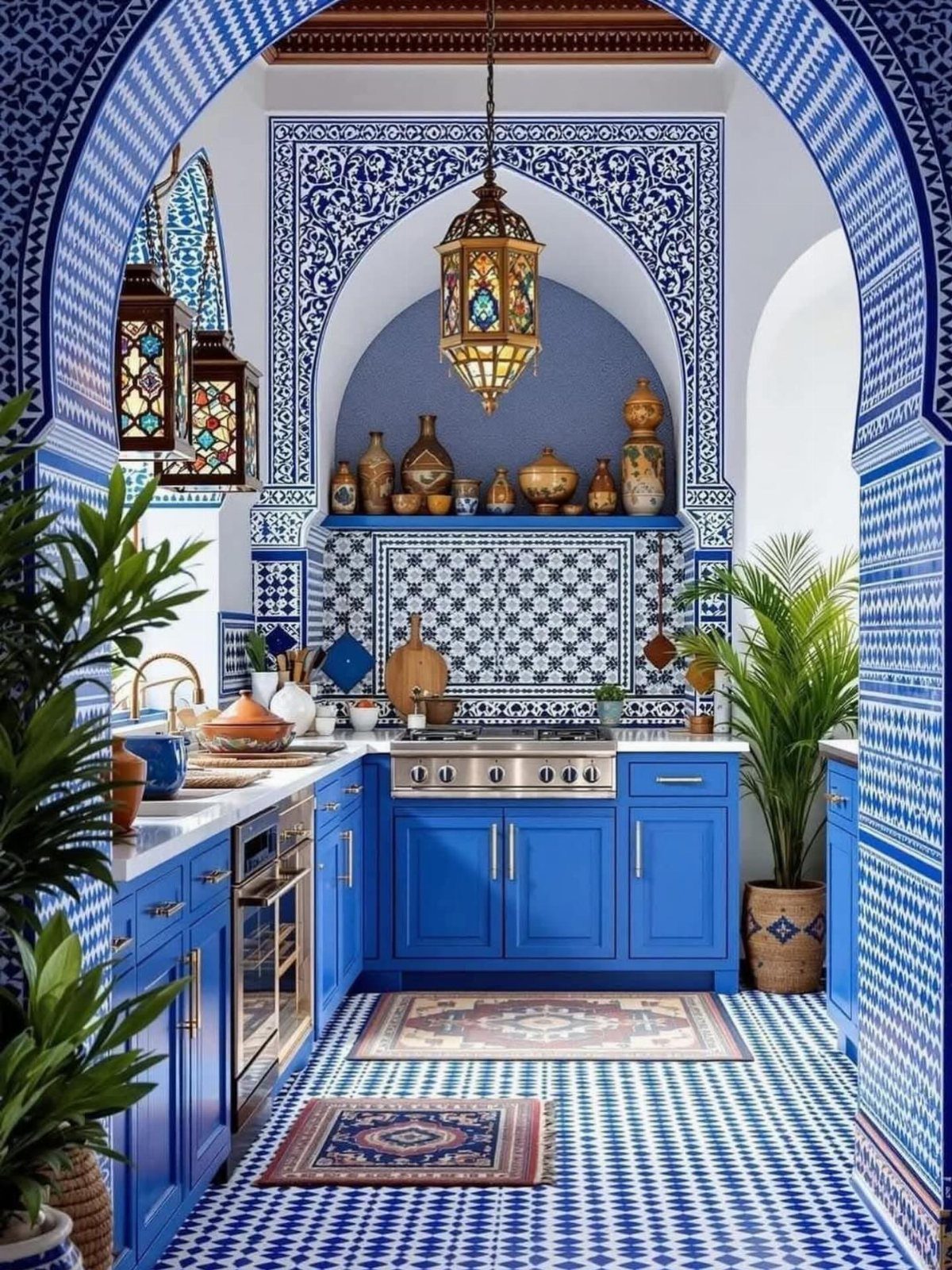
Bright blue cabinets and blue-and-white patterned tile can share a room if the tile runs wide and the cabinets stay solid.
Carrying the pattern across the floor, the walls and an arched entryway makes the kitchen feel like one continuous piece.
I’d choose one tile family in two or three blues, since mixing several patterns this saturated gets loud fast.
28. Blue Kitchen Textiles
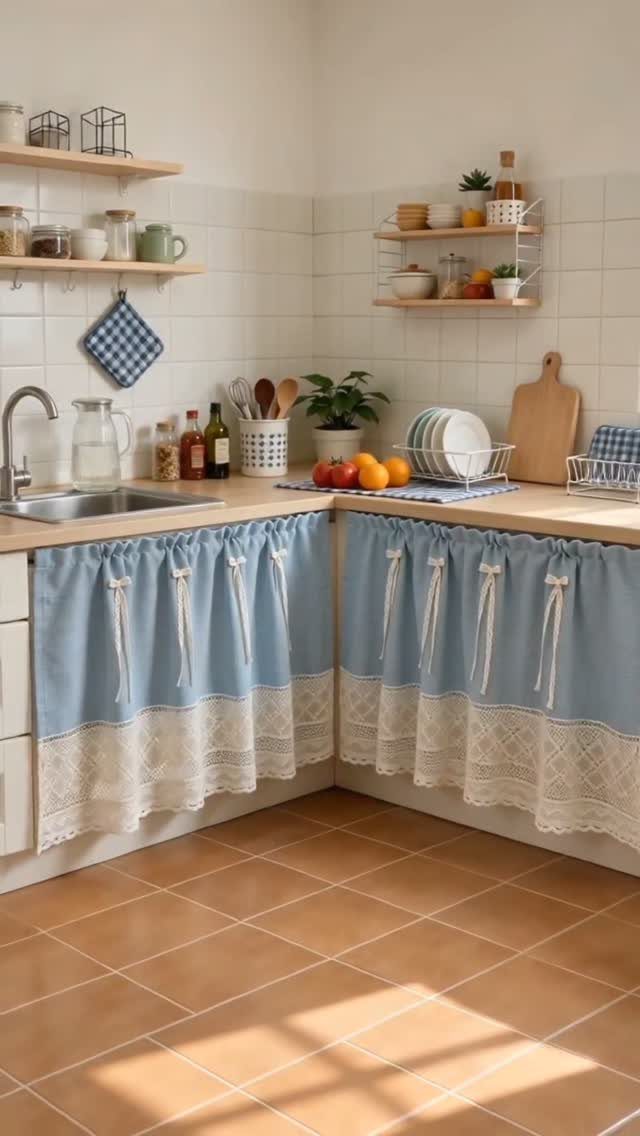
Lace curtains hung under the counter hide open storage and add a soft blue-and-white pattern at knee height. Wooden counters and white tile keep the fabric from feeling fussy.
A tension rod or a simple hanging strip lets you swap the fabric without touching the cabinets. Choose a light blue lace so it stays airy beneath open shelving.
29. Blue and White Table Linens
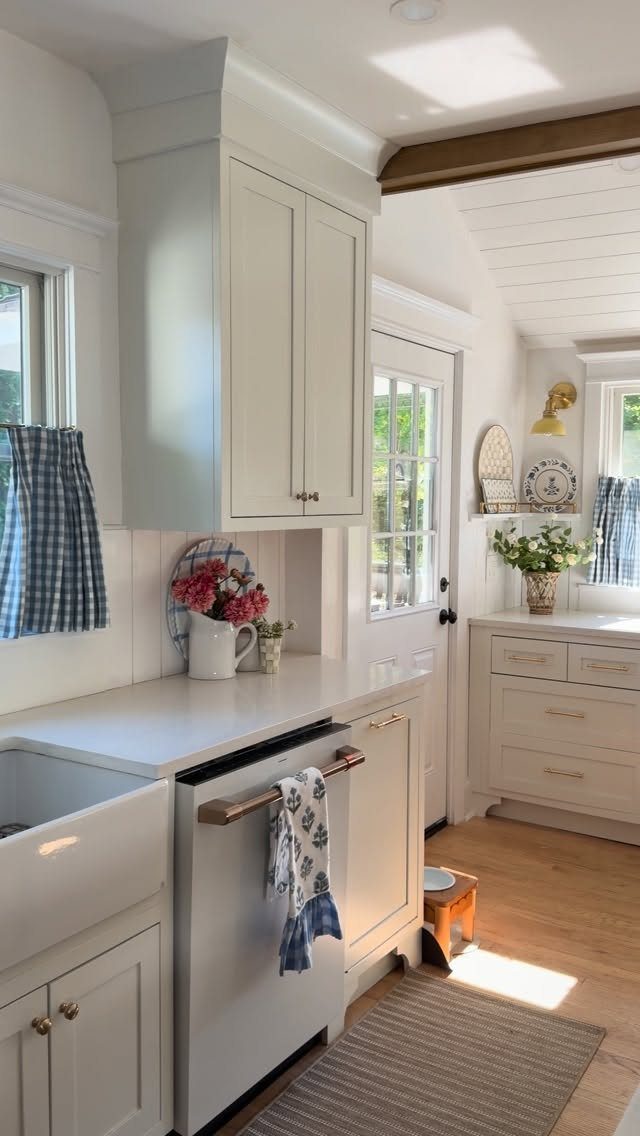
Dish towels are the smallest way to bring blue and white into a white kitchen.
Mixing checks and florals works when both prints share the same blue and sit against white cabinets or a farmhouse sink, and one warm accent like pink flowers keeps the palette from feeling cold.
A blue-and-white floral tablecloth on a wooden table carries the same idea to the dining spot. I’d pick towels in the same blue so mixed patterns still look related.
30. Blue Hydrangea Accents
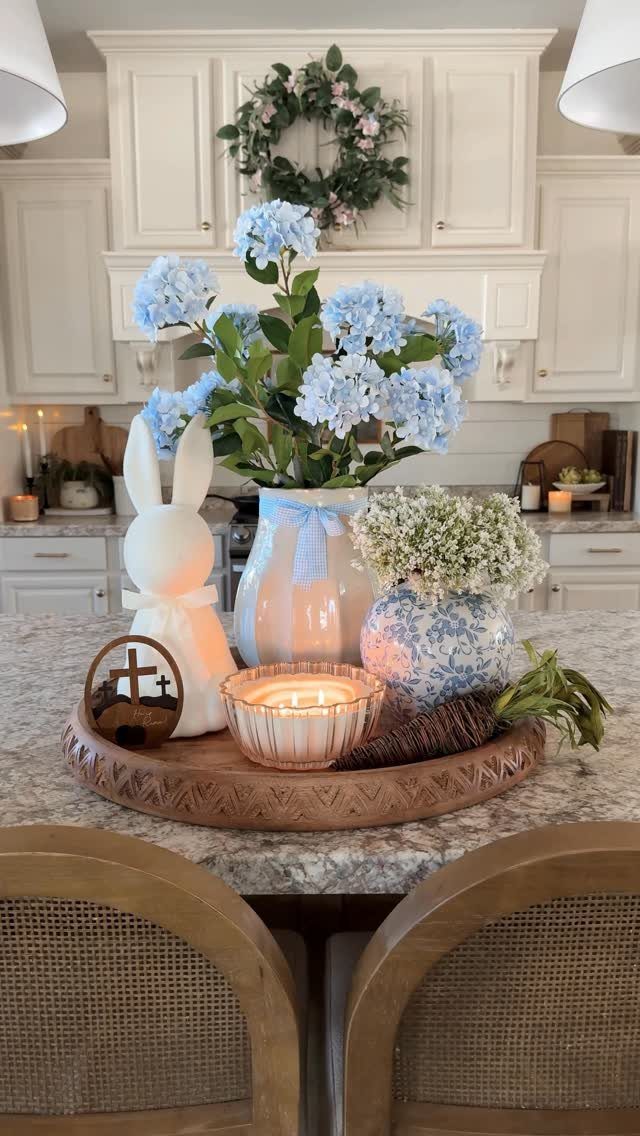
Blue hydrangeas in a white vase give a white counter a fresh, natural blue without any paint or tile.
Set the vase on a wooden tray, with a second blue patterned vase of baby’s breath beside it, so the arrangement stays grouped and you can lift it all at once when you need the counter.
A candle in the same cluster adds warmth. I’d stick to 2 vases at most, so the flowers stay the focus.
31. Blue Floral Dining Chairs
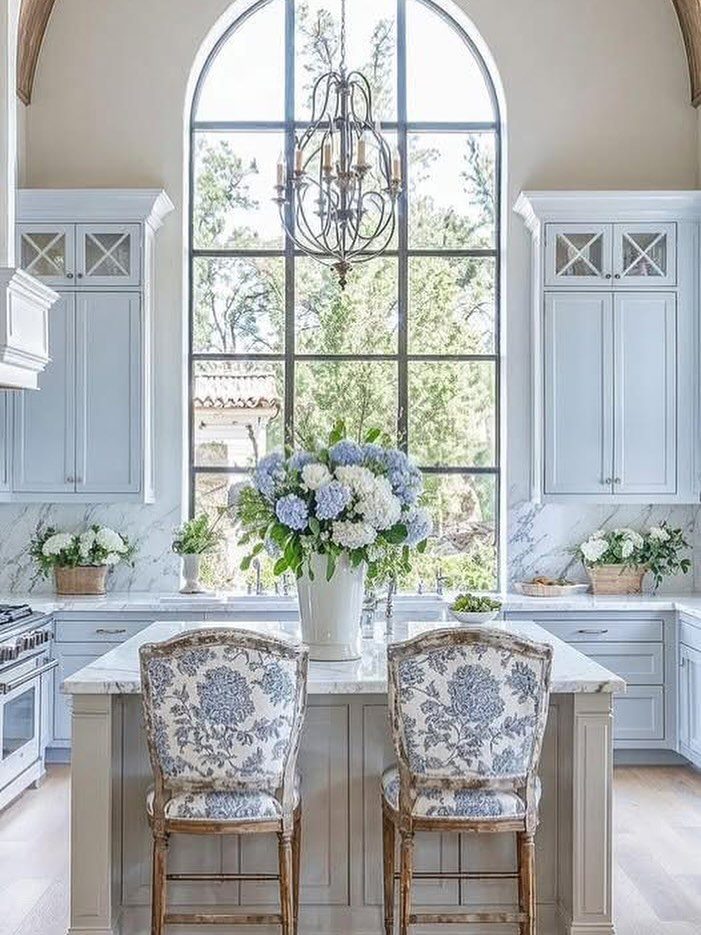
Floral upholstery on the chairs at a light blue island puts the pattern at seat height, where it is easy to swap and easy to live with.
The blue-and-white print echoes the hydrangeas on the counter, so the 2 read as a pair.
With cabinets already blue, I’d keep the island top plain and let the chairs carry all the pattern.
Choose a floral that uses the same blue as the cabinets so it looks planned, and leave the bouquet as the only other floral in the room.
32. Blue Ceiling Accent
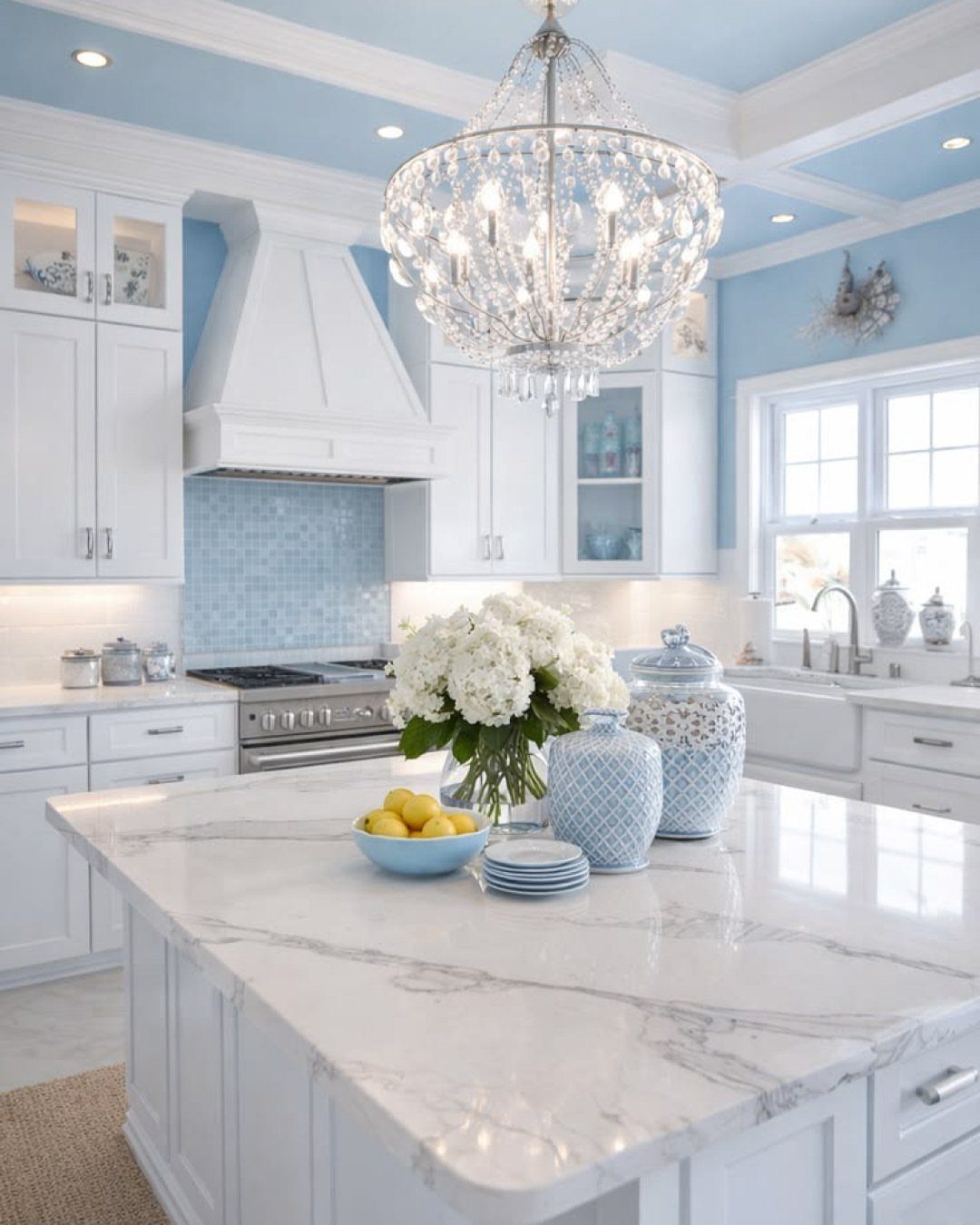
Paint the ceiling a pale blue and a white kitchen gets color without touching a cabinet or a counter. White cabinets and marble stay crisp beneath it, and the ginger jars on the island repeat the shade at eye level.
A ceiling is an easy surface to paint, since there is no trim detail to work around beyond the edges.
Keep the blue light so it reads as sky, not as a lid. I’d leave the walls white and let one chandelier hang against the blue.
33. Blue and White Display Hutch
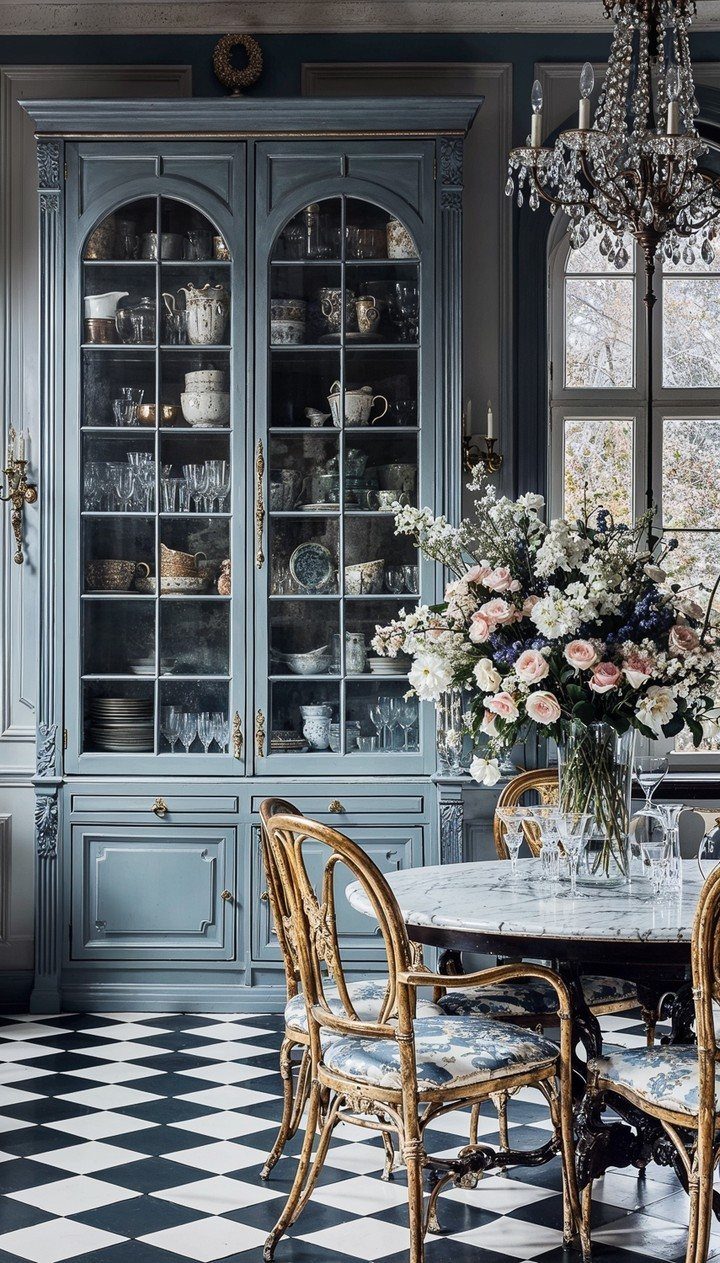
A blue hutch with glass doors turns white dishes into a display and keeps them dust-free at the same time. Against deep blue, plain white ceramics and glassware look sharper than they would on a white shelf.
Sort the pieces by height, with taller items at the back, and leave a little blue showing between them.
A hutch is furniture, so it moves with you if you rent. I’d pick one blue and keep every dish white so the cabinet stays calm.
34. Blue and White Backsplash
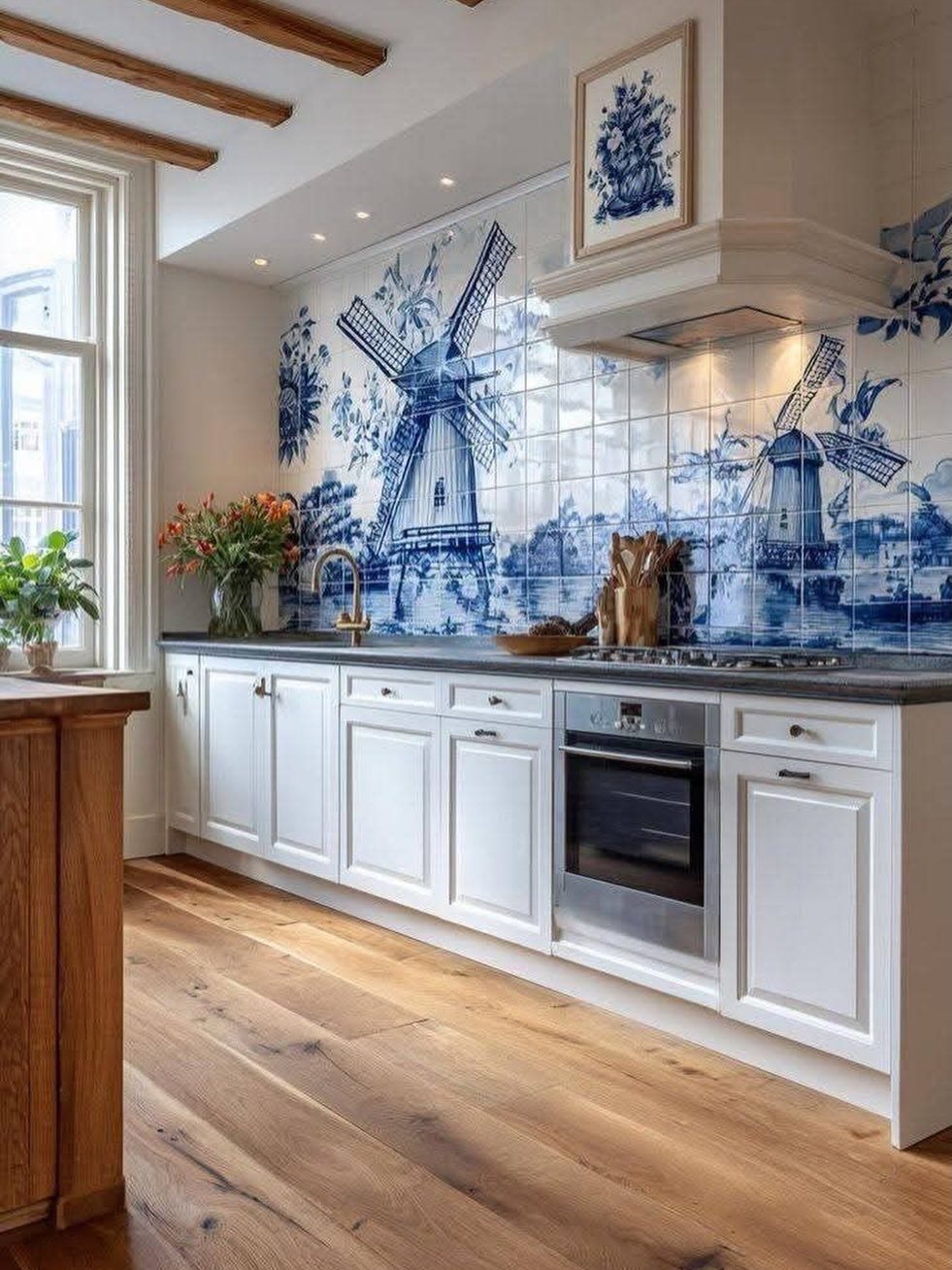
Windmill scenes in Delft-style blue and white give a backsplash a story, and a white kitchen is the right place for it.
Wood floors and white cabinets keep the tile from feeling heavy, and a few fresh flowers on the counter soften the lines.
I’d run the tile only behind the range and the counter, where it frames the cooking area. Because the scenes are the decoration, skip other patterns nearby and keep the cabinet hardware simple.
35. Blue Floral Kitchen Runner
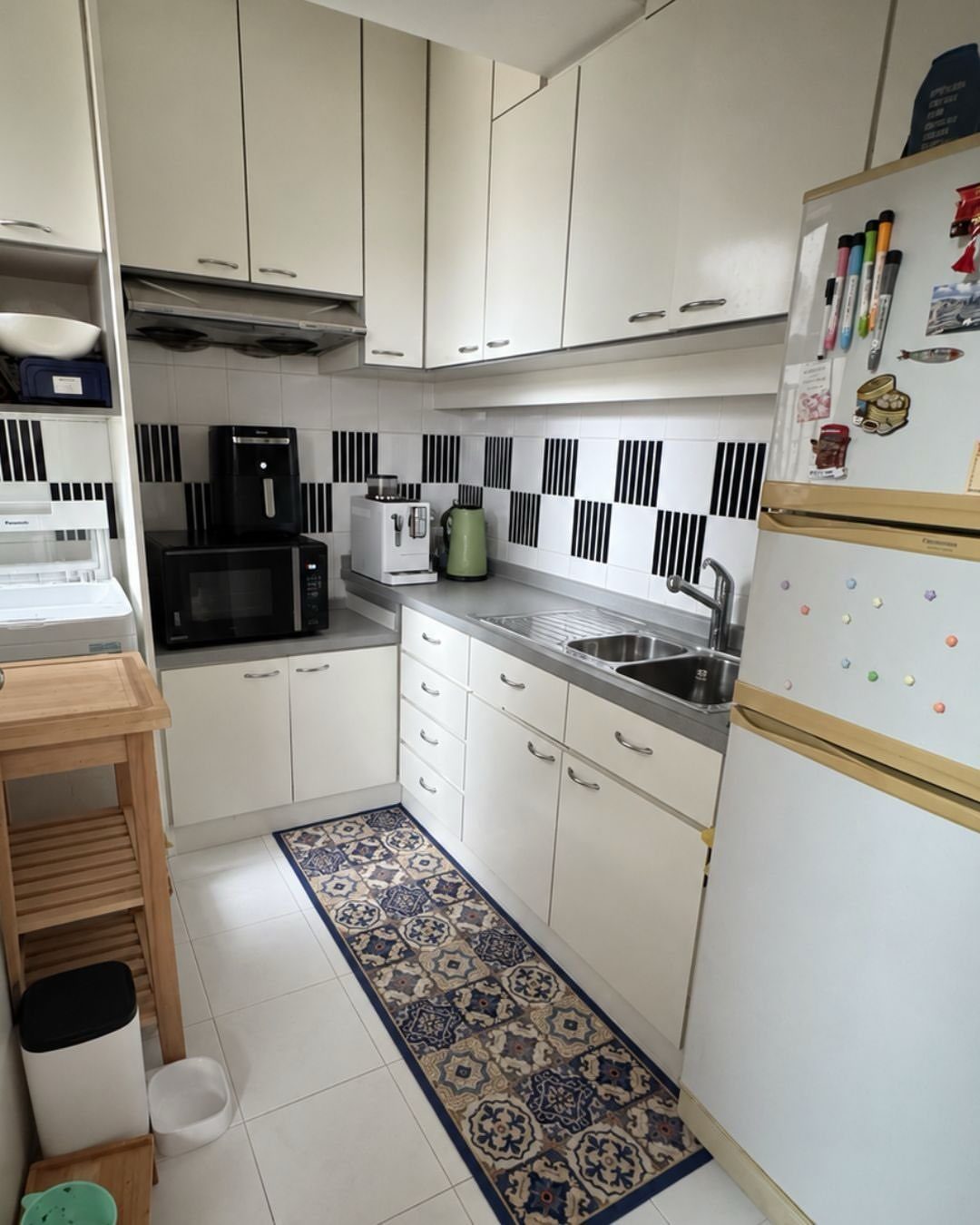
A blue-and-white floral runner gives a compact white kitchen its only pattern, laid right where you stand to cook. White cabinets and appliances leave the rug room to be noticed, even on a tiled floor.
Measure the open stretch of floor before buying, and pick a length that leaves a bit of tile showing at each end.
Low-pile runners slide under doors more easily. I’d choose one with a rubber backing or a thin non-slip pad underneath, since tile can be slick.
36. Blue Range Cooker
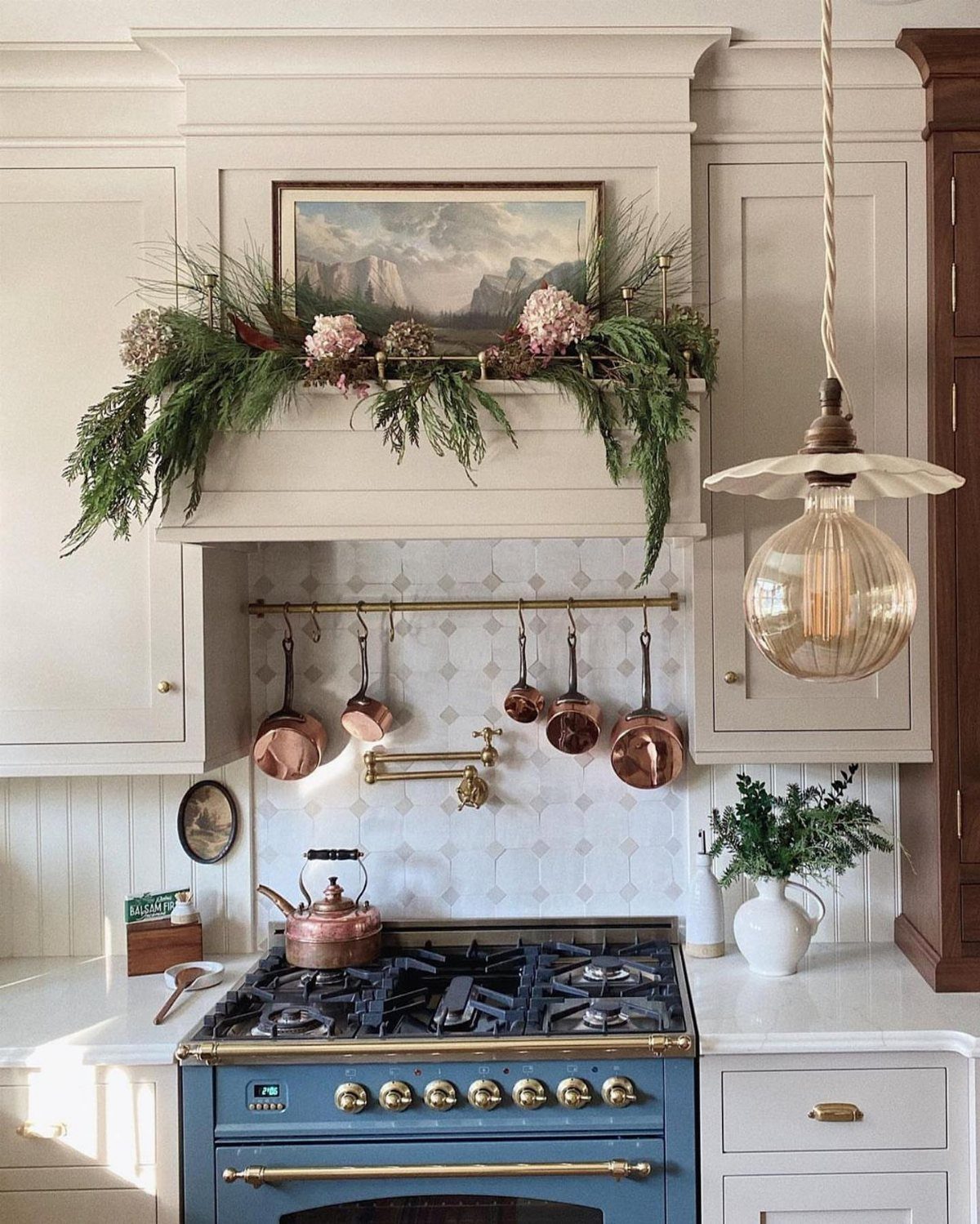
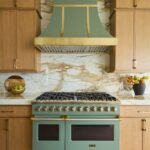
A blue range with gold knobs is the one big swing that still leaves everything else quiet.
Against white cabinets, the stove becomes the focal point, and a copper kettle and pot rack pick up the warm metal of the knobs.
This is an appliance purchase, not a quick swap, so I’d decide on the shade before anything else.
If the budget is tight, borrow the idea with a blue enamel kettle on a white stove. Keep the rest of the wall white and let the range be the loudest thing in the room.
Blue Palette and Atmosphere
A kitchen is usually the loudest, busiest room in the house, and blue is the color I’d use to quiet it.
Blue calms a room and helps it feel restful, and in parts of Asia it also carries meanings of health, spirituality and optimism.
White handles the other half. It keeps the room fresh and airy, so the blue never feels heavy.
Both colors also work as neutrals.
Because they stay quiet, they support whatever you add later, and you can change an accent without redoing the whole scheme. A blue and white base is also timeless, so it won’t push you into repainting when trends shift.
Blue with Other Colors
Orange or terra-cotta is the warmest partner for blue. Bring it in through small items like a pot or a dish towel instead of a big surface.
Warm metals like brass and gold bring a little polish to a blue kitchen, so swapping cabinet pulls or a faucet finish is the simplest way to start.
For drama, add grey or black. Red pushes a blue and white kitchen toward nautical, and green pulls it toward coastal, so choose by the mood you want.
Pick one extra color and keep it to a few small pieces. Delft-style motifs like cornflowers, tulips or sailboats on mugs and stationery are a low-cost way to test it.
Choosing Blue with Room Light
3 things should guide your paint pick: how much daylight the kitchen gets, what style the room leans toward, and how big it is.
Sample first, every time. Farrow & Ball Light Blue leans so blue-green that strong sunlight can make it look plain green.
A pale blue with grey undertones suits stainless steel appliances. For a chalky, dusty light blue, start with the grayed-down swatches; a cleaner, brighter blue can slide into sugary nursery territory.
Brush a large swatch on the wall that gets the most sun and judge it there, not under the store’s lights.
But before you make a beeline to your nearest hardware store, consider the unique light, style, and size of your space, Sacks cautions. “A seaside traditional home is the perfect place for a Shaker-style kitchen in robin’s egg blue,” she says.
Frequently Asked Questions
What color goes well with blue in a kitchen?
White is the safest partner, especially on countertops, uppers and walls, where it keeps navy from feeling heavy. Warm tones stop the pairing from turning cold: wooden stools or a dark wood table, gold hardware, and tan seats all work.
Sage or soft olive cabinets also pair well with blue-and-white tile, since the green sits quietly next to the blue and lets the pattern stay sharp.
Are blue and white kitchens timeless?
Yes. Blue reads as elegant and has not gone out of fashion, and white keeps it crisp.
The pairing adapts to styles from rustic farmhouse to modern minimalist, so it works with current trends and still looks right when you change things later. Both colors act as neutrals, which leaves room for accents in other shades.
How would you use white and blue in your kitchen decor?
Pick one anchor and keep the rest quiet: navy lower cabinets and an island under white uppers, or a patterned blue-and-white tile backsplash behind the stove.
Then layer in cheaper pieces like checked curtains, table linens, or a cluster of blue-and-white plates on the wall.
Limit pattern to one spot so the room looks planned. Renters can get a similar effect with a freestanding blue cart, peel-and-stick tile, or a patterned runner.