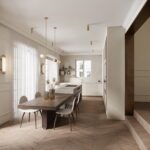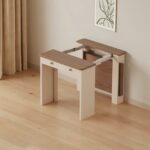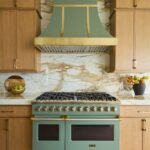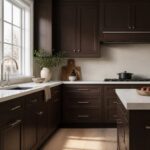
The ideas below span recessed rails, recessed grip doors and notch-grip drawers, in finishes from glossy black to matte beige.
I’d settle on daylight before anything else: a dim kitchen gains depth from gloss with warm strip lights under the cabinets, while a sun-heavy one stays calmer in matte, where glare can’t streak across the doors.
Once the finish is settled, pick between recessed handle rails, recessed grip doors and notch-grip drawers.
1. Recessed Handle Rails
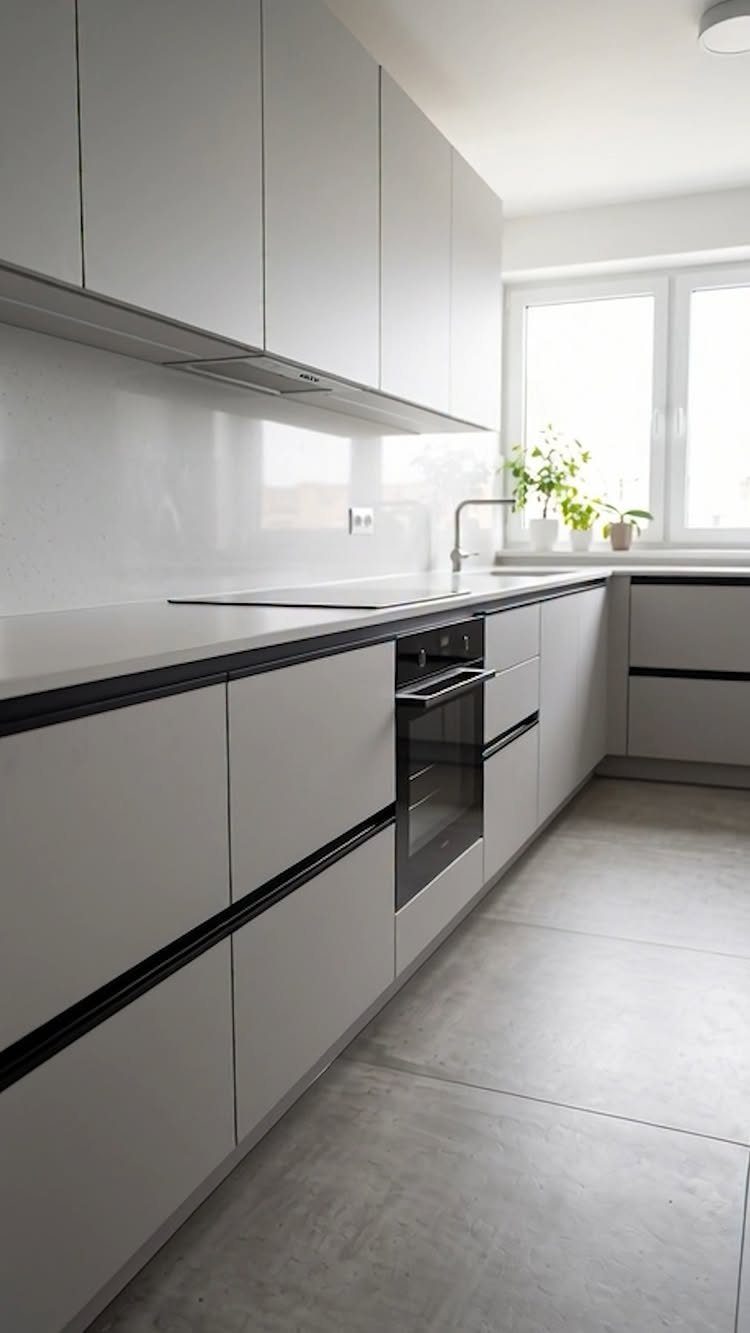
A rail set behind the door fronts leaves a recessed channel along the top or edge, and your fingers slide in to pull.
On the light grey cabinets here, the black rail reads as a thin line, so it works like a design detail rather than hardware.
I like a dark rail against a pale front for that reason: the contrast gives the run of cabinets a clean outline. Matching the rail to the door color is what makes it disappear.
2. Flat-panel Cabinets
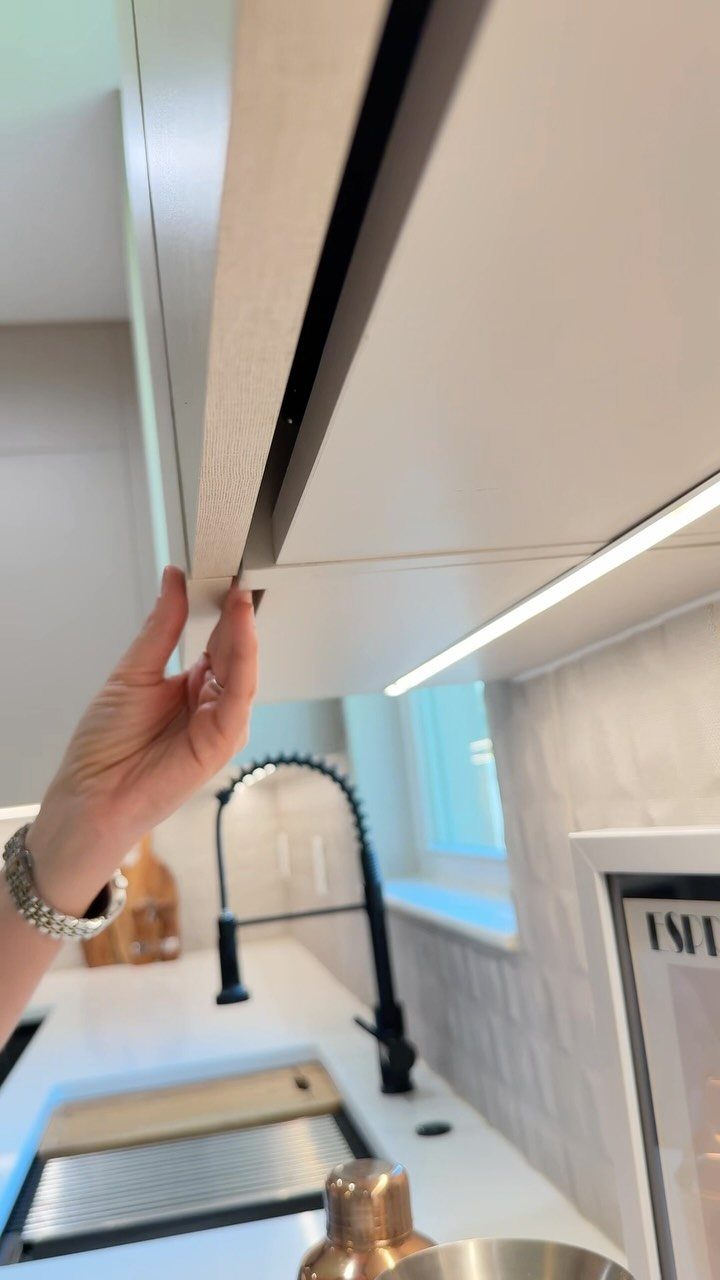
Pulling from the bottom edge opens a flat-panel door with no hardware, and the trick suits an uninterrupted slab far better than a door broken up by seams or panels.
With no frame, groove or profile, the front stays easy to wipe down, which matters in a kitchen where hands are often greasy.
In a light finish like this one, the plain surface keeps a small kitchen feeling calm. Pair it with a bold faucet, as here, and the black fixture becomes the one accent in the room.
3. High-gloss Cabinets
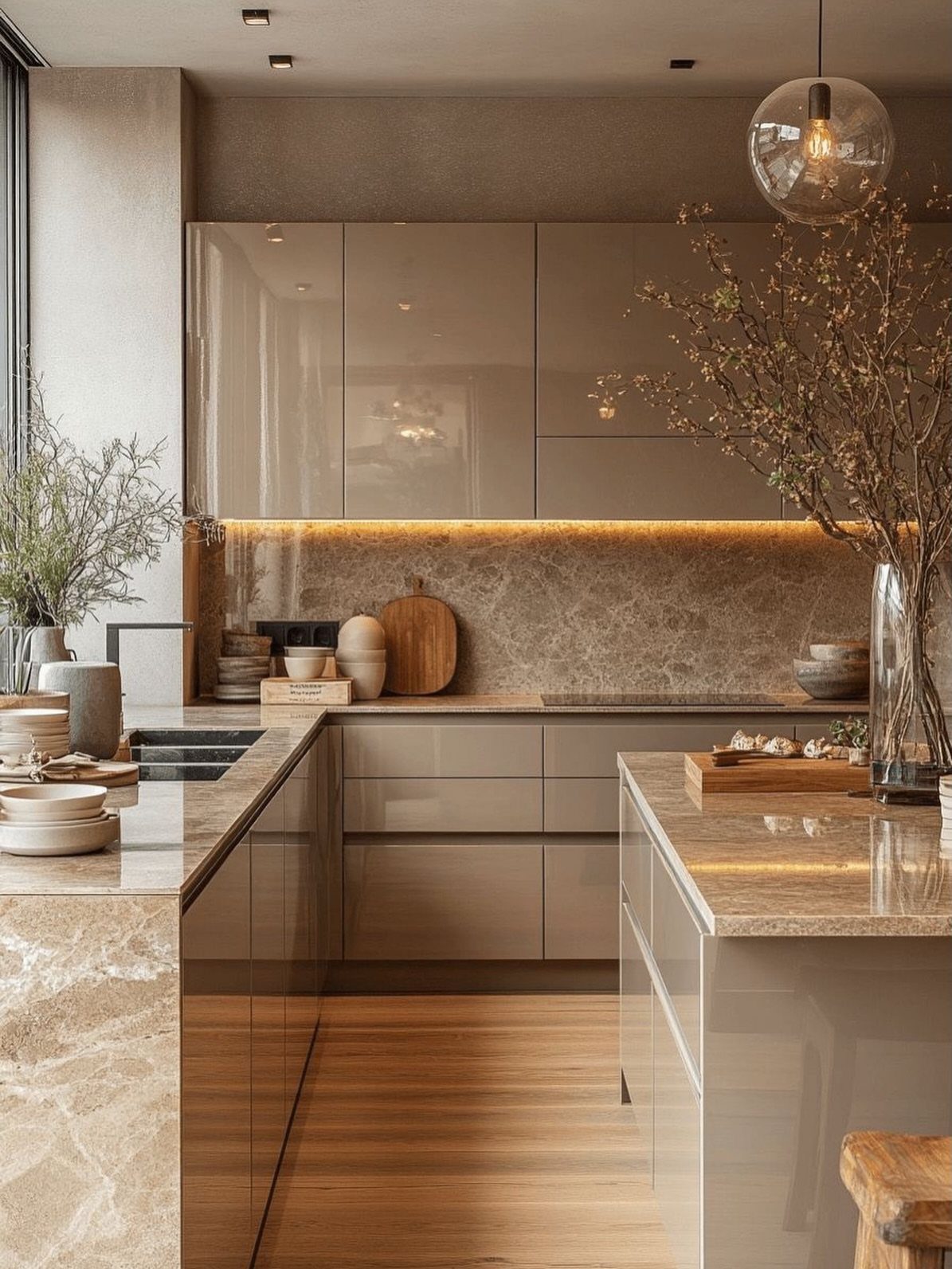
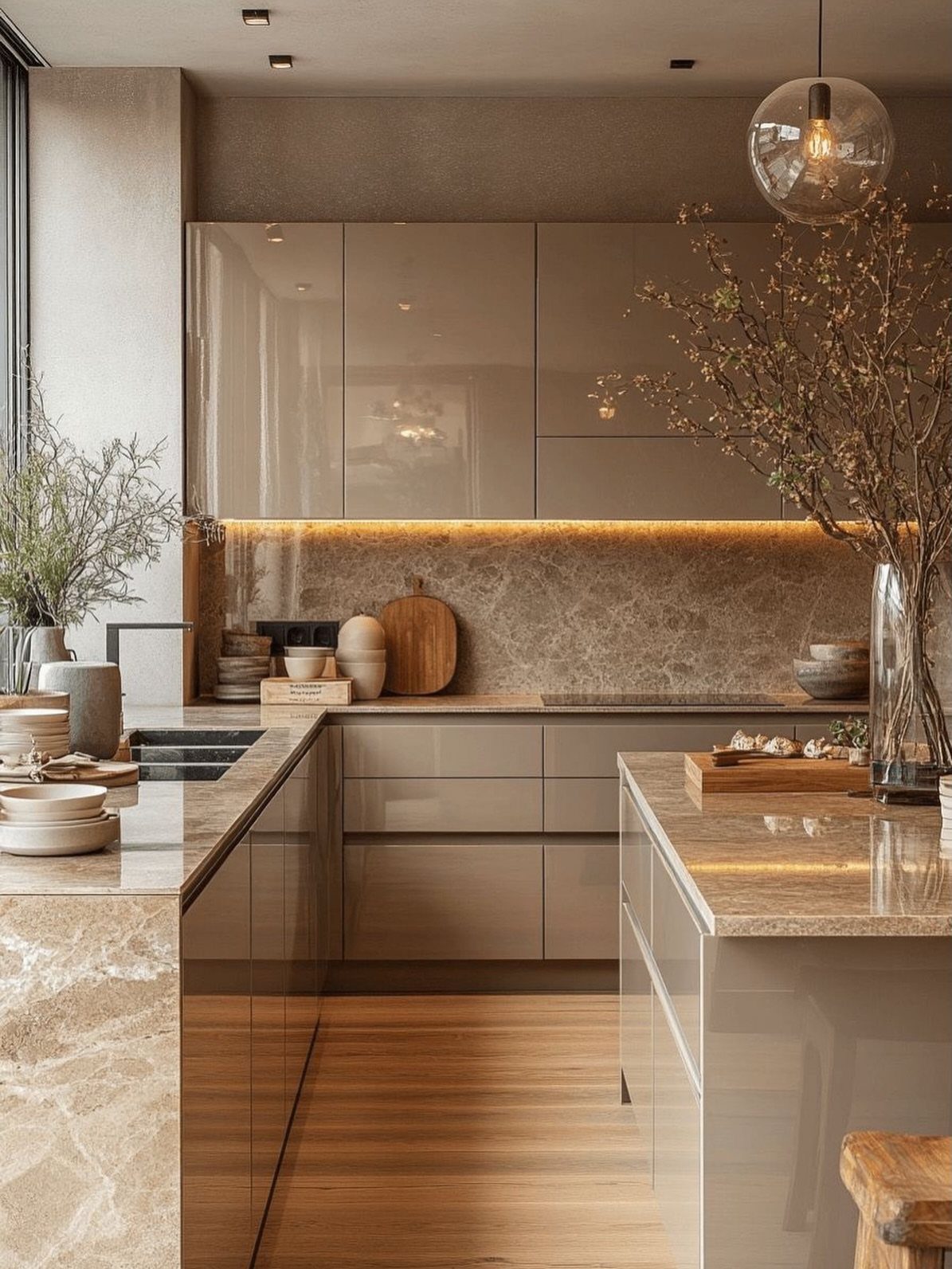
Gloss changes how a kitchen reads under light. Warm under-cabinet strips bounce off a glossy surface and make the whole run look deeper than it is, so beige or cream fronts gain the most from them.
I would choose gloss for a kitchen with limited daylight, where that reflection does real work. Expect to wipe fronts more often, since a handleless door gets touched along its edge and shiny surfaces show every print.
A marble counter, as here, suits the finish, because both reflect rather than absorb.
4. Matt Handleless Cabinets
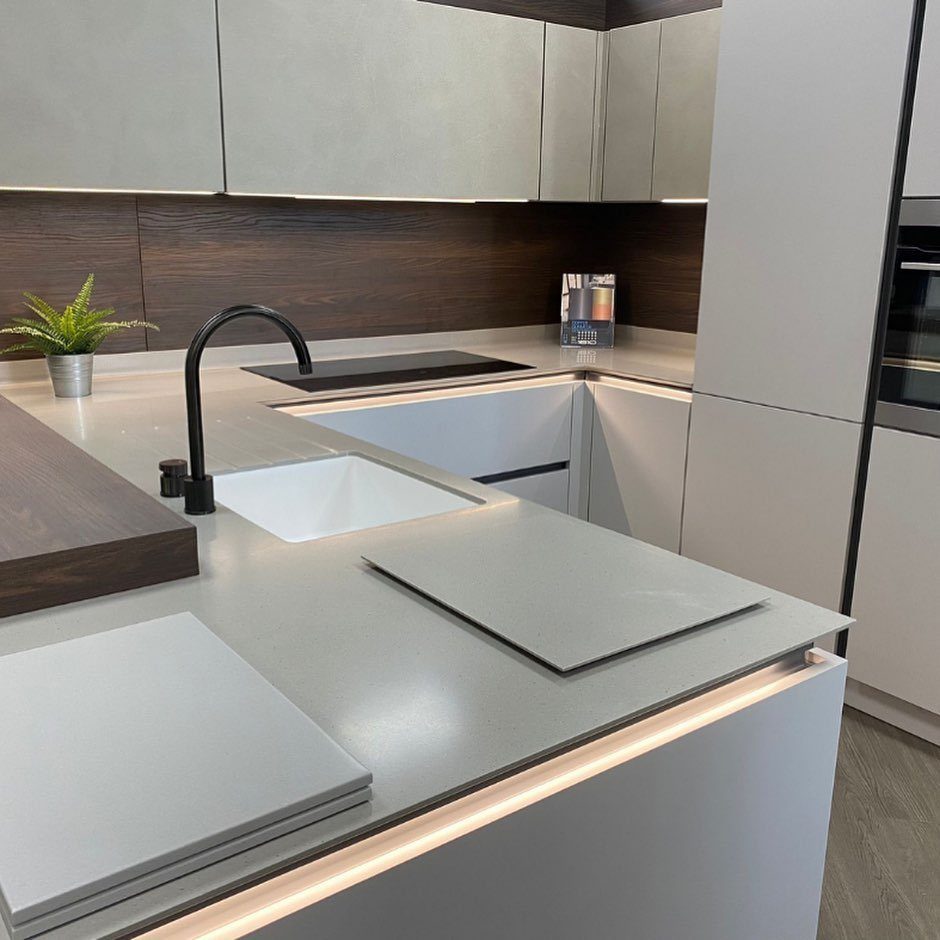
Matt wins me over on handleless doors for one reason: no glare. Light grey fronts with a non-reflective finish look soft and sleek, and nothing competes with the dark wood backsplash behind them.
Under-cabinet lighting works well here because it washes the surface evenly instead of creating hot spots. I would pick matt over gloss if your kitchen gets strong daylight, since reflections will not flare across the doors.
Keep the counter mostly clear, as in this kitchen, and the quiet finish does its job.
5. Handleless Drawer Fronts
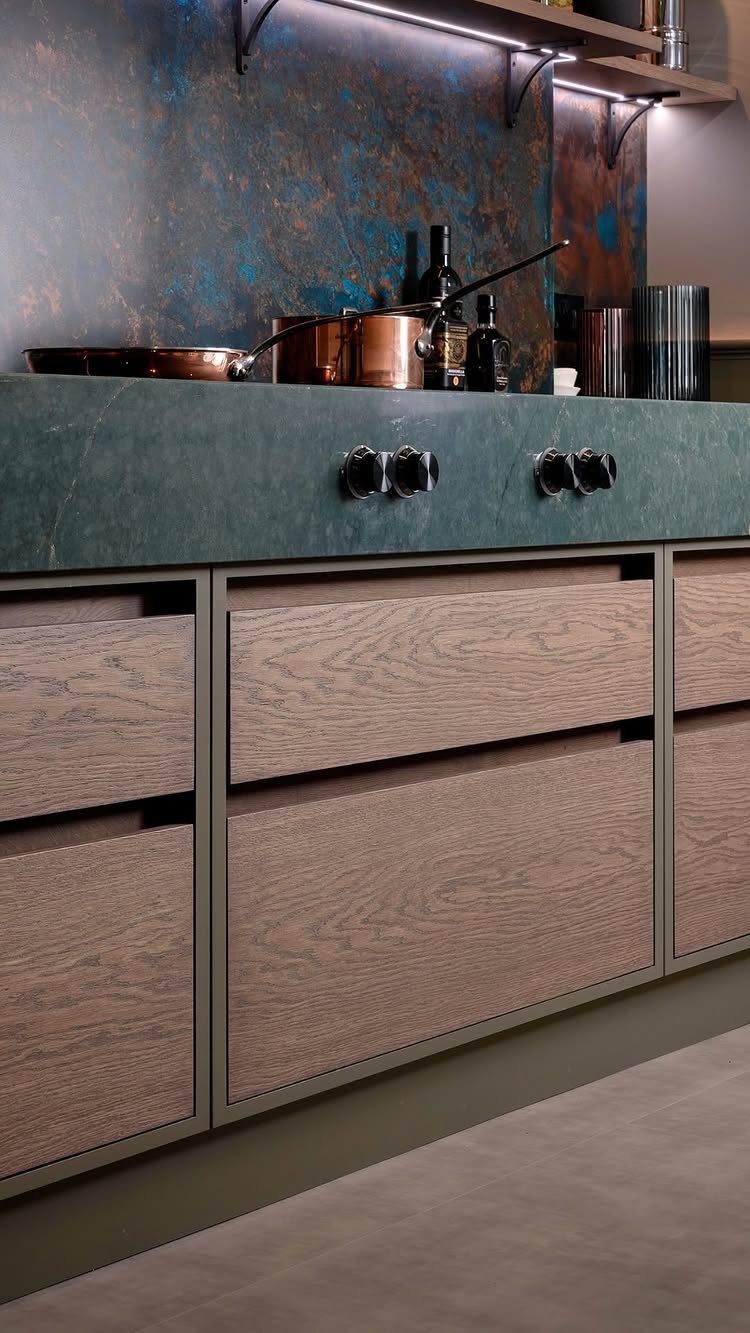
A pull cut into the top edge of each drawer front lets the wood grain run unbroken across the whole stack, which is why light oak suits this look.
Without knobs, the eye follows the grain instead of stopping at hardware.
That continuity is why I prefer this treatment on drawers over doors: the long horizontal lines are the feature. Against a dark green stone counter, the pale wood gets a strong contrast without adding a single extra material.
On a budget, start with the lower drawers only.
6. Recessed Grip Doors
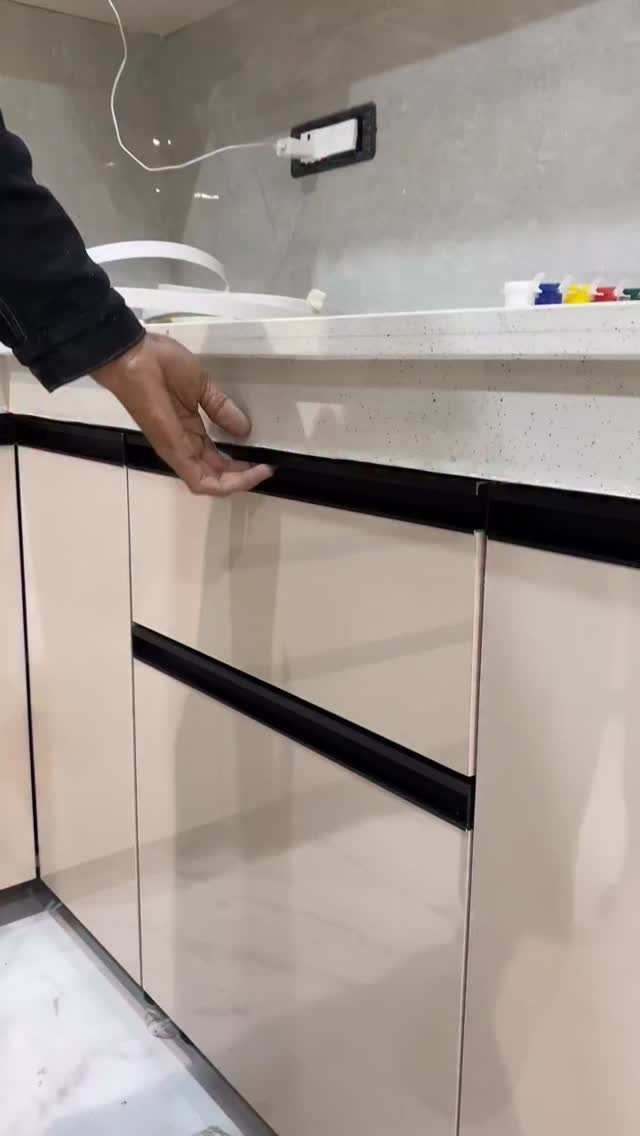
A black grip set into a glossy beige door gives you something to hold without anything sticking out.
The recess sits at the door edge, so your hand finds it by feel and the door swings open with a simple pull.
I like how the dark insert marks exactly where to reach, which helps in a household where guests are opening cabinets too.
Gloss shows fingerprints near the grip, so keep a microfiber cloth handy.
7. Notch-grip Drawer
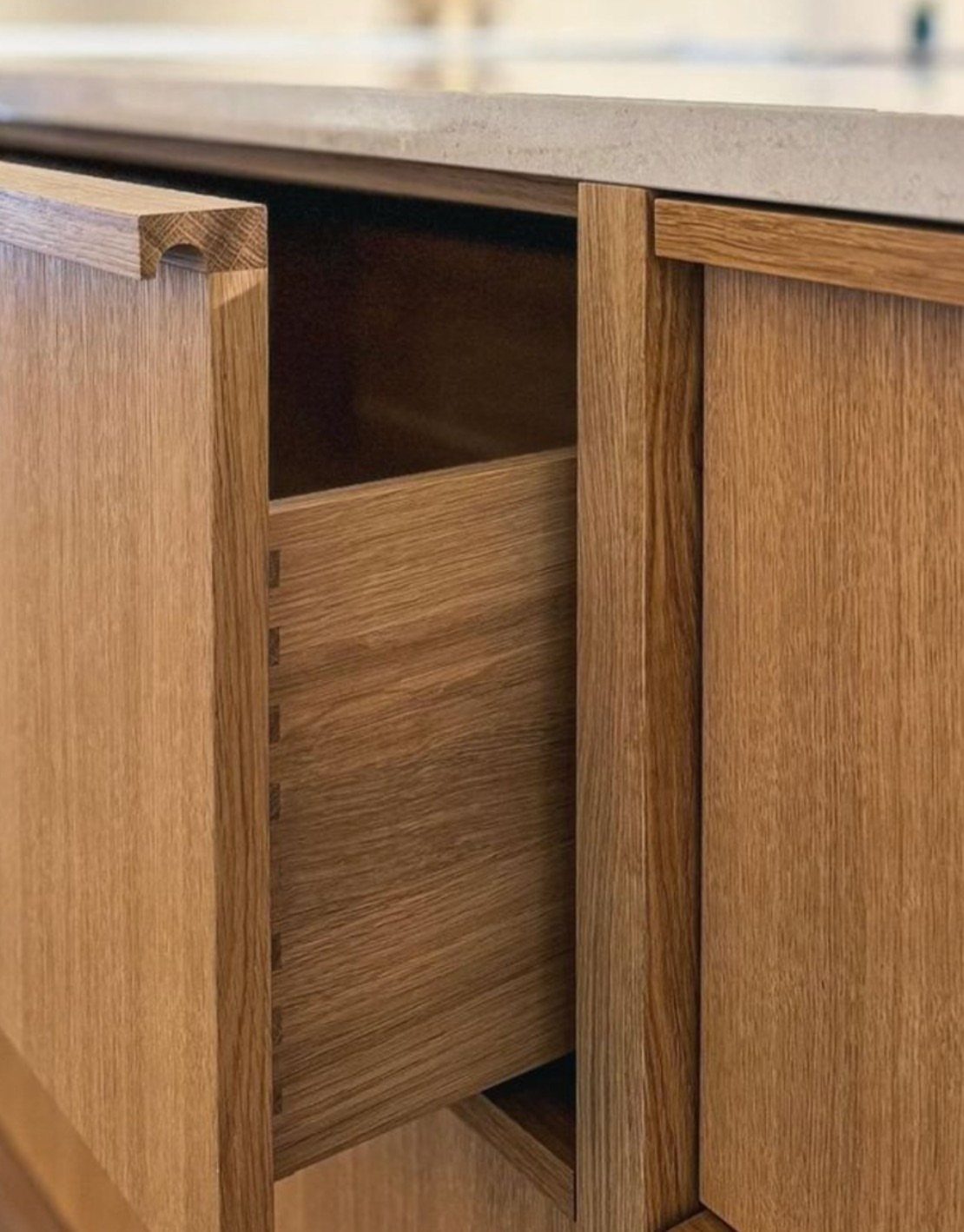
A half-moon notch cut into the top edge of a drawer gives your fingertips just enough to hook. On light wood with a grey counter above, it keeps the front free of hardware and the grain uninterrupted.
I would pick this over a surface-mounted pull wherever you want a plain face. Expect to reach over the top edge each time, so the notch suits drawers better than tall doors.
8. Wood-grain Cabinets
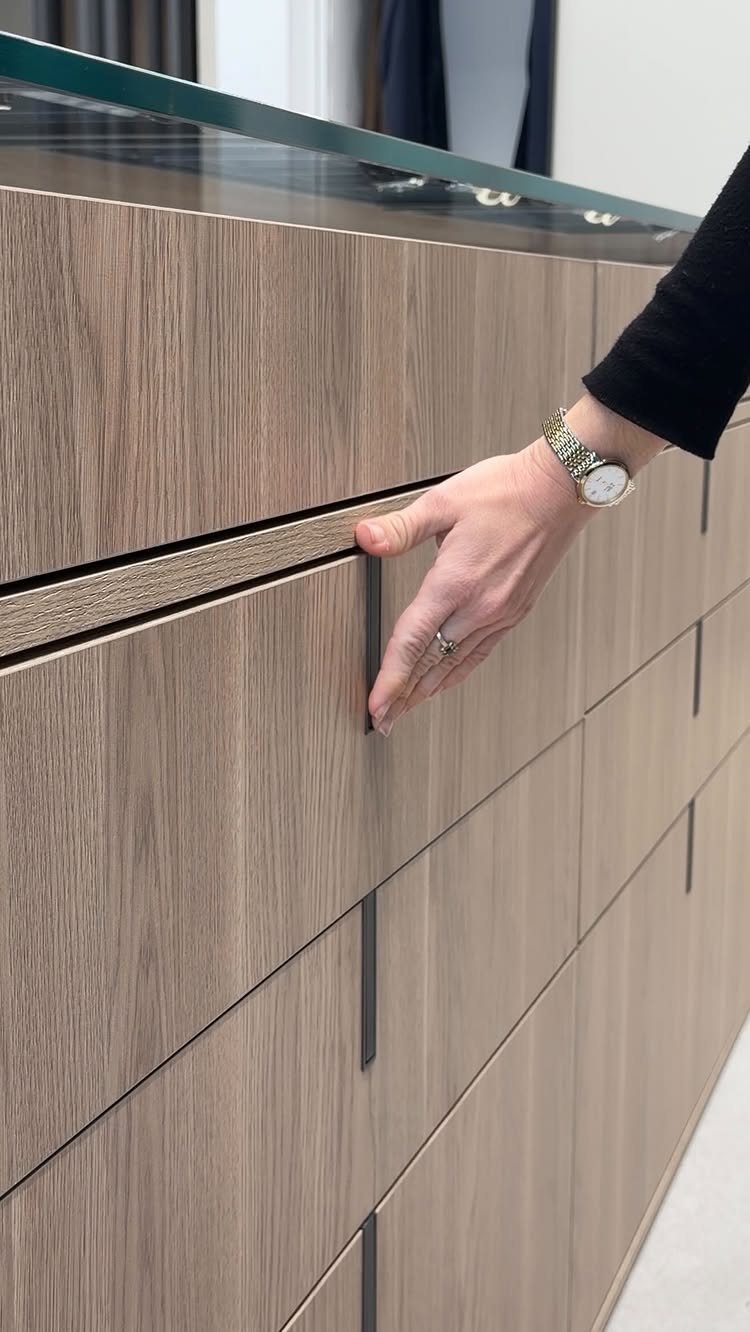
Light wood fronts with a groove routed in at the edge read warm without a single knob to break up the pattern. Because the grip is part of the door, the grain stays the star.
I prefer a pale, even grain for a handleless kitchen. Strong, busy figure plus a recessed groove can compete for attention.
Run a finger along the groove now and then to clear crumbs, since a recess catches debris that a flat front would not.
9. Glossy Black Cabinets
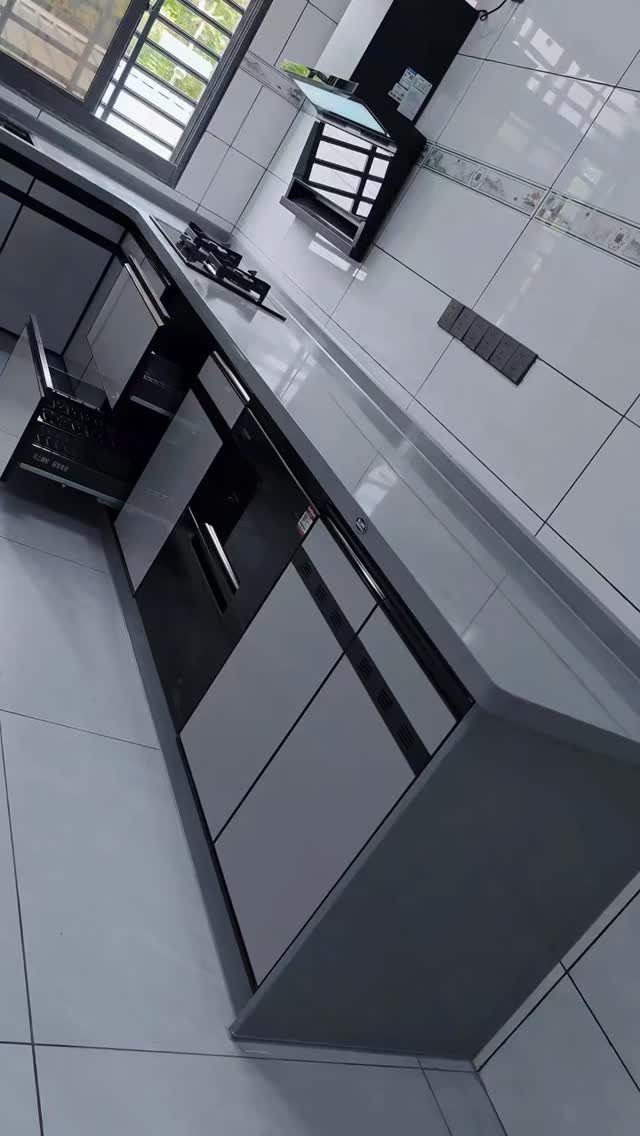
Black and grey gloss together make a handleless kitchen look sharp, and the reflective fronts pick up everything around them. With white tile underfoot, as here, the dark cabinets get a bright counterweight.
Gloss in black is the least forgiving finish for fingerprints and dust, so plan on regular wiping along the grip edges.
I would still choose it for a kitchen where drama is the goal, and keep the floor light so the room does not close in.
10. Light Wood and Marble
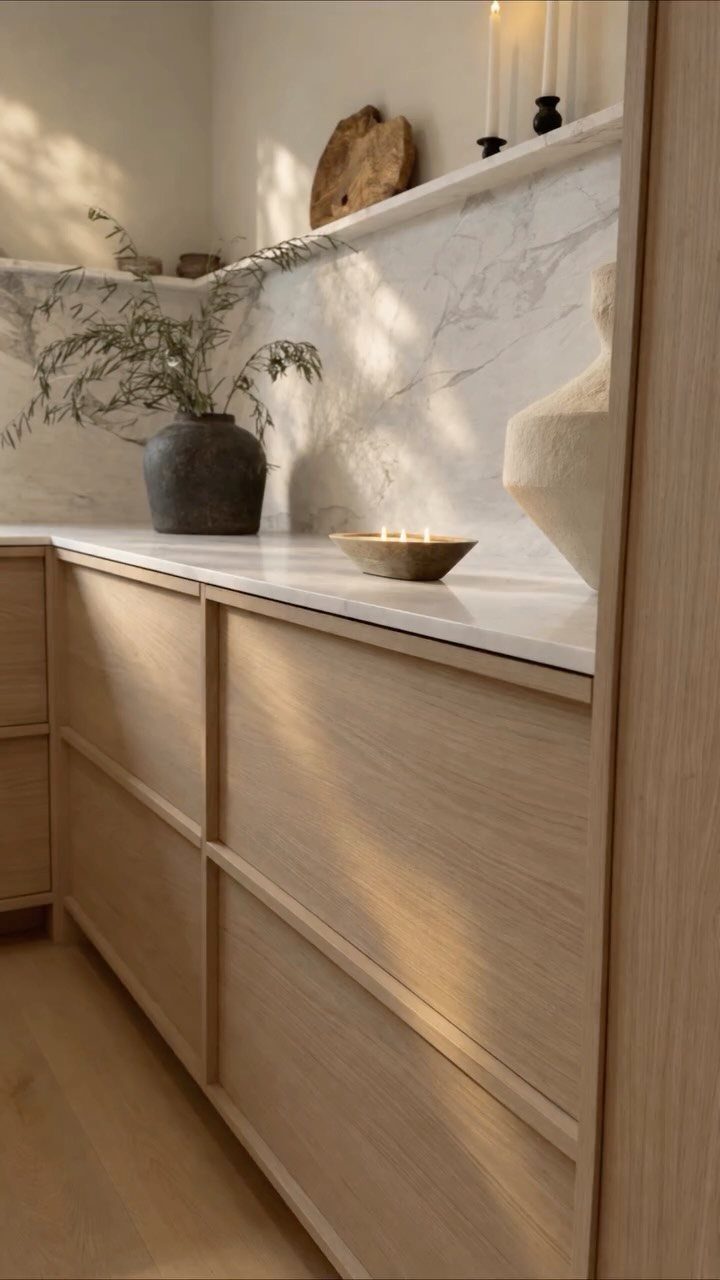
White marble and pale wood make an easy pair: the stone brings cool veining, and the wood takes the chill off.
Carrying the marble up the wall as a backsplash, as in this kitchen, keeps the scheme bright and tied together.
Without handles, the wood fronts stay quiet and let the stone lead. I would keep decor sparse on top, a vase or a few candles, so the materials do the work.
11. Beige Handleless Cabinets
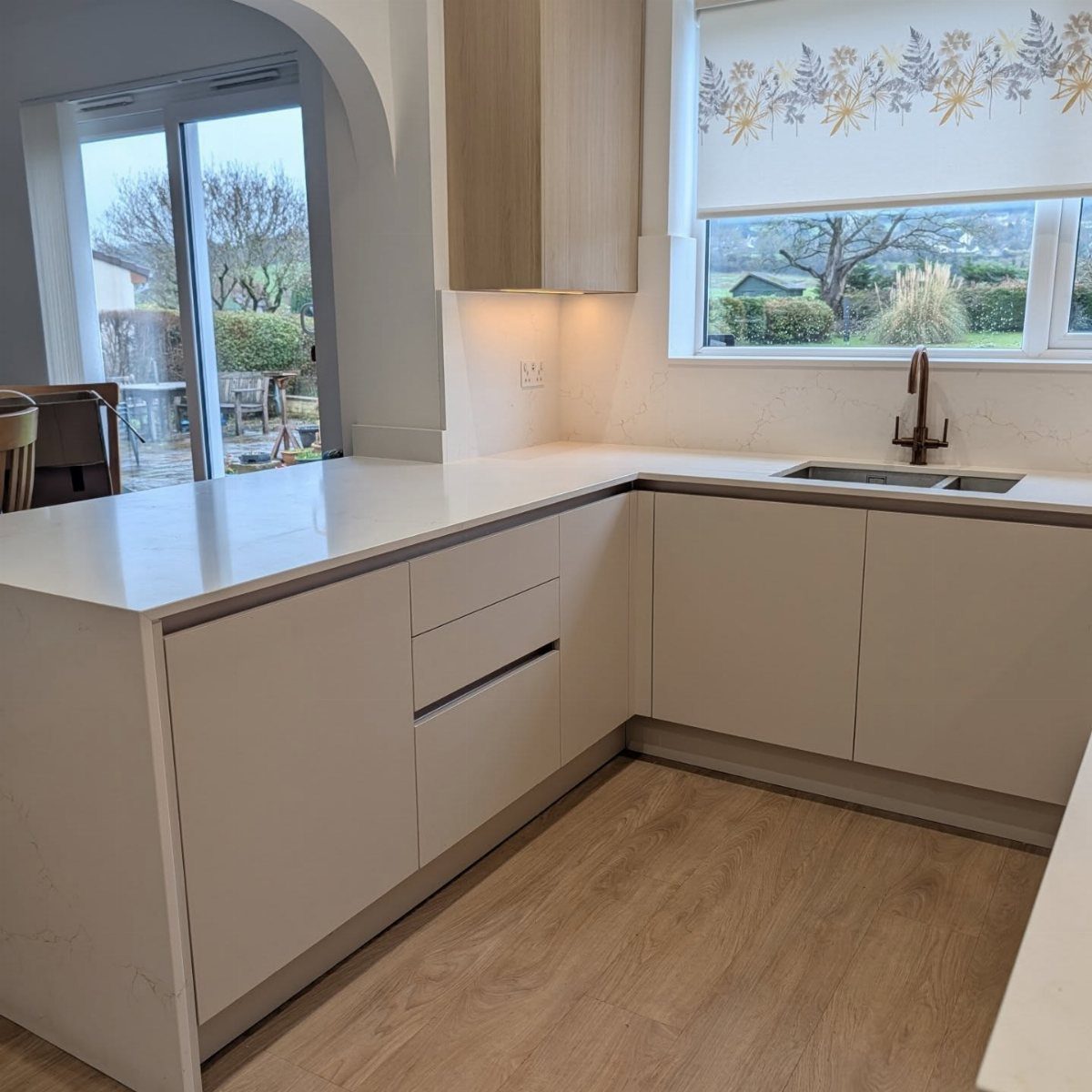
Soft beige on the lower cabinets only, with white counters above and pale wood underfoot, makes a kitchen that feels light and calm. Nothing here shouts, which is the appeal.
Handleless fronts help the low-contrast palette hold together, since there is no hardware to catch the eye. I would choose this for a small or older kitchen where you want the room to read as one gentle tone.
A patterned window treatment, like a floral blind, adds interest to a handleless kitchen without touching the cabinets.
12. Beige and Wood Mix
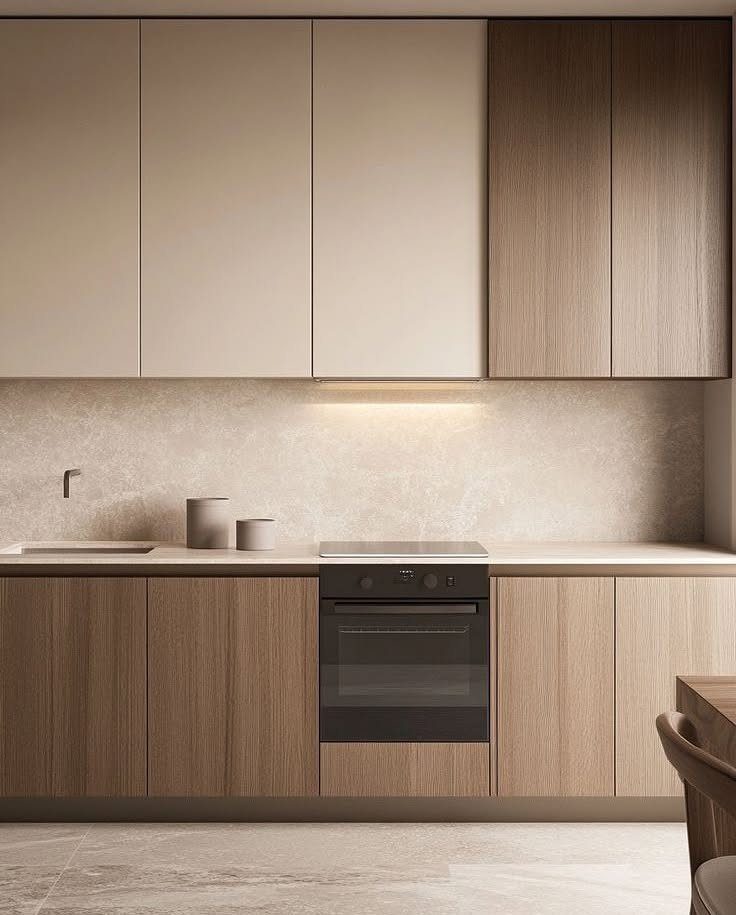
Splitting a handleless kitchen in 2 materials, matte beige above and wood grain below, adds depth without adding hardware. Matte upper cabinets stay quiet along the sightline, while the wood anchors the room at the base.
I like this split because the heavier, warmer material sits low and the lighter one stays overhead, so the space feels open. A built-in oven set into the wood run, as here, keeps the lines clean.
Keep the countertop and backsplash pale so the 2 cabinet tones stay the focus.
Handleless Design Trade-offs
Handleless fronts remove snag points, which matters in a small kitchen where you brush past the cabinets all day.
With no handles to collect grime, there are fewer crevices to clean, and the plain faces give the room a clean, uncluttered look.
The costs are real, though. Push-to-open fronts show fingerprints because you press on the face itself, and the mechanism needs adjusting over time so doors close flush and pop open reliably.
Rail systems ask for precise alignment.
If the rail runs even slightly off level, the gaps between fronts become obvious along the whole run. Crumbs and dust also settle in the channel, so plan on a quick wipe with a damp cloth or a small brush.
If you rent, check what your lease allows before changing any fronts. For a first-time owner, I would test one push-to-open door before committing to a full set.
Frequently Asked Questions
What is the difference between handleless and J pull?
A J pull is one kind of handleless design, not a rival to it.
Handleless describes any door or drawer with no hardware on the face, whether it opens with a push-to-open latch, a recessed rail or a grip built into the door.
A J pull is a J-shaped profile set into the top edge of the door that gives a comfortable grip while keeping the clean lines of a handleless look.
How do handleless kitchen doors work?
They open one of three ways: a push-to-open latch, a grip built into the door such as a J pull or edge pull, or a recessed rail with a channel your fingers slide into.
Push-to-open fronts release when you press the face, which is why they show fingerprints and need occasional adjusting so the doors close flush.
Set the rail dead level, since even a slight tilt shows up as uneven gaps between fronts along the entire run.
Is a true handleless kitchen worth it?
It pays off when uninterrupted lines matter to you and you like fronts with no snag points or crevices to clean. The costs are fingerprints on push-to-open doors, mechanisms that need adjusting over time, and rails that demand precise alignment.
Integrated pulls are a simpler alternative, and push-to-open works best on a few doors rather than every one. Before buying a full set, I would test a single push-to-open door to see how it feels in daily use.
How to choose the right handleless system?
Start with what you are fitting it to: a notch cut into the top edge suits drawers better than tall doors, since you reach over the edge each time, while a recessed rail or grip works well on doors.
Then match the finish to your light. In a kitchen with strong daylight, matte keeps reflections from flaring across the doors; gloss performs better in a dim room.
Layout, budget and personal style play a part too, and with limited funds I would start with just the lower drawers.