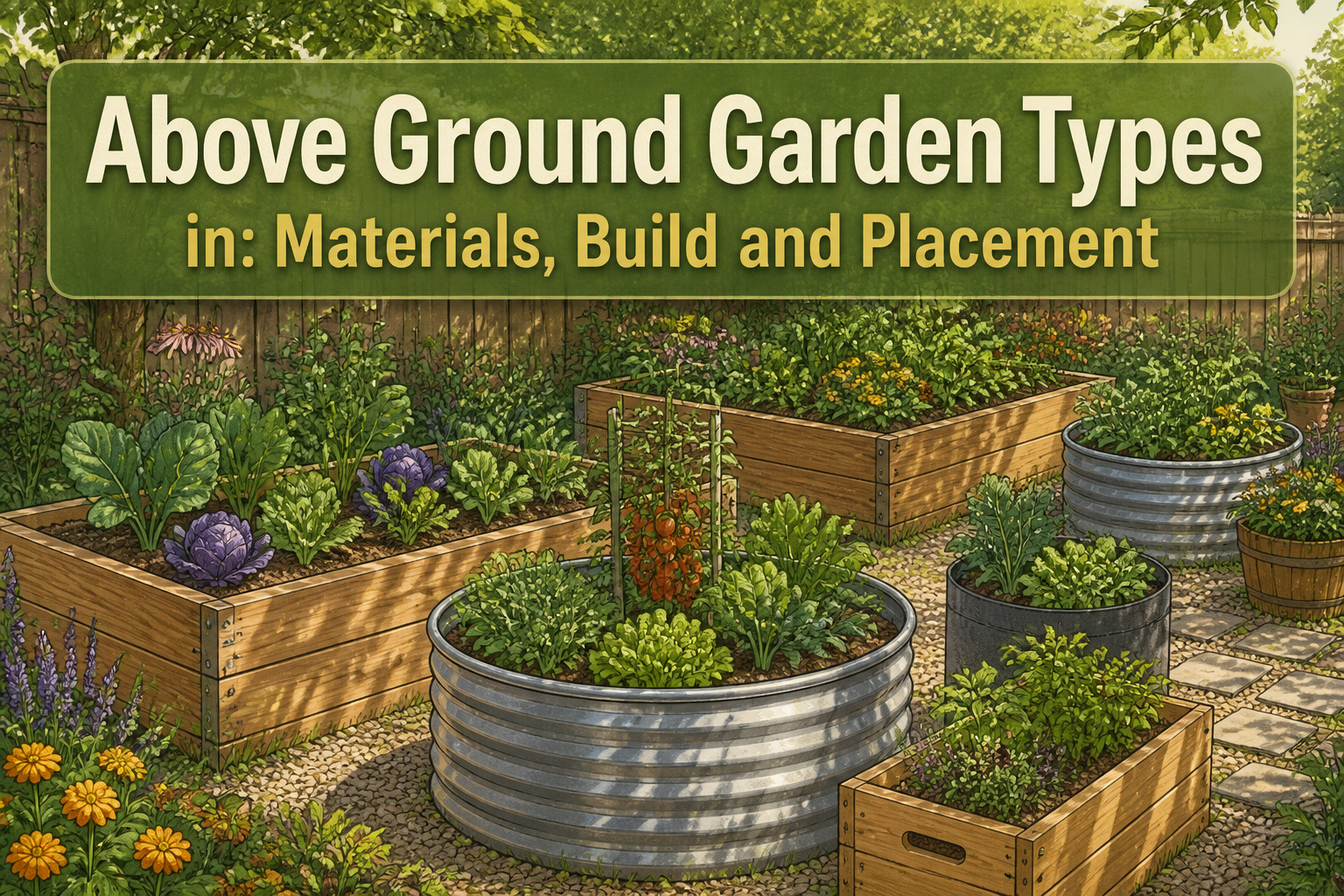
Cedar raised beds still win for most U.S. gardeners because a single weekend of work with a Phillips screwdriver gets you 10 to 20 years of service. Buy galvanized steel instead if you rent, move often, or need the bed broken down and in a sedan by Sunday evening.
The catch is cost. Cedar stings at checkout, and untreated pine rots in five years if you cheap out. Modern pressure-treated lumber is safer than the old arsenic formulas, but lining the interior with landscape fabric is the step most community gardeners argue about for longer than it takes to install.
1. Wooden Raised Beds

Wood still carries most above ground gardens in this country, and the reason is simple: a weekend builder can haul pine or fir home in a sedan and have the box finished before Sunday dinner. Cedar and hemlock cost more but the rot-resistant grain buys you 10 to 20 years against maybe five for untreated softwood. That math pushed me toward cedar when I priced out my own build, even though the checkout hurt.
The treated lumber question comes up in every community garden meeting I have sat in. Decades back, manufacturers used arsenic; that lumber is long gone from stores, but old railroad ties and reclaimed boards still carry it. Modern pressure-treated wood relies on copper compounds instead, and the newer formulations are labeled for ground contact when they are. If you are building beds for vegetables and the treated route is what your budget allows, lining the interior walls with landscape fabric or a plastic barrier cuts the leaching risk to nearly nothing. I have seen gardeners skip this step and sleep fine; I have seen others spend the extra Saturday on lining every seam. The choice depends on whether you are feeding small children out of that bed or just growing flowers to cut.
Stain the outside if you want the look, but keep finishes away from the soil side. A raw cedar box weathers to silver-gray in two seasons and holds its structure regardless.
2. Metal Raised Beds

Galvanized steel panels are the one material in this list you can set up in March and still trust in 2046. Manufacturers rate modern alloy-coated grades like ZAM or Aluzinc for 20-plus years of outdoor service, and traditional galvanized steel has held up for half a century in some agricultural uses. The upfront cost runs higher than wood, but the math shifts hard if you are not staying in one house forever. A $200 modular kit breaks down in under an hour with a cordless drill, moves in the back of a sedan, and reassembles wherever your next rental or starter home happens to be. That portability matters when you have put in the soil work and do not want to start over.
The panels themselves are lightweight, though the hardware still needs a drill to seat properly. Most kits ship in a single compact box and go together in about 45 minutes if you are working alone. One thing to watch: some prefabricated beds sold online have tested positive for lead in the paint or coating, so checking for certified food-safe finishes is worth the extra search. Soil also warms faster in metal than in wood, which can stress cool-season seedlings unless you adjust your planting calendar by a week or two.
3. Stone Raised Beds
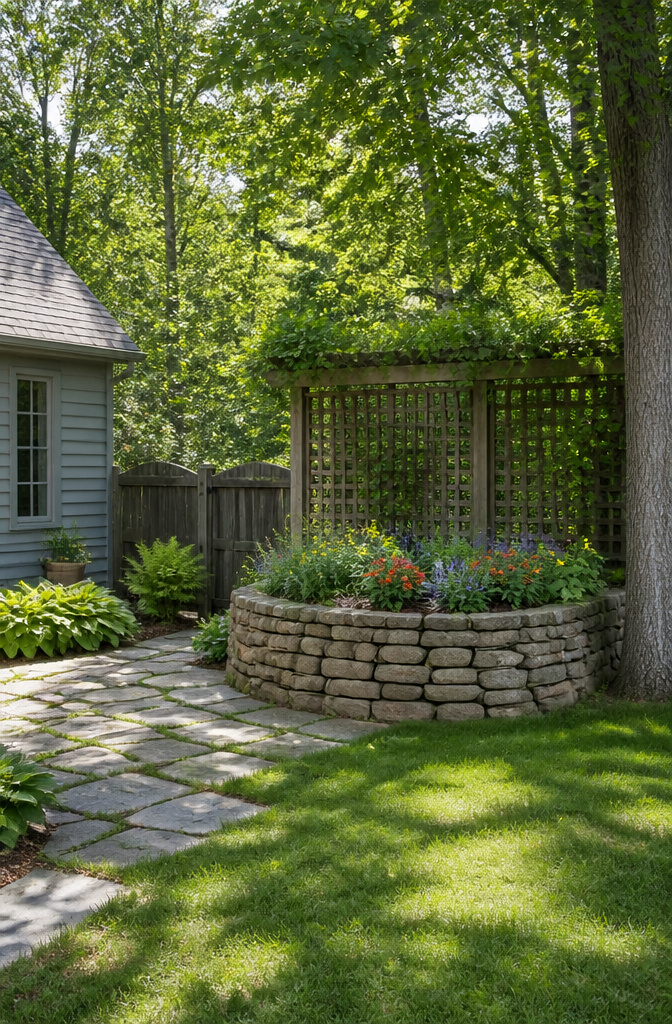
Stone outlasts every other material a raised bed can be built from. Cedar might survive 10 to 20 years, and galvanized steel or modern alloys like ZAM and Aluzinc can stretch toward two decades, but stone simply does not rot or corrode. That permanence is the problem if you rent. A stone bed becomes landscape architecture the moment it is set, not a project you dismantle when the lease ends. The cost sits at the top of any budget hierarchy for above ground gardens, and the labor runs past anything that fits a single weekend. Dry-stacked fieldstone demands skill, patience, and often machinery to move; mortared work stretches across multiple Saturdays even for experienced hands. The visual weight is real and beautiful, and locally sourced stone ties a bed to its place in a way manufactured materials never will. For a first home you plan to keep, that investment can make sense. For someone measuring projects in annual weekends and counting on the security deposit back, stone belongs on a wish list for someday, not this spring’s build.
4. Fabric Raised Beds
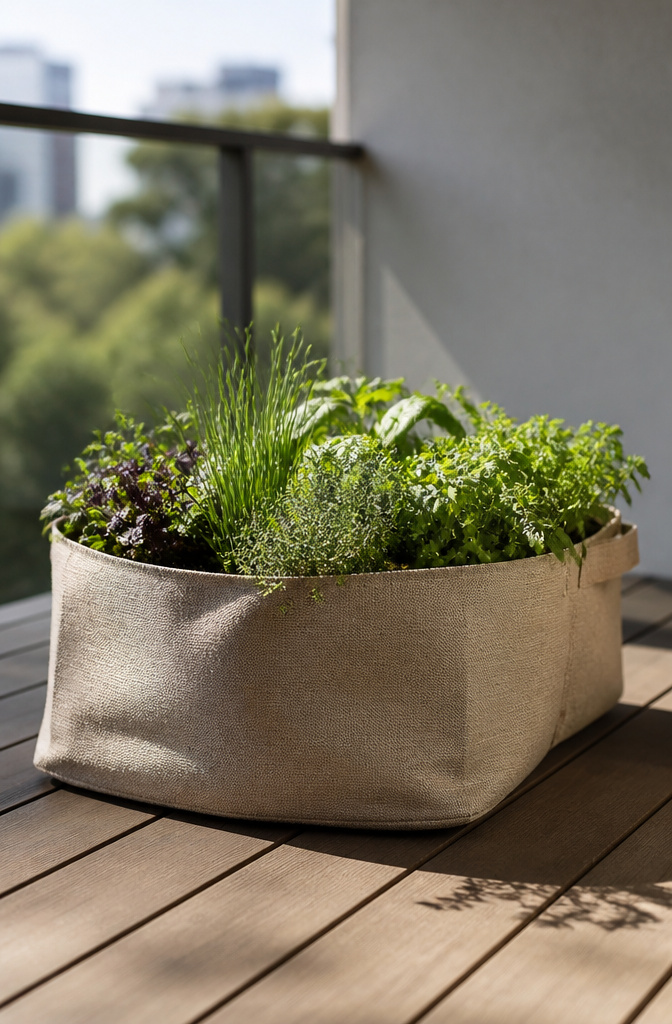
Fabric raised beds are the lightest way to test whether you actually want an above ground garden in that spot. A filled bed made from landscape fabric or a similar woven material weighs almost nothing empty, so you can drag it to follow the sun across a balcony or pack it flat when your lease ends. That portability comes with a watering tradeoff: the porous sides let moisture evaporate from the full surface, not just the top, so the soil dries faster than it would in a wood-sided box. In summer heat, you might be watering twice daily where a wooden bed needs water once. The sides also soften and bow once the mix is wet, which looks messy and can slump onto your neighbor’s patio below if you are not careful about placement against a railing. I would use these for a single season of lettuce or herbs, something that finishes before the driest weeks, or for proving that a corner of the yard gets enough light before you build something permanent there. Plan on checking soil moisture with your finger every morning if you go this route; the fabric gives you no visual cue that it has gone dry two inches down. For renters and serial experimenters, the low commitment is worth the extra attention. For anyone growing tomatoes through August, the math on water and sagging sides stops being generous.
5. Containerized Raised Beds

Containerized raised beds fill the gap between fabric grow bags and permanent installations like stone or metal. Rigid sides, whether built from wood, brick, cinder block, or plastic, hold their shape season after season and protect plants in high-traffic areas or wherever soil is compacted beyond easy repair. The variety of materials means renters can often repurpose what they already have: an old stock tank, salvaged lumber, or leftover pavers become a growing space without the weekend commitment of poured stone.
What separates these from fabric is the structure itself. Fabric conforms and breathes but collapses when moved; containerized beds keep square corners and straight rows, and they survive relocation better than stacked stone if a lease ends or a sunny spot shifts. They also improve physical accessibility, bringing the soil surface up without requiring the investment of a modular metal kit. The Vego Garden 17" Tall 10 In 1 Jumbo Modular kit, for reference, runs $200–$217 and assembles in about 45 minutes with a drill, but a repurposed container costs nothing if the material is already on hand and simply needs drainage holes.
The tradeoff is lifespan. Wood rots, plastic UV-degrades, and cinder block weathers, so containerized beds outlast fabric yet still need replacement years before metal or stone would. For a project budget in the low hundreds and a single weekend, that lifespan is usually the right match.
Why Raised Beds Work
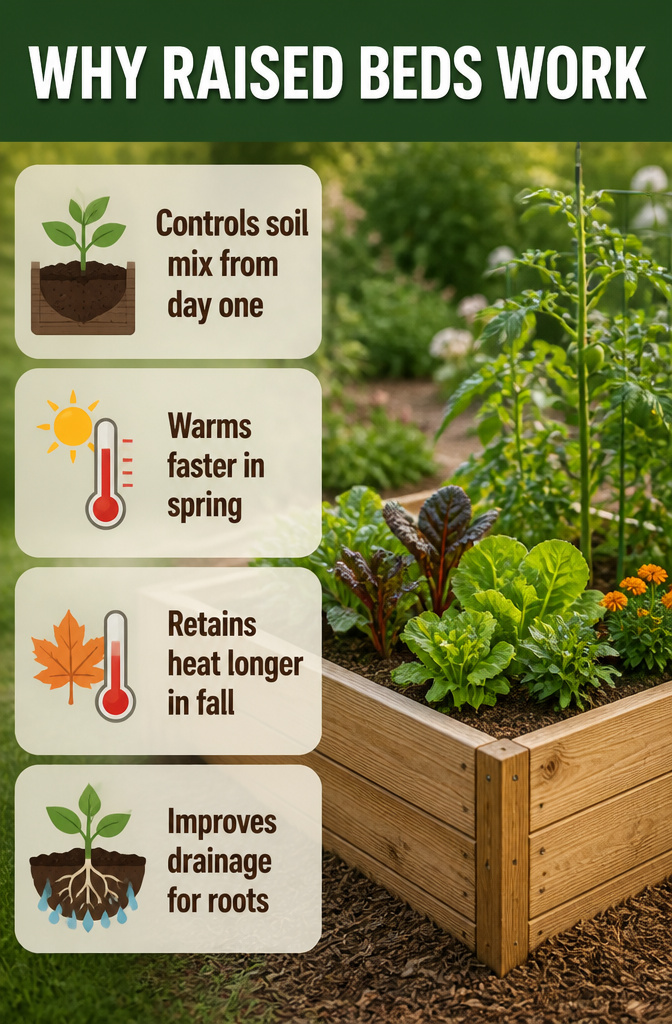
Soil that starts from scratch beats dirt that needs years of fixing. That was the realization that pushed me into raised beds after two seasons of fighting clay and compaction in my first rental yard. In an above ground garden, you control the mix from day one, which means vegetables get the drainage and nutrients they actually need instead of whatever the landlord’s lot came with.
The sides warm faster in spring and hold heat longer into fall, giving you weeks on either end of the standard growing calendar. Roots drop straight down through loose, uncompacte
Dimensions That Hold Up

A height of six to eight inches is the minimum for a raised ground bed, but soil that shallow dries out fast and limits root vegetables. Eighteen to twenty-four inches is the range that actually holds up for most crops without turning the build into a retaining-wall project.
Width is where your own reach matters more than any plan. If the bed sits against a fence or wall and you can reach it from one side only, keep it to two and a half feet across. Walkaround access on both sides lets you push to five feet, though four is more comfortable when you are kneeling to weed the center. Length is flexible; eight-foot boards are the common stock size, which is why so many kits start at 4 by 4 by 1 foot. Anything past ten or twelve feet starts to bow outward as soil settles and freezes, so a long run is better built as two beds with a gap between for wheelbarrow access and crop rotation.
Soil and Water
A raised bed drains faster than the ground beneath it, which means the soil mix and the watering schedule both need adjustment. The mixture that works best is 2/3 topsoil to 1/3 compost; too much compost dries quickly and can start repelling water once it gets dry, while too little leaves the bed short on organic matter. I skip bagged "raised bed mix" unless I am filling a single small container; bulk topsoil by the cubic yard costs far less for anything wider than a walkway.
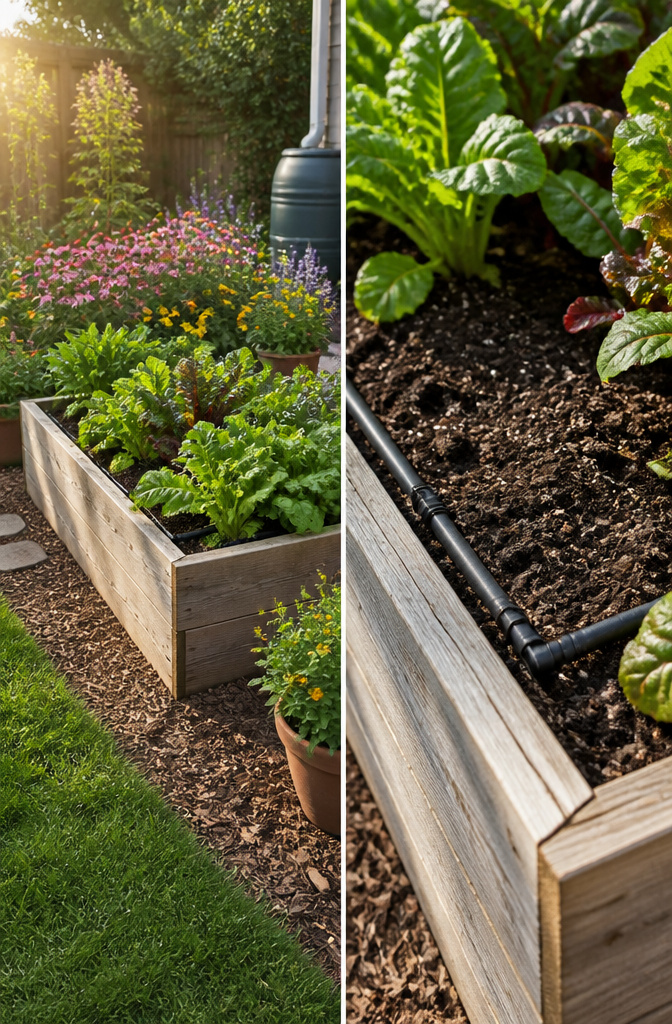
That drainage also means hand-watering with a hose rarely keeps up in midsummer. Drip irrigation is the practical fix: it sits under the foliage, sends water straight to the root zone, and runs on a timer so the bed does not dry out while you are at work. The upfront parts cost more than a spray nozzle, but the time it saves and the even moisture it gives the plants pay it back within a season.
Fabric beds make this especially visible. Their sides breathe, so water leaves in every direction, not just downward. The same drip line that keeps a wooden bed happy becomes almost required for fabric; without it, you are out there twice a day by August. Placement near a hose spigot or rain barrel matters for every bed type, but the faster the drainage, the more that proximity shifts from convenience to necessity.
Where to Put It
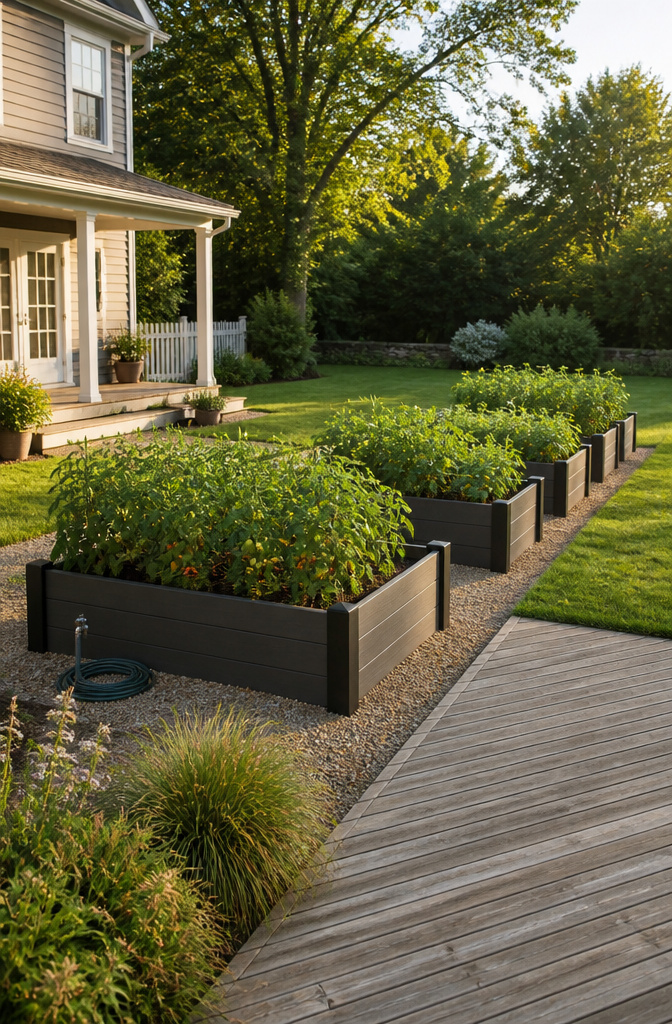
Six hours of direct sun is the line between a kitchen garden and a disappointment, so I walked my yard with a notebook before I committed to a spot. South of any tall structure, the house, the garage, the fence, is where the light lingers longest, especially in winter when the sun rides low. My own beds sit where they catch morning light by eight and hold it until three; anything less and you are growing salad greens and herbs, not tomatoes.
Water matters as much as light, and "near a spigot" is not a lazy convenience. Dragging a hose across a lawn every evening in July turns a fifteen-minute task into a reason to skip it. I put my beds close enough to reach with a short hose, and if I were doing it again I would run drip irrigation from the start; the consistent, deep watering it gives beats every other method I have tried.
Wind is the factor no one page I read addressed directly. What I can say is that a tall above ground garden catches more of it than ground-level planting, and a bed that rocks or shifts is a bed that dries unevenly and stresses roots. I would not place one in the open path of a prevailing wind without planning to anchor it or shield it, but the specifics of how much wind is too much, or which materials hold best against it, are not in the guidance I found. That gap is worth knowing about before you build.
DIY Kits and What Assembly Actually Takes

Kits split cleanly into two camps. Cedar frames come with pre-cut boards and corner posts that slot together with a Phillips head screwdriver; most take under an hour for one person. Metal kits use galvanized steel or newer alloy-coated options like ZAM and Aluzinc, and the panels bolt together in a similar window. The 4-by-4-foot by 1-foot-deep size is where starter kits live, just big enough for a salad garden or a few tomato plants without requiring a full redesign of your weekend.
Wood kits in rot-resistant cedar run 10 to 20 years. Untreated SPF lumber versions cost less but tend to rot within about five. Metal beds claim 20-plus years, though the thin sides that save space also mean the panels can weigh enough that four grown men sometimes wrestle them off a delivery truck. Modular metal kits let you reconfigure the same panels into different shapes, which matters when you are trying to catch that last patch of afternoon sun in a small yard.
What actually eats the time is not the bolts. It is leveling the ground and deciding which configuration to use. If you are choosing between cedar and metal for your first bed, cedar forgives a slightly uneven surface better; metal panels telegraph every bump.
What to Skip and When

Not every above ground garden suits the spot or the gardener. Here is what to skip, and why.
- Wooden raised beds need more upkeep than the weekend gardener wants to give. Skip them if you know you will not reseal or replace boards in year three.
- Metal raised beds amplify heat. Skip them if your site gets six hours of direct afternoon sun and you are not prepared to shade lettuce.
- Stone raised beds weigh too much for a rental. Skip them if your lease ends before the decade does.
- Fabric raised beds collapse under the weight of indeterminate tomatoes. Skip them for anything taller than a bush variety.
- Containerized raised beds dry out fastest. Skip them if you travel every July and have no one to water.
The right choice is the one you will actually maintain.
Frequently Asked Questions
What are the benefits of raised garden beds?
Raised beds let you control the soil mix from day one instead of fighting whatever the ground came with. The sides warm faster in spring and hold heat longer into fall, adding weeks to either end of the growing season. They also keep roots out of compacted or contaminated ground, and the framed edge acts as a buffer against weeds creeping in from the lawn.
What materials are best for raised garden beds?
Wood, metal, stone, fabric, and rigid containers each fit a different situation. Cedar and hemlock last 10 to 20 years and forgive uneven ground; galvanized steel or alloys like ZAM and Aluzinc stretch past 20 years and break down for moving; stone lasts indefinitely but becomes permanent landscape; fabric is cheap and portable but dries fast and sags; containers split the difference with rigid sides and easier relocation than stone.
How deep should a raised garden bed be?
Six to eight inches is the minimum, but eighteen to twenty-four inches is the range that actually holds up for most crops without turning the build into a retaining wall. Shallower soil dries out faster and limits root vegetables like carrots or parsnips.
How do you fill a raised garden bed?
Use a mix of two-thirds topsoil to one-third compost. Too much compost dries quickly and can start repelling water once it gets dry; too little leaves the bed short on organic matter. Skip bagged raised bed mix for anything larger than a small container and buy bulk topsoil by the cubic yard instead. Some gardeners layer sticks, leaves, and compost at the bottom of very tall beds to reduce cost, but you will need to keep adding soil as those materials break down.