
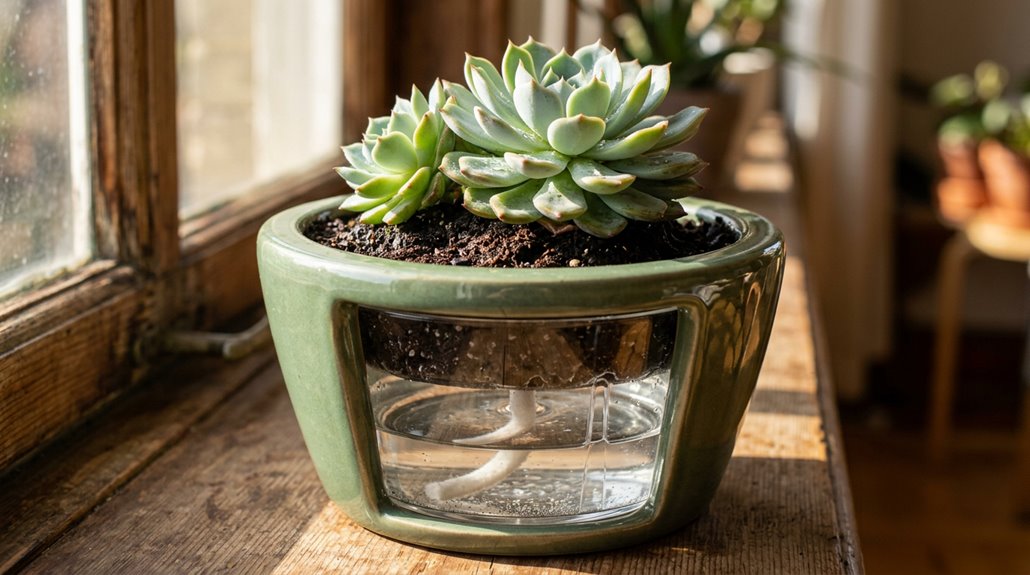
Self-watering planters use a hidden water reservoir at the bottom that feeds moisture directly to your plant’s roots through absorbent wicks or capillary action. This eliminates the need for daily watering.
The system keeps soil consistently moist without waterlogging because water comes from below rather than from the top. A water indicator shows when it’s time to refill. This design removes guesswork from plant care and reduces the risk of under or overwatering.
Different plants thrive with this watering method depending on their moisture requirements.
How Self-Watering Pots Work: The Basic Mechanism
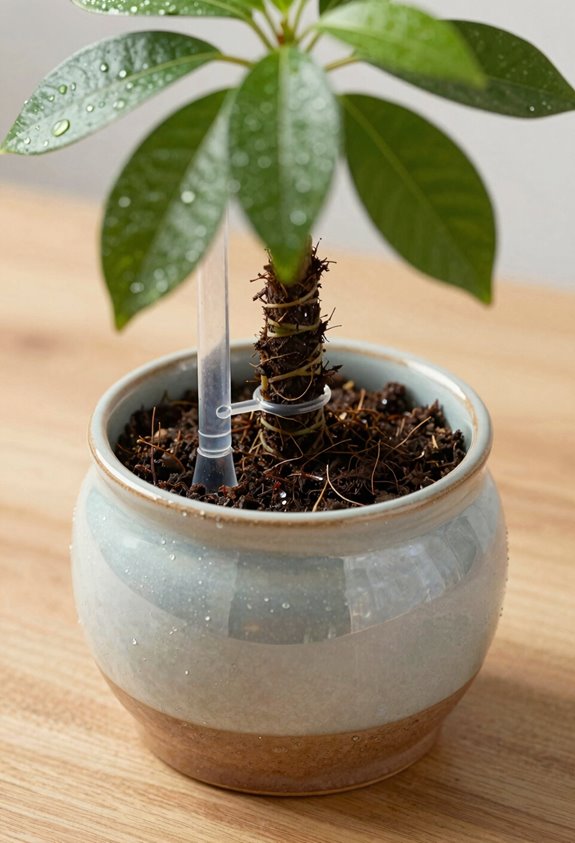
Most self-watering planters operate on a surprisingly simple yet brilliant principle: they store extra water in a bottom reservoir and deliver it directly to your soil through wicks or capillary action. Water naturally travels upward to reach your plant’s roots. The reservoir sits beneath your potting mix, and special absorbent materials, like rope-like wicks, pull water upward and keep your soil consistently moist. Some designs, like TruDrop pots, feature a double-wall structure with a cone-shaped perforated wall that makes this process even more efficient. A built-in indicator lets you know when water’s running low, so you can refill before your plant experiences drought stress.

Easy DIY Self-watering System: include 8 Plant water absorbent insert with absorbent cotton rope and 1 bundle absorbent cotton rope, simply insert the self-watering spikes into the bottom of your planter and place the pot into any water-holding container; Instantly create an efficient self-watering setup for indoor plants; It's a reliable choice for any space— from a sunny greenhouse to a covered patio

[Clear Inner Pot – Easily Monitor Root Growth] Each 4" (3.76”) self-watering pot includes a semi-transparent inner cup, making it easy to observe root development and check water levels, while ventilation holes support airflow. The white outer pot reflects heat from sunlight—ideal for bright indoor spaces like shelves or windowsills.
Why Do These Pots Reduce Overwatering Risk?
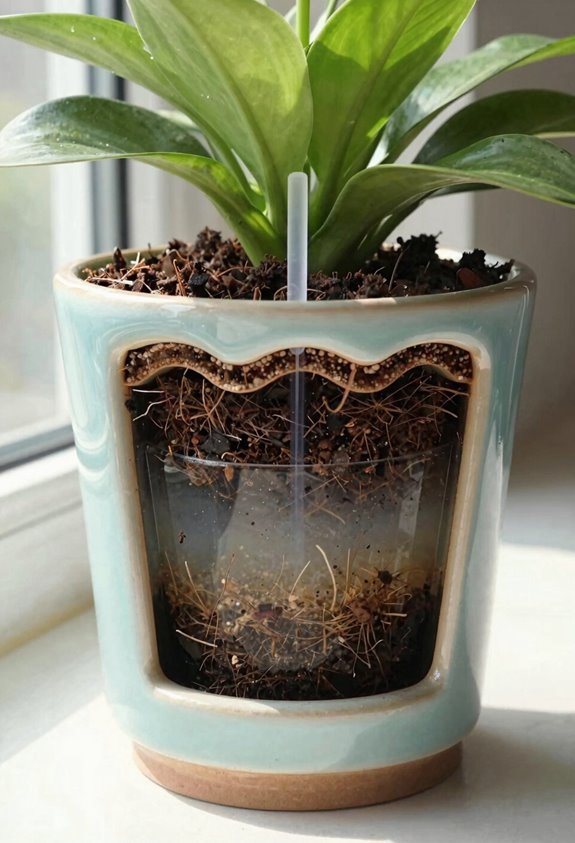
Now that you understand how self-watering planters work, consider why they’re effective at preventing overwatering, one of the most common plant-care mistakes. These pots deliver water from below through wicks or capillary action, so you won’t accidentally drench your soil like you would with top watering. The reservoir sits separate from your potting mix, which means your roots get consistent moisture without becoming waterlogged. The water indicator tells you exactly when to refill, eliminating guesswork. Because proper drainage is built into the design, you’ll avoid the soggy, root-rot conditions that damage houseplants. The system works with your plant’s needs rather than against them.
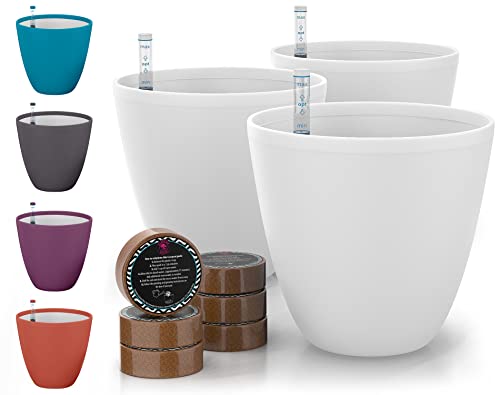
Don´t settle for self watering pots made of flimsy, leaky dollar-store materials. Gardenix Decor’s Self Watering Pots are crafted out of high-quality polypropylene, which is virtually unbreakable, so you never have to worry about it leaking on your house decor and floors or indoor garden. Available in white, gray, purple, or teal, our pot’s colors are injected directly into the material, for long-lasting , vibrant colors that are more face-resistant in direct sunlight.

Yarlung 6 pack self watering planters, measure 5''L x 5''W x 4.3''H, white external pot, black internal 4.7''L x 4.7''W x 4''H. Made of durable plastic materials, unbreakable, it will not leak water on your tables, floors or indoor garden. Square lovely plant pots are perfect for holding and displaying orchid, herb, succulent, cactus, aloe and flowers, decorate your living space

Which Plants Thrive in Self-Watering Pots?
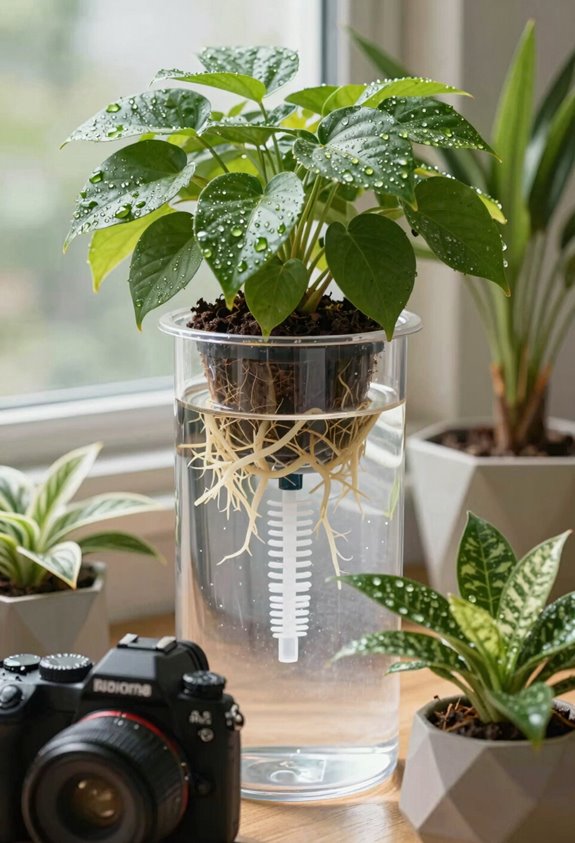
Have you considered which houseplants perform best in self-watering pots? Certain plants thrive in these systems. Herbs and leafy greens are excellent choices because they need steady, consistent moisture, which self-watering pots deliver. Fiddle leaf figs and other indoor ornamentals also flourish with access to persistent water sources that keep soil properly balanced.
These plants succeed in self-watering pots for these reasons:
- Herbs like basil and mint flourish with constant hydration, providing fresh ingredients whenever you need them
- Leafy greens develop stronger, healthier leaves when moisture stays reliable throughout the day
- Fiddle leaf figs become striking focal points with the stable conditions they require
Matching your plant’s water needs to what self-watering pots provide is essential for success. Many gardeners have found this method effective for plant growth.
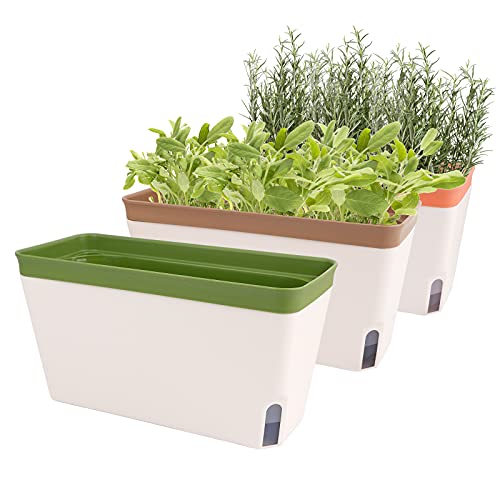
SELF-WATERING PRINCIPLE: Through two absorbent cotton ropes, the self watering pots provide water to the soil and keep the soil moist through the principle of osmosis, without having to water the plants regularly. Even if you leave home for a few days, it can help you take care of the plants and avoid plants die from water shortage.

【SELF WATERING】Every self watering planter comes with a matched water reservoir and a cotton wick that draw water up to the potting soil to keep the soil at a fairly consistent moisture level, it can offer 7-14 days self watering after filled up. (The rate of water consumption depends on the potting soil and weather.)

How Do You Fill and Monitor the Reservoir?
Keeping your self-watering planter working comes down to one simple task: filling and monitoring that hidden water supply. You’ll find a water intake hole with a tethered cap. Just unscrew it and pour water in while watching the indicator to know when you’ve hit that perfect full mark. The reservoir’s capacity varies, holding anywhere from 2 to 50+ gallons depending on your planter’s size. Once you’ve topped it off, the double-wall system with its inner perforated cone kicks in, wicking water directly to your roots. Check those water levels regularly to maintain consistent plant hydration. This easy habit keeps your plants properly watered without uncertainty.

DIY Vacation Self-watering System: Put the one end to a water source, this watering wick will transport water to the other end automatically, and drip within 15 minutes (the practical time depends on the length of the rope you cut off; make this watering rope completely soaked in water before use then it will drip instantly). Easy to make a DIY automatic watering device system, help you care your plants while you are away from home or when you go outside or on business

Self Watering Rope: 60 feet long, 1/6 inch diameter. Made of 100% polyester, Not rot or decay for long-term repeated use. Safe for human and plants, Not contain any harmful chemicals. ORIMERC self-watering string has been tested by professional organization: PH Value is 6.7, 100% polyester without any other material, does NOT contain any harmful chemicals such as formaldehyde, heavy metal, arylamine, azo etc

DIY Vacation Self-watering System: Put the one end to a water source, this watering wick will transport water to the other end automatically, and drip within 15 minutes (the practical time depends on the length of the rope you cut off; make this watering rope completely soaked in water before use then it will drip instantly). Easy to make a DIY automatic watering device system, help you care your plants while you are away from home or when you go outside or on business
Will Your Plant Get Root Rot? Drainage Explained
Self-watering planters excel at keeping plants hydrated, but they can create ideal conditions for root rot without proper attention. Staying vigilant about drainage is essential. When the reservoir stays too full or drainage gets blocked, roots can’t access oxygen, which leads to serious problems.
Watch for these warning signs:
- Waterlogged soil that feels soggy and smells like decay
- Slimy roots that indicate your plant’s struggling to breathe
- Foul odors rising from the pot, your biggest warning sign
Use well-draining soil instead of dense garden soil, and ensure your planter has an overflow path. Monitoring water levels regularly prevents plant loss. When you notice these signs, drain immediately and refresh the soil. Prevention eliminates the need for plant recovery and replacement.

Self-Watering Planter: These self watering wall planters come with cotton rope to absorb water automatically without daily watering, no need to worry about your plants when you are going outside for a few days.

Design: Wall mounted flower pots are suitable for indoor and outdoor decoration or office walls, saving space. It is also suitable for indoor plant wall pots and vertical wall flower pots

Durable Material Comes with 12 Hooks and 6 Screws: Self watering wall planter made of high quality durable PP resin material, safe and non-toxic. Lazy flower Pots SIZE (Inner Diameter*Outer Diameter*Height): 3.15"x4.33"x3.94"; 6 x Steel S hooks & 6 x non-destructive self-sticky hooks & 6 x screws & 30 feet self watering wick for DIY self-watering system included.