
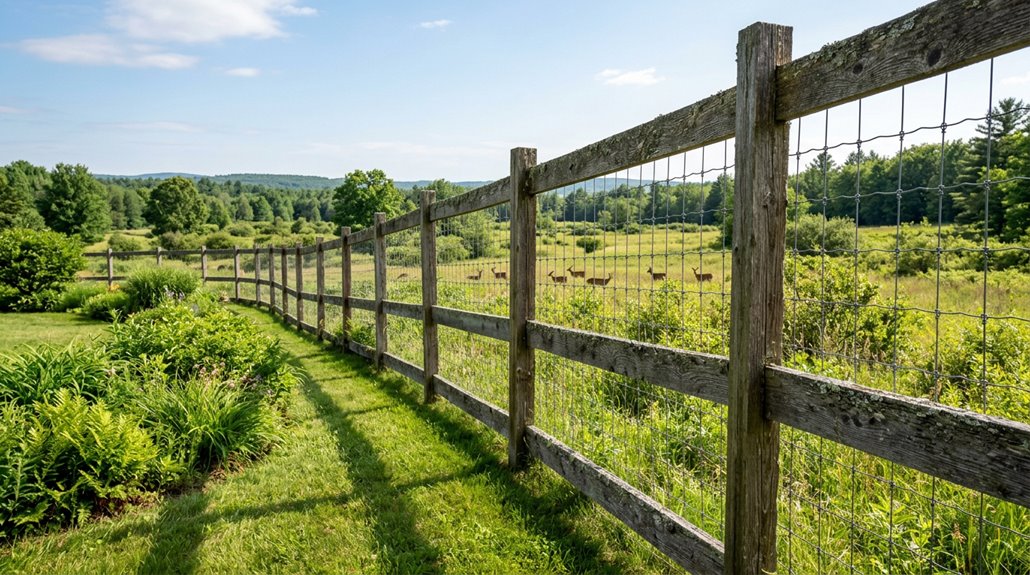
I’d recommend starting with an 8-foot fence as the solid baseline for most gardens. Motivated deer can jump it, so you’ll want to layer your defense. Try combining an 8-foot inner fence with an outer barrier 4–6 feet away, add visual cues like white flagging, and vary your heights to 9–12 feet in open areas. This multi-layer approach outsmart deer far better than height alone, and proves effective in serious situations.
The 8-Foot Deer Fence Height: Why It Works for Most Gardens
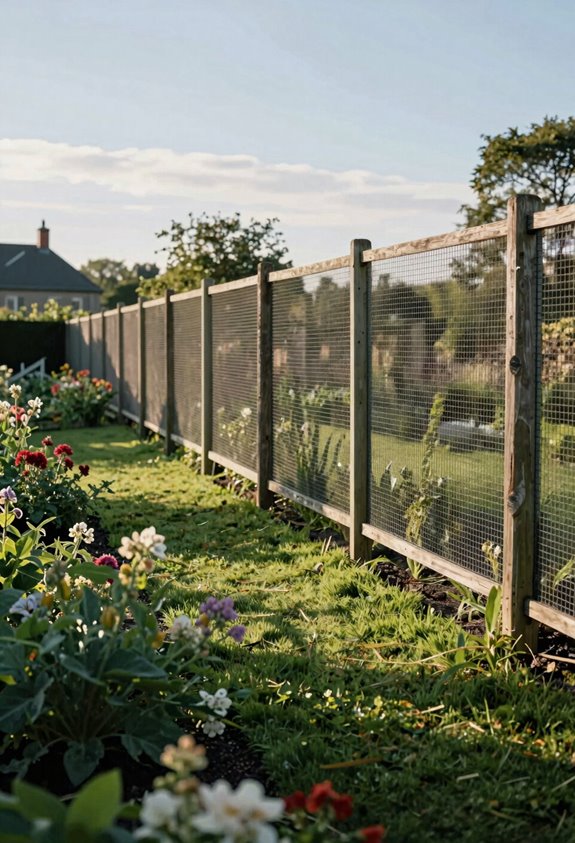
Why do so many gardeners swear by the 8-foot fence height? Eight feet gives you solid deer jump deterrence without breaking the bank or making your garden look like a fortress. Deer can jump high, but an eight-foot barrier challenges them enough that they’ll usually look elsewhere for dinner. I’ve seen it work beautifully in countless gardens, and it’s become the practical standard for good reason. When you’re planning your deer fence height, eight feet offers that perfect balance between effectiveness and practicality. Some areas need taller options, but this measurement stops most deer from attempting a jump. An 8-foot fence reduces garden damage from deer in most residential settings.
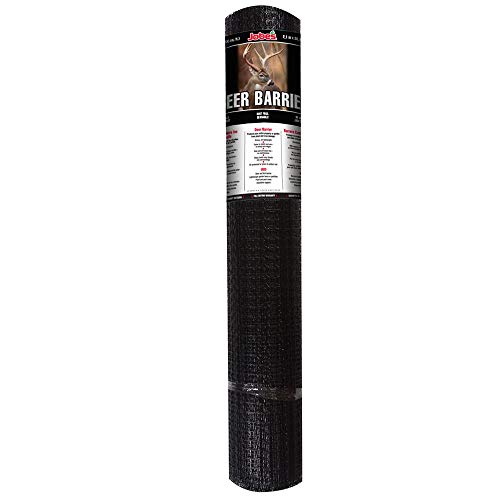
Tough durable deer fence; Protects landscape and crops from deer and other animals

Premium Quality: The UPGRADE privacy screen for fences is made from 170 GSM non-recycled High-Density Polyethylene (HDPE). This ensures lasting durability, reliable privacy protection, and excellent weather resistance. A high-density composition makes it a dependable solution for outdoor privacy needs.
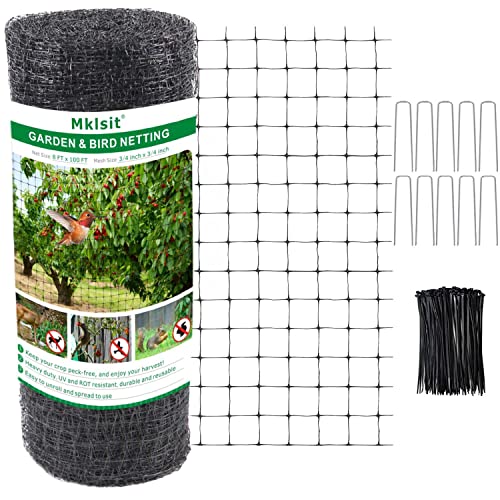
Taller & Heavier: Mklsit 8ft x 100ft deer netting is improved to be taller and heavier weight. Our deer fence is 8 feet tall, and product weight per foot is more, also. Best bird netting for gardens & landscapes protection
Adjusting Height by Terrain Type: Open Fields vs. Wooded Areas
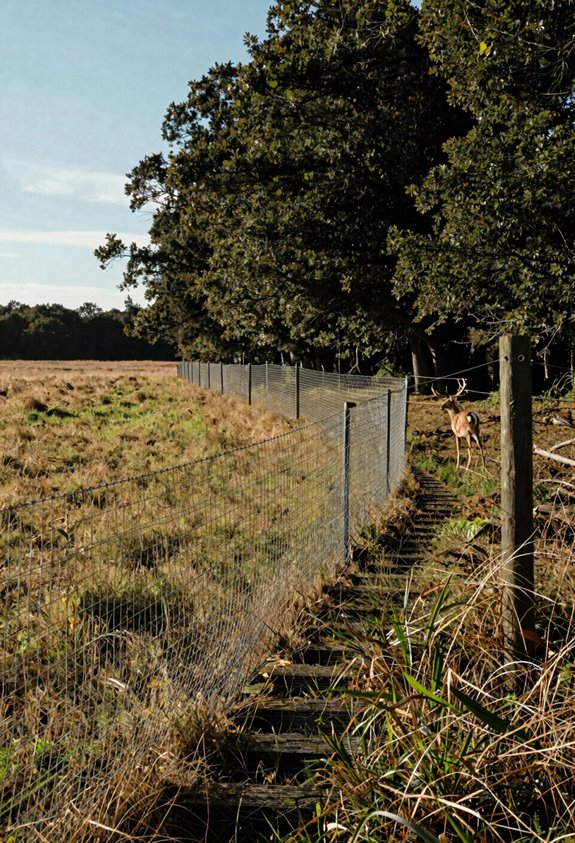
Deer fences require terrain-specific adjustments for optimal effectiveness. In open fields, an 8-foot height is recommended because deer can see far ahead and feel motivated to jump over obstacles. In wooded areas, 7 feet works well since trees and landscape provide natural visual breaks that discourage jumping attempts.
Variable-height designs across your property combine both approaches effectively. Taller sections should be placed in openings while shorter sections go in sheltered spots. This layering respects your landscape while maximizing protection. For tricky terrain with unique features, even 5-6 feet can work if you add extra deterrents. This terrain adaptation strategy keeps deer out effectively without excessive fencing.

UPGRADED REINFORCED AND ENCRYPTED EDGES WITH ROPES: Quick installation with tangle-free setup, securely fastening to the ground or posts for enhanced protection. The 5/8” square mesh effectively restricts animal movement, providing safety for your garden, poultry, and pets

COMPLETE PROTECTION KIT - Professional-grade 7ft x 100ft deer netting with 3/4" fine mesh that effectively blocks deer, rabbits, birds, and small pests. Includes 10 metal landscape staples and 50 zip ties for immediate installation - everything you need in one package.

Humane Protection – Helps keep out hungry and destructive deer and other critters from your garden, protecting fruits, vegetables, and flowers. A practical and humane alternative to expensive metal fences, chemicals, and traps.
Why Deer Jump Over 8-Foot Fences (And What to Do About It)?
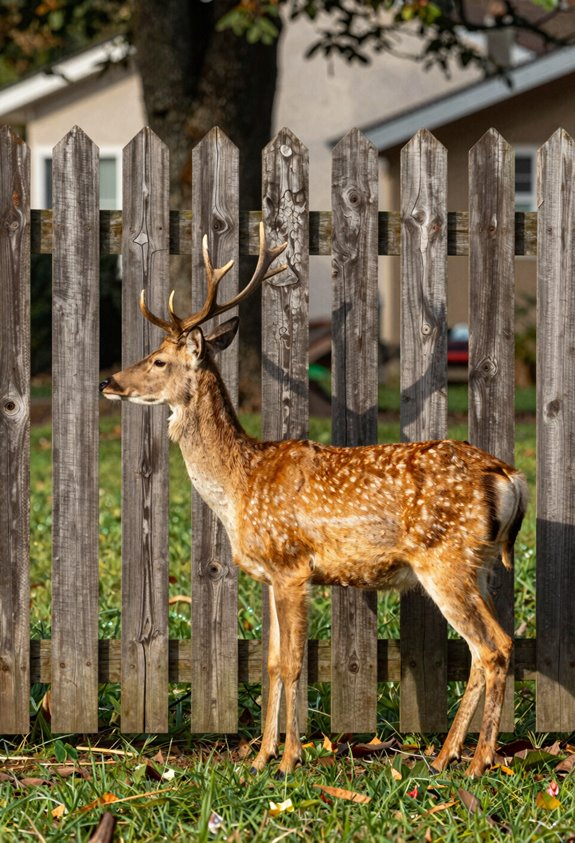
You might be surprised to learn that deer can actually clear 8-foot fences with remarkable ease, especially when they’re motivated by hunger or fear. Understanding how deer approach and launch themselves over barriers is key to protecting your garden, because once you see what they’re capable of, you’ll realize that height alone won’t solve your problem. Let’s explore the incredible jumping abilities that make these creatures such formidable fence-jumpers and discover the strategies that actually work.

Sturdy & Durable Fence Post: Made from 2 mm (0.08") thick Q235 carbon steel, this fence post offers high strength and rigidity. The U-shaped channel design improves bending resistance, while the powder-coated finish provides UV protection and corrosion resistance, ensuring durability in all weather conditions.

Sturdy & Durable Fence Post: Made from 2 mm (0.08") thick Q235 carbon steel, this fence post offers high strength and rigidity. The U-shaped channel design improves bending resistance, while the powder-coated finish provides UV protection and corrosion resistance, ensuring durability in all weather conditions.

【SIZE】Pack of 10.Available in 6 length sizes for you to choose from:3ft,4ft,4.8ft,5ft,6ft,7ft.
Deer Jumping Behavior Analysis
Most of us think an 8-foot fence should stop a deer, but it often doesn’t. Deer jumping behavior is far more impressive than we realize. These incredible athletes can leap 10, 11, or even 12 feet high when motivated, making standard fences nearly ineffective for them. Deer possess exceptional depth perception and athleticism that lets them clear barriers we’d consider impossible. Multi-layered fencing changes everything. By combining height variation with double-fence designs or adding visual cues at the top, you disrupt their landing calculations. Disrupting their confidence matters more than sheer fence height alone. The result is dramatically fewer breach attempts.
Height Solutions And Alternatives
Understanding how deer actually jump changes everything about how we build our fences. An 8-foot barrier alone won’t stop determined deer, but several smarter solutions are more effective.
Here’s what works:
- Layering barriers with multiple heights and materials to confuse jumping patterns
- Adding psychological fencing with visual lines and landing-zone indicators that make deer hesitant
- Creating multi-layered designs that combine height changes with strategic spacing
Instead of relying solely on one tall fence, mixing approaches across your property produces better results. In open areas, aim for 8 feet, while wooded sections need just 7 feet. For challenging terrain, even 5–6 feet works when paired with these alternatives. This combination approach reduces deer crossing attempts by creating uncertainty in their approach path.
Layered and Psychological Fencing Strategies for Problem Areas
Stacking multiple barriers is one of the most effective methods for stopping determined deer, especially in problem spots where they seem unstoppable. By combining an inner high fence with an outer supplementary barrier positioned 4–6 feet away, you create a psychological obstacle. Deer cannot accurately judge the distance or determine if jumping is worth attempting. Adding visual cues like white flagging or interior lines along your fence increases their uncertainty about whether they can clear the barriers, resulting in fewer jumping attempts and improved garden protection.

A Bounty of Streamers: the package includes a generous 50 pcs 1.18 x 24 inch deer fence warning streamers, offering ample supply for extensive coverage and multiple fencing projects
Multiple Barriers Confuse Deer
Why do deer struggle more with two fences than one? Layered fencing creates genuine confusion that a single barrier can’t match. When you combine an inner 6–8 foot fence with an outer 4–6 foot barrier positioned 4–6 feet apart, you’re essentially disrupting a deer’s depth perception. They can’t accurately judge jump clearance, so they hesitate before attempting anything risky.
This setup works because of several factors:
- Multiple wire levels at 5 and 7 feet force deer to reassess their approach angle
- The visible taut line around 4.5 feet inside creates doubt about landing safely
- Spaced barriers confuse distance calculations, making deer underestimate or overestimate the total height
Layered fencing outperforms single-barrier approaches by exploiting how deer evaluate obstacles. This method transforms your fence into a more effective deterrent system based on animal behavior rather than height alone.
Visual Cues Deter Jumping
How do deer really decide whether to jump your fence? They’re actually reading your visual cues. Deer rely heavily on depth perception to assess whether they can clear an obstacle. A taut white line positioned about four and a half feet inside your perimeter acts as a psychological barrier, making deer reconsider their approach. Multiple wire levels at five and seven feet create perceived height that discourages jumping attempts, even if actual clearance isn’t dramatically higher. Clear sight lines along your perimeter help deer judge landing zones, which paradoxically decreases their willingness to test the fence. By strategically using visual cues and understanding how deer perceive depth, you can reduce fence-jumping attempts without needing extreme deer fence height.
Landing Zone Assessment Strategy
Understanding how deer evaluate landing zones is effective and builds on what we just learned about visual perception. Creating a clear landing cue inside your perimeter is a proven deterrence strategy.
- Place a taut white line at four and a half feet high to signal an unsafe jump zone
- Install two extra tall posts supporting layered fence heights at five and seven feet, confusing deer about actual barrier size
- Add visual reinforcements like white streamers or braided wire in problem areas
This layered approach works because deer misjudge fence height when they see multiple levels. You create a psychological barrier that keeps your garden protected without requiring massive structures by combining this method with smart fence height placement.
Deer assess landing zones by evaluating visual cues, and multiple fence levels disrupt their depth perception. This confusion makes them reluctant to attempt jumps they cannot accurately judge, reducing fence breaches significantly.
Installing Your Fence at the Right Height
Once you’ve decided to build a deer fence, the height question becomes critical. Fence height recommendations depend on your specific situation. For open areas, eight feet serves as a solid baseline, though nine feet or higher offers better leap deterrence. In wooded zones, seven feet works well, while smaller gardens can manage with five to six feet.
Fence height recommendations shouldn’t stay uniform across your entire perimeter. Varying heights actually confuses deer and reduces jumping attempts. Combining strategies also proves effective; pairing your fence with inner hedges creates a powerful multi-layer defense. No single height guarantees zero entry, so consider your local deer pressure when deciding your approach.
Going Higher: When 9–12+ Feet Becomes Necessary
If you’re battling serious deer pressure or protecting a sprawling property, standard eight-foot fences simply won’t cut it. Consider going taller for enhanced protection.
What works for maximizing your fence height:
- Push beyond 9–12+ feet in high-pressure areas, since deer leap height can reach about 10 feet, creating a genuine safety margin
- Vary your fence height strategically by alternating 8–9–12 feet, which confuses deer and reduces jumping attempts significantly
- Layer your barriers with tall inner structures and outer designs for ultimate protection in serious situations
This layered-height fencing approach delivers results when you need serious landscape protection. You’re essentially outsmarting those clever visitors by making the jump seem impossibly risky. Your garden will benefit from the additional effort.