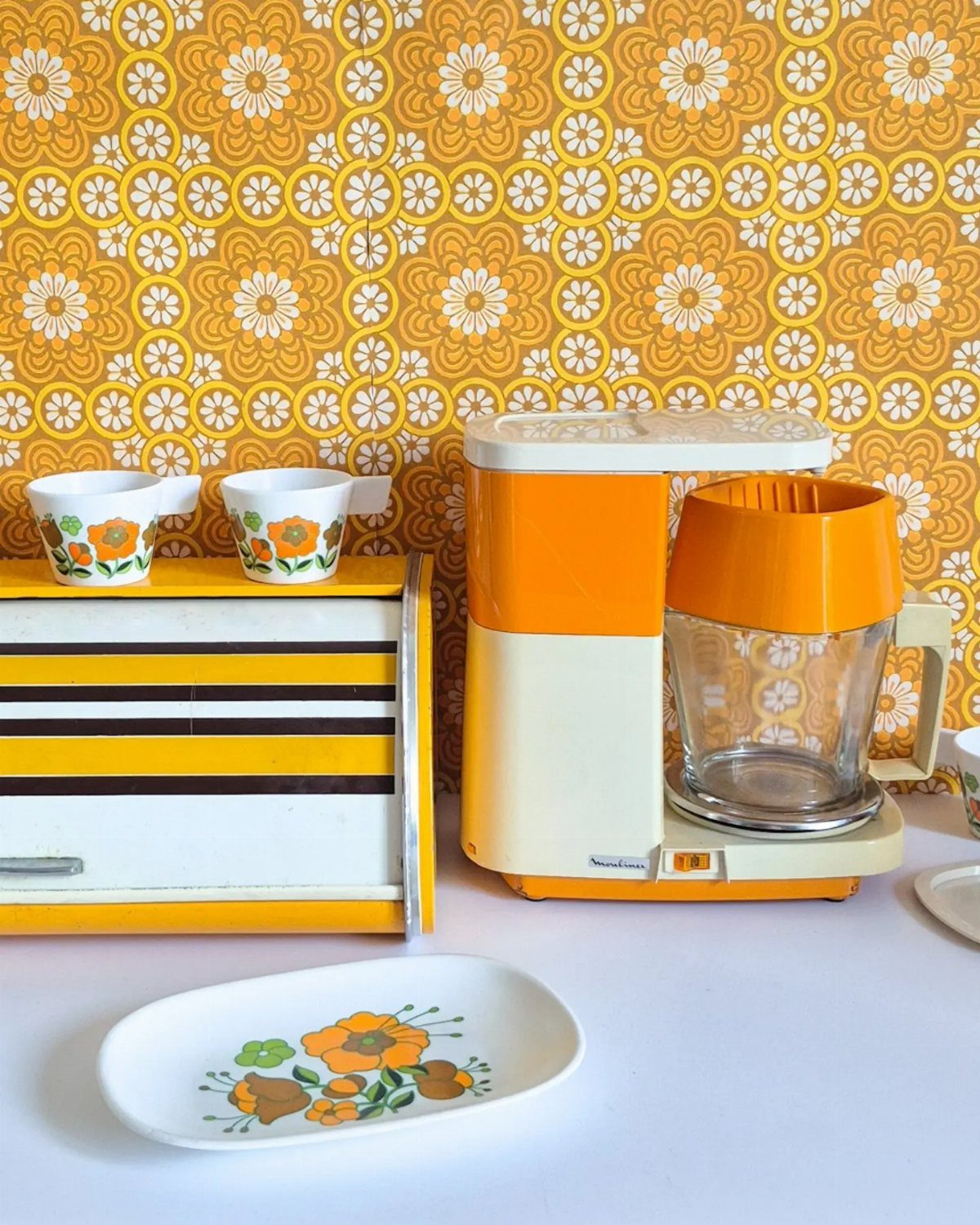
The surfaces already in your kitchen decide which piece belongs: wood cabinets suit a brushed gold faucet, a white open shelf shows off Cathrineholm enamel, and a tile backsplash gives a Poole Pottery plate something to lean on.
The range runs from a brass nutcracker sitting in a bowl to a brass kitchen faucet you’d install at the sink, so you can start with one small piece or change a fixture.
Match the new piece to the teak or other wood already in your kitchen, and it will look planned.
1. Vintage Kitchen Collectibles
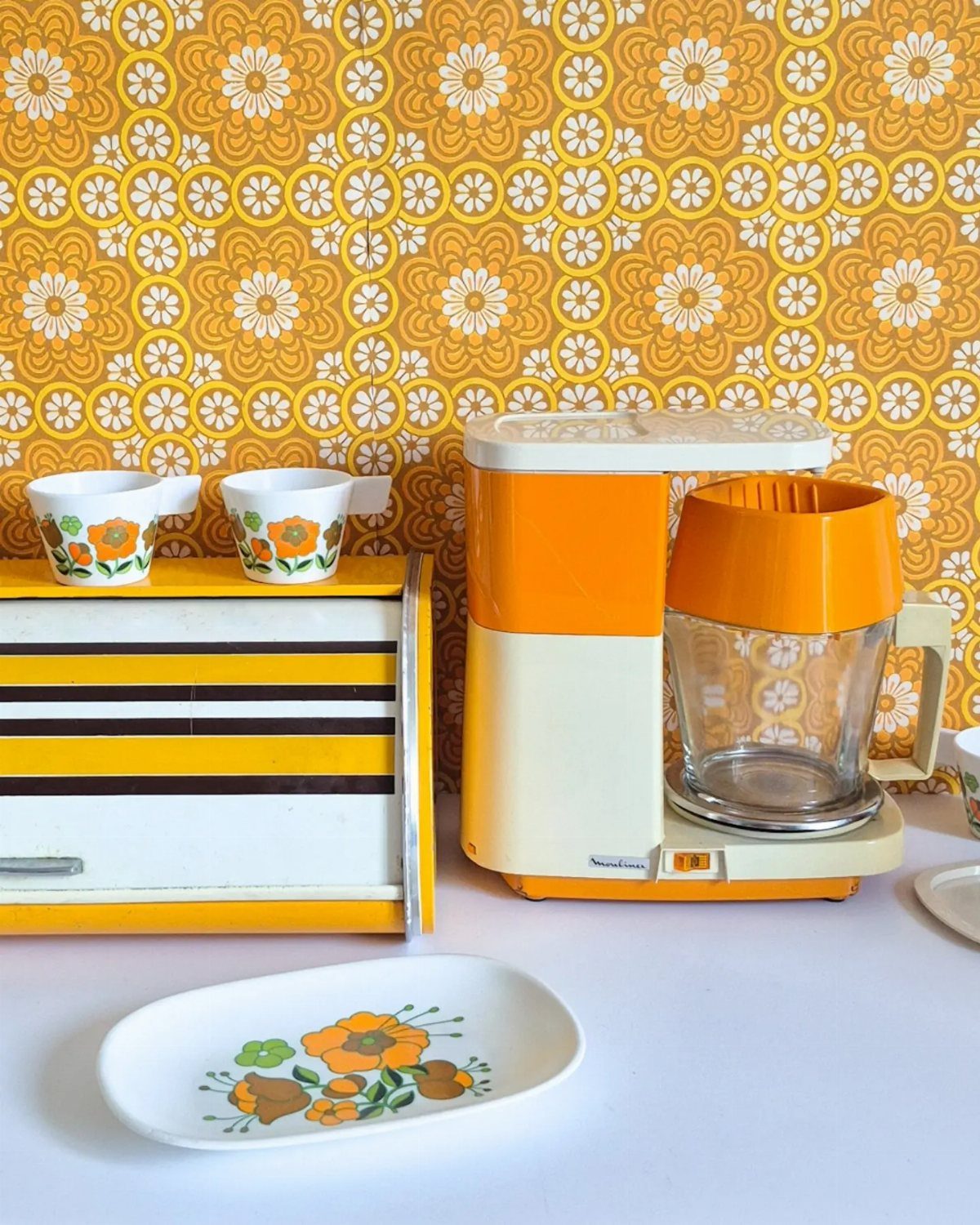
Stick to orange, cream and yellow, and let one anchor piece set the tone; a vintage Sunbeam coffee maker does that job well.
Start with one appliance like it, then pull cups and a plate in colors that sit close to it.
I’d keep the pattern on the tableware and let the toaster and coffee maker stay plain. Floral wallpaper behind them is busy enough already.
In the midcentury modern kitchen, less is technically more—so long as the “less” is intriguing enough.
2. Poole Pottery
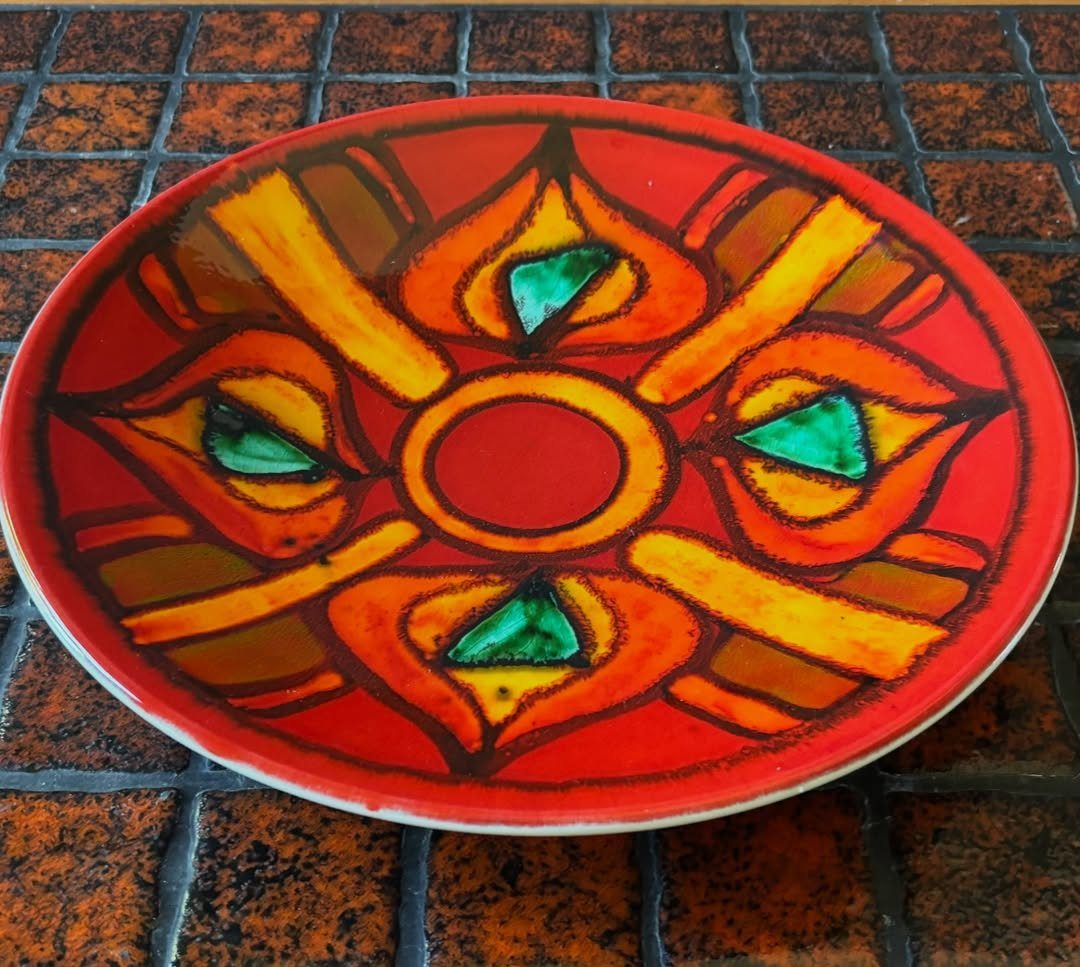
A single plate in red, yellow and green is enough to start a Poole Pottery collection. Prop it upright against a tile backsplash or counter edge so the sunburst faces the room.
Plain pieces count too. I like mixing a few solid-color shapes in among the patterned ones, because they give the eye a place to rest between bolder designs.
3. Brass Nutcracker
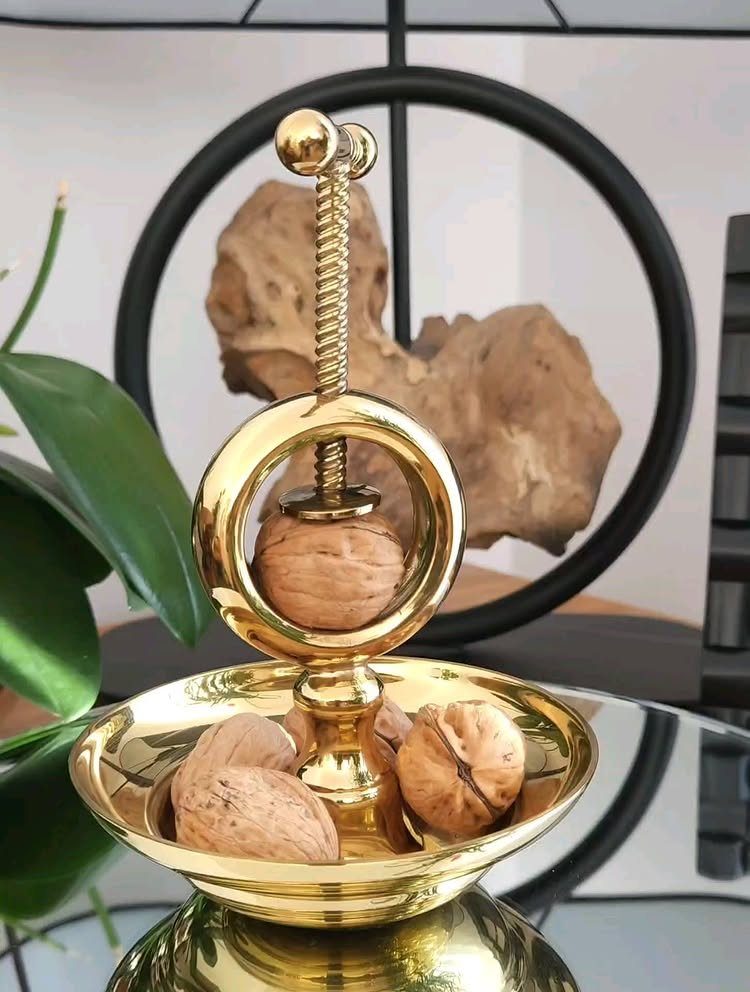
Sculptural is the right word for a brass nutcracker like this one. Keep it on the counter next to a bowl of walnuts so it gets used instead of tucked in a drawer.
Its gold tone looks best on a reflective surface, where it picks up light. One good piece beats a cluster; let it stand alone beside a plant or a round mirror.
4. Enameled Cast-iron Casserole Pan
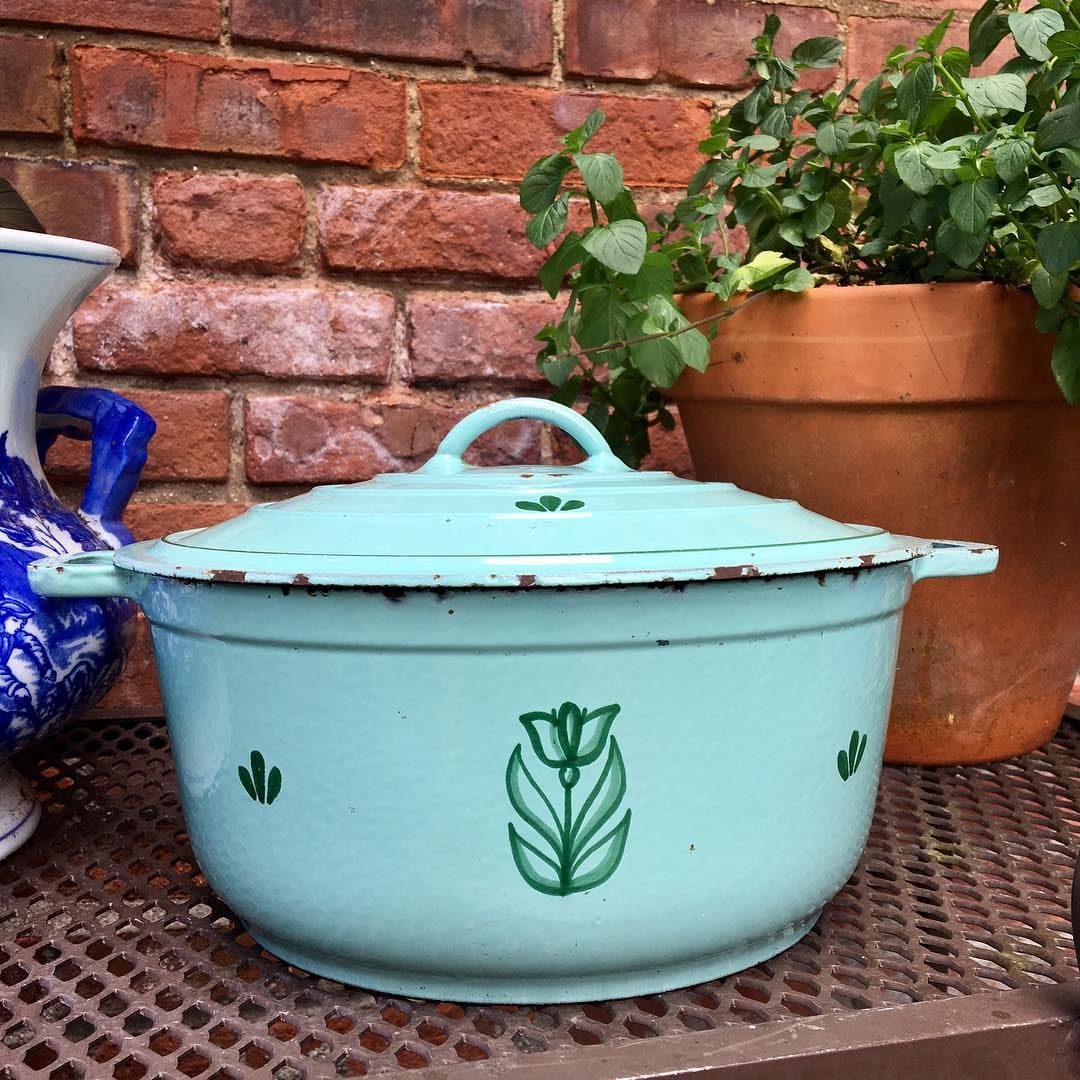
Big enough to cook in and good-looking enough to serve from: that’s the appeal of a large enameled cast-iron casserole pan.
Enameled cast iron goes from stove to table without a second dish, and a light blue pot with a green tulip design and a matching lid suits the period look.
Carry it out to a patio table, too. Against brick and greenery, the pale blue reads as a soft accent.
5. Teak Salad Utensils
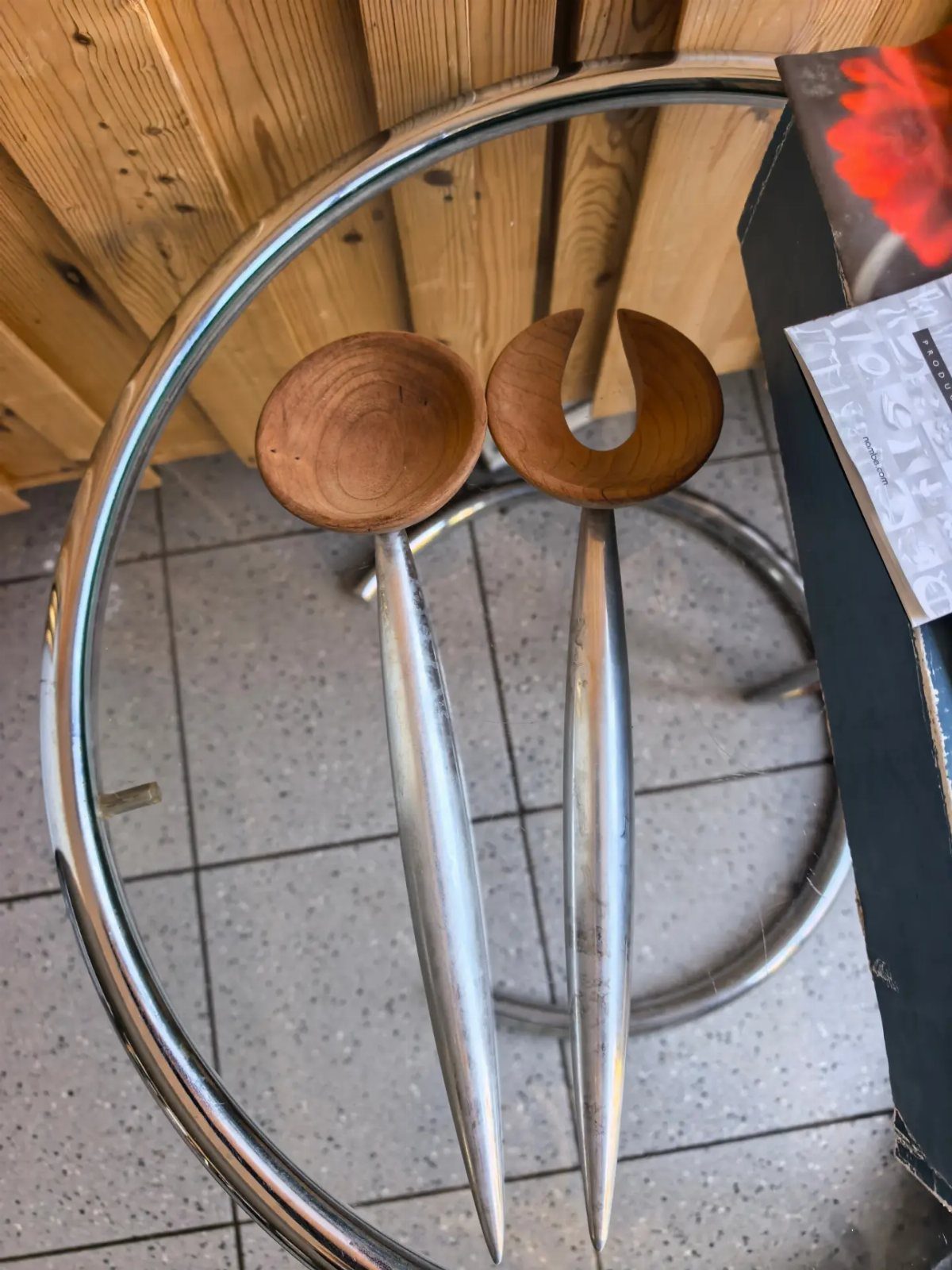
Buy salad utensils as a matched pair. Teak heads with tapered silver handles look best when both pieces share the same length, grain tone and taper, so check them side by side before you pay.
Wood paneling nearby will pick up the warm teak color.
6. Cathrineholm Covered Pot
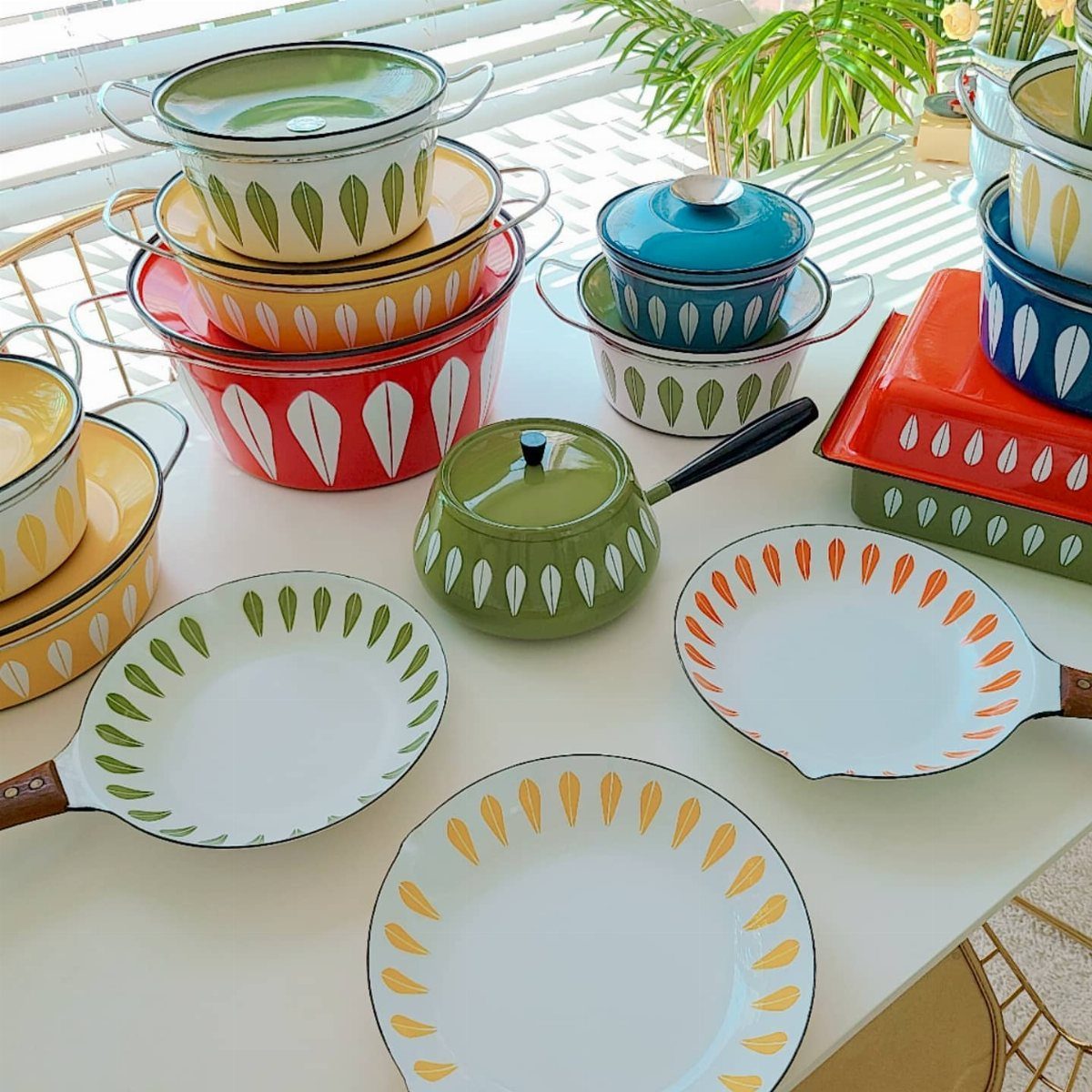
Collect Cathrineholm in leaf patterns and several colors, and the pieces read as a set instead of one lone pot. I’d cook with the covered pot you use most and leave the others stacked where you can see them.
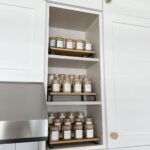
A white table or open shelf in a bright room suits the enamel best. Mixing colors looks livelier than matching them, as long as the leaf motif repeats.
7. Vintage Patterned Ceramics
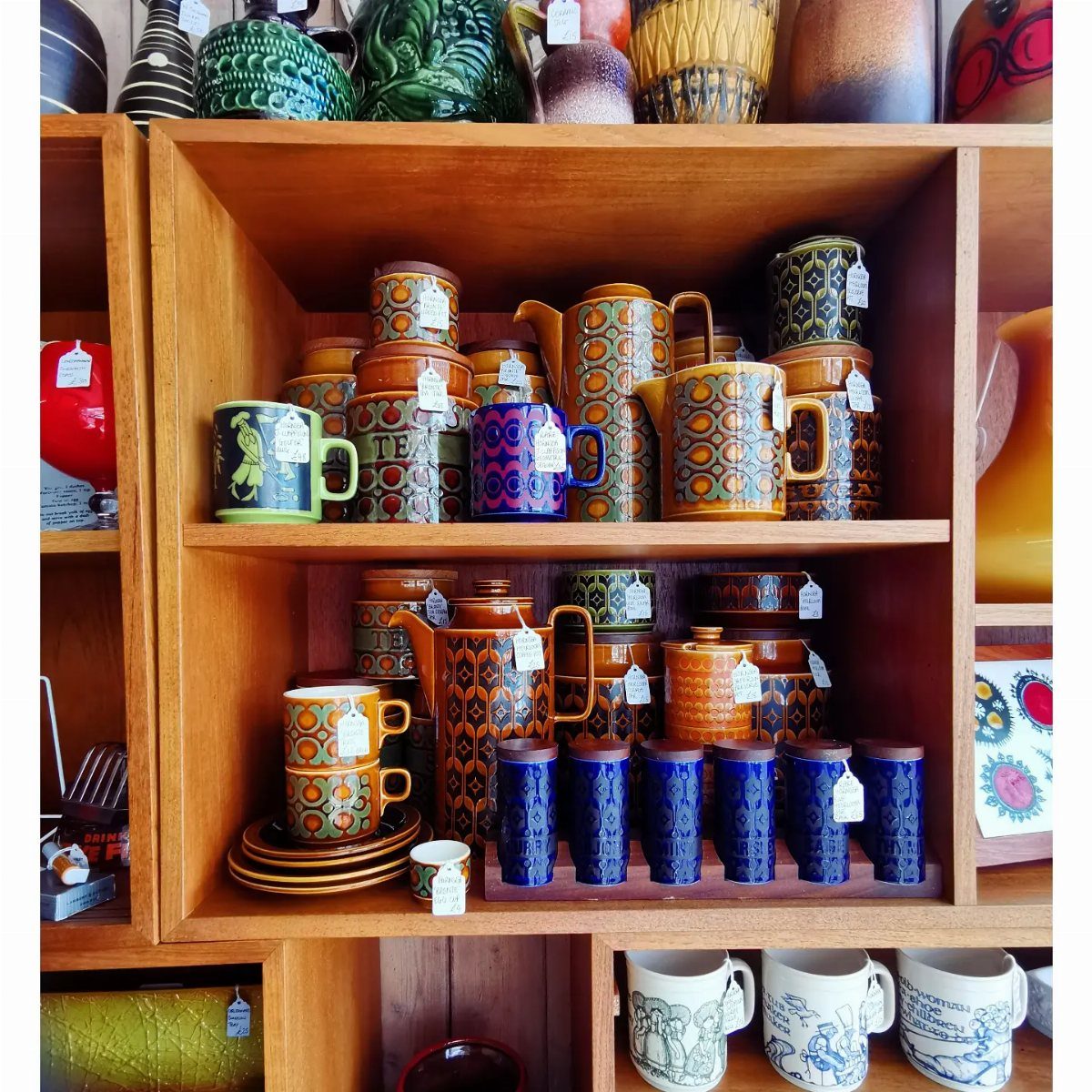
Geometric patterns hold together a shelf of mixed mugs, pitchers and canisters better than a shared color does.
Keep the shapes varied, tall pitchers at the back and mugs in front, and let the repeating angles and lines do the matching.
Leave a little space between pieces so each pattern reads on its own. If you’re buying secondhand, I’d pick canisters with a lid you can use for pantry staples, since they earn their shelf space that way.
8. Brass Kitchen Faucet
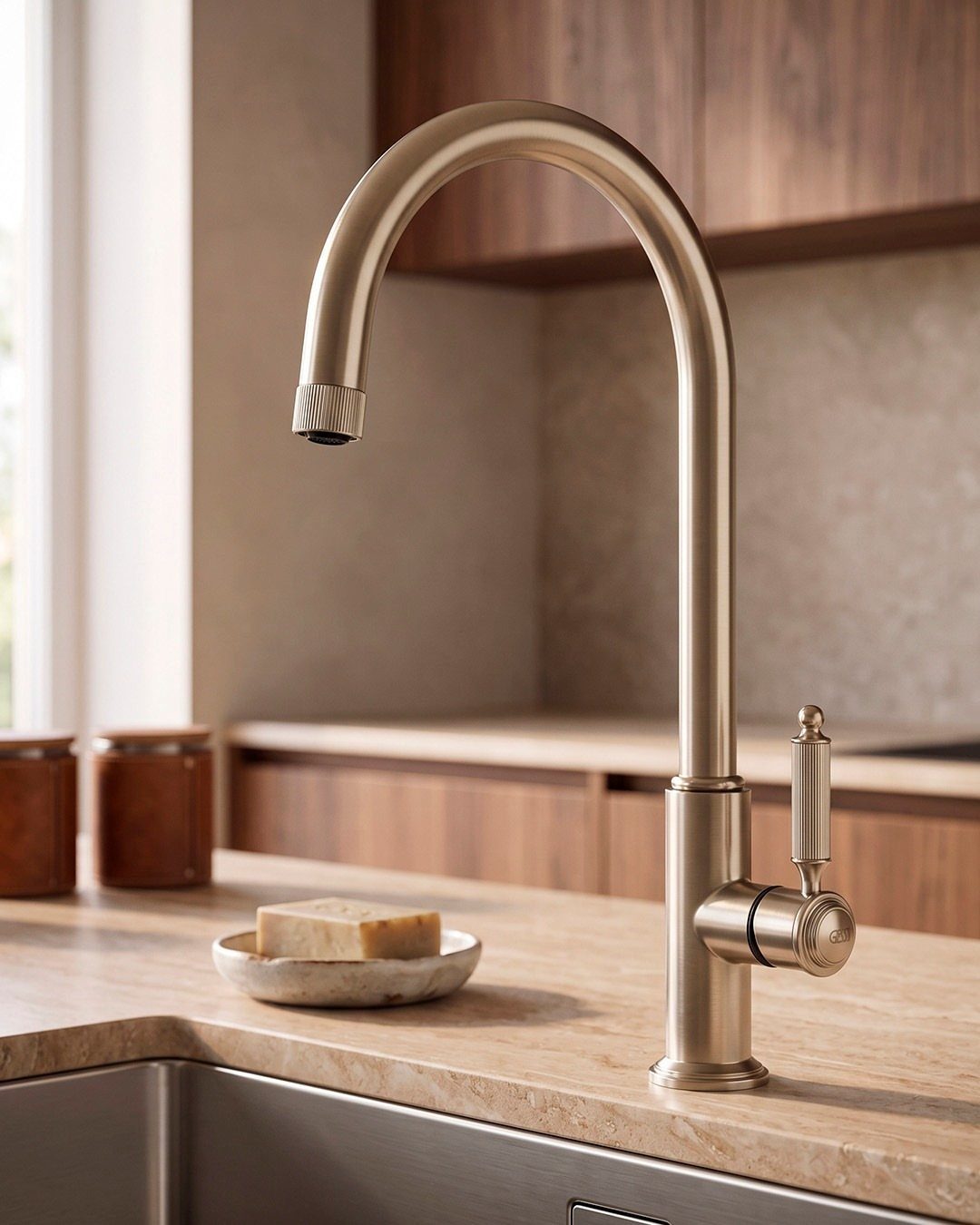
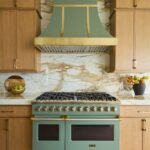
Brushed gold warms a stone counter in a way chrome never does, and a high-arc spout gives you room to fill tall pots under it. Against wooden cabinets, the soft finish blends in instead of glaring.
Choose brushed over polished if you hate wiping fingerprints. Keep the other metal in the kitchen in a similar warm tone, such as a brass nutcracker nearby, so the faucet looks planned rather than lone.
9. Teak Serving Bowl
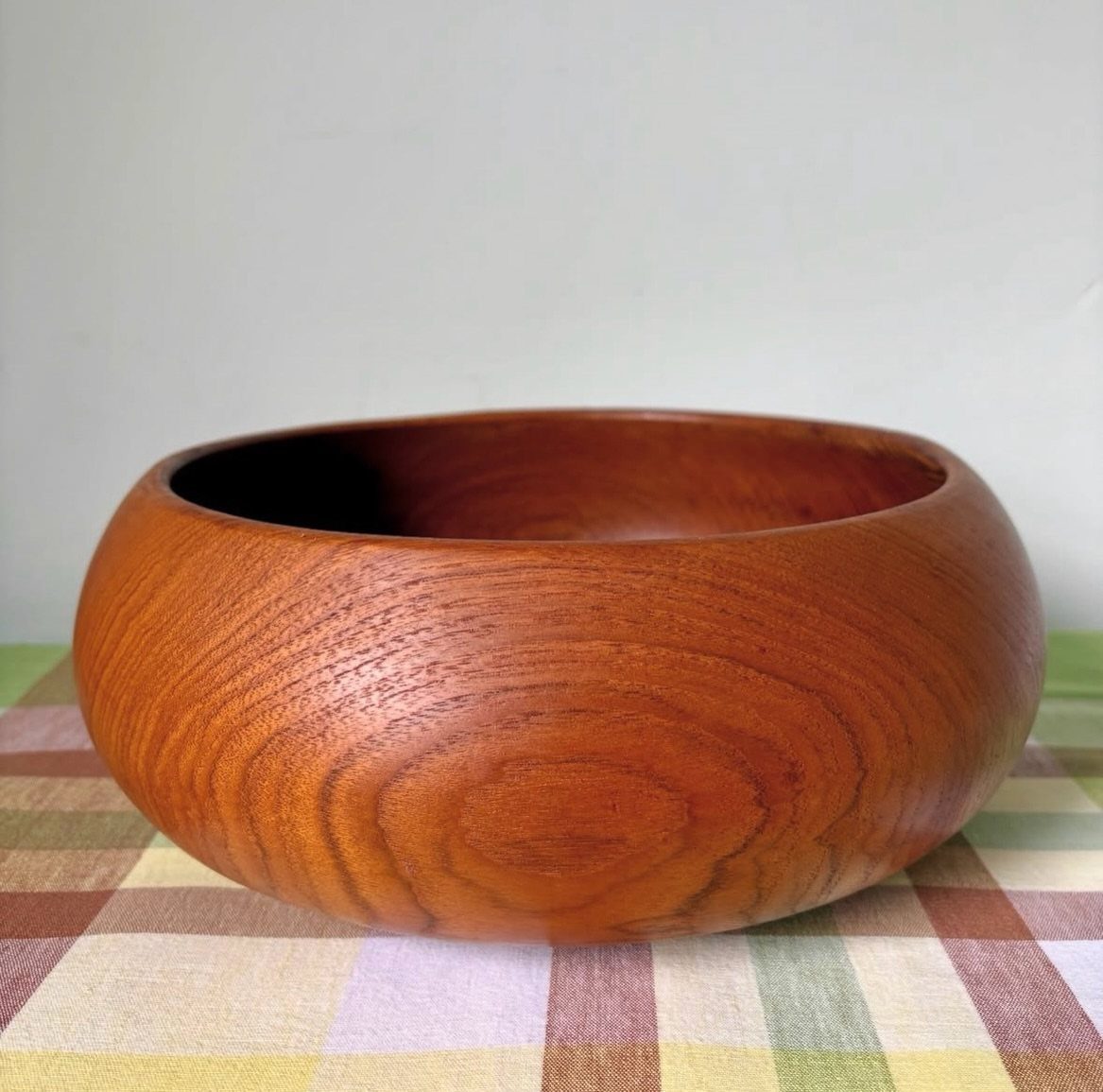
A round teak bowl asks for a busy backdrop, and a multicolored checkered tablecloth gives it one. The polished wood stays calm while the check pattern does the talking.
Use it for salad, fruit or rolls at the center of the table. I’d skip a second pattern nearby; one bold cloth and one smooth bowl is plenty.
10. Wooden Bowls and Trays
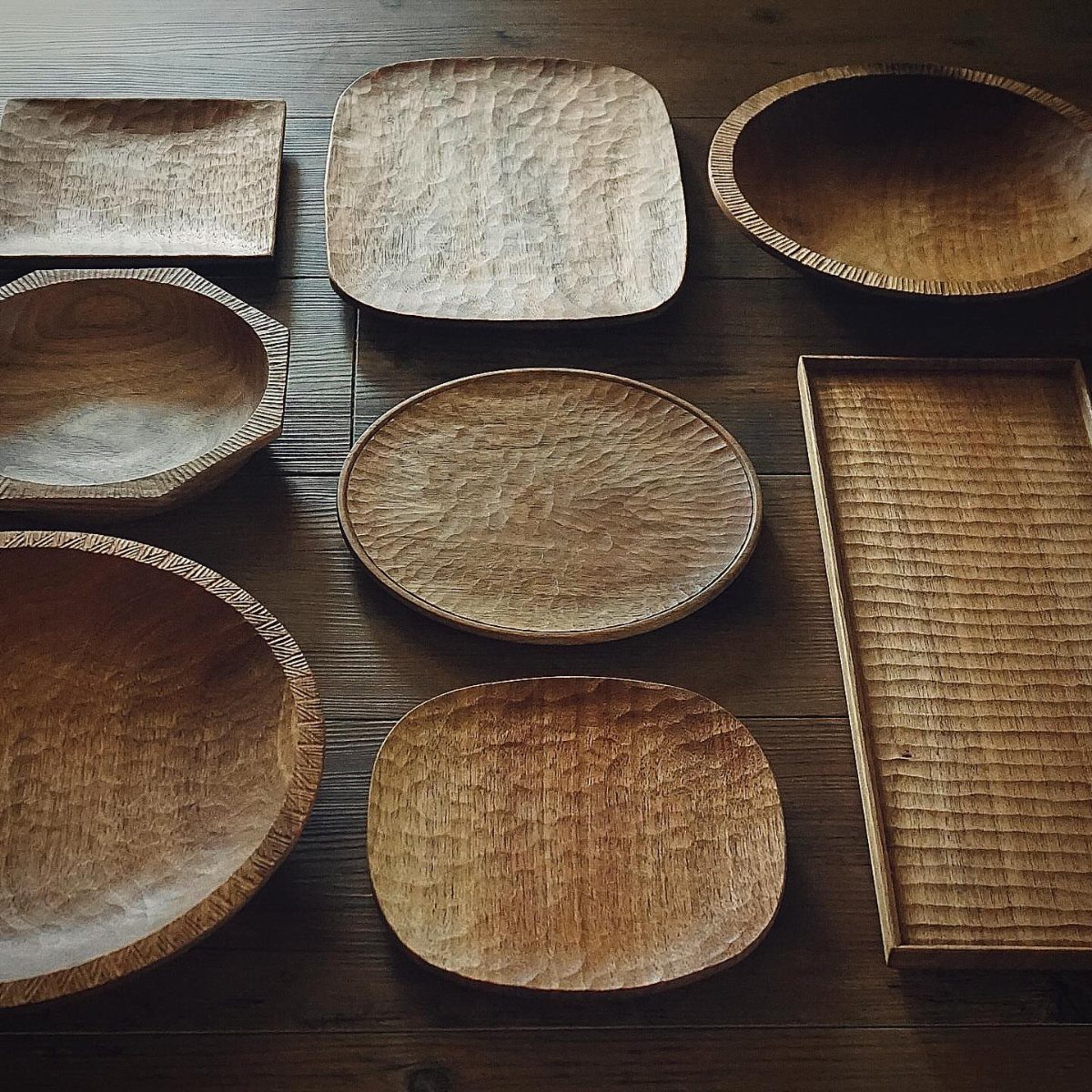
Group wooden bowls, plates and trays by their grain instead of by size, and the mix looks collected rather than random. Odd shapes work well together: round, oval and rectangular pieces side by side.
Stack a few on a dark wood table or counter, and use the flat trays under smaller bowls for serving. Natural grain is the one thing every piece should share.
11. Glass Condiment Bottles
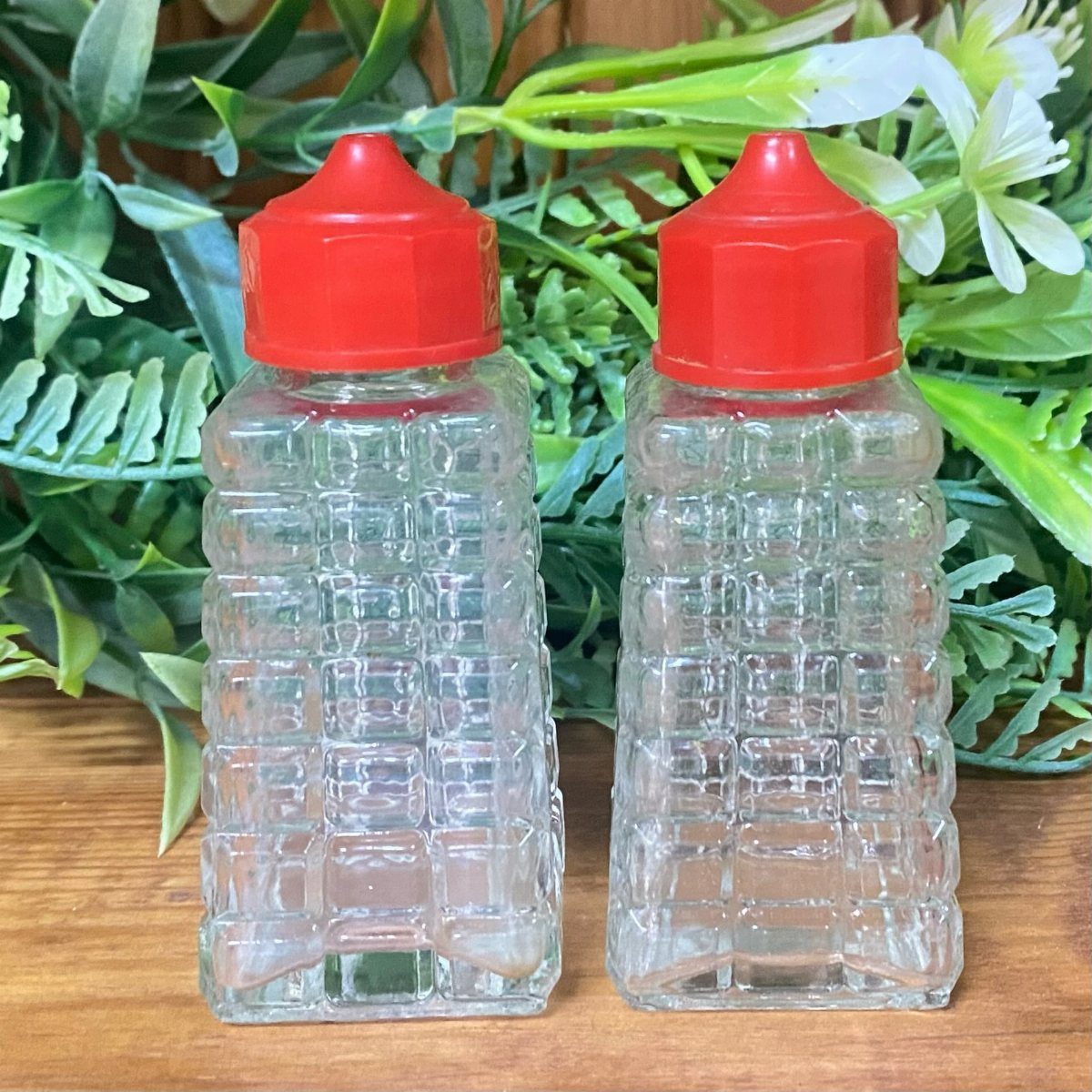
Textured clear glass with red pointed caps is a small way to add retro color to a table. Fill a pair with ketchup and mustard, or oil and vinegar, so the caps stay in view.
Set them together on a wooden tray or board so they read as a unit. Red caps against a green plant make the accent pop without adding another dish to the table.
Frequently Asked Questions
What is a mid-century modern kitchen?
It is a kitchen in the style that emerged in the 1940s, built on clean lines, uncluttered surfaces and reflective, angular appliances.
Most of the color in this style comes from retro small appliances, and the palette runs from butter yellow and mustard to mint and turquoise. The style took hold in the 1940s and has stayed popular ever since.
How to style a mid-century modern kitchen?
Pick one anchor appliance in orange, cream or yellow, then pull cups and plates in nearby colors.
If the walls or backsplash already carry a lot of pattern, let the dishes hold the print and leave the toaster and coffee maker in a solid color.
Teak and brass suit the period, and sticking to a single warm metal tone makes the whole space look planned.
How to identify mid-century kitchenware brands?
Turn the piece over and look for a maker’s mark on the bottom; larger pieces usually carry one.
Genuine vintage dishes often have thinner walls and a lighter feel in the hand than modern reproductions, which points to better clay. Handling a piece next to a current one makes the difference easy to feel.
Where can I find mid-century modern kitchenware?
Search online, thrift stores and yard sales, and check vintage-focused Facebook and Instagram pages. Secondhand shopping suits this style well, since a lidded canister or a teak utensil pair can earn its place in daily use.
How do I assess the value of vintage kitchenware?
Value depends mostly on rarity, and chips and cracks lower it sharply. Fine cracks in the glaze lower a piece’s value, yet wares from certain older makers almost always develop them with age, so many collectors forgive it.
If a piece is common and damaged, how much you love it is the fairest measure of what it is worth to you.