Hanging lamp shades range from paper lanterns that fold flat to hand-crocheted chandeliers, and the right one depends on where the fixture hangs and how much diffusion you need.
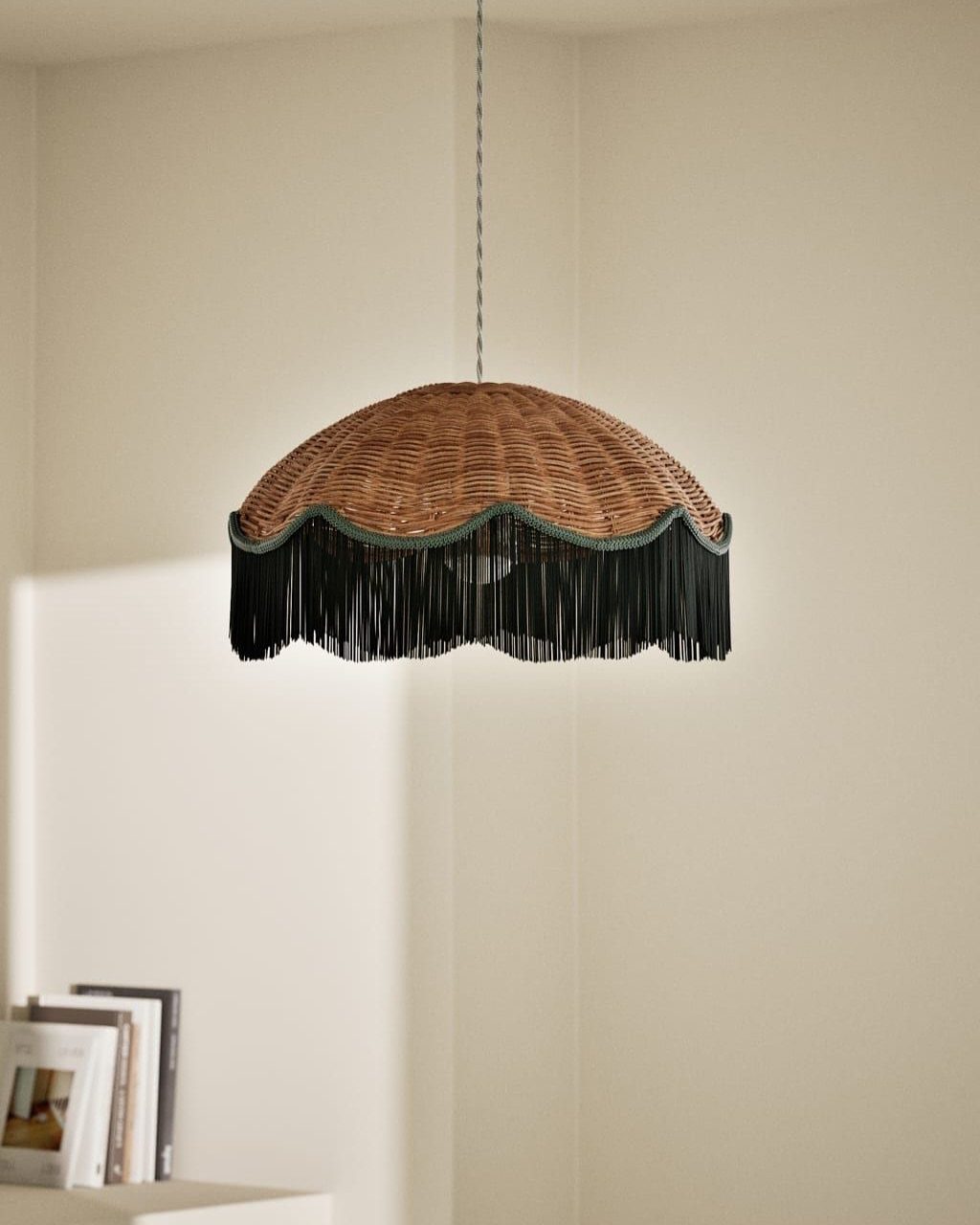
A fabric drum or pleated shade softens a bedroom or living room without harsh glare, while woven bamboo or rattan adds texture over a kitchen island or dining table where the handmade look balances modern finishes.
One maker cut 6 large vellum petals and 6 smaller ones, then stacked them around cardboard circles to form a layered bloom that hangs light and costs little.
1. Fabric Pendant Shades
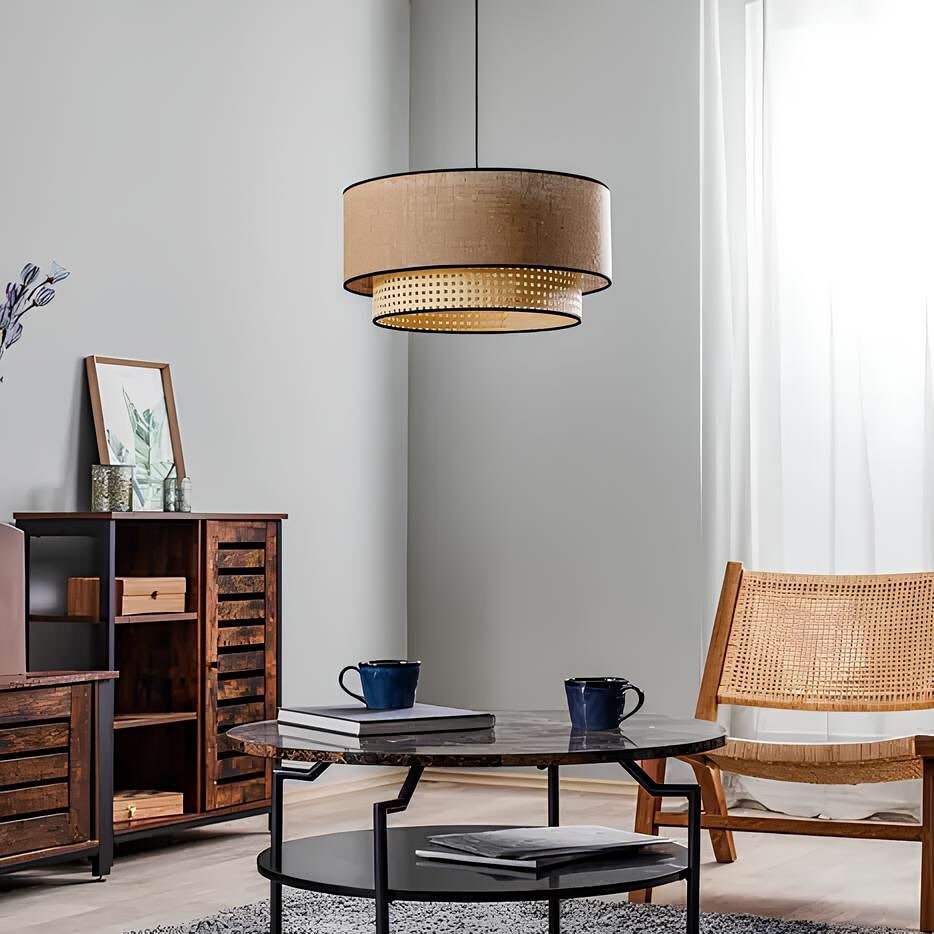
Fabric shades hang from a cord and flex across styles: drum shapes for a clean, modern line, sculptural forms that curve or fold, and pleated designs that soften the light.
The material diffuses the bulb and keeps the room warm without harsh glare.
I like fabric for a bedroom or living space where you want the fixture to feel deliberate but not loud. The shade reads softer than metal or glass, and the shape decides whether it leans minimal or decorative.
2. Paper Lantern Shades
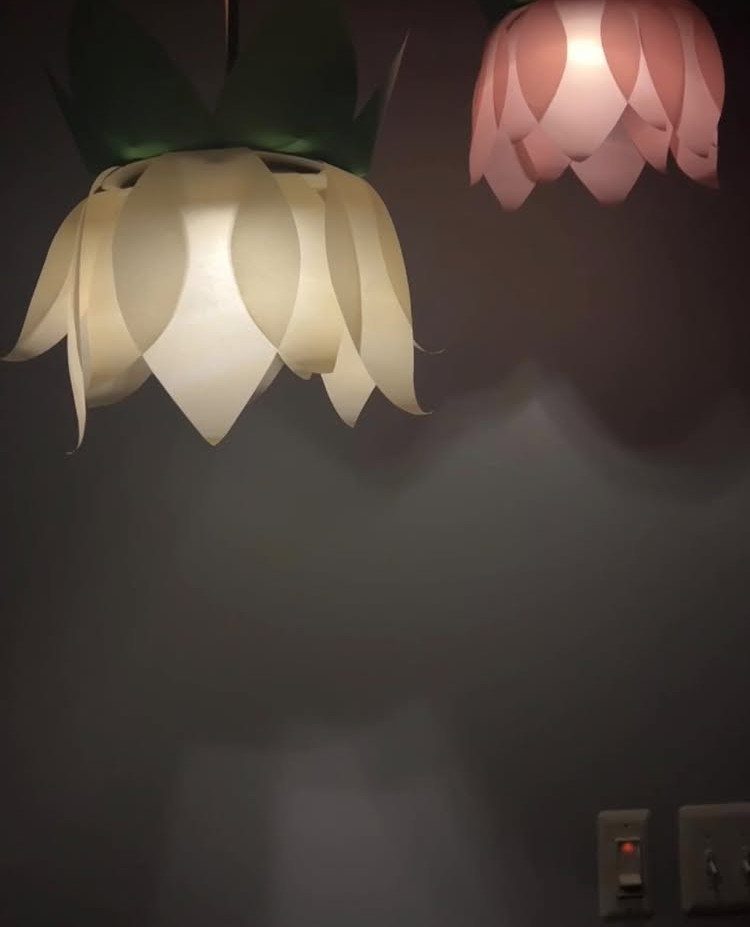
Ribbed paper globes and patterned lantern shapes hang light, and the material takes color easily. Vellum cuts into petals or panels that layer into flowers, stars, or geometric forms.
One maker cut 6 large petals and 6 smaller ones from the same color vellum, then taped the larger petals around a 7-inch cardboard circle and the smaller ones around a 6-inch circle. The 2 tiers stack to form a bloom.
Paper costs little and folds into most shapes, but it stays fragile near heat and moisture.
3. Crochet Pendant Lamps
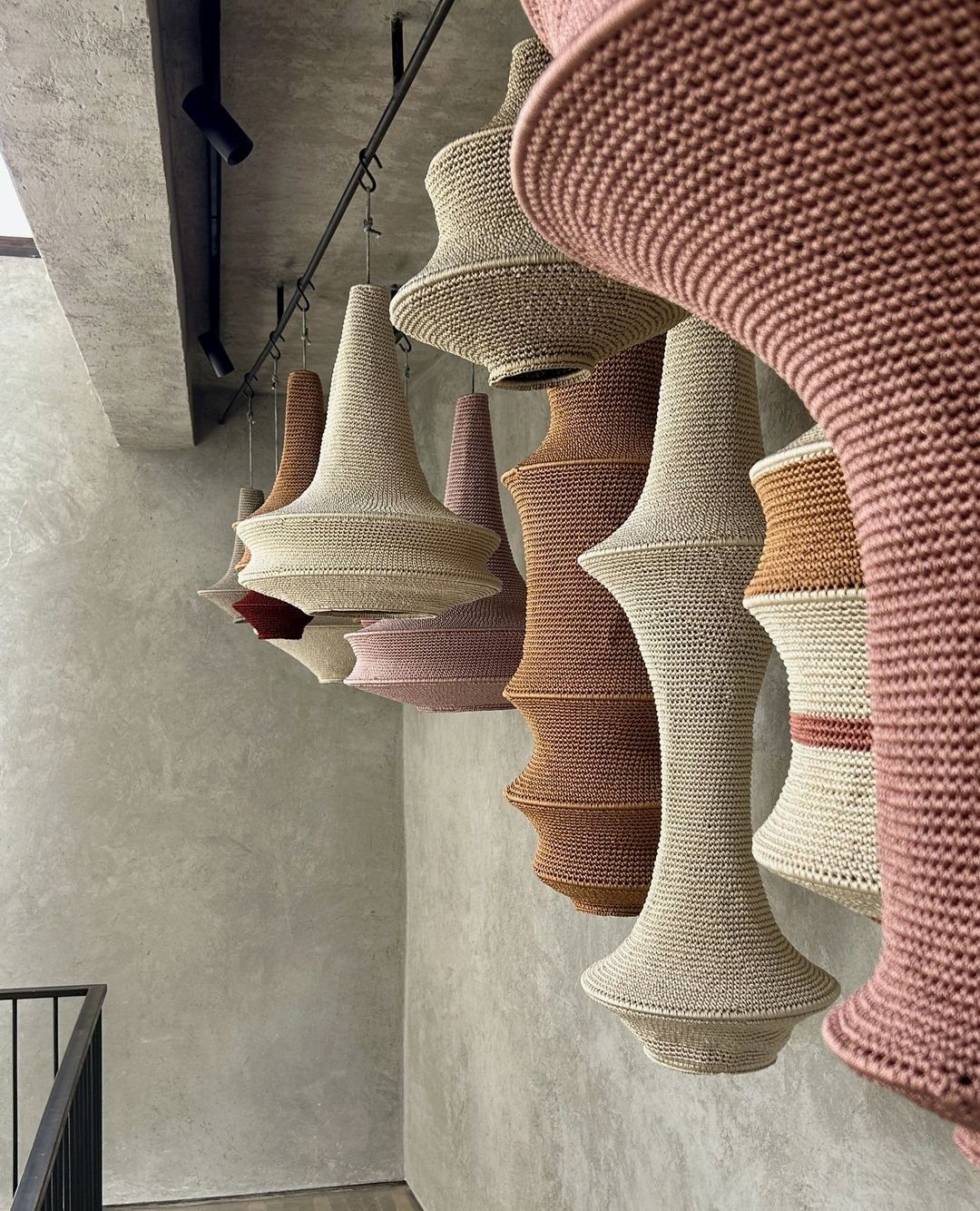
Crocheted yarn builds openwork shades in bell, sphere, or tiered forms. The stitch pattern controls how much light filters through, and the yarn color sets the tone: neutrals for a quiet fixture, brights for a statement.
I like crochet for a bedroom or reading corner where the shade softens the light and adds texture without bulk. The handmade look suits boho or cottage styles, and the yarn washes if it collects dust.
4. Crochet Chandelier Patterns
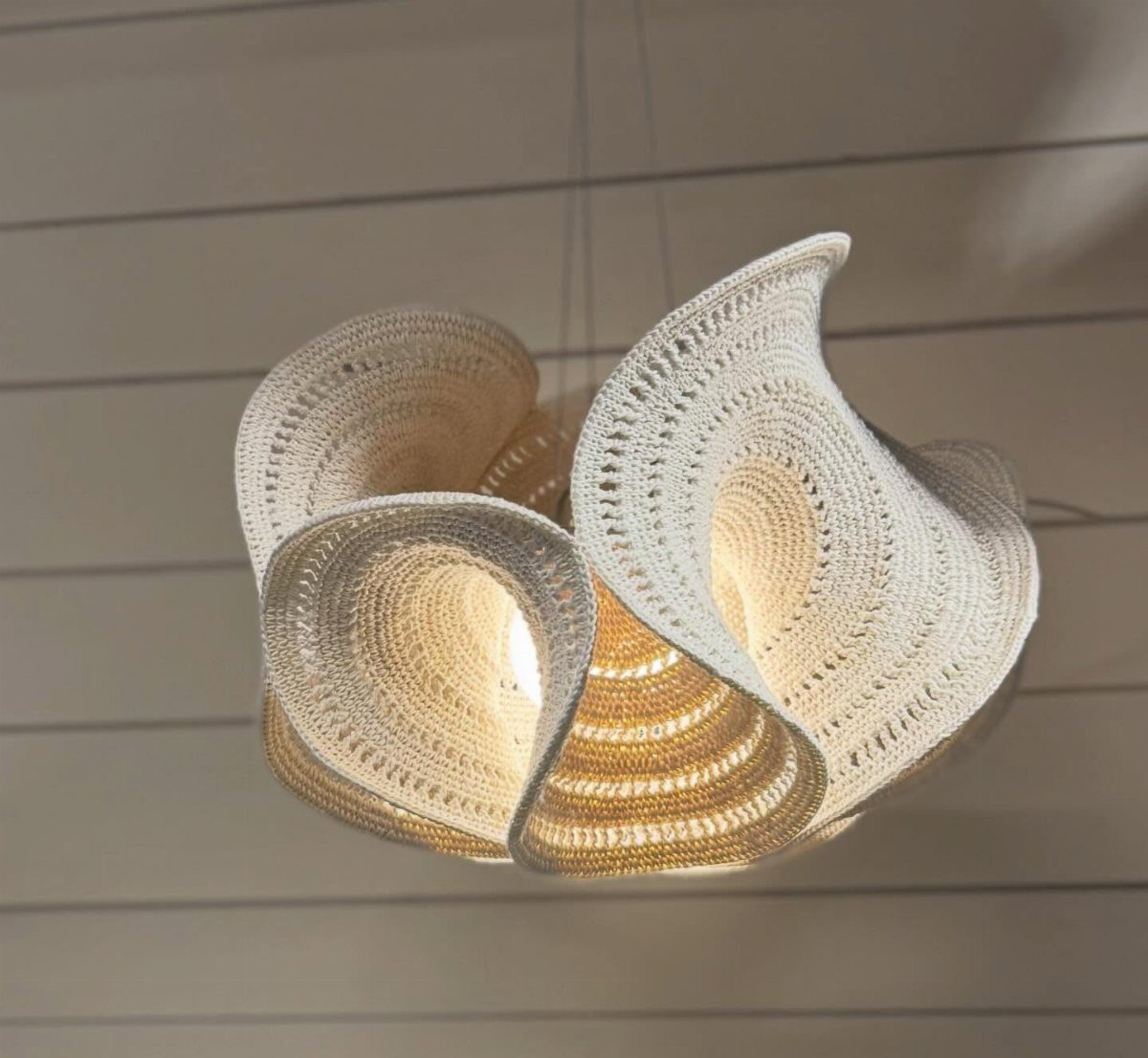
Free crochet patterns walk through lace-style chandelier decor, turning thread or fine yarn into swirling, organic shapes. The stitch work reads delicate, and the scale can shrink to a single bulb or grow into a multi-tiered fixture.
Lace crochet takes time and a steady hand, but the material cost stays low. I’d choose this for a dining nook or entryway where the detail gets noticed up close.
5. DIY Macrame Chandelier
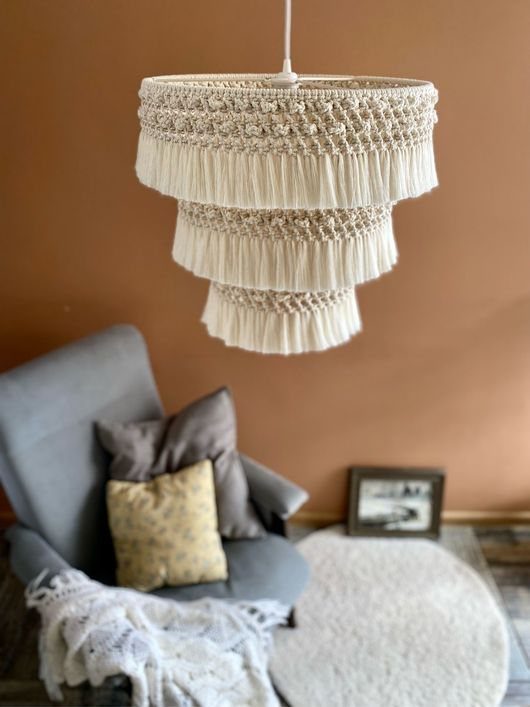
Knotted cord builds tiered chandelier shapes with fringe that hangs in layers. Macrame patterns use square knots, half hitches, or spiral knots to form the body, and the fringe can stop short or trail long.
The fixture works over a dining table or in a corner where the vertical lines pull the eye up. Cord colors run from natural jute to dyed cotton, and the weight of the knots keeps the shade stable.
6. Woven Bamboo Pendant
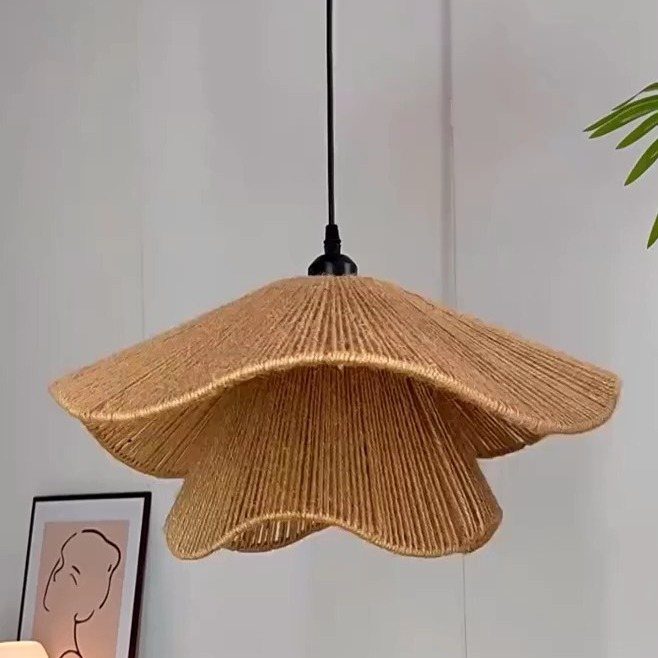
Bamboo strips weave into pendant shades with an open pattern that lets light through while the material adds warmth. The weave can run tight or loose, and the shape bends into bells, domes, or wavy tiers.
I like bamboo for a kitchen or dining room where the natural material balances modern finishes. The shade stays lightweight, and the handcrafted look suits coastal or minimal spaces without reading too casual.
7. Tiered Bamboo Pendant
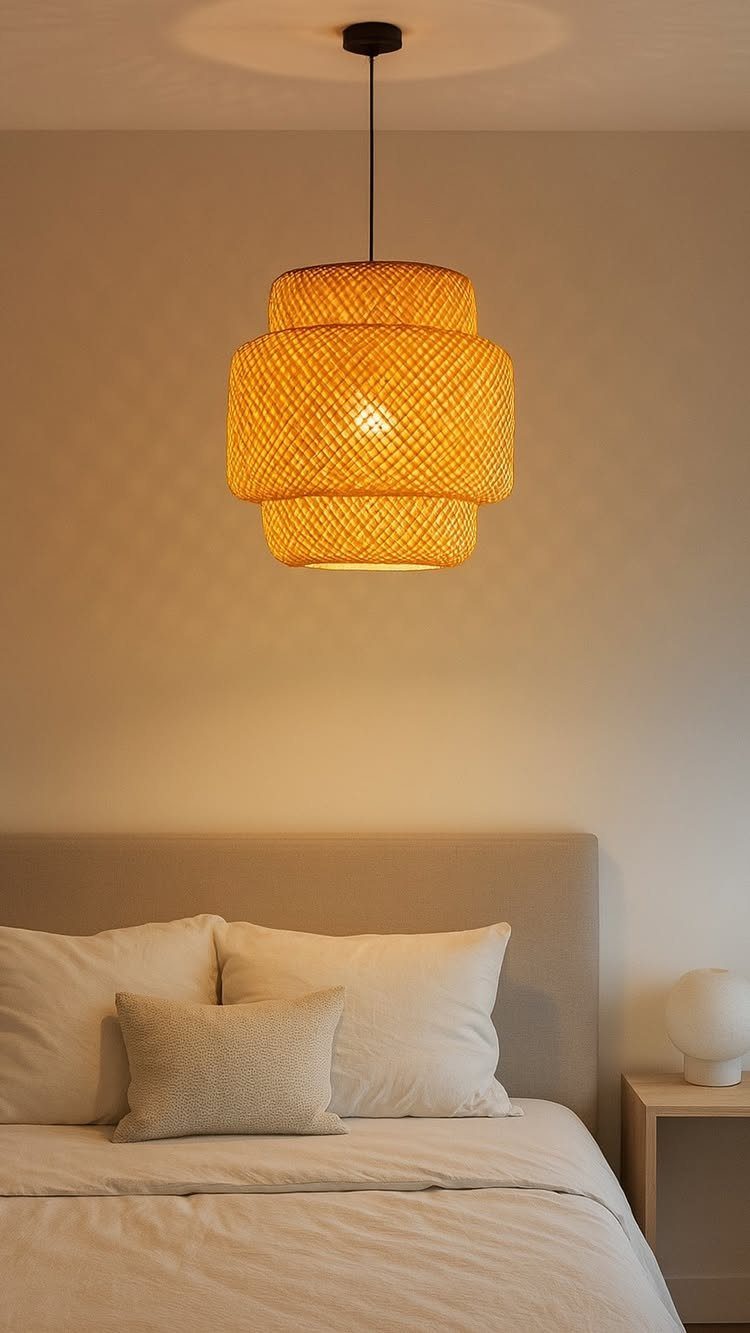
Stacked tiers give the shade height and shadow, with each layer stepping in slightly to form a tapered silhouette. The bamboo weave stays open enough to cast patterned light on the ceiling and walls.
I like the vertical reach for a bedroom where a single fixture needs presence without weight. The tiered form reads more sculptural than a simple dome, and the natural finish works with wood furniture or woven textiles.
8. Rattan Basket Pendant
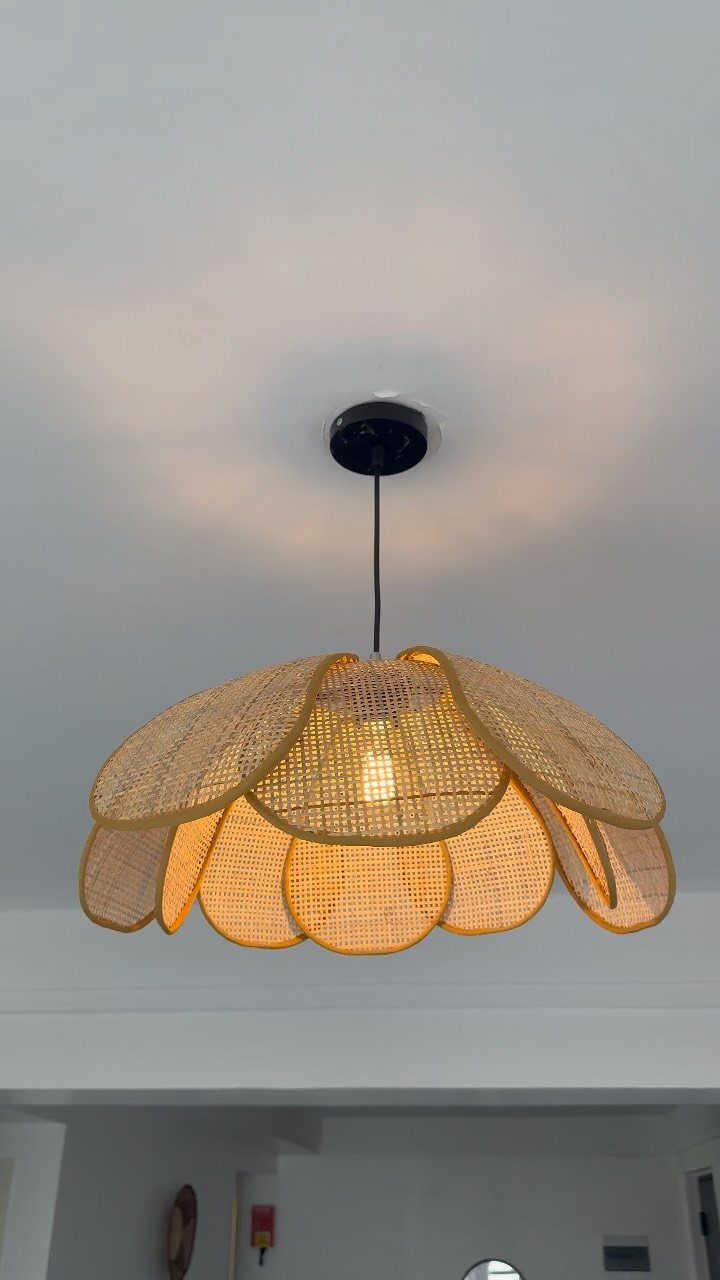
Rattan weaves into domed or bell shapes that hang from a simple cord, and the basket texture adds warmth without covering the bulb completely. The open weave lets light through while the material softens the edges.
The shade suits a kitchen island or dining area where you want the fixture to feel handmade but not fussy. Rattan holds up in dry spaces, and the neutral tone pairs with most finishes.
9. Caged Lantern Pendant
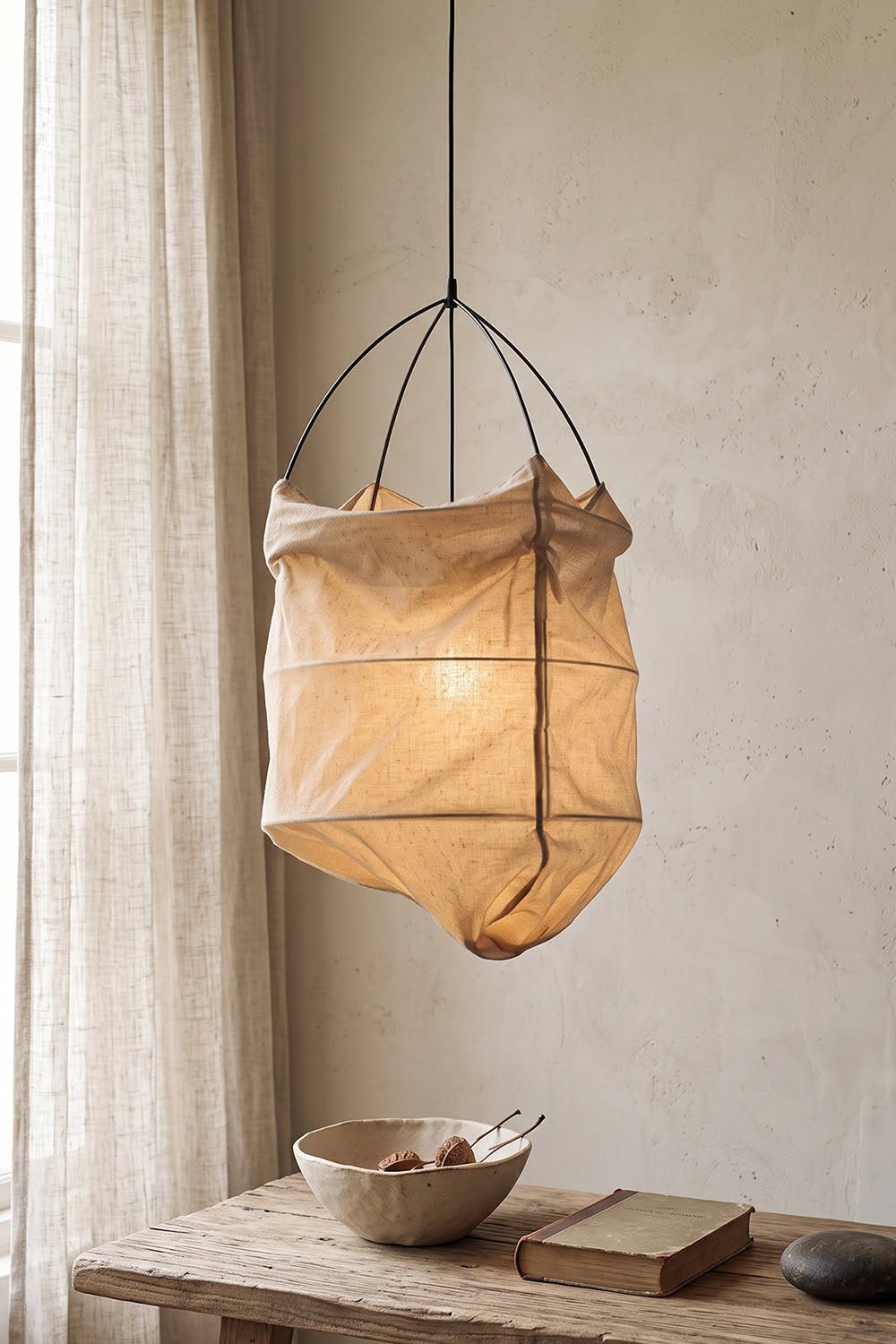
The fabric wraps the metal frame and diffuses the light, while the cage adds structure and keeps the shade from looking too soft. The combination balances industrial and cozy, and the silky finish gives the fabric a slight sheen.
I like this for a dining room or entryway where the fixture needs to stand out but stay grounded. The frame gives structure without adding weight, and the neutral palette works in most rooms.
10. Green Glass Pendant
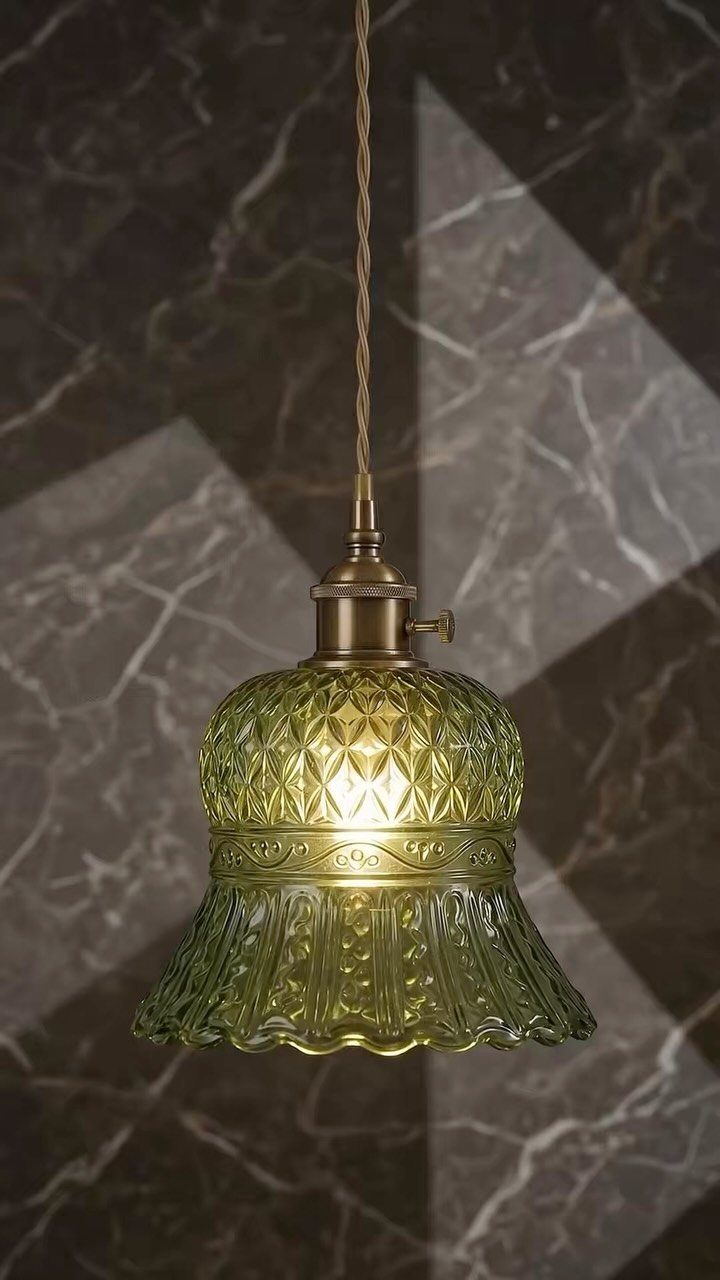
The ribbed or scalloped edge gives the glass a decorative profile, and the green tint warms the light without losing clarity. Brass hardware adds contrast and suits vintage or transitional spaces.
I like green glass over a kitchen sink or in a bathroom where the fixture needs to feel polished but not formal. The color reads richer than clear glass, and the scalloped edge catches the light.
11. Glass Flower Pendants
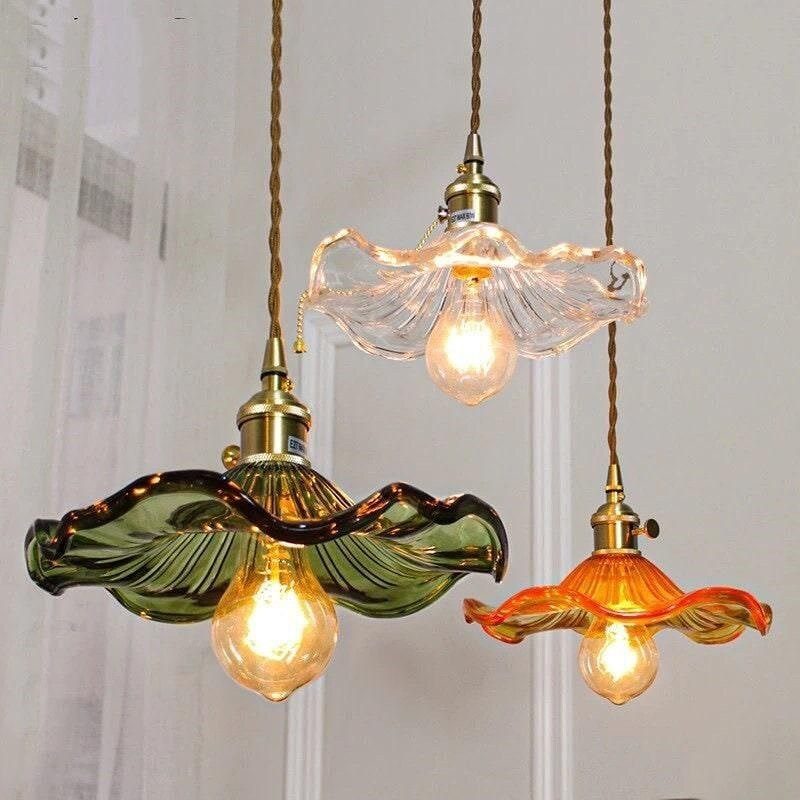
The fluted glass petals radiate from the socket, and the color options let you match or contrast with the room. Braided cords add a finished look, and the brass sockets suit vintage or eclectic spaces.
I like these grouped over a dining table or kitchen island where the color and shape get noticed. The glass stays easy to clean, and the flower form softens industrial or minimal rooms without tilting too decorative.
12. Floral Pendant DIY
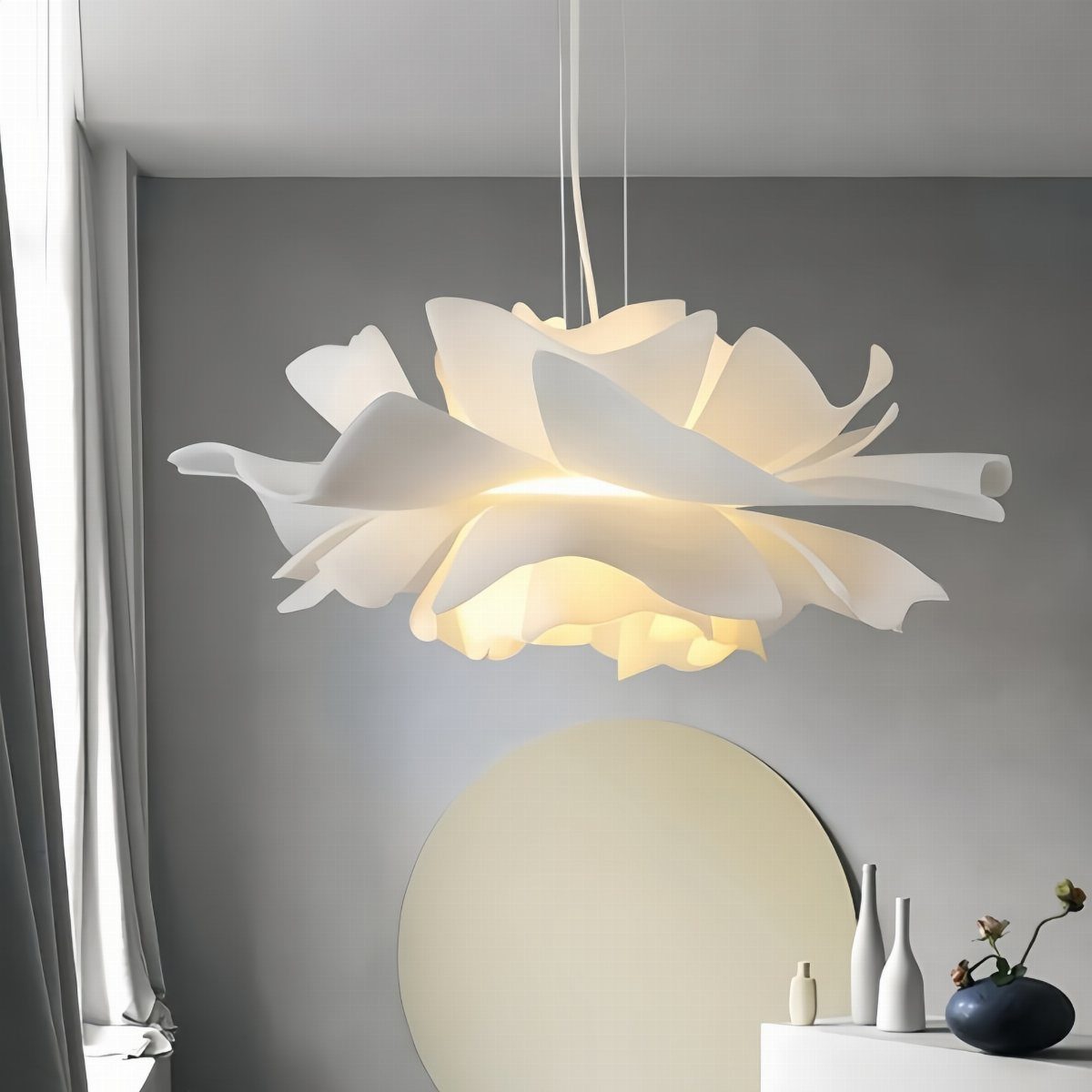
Translucent petals attach to a ring or wire frame and curve outward to mimic a bloom. The material can be vellum, thin plastic, or frosted acrylic, and the shape depends on how many petals you cut and how they overlap.
The petals diffuse the bulb evenly, and the white keeps it neutral enough to work with most palettes.
13. Pleated Paper Lantern
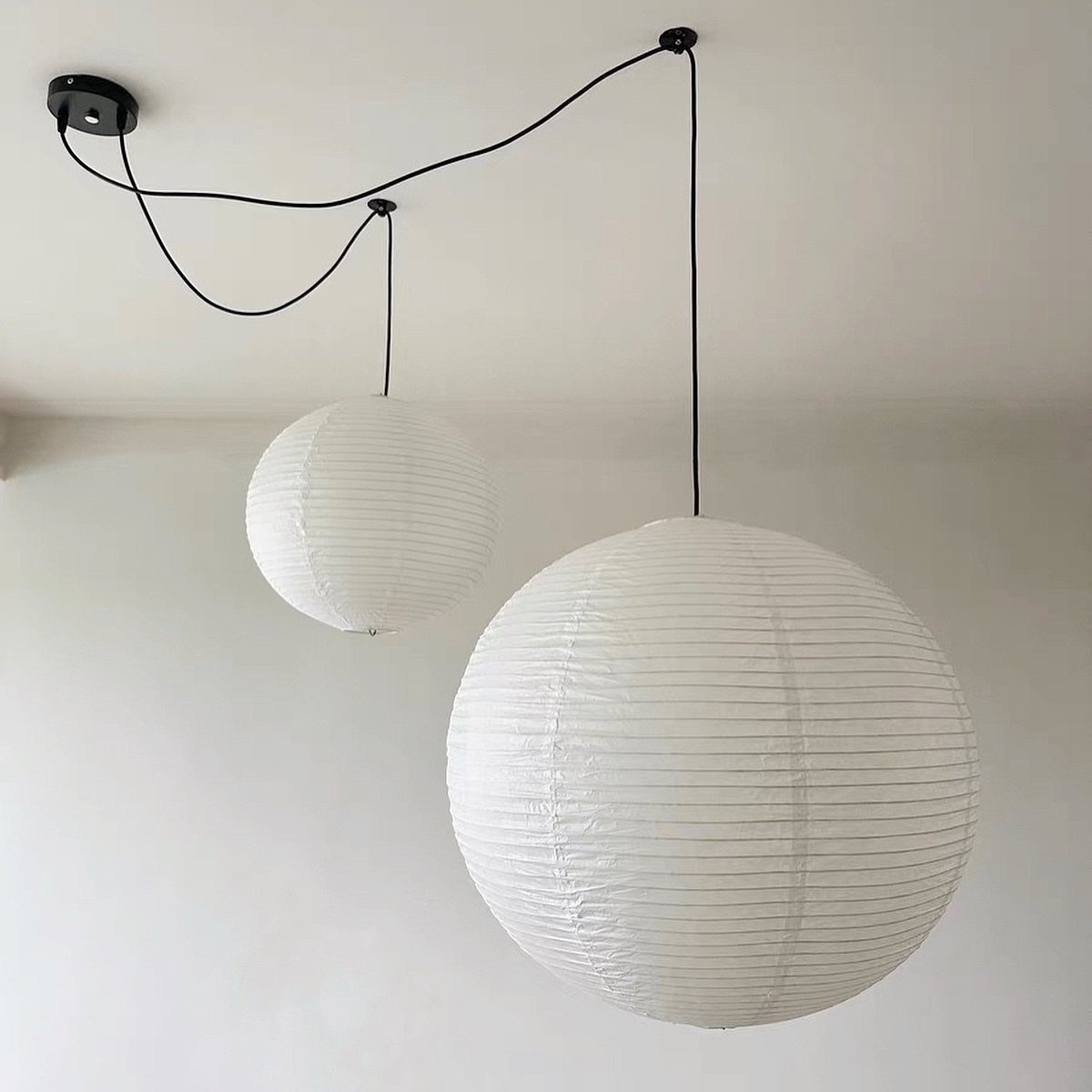
The pleated paper forms a sphere with a grid structure visible through the folds, and the accordion texture catches the light as it diffuses.
The black cord keeps the fixture minimal, and the white paper works in most rooms without competing with the palette.
The pleated form reads softer than a smooth globe, and the paper stays lightweight enough to hang from a simple hook.
14. Washi Globe Pendant
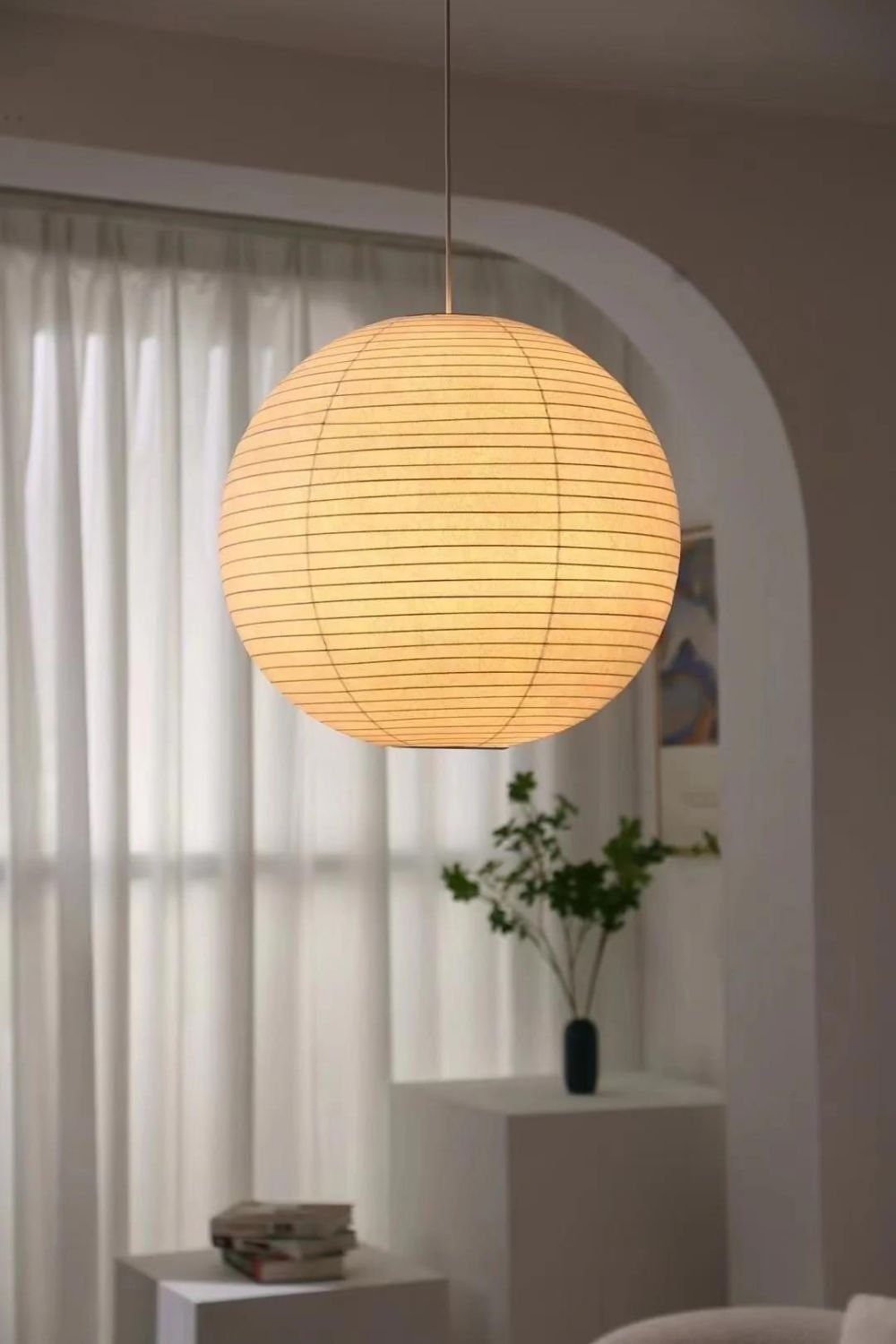
Washi paper’s ribbed texture scatters light evenly and gives the sphere a handmade quality without looking rough. The white stays neutral, and the ribbing adds dimension that a flat paper shade misses.
The material holds its shape well and cleans with a dry cloth.
15. Wedding Lantern Strings
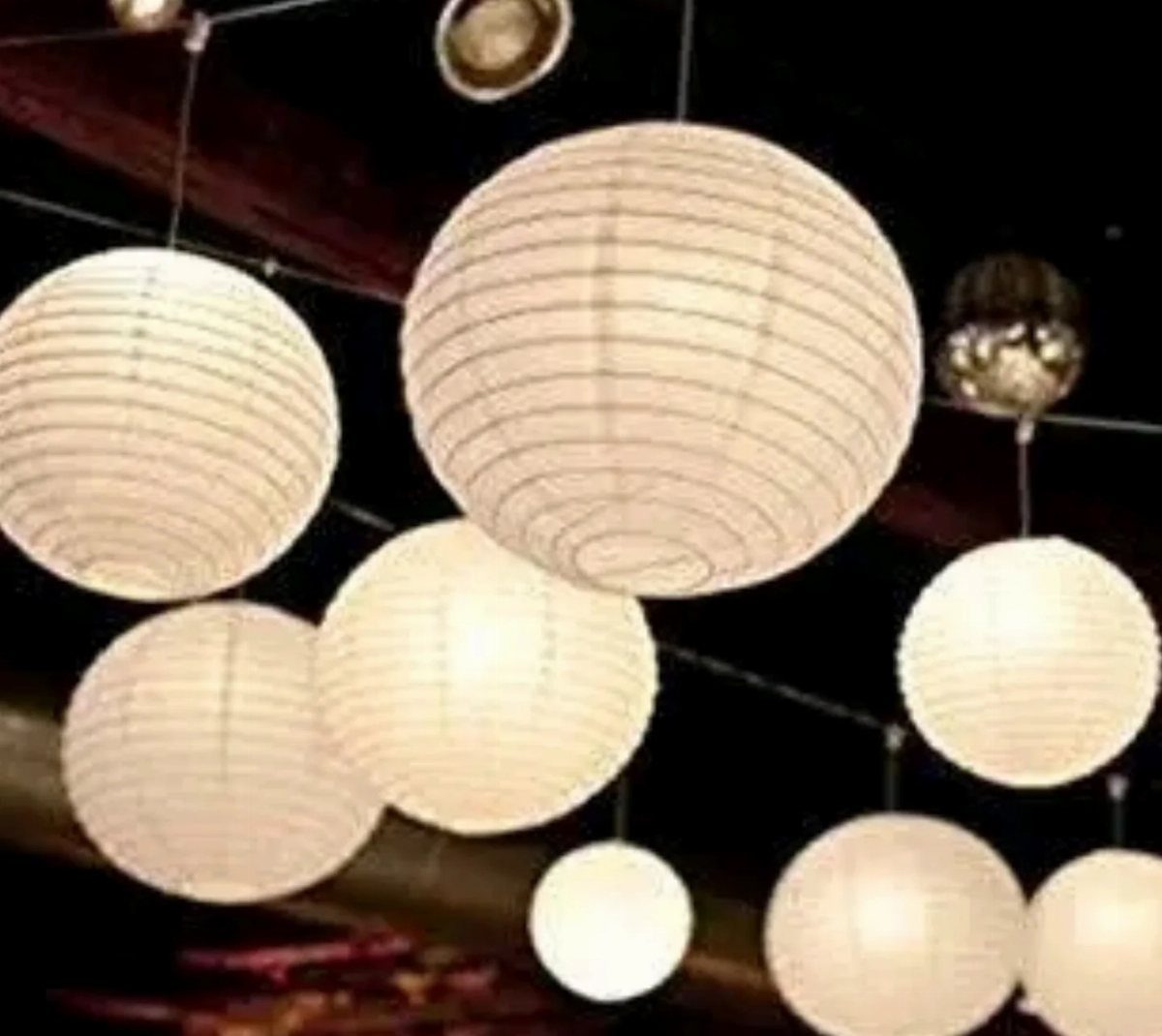
Hanging multiple white globes at different heights along a wire fills vertical space and spreads light across a wider area than a single fixture.
The mix of sizes keeps the arrangement from reading too uniform, and the white glows warm without color distraction.
This works for an outdoor wedding or reception where you need coverage over a long table or dance floor. The paper lanterns cost little and pack flat, and you can adjust the spacing to fit the span.
16. Hanging Wedding Shades
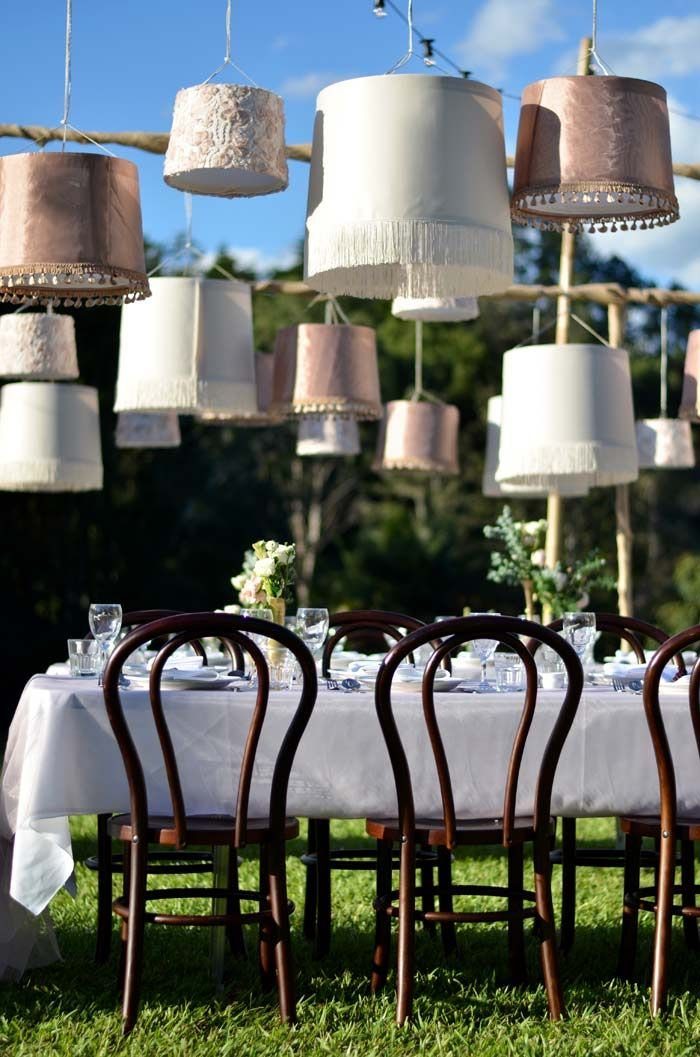
Staggered heights give the cluster dimension and fill the space above the table without blocking sightlines. The fabric diffuses the bulb and adds warmth, and the mix of white and pink tones keeps the setup soft without tilting too sweet.
I like this for an outdoor wedding or rehearsal dinner where the lighting needs to feel intentional but not formal.
The fabric holds up better than paper in light wind, and the varied heights let you adjust the look to the table length.
17. Tree-hung Wedding Shades
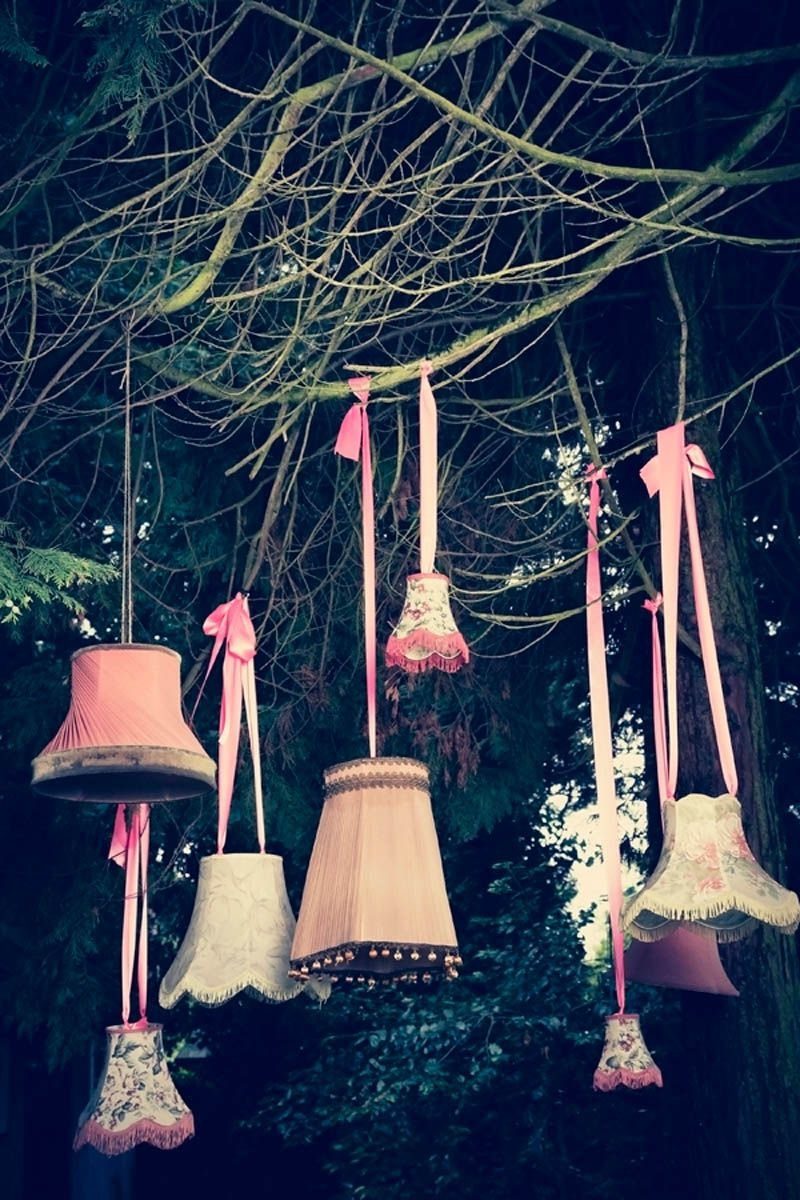
The fringed edges add movement and soften the look of the shades, and the clear strings let the fixtures hang at different heights without heavy hardware. The pink and cream tones warm the light and suit garden or outdoor weddings.
I like this for a ceremony or cocktail hour where the shades define a space without closing it in. The fringe catches a breeze, and the tree branches give you adjustable anchor points without renting a frame.
18. Wedding Table Lampshades
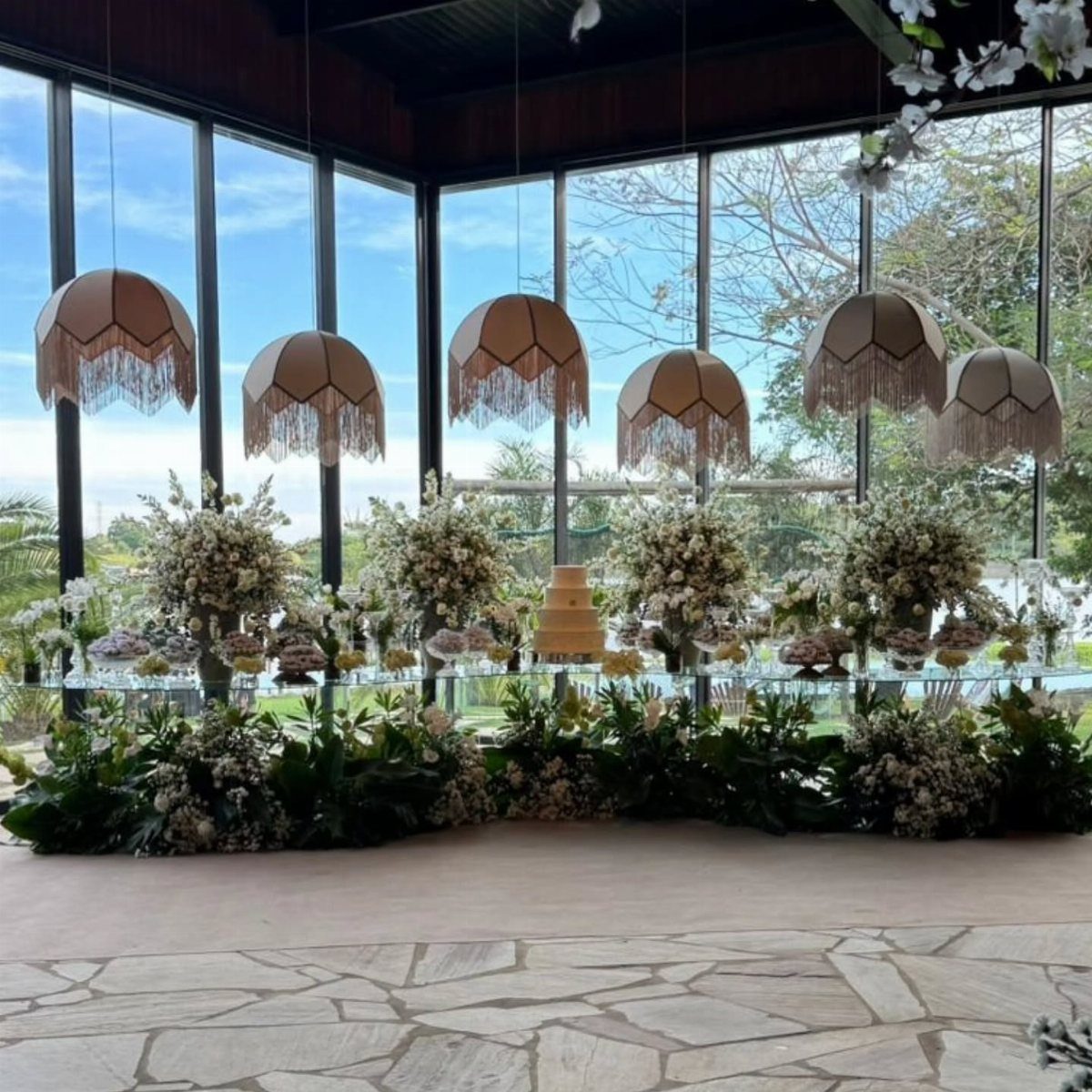
The fringe adds texture and movement, and the beige tones warm the light without competing with floral arrangements or table settings. Staggered heights fill the vertical space and keep the eye moving along the table.
I like this for a reception or brunch where the lighting sets the tone but stays secondary to the decor. The fabric shades hold up in a sunroom or covered outdoor space, and the neutral color works with most palettes.
19. Wedding Lantern Mix
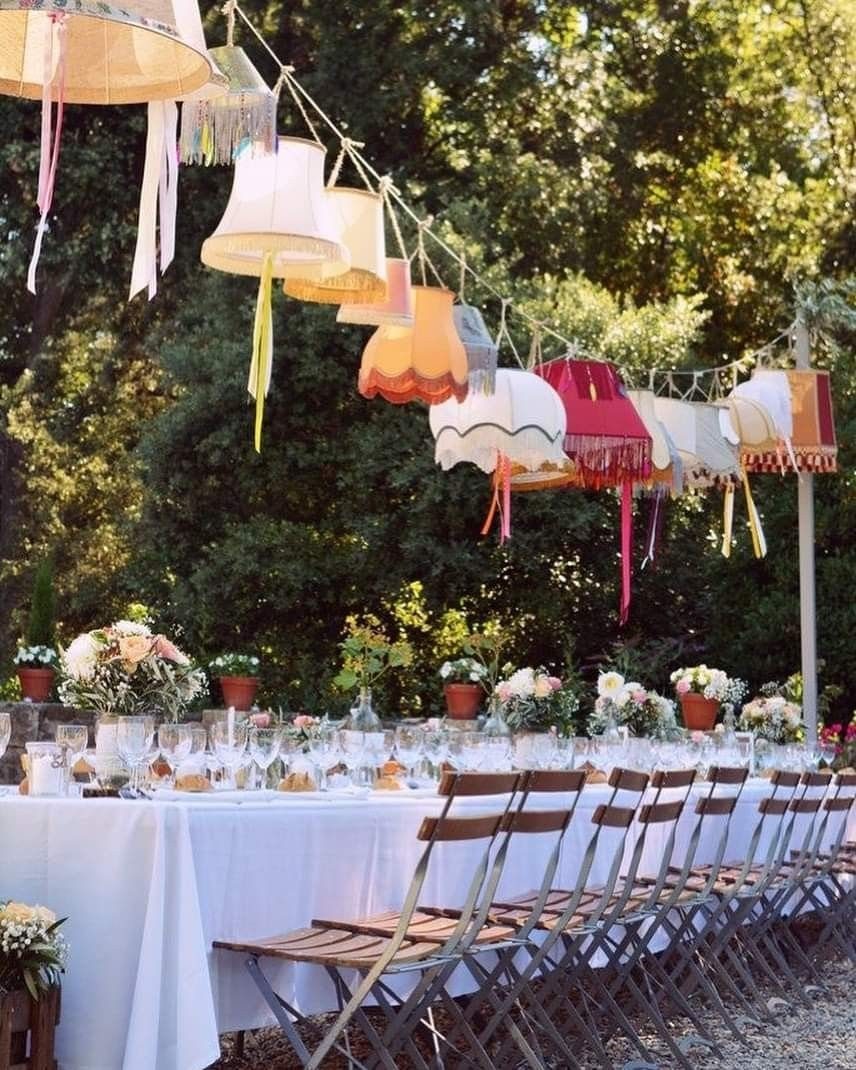
Mixing paper and fabric lanterns in different colors breaks up the visual line and adds warmth without formal arrangements. The varied heights keep the setup from reading flat, and the color mix works for daytime or evening receptions.
I like this for an outdoor wedding where the table spans a long distance and needs interest overhead.
20. Hanging Bedroom Lights
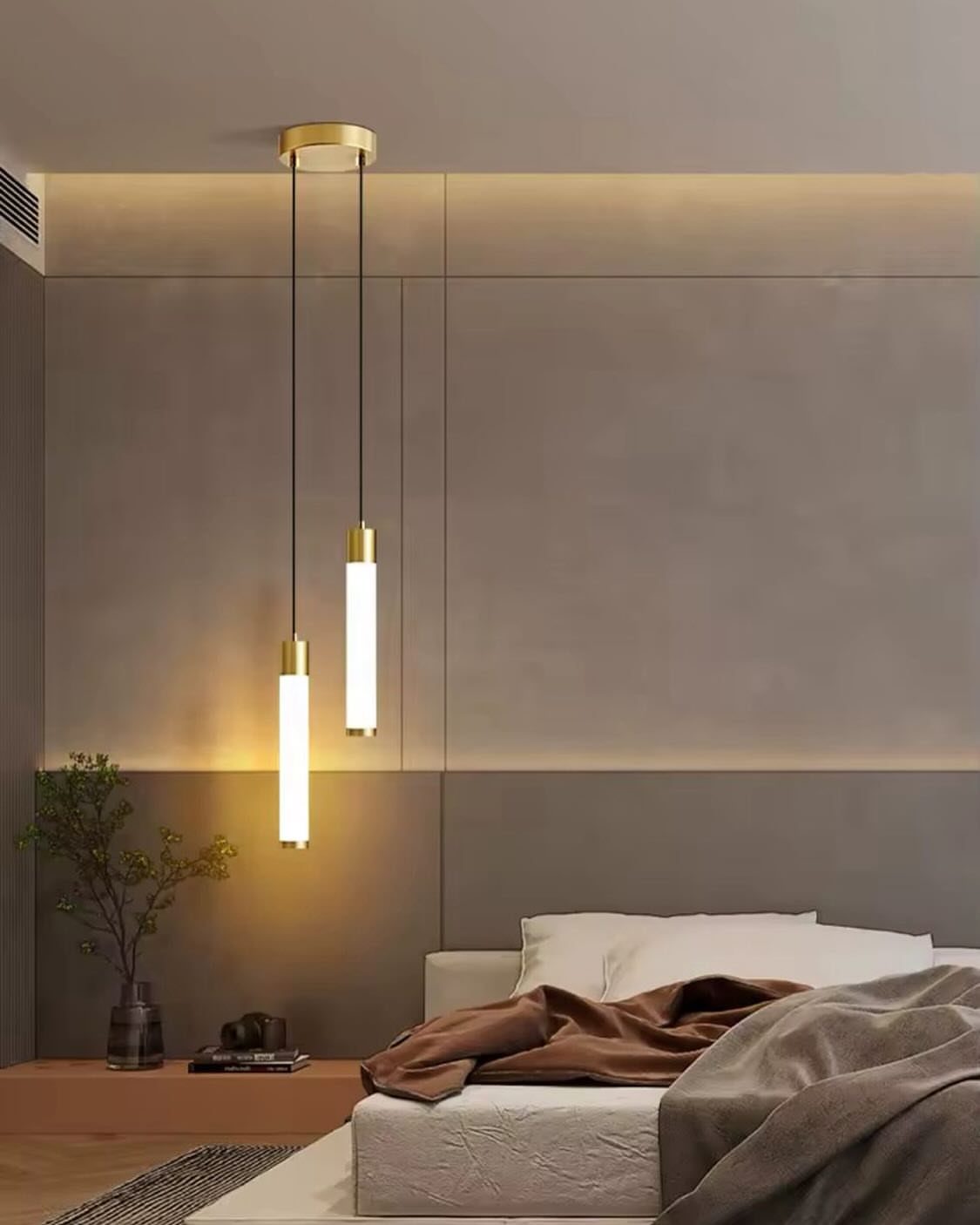
Pendant lights free up bedside table space and pull the eye up without competing with the bed frame. The cylindrical shades direct light down for reading, and the gold finish adds warmth against darker walls.
The cords need to hang close enough to reach the switch but far enough apart that both fixtures stay visible. I like this for a room where the table holds only essentials and the wall color benefits from metallic contrast.
21. Fabric Globe Shades
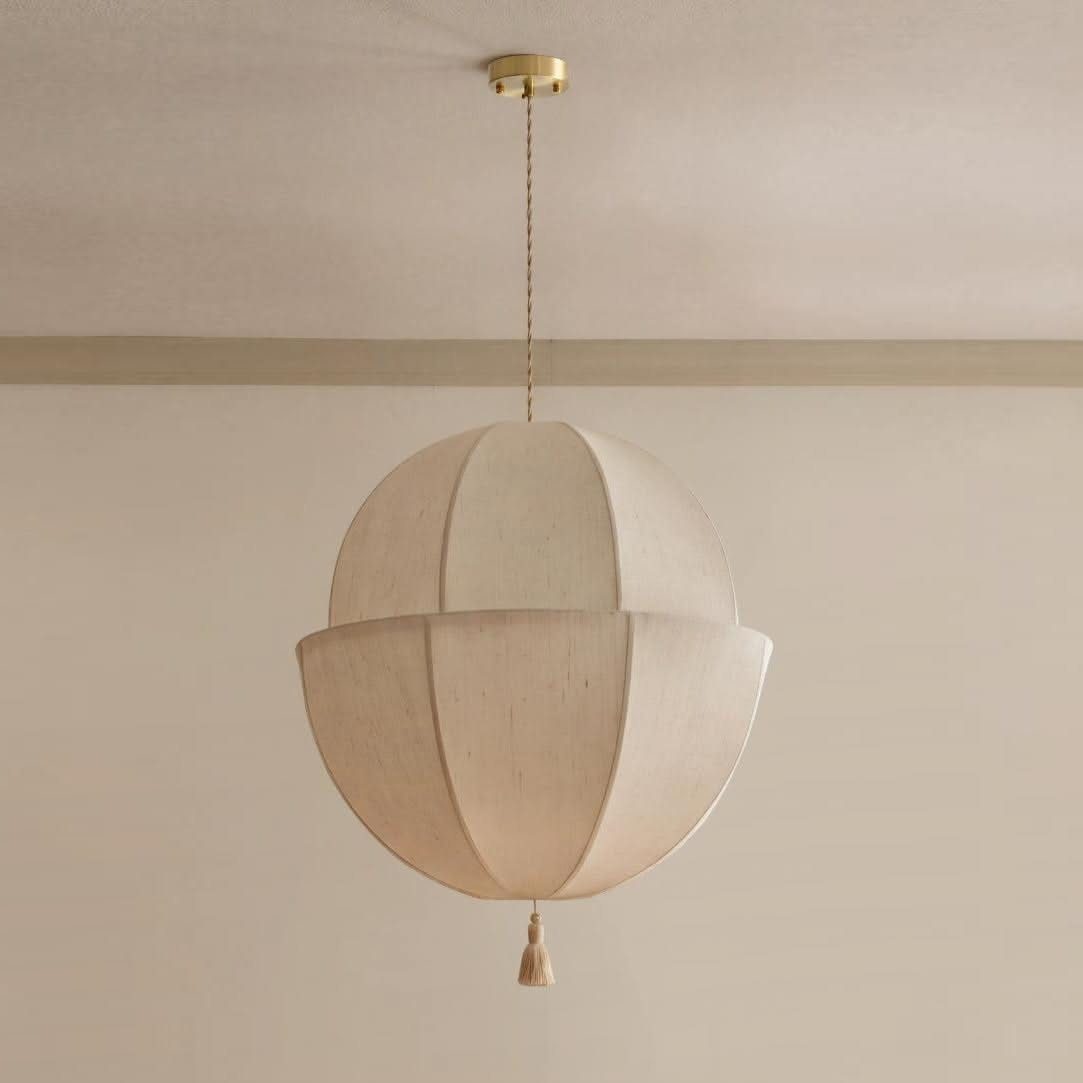
The ribbed texture adds dimension without pattern, and the sphere diffuses light evenly across the room. The tassel anchors the bottom and gives the shade a finished look.
I like this for a bedroom or hallway where the fixture needs to feel substantial but not heavy. The neutral fabric works with most palettes, and the scale suits a space with high ceilings or a large table underneath.
22. Staggered Pleated Shades
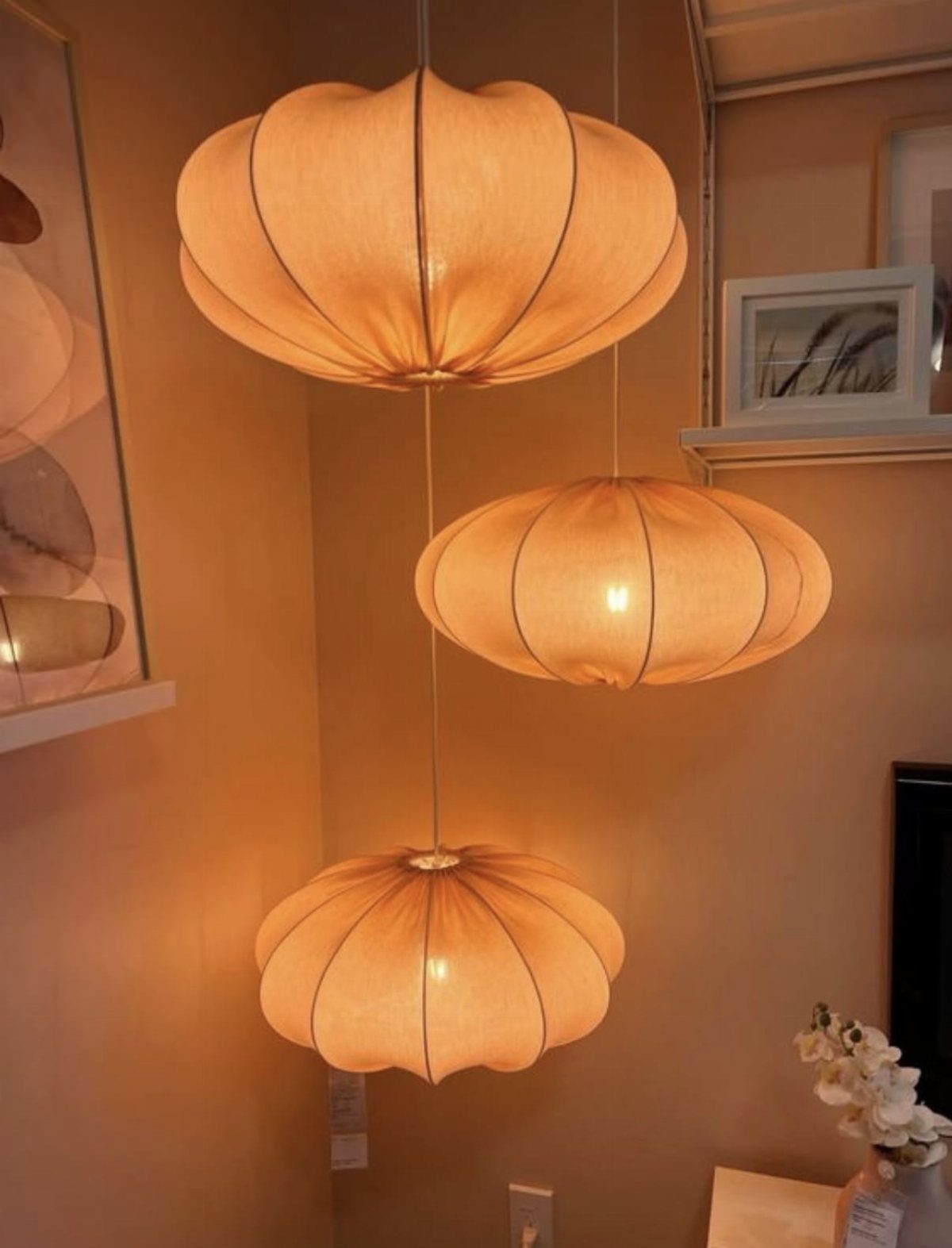
Staggering the drop length adds visual interest and fills vertical space without blocking the view across the room. The pleated fabric softens the light, and the cream tone stays neutral enough to work with most wall colors.
The arrangement works best when the lowest shade hangs well above the table or floor traffic.
23. Woven Paper Shade
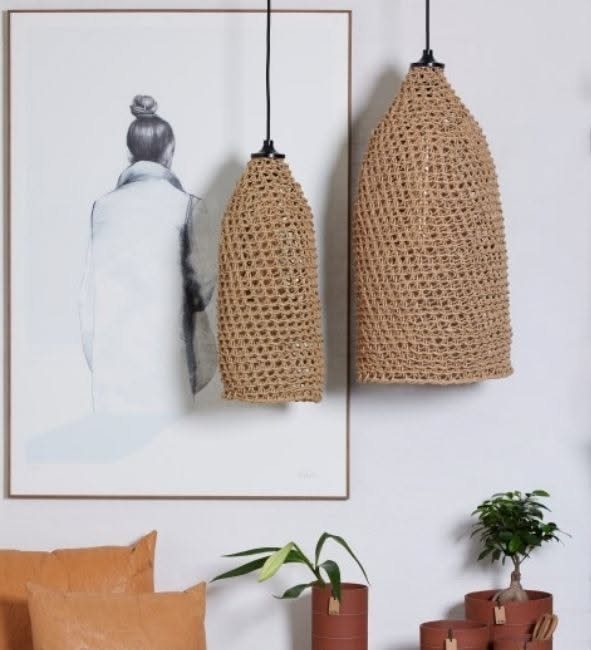
The cone directs light downward while the woven material adds texture and warmth. The natural brown works with wood furniture and neutral textiles, and the lightweight frame hangs from a simple cord.
The woven surface stays durable in dry spaces, and the shape keeps the focus on the material rather than decorative details.
24. Yellow Fabric Lantern
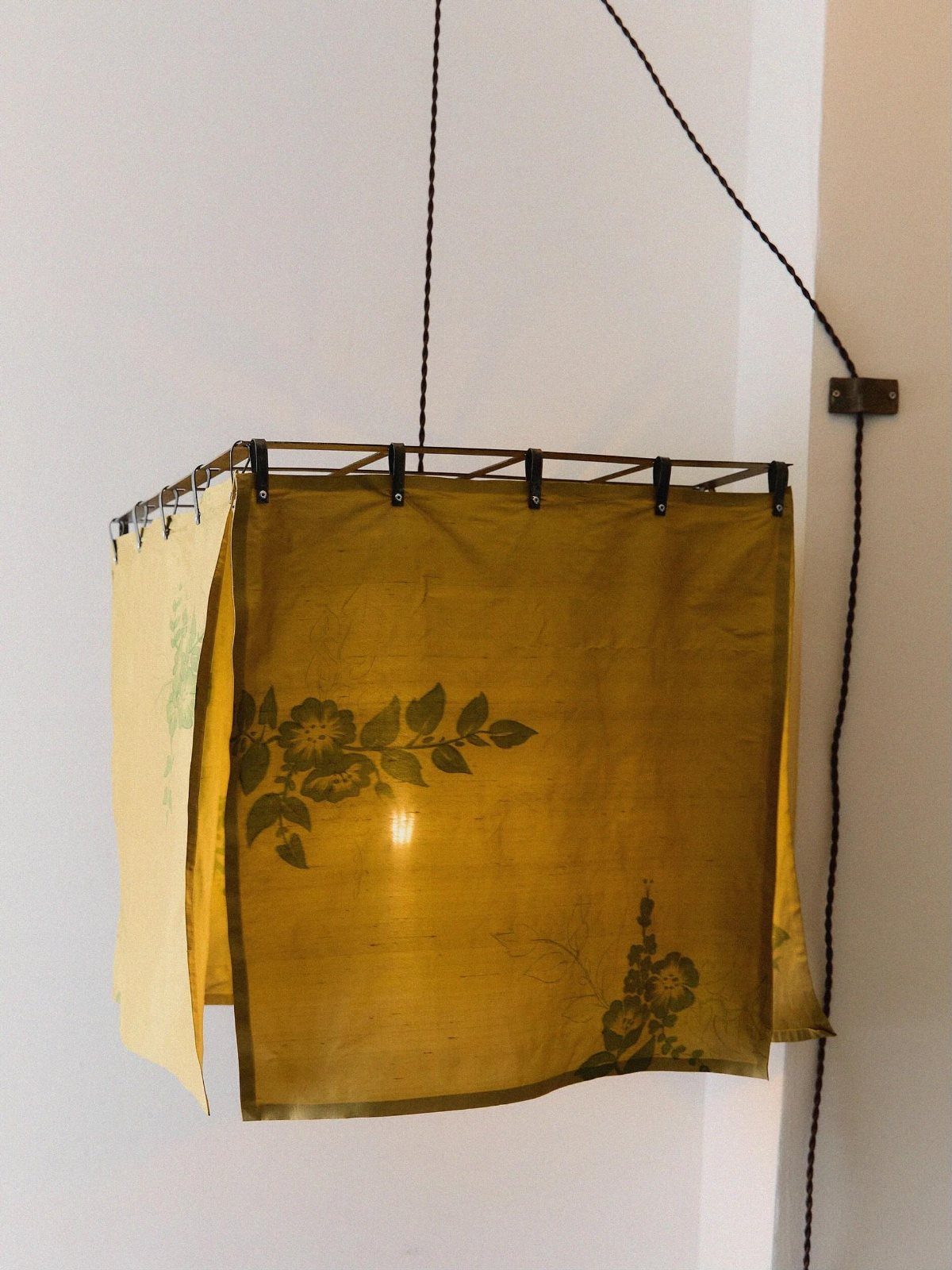
Clipping fabric to a frame lets you change the pattern seasonally, and the square shape reads more structured than a gathered shade.
The mustard yellow adds color without overwhelming the room, and the floral pattern works in cottage or eclectic spaces.
The clips need to hold tension evenly so the fabric stays taut, and the frame should sit far enough from the bulb to keep the fabric safe.
25. Bamboo Umbrella Shade
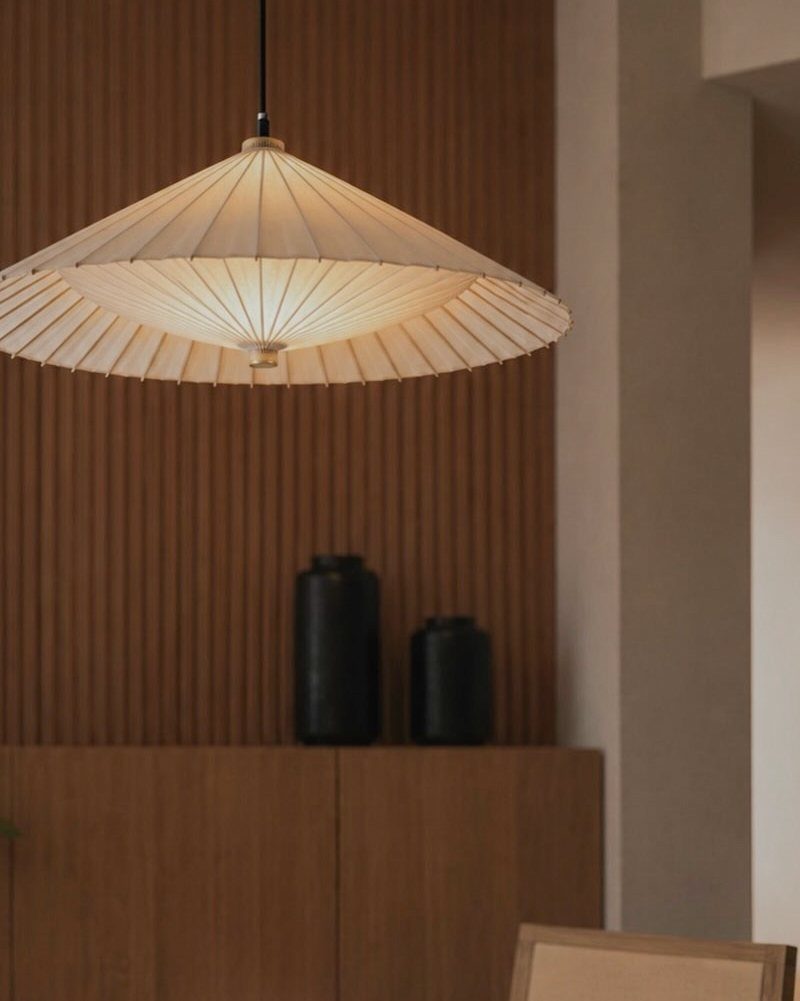
The wide brim and pleated bamboo ribs cast broad downward light and add volume overhead without bulk.
The wide span works best in rooms with tall ceilings where a narrow shade would get lost.
26. Bamboo Lattice Pendants
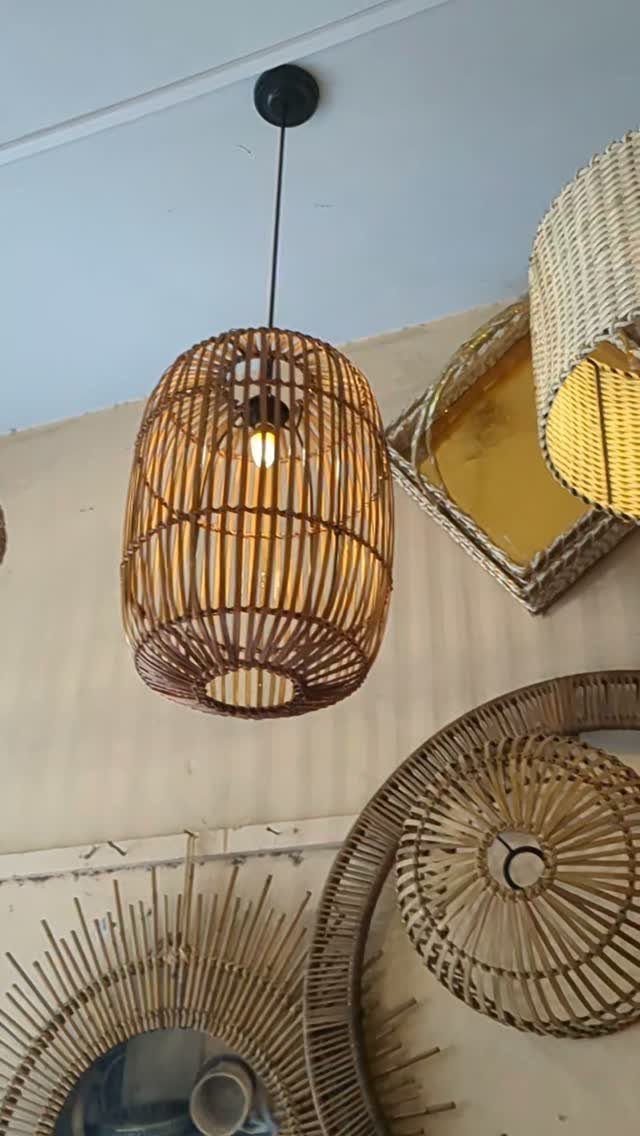
The bamboo strips cross at angles to form a grid, and the vertical shape directs light downward without spreading it wide.
I like this for a corner reading spot or over a narrow console where the fixture needs height more than width. The lattice casts patterned shadows on nearby walls, and the natural material softens modern or minimal rooms.
27. Crochet Lamp Collection
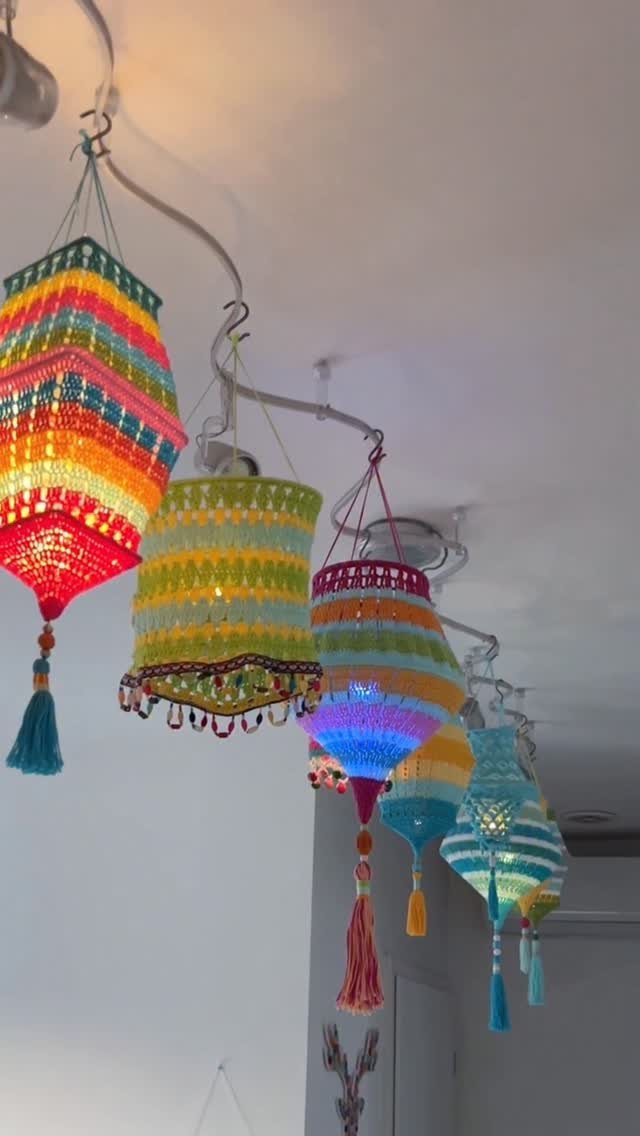
Clustering multiple crochet shades in different colors and patterns adds handmade texture overhead and fills space above a table or seating area. The varied designs keep the arrangement from reading too matched, and the tassels add movement.
This works best when the shades share a similar scale but differ in stitch pattern or color. The crochet diffuses the bulb evenly, and the layered look suits eclectic or boho spaces where the fixture becomes a focal point.
28. Organic Sculptural Pendants
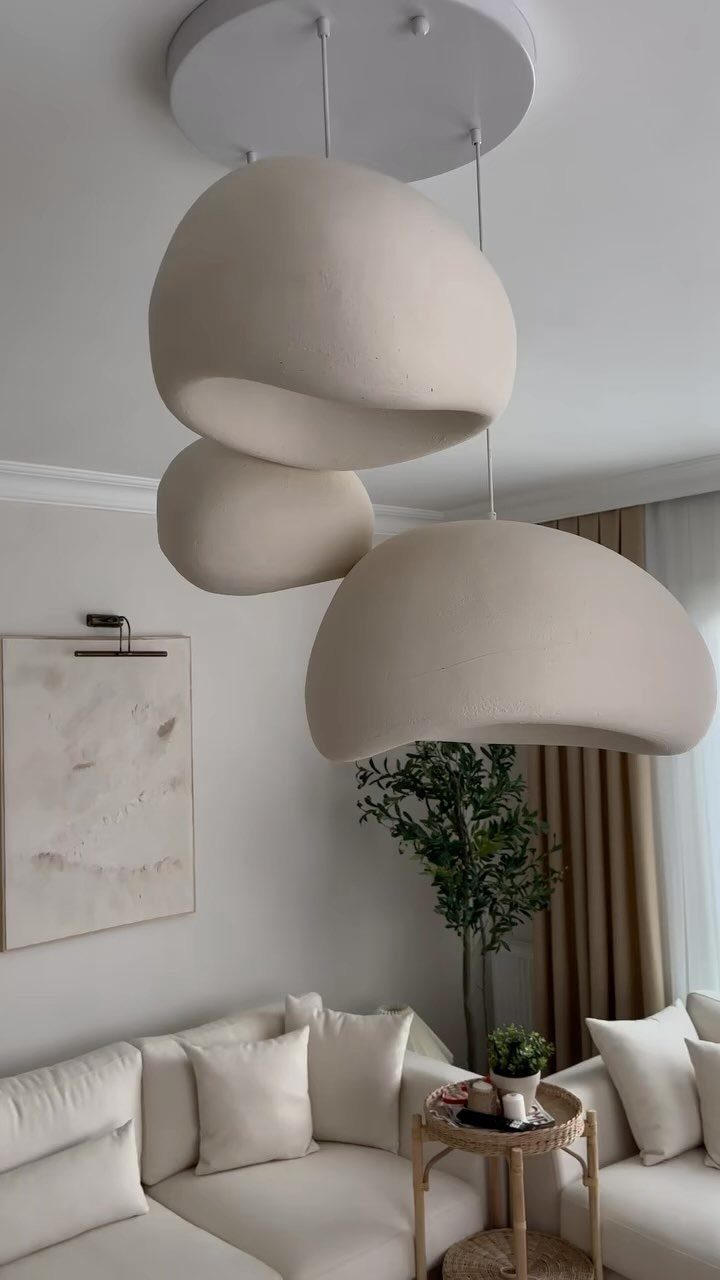
The irregular shapes soften the ceiling line and add sculptural interest without pattern or color. The off-white finish keeps the fixtures neutral, and the varied silhouettes break up the uniformity of a standard globe or dome.
29. Glass Globe Pendants
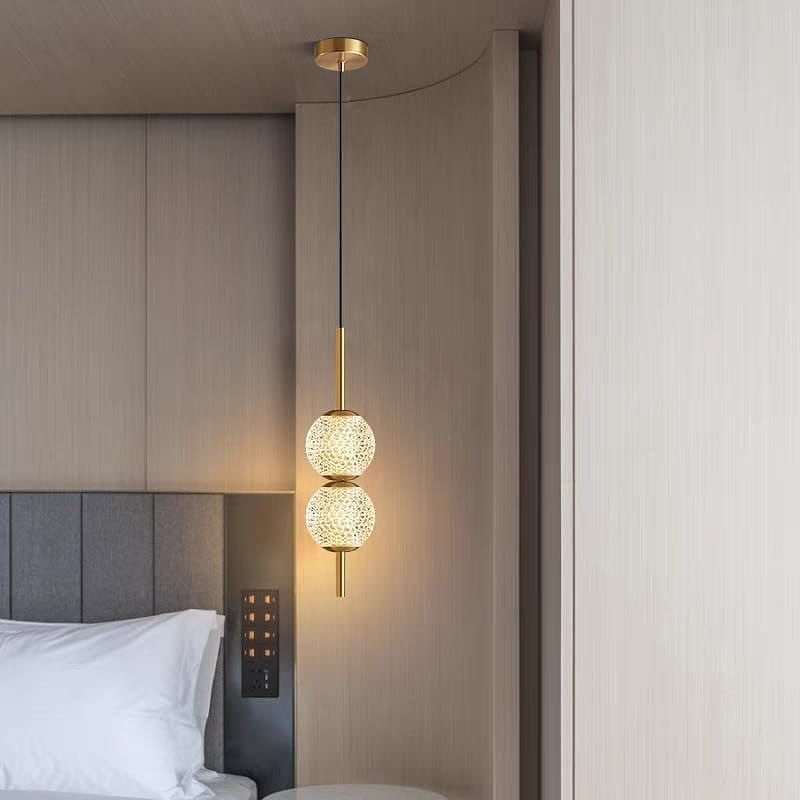
The textured surface catches light and adds detail that smooth glass misses, and the gold hardware warms the fixture without reading too formal.
Hanging two at different heights fills the vertical space beside a bed and keeps both reachable for adjustments.
30. Clear Glass Pendant
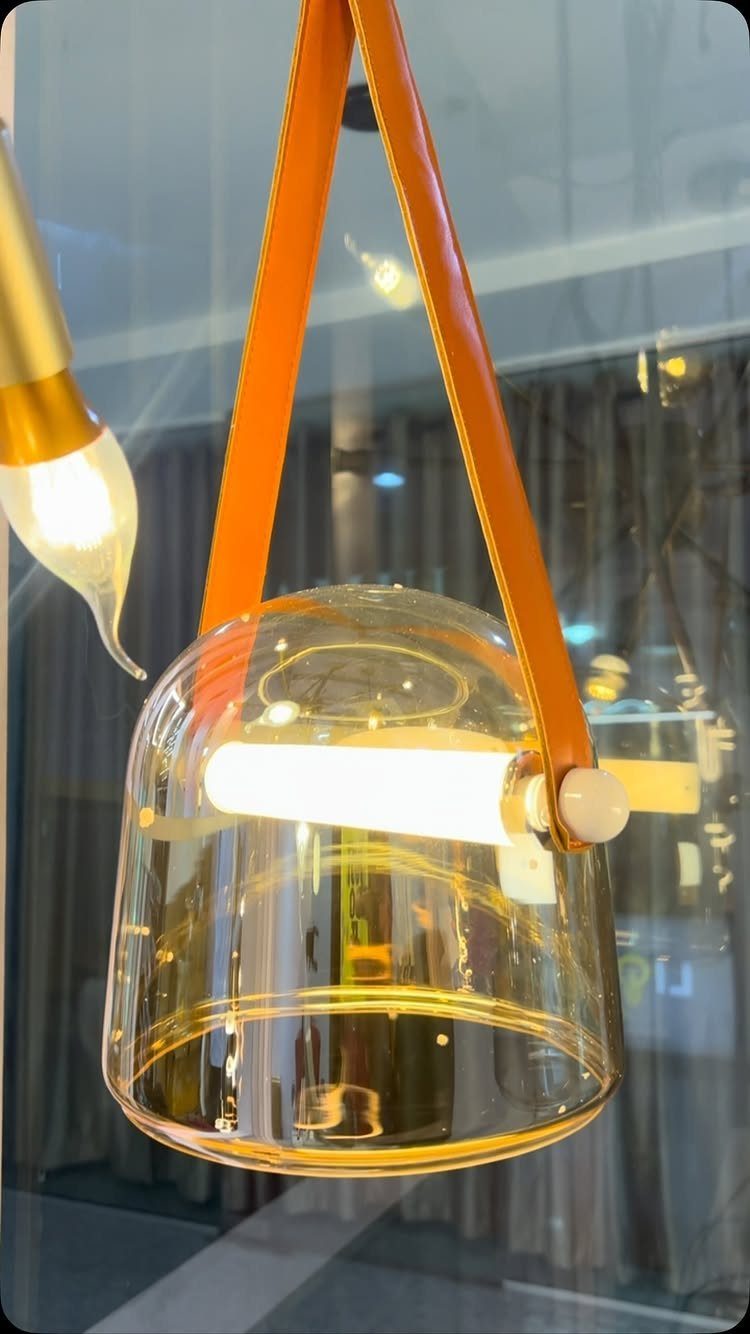
The bell shape directs light downward while the clear glass shows the bulb, and the leather straps add warmth and contrast against the smooth surface. The white tube bulb stays visible and works with the industrial edge of the glass.
The leather straps give the shade a handmade quality without adding bulk, and the clear glass suits spaces where the bulb itself becomes part of the look.
31. Linear Pendant Light
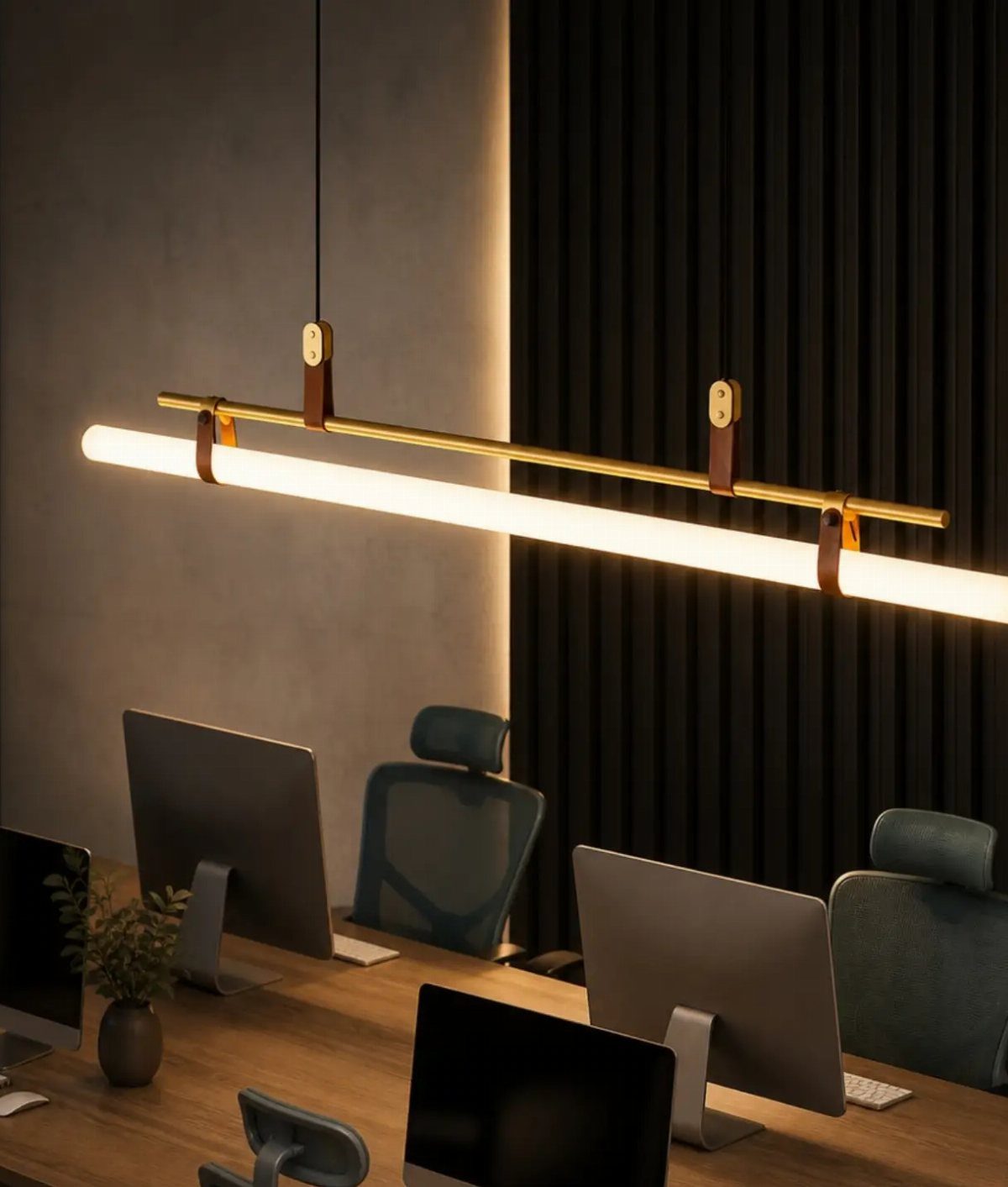
The frosted tube spreads light evenly along its length and works over a desk or long table where task lighting needs to cover more than one seat. The leather straps break up what would otherwise be straight metal lines.
I like this for a home office or studio where the fixture needs to light a full work surface without multiple pendants.
The horizontal span reduces shadows across the desk, and the frosted finish keeps the bulb from glaring into screens.
32. Jute Twine Globe Shade
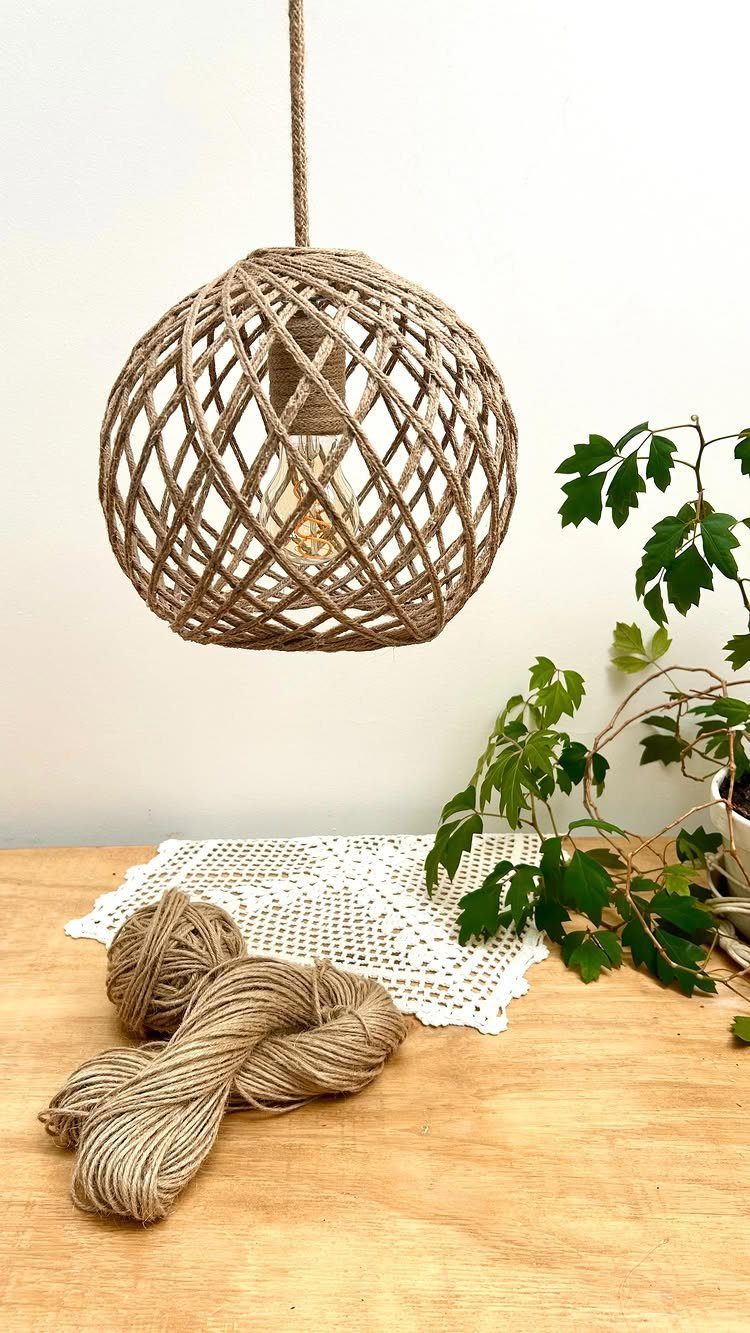
Wrapping jute twine around a frame builds a textured sphere that diffuses the bulb and adds warmth to the room. Light filters through the gaps in the weave, so the room stays bright.
The twine holds up in dry spaces, and the handmade quality suits cottage or boho rooms. The sphere hangs from a simple cord, and the weave stays loose enough to keep the shade lightweight.
33. Woven Twine Shade Cluster
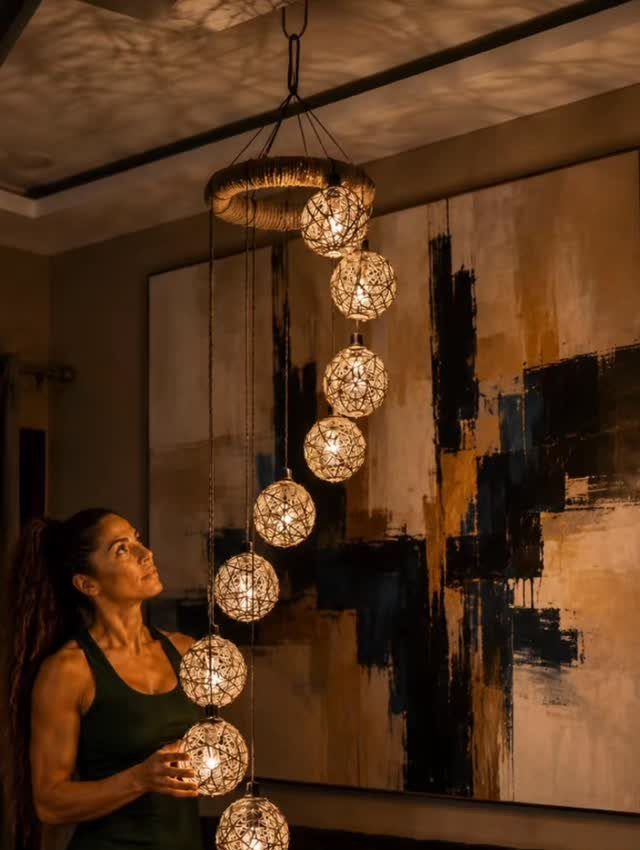
Multiple spheres at different heights spread the light wider than one hanging shade can. Varying the drop length stops the cluster from looking like it came from a catalog.
The ring needs to hang securely from a ceiling mount rated for the combined weight, and the drop lengths should vary enough to show the layering. This setup works when you need the light itself to anchor the room.
34. Tassel Jute Pendant
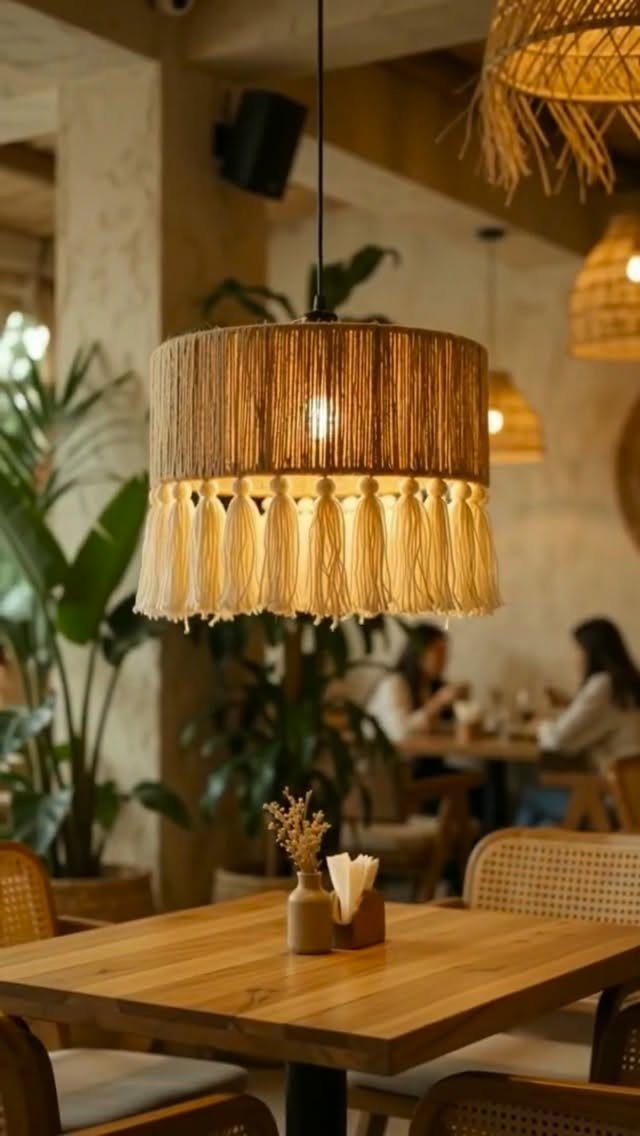
The woven jute adds texture overhead, and the white fringe softens the bottom edge without adding bulk. The cylinder directs light downward and works over a narrow table or counter.
The fringe stays cleaner in spaces without heavy cooking or dust, and the neutral palette suits most rooms. A breakfast table or bistro corner can handle something this relaxed.
35. White Woven String Pendants
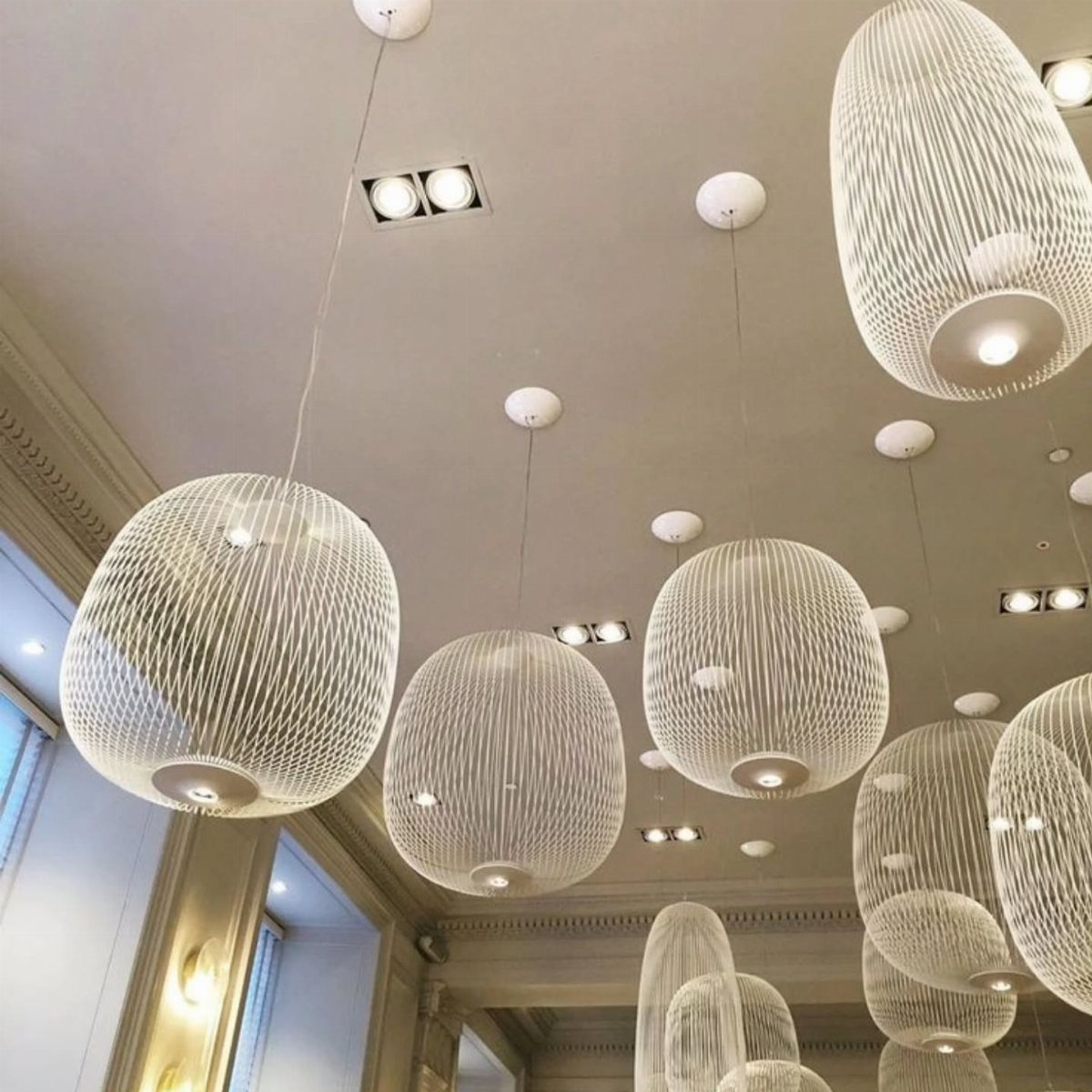
Mixing oval and round shapes in the same woven-string material keeps the cluster cohesive while adding variety overhead. White keeps the look clean, and mixing the shapes prevents the matched-set problem.
The woven surface diffuses the bulb evenly, and the lightweight material hangs from simple cords. Bedrooms and living rooms need fixtures that read light, and string does that.
36. Honeycomb Pendant Shade
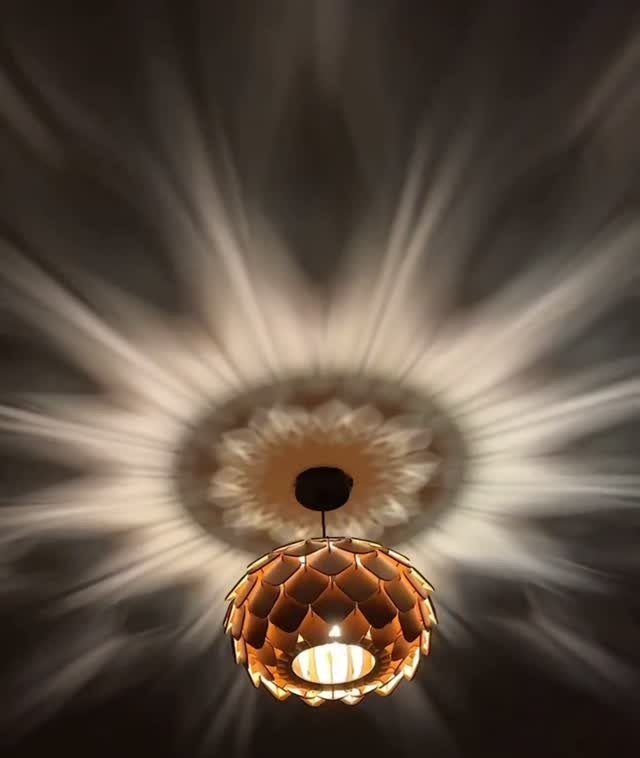
The honeycomb cutouts cast a radiating pattern upward and turn the ceiling into part of the lighting design. The light-brown material warms the room, and the geometric pattern stays sharp enough to work in modern or minimal spaces.
The pattern reads best on a smooth ceiling with enough clearance to show the full starburst. This sits close to the ceiling and brings pattern into a hallway without taking up visual weight.
37. Carved Openwork Pendant
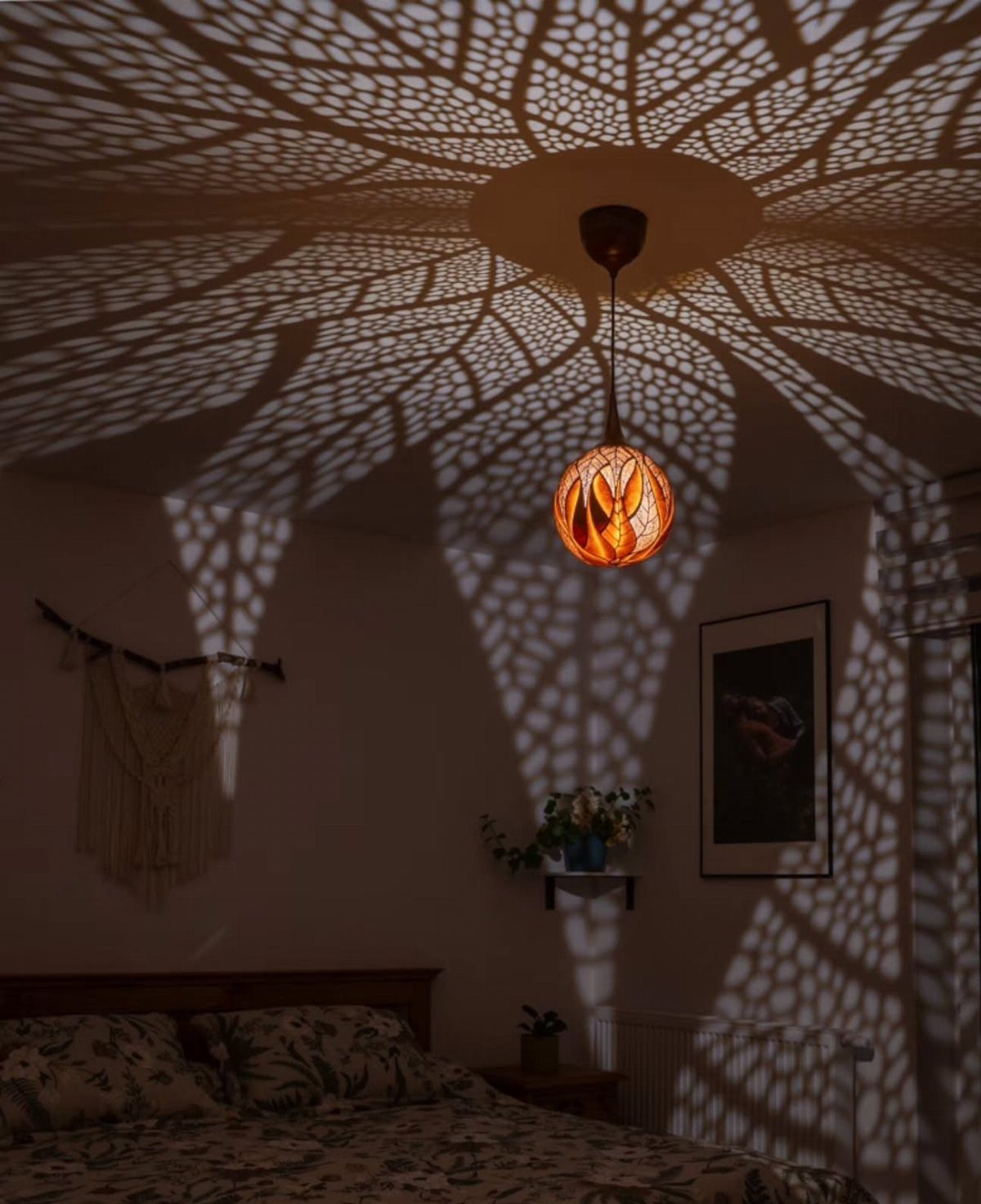
The carved cutouts cast leaf shadows across the ceiling and walls, turning the light fixture into ambient pattern. The sphere diffuses the bulb while the openings project detail, and the warm glow works in a bedroom or reading corner.
The shadows shift as the fixture moves, so the effect stays subtle in a space with air movement. The carved material holds up in dry rooms, and the sphere hangs from a single cord without heavy hardware.
38. Pearl Bead Pendant
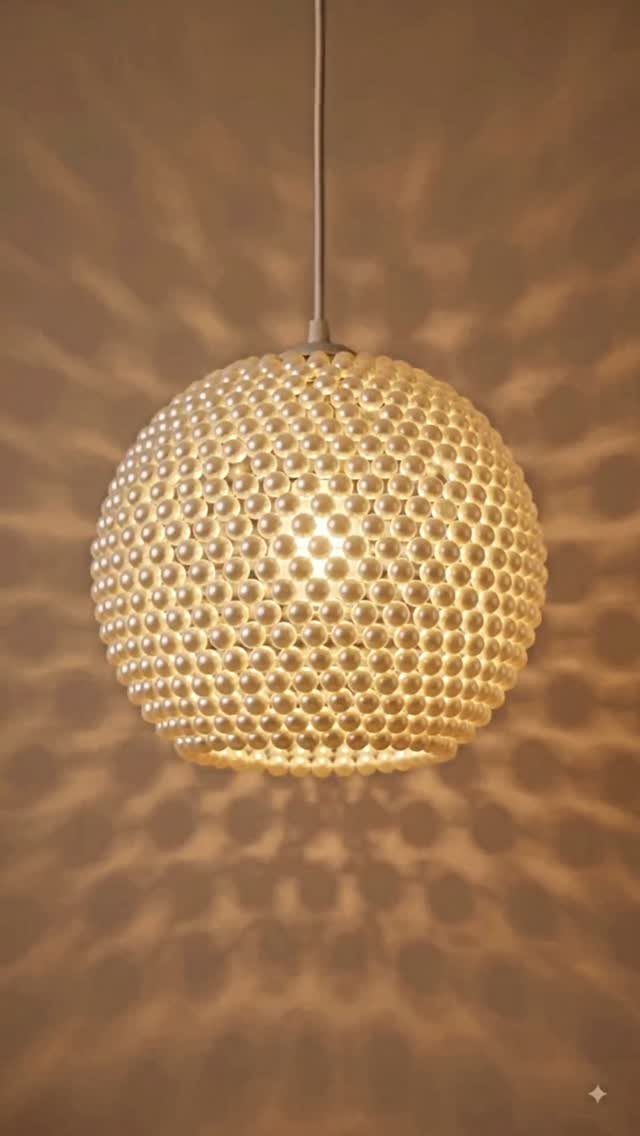
Stringing small pearl beads onto a wire frame builds a glowing sphere that casts dotted shadows on nearby surfaces.
The white beads diffuse the bulb while the gaps between them let light through, and the patterned shadow adds texture to plain walls.
The beads stay lightweight, so the fixture hangs from a simple cord. I’d hang it over a nightstand or in a narrow entry where you want the fixture to register but not dominate the wall behind it.
39. Colorful Woven Pendant
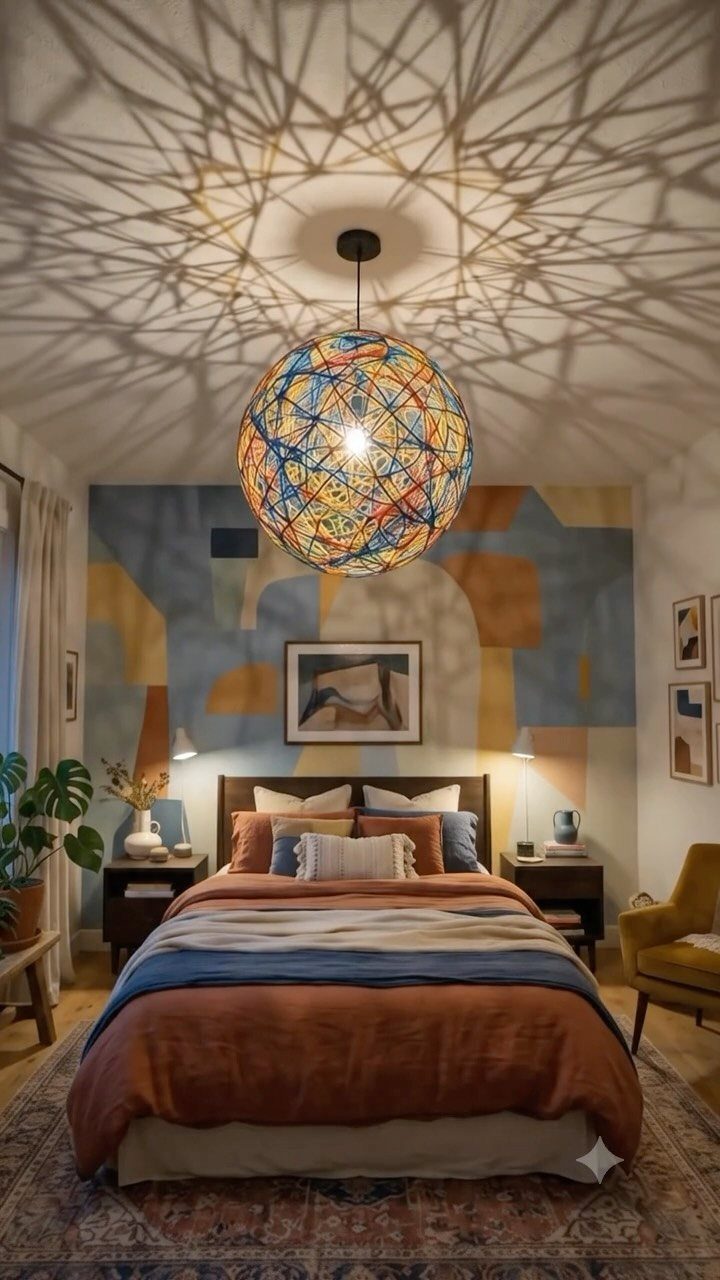
Weaving colorful cord around a spherical frame adds bold color overhead and casts geometric shadows on the ceiling.
The woven surface diffuses the bulb, and the starburst pattern shows up best on a smooth ceiling with enough clearance above the fixture.
The bright colors suit a bedroom or playroom where the fixture anchors the room, and the handmade quality fits eclectic or modern spaces.
The cord supports the weight easily, and the weave holds up as long as you keep it out of humid rooms.