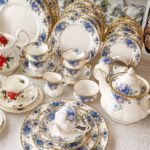
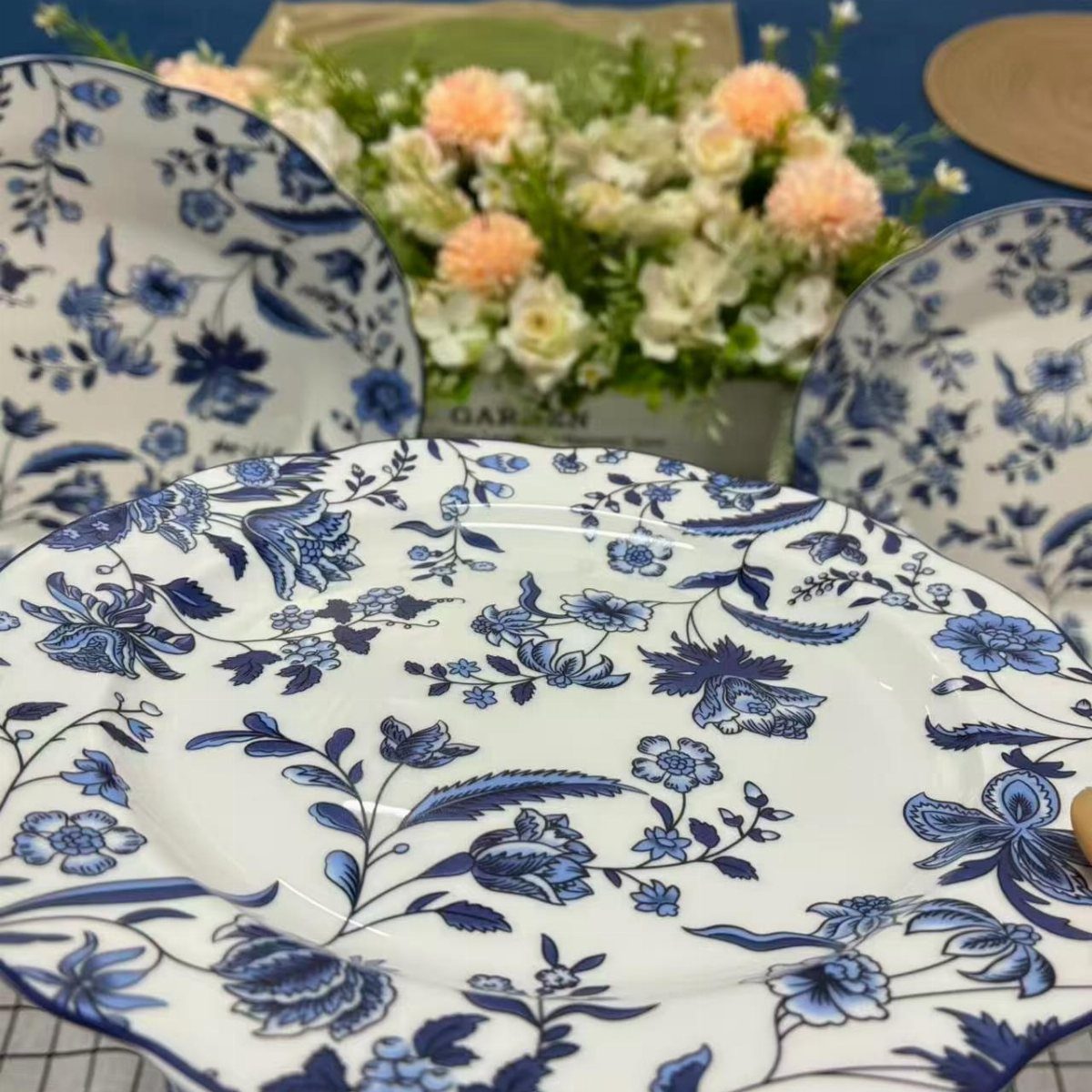
Floral china runs from mixed vintage plates that don’t match to full sets in blue, pink or black, and what you plan to do with it picks the route.
Plates that will see ordinary weeknight dinners belong in bone china, which is lightweight and resists chipping.
Plates meant for a wall or for display can be vintage or gold-rimmed, since gold scuffs in the dishwasher and display pieces never go near one.
1. Blue Floral Dinnerware
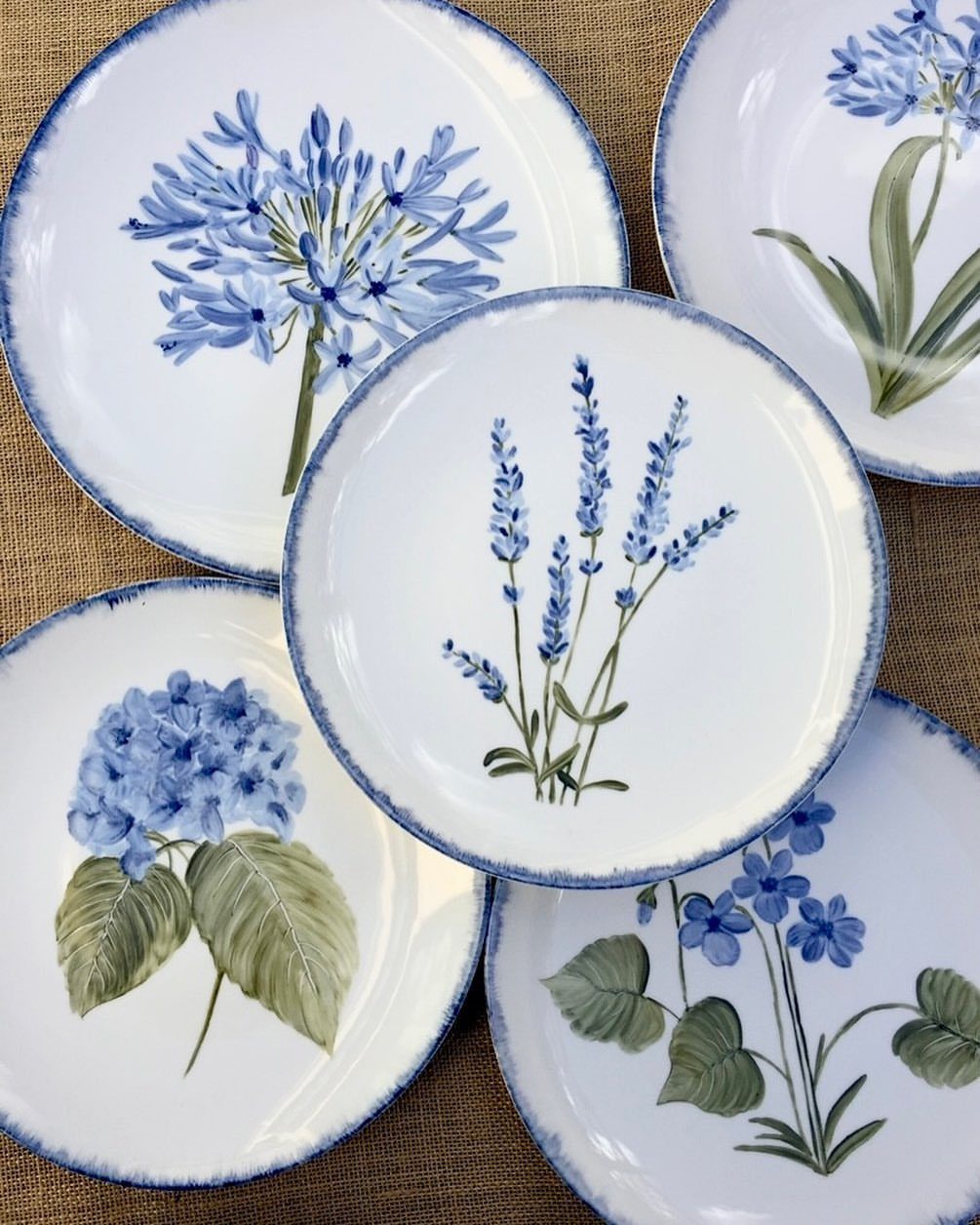
Blue flowers on white china are the easiest pattern to live with, so start a new set there. The blue rim does the unifying work, so plates with different flowers still read as one family.
I like buying new here because every piece arrives in the same shade of blue. Vintage blues drift from plate to plate, and that is harder to live with at a single table.
2. Garden Floral Dinnerware
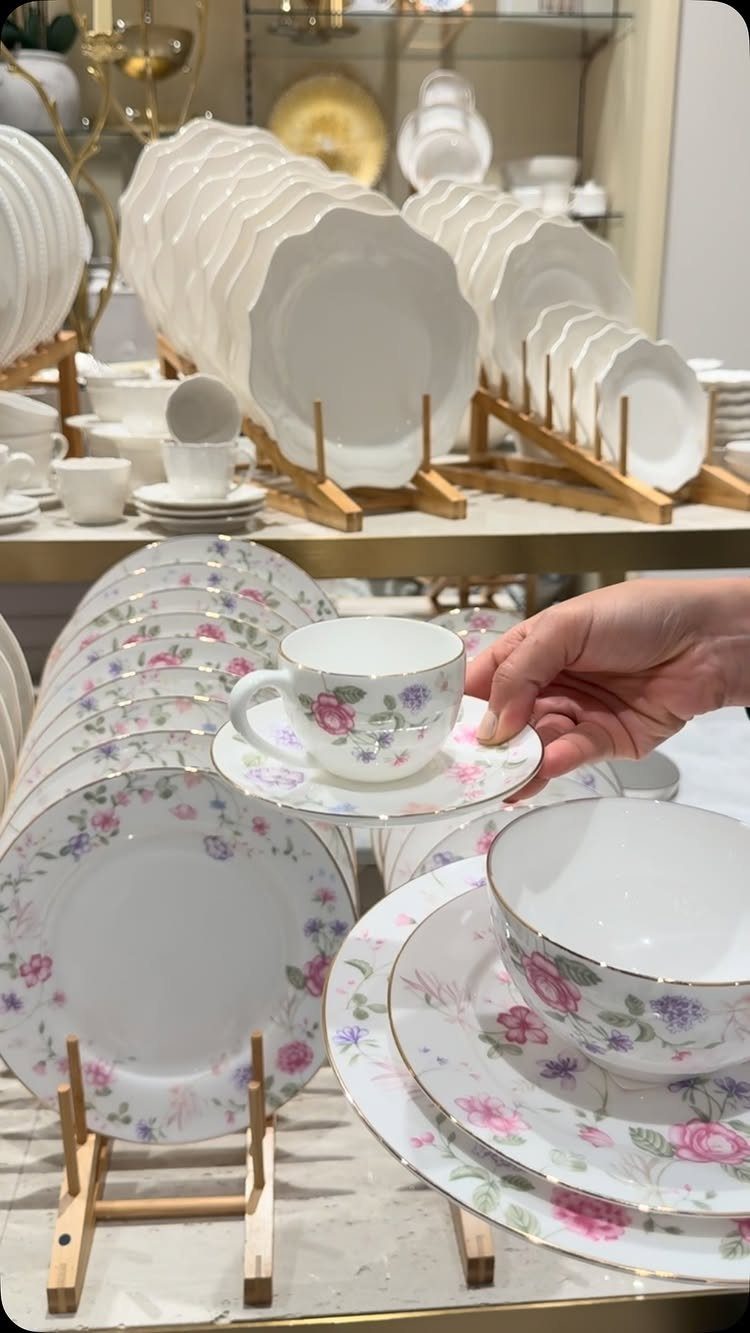
Garden florals vary widely in color and drawing style, so decide before you shop whether you want one tone or a mix.
Floral sets that come as plates, bowls and a teacup let you buy a few of each instead of committing to a full service.
Plain white dishes beside them calm the pattern down. I would keep a stack of white for everyday meals and let the florals take the center spot.
3. Floral Plates on a Wall
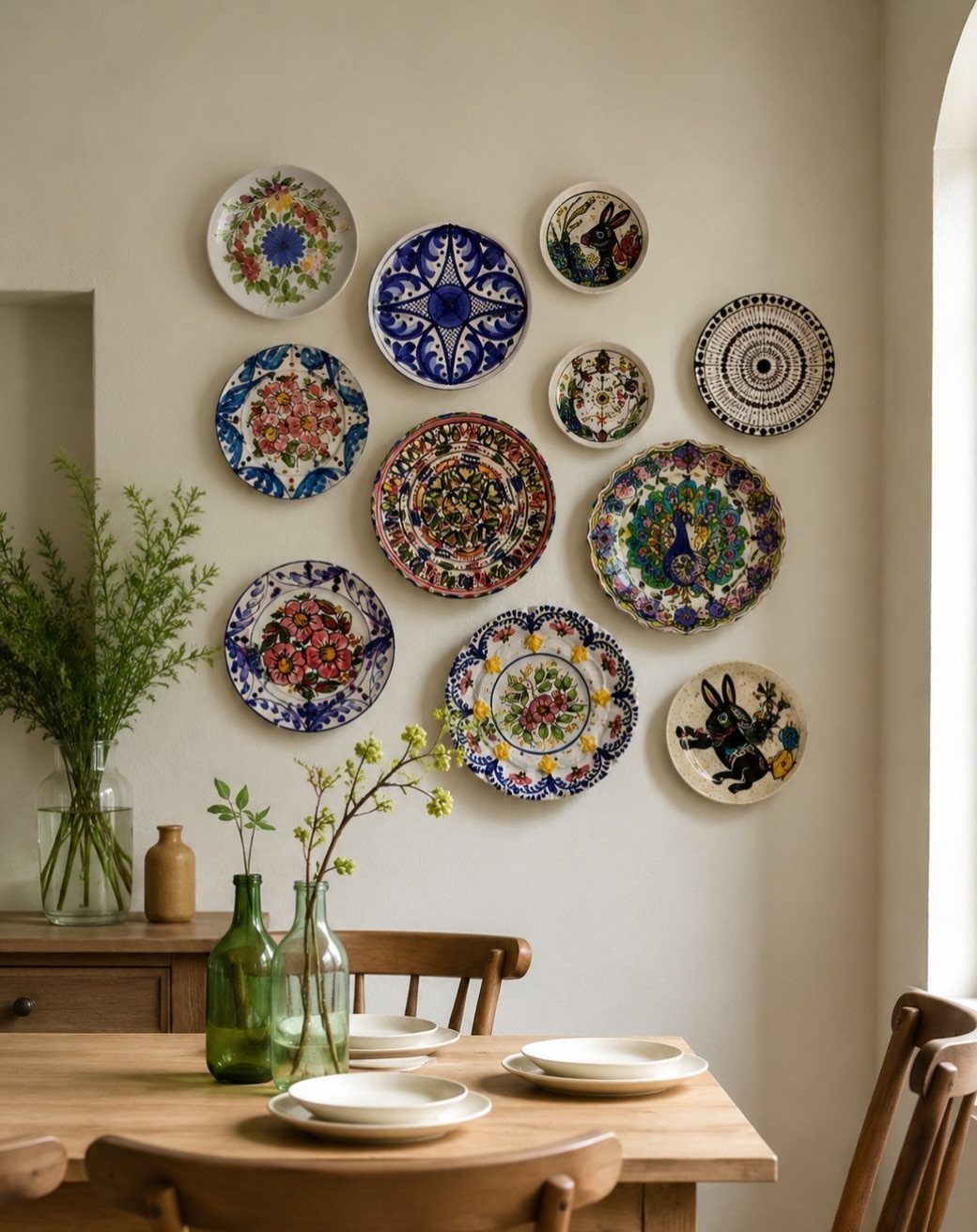
A neutral wall is what lets mismatched floral plates show their colors, and a wooden table below, with a couple of vases of greenery, gives the group somewhere to land.
Lay the plates out on the floor first and rearrange until the colors are spread evenly, then hang them. It costs nothing and saves you from patching extra holes.
4. Mixed Vintage Floral Plates
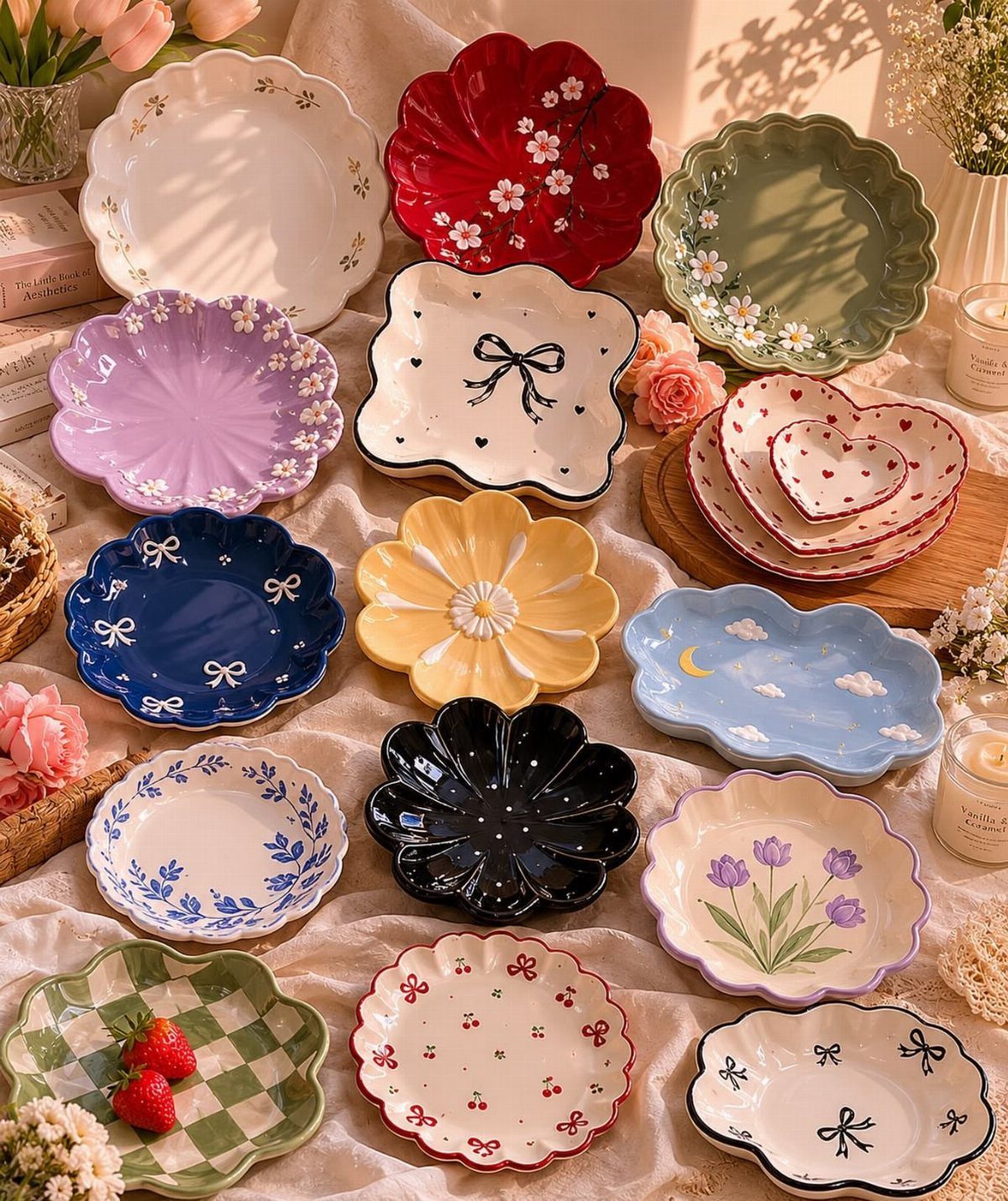
Plates that don’t match can still make a pretty table, as long as they share a color or a flower.
Single florals in different shapes, some with bow details, look intentional when you hold one thing steady, such as a color family or a similar amount of pattern.
Buy them one at a time and keep what you love. This route suits a tight budget well, since a mismatched stack grows slowly and never has to be complete.
5. Vintage Floral Teacups and Saucers
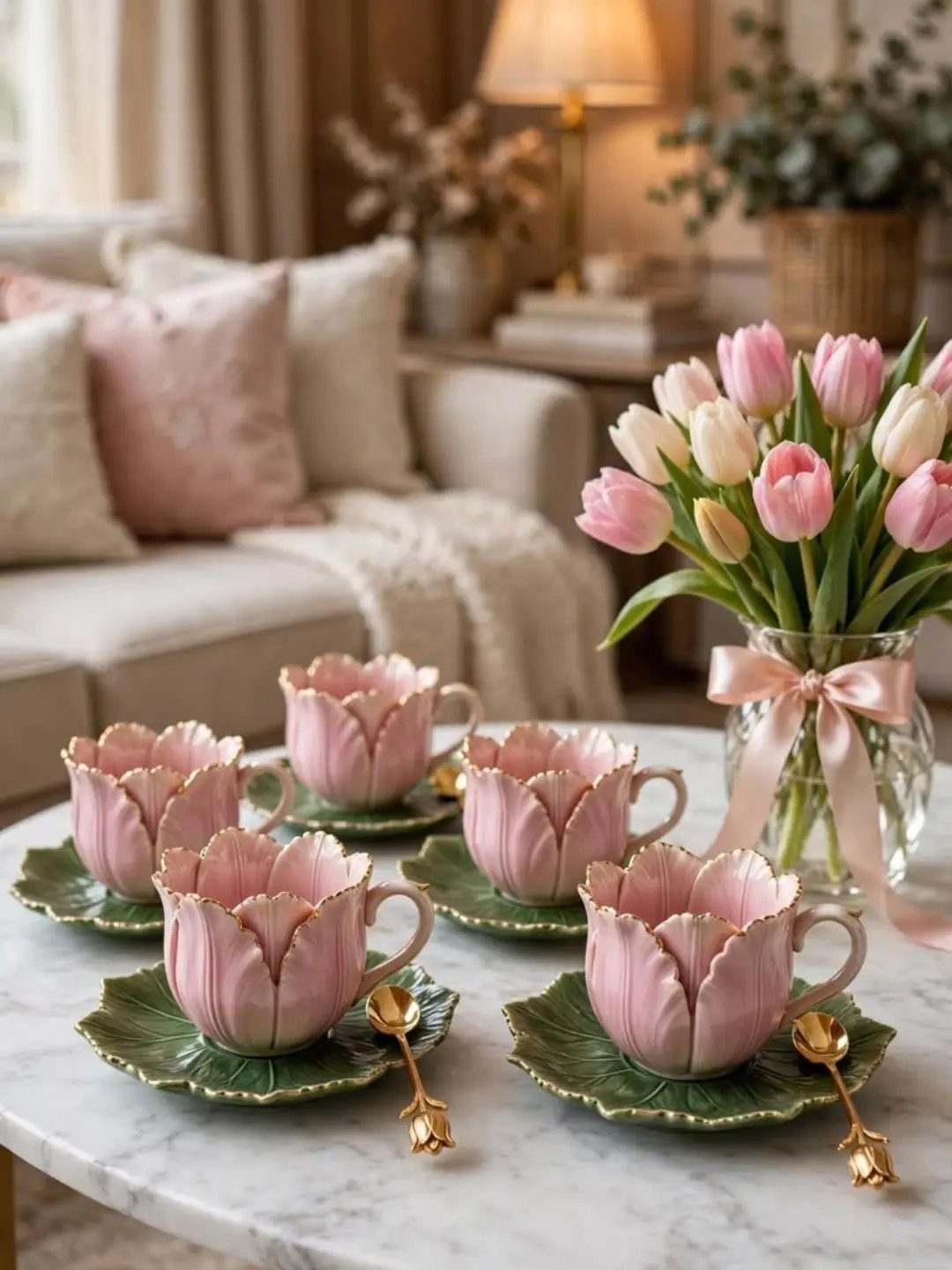
Teacups and saucers are the easiest vintage china to collect with a firm rule. Choose one flower shape or color, such as pink tulip cups on green leaf saucers, and pass on anything that breaks the rule.
Small pieces take up little shelf space, which helps in a rental. Gold spoons and a bouquet of the same flower finish the look.
6. Floral Bone China Dinnerware
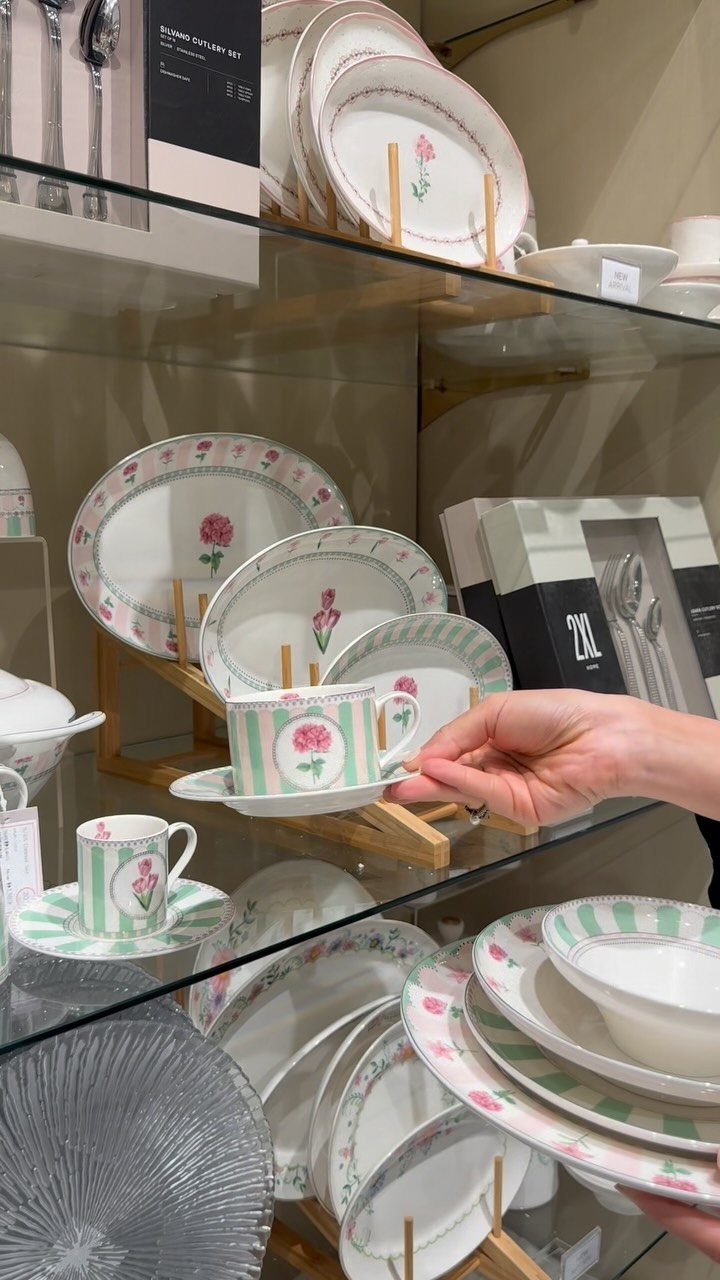
Bone china is lightweight and resists chipping, which makes it a floral set you can actually use on ordinary weeknights instead of saving it for company.
Pick up a teacup in the store and feel how light it is before you commit. Sets with matching plates and cutlery let you build one piece at a time as your budget allows.
7. Floral Porcelain Plates
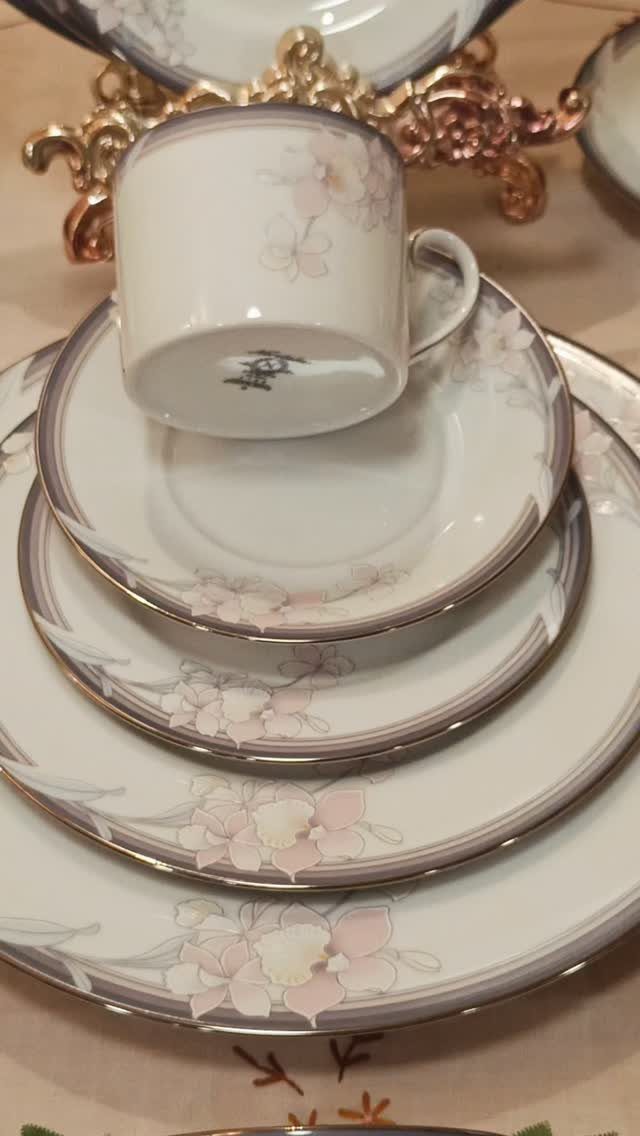
White porcelain with a pink floral pattern and a gold rim is a quiet choice for a small kitchen, since the white ground keeps the pattern from crowding the cupboard.
Buy one plate and one cup first and see how they sit next to your everyday dishes. If the pink holds up beside your other pieces, add more.
8. Floral Salad Plates
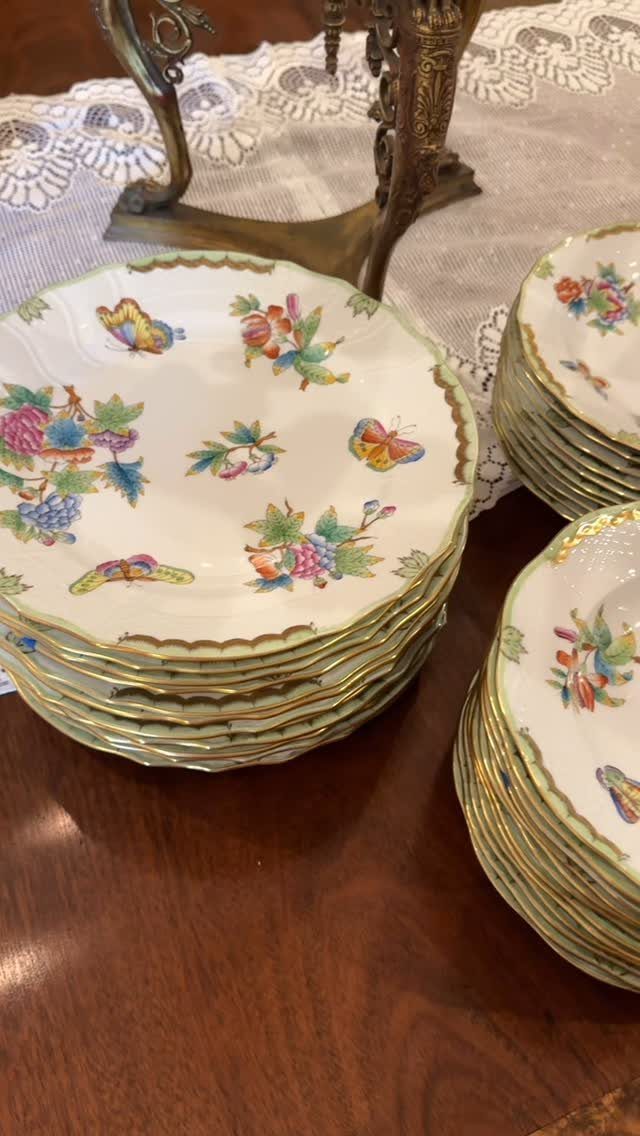
Salad plates are where I would start a floral collection, because a stack of them costs far less than a full dinner service and still puts the pattern in front of guests.
Colorful flowers with a butterfly, framed by a gold rim, give each plate enough detail to hold its own.
Check the listing for the word "salad" or a stated size, since sellers label side plates loosely. Gold rims are easy to scuff, so keep them out of the dishwasher if you can.
9. Floral Dessert Plates
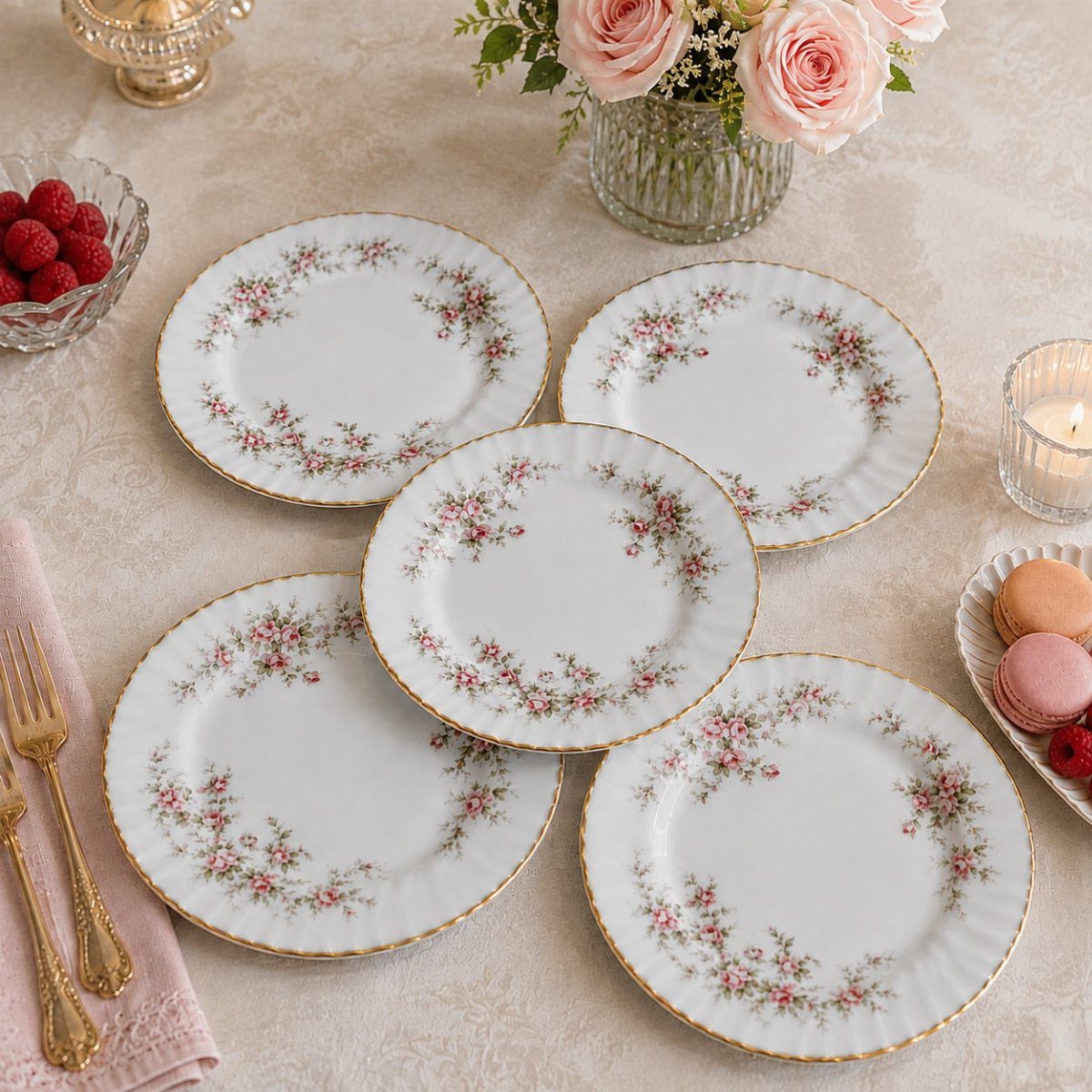
Dessert plates are small, so a pink floral pattern reads clearly while the food on top stays the focus. Set the plates out together with berries or macarons and the pattern does the decorating for you.
Since the plates are small, they also store in a tight cabinet far more easily than dinner plates do.
10. Floral Serving Plates
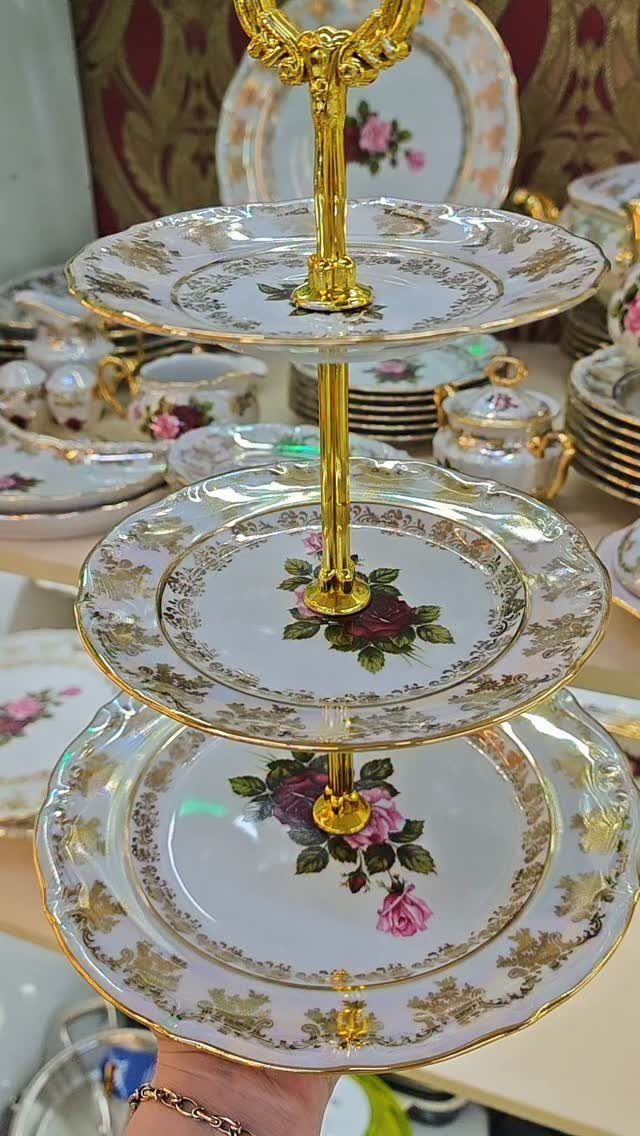
A tiered stand lets floral serving plates carry the whole spread, with pink roses on white china and gold accents stacking up the height.
Pastries, sandwiches and sweets each get their own level, and you only need to own 3 matching plates.
Look for plates with a center hole or a stand sold as a set, because loose plates will not fit most hardware. Lift the stand by its center post, not by the plates.
11. Sets of Floral Plates
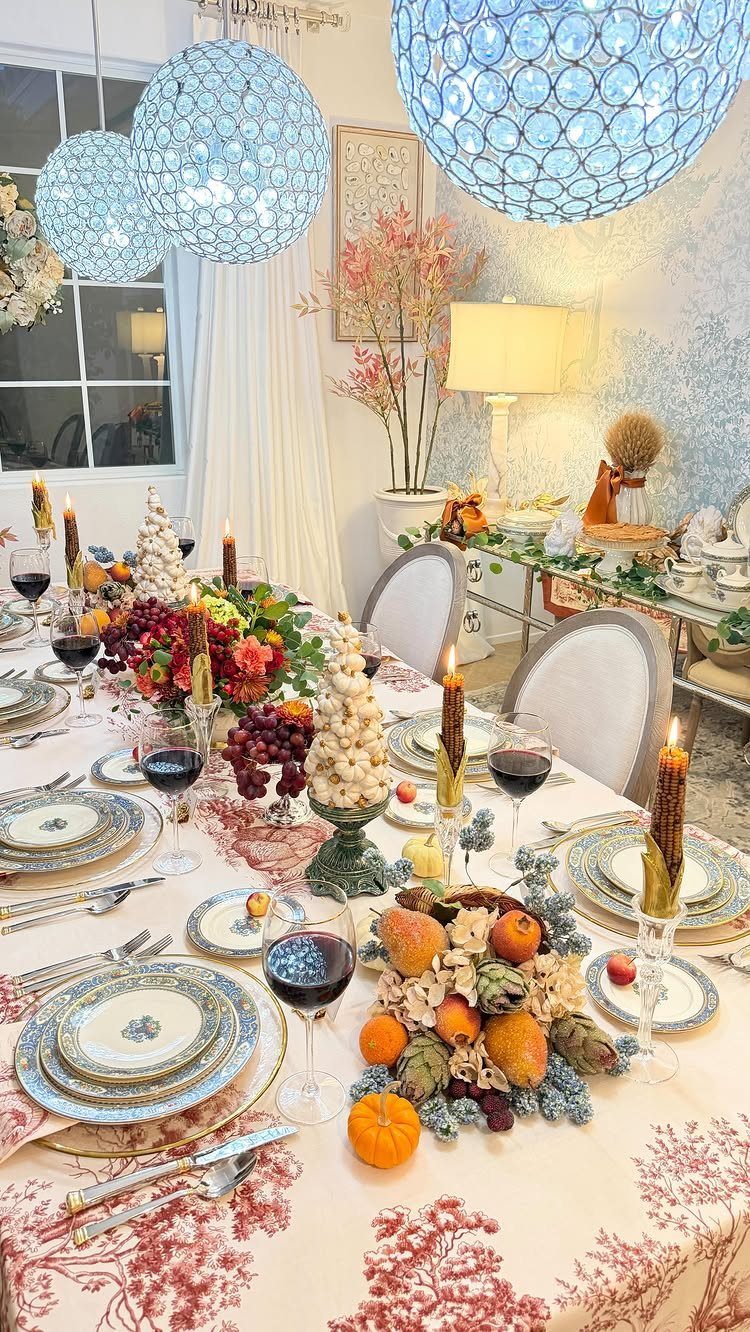
A full set of blue floral plates sets the tone for the whole dining room, especially against blue wallpaper.
Matching plates mean the table looks finished before you add anything else, so I would keep the rest simple: glasses, candles and a bowl of fruit.
Buying a set also saves you from hunting for pieces one by one. Count how many people you host in a typical month and buy for that number, not the largest crowd you can imagine.
12. Black Floral Dinnerware
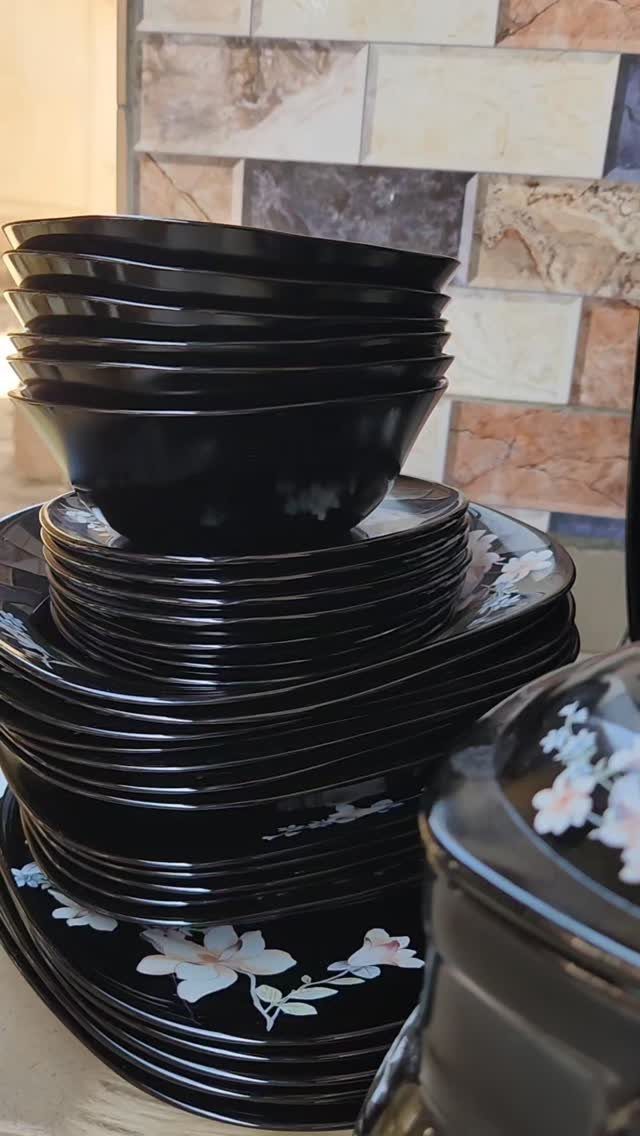
Black ceramic turns a floral pattern from sweet to dramatic: white and pink flowers read sharply against the dark ground. It is the version I would pick for someone who finds traditional china too fussy.
Mix plates and bowls in the same pattern and the stack looks deliberate on open shelves. Food shows up well on a dark surface, though light crumbs and water spots show too, so wipe the plates dry after washing.
13. Gold-rimmed Floral Plates
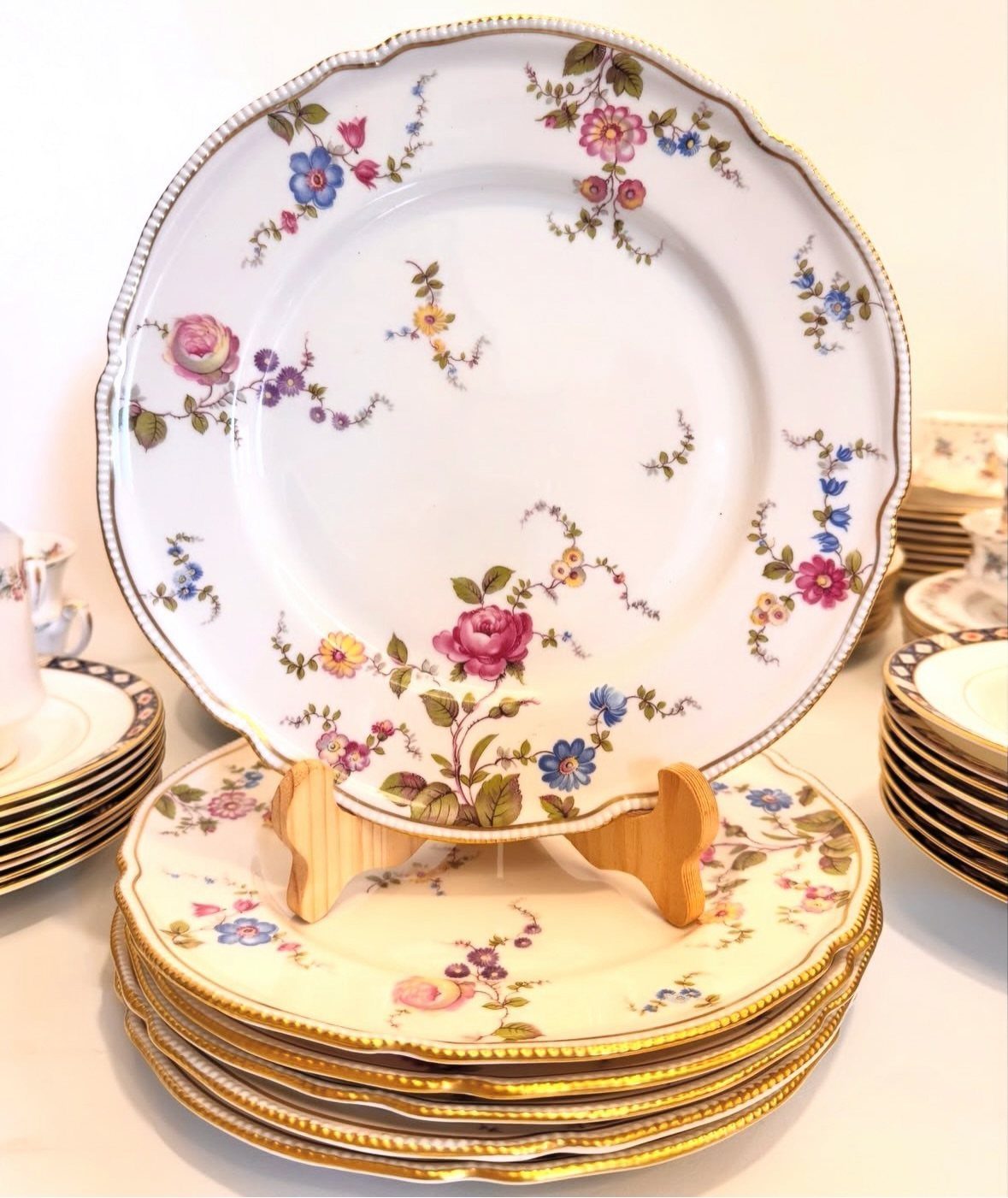
Gold rims give a plain white plate a finished edge, and several patterns look good together if the rims match. A stack in a few different flower prints works as one set because the gold ties them.
Prop a single plate upright on a small wooden stand above the stack, and the pattern gets seen without anyone lifting a plate. I would rotate which one stands up.
14. Scalloped Floral Plates
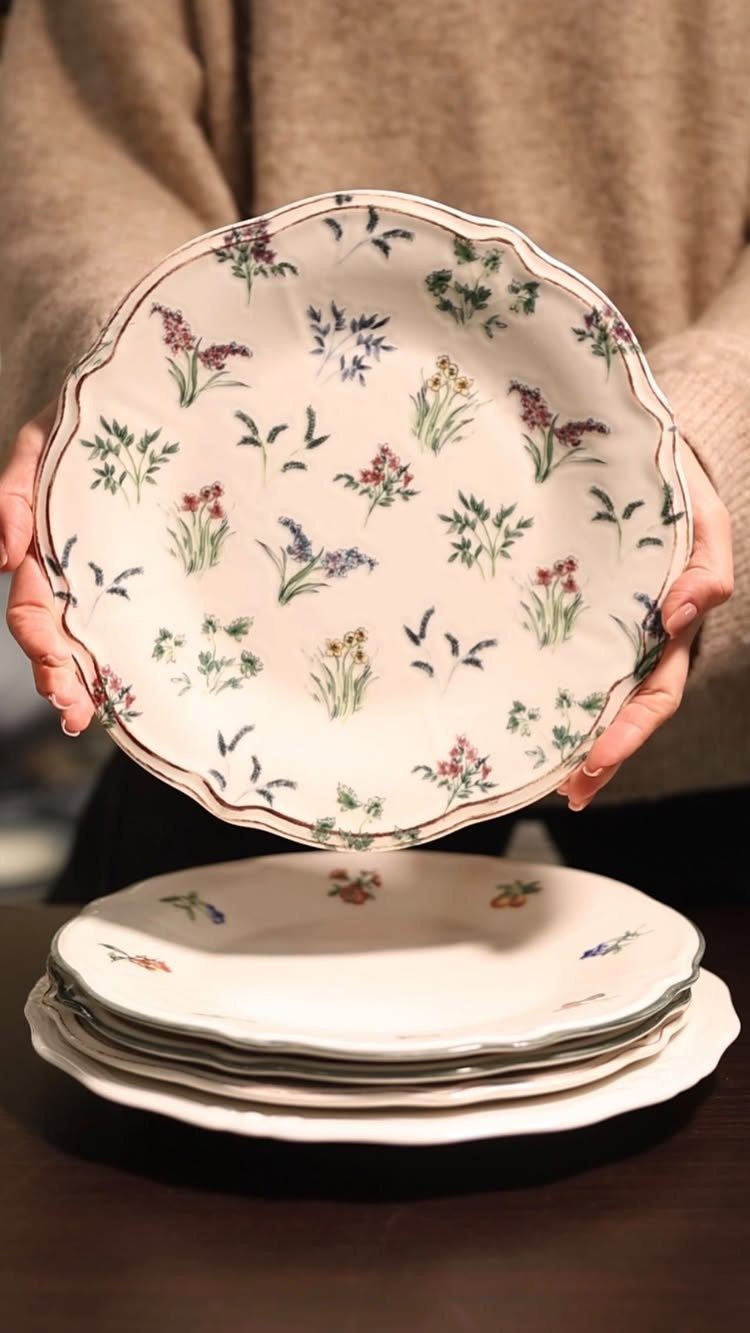
Scalloped edges give a plate a soft outline before you even look at the flowers. White plates with small, multicolored blooms suit that edge well, since the pattern stays light and the shape does the talking.
Stack them against a dark table or tray and the white scallops stand out. Because the flowers are small and varied, these pair easily with plain white or solid-color dishes.
15. Floral China Collection
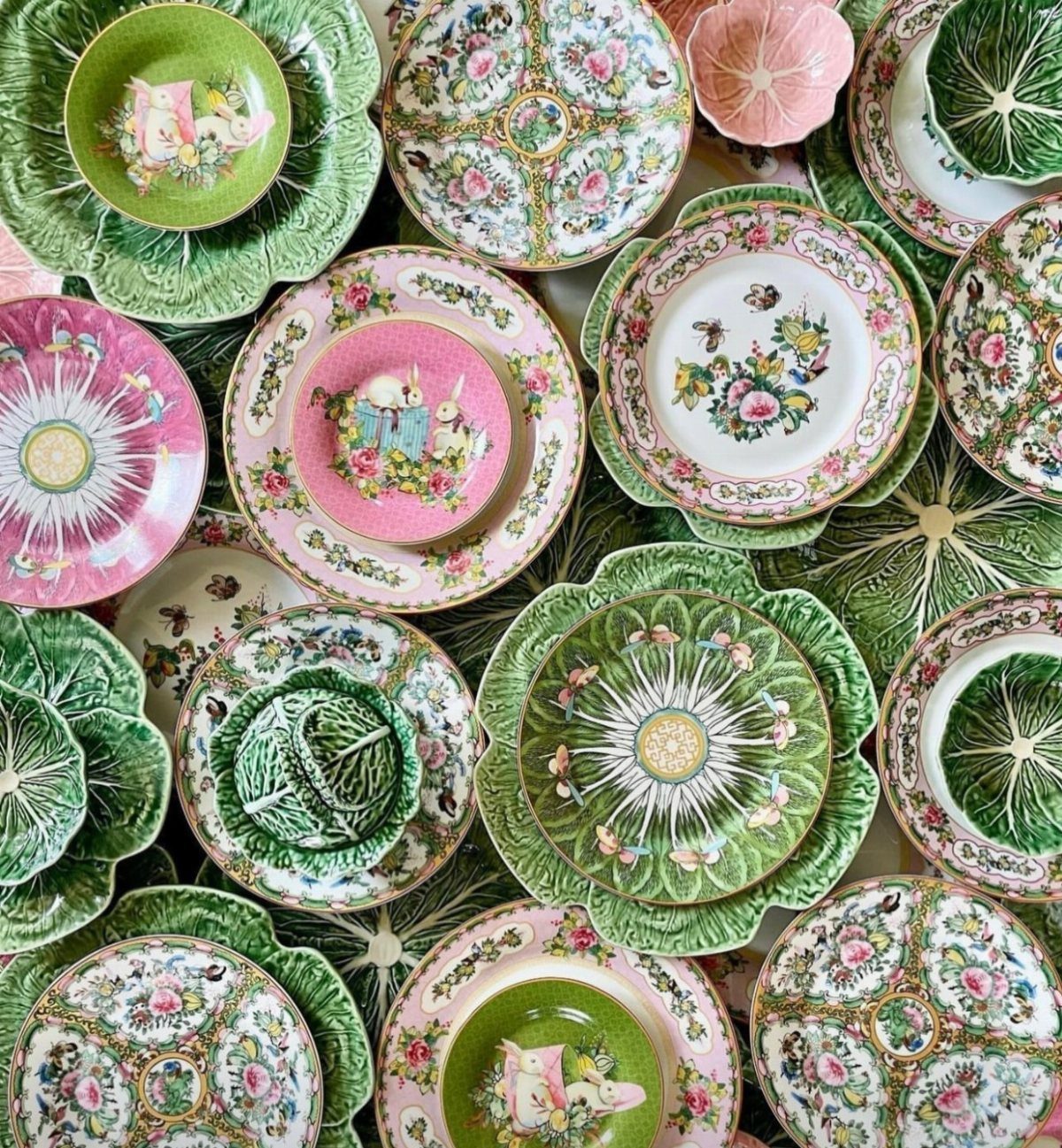
A pile of floral plates in mixed sizes, greens, pinks and whites, is a collection you can start without a plan. Let the colors overlap, and keep any plate that sits comfortably beside the others.
I would sort by size when storing them, small plates on top, so the pile stays steady and you can see what you own before buying more. Pattern repeats are the thing to watch for as the stack grows.
16. Floral China Tableware
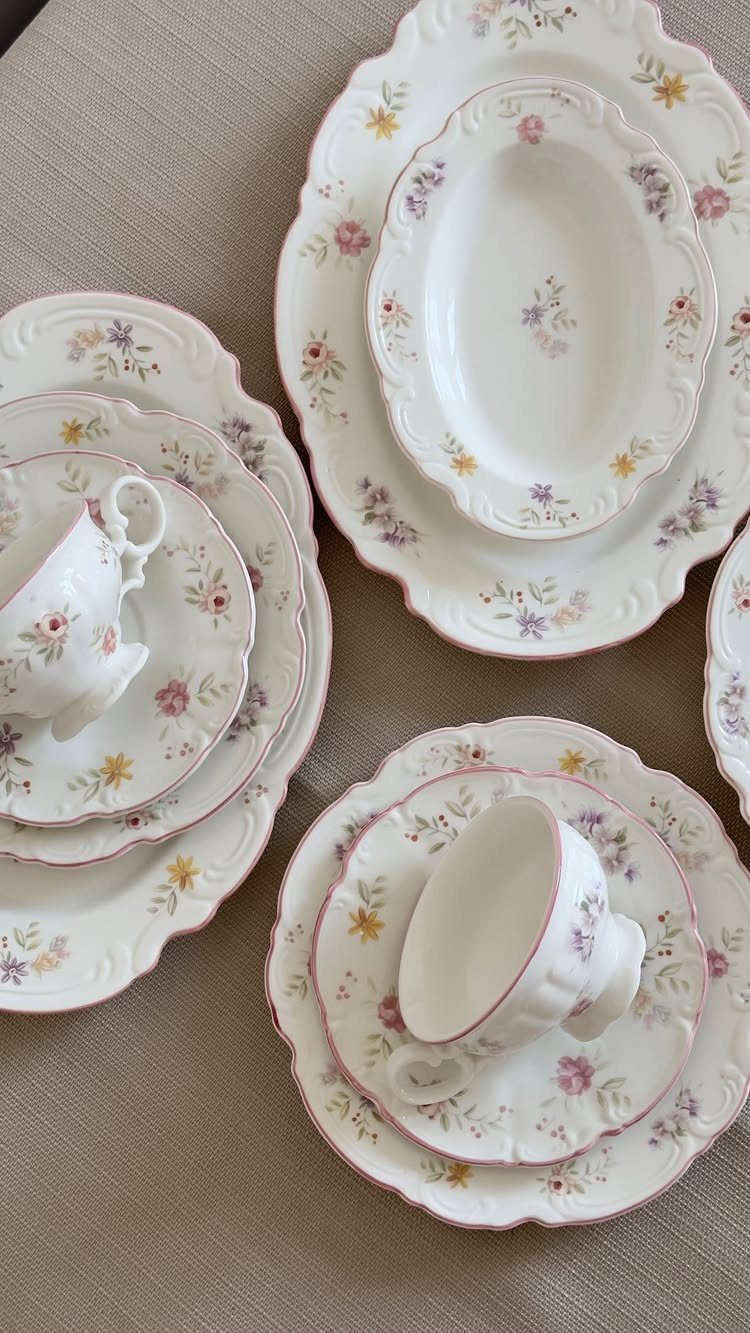
Plates, bowls and teacups in one white-and-floral family make a table look complete without a single extra decoration.
A beige, textured tablecloth in linen or a loose weave keeps the focus on delicate florals, because it adds warmth without competing with the pattern.
Start with the pieces you will use most, usually plates and cups, and add bowls later. White grounds with fine flowers are forgiving, so a piece from a different set can slip in without much notice.
17. Pink Floral China Dinnerware
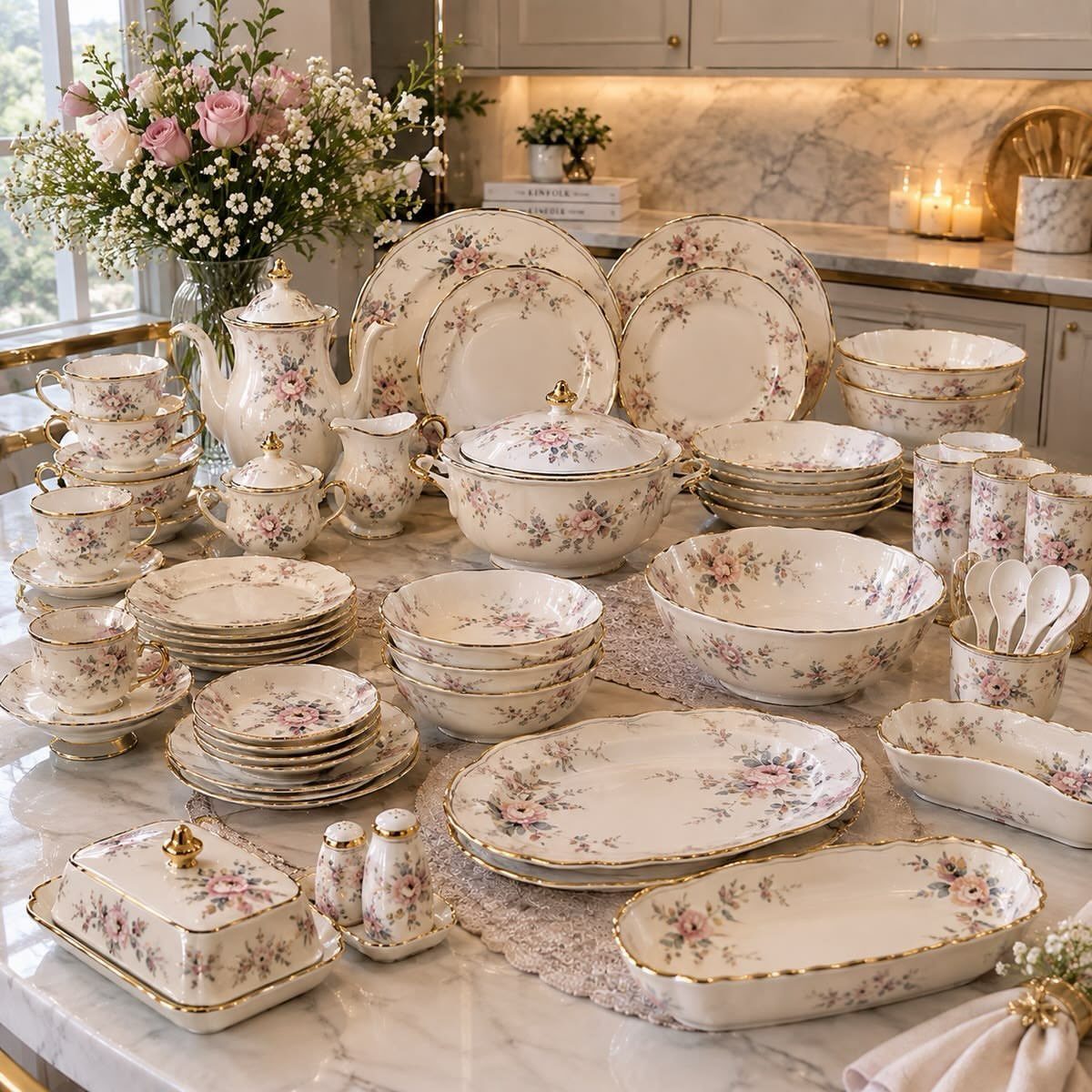
Pink flowers with gold rims on white china make a dinnerware set that looks formal on a marble counter and softer on a wood table. Plates, bowls and serving pieces in one pattern read as a single service.
Fresh flowers in a vase nearby pick up the pink without competing with it. If the full set is out of budget, buy dinner plates and bowls first, since those cover most meals.
18. Blue Floral China Plates
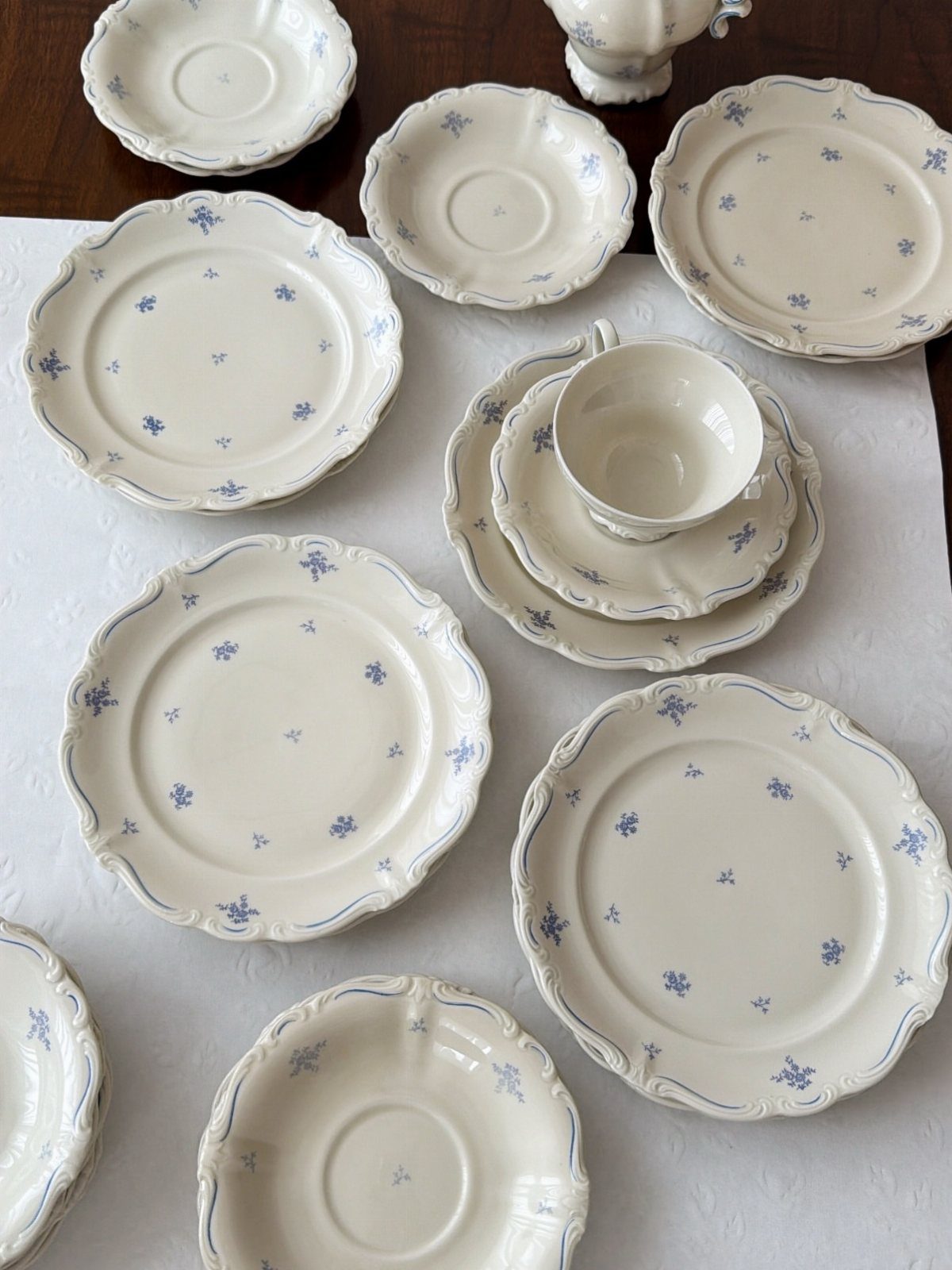
Cream china with blue flowers has a warmer feel than bright white, and the scalloped edges add a gentle frame. A plate and teacup together are enough to make a pretty pairing.
Blue florals read best on a white tablecloth, and layering it over a dark wood table gives the blue even more contrast.
I would hold the cream in mind when shopping: bright white plates beside it will make the cream look dingy.
19. Colorful Floral China Plates
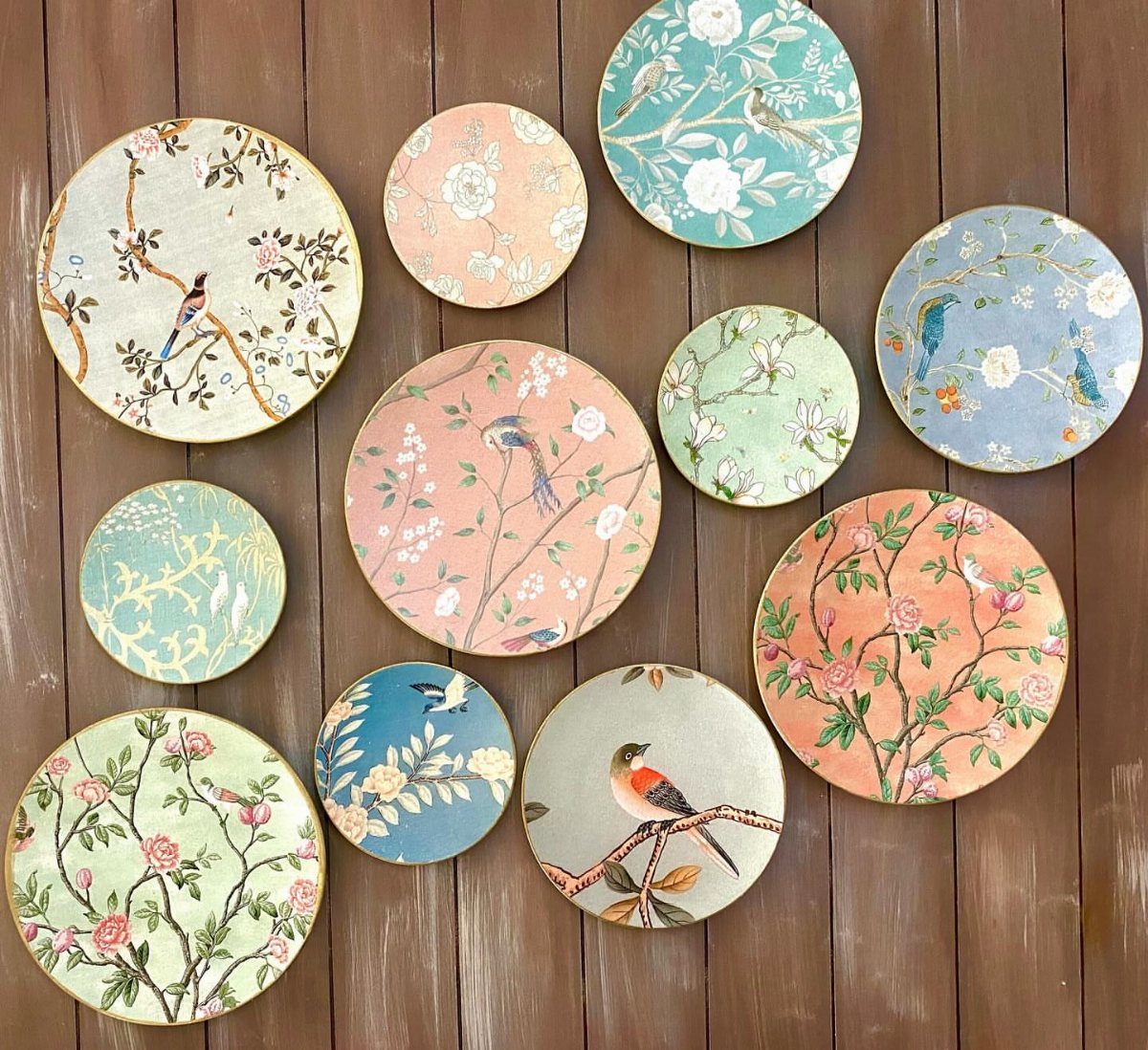
Plates with different florals, birds and borders hang happily together because the colors repeat from one to the next. A grid of nine on a plain wooden wall gives each pattern its own square, so the variety looks planned.
I would shop for the color first and the motif second. A bird plate and a flower plate that share a green or a red will sit well side by side.
20. Floral Plates in a Table Setting
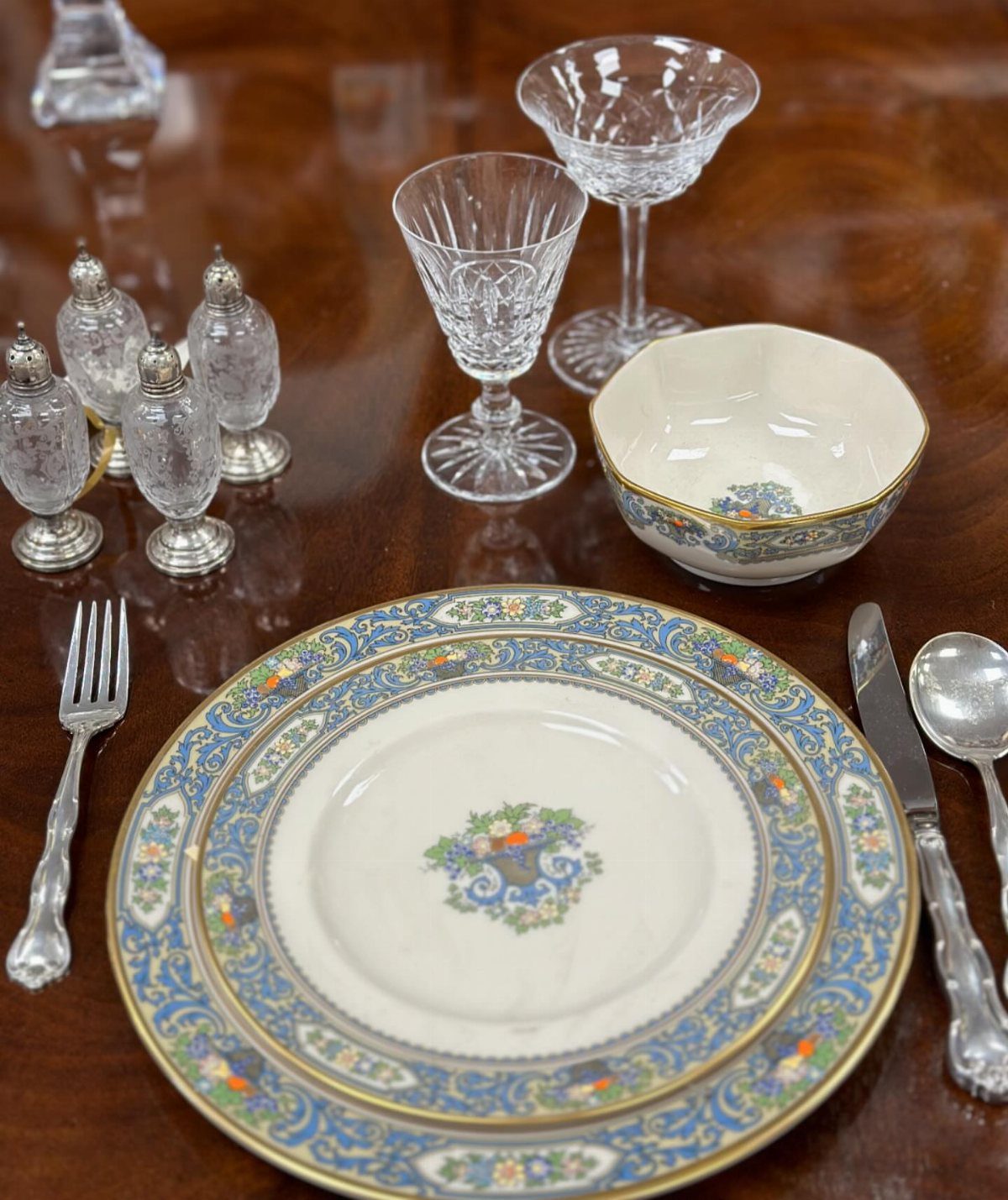
Blue and gold borders do the styling work on a floral plate, so a matching bowl on a wooden table needs little else beyond silverware and a pair of glasses.
Wood warms the blue, so the china looks relaxed instead of formal.
Set a single place first, then decide whether the pattern earns a full crowd’s worth. If the plate, bowl and glass look right together, repeat the setup at every other seat.
21. Floral China on Display
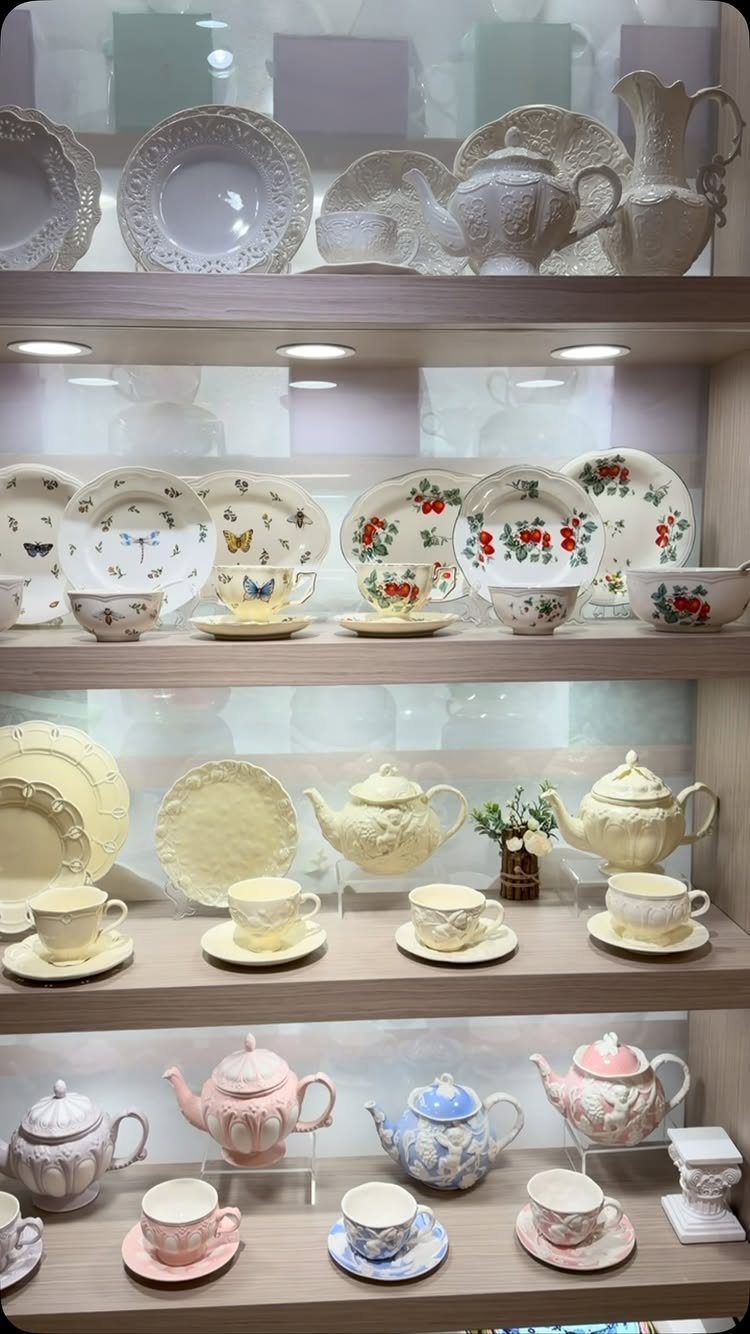
A lighted cabinet with 3 wooden shelves gives floral plates, embossed pieces, teapots and cups room to be seen at once. Teapots belong on the middle shelf, with plates standing behind and cups in front, so no piece hides another.
A rental with no cabinet can still manage this on a single bookshelf. Start with one shelf and let the collection fill it before adding a second.
Frequently Asked Questions
How do I know if a floral china piece is worth buying?
Walk away from it for a bit and see whether it keeps pulling you back; the "Love, Love, Love" rule says only a piece you keep loving earns a spot at home.
Buying a single plate and a single cup first is a cheap way to test it, because you can see how the pink or blue holds up beside your everyday dishes. If it still looks right there, add more.
How do I collect vintage floral teacups and saucers?
Pick one rule, such as a single flower shape or color (pink tulip cups on green leaf saucers, for example), and pass on anything that breaks it.
Bring home only the cups whose shape or style you truly love, since a few stacks you adore beat a crowded cabinet. Teacups and saucers are small, so a whole set fits on one shelf, which suits a rental.
How do I start a floral china collection?
Begin with salad plates. Buying a short stack of plates instead of a full dinner service keeps the cost down, and guests still see the pattern on the table.
Mixed colors are fine if a plate looks at home next to the rest, and stacking them by size with the smallest on top lets you see every pattern and catch duplicates before you buy another.