The room you can spare decides which of these tables works, since the ideas run from a small square marble cafe top to a large wooden table backed by built-in bookshelves, plus a wall-mounted alcove and a fold-out surface hidden in a cabinet.
In a shared living area, an extendable table or a folding table that tucks into a cabinet saves floor space, while a dining room has the room for an oversized table desk.
A dining table and a desk land in the same 28–30 inch height range, so the table you already own can handle laptop work without any changes.
1. Extendable Dining Table
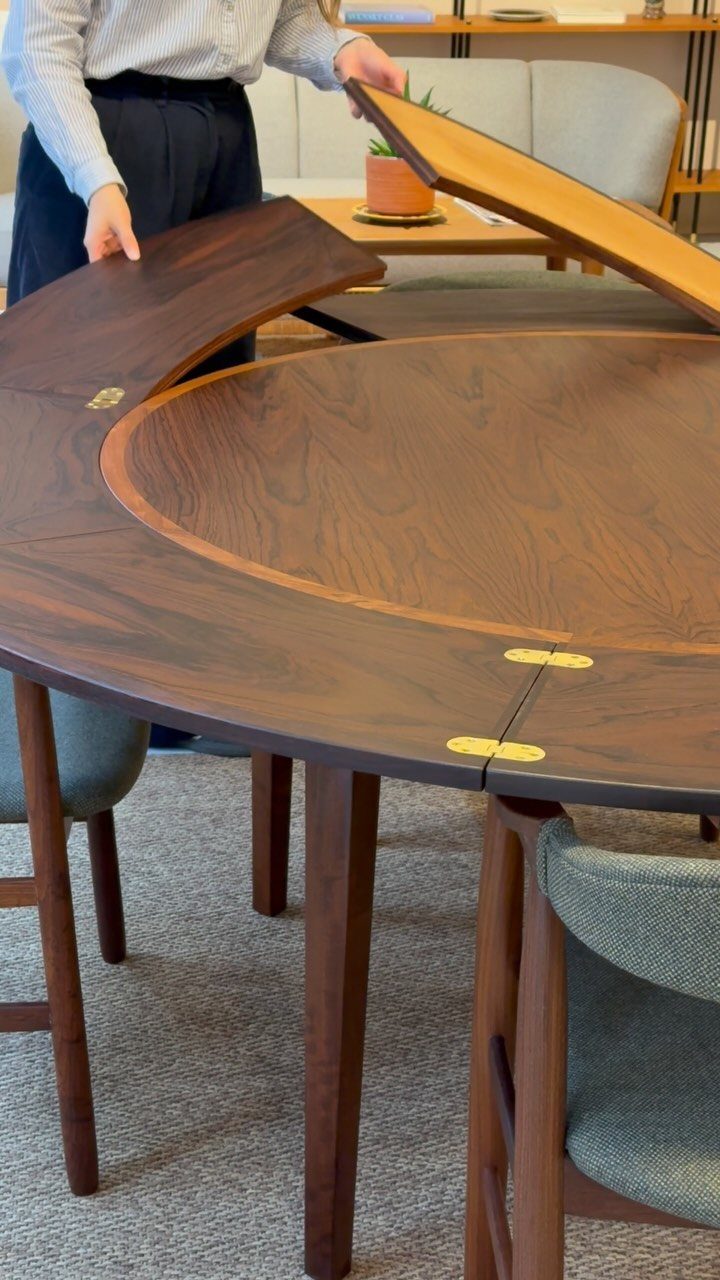
Leaves tucked away or leaning nearby are what make a round walnut table like this useful in a living room.
Closed, it stays compact for daily meals and a laptop. Opened up, it gives you room for papers, a second monitor or guests.
I would pick this over a permanently large table if the dining spot shares space with a sofa.
Decide where the leaves will live before you buy, so extending the table stays a quick job and not a chore you skip.
2. Circular Rustic Table
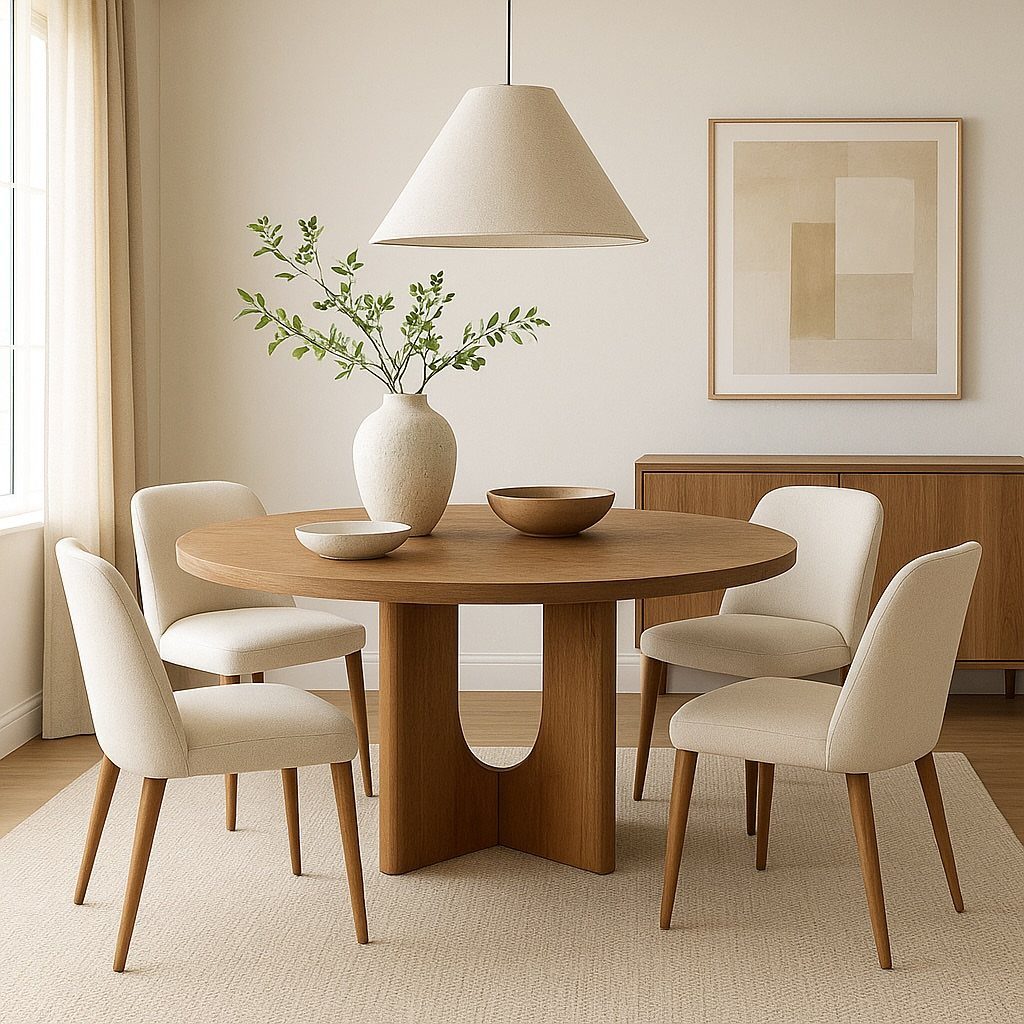
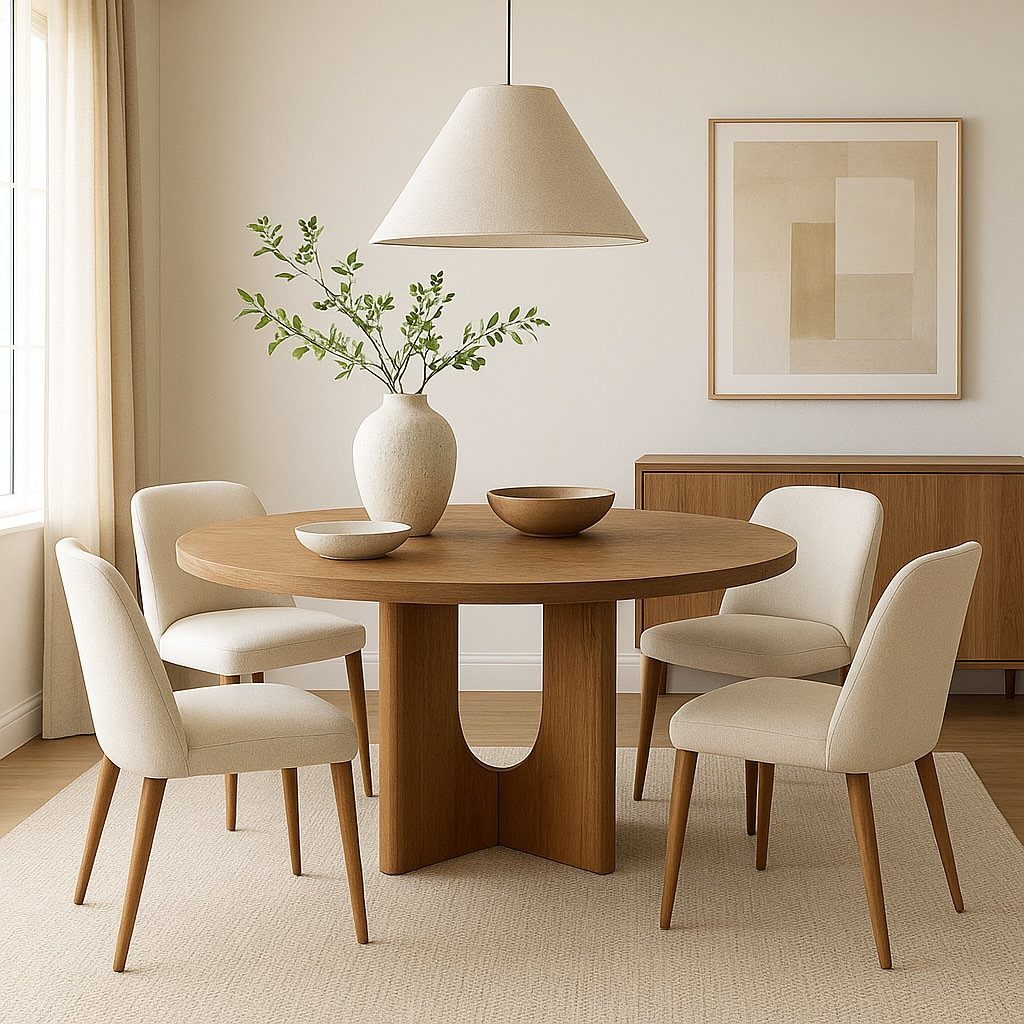
A round top on a crisscross base reads as furniture first and desk second, which is exactly why I like it. The wood has a rustic feel, and the sculptural base keeps it from looking heavy or old-fashioned.
Cream upholstered chairs soften the look, and a pendant light hung over the table marks it as a work zone without a single extra piece of furniture.
Pick one chair as your work seat and leave the other three for meals.
3. Square Oak-finished Table
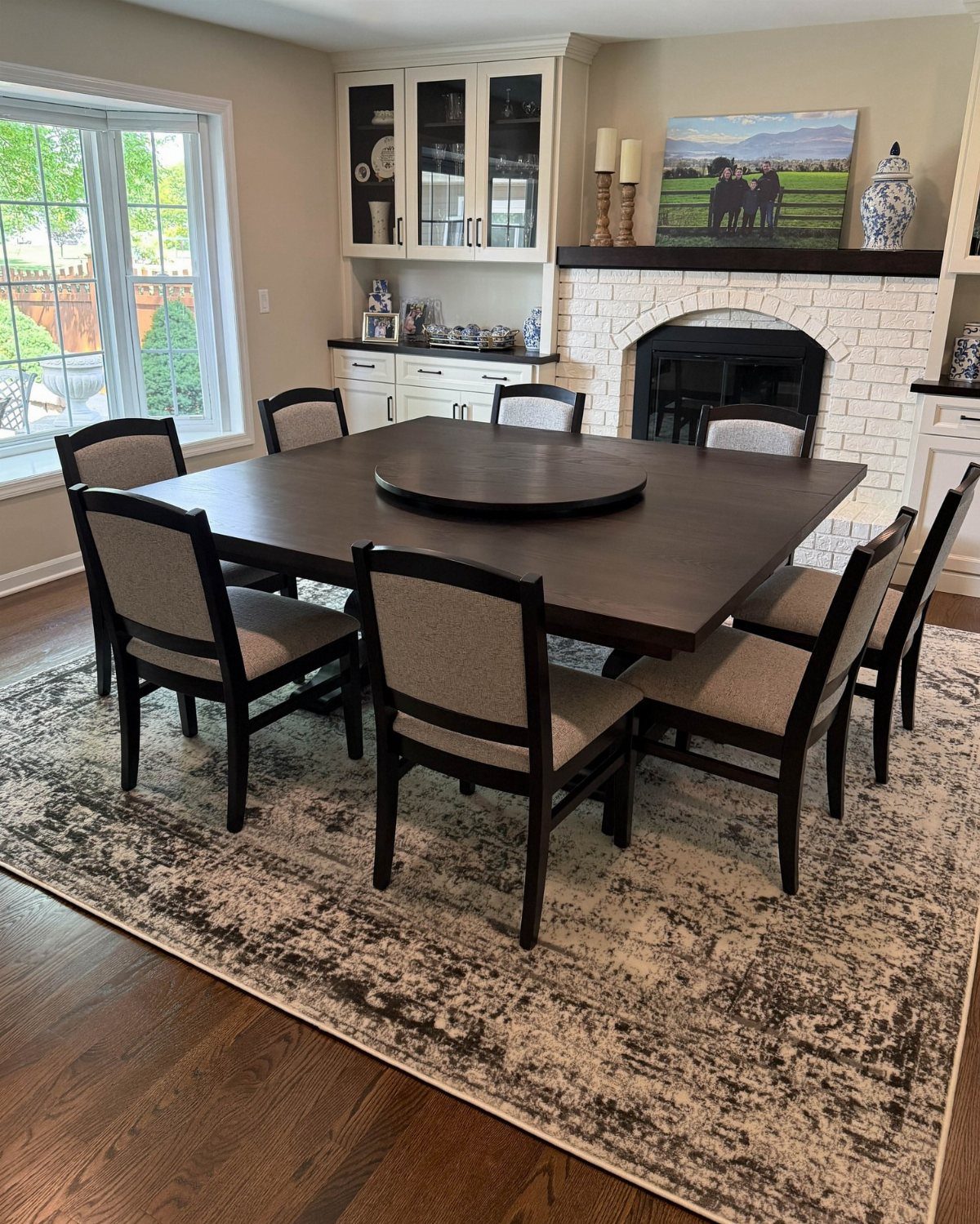
6 chairs around a square dark wood table makes for a classic setup, plain and sturdy, and it fits both Sunday dinners and weekday work.
A table this size gives you a corner for the laptop while the rest stays free.
The lazy Susan in the center is a dining feature. Before a work session, I would move it and whatever sits on it to the edge so the middle of the table is clear.
4. Marble Cafe Table
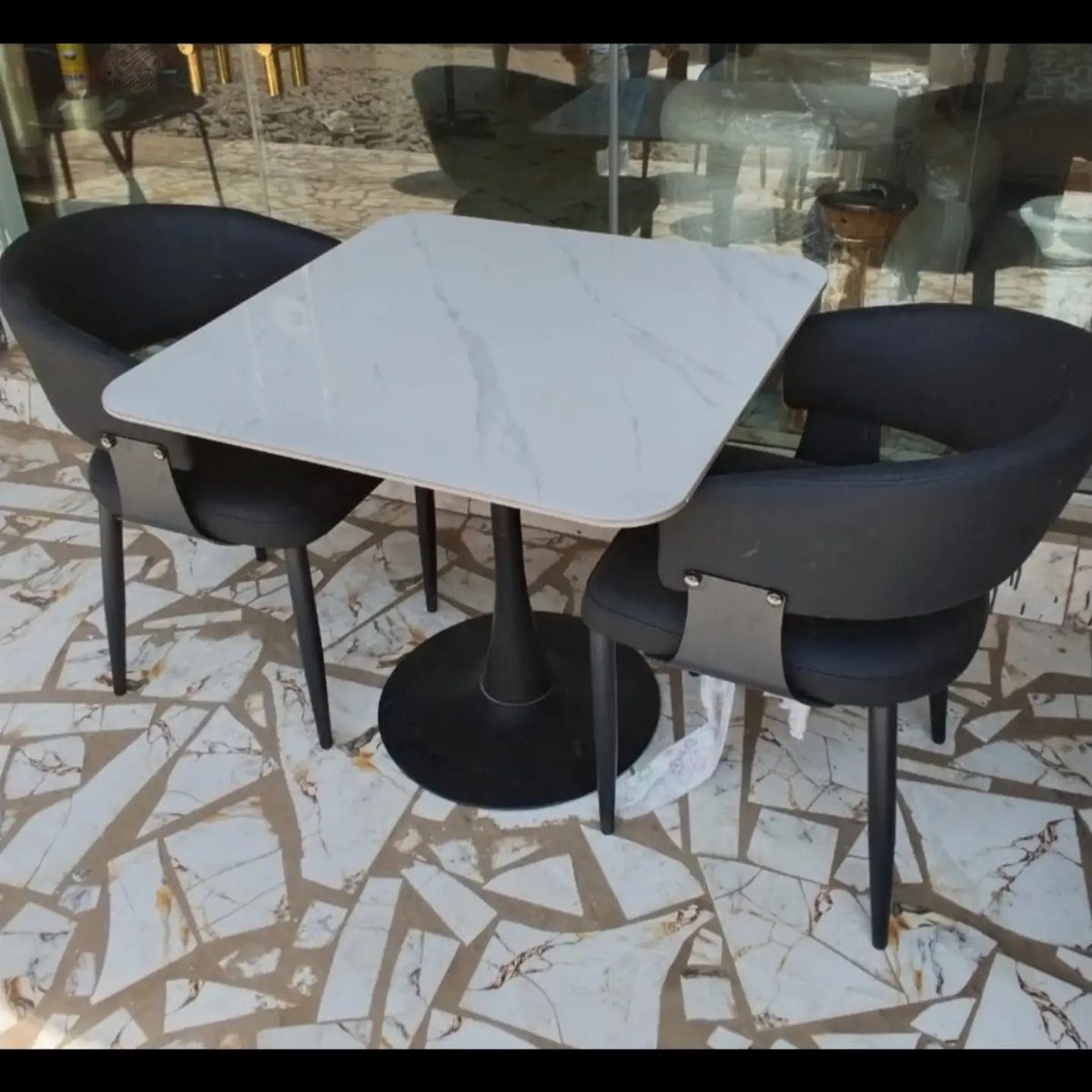
A small square marble top suits one person, or two at a pinch, and the compact footprint fits a corner or a short wall.
A wipe-down surface means breakfast crumbs and coffee rings are gone in seconds, which matters when the same spot is your desk by 9.
The trade-off is size. A top this compact handles a laptop and a mug well, but a monitor plus a full dinner plate will crowd it.
5. Glass-topped Table
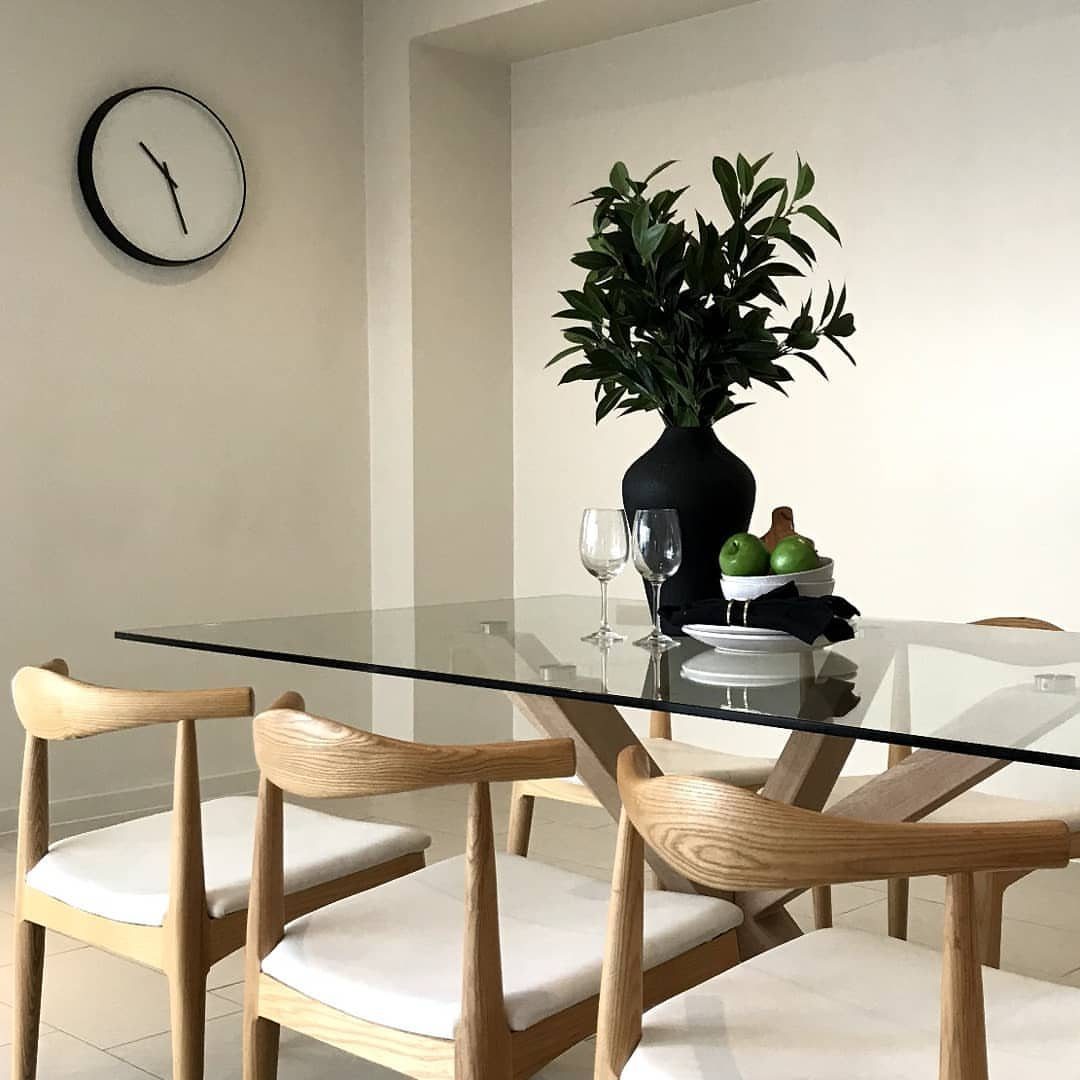
Tempered glass is the detail to look for in a glass-topped table. A square top in clear glass keeps a room looking open, which helps in a small space where a solid wood slab would feel heavy.
Glass also shows everything on and under it, from smudges to tangled charging cords. I would keep the setup minimal: laptop, notebook, and a vase or bowl of fruit for color, as in this room.
6. Oversized Dining Table Desk
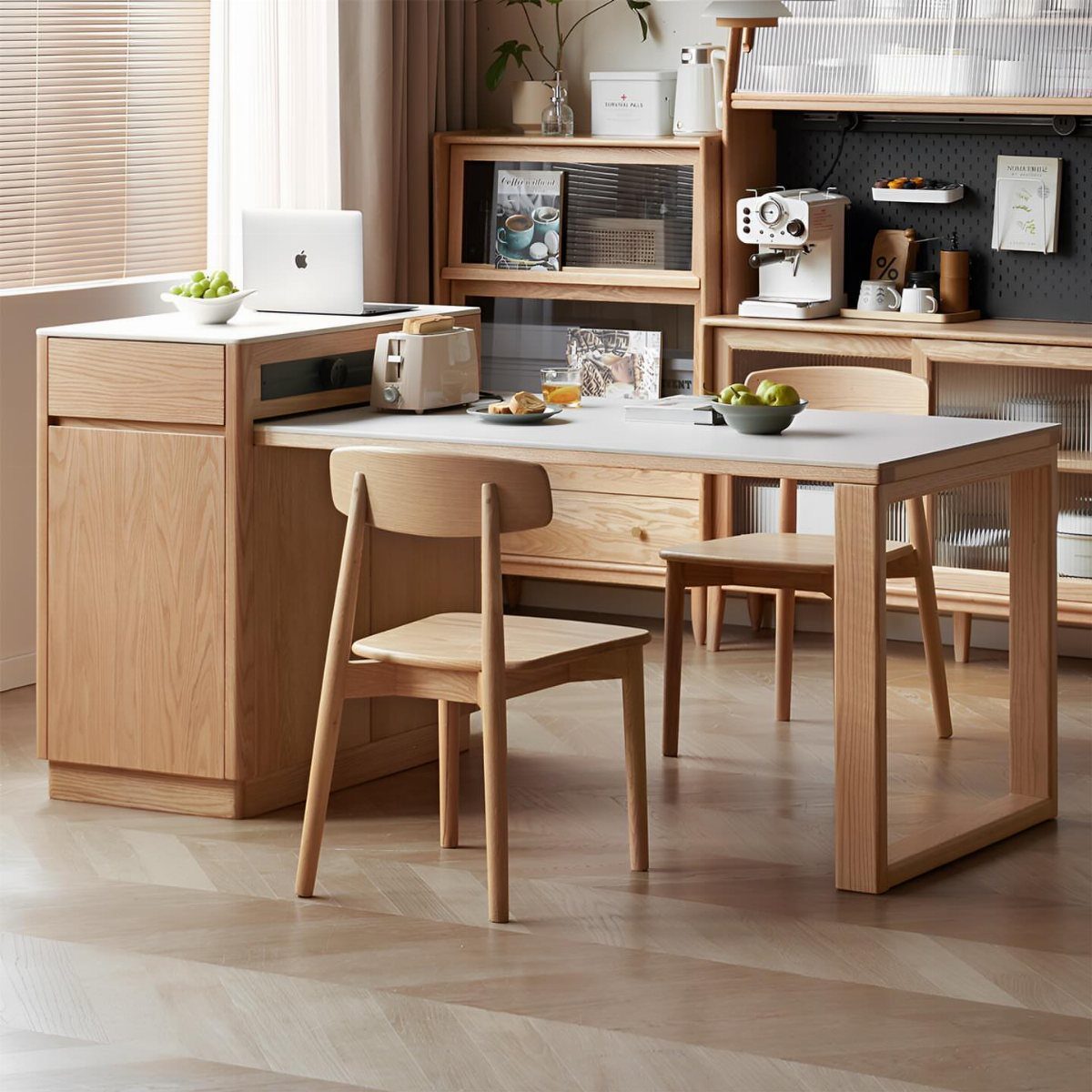
Most desks give you about enough room for a laptop. A full-size dining table gives you room to spread out, and in a kitchen that makes the table the best work surface you already own.
Splitting the surface into a work zone and a meal zone keeps laptop cables and place settings out of each other’s way.
Clearing the laptop and a notebook takes seconds, and you never have to pack up a whole desk before dinner.
7. Dining Table with Laptop
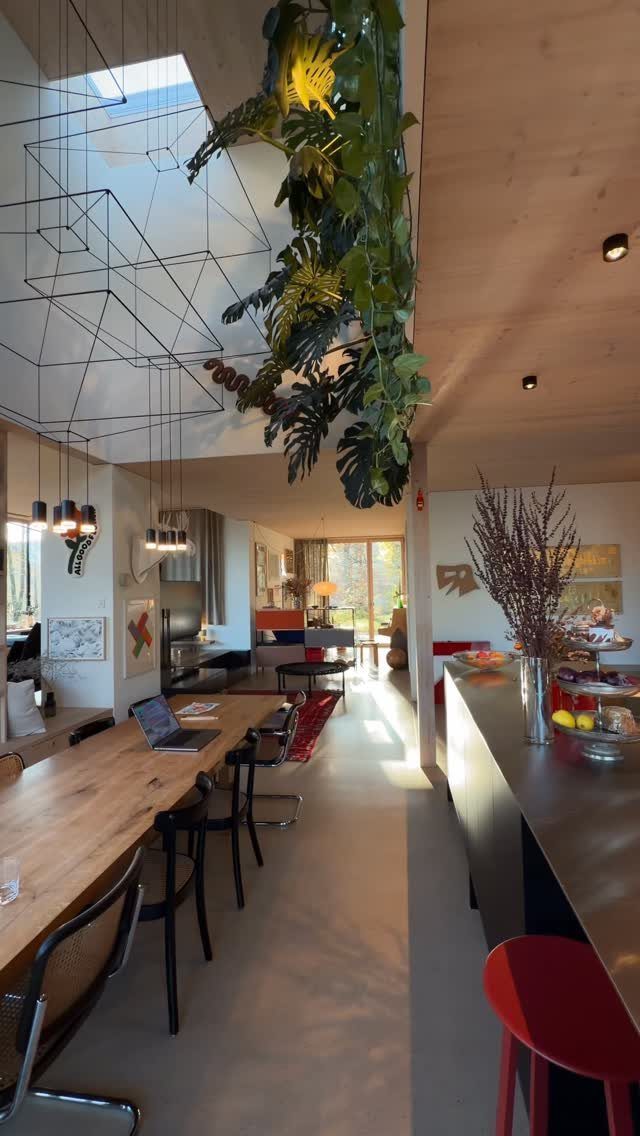
A long light-wood table in an open-plan room can pull double duty without any extra furniture.
Set one end up with a laptop and you have a work spot that blends into the dining area, and with a table this long, the other end stays free for meals.
Light wood also keeps a wide room feeling airy, so the table never looks like an office desk dropped into a living space. I would claim one end as the permanent laptop spot and keep the remaining surface clear.
8. Wall-mounted Work Table
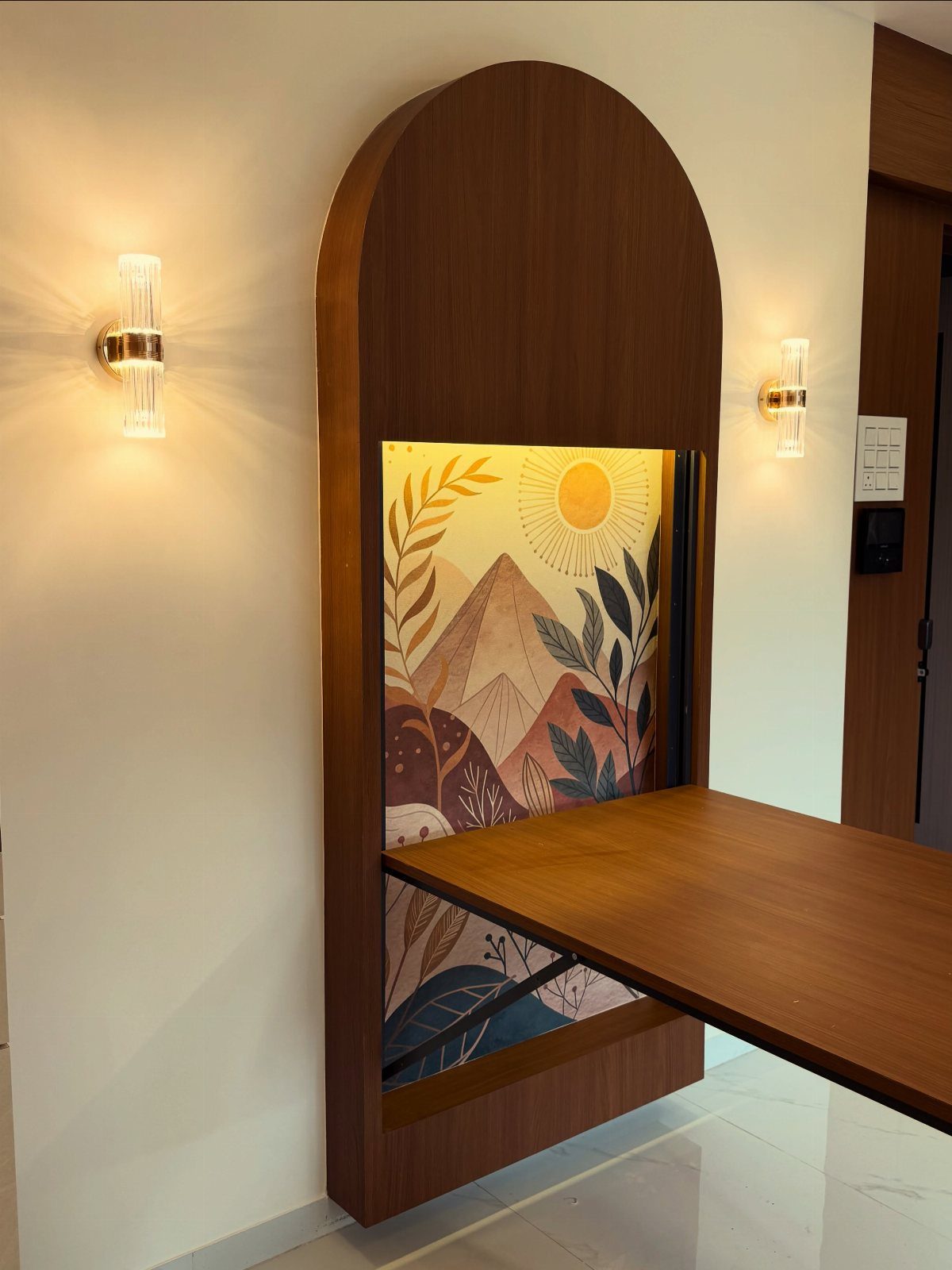
An arched alcove with a wooden top extending from the wall is a built-in table that takes up almost no floor space. It suits a short wall or an odd corner, where a freestanding table would eat into walking room.
Because the surface attaches to the wall, you pick its depth and height to fit one person with a laptop or a quick breakfast.
A pair of sconces on either side gives you task light without crowding the top, and I like that approach better than a clip-on lamp.
A fixed top gives up flexibility, since it can’t move to host guests, so I treat it as the second surface in a home and not the only one.
9. Laptop-ready Dining Table
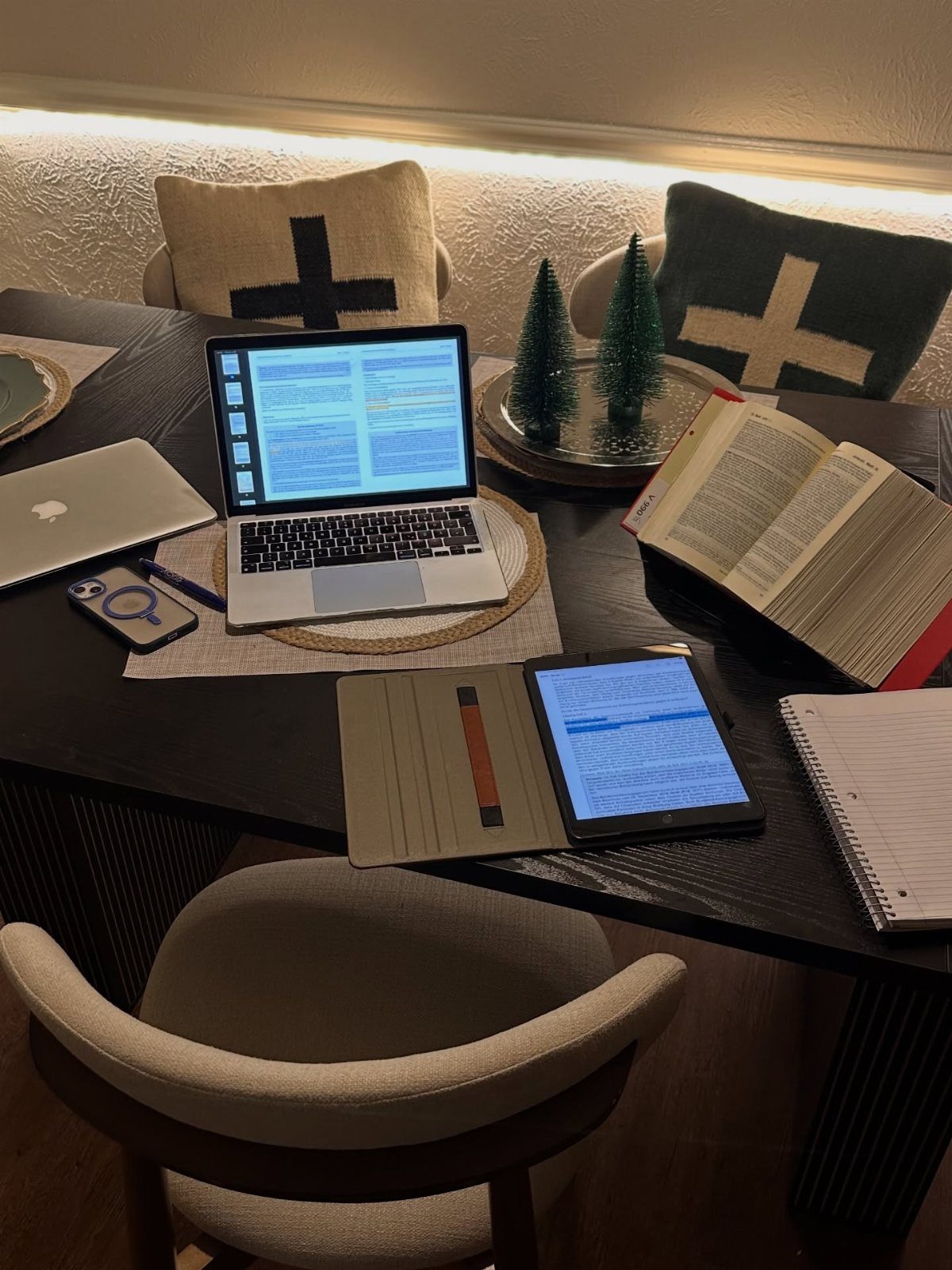
Dark wood hides the small marks that come with daily use, such as coffee rings and the scuffs of a laptop dragged across the top.
That makes a dark dining table a forgiving work surface, and it grounds a room that has lots of light-colored furniture.
Give each tool a fixed place: laptop in the center, tablet and notebook at the sides, an open book within reach. I would keep to that layout and clear everything but the laptop before dinner.
A table runner or placemat under the laptop is a cheap way to protect the finish when the table is in heavy use.
10. Dining Table as Desk
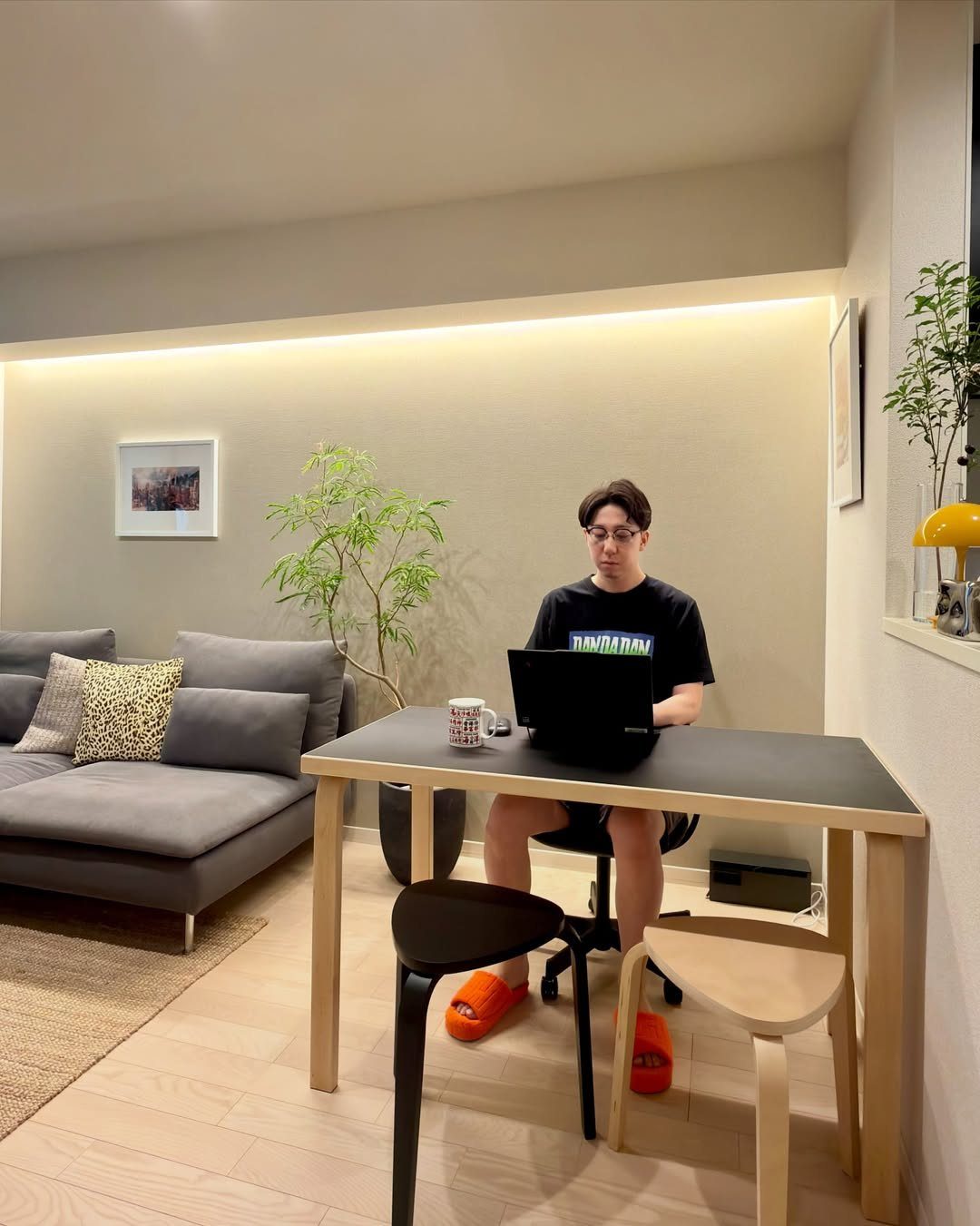
No spare room, no desk: a light-wood table next to the sofa becomes the office. For a renter in a one-living-area apartment, that is often the only layout that works, and it costs nothing if the table is already there.
Sitting at a proper table is better for a long workday than perching on the sofa with a laptop on your knees, since the table gives you a flat surface at a more natural height.
I would pick a dining chair with a supportive back over a stool, as you’ll sit in it for hours.
Park the laptop at one side and the table stays ready for meals.
11. Folding Table from Cabinet
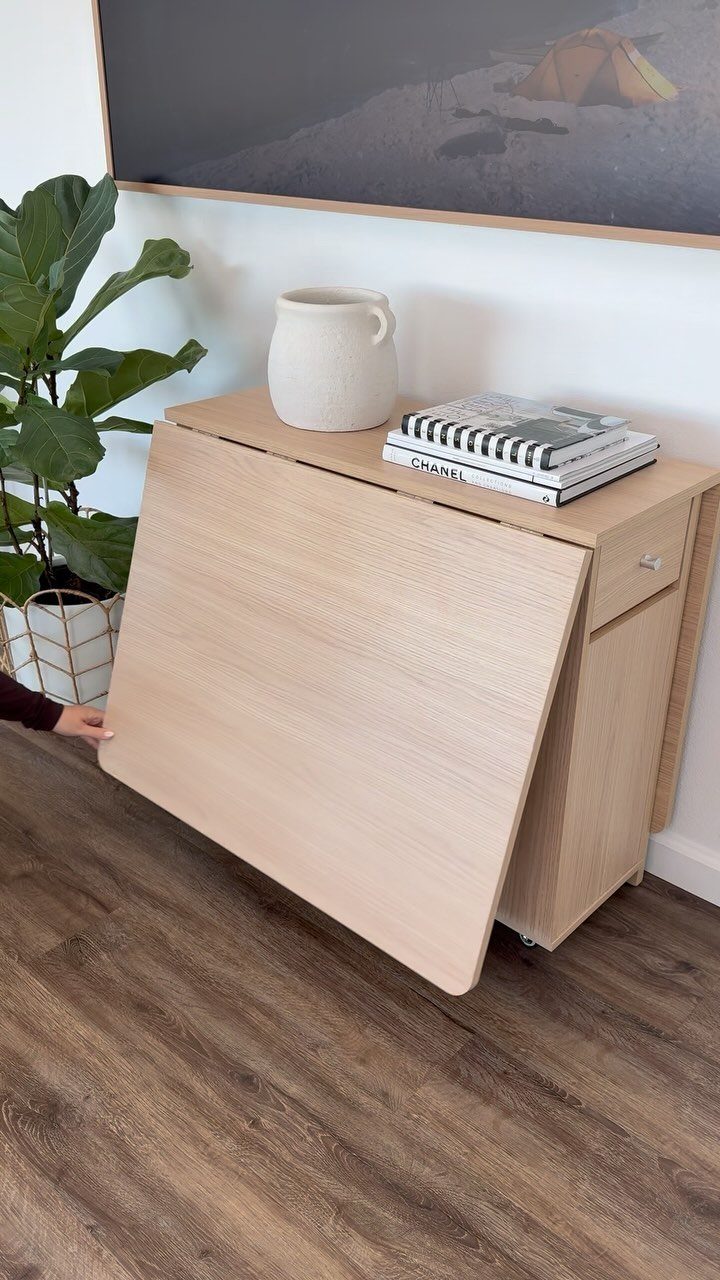
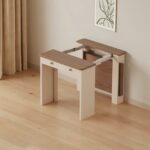
A fold-out surface that hides inside a cabinet is the best answer I know for a home with no room for a desk.
Closed, the light-wood piece reads as a plain cabinet with a vase and a book on top; open, it gives you a work surface.
Because the table matches the cabinet, nothing looks temporary. Keep heavy decor off the cabinet top if you plan to open the table often; a few light pieces are fine, but anything top-heavy can tip when the door swings.
Think of it as a one-person desk first; a family dinner will feel cramped around it. Folded away, the table leaves the floor open, and that matters most in a small rental.
12. Dedicated Work Setup
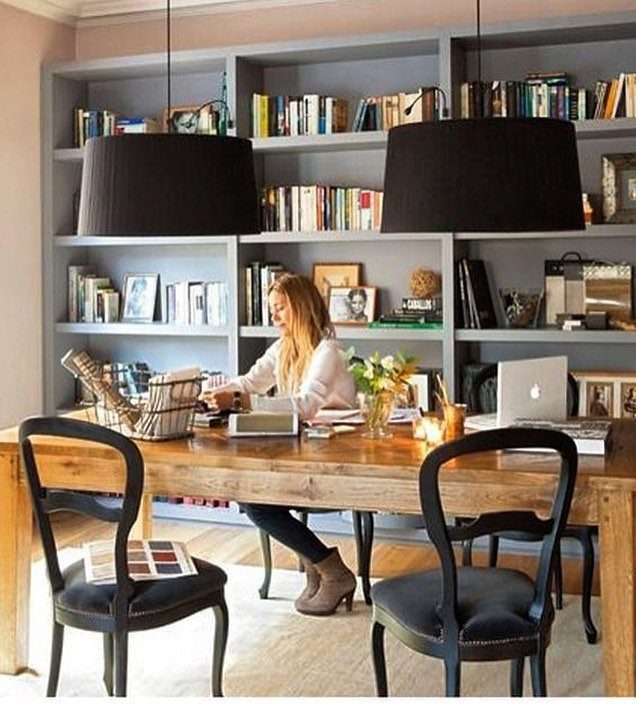
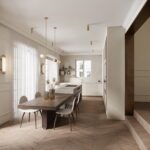
Built-in bookshelves behind a large wooden table turn a dining spot into something close to a home office.
Everything within arm’s reach, from reference books to files, lives on the shelves, so the table surface stays free for a laptop and papers.
The two black pendant lamps hung over the table light the work surface the way a desk lamp would, and they mark off the work zone from everything else in the room.
I would plan the lighting first: a dining table without good overhead light is hard to work at after sunset.
A table this big handles a full day of work and still clears for dinner.
13. Table with Desk Essentials
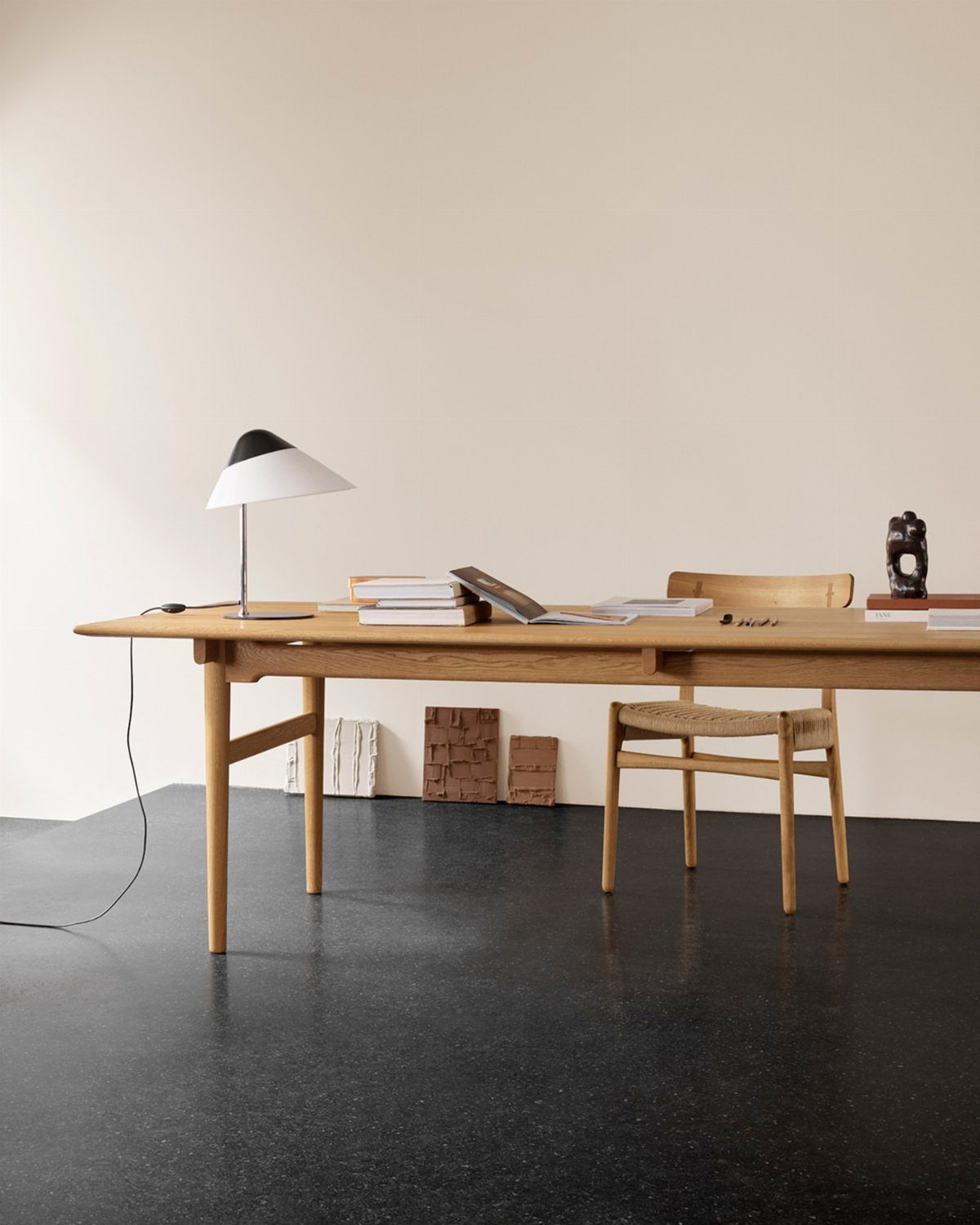
A lamp, a few books and a notebook are all it takes to turn a light wood dining table into a desk.
Once those 3 things sit on the surface, the table reads as a work spot, and it still looks like part of the dining area.
I would choose a lamp with a small base so it leaves room for the notebook. Stack the books at one side, and the middle of the table stays open for a laptop or a plate.
A wooden chair that matches the table keeps the corner looking pulled together. Before dinner, the lamp and the books can stay put while the notebook goes on a shelf.
14. Integrated Table Power
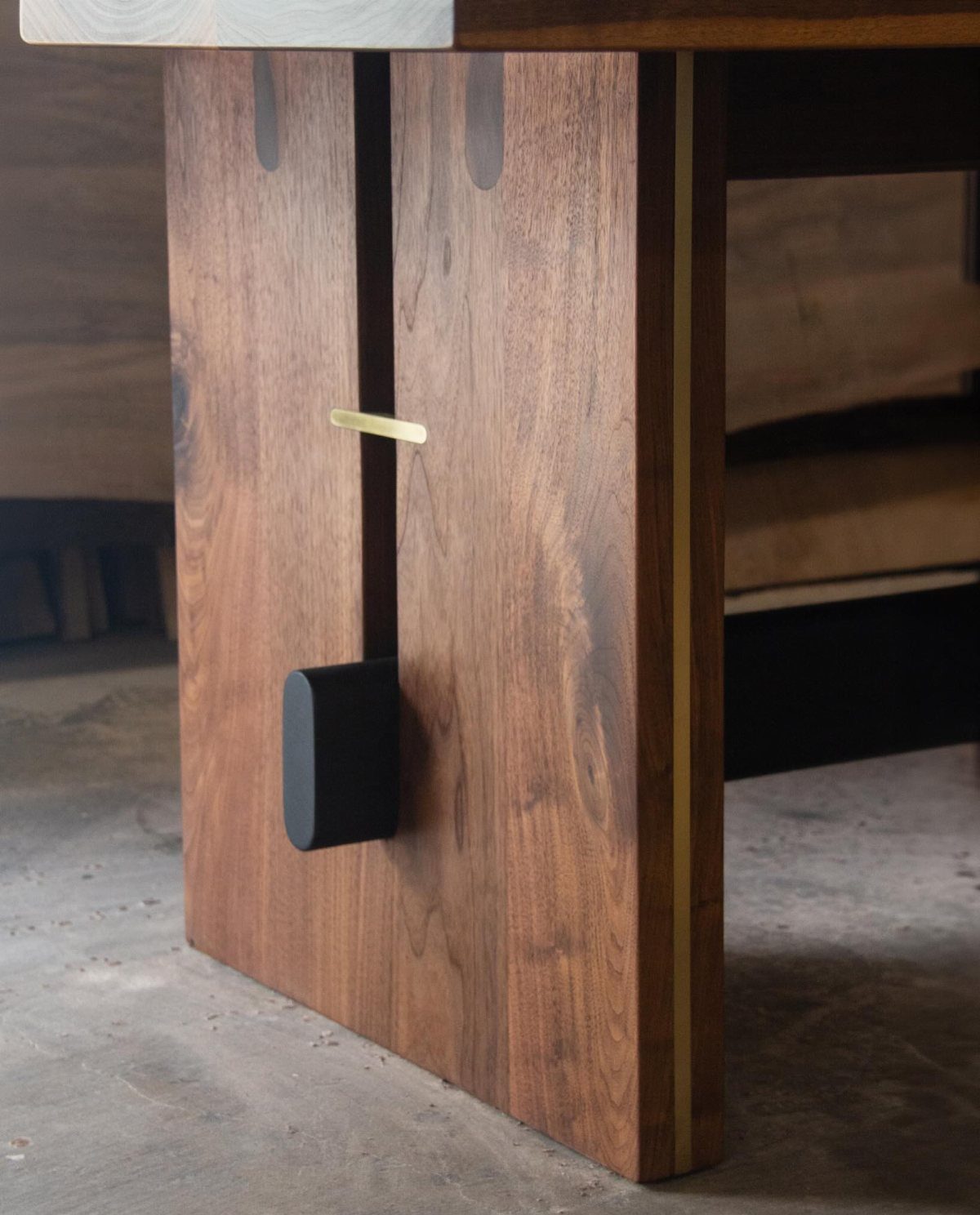
Power built into the table itself solves the problem every dining-table desk runs into: where to plug in.
An outlet set into a thick dark wood leg puts the charger right where the laptop sits, so no extension cord has to cross the floor.
That matters for anyone working at a table in the middle of a room, where a cord from the wall is a trip hazard and looks messy.
The small gold-colored metal accent next to the outlet makes the hardware look planned, not added later.
I would never run a table like this without checking where the outlet faces. Pick the seat nearest the leg as your work spot.
Worktable Ergonomics and Setup
Most desks and dining tables stand 28–30 inches tall, so a dining table usually works as a desk without changes.
The chair decides how well. When you type, your shoulders should stay relaxed and not creep toward your ears.
If they creep, the chair is too low for the table or the table is too high for the chair. For long sessions, an adjustable desk chair is the fix I’d put money toward first.
A laptop flat on the table pulls your neck down or your arms up. A separate keyboard plus a laptop stand or monitor lets you set the screen and your hands at different heights.
Press on each corner and type for a few minutes before you settle on a table. A table that wobbles will bother you within the hour, and tightening the leg hardware is the first thing to try.
Measure Room and Work Surface
Check the length and width against the room before you buy. Tape the proposed outline on the floor and live with it for a day.
The tape shows how much space you have on either side, whether chairs can slide out without hitting a wall or sofa, and how large a rug needs to be.
Tape the table’s footprint on the floor, then pull a chair out and check that its legs still land on the rug and that someone can walk behind it.
Then think about depth, which matters more for work than most people expect. You need room for a laptop, a monitor, papers, and meals, sometimes all in one day.
Bistro tables run slim, so they suit quick email sessions but run out of room once a notebook and a mug land beside the laptop.
Keep Cables and Surfaces Manageable
Setting the table close to a wall outlet saves you from running a cord across the floor.
Then use cord clips to hold cables along the table edge, and a small charging station to keep chargers in one spot instead of scattered across the top.
A table in the middle of a room is harder. Route the cord along the nearest wall or furniture and keep it out of walkways, since a cord across the floor is a trip hazard.
Choose a surface that wipes clean, because a table that serves for work and meals gets cleaned daily.
Wood needs protection: a trivet under hot mugs, coasters for anything wet, and a desk pad or a few sheets of paper under your notebook so pen pressure doesn’t leave dents.
Frequently Asked Questions
What Is the Best Dining Table for People Who Work From Home?
A sturdy top about 30 inches deep holds a laptop, a stack of papers and a plate without crowding, and a sealed or laminate surface wipes clean after lunch.
Standard dining tables run 28–30 inches high, matching a typical desk, so the chair is what makes or breaks comfort.
In a room that does several jobs, an extendable table is a smart pick because it stays compact day to day and opens up for guests or a second monitor.
A wobble shows up fast once you start typing, so lean on each corner and work at the table for a few minutes in the store.
What about the cords when a dining table doubles as a desk?
Placing the table near a wall outlet keeps cords off the floor entirely. A table with an outlet built into a leg solves it even better by putting power right where the laptop sits.
What is the best dining table for a small space?
For a home with no room for a desk, a fold-out table that tucks inside a light-wood cabinet is the best fit I’d recommend. Closed, it reads as a plain cabinet, and it leaves the floor open.
A wall-mounted wooden top takes almost no floor space and suits a short wall or odd corner, and a small square marble top fits a corner for one person.
A clear glass top keeps a tight room looking open, though a fold-out table works best for one person and feels cramped for a family dinner.