
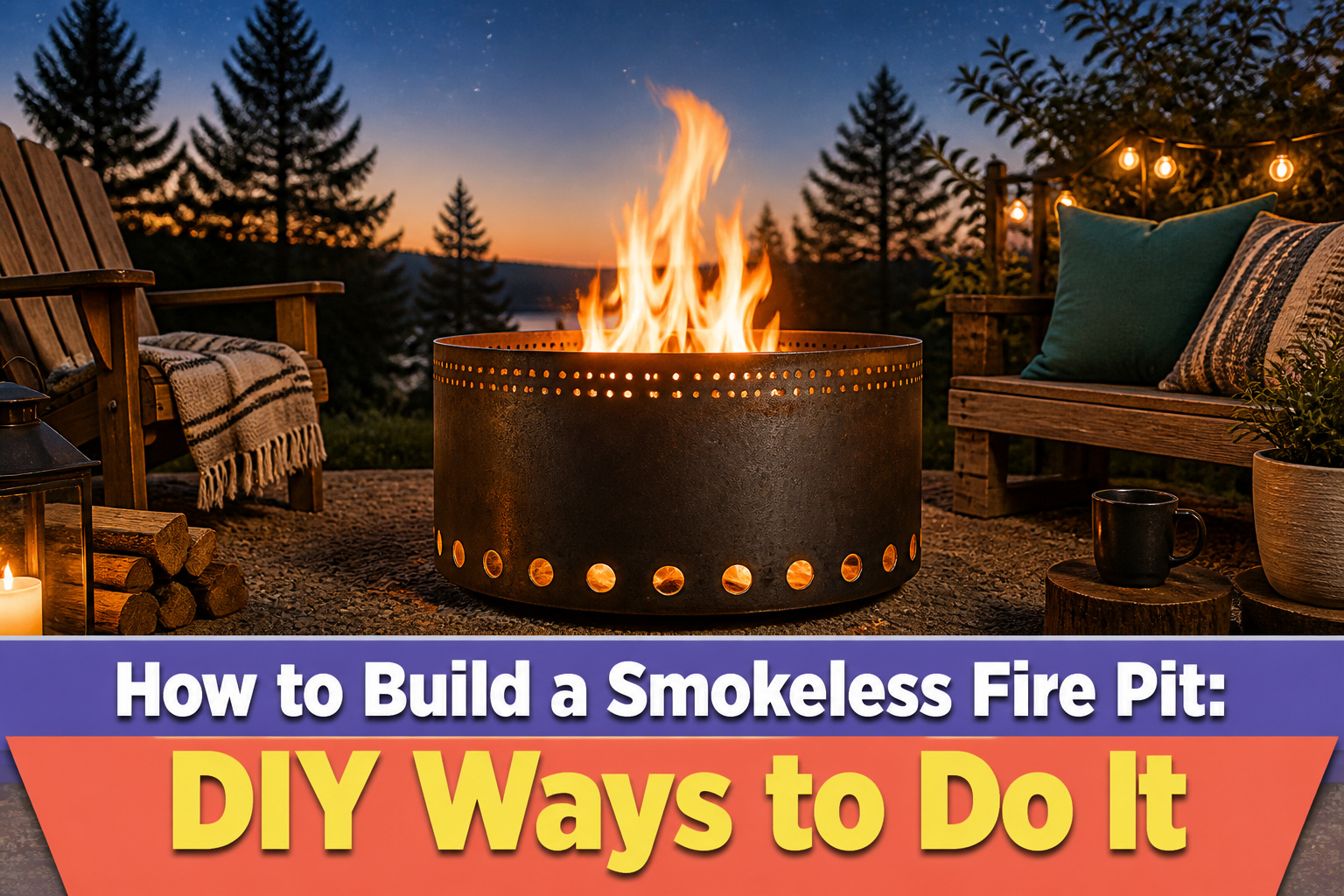
A smokeless fire pit you can build for roughly $20 in salvage steel and one weekend, though most first-timers ruin the airflow by drilling matching holes top and bottom.
The holes must differ: 1/2 inch and tight at the top for secondary combustion, 1 inch and wider at the bottom for oxygen feed. Get that wrong and the fire smokes no matter how dry your wood is.
1. Build the Fire Pit Structure
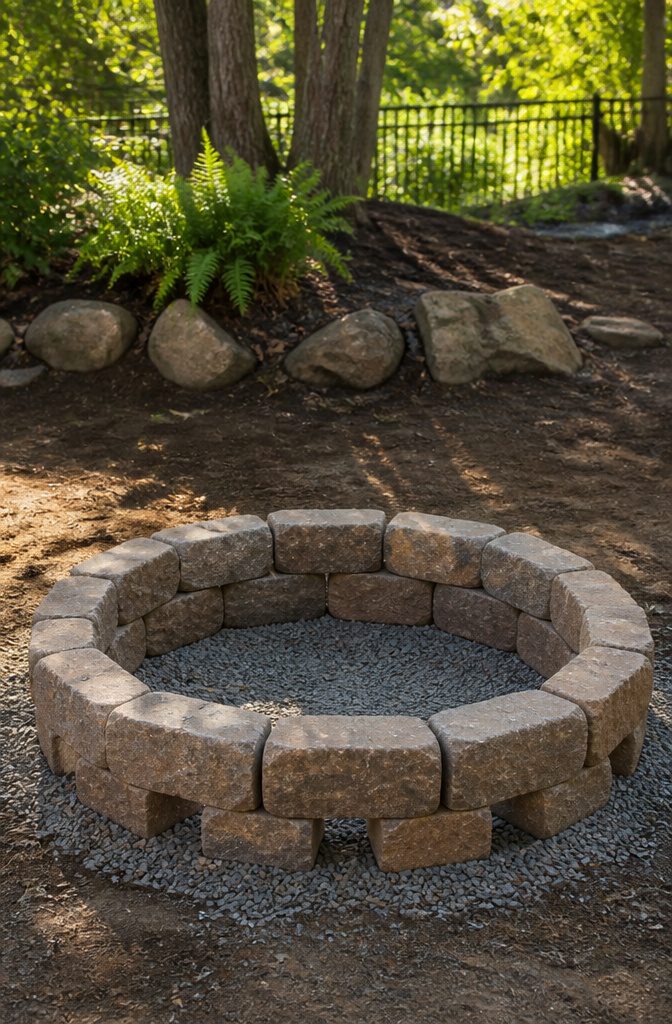
Tumbled fire pit stones or standard pavers both work for the base ring, though the tumbled ones seat together with a little more forgiveness if your circle isn’t perfectly round.
Lay them dry first and walk the ring to feel for wobble before you commit.
Twelve stones gave me an inner diameter of about 33 inches, which leaves just enough room to drop a 30-inch segmented fire pit ring inside with a snug fit.
Leave four gaps in the bottom row where the stones should sit.
These openings pull air up through the gravel bed instead of choking the fire at the rim. Speaking of that bed, pour in a layer of gravel after the ring is set and before the final course of pavers.
It locks the base in place and keeps drainage from turning your pit into a birdbath after rain. The gravel also means you can level a slightly uneven patio slab without mixing concrete.

Superior Strength Meets Premium Craftsmanship (Utility Patent Pending): This 36"heavy-duty steel fire pit ring is built tougher and thicker than standard models and other smokeless fire pit ring—delivering long-lasting durability and more impressive, smokeless flames. This 36"heavy-duty metal fire pit ring is a high-end centerpiece designed to elevate every outdoor gathering. [Utility Patent Pending]

VENTILATION HOLES DESIGN -- Enhancing airflow and oxygen circulation, the addition of a top circle of ventilation holes promotes thorough wood combustion, boosting burning efficiency while minimizing smoke. This design lets you fully engage in joyful gatherings around the fire pit, creating lasting memories and relishing the dancing flames with peace of mind among family and friends.

Superior Rust Resistance & Durable Construction: Crafted from 0.7mm zinc-plated steel with an additional brown high-temperature anti-rust powder coating, this fire pit ring achieves a total thickness of 0.8mm. It offers exceptional corrosion resistance against moisture and rain, significantly outperforming ordinary cold-rolled steel and ensuring long-lasting outdoor use.
2. Add the Fire Pit Ring
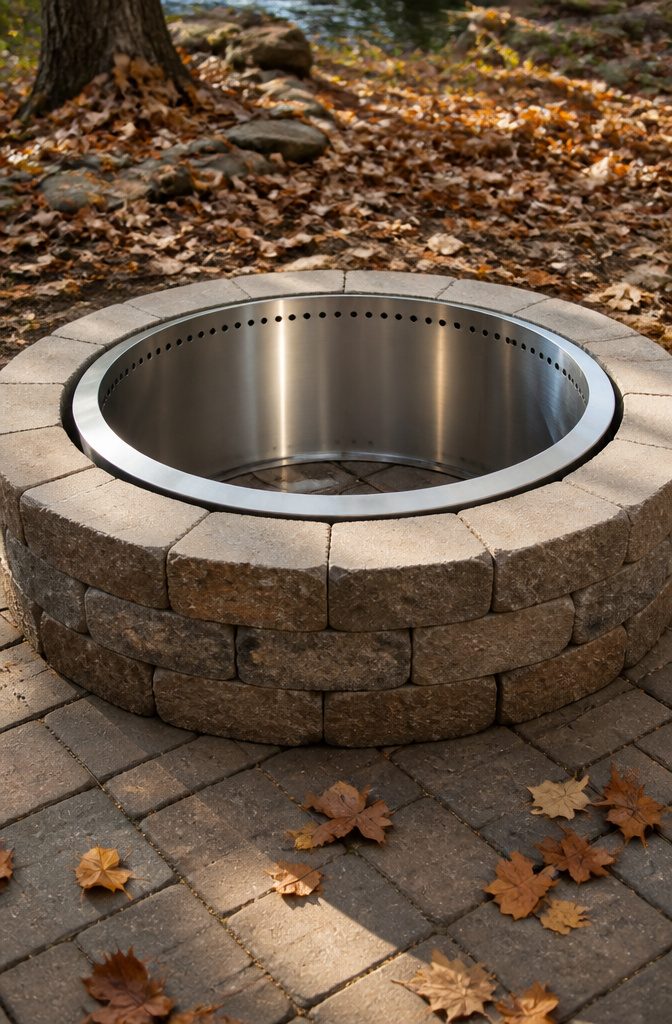
A 30-inch segmented fire pit ring drops into the center of the structure and rests on the pavers below. That ring needs to sit about 2–3 inches inside the wall all around, leaving a gap that becomes the air chamber.
The flange at the top should overhang the stones by roughly an inch, covering the joint and holding everything in place.
Without that gap, the smokeless design does not work.
The chamber is what feeds secondary air up the walls to reburn smoke before it escapes. A ring that fits too tight leaves no space for airflow; one that sits too loose wastes fuel and lets heat escape sideways.
I watched three builds before I understood why the lip matters.
The overhang is not decorative. It shields the gap from debris, keeps the ring from sinking, and gives you a clean edge to brush ash off of.
If the ring you found has no flange, find one that does, or plan to fabricate a rim. The rest of the smokeless logic depends on this fit being right.

Sturdy Metal: Made of thickened steel, with a black high-temperature resistant powder coating on the surface, which is not easy to peel off and is durable for outdoor use.

Superior Heat-Resistant Material: Made from carefully selected heavy-duty metal, capable of withstanding extreme temperatures. This fire ring provides stability and safety for your outdoor fire pit, ensuring a reliable and long-lasting outdoor flame

FIRE PIT INSERT - Enjoy a roaring outdoor bonfire with friends and family anytime with this 30-inch round fire pit bowl. Simply place this versatile and durable replacement fire pit pan in a stand (not included), and it’s ready to use.
3. Drill Holes in the Fire Pit Ring
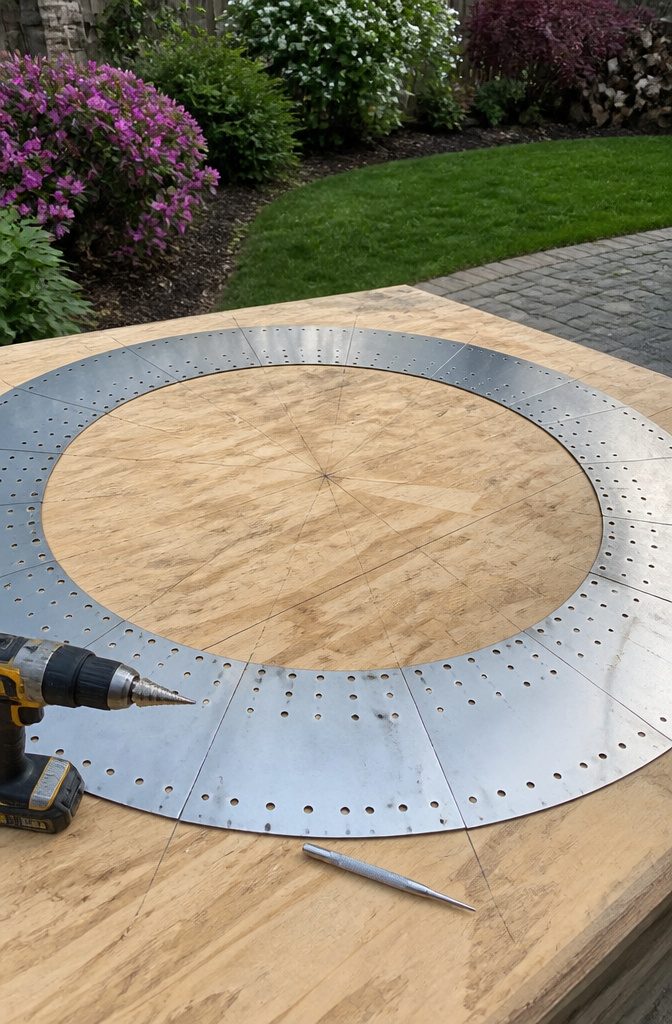
Air needs two separate paths through the fire pit ring to make this work.
Top holes should be 1/2 inch in diameter, spaced 1-1/2 inches apart; bottom holes should be 1 inch in diameter, spaced 3-3/4 inches apart. That difference in size and spacing is not a mistake.
The smaller, tighter top holes feed secondary combustion, burning off the smoke before it escapes, while the larger bottom holes pull in the fresh oxygen the fire needs at its base.
I laid out the ring on a scrap of plywood first and marked every hole with a center punch so the bit would not wander.
A step bit works better than a twist drill on thin steel; you are less likely to grab and chew the edge.
The bottom row sits about an inch up from the floor of the ring so ash does not immediately clog it.
The counts I have seen are 60 holes up top and 24 below, but I stopped counting once the spacing looked even.
What matters more than the exact tally is keeping that air gap consistent so the draw stays balanced between the two zones.

Durability: Galvanized steel fire rings are highly durable. The galvanized coating provides additional protection, allowing the fire ring to withstand various weather, thus extending its lifespan
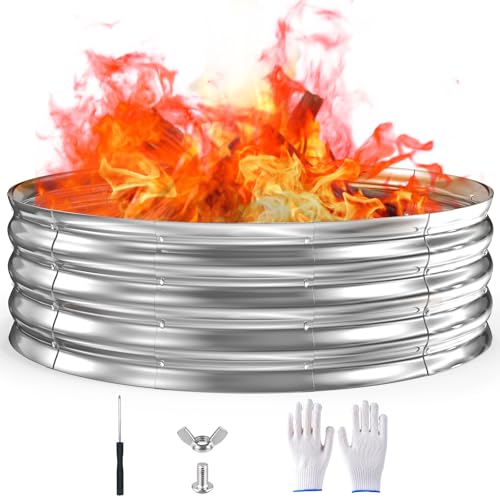
Exceptional Durability & High Heat Resistance for Large Wood Burning Fires:Experience the ultimate bonfire with our extra-large 60-inch fire pit ring, holding more wood for longer, hotter burns. Constructed from heavy-duty commercial-grade galvanized steel, this 5FT 60-inch fire pit ring is built to last. Its extra-thick material ensures superior heat resistance, allowing it to withstand extreme temperatures from wood burning without warping, cracking, or peeling like painted steel fire rings.

Open Bottom Design – Perfect for DIY Stone/Brick Fire Pits: This is a fire pit liner / insert only, not a complete fire pit. It has no bottom, allowing direct ground contact or placement over sand/gravel. Designed to be surrounded by stones, bricks, or pavers for a custom, professional-looking outdoor fire pit. Ideal for above-ground or in-ground DIY projects.
4. Test the Fire Pit
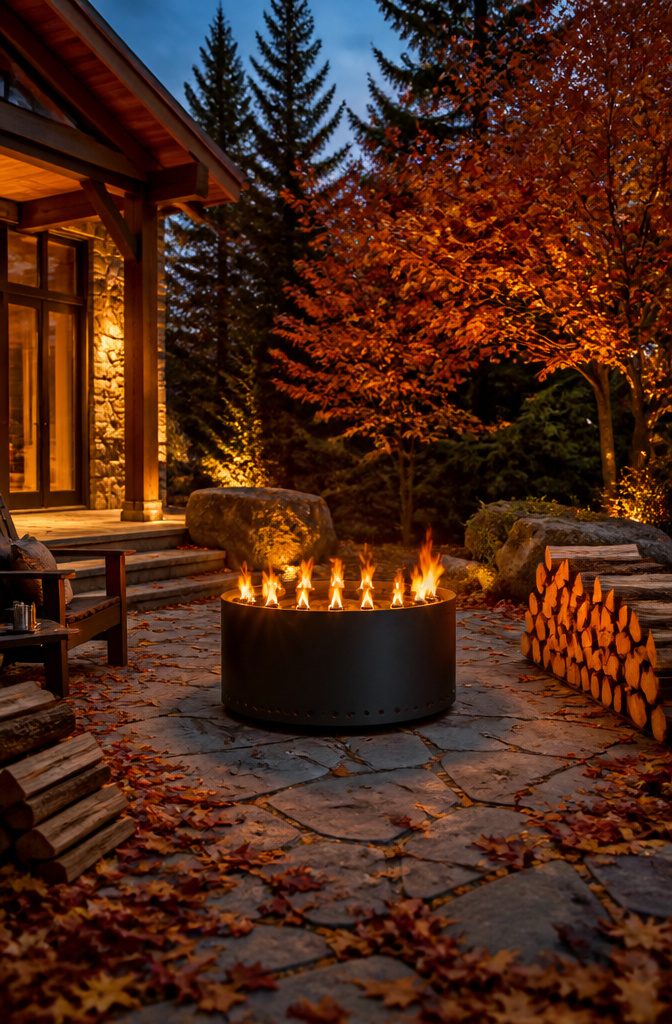
Dry firewood is non-negotiable for this test.
Wet wood will smoke no matter how good your airflow design is, so I keep a pile of split hardwood that sat under cover for at least six months before I even think about striking a match.
The fire needs to run hot: 550–700 degrees Fahrenheit is where secondary combustion kicks in. I feed it steadily for the first half hour without fussing, letting the walls heat through and the draft establish itself.
Rushing to judgment in minute ten is the mistake I made on my first build. The smoke hangs around until the temperature climbs high enough to burn those exhaust gases a second time.
You know the airflow is working when the flames start dancing from the top holes, not just the base.
That upward blast of heated air hitting the fire from inside the rim means your double-wall gap is drawing and preheating correctly.
I watch for the smoke to thin to near nothing and for the flame to tighten into a cleaner, more intense column.
If it stays smoky and sluggish past forty minutes, the holes are probably too small or the gap between walls is clogged with ash from the build.

Durable & Safe -- Crafted with durability, our fire rings are constructed using high-quality steel materials that can withstand high temperatures. Additionally, it provides a secure barrier, effectively keeping ash and debris from falling through the gaps, ensuring a tidy and controlled environment. With its robust construction, our firepit liner guarantees long-lasting performance, allowing you to relish countless hours of warmth and relaxation around your fire pit.
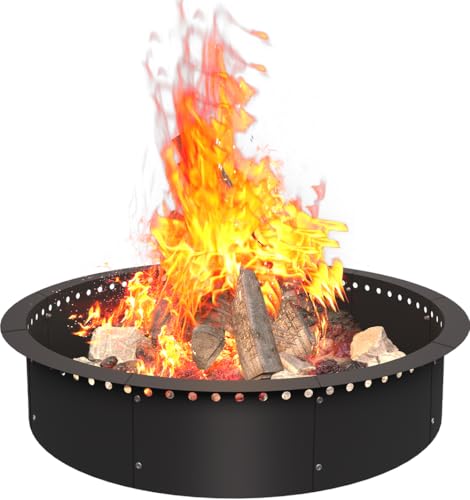
【Ventilation Holes Design】The smokeless fire pit ring is equipped with ventilation holes, which are arranged in circles at the top. They effectively enhance airflow and oxygen circulation, promoting thorough wood combustion, improving burning efficiency, and significantly reducing smoke. This allows users to enjoy a cleaner and more coamfortable fire experience during gatherings with family and friends.

VENTILATION HOLES DESIGN -- Enhancing airflow and oxygen circulation, the addition of a top circle of ventilation holes promotes thorough wood combustion, boosting burning efficiency while minimizing smoke. This design lets you fully engage in joyful gatherings around the fire pit, creating lasting memories and relishing the dancing flames with peace of mind among family and friends.
5. Steel Drum Smokeless Fire Pit
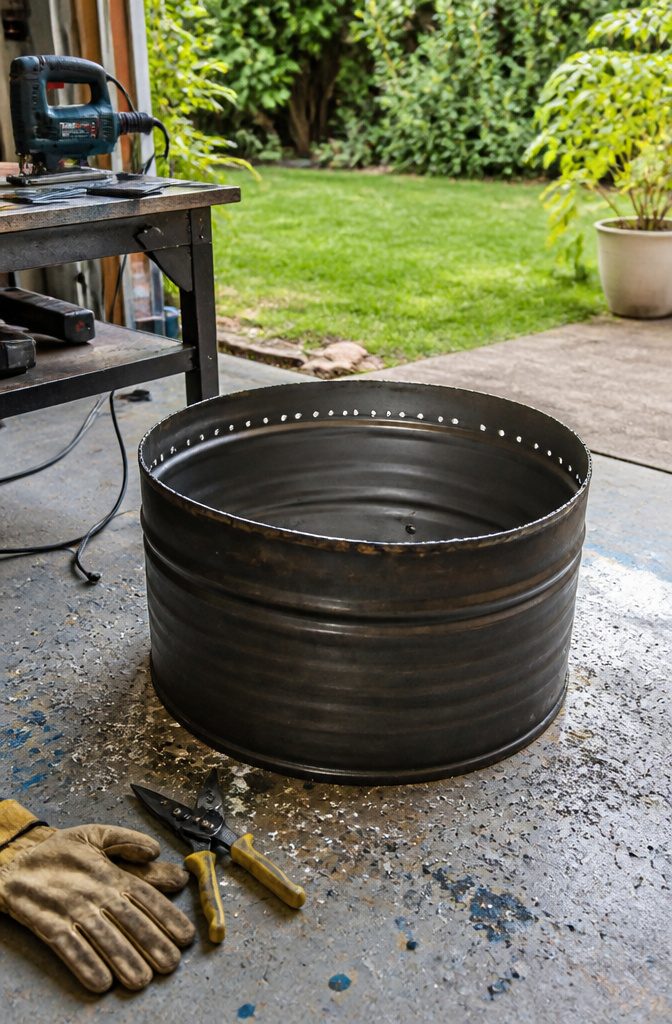
A 55-gallon steel drum runs about $20 at a salvage yard, which puts it well below the cost of a store-bought ring and a stack of pavers.
The trade is effort: this build needs a way to cut metal clean, and the ring-and-paver method never asks for that.
The drum starts whole, lid and locking strap included, plus a spare lid for the cap. Cutting it roughly in half horizontally gives you the outer shell.
One of those halves then gets slit straight down the side, squeezed to a smaller diameter, and nested inside the other to create the double-wall gap that makes the smokeless draw work.
A bottom gets added, the cap bridges the inner and outer walls at the top, and holes go in three places: around the base outside, through the bottom inside, and around the top edge inside.
Checking the label matters. A drum that held orange juice concentrate is one thing; a drum full of chemicals you cannot name is another, and those are worth walking past.
The finished pit will not match the clean look of a retail model, but the airflow geometry is the same.

[Low Smoke Design]: OutVue smokeless fire pit has unique design and scientific internal airflow system, provides you with a clean flame atmosphere. No more sting the eyes smoke, no more suffocating air - just the enough warmth and ambiance of low smoke fire pit. We send a waterproof cover[can used as a Tote Bag] and a poker to you for using the low smoke fire pit more convenient.Store assembled fire pit in a cool, dry location away from children and pets.

[Low Smoke Design]: Grovellis smokeless fire pit has unique design and scientific internal airflow system, provides you with a clean flame atmosphere. No more sting the eyes smoke, no more suffocating air - just the enough warmth and ambiance of low smoke fire pit. We send a waterproof cover and a poker to you for using the low smoke fire pit more convenient.Note:Store assembled fire pit in a cool, dry location away from children and pets.Keep the fire pit covered when cooled and not in use.

Patented Double Wall Design of Fire Pit Bowl- Efficient Hotness without Smoke: Maximizes airflow and burning process producing less smoke and more flame; Bottom vent holes allow oxygen while the double walls warm it. No more smoky clothes or holes in fabrics from sparks.
6. Fire Ring Smokeless Fire Pit
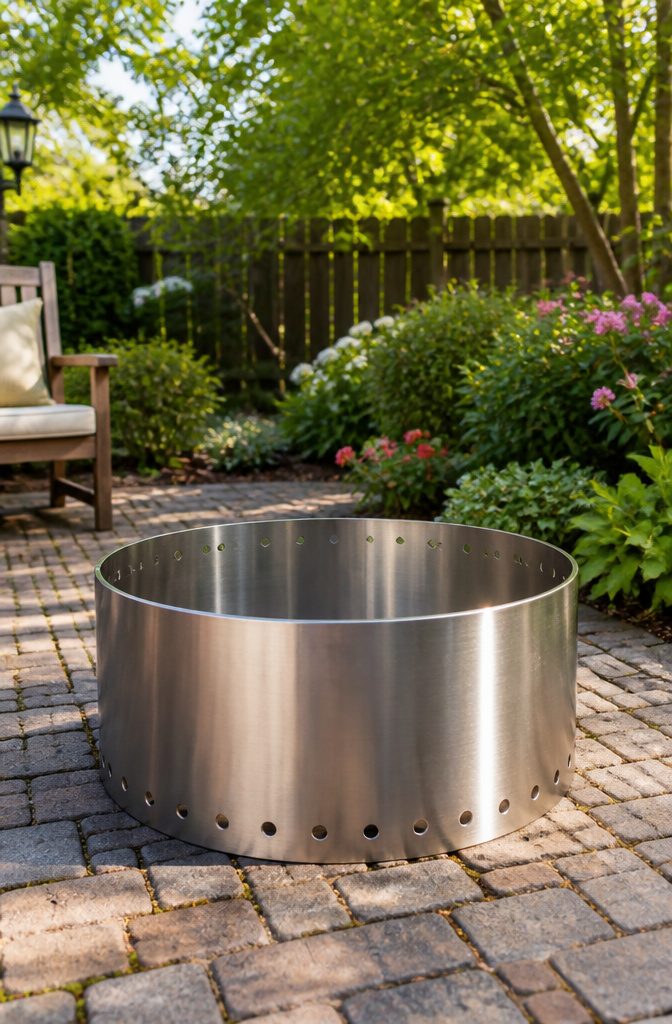
A steel stock ring with drilled holes is the less theatrical cousin of the segmented burn barrel, and sometimes the better choice.
You are not cutting apart a 55-gallon drum and wrestling with jagged edges; you are buying a ready-made ring, marking a pattern, and boring holes at two levels.
The holes near the bottom feed the fire directly with oxygen for primary ignition, while upper holes draw heated air down the wall to burn off smoke before it rises.
I spent a long evening comparing the two approaches after realizing the drum build demands a jigsaw with a metal blade, a deburring tool, and enough patience to keep the cuts square.
The stock ring skips all of that. It also sits lower to the ground, which matters on a small patio or anywhere you want the fire visible from seated height without building a raised surround.
The catch is airflow geometry.
A drum’s full cylinder lets you stagger intake and exhaust holes around the full circumference. A stock ring gives you less vertical wall to work with, so hole placement needs to be precise.
Too few holes and the fire smolders; too many and the ring weakens. I would rather own one mistake with a $40 ring than with a drum I already cut wrong.
Pick the ring when you want a metal fire pit in one evening, not one weekend. Pick the drum when you need the volume for longer burns or want the project itself to feel like a build.

HEAVY-DUTY CONSTRUCTION: Built from durable, high-quality solid iron, this fire pit steel ring insert is both sturdy and long-lasting, providing exceptional durability for your outdoor fire pit, whether used above or below ground. Despite its heavy-duty build, it remains lightweight enough for easy transport, perfect for camping or outdoor gatherings.

Transform Your Outdoor Space - Elevate your backyard gatherings with the Iron Forge Tools fire ring for outside fire pit use. This 36-inch heavy-duty firepit ring creates the perfect centerpiece for cozy evenings, offering mesmerizing, smokeless flames that bring warmth and ambiance to every outdoor event. Utility patent pending.

Larger Cooking Area: The large cooking area of 30 x 30-inch makes our fire pit cooking grate perfect for family or friend gatherings. It can hold up to 25 pounds of food for 8 people. It can sit right above the fire with no assembly and allows you to sear steaks, fish, kebabs, ribs, pizzas, sausages, oysters, and various vegetables.
7. Battery-Powered Blower Smokeless Fire Pit
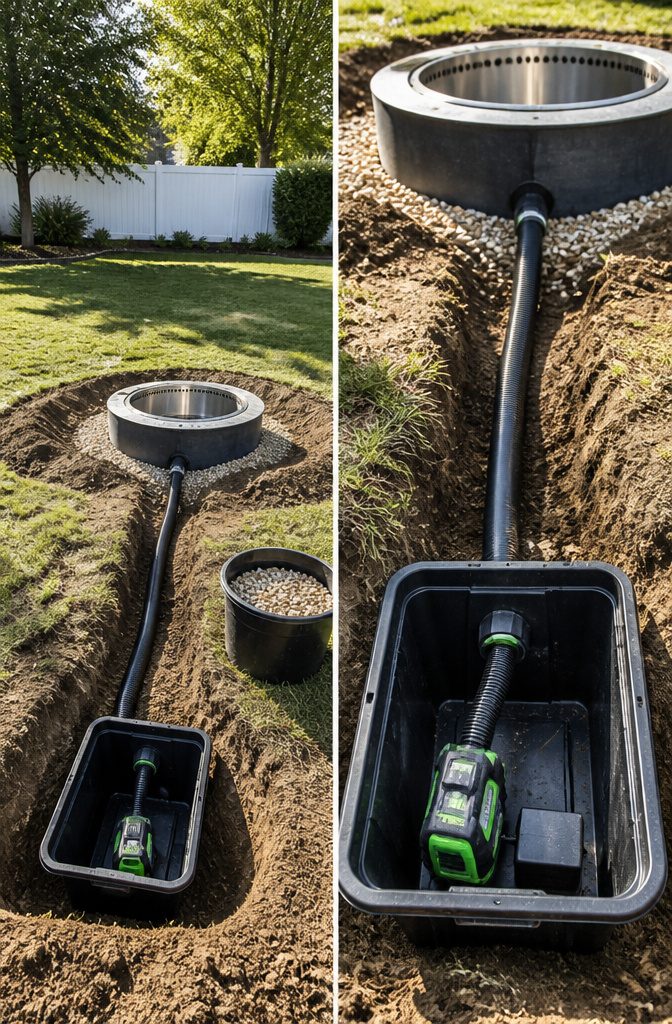
A battery-powered blower setup gives the most precise control over airflow of any DIY method, though it also demands the most digging.
The trench for your blower piping needs to run 6–8 inches deep and wide from the pit to wherever you house the mechanical box, which for most builders means a heavy-duty plastic tote with a removable lid buried roughly 16 inches down at the trench’s midpoint.
What convinced me, reading through builds where people walked through their mistakes, was how much grief the groundwork causes. One builder hit rock three inches down and spent hours muscling stone out before the ventilation system went in smooth.
The pit ring itself sits in a 36-inch diameter hole about 6 inches deep; the trench extends another 3.5 feet to the mechanical box, then continues 2 to 7 feet past it to your air intake depending on dryer hose length.
Inside the tote, a scrap 2×4 bolted to the floor raises the blower off the bottom. You will want to drill drainage holes after the first few rains.
Cut 4–5 inch circles in the tote sides for ducting, test the 12V connection with winged wire connectors before you bury anything, and keep the whole assembly accessible without tearing up your yard.

Exceptional Durability & High Heat Resistance for Large Wood Burning Fires:Experience the ultimate bonfire with our extra-large 48-inch fire pit ring, holding more wood for longer, hotter burns. Constructed from heavy-duty commercial-grade galvanized steel, this 4FT 48-inch fire pit ring is built to last. Its extra-thick material ensures superior heat resistance, allowing it to withstand extreme temperatures from wood burning without warping, cracking, or peeling like painted steel fire rings.

High Quality Material: Our outdoor fire pit rings are made of thick steel material that can withstand high temperatures, with a matte black high temperature powder coating on the surface. The combination of these two features ensures that it is durable, not easily worn out, and built to last. With this fire ring for outside fire pit, you can create a bright and even flame in your backyard, allowing for safe and controlled fires that can continue for years

Easy Installation: The 8-piece fire pit ring insertion kit is easy to assemble and can be assembled in just a few minutes.Seamless design allows for easy installation and integration into your DIY fire pit project.Fixed with screws, it will not easily fall off during use. Let you have more time to enjoy the joy brought by flames.
8. Dakota Fire Hole
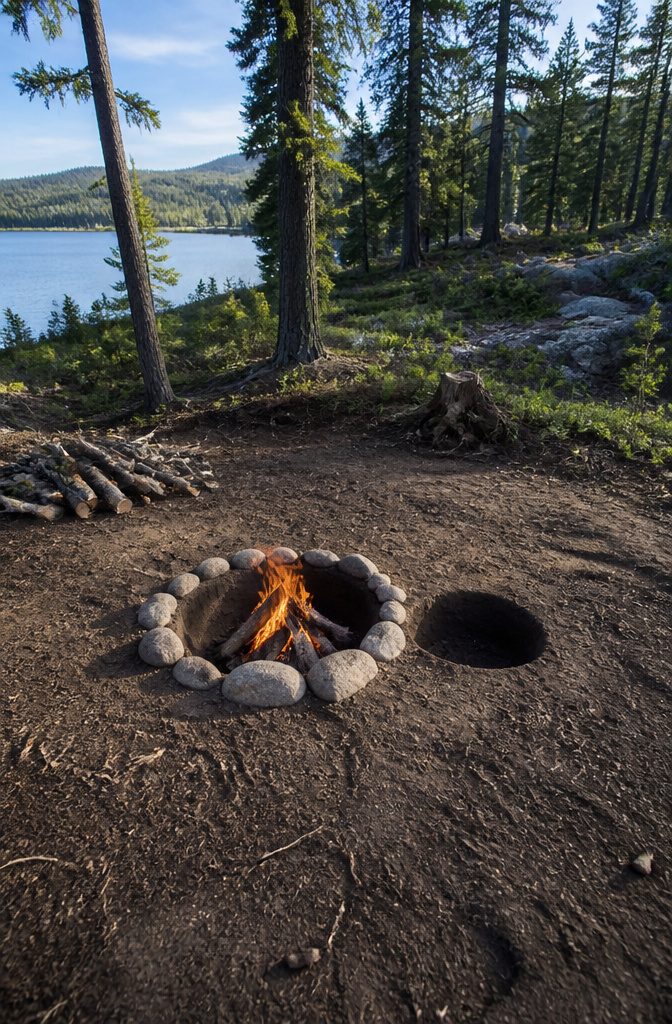
The Dakota fire hole is about as simple as a smokeless setup gets: two holes in the ground, one for the fire and one to feed it air through a connecting tunnel.
The fire burns in the bottom of the first pit, and the second hole draws fresh oxygen underground so the flames get hot enough to reburn their own smoke before it ever reaches your eyes.
This is a weekend camping trick, not a patio plan.
You need bare mineral soil you can legally dig, and you need to fill both holes back in when you’re done. The grass on top of a suburban yard will not forgive you, and the neighbors will not either.
I looked into this for my own rental after I priced out steel rings and gave up. The appeal is real: a shovel, a trowel, and maybe thirty minutes of digging replaces a whole shopping list.
The catch is that every burn starts with excavation, and every burn ends with a scar in the lawn that takes a season to heal. For a permanent backyard gathering spot, the work repeats itself or the yard suffers.
If your goal is one night of cooking over clean flame with gear you already own, the Dakota hole delivers. If you want to walk outside, light a match, and have company over, this is the wrong tool.

【Ventilation Holes Design】The smokeless fire pit ring is equipped with ventilation holes, which are arranged in circles at the top. They effectively enhance airflow and oxygen circulation, promoting thorough wood combustion, improving burning efficiency, and significantly reducing smoke. This allows users to enjoy a cleaner and more coamfortable fire experience during gatherings with family and friends.

This metal plate will collect ash and soot from your fire basket for easy clean-up

Durable Construction: The Silver Round Galvanized Fire Pit Ring is made from 0.8MM thick high-quality galvanized steel, ensuring long-lasting durability and resistance to rust or corrosion
How Smokeless Fire Pits Work
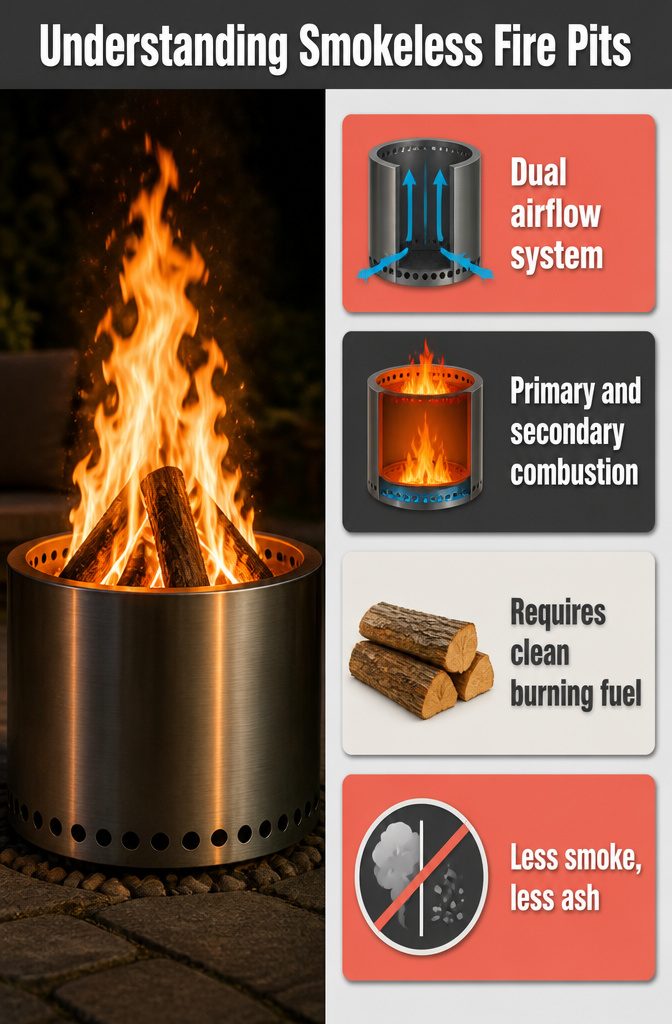
Smokeless fire pits work by feeding oxygen to the flame from two directions instead of one. Fresh air enters at the base through gaps in the structure, feeding the primary fire directly.
More air gets drawn into the space between the inner and outer walls, heats up as it rises, and shoots out through holes drilled around the top of the fire pit ring.
That second blast of hot oxygen ignites the exhaust gases that would otherwise drift off as smoke, a process called secondary combustion.
The result is a hotter, more complete burn with less leftover ash. Some designs trap smoke inside double walls to burn it there; others channel the heated air through a convection cavity to the upper part of the pit.
Either way, the airflow system matters more than the fuel. Get the air moving from bottom and top in roughly the right proportions, and even ordinary firewood burns surprisingly clean.

Exceptional Smokeless Performance for Outdoor Joy:EAGWON smokeless firepit adopts advanced air circulation technology to minimize smoke, eliminating the trouble of smoke irritating eyes during outdoor activities. As a practical outdoor fire pit, it lets you and your family enjoy warm flames and comfortable chats around the fire pit without being bothered by heavy smoke—perfect for relaxed outdoor gatherings.

【Triple Ventilation Holes for Smokeless Steady Flame】Air enters through tabletop fire pit bottom vents, flows upward, and circulates through center-column vents for continuous oxygen and a smokeless burn. The steady airflow creates a beautiful plum-blossom-shaped flame, smores fire pit suitable for roasting marshmallows with family and friends on patios, campsites, or cozy backyard nights
Materials and Tools
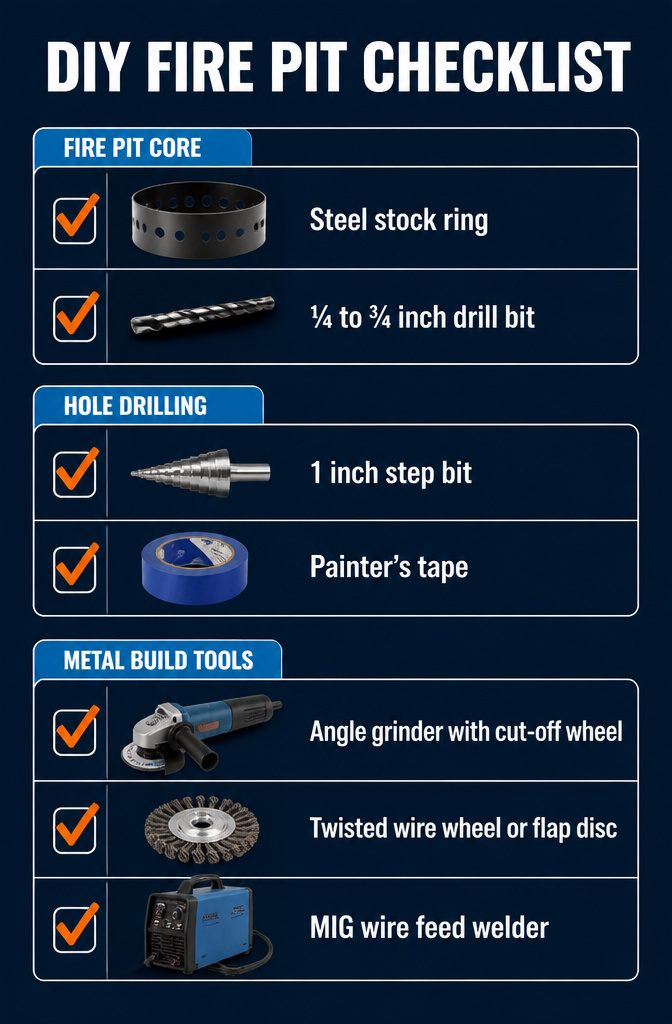
The steel stock ring sits at the center of most builds, and the holes you drill into it are what separate a smoky hole from a clean burn.
A ¼ to ¾ inch drill bit handles the primary air supply near the bottom of that ring, where oxygen feeds the fire directly.
Some builders mark their spots with painter’s tape on the inside, then start with pilot holes before opening them to 1 inch with a step bit for a cleaner edge.
For metal builds, an angle grinder with a cut-off wheel cuts the drum, and a twisted wire wheel or flap disc strips paint before welding.
A MIG wire feed welder joins the pieces; a flux core welder works too, though the slag needs cleaning after.
Brick or paver builds stack around the ring with gravel spread across the bottom so the wood can breathe. High-heat black spray paint finishes the steel if you want it to look intentional after the first rain.

Transform Your Outdoor Space - Elevate your backyard gatherings with the Iron Forge Tools fire ring for outside fire pit use. This 30-inch heavy-duty firepit ring creates the perfect centerpiece for cozy evenings, offering mesmerizing, smokeless flames that bring warmth and ambiance to every outdoor event. [Utility Patent Pending]

VENTILATION HOLES DESIGN -- Enhancing airflow and oxygen circulation, the addition of a top circle of ventilation holes promotes thorough wood combustion, boosting burning efficiency while minimizing smoke. This design lets you fully engage in joyful gatherings around the fire pit, creating lasting memories and relishing the dancing flames with peace of mind among family and friends.

Upgraded Material is More Sturdy: The round fire pit screen cover is made of stainless steel and equipped with 12 support rods, offering excellent heat and corrosion resistance. It is sturdy, durable, and has a long service life; even pressing on the mesh surface will not easily deform it. Furthermore, we have upgraded the high-temperature resistant paint coating to ensure it will not ignite even in intense fire conditions
Passive vs. Active Airflow
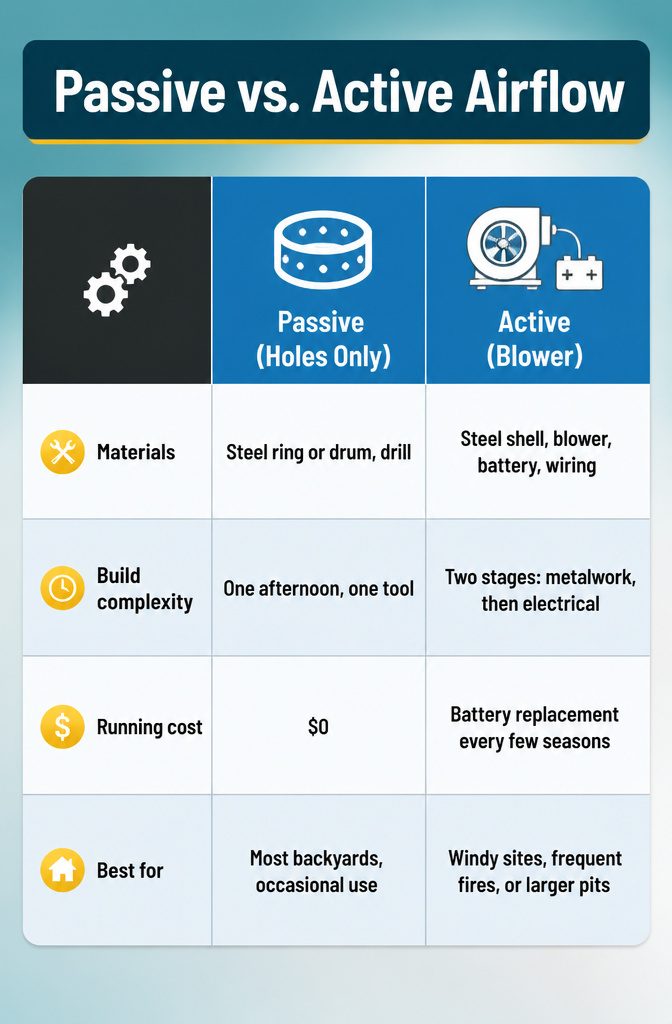
The difference between passive and active airflow is what separates a weekend project from something that needs a hardware run and a power source nearby.
Passive designs rely on holes drilled at two levels: intake low on the outer wall and exhaust higher up, creating a natural draft that pulls air through the burn chamber.
That airflow is enough for most backyard fires, and the build stays simple enough to finish in a single afternoon with a drill and a steel ring or drum.
Active systems add a battery-powered blower that forces air into the same channels. The fire burns hotter and cleaner, but the cost jumps by the price of the blower unit and the weatherproofing to protect it.
You also need a charged battery every time you light up, which means one more thing to store and maintain.
| Passive (Holes Only) | Active (Blower) | |
|---|---|---|
| Materials | Steel ring or drum, drill | Steel shell, blower, battery, wiring |
| Build complexity | One afternoon, one tool | Two stages: metalwork, then electrical |
| Running cost | $0 | Battery replacement every few seasons |
| Best for | Most backyards, occasional use | Windy sites, frequent fires, or larger pits |
For a first build on a real budget, passive airflow is the place to start.
The blower is a meaningful upgrade only if you already know you will use the pit enough to justify the extra cost and the extra step every time.
Frequently Asked Questions
How do I make my outdoor fire pit smokeless?
Build a double-wall design that pulls air in at the base and feeds heated oxygen through holes near the top of the fire ring.
The secondary combustion this creates burns exhaust gases that would otherwise escape as smoke. A snug-fitting ring with top holes spaced 1-1/2 inches apart and bottom holes spaced 3-3/4 inches apart gives the balanced airflow you need.
What makes a fire pit smokeless?
A smokeless fire pit introduces air from both the top and bottom so the fire achieves secondary combustion.
Fresh oxygen enters through gaps or holes at the base to feed the flames directly, while more air rises through the gap between inner and outer walls, heats up, and exits through upper holes to ignite smoke before it leaves the pit.
The result is a hotter, more complete burn with little visible smoke.
What do you put under a smokeless fire pit?
Sand, bricks, or concrete slabs give you the stable, non-flammable base a fire pit needs.
For paver builds, pour a layer of gravel inside the ring after setting it in place; this locks the base, aids drainage, and lets you level the pit without mixing concrete.
Keep the pit at a safe distance from your house and any overhangs even though smoke and sparks are reduced.