
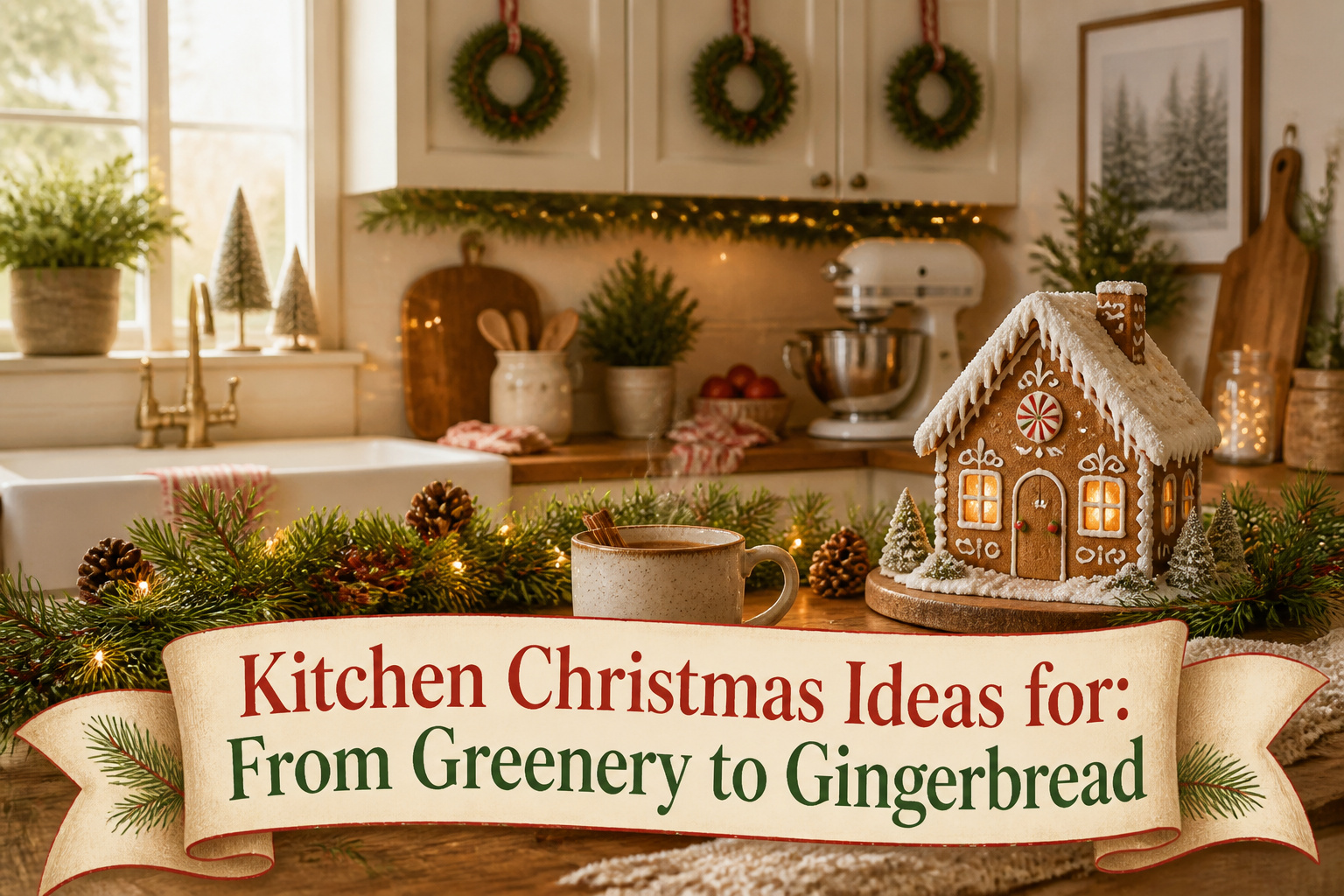
Kitchen Christmas ideas run from a ten-minute swap of cabinet wreaths to building a full gingerbread display, and the deciding factor is how long your kitchen actually stays a working kitchen. The 4-inch mini wreath I hang first each year goes up with the same spool of wired ribbon I’ve used since 2018, but it comes back down fast when the stand mixer needs that counter.
1. Greenery on Cabinets and Windows
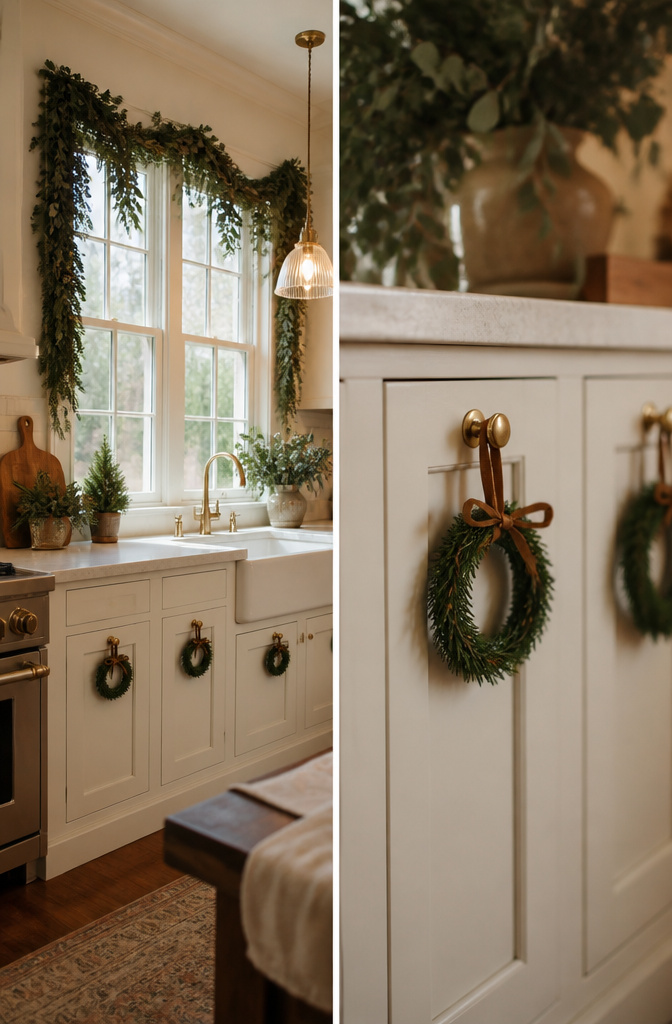
Mini wreaths on cabinet knobs are the first layer I put up each year, and the detail that makes the kitchen feel dressed rather than decorated. A 4-inch wreath hung with ribbon, pine or eucalyptus both read as Christmas without competing with whatever else the room will collect by December 20. I have used the same spool of wired ribbon for eight years now; the wire gives the bow enough backbone to stay put against the cabinet face.
Over windows, garlands work the same way as a mantel but with less competition. A single heavy garland across the top of a tall kitchen window, something with some weight and irregular branching, fills the vertical space without blocking light. The sources I trust most on this point to Anthropologie’s fuller styles, though any garland with real variation in the branch length will give the same effect.
Real pine smells right but drops needles by week three; eucalyptus dries prettier and lasts longer; faux is the only practical choice if you leave the wreaths up from Thanksgiving through New Year’s. I run faux on the cabinets and real eucalyptus over the window, where the occasional dropped leaf lands on the sill and not the cooktop. Command hooks on the cabinet frames, the small clear ones, stay put year-round so the wreaths go back up in about ten minutes. Scotch tape works in a pinch, but the hooks survive a steamy kitchen better.
2. Seasonal Dish Towels and Everyday Swaps
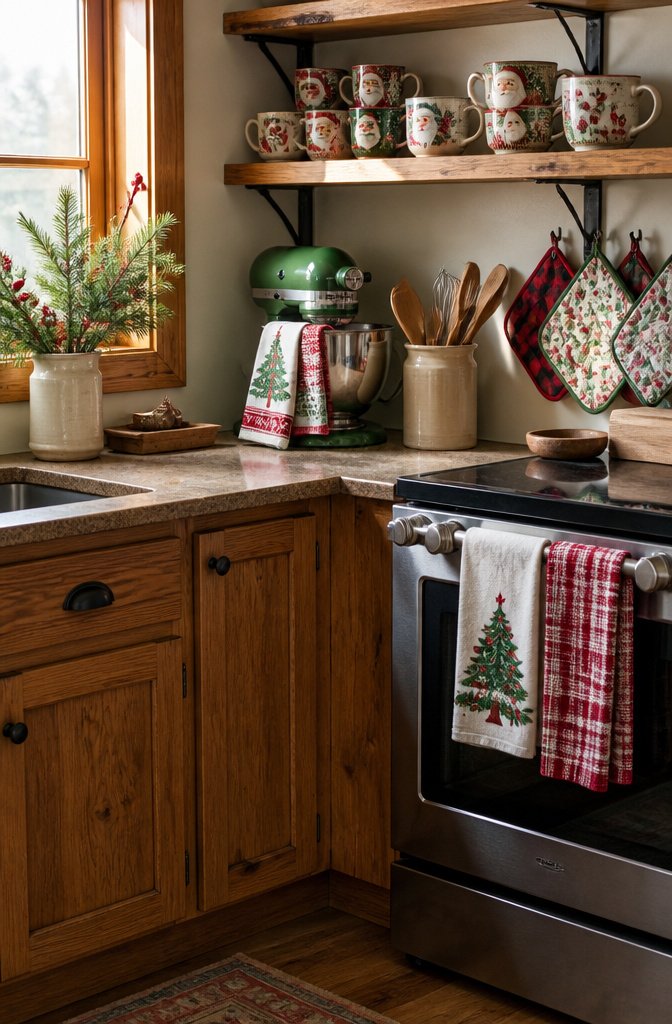
Swapping everyday items for Christmas versions is the fastest way to make a kitchen feel festive without adding clutter. Dish towels, mugs, and potholders earn their keep because you already use them daily; the holiday versions just sit in the same spots.
A few Christmas towels draped over the oven handle or the mixer bowl turn functional storage into decoration. Tucking one over a drawer front so it drapes down is another small move that reads as intentional, not accidental. Potholders follow the same logic. A hook near the stove keeps them within reach, and swapping them seasonally costs almost nothing while the kitchen still works exactly as it should.
Mugs work harder if you group them. Pulling the everyday set from the shelf and setting out Christmas mugs, Santa or reindeer or whatever you’ve collected, turns the coffee station into its own little zone. On open shelving, red dishes and holiday mugs against the usual backdrop do most of the visual lifting without requiring extra pieces.
The mistake is buying too many. A small collection of staples, rotated in and out, makes a bigger impact than spreading thin holiday touches everywhere. I leave the base of the shelf alone and change maybe three things. The rest of the year, the same towels and mugs live in a bin, waiting.
3. Hot Cocoa and Coffee Bar
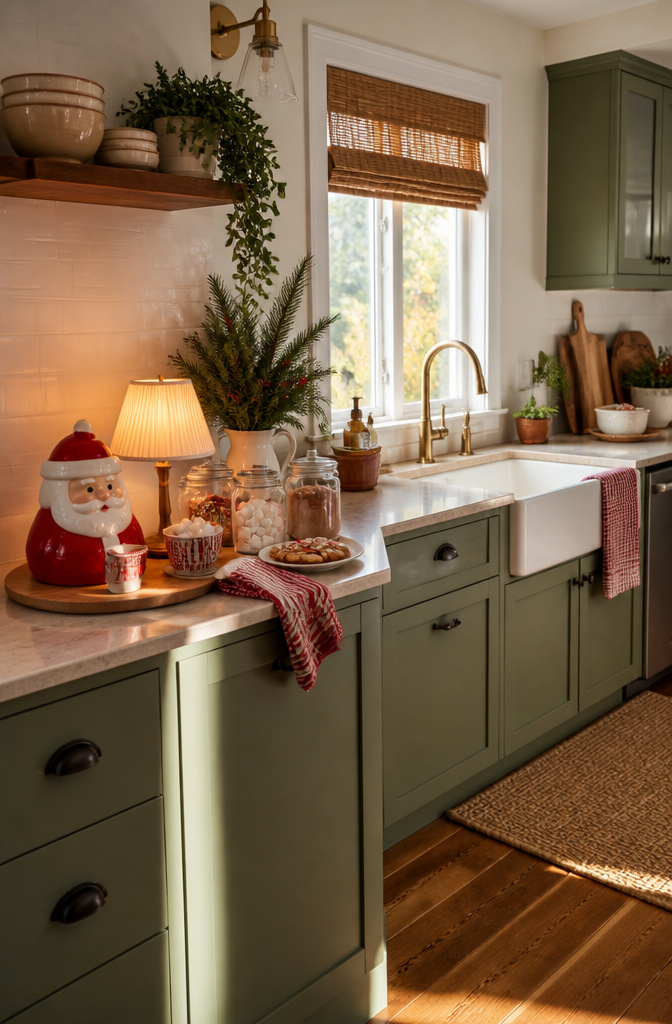
A drink station turns the least-used corner of the kitchen into the spot where everyone lingers. I set mine on a round tray beside the coffee maker, which lets me slide the whole thing aside when I need the counter back for actual cooking. The tray holds a Santa cookie jar, a cocoa jar, and a few baking items that share the same color family even if they have nothing to do with drinks. A small lamp next to it works better than any overhead light for midnight cups; the warm glow is enough to find a mug without waking the house.
For the kids or anyone skipping alcohol, mason jars store the mixes. Classic, white chocolate, and peppermint are the flavors that see actual use at our place, with mini marshmallows, chocolate chips, and candy canes in small bowls nearby. I add a couple of cookies or brownies on a plate because the cocoa always runs out faster than the snacks.
The hot toddy station is the variation worth adding for adult gatherings. Whiskey, tea, lemons, and honey laid out on the same counter let guests build their own. Spiced rum toddy, hot apple cider with brandy, or mulled wine all work from the same setup. I have never actually tasted a hot toddy myself, but the fancy red goblets make the attempt feel festive either way.
4. Island and Table Centerpieces
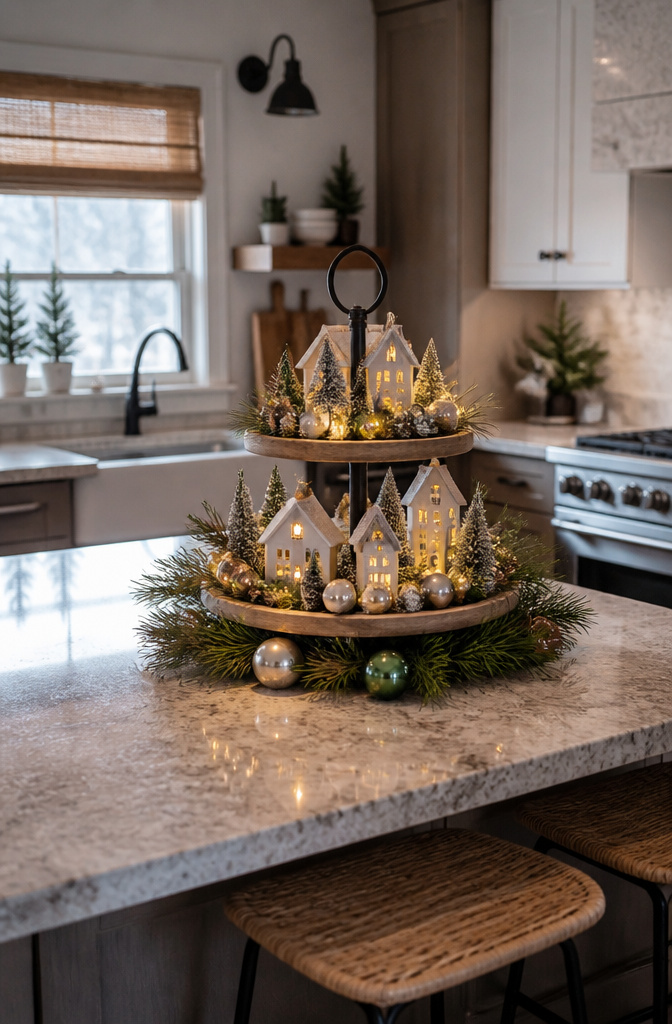
A kitchen island or table centerpiece is where most holiday eyes land first, so it pays to make it count without blocking the workspace you still need. The move that wins in a working kitchen is a portable centerpiece on a two-tiered tray: a small snow-covered church, white porcelain houses, and a few trees arranged on a wooden tray can lift right off when cookie-baking starts. String a few white Christmas lights through it and dust with fake snow, and the whole setup travels to a sideboard or living room shelf without a full teardown.
For a lower profile, a Cambria Lazy Susan dressed with pine boughs, berries, driftwood, and retro ornaments spins decor into function; pass the gravy and the centerpiece moves with it. Birch bark candles in a wooden bowl or a rustic basket of pomegranates keeps the island usable for actual prep. If you’re seating guests at the island, small personalized ornaments as place cards or a box of truffles on each stool turns the centerpiece into a favor they take home. These layer easily with the mini trees coming up next.
5. Mini Christmas Trees
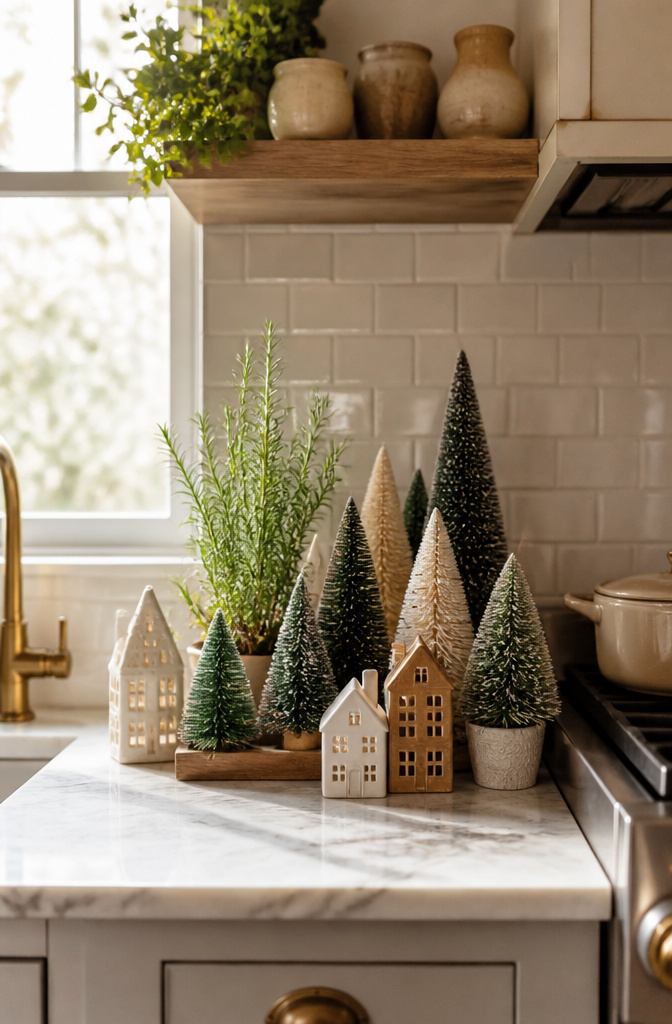
Small trees on a kitchen counter do more work than a single big one wedged between the sink and the wall. Sisal trees with tiny bows and baubles line a bar cart or counter edge without blocking the work zone, and a cluster of ceramic mini trees mixed with wooden houses turns the spot by your flour canister into something that reads as intentional rather than leftover. The trick is grouping: three or four pieces tight together read as a display, where one lone bottlebrush tree looks like you forgot to finish. Fresh rosemary plants do double duty here, since you can snip from them through January and they smell like the real thing. For island setups, a two-tiered tray with a small church, porcelain cottages, and a few trees stays portable; you lift the whole thing off when cookie baking starts. Keep any display under 12 inches tall or it fights the backsplash and catches splatter. I have learned that the hard way with a balsam that shed needles into the stand mixer for two weeks.
6. Fairy Lights Around Windows
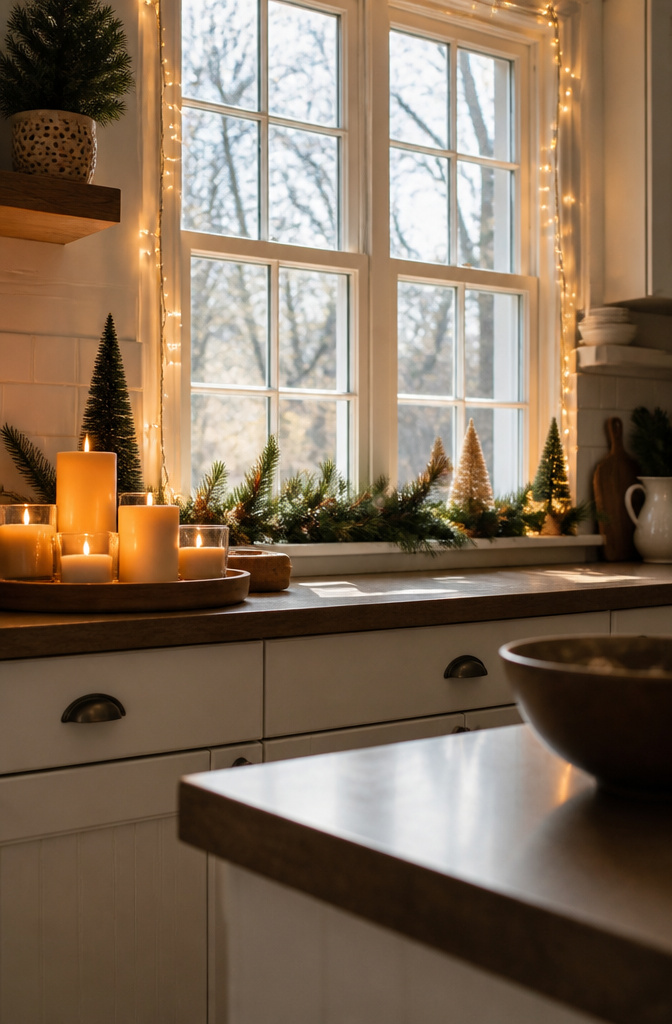
Fairy lights around windows give the most glow for the least space, which matters when every counter is already crowded with holiday baking. Warm white strands frame the glass without blocking the view, and the soft reflection off the pane doubles the light back into the room. Battery-operated strands work well for windows above the sink where outlets are scarce; the ones I keep reading about run on timers so they flick on just as the daylight fades.
Candles add the second layer. Cinnamon or pine scents on a tray by the sill give height and something to look at once the sun drops. The combination, lights plus candle glow, is what turns a working kitchen into the room people drift toward after dinner. One warning: garlands already on the window compete with lights for the same visual space. Either keep the greenery thin and let the bulbs show through, or skip the greenery on that window and move it to a cabinet where the light will catch it from behind.
7. Seasonal Art and Printables
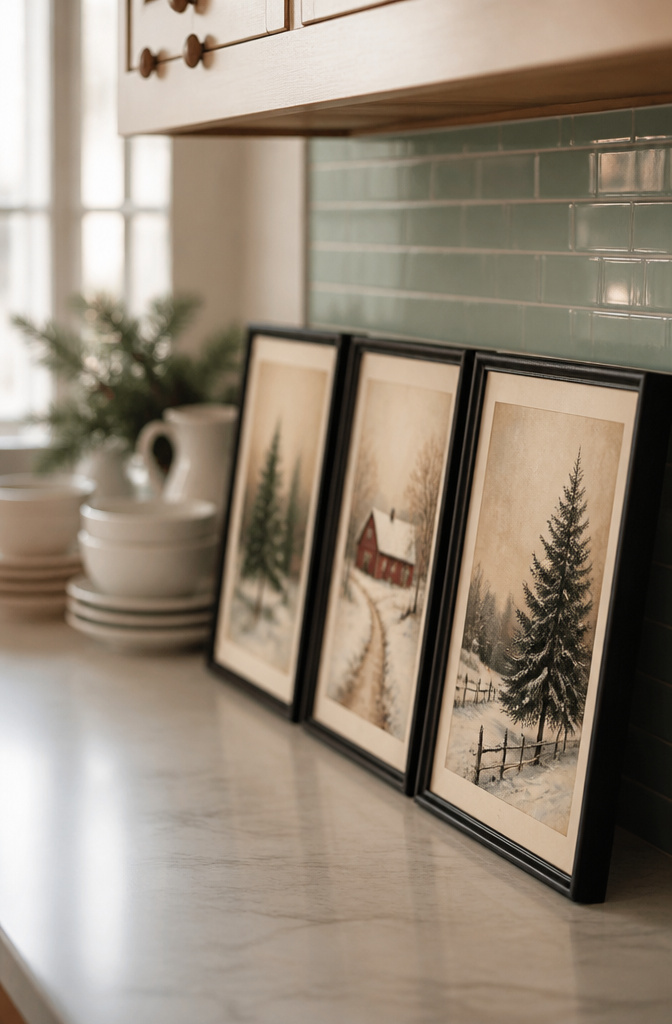
Art often gets overlooked in the kitchen, but free vintage-style Christmas printables change the room faster than almost anything else. I swap a few frames on the back wall or lean a small print against the backsplash, and the whole space reads December without adding clutter to the counters. The snow cabin printables I keep in rotation cost nothing but the ink, and they store flat in a drawer come January.
Cheap frames from a big-box craft store hold them fine. I have had the same black 8-by-10s for three years; I just change the paper inside. One year I printed winter landscapes, another year a simple "Merry Christmas" block sign. The trick is sizing the art to the frame before you print, not after, so you are not trimming into the image itself. A quarter-inch margin all around saves the composition.
What stops me from going further is the cooking reality. If I load every wall with seasonal art, the kitchen starts to feel like a gift shop, and I get irritable when I need counter space for actual dinner prep. Two or three pieces, switched out from what hangs there anyway, hits the right balance. The rest of the year those spots hold everyday prints, so no extra holes in the wall, no extra nails, no landlord conversation.
8. Baking Station Setup
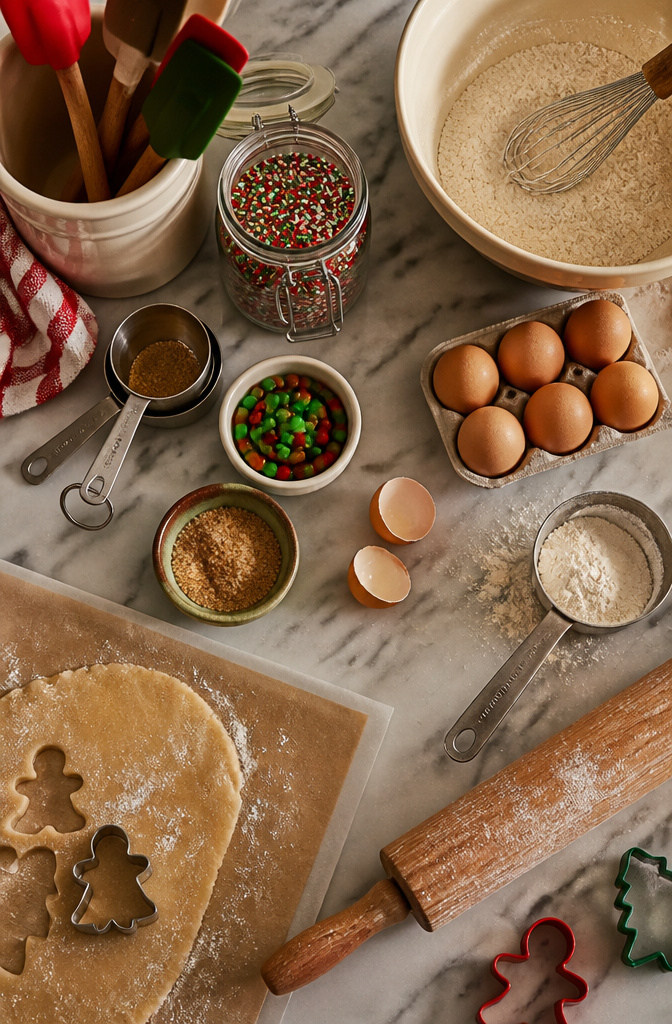
A baking station only works if the flour and sugar stay within arm’s reach of where the mixing happens. I clear one corner of counter, usually the spot closest to the oven, and set out the tools I will actually use: measuring cups, a bench scraper, the one rolling pin that does not stick. The rest goes back in drawers. Seasonal ingredients in clear jars do the heavy lifting for decoration here; red and green sprinkles, cinnamon sticks, and coarse sugar read as Christmas without any extra objects cluttering the surface. A small crock for spatulas and a stack of holiday cookie cutters by the mixer finish it. The point is to keep the station active, not staged. As Elle Decor puts it, "Christmas, indeed, offers a prime chance to deck your halls and your countertops" and the kitchen deserves the same attention living rooms get, since that is where the family actually gathers. For a renter or anyone with limited square footage, this means the decor earns its place by serving the cooking, not sitting beside it.
9. Seasonal Dishware and Linens
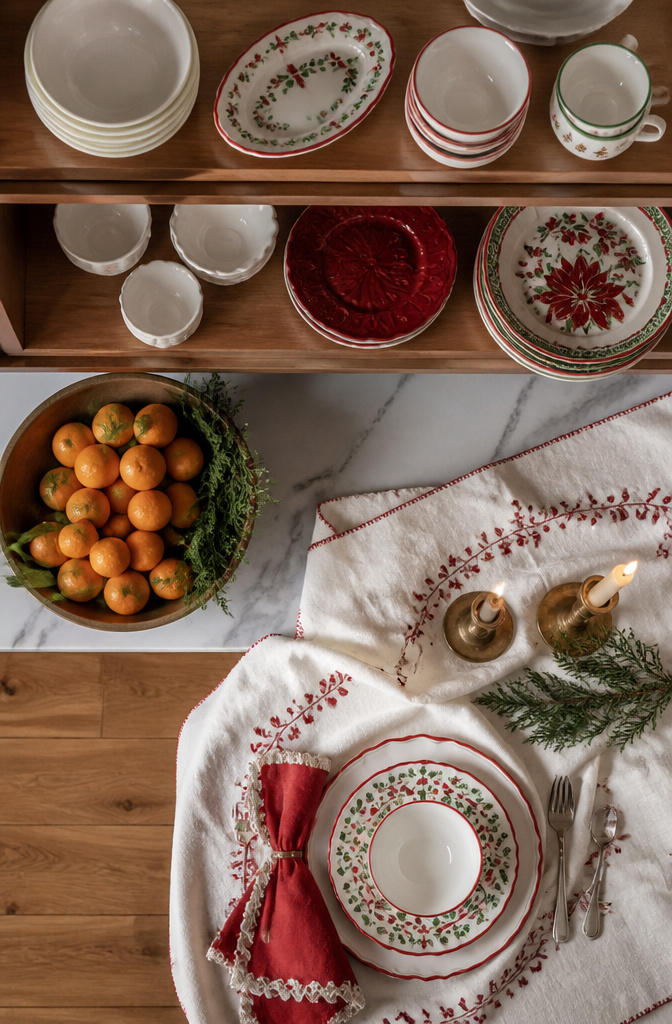
Christmas plates and bowls that sit out on open shelving do double duty: they fill the wall with color while staying ready for the next meal. I swap in a few pieces with evergreen borders or holly patterns each December, and the kitchen reads as dressed up without adding clutter I have to store later. A ceramic bowl on the counter, the kind meant for fruit, works the same way. I pile clementines in it and tuck a sprig of real evergreen along the rim; the whole thing costs what the fruit costs and smells better than any candle.
The cloth matters more than the pattern. A tablecloth or napkin set with hand-drawn embroidery, like the ones Coral & Tusk produces, brings in texture that printed cotton never matches. Tapered candles beside it add the low light that makes a kitchen feel finished at 5 p.m. For renters especially, linens are the safest holiday bet: they fold flat in a drawer in January, leave no nail holes, and work on whatever table you have now or next year.
10. Window Garlands and Wreaths
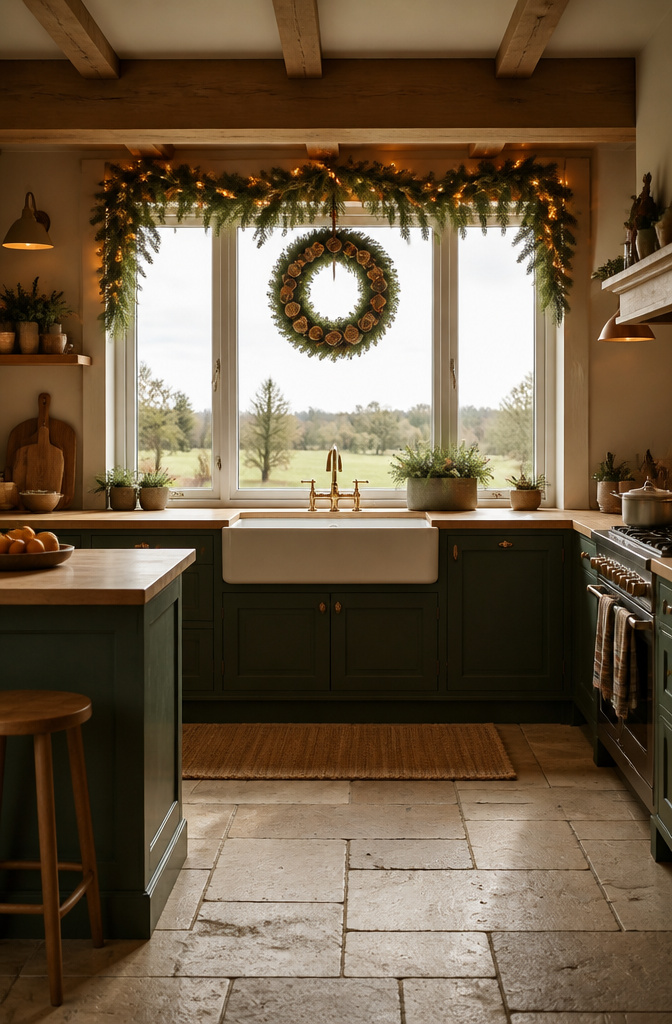
A kitchen window over the sink is dead space eleven months of the year, but in December it becomes prime real estate for greenery. Two small Command hooks pressed to the top window trim will hold a garland drape without leaving holes a landlord would notice, and a third hook centered on the pane itself gives a wreath something to hang from. The setup takes under ten minutes, which matters when Saturday morning is already half gone.
Battery-operated fairy lights woven through the garland turn the whole thing into something you actually want to face while doing dishes after dark. Dried orange slices strung in with the greenery, or a store-bought fake orange garland if the dehydrator is already packed away, give the standard evergreen a color shift that reads warmer against white tile or pale cabinets.
Tall windows, the kind that sit above a Brooklyn Heights sink or a downtown loft kitchen, can handle a heavier garland without looking overwhelmed. An Anthropologie garland, thick and full, runs the width and turns the glass into a framed winter view. The weight of the garland matters more than the price tag: a thin strand on a large window reads sparse, while a dense one on a small window blocks light you probably need. Scale the fullness to the frame, not the budget.
A range hood built into cabinetry works the same way a mantel does in a living room, and the same wreath or garland logic applies there too. A dark pink wreath against winter-white cabinets, or greenery against Brittanicca or Torquay countertops, gives the eye somewhere to land besides the backsplash. The hood is already the focal point; the decoration just admits it.
Small Kitchen Strategies
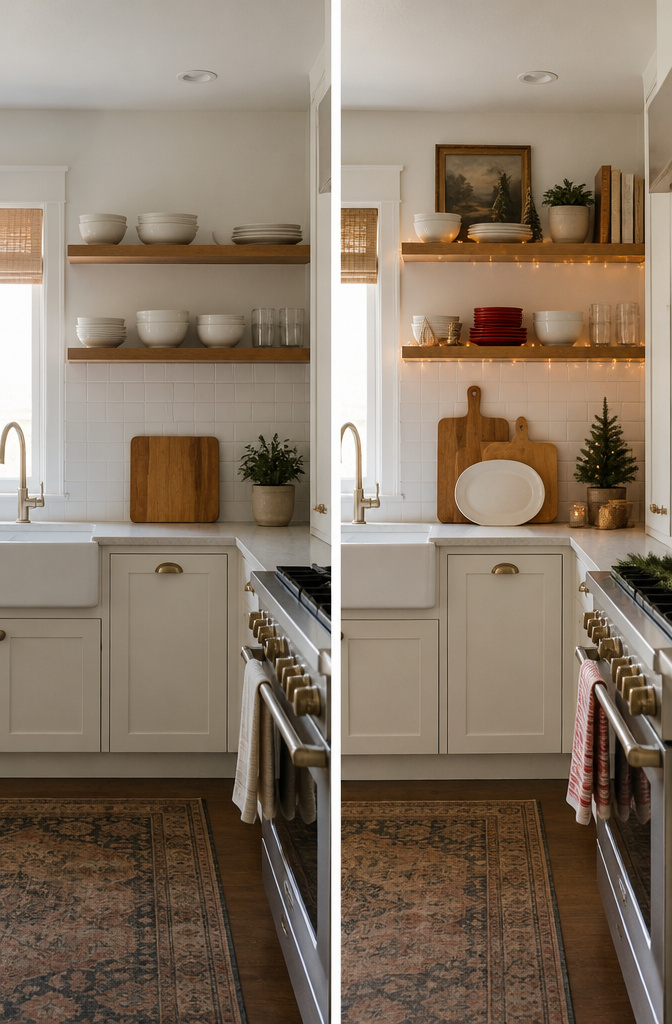
A small kitchen leaves no room for the usual spread of countertop trees and ceramic villages, but that constraint is what makes the result feel intentional rather than crowded. Open shelving becomes the main stage: a few red dishes swapped in among everyday white ones, a small canvas print propped behind a stack of plates, or a couple of bottle brush trees tucked between cookbooks. The base stays, the accents rotate.
Vertical space matters more than square footage. A wall-mounted rack at the end of a cabinet line, even a repurposed bookshelf from Home Goods, holds layered decor without stealing prep area. Cutting boards leaned upright, a Santa platter behind them, a ribbon-tied sprig of greenery tucked into the gap; depth lets you build a scene that reads from across the room without projecting into the walkway.
Fairy lights around the shelves, not across the counter, give the warm glow that makes a kitchen feel seasonal after dark. The strand stays up year-round in some kitchens, swapped from plain to berry-wrapped come December.
The pieces that work best here are the small ones you already own. Vintage salt and pepper shakers, a grandmother’s glass tree, a mini wreath hung on a cabinet pull; these survive the tight quarters because they were made for tables, not mantels. The rule is one swap per shelf, not a full reset. Anything more and the eye loses the holiday signal in the noise.
Vintage and Heirloom Touches

My grandmother’s brass candlesticks sit on my windowsill every December, the same pair she kept on her own kitchen ledge in the fifties. Battery tapers flicker inside them now, but the patina is original, and that slight unevenness catches the light in a way reproductions never manage. Inherited pieces carry the wear that proves they mattered to someone.
The cardinal cup holding my mini tree came from an estate sale, not her estate, but it has that same quality: a chip on the foot, a hairline crack that would disqualify it from a shop shelf. On a windowsill above the sink, those flaws read as history. I pair it with green glass bottles I found at a thrift store, the kind that turn luminous when afternoon sun hits them, and the whole grouping costs less than a single new "vintage style" replica.
Open shelving above the refrigerator gives these finds room to breathe. A boxwood wreath stays up year-round there, but in December I add brass reindeer my mother-in-law passed along and a couple of small trees that were her table decorations in the seventies. The lesson, repeated every year: you only need a few swaps. The base stays, the story changes.
Canvas prints of winter scenes, if you have them from family hands, work the same way on a shelf or propped against a backsplash. My own shelf still holds its everyday white dishes; red mugs and a couple of bird figures I bought years ago do the seasonal lifting. The "put a bird on it" joke applies, but the whimsy reads as intentional when everything else is restrained.
What stops this from looking like a junk collection is the restraint. One brass piece, one chipped ceramic, one hand-me-down print. The rest stays plain. New decor tries to manufacture nostalgia and usually overshoots into sentiment. The actual old stuff does not try that hard, which is exactly why it works.
Gingerbread House Display
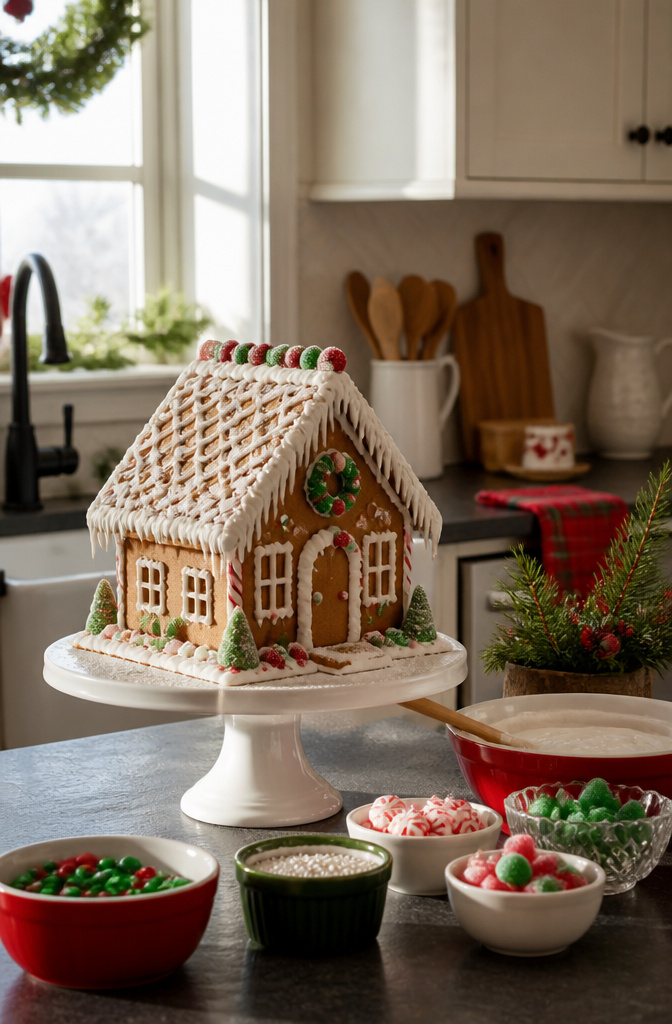
A gingerbread house on the counter does two jobs at once: it reads as decoration until someone breaks it apart, and the building of it fills the kitchen with something better than scent alone. The finished house sits well on a cake stand or an inverted mixing bowl to give it height without buying a dedicated pedestal. Icicle piping hides a crooked roofline better than any touch-up, and a dusting of powdered sugar through a sieve covers fingerprints on the chimney.
For a display that lasts the full month, a cardboard base coated in royal icing dries hard and light, so the whole thing moves easily when you need counter space. Real gingerbread softens in humid kitchens; if you want the look without the maintenance, craft stores sell convincing resin versions now, though they cost about as much as the ingredients for three edible houses. The resin ones lose the smell, which is half the point.
Children remember the building more than the result. One year we left the candy door un-glued so it could be "stolen" nightly, and that running joke mattered more than symmetry ever would.
Warm Minimalism Trend
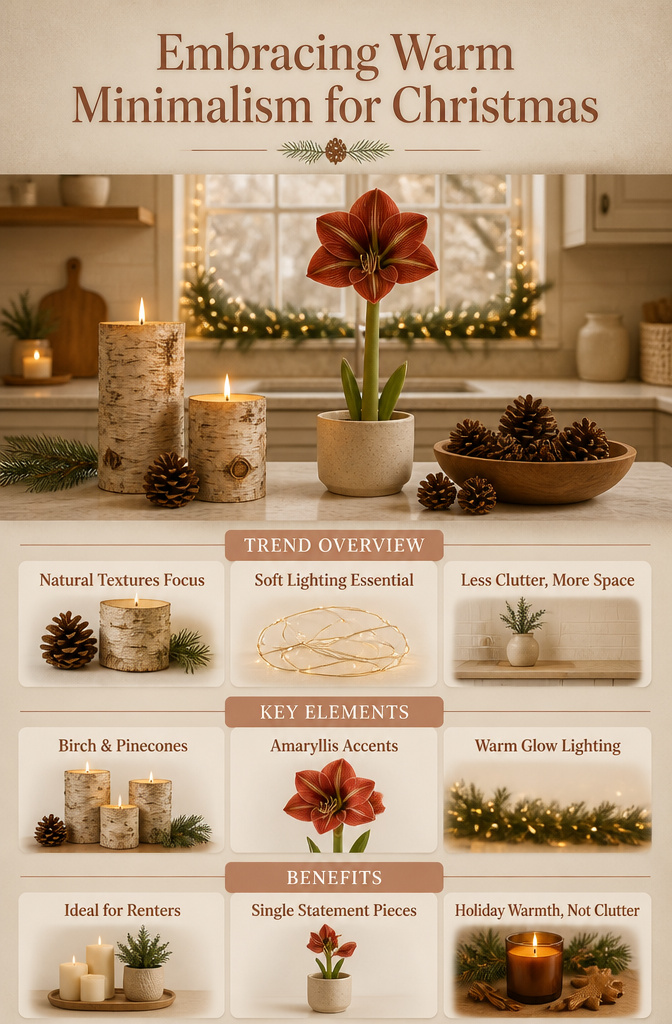
Warm minimalism is the answer to the question of what is trending for kitchen Christmas ideas in 2026, and the shift is worth understanding before you place a single garland. The look moves away from maximalist red-and-green overload toward natural textures, soft lighting, and breathing room. Think birch bark candle holders, pinecones, and amaryllis or poinsettia accents rather than every surface competing for attention. Battery-operated lights play a key role here; the warm glow they cast against evergreen swags creates atmosphere without the visual noise of full illumination. I noticed this in the way sources described kitchen window displays: the lights twinkle rather than announce themselves, and the greenery reads as texture first, decoration second. The restraint is the point. Even holiday-scented candles in cinnamon or gingerbread fit this direction because they add warmth through scent rather than clutter. For renters especially, this trend works because it rewards a few well-chosen pieces over accumulated collections. A single amaryllis on a counter, a strand of fairy lights above a window, and a pinecone bowl you already own can carry the whole season.
Frequently Asked Questions
How do I make my kitchen look Christmassy?
Start with three layers: mini wreaths hung on cabinet knobs with wired ribbon, a heavy garland across the top of one tall kitchen window, and seasonal dish towels draped over the oven handle or mixer bowl. Add battery-operated fairy lights around a second window for evening warmth, and swap in a few Christmas mugs on open shelving. The whole setup takes under an hour and comes back down in ten minutes if you leave Command hooks in place year-round.
What is trending this year for Christmas kitchen decor?
Warm minimalism leads for 2026, moving away from red-and-green overload toward natural textures, soft lighting, and breathing room. Birch bark candle holders, pinecones, and amaryllis or poinsettia accents replace cluttered surfaces. Battery-operated lights cast a warm glow against evergreen swags rather than announcing themselves, and restraint itself becomes the decorative statement. A single amaryllis on the counter, one strand of fairy lights, and a bowl of pinecones you already own can carry the whole season.
How to decorate a small kitchen for Christmas?
Use vertical space and open shelving instead of countertops. Swap a few red dishes among everyday white ones, prop a small canvas print behind plates, and tuck bottle brush trees between cookbooks. Fairy lights around shelves, not across counters, give warmth after dark without stealing prep area. The rule is one swap per shelf; anything more and the holiday signal gets lost in noise. Small inherited pieces, a mini wreath on a cabinet pull, or vintage salt shakers survive tight quarters because they were made for tables, not mantels.