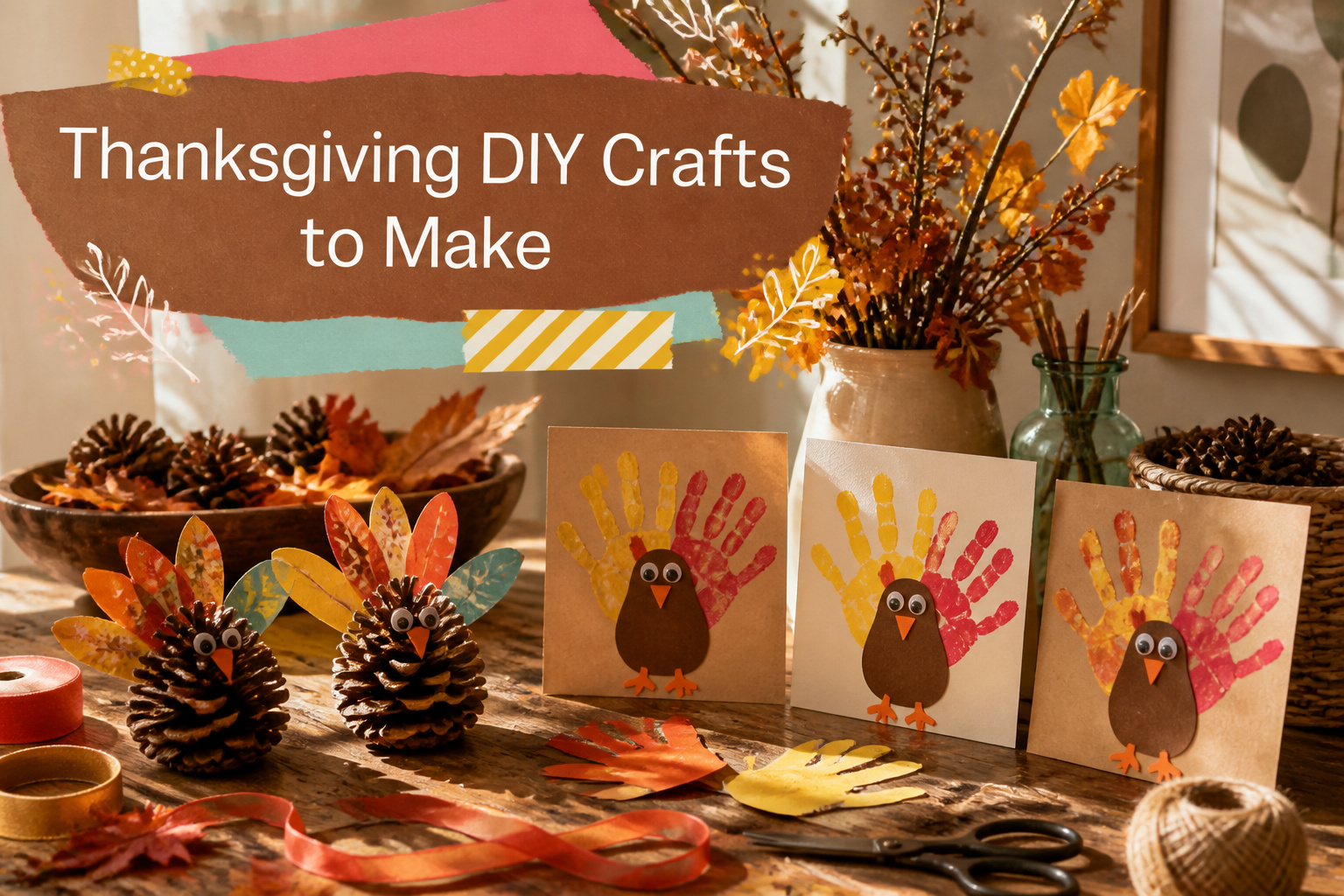
Thanksgiving DIY crafts span the range from fifteen-minute assemblies to full-afternoon builds, and the deciding factor is usually cleanup tolerance rather than skill level. A damp rag saves the handprint turkey from ruined grout, but the pinecone version skips wet paint entirely and still reads as decoration across a room. The real variable is whether you own a vase heavy enough for the branch you dragged in, or if paper taped to a pantry door is the only space left.
1. Handprint Turkey

A handprint turkey looks like the simplest project on the list until you are scrubbing orange acrylic off a dining chair. Construction paper, non-toxic paint, googly eyes, and feathers are the standard kit, and the basic move is exactly what you expect: paint the palm brown, the fingers in fall colors, press to paper, then glue on the face. What the pretty photos skip is that a wet handprint transfers paint to the back of the neck, the table edge, and whatever wall a child steadies themselves against.
Two approaches show up in the wild. One keeps it to a single hand, paints each finger a different color, and draws on the details after drying. The other layers multiple handprints, yellow then orange then red, to build fuller feathers. Both work for toddlers through grandparents, though a baby fist needs someone else spreading the paint. The layered version reads better from across a room; the single hand is faster and less likely to smear while a three-year-old rotates their wrist to "see if it is done yet."
My first attempt skipped the newspaper under the paper, not under the child. Non-toxic paint washes off skin; it does not wash off grout. A damp rag kept nearby for the pressing hand helps, but the real save is painting the child outdoors or on a surface you were already planning to repaint. A date in the corner turns the result into the kind of keepsake that survives moves between rentals, even if the googly eye falls off by year three.
2. Pinecone Turkeys
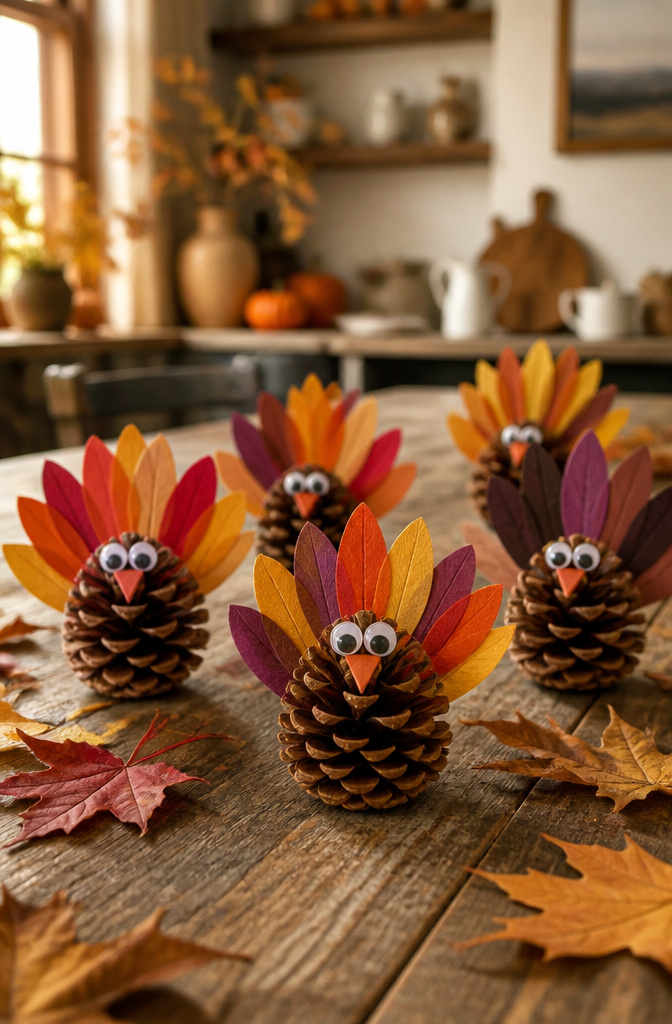
Pinecone turkeys start with a walk outside, which is half the point. The ones that work are fully open and still firm; a cone that is tight shut will not hold feathers in back, and one that has gone brittle crumbles the minute glue touches it. I have learned to pick them up and squeeze: if scales flake off in my hand, I leave it.
The build itself is simple. Colored paper or felt cuts into tail feathers for the back, orange and red paper shapes the beak and wattle up front, and googly eyes finish the face. Glue holds everything; no paint, no drying time between steps.
Cleanup differs sharply from the handprint version. There is no wet paint on little palms, no sink line after, no newspaper spread across the table. The mess stays on the craft, not the child. Time runs shorter too: once the pinecones sit in front of you, the assembly is maybe fifteen minutes, where handprint turkeys stretch across an hour with setup and washdown.
Scattered down a table or lined on a windowsill, they read as decoration rather than art-project-on-display. The nature-walk part makes them feel collected, not purchased, even when the eyes and paper come straight from a drawer.
3. Thanksgiving Gratitude Tree
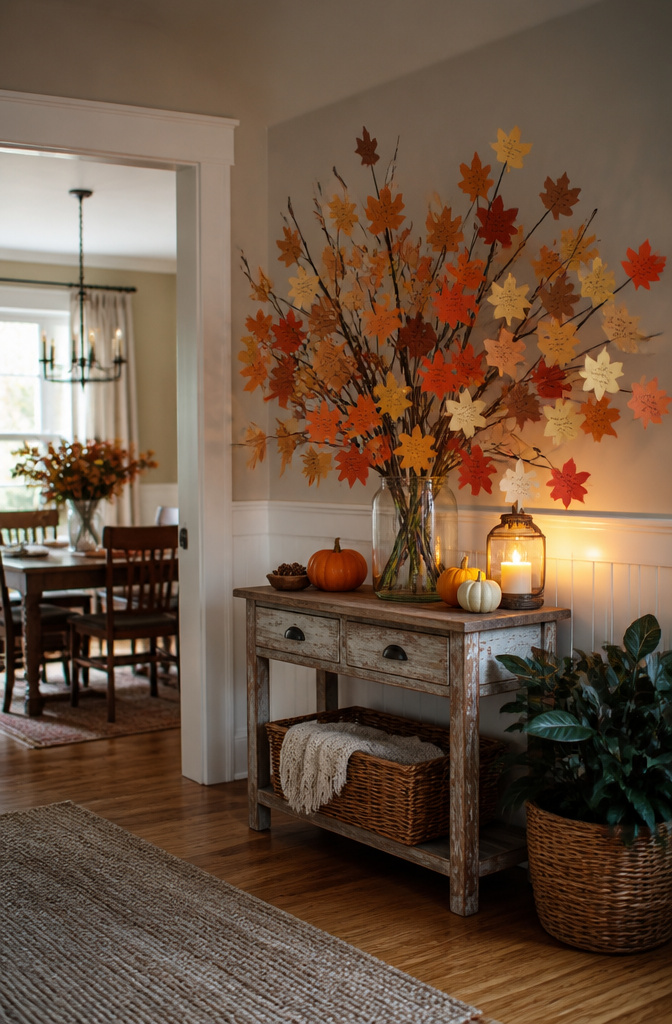
A gratitude tree works with either real branches in a vase or a paper cutout against the wall, and the choice shapes how the craft feels for the month it sits out. Real branches give weight and texture; paper keeps the project light enough to tape to a pantry door in a rental where counter space is already gone. Both use construction paper leaves in the usual fall colors, red and orange and yellow and brown, cut with ordinary scissors and attached with string or tape.
The reflection part happens on the leaves themselves. Each family member writes what they are thankful for on a leaf before adding it, and the tree fills gradually over the weeks before Thanksgiving. The House That Lars Built suggested adding small favors to the branches, though skipping that keeps the focus on the written gratitude and holds the budget closer to a few dollars in paper.
Real branches shed and snag and need a sturdy vase; paper ones survive a season of kids pulling at them and pack flat for next year. I have done both, and the paper version won only because I did not own a vase heavy enough for the branch I brought in. The bare branch looked better for about three days.
4. Paper Plate Turkey
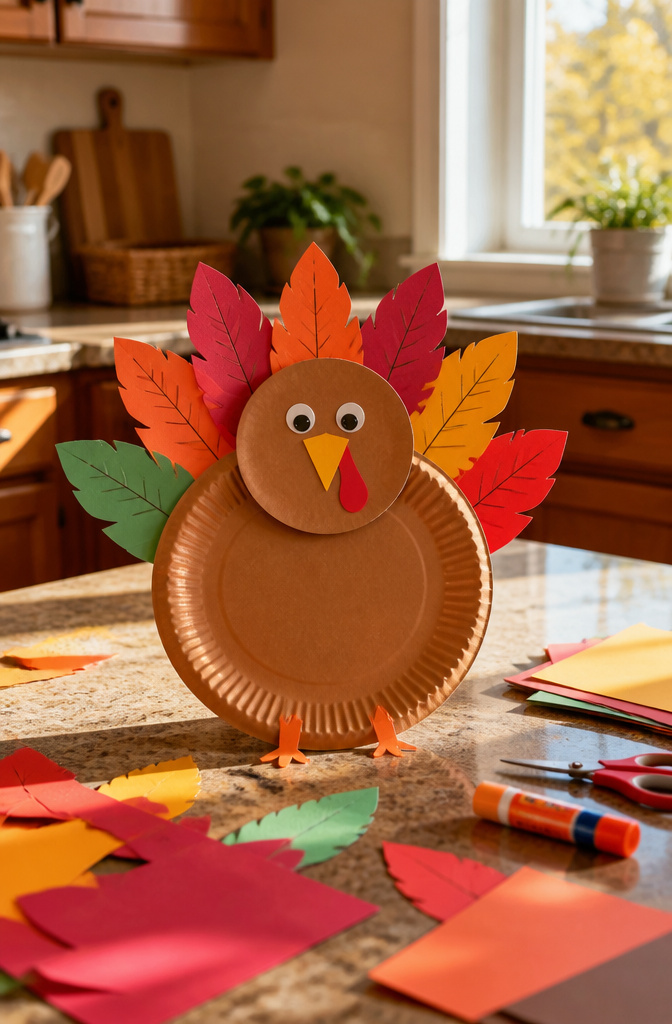
Paper plate turkeys sit at the sweet spot where a preschooler can finish in one sitting and still have something to point at proudly. The materials are already in most kitchens: a dinner-sized plate for the body, a salad plate for the head, and construction paper strips for the tail feathers. Scissors do the real teaching here. Rounding the plate edge into feather shapes builds the curved cutting motion kids need before they tackle circles, and snipping fringe along the paper strips lets them practice stopping at a line without the stakes of ruining a whole drawing.
Glue quantity is where this project lives or dies. The first batch I set up for a three-year-old used standard school glue applied straight from the bottle, and the tail section went soggy halfway through drying. The plate fibers separated and the whole back half collapsed into a limp curve. Thin cardboard plates or the coated kind hold up where the cheap uncoated ones fail, and a glue stick works faster with less warping for the paper-to-paper joins. Save the liquid glue for the final wiggle-eye step, where a small dot actually dries clear and strong.
5. Pumpkin Crafts

Pumpkin crafts sit at the center of most Thanksgiving craft roundups for a reason: the real thing is already on the counter, and almost anything you do to it reads as seasonal. The versions worth your time split cleanly by commitment. Painting a pumpkin takes an hour; hollowing one for a vase takes an afternoon. Both demand the same early decision, fake or real, and the same caution: acrylic paint on real pumpkin skin will flake within days. The oils in the rind reject water-based coatings. Use craft paint on foam or ceramic pumpkins, or seal real ones first with a spray primer most hardware stores stock near the spray paint aisle.
For a pumpkin vase, the hollowed shell lasts longer if you line it with a glass jar or heavy plastic cup before adding water and flowers. Red, yellow, and orange blooms against orange rind give the classic Thanksgiving palette without much planning. Succulents and moss skip the water problem entirely and last the full holiday week with no maintenance.
Seed-and-acorn flowers glued to the surface work best with kids. Half-inch craft paper circles, pumpkin seeds radiating from the center, acorn tops to cover the glue mess. Hot glue sets fast enough that small hands do not lose patience. The result is haphazard by design, which is the only way seed flowers ever look right.
6. Thanksgiving Garland

Paper garlands and felt garlands both fold flat for storage, which matters when Thanksgiving ends and you need the bin space back. For a standard fireplace mantel or a doorway, seven to nine feet of finished length fills the space without crowding the trim.
The cutting and stringing takes about two hours if you work assembly-line style, longer if you let kids paint the pieces first. Two approaches work: paint paper plates into pumpkin pie slices with cotton-ball whipped cream, or cut simple leaf and turkey shapes from felt. Ribbon holds the paper version better than string; string looks fine in the photo but frays and sags once the paint dries and adds weight.
I learned that the hard way with a cotton thread that looked delicate against the orange paper. By day three it had stretched enough that the middle slice hung an inch lower than the ends. Swap in quarter-inch grosgrain or a thin twine and the line stays straight through the whole holiday.
7. Thankful Jar

A one-quart mason jar holds enough folded notes for a family of four writing daily through November, with room left so the lid still threads cleanly. Smaller jars look cute in photos, but the pile compresses and you end up fishing notes out with tweezers by week three.
Colorful paper works best cut to two-inch squares. I learned the hard way that three-inch squares, folded once, jam against the jar shoulder and spring back out when you press them. Two inches lets a single fold drop cleanly and stack flat.
Placement matters more than the jar itself. The kitchen counter where backpacks land catches people in motion; the dining table gets ignored until the one night a week you eat there. A side table by the coffee maker caught my household most consistently, though the bathroom mirror worked better for guests who stayed over Thanksgiving weekend.
Reading the notes aloud on the holiday works better if someone sorts them the night before. Random draws mean six about the dog before anyone else’s turn, and the quiet person who wrote three never gets heard.
8. Turkey Treat Bags
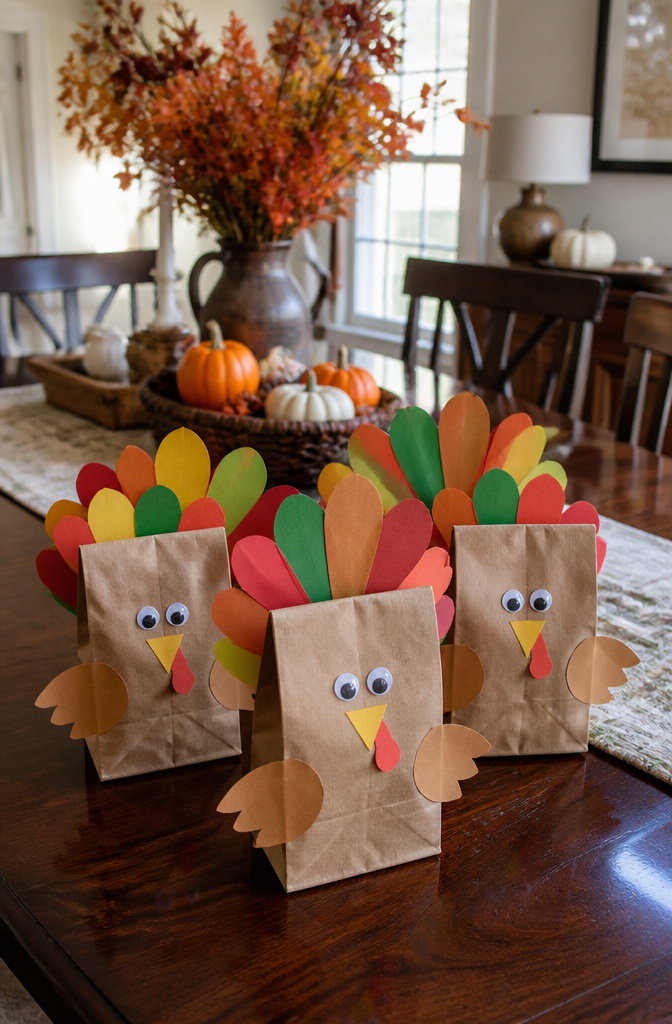
Brown lunch sacks and construction paper turn into a quick hand-out for kids at the Thanksgiving table. I figure about fifteen minutes per bag once the pieces are cut: two wings, a fan of tail feathers, and a head with a wattle glued to the front. The sources mention googly eyes, though a marker works fine if you are out.
The cost lands around fifty cents per bag if you buy the sacks in a thirty-count pack and use construction paper you probably already have for school projects. The treats inside are whatever runs your budget.
Fill the bag after the turkey face is attached, not before. I have watched someone stuff it first, then try to glue the paper feathers flat against a lumpy front. The bag gapes, the face wrinkles, and you end up holding it shut with extra tape that shows. Glue the decoration to an empty bag, let it set, then drop the candy in and fold the top.
9. Leaf Crafts

Real leaves work for about two weeks after they drop, then the cell walls break down and the color leaches out even before they crumble. The third week of October is usually when they turn too brittle to use flat; after that, glycerin preservation is your best bet, or you switch to artificial.
Artificial maple leaves get the color wrong more often than the shape. The plastic sheen catches light from a window and reads as costume jewelry against the matte of a real pumpkin or a cardboard cutout. ModPodge over them helps, but the veins are still too uniform up close. I keep artificial ones for filler in mason jar wraps where the glass distorts detail anyway.
For luminaries, real leaves win every time. The light passes through the actual cell structure and glows in layers, not flat panels. A salsa jar works as well as a proper mason jar for this, and the smaller diameter actually holds the curve of a leaf better with less buckling. Twine around the rim covers the glue line without needing a perfect seal.
10. Thanksgiving Wreaths

A wreath sets the tone before anyone rings the bell, and the material you build on decides how long that tone lasts. Felt flowers and leaves in burnt orange, mustard, and cranberry can be pinched at one end and hot-glued to a wooden craft ring for dimension that reads handmade, not homemade. Paper plate bases work too, especially if you swap pumpkin faces for apple prints and keep the palette strictly fall. The grapevine base I hung outside last November shed its bark in the first freeze and left me rewiring the whole thing by December. Foam would have held its shape, but grapevine wins for texture if your door is covered. Three hours with felt, closer to one with paper, and neither needs more than a glue gun and ribbon.
Materials That Work Across Every Craft

Construction paper, glue, and tempera paint show up in almost every Thanksgiving craft worth doing. The wayb handprint turkey and the organizedhomeschooler sun catcher both lean on them, and the goodhousekeeping leaf pumpkin adds dry leaves or the artificial maple variety as backup. What I learned after a few years of November weekends is that the 50-sheet construction paper pack is the one thing to buy in bulk. The smaller packs run out by the second project, and the per-sheet cost drops enough to matter when you are cutting feathers for a whole classroom or a cousins’ table.
Glue is where I overbought. A 32-ounce bottle seemed smart until it sat in the craft bin past its prime and the tip clogged with dried residue. Now I keep one fresh bottle and skip the backup. Paint sticks, like the tempera sticks in the sun catcher project, last longer than liquid paint and make less mess with kids underfoot. Natural items, pinecones and leaves, cost nothing if you gather them the week before. The catch is timing. Leaves that look perfect on the walk home curl by morning unless you press them flat between parchment paper and a heavy book for two days. Artificial maple leaves solve that, but they add three to five dollars to a project that should be free.
Age Labels and What They Actually Mean

Age labels on Thanksgiving crafts read like promises that rarely hold up through an actual afternoon. A "preschooler" project like leaf lanterns, built from real leaves and a simple jar, still needs an adult running the glue and placing the tealight. The finished height may not work as the centerpiece you pictured, and the electric candle swap is less a suggestion than a necessity if you expect small hands anywhere near it. Pinch pots wear the same label but land differently: preschoolers can press the clay, yet the keepsake quality the photos promise really shows up closer to elementary age, when finger strength shapes more than a lumpy blob.
"Any age" is the label that tests mess tolerance hardest. String pumpkins built from yarn, glue, and balloons technically let a toddler wrap and dip, but the drying time is non-negotiable, and the popped-balloon collapse disappoints anyone too young to wait. What the label calls easy translates, in practice, to supervision time measured in wiped tables and redirecting glue strands back toward the balloon. The result still works; the gap is between who can execute it alone and who needs an adult anchored to the chair beside them.
Decorative Versus Functional Crafts
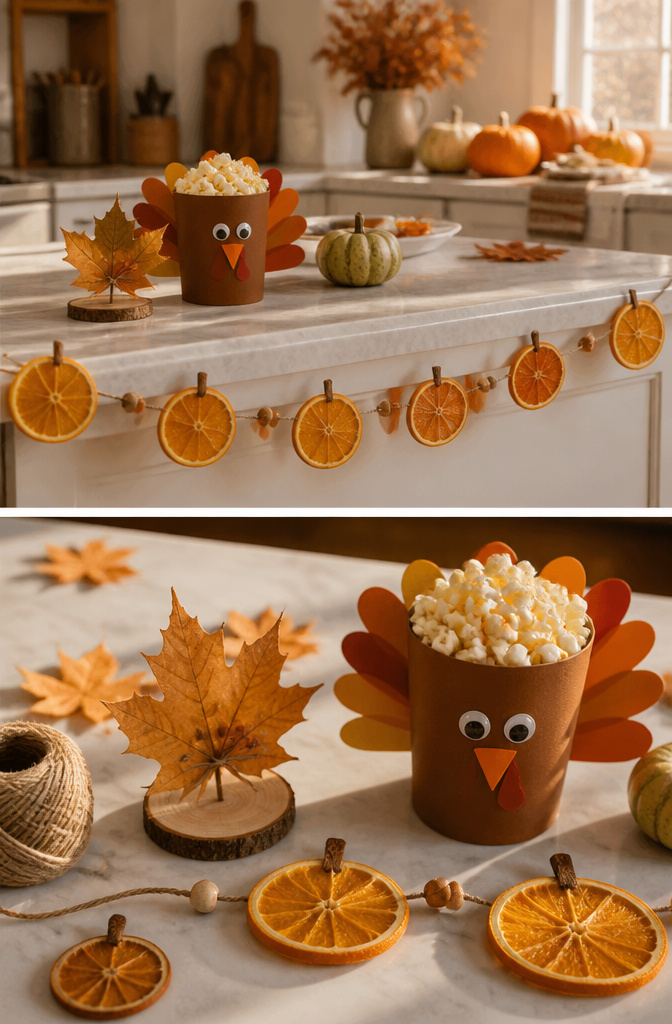
Paper pumpkins that hold candy corn and carry a guest’s name pull triple duty, so they need cardstock stiff enough to survive being passed around the table. A garland of construction paper pumpkin slices, on the other hand, only has to hang straight until the party ends; pompoms and twine do the job without any stress on the joints.
That difference changes what you reach for and how long you spend. Functional crafts like utensil holders folded from cardstock, turkey cups glued from brown paper and filled with popcorn, or mason jar luminaries meant to line a mantel all face real use: hot glue softens near a candle, and a weak Elmer’s joint on a treat cup spills favors across the tablecloth. Pure decoration like a thankful tree of written notes or a wreath of ribbon-wrapped tulle can get by with lighter materials and less curing time.
If the craft has to hold a fork or a votive, build in drying time the night before. A place card made from a leaf and a traced name can be assembled Thanksgiving morning. A crayon holder paired with coloring pages needs to survive small hands tugging at it through the whole meal, so the seams matter more than the face you draw on the front.
Gratitude Themes in Practice
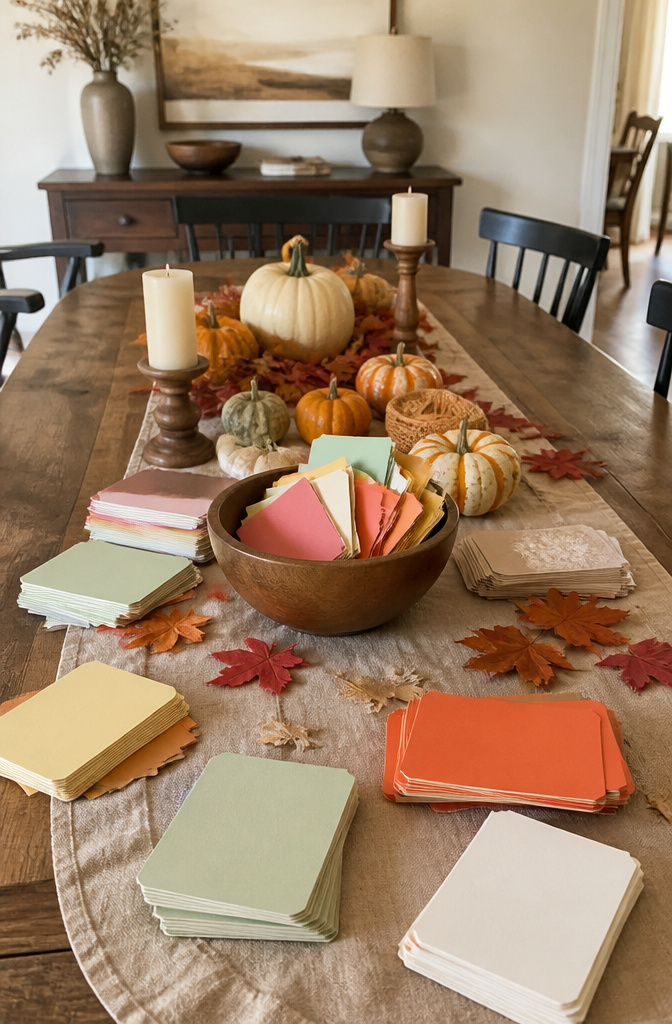
Gratitude built into a craft only works if the prompt is specific enough to force a real answer. Last year I tried a thankful jar with the family and wrote "What are you grateful for?" on the slips. Every single kid wrote "my family," "my dog," or "food." The adults were not much deeper. The craft looked pretty on the table, but the contents were interchangeable.
This year the prompt on each slip names a category: "a sound you heard today," "something that costs no money," "a person you have never thanked out loud." The narrower frame makes everyone pause. My eight-year-old nephew spent five minutes on "something that costs no money" and came back with "when the garage door is already open so Dad does not have to get out of the truck." That is the kind of detail worth keeping.
The best prompts force a sensory or situational answer, not a moral one. "Name a color you saw today and why you noticed it" pulls more out of a quiet kid than "what made you happy." For adults, "what task did someone else do that you usually do yourself" surfaces the invisible labor we normally skip over. The craft is just the container. The prompt is the work.
Eco-Friendly Options Worth the Extra Step
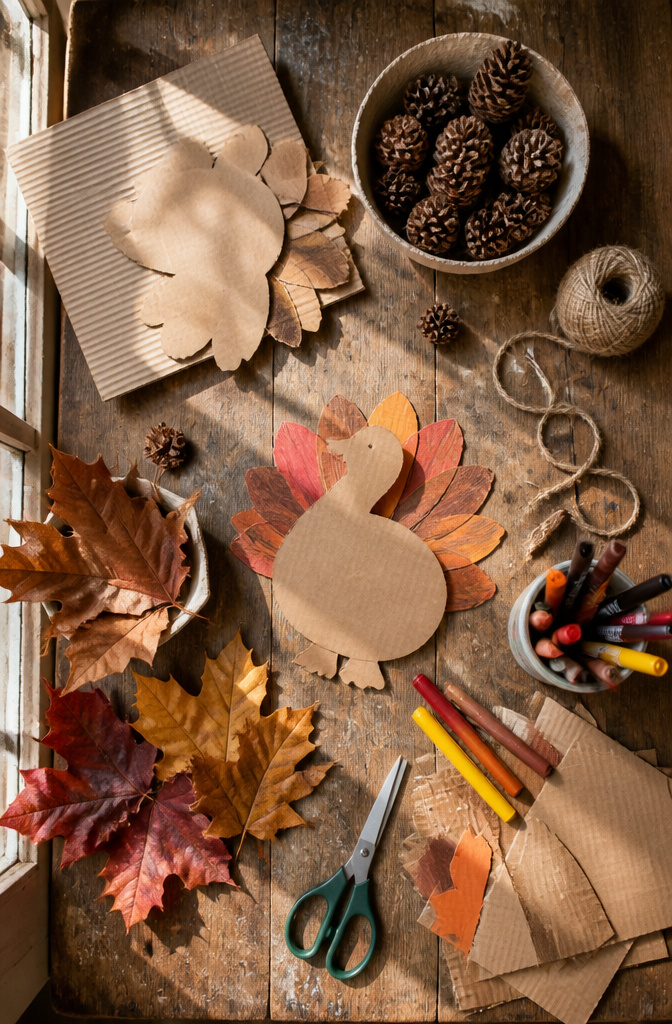
Most Thanksgiving craft tutorials mention recycled materials without telling you where to actually get them. Cardboard works for turkey cutouts, but the free template approach only saves money if you have clean, flat pieces on hand. Shipping boxes with heavy printing or tape residue eat up time you do not have. Salsa jars beat mason jars for leaf luminaries; the threaded neck holds a tea light steadier than a straight-sided mason, and you were going to recycle it anyway.
Pinecones and leaves are the two materials every eco-friendly list names and none explain. Parks with loblolly or longleaf pines drop cones from October through November in the Southeast, but the Midwest mix of white and red pine tends to hold onto theirs until wind or ice knocks them down after Thanksgiving. For leaves that keep their color pressed in wax paper, collect after a dry spell; wet-ground leaves go brown in the jar within a week. The fake leaf substitution costs more than it saves unless you are crafting with toddlers who will crush the real ones before the glue dries. Pipe cleaners for toilet-roll turkey feathers run about three dollars a pack, and paper cutouts work the same for zero. That is the swap that actually pays off.
Cultural Variations in Thanksgiving Crafts

Standard turkey-and-pumpkin imagery dominates most Thanksgiving craft boards, but a few traditions outside that narrow lane can freshen a display without turning someone’s heritage into backdrop décor. The distinction matters. What convinced me, reading through a dozen of these project roundups, is that the worthwhile borrowings are structural or symbolic, not costume-level.
Corn husk dolls appear in several craft collections with roots in Native American practice, but the respectful move is not to replicate the specific form. Stripped husk wraps around a twig armature just as well for a generic harvest figure, and the material itself is cheap, compostable, and reads autumn without the appropriation risk. Similarly, some sources mention papel picado as a nod to Mexican celebrations of gratitude. The cut-paper technique transfers cleanly to tissue-ply leaves or turkeys; the geometric patterns do not need to quote festival-specific iconography to add visual airiness above a table.
The line I draw is when a craft requires explaining someone else’s ritual to justify its presence. If the project needs a footnote, it probably belongs in a different article.
Frequently Asked Questions
What are some easy Thanksgiving crafts for kids?
Handprint turkeys, pinecone turkeys, and paper plate turkeys all work well for children. Handprint turkeys need wet paint and cleanup time, while pinecone turkeys skip the mess and finish in about fifteen minutes once you have the cones. Paper plate turkeys let preschoolers practice curved cutting motions with scissors.
How can I incorporate gratitude into Thanksgiving crafts?
A gratitude tree fills gradually as each family member writes what they are thankful for on paper leaves before attaching them. The prompt you print on the slips shapes the quality of the answers. Specific frames like "a sound you heard today" or "something that costs no money" pull richer responses than the open question "what are you grateful for."
What materials do I need for Thanksgiving crafts?
Construction paper, glue, and tempera paint show up in nearly every project. A 50-sheet construction paper pack is worth buying in bulk since smaller packs run out by the second project. Natural items like pinecones and leaves cost nothing if gathered the week before, though leaves need pressing flat between parchment and a heavy book for two days to keep their color.