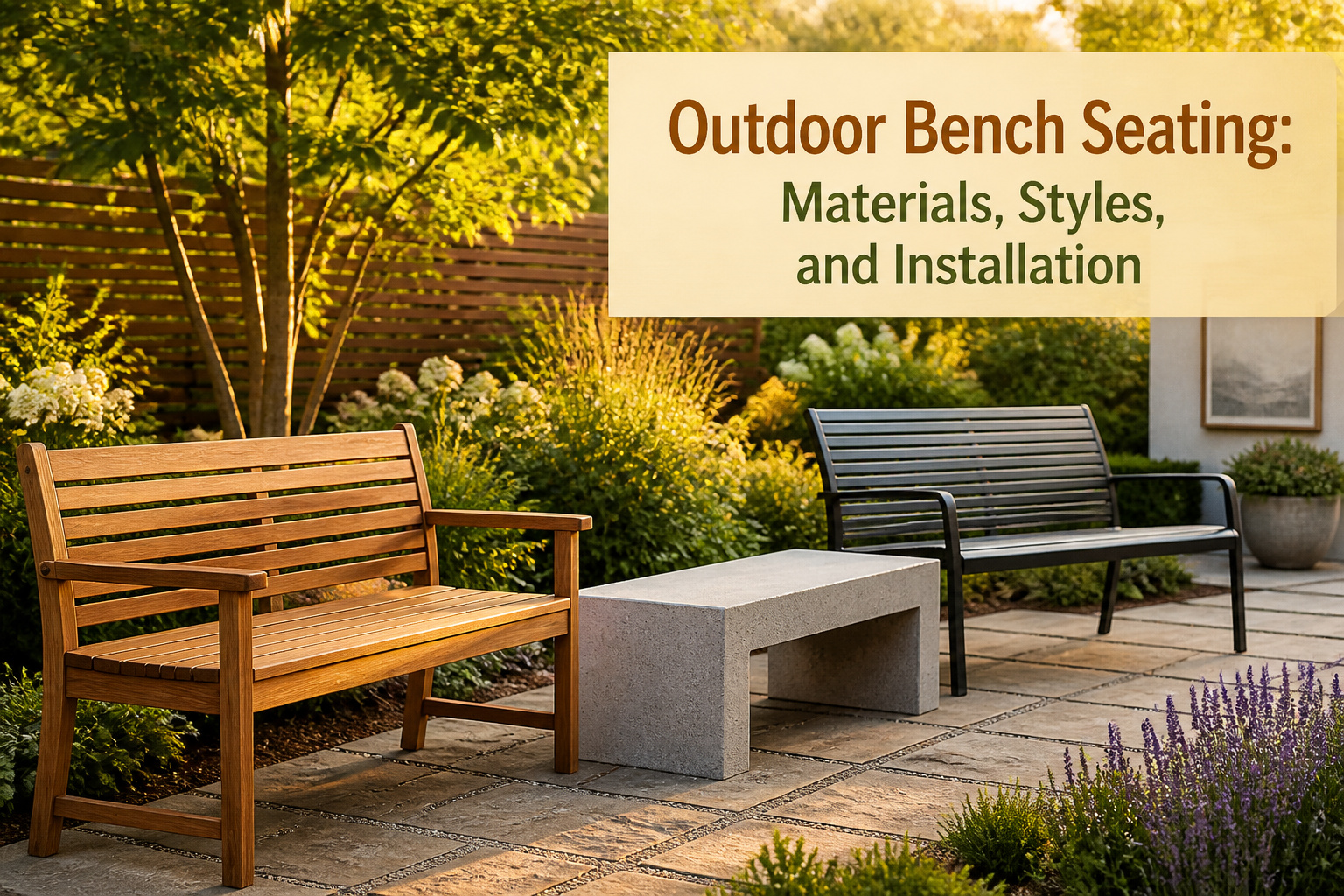
Outdoor bench seating is exactly what it sounds like: a bench built to survive weather, assembled from parts that usually arrive flat-packed with a hex key that rounds off by the second bolt. The catch is that every material carries a condition. Acacia looks handsome but demands yearly sealing or it silver-checks within two seasons; concrete at 150 pounds stays put through wind that sends lighter furniture sliding but needs two people and a measured path from driveway to spot. What separates a bench you keep from one you replace is matching that upkeep to how long you plan to stay in one place.
Acacia Wood Benches
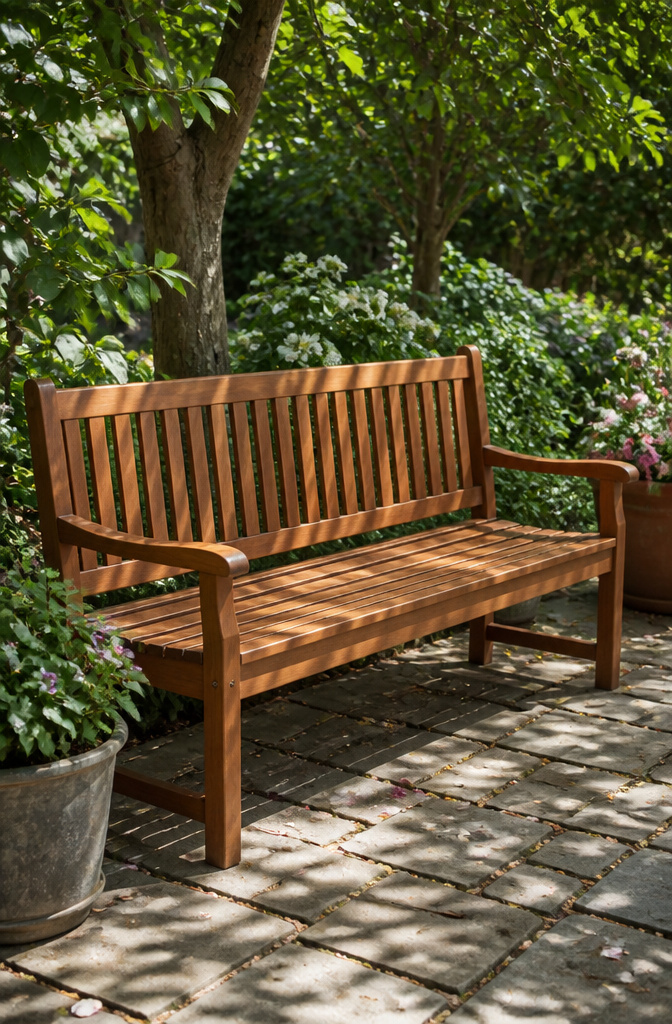
Solid acacia wood lands in a sweet spot for outdoor bench seating: harder than pine, cheaper than teak, and dense enough to shrug off casual weather if you meet it halfway. The grain runs striking, which is why benches like the Mirella 63" Acacia Patio Bench and the Jose 49.2” Acacia Outdoor Bench lean into the natural look rather than hiding it under paint.
The Mirella’s slatted seat buys you airflow and faster drying after rain, a practical detail that matters more than it sounds if you actually sit outside after a storm. The Jose ships with detachable cushions and a 15-minute solo assembly according to one buyer, which squares with my own rule: if a bench needs two people and a Saturday, it had better outlast the decade.
Acacia demands sealing, typically once a year, or the sun will silver it and the water will check the surface. Skip that maintenance and you have driftwood aesthetics in two seasons, whether you wanted them or not. For renters or first-home owners running a few hundred dollars on a weekend project, this wood fits the budget but not the "set it and forget it" fantasy. Treat it like a deck you sit on, not a plastic chair you hose off.
Eucalyptus Wood Benches

Eucalyptus carries its own weatherproofing in the form of natural oils that repel moisture and resist rot without help from a can. The Aundraya Eucalyptus Outdoor Bench measures 35" H x 47" W x 19" D, a footprint that seats two adults without crowding a narrow balcony or eating the depth of a small patio. Assembly runs straightforward; the slatted back and straight arms arrive as a kit that most owners finish inside an hour.
The oil content matters for upkeep. Eucalyptus needs less frequent re-oiling than acacia to keep its color from silvering, though both will gray if left bare. For a first-home owner watching both calendar and wallet, that difference means one maintenance weekend instead of two each season. The Aundraya sits in the middle of the hardwood price band: not the cheapest outdoor bench, but not teak territory either. At 165 reviews and a 4.5-star average, the gamble feels smaller than it does on an unvoted listing.
Teak Wood Benches
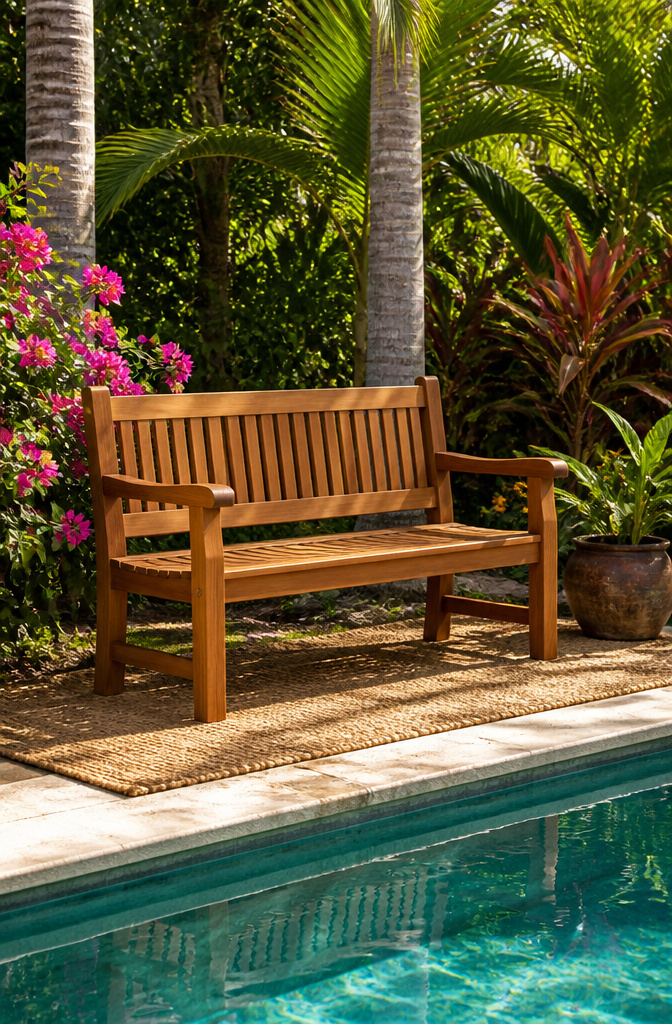
Teak carries a natural oil content that pushes water out rather than letting it soak in, which is why it survives decades of rain without warping or rotting even if you never touch it with sealant. Left alone, the honey-brown color fades to a soft silver-gray within a season or two, a look some people chase and others try to prevent with annual oiling. The wood is heavy enough that a teak bench stays put in wind, but that same weight makes it a pain to drag between apartments.
The upfront price stings. A small teak bench can cost two or three times what acacia or eucalyptus runs, and the difference only widens as the size grows. Spread across fifteen or twenty years of not replacing it, though, the math starts to look different from cheaper woods that crack or need restaining every other spring. For a renter who might move in two years and cannot justify leaving something that expensive behind, that long-term value is hard to cash in. Buying teak only makes sense if you know where you will be living, or if you have a spot you are certain you can take with you.
Concrete Benches

Concrete lives outside permanently without asking for much. The Lionel 63” Cement Outdoor Bench sits at 110 owner reviews with a 4.8-star average, which tells you something about how rarely it disappoints after delivery. Its 63-inch slab of weathered cement works as backless bench seating outdoor or as a coffee table when you flip the context, a dual role that matters on a small patio where every piece earns its square footage.
Weight is the real conversation. At roughly 150 pounds for a bench this size, two people can still shift it for a deep clean or a lease-end move, but it is not the piece you drag to catch evening sun. Renters should measure the path from curb to spot before ordering; a freight delivery to the driveway is standard, and the last twenty feet are yours. The payoff is stability in wind that sends lighter furniture sliding, and a surface that does not rot, splinter, or need sealing come spring.
The Jorgen 63” Concrete Outdoor Bench runs a similar length with black-finished metal legs and crossbar supports, rated 4.7 stars from 25 votes. Its concrete slab sits on frame rather than sitting directly on ground, which changes where water pools and where the cold conducts. Both benches shrug off rain and UV without maintenance beyond occasional wiping, the weatherproofing built into the material itself rather than applied yearly.
Aluminum Benches
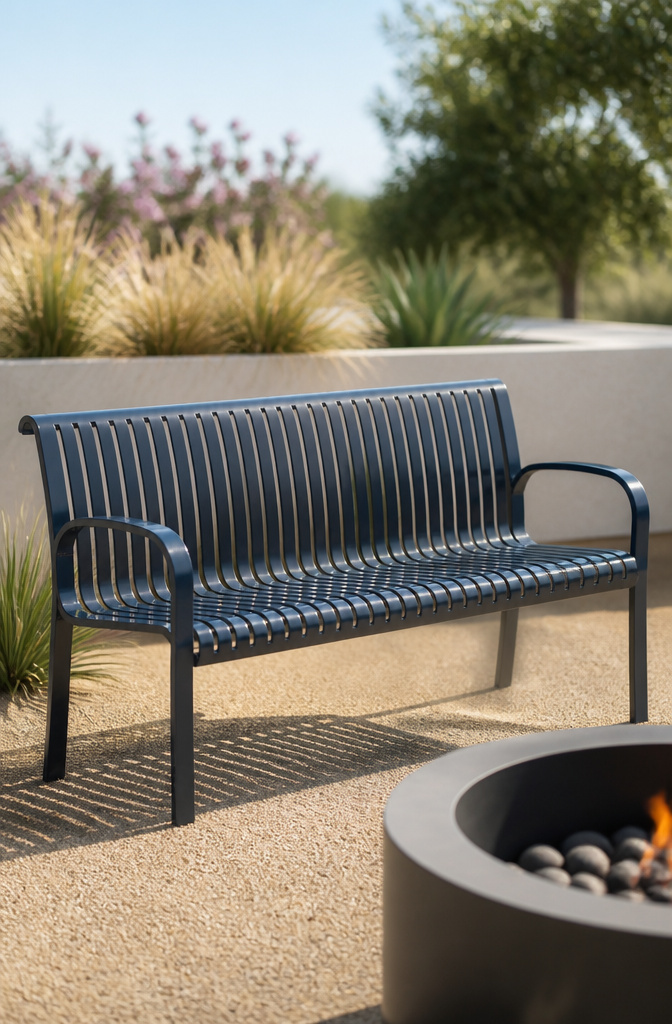
Aluminum carries about a third of the weight of cast iron, which matters the first time you drag a bench across a patio solo. The metal does not rust, so a powder-coated frame left out through wet seasons just needs a hose-down to look presentable again. That coating is the weak point: scrapes through to bare metal start a chalky bloom that spreads, and powder coat repairs on aluminum are harder to match than on steel, so the finish you start with is mostly the finish you keep.
Heat is the trade. A slatted aluminum seat in July sun will hold enough warmth to make you pause before sitting, something iron does too but with more mass to slow the climb. The difference is in the heft under you: aluminum feels hollow and bright, iron feels planted and old. For someone who knows they will move in two or three years, the lighter bench goes into a truck without a second person or a furniture dolly, and the rust-proofing means you are not gifting your landlord a restoration project when you leave.
Iron Benches

Cast iron and wrought iron benches carry a weight that literally anchors them in place. A full iron bench can easily pass two hundred pounds, which keeps it from shifting in wind or under an enthusiastic sitter, but also means you commit to a spot the day it arrives. The traditional garden aesthetic, with curved backs and scrollwork arms, reads instantly as old estate or formal rose garden. That strength becomes a limitation on a concrete patio with clean lines and low-profile furniture; the visual clash is immediate, and moving the bench to fix it is a multi-person job.
Rust prevention is the ongoing cost most buyers underestimate. Even powder-coated iron eventually chips at contact points, and bare metal left in rain starts oxidizing within a season. Annual sanding and oil-based touch-up paint, or religious cover use through wet months, keeps the frame sound. Skip either and the bench becomes yard sculpture faster than you’d expect. The classic look earns its keep against brick, against weathered wood fences, and anywhere the garden itself is allowed to look a little untamed. Budget for maintenance time, not just purchase price, or the permanence you paid for becomes a permanent eyesore.
Recycled Plastic Benches
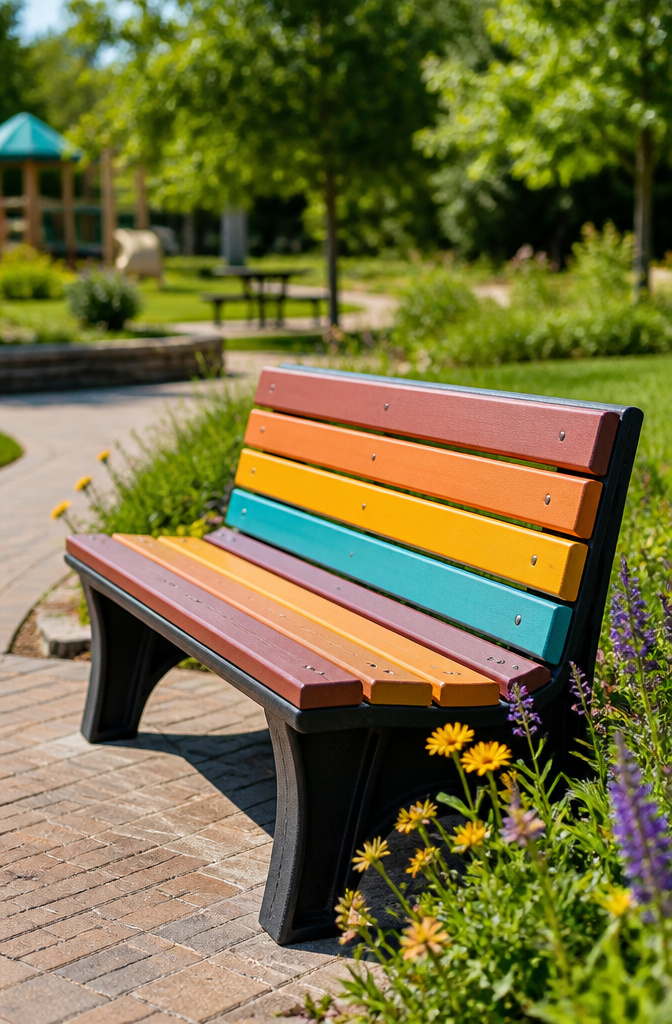
Recycled plastic benches promise the lowest maintenance of any material on this list, which is why they keep showing up when you search bench seating outdoor with "no upkeep" in mind. The boards are extruded from post-consumer HDPE, usually milk jugs and detergent bottles, so the environmental appeal is real rather than painted on. POLYWOOD® has become the shorthand brand in this space, the way Kleenex means tissue, and their color-matched hardware and hidden fasteners do look finished rather than bolted together in a hurry.
The visual tradeoff is harder to dismiss than the maintenance savings. The grain is embossed, not grown, and in direct sun the surface can read slightly waxy or too uniform. After two or three seasons that sheen dulls to something closer to weathered wood, though it never reaches the depth of real grain. For a hands-off owner who would rather spend Saturday doing literally anything else than sanding or staining, that tradeoff is straightforward. The upfront cost stings compared to pressure-treated pine or even basic teak, but spread across fifteen years of zero treatment, the math shifts. I would not choose recycled plastic for a bench I wanted to be the visual anchor of a garden. For a utility seat by the grill or a rental property where tenants will not baby anything, it is the practical default.
Wicker and Rattan Benches
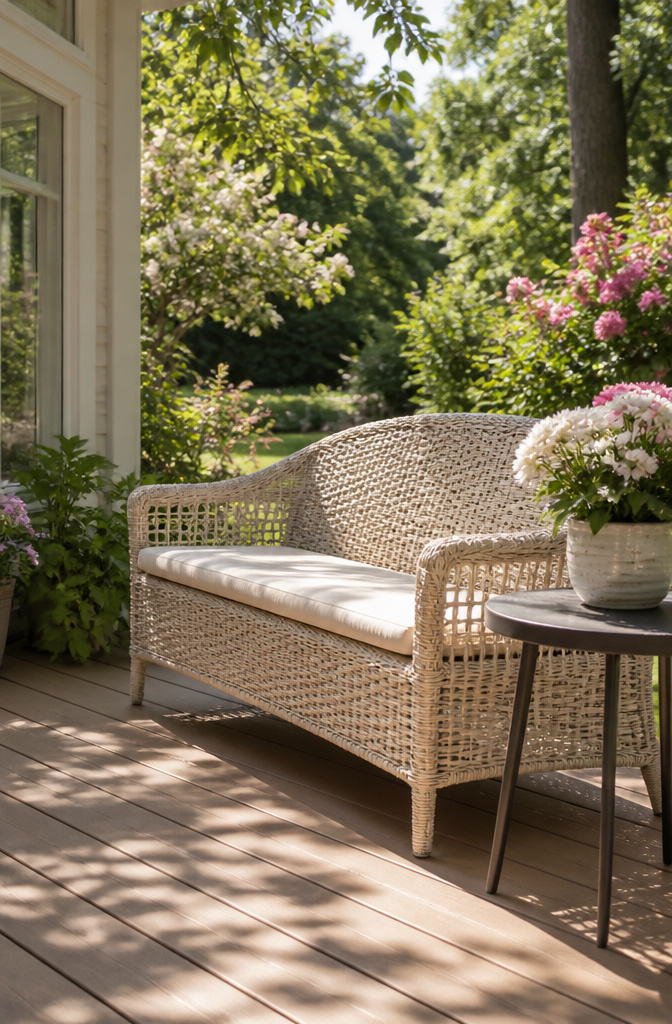
Natural rattan belongs indoors. The material softens and sags once humidity gets to it, which means a bench built from it will start losing shape after a few wet afternoons. Synthetic resin wicker, on the other hand, is manufactured specifically to sit outside. The strands are usually woven around an aluminum frame, giving you the same cottage look without the rot.
That coastal style comes with a storage catch. Most resin wicker benches need cushions to feel comfortable for more than a short sit, and those cushions will mildew if you leave them out. I look for benches with a shelf or cavity underneath where a cushion bin can slide in, or I plan on a separate deck box nearby. Buying the bench without checking cushion storage first is the mistake that turns a weekend purchase into a daily hauling routine.
The cheaper resin sets sometimes shed their plastic coating after a season or two of sun, exposing the inner weave to fraying. A quick hose-off keeps the surface clean, but the real test is whether the manufacturer used UV-stabilized resin in the first place. Price usually tells you; the bottom-tier sets feel slick and thin, while the better ones have a slightly matte, textured finish that holds color longer.
Backless Benches
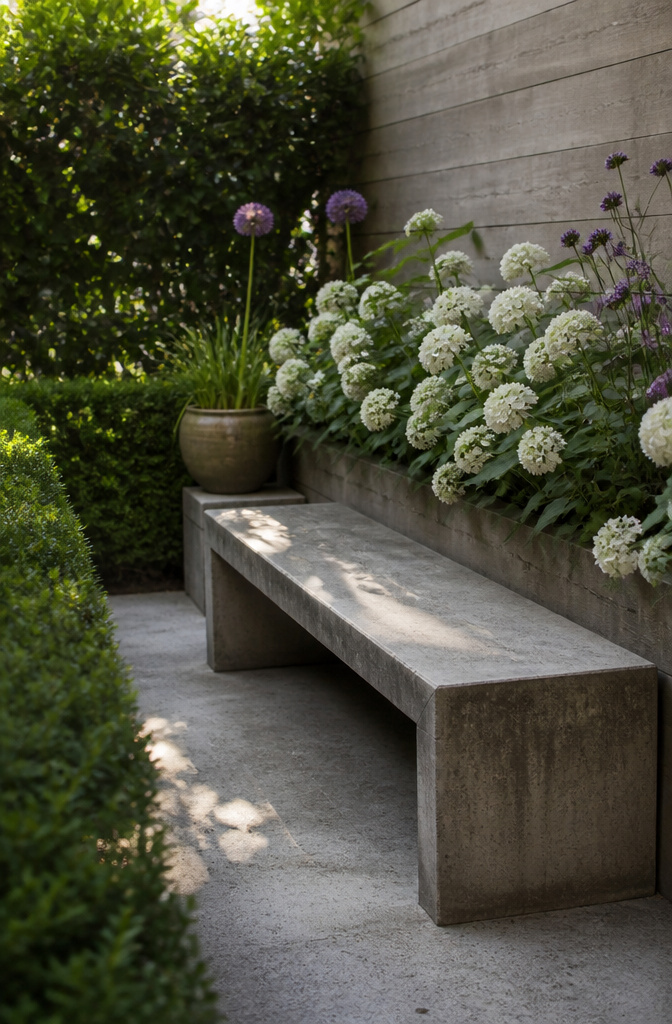
Backless benches earn their keep in tight spots where a backrest would block a walkway or interrupt sightlines across a patio. The 63" Lionel cement bench slides into this role naturally: its weathered concrete surface reads as seating to one person and a coffee table to another, depending on which side you approach from. That two-way flexibility matters on a narrow balcony or along a garden path where people sit facing opposite directions anyway.
The 35" concrete version carries the same clean profile in a smaller footprint, room for two without the visual weight of a traditional bench. Both resist rot and rust, which matters more than it sounds when you are wiping pollen off in March and snow melt in January.
The catch is exactly what the name promises. No back support means these are perch-and-chat pieces, not settle-in-for-the-afternoon pieces. Older guests, anyone with lower back trouble, and the third hour of a cookout all expose the limit. I would not place one as the primary seating around a dining table, but tucked against a planter wall or floated between chairs, the backless shape does work no other bench can.
Picnic Benches

Picnic benches with attached tables still solve the same problem they did on my grandparents’ patio: you sit, you eat, you never chase a sliding chair across uneven pavers. The POLYWOOD Studio 68" and Armando 54" keep that integrated form but swap splinters for recycled plastic that hoses clean after a ketchup incident. Sixty-eight inches seats six adults without elbow warfare; fifty-four fits four comfortably or squeezes six kids who haven’t grown into their shoulders yet.
That attached table saves space on a narrow deck or balcony where a separate table plus chairs would block the door swing. The tradeoff shows up when you want to rearrange for a standing crowd or when one person just needs a bench without the table lip digging into their back. I’ve watched friends try to push two picnic benches together for a longer spread; the fixed tables leave an awkward gap or an unusable corner where they meet.
For families eating outside twice a week, the integrated form wins. For people who host twice a summer and otherwise want flexible seating, a detached bench and folding table stores flatter and moves where you need it.
What Weather Actually Does to Each Material

Sun breaks down wood fibers and bleaches the surface gray within a season or two if you skip the sealer. Rain soaks into unsealed grain and swells it; freeze-thaw cycles pop joints apart when that water expands. Metal takes the opposite hit: moisture rusts iron and steel unless the coating stays intact, while aluminum just dulls and pits slowly. Concrete weathers almost invisibly for years, then one hard winter hairline cracks spider out from trapped moisture; those cracks hold more water, and the cycle accelerates. Plastic and recycled composites fade and get brittle under UV, but they do not rot, rust, or crack from freezing.
| Material | Sun damage | Rain damage | Freeze-thaw risk | Yearly must-do | Can wait |
|---|---|---|---|---|---|
| Wood | Graying, surface checking | Swelling, rot in joints | High: joint failure | Seal or oil exposed surfaces | Full sanding unless splintering |
| Metal (iron/steel) | Finish chalking | Rust at scratches, welds | Moderate: ice accelerates rust | Touch-up paint on chips | Full recoat if no bare spots |
| Metal (aluminum) | Oxidation, dulling | Minimal | Low | Wash off pollen and salt | Polish or wax |
| Concrete | Fading, efflorescence | Minimal absorption if sealed | Moderate: crack propagation | Inspect and caulk cracks | Deep clean or reseal every 2–3 years |
| Plastic/composite | UV brittleness, fading | None | None | Inspect for UV whitening | Replace when flex feels wrong |
What convinced me, reading through a dozen of these breakdowns, is that wood demands the most calendar attention while concrete asks for the least until it suddenly does not. If you will not touch the bench yearly, aluminum or quality plastic buys you more forgiveness than the aesthetics suggest.
Sizing a Bench to Your Space and Your People
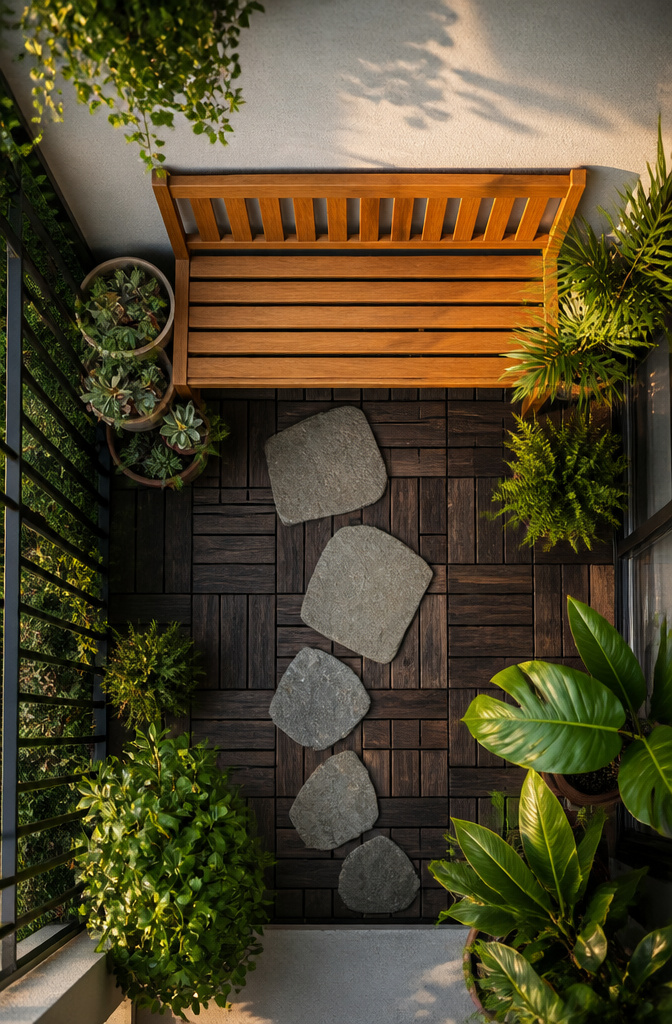
A bench that seats two people comfortably usually runs about 47 inches wide, while the 68-inch models handle three without anyone sitting on an armrest. That gap matters more than it sounds on paper. The smaller bench fits a narrow balcony or the pocket between a doorway and a garden bed where a chair pair would look cluttered. The longer one needs a straight run of wall or railing, and the legs have to land on something stable, not the one paver that shifts every spring.
What stopped me on my last install was the clearance behind the backrest. You need about two feet of open space to push the seat in and stand up without stepping into planting soil or a walkway. Measure that first, then buy the width that fits what is left. A bench crammed to the railing with no room to scoot back turns into a shelf for pots inside of a month.
Leave 24 inches behind the backrest for usable seating, and treat the 47-inch and 68-inch widths as your two practical brackets unless you are building custom.
Assembly Reality and What I Keep On Hand
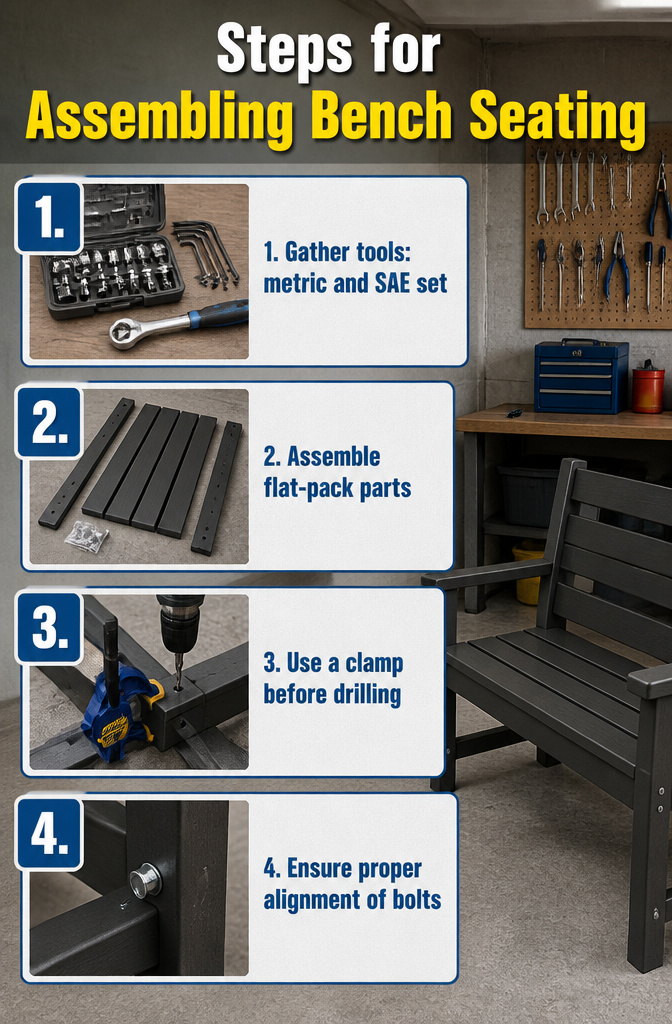
Most bench seating outdoor arrives flat-packed, and the promise of "two-hour assembly" only holds if every hole lines up and the hardware matches the drawing. In my experience, half do not. The hex key included in the kit is usually stamped from soft metal and rounded at the corners before the second bolt; I keep a full metric and SAE set in my garage now, along with a ratchet Allen wrench that saves both knuckles and time. Budget an extra trip to the hardware store for replacement fasteners, because the ones in the bag are often short by one or sized for a tool you do not own. Instructions skip steps because they are written for the ideal bench, not the one with a slightly warped seat slat or a leg drilled off-center. When that happens, clamp before you drill, and never force a bolt through misaligned holes; it strips the threads and wobbles forever after.
Mounting Options for Permanent Installation
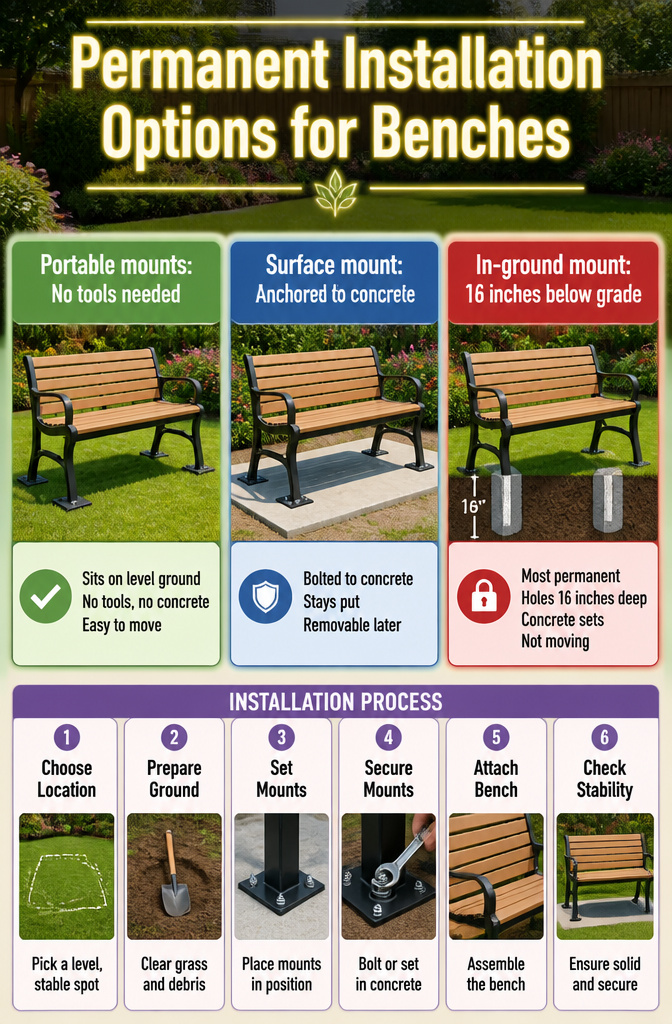
Permanent installation for bench seating outdoor comes in three flavors, and the right choice depends on how long you plan to stay put. Portable mounts simply rest on level ground; no tools, no concrete, no landlord to ask. Most renters go this route because the bench leaves when they do, and the only requirement is a flat spot that does not turn into a mud puddle after rain.
Surface mount anchors through concrete or asphalt with bolts that can be removed later. The bench stays put against wind and rowdy kids, but you can still relocate it with a wrench and some patience. This is the middle path for someone who owns the slab but might want the seating elsewhere in a few years.
In-ground mount is the most permanent and the most work. Holes go 16 inches below grade, concrete fills each one, and the frame cures overnight before you attach the rest. Once set, that bench is not moving. The catch is depth: if the legs sit too shallow, freeze-thaw cycles can heave the whole thing out of the ground over winter. Grass or a future concrete pad is the usual home for this option, and the labor involved means it only makes sense when you are sure about the spot.
Frequently Asked Questions
What materials are commonly used for outdoor benches?
Outdoor benches are built from wood, metal, concrete, and recycled plastic. Wood splits into acacia, eucalyptus, and teak, each with different oil content and maintenance needs. Metal covers aluminum and iron, with aluminum weighing about a third of cast iron and neither rusting if the coating holds. Concrete and recycled plastic sit at the low-maintenance end, asking for little beyond occasional cleaning.
How do I choose the right outdoor bench for my space?
Start with the 47-inch width for two people or 68 inches for three, then check that you have 24 inches of clearance behind the backrest to push in and stand up. Match the material to how much maintenance you will actually do: wood needs yearly sealing, iron needs rust prevention, while aluminum and quality plastic forgive neglect. Renters should weigh portability against permanence before buying heavy concrete or expensive teak.
What styles of outdoor benches are available?
Backless benches work in tight spots where a backrest blocks walkways, though they suit short sits rather than long afternoons. Picnic benches integrate table and seating, saving space on narrow decks but limiting rearrangement. Traditional iron benches carry curved backs and scrollwork for formal gardens, while modern concrete and aluminum lines fit clean, low-profile patios. Wicker and rattan styles come in synthetic resin for outdoor use, not natural rattan which belongs inside.