

The tree sitting in your living room or storage closet decides most of this: a flocked white one brings its own snow so red can carry the rest, a gold artificial one needs few or no ornaments, and a small tabletop tree gets by on a handful of ornaments and some ribbon.
The ideas run from that restrained end to a maximalist tree layered in pink and gold, with dried orange slices, pinecones and oversized bows in between.
Gold, silver and copper ornaments glow best under warm, yellow-toned bulbs rated near 2700K, so test your string lights first and shop for ornaments second.
1. Cascading Ribbon
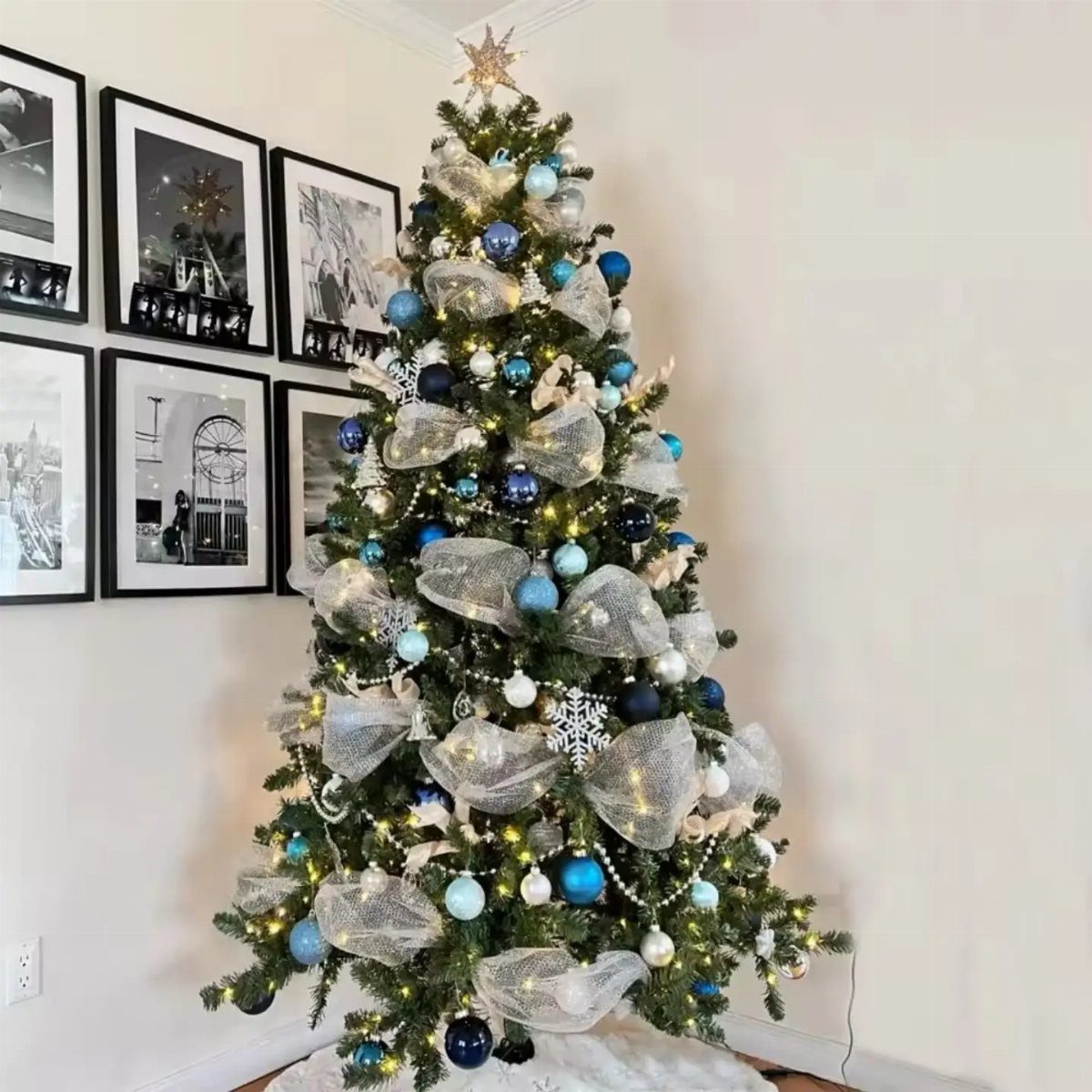
Ribbon that runs top to bottom changes the whole shape of a tree, because it draws the eye down the branches instead of around them.
Wide mesh in white suits the blue and silver ornaments here, since it stays light and lets the glints show through.
Tuck the top end deep into the crown and let the rest drop in loose, uneven swoops.
Pin it at a branch or two so it doesn’t slide. Run each length of ribbon from a different point at the top, and I’d stagger them rather than space them evenly.
2. Oversized Bows

A single oversized bow on top does more for a tree than a dozen small ornaments, and red and plaid together read as classic without feeling stuffy.
Make the topper the biggest bow on the tree by a clear margin, with long tails that spill over the upper branches.
Then repeat the look in smaller bows tucked along the branches.
Stick to one or two ribbon patterns so the bows feel like a set. Wired ribbon holds a full shape better than the soft kind, and it is the one I’d buy.
3. Brown Neutrals
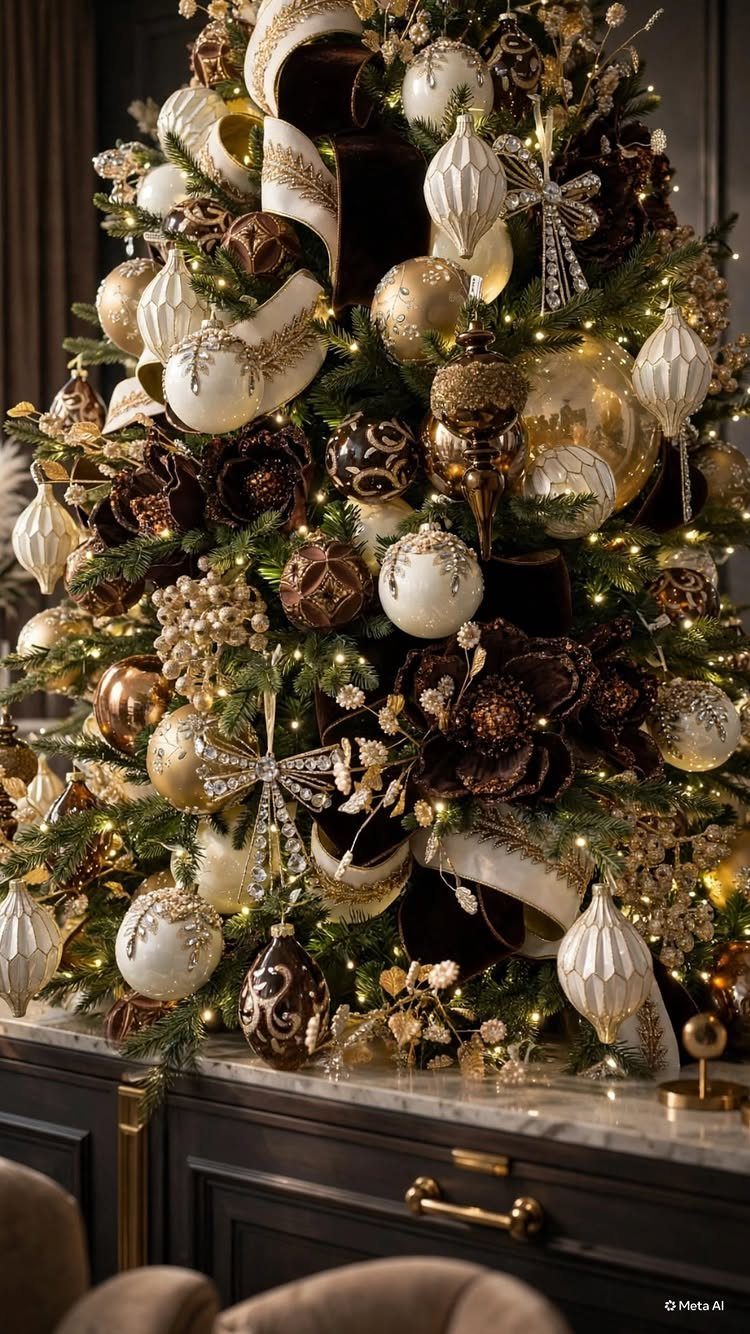
Brown is an underused tree color, and it works because it sits so easily beside gold and cream. Pick ornaments in shades from chocolate to tan, then add cream florals and ribbon so the palette doesn’t turn heavy.
Warm white lights belong here; cool white would fight the tones. A small tree on a dresser or console gets the full effect without needing a big budget, since you only need a modest number of ornaments to fill it.
4. Whimsical Ornaments
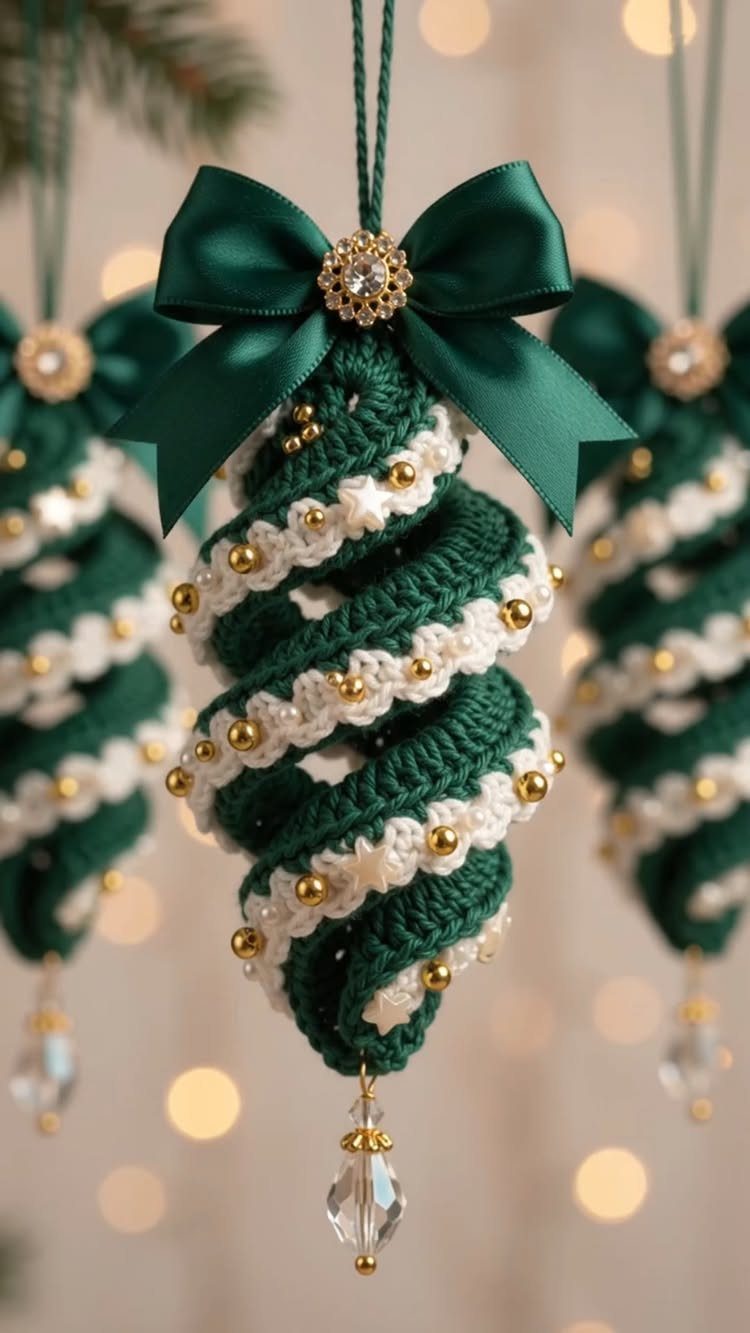
Handmade-looking ornaments, like these crocheted green spirals with gold beads and tiny stars, give a tree personality that a matched boxed set can’t.
Hunt for pieces at craft fairs and thrift shops, or crochet a few yourself, and keep a loose color thread (here, green and gold) so the odd shapes still hang together.
Place the quirkiest ornaments at eye level, where people lean in to look. This is a good tree for kids, since every ornament can have a story.
5. Tabletop Ribbon Tree
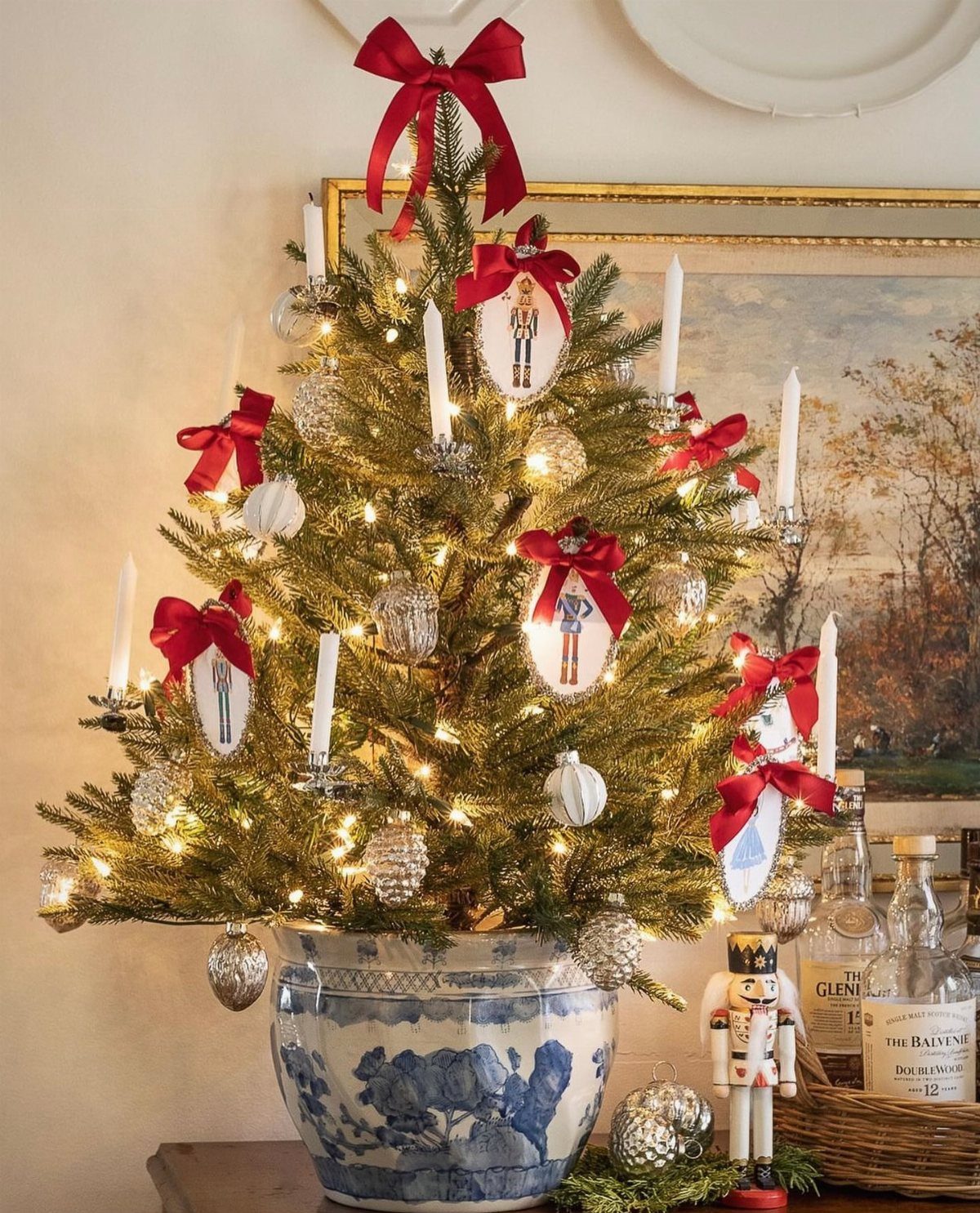
Candles and ribbon do the work on a tree this small, and restraint is what makes it feel old-fashioned in the best way.
Red bows tied at the branch tips, a few white candles and just a handful of ornaments leave plenty of green showing.
A pot like this blue and white ceramic one doubles as the decoration, so skip a tree skirt. I’d choose flameless candles on a real evergreen; open flame near dry needles is a risk not worth taking.
“Bows are such a classic, but including them on a tree in a dramatic scale is what makes something traditional feel unexpected and even a bit whimsical,” says Amy Studebaker of Amy Studebaker Design.
6. Pastel White Tree

Soft pink against white looks sweet rather than sugary when you hold to two or three pastel shades and let the tree itself stay the quiet backdrop.
Mix matte and shimmery ornaments in the same tint so the surface has some depth.
Add pink ribbon in loose loops and string white lights through the branches. A bright, airy room suits this best, because pastels can look washed out in a dim corner.
7. Burgundy and Metallics
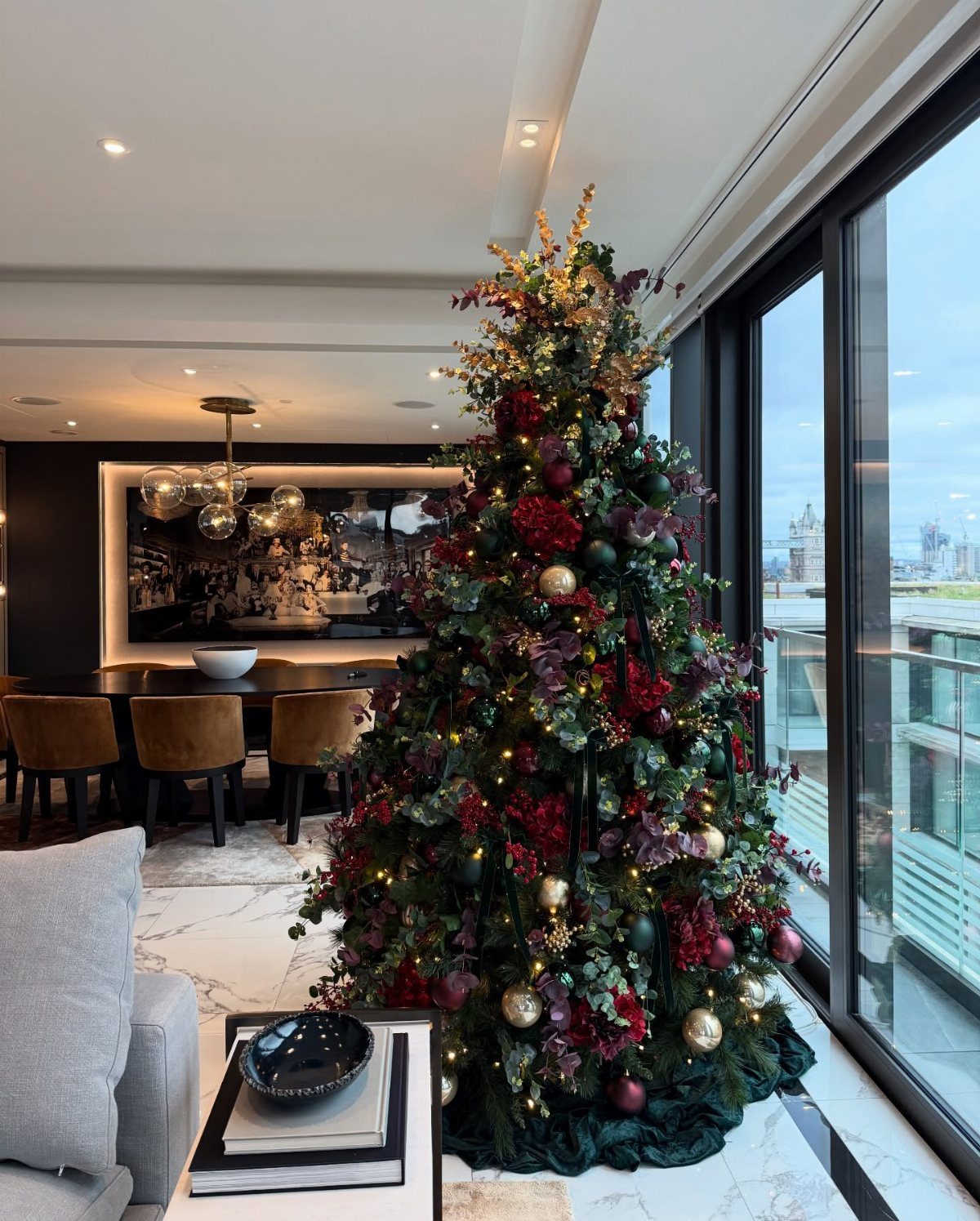
Deep burgundy gives red a quieter, wine-dark mood, and gold ornaments keep it from going heavy. Pick two or three burgundy finishes, such as matte, glossy and velvet, so the color has texture even when it’s one shade.
Spread the gold evenly through the branches instead of clustering it near the top. I’d choose warm white lights here, since they make the metallics glow rather than glare.
8. Red Flocked Tree
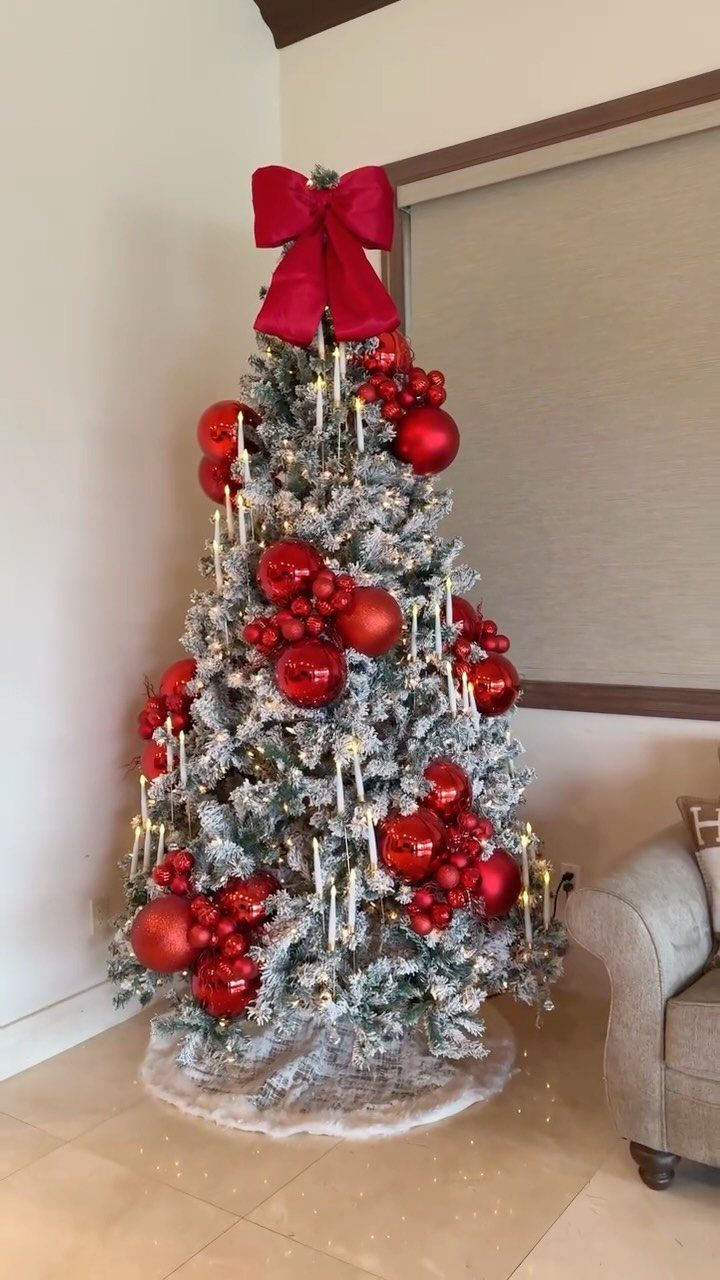
A flocked tree already brings the snow, so red can carry everything else. Glossy red ornaments, berry clusters and cream accents read as rich against that white, and a big bow at the crown pulls the whole tree together.
Mix finishes: shiny balls, matte ones and soft textured pieces keep a one-color scheme from looking flat. White candles tucked between branches suit the look, though I’d use flameless ones and keep real flame away from any tree.
9. Pale Denim Blues
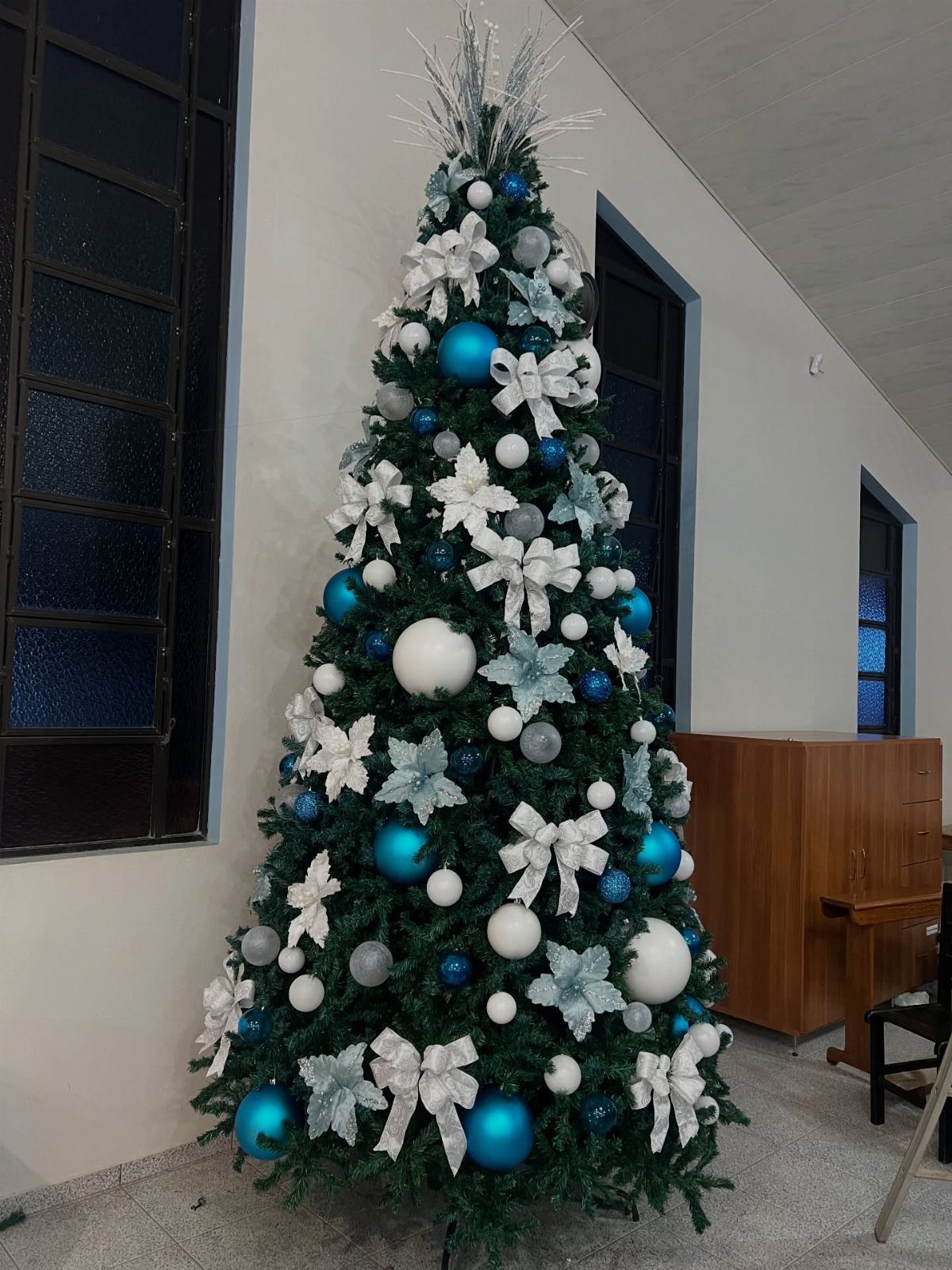
Pale blue and white ornaments, paired with bows and a few flowers, make a tree that feels like a quiet spring day.
Soft blue with natural green is calm, so you can skip the glitter and let the shades do the work.
Repeat each element at least 3 times around the tree: bows low, middle and high, flowers spaced out. That repetition is what makes a mix of pieces look planned.
10. Layered Neutral Tree
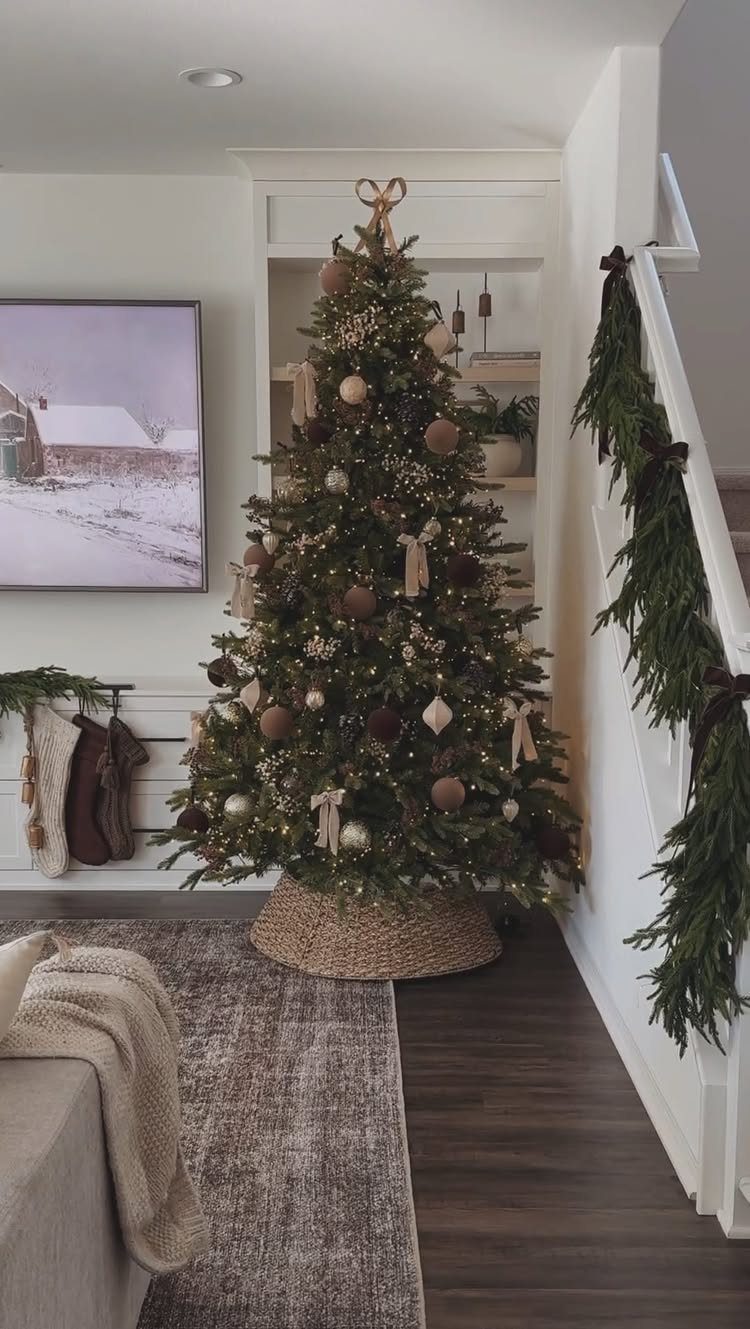
Cream, taupe and a little metallic shine are all this tree needs, as long as the textures vary. Pair smooth ornaments with woven, knit or wood ones, and finish the base with a wicker collar instead of a fabric skirt.
Stay within one warm family of neutrals. If a color looks gray or stark next to the taupe, leave it off.
11. Maximalist Tree
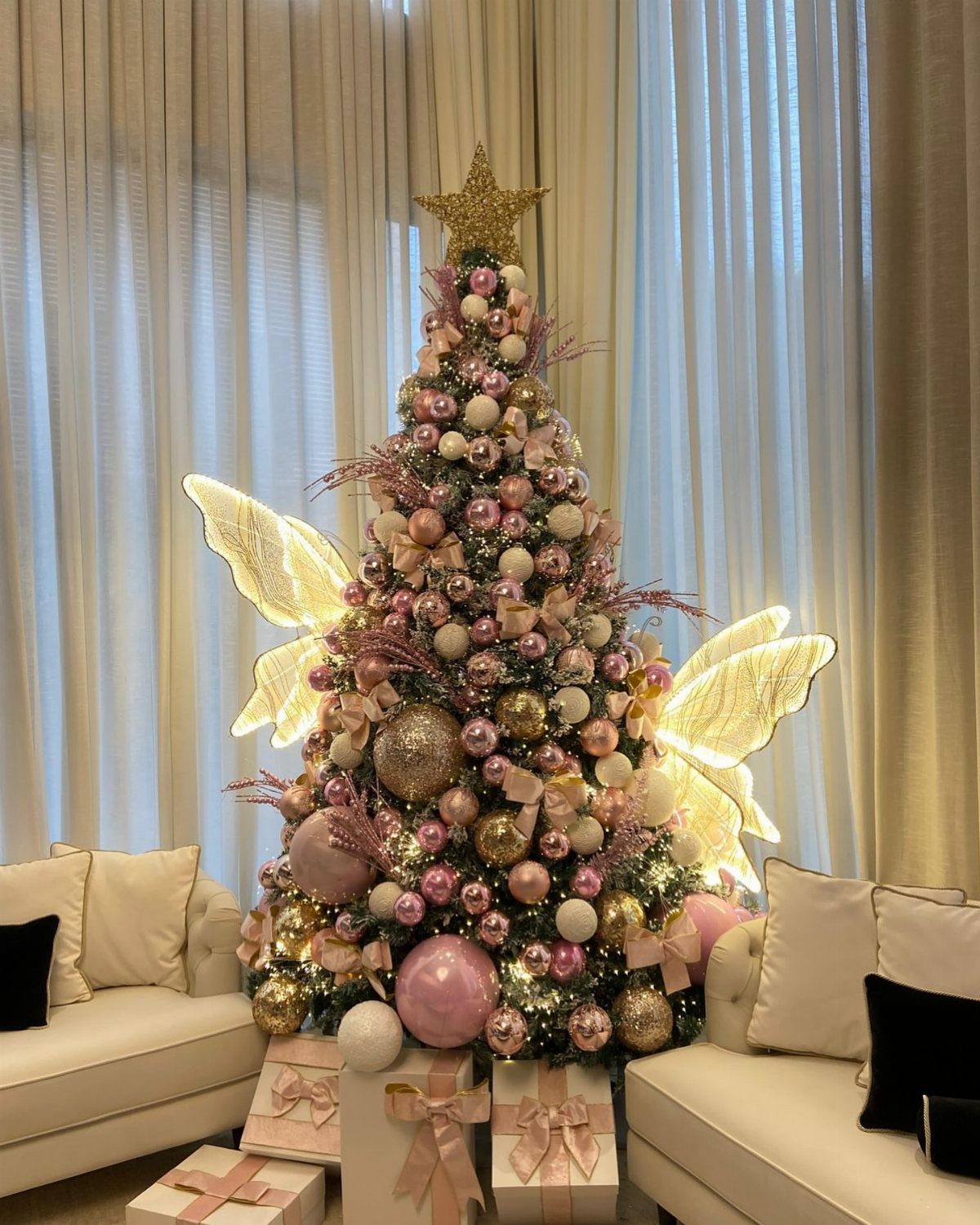
A maximalist tree still needs a rule to hold it together: pick 2 colors, such as pink and gold, and let size and texture supply the variety.
Fill the tree in layers, with big statement pieces first, then mid-size ornaments, then small fillers in the gaps.
One oversized focal piece, like glowing wings, keeps the eye from wandering. I’d light the tree heavily and stack wrapped gifts below to carry the abundance to the floor.
12. Minimal Christmas Tree
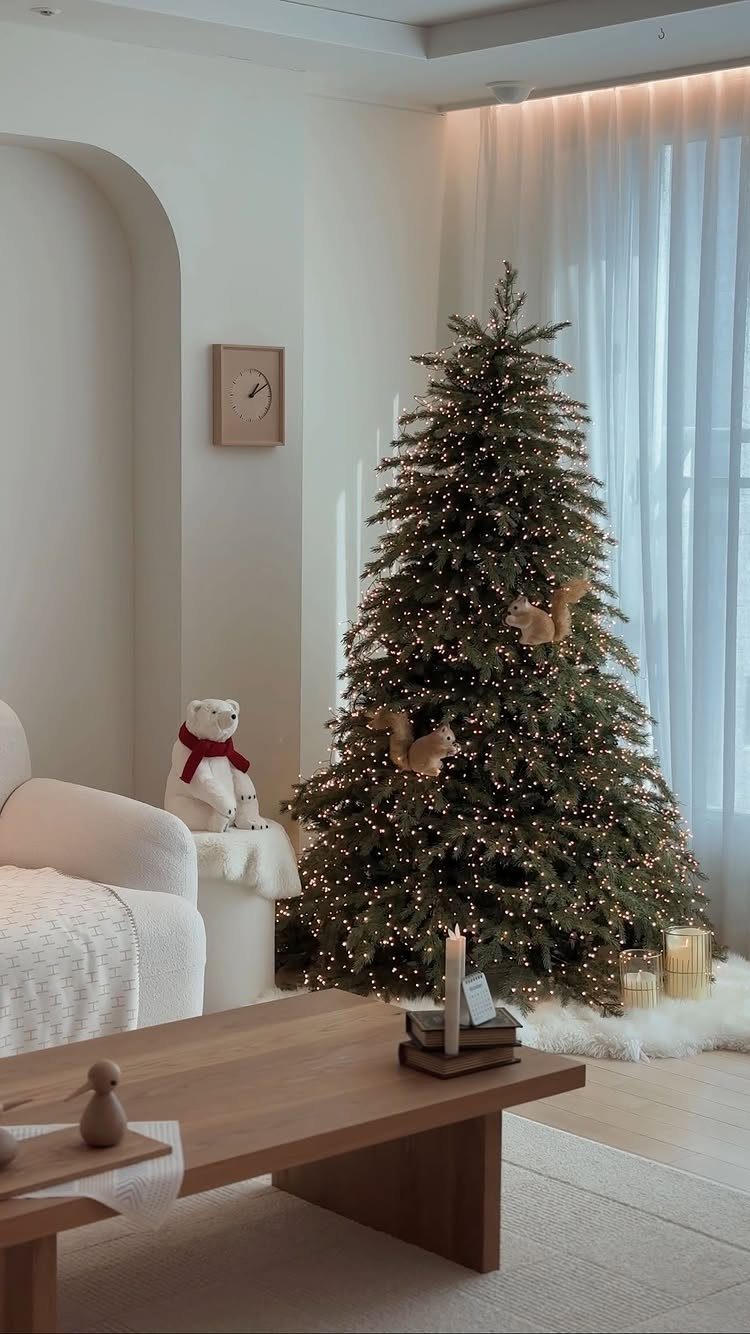
Two small animal ornaments and warm white lights are enough, and the empty branches are what make this tree look deliberate.
Choose ornaments in one natural tone, like brown, and hang them where the eye lands first, not hidden deep in the tree.
Spacing matters more than count. Leave a full arm’s length of bare branch between pieces, and add a third ornament only if the tree truly looks unfinished.
13. Repeated Solid-Hued Ornaments
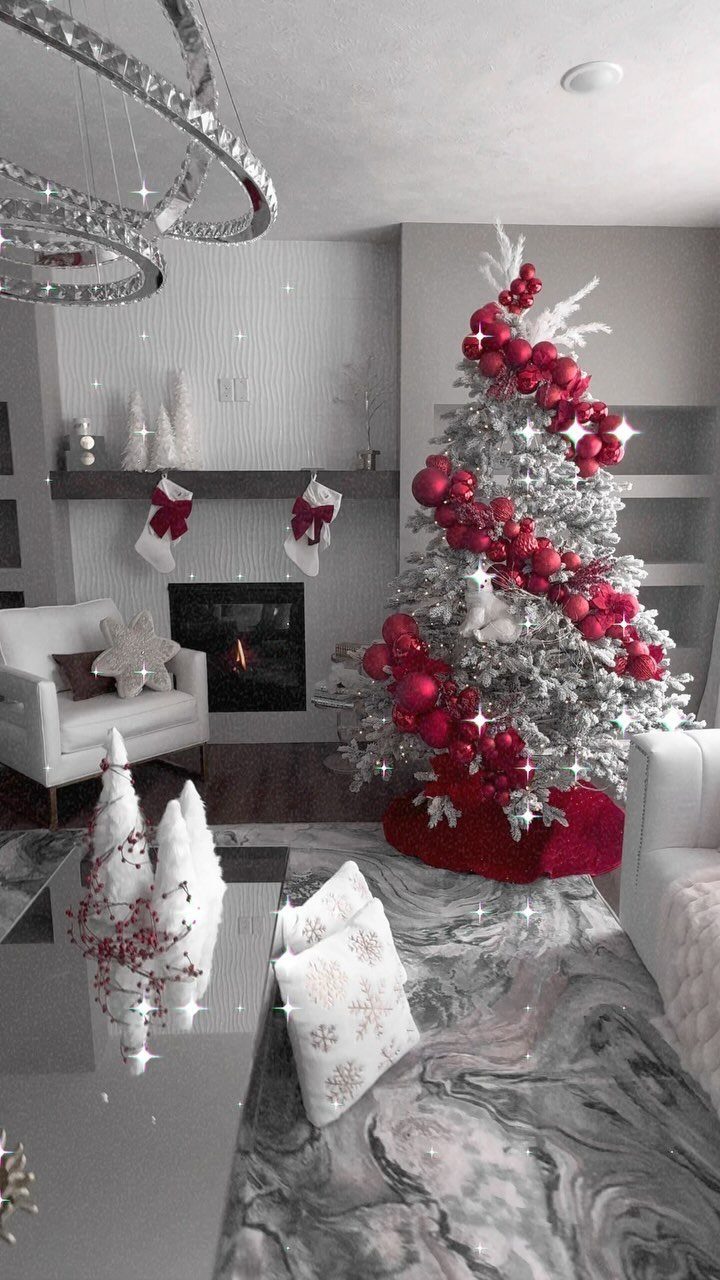
Red ornaments on a white flocked tree look polished when every one of them is the same hue, and silver adds a cool glint without competing.
Mix tones inside that one shade, from deep to bright, and vary glossy with matte so the color has depth.
Space each tone evenly around the tree, high, middle and low, so no side turns into a red patch. Keep the silver to a few accents.
14. Pinecones, Wooden Ornaments, and Burlap Garlands
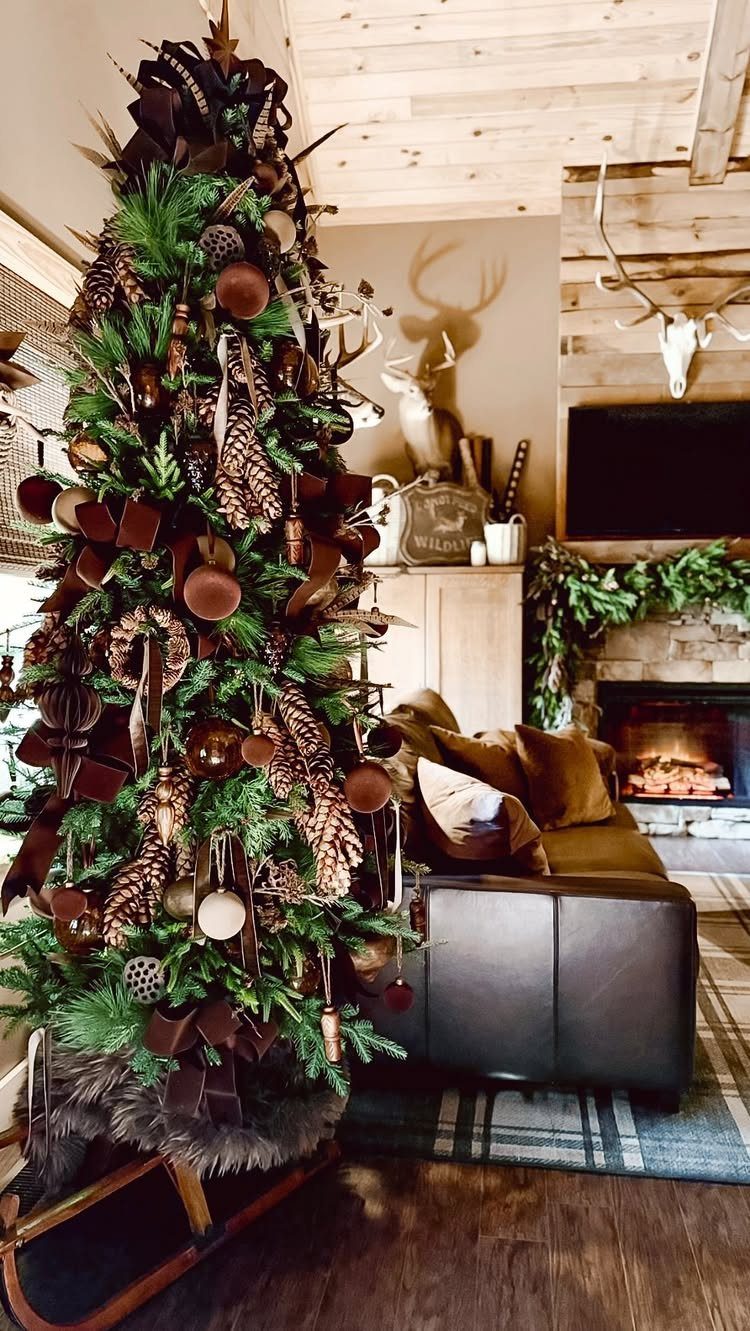
Chocolate brown on a green tree gets its richness from texture, and pinecones, wooden ornaments and burlap garlands each bring a different one.
A two-toned brown ribbon, as the maker of this tree used, ties those layers together with a little polish.
Drape the burlap in loose swags and tuck pinecones deep into the branches so they look grown rather than hung. I’d keep the shades close to each other and let the materials supply the contrast.
15. Bold and Bright
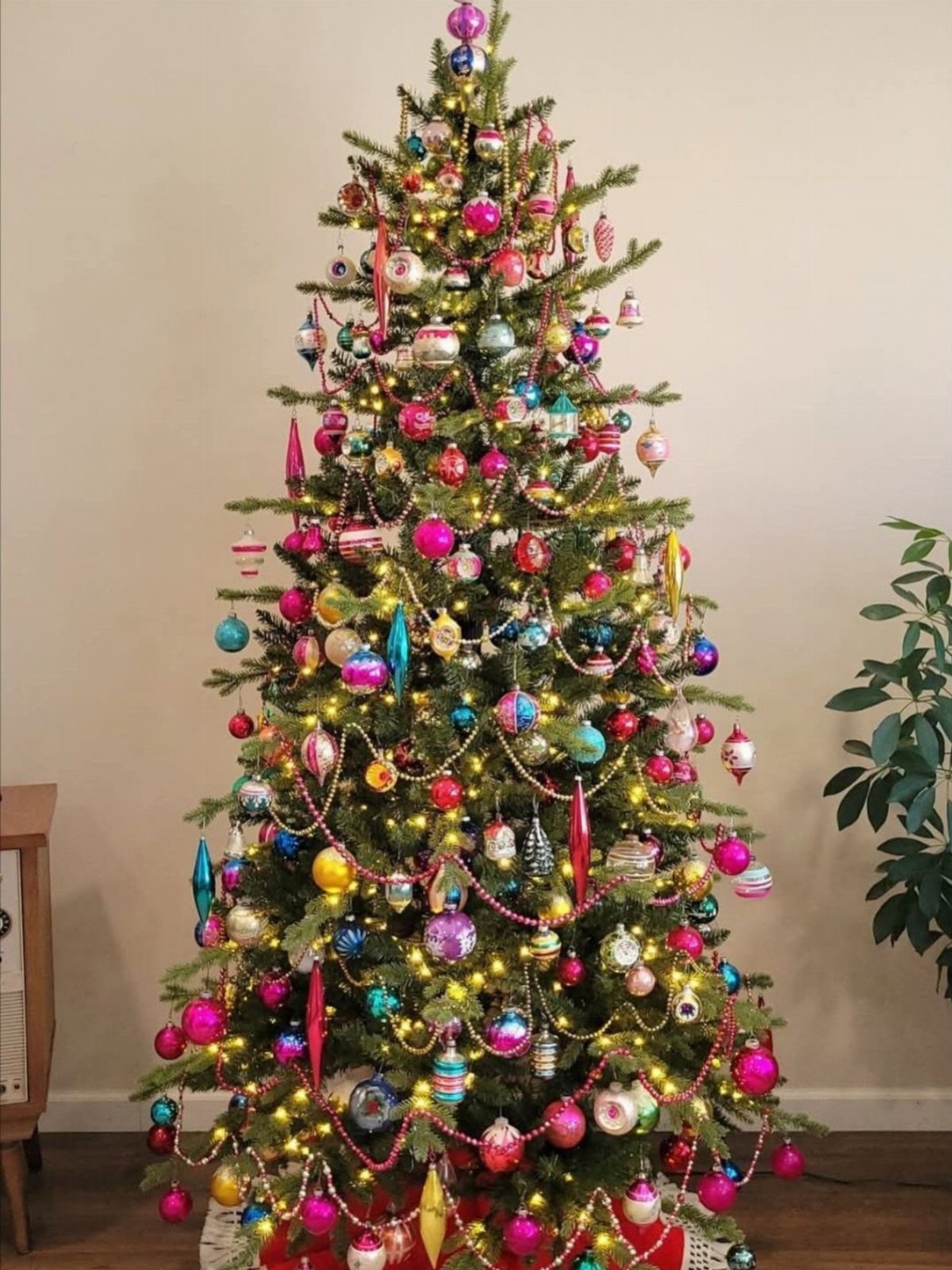
Hot pink, bright blue and gold work together because gold acts as the neutral that lets the other two shout.
Pack the tree with ornaments in those colors, then wind gold beaded garland through the branches to knit the mix into one look.
Warm lights keep the brights from feeling cold. This tree suits a plain wall, since the tree is the only pattern in the room.
16. Tree Skirt or Collar
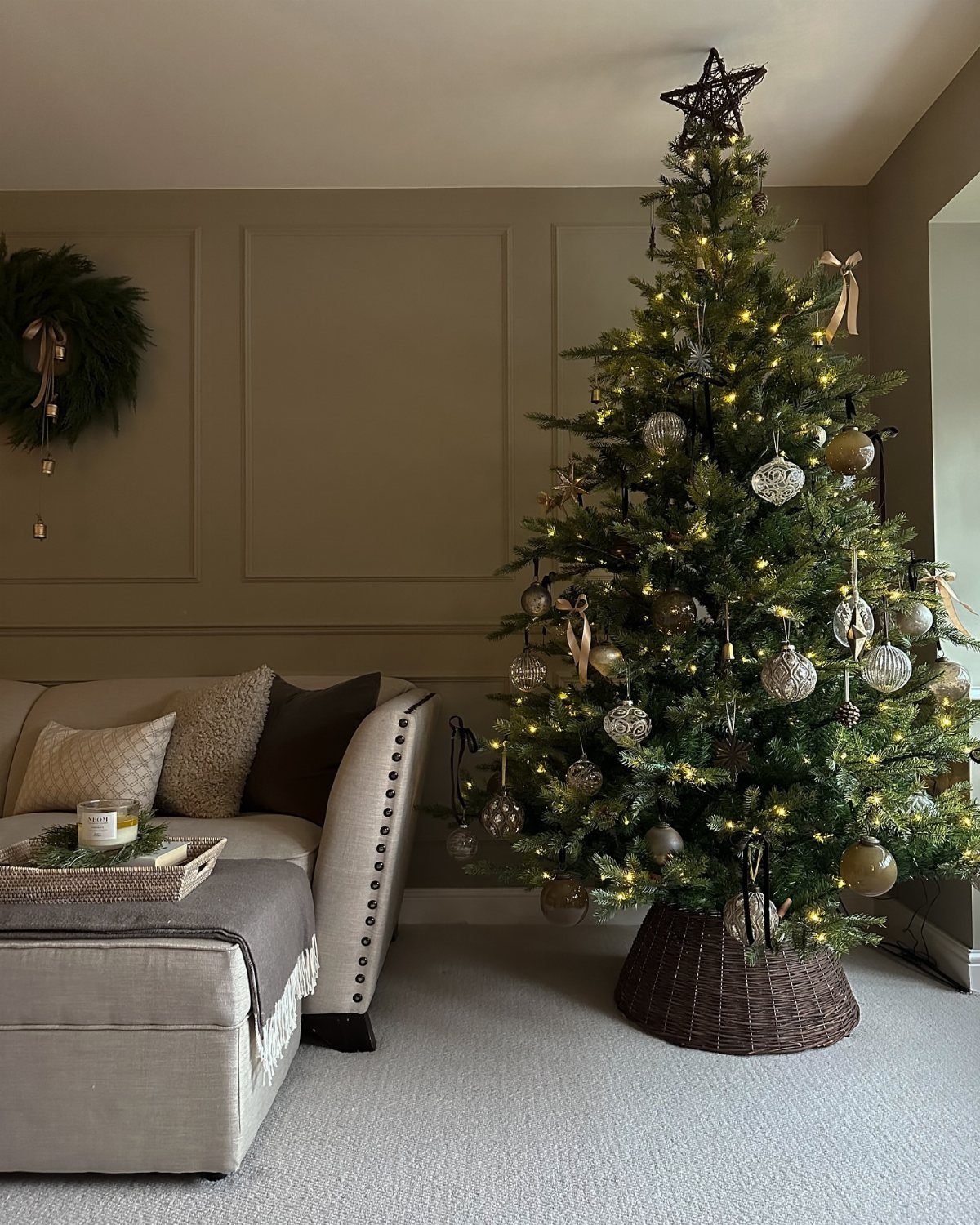
A woven collar hides the stand and gives the base a finished edge, and I’d pick one over a fabric skirt on a neutral tree.
Choose a collar in a tone that matches your ornaments; brown wicker pairs easily with gold.
Fit it snugly around the stand before you hang anything, since it’s awkward to adjust once presents are stacked nearby. A skirt is the softer option if you want a gift-covered base.
17. Gold and Bronze Ornaments and Ribbon
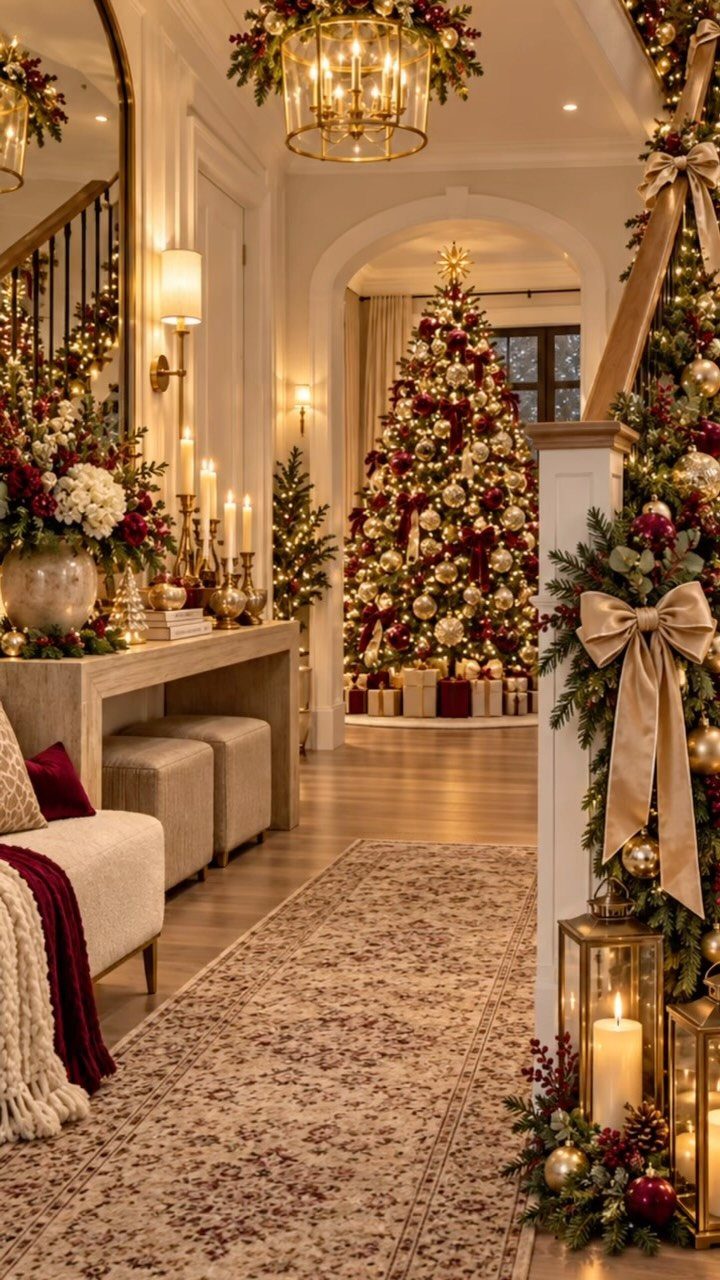
Gold and bronze ornaments with matching ribbon give a tree a formal, warm-metal look, and a little red keeps it from feeling cold. Use shiny and brushed finishes together so the metals catch light differently.
Run the ribbon in wide, loose loops instead of tight bows, and repeat it on the staircase or console if the tree sits in view of them.
Metallic finishes look richest under soft, yellow-toned bulbs around 2700K, which bounce off the gold and bronze instead of washing it out.
18. Religious Decorations
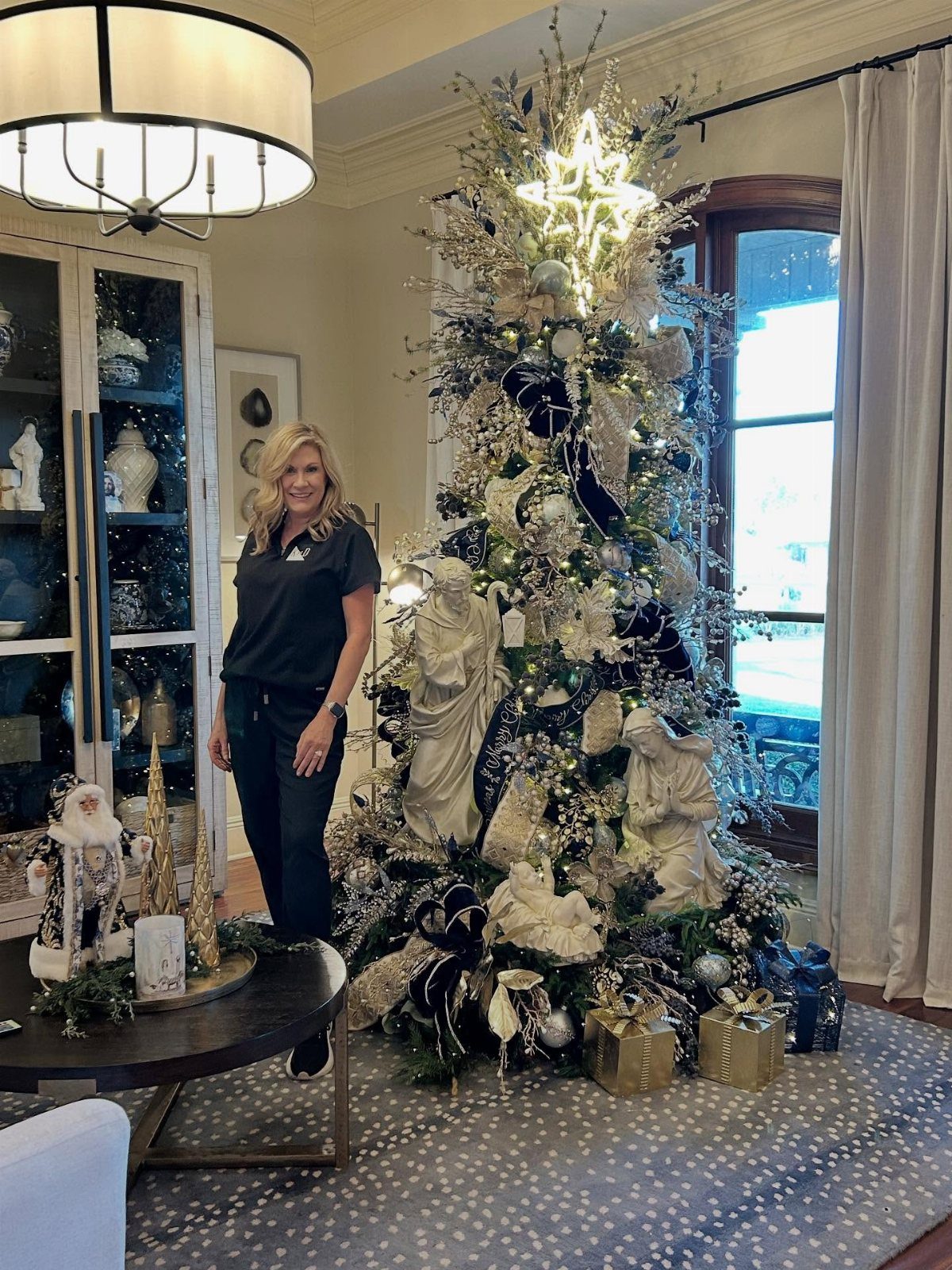
A tree built around the nativity story starts with the topper: a star at the crown sets the meaning before anyone sees a single ornament.
White angel figurines look clean against deep navy ribbon, and the contrast keeps the tree from feeling busy.
Hang the angels at different heights, with a few near eye level where they’re easy to see.
Choose sturdy, lightweight figurines so branches don’t sag. Keep the rest of the tree quiet.
19. Pink Peonies and White Pinecones
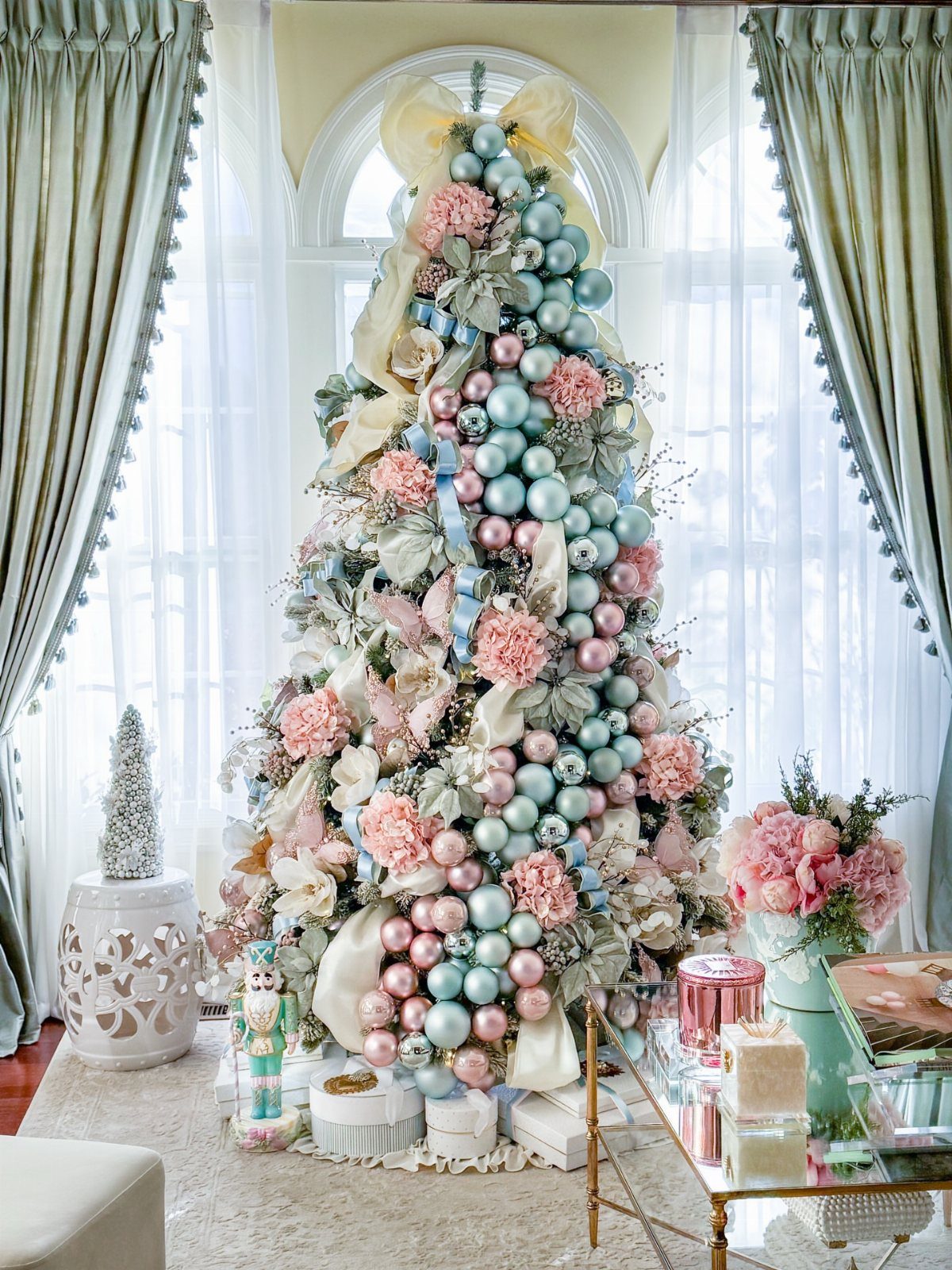
Pink peonies give a green tree a garden-party softness, and light blue ornaments with cream ribbon keep that softness from going too sweet.
Spread the peonies through the branches instead of bunching them, and let the ribbon link them in loose loops.
White pinecones are an option if you want texture between the flowers. I’d use only a few so the peonies stay the focus.
20. Sunflower Tree
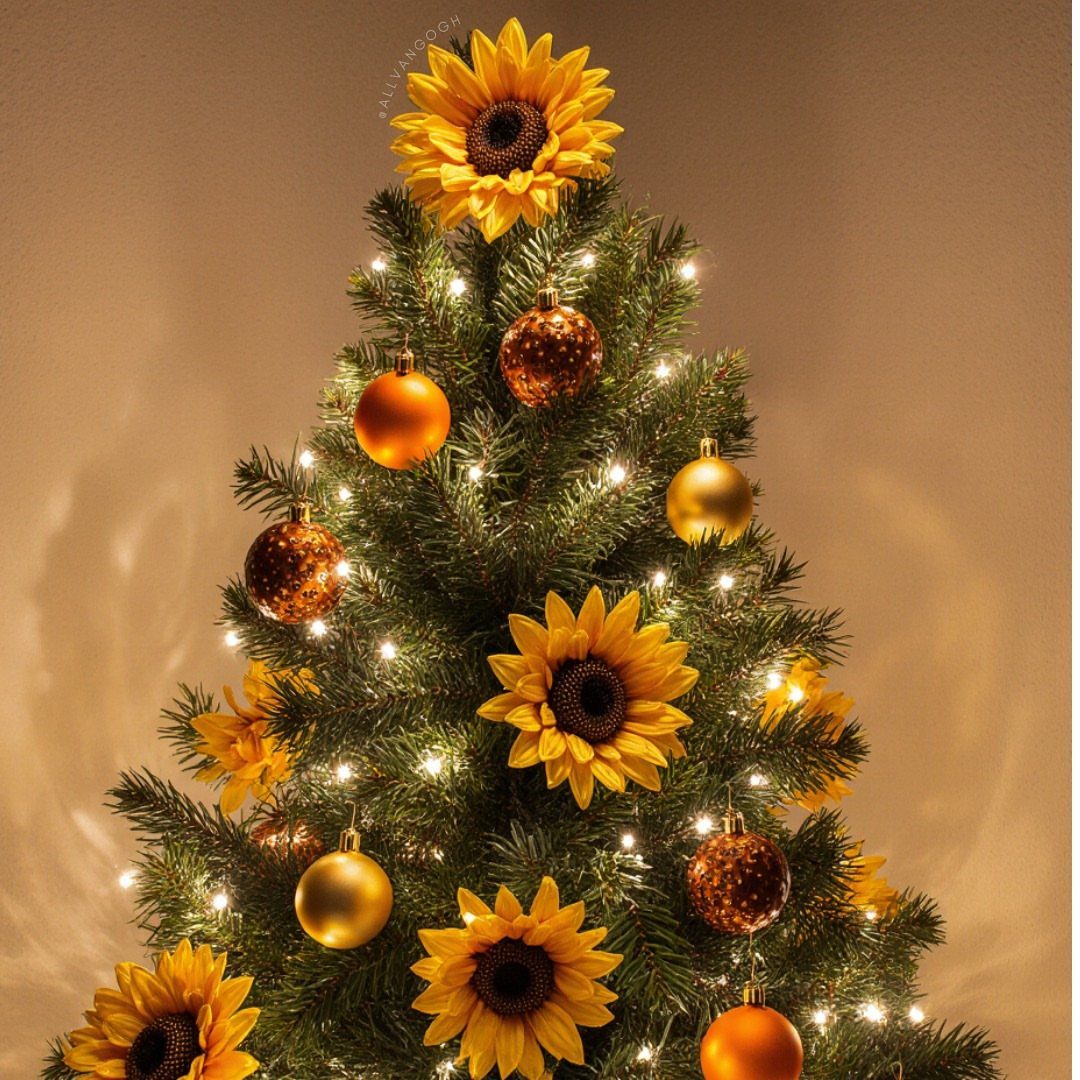
Sunflowers in place of the usual ornaments make a tree that looks like late summer, and bright yellow is bold enough that it needs few supporting players.
Set the flowers at different depths, some pushed forward and some tucked in, so the tree reads as full instead of flat. I’d place the biggest blooms around the middle, where the eye lands first.
21. Patriotic Tree
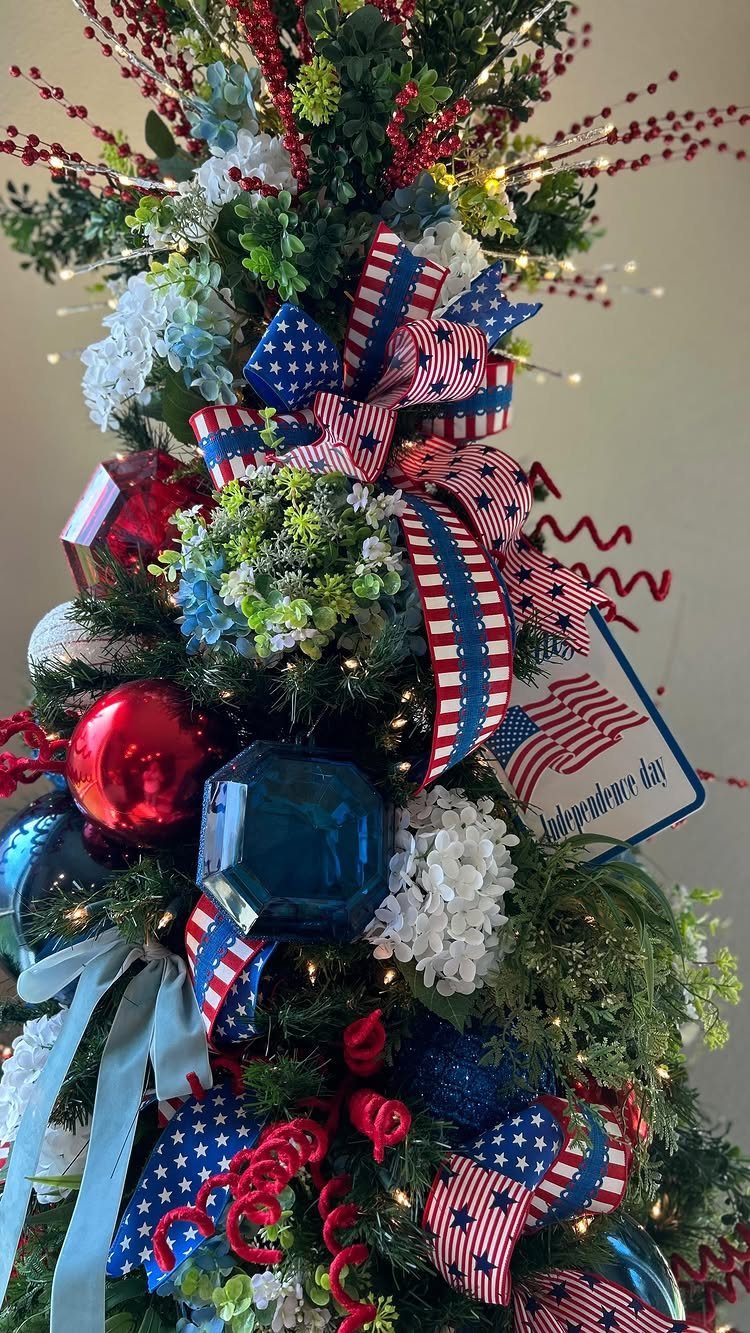
Red, white and blue looks modern on a tree when it lives in ribbon and solid ornaments rather than flags and stars piled on everywhere. Divide the 3 colors evenly around the branches so no single shade takes over.
A small sign, like the Independence Day one here, states the theme for you, which leaves the decorations free to stay simple.
22. Plaid Tree
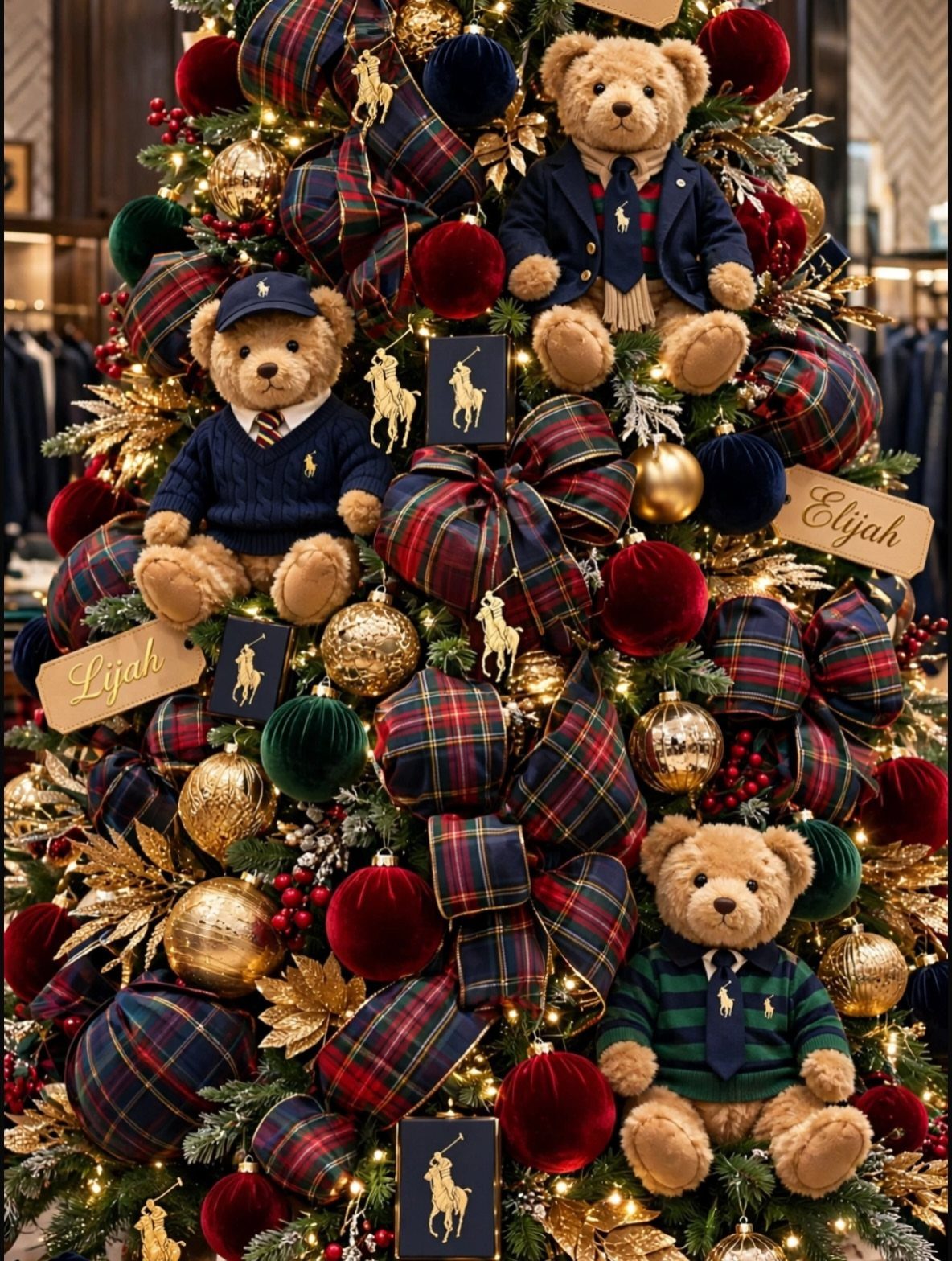
Pick one plaid and use it everywhere. Ribbon in the bows and drapes should match the plaid ornaments, so the pattern reads as a theme instead of clutter.
Red baubles and gold ornaments give the plaid something plain to rest against. Dressed teddy bears add a personal touch to a plaid tree, and wooden name signs suit a tree the kids help decorate.
23. Pumpkin Tree
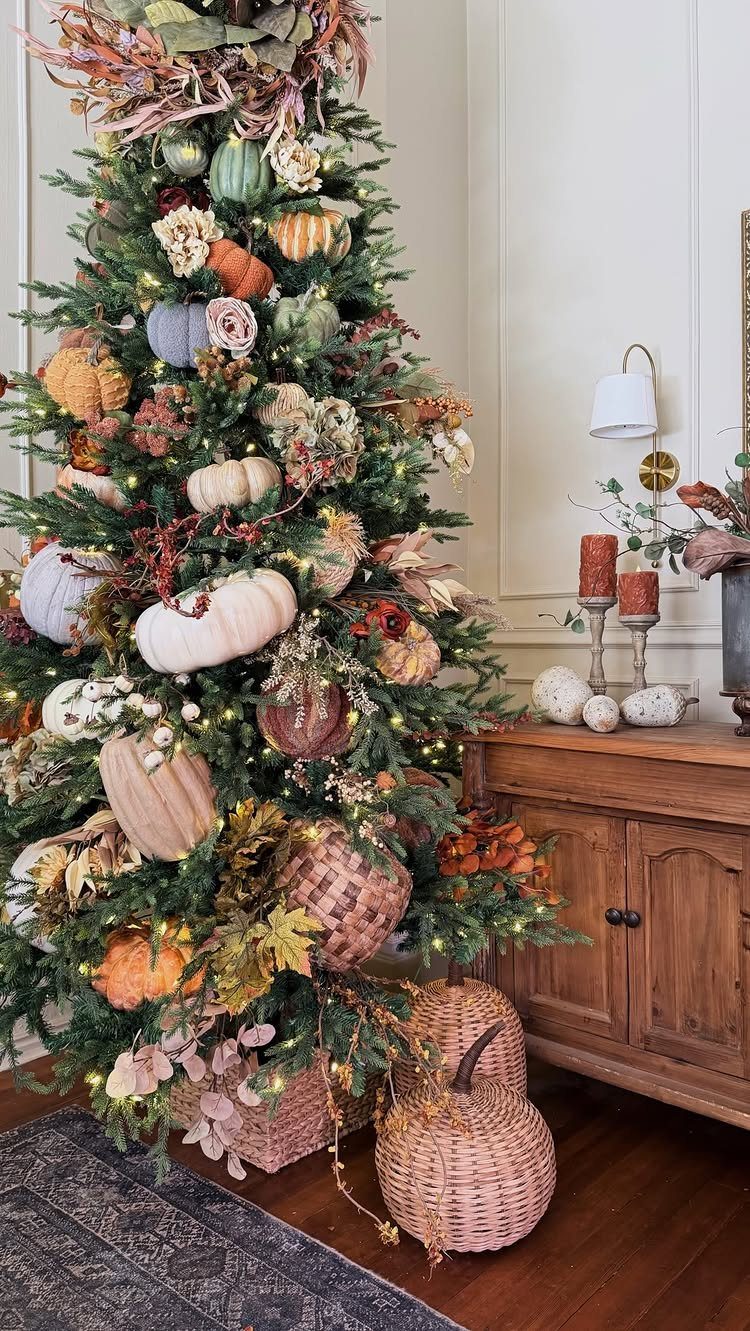
Pumpkins in mixed colors and autumn leaves carry fall decor straight into December, and if you already have those pieces on hand, they can do most of the work.
Vary the pumpkin sizes, with the largest low on the tree and smaller ones higher up.
Use the leaves to fill the gaps between pumpkins, and string lights through the branches so the whole thing glows.
24. Giant Paper Flowers
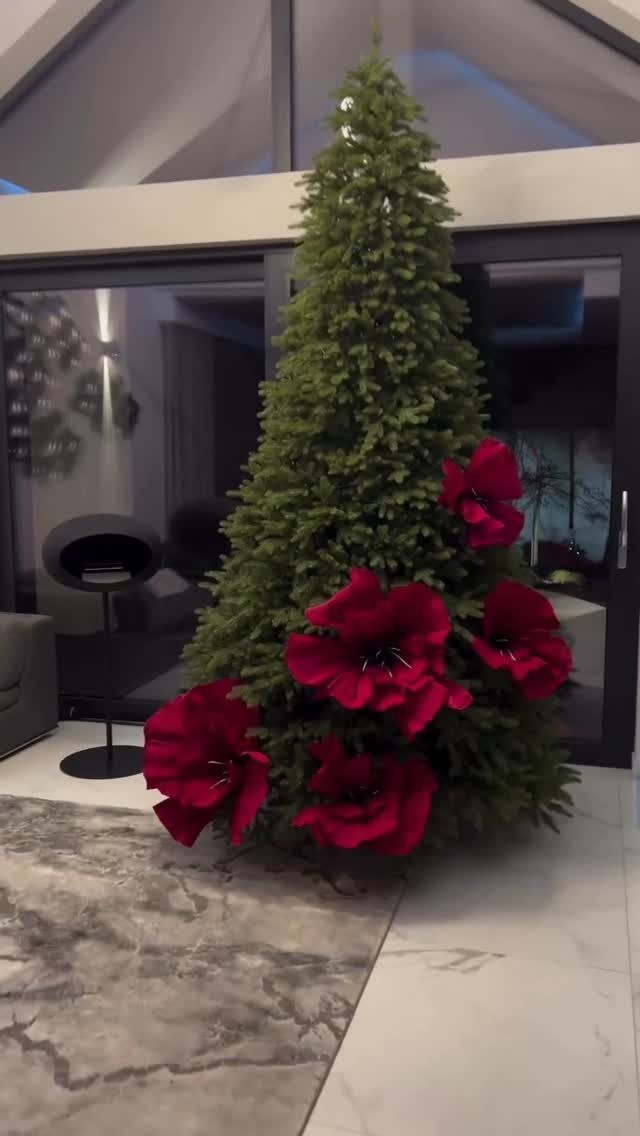
A thin tree fills out quickly with a handful of large red paper flowers, since each one covers the space of several ornaments.
Tuck the stems deep into the branches and spread the flowers around the front, sides and gaps so the bare spots disappear.
Stay with one color, as here. Big pieces look intentional in a single shade and chaotic in five.
25. Candy Tree
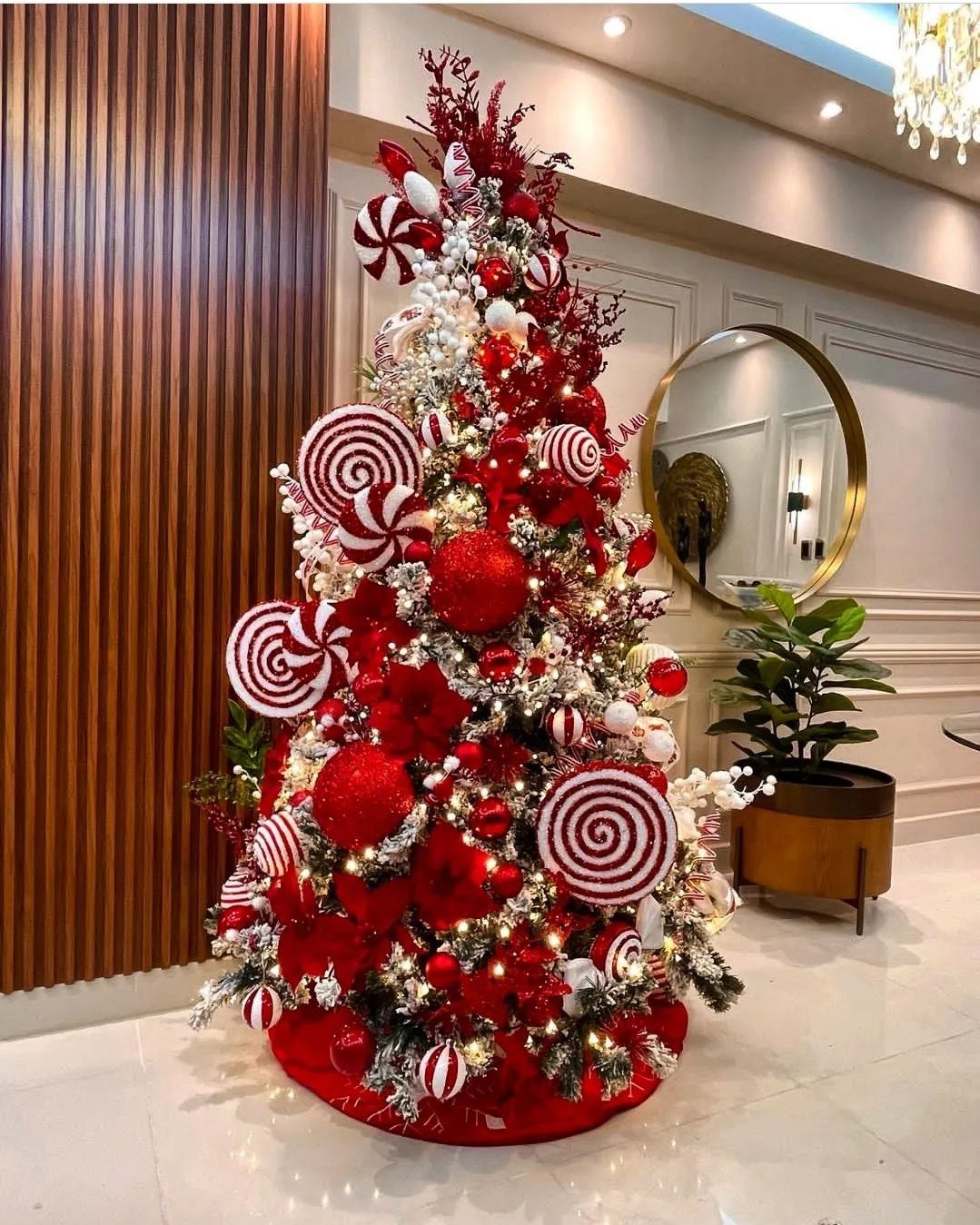
Oversized candy canes and peppermint rounds turn a tree into a sweets display, and a few big pieces in red and white beat small candies scattered across every branch.
Hang the largest near the middle, where the eye settles, then fill in with large red ornaments.
Stick with red and white so the look stays crisp and doesn’t tip into a toy store. Plain walls and a simple room let the candy be the only pattern.
26. Red Berry Tree
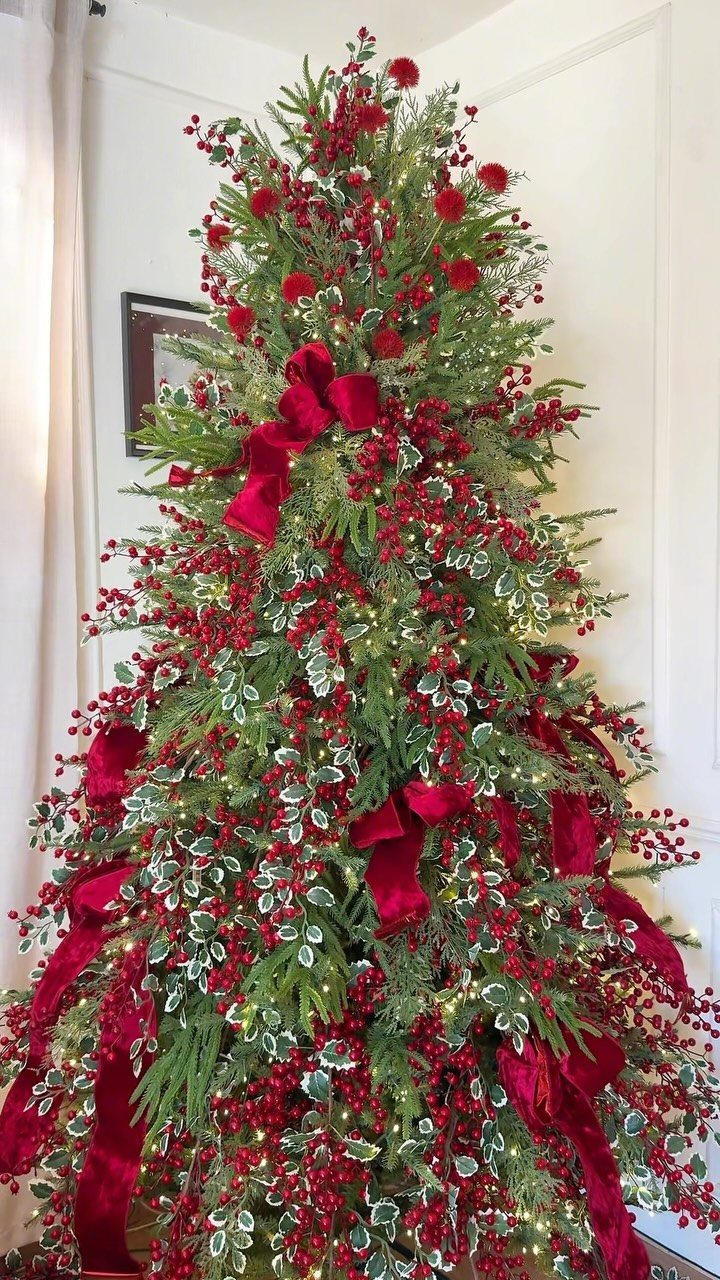
Red berry sprigs and white lights are nearly all this tree needs.
Tuck the sprigs into the branches at slightly different angles so they look picked, not pinned on, and add a few velvet bows in the same red for softness.
I’d stop there. Skipping glass ornaments keeps the green of the tree front and center, and the berries do the work a heavier scheme would.
27. Miniature Colorful Tree
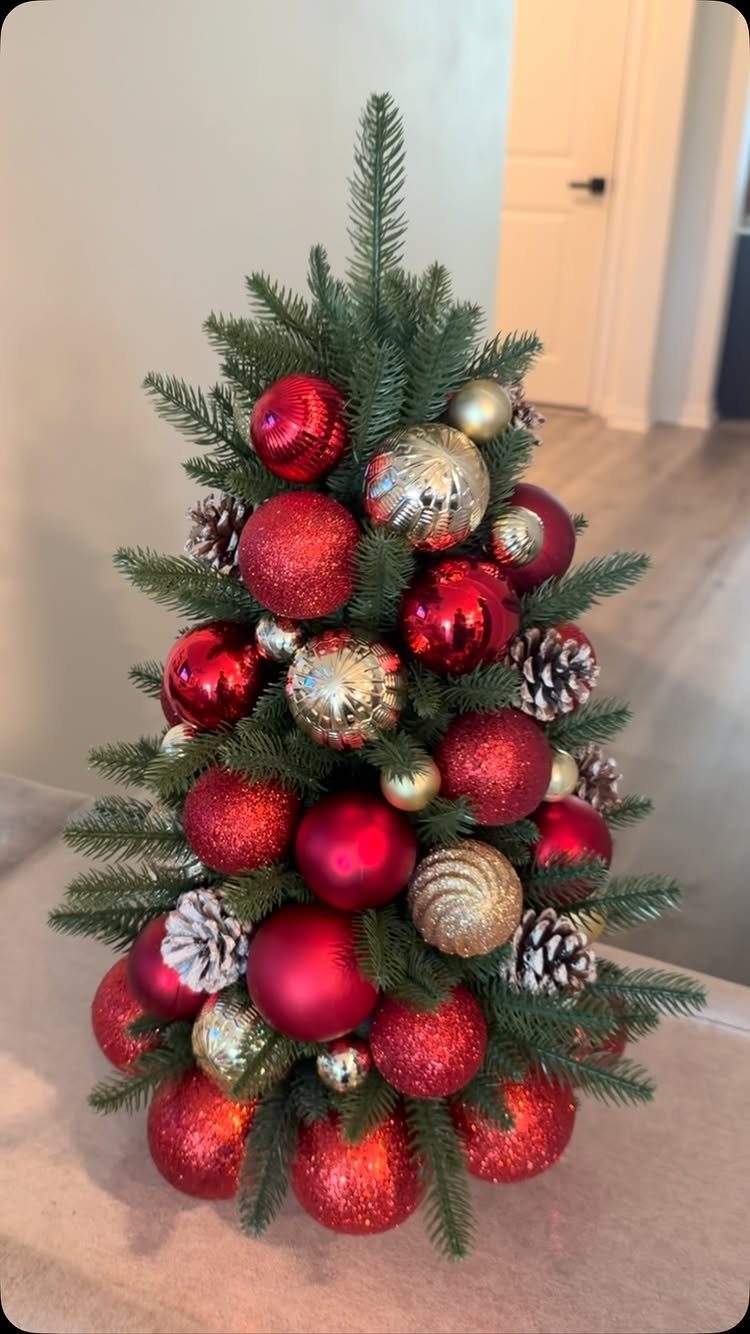
A small tree can carry a surprising amount of color, because the ornaments are all you see. Red, gold and silver in mixed sizes and finishes give it depth, with a few pinecones slipped in for a natural note.
Hang the biggest ornaments low and the smallest near the top so the tree keeps its shape. Don’t overfill it: leave a little green showing between pieces, or the branches vanish and the tree reads as a pile.
28. Black and White Tree with Metallic Accents
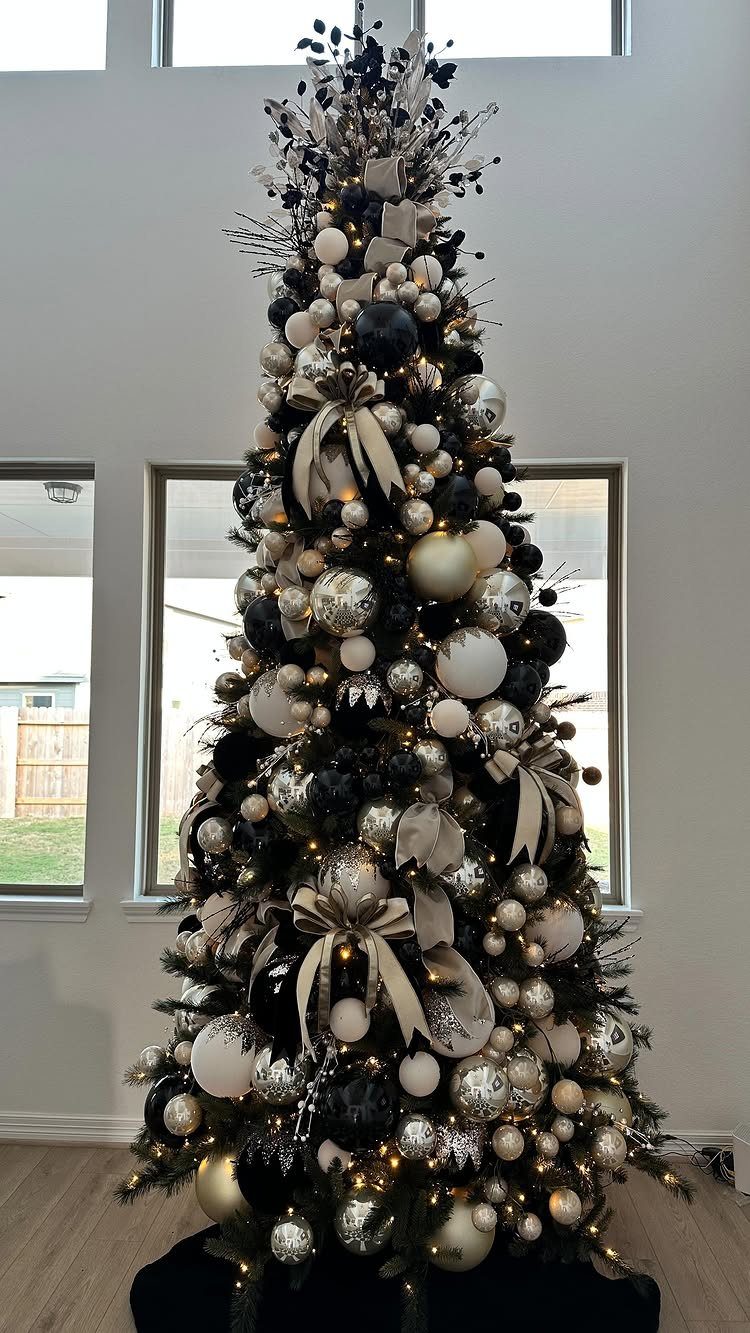
Black, white and metallic ornaments look classic because the palette is so tight, and wide bows in black or white ribbon give the tree its shape. Mix glossy and matte finishes in each color so the monochrome doesn’t go flat.
Silver and gold both work as the shine, but pick one metal and stay with it. Place the bows at different heights, with one or two low enough to catch the eye from across the room.
29. Coastal Tree
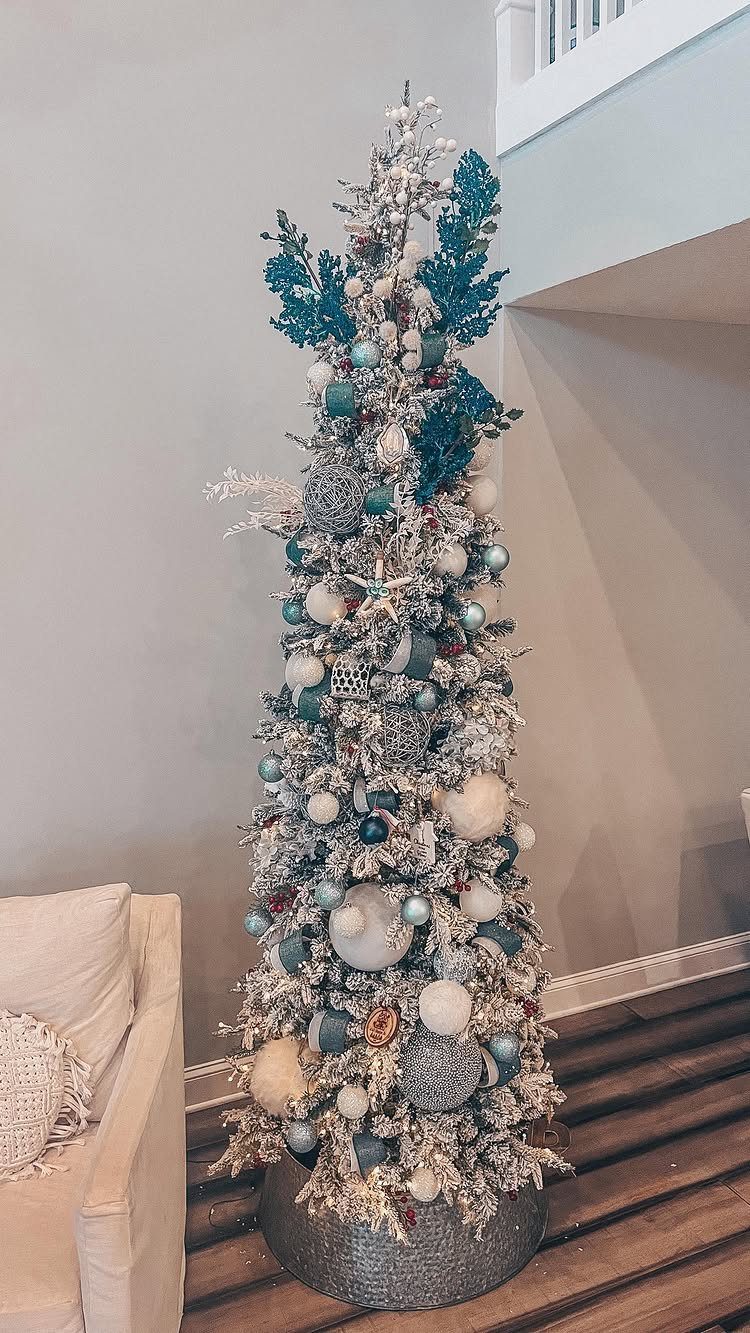
A flocked white tree makes a good ocean backdrop: teal and silver ornaments read as water, while starfish, shells and coral add the shoreline. A silver pot in place of a skirt keeps the base light and clean.
Group the sea pieces in clusters instead of scattering them, with starfish near the middle and coral tucked between branches. I’d keep the teal to one shade so the tree feels calm.
30. Citrus-Inspired Tree
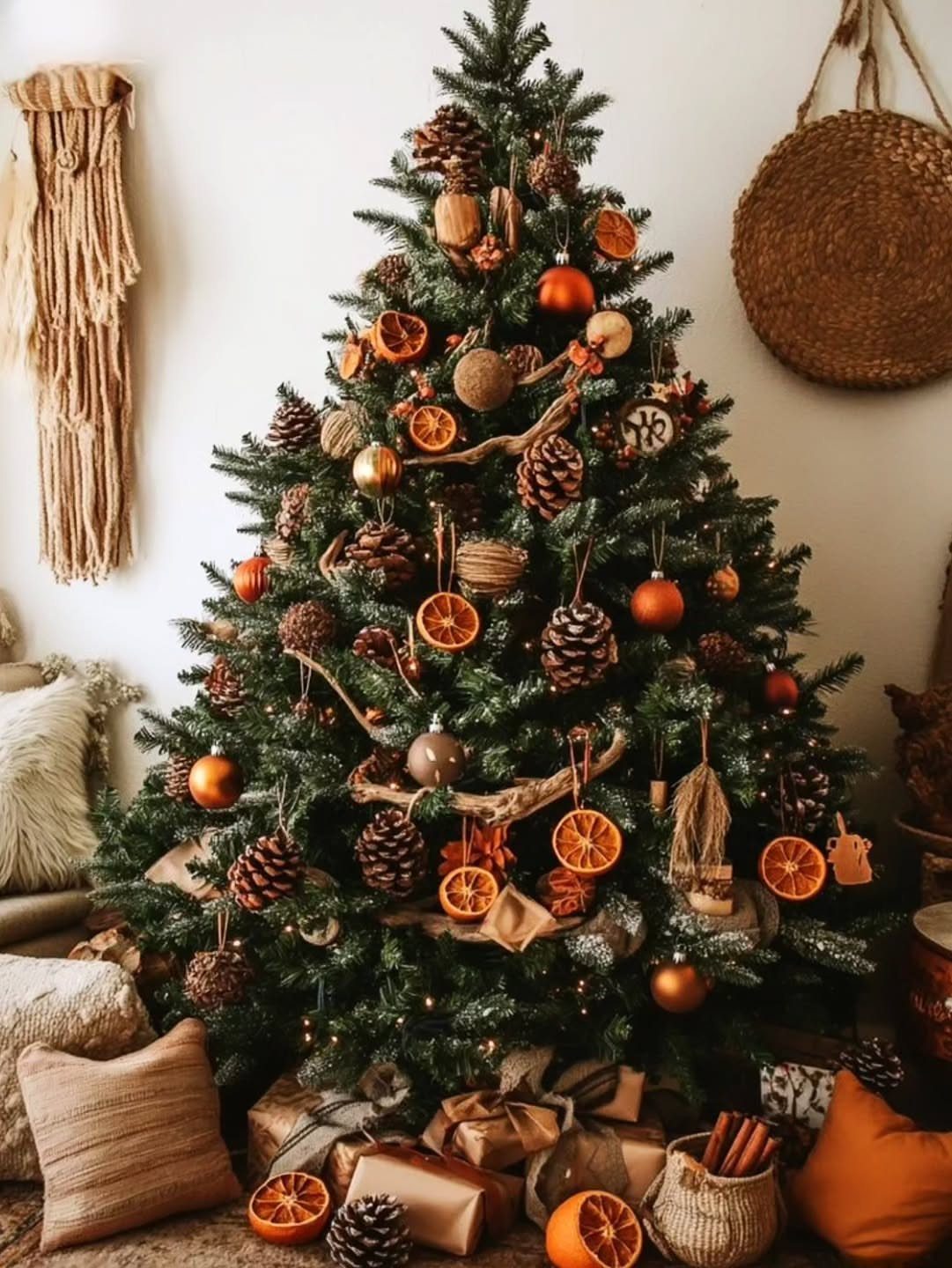
Dried orange slices bring a warm, translucent glow to a tree, and paired with pinecones and brown ornaments they make a quiet, earthy palette.
Hang the slices where light can pass through them, near the outer branches, and set the pinecones deeper in.
Dried fruit is the cheap option here, since the fruit is the decoration. Keep the other ornaments in muted brown so the orange stays the one bright note.
31. Navy Blue and Gold Tree
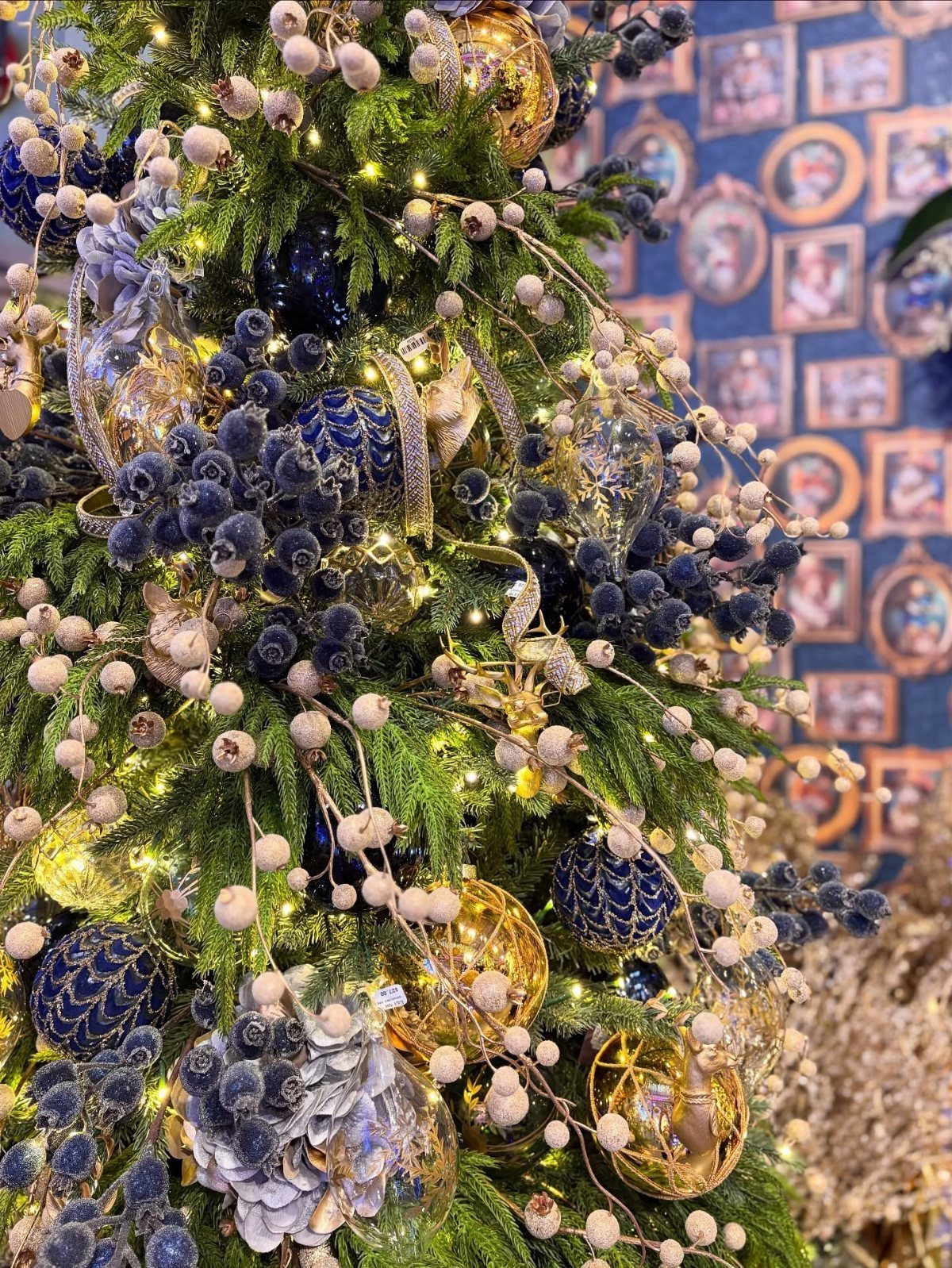
Navy and gold make a deep, formal pairing, and blue berries plus white beads add the soft texture that keeps it from feeling stiff.
Hang the navy ornaments first, spaced evenly, then fill the gaps with gold so neither color clumps on one side.
Run the white beads in loose loops across the branches and tuck the berries in near the ornaments. With a patterned blue wall behind it, I’d skip extra color and let the tree blend into the room.
32. Gold Artificial Tree
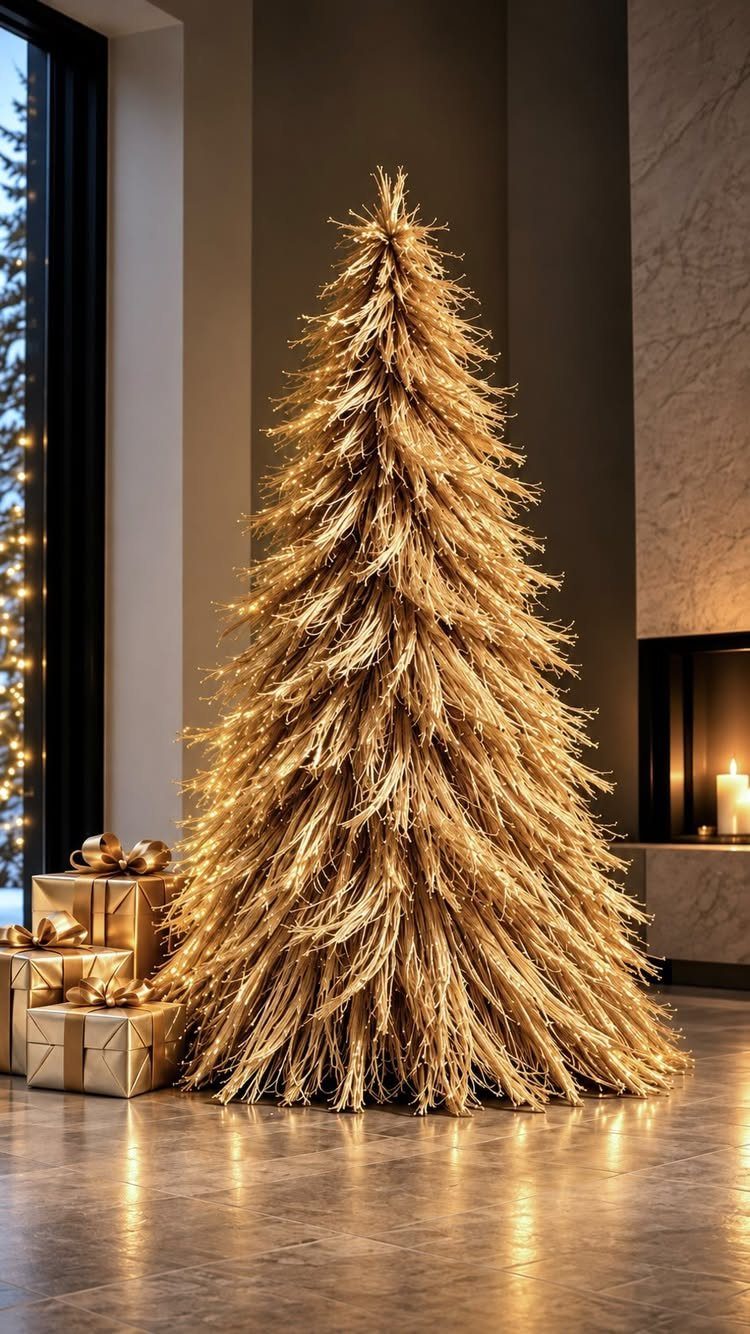
A gold tree is the decoration, so everything else can stay quiet. Gold wrapped gifts underneath carry the same shine to the floor, and a tree with built-in lights saves you from stringing bulbs on a metallic surface.
I’d add few or no ornaments, since the branches already glitter. Set the tree where a window or fireplace gives it room, and wrap the gifts in gold paper only, not a mix of metals.
33. Textured White Trees
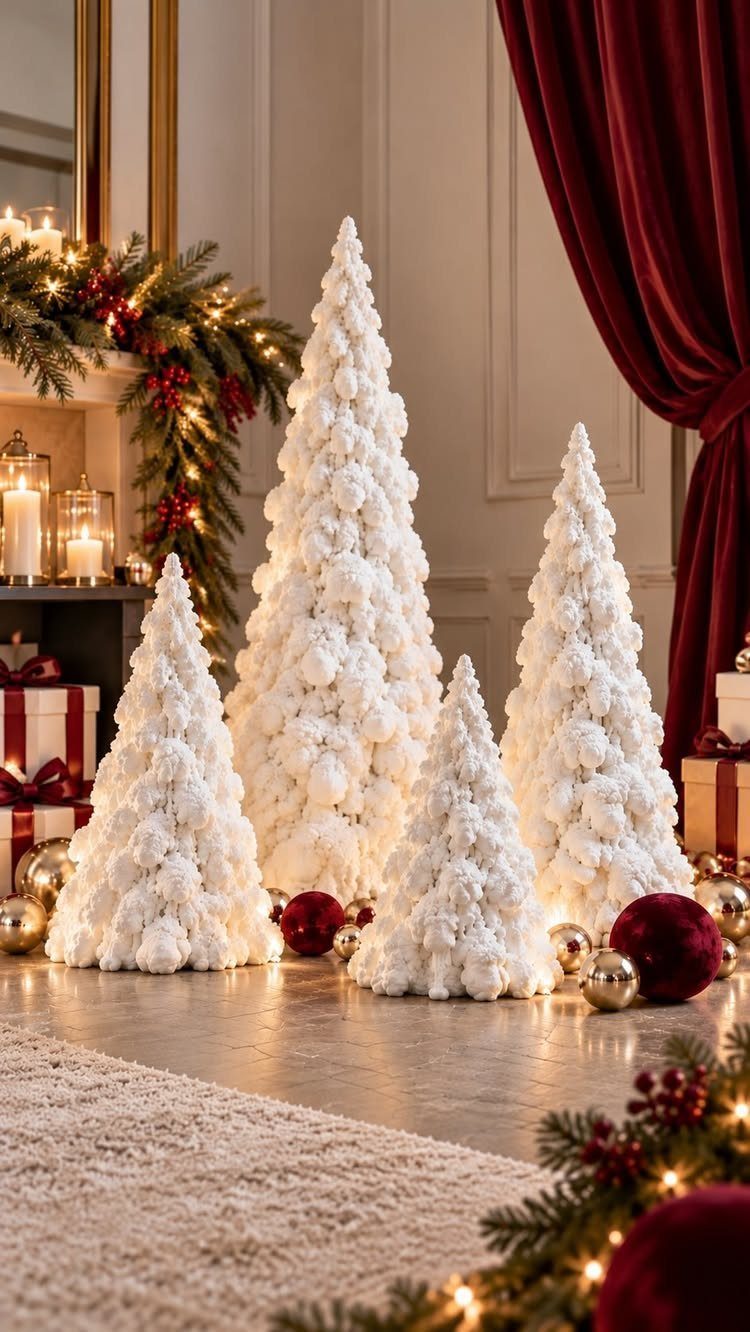
Small white faux trees with bumpy, popcorn-like surfaces look best grouped in a cluster, and different heights make the group feel planned.
Set the tallest at the back and the shortest in front, close enough that they read as one display.
Red and gold ornaments stand out well against the white texture.
Hang a few on each tree and set extras on the floor around the bases. I’d keep the pieces large so the surface stays visible.
Tree Decorating Order
Pick a theme first, then pull every ornament, ribbon and strand of lights into one spot so you’re not hunting for supplies halfway up the tree.
Then plug in each strand of lights and test it on the floor, so a dead strand doesn’t surprise you once it’s wrapped around the tree.
Once the collar or skirt is snug around the stand, lights go on next, before any garland, ribbon or ornaments.
Begin at the trunk and wrap outward toward the branch tips, which spreads the glow evenly instead of leaving the inner branches dark.
After the lights, work in this order:
- Larger ornaments, spaced around the whole tree
- Smaller decorative ornaments, filling the gaps between them
- Tinsel or bows at the branch edges, last
Saving the lightest pieces for the end means you won’t brush them loose while hanging the bigger ornaments.
Frequently Asked Questions
What are some easy ways to decorate a Christmas tree?
Ribbon is the easiest place to start. Anchor one end of the ribbon at the crown, let it fall in loose, uneven loops, and secure it to a branch or two with floral wire or a pin so it holds.
Oversized bows or red berry sprigs tucked in at slightly different angles also take little effort, and with white lights they need almost nothing else. Leave some green showing between pieces so the tree doesn’t look crowded.
What materials are used to decorate a Christmas tree?
Ribbon and bows top the list, and wired ribbon keeps its shape far better than the soft, floppy kind. Pinecones, wooden ornaments, burlap garlands, dried orange slices, berry sprigs, paper flowers and crocheted ornaments all work for a handmade look.
For something unusual, ostrich feathers and dried palm leaves can be tucked into the branches. Mixing a few textures gives a one-color tree more depth.
What is the best way to put lights on a Christmas tree?
Work from the trunk out to the branch tips, weaving the strand in and out so light sits deep in the tree as well as on the surface.
Warm white is the safest choice because cool white fights most ornament colors.
Warm bulbs around 2700K suit gold and bronze, since cooler white washes the metal out and the yellow tone lets it glow. On a shiny metallic tree, buying it pre-lit means no stringing bulbs over that surface at all.
What are the best decorations for a Christmas tree?
For a tree that rarely misses, I’d start with warm white lights and ribbon, then add gold, silver or copper ornaments plus a few glass ones for sparkle.
One oversized bow on top does more for a tree than a dozen small ornaments.
Pairing red with plaid gives a classic look that still feels relaxed. Repeating a few pieces around the tree makes the mix look planned.
What is the correct order to decorate a Christmas tree?
Fit a collar or skirt snugly around the stand first, then add the lights, then ribbon or garland. Hang the largest ornaments next, followed by mid-size pieces and small fillers in the gaps.
Save the bows or tinsel for the very end, placing them along the branch edges. Putting big pieces up first lets you see where the gaps are before you fill them.
What is a timeless Christmas theme?
Red and plaid with a big bow on top and warm white lights is the classic combination. A fresh tree adds scent and nostalgia that an artificial one can’t match.