
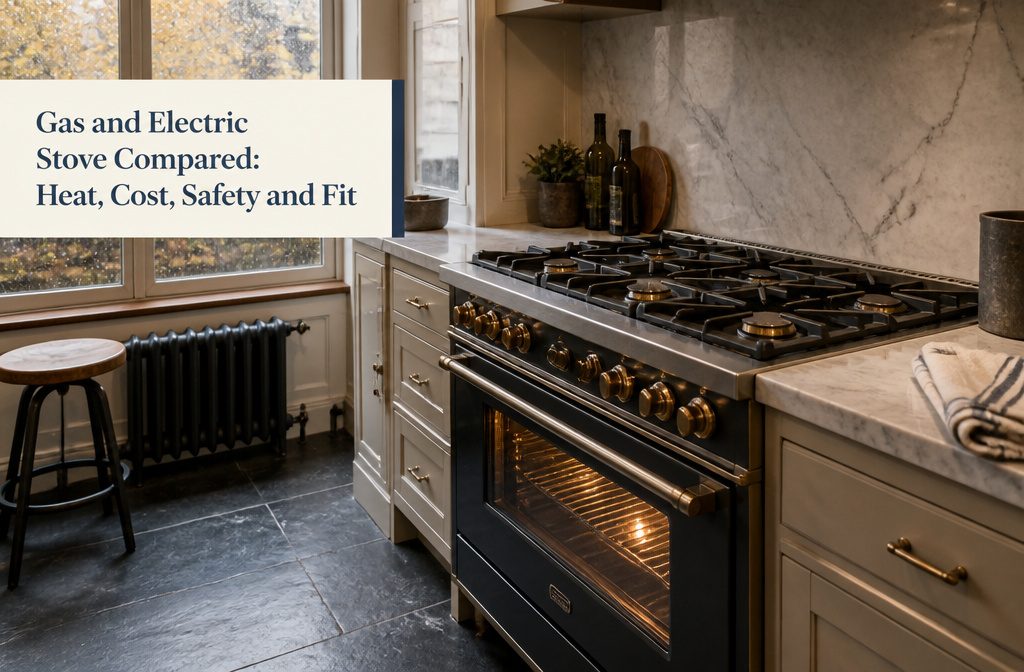
A dual-fuel range pairs a gas cooktop with an electric oven, giving you an adjustable flame on top and steady baking heat below.
It only works where the kitchen has both a gas line and a 240V outlet, and installation often needs a professional. The 36-inch ILVE Majestic II has 6 sealed brass burners reaching 20,000 BTUs.
Heat Control and Oven Results
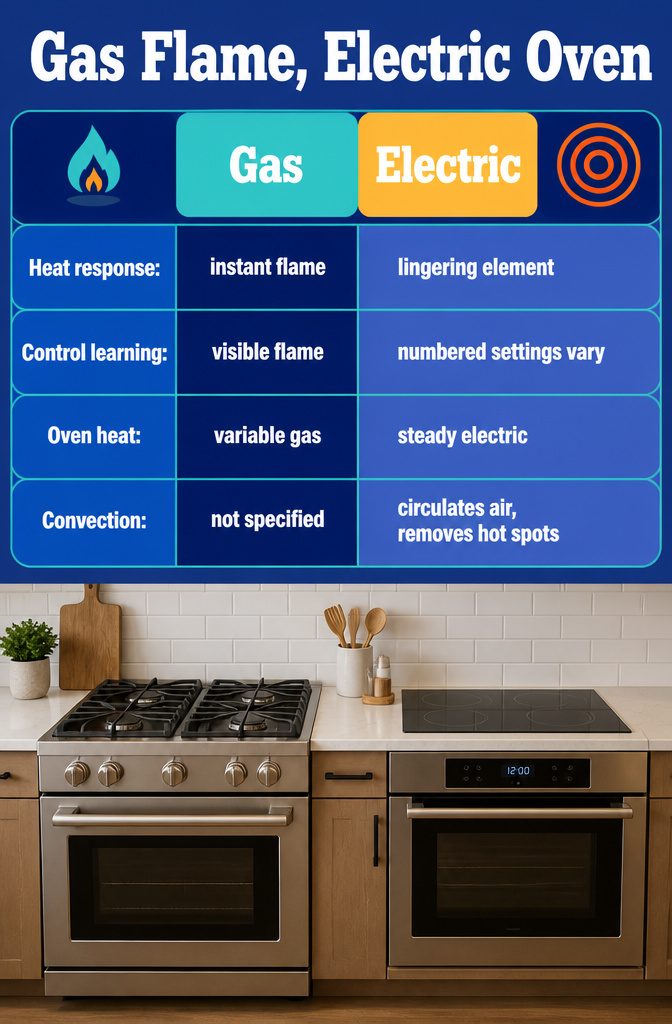
A gas flame shows you the heat before the pan does, and the knob changes it at once, so a simmer to a roaring boil takes seconds.
Coil and glass-top electric burners use numbered settings, and each stove reads them a little differently. Give yourself a few meals to learn what low, medium and high really do on yours, or sauces will scorch.
For baking, I’d pick electric.
Its oven heat is steady and even, which suits bread, cookies and roasts. Convection circulates the air, removes hot spots and shortens cook times, so look for it if you bake often.
A gas range runs both cooktop and oven on natural gas or propane. If you want a wall oven, buy it and the cooktop separately.
Installation and Kitchen Fit
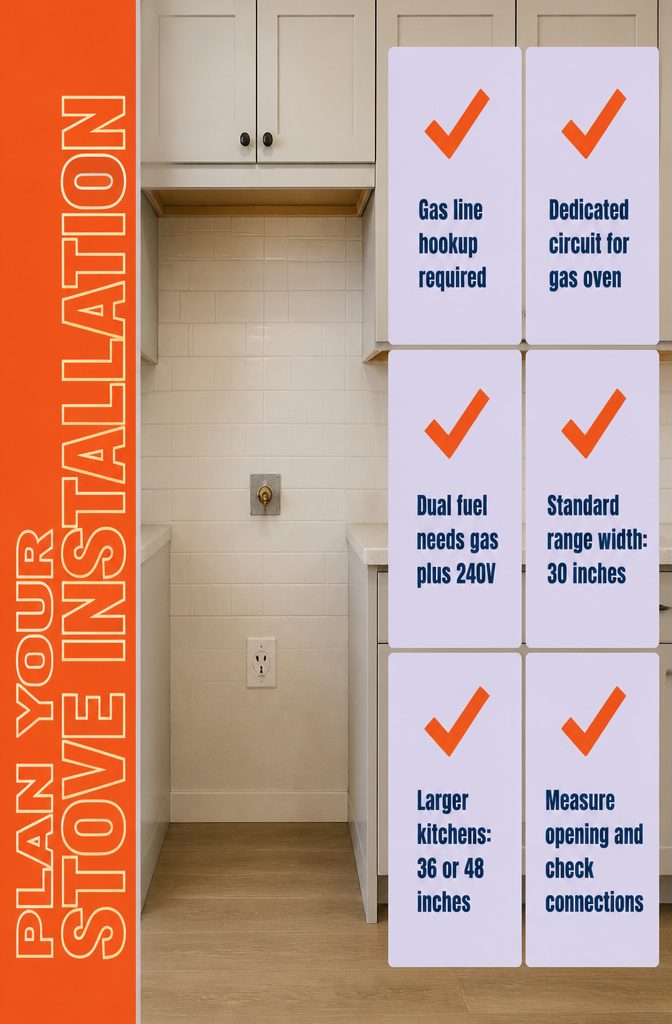
A gas range needs a gas line hookup, and its oven still needs a dedicated electrical circuit.
Dual fuel asks for both: a gas line plus a 240V outlet near the stove. That combination often calls for a professional installer, so I’d plan for the extra labor before falling for the model.
Width is the next decision.
A 30-inch range is the standard and suits small apartments and condos. Cooks feeding a larger family or hosting dinners do better with 36 or 48 inches, and 60 inches is professional-style territory that needs real floor space and budget.
Before shopping for any gas and electric stove, measure the opening and check which connections already sit behind it. Then add hood clearance, cabinet space and ventilation to your notes, and confirm local building codes.
Cost and Budget
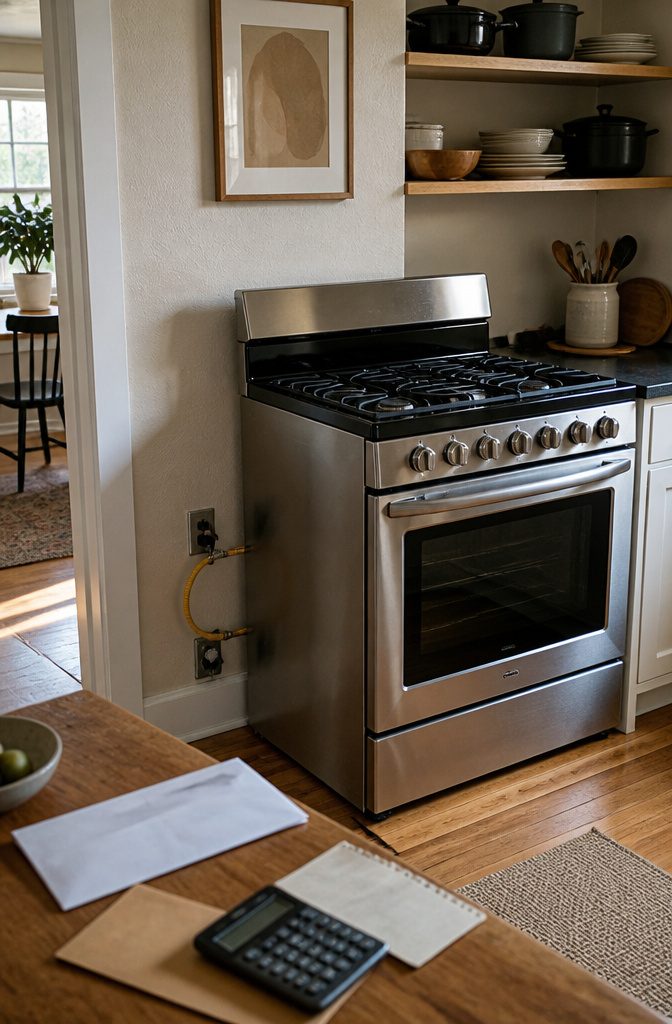
Dual-fuel ranges cost more than single-fuel ones at the register, since one unit carries two technologies.
Installation widens the gap. A dual-fuel range needs both a gas line and an electrical outlet near the stove, and that setup may call for a professional, which adds to the total.
A gas range alone still needs the gas hookup plus a dedicated electrical circuit for the oven, so even single-fuel gas isn’t a plug-and-play swap.
Gas can also put a utility bill on top of the electric one you already pay.
Hookup costs swing too much by house and region for me to print a number, so get local quotes before you commit to a model. On a tight budget, I’d pick single-fuel and skip the dual-fuel premium.
Cleaning and Upkeep
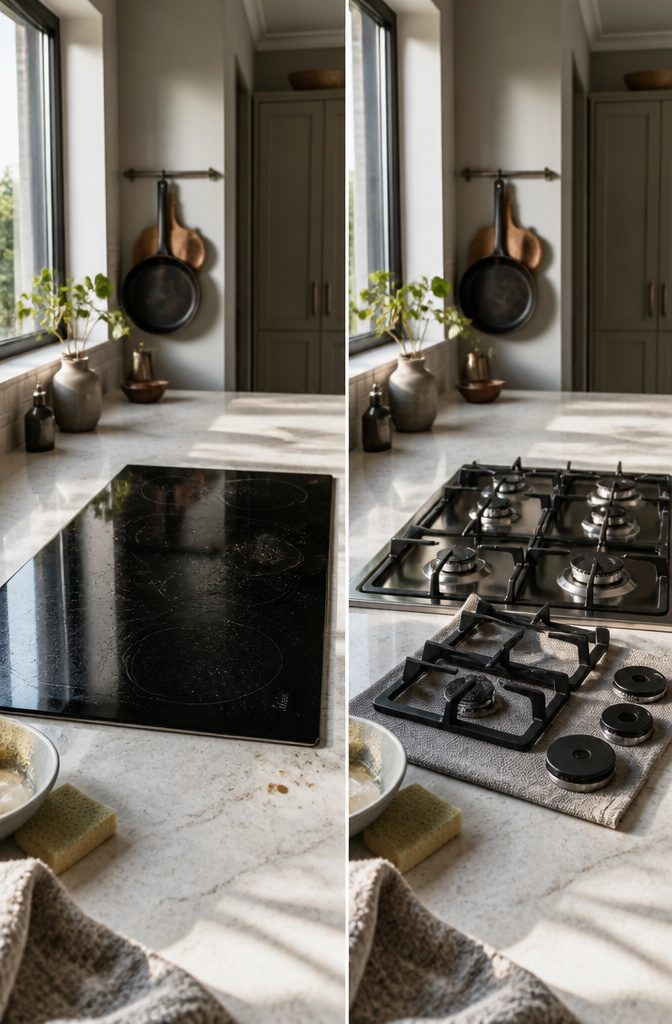
Gas means lifting things out. Grates, burner caps and the cooktop beneath them all come off for scrubbing, and spills that slip past an open burner land where a sponge can’t follow.
A smooth electric glass top works the other way: heat passes through the glass, so one wipe covers the whole surface. For a renter without a free weekend, glass wins on cleanup.
Gas isn’t a lost cause. Sealed burners, continuous grates and nano-coatings keep spills from seeping into hard-to-reach spots and make wiping down quick, so check the spec sheet before you buy.
Exposed electric coils need cleaning too, and they may need replacing over time. For the oven, a self-cleaning cycle or steam-clean option is worth having on either fuel.
Safety and Power Outages
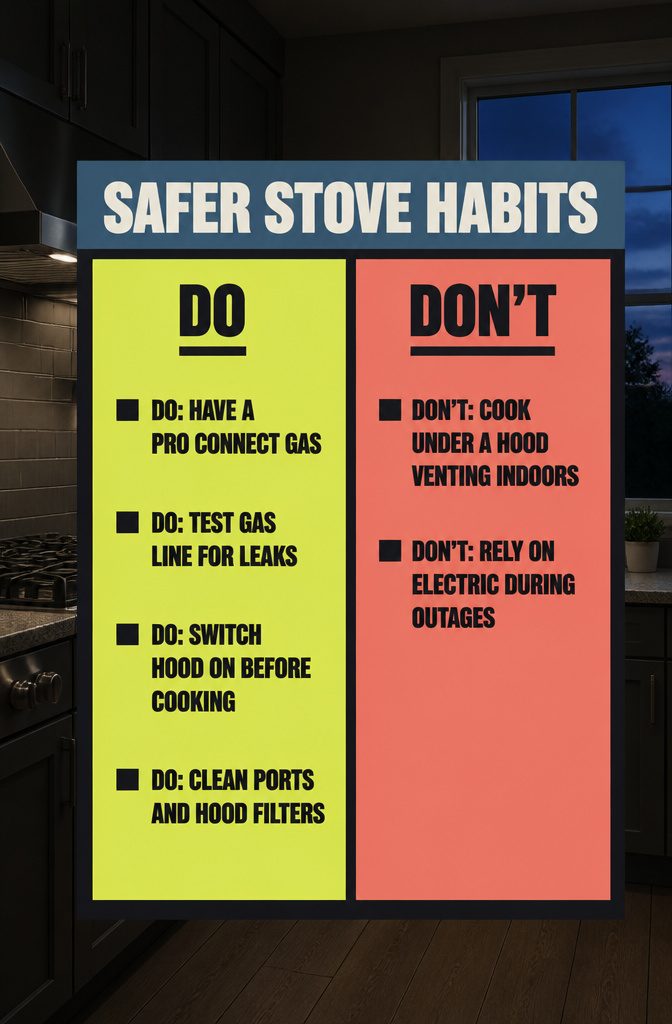
Gas carries the higher risk on paper: a leak is possible, and house fires run slightly more common than with electric, even in experienced hands.
A pro should connect the line, and the line should be tested for leaks regularly after that.
Burning gas also puts nitrogen dioxide into the room. A range hood pulls that out along with smoke, grease and odors, so switch it on before the pan heats, since fans take time to ramp up.
If the hood doesn’t vent outdoors, or you don’t have one, crack a window; an air purifier helps too.
Keep burner ports clean, because grease and splatter block them and cause incomplete ignition and higher emissions. Replace or clean hood filters on the maker’s schedule.
Electric has no leak risk, but it stops cooking when the power does. A gas range will likely keep working through an outage, and that is its strongest argument.
Dual-Fuel Ranges
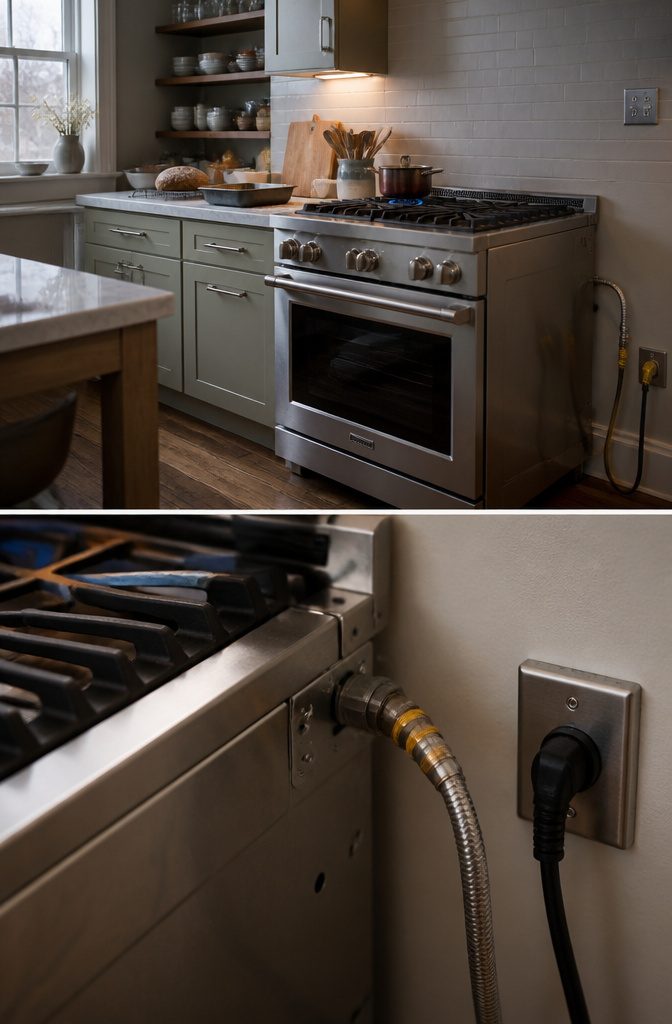
A gas and electric stove can be a single appliance: a dual-fuel range puts a gas cooktop on top of an electric oven.
The flame responds the instant you turn the knob, so you can drop from a hard boil to a gentle simmer in seconds, while the oven below gives roasts, breads and cakes the dry, consistent heat they bake best in.
Both utilities have to be in place. The kitchen needs a gas connection and a 240V outlet, so a rental with only one of them rules this range out.
I’d call dual fuel the right compromise for anyone who bakes often but wants burners they can see and adjust.
If you mostly boil pasta and reheat leftovers, a plain gas or electric range does the job with less hassle and a lower price tag.
Burner BTUs and Oven Sizes
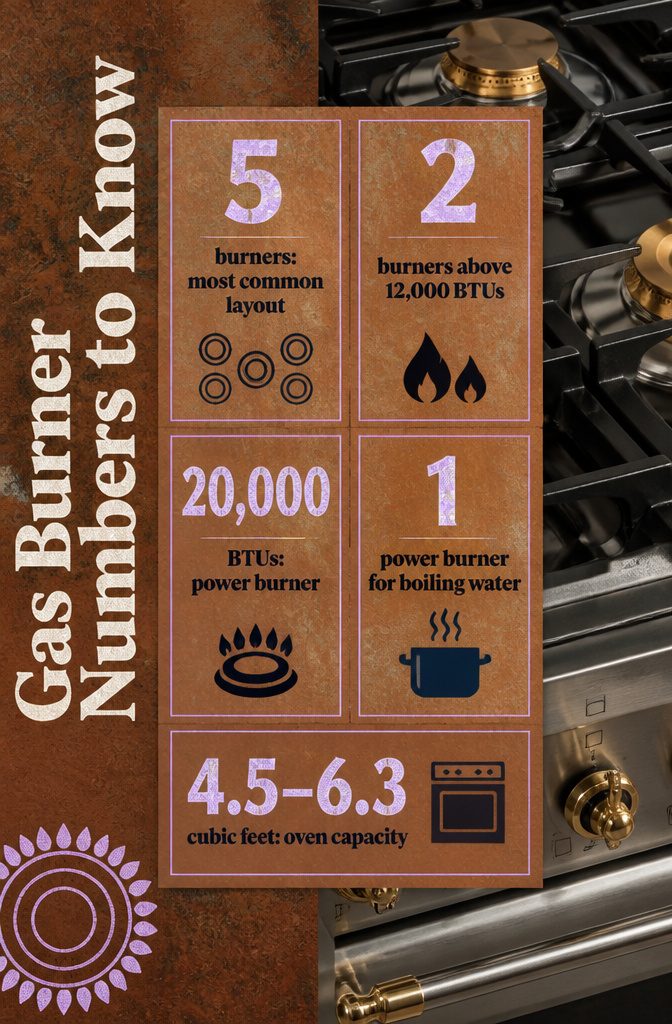
BTU stands for British thermal unit, the heat needed to raise 1 pound of water by 1°F. A higher number means faster boiling and harder searing, so I’d look for a couple of burners above 12,000 BTUs, plus a 20,000-BTU power burner for boiling water.
These are the numbers I’d shop by on gas and dual-fuel ranges:
| Spec | Typical range | What I’d look for |
|---|---|---|
| Burners | 4–6 | 5 is the most common layout |
| Oven capacity | 4.5–6.3 cubic feet | The upper end if you bake for a crowd |
| Burner output | Varies | 2 burners above 12,000 BTUs |
| Power burner | Up to 20,000 BTUs | 1 for boiling water |
The 36-inch ILVE Majestic II shows the high end, with 6 sealed brass burners reaching 20,000 BTUs. Some ranges add Wi-Fi and Alexa or Google Home control, which I’d treat as a bonus, not a reason to buy.
Frequently Asked Questions
What is the difference between an electric range and a gas range?
A gas range heats with a flame under a grate, while an electric range uses coils or a smooth glass top. Gas gives you visible, instant heat control and will likely keep cooking through a power outage.
Electric gives steadier oven heat, and a glass top wipes clean in one pass. Gas also needs a gas line hookup plus a dedicated electrical circuit for the oven.
Can you have a gas stove and an electric oven in one range?
Yes.
A gas cooktop sitting on an electric oven is called a dual-fuel range. The kitchen needs both a gas connection and a 240V outlet near the stove, so a rental with only one of them can’t take it.
Is a dual fuel range worth it?
It is if you bake often and still want burners you can see and adjust. You get a responsive flame on top and dry, even oven heat below.
It costs more than a single-fuel range, and installation adds to the total because it needs both utilities. If you mostly boil pasta and reheat leftovers, a plain gas or electric range is cheaper and simpler.