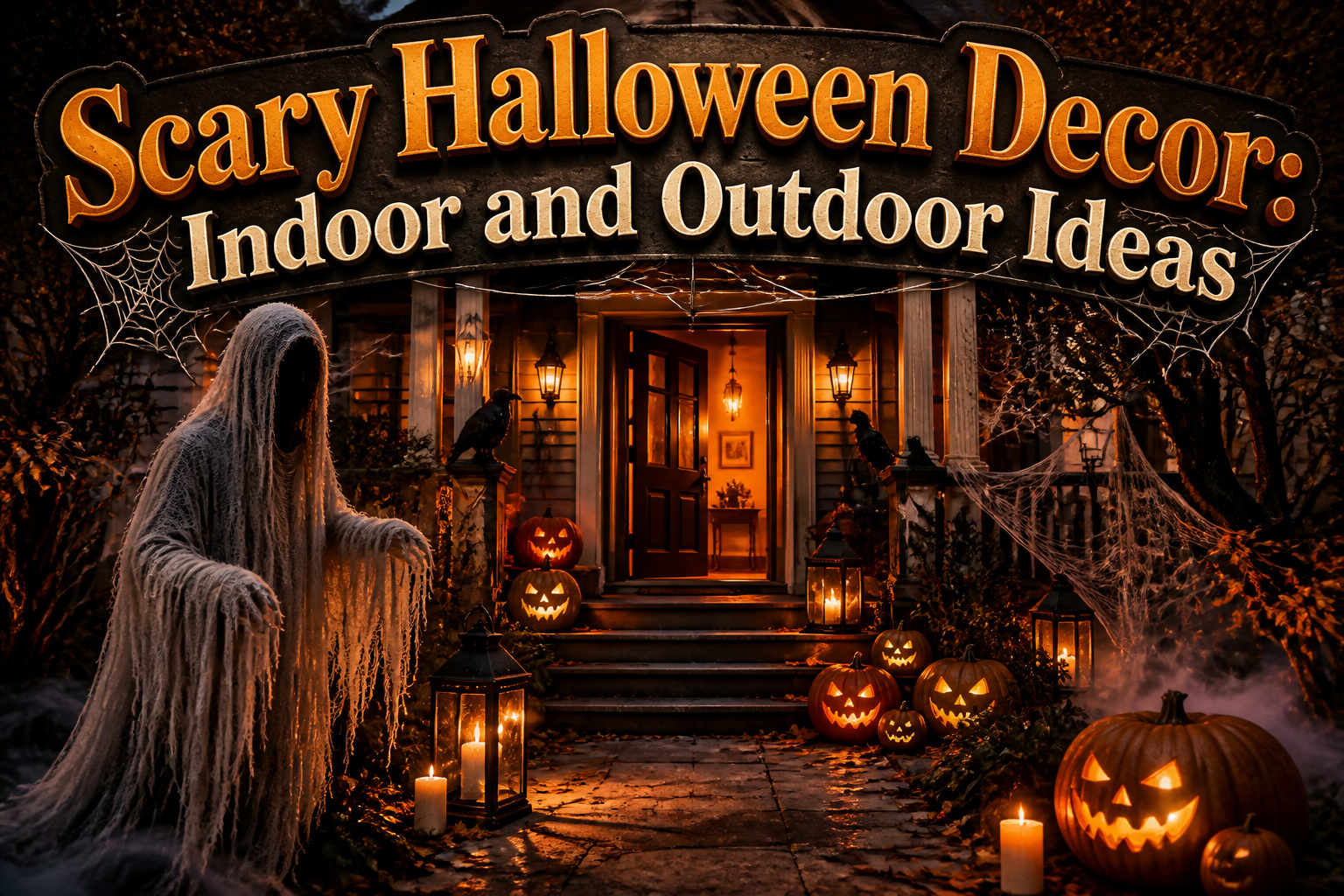
Halloween scary decor is the deliberate use of motion, sound, and light to turn an ordinary home into something guests swear is watching them back. The catch is that most people overspend on quantity and underthink placement. A single $349.99 animatronic at the end of the walkway, positioned where headlights catch it last, outperforms three cheap props scattered around the lawn.
Life-Size Animated Props

A six-foot animated skeleton with a rusted ribcage and jittering jaw sets the tone before anyone reaches your door. These props, running from $129.99 up to $399.99 for the full animatronics, anchor a yard the way a sofa anchors a living room: everything else arranges around them.
Placement matters more than the prop itself. The 8 ft hovering witch belongs at the end of the walkway, where her broom sweeps across the sightline of arriving guests. Ground-level zombies, the 6 ft Jack & Jill pair or the three stacked figures, sit best in garden beds or beside porch steps, low enough that headlights catch them at the last second. Hanging pieces, the 8 ft skeleton tangled in a web or the 6 ft reaper with chains, need a sturdy branch or a second-story eave; the motion reads as trapped rather than staged.
Sound is the dividing line at that price spread. The $129.99 range usually gives you light-up eyes and a static pose. Step to $250 and motion sensors trigger dialogue, jerking limbs, the full startle. The $399.99 tier adds choreography: the 7 ft Time Demon or the Soul Stealer with synchronized sound and LED timing. For a single weekend display, one mid-range animatronic beats three cheap ones scattered around. The neighbor’s eye goes to the moving part first; the rest fills in around it.
Outdoor Decorations
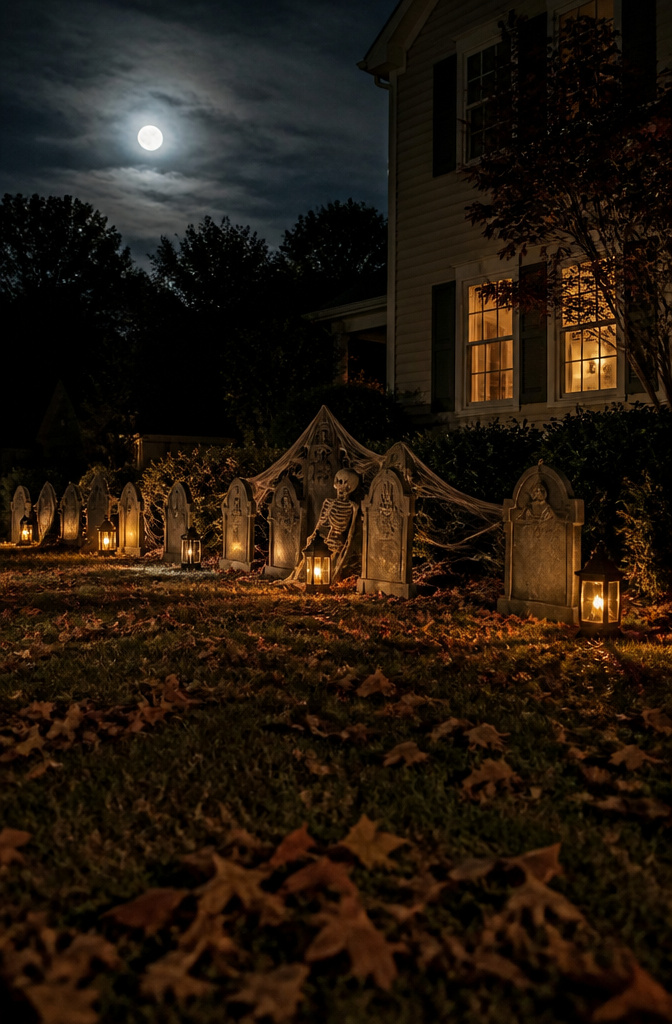
Yard signs and faux tombstones are the first thing anyone sees, and that first impression is where the scare lives or dies. The category has ballooned to eight hundred plus outdoor options now, which sounds like freedom until you are standing in an aisle trying to pick between six versions of the same reaper. Most of it is forgettable. A few stakes in the ground with corrugated plastic warnings do the work of a ten-minute setup; the rest is noise.
The real mistake is skipping the anchoring. Foam tombstones look convincingly heavy until the first gust. Stakes or sandbags are not optional if you want the graveyard to stay a graveyard past sunset. I have seen too many front yards where the wind turned the whole display into a pile by midnight, and the homeowner was out there in a bathrobe hammering things back down while trick-or-treaters watched.
A skeletal figure propped at the door, some stretched cobwebs, maybe a lantern or two by the walkway: that is the skeleton of a solid exterior. Scale it to your actual yard width. A life-size animated zombie can read as impressive or ridiculous depending on whether it has breathing room around it.
Indoor Decorations
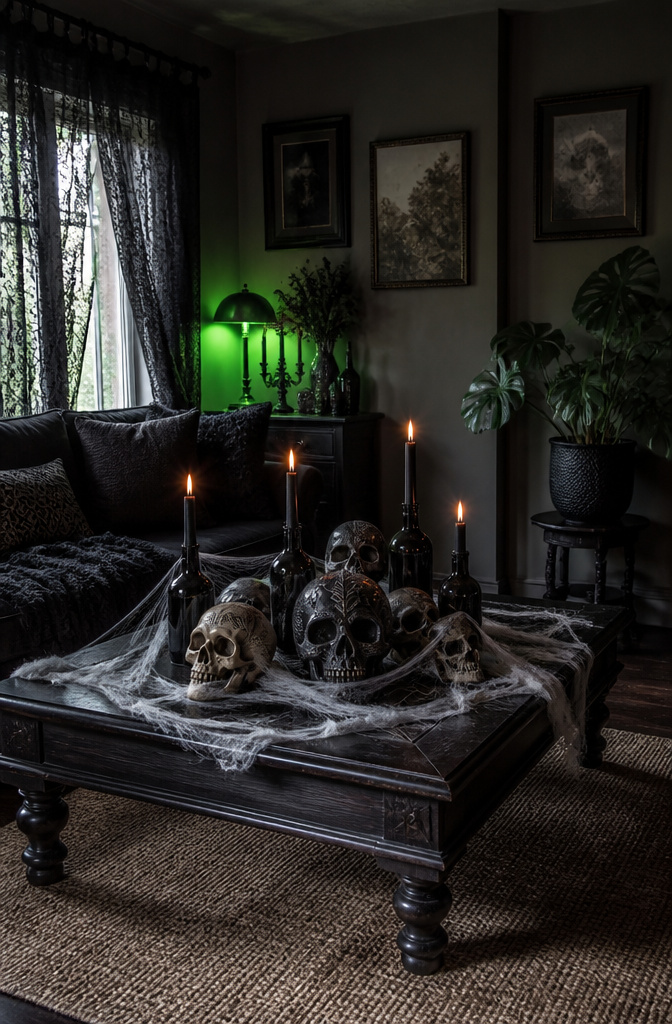
Black lace curtains over the windows do more of the heavy lifting than most props. They filter daylight into something dim and church-like, and at night they turn every lamp into a flicker behind a veil. I hang mine with tension rods so the security deposit stays intact, layered over the regular panels instead of replacing them.
The coffee table becomes the room’s focal point once you cluster a few skull pieces and let fake cobwebs drift between them. Taper candles in old bottles, spray-painted matte black, give the height variation that makes the setup read as intentional rather than piled. Real flame looks better, but LED tapers win if you plan to leave them running through a party. Dim lighting does about half the work; a single green bulb aimed at the corner behind the arrangement throws shadows that make the skulls seem to shift.
Wall hangings finish the enclosure. Bat silhouettes cut from construction paper, creepy portraits in thrifted frames, or even a doll modified to crawl the wall all pull the eye upward and make the room feel caged in, separate from whatever is happening in the yard. The trick is keeping the indoor palette tight, matching whatever story the doorway already started, so guests step through into a contained scene rather than a miscellaneous collection of Halloween items.
Animatronics
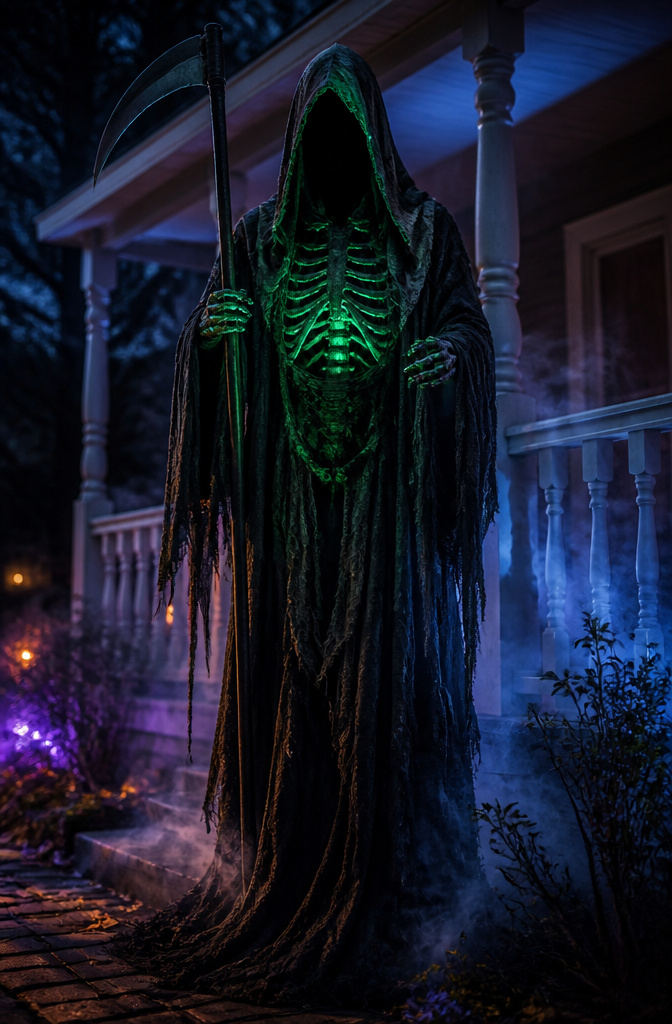
Static props fill a yard with menace, but the jump scare belongs to motion and sound. An $129.99 entry point gets you a shaking, talking prop triggered by passersby, something that goes still again and lures the next victim closer. Step up to $179.99 and the mechanism gains height, often five to six feet, with light-up eyes or a lunging motion that breaks the silhouette your guests have already catalogued as harmless. The $349.99 tier brings more elaborate sequences, multiple actions strung together so the prop doesn’t simply pop forward but performs, drawing eyes and then punishing them. At $399.99 you’re into the full figure, six to eight feet, with audio that carries across a yard and mechanics reliable enough to run for four hours of trick-or-treat traffic without skipping a beat.
The distinction matters because a life-size static reaper in the corner sets a mood. The same figure with a step-pad trigger that jerks upright when someone reaches for the candy bowl creates a memory. The best placements hide the sensor, so the motion reads as unpredictable. A prop that activates on a timer is atmosphere. One that waits for human input is an ambush. For renters with one weekend to install and a Monday morning takedown, the plug-in or battery pack with a passive infrared sensor wins over anything requiring wiring or programming. The price spread reflects durability and audio clarity more than size alone. A $179.99 unit with a clear speaker outperforms a $349.99 prop whose soundtrack crackles at volume.
Inflatables
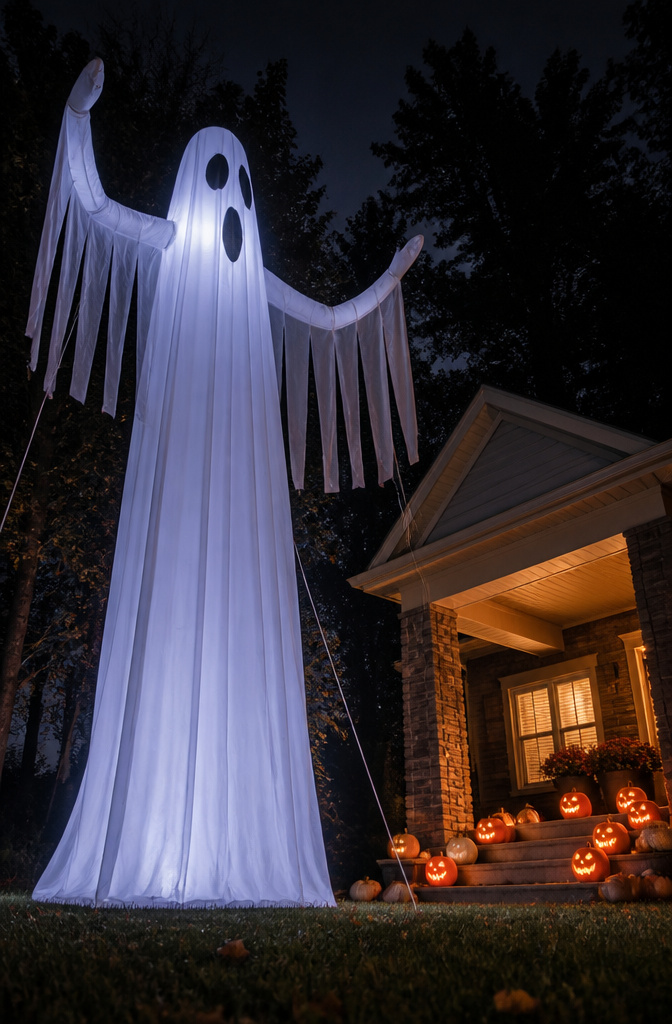
Large inflatables sit in a different category from the rigid props most people picture first. A 7-foot werewolf with stitched fur and servo-driven jaws will always win on detail up close, but the soft vinyl shell reads surprisingly well from the street once the sun drops. Internal LEDs turn the whole form into a single glowing silhouette, and that uniform light does something animatronics struggle with: it erases the seams. From thirty feet away, a backlit reaper loses its fan noise and power cord in the dark and just becomes shape and color.
Setup speed is the real argument for renters or anyone who treats Halloween as one of several weekend projects. Unpack, stake, plug in, walk away. The same storage logic applies in reverse. Deflated, a twelve-foot ghost collapses to the size of a sleeping bag and lives on a closet shelf until next October. Rigid props need dedicated real estate year-round.
The catch is tone. Inflatables trend cute by default, unicorns and laughing pumpkins included. If the goal is actual unease, the selection narrows. Ghosts, reapers, and classic witches tend to survive the translation better than licensed characters, which read as inflated plush toys under any light. Pair them with sharper silhouettes at the door and let the glow handle the rest.
Lighting Effects

Orange, purple, and green string lights do the heavy lifting in Halloween scary decor, but the real payoff comes from how they change what is already there. A cheap green spotlight aimed at porch bushes turns ordinary leaves into something guests swear is watching them. Indoors, the same color logic works on corners where candles, real or LED, cluster low enough that shadows dance upward across walls. Flickering beats steady; the brain reads flicker as movement, even when nothing moves.
The bridge from yard to living room is matching the color story. Outdoor orange on the porch rail reads as intentional, not accidental, when the same tone shows up behind a window cling in the hallway. Projection lights and strobe effects add motion, though strobes tire fast at a party and projection works best as one accent among several, not the whole show. A fog machine paired with an uplight underneath still wins for pure atmosphere; the mist rolls out glowing from below, and the chill effect carries straight through the door if the indoor lighting picks up the same green or purple cast. The lights are not the decoration. They are what makes the decoration frightening.
DIY Decoration Ideas
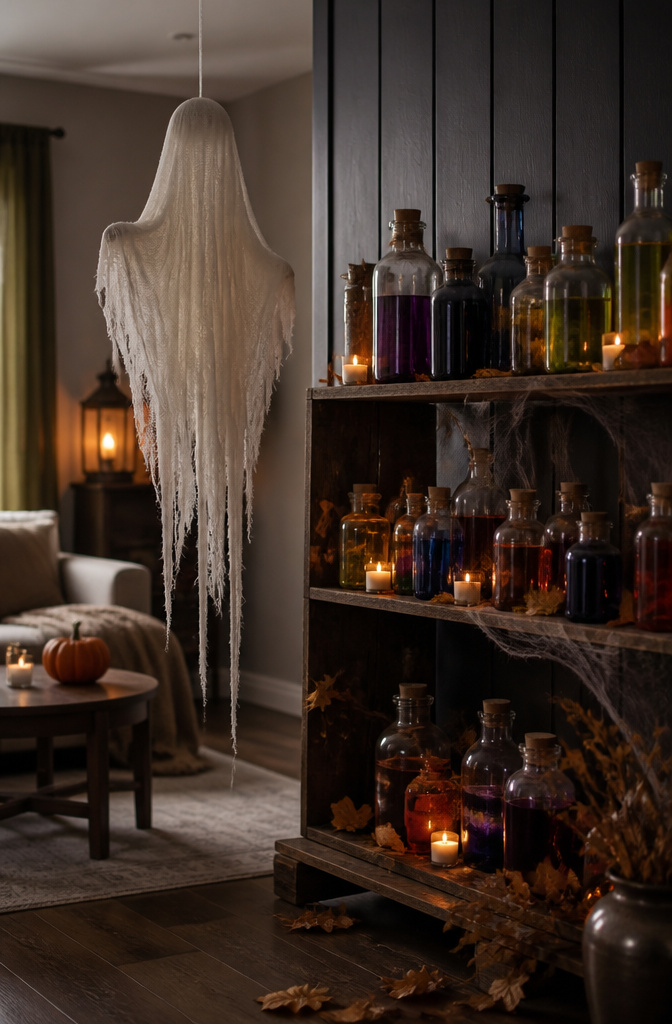
The cheesecloth ghost is the project I keep coming back to. Drape the cloth over a balloon, soak it in liquid starch, and let it dry until it holds its shape. Pop the balloon and you get something that floats at eye level in a way store-bought plastic never quite manages. I have seen these listed in craft roundups for years, and the appeal is the same: materials cost maybe six dollars, and the result looks like you spent an afternoon on it rather than a hundred and twenty-nine to three hundred and ninety-nine dollars on an animatronic that jerks in three programmed motions.
Old jars work the same way for potion bottles. Food coloring, water, and a printed label turn recycling into what reads as a witch’s pantry on a shelf. The trick in a mixed display is placement. Cluster the handmade pieces where the light hits them, because the translucency of jar glass and the thin weave of cheesecloth both do their best work with a battery tea light behind or beneath. The animatronics, if you have one, earn their keep at the path or porch where motion draws the eye and the motor noise gets swallowed by open air. Inside, the homemade details hold the room together without competing.
Indoor Atmosphere
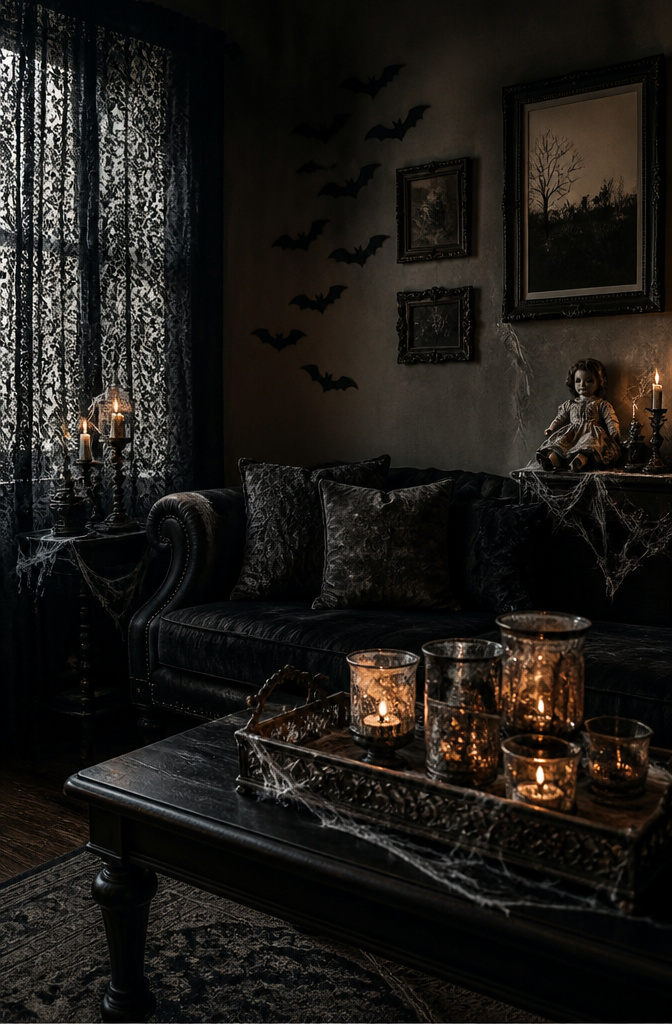
Black lace curtains are the fastest way to shift a room from everyday to gothic without touching a single wall. The pattern breaks up window light into something softer and older-feeling, like the room has always been dim. Layer that with what you already have: a coffee table, a sideboard, the usual furniture, and the contrast does the work.
For the light itself, skip the electronics and cluster real candles in corners. The flicker does something bulbs cannot; shadows actually move across the walls instead of sitting still. Old wine bottles sprayed black and fitted with taper candles are about as cheap as holders get, and they read spooky rather than crafty. I have seen the same setup with thrifted frames swapped around black-and-white images, small enough that guests notice them only after they have sat down.
Wall pieces finish the job. Bat silhouettes, construction paper spiders, or a single creepy portrait held in an antique frame all keep the eye moving without cluttering the space. The trick is keeping it contained; one room done well beats a whole house half-finished.
Outdoor Anchoring and Weather
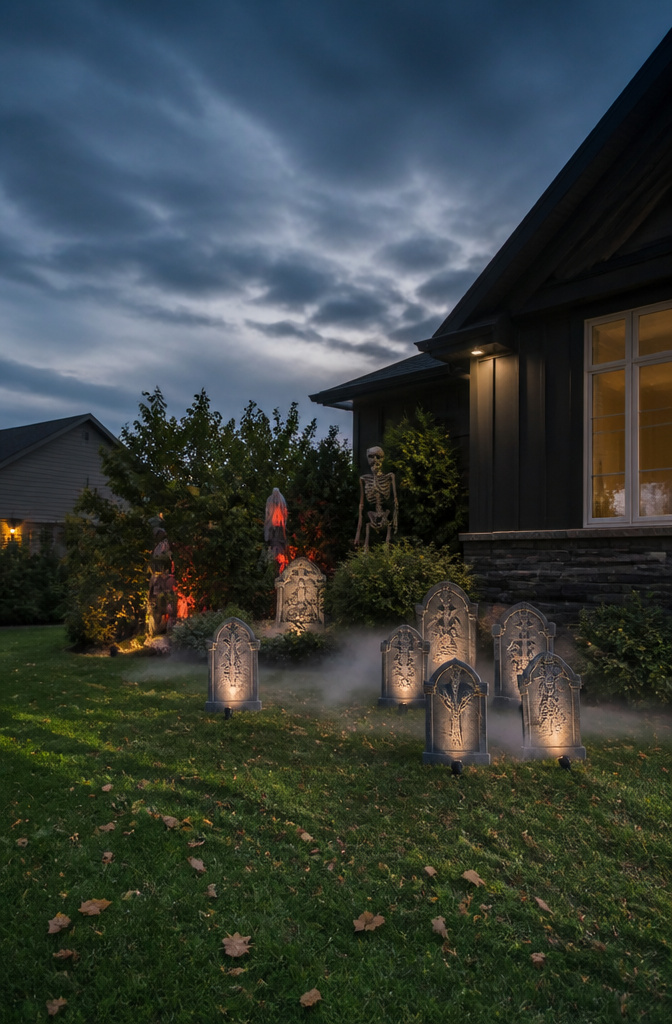
Wind and rain will undo Halloween displays faster than any design choice you make. The first season I staked tombstones with the plastic stakes they came with, a gust sent the whole graveyard into a pile that looked more like a clearance bin than a haunted yard. Double-stake everything, and use ground-level tension from nylon cord to low-profile anchors; the wind sees a single point of failure and exploits it.
Inflatables need the same paranoia. Their fans run constantly, so rain pooling in seams or wind working a loose tether turns a towering reaper into a sad puddle. Most ship with short stakes meant for calm lawns; swap them for longer spiral anchors and run guy lines to independent points, not just the blower housing. If your display mixes static props and animated pieces, the animated ones draw eyes but catch more wind, so place them where a fence or porch column blocks the worst gusts.
The payoff is a display that reads as intentional on October 31, not as surviving wreckage. Measure your yard width and the clearance to the sidewalk before buying, because scale that works in calm September rehearsal collapses when weather hits.
Lighting Color Choices
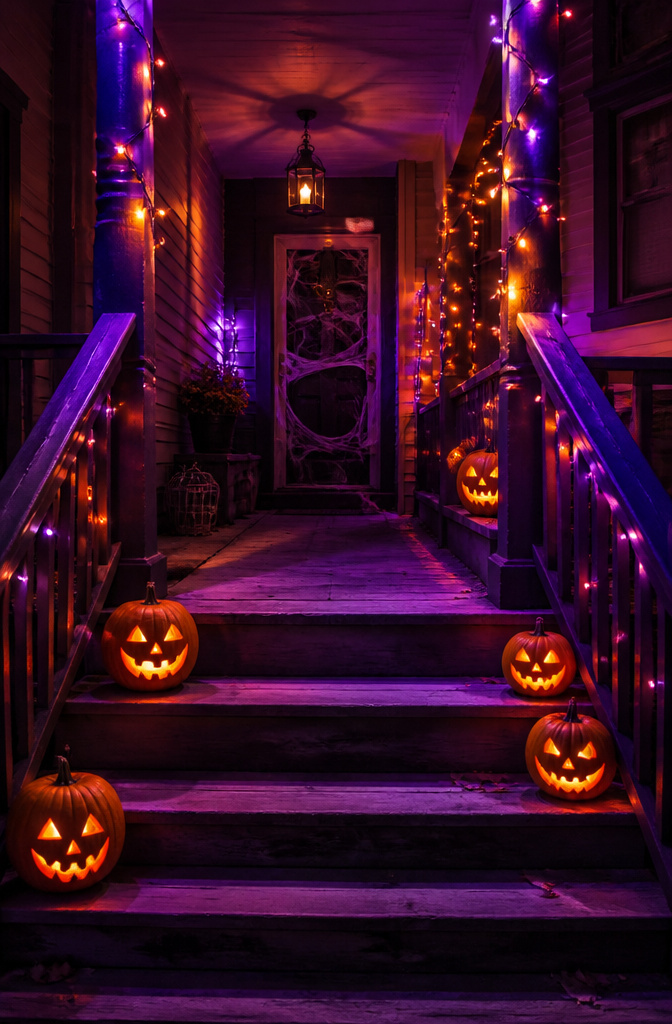
Orange, purple, and green became the standard Halloween lighting palette because each color reads against props and architecture in a distinct way. Orange light flatters pumpkins and cornstalks while receding into shadow on pale siding, so it reads as warmth rather than threat. Green does the opposite: it catches on white trim and painted doors, turning ordinary porches into something sickly and wrong. Purple sits between them, too dark to read as friendly but too vivid to disappear entirely, which makes it useful for depth behind orange foreground props.
Where these colors overlap, the mix matters more than the individual bulbs. Orange and green together read as rot and decay, the kind of light you might see through a basement window. Purple and orange lean theatrical, closer to a carnival haunted house than a convincing one. All three at once muddy into brown unless you separate them by at least a few feet, letting each pool in its own zone rather than competing for the same wall. I have seen renters try to hit every bush with a different color and end up with a yard that looks like a lighting test, not a scene. Pick two colors for any single sight line, and let the third appear only where the visitor turns a corner.
Kid-Friendly Boundaries

The line between spooky and too scary for mixed ages usually shows up in the reaction, not the prop. A six-year-old who laughs at a six-foot skeleton may freeze at the same skeleton once it starts jerking and moaning. Motion and sound are what push decor from atmosphere into exclusion, because kids process threat differently when it moves toward them.
Gore is the easier call. Blood-spattered walls or severed limbs read as playful to adults who grew up on horror movies, but they land as real to younger visitors. The household rule that works is: if the decoration implies something bad happened to a person or animal, it stays where small guests won’t wander.
Animatronics need a test run at low volume. Start them in daylight with the sound half off, watch a few kids approach, and scale back anything that makes them retreat instead of lean in. The classic categories that adapt easiest are pumpkins, spiders, and bats: they read Halloween without carrying a narrative of violence, and a toddler who finds a plastic spider funny at four will probably still enjoy the same spider at nine.
Budget Mix and Placement
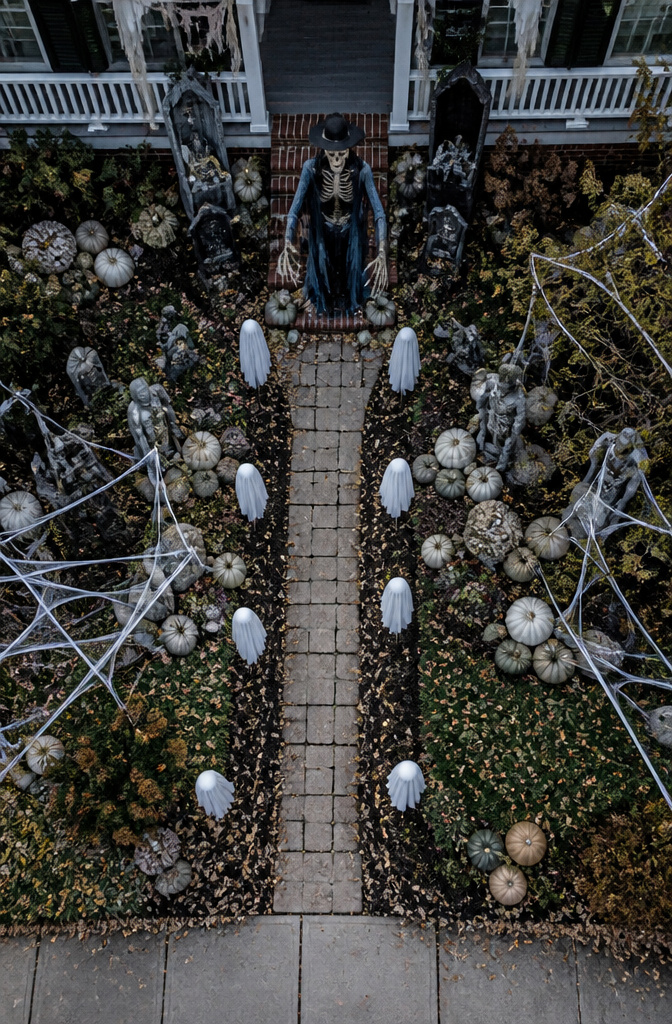
One $349.99 animatronic in the yard does the heavy lifting for passersby, but the trick is filling the surrounding space without the display thinning out. Ten smaller DIY pieces, cobwebbed between porch posts or tucked into foundation plantings, close the gaps the big prop’s spotlight leaves behind. The animatronic draws the eye; the cheap stuff convinces the brain the whole property is occupied.
Indoor spending works the opposite way. A single flickering portrait or mirror with a triggered face costs a fraction of that yard centerpiece and still startles guests in tight quarters. Indoor scares land harder in close proximity, so a $40 prop in a hallway outperforms a $40 prop lost on a lawn. The money indoors goes toward sound and light triggers rather than scale.
The mix that reads richest: one commanding piece per zone, surrounded by three to five filler items that share a palette or motif. All black-and-white, all Victorian, all biohazard yellow. The coherence sells the budget spread as intentional rather than scattered.
Frequently Asked Questions
How do I choose a theme for Halloween decorations?
Start with the ambience you want, then match props, lighting, and accents to that mood while keeping your space, budget, and guest list in mind. The article notes that a tight palette, such as all Victorian or all biohazard yellow, sells even a mixed budget as intentional rather than scattered.
What should I use to decorate my yard for Halloween?
Anchor the display with one commanding piece, such as a life-size animatronic at $129.99 to $399.99, then fill gaps with smaller items like faux tombstones, stretched cobwebs, and lanterns along the walkway. Stake or sandbag everything; foam tombstones and inflatables both need ground-level tension or spiral anchors to survive wind.
How can I use lights to enhance Halloween décor?
Orange, purple, and green string lights do the heavy lifting, but the real payoff comes from placement: a cheap green spotlight aimed at porch bushes turns ordinary leaves into something unsettling. Match the outdoor color story indoors so guests step through into a contained scene, and pair a fog machine with an uplight underneath for atmosphere that carries through the door.
Which products are best for kid-friendly Halloween setups?
Stick to pumpkins, spiders, and bats, which read Halloween without a narrative of violence. Skip animatronics that jerk and moan, or run them at low volume in daylight first; scale back anything that makes kids retreat instead of lean in. Gore and anything implying harm to a person or animal should stay where small guests will not wander.