
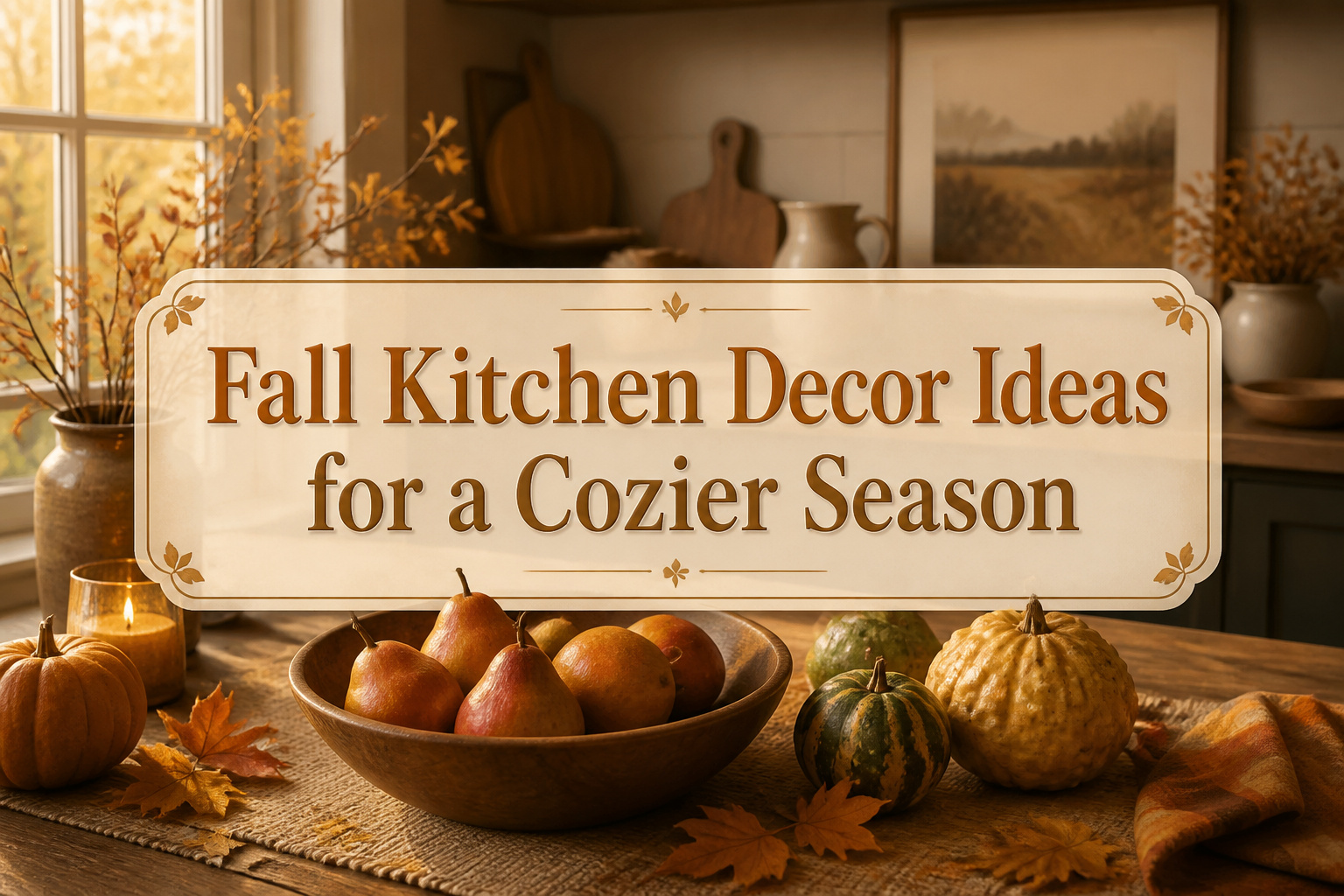
Kitchen fall decor ideas range from free branch clippings to resin gourds that run $12 a bag, and the ones that survive a real cooking schedule come down to whether they do a second job. A bowl of pears reads as decoration when you walk in and becomes a snack when you actually live there, but only if you swap the contents before anything turns.
1. Use Fall Foliage
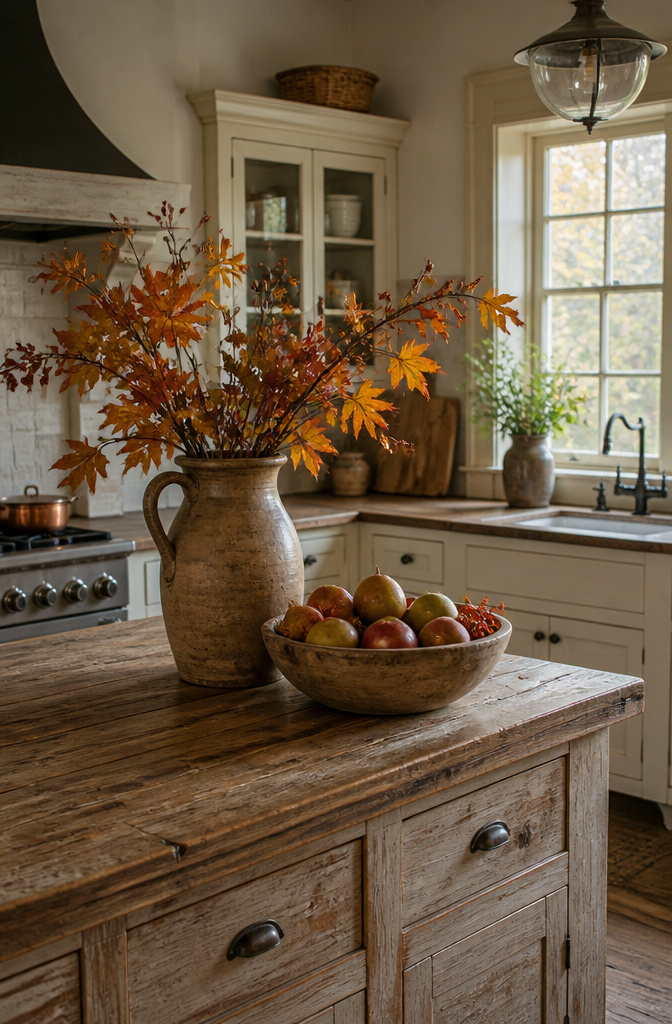
A few branches clipped from the yard and dropped into a pitcher can look more deliberate than anything bought, though a lot of us do not have leaves that turn until nearly Christmas. Faux berry stems and olive branches swap in easily, and the kitchen counter is the first place they earn their space: a bowl of apples, pears, and berries reads as decor when you walk in and becomes a snack when you actually live there. That second job matters in a room meant for use, not staging.
The mistake that costs nothing but the mood is buying the whole harvest at once. Real branches crisp up, dried flowers shed, and pomegranates soften before Thanksgiving if you load them all in early September. The better move is a rolling swap: a handful of clipped oak one week, a bowl of pears the next, so something is always fresh while the rest is just turning.
2. Incorporate Seasonal Scents
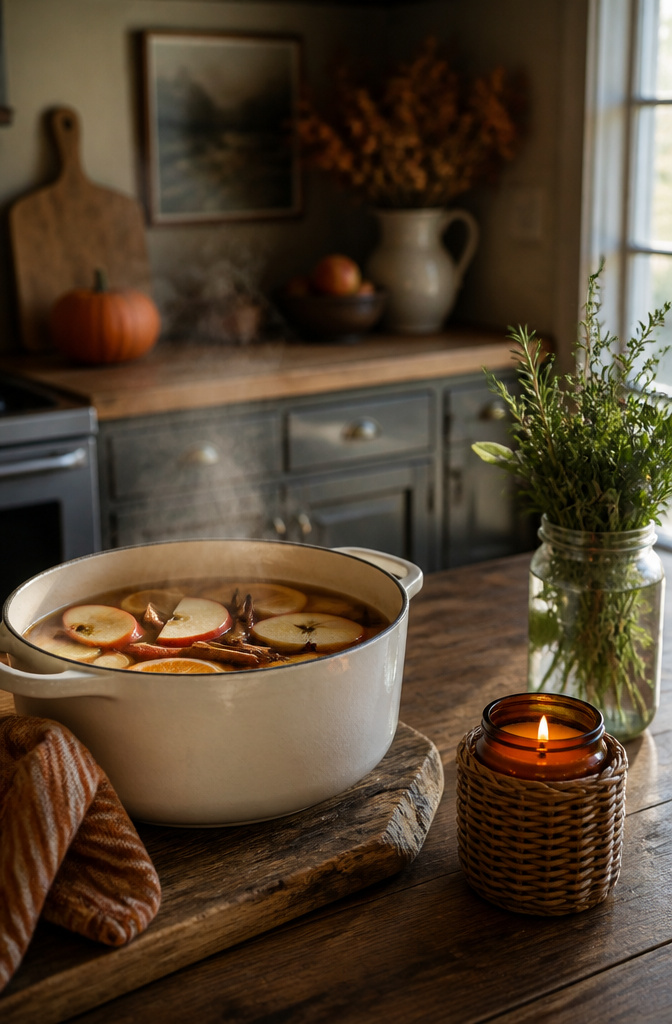
A kitchen that looks like fall but smells like nothing is half finished. Candles in pumpkin spice or apple cider do the heavy lifting for about $8–$15 apiece, and a bar of cinnamon-scented soap by the sink costs even less while it lasts the whole season.
The simmer pot is where the scent really takes over the room. Apples, cinnamon sticks, and cloves in a cup of hot water on a candle warmer will fill the space for hours without the open flame. The same mix works on the stove if you keep it low and keep watching it.
I learned that last part the hard way. Left the pot on too long once, and the house smelled like burnt cider for two days. Now I set a timer, or I use the candle warmer and skip the risk entirely.
3. Add Pumpkins and Gourds
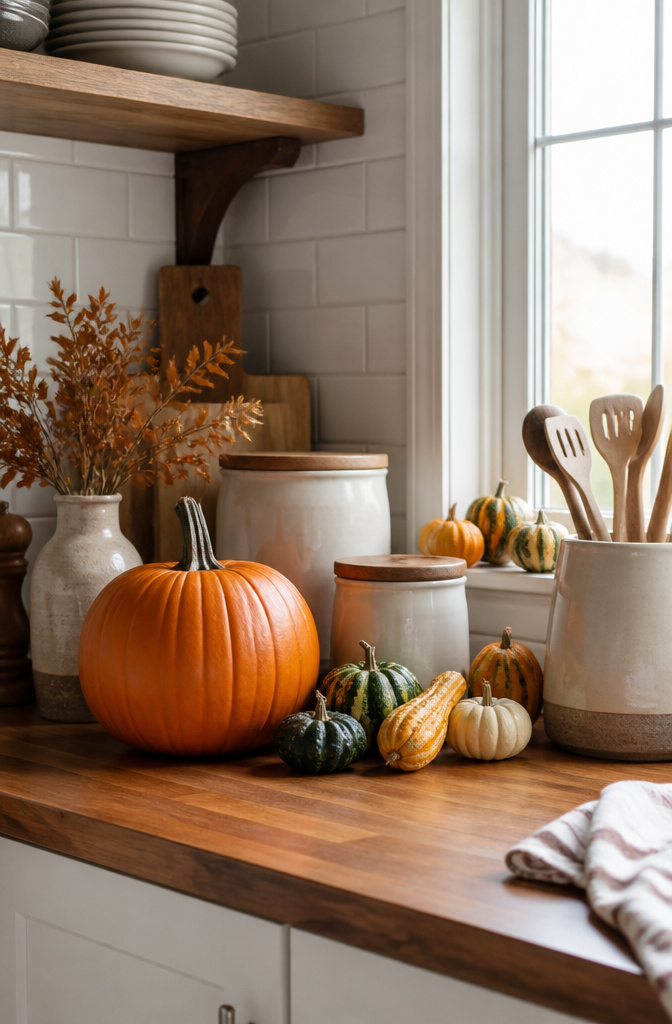
A $12 bag of mini gourds from the grocery store lasted about three weeks on my counter before the first one softened. The $8 plastic set I grabbed the same year is still going four autumns later, and that math is hard to ignore.
Real pumpkins and gourds need a quick bath in diluted bleach water before they come inside, or they rot where they sit. That five-minute step buys you the full month, sometimes six weeks if the kitchen stays cool. Faux options skip the maintenance entirely, though the cheaper ones still read as plastic under overhead lighting. The sweet spot for a busy kitchen is mixing them: a real sugar pumpkin as the anchor, a couple of faux minis tucked behind canisters where no one handles them.
Placement matters more than type. A windowsill behind the sink works until it blocks the soap bottle. The back corner of a counter, where you already set mail, keeps gourds visible and out of the prep zone. Open shelving gives you more room, but scatter them among everyday dishes rather than clustering; a single pumpkin between stacked plates reads intentional, a bowlful reads like clutter you will move every time you need a cereal bowl.
4. Change Out Kitchen Linens
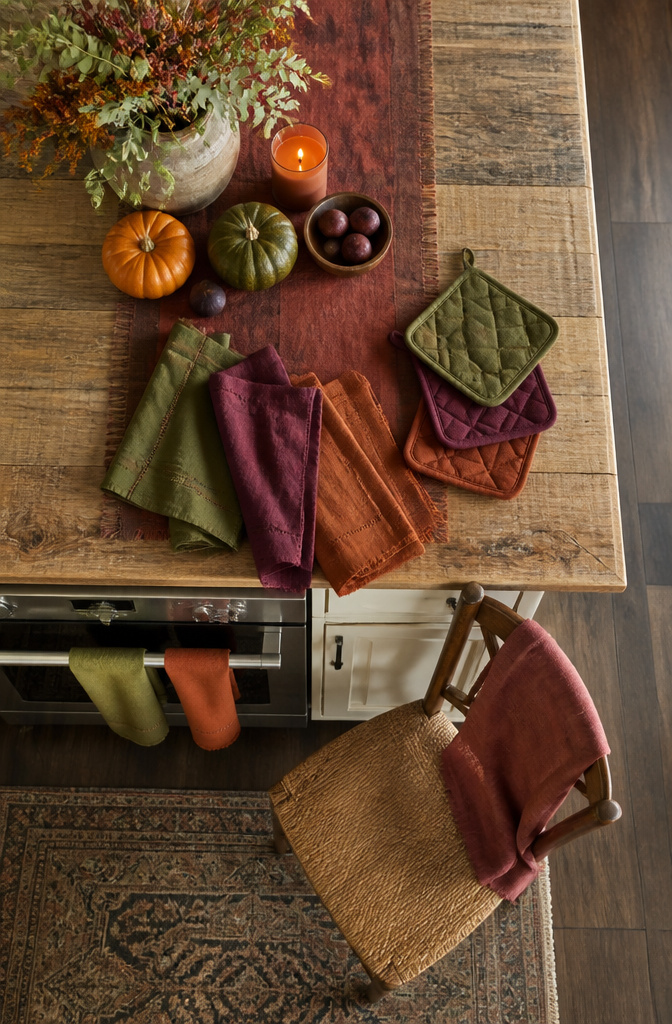
Rust, plum, avocado, and marigold dish towels do more color work than any decorative pumpkin on the counter, and they get used every single day. Three new towels usually cost less than one of those molded resin gourds, which is the kind of math that matters when the budget is real and the weekend is short.
A folded towel over the oven handle or one draped at the sink turns those touch points into something warm without adding clutter. Pot holders in the same range do the same job. A runner down the center of a table or island pulls the whole palette together, and when the season ends it all folds flat in a drawer.
The trick is keeping it functional. A tea towel that hangs pretty but never dries a dish misses the point. Linens earn their space by working first and reading seasonal second. Pick fabrics that can handle actual heat and actual water, in colors that still look right after a few washes.
5. Create a Cozy Coffee Station
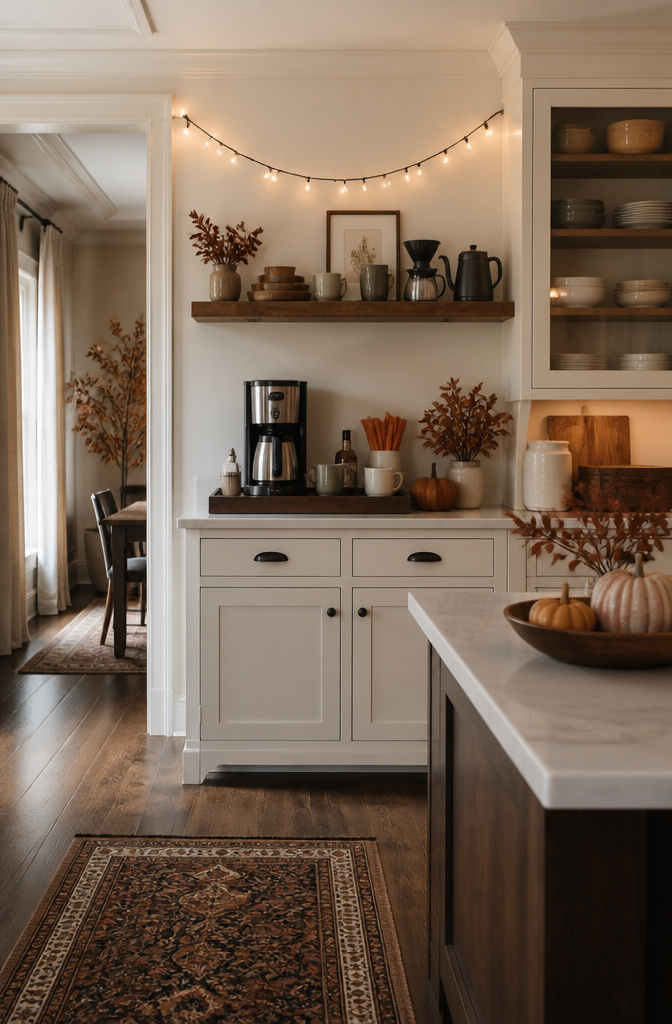
A coffee station only earns its keep if the machine plugs in without stretching the cord across a walkway. The corner beside the refrigerator door swing is dead space in theory, but in my first apartment that door needed a full 110-degree arc to open, and every morning became a choice between ducking under the cord or unplugging everything. I moved the whole setup to the narrow end of the counter by the stove, where an outlet sat unused and the traffic was zero.
The actual footprint is small. Three or four mugs on a small tray, a single canister for beans or pods, and one seasonal bottle, a pumpkin syrup or a cinnamon shaker, is enough to read "fall" without claiming the whole counter. A cloth napkin folded inside the mug keeps it pretty and gives you something to wipe drips with. Copper mugs work as a neutral that still feels seasonal, or you can keep the hardware plain and let one pumpkin-shaped mug do the color.
If you are hosting, a loaf of pumpkin bread on a small plate makes the station feel intentional, but the rule still holds: nothing on the tray should need moving to pour a cup.
6. Use Natural Elements
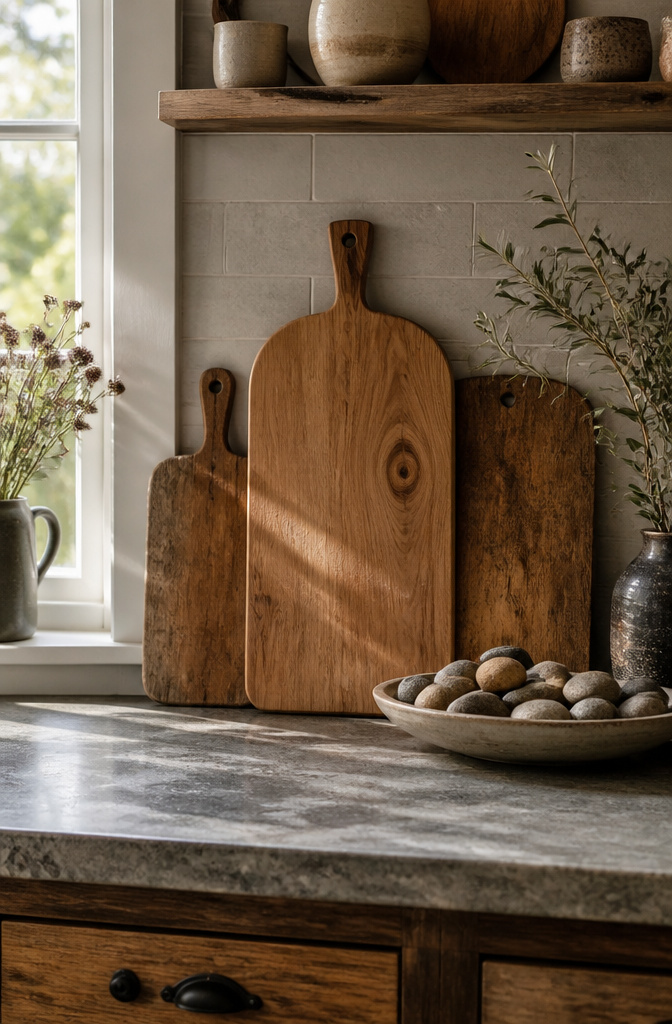
Wood, stone, and raw texture do the heavy lifting when foliage starts to feel expected. A wooden cutting board leaned against the backsplash reads as functional, not staged, and sources specifically flag this as a move that works because the board earns its spot between photo shoots. Stack two or three if the counter depth allows it; the variation in grain and wear keeps the eye moving without cluttering prep space.
River stones in a shallow bowl add weight and a cooler tone that balances all that warmth. They cost nothing if you collect them, and they never wilt. For renters, a raw-edge shelf on a temporary bracket brings in organic geometry without the commitment of a full built-in; the live edge catches light differently through the day than a factory edge would. Stoneware crocks for wooden spoons, vintage breadboards propped nearby, small framed landscapes against tile: these layer together because they share material honesty rather than a color palette. The risk is overloading the counter until cooking becomes a shuffle game. Three natural elements, four at most, and the kitchen still works on a Tuesday morning.
7. Set a Seasonal Table
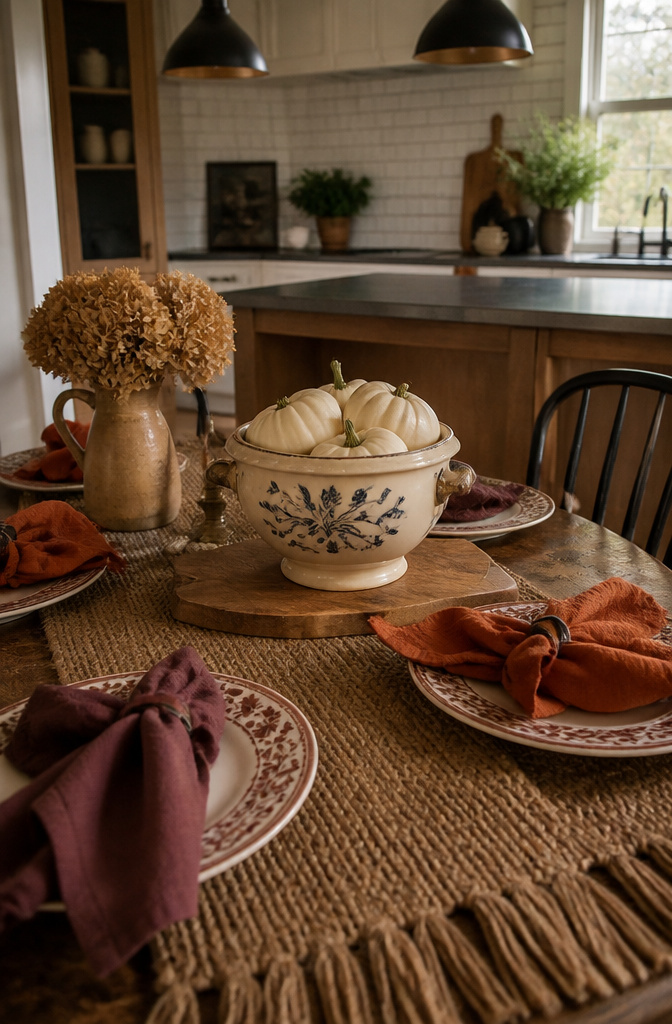
A textured runner and seasonal linens do most of the work for a fall table that still has to function through breakfast on Tuesday. The runner anchors the place settings without asking for the full dinner-party treatment; cloth napkins in a simple ring keep the gesture casual. For a centerpiece that can move when it is time to eat, a bowl or tray with a few white pumpkins works, and placing it on a cutting board makes the lift onto the counter easier. The vintage soup tureen found at estate sales or thrift shops serves as a display piece that reads autumn without competing for plate space; it holds its own as a sculptural object when the lid stays on and the ladle stays in the drawer. Warm colors like rust, plum, avocado, and marigold in the napkins keep the palette grounded in the season without tipping into cutesy territory.
8. Display Seasonal Produce
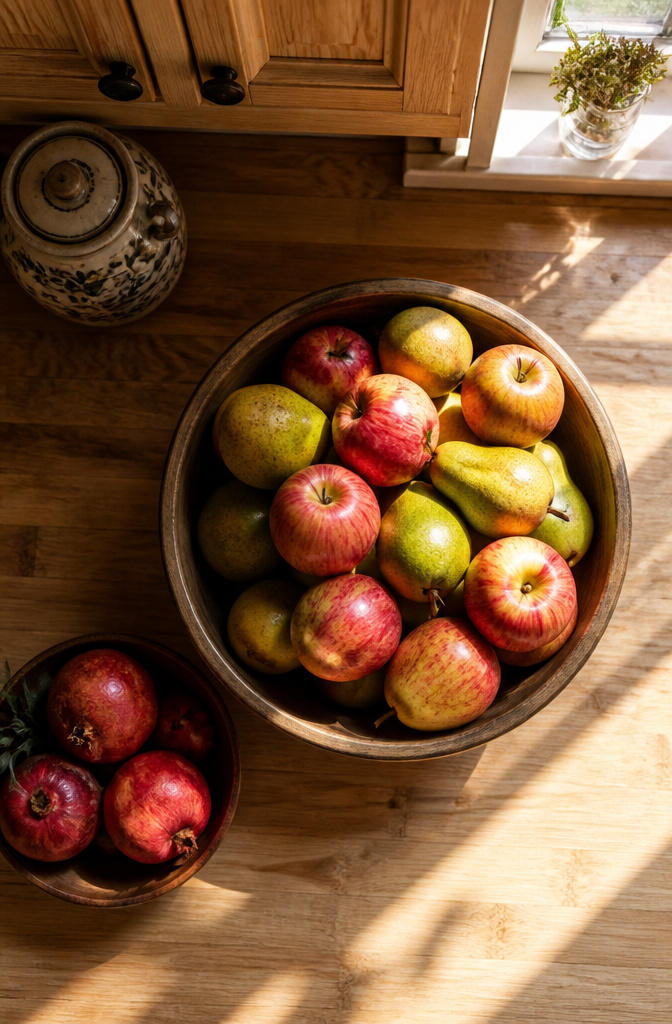
A bowl of red apples on the counter checks both boxes: it reads as fall color today and becomes tomorrow’s pie filling or lunchbox snack. Pomegranates or late tomatoes work the same way, though tomatoes need a spot with decent air circulation or they soften faster than you expect.
The catch with any of this is timing. Fruit flies move in by about day four if the pears in that ceramic bowl are even a little past firm. One October I left a bowl of Bartletts on the counter thinking they’d look rustic against the white tile. By Wednesday the kitchen had a population I didn’t sign up for. Now I keep a small trap near the sink, the kind with apple cider vinegar and a drop of dish soap, and I swap the bowl contents before anything turns.
The sources all lean toward apples and pears together in a wooden bowl, which is warmer than my ceramic was and probably breathes better. If your family actually eats them, this is the cheapest seasonal move in the kitchen. No arrangement required; the fruit handles the decorating.
9. Use Warm Lighting
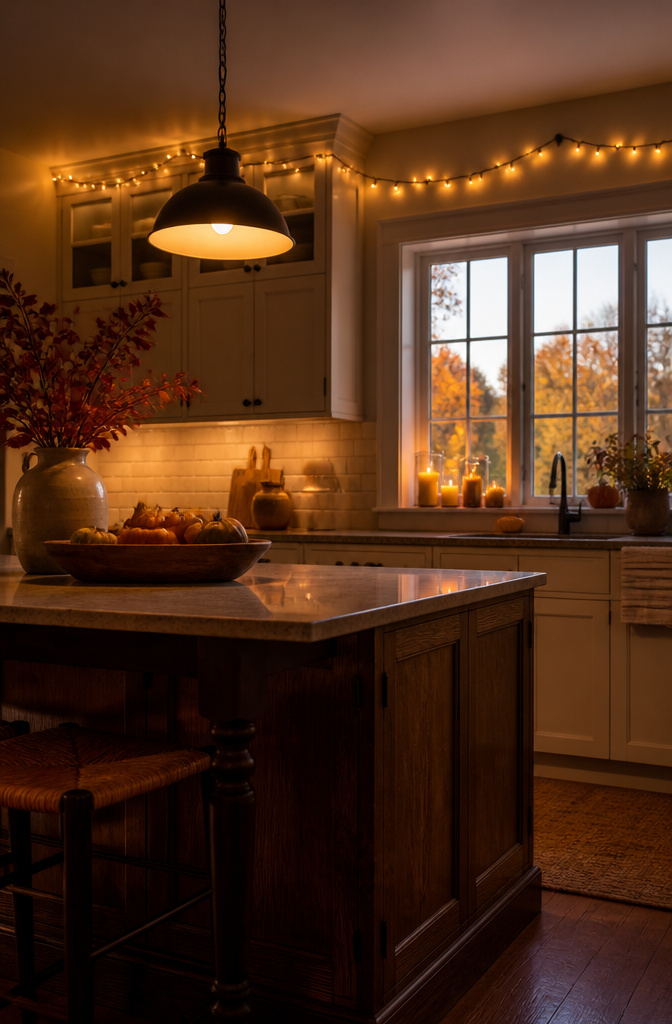
The fastest change is the bulb itself. 2700K is the color temperature that reads cozy rather than clinical, and the difference matters more than wattage. I once grabbed 5000K by mistake, and my kitchen lit up like a parking garage until I swapped them out. Lower-wattage bulbs in the same fixtures do the rest of the work, dimming the room to something that feels like evening even at six o’clock.
Battery-operated candles on the windowsill run all day without the worry of leaving a flame near curtains or a breeze from the vent. String lights tucked above the cabinets fill the gap where ceiling light never reaches and give a glow that bounces off the ceiling instead of hitting the counters straight on. None of this needs new wiring or a Saturday afternoon; it is the kind of project that finishes before the coffee gets cold.
10. Create a Fall Focal Point
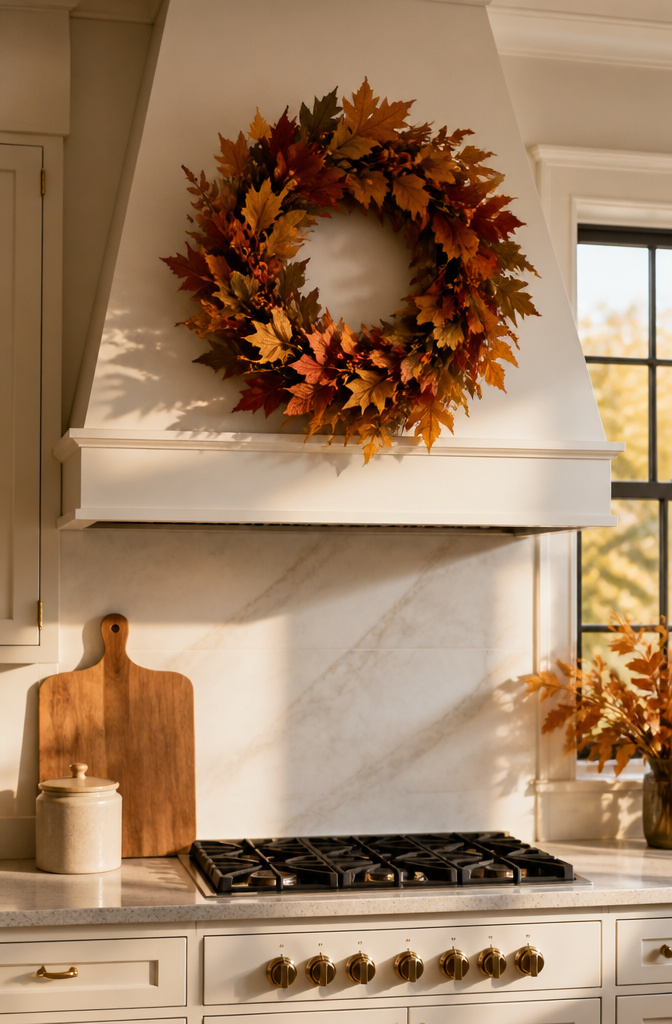
A wreath above the stove hood draws the eye without stealing counter space you actually need. The vent hood is already a vertical anchor in most kitchens, so hanging a fall wreath there feels intentional rather than cluttered. I have seen kitchens where the wreath competes with seven other small pieces scattered across every flat surface, and the result is visual noise instead of warmth. One strong piece beats seven small ones because the eye lands somewhere definite and rests.
If your stove wall is busy or you rent and cannot hang anything there, the island or the sink window works the same way. A single large urn with branches and grasses on a corner of the counter, or a garland framing the window you stare through while washing dishes, creates the same concentrated moment. The rule stays the same: pick one spot, give it one substantial thing, and leave the prep zones alone. Three tiny touches can read as one grouping if they sit tight together, like a wreath, a small amber bottle, and a stack of plates, but spread them across the kitchen and they dissolve into clutter.
Repurpose What You Already Own
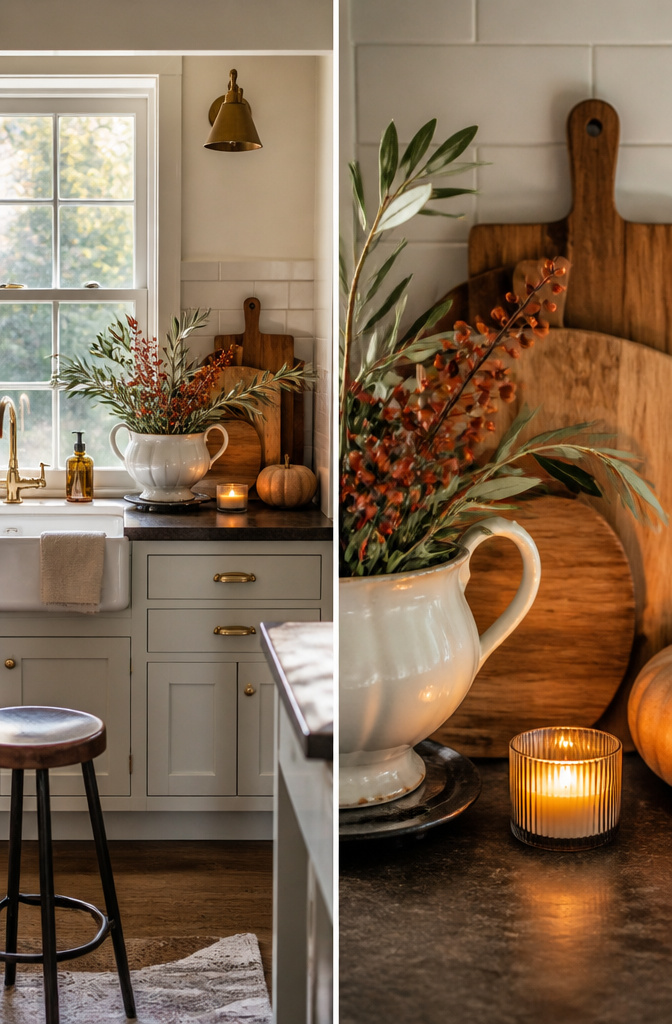
A soup tureen you already own reads as a vase the moment you drop in a few berry stems or faux olive branches. Last November I set a cream-colored one on my counter, swapped from the dining room shelf, and the kitchen felt dressed for fall without a single new purchase. The tureen trick works because the shape already looks seasonal, and you avoid boxing it up when the holidays end.
Cutting boards do the same job. Lean one against the backsplash, or layer two or three for depth, and suddenly the coffee maker zone looks intentional. A wood board behind a candle or a small pitcher of wooden spoons turns everyday tools into the backdrop.
Candles shift easily too. The same amber votives from last year, grouped on a vintage saucer instead of scattered, read as a deliberate arrangement. The move costs nothing and solves the real problem: storage space. Every item you repurpose is one less bin to haul down and one less to wedge back into the closet once November hits.
Seasonal Artwork Swaps
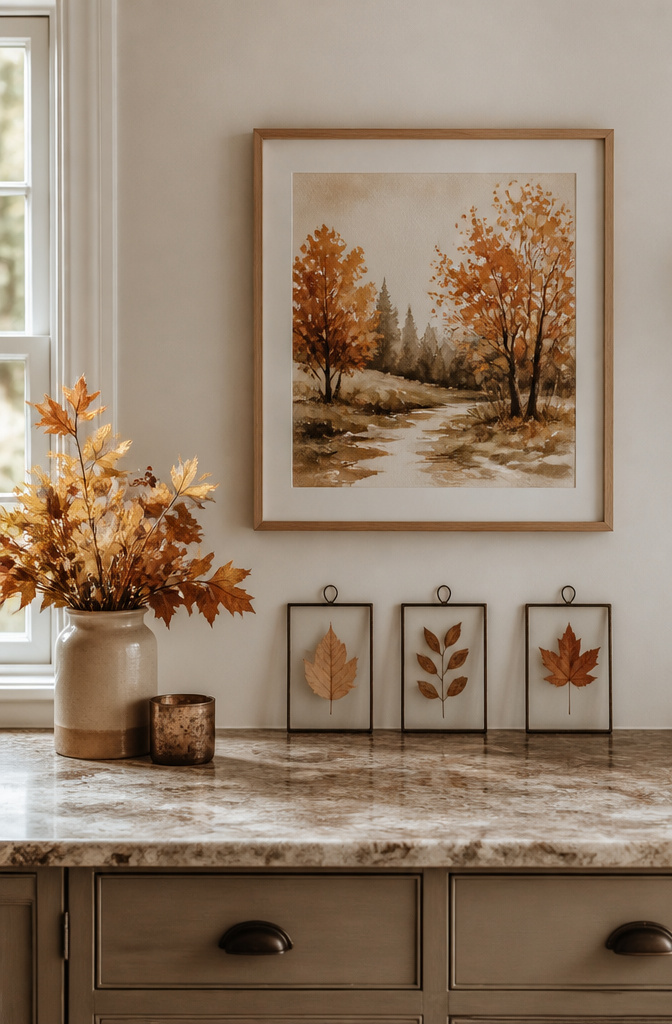
Swapping artwork takes about ten minutes and costs almost nothing if you already own the frame. The one behind my cutting board gets a new print every few months, and the kitchen feels completely different each time. This fall, a $7 watercolor from a local art fair replaced the beach photo that lived there since June. The frame itself never moved; only the 8-by-10 print inside did.
Pressed leaves work the same way. A thin clip frame, the kind with glass and no real backing, holds a few oak or maple leaves flat against the wall. The color lasts a few weeks before it browns, which is longer than a grocery-store bouquet and free if you collect them on a walk. When the season ends, the glass gets wiped and the summer print goes back in. Nothing stored, nothing wasted.
The Two-to-Three Color Rule
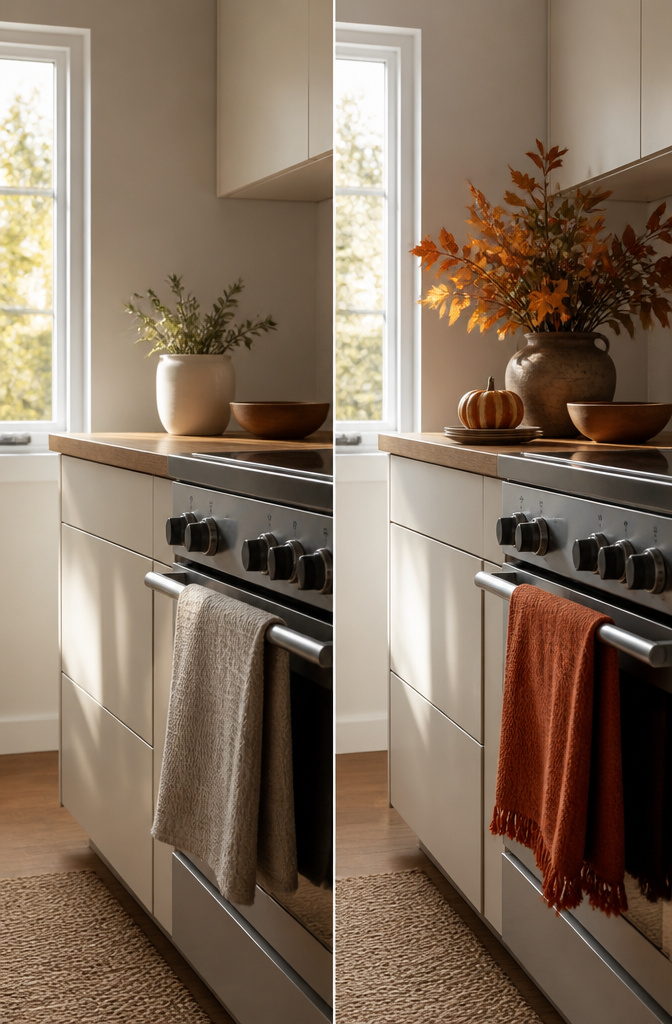
Warm neutrals, orange, and brown give a kitchen fall palette that actually works with rental finishes most of us are stuck with: beige counters, honey-toned cabinets, that one wall the landlord painted greige and called it a day. The trick is stopping at two or three colors as your base, then adding exactly one accent so the room doesn’t start looking like a craft store exploded.
I test this with a dish towel before I buy anything larger. Hang a rust or olive towel from the oven handle and live with it for a morning. If it makes the cabinets look muddy, swap to a cleaner brown or a mustard with more yellow in it. The towel costs maybe eight dollars and saves you from a forty-dollar runner that fights the floor tile.
Concentrate the color in low-traffic spots: the window above the sink, a folded stack on the counter, the chair pads you actually sit on. One focal point carries the whole season better than color spread everywhere.
Functional Decor That Earns Its Space
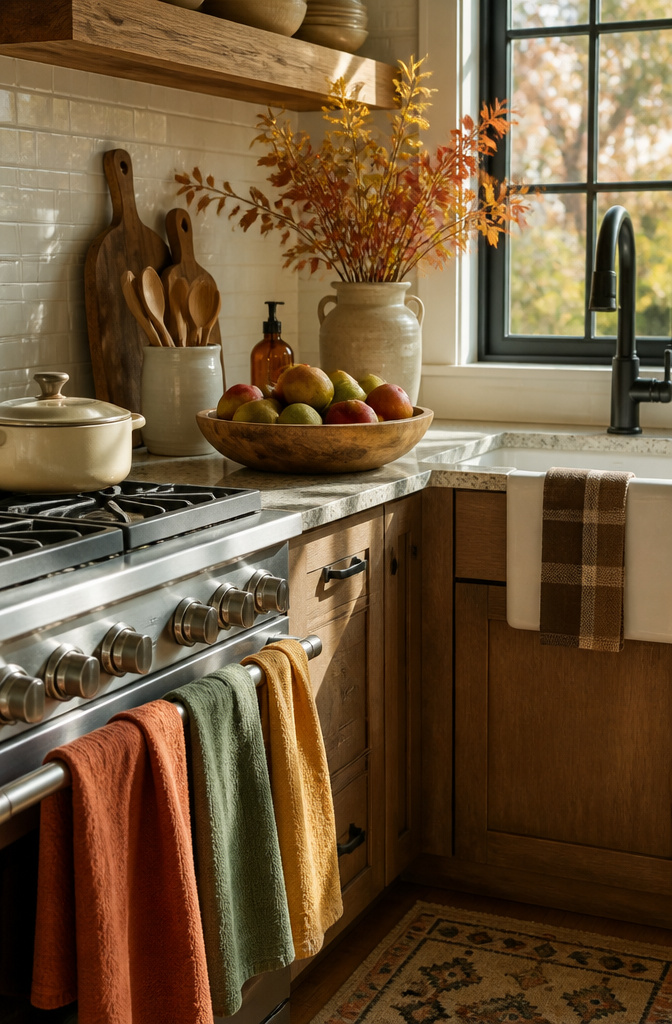
The prettiest fall kitchen decor ideas are the ones already doing a job. Dishtowels in autumn tones hang by the stove and actually dry hands. A wooden bowl of apples or pears lives on the counter until someone eats it. Seasonal hand soap in a stoneware crock by the sink counts as decoration only because it is not the usual plastic bottle.
I swap in fall tea towels around October and run them through the wash like any other. They cost about the same as plain ones, and the color is doing work I would otherwise skip.
Some people line the dining table with a bowl of faux artichokes. The look is full and tidy, and it never bruises. In the kitchen, though, I prefer real fruit. A bowl of pears shifts as the week goes on, gets lighter, needs refilling. That change is what makes it feel like part of the room rather than a prop I am storing on the counter.
A single bowl of something alive beats a dozen ceramic pumpkins when floor space is tight and the budget is a weekend project.
What I Skip and Why
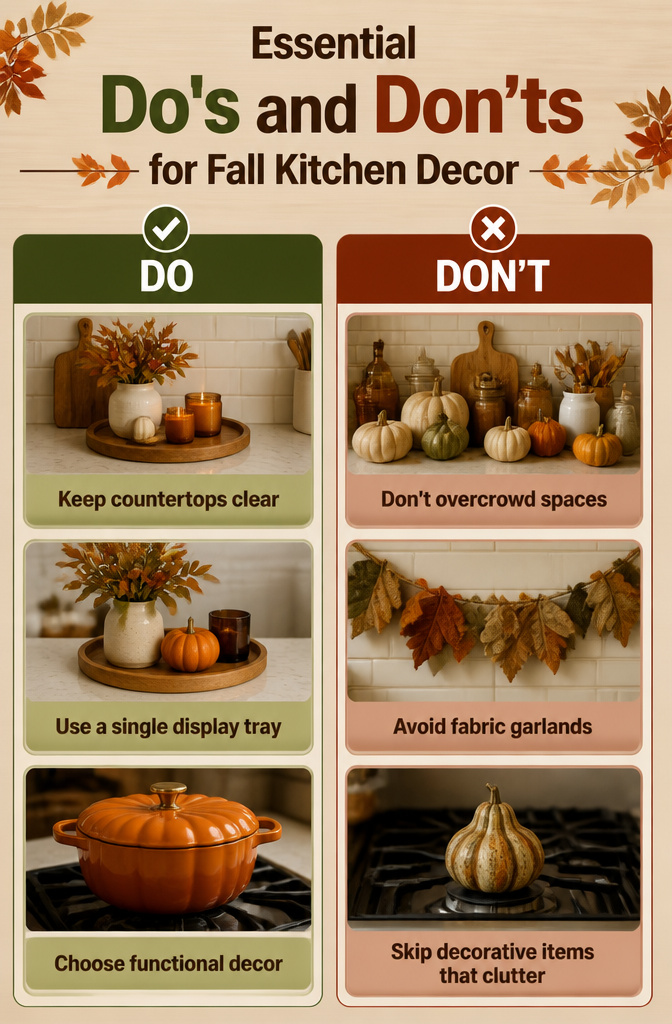
A minimalist approach to kitchen fall decor ideas keeps the room usable through the daily chaos of cooking and cleanup. The sources that rank for this topic all circle the same zones to protect: prep space, the stove area, and the dishwashing station. Grease, water, and crumbs do not negotiate with decorative objects.
I stopped buying fabric garlands that drape across the backsplash after two seasons of weekly washing. Oil particles settle into woven material faster than you notice, and by week three the autumn colors look muddy. That one piece of decor cost more maintenance than the rest of the kitchen combined.
Keep countertops mostly clear and seasonal items corralled on a single tray. One ceramic pumpkin, one moody runner, one bouquet of fall foliage: the formula repeated across the top results is narrow for a reason. A pumpkin Dutch oven left on a back burner earns its spot because it cooks dinner. A decorative gourd on the same burner does not.
Frequently Asked Questions
How do you decorate a kitchen for fall?
Choose two or three fall colors that complement the finishes already in your kitchen, then concentrate your decorations in low-traffic areas with one main focal point rather than filling every counter. The article recommends rust, plum, avocado, and marigold as warm tones that work with typical rental finishes like beige counters and honey cabinets. Three natural elements on the counter, four at most, keeps the kitchen functional on a Tuesday morning while still reading seasonal.
What are some simple fall kitchen decor ideas?
Use fall foliage, incorporate seasonal scents, and add pumpkins and gourds. The foliage can be clipped branches from the yard or faux berry stems; the scents come from candles, simmer pots, or cinnamon-scented soap; the pumpkins mix real ones with faux minis to cut maintenance. These three moves cost little and swap out easily as the season progresses.
How can I make my kitchen smell like fall?
Use candles in pumpkin spice or apple cider, a bar of cinnamon-scented soap by the sink, or a simmer pot of apples, cinnamon sticks, and cloves in hot water on a candle warmer or stove. The simmer pot fills the room for hours, though you will want to set a timer or use the candle warmer to avoid burnt-cider accidents.
What are some functional fall decor items?
Pretty dish towels in autumn tones that actually dry hands, a wooden bowl of apples or pears that becomes tomorrow’s snack, and seasonal hand soap in a stoneware crock by the sink all earn their space by working first and reading seasonal second. A single bowl of something alive beats a dozen ceramic pumpkins when floor space is tight.
What colors are best for fall kitchen decor?
Warm neutrals, orange, and brown give a kitchen fall palette that works with common finishes like beige counters and honey cabinets. Keep it to two or three colors as your base, then add exactly one accent so the room doesn’t look like a craft store exploded. Test the color with an eight-dollar dish towel before buying anything larger.