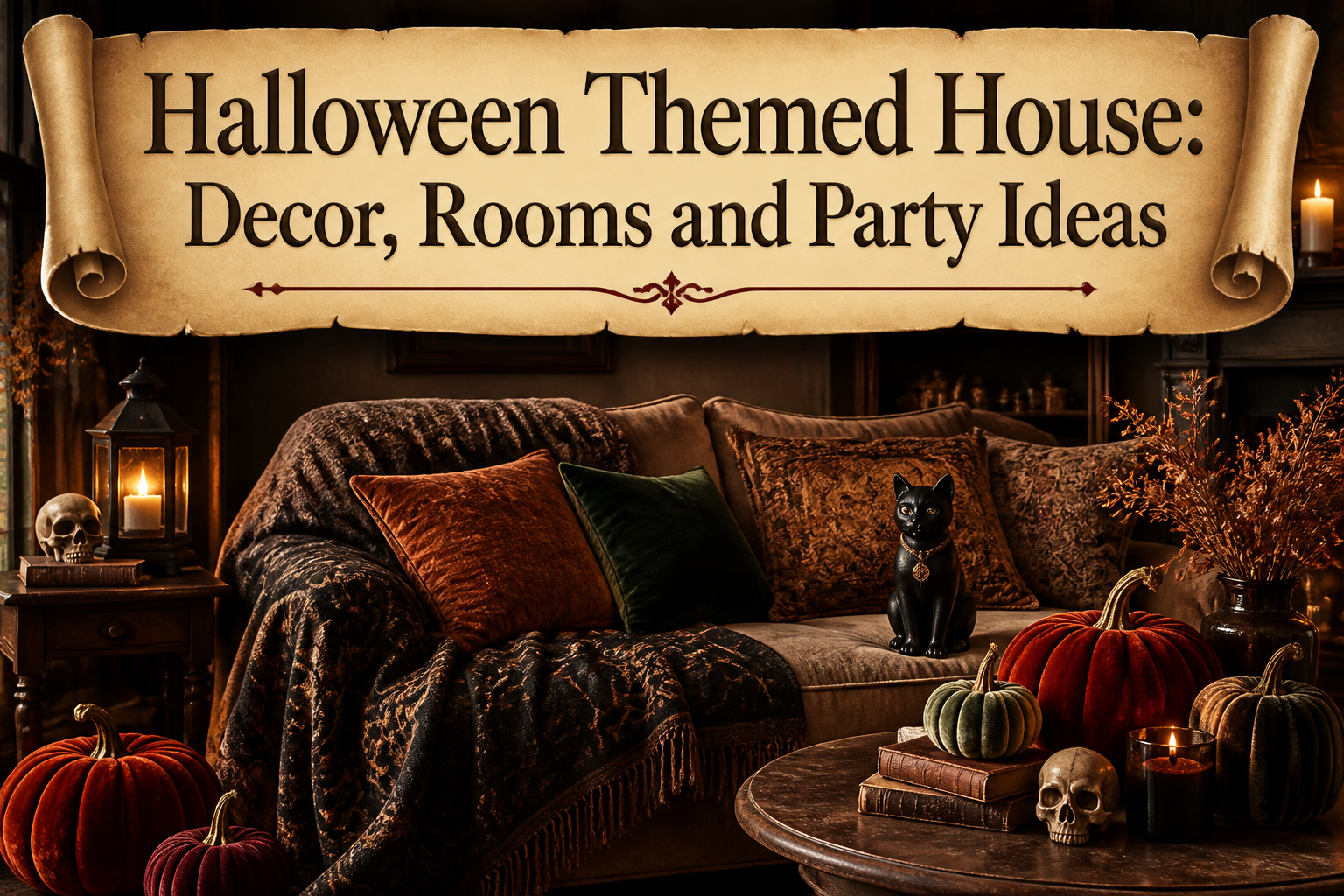
A Halloween themed house is a single, intentional concept carried through every room, inside and out. The catch is that most people fill theirs with twelve unrelated items that cancel each other out instead of three strong pieces that speak the same language. That lesson cost me a living room that looked like three decorators had fought in it: cartoon ghosts, a realistic severed head, and vintage paper bats all competing for the same eye.
Choosing a Theme for Your Halloween Themed House

A clear theme is what separates a Halloween themed house from a garage sale that happens in October. Pick spooky, cute, classic, or pop-culture, then commit to that single concept for every room.
I learned this the hard way two years ago when my living room had cartoon ghosts on the windows, a realistic severed head on the console table, and vintage paper bats from the 1950s on the ceiling. Each piece worked on its own. Together they looked like three different people had decorated while fighting.
The "Jurassic Park meets King Kong" approach sounds creative until you stand in the doorway and realize the giant ape and the T-rex are competing for the same eye. One strong idea carries farther than two clever ones mashed together. Classic harvest with dried corn and candlelight reads as intentional. A zombie pumpkin patch with LED eyes and a fog machine reads as intentional. A little of each reads as whatever was left at the store.
For renters and weekend budgets, this matters practically. One theme means you can reuse the same storage bins next year instead of starting over. It also means you can buy three or four strong pieces that talk to each other rather than twelve single-use items that don’t.
Outdoor Halloween Décor Ideas
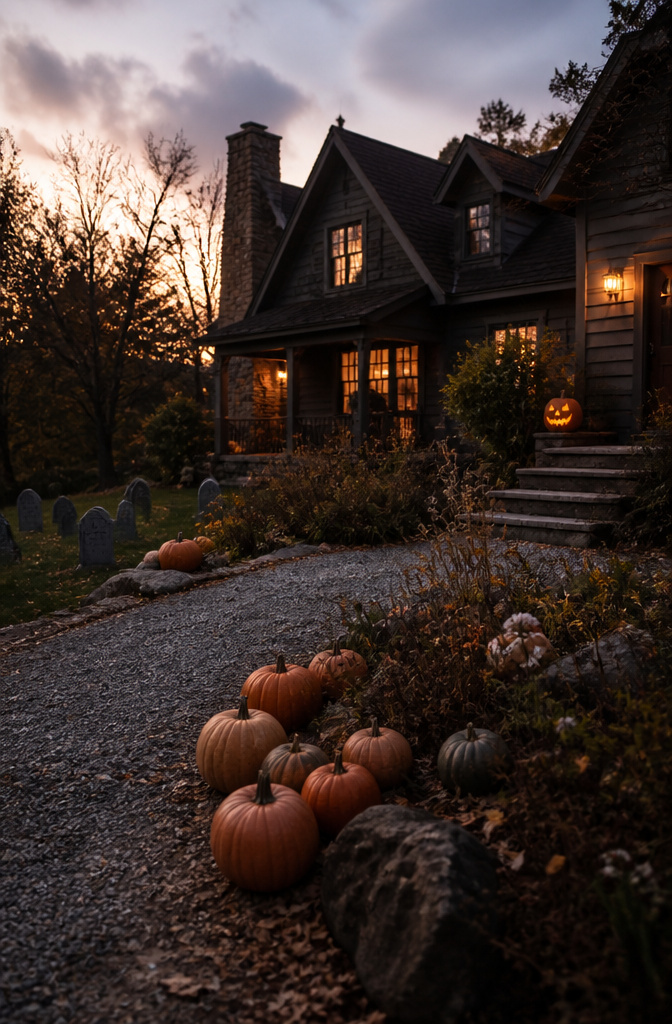
A pumpkin with a candle inside still does the heavy lifting for outdoor Halloween décor, but placement matters more than carving skill. Last year I set mine too close to the porch steps, and the wind blew one onto the walkway before eight o’clock. Now I keep the carved ones on wide porch railings or flat stones beside the door, where they read as a welcome without becoming a trip line. The uncarved pumpkins go farther out in the yard, massed in threes near the mailbox or along the driveway edge; they hold up longer and fill space that would otherwise need twice the props.
Gravestones and spider accents on mailboxes work because they catch people driving past at twenty-five miles an hour. A tilted foam gravestone half-hidden in dormant grass reads as accidental, which is creepier than a neat row. The mailbox is the one surface every trick-or-treater touches, so a plastic spider web stretched across the flag or a cluster of small spiders climbing the post becomes a shared joke before anyone reaches the door. The yard stuff sets the mood; the mailbox stuff starts the conversation.
Indoor Halloween Décor Ideas

Mood lighting turns a living room into a haunted house faster than any prop, and the right fixtures do not require an electrician. Strobe lights, black lights, and string lights in orange and purple set the tone early while leaving enough visibility for guests to move around safely. Real candles flicker better than electronic ones, but the battery-powered kind stays lit near tissue paper ghosts and crepe streamers without the fire watch.
Tissue paper ghosts hang best from fishing line or clear thread so the support disappears; bunch the paper around a wadded center for volume rather than stuffing it evenly, which reads as a lantern instead of a shape. Cobwebs stretched across door frames and bookshelf corners finish the illusion, though the synthetic kind clings to rough surfaces like popcorn ceilings and brick while smooth painted walls need a dot of removable putty at each anchor point.
I have learned to place lights low, behind furniture or inside hollow decorations, so the shadows do the work. A black light aimed upward at a white curtain turns it into a glowing screen; the same light at eye level washes everyone out and kills the effect. The goal is pockets of dark with just enough color to suggest something moving in them, not a lit stage set.
Spooky Food Ideas for Halloween Parties

A plate of ordinary sausages becomes something guests actually talk about when the card beside them reads "roasted fingers." That small label does more than name the food; it hands your guests a role in the story your house is already telling.
The first time I tried this, I worried the joke would fall flat. I set out plain kielbasa on a sheet pan, scored the ends with a knife so the casing split and curled like knuckles, and propped a folded tent card next to the dish. By the end of the night the pan was empty and three people had photographed the label. The food itself was unchanged; what changed was how people approached it. They were not just eating at a Halloween party. They were choosing to play along.
This is where the house theme crosses from decoration into experience. Your spiderwebs and orange bulbs set the stage, but the labeled food makes guests participants. Punch becomes "witches’ brew." A cheese ball is "moldy brain." The names do not need to be clever; they need to be consistent with the world you have built. A guest who hesitates at a plastic skeleton will laugh at a sausage finger and reach for it. The label lowers the barrier.
Presentation matters more than recipe here. Finger foods work best because guests can pick them up and the visual gag lands immediately. Keep the actual cooking simple; the theme carries the weight.
Halloween House Rooms

A Halloween themed house works best when the rooms themselves become characters, not just backdrops for props. Three concepts keep coming up in the projects I’ve watched: the Trick or Treat Room, the Glow in the Dark Room, and the Zombie Bunker. Each builds atmosphere without leaning on jump scares, which matters when your guests include kids or anyone who’d rather not spend the evening tense.
The Trick or Treat Room borrows from old candy-shop aesthetics: glass jars, striped paper, warm amber bulbs. What saves it from looking like a store display is the wear. Scuff the labels, let the "candy" show tooth marks, pile the good stuff in a dented metal bin that looks inherited rather than bought. Renter workaround: everything sits on surfaces or hangs from removable hooks. No wall damage, no security deposit risk.
Glow in the Dark demands the opposite approach, darkness first. The paint or tape needs charging time, so place fixtures where they’ll soak up afternoon light. The common mistake is overdoing it; a ceiling constellation and one focal wall beat a room that feels like a rave. Blacklight bulbs in standard lamps work, but test your shade material first. Some fabrics fluoresce in ways that kill the mood entirely.
The Zombie Bunker reads military surplus meets garden shed. Olive tarps, ration tins, handwritten signs about infection protocols. Cardboard and brown packing paper age faster than you’d think; mist them with weak tea and let dry overnight. The detail that sells it is the inconsistency. One pristine item breaks the spell. One overly pristine item, actually. A few rust spots, a torn corner, a label in the wrong font. The eye catches the error and believes everything else.
Real walls limit scale but focus the effect. A 10×12 bedroom can’t hold a full bunker, but a corner checkpoint with a folding screen and a fog machine on low? That photographs like a set piece and packs into a bin by November 3rd.
Unique House Themes That Stand Out
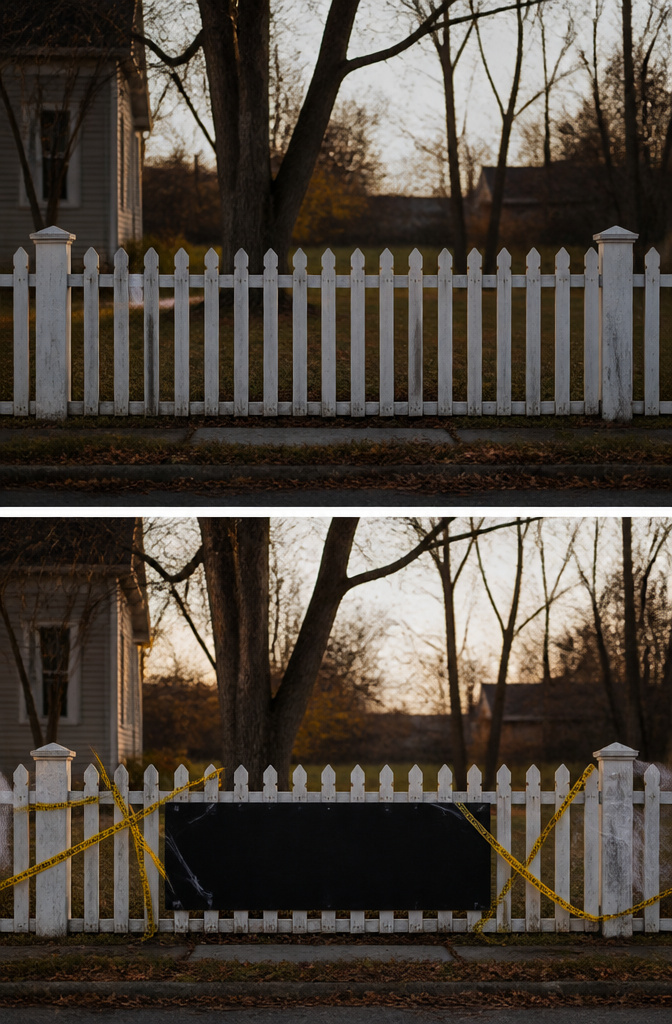
A Halloween themed house becomes memorable when someone picks one strange idea and pushes it all the way through. I saw the "Don’t come to my yard or you’ll die" house online last year: a single grim slogan in hand-painted letters, fake crime-scene tape, and nothing else. No pumpkins, no ghosts, no inflatable cat. The restraint made it funnier and more unsettling than the overloaded lawns around it.
Commitment to a single concept works on smaller budgets too. One Orlando creator painted her front door inky black and added skeleton planters, spiders, and bats. The door alone cost maybe thirty dollars in exterior paint, but the unified color story made the whole yard feel designed rather than accumulated.
The risk is half-measures. A yard that tries three jokes at once reads as clearance-sale Halloween. The houses that stand out choose their mascot, whether skeletons or ghosts or witches, and repeat it until the repetition itself becomes the joke.
You don’t need to live in a haunted 1800s Victorian with creaky floors and a few spiritual inhabitants to dress your house to the nines for Halloween. These epic houses make even the most charming white picketed fence abode seem dark and menacing.
For a reader mid-project, this means picking one accent that transitions from day to night, like cheesecloth dyed black or a porch bulb swapped for orange, and using it three times instead of buying twelve different decorations.
Indoor Versus Outdoor Decoration Balance

Outdoor decoration is what your neighbors and trick-or-treaters see, but indoor decoration is what you live with for the weeks leading up to Halloween. The porch gets one evening of peak traffic; the living room gets every evening after work. That difference matters when time runs short.
| Outdoor | Indoor | |
|---|---|---|
| Cost per impact | Higher; weatherproof items and lighting add up | Lower; paper, fabric, and candles carry most rooms |
| Time to install | One concentrated afternoon | Spreadable across evenings |
| Storage bulk | Large; inflatables and props need garage space | Compact; bins fit a closet shelf |
| Renter-friendly? | Often not; stakes and hooks damage siding or lawns | Usually; Command strips and tabletop pieces |
If you can only choose one, go indoor. The person enjoying the decoration is you, not the passersby. A $15 string of orange bulbs inside a front window gives the street something to notice, and the rest of the budget goes to the spaces where you actually spend October.
Spooky Versus Cute Decoration Styles

A Halloween themed house built on cute decorations reads as warm and nostalgic to guests who grew up with paper pumpkins and friendly ghosts, while a spooky setup signals that the night will lean toward adrenaline and shared nerves. The problem arrives when a dining table holds both a grinning felt cat and a blood-dripped candelabra; neither registers fully, so the room feels like a storage closet for two abandoned parties. Cute wins for households with young children or neighbors who trick-or-treat in daylight, since the imagery reads instantly and no one needs to guess whether the tone is playful or threatening. Spooky works better after dark, for guests over twelve, and in spaces where you control the lighting. Mixing the two styles usually flattens both into clutter rather than layering them into something richer. Picking one direction and carrying it through every room, even the bathroom with its hand towel and soap choice, gives guests the relief of knowing what world they have stepped into. Personal satisfaction follows the same rule; the host who loves horror films but sprinkles in cartoon skeletons to soften the edges often ends up apologizing for both instead of committing to either.
Mood Lighting Versus Traditional Lighting

Flipping every switch to an orange or purple bulb turns a living room into a cave you can barely cross. I learned that the hard way the first time I tried the full-replacement approach, and my brother walked into the coffee table hard enough to crack a glass. Depth comes from mixing two or three sources at different heights: a low-wattage amber lamp on the floor behind a piece of furniture, a flickering silicone-candle cluster on the mantle, and the original overhead fixture dropped to about 25 percent with a dimmer or a lower-wattage bulb. The eye reads the contrast between bright and dark zones as mystery instead of blindness.
Bulb temperature matters more than color. A 2200K amber LED reads as firelight and still lets you see the nachos. Bulbs marked 2700K stay warm but too neutral to feel like Halloween; anything above 3000K fights the mood entirely. For the flicker effect, the silicone candles with built-in timers beat real tea lights for a three-hour party, and they land in the same $15–$20 range for a set of six.
Placement should graze vertical surfaces, not just pool on floors. Uplighting a drape or a corner of textured wall catches the shape of the fabric and casts soft shadows six feet up. That single trick did more for the room than the twelve purple bulbs I bought and mostly abandoned after night one.
Frequently Asked Questions
What are the best outdoor decorations for a Halloween themed house?
Carved pumpkins on wide porch railings or flat stones beside the door serve as a classic welcome, while uncarved pumpkins massed in threes near the mailbox or along the driveway fill space with longer-lasting props. Tilted foam gravestones half-hidden in dormant grass read as accidental and creepier than neat rows, and plastic spider webs or small spiders on the mailbox post start a shared joke with every trick-or-treater who touches the flag.
How do I create a spooky atmosphere indoors for a Halloween themed house?
Mood lighting does the heaviest work: strobe lights, black lights, and orange or purple string lights set the tone early while leaving enough visibility for guests to move safely. Place lights low, behind furniture or inside hollow decorations, so shadows do the work rather than washing the room flat. Tissue paper ghosts hung from clear fishing line and cobwebs stretched across door frames finish the illusion without requiring an electrician.
What themed food ideas work for a Halloween party?
Ordinary dishes become memorable when labeled with story-driven names: sausages become "roasted fingers," punch becomes "witches’ brew," and a cheese ball becomes "moldy brain." The food itself stays simple; the label hands guests a role in the story and lowers the barrier to participation. Finger foods work best because the visual gag lands immediately when someone picks them up.