
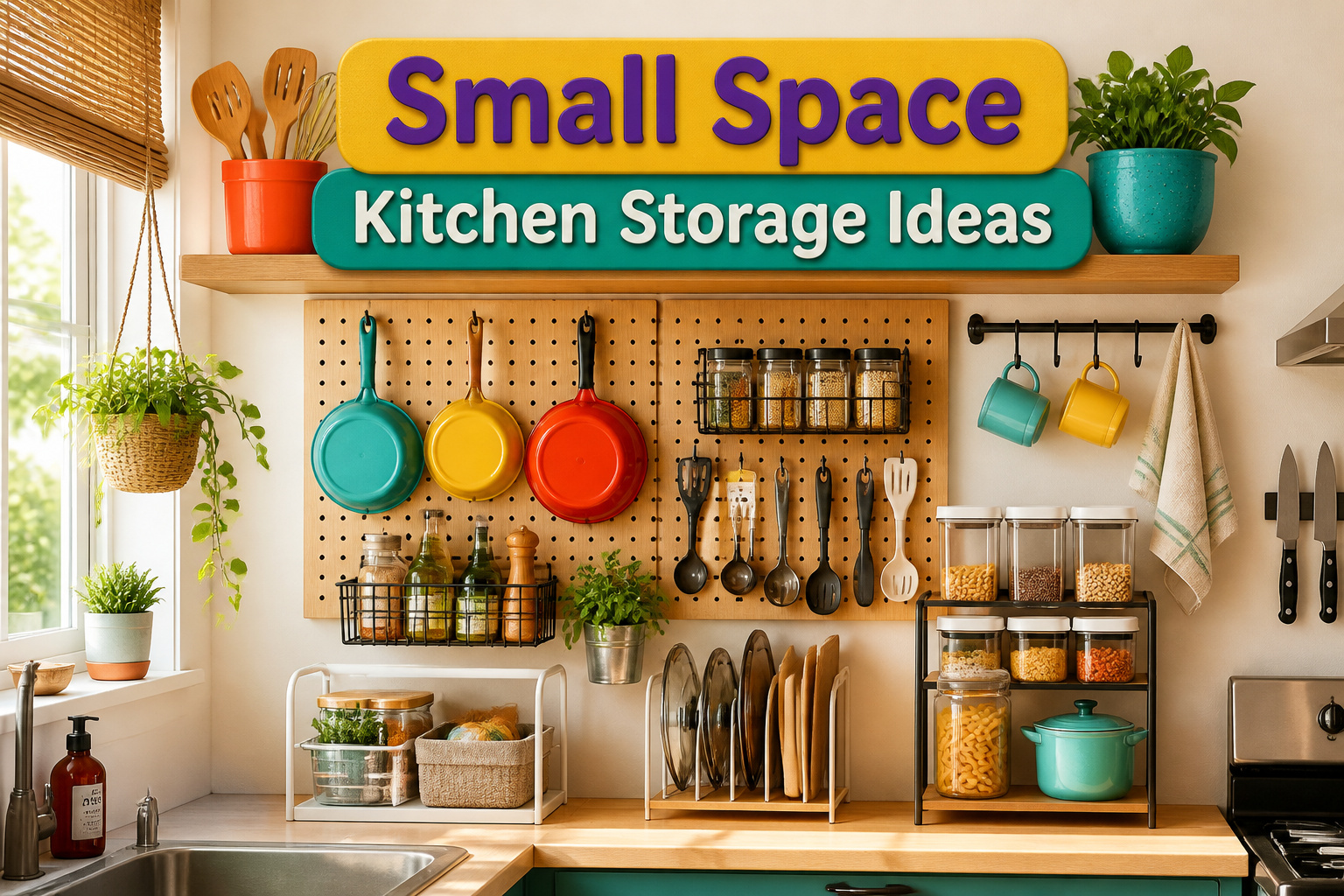
Small space kitchen storage ideas in 2026 run from a $7 pack of adhesive hooks to a $68 pegboard system, and the right pick depends on whether you own the walls or need your deposit back. Renters will hit limits fast: adhesive sags under cast iron, drywall anchors fail, and that expanding pot rack wobbles past 36 inches no matter how sturdy the box claims. The Range Kleen rack held 20 pounds in testing, but only with a stud behind it.
1. Wall Rack for Pots and Tools
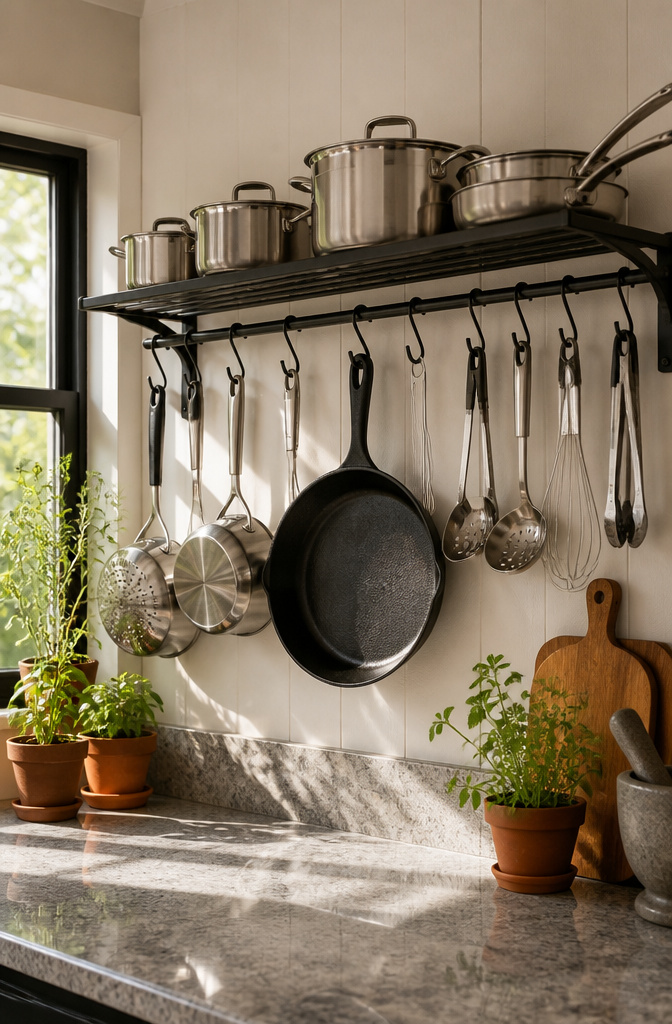
Wall racks turn the blank space above your counters into storage you actually use. I mounted one two apartments ago after my single cabinet swallowed my one good skillet and left me digging through a stack every night. The rack kept the pans I reached for daily within arm’s reach and bought back about two feet of counter that had been my only "staging area."
The Range Kleen Expanding Bar Pot Rack stretches from 24 1/8 inches out to 40, though I would stop at 36. Past that it gets flimsy, and at 36 it still held 20 pounds in testing, a 12-inch cast-iron skillet parked dead center included. Wall anchors come in the box, but a stud is worth finding for anything you cook with regularly.
Magnetic knife strips are the narrower cousin here, and the choice between metal and wood matters more than I expected. Metal bars like the Modern Innovations Stainless Steel version run about $24 and grip measuring spoons, scissors, even a corkscrew well enough, but the blade edge takes a beating over time. Wood-faced strips, the Benchcrafted Mag-Blok in particular, run gentler on knives and come in 12- or 18-inch lengths. Either mounts inside a cabinet door if you have the door depth; shorter screws keep you from punching through the face.
What hangs matters too. A rack loaded with every pan you own turns into visual noise fast. Three pans you use weekly beats twelve you use yearly.
2. Extra Shelving Unit
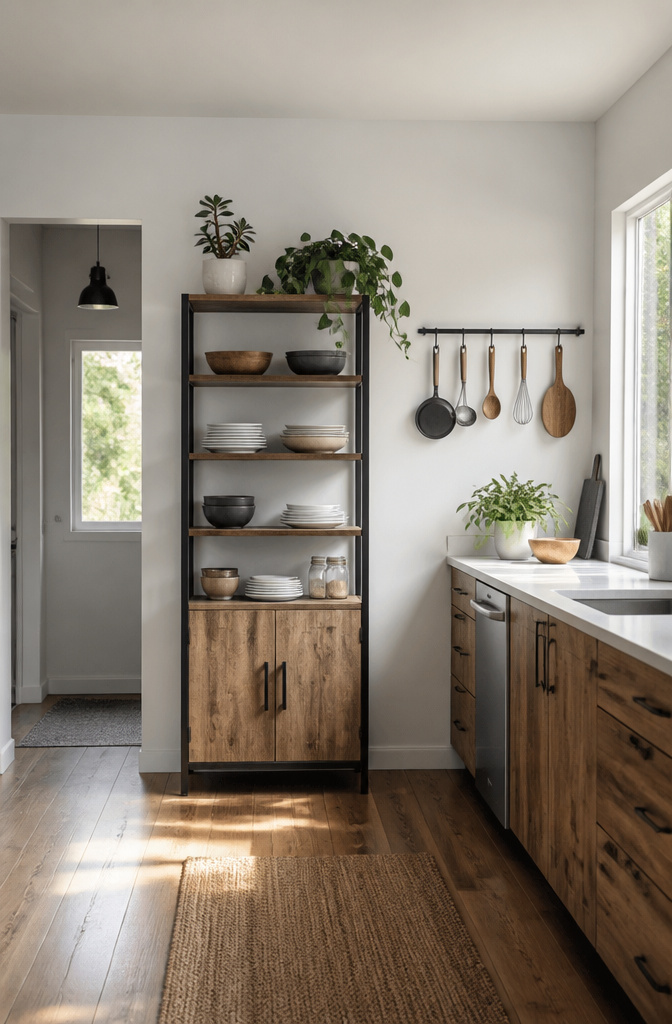
A freestanding shelf or wall-mounted unit buys back cabinet space without the cost of built-ins. I looked at this route last spring when my dish cabinet started doing double duty as a pantry, and the question that stopped me for two days was depth. Twelve inches handles a standard dinner plate with room to spare; anything deeper eats floor space without adding useful storage. Height matters too, especially in a rental where you cannot rehang cabinets. A tall, narrow footprint gives you more linear feet of shelf per square inch of floor than a squat wide one.
Manufacturers rarely list the interior depth and true shelf height in their online specs, so a tape measure at the store, or a careful read of the Q&A section, saves the headache of a return. I learned that the hard way with a wire unit that looked right in the photo and arrived two inches too shallow for my mixing bowls.
Wall-mounted rails for utensils and towels pair well with either style, keeping the shelf surface free for the items you cannot hang. If your kitchen has literally no floor space left, a bookcase borrowed from the living room works; plates read as décor, and you gain closed storage below if the unit has a cabinet base.
3. Drawer Organizers
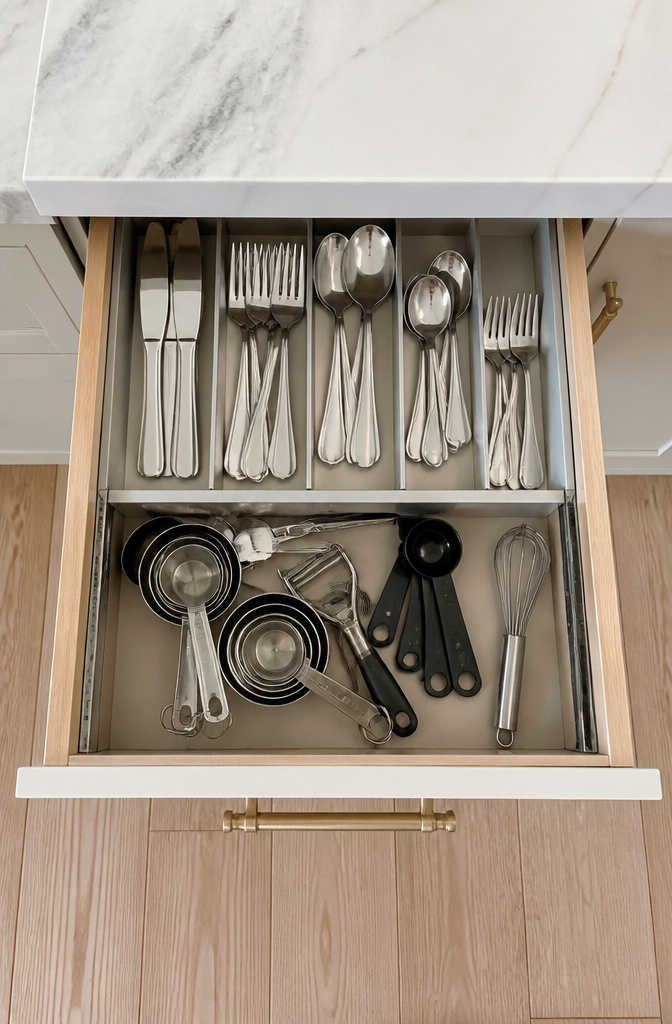
Tiered drawer organizers let you pull twice the storage from the same depth of drawer, which matters when your kitchen gives you one narrow strip of counter and maybe four drawers total. The two-tier flatware and utensil trays sit one above the other, so silverware lives on top and measuring cups or small gadgets tuck underneath where that space would have stayed empty and sliding around.
For drawers that are not deep enough to stack, adjustable dividers do the same job horizontally. The spring-loaded ones run 12 to 18 inches long and stay put once you set them, which is more than I can say for the cheap plastic trays I wedged in before and found drifting into a pile every third time I opened the drawer. The 3-inch height fits most standard drawers; the 4-inch version works for deeper ones and comes with extra pieces to subdivide both directions.
These spring-loaded drawer dividers were easier to adjust than the competition, and they fit drawers from 12 to 18 inches long.
That range covers most rental kitchen drawers without you measuring to the sixteenth of an inch, and the spring tension means no screws or sticky backing that a landlord would notice later.
4. Under-Sink Storage
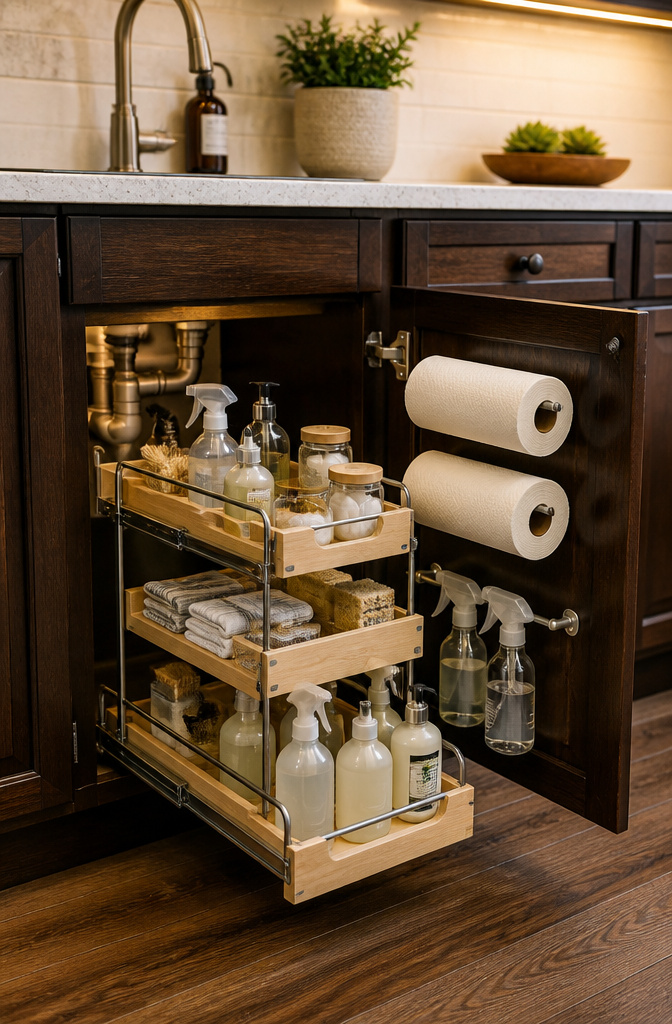
The cabinet under the kitchen sink is usually one of the bigger ones in the room, which makes it easy for bottles and sponges to disappear into the back corners. A pull-out organizer fixes that by bringing everything forward on a sliding tray. I installed one in a rental a few years ago and the difference was immediate: no more kneeling to reach past the plumbing, no more buying a second bottle of dish soap because the first one was buried behind the compost bin.
Tension rods work in that same tight space for a few dollars less. A short rod adjusted between 40 and 70 cm can suspend spray bottles by their triggers or hold a roll of paper towels up off the damp floor. The same trick applies higher up: under-shelf organizers clip onto the cabinet’s existing shelf to catch flat items like dish gloves or a box of garbage bags that would otherwise sit in a puddle.
What I noticed shopping for any of these is that retailers rarely list prices in the product details. You add the item to your cart to find out, which makes comparison shopping tedious and means the budget can drift by twenty or thirty dollars before you catch it. My move now is to decide the ceiling before I browse, then stick to it even if the "heavy duty" version looks sturdier.
5. Hooks for Utensils and Towels
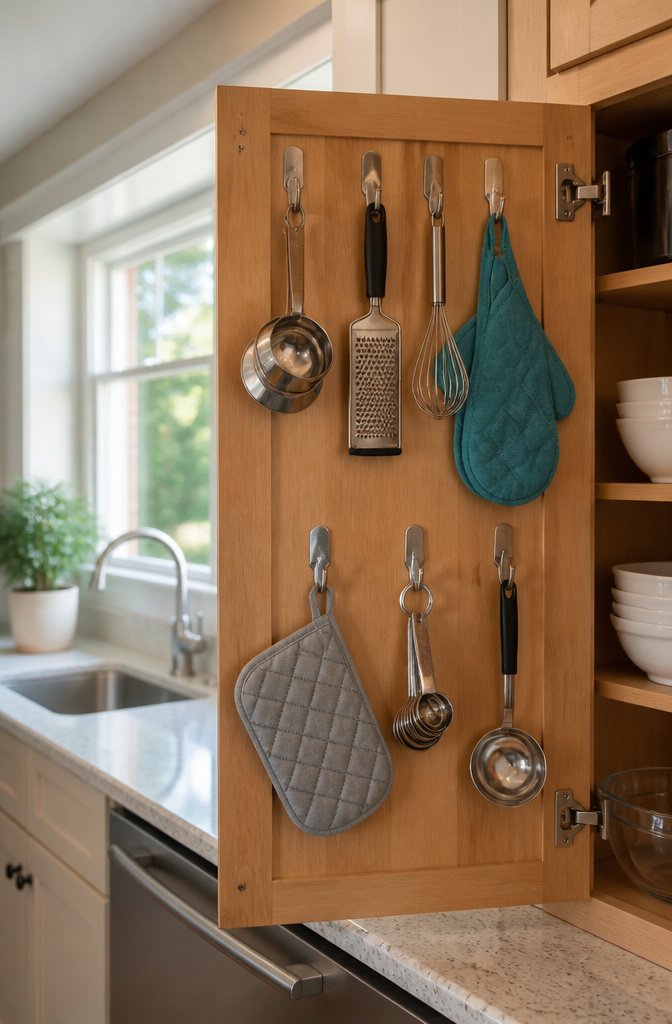
Self-adhesive hooks turn the blank sides of cabinets and the backs of doors into real estate you did not know you had. I started with a pack of thirty for just under seven dollars, stuck them to the inside of a cupboard door, and hung measuring cups that used to roll around a Tupperware drawer. The adhesive holds fine for lightweight items, but you will need to open that door gently once cups are swinging from it.
Screw-in hooks work better for heavier gear. I put one on the cabinet side next to the stove and hung a sieve there; it freed space in the utensil drawer and the sieve is actually in reach when the burner is on. Oven mitts and pot holders also belong on hooks, ideally on the door of the cabinet where you keep the pans, so both hands grab what they need at the same time.
Tea towels are another natural fit. Three adhesive hooks on each under-sink door, placed high enough that the towels do not dangle and block the door from shutting, get them off the counter and out of the drawer. Cleaning cloths can hang there too.
6. Open Shelving
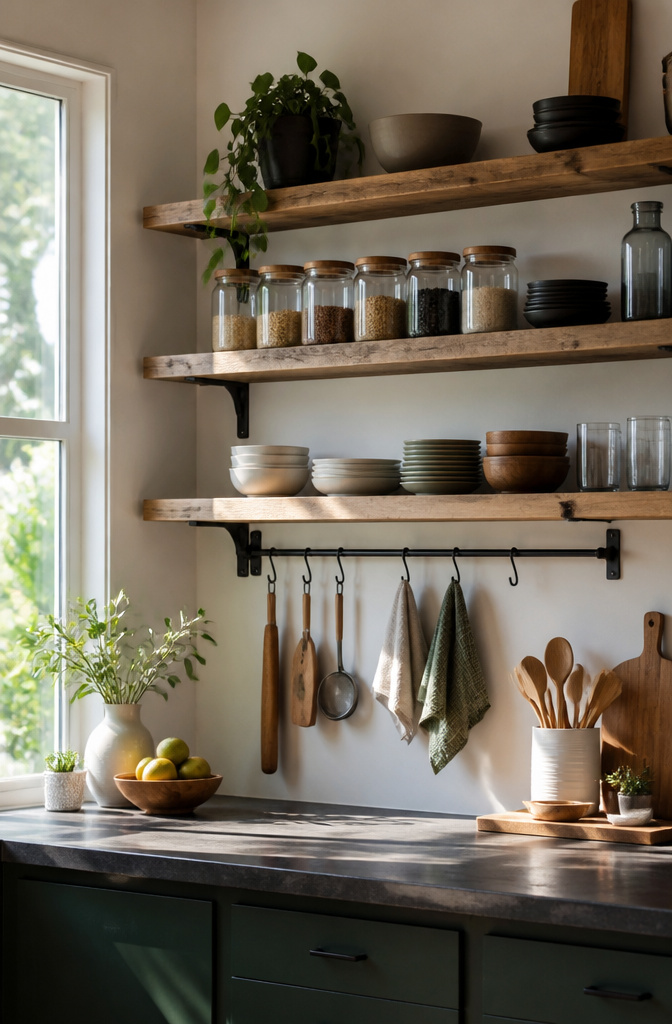
Replacing upper cabinets with open shelves trades about twelve inches of boxed-in depth for wall you can see past, which in a galley or L-shaped kitchen reads as breathing room you did not have before. The dishes you reach for daily, plates and mugs and the three spice jars in constant rotation, stay right there at hand. Closed cabinets below still hide the mismatched storage containers and the appliance you use twice a year.
What separates functional from cluttered is what you let sit out. I keep a hard rule: if the finish is chipped or the lid does not match, it lives behind a door. Everything on the shelf earns its spot by looking like it belongs there. Glass canisters for dry goods, a short row of matching bowls, one color of dishware if you can manage it. Village West Design calls this "functional decoration," and the phrase stuck with me because it admits the shelf is still working storage, not a stage set.
The dusting is real. A quick wipe when you grab the coffee mug keeps it from becoming a weekend project. Wall-mounted rails below the shelf line can take the utensils and towels that would otherwise pile up and break the clean horizontal line. Leave one shelf partly empty; a packed wall reads as the clutter you were trying to escape.
7. Window Sill Herbs and Tools
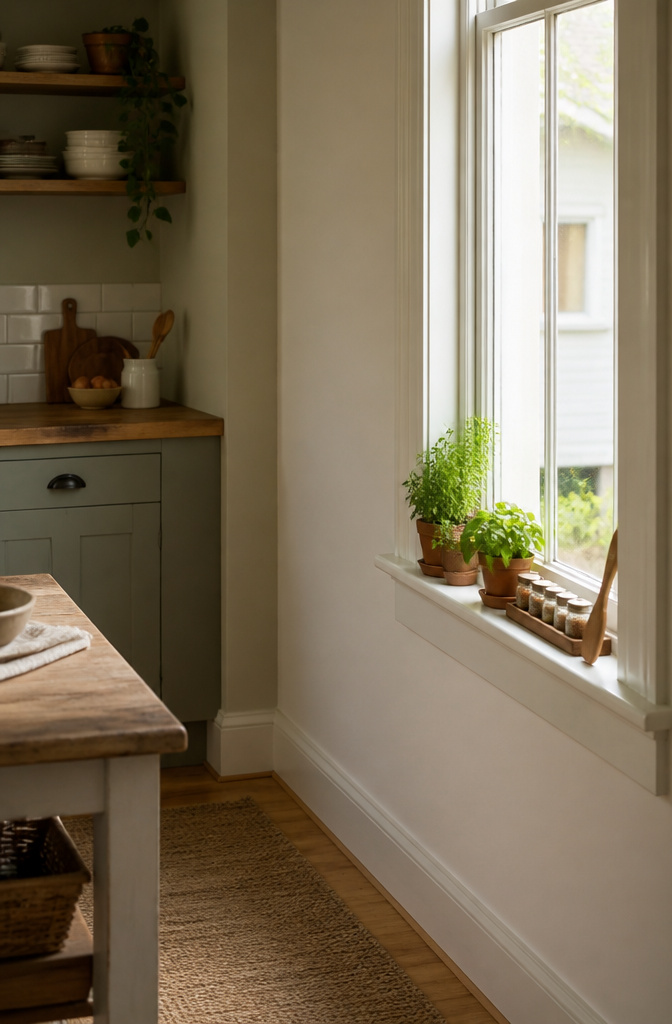
The window sill in my last apartment sat empty for months because I assumed it was too shallow to matter. Six inches of painted ledge, and I treated it like decoration-only territory. Then I ran out of counter space mid-recipe and started parking olive oil and a wooden spoon there out of desperation. It worked better than the magnetic strip I’d installed.
A window sill can hold a surprising load if the light is decent. I learned to keep three-inch herb pots in a row there, basil and thyme mostly, where they’d get the six hours of sun that came through the glass. The ledge also fit a short, shallow tray for the spice jars I used daily, the ones that had been clogging the drawer beside the stove. The Yamazaki Home Plate Magnetic Spice Storage Rack at $30 works for some kitchens, but my rental had metal windowsills that wouldn’t hold a magnet, and the ledge itself was the simpler answer.
The trick is depth. Anything over about four inches front-to-back risks tipping or blocking the lower sash. I stuck to narrow containers, the kind sold for drawer organizing, and kept taller tools in a jar only if I opened the window from the top. Matthew J.C. Clark’s arrangement in that Maine kitchen, with plants on one sill and produce on the other, convinced me to split the duty: herbs for cooking on the east-facing ledge, storage for the rest on the south. One got morning light for growth, the other got afternoon warmth to keep garlic and shallots from sprouting too fast.
What fails is treating the sill like a second countertop. Weight adds up, water stains the paint, and a crowded ledge blocks the light you’re supposedly using. I wiped mine down weekly and moved anything that didn’t dry within a day.
8. Pegboard Wall
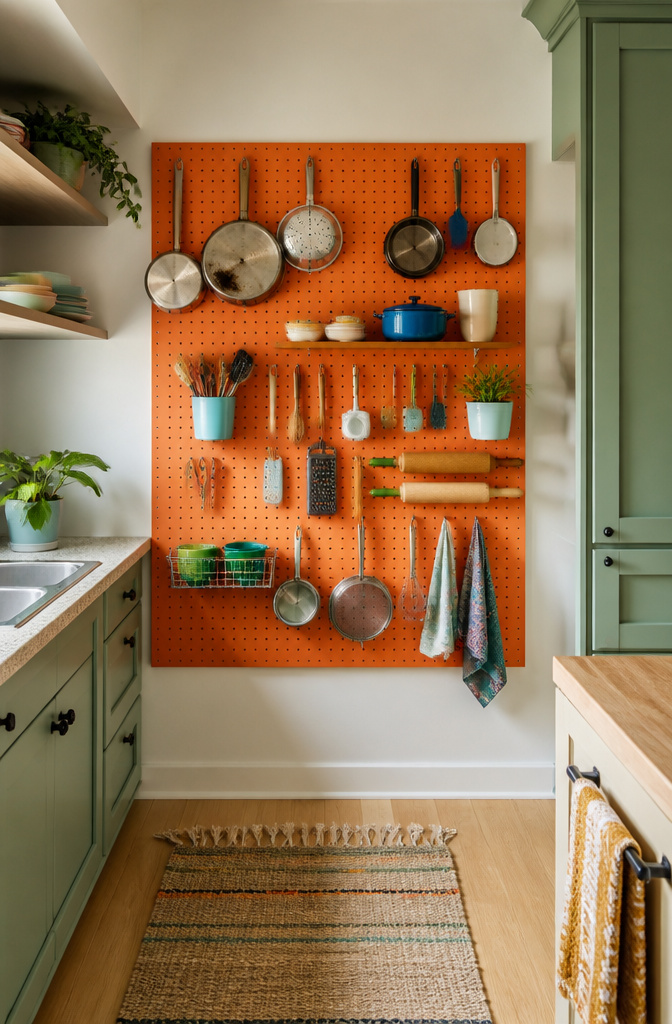
A pegboard wall hands you storage that shifts when your kitchen shifts. I keep seeing this come up as the flexible option, and after comparing enough setups, the reason is clear: unlike fixed shelves, you move the hook or shelf an inch left and suddenly the whisk fits beside the cutting board again.
Metal pegboard runs sturdier than the fiberboard kind. Wall Control’s 20-gauge steel panel, sized 16 by 32 inches, holds up to 200 pounds properly installed, and the holes do not droop over time. Their hooks in 1⅞-inch and 2⅞-inch lengths handle most pots and utensils, with 4-inch shelves for the small stuff. Panels come vertical or horizontal, in colors including hot pink, though paint works if you want it to disappear.
IKEA’s SKÅDIS line sits at the lighter end, around $68 for a combination, and suits renters who cannot sink anchors into steel. The tradeoff is weight capacity; the tradeoff worth making if you are mounting on drywall you do not own.
A single 16-by-32-inch metal panel can hold 200 pounds, which is more than most tiny kitchens will ever ask of it. Two ways to play this: run a narrow strip above the prep zone for daily tools, or cover the whole wall and treat it like open cabinetry. The narrow strip wins for renters who want their deposit back.
9. Cabinet Top Storage
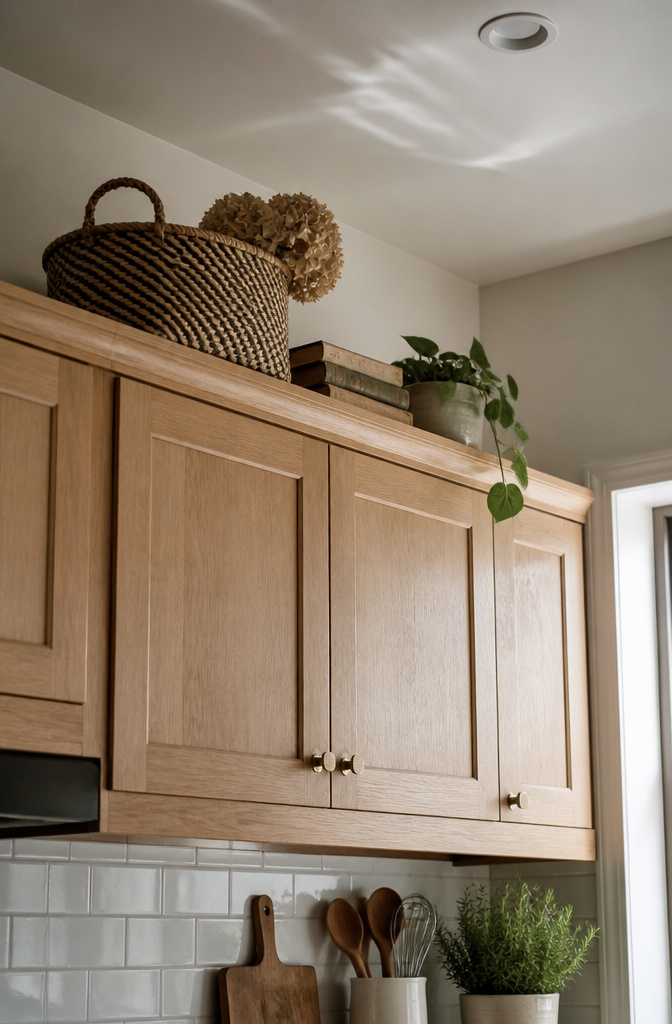
The flat run above most cabinets is dead space until you claim it. I stack the things I reach for twice a year there: the oversized roasting pan, the backup olive oil, the paper-towel bundles I bought on sale. A potted plant or two and a few cookbooks pull the eye up and make the storage read as intentional, not a dumping ground.
What stays below is everything you touch daily. The grease that settles on cabinet tops is real, and wiping it off a decorative bin every three months is easier than degreasing every spice jar you actually use. A curated selection of bulk pantry goods works better than cramming every seldom-used item up there; the visual weight gets heavy fast, and the space starts looking like the top of a fridge that got away from you.
A step stool lives in the corner now. Without it, the upper shelf becomes a place where things go to be forgotten, which defeats the point of the storage.
10. Fold-Down Table

A wall-mounted fold-down table gives you extra prep space or a place to eat that disappears once the dishes are cleared. The sources suggest this specifically for creating additional workspace, and that framing matters: it is not a permanent table you tolerate, but a surface that earns its keep only when you need it.
Placement changes how often you use it. Mounted on a wall, in front of a window, or hung off a bookshelf, the table folds flat and leaves the floor open for traffic. I have seen kitchens where the fold-down sits above a narrow cabinet, so the one usable wall handles both storage and dining without either crowding the other.
The mistake is treating it as free space. The table still needs room to swing down, and the legs or brackets have to land somewhere when they fold. In a galley kitchen, that means checking the clearance against the refrigerator door or the range handle before you drill. A table that blocks the oven when it is down is worse than no table at all.
For renters, the hardware matters more than the top. A solid bracket set bolted to studs holds weight without wobbling; adhesive or hollow-wall anchors eventually sag under a cutting board full of vegetables. If your lease forbids holes, a fold-down that clamps to an existing shelf rail or hangs on a heavy-duty French cleat may bridge the gap between what you want and what your deposit allows.
11. Lazy Susan in Cabinets or Pantry
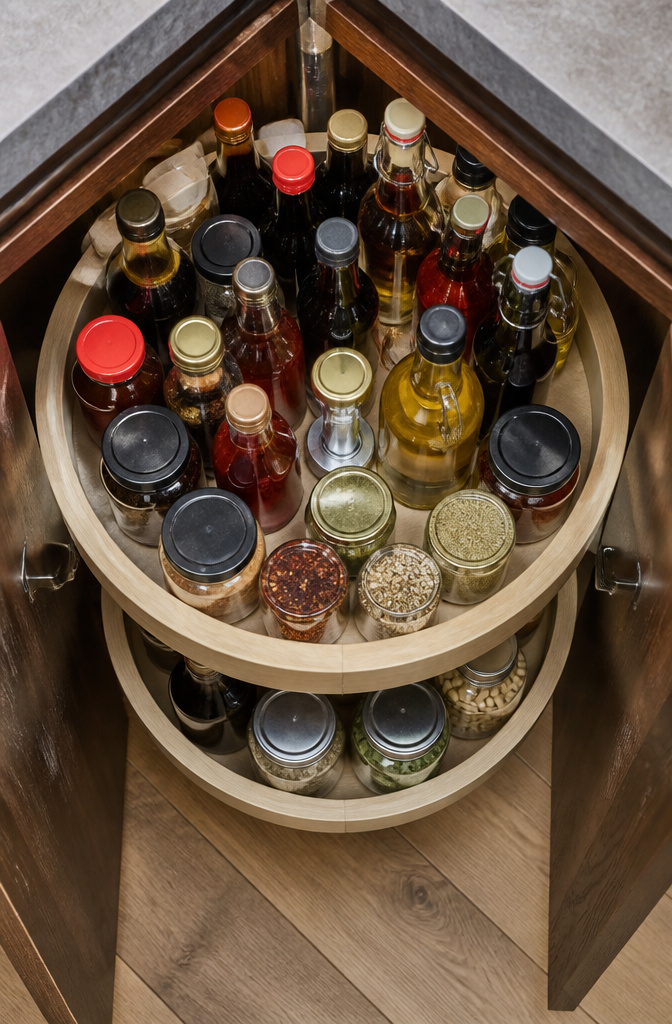
Corner cabinets have a way of swallowing things whole. A pot pushed to the back stays there until you squat and fish for it with a flashlight in your teeth. A two-tier Lazy Susan fixes this by bringing the back corner to you, not the other way around. I like these for pantry shelves too, where vertical space often sits empty while small jars crowd the front row. The upper tier handles condiments and sauces, the lower takes larger bottles like gravy or honey, though you will need to test what clears the shelf above before committing both levels. Single-tier versions work in tighter spots, but the extra height of a two-tier model uses the space that standard shelves waste. Spinning beats stacking every time when your reach is limited by cabinet depth.
12. Rolling Utility Cart
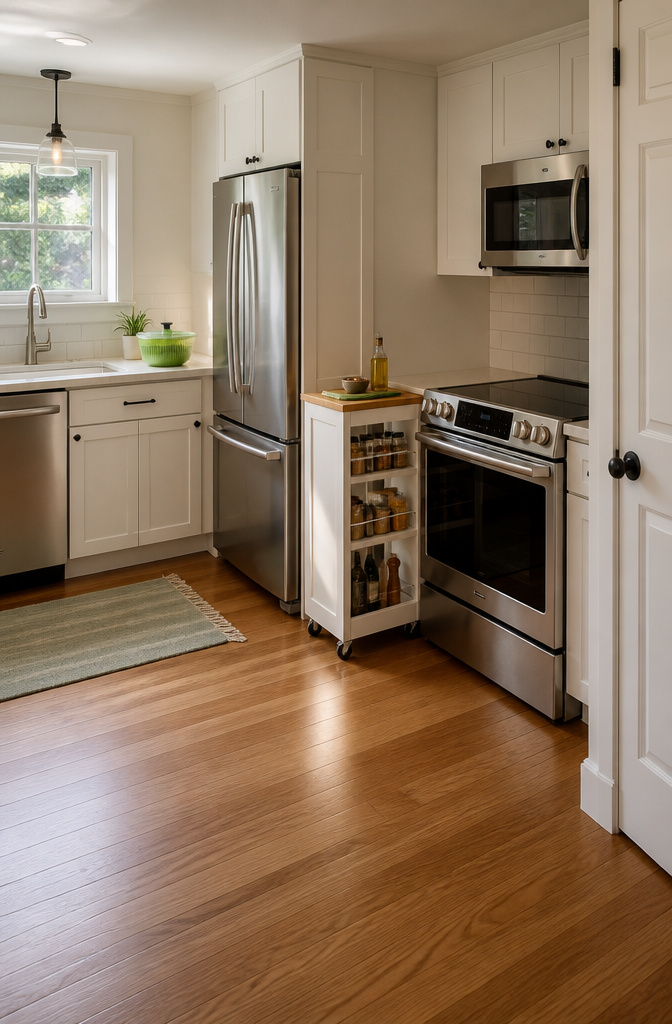
A narrow rolling utility cart fills the gap between appliances where nothing else fits. I saw this first in a friend’s apartment, that slim cart slid into the six inches between her oven and fridge, loaded with oils and spices she used daily. The wheels let her pull it out for prep space, then tuck it away before guests arrived.
The same cart works as a prep station if your counters run short. Load the top with a cutting board and keep bowls underneath, or park it beside the stove as a landing zone for hot pans. IKEA’s Raskog and Target’s round utility cart both have the small footprint that matters here, with enough storage for the tools you reach for constantly.
What convinced me, reading through the advice on this, is that the cart succeeds because it refuses to commit to one job. It stores, it rolls, it surfaces. In a kitchen where permanent cabinets aren’t an option, that versatility is the whole point.
13. Floating Storage Under Cabinets
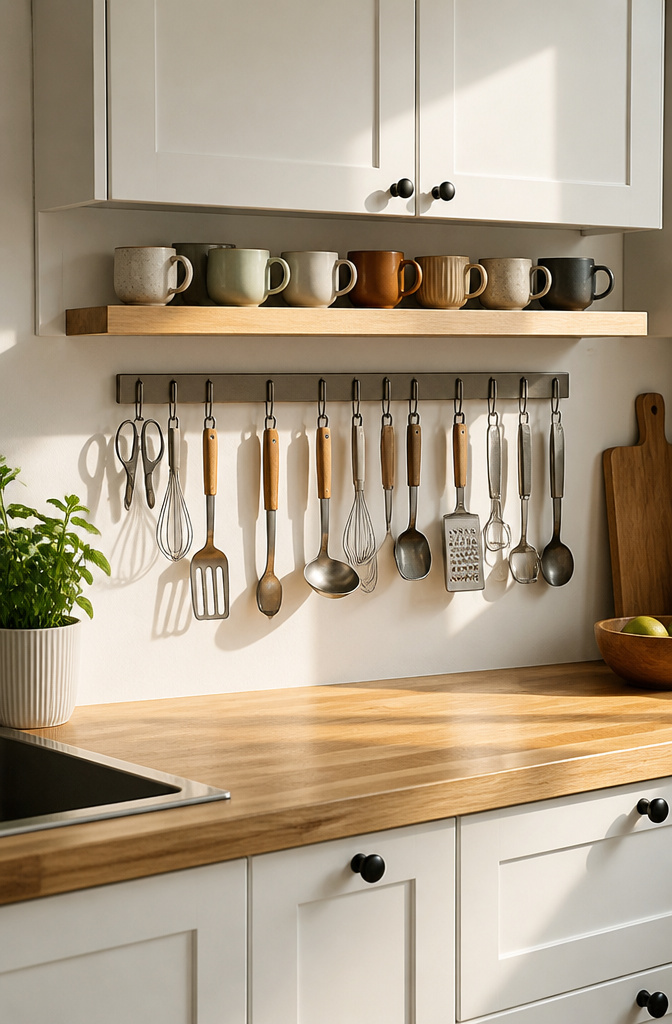
The underside of an upper cabinet is dead space until it isn’t. A slim shelf screwed to the bottom rail holds four to six mugs without stealing a single inch of counter, and a magnetic strip tacked up there keeps knives or spice jars visible but out of the way. A metal strip at $24 runs cheaper than a wood-faced one, though the steel can dull knife blades over time; wood is gentler but costs more and needs the same 12- or 18-inch footprint. For renters, the real appeal is the mounting surface itself: cabinet bottoms are solid, so you are not drilling into someone else’s drywall. Measuring spoons, scissors, a corkscrew, anything ferrous, cling to the magnet and free up the drawer that used to swallow them. Short screws matter if you are working inside a cabinet door instead, though the underside of the cabinet face is simpler and holds more weight.
14. Inside Cabinet Door Organizers
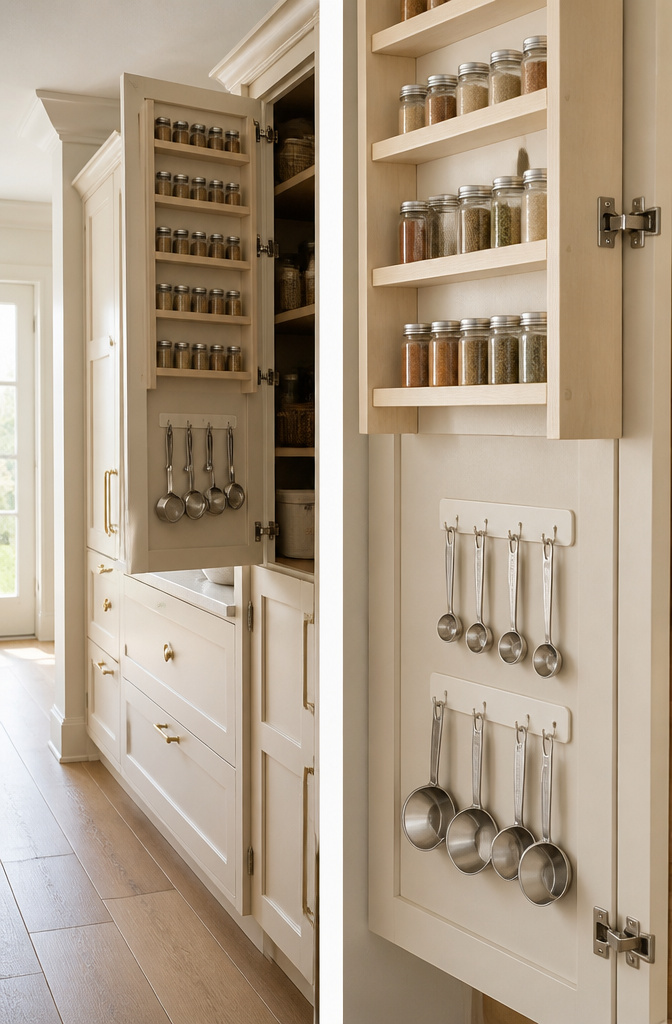
The inside of a cabinet door is dead space until it isn’t. Slim racks, adhesive strips, and small hooks turn that blank panel into hidden storage that stays invisible when the door swings shut, which matters in a kitchen where every visible surface already multitasks.
A narrow rack mounted on the inside of a pantry door holds spice jars that would otherwise colonize an entire shelf. Adhesive organizers work for measuring cups and spoons, the kind of lightweight items that otherwise roll around the bottom of a drawer and waste the real estate above them. Hooks under the sink can corral cleaning spray bottles by their triggers, freeing the shelf for bulkier supplies.
The tradeoff is weight and swing. These organizers are inexpensive and install in minutes, but a door crowded with glass jars needs a gentler close than a door with just a few plastic cups. I would rather mount spices on the pantry door, where I open it slowly anyway, than on the cabinet above the stove, where I slam it while cooking.
15. Shelf Risers
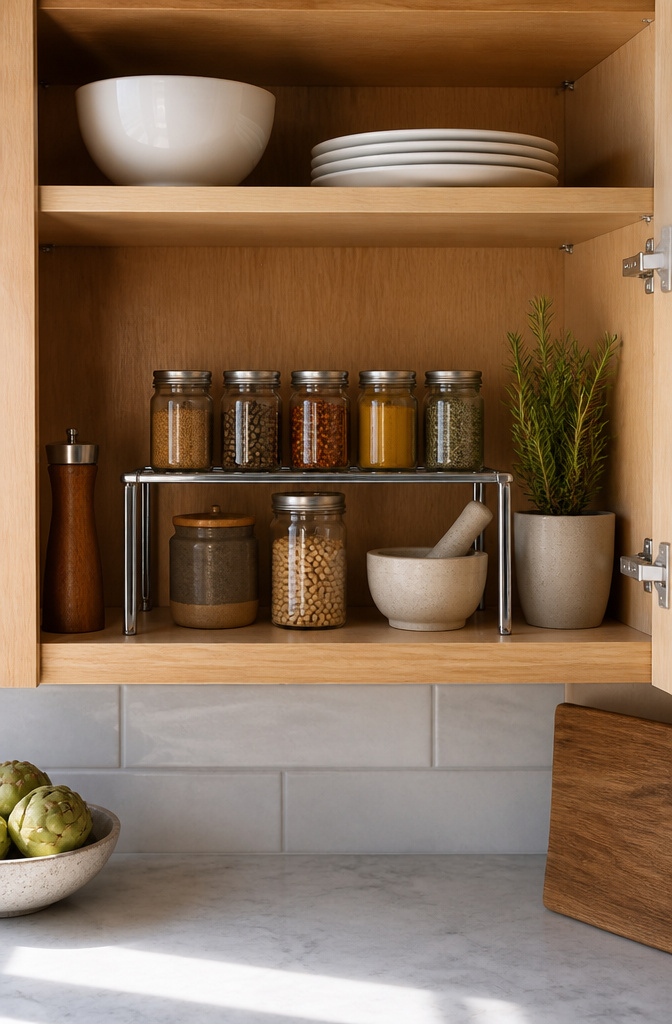
Shelf risers are specifically recommended for maximizing cabinet space because they split one flat surface into two levels without installing anything permanent. The Yamazaki Home Expandable Kitchen Riser runs from 10⅝ to 17⅝ inches wide and sits 7⅞ inches deep, so it adapts to most standard cabinets rather than forcing you to shop for an exact fit. At 4 inches of clearance underneath, a stack of six dinner plates or a row of 12-ounce mugs slides beneath the riser while a second layer lives on top.
Most wire-frame versions I have seen wobble under anything heavier than a spice tin. The Yamazaki’s heavyweight metal build costs more at $38 from West Elm, but the printed expansion line on top at least shows you where the mechanism stops before you overextend it and weaken the joint. For renters, this matters: no drilling, no adhesive strips, no claim on your security deposit. Pull it out when you leave and the cabinet looks untouched.
Dry goods and cans do well on these because the weight sits low and stable. I would not store everyday dishware on a wire riser; the thin frames chip porcelain and tilt when you grab one plate from the middle. Solid metal or bamboo holds its shape, and the four-inch height underneath is just enough for most standard dinnerware without wasting headroom above.
16. Tiered Countertop Organizers
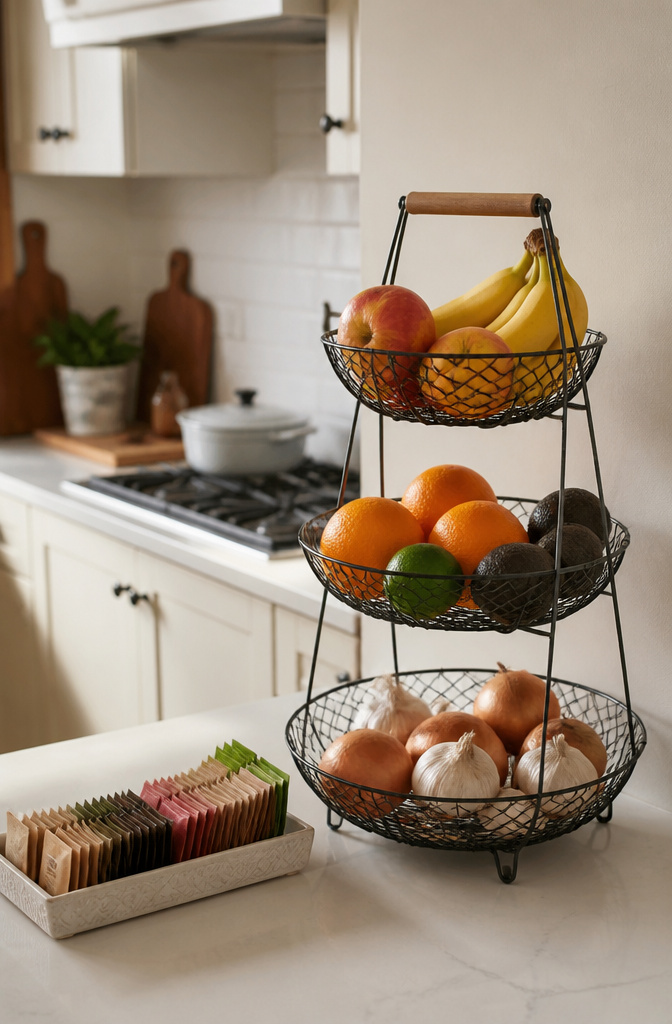
A corner of counter that held one bowl of fruit can hold three with a tiered wire stand. The vertical footprint stays the same; the usable area triples. I learned this after months of shifting a single cutting board and a toaster back and forth like puzzle pieces, never quite clearing space to prep.
The best ones have open sides, not solid baskets. Air moves around onions and garlic, which keeps them usable longer. A solid ceramic tier looks prettier for packaged snacks or the tea collection you actually touch daily. I skip the enclosed cabinet-style organizers that sit on counters. They hide clutter but add bulk where every inch matters, and the door swing eats the space you just reclaimed.
Three tiers is the practical ceiling for standard counter height. Taller and you’re either blocking upper cabinet doors or reaching overhead for daily items, which turns orderly into annoying fast. The bottom tier needs enough clearance to wipe underneath without moving the whole unit, or the rim collects crumbs you won’t notice until they attract visitors.
17. Adjustable Bakeware Rack
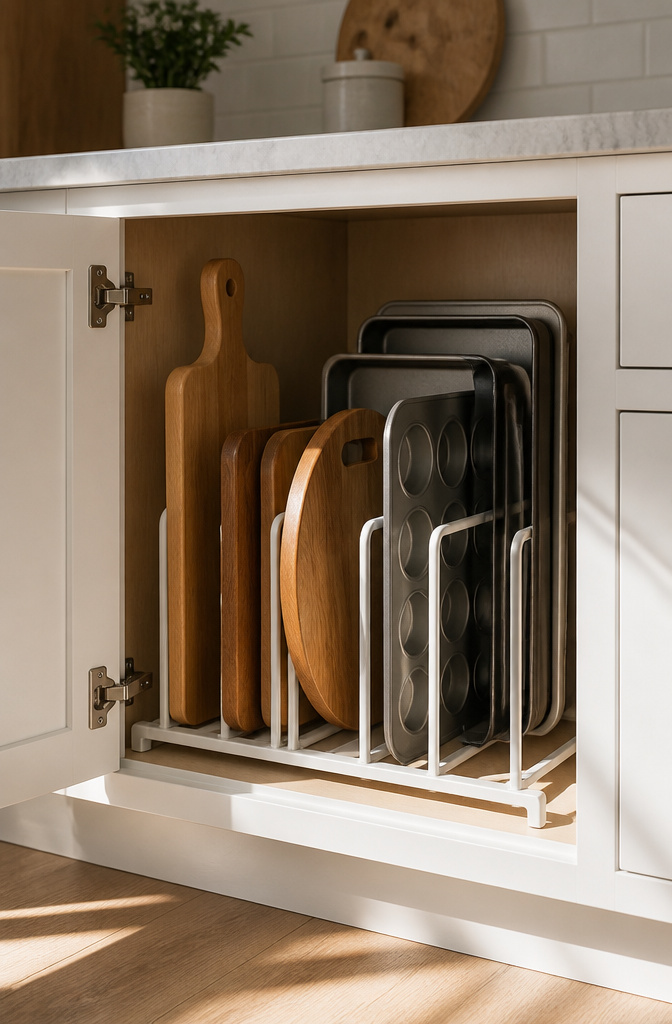
Baking sheets and cutting boards fight for the same awkward real estate in most small kitchens, and stacking them flat turns a single cabinet into a black hole. An adjustable bakeware rack stands them upright like files in a drawer, which means the one you need slides out without toppling the rest. The YouCopia StoreMore model runs about $20, measures 7¼ by 11½ inches, and fits inside most standard cupboards. Seven dividers let you tighten the slots for thin muffin tins or widen them for a pizza stone, and the vinyl feet keep the whole unit from skating backward when you pull a heavy board.
Wall mounting works too if your cabinet space is already spoken for. Either way, the move from horizontal to vertical storage tends to recover more room than you’d expect, especially in a rental kitchen where you cannot rebuild the cabinets themselves.
18. Bins and Containers
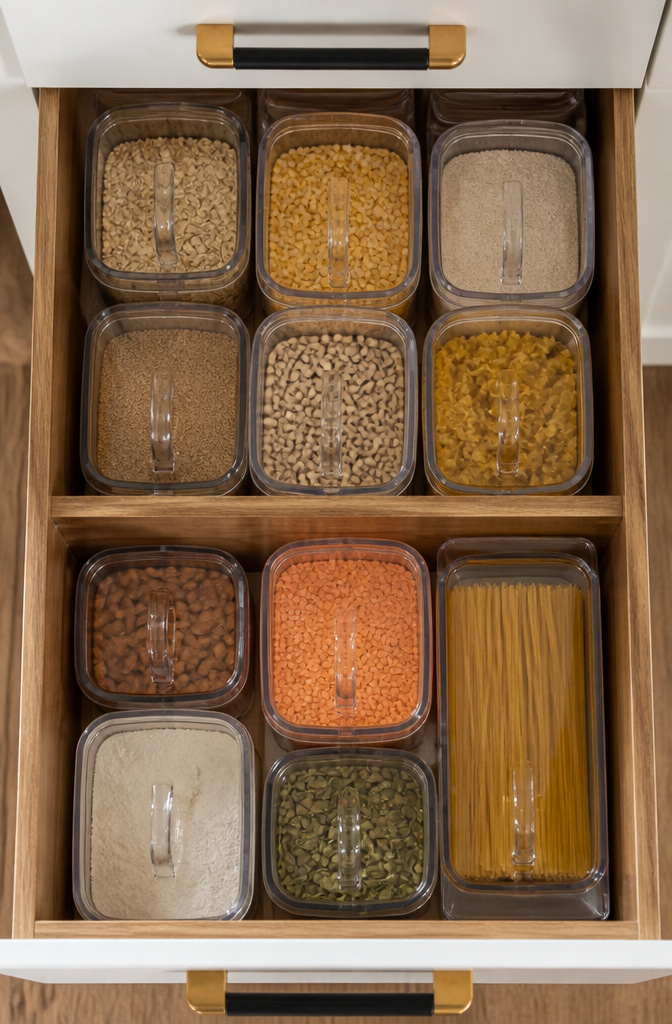
Clear bins turn a deep cabinet into something you can actually use without unloading half of it first. I started doing this after watching a friend pull an entire container of baking supplies off her shelf, grab what she needed, and slide it back in place. Everything stayed upright. Nothing got shuffled around and lost.
The same logic works for pantries, but the real payoff is in how you load them. Everyday items belong in the front bins, the ones you reach for without thinking. Weekend-only stuff, the special serving dishes or seasonal baking gear, goes in back or up high. When a bin has a label facing out, you do not have to decide where something lives each time you put it away. The decision is already made, and the kitchen stays functional without constant tidying.
19. Multi-Functional Furniture
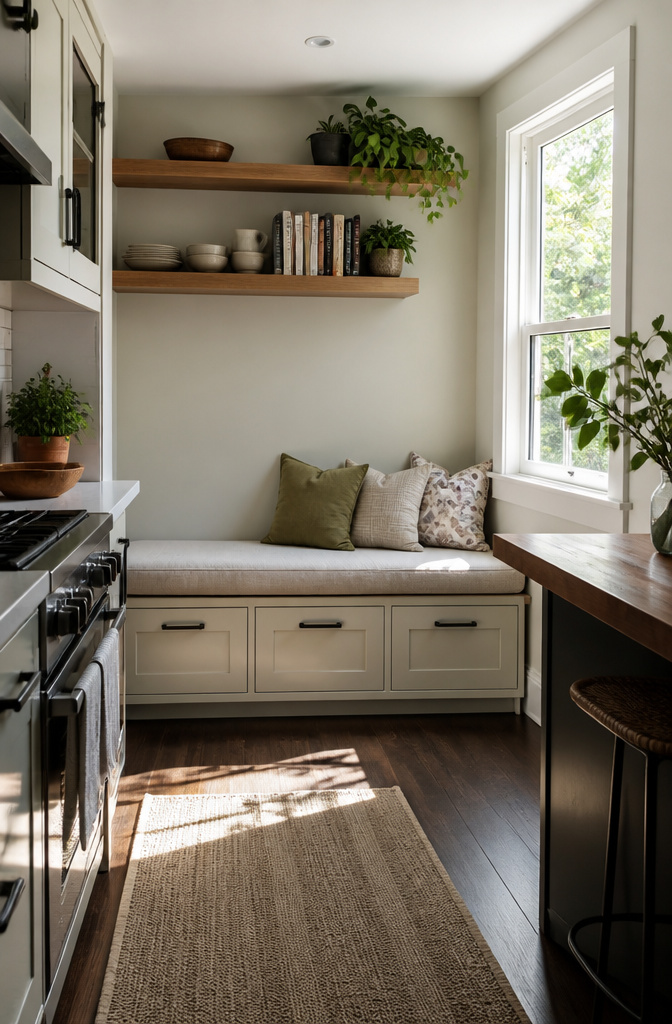
Multi-functional furniture gets mentioned so often in small kitchen guides that it risks becoming background noise, but the reason is simple: in a space where adding permanent cabinets isn’t an option, a single piece doing two jobs replaces what you cannot build. The rolling cart and fold-down table already covered in this list both fit that logic. A cart stores pots or pantry items while rolling to wherever you need a prep surface; a fold-down table disappears after breakfast and leaves the wall clear. The same principle extends to seating. A breakfast nook bench takes up less room than individual chairs and hides storage underneath for items you rarely pull out. Scale matters more than the piece itself. An island with drawers underneath only helps if the footprint leaves enough aisle to open them without blocking the cook. Slim, compact designs win over bulky ones every time in a galley or a studio rental where square footage is already spoken for. I look for furniture that moves or folds, because a piece fixed in place has to earn its spot permanently, and most small kitchens cannot afford that commitment.
20. Declutter by Frequency of Use
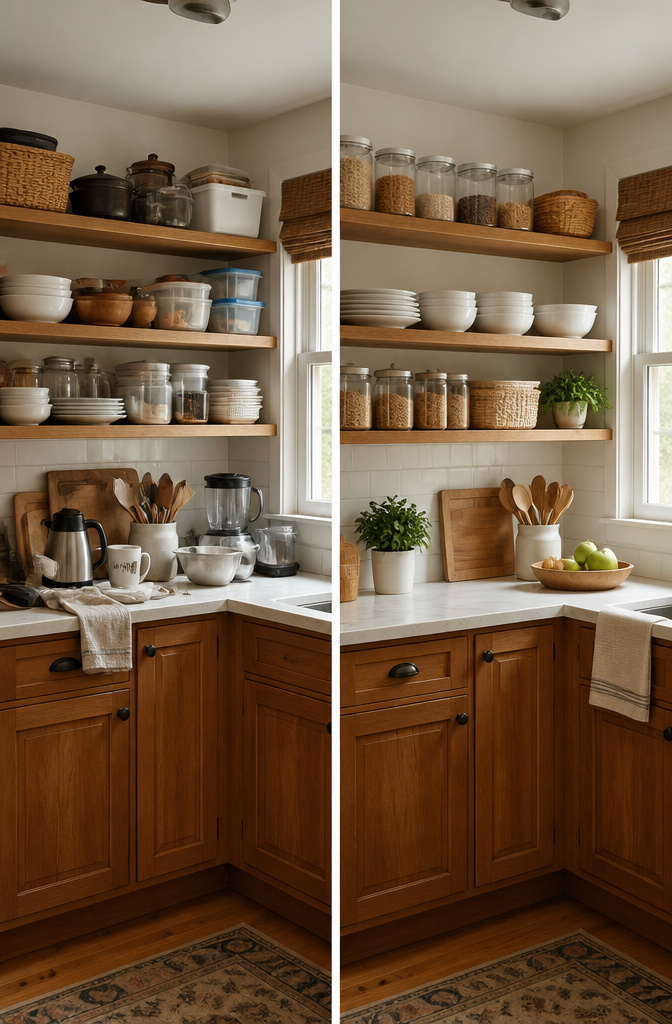
Decluttering surfaces as a through-line in almost every small kitchen guide for a reason: the space physically cannot hold what a full-size kitchen does, and the margin for error is thin. What changed my own thinking was shifting from a one-time purge to a habit of review. I used to block a Saturday, fill bags, and feel righteous for a week before the counters clogged again. The better move is checking what you actually reached for since the last grocery run. Items untouched for a month go to higher shelves or out entirely; everyday plates, glasses, and utensils stay at eye level and within a single motion. Occasional pieces, those serving dishes or seasonal baking tools you need twice a year, earn the back of the cabinet or the top shelf by default. Clear containers and simple labels matter less for looks than for honesty: they show you at a glance what you have, so you stop rebuying duplicates that eat the space you just freed.
Frequently Asked Questions
What are the best storage ideas for small kitchens?
Wall racks for pots and tools, extra shelving units, tiered drawer organizers, and rolling utility carts rank among the most effective. The best approach pairs vertical storage with pieces that do more than one job, like a cart that stores, rolls, and surfaces. Even a few targeted changes recover usable space without a full renovation.
How can I maximize kitchen storage space?
Claim vertical walls with racks and pegboard, use the insides of cabinet doors, and split shelves with risers to double their capacity. A 16-by-32-inch metal pegboard panel holds up to 200 pounds, and shelf risers like the Yamazaki Home model expand from 10⅝ to 17⅝ inches to fit standard cabinets without drilling.
How do I keep a small kitchen organized?
Declutter surfaces by storing only daily-use items in open spaces and hiding mismatched or chipped pieces behind doors. A strict rule like keeping one shelf partly empty prevents packed walls from reading as clutter. Wipe open shelves weekly so dusting does not become a weekend project.
What are some clever ways to use cabinet space?
Mount slim racks or adhesive organizers on the inside of doors for spices, measuring cups, or cleaning sprays. A two-tier Lazy Susan brings back corners to you instead of forcing you to fish blindly. Test clearance before committing both levels, since taller items may not fit under the shelf above.
How can I utilize vertical space in my kitchen?
Install wall racks above counters, mount open shelves in place of upper cabinets, or run a narrow pegboard strip above the prep zone. Under-cabinet shelves add mug storage without stealing counter inches, and magnetic strips tacked to cabinet bottoms keep knives visible but out of the way.