

I’ve discovered five effective ways to keep your fountain crystal clear and bird-safe. Start with mechanical cleaning and skip harsh chemicals. Keep that water moving with a strong pump, since stagnant water invites algae growth. Remove debris weekly because leaves and pollen fuel the problem. Position your fountain in shade to block algae’s energy source. Finally, add filters and UV light systems sized to your pump’s flow rate for maximum protection. Each method builds on the last, creating a comprehensive approach to fountain maintenance.
Choose Bird-Safe Cleaning Methods First
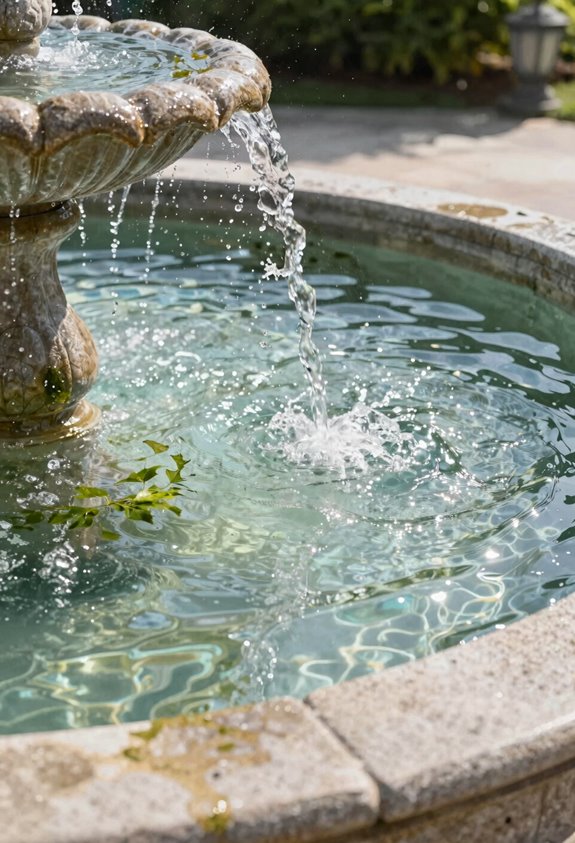
When you’re dealing with that stubborn green gunk in your fountain, your first instinct might be to grab the strongest chemical cleaner you can find. Protecting the birds visiting your water feature matters just as much as keeping algae buildup at bay. Start with mechanical cleaning: skim debris, scrub the basin, and clean pump components thoroughly. Next, try UV filtration or beneficial bacteria products. These wildlife-safe solutions improve water quality without harming your feathered friends. These non-chemical approaches tackle algae growth without harming birds. When chemicals become necessary, choose bird-safe cleaning products labeled specifically for wildlife protection. Apply them sparingly, following label directions carefully. This fountain maintenance approach keeps your water feature thriving while creating a safe environment for visiting birds.

Easy Birdbath Maintenance: Creates cleaner birdbath water and clearer surfaces by reducing mineral buildup, stains, and organic matter, helping maintain a fresh outdoor environment.

CLEANS SURFACES – Eliminates film and gunk from fountain surfaces without the hassle of draining or scrubbing! Works on metal, glass, plastic, copper, marble, concrete, stone and tile surfaces.

Advanced Dual-Action Formula – ActiClear combines beneficial bacteria and enzymes to accelerate the breakdown of organic sludge, helping to restore water clarity and balance in ponds, fountains, and birdbaths.
Keep Water Moving to Prevent Algae Buildup
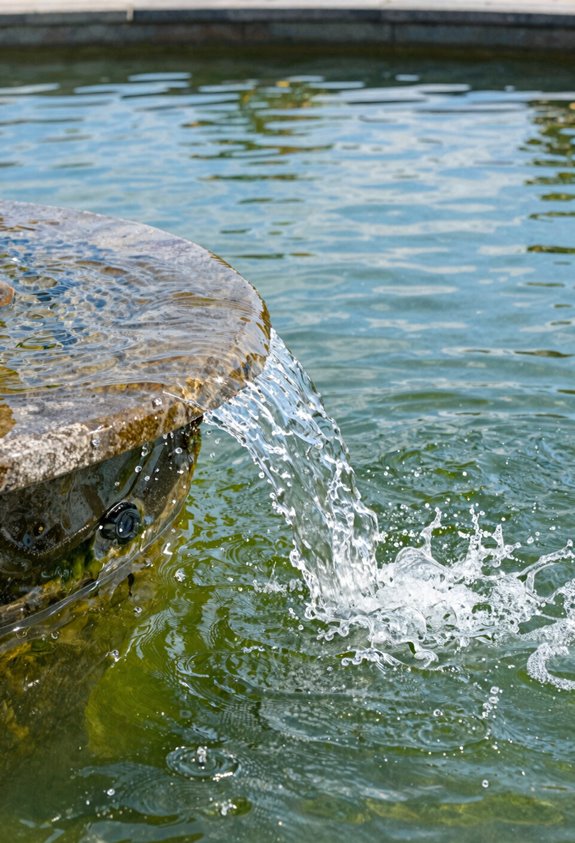
Stagnant water invites algae growth because algae thrive in still, sunlit water where they can multiply without interruption. A fountain pump becomes essential for algae prevention through continuous water circulation. Upgrade to a larger, more powerful pump if your current one isn’t moving enough water through your basin, as proper sizing directly improves your turnover rate and water quality.
Regular maintenance is critical: check for clogs in hoses and strainers since restricted flow creates stagnant pockets where algae thrive. Keep all components clean through debris removal and pump maintenance. Combining this mechanical flow management with periodic surface cleaning creates an effective algae prevention strategy that maintains fountain clarity and function.

18W High-Efficiency UV Clarifier – Effectively eliminates green water algae in as little as 3-7 days, keeping your pond crystal clear while being 100% safe for fish and plants.

✅ All-in-One System with Smart RGB Lights: This compact pond filter integrates a powerful pump, multi-stage filtration, U-V clarifier, and remotely controlled RGB lights into one efficient unit. It helps maintain crystal clear water while letting you customize nighttime ambiance in your pond garden. Perfect for enhancing koi ponds, large ponds, and water gardens day and night.

✅【All-In-One Pond Solution】This all-inclusive filtration system helps address murky water and low oxygen levels. Equipped with a 660GPH filter, a U-V clarifier to assist with water clarity, and a double-layer fountain nozzle for an elegant visual display, it also features a built-in ring light to create attractive fountain shows. Helps keep your pond water clear and support a favorable living environment for fish.
Remove Debris Weekly
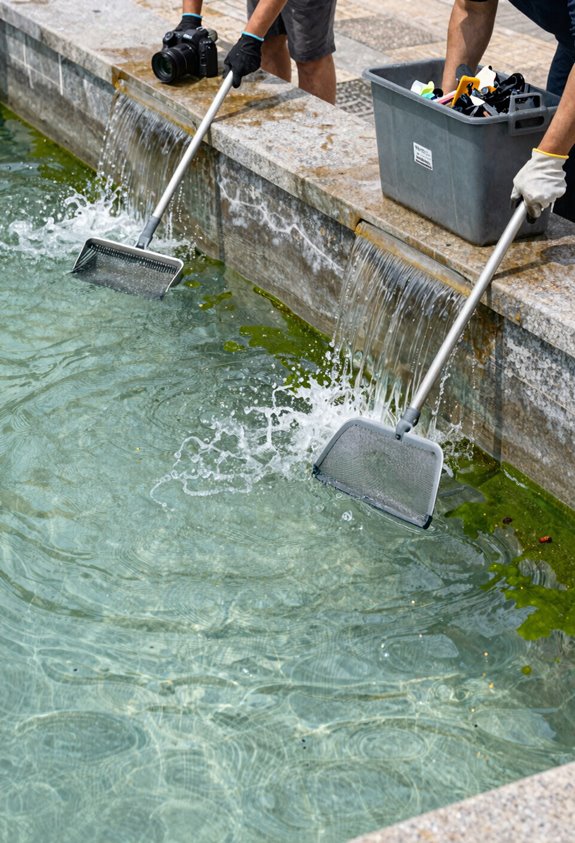
While keeping your water in motion does incredible work stopping algae, debris removal is just as vital and is the easiest step you can take. Here’s what I do every week for amazing results:
While keeping water in motion stops algae, debris removal is equally vital and the easiest maintenance step you can take.
- Skim leaves, pollen, and dust from the surface to starve algae of nutrients
- Clean your basin thoroughly to prevent biofilm buildup that fuels algae growth
- Clear filters, skimmers, and basket strainers of clogs so water circulates freely
- Remove debris from nozzles with small brushes to eliminate stagnant spots
This weekly maintenance dramatically improves your water quality. I make it a habit because these simple actions work together effectively. When you combine consistent debris removal with proper water circulation and pump maintenance, you create an environment where algae cannot thrive. Your fountain will stay crystal clear when these steps are followed consistently.

POND FILTER WITH 3 SPRAY PATTERNS - This 35W pond fountain pump delivers Max 550GPH flow with Max 8ft headheight, perfect for 200-500 gallon ponds. Features adjustable telescopic spray rod with 3 interchangeable spray nozzles (bell/volcano/daisy) for customizable water displays that oxygenate while beautifying your outdoor pond.
POND FILTER WITH 3 SPRAY PATTERNS - This 40W pond fountain pump delivers Max 850GPH flow with Max 9ft headheight, perfect for 500-750 gallon ponds. Features adjustable telescopic spray rod with 3 interchangeable spray nozzles (bell/volcano/daisy) for customizable water displays that oxygenate while beautifying your outdoor pond.
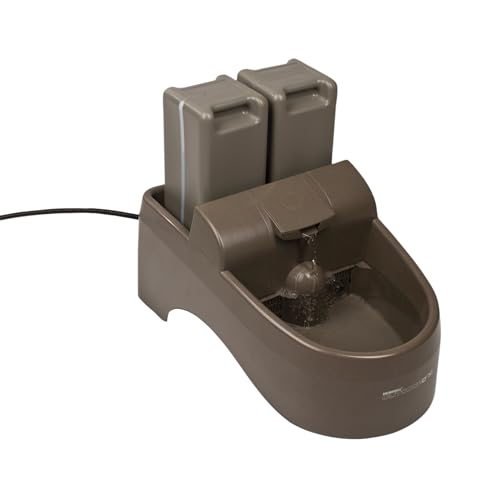
Large Water Capacity: 450 oz. water capacity is great for pets of all sizes and multiple pets
Block Sunlight and Excess Nutrients
Because algae are basically tiny plants, they need two things to grow: sunlight and nutrients. Blocking sunlight exposure is one of the most effective ways to prevent algae growth. You can position your fountain in a shaded spot, add an umbrella above it, or use landscaping trees nearby. This removes the energy source algae require.
Next, address organic matter that fuels algal growth. Regular debris removal through weekly skimming keeps leaves, pollen, and dust from breaking down in your water. Maintain strong water circulation because moving water prevents stagnant conditions where algae thrive.
When you combine shading with consistent fountain care and proper debris removal, you eliminate the conditions algae need while improving water quality. Your fountain will remain clear.

ABOVE GROUND COMPATIBILITY: Designed as an above ground pool skimmer basket replacement for most through wall systems. Fits baskets approx. 6.45 in. top W. Not intended for inground pool setups.

Heavy Duty: This weighted pool filter basket is designed to be very rugged even in extreme weather conditions. This pool skimmer baskets for inground pools can hold up to 30 lbs of debris.

Please Note: Basket measurements (Please measure your existing thru-wall skimmer basket dimensions before purchasing.): Outer Top Width 6.25"; Inner Top Width 4.6"; Bottom Width 3.75"; Depth 3".
Add Filters and UV Light for Prevention
Now that you’ve tackled the environmental factors feeding algae, it’s time to bring in some powerful backup with filtration and UV technology. Combining these tools transforms your fountain maintenance approach.
- Install proper filtration (cartridge, sand, or bead) to remove debris that feeds algae growth
- Add a foam-trap filter for noticeably clearer water and better debris removal
- Choose a UV light system sized to match your pump’s flow rate. Even small 10–24 watt units handle hundreds of gallons effectively.
- Schedule routine maintenance by cleaning filters, skimming debris every few days, and deep-cleaning quarterly
This approach works because filtration catches what feeds algae, while UV light eliminates microscopic spores before they multiply. Pair these with continuous water circulation, and you create an environment where algae cannot thrive. You’ll achieve clearer, healthier water with minimal chemical reliance.

Pond Filter bag with Frame: Hecaty filter bag is built frame inside, all-round prevent debris to ensure water pump work high-efficiently.

🐟【Integrated Filtration System】The multi-functional compact pond filter combines everything required to run a healthy small pond. It is designed to help keep water healthy balanced and crystal clear, and protect the pump from being clogged with debris, also protects fish from the pump's impeller.

FOUNTAIN ALGAE CONTROL – PondBliss Algecide cleans out and prevents algae growth, restoring color and clarity color to fountains and small ponds.