

Indoor fall decor ideas are seasonal choices that collapse into clutter the moment you buy too many at once. The real work is knowing which pieces survive past Halloween and where the hidden costs live: the weekly sweep of bark crumbs, the pumpkin that goes soft on a windowsill, the faux gourd that photographs flat under warm bulbs. A single sugar pie pumpkin, still dusty from the farm stand, reads autumn more honestly than a dozen identical orange spheres from the same craft-store bin.
Real Pumpkins
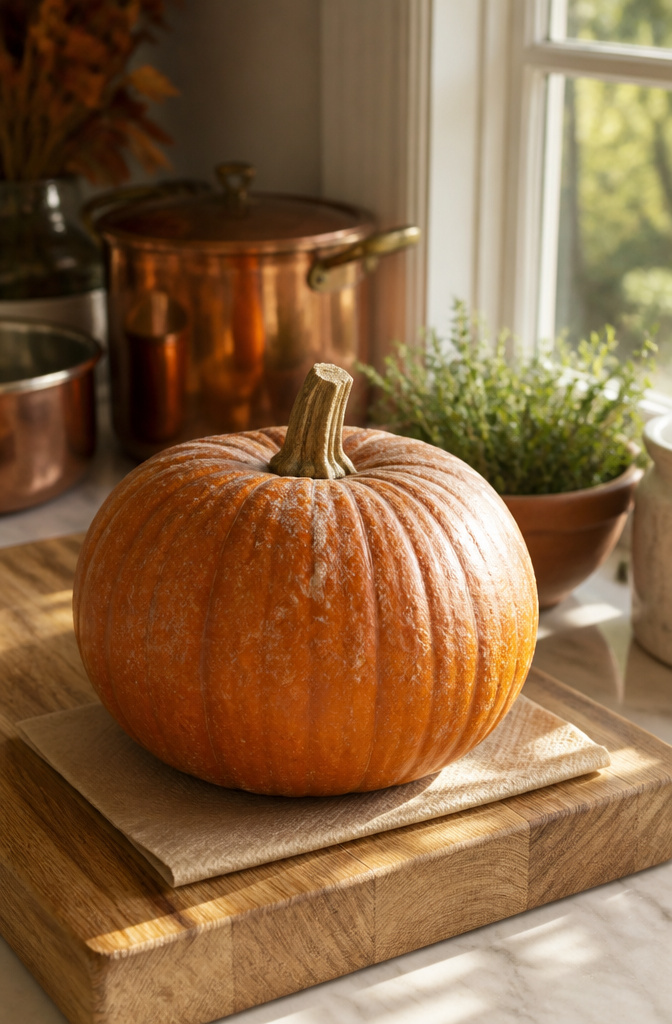
Real pumpkins carry a short season, which is exactly why they land harder than anything plastic. A sugar pie pumpkin on the kitchen counter, still dusty from the farm stand, reads autumn in a way no factory finish manages.
The trick is buying late and checking the rind. Thicker skin and a woody, dried stem mean a pumpkin that was left on the vine to cure; those last a month indoors instead of two weeks. I pass on anything with soft spots or cuts near the base, since that is where the rot starts. A quick wipe with diluted bleach water and a full day of drying in the sun, if the weather allows, buys another week before the first softening appears.
Indoors, a saucer or folded paper towel underneath catches the early weep before it marks the table. I keep them off radiators and out of direct afternoon sun through south windows; heat accelerates the collapse faster than cool air ever does.
When the skin finally gives to gentle pressure, the pumpkin is already working on its own compost. Moving it to a garage step or porch railing lets the process finish without the fruit-fly cloud that follows an indoor surrender. The small ones go to the woods line for the deer; the larger ones split for seeds or the bin before they turn to liquid.
Faux Pumpkins
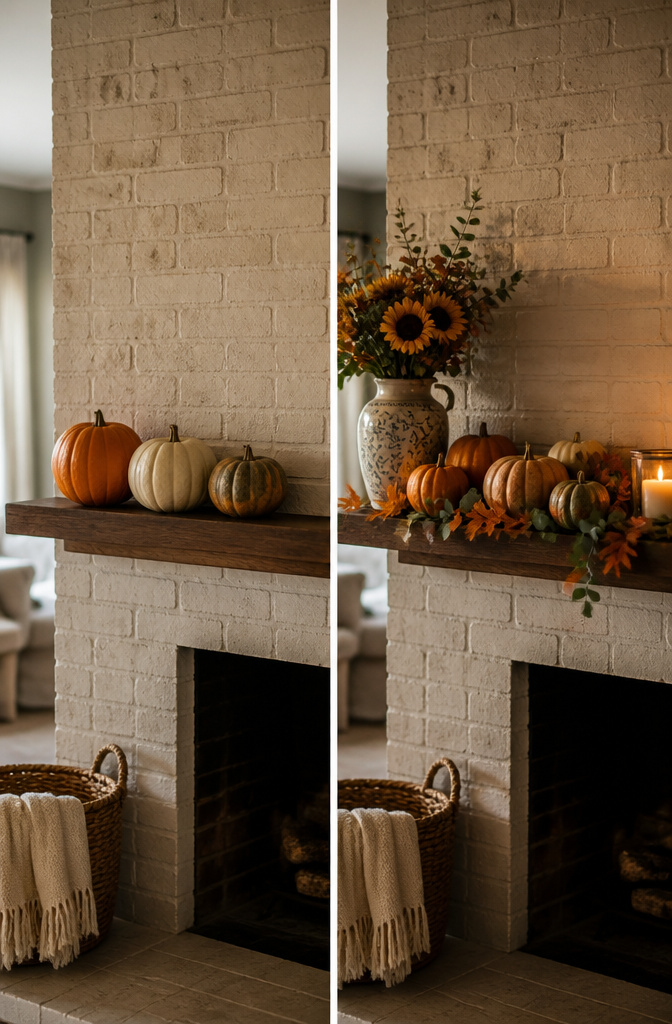
Real pumpkins smell like October and rot like clockwork. Faux pumpkins win the moment you need something on a shelf past Thanksgiving or anywhere a soft spot would leave a stain. The trade-off is texture. Cheap foam versions catch light wrong and read as craft-store leftovers from ten feet away. Weighted resin or dense ceramic ones sit heavier, take paint if you want to change them year to year, and survive a closet bin without denting.
Storage is where they earn their price. A paper bag of real pumpkins goes to the compost heap; a single bin of fakes comes back out in September ready to go. The spot that matters most is anywhere overhead or on a narrow ledge, where a dropped real pumpkin makes a mess you will still be finding in grout lines come spring. Mantels, high bathroom shelves, and the center of a dining table where elbows pass all make sense for the fake version. The cheap look dies when you mix one good faux piece in with natural elements, never when you line up a dozen identical orange spheres from the same bin.
Dried Flowers
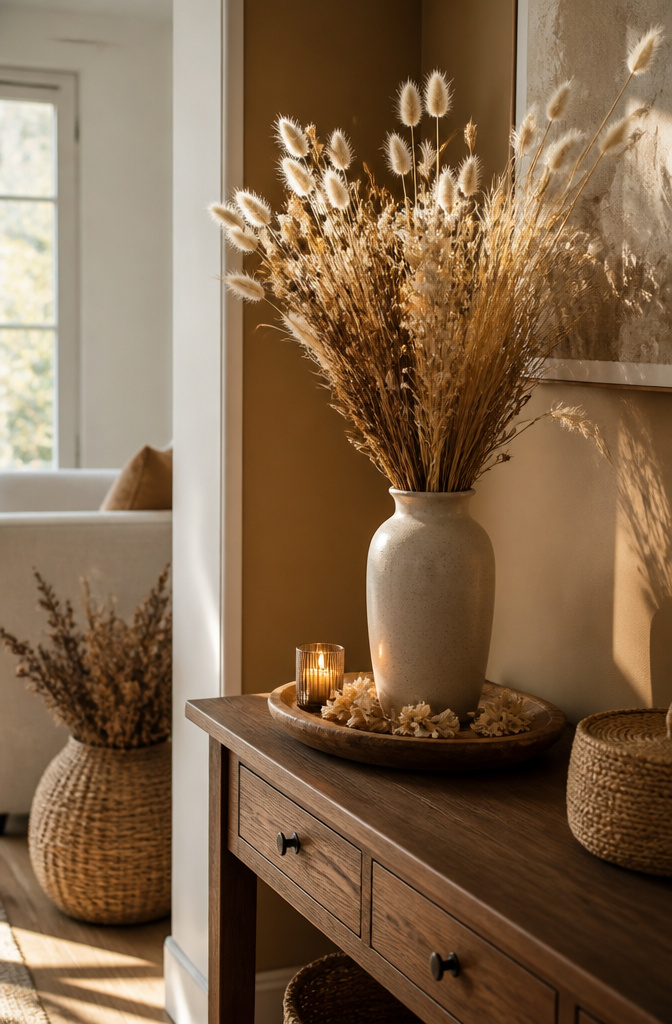
Dried flowers carry fall color without the water or the rot. Wheat, bunny tails, and strawflower last for months if they were cured properly to begin with. The brittle ones, like hydrangea, shed petals every time the door slams. A light mist of cheap unscented hairspray, the kind that comes in a pump bottle, locks the surface enough to cut the dusting by half.
The real mistake is putting them where the heat blows. Last year I set a tall arrangement on a console table six inches from a floor vent. Three weeks later the stems had cracked where the warm air hit, and the whole thing leaned like a drunk fence post. Keep dried flowers away from registers and radiators, or expect to replace them before Thanksgiving. A cool corner across the room keeps the shape intact through the season.
Earth-Toned Textiles
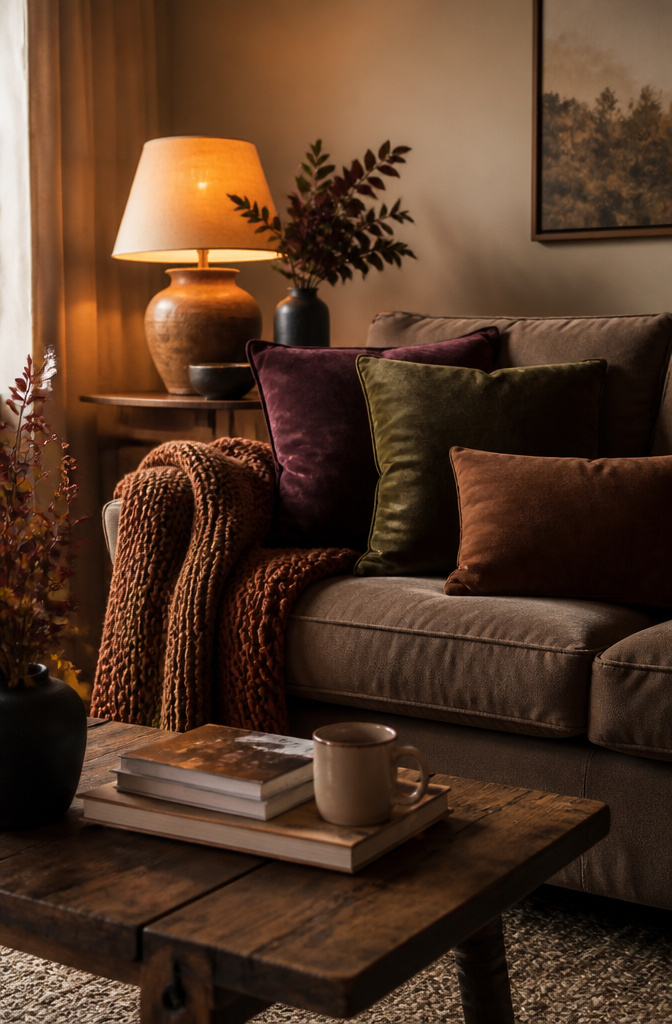
Nothing shifts a room from summer to fall faster than swapping out textiles. Pillow covers and throws in deeper, weightier colors do the work of a full redecoration in about ten minutes.
Last August I caught an Etsy shop running pillow covers at 70% off, which is when I stock up for both autumn and the holidays ahead. The seller runs this sale like clockwork, and the covers have held up through two seasons of actual use.
Color is where people trip. Plum, olive, tobacco, and rust read as cozy because they carry enough saturation to feel intentional. Go too muted and the same shades turn muddy, like the room needs laundering rather than layering. Designer Stephanie Wiott, who builds autumn interiors for a living, reaches for wool and plaid precisely because their physical weight signals the season without needing a single gourd in sight.
The mistake is buying the full set at once. Three new pillows and a matching throw across every surface looks like a department store display, not a home you actually live in. Start with the sofa, live with it a week, then decide if the reading chair needs the same treatment.
Cornucopia Centerpieces
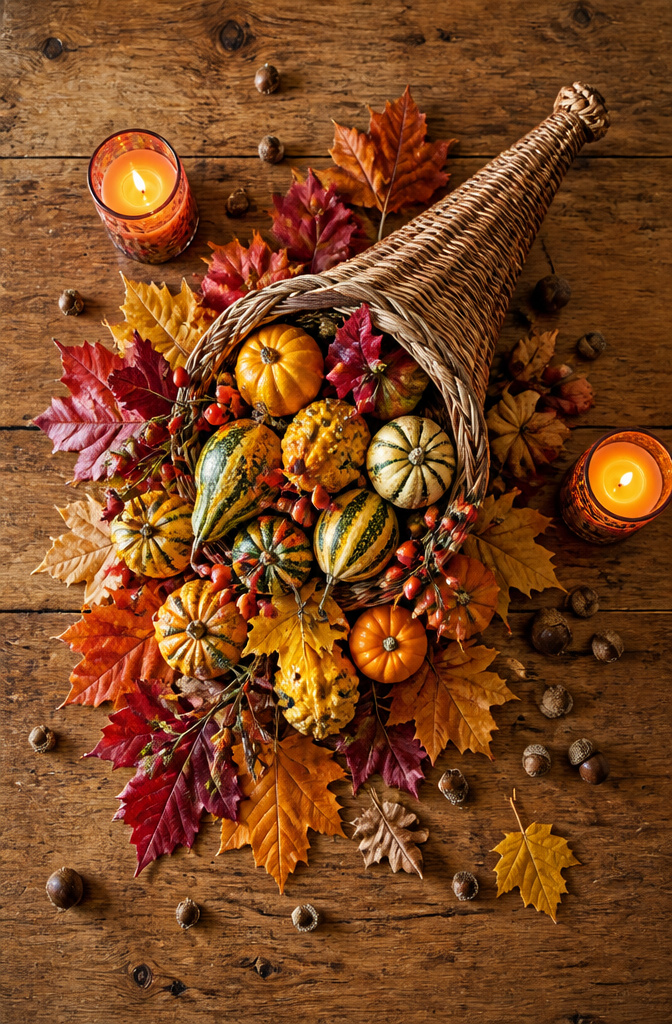
A cornucopia centerpiece only works when it actually looks like abundance and not like the craft-supply aisle exploded. The shape itself does half the work: the horn curves upward and outward, so the eye reads anything spilling from it as generous overflow. What goes inside matters more than the container. Foliage in rich, moody harvest tones builds the base, then rose hips, persimmons, and ornamental gourds read as sculptural pieces rather than filler packed in to hide gaps. The horn sits on a bed of fall leaves with a few candles and knit pumpkins around it, which anchors the whole thing so it does not float on the table.
Where this lives day to day is the real question. A dining table centerpiece that blocks sightlines across a meal gets moved to a sideboard by Wednesday. The cornucopia belongs on a surface people pass rather than face each other across: a console in the entry, a kitchen island end, the credenza behind the sofa. The symbolism of abundance during fall is built right into the form, so the goal is letting guests register it in passing without having to peer around it to talk.
Fall Leaf Lights
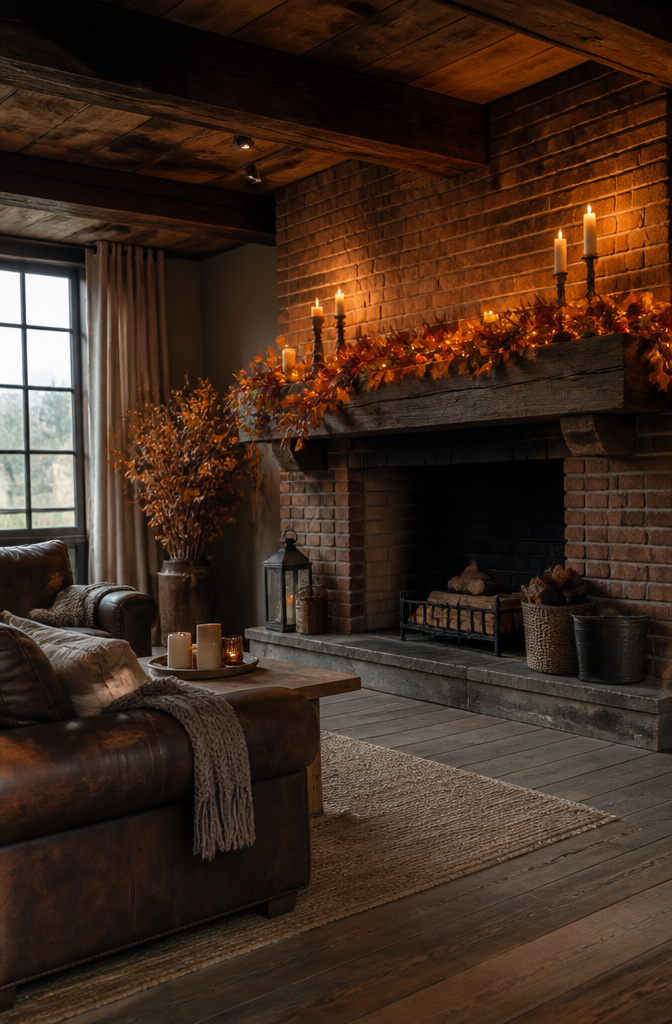
Fall leaf lights do one thing well: they borrow the golden quality of late-October sun filtering through a canopy and drop it somewhere your windows don’t reach. The ones worth buying pair soft yellow fairy lights with artificial leaves in red, brown, orange, and yellow. Used right, they give a room that specific warmth that overhead bulbs flatten out.
Where they fail is in small rooms with too many competing surfaces. A single strand along a mantel or headboard reads as intentional. Wrapping three strands around a bed frame in a studio apartment reads as a dorm room, because the eye has nowhere to rest. The mistake is over-lighting a space that is already tight. In a room under about 150 square feet, one source of leaf light is the limit; add a candle or a lamp and you have already built a scene, not a backdrop.
The places they actually work are the ones where natural light used to live. A dining room that goes dark at six. A hallway with no windows. A corner of the living room where the lamp is too harsh for evening reading. The light itself is soft, but the leaves cast small shadows, so they need room to breathe. Spread out, they suggest autumn. Packed tight, they suggest a party store clearance aisle.
Lanterns
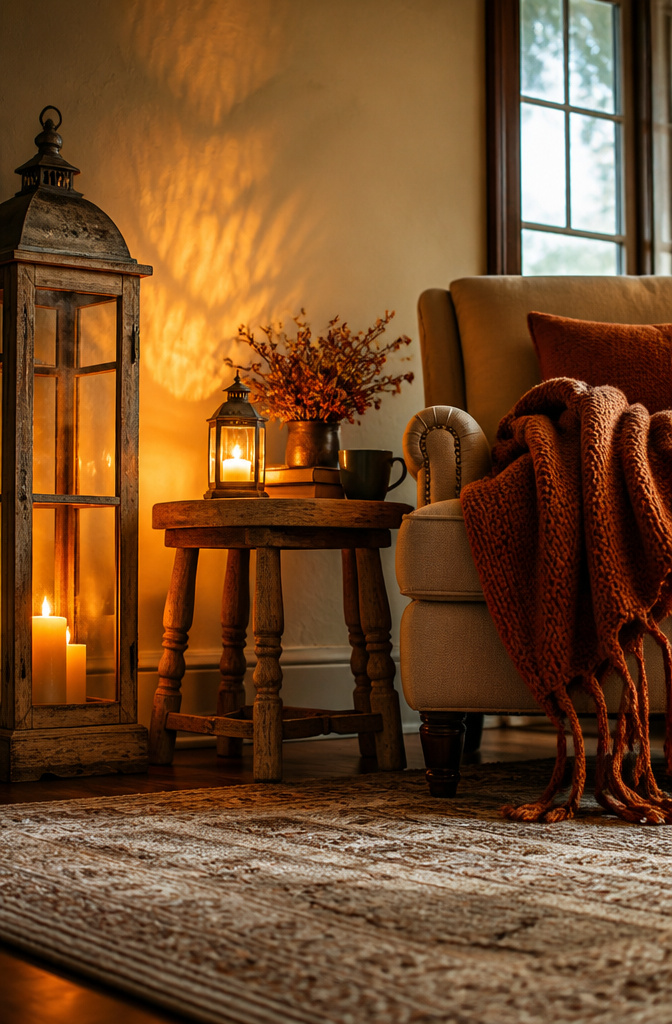
A lantern’s glow reads differently than a lamp because it comes from all sides at once, and that wraparound light is what makes a room feel like it has a fire pit inside it. The Architectural Digest piece on moody bedrooms got this right: the glow has to hit from several directions or the space turns cave-cold instead of cozy. Height variation matters more than matching sets. A tall lantern on the floor beside a chair pairs with a squat one on the side table; same shape repeated at two heights just looks like you bought a kit.
Surface size sets the limit. Anything under eight inches tall gets lost on a mantel or console; it belongs on a windowsill or tucked between books. Over fourteen inches and you need floor space or a substantial table, otherwise the proportions tip toward clutter.
Battery wins for daily use, candle wins for the hour you actually sit in the room. A $20 beeswax candle smells clean and burns slow, but at that price it stays special-occasion for most of us. The battery version lives on a timer, handles the eleven months you aren’t thinking about autumn, and never leaves wax on the mantel paint.
Storage is the real question. Mine stack in a cardboard flat in the garage, the glass wrapped in old dish towels, and they take up about the same footprint as a boot box. Not nothing, but the return effort each September is low enough that I’ve kept the same set running six years.
Seasonal Produce
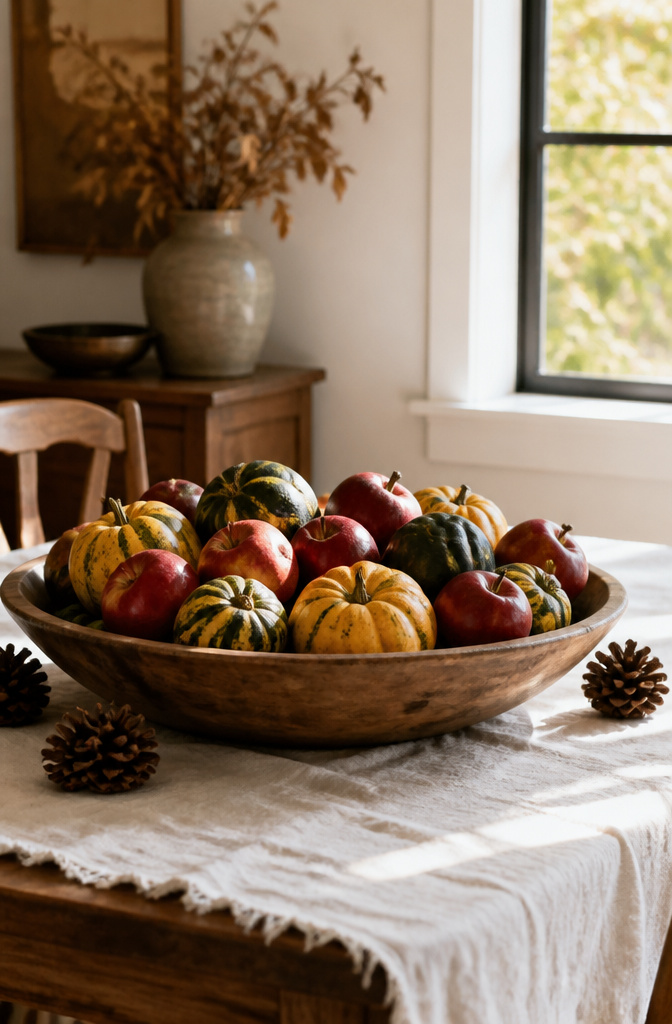
Gourds and small sugar pumpkins from the produce aisle read as decoration the second you set them on a counter, and they cost a fraction of what the same shapes sell for in the seasonal aisle. I treat the grocery store as a decor run in October: miniature acorn squash, firm apples, pomegranates with the leathered skin still on. A bowl of these on the kitchen table carries the same harvest abundance as a cornucopia centerpiece layered with leaves and knit pumpkins around it.
The limit is real, though. Three to five days on the counter is the window before fruit flies find it, especially if the bowl sits near a sink or a compost bin. One soft spot on a pear turns the whole arrangement into a trap. For anything I want to last the month, I swap in the faux version after the first week, or I keep the real produce in a back room and rotate pieces in as they ripen. The budget math still works; you are buying food you will eat, not decor you will store.
Vintage Books
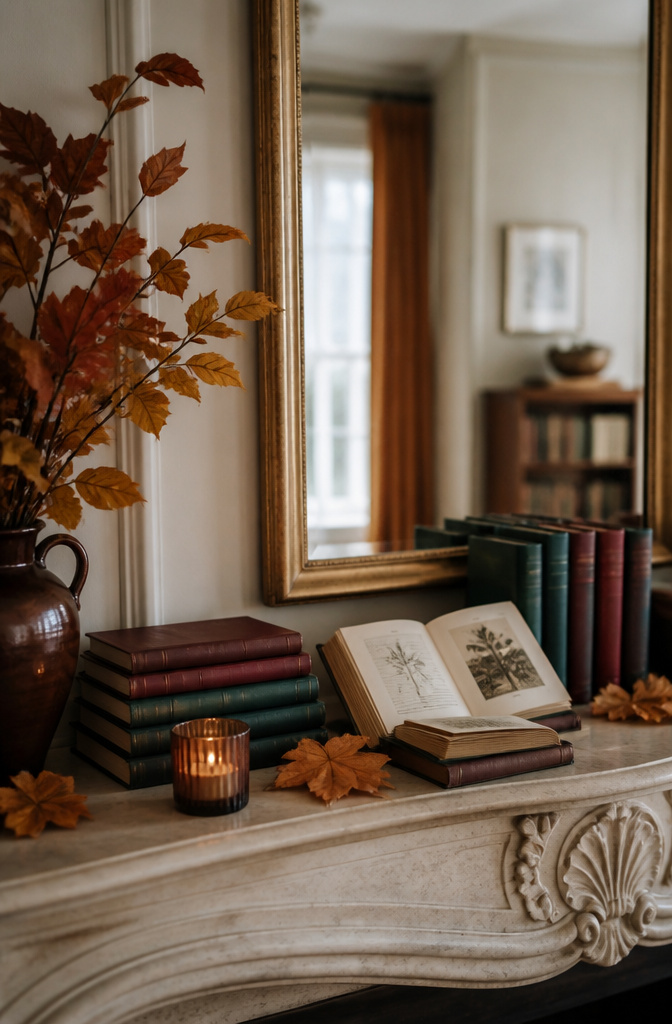
Stacked on a mantel or left open on a side table, vintage books give a room the sense that someone actually lives there. The trick is knowing which ones read as autumn and which ones just read as old.
Color is what separates the two. Spines in burgundy, forest green, navy, or that particular faded mustard yellow tend to pick up the tones people already associate with fall. A shelf full of powder-blue 1970s paperbacks looks dusty; the same shelf with deep reds and golds looks intentional. Size matters too. A few oversized clothbound books anchor a display better than a dozen pocket-sized ones that tip over every time a door closes.
Half Price Books, estate sales, and the free tables at library sales are where the good ones hide without the antique-store markup. Thrift stores often price hardcovers at a dollar or two, and no one is fighting over the 1956 gardening manual with the green spine. Skip anything with a musty smell that followed it home; it spreads to whatever shelf it sits on.
A single book cracked open to an illustrated plate, with a small candle or a few dried stems laid across the pages, does more than a whole stack still wrapped in plastic.
Autumn Gnomes

Autumn gnomes walk a thinner line than most seasonal pieces. The hat, the beard, the whole woodland-elf vibe can read cozy or it can read airport-gift-shop fast, and the difference is almost always quantity. One gnome is a wink; three gnomes are a theme park.
I learned this the hard way after bringing home a felt guy with a burnt-orange cap. He looked great perched on a bookshelf where the warm colors tied into everything else without screaming for attention. The problem came when I spotted a matching pair on clearance and thought, why not a family? Within a week the shelf felt like a lawn display that had wandered indoors. The original went back to solo duty; the others got returned.
Placement matters as much as number. A gnome tucked among actual books or dried stems looks like something you collected over time. The same figure centered on a bare mantel under its own spotlight looks like you are trying to start a conversation no one asked for.
Storage is the final test. Mine folds flat, hat to boots, and slips into a gallon bag that lives with the Halloween bins. The rigid ceramic ones I have skipped every year since watching my mother wrap hers in three layers of bubble wrap for eleven months of cabinet space.
Branches and Leaves
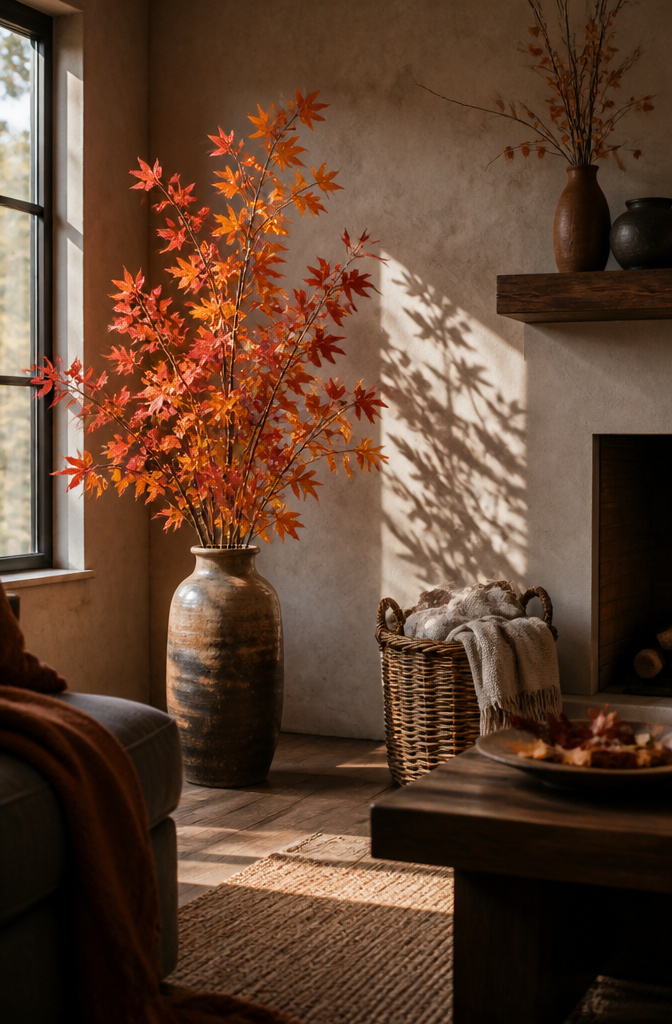
Branches and leaves are the fastest way to bring autumn inside, and the fastest way to bring in bugs if you skip the step everyone wants to skip. A day or two in a garage or on a porch lets anything crawling make its exit before the branches cross your threshold. Water complicates things: leafy branches need it to stay crisp, but sitting water invites mosquitoes. Slip a glass vase inside a ceramic vessel if the outer pot is not watertight, which protects the finish and gives you more control over how the branches sit.
Not everything holds up. Maple and oak leaves dry well and keep their shape for weeks. Pine and spruce start dropping needles within three days indoors, and the mess is not worth the woodland look. A bowl of gathered leaves on a coffee table lasts longer if you let them dry flat first, and it costs nothing. The girls and I used to treat foraging as its own project, walking the yard with a basket and debating which branches had the best shape. Dried leaves in a shallow bowl beat a wilting branch bouquet every time if you are short on time and want something that survives the weekend without attention.
Beeswax Candles
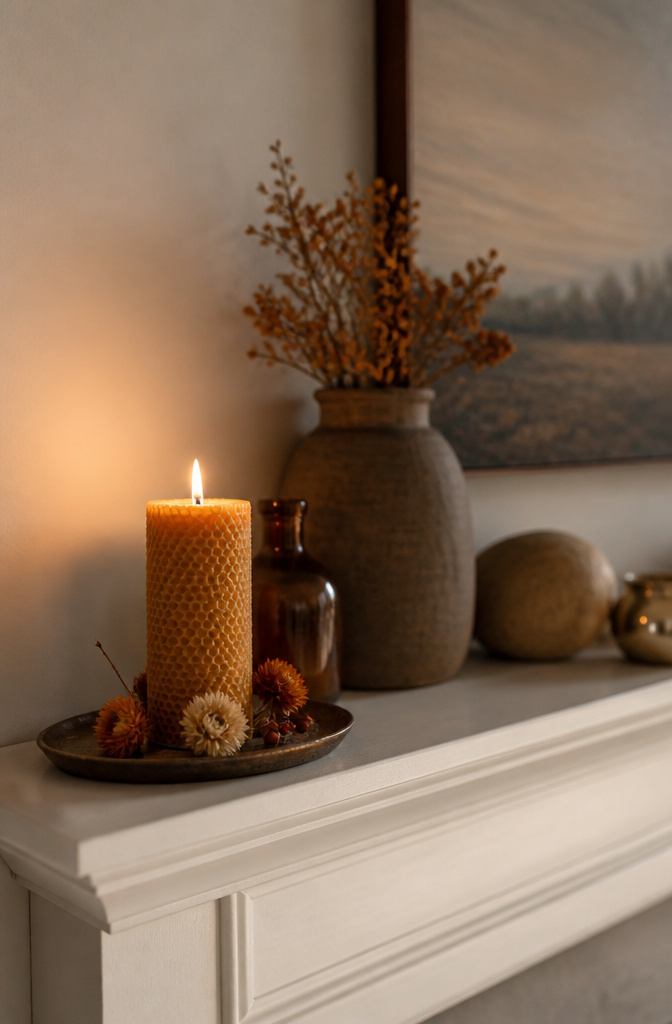
Beeswax candles sit at that strange intersection where DIY blogs and boutique shops both promise the same thing: a warm, honeyed room that smells like the inside of a hive. The reality is quieter than that. The burn is clean and lasts longer than paraffin, but the honey scent barely carries, and paying $20 for a small candle mostly buys you the look of virtue, not the aroma.
Making them yourself solves the price problem. Raw beeswax runs cheaper per ounce than finished candles, and the process is straightforward: melt, wick, pour. What convinced me, reading through a dozen of these projects, is that the DIY route drops the cost enough to justify the time if you want several candles scattered through a room. The tradeoff is the scent gap. Store-bought or homemade, beeswax smells faintly of wax and warm comb, not the sticky sweetness people imagine. If you want fall fragrance, you add cinnamon or clove oil yourself, which puts you back in control of both cost and smell.
For a weekend project with a few dozen dollars, homemade beeswax candles make sense. For a single statement piece on the mantel, buying one is fine. Just do not expect the room to fill with honey.
Minimalist Greenery
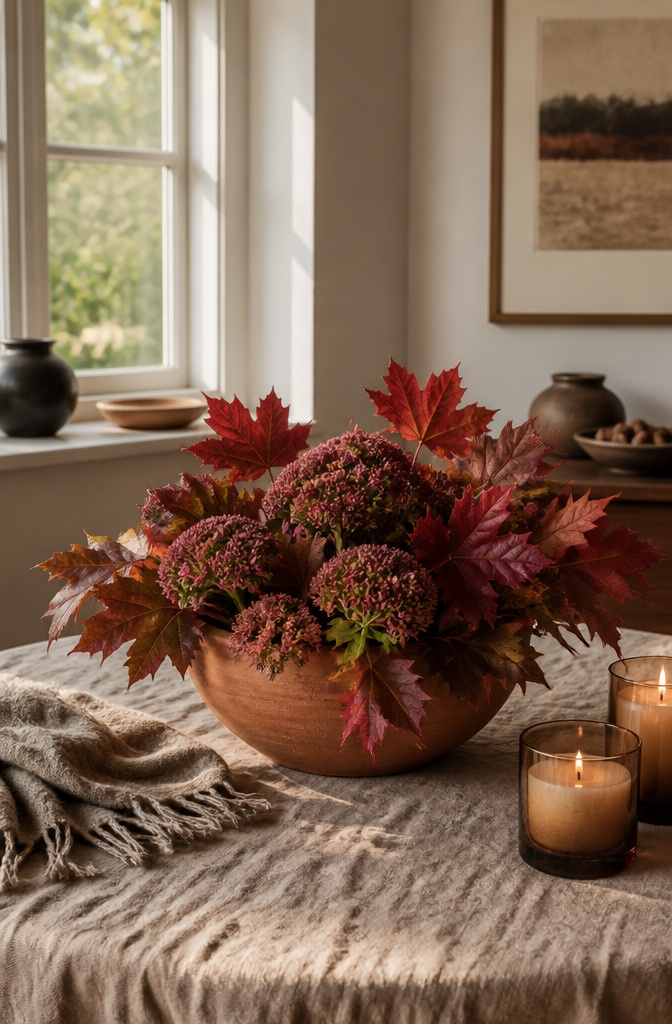
A single wide bowl of garden-collected dusky sedum with fresh-cut maple leaves, the greens shifting to deep reds, reads autumnal without any orange in sight. Terra-cotta, russet, and chalk white vessels underneath layer the mood without cluttering the surface. For anyone who tires of packing away bins of seasonal knick-knacks, greenery dies back on its own timeline and asks nothing of January storage.
The palette that surrounds it matters as much as the plant. Amber, ochre, mushroom, warm chocolate, and earthy taupes pull the same warmth as traditional fall decor, while deep sage green and touches of dusty pink soften the expected rusts and burnt oranges into something that feels timeless rather than overtly seasonal. Interesting vessels filled with greenery, paired with soft ambient lighting and a throw in a quiet hue, build coziness through layers rather than clutter. This approach lives in the house year-round, shifting slightly as the light changes, which suits renters and first-home owners who need their few hundred dollars to stretch across more than six weekends a year.
Natural vs. Faux
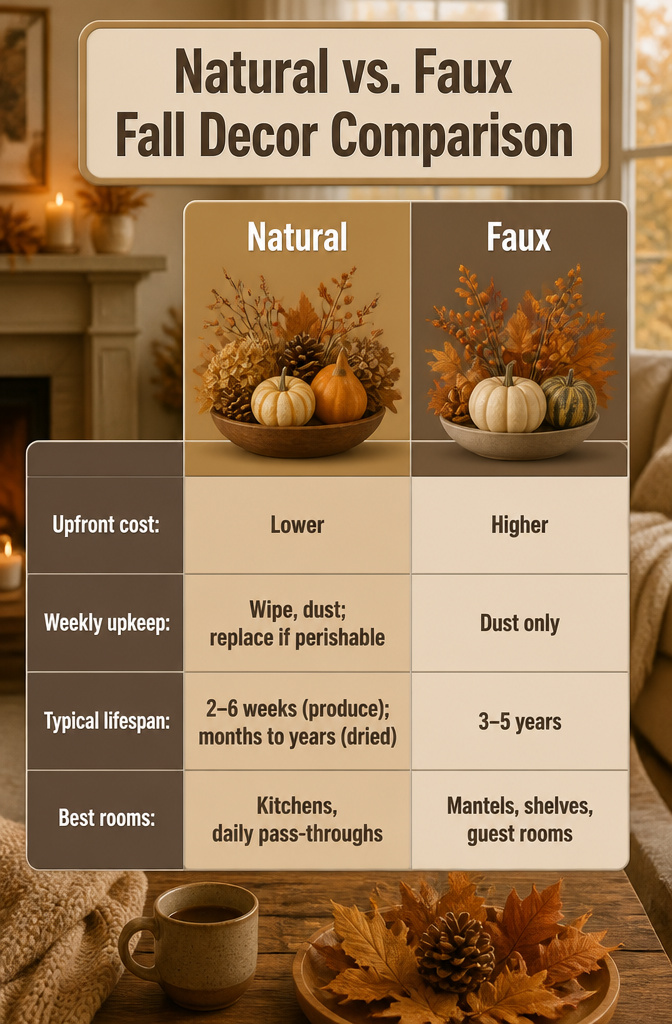
Real branches and dried gourds cost less than I expected last autumn, until I factored in the weekly sweep of fallen leaves and the late-October moment a small pumpkin went soft on the windowsill. Faux stems and resin gourds eliminate that upkeep but run higher at the register, and the cheaper ones photograph flat under warm bulbs.
The choice breaks on where the piece lives and how long it needs to last:
| Real | Faux | |
|---|---|---|
| Upfront cost | Lower | Higher |
| Weekly upkeep | Wipe, dust debris; replace if perishable | Dust only |
| Typical lifespan | 2–6 weeks (produce); months to years (dried) | 3–5 years |
| Best rooms | Kitchens, entryways you pass through daily | Mantels, shelves above radiators, guest rooms |
I keep real materials to spaces where the compost bin is close and the mess is visible immediately. Faux wins anywhere the heat runs or I forget to check for two weeks. The hidden cost of real decor is not the stem price; it is the ten minutes every Saturday you spend hunting the floor for crumbs of bark.
Color Palette

Amber, ochre, and mushroom read as autumn without the literal orange-and-brown formula that dates a room by November. The palette that actually works layers these earth tones with warm chocolate and deep sage, then softens the edge with dusty pink or a poppy accent so the room feels lived-in rather than seasonal rental. The mistake is matching fall too literally—rust everywhere, pumpkin on every surface—because that palette collapses into costume once the first frost hits. What carries through the whole season is the balance Marie Flanigan describes: soft blushes and muted golds against richer ground tones, cream runners and candlelight doing the actual work of coziness. Thecla Glueck’s rule holds here. Coziness comes from layers you can touch, not from clutter, and the color story ties those layers together without shouting. A room grounded in amber and warm taupe shifts from early autumn into winter simply by swapping the accent. The same throw reads October with ochre pillows and January with cream. That is the test of a palette worth the trouble.
DIY Budget Projects
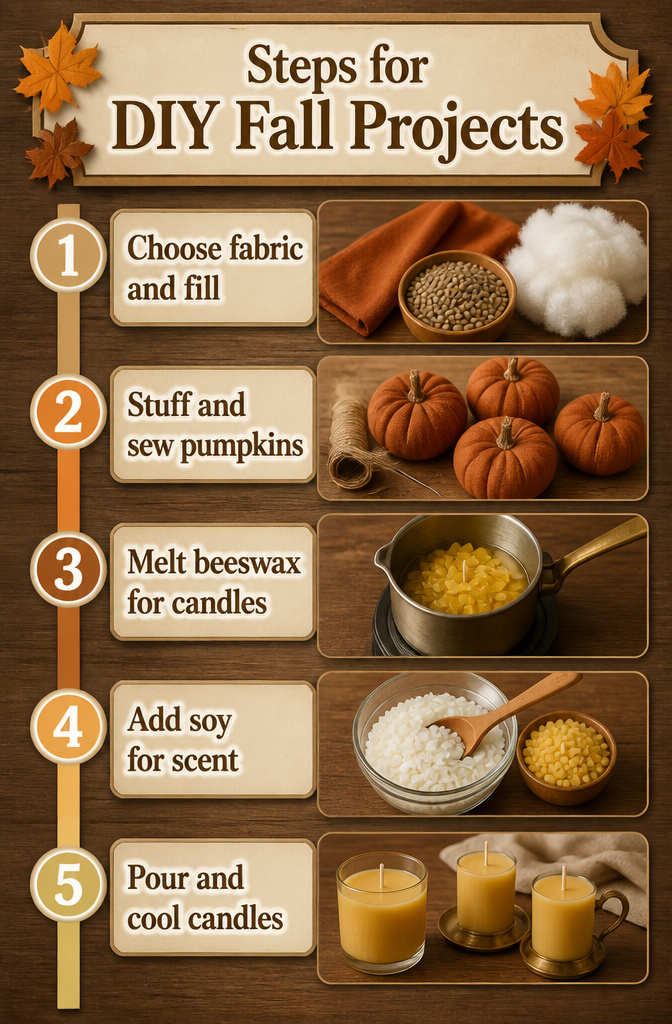
Fabric pumpkins took me three years to get right. The first batch looked fine on the table and collapsed into wrinkled blobs by week two. Poly-fil stuffing settles; dried beans or rice keep the shape and still let you needle the fabric closed without a machine. A yard of burnt-orange linen, a bag of lentils, and embroidery floss runs about $14 and fills an evening with Netflix running.
Beeswax candles sound pastoral until you price pure beeswax at $18 per pound. Blending in a third soy drops that closer to $9 and still gives the honeyed scent without the tunneling problem pure beeswax has in jars. The real mistake is wicking too thick. A wick that looks right in the bag mushrooms and smokes once the pool forms; sizing down one notch fixes it, but only after you’ve ruined the first pour.
DIY pays off here in ways store shelves do not. The pumpkins match your sofa because you chose the fabric. The candles fit the thrifted brass holder because you poured them that diameter. Neither project demands a weekend; both demand that you stop one step earlier than the tutorial suggests, while the result still looks handmade rather than homemade.
Free and Foraged Decor
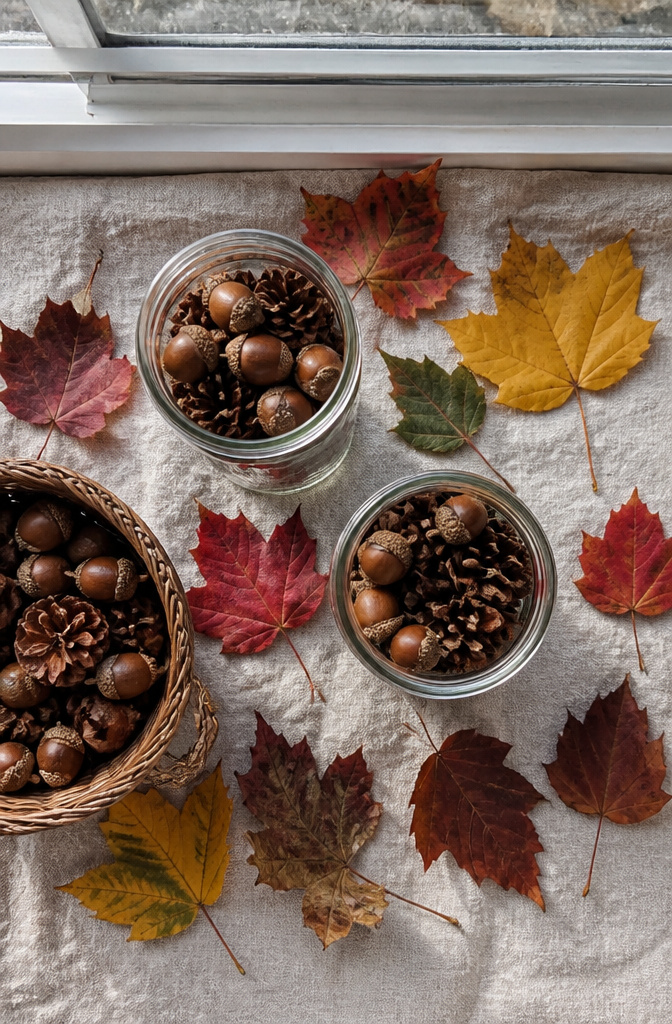
The first morning the air actually feels different, acorns and pinecones are already everywhere if you look down instead of ahead. Last October I filled two mason jars with acorns from the sidewalk near my building; the caps stayed on, so they still sit on the windowsill without glue or sealant. Pinecones work the same way. A quick oven bake at 200 degrees for twenty minutes takes care of any insects, then they go straight into a bowl or along a mantel edge.
Leaves are trickier. The red and yellow ones flatten and hold their color if pressed in a book for three days, otherwise they curl and brown within the week. I learned that the hard way with a maple leaf I tried to float in a shallow dish of water.
Growing your own pumpkins or squash costs seed money, but a single packet of Jack Be Little seeds produced eight pumpkins on my fire escape last year. That is eight decorations that became pie filling afterward.
The real savings, though, come from rearranging what you already own. The same felt leaves I pinned to a cork board in 2022 now fill a glass cylinder vase. The buffalo check runner moved from the dining table to the sofa back. Nothing new purchased; the room still reads completely different. Less works here. One jar of acorns beats a mantel crowded with five conflicting themes.
Vintage Character
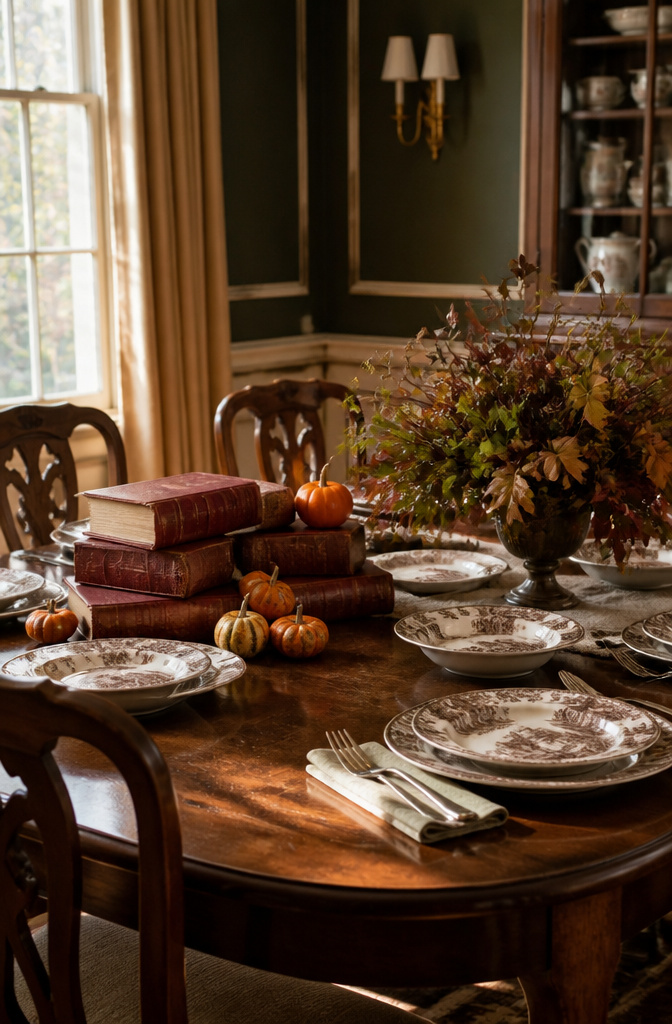
Leather-bound books in deep ruby reds read as autumn itself, not as decoration trying to be autumn. Designer Crystal Blackshaw used them for exactly that reason, staging them on a mantel as a nod to cascading leaves and the harvest palette the season already offers. The bound vintage copies do what store-bought picks rarely manage: they carry the slight unevenness of real use, which is what makes a shelf feel collected rather than staged.
The same principle holds for inherited tableware. A brown toile dinner set, in a chocolate hue rather than the traditional blue or green, anchors a tea setup in fall warmth. Diane Luna pairs it with the idea that gatherings this time of year are about lingering, not about setting a perfect table. What separates character from clutter is restraint on scale. One stack of aged books or one inherited service is enough; multiples of either look like storage, not story.
Centerpiece Rules
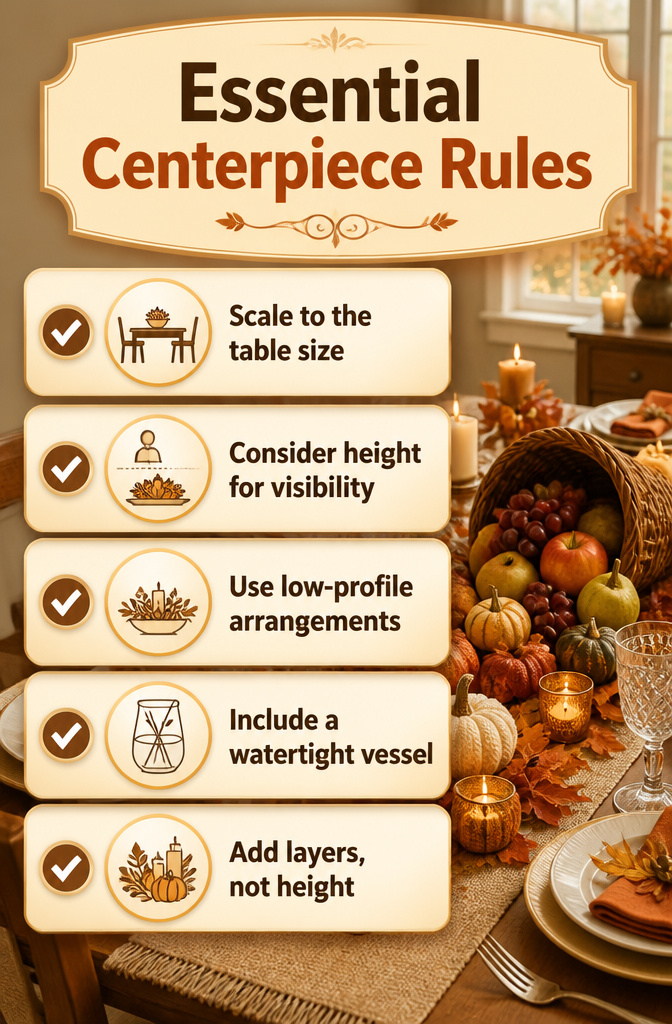
A centerpiece that actually works on a dinner table follows three rules, and the first is scale to the table, not the photo. A cornucopia spilling fruit across a forty-inch runner looks generous; the same piece on a sixty-inch table reads as an afterthought. I learned this the hard way one Thanksgiving, setting a twelve-inch basket on a table that sat eight. The gap between the arrangement and the plates felt like dead space, so I padded it with leaves and votives until the whole runner carried weight.
Height matters just as much. Anything taller than about fourteen inches blocks sightlines across the table, which is why the abundance principle works better spread wide than piled high. A cornucopia on a bed of fall leaves, with candles and knit pumpkins around it, keeps the visual interest low and layered. The same goes for seasonal produce arrangements: a ceramic vessel with large, leafy branches makes a dramatic statement precisely because the drama stays horizontal, not vertical. More is more, but more across the surface, not towering above it.
If your vessel is not watertight, slip a glass vase inside. It protects the ceramic and gives you control over branch positioning, which matters when you are balancing height against the need to see the person across from you.
Frequently Asked Questions
How do you decorate for fall naturally?
Mix real and faux materials for the least mess and longest display. Gather acorns and pinecones into bowls, press red and yellow leaves flat in a book for three days before floating them, and set branches in vases after a day or two in the garage so bugs escape. Add real pumpkins and seasonal produce to counters, but swap in faux versions after three to five days before fruit flies arrive.
How can I decorate for fall without spending money?
Forage acorns, pinecones, and leaves from outside, bake pinecones at 200 degrees for twenty minutes to clear insects, and press leaves in books to preserve color. Rearrange decor you already own, such as moving a buffalo check runner from table to sofa back or refilling a glass vase with felt leaves from a previous year. Grow pumpkins from seed if you have outdoor space; a single packet can yield eight decorations that become pie filling afterward.
What are some easy fall decor ideas?
Swap pillow covers and throws to deeper earth tones for a room shift that takes about ten minutes. Set a bowl of seasonal produce on the kitchen counter, or run a single strand of fall leaf lights along a mantel. A few vintage books with spines in burgundy, forest green, or faded mustard yellow stacked on a surface read autumnal without any crafting.