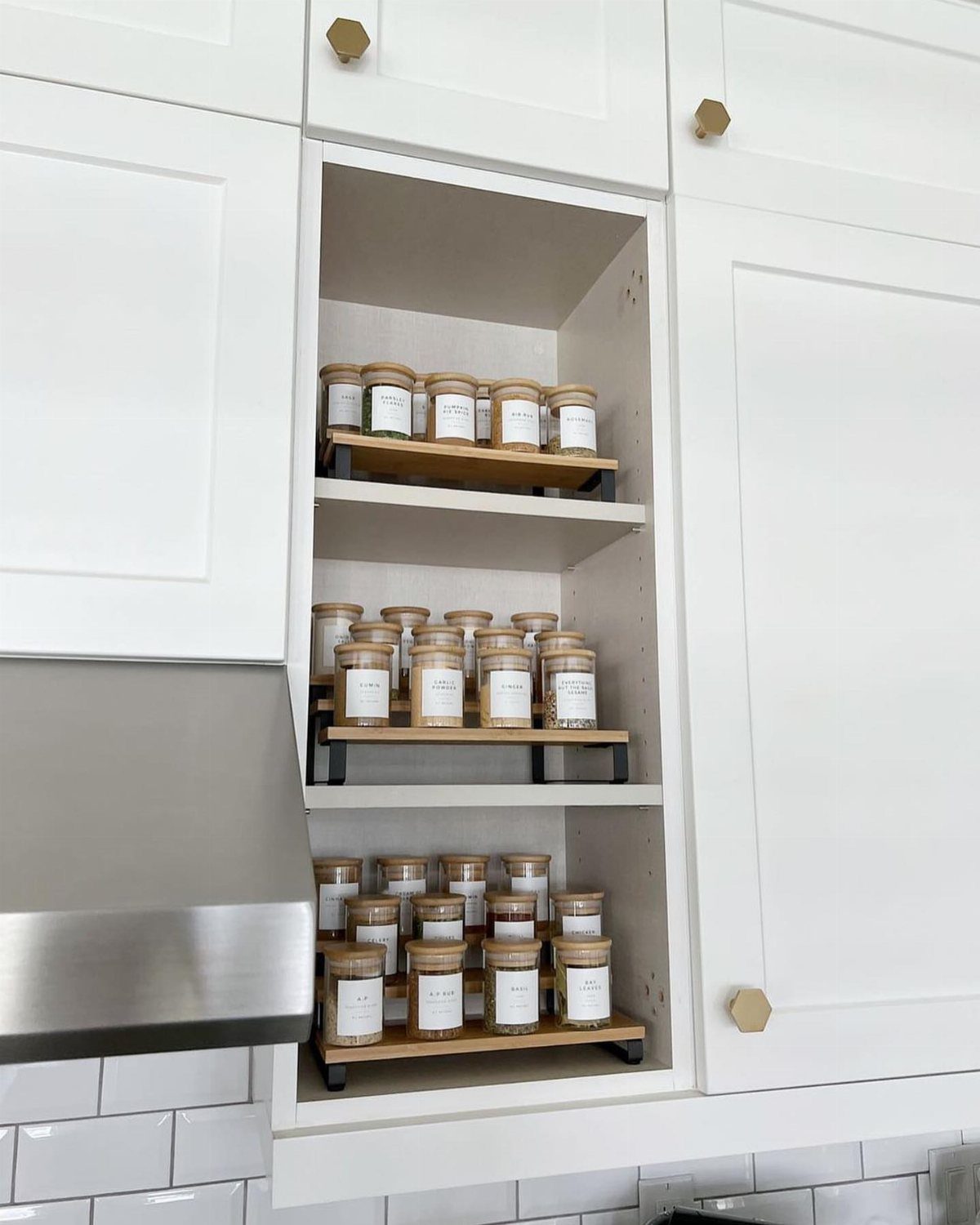
The 32 ideas here run from a magnetic rack that clings to the side of a fridge to a built-in cabinet set into the wall, and the right one depends on where your free space sits: a drawer, a cabinet shelf, the counter or a bare wall.
Measure that spot first, since width, depth and the clearance above it decide which jars and racks will work.
Anything that needs screws or carpentry, like the wall-mounted rack or the built-in cabinet, suits owners, while renters have plenty of freestanding options such as the wire rack, the lazy Susans and the tiered shelves.
1. MDesign 3 Tier Rack
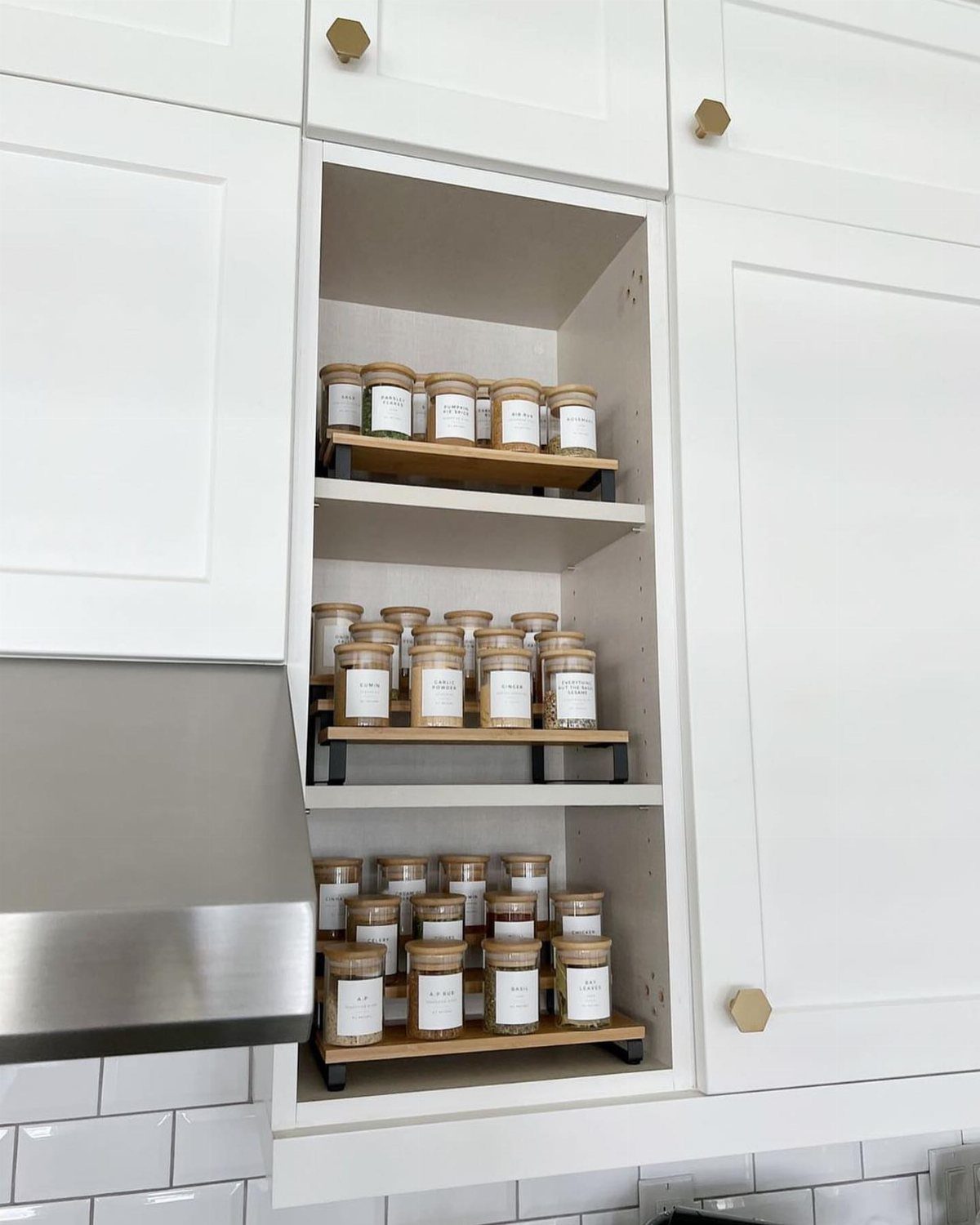
3 tiers that expand give a single cabinet shelf a lot of jar capacity, and the stepped height keeps back rows readable. Matching jars with matching labels make it look tidy right away.
Measure the shelf width and the clearance above it before buying. Because the rack expands, you can size it to the cabinet instead of settling for a fixed footprint.
2. Mini Shaker Container
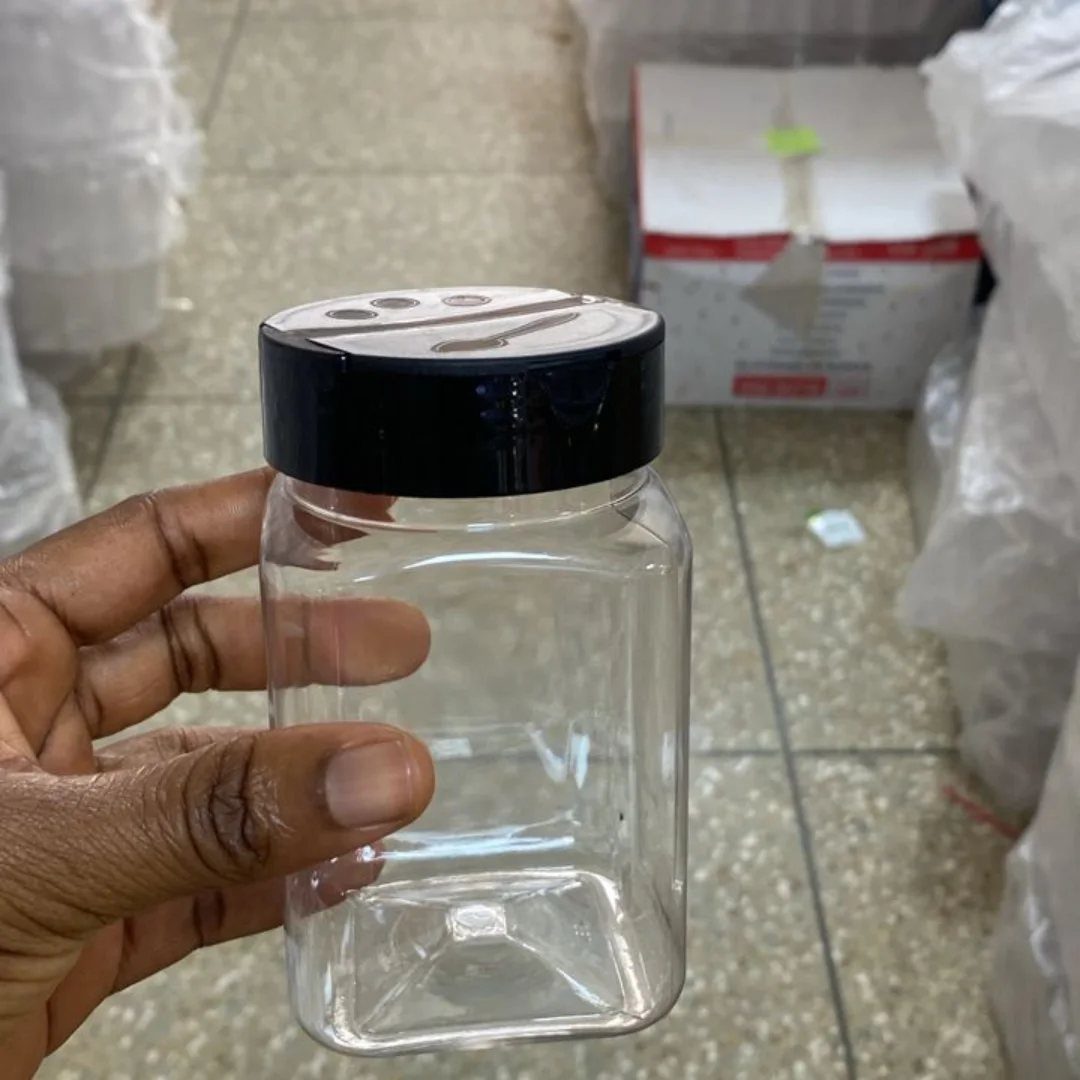
Small, square and clear, this shaker container holds a single blend you reach for often. The black shaker top lets you season straight over a pan, so nothing needs a spoon.
I’d use these for refills of everyday staples and keep the larger bulk bags stored elsewhere. Clear sides show when a jar is running low.
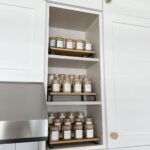
3. Acrylic Cabinet Organizer
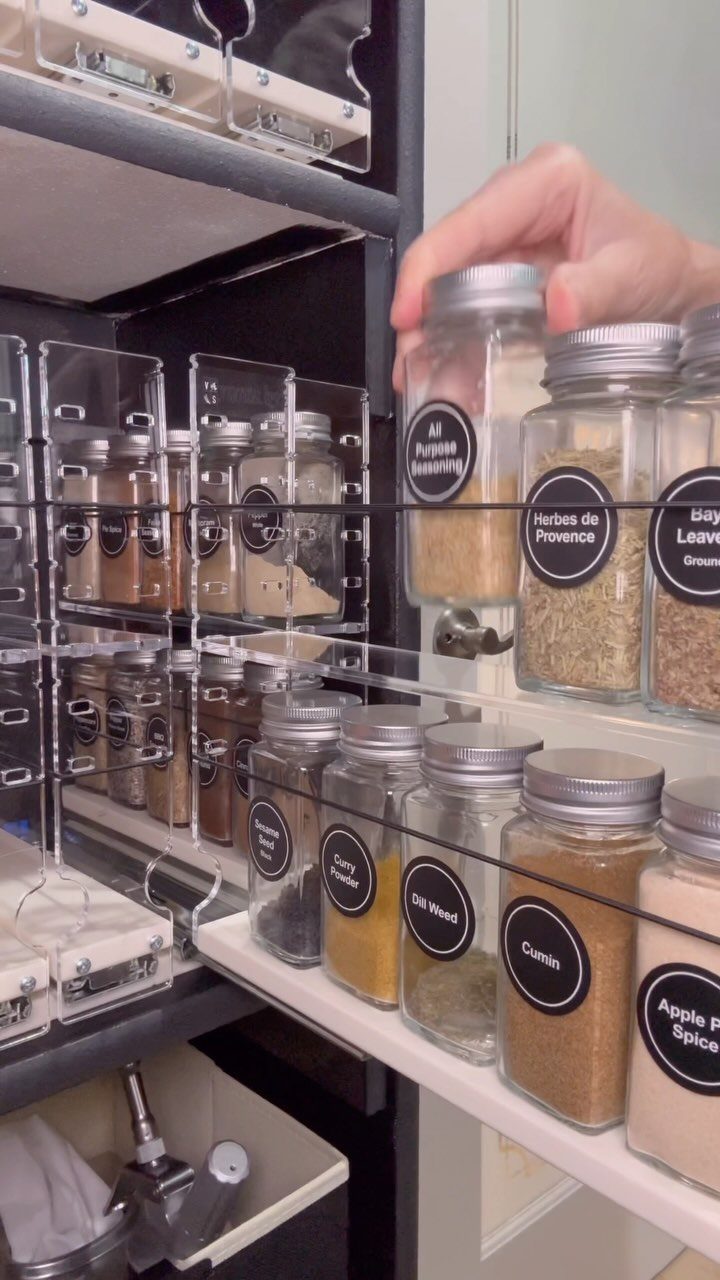
Against a dark cabinet interior, clear acrylic nearly disappears and leaves the jars to do the talking. Three tiers lift each row above the one in front, so "Cumin" and "Curry Powder" stay readable without pulling anything out.
Check shelf height first, since 3 tiers need vertical room. Face every label outward and alphabetize if you like to find things by name.
4. Square Spice Jar
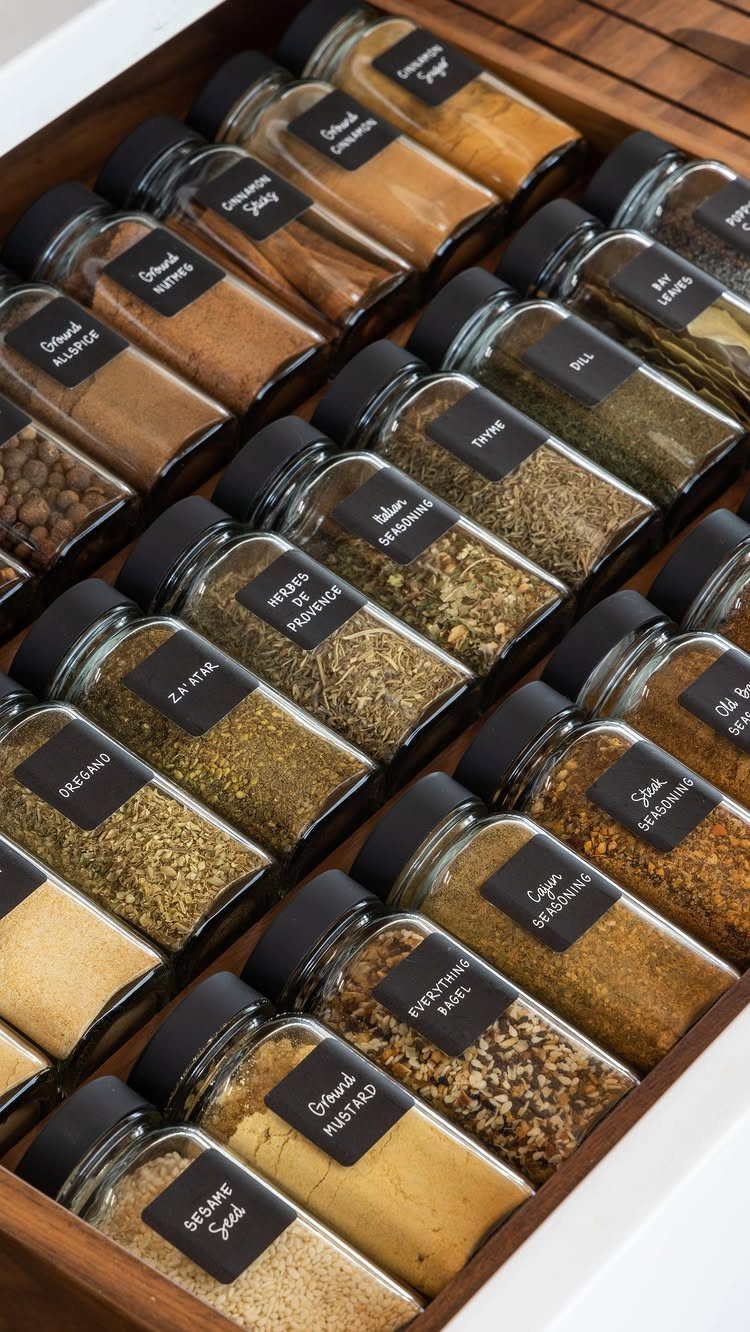
Square jars waste less space than round ones, because they sit flush against each other with no dead gaps. That matters in a drawer, where every inch counts.
Each jar here carries a label, from "Sesame Seed" to "Za’atar." If your spices live in a drawer, put the name on the lid so you can read it from above.
5. Wire Spice Rack
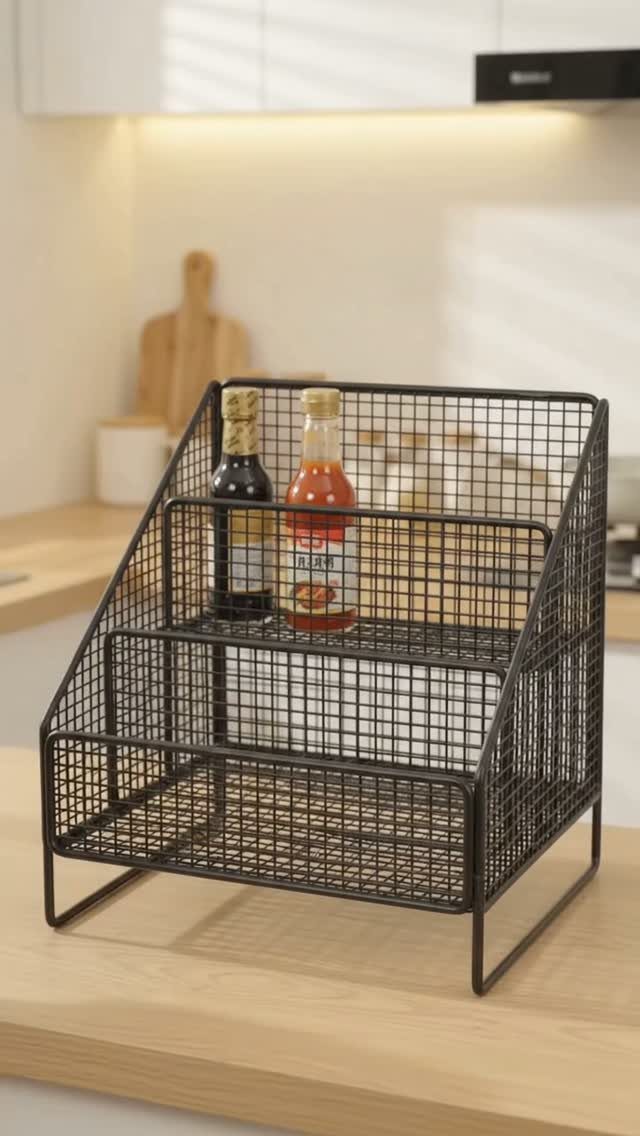
For a small spice collection, a 3-shelf wire rack on the counter is about the lightest option I know. The open wire keeps bottles in plain view and takes up little visual space.
It does claim counter room, so set it where you actually cook. Use it for the 6 or so bottles you grab daily, and leave the rest in a cabinet.
6. Revolving Spice Rack
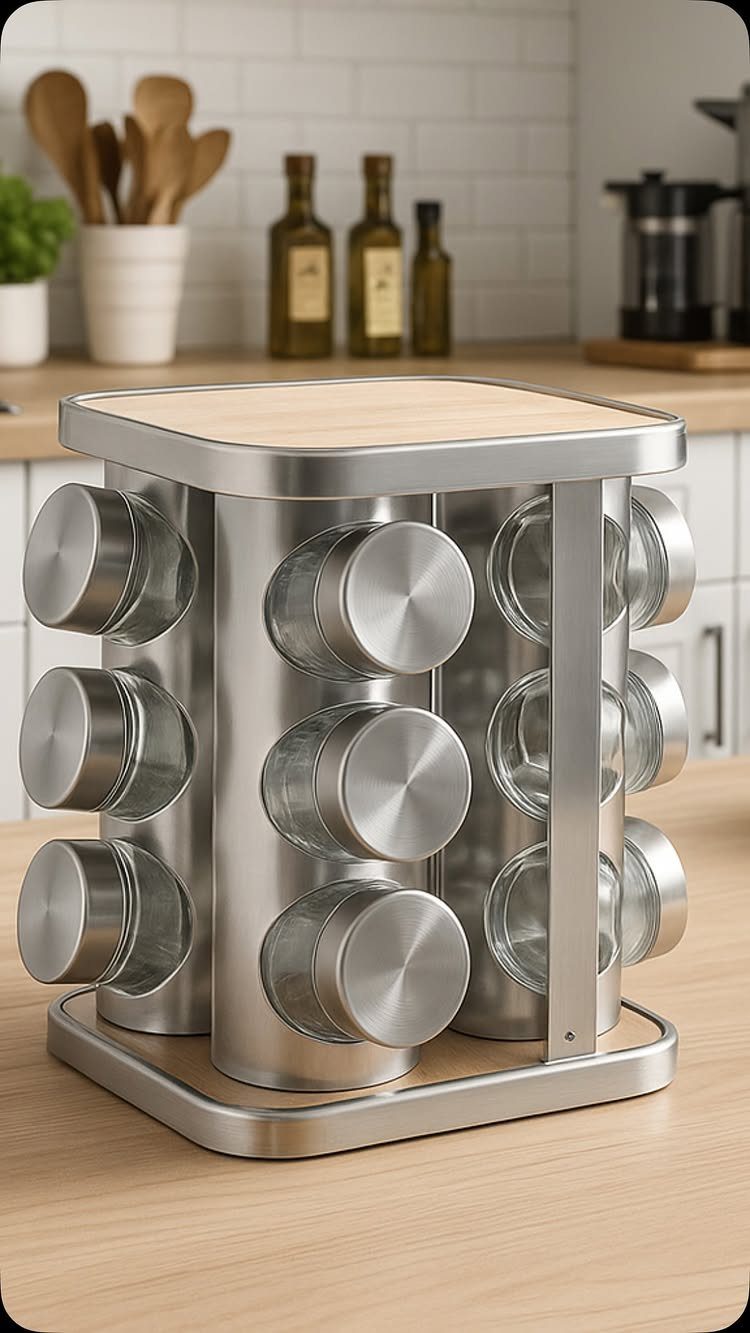
Spinning the rack brings any jar to the front, which beats digging through a crowded cabinet shelf. Stainless steel also fits nicely against white subway tile.
Leave elbow room around it so the turn stays easy. Because it holds a full 16 jars in one footprint, I’d choose it for a cook with a big collection and a bit of open counter.
7. Magnetic Spice Rack
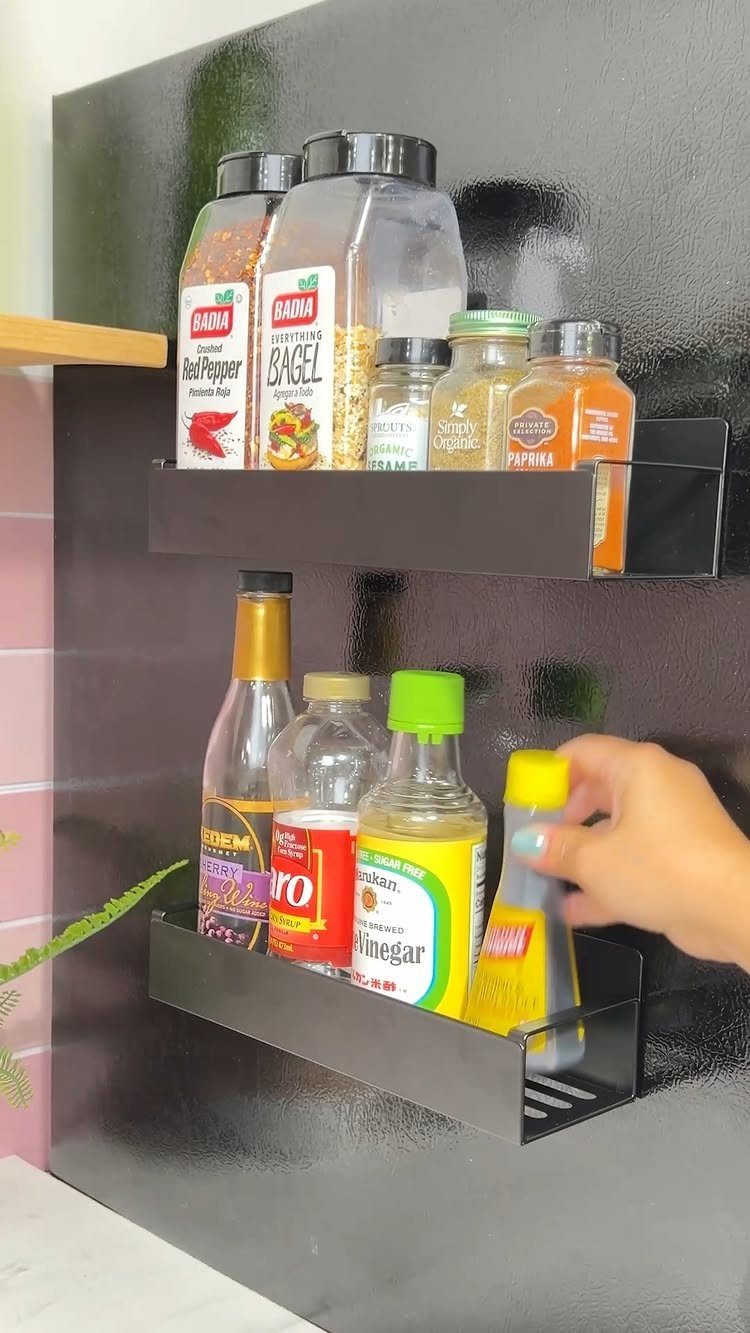
Metal shelves that grip the side of a refrigerator turn dead vertical space into spice storage, and that is the whole appeal. A black rack on a black fridge nearly disappears, which leaves the bottles to carry the look.
Yamazaki Home makes a magnetic rack in this style, so that’s the name to search for.
Pick it if your cabinets are full and you cook from a handful of bottles you grab daily. A shelf with a front lip keeps bottles from sliding when the fridge door swings.
Wipe the fridge side clean before you stick anything on it.
8. Corner Spice Rack
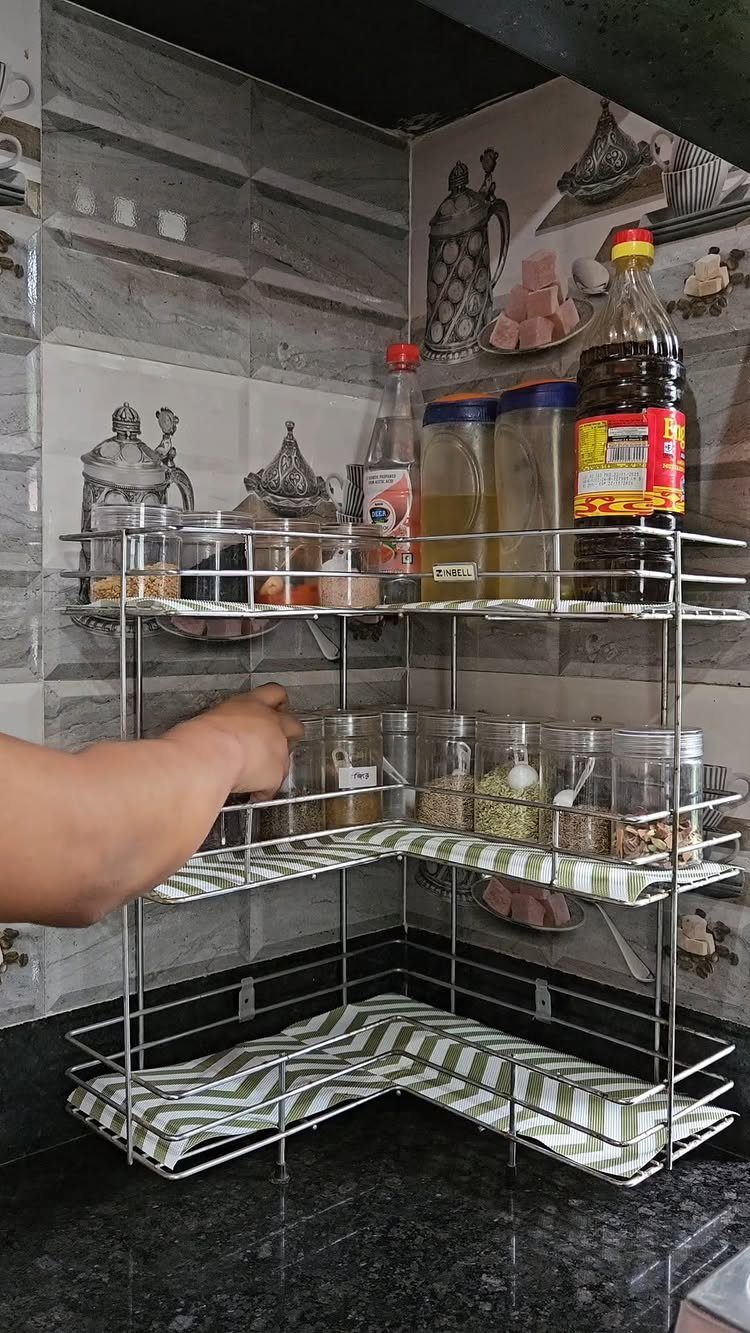
A corner is awkward for most shelving, and a three-tier chrome wire rack makes use of it.
The tiers step up so each row of jars and bottles stays in reach, and the open wire lets you read labels from the side.
Striped liners on the shelves stop small jars from tipping and wipe clean after a spill. Measure the corner depth and the clearance below any upper cabinet first, since 3 tiers need height.
I’d save this for the spices you reach for most and let the rest live elsewhere.
9. Sliding Seasoning Rack
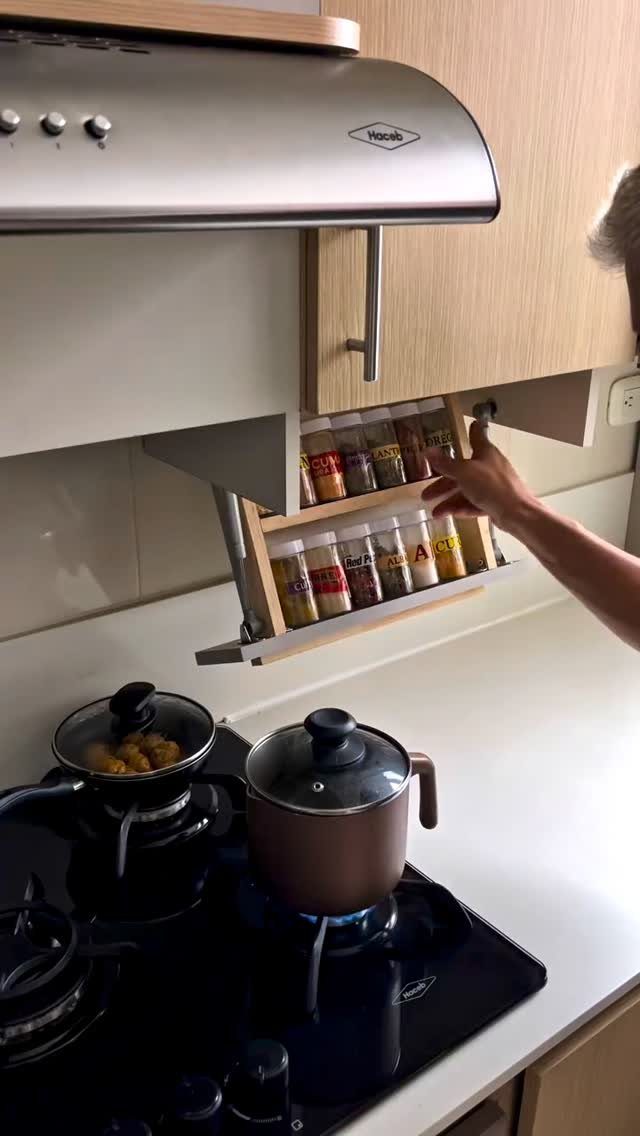
Mounted under a cabinet, a sliding seasoning rack stays out of sight until you pull it toward the stove. Labeled glass jars ride on it, so you can grab paprika without opening a door or leaning past a pot.
Check the gap between the cabinet bottom and the counter before buying, because jar height decides whether it clears. Put the labels on the jar lids or fronts so they read as the rack comes out.
For a cook who stirs and seasons in the same minute, this beats a crowded shelf.
10. Illustrated Spice Labels
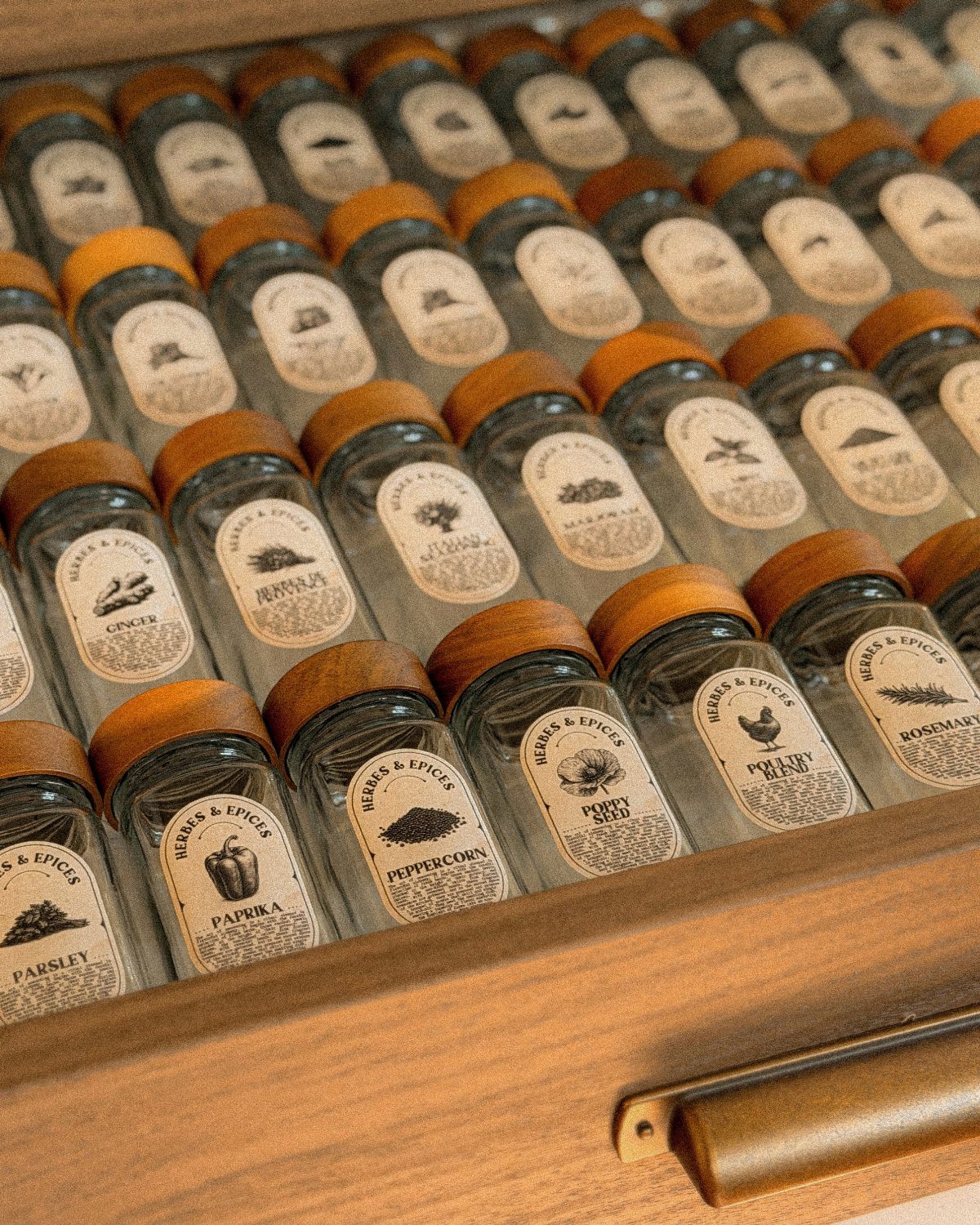
Labels with little drawings do a job that plain text can’t: you spot rosemary by its sprig before your eyes finish reading the word. A sheet of illustrated labels also pulls mismatched jars together into a set.
Stick them on the lid or the front of each jar, depending on how you store them.
Wash and dry each jar completely before applying a label, or it will lift at the corners. Check that the pack includes the blends you actually own, such as poultry blend, before you order.
11. Drawer Organizer
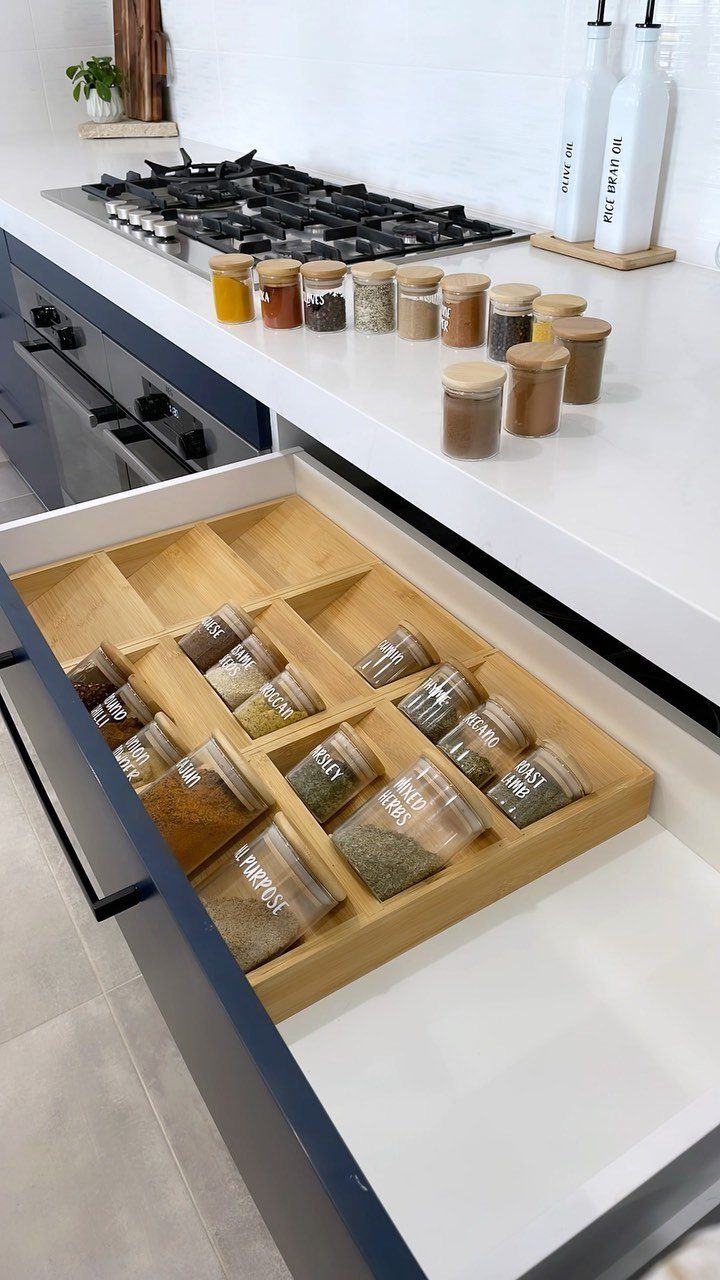
An expandable wooden organizer lets you fit a drawer instead of buying a size and hoping. Slide the sides out until it fits snug, and the jars stop shifting every time you open the drawer.
Measure the inside width and depth of your drawer, then confirm the jar height is lower than the drawer front so it can close. Labeled clear jars laid flat or tilted show their contents at a glance.
I like wood here because it feels warm against a painted cabinet, though it needs a wipe after any spill.
12. Three-Tier Spice Spinner
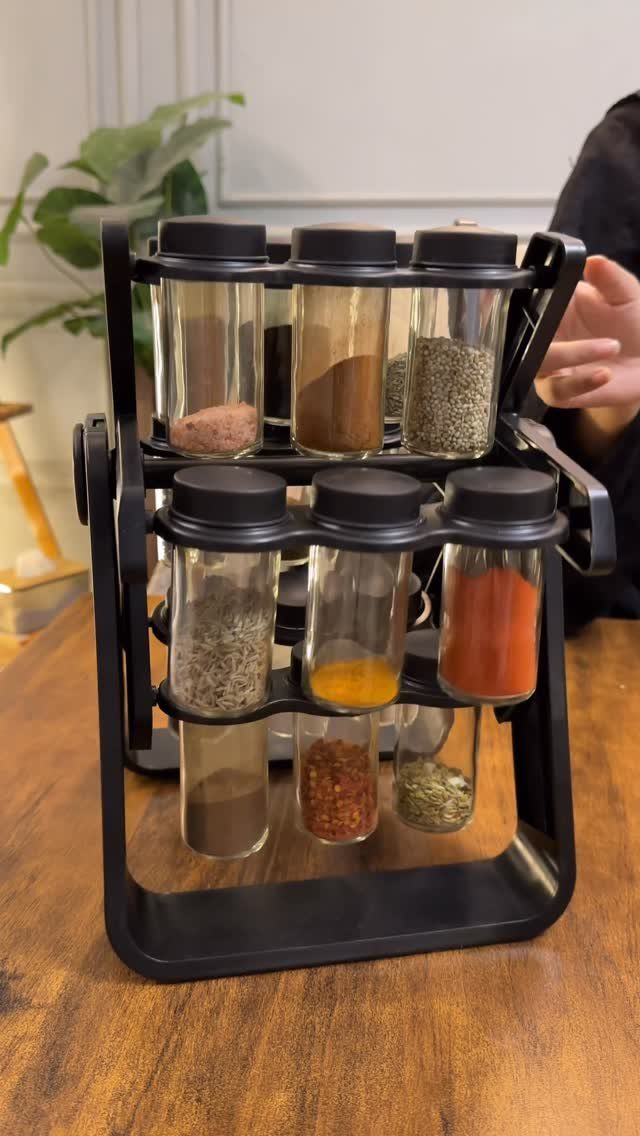
A three-tier spinner puts a lot of jars into one round footprint, and a turn of the hand brings any of them to the front.
Open metal tiers keep glass jars in plain view, so the right seasoning is easy to spot without opening anything.
This kind of rack suits a counter or a table with room around it; leave space so it spins freely. Fill the top tier with the jars you use daily and the bottom with the bulkier ones.
Measure your tallest jar against the gap between tiers first, since a jar that is too tall won’t clear the shelf above it.
13. Lazy Susans for Condiments
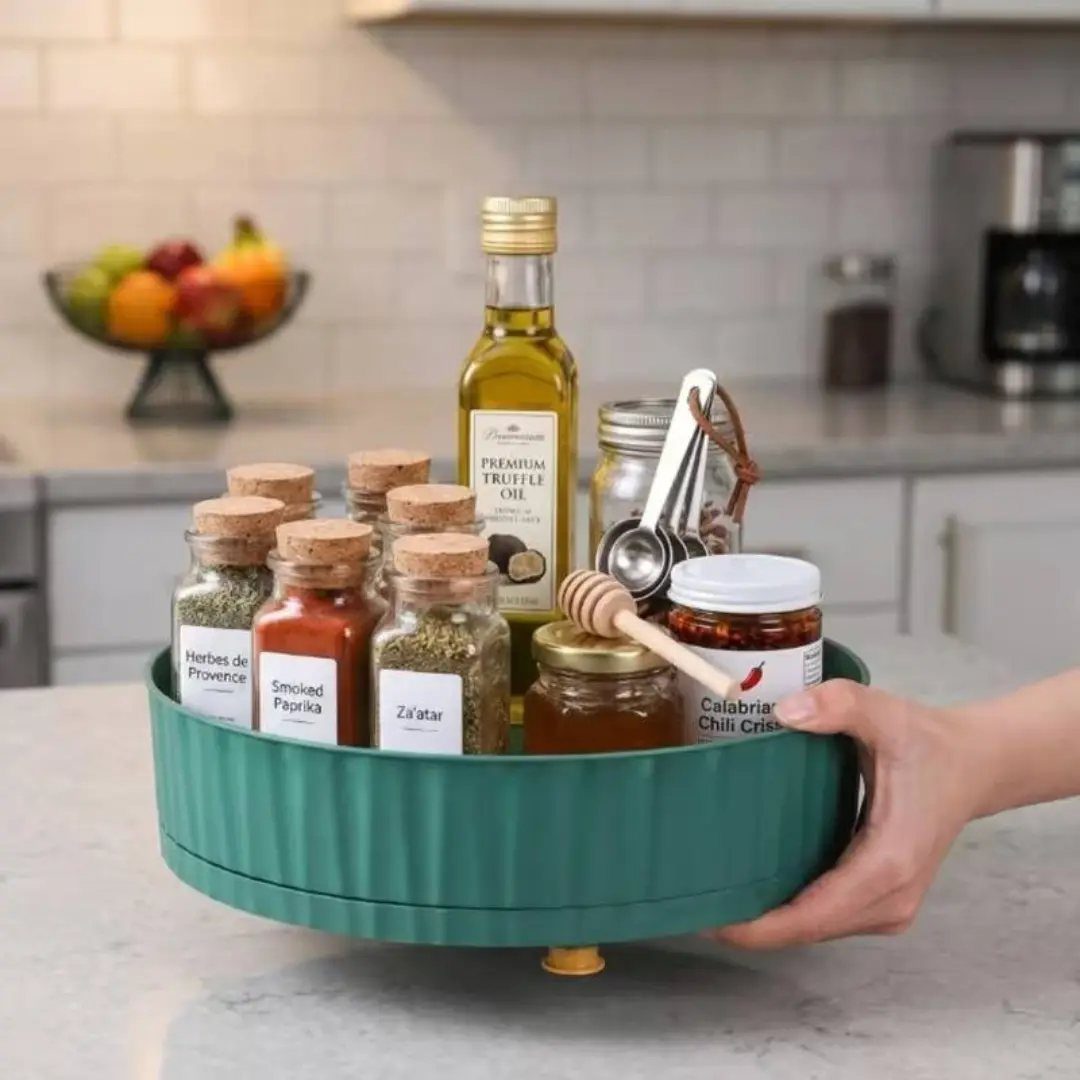
A green lazy susan on the counter lets one turn of the hand bring a jar or bottle to you.
A lazy Susan can hold spice jars alongside oils, honey and hot sauces, so everything you reach for while cooking sits in one spot.
I’d keep it to a single ring of items and put the tallest bottles in the middle, where they won’t block the labels behind them. Face every label outward before you set it down.
Give the turntable clearance from the backsplash and nearby appliances so it can rotate a full circle without catching.
14. Tiered Cabinet Shelves
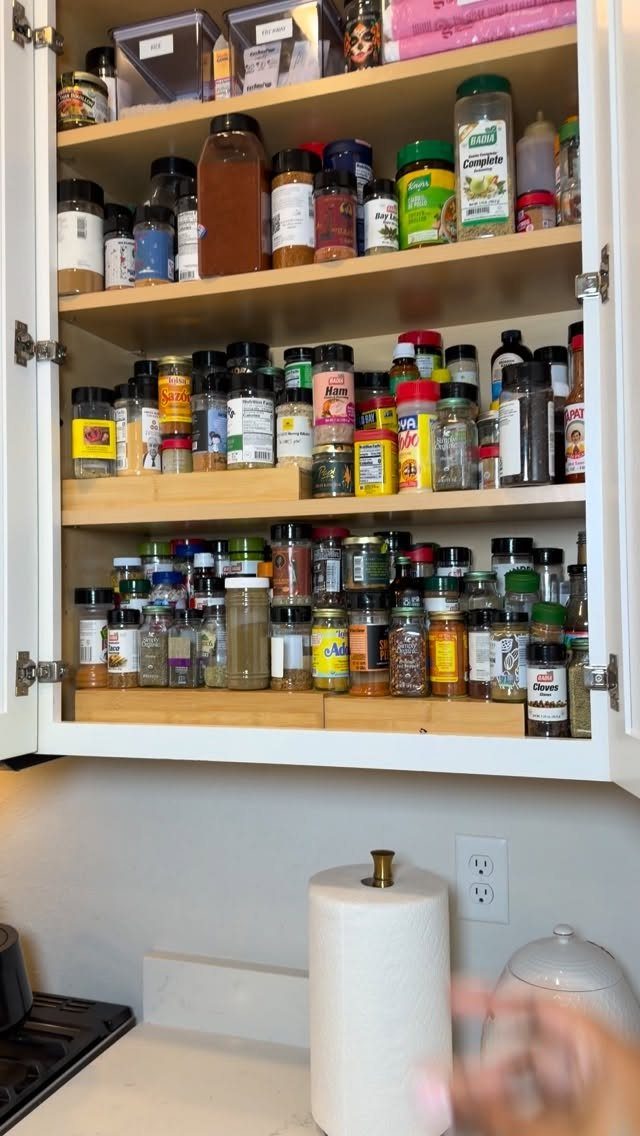
Stepped wooden shelves inside a cabinet turn one flat shelf into rows that all show their labels. Tiered steps lift the back jars above the front ones, so every label stays visible and nothing hides behind anything else.
Check the cabinet’s interior dimensions before buying, shelf-to-shelf height most of all, because each step uses up vertical room. Keep your tallest jars on the back step and the shortest in front.
Wood suits a white cabinet well, and it wipes clean with a damp cloth.
15. Spice Drawer Inserts
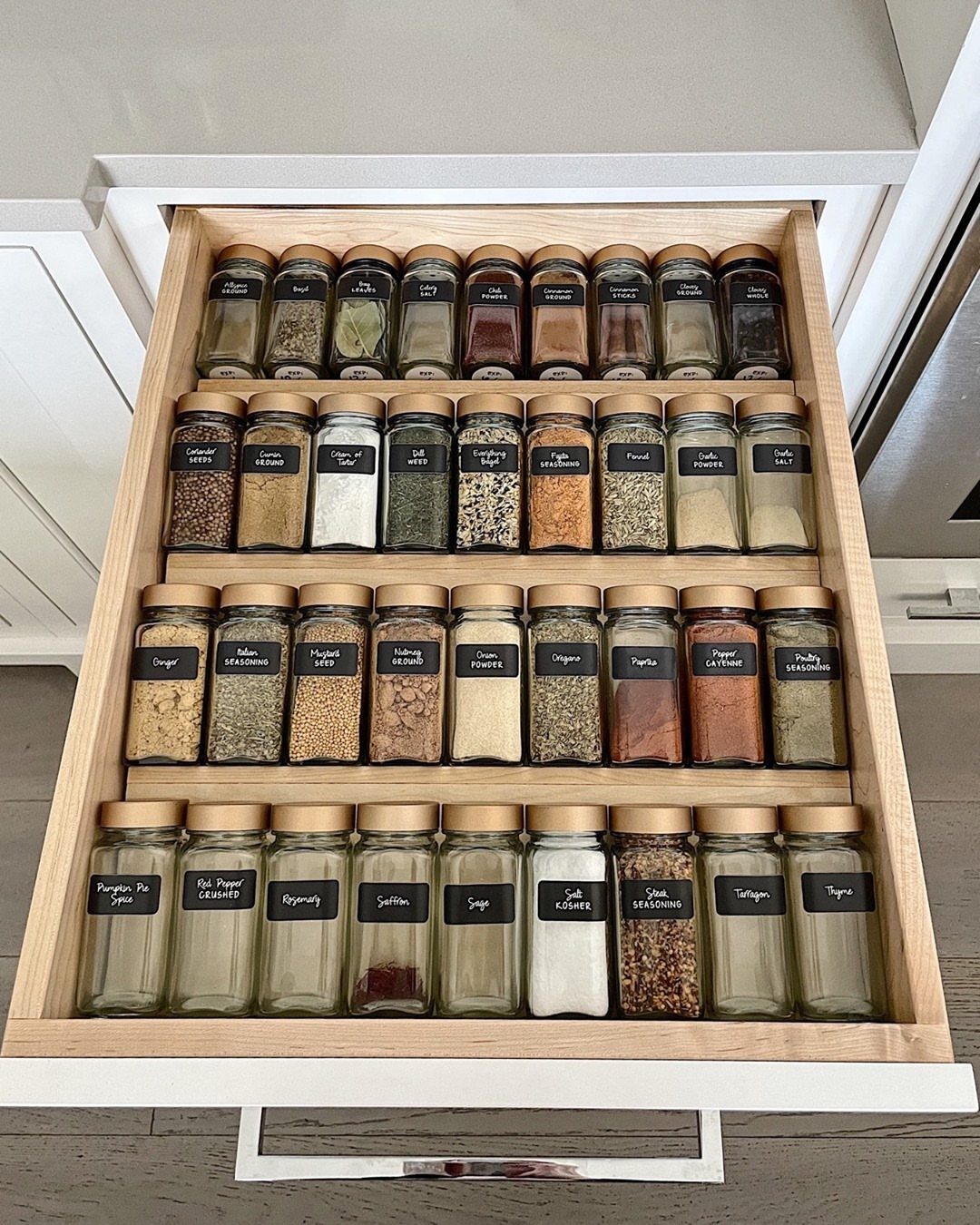
Tiered inserts tilt a drawer’s jars upward, which is why 4 rows of labels can be read at once from above.
Glass jars with wooden lids and black labels look tidy lined up this way, and the label on each jar means you never have to lift one to check.
Take the drawer’s inside width and depth, then confirm the jars are short enough to slide shut without catching. A drawer by the stove works best, since you can pull it open and season in one motion.
16. Pull-Out Cabinet Rack
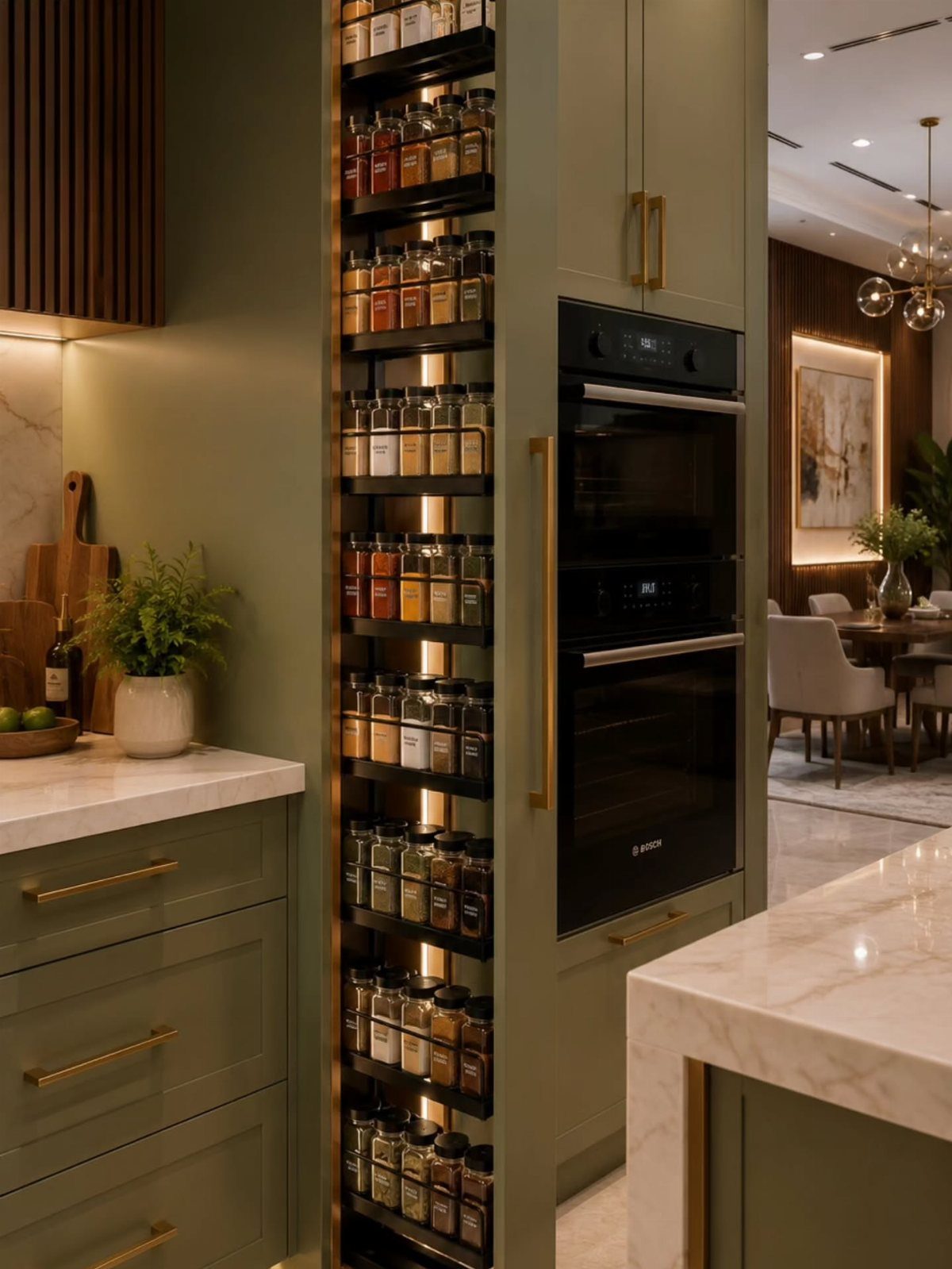
A tall, narrow pull-out rack fits spices into a slim gap beside the oven, where a regular shelf would never work. Slide it out and every jar sits at eye level, with nothing stacked in back.
This is the most permanent idea on the list, since it’s built into the cabinetry rather than set on a shelf.
If you rent, I’d choose a freestanding version instead. If you own, measure the opening’s width and height carefully before ordering.
Placing it near the stove keeps your seasonings in reach.
17. Wall-Mounted Spice Rack
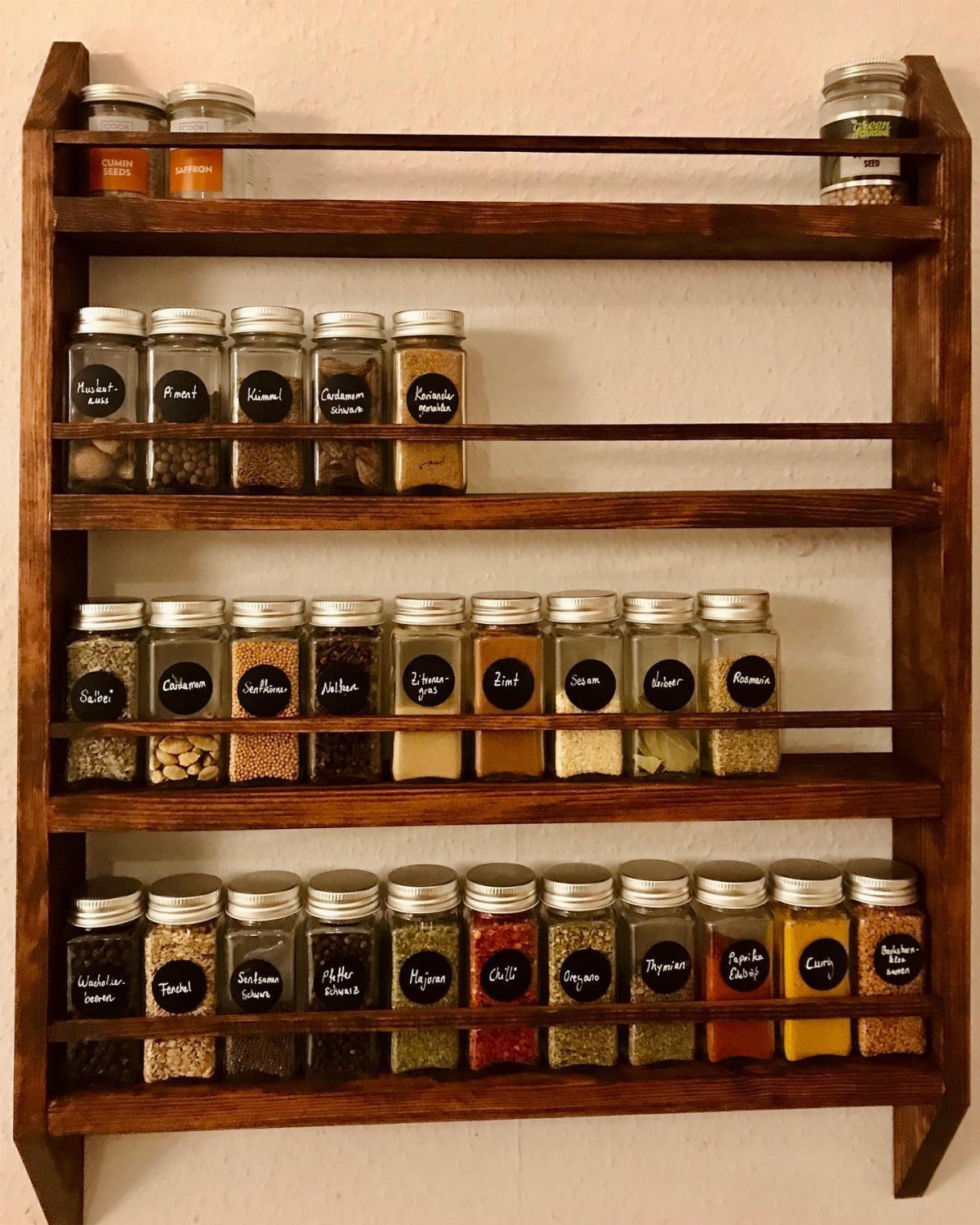
Wall shelves put every jar on display and free up cabinet and counter space entirely. Pick a rack finish that contrasts with the wall, such as dark wood on a light wall, so labeled glass jars stand out clearly.
Find the studs before you drill, because a rack full of glass jars is heavy. If you rent, check your lease first, since this means screw holes in the wall.
I’d hang it near the stove at a height where you can see the top shelf without a stool.
18. Wooden Countertop Spice Rack
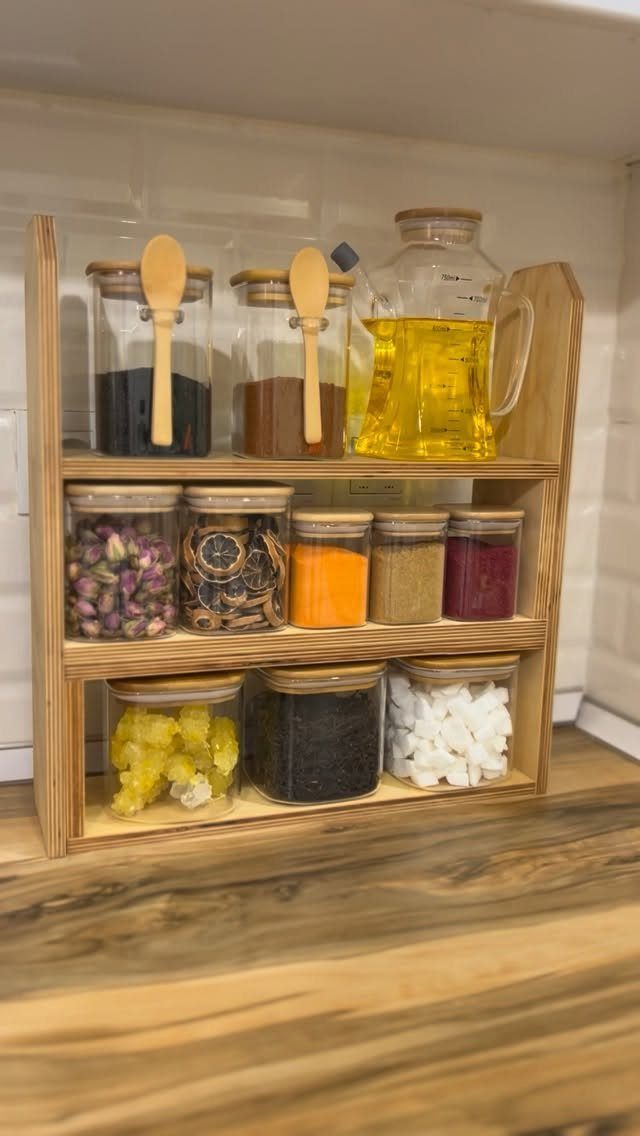
A three-tier wooden rack on the counter gathers jars and an oil bottle in one place, close to the stove. Steps lift each row, so labels stay readable, and the warm wood looks good against white tile.
It takes up counter space, so measure the spot first. Wood also needs a quick wipe after splatters, and I’d keep it a little away from the burners.
Put the spices you use daily on the front tier and the rarely used ones higher up.
19. Built-In Spice Cabinet
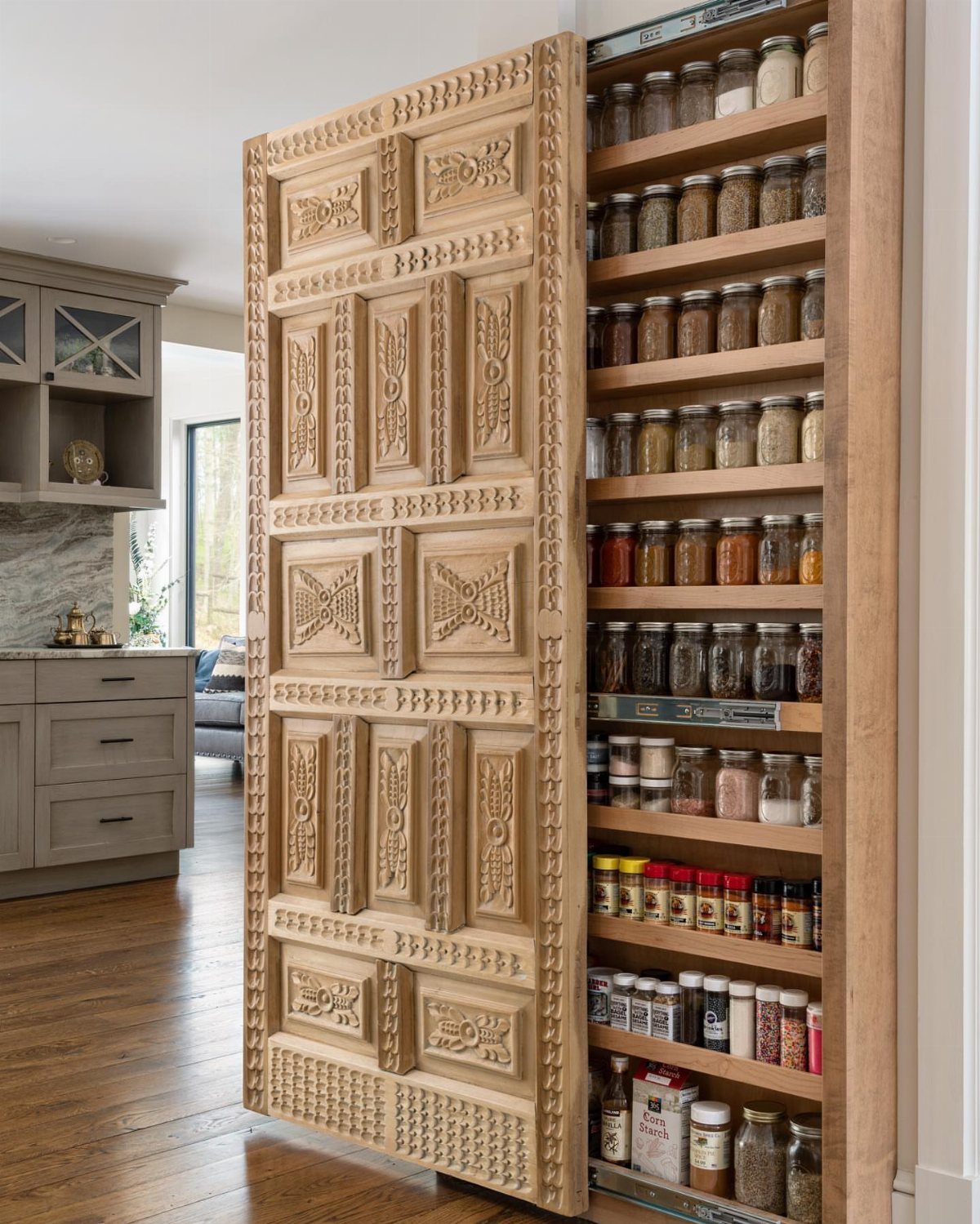
A narrow recessed cabinet tucked into the wall holds several shelves of spice jars, and a carved wooden door closes over all of it. With the door shut, the kitchen shows only a piece of woodwork.
Because the jars sit in the wall rather than on a counter, this suits a cook who wants the work surface clear. It is also a fairly permanent build, so I’d treat it as a project for owners, not renters.
Measure the recess before you commit to shelf spacing. Glass jars need clearance above them, and a door that swings open should not hit a nearby cabinet or appliance.
20. Sliding Cabinet Spice Rack
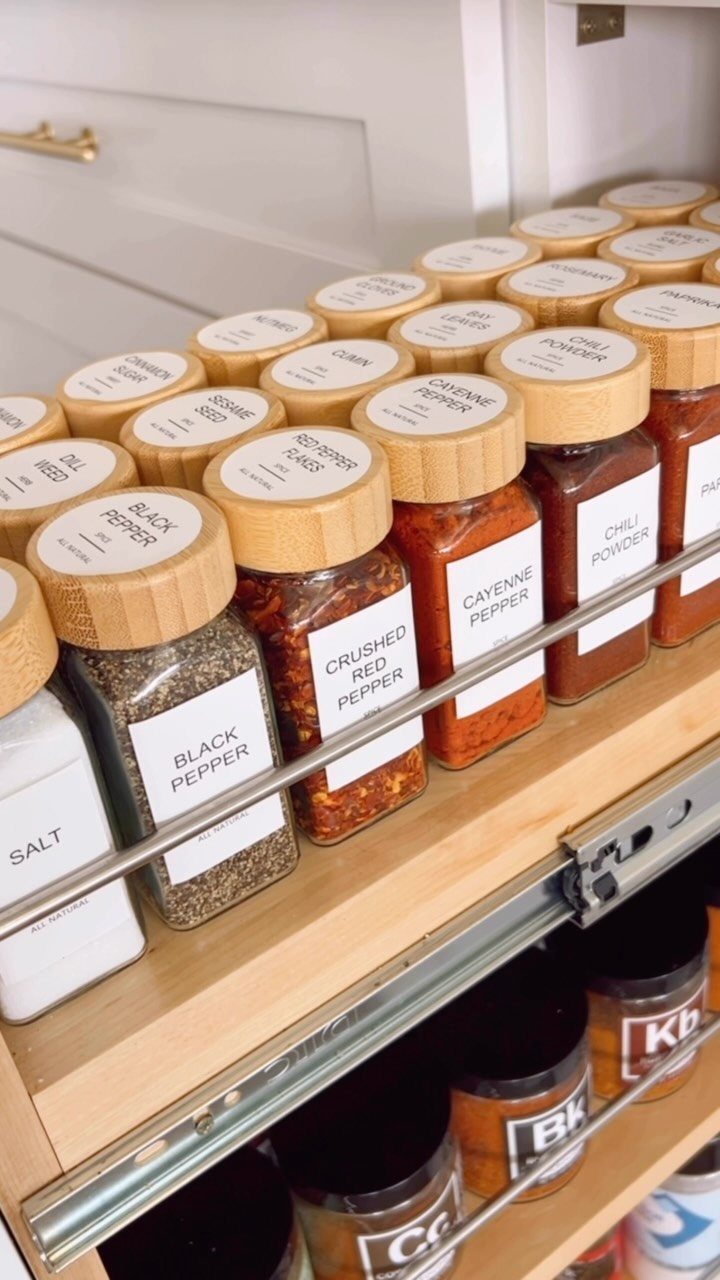
Pull the shelf toward you and the whole row of jars follows, so "Cayenne Pepper" in the back is as easy to grab as "Black Pepper" in front.
This wooden sliding shelf rides inside a white cabinet, which keeps the jars out of sight until you want them.
Measure the cabinet’s interior width and depth, plus the gap above the shelf, and compare them to the rack’s listed size. Bamboo lids add a little height, so measure with them on.
I like wood against white paint, since the warmth reads clean and not busy. Keep labels facing up or out so they read as the shelf slides.
21. Rotating Spice Rack
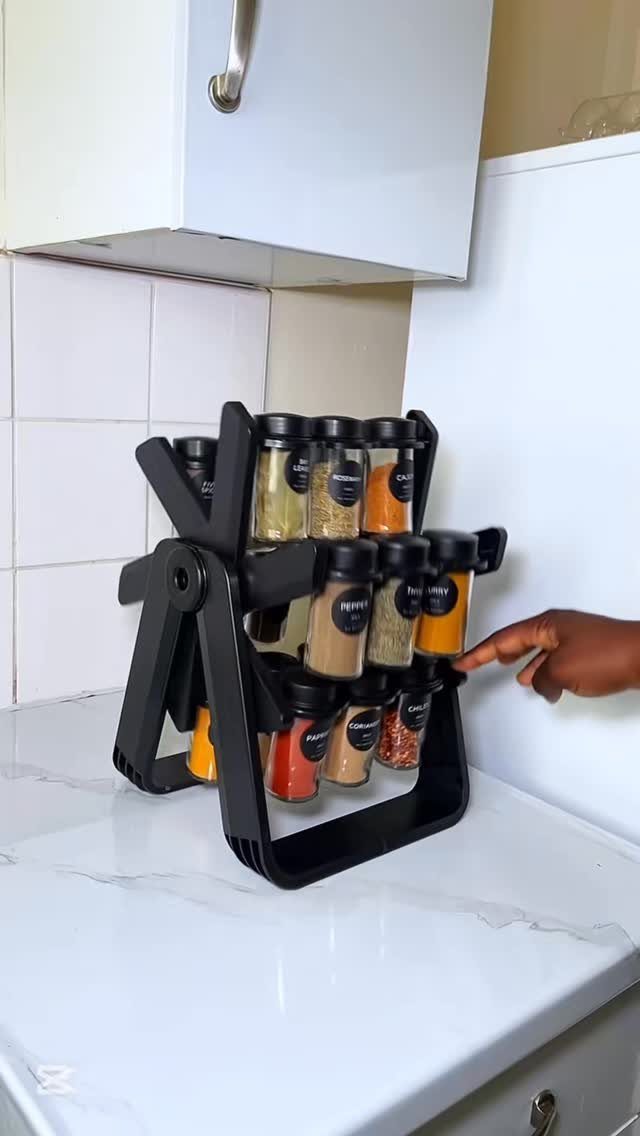
Black metal against a white marble counter gives a rotating rack real contrast, and the jars become the decoration. A quick spin of one hand brings any jar around, so you can season without lifting a thing.
Pick this one if your counter has a spot near the stove that is otherwise unused. It does claim that footprint, and I’d leave enough room around it that the turn never bumps a backsplash or a canister.
Fill it with the spices you use weekly and let the rarely used ones stay in a cabinet. A crowded carousel turns badly.
22. Spice Jars on a Tray
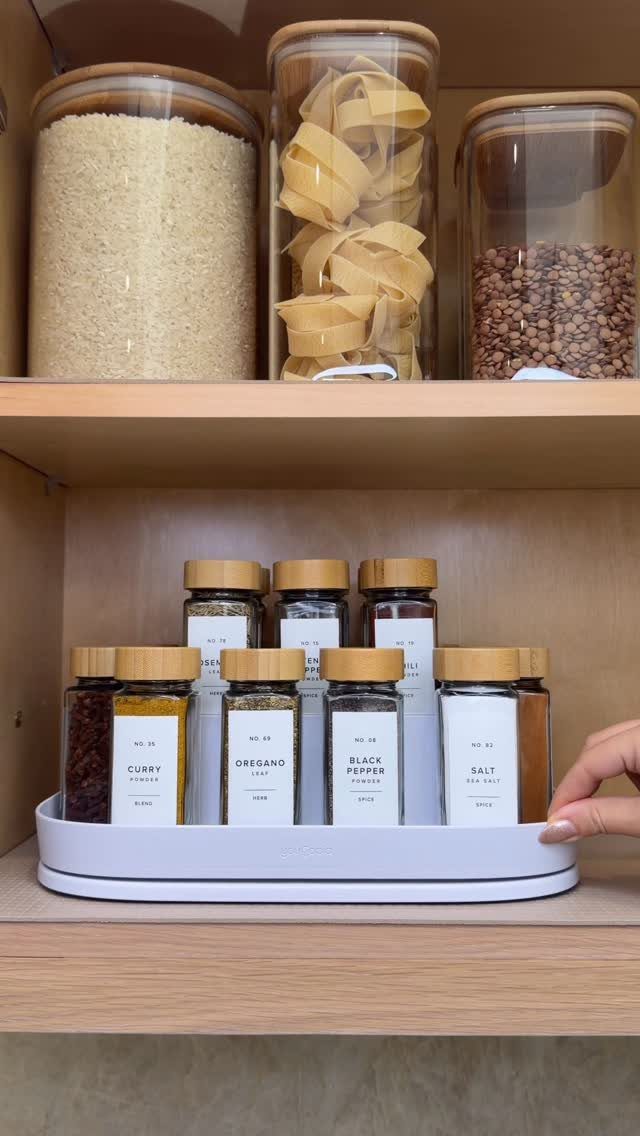
Putting small jars on a white tray turns a loose row of spices into one unit you can lift out whole.
That lift-out habit is the real benefit: carry the tray to the stove, season, and set it back. Choose a tray with a low rim or none at all, so labels stay readable from the side.
Match the jars and the labels. A tray of mismatched bottles looks like clutter, while a tray of matching glass looks planned.
23. Compartment Spice Container
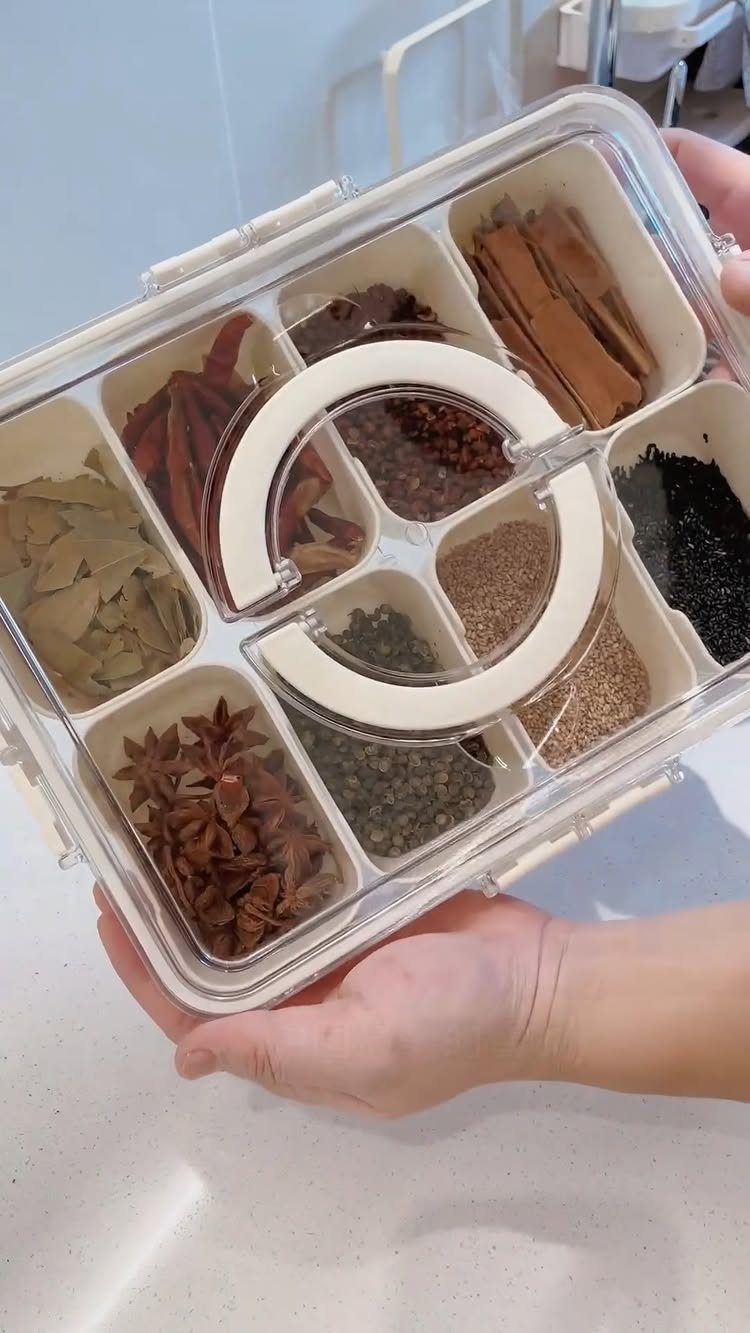
A clear box split into 8 equal, removable compartments suits whole spices that never fit a shaker jar well, such as cinnamon sticks and star anise. Each section holds a different spice, and you can see all of them at once.
The maker describes the material as PET and PP, built to be durable, corrosion resistant and washable. Since the compartments lift out, you can rinse one and refill it without emptying the rest.
I’d keep this for baking spices and whole seeds, and store ground spices in sealed jars elsewhere. Check the box against your drawer or shelf size before ordering.
24. Labeled Spice Drawer
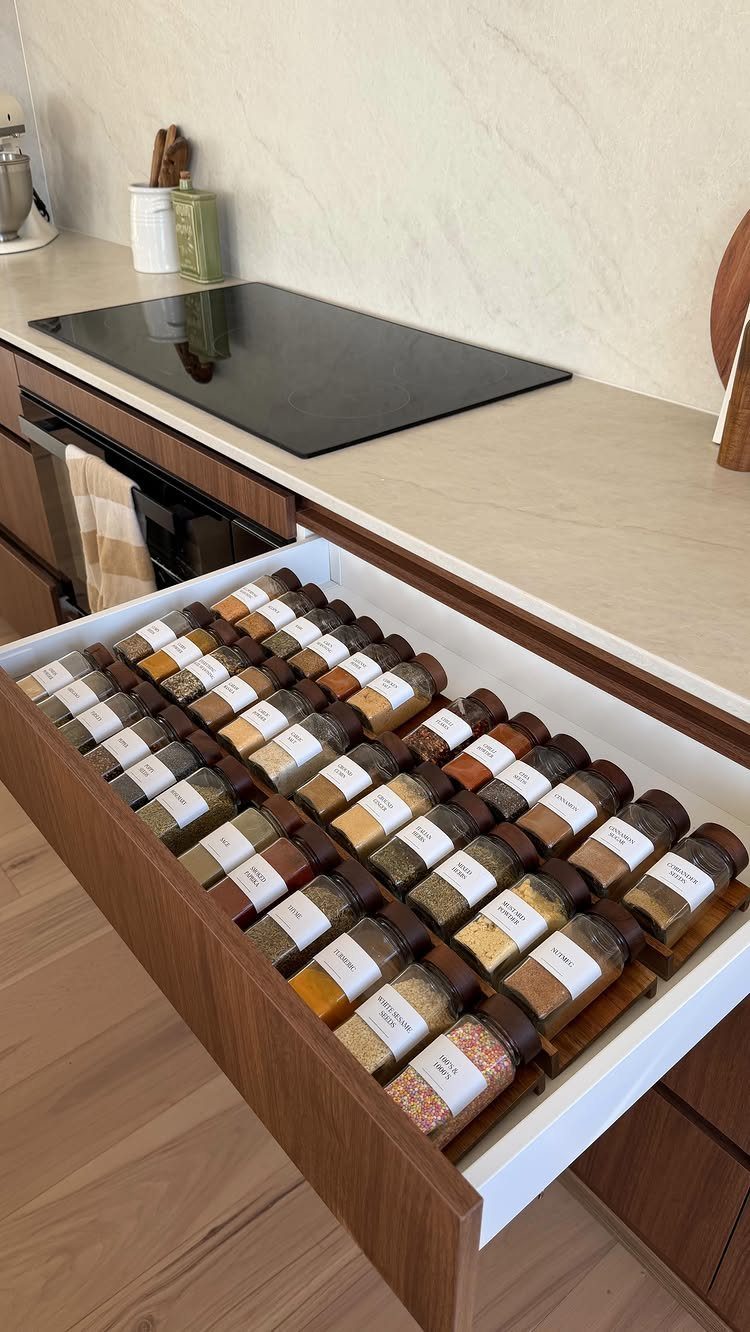
Rows of small glass jars with white labels lie in a drawer right under the stovetop, which puts the seasoning where the cooking happens. Open the drawer, look down, and the names are already facing up.
The setup depends on jar height. Wood in the drawer pairs well with the light countertop above it.
I’d label the lids as well as the fronts, so you can read a row from above without tilting anything.
25. House-Shaped Spice Jars
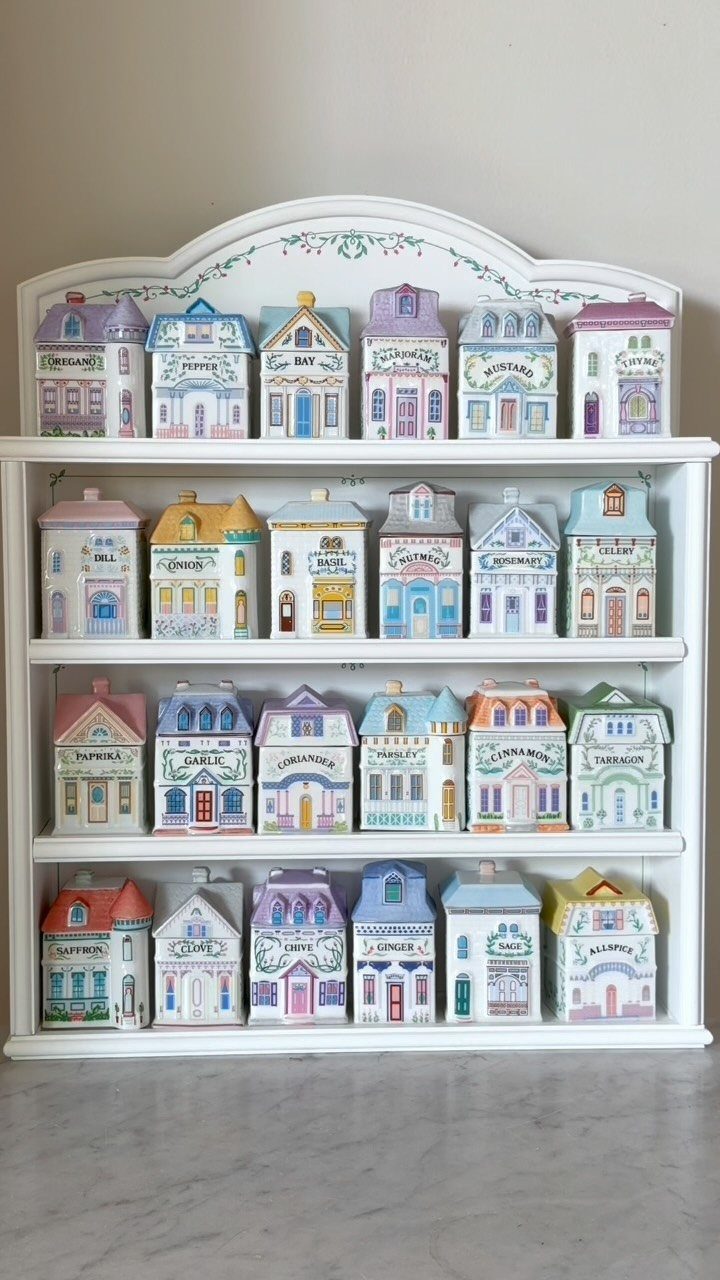
Ceramic jars shaped like little houses turn a plain white shelf into a small village, and the pastel colors make the herb and spice names easy to tell apart at a glance.
Labels like Oregano, Pepper and Cinnamon sit right on the fronts.
Group them by color if you want a tidy look, or by use if you cook fast.
I’d put the daily jars at eye level. Ceramic is opaque, so you can’t check how much is left without opening a jar, and I’d refill before a jar runs low.
Leave a little gap between the houses so each one lifts off the shelf without knocking its neighbor.
26. Glass-Door Spice Cabinet
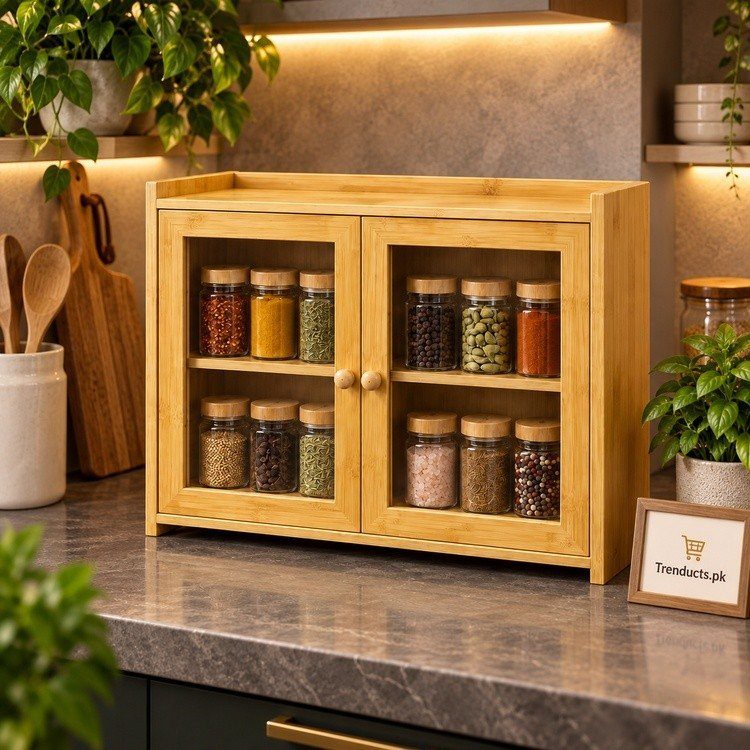
Glass doors let a compact bamboo cabinet show its jars while keeping dust and kitchen splatter off them. Sitting on a counter, it works as a small piece of furniture that happens to hold your whole spice collection.
Measure the spot first, including the height under any wall cabinet, and check that the doors swing open without hitting a plant or the backsplash.
Shelf spacing decides which jars fit, so compare your tallest jar to the gap between shelves before ordering.
I like bamboo against marble, since the warm wood softens the cool stone. Keep it a step away from the stove, because steam and grease land on glass and wood alike.
27. Outdoor Spice Kit
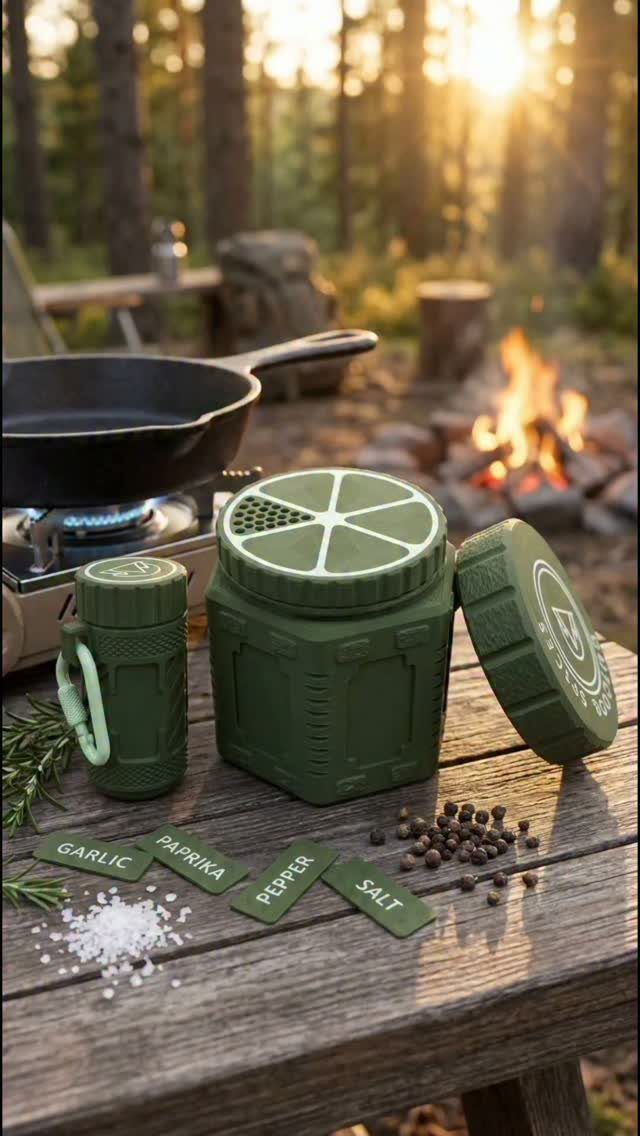
Camp cooking goes better when the seasonings travel in their own labeled kit. Plastic containers with dividers, marked Garlic, Paprika, Pepper and Salt, won’t shatter in a pack or a cooler the way glass jars would.
Choose a set with tight-sealing lids and fill it only with the spices you will actually use on the trip.
Keep the kit on a flat table, away from the fire, and close each lid right after you season so wind and damp don’t get in.
Plastic is the right call outdoors. At home, I’d stick with glass.
28. Decorative Skull Rack
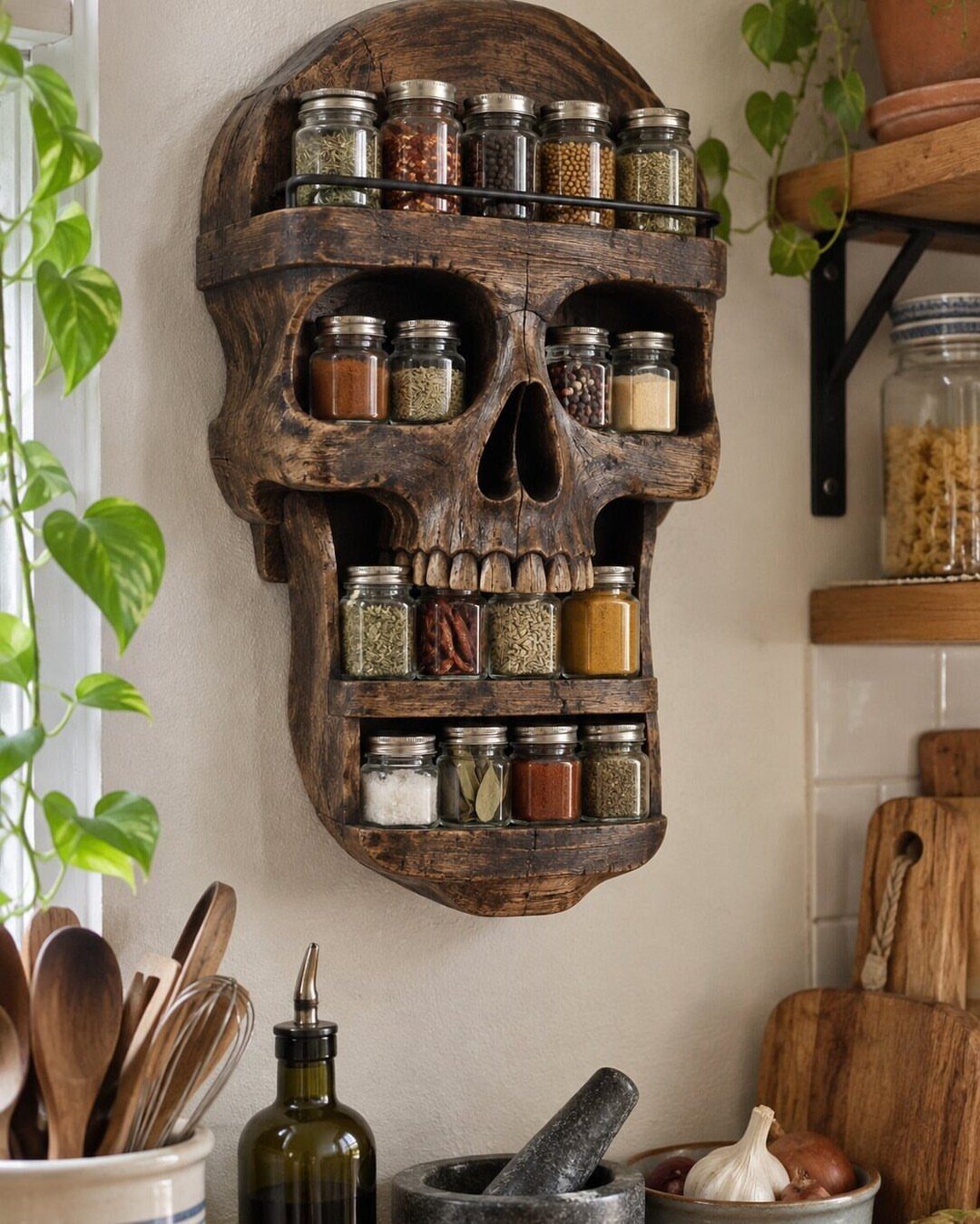
A carved wooden skull on the wall that doubles as a spice rack is a bold choice, and it suits a cook who wants the kitchen to show some personality.
The small glass jars sit in the carved shape, so the storage is the decoration.
Because it hangs, find a stud or use proper wall anchors, and keep the jars small, since glass adds weight fast. Renters should read the lease before putting a single screw in the wall, since some landlords forbid it.
Hang it where you can reach every jar without a stool, ideally near the stove. Grease and sauce splatters mark bare wood, so mount the rack to one side of the burners and wipe it down after cooking.
29. Spice Rack with Grinders
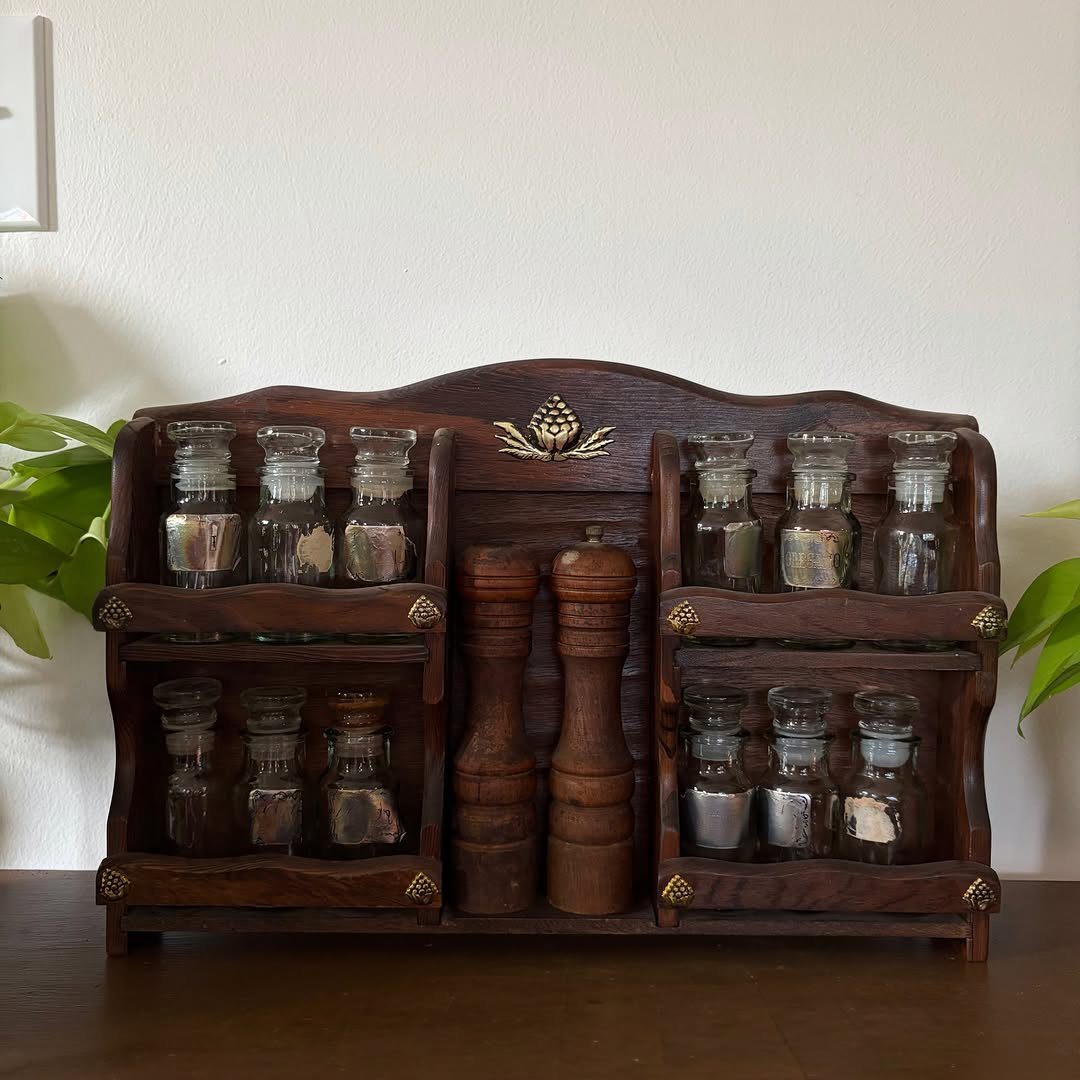
Salt and pepper get used more than any other seasoning, so a rack that holds the grinders next to the jars makes sense. Two shelves of dark wood hold small glass jars on one level, with the wooden grinders alongside.
Measure your grinders before buying, since they are taller than most spice jars and need a shelf with enough clearance. Put the grinders where you can grab them one-handed.
Dark wood stands out well against a white wall, and I’d keep the rack on the counter or wall near the stove. Wipe it down after cooking splatters, or the wood will pick up stains.
30. Spice Jar Honeycomb Wall
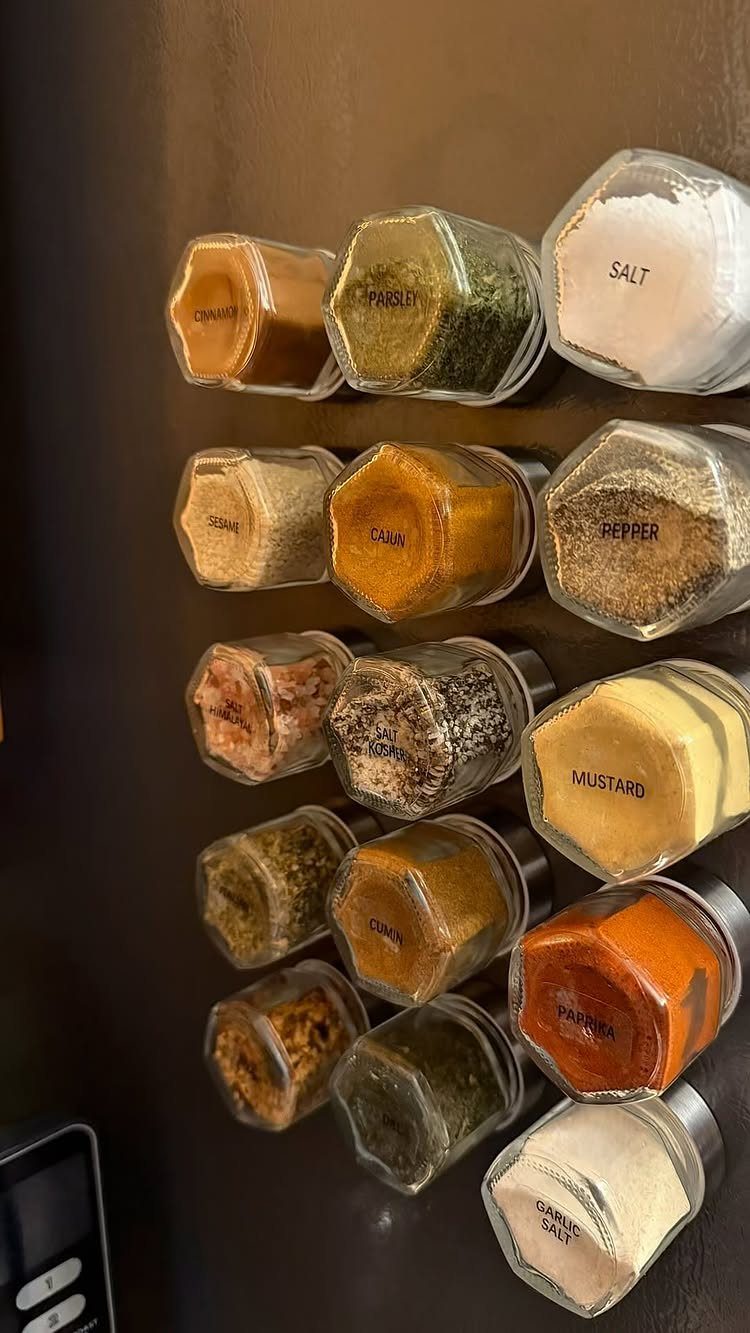
Hexagonal jars fit edge to edge, which is why a honeycomb wall holds so many in so little space. Labels like Salt, Mustard and Paprika face out, and against a dark brown wall the glass stands out well.
Plan the layout on the floor first, then mark the wall with painter’s tape or paper templates before you mount anything. Each hex jar depends on its neighbors lining up, so one crooked mount throws off the whole pattern.
Check that the mounts are rated for the weight of full glass jars, and use anchors or studs. A honeycomb wall works best for renters who already have permission to drill; otherwise, skip it.
31. Wooden Spice Jar Tray
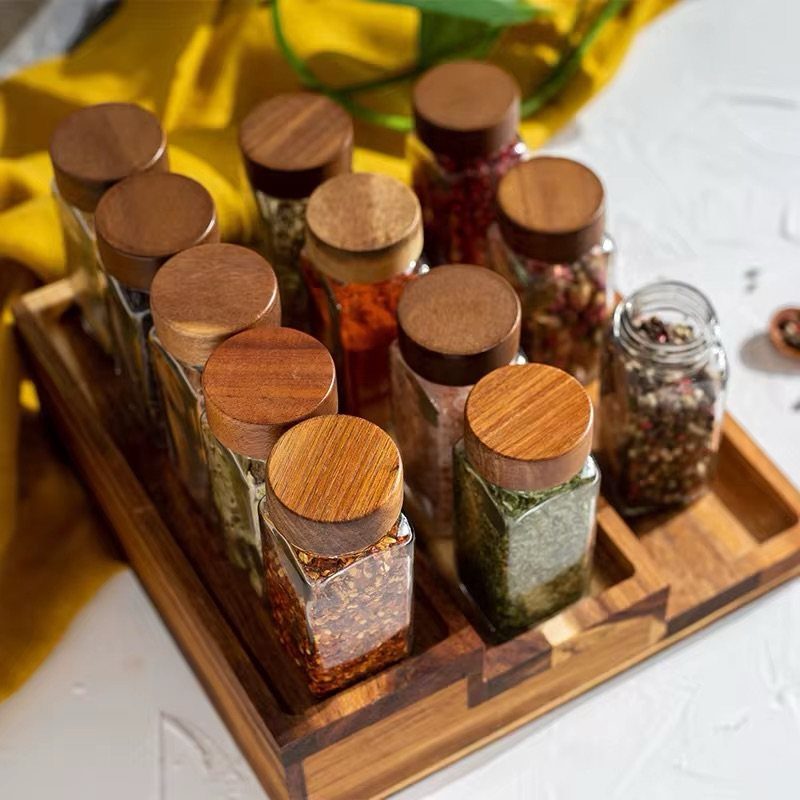
Matching wooden lids on glass jars, all sitting in one rectangular wooden tray, read as a single set instead of a pile of bottles. Lift the tray and every spice comes with it.
That makes it handy for a cook who seasons at the stove and wants to carry everything over in one trip.
Measure your shelf or drawer before buying, and compare the jar height to the clearance above it, since wooden lids add a little to the top.
Keep the jars the same size so the rows line up, and label the lids so you can read them from above. Wood stains from splatters, so wipe the tray after cooking.
32. Wooden Spice Jar Holder
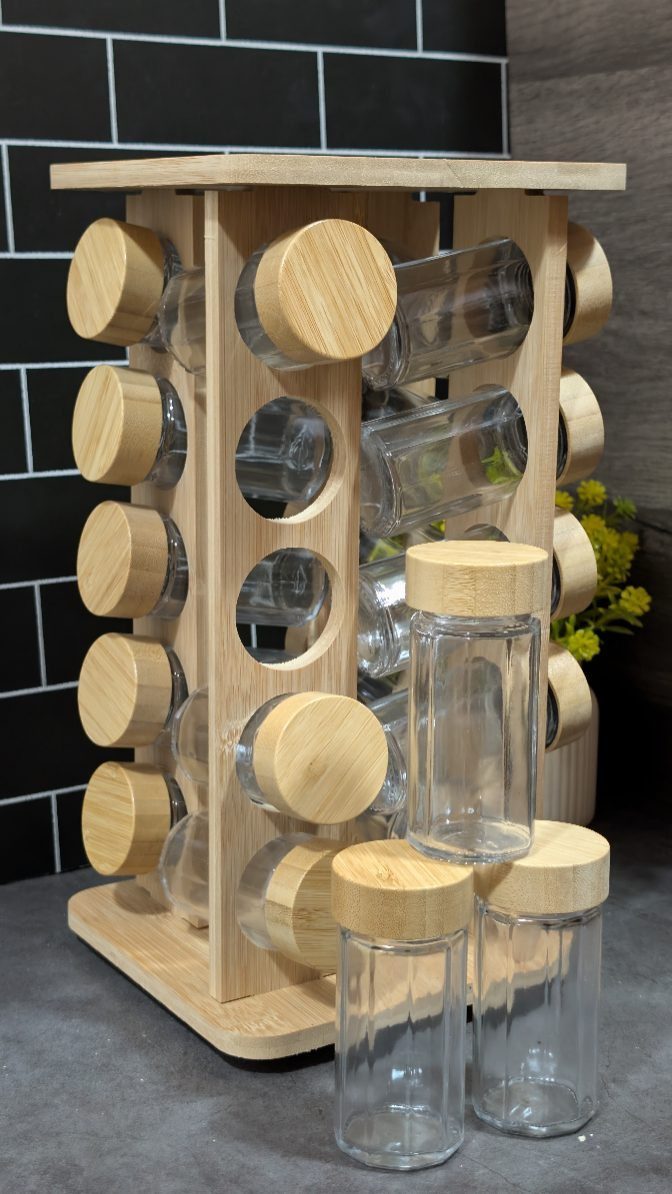
Individual round slots hold each jar upright and separate, so nothing slides or knocks into its neighbor.
Bamboo lids on clear glass read warm and tidy, and the jars should lift straight out of their slots so you can grab one with a single hand while you cook.
Check the slot diameter against your jars before ordering, because a jar that is a hair too wide won’t seat at all. Counter depth matters too; leave room behind the holder so it doesn’t crowd a backsplash.
I’d fill the slots with the spices you reach for most and keep the rest in a cabinet. A full holder is easier to use than a crowded one.
Frequently Asked Questions
Where is the best place to store my spices?
A cabinet or drawer is the best home for spices. A cool, dark spot slows the damage that heat and light do, so pick one that isn’t right beside the stove or oven.
Skip the countertop unless you have no other room, and if a counter rack is your only option, set it a little back from the burners, since steam and grease settle on jars and wood.
Can I leave my spices in their original containers?
Yes, as long as those containers are glass. Glass jars show the level at a glance, and unlike plastic they hold no leftover smells and don’t react with the oils in ground spices.
If your spices come in plastic, buy them in glass jars next time or move them into a matching glass set. Save plastic for camping trips and picnics, since a dropped jar in a backpack or cooler won’t break.
What is the best way to label my spices?
Match the label spot to how the jars sit.
In a drawer, where you look down at the tops, put the name right on the lid with a strip of masking tape and a marker, or print it with a label maker.
On a tiered cabinet rack, put the label on the front of each jar near the top so the name shows over the jar in front. Labeling both the jar and its lid keeps lids from getting mixed up.
What size spice containers should I buy?
Go small for most spices. Ground spices lose flavor the longer they sit, so a small jar is the smarter buy for anything you rarely use, and only staples like black pepper or cinnamon earn a big container.
A small shaker container works well for refilling everyday staples, with larger bulk bags stored somewhere else.