
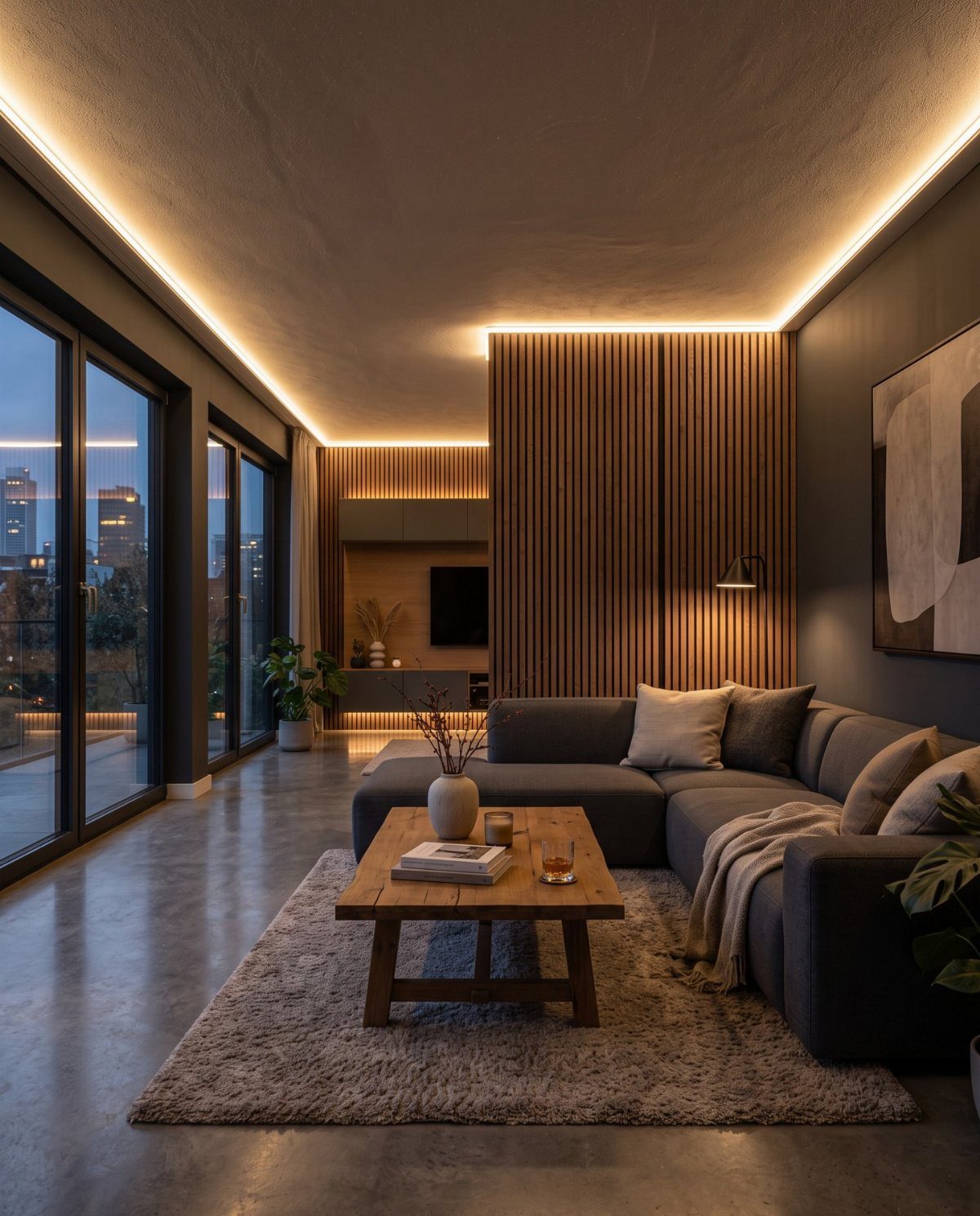
A pale ceiling over a recess carries the glow into every corner, while a dark, deep one soaks up a good share of it, so match the idea to the job the light has to do and the surface it lands on.
The list runs from Cove Lighting on Crown Moulding up near the ceiling to Cove Lighting on Staircase Steps down by the floor, and from dry living rooms to a Backlit Shower Niche that gets sprayed directly.
Under-cabinet Lighting is the one idea here that puts light on the counter itself; the cove ideas give soft background glow, and Controls and Layered Lighting covers how to combine the two.
1. Cove Lighting on Crown Moulding
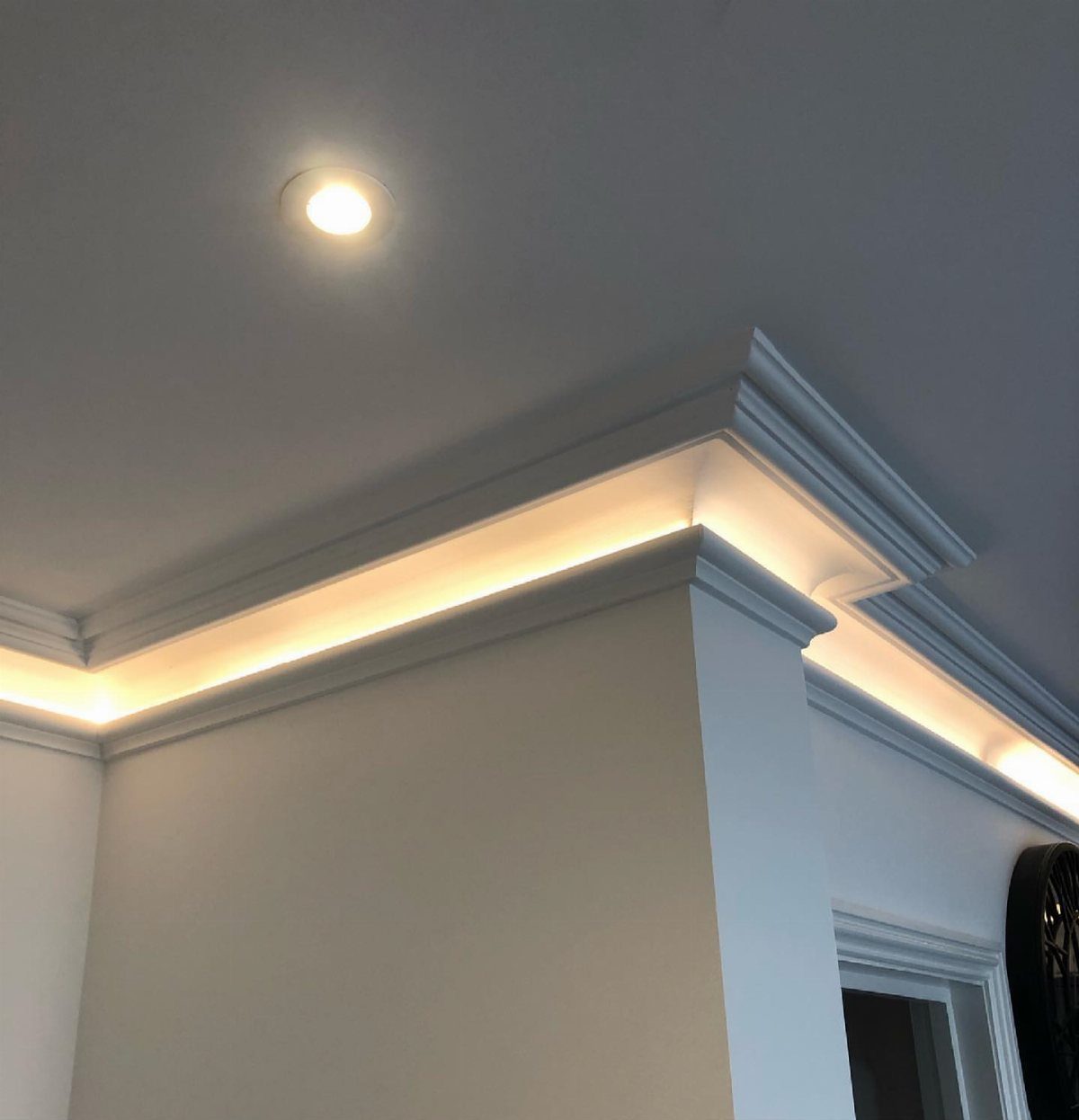
Moulding with a deep enough lip turns the ceiling line into a light source. The strip sits behind the lip, so the glow washes up and across the ceiling while the strip itself stays out of sight.
I like warm white here.
On a grey ceiling like this one it gives a soft gradient that fades from the edge. Cool white would flatten the moulding’s profile and make the paint look colder.
Check the sight line from a seated position before you stick anything down. If you can see individual dots, move the strip back.
2. Cove Lighting on Staircase Steps
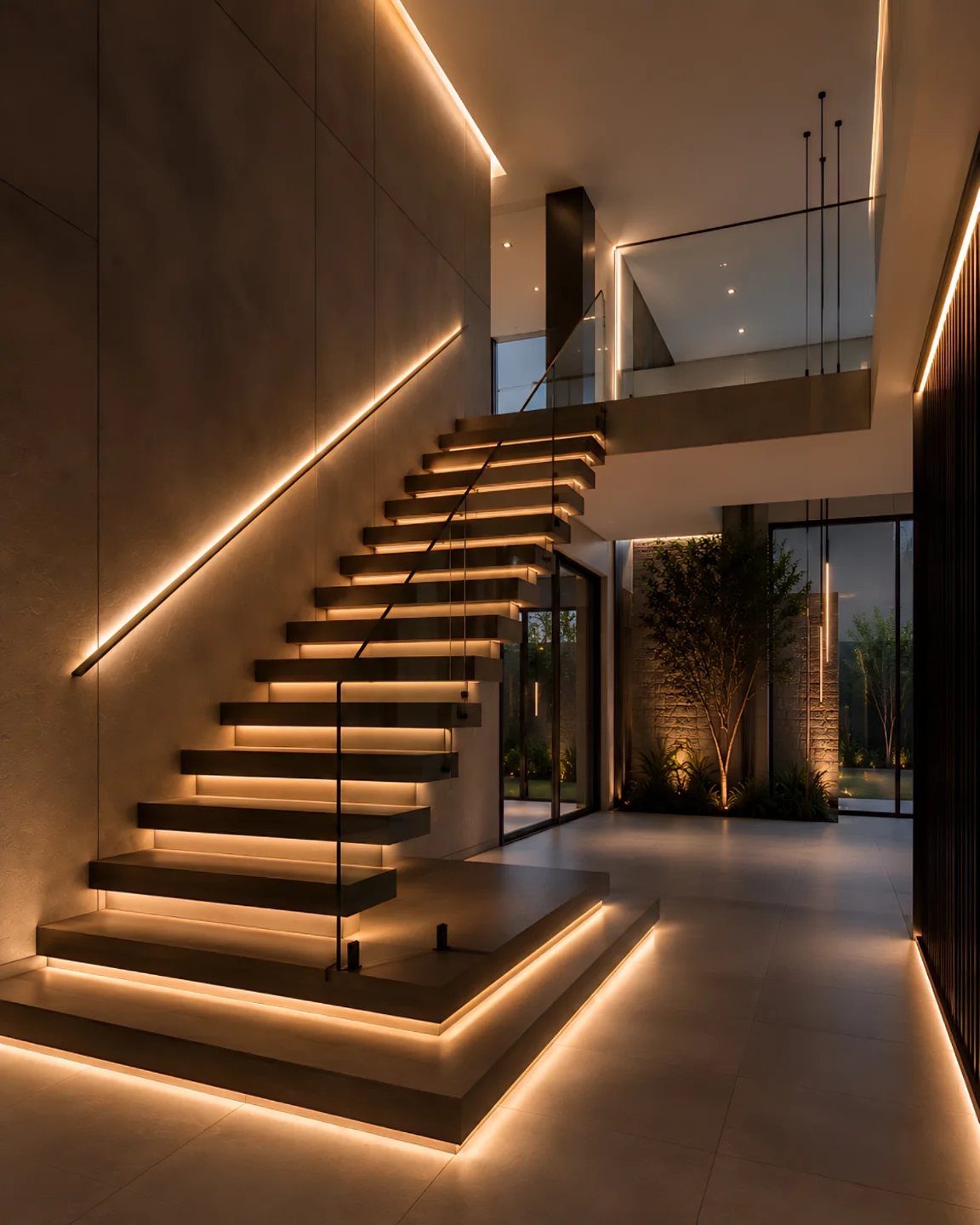
Each tread gets its own line of light when the strip runs under the front edge, and that is what makes a floating staircase look like it hovers.
A second run along the wall adds a continuous guide beside the steps, so the edge of each tread stays easy to read in the dark.
Both runs sit low, so they light the steps without glare in your eyes. That makes them useful for late-night trips down, not just for looks.
Mount the strips where you can’t see them from the top landing. Stairs show every flaw in a hidden-strip job.
3. Cove Lighting in Bedrooms
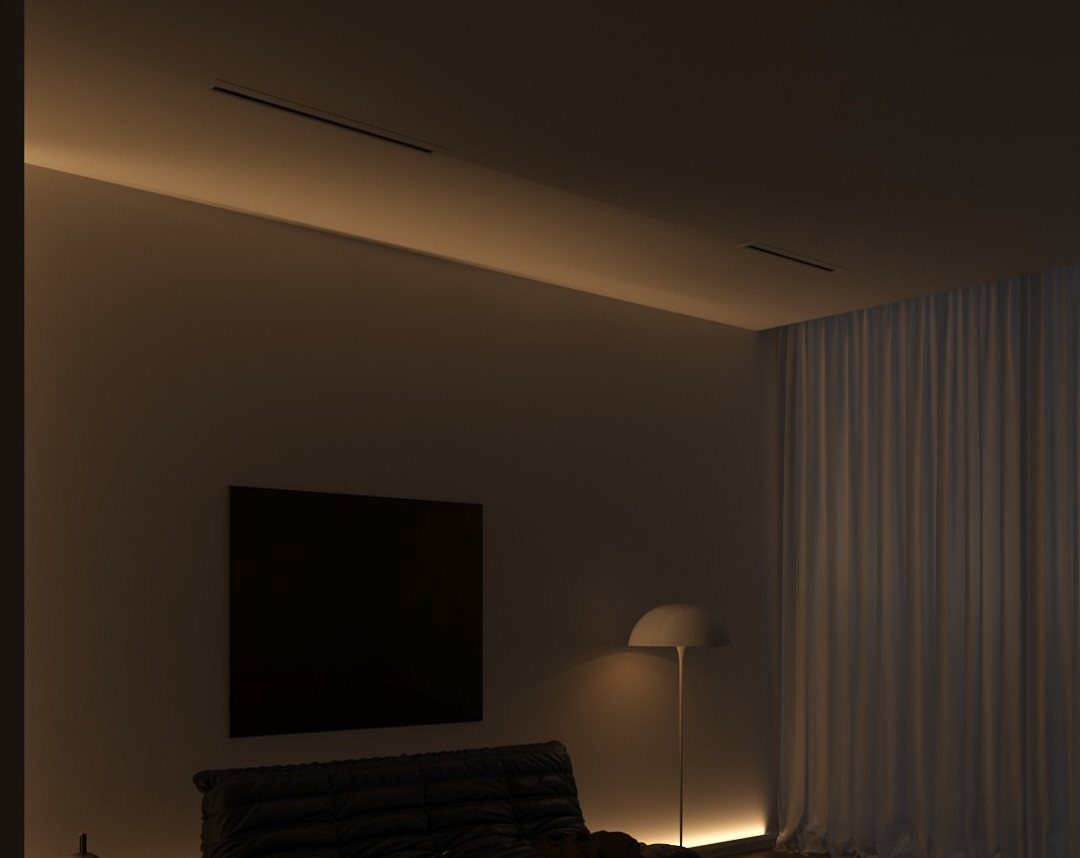
A cove at the ceiling edge over the headboard gives a bedroom a glow with no visible bulb, which is why it suits a calm or romantic room better than a bright overhead fixture.
Put it on a dimmer. A cove that can drop to a low glow at bedtime is far more useful than one that only has on and off, and I would pick warm white over anything cooler.
A floor lamp, like the one here, covers reading and gives you a second, separate layer to switch.
4. Cove Lighting in Living Rooms
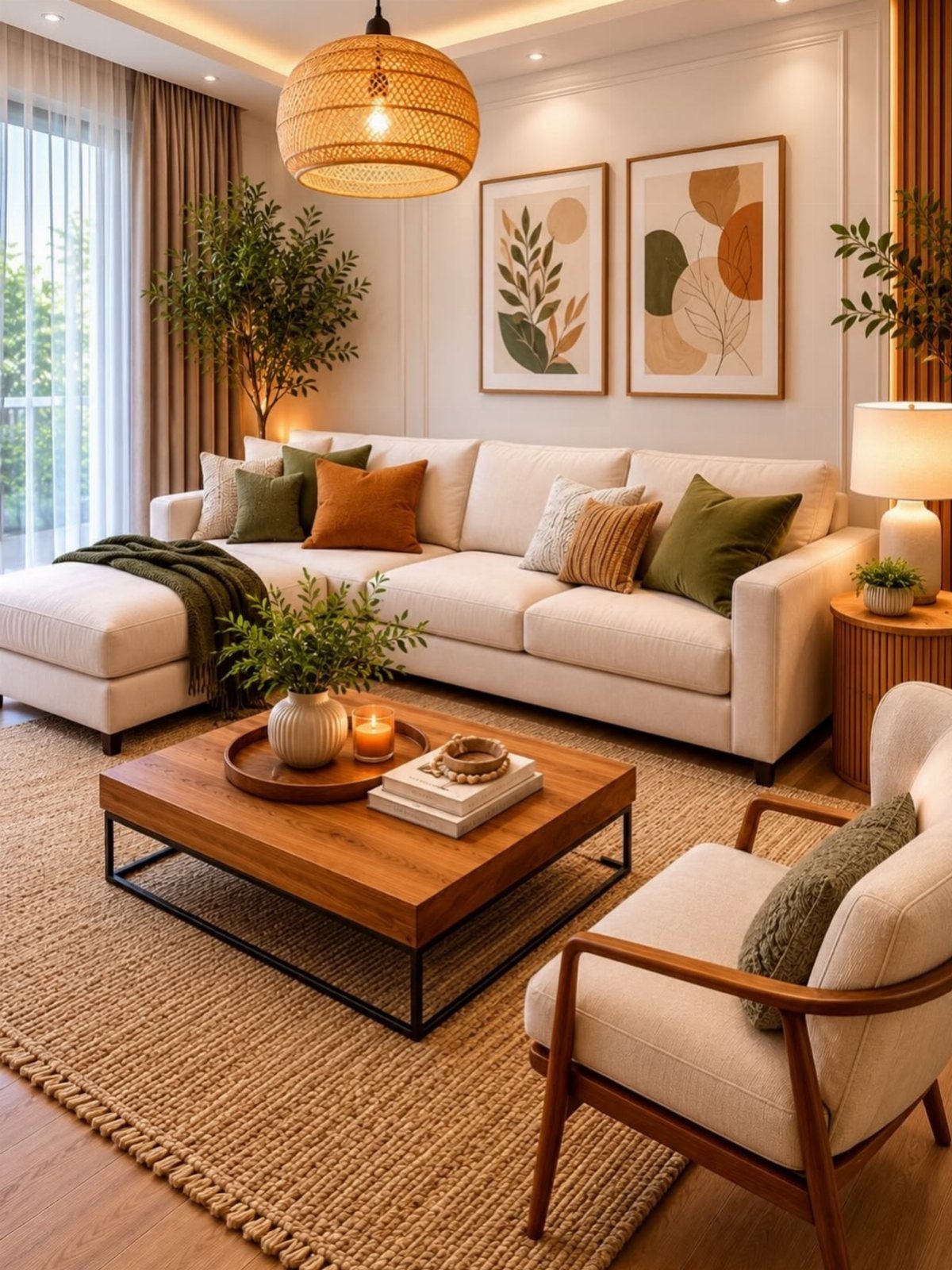
Let the cove handle the ambient light and keep the focal pieces for something else.
A wicker pendant, a sectional or a jute rug reads better when the ceiling glows softly behind it than when a bright overhead light flattens everything.
Run the cove along the wall that holds your media center or main feature, and it will frame that spot first. Warm white keeps white upholstery from looking blue at night.
Put the cove on its own switch so movie nights don’t need every other light on.
5. Cove Lighting in Kitchens
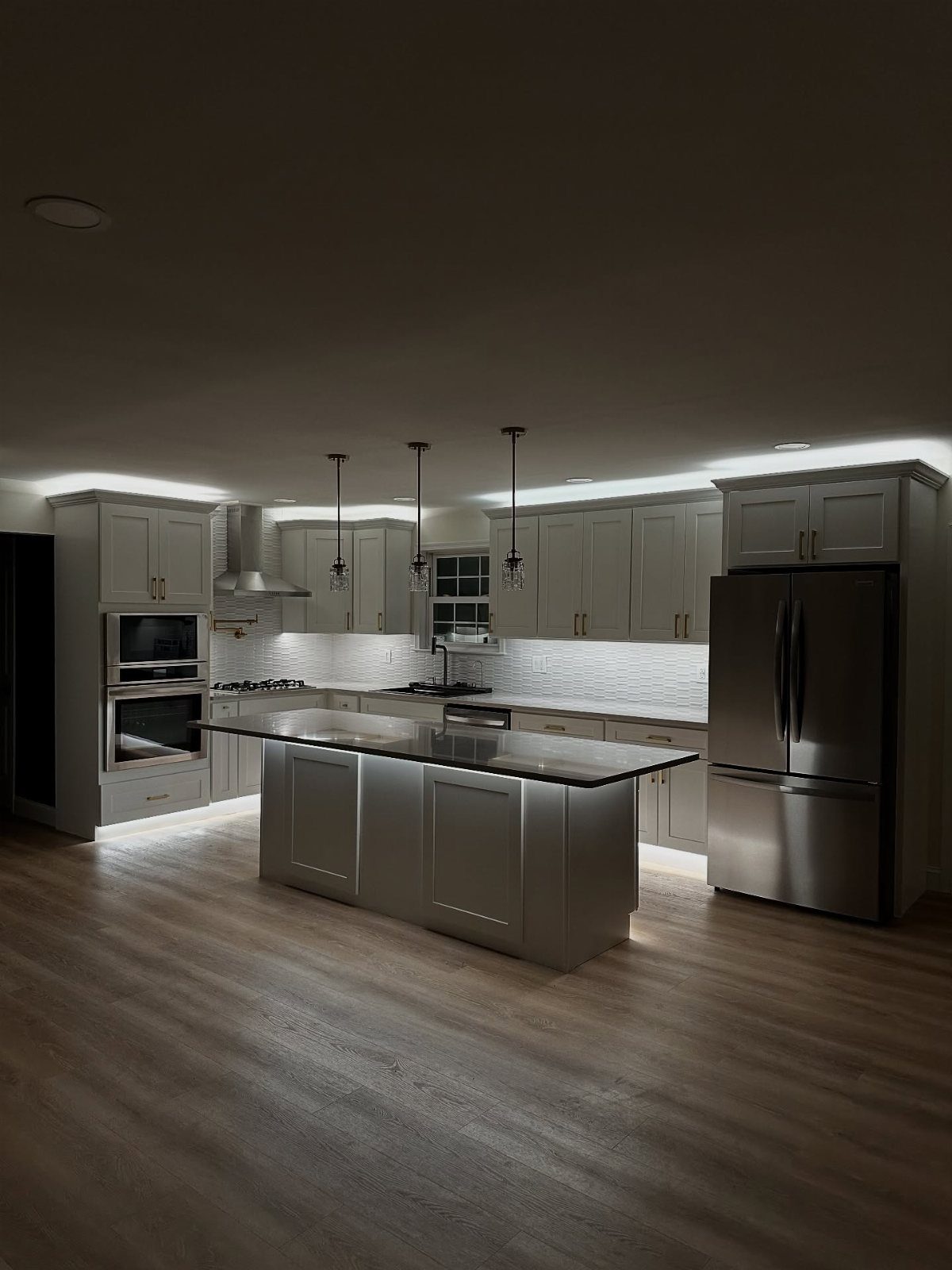
Open space between the top of the upper cabinets and the ceiling is all this idea asks for. A strip tucked up there sends light onto the ceiling, and the whole kitchen looks taller and friendlier after dark.
Be honest about what it does. A cove gives ambient light, not light at the counter, so the island and prep areas still need their own fixtures.
Grey cabinets suit warm white well, since cool white can make them look flat and industrial.
6. Cove Lighting in Bathrooms
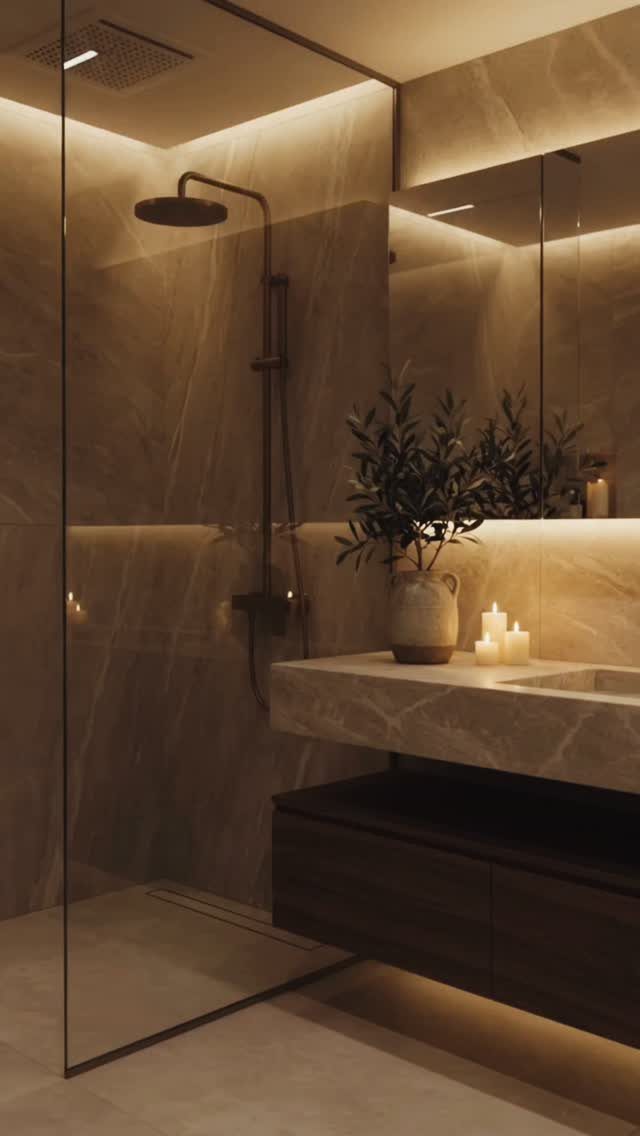
Marble and glass catch light well, which is why bathrooms handle a cove so easily. A strip along the ceiling gives a spa-like wash, and one near the mirror adds brightness reflected back at your face.
Bathrooms are damp, so look for a strip rated for damp or wet locations, and keep the power supply out of the splash zone.
A second run under a floating vanity works as a low night light, bright enough for a midnight trip without the sting of the main fixture. I would put it on a separate switch from the ceiling cove.
7. Cove Lighting in Foyers and Hallways
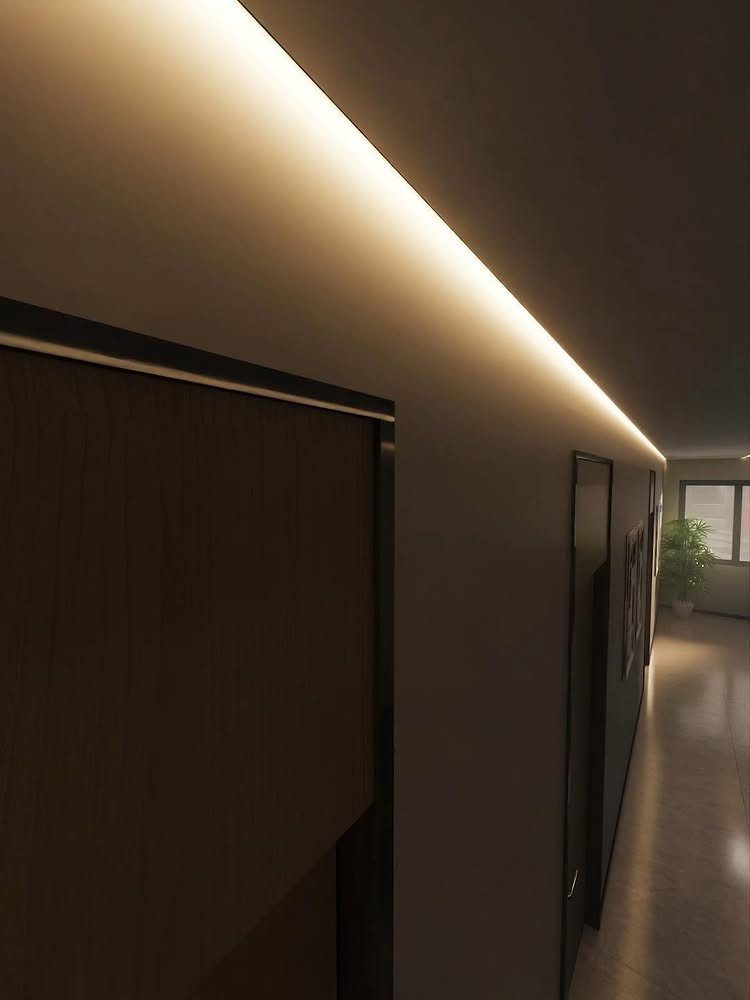
A strip tucked along the ceiling edge pushes light outward, which is what lets a narrow hallway read wider than it is.
A cove run along the ceiling line in a hallway spills warm light down the wall below it, so the wall itself ends up softly lit.
Art hung under a cove picks up a gentle wash of that light, which saves you from wiring separate picture lights.
I would keep the color warm and put the strip on a dimmer, so the hall can drop to a low glow at night.
8. Backlit TV Feature Wall
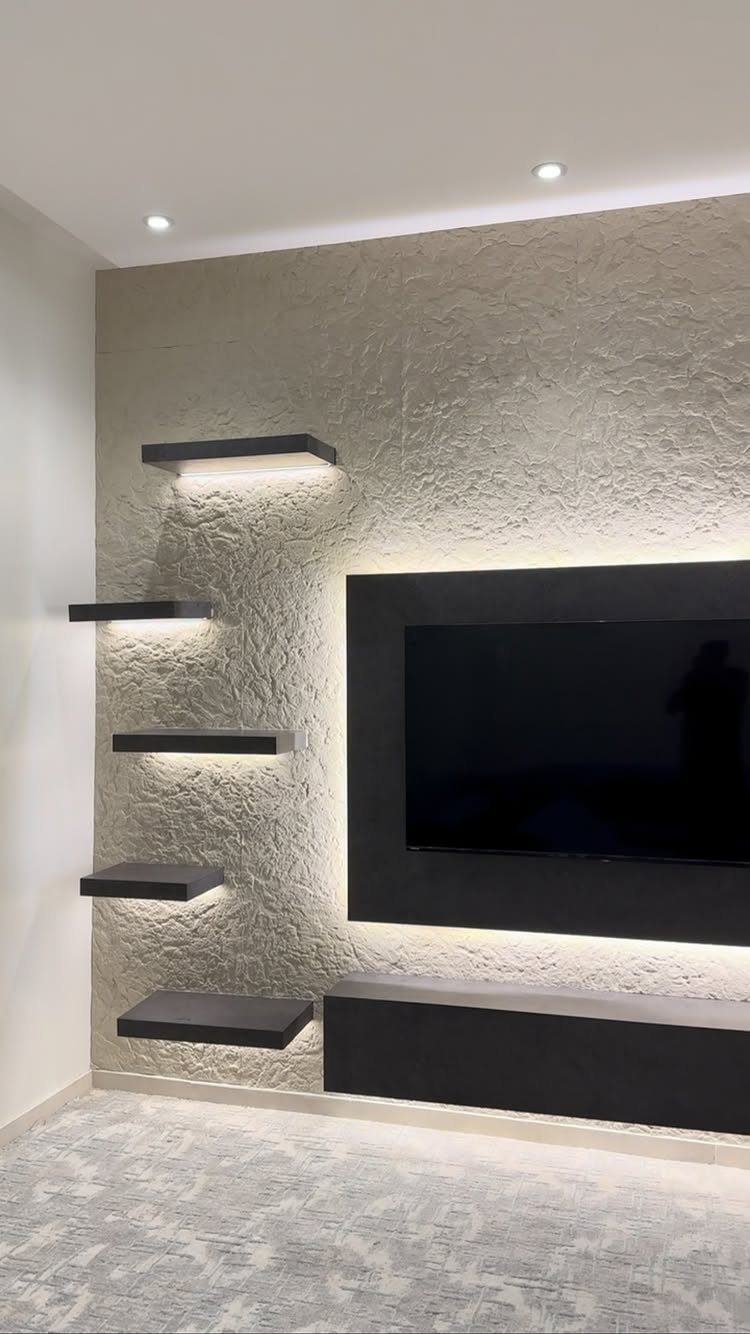
Textured plaster looks best with light grazing across it, and a strip hidden behind a recessed panel does exactly that. Add strips beneath each floating shelf and the objects on top get their own pool of light.
Mount the shelf strips toward the back of the underside so they stay out of view. Warm white suits beige and black together, while cool white would turn the wall grey and flat.
I would run the shelves and the TV panel on separate circuits if you can.
9. Illuminated Wall Niche
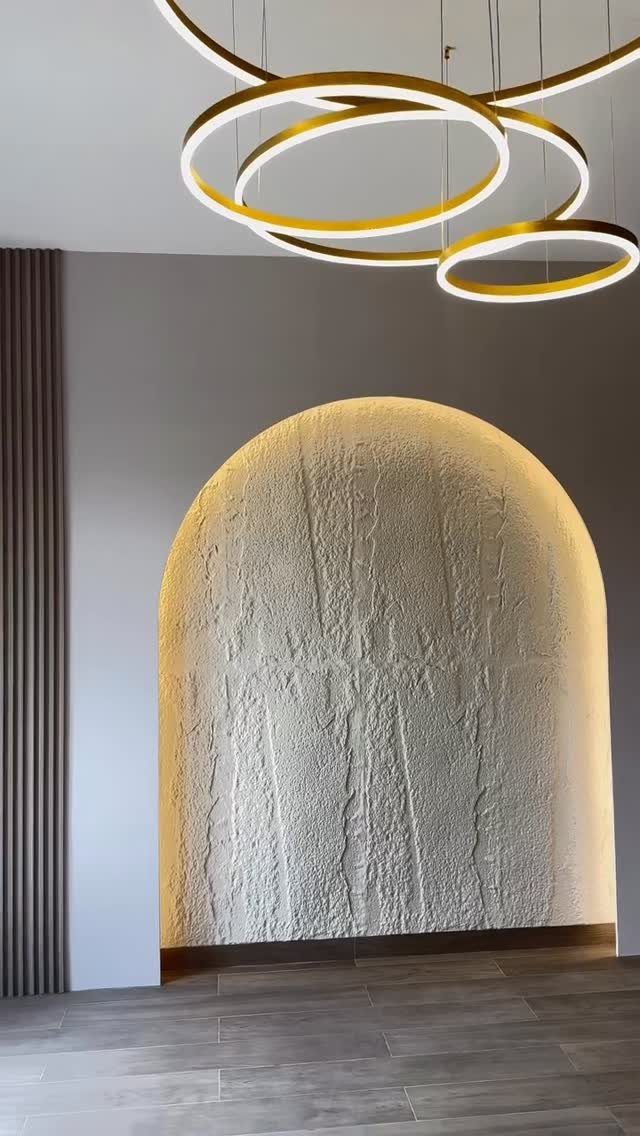
An arch is a shape you want to see outlined, and a strip along its edge draws that curve in light. Flexible strip follows a curve far better than a rigid bar, so choose that.
Warm white also picks up the gold of the pendants overhead, which a cooler tone would not. Set a single object in the niche, like a vase or a small sculpture, and let the glow do the rest.
A textured finish catches the light well. Smooth plaster would look flatter.
10. Backlit Shower Niche
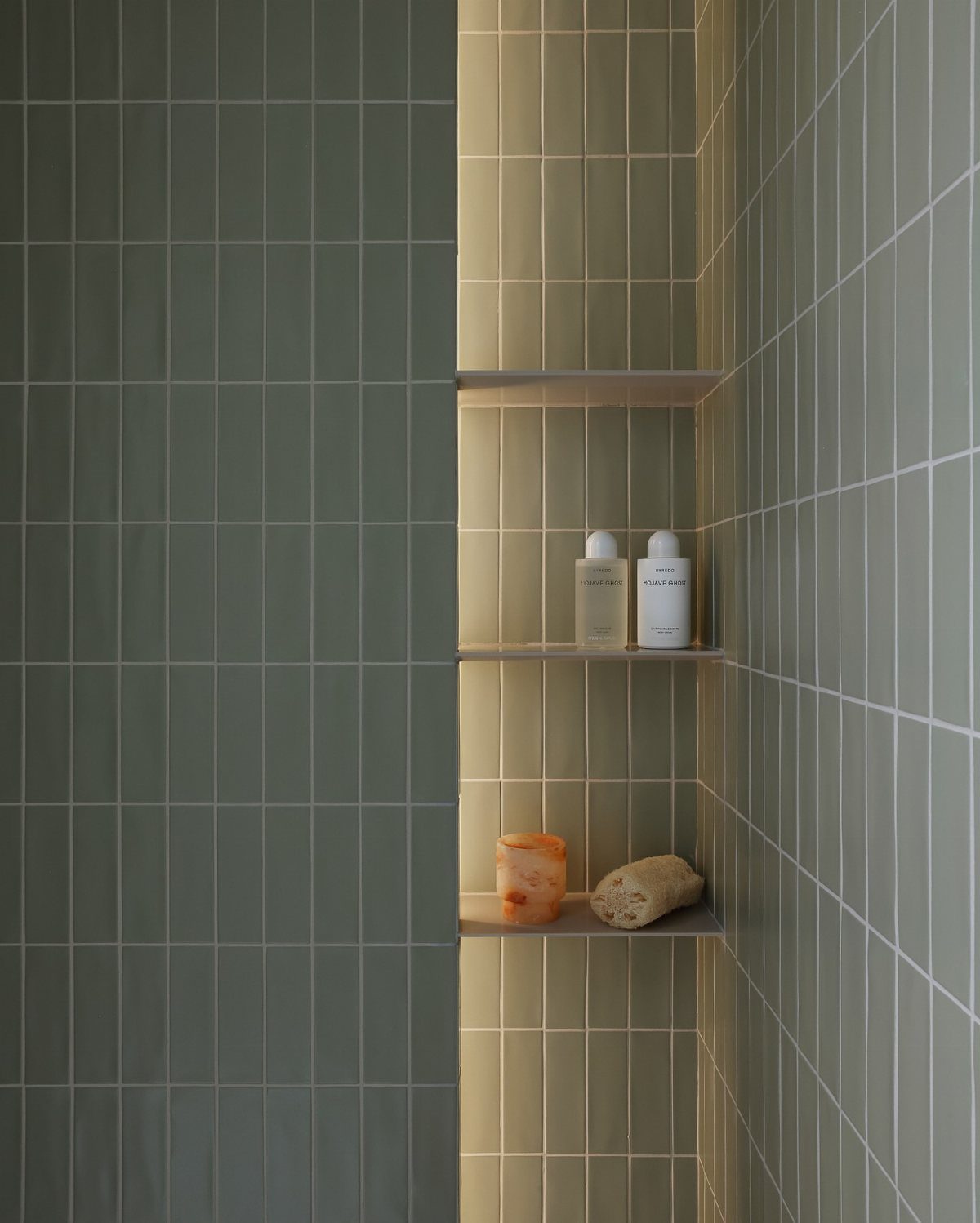
Light from the sides of a shower niche turns a storage nook into a small display, and it keeps bottles from disappearing into the shadows.
Since a shower niche gets sprayed directly, choose an LED strip made for wet locations and mount the power supply outside the wet zone. Seal every edge where the strip meets tile.
I would decant products into matching bottles and keep to two or three stones or accents. Warm white flatters tile and glass far better than cool.
11. Under-cabinet Lighting
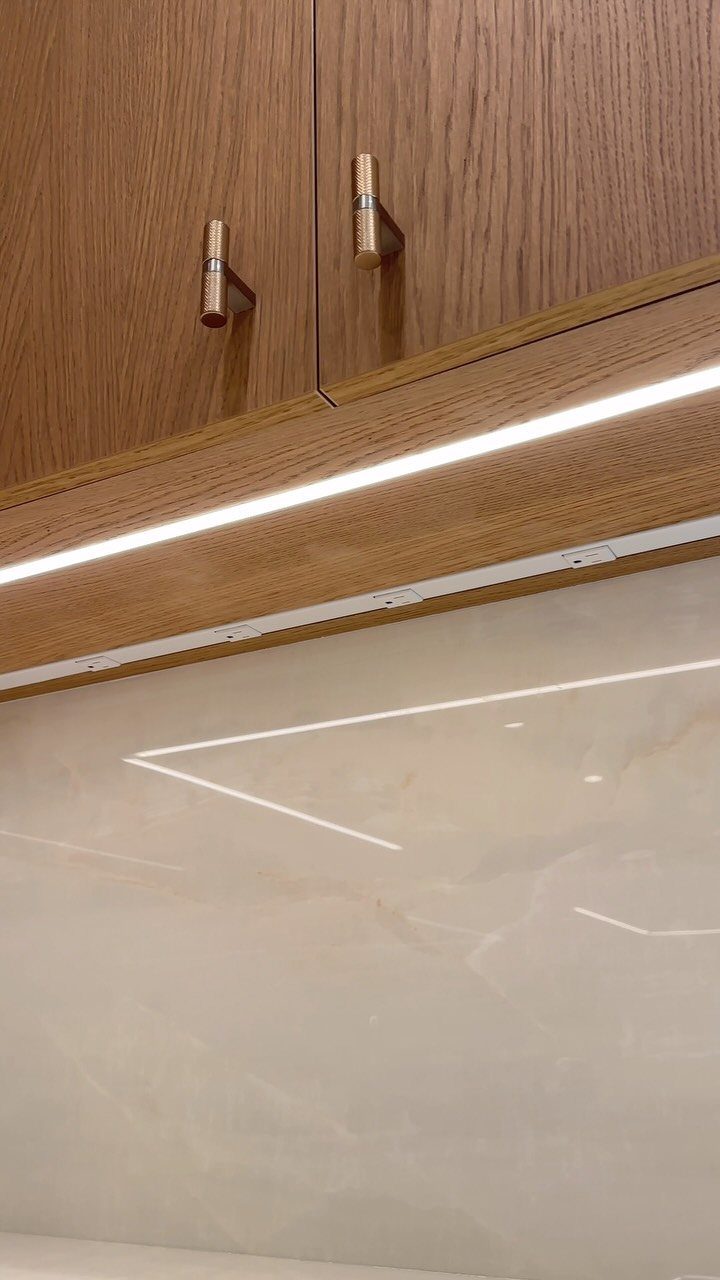
Unlike the kitchen cove above the cabinets, this strip reaches the counter, so it’s the one that helps with chopping and reading recipes.
Polished marble bounces light straight back, and a strip set at the front edge will show up as a bright reflection. Tuck it behind the front lip of the cabinet instead.
Warm white also brings out the grain of wood and the gold of the handles. Cool white drains the warmth out of both, so a 2700K–3000K strip is the better pick.
Cove Placement and Reflection
A cove only works if the light has something to bounce off, so the surface above the recess matters as much as the strip.
Lighter colors reflect more light and darker ones absorb it. A pale ceiling bounces the glow to every corner, while a deep, dark one swallows much of it and looks dim.
Height and angle set how far the light travels. A strip close to the surface makes a short, bright band near the edge.
More distance lets the glow spread wider and fade more gently. Aim the light at the ceiling or wall instead of out into the room, so the reflection does the work.
LED, fluorescent and incandescent can all sit in a recess. They differ in efficiency and in the look they give, so choose by the effect you want.
Before you commit, tape the strip in place and check it at night.
Controls and Layered Lighting
Set the general brightness of the room first.
Task and accent lighting come after, once you can see how much light each spot still needs. A cove is a good base layer because it fills a space with soft light and never points at anything in particular.
LEDs dim, so one strip can serve a bright cleanup hour and a quiet evening.
Smart-home controls go further: they let you adjust both brightness and color temperature, so the same cove can run cooler in the morning and warmer after dinner.
Before buying, check that the dimmer or smart controller is made for LED strips and matches the power supply. Mismatched parts often flicker or buzz at low settings.
Add task lights next, then accents, and give each layer its own control so you can mix them by activity.
Frequently Asked Questions
What is indirect lighting?
Indirect lighting is light aimed at a ceiling or wall so it bounces into the room instead of shining straight from a visible bulb.
The most common version is cove lighting, where a strip hides behind molding or inside a recess and washes the surface above it with soft light.
The result is general room light with no visible bulb and nothing singled out by a beam.
What are the benefits of cove lighting?
Cove lighting traces the edge of a room with a warm, soft glow, makes a small room seem more open, and gives many rooms a modern look.
It also works well as the base layer of a lighting plan, since you can add task and accent lights on top of it.
Wire it to a dimmer and the same cove can serve as a faint night glow before bed.
What types of cove lighting are available?
Most coves use LED strips or small spotlights, and fluorescent or incandescent sources will work in a recess too.
Whatever you choose has to fit the space, stay out of sight, and sit level with the top of the moulding so it doesn’t throw odd shadows on the ceiling.
How do I set up indirect cove lighting?
Tuck the strip behind a ledge or into a recess, point it up at the ceiling or wall, and let the bounce light the room.
Hold the strip with tape for a night and judge the glow in the dark before you commit to the adhesive backing.
Seeing separate dots of light from where you sit means the strip is too near the front, so slide it deeper into the recess.
White or light paint overhead sends back the most light, while a dark ceiling soaks it up and leaves the cove looking dim.