Mixers run from a $99 stand mixer to paddle mixers listed up to $29,999, and the material picks the machine, not the budget.
Viscosity sets the class: water is 1 centipoise, while heavy-duty mixers are built for putty and pastes above 750,000. Then match batch size, because a bowl or tank too big or too small mixes poorly.
1. Hand Mixers
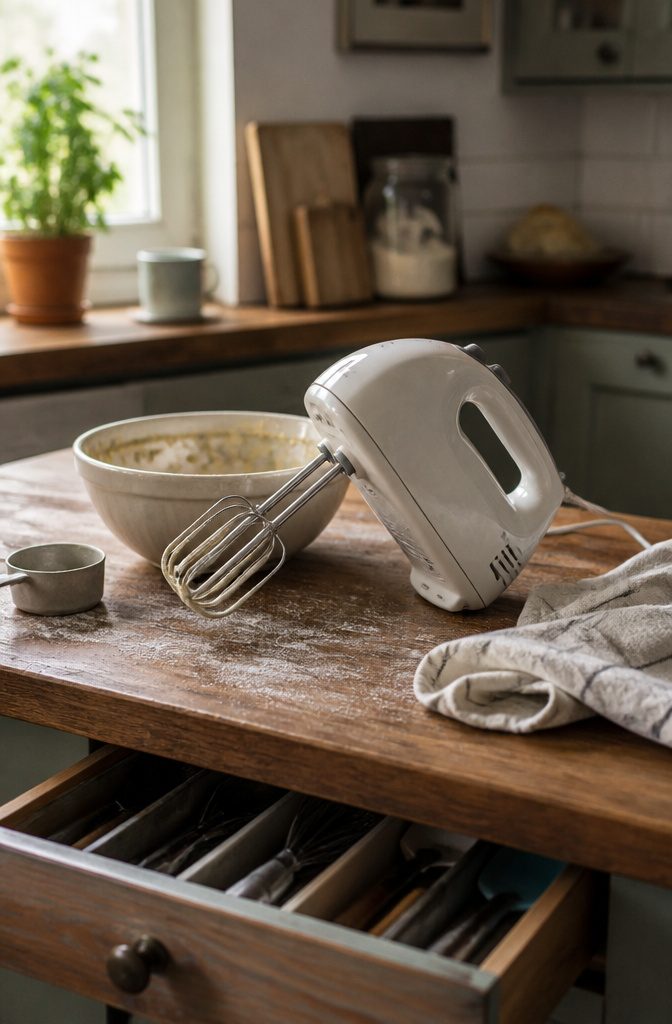
A hand mixer is a motor in a handle with two removable beaters, and nothing else: no stand, no locked-in bowl.
You hold it, so it works in any bowl, pot, or measuring cup you already own. That suits cake batter, soft cookie dough, whipped cream, and quick jobs like mashing potatoes or beating a few eggs.
The cost of that freedom is your arm.
A stand mixer carries its own weight and frees your hands; a hand mixer doesn’t, so a long whip or a stiff dough means a tired wrist and a bowl you have to steady with your other hand.
I’d skip it for heavy bread dough, which strains the motor. For a renter with a small kitchen and a tight budget, though, it fits in a drawer and covers most weeknight baking.
2. Eggbeaters
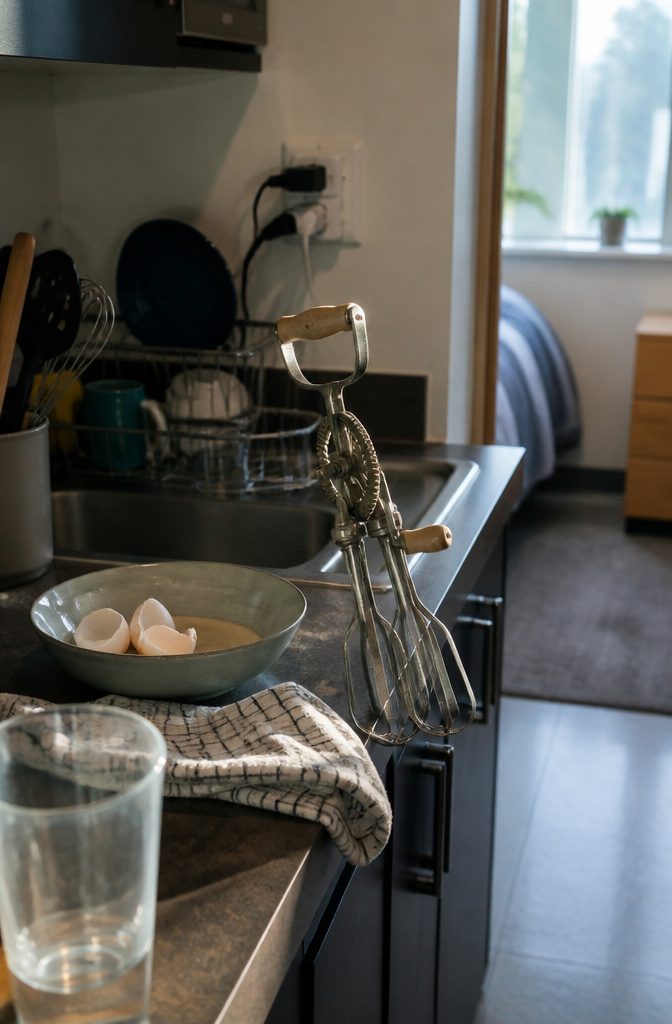
A hand-cranked eggbeater has no motor and no cord.
You turn the crank, gears spin the beaters, and your wrist sets the speed. The basic idea is old: a mixer with rotating parts was patented in 1856.
It still earns a spot in the drawer for small jobs.
Whisking a couple of eggs, loosening pancake batter or whipping a little cream goes quickly, and it works anywhere without an outlet, whether that’s a campsite, a dorm or a rental kitchen with one overloaded socket.
It’s also quiet, inexpensive and easy to wash.
It falls short on anything heavy or large.
Thick batter, cookie dough and big batches stall the beaters and tire your arm fast, and one hand stays busy cranking while the other steadies the bowl. For those jobs, a motorized mixer is the better choice.
3. Stand Mixers

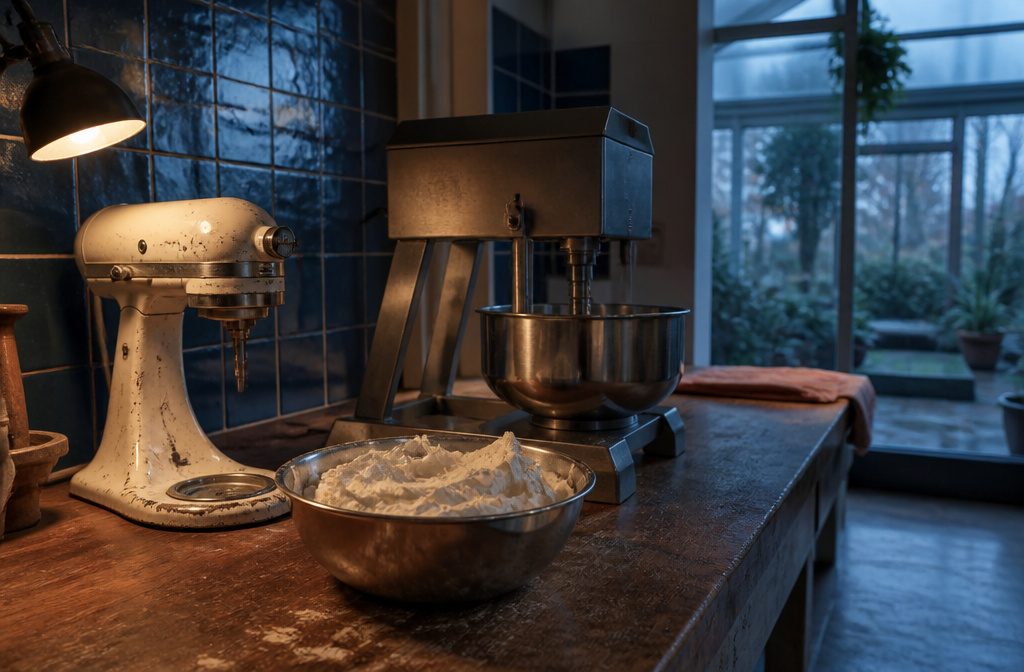
A stand mixer carries its motor in a frame that bears the machine’s weight, and the bowl locks in place while the attachments do the work.
That frame is why it can run a far stronger motor than a hand-held mixer, and why your hands stay free to add ingredients.
Typical home and light-commercial bowls hold around 1 US gallon (3.8 L). Units of 5 US gallons (19 L) or smaller tend to sit on a countertop, while bigger ones become floor models because of their size and weight.
The design is older than most kitchens. Rufus Eastman’s electric mixer dates to 1885, and Herbert Johnston later built a 20-gallon (80 L) bakery mixer, 20 times the size of a typical home bowl.
4. Planetary Mixers
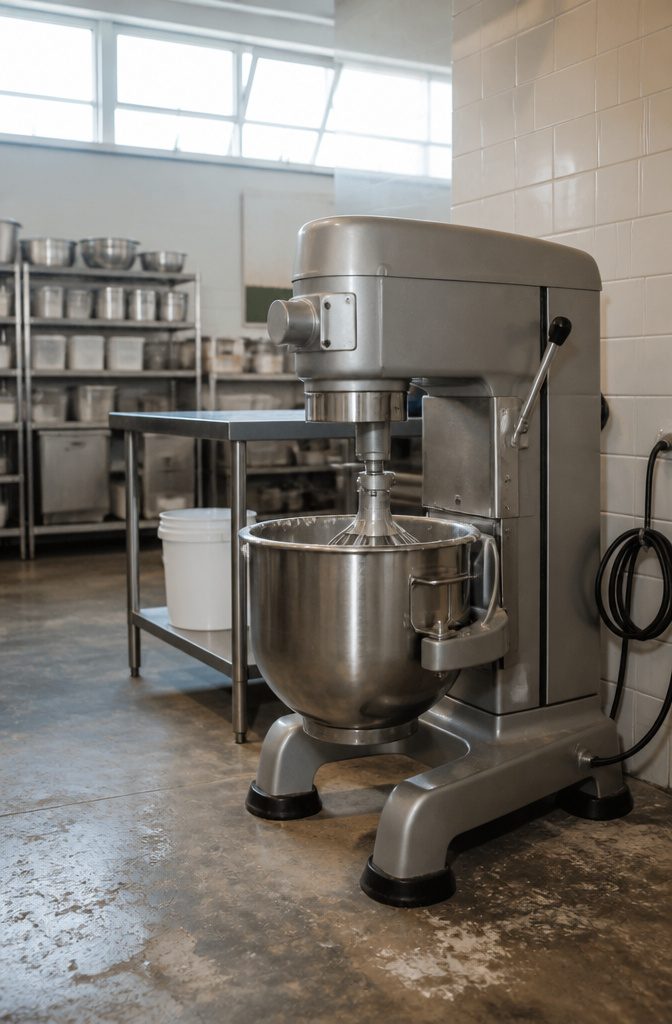
The agitator travels in a circle around a bowl that stays put, which makes the planetary mixer the generalist of the group.
Swap the attachment and the same machine handles dough, creams, ointments and gels. Commercial units run $6,500–$14,300.
Against a spiral mixer, the planetary wins on range, because it can whip and blend where a spiral cannot.
It loses on dough. A spiral mixes the same batch faster, leaves less under-mixed dough and creates less friction heat, so pizza, bagel and naan doughs belong in one.
In a planetary, the top and bottom of the bowl can mix unevenly, and pockets of dough stay underdeveloped.
It also draws a lot of power and slows down on large batches. I’d buy one only if dough isn’t the main job.
5. Spiral and Dough Mixers
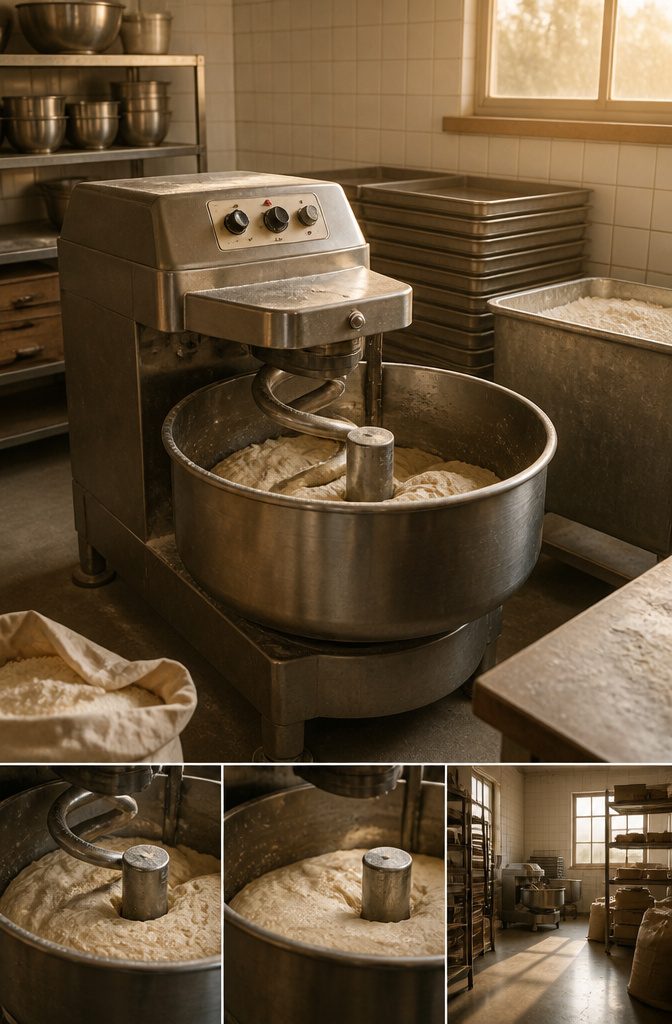
A spiral mixer does one job.
The spiral-shaped agitator turns one way while the powered bowl spins the other. That counter-rotation mixes a batch faster than a similarly powered planetary mixer and leaves less under-mixed dough behind.
Less friction also keeps the dough from warming up, so it can still rise properly. Thick doughs like pizza, bagels and naan are where it earns its counter space.
Dough mixers in this category add timers and controls: high speed, low speed and bowl reverse, which you can chain into a program, plus a kneading bar in the center of the bowl.
Sizes vary, and a spiral draws less power than a horizontal unit.
I’d buy one only for bread or pizza in volume. It can’t whip or blend, so if you also make frosting or meringue, you still need a planetary mixer.
6. Horizontal Mixers
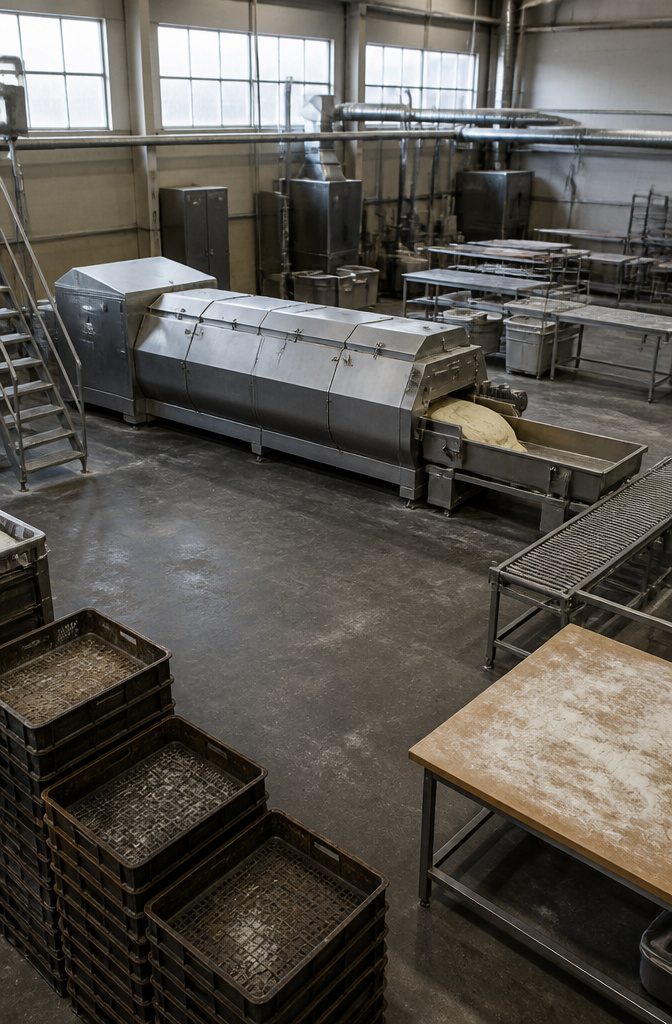
No other mixer turns out as much dough in as little time. A horizontal mixer takes the next batch in while the current one is still mixing, then lets the finished dough slide out into a trough for transport.
That steady rhythm is why large bakeries build production lines around it, and why it makes no sense in a home kitchen or a small shop.
Speed has a cost, and the cost is heat.
Dough rubs against the sides of the bin as it turns, and that friction raises the dough temperature throughout the mix. Some yeast doughs handle that poorly.
If your product depends on cool dough, I’d treat this as a real mark against the machine. A big bakery has to weigh volume against temperature control for each dough it runs.
7. Ribbon Blenders
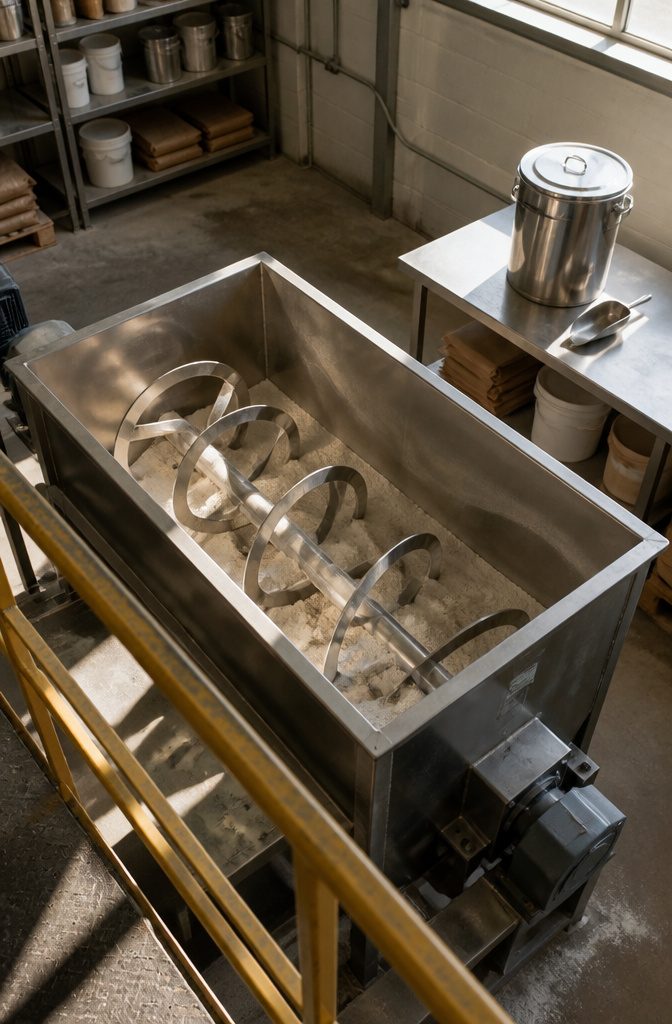
Two helical ribbons on one shaft do the work in a ribbon blender, and they push in opposite directions.
The outer ribbon pulls material from the tank walls toward the center while the inner one sends it back out, so powders and granules fold through each other.
It is one of the three basic types of mixers, and for dry blends I think it earns that spot.
Most batches finish in under 20 minutes, even though tip speed is only about 1.4 meters per second, which keeps fragile ingredients intact.
Power runs about 1 HP per 100 to 200 pounds (45.3 to 90.7 kg) of material. Prices run $980–$1,580.
Upkeep is harder than on a paddle mixer, and very thick or sticky material is better handled elsewhere. Overloading the tank also hurts uniformity.
8. Paddle Mixers
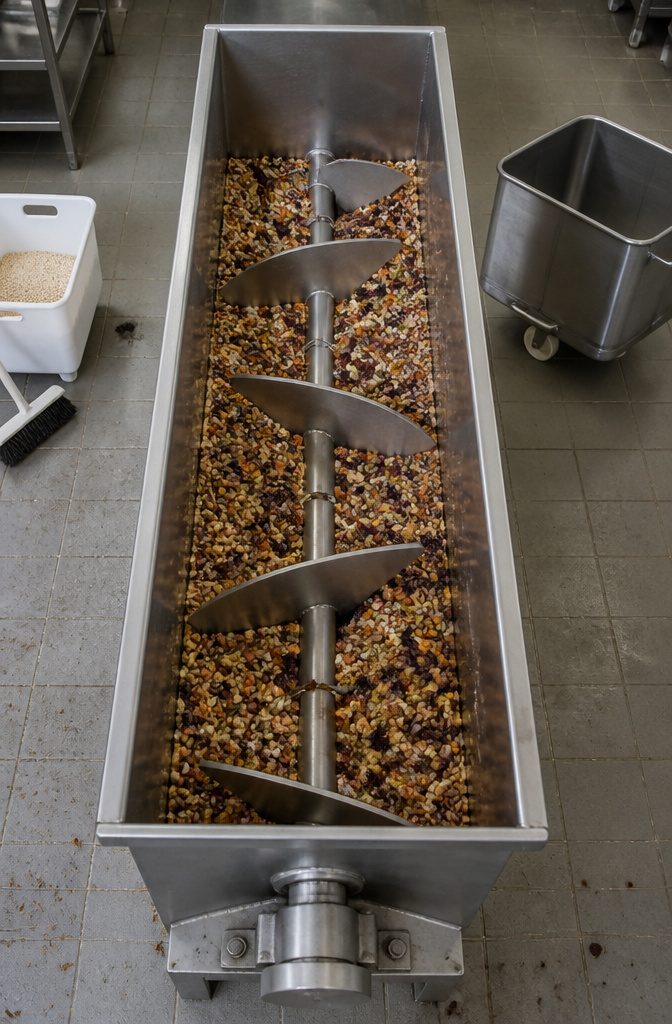
Overlapping, pitched paddles scoop, lift and tumble material in a three-dimensional figure-eight, pulling product from each end to the middle and down the sides.
That low-impact motion lets a paddle mixer handle fragile solids like nuts and glass fibers without breaking them. It also suits blends where particle size, density and thickness vary, such as salad mixes, rubber or specialty chemicals.
Dual shafts add kneading and folding, which spreads binders and colorants evenly. In food plants, paddles are a common pick for fresh fruit, meats, refined grains and spices.
Paddle is one of the three basic mixer types, but it’s the costly one.
Listings run $28,999–$29,999, far above a ribbon mixer. I’d pick it only when the ingredients wouldn’t survive anything rougher.
9. Tumbler Mixers
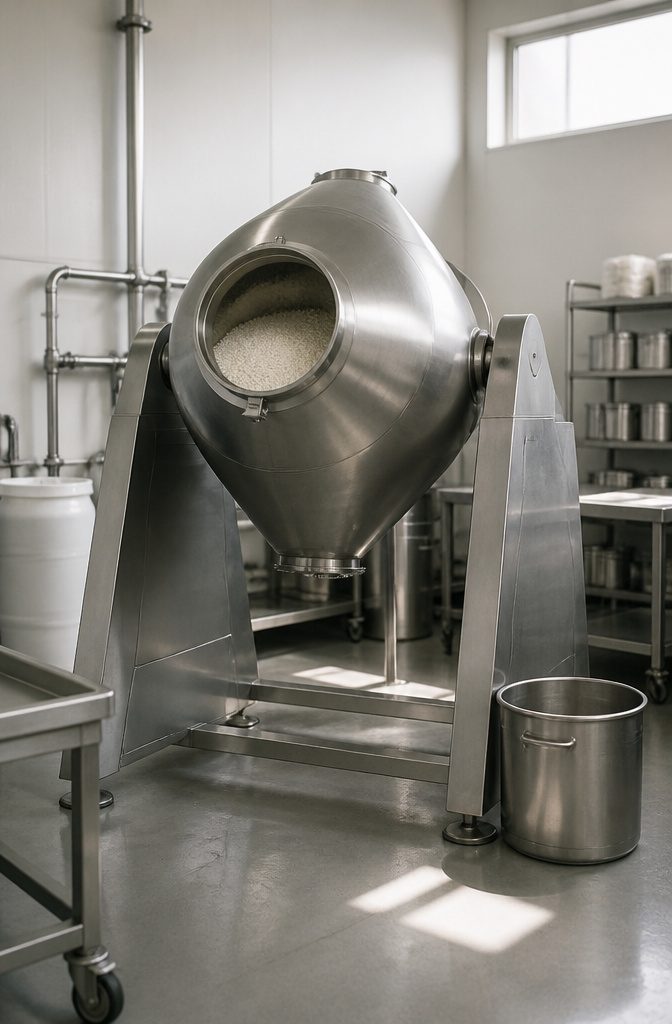
A tumbler mixer is the third of the three basic types, after ribbon and paddle machines. The whole container rotates, and gravity does the work: material lifts, slides, and drops back to the bottom of the drum, over and over.
Nothing inside the vessel moves, so there are no impellers or agitators to crush, smear, or heat what’s being blended.
That makes it the pick for light powders, fragile granules, and anything that has to keep its original shape. Pharmacy, food, and chemical plants use it for that reason.
It works best on free-flowing ingredients of nearly the same size. Common shapes are V-blenders, double-cone, octagonal, and slant designs.
The drawbacks are a large footprint, slower mixing, and a poor fit for thick, high-viscosity liquids. With no internal parts, cleanup is simple, though seals still need regular inspection.
10. Drum Mixers
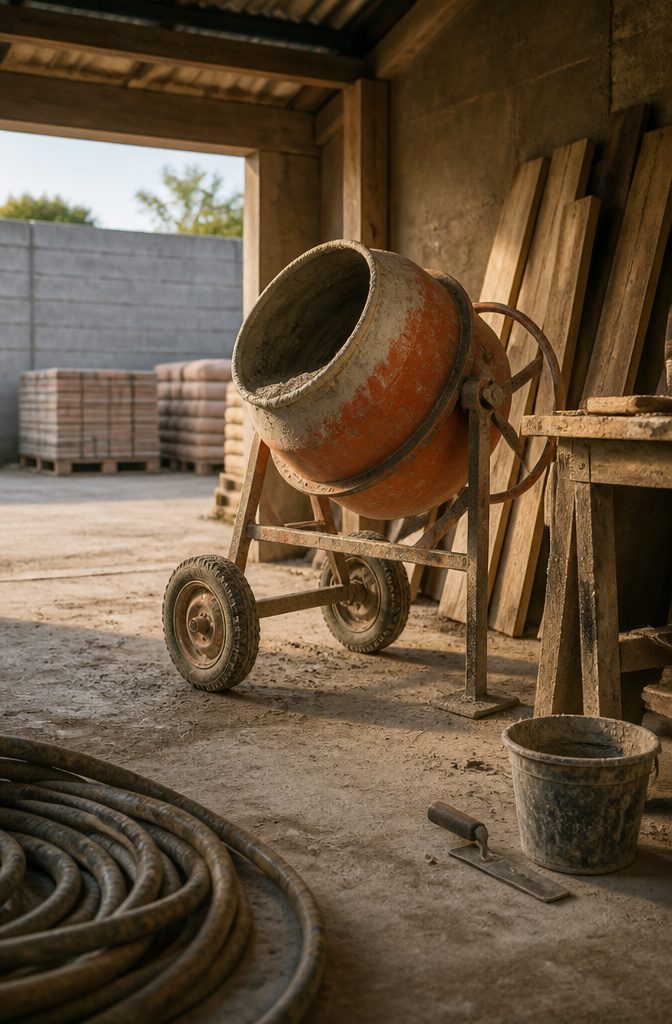
A drum mixer tumbles its contents inside a rotating drum, and it handles low- and medium-viscosity materials such as slurry or cement.
Typical capacity runs 50 to 100 gallons (190 to 380 liters), which makes it a batch machine for a job site or small shop rather than something for a kitchen counter.
That size is also the main limit.
A weekend patch job needs a fraction of 50 gallons, so a renter or first-time homeowner is better off mixing by hand in a bucket. Anything thicker than the medium range belongs in a different machine.
11. Static Mixers
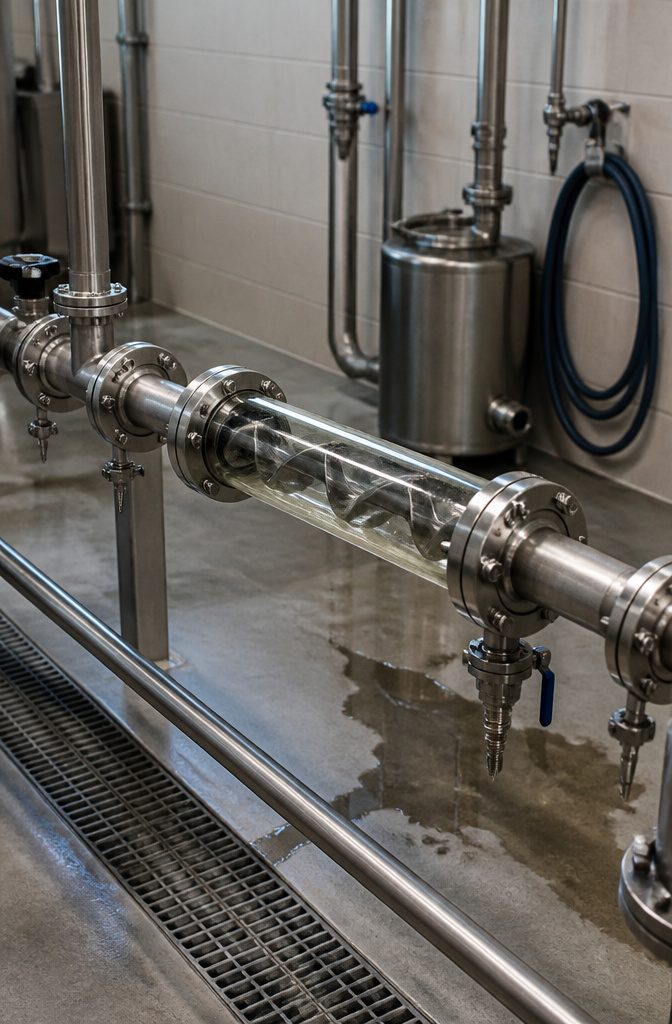
A static mixer is a cylinder with a fixed twisted ribbon or helix inside, and nothing in it moves. Liquid or gas is pushed through one end, and the element’s shape churns the stream into turbulence until it exits blended.
The flow does all the work, so wear stays minimal and upkeep is short: inspect the internal elements and flush the line after every batch change.
I’d choose one for continuous lines handling thin, low viscosity liquids, like cosmetic emulsions, water treatment, or gas dispersed into liquid.
Skip it for solids, granules, or powders. Capacity is limited, and results shift with flow rate and viscosity.
12. Agitator Mixers
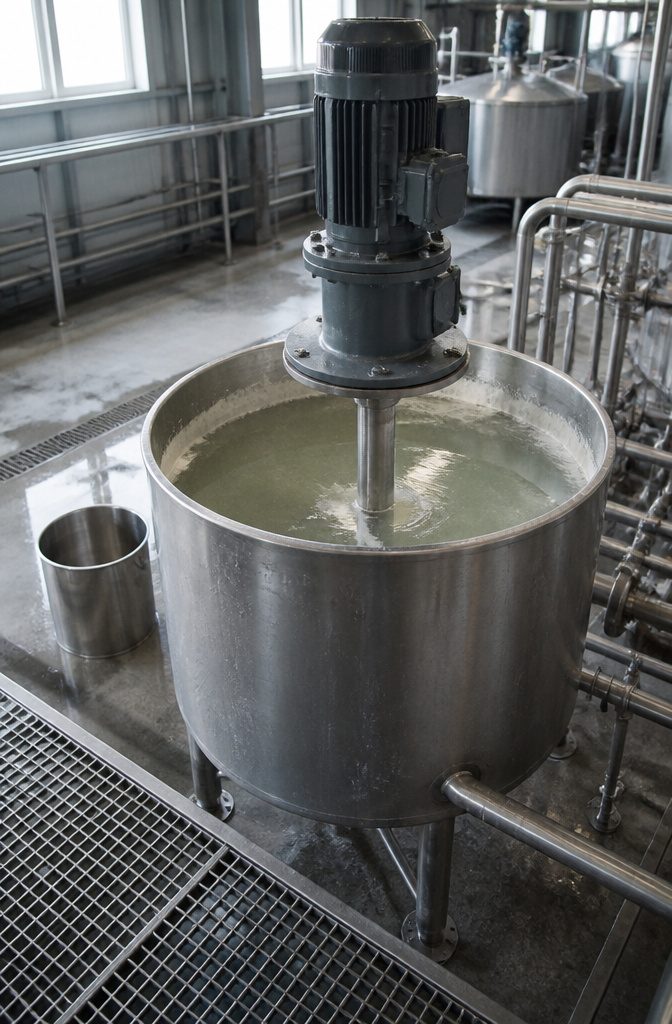
A top-load washing machine is the agitator most people already own: a central post that churns the water as it turns.
Industrial agitator mixers follow the same idea. A rotating shaft and impeller create turbulent flow in a tank of liquid or slurry, which is why they show up in chemical solutions, wastewater treatment, and liquid food and beverage production.
Capacity runs 16 to 264 gallons (60 to 1000 liters). That makes them tank-scale machines, and I’d skip them for any home kitchen job.
Impellers are either axial or radial, depending on blade angle and flow direction. Axial blades push liquid along the shaft, while radial blades throw it outward.
Either type can hold solids in suspension, dissolve gases, blend miscible liquids, break immiscible ones into droplets, or move heat through the liquid. Medium to high viscosity is where they work best.
13. High-Shear Mixers
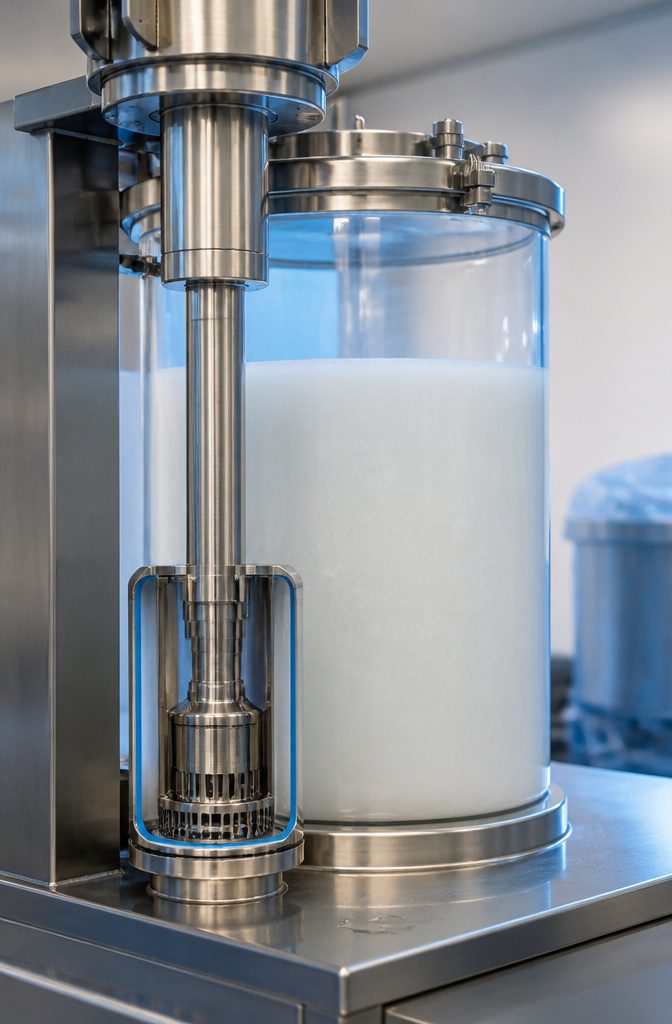
Rotor-stator mixers generate shear forces intense enough to break apart particles, emulsify immiscible liquids like oil and water, and drive homogenization down to a fine suspension — work that a paddle or ribbon mixer simply cannot do.
The rotor spins at high speed inside a close-fitting stator; as material passes through the gap, agglomerates fracture and droplets shrink.
That mechanism is exactly why pharmaceutical manufacturers rely on them to produce fine suspensions, and why paint, ink, adhesive, and cosmetic producers reach for them when consistency batch to batch is non-negotiable.
Contrast that with tumble mixing, where a rotating container lets gravity do the blending.
Gentle, yes, but it cannot reduce particle size or force two reluctant phases together. If the job is dispersing pigment or emulsifying anything, the high-shear rotor-stator wins without debate.
14. High-Speed Mixers
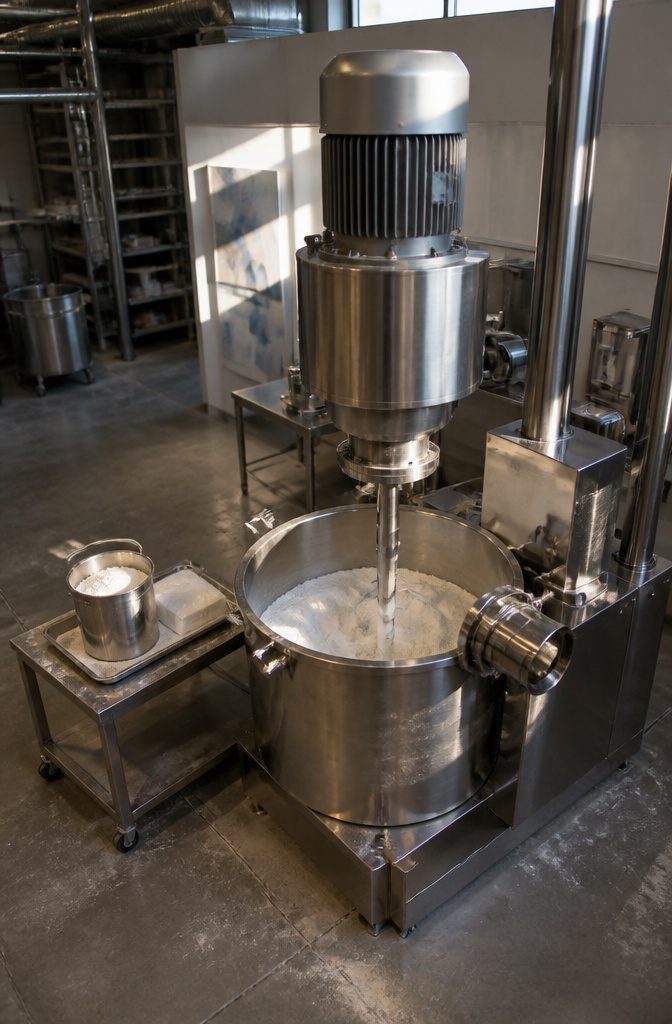
High-speed mixers earn their place when a batch has to be dispersed, granulated, wetted or cooled quickly so it is ready for the next step.
Paint, food and pharmaceutical plants rely on them, and sizes run from small lab units to full production machines. The vertical design has enough energy to fluidize a mixture and break up small clumps of agglomerated particles.
Medium-speed horizontal mixers separate clumps less thoroughly. Fit one with high-speed choppers, though, and the chopper blades run at the same tip speed as a vertical mixer’s main blades, which helps break up those clumps.
Capacity is the limit. Vertical high-speed mixers process under 4 pounds (0.45 kg) per HP, so large batches demand a lot of motor.
For lab work and small runs that is fine. For volume, I would price a horizontal machine with choppers first.
15. Emulsifiers
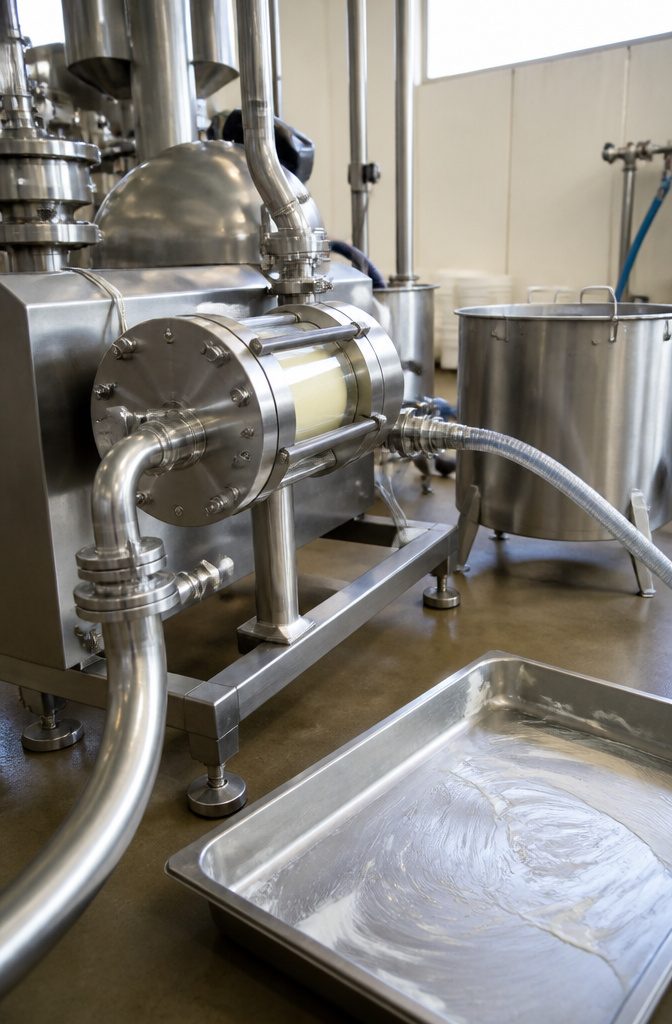
Oil and water won’t stay combined when a paddle or ribbon mixer just stirs them. An emulsifier forces the two immiscible liquids together under high pressure, breaking one into fine droplets inside the other.
The result is a stable, smooth, uniform lotion, cream, serum, or food emulsion. A general-purpose mixer moves material around, while an emulsifier supplies the concentrated energy that holds the blend together.
Expect to pay about $9,000, which rules it out for home projects. For a DIY lotion or a vinaigrette, a hand mixer or stand mixer is the sensible buy.
The emulsifier belongs in pharmaceutical, cosmetic, and food production, where it also scales up. Upkeep matters too: the high-pressure components need regular inspection, and the emulsification chamber needs cleaning.
16. Homogenizers
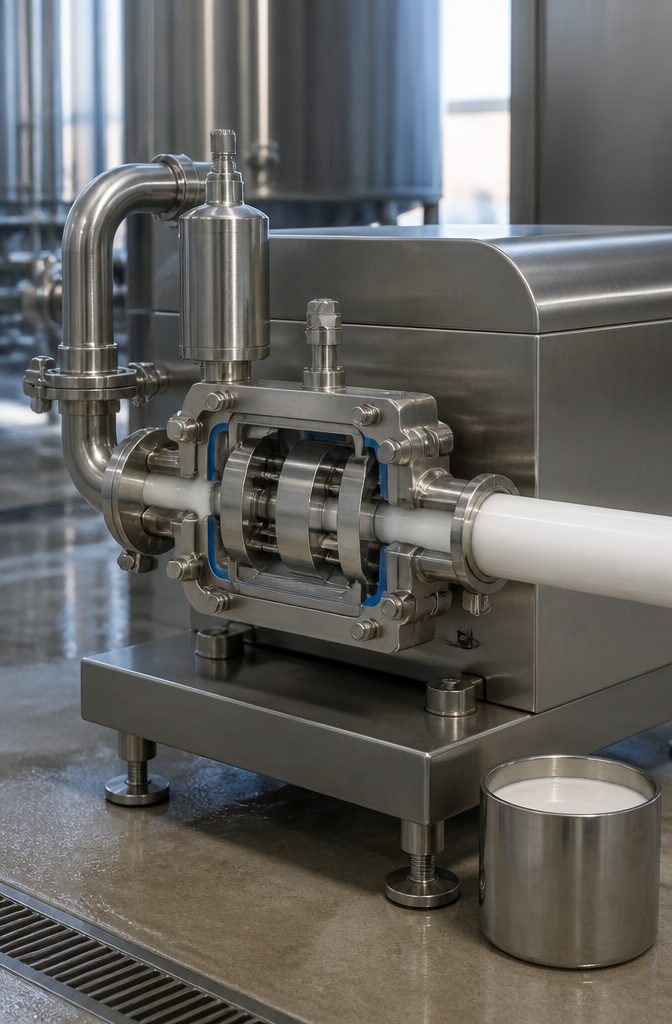
A homogenizer reduces particle size by force. The mixture is pushed under pressure through a narrow gap or against a hard surface, which splits large droplets and clumps into smaller ones of even size.
Milk is the familiar case: the fat stays blended instead of rising as a cream layer.
An emulsifier is a different tool. It gets liquids that normally separate, like oil and water, to hold together without necessarily shrinking anything.
The difference is that a homogenizer shrinks the particles, while an emulsifier only persuades them to stay mixed. Factories often use both in one line.
For a home kitchen, I’d skip a homogenizer entirely. A good blender handles sauces and smoothies, and true homogenizing is factory work.
17. Vacuum Mixers
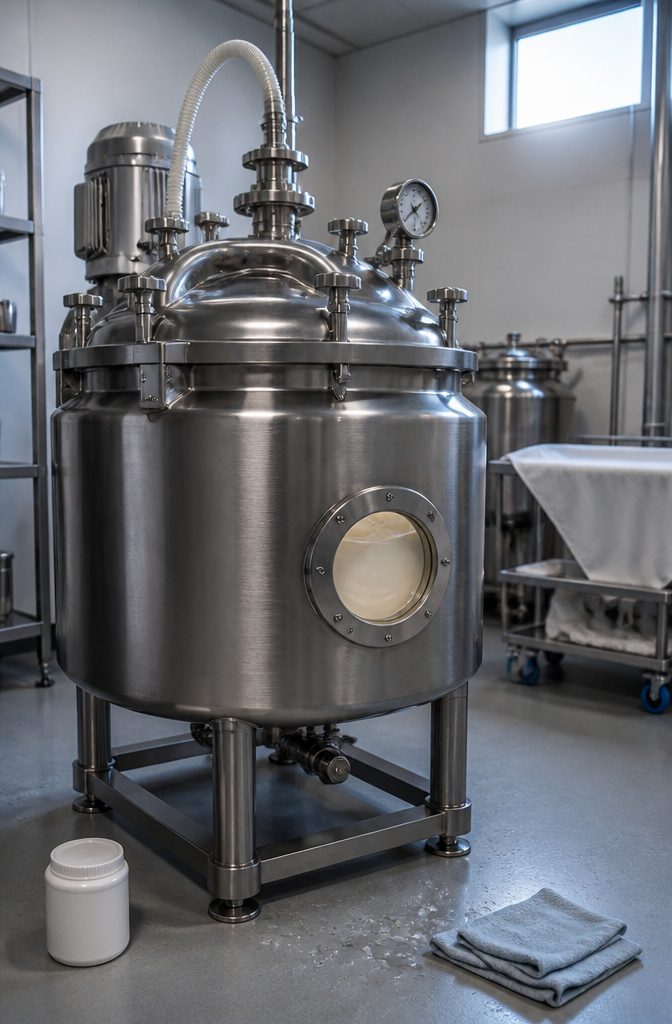
A vacuum mixer pulls air out of the batch while it mixes, so bubbles are removed instead of folded in. The chamber is sealed and the pressure inside drops, which lets trapped air escape from the material as it turns.
In food production, taking air out supports both preservation and quality.
Less oxygen in a sauce, paste or filling means less oxidation and a smoother texture. In pharmaceutical work, the same step clears bubbles from creams, gels and ointments, where air pockets ruin consistency from one portion to the next.
I’d skip this type for home use.
Vacuum mixing earns its cost on production lines, where shelf life and uniformity are the product. A home cook gets most of the benefit by mixing slowly and tapping the bowl on the counter to release bubbles.
18. Continuous Mixers
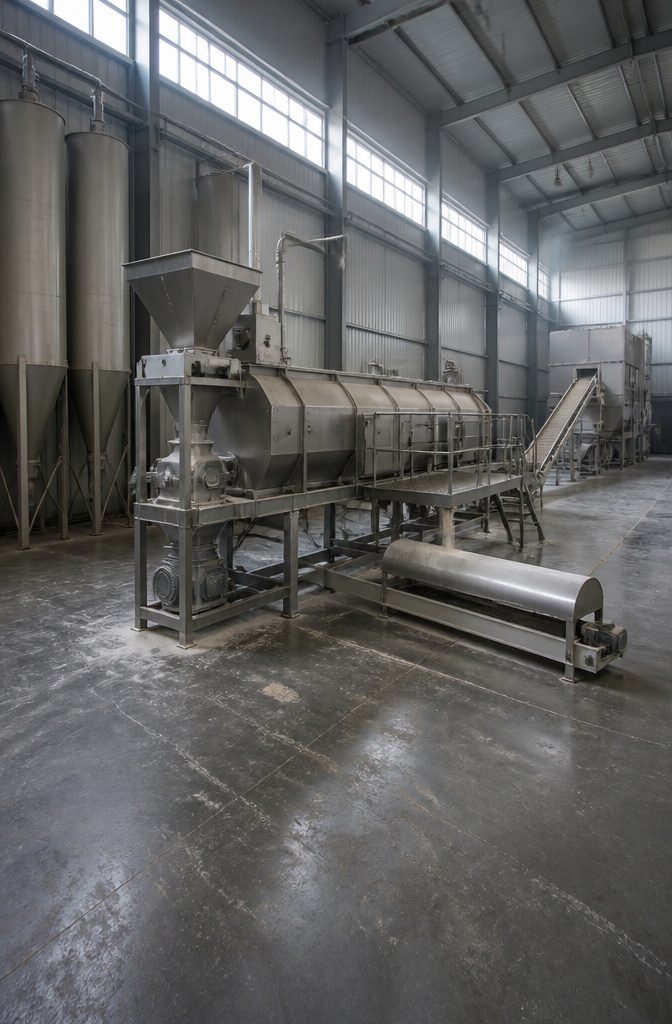
A continuous mixer takes material in at one end and sends finished product out the other, with no stopping to fill, mix, and dump.
It wins when one recipe runs for long stretches, because a batch mixer sits idle during every load and unload. For short runs or frequent recipe changes I’d stay with batches, since the changeover eats the gain.
The rest of the line has to keep up.
Ingredients must arrive at a steady, controlled rate, because feed that surges or stalls shows up in the product. Equipment downstream has to take the output as fast as it comes, and cleanout needs planning too.
19. Double-Action Mixers
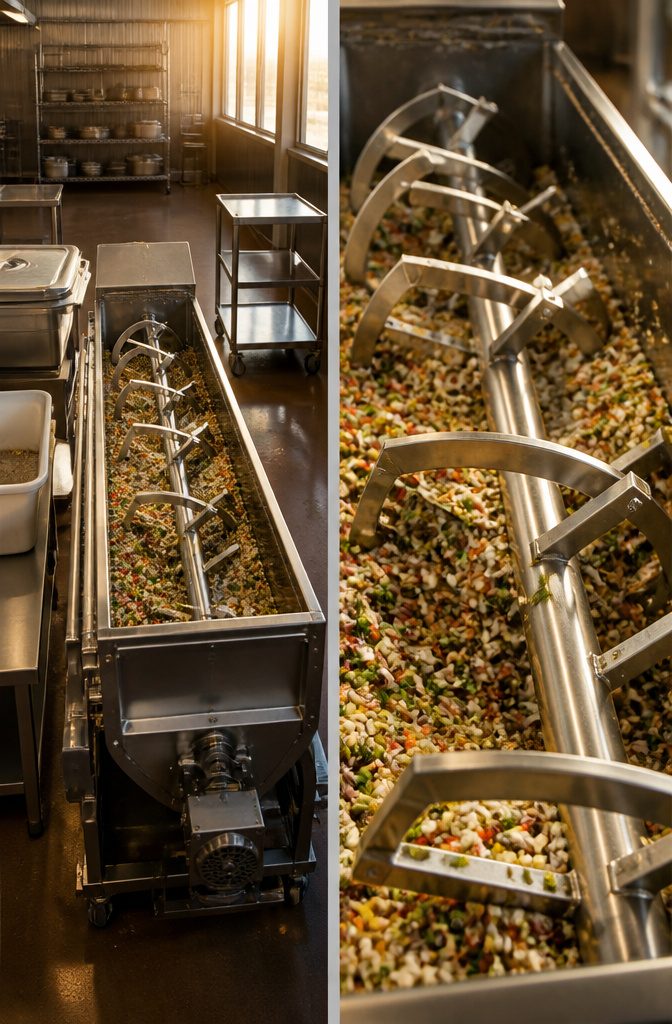
A double-action mixer combines paddle and ribbon functions in one machine, so food moves along multiple planes rather than one.
A paddle or ribbon working alone pushes material through fewer of those planes, and that is the gap this design closes.
What the extra movement buys is texture consistency and better nutrient retention.
Faster processing and improved food safety follow from it. For a production line, this is the mixer to consider when every batch has to come out the same, and the shorter run time is a real saving at volume.
I’d skip it for home use. It’s built for production kitchens and plants, and nothing in a weekend baking or meal-prep routine calls for that much machine.
20. Fluidized-Zone Mixers
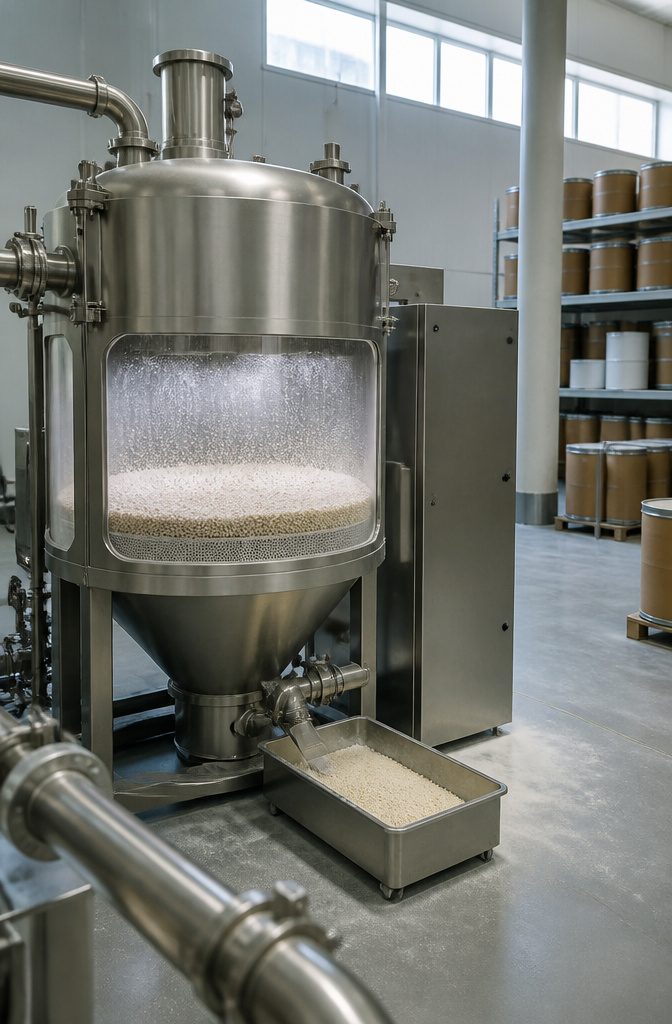
A fluidized-zone mixer lifts the material into a loose, flowing state, so particles move past one another instead of being pushed, squeezed or sheared.
Delicate granules and fragile particles come through with far less rough handling than a paddle or a high-speed machine would give them. Heat-sensitive blends benefit too, since gentle movement means less friction and less warming.
I’d reach for this type only when gentleness is the real requirement. If the material breaks down or warms up under mechanical force, a fluidized zone is the mixer to look at.
Sturdy powders rarely justify it, because a simpler machine will do the job for less. This is a production-floor tool rather than a kitchen one, and it earns its place where damage to the batch costs more than the equipment.
21. Rotor Mixers
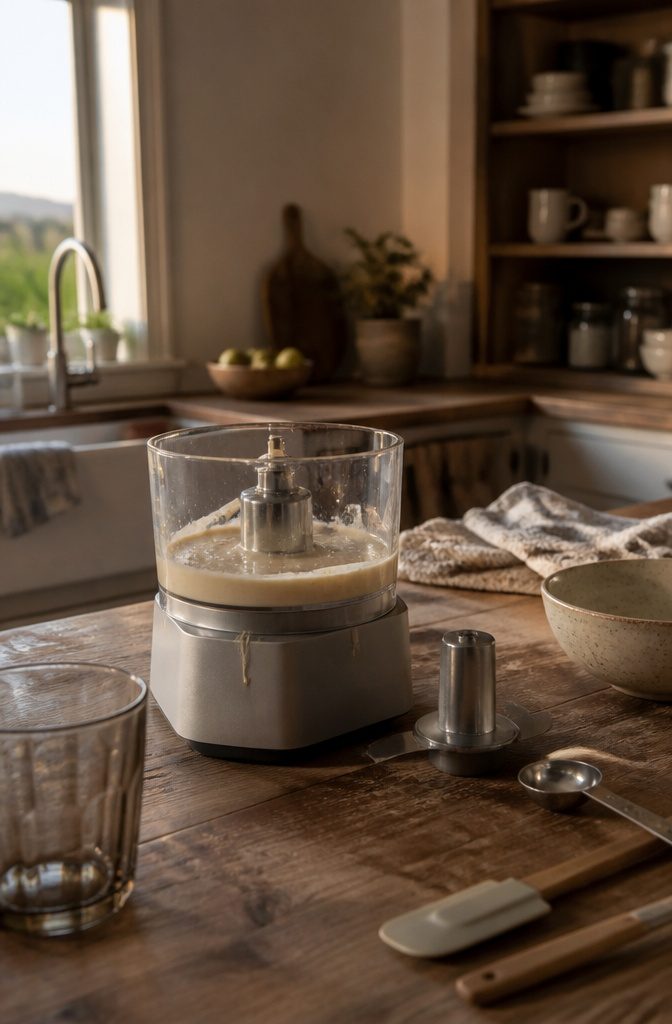
A rotor mixer puts its metal blades at the bottom of the container, and they spin to churn whatever sits above them.
That bottom-mounted layout is what sets it apart from mixers that lower a beater or whisk in from the top.
Some models also take detachable attachments, and I’d lean toward those: swapping pieces in and out lets one machine cover more than one task, which matters on a small budget or a crowded counter.
Don’t confuse this with the rotor-stator high-shear mixer. The names sound alike, but a rotor mixer is defined by its rotating blades mounted at the base, and the high-shear design is a separate machine with its own section further down.
Choosing by Job and Material
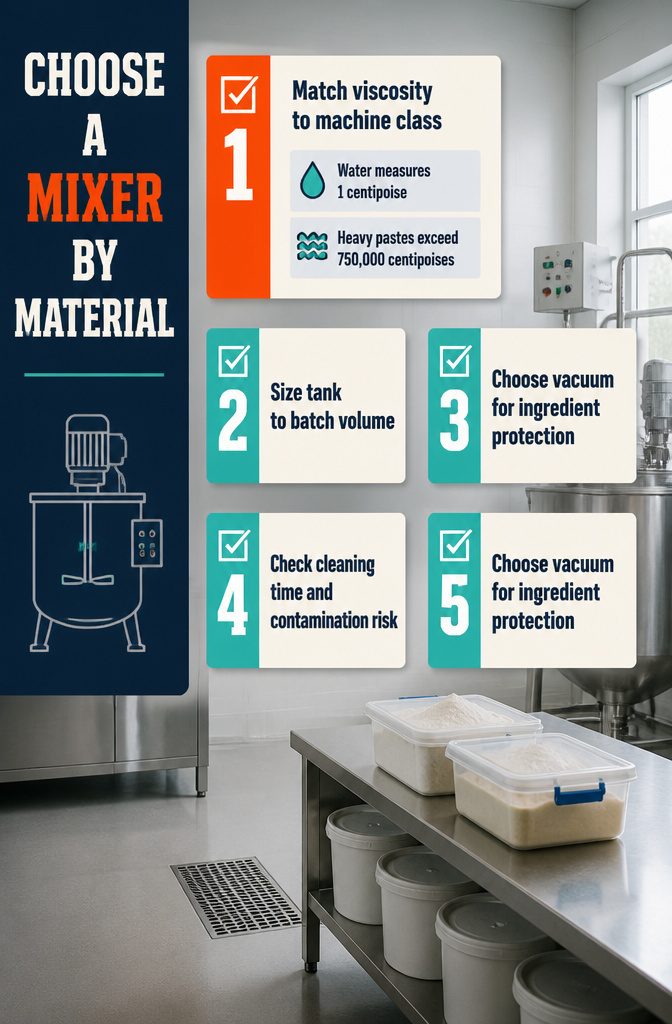
Material and job pick the mixer; the name on the box comes last. I run through these checks in order:
- Viscosity sets the class of machine. Water is 1 centipoise, while heavy-duty mixers are built for pastes, wax compounds and putty above 750,000 centipoises.
- Batch volume has to match the mixer’s capacity. A bowl or tank that is too big or too small mixes poorly.
- For dough, the volume you make, the products you bake and the floor or counter space you have decide the choice.
- Food type and technique matter. Vacuum mixers blend at low pressure to protect ingredient quality, so decide whether you need that or a standard high-volume mixer will do.
- Cleaning counts as a contamination risk, and a long teardown is downtime. At home, I’d rank a smooth, tilt-head body that wipes down fast above an extra speed setting.
Tip Speed From Gentle to Intense
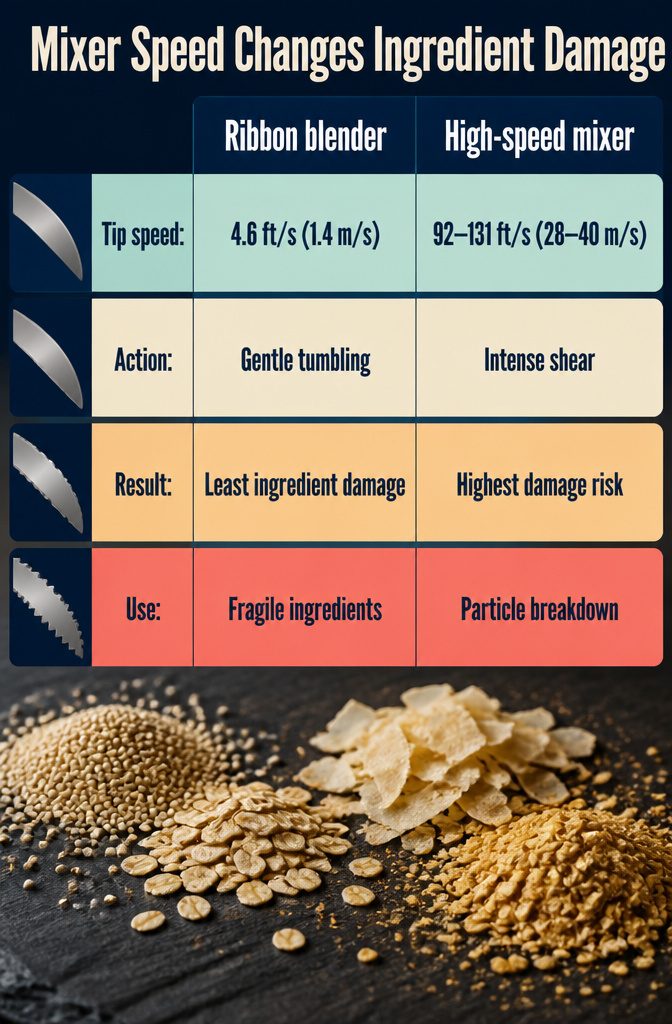
Tip speed, the speed of the blade’s outer edge, sorts mixers better than motor size does. Slow tumbling folds ingredients together and leaves fragile pieces whole, while fast blades shear and tear.
A moving bowl carries the batch to the tool, but a stationary bowl makes the blade do all the work, so the batch gets a rougher ride.
The three speed classes line up like this:
| Mixer class | Tip speed | Action | Result |
|---|---|---|---|
| Ribbon blender | about 4.6 ft/s (1.4 m/s) | Gentle tumbling | Even blend, least ingredient damage |
| Medium-speed horizontal | 20–33 ft/s (6–10 m/s) | Moderate agitation | Faster blending, some wear on delicate material |
| High-speed | 92–131 ft/s (28–40 m/s) | Intense shear | Fine dispersion, highest risk of damage |
For fragile ingredients, stay at the slow end of the table. Save the high-speed class for jobs where breaking particles apart is the goal.
Home Stand Mixer Models
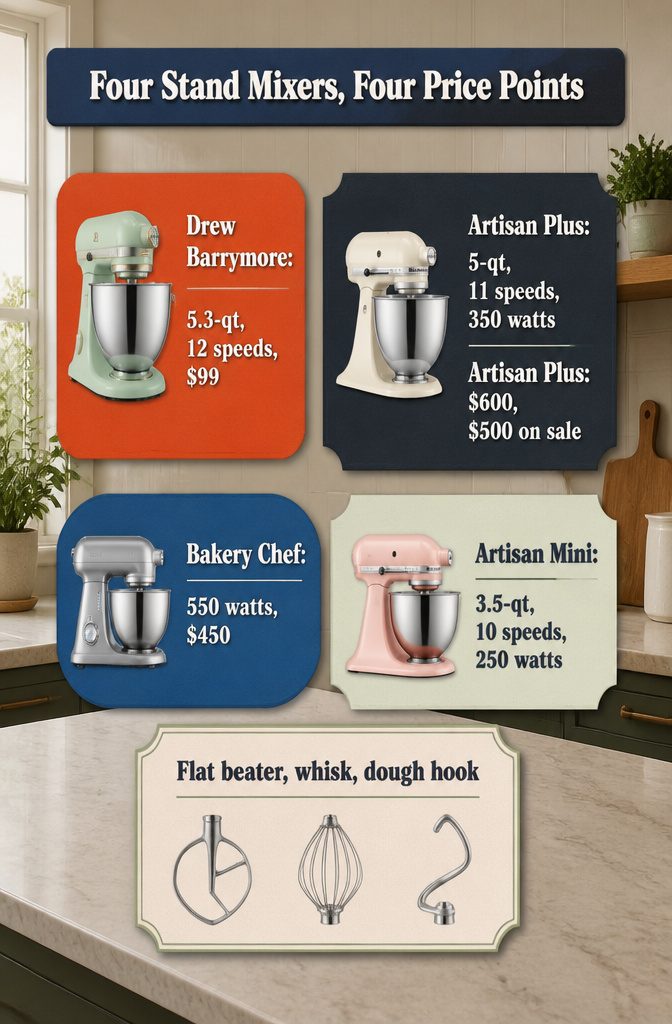
Four home models cover most budgets, and the price gap is wider than the spec gap.
| Model | Bowl | Speeds | Motor | Price |
|---|---|---|---|---|
| KitchenAid Artisan Plus | 5-qt | 11 | 350 watts | $600 ($500 on sale) |
| Breville Bakery Chef | n/a | n/a | 550 watts | $450 |
| Beautiful by Drew Barrymore | 5.3-qt | 12 | n/a | $99 |
| KitchenAid Artisan Mini | 3.5-qt | 10 | 250 watts | $450 ($350 on sale) |
Three attachments do the work: the flat beater for cookie dough and batters, the whisk for cream and egg whites, the dough hook for bread.
The Mini includes all three and takes up less counter, which suits small batches and small kitchens.
On a tight budget, the $99 Drew Barrymore is the one to start with. If you bake every week, the Artisan Plus is worth the extra money.
Frequently Asked Questions
How many types of mixers are there?
There is no single official count, because sources group machines differently. Industrial mixers are often boiled down to 3 basic types: ribbon, paddle and tumbler.
What are the 3 basic types of mixers?
The 3 basic industrial types are ribbon, paddle and tumbler mixers.
Ribbon blenders use two opposing helical ribbons to fold powders together, paddle mixers lift and tumble material with angled paddles, and tumblers rotate the whole container so gravity does the blending.
What are the 2 main types of mixers?
For home kitchens, the two main types are hand mixers and stand mixers.
A hand mixer is a motor in a handle that works in any bowl, while a stand mixer locks the bowl in a frame, runs a stronger motor and frees your hands.
Industrial work uses 3 basic types instead: ribbon, paddle and tumbler.
What are the different types of commercial mixers?
Four common commercial types are planetary, ribbon, paddle and high-shear emulsifier mixers.
Listed prices run $980–$1,580 for ribbon, $6,500–$14,300 for planetary, about $9,000 for an emulsifier and $28,999–$29,999 for paddle. They are used in cosmetic, food, pharmaceutical and chemical production.
What are the different types of mixing?
Mixing is generally sorted into 3 categories: diffusion (tumbling), shearing and convection. Tip speed shows the difference in practice: slow tumbling folds ingredients together and leaves fragile pieces whole, while fast blades shear and tear them.
High-speed mixers run at 92–131 ft/s (28–40 m/s), against about 4.6 ft/s (1.4 m/s) for a ribbon blender.
How do I choose the right type of mixer?
Start with what you are mixing and how much. Viscosity sets the class of machine, batch volume has to fit the mixer’s capacity, and for dough, your volume, products and floor space decide.
Then compare how fast each machine cleans, since a long teardown is downtime and a contamination risk.