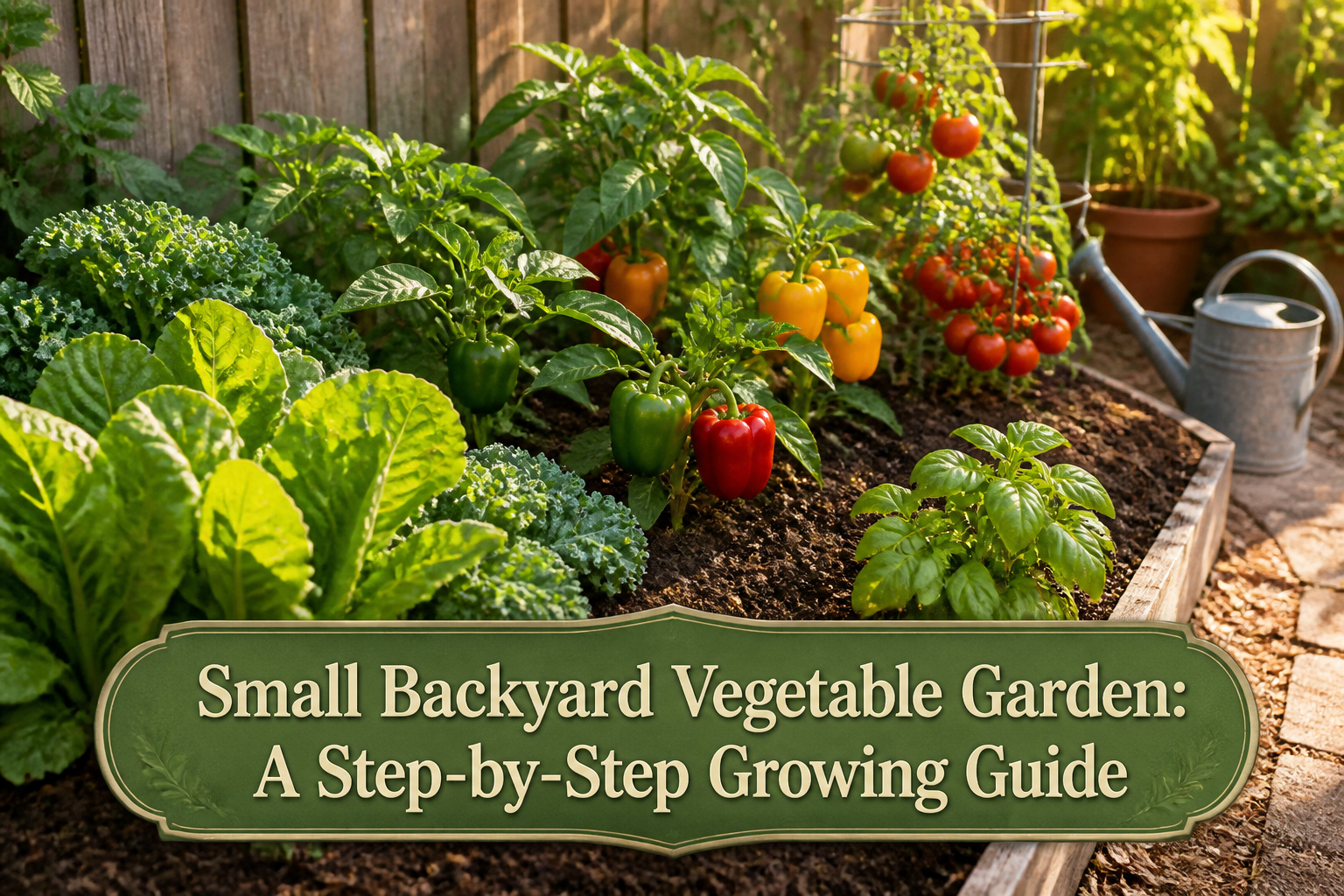
A small backyard veggie garden is a food-growing space scaled to fit a patio, balcony, or modest yard, and the difference between one that produces and one that fails usually comes down to water access before anything else. I lost half a bed to cracked tomatoes and sulking peppers the year my hose barely reached the corner. Most vegetables need six hours of direct sun, but leafy greens manage with three to five, which opens up spots morning sun alone won’t carry.
Choose a Sunny Spot Close to Water
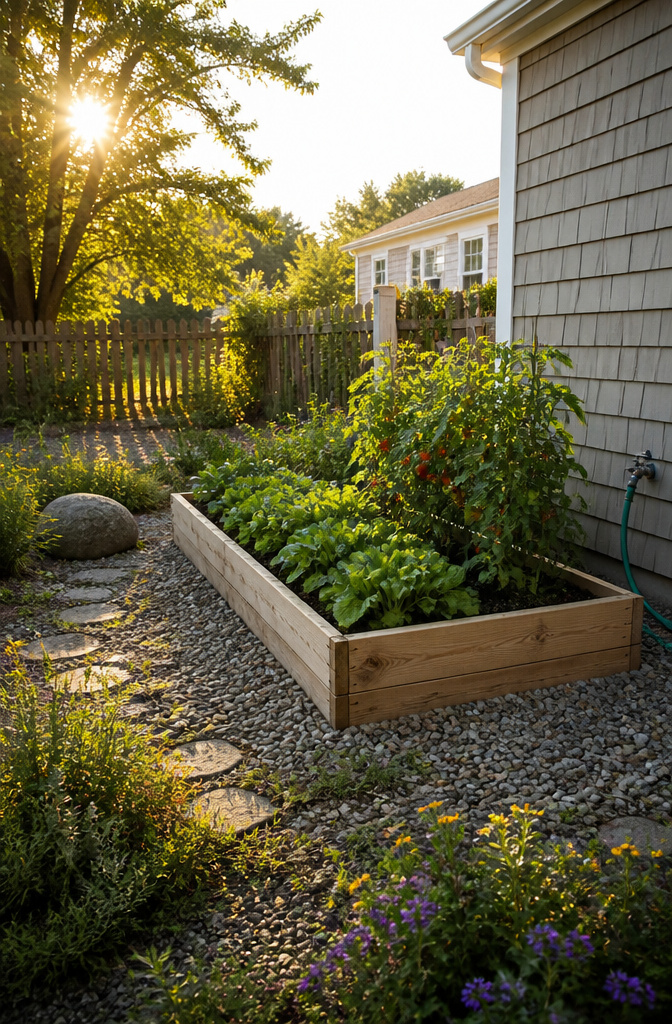
The year I lost half a bed to inconsistent watering still stings. The hose barely reached that corner of the yard, so I’d skip days or half-soak the soil, and the tomatoes cracked while the peppers sulked. Proximity to a hose spigot matters more than how the bed looks against your fence.
Most vegetables need six hours of direct sunlight, and eight is genuinely better for fruiting plants like tomatoes, peppers, or squash. Leafy greens and herbs are the exception: lettuces, spinach, and arugula manage with three to five hours, which opens up spots that morning sun alone won’t carry. My first attempt went wrong because morning light hit strong, then afternoon shade from the neighbor’s garage took over by two o’clock. The plants grew, but they never produced.
When temperatures climb, you’re likely watering once and sometimes twice a day. A watering can works for a handful of containers, but a bed that size needs a hose you can actually reach without wrestling around corners. Pick the spot where the sun stays longest and the water arrives easiest. Everything else is fixable later.
Pick Containers or Beds That Drain
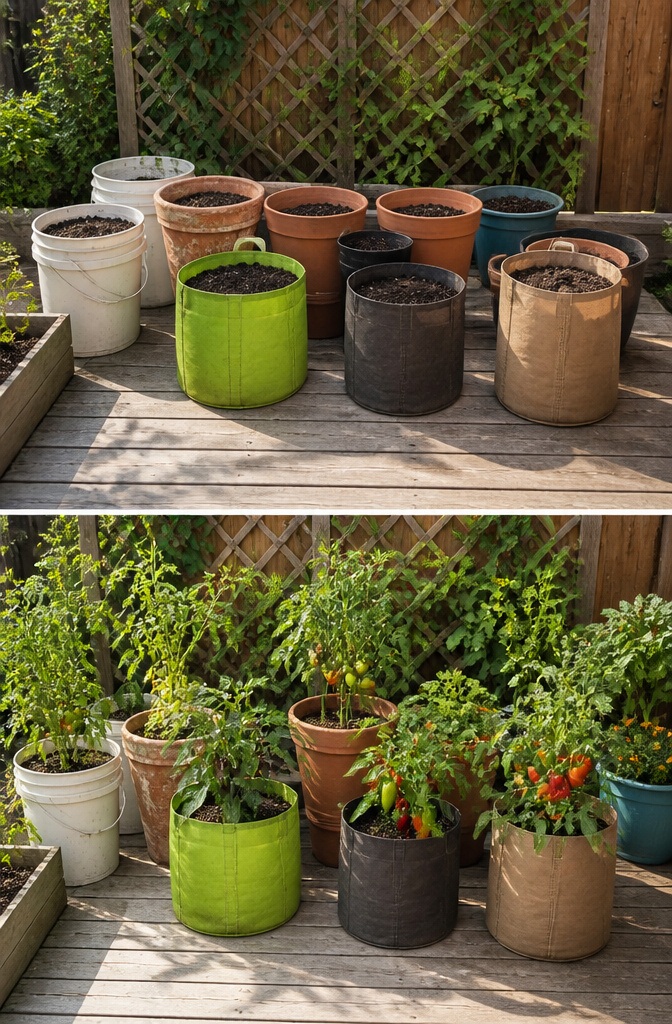
Five-gallon buckets from the hardware store were my first containers, and they failed fast. Tomatoes need 8 to 10 gallons minimum; the smaller buckets left roots cramped and thirsty by July. I drilled drainage holes in the bottom of each one, which saved the peppers but could not fix the volume problem.
Raised beds make more sense for renters than in-ground planting. You take the soil with you when you move, and you are not stuck improving a landlord’s lawn. Wood rots, cement costs, metal heats. Plastic is light and cheap until it is not: one of my dollar-store storage tubs cracked straight across in last summer’s heat, roots exposed, plant lost. Food-grade plastic holds up longer, or fabric pots that fold flat for storage. Whatever you choose, lift the container after watering to learn its weight. A light pot means thirsty roots; a heavy one that never dries means drowning them.
Mix the Soil Right
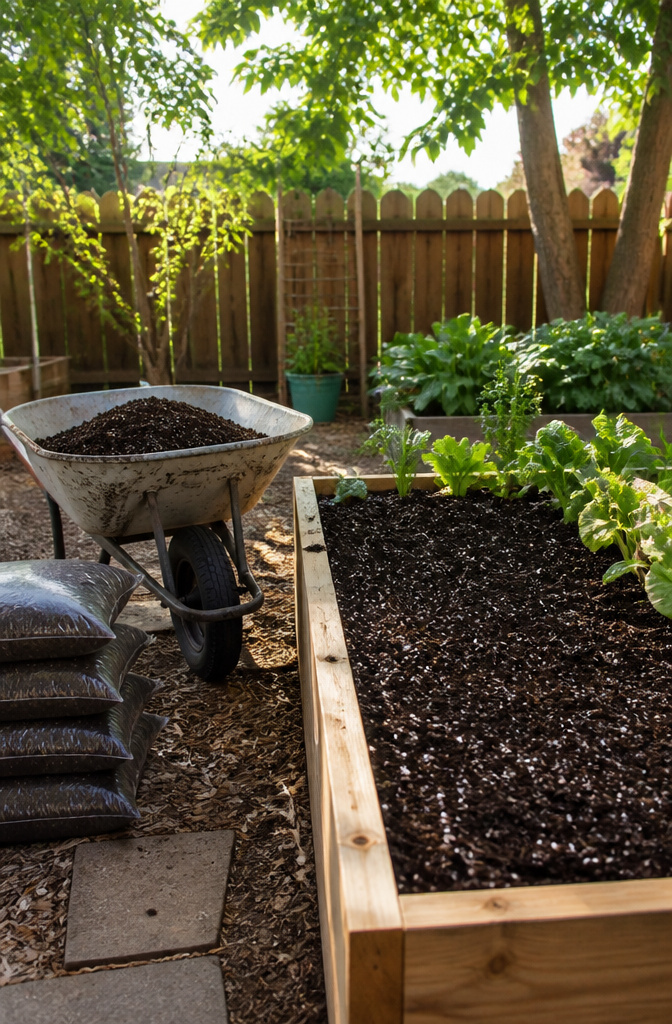
The mix that works in a small backyard veggie garden is one part compost, one part vermiculite or perlite, and one part garden soil. Bagged potting mix alone drains too fast for raised beds and leaves roots dry by mid-afternoon. Topsoil alone compacts into something like concrete after a few waterings, squeezing out the air roots need.
I learned the hard way the season I skipped the vermiculite to save a few dollars. The tomato roots stayed stunted, the plants yellowed early, and the harvest was half what the next bed over produced with the full mix. The perlite or vermiculite is not optional fluff; it keeps the structure open so water moves through without drowning the roots or leaving them thirsty.
Cost matters when you are filling more than a couple of containers. A cubic yard of compost from the local bulk yard ran me about what four or five bags of the same material would have cost, and it filled the whole 4-by-8 bed with enough left to top-dress. The bagged stuff is fine for a single planter on the patio, but for anything larger, bulk is the move that keeps the project inside a weekend budget.
Plan the Layout Before Planting
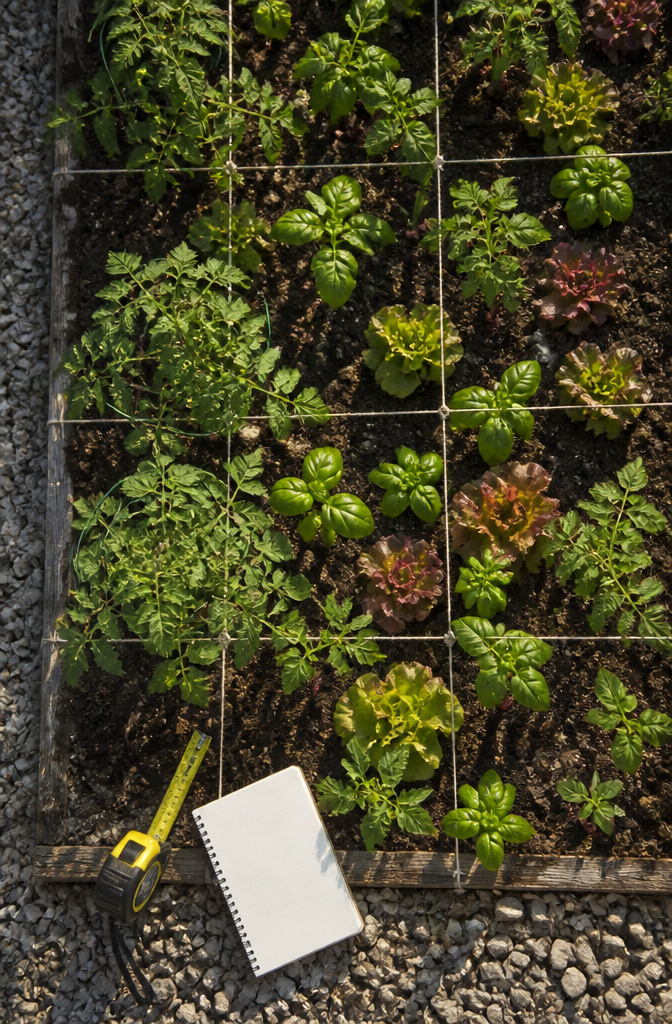
Companion planting in a small backyard veggie garden means pairing plants that help each other out. Tomatoes and basil are the pair I point people to first: the basil seems to keep certain pests away from the tomatoes, and both plants want the same sunny, warm conditions. That overlap matters when every square foot counts.
Vertical space is the other half of the puzzle. A trellis or fence line, put up before the plants need it, handles cucumbers, pole beans, and vining tomatoes without eating ground area. The fence can rotate crops year to year so nothing builds up in the soil.
Spacing is where I pushed too hard once. Standard advice says 12 inches between plants, but 8-inch spacing works for compact planting if the soil is rich and you stay on top of water. I tested that in an August bed with zucchini, figuring one plant would behave. It did not. The zucchini sprawled and shaded out everything around it, and I lost the succession planting I had tucked underneath. One zucchini plant in a small space is plenty, and compact varieties exist if you need tighter control.
Succession planting spreads the work and the harvest. Sow something new every week, from early greens through midsummer heat-lovers, then back to cold-hardy crops for fall. Pull finished plants immediately to make room. Quick growers like radishes can share a row with slow carrots; the radishes come out first and leave the remaining vegetables elbow room. The harvest stays steady instead of burying you in beans or squash all at once.
Plant Compact Varieties
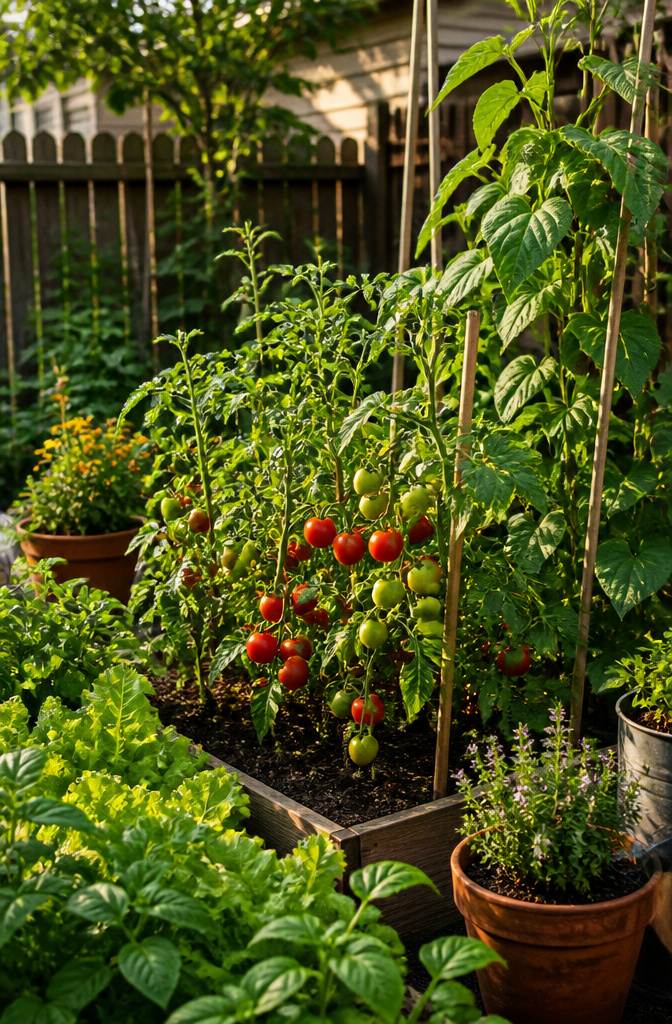
Bush-type vegetables keep a small backyard veggie garden from turning into a jungle of stakes and twine. Vining tomatoes or pole beans can swallow eight feet of vertical space and still creep across the path, but compact varieties stay polite. ‘Tiny Tim’ tomatoes, ‘Bush Blue Lake’ beans, and ‘Patio Princess’ cucumbers are bred for exactly this: thick stems, short internodes, and fruit set close to the center so you can walk between plants without getting tangled.
Seed packets run about $3 for enough seed to replant three seasons, while six-packs of seedlings cost me $12 last spring and gave me six plants total. The math flips only if your season is so short that direct-sown seed won’t ripen, or if you’re starting tomatoes in March and have no south-facing window. For beans and cucumbers, which germinate in a week and catch up fast, I buy seed every time. Tomatoes are the judgment call: I start my own on a heat mat under a shop light, but if you lack the space or the patience, two store-bought plants in May still beat a windowsill full of leggy seedlings you forgot to water.
Water and Watch Daily
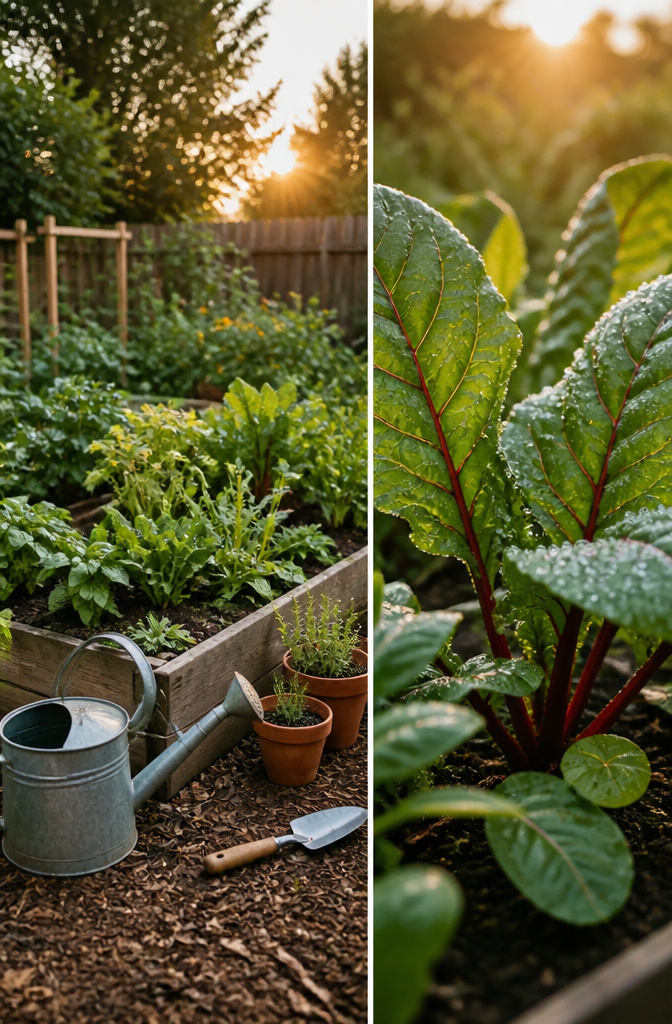
Containers in a small backyard veggie garden dry out fast enough that once-a-day watering turns into twice when the temperature climbs. I learned the rhythm by lifting pots: a properly watered container has a weight you can feel in your wrist, and when it goes light, the soil is pulling away from the roots. The finger test works too, but only if you push past the surface inch where mulch keeps things deceptive.
Consistent moisture matters more than soaking. Plants stressed by swingy wet-to-dry cycles send out signals pests read like a dinner bell. Aphids found my pole beans in late June; daily checks caught the first sticky cluster on the underside of a leaf before the ants had finished farming them up the stem. A hard spray of water knocked them off, and I kept at it every morning for three days.
The moisture meter I bought for eight dollars did more than confirm what my finger guessed. It showed me that a wilting cucumber vine was drowning, not thirsty, in a pot with a blocked drainage hole I had not noticed. By the time the leaves yellowed at the edges, the roots were already damaged. That plant never recovered, and I pulled it before the rot spread. Now the meter lives in the same drawer as my pruners, and I check pots in the evening when the heat has settled, watering in the morning if they read dry below two inches down.
Harvest to Keep Production Going
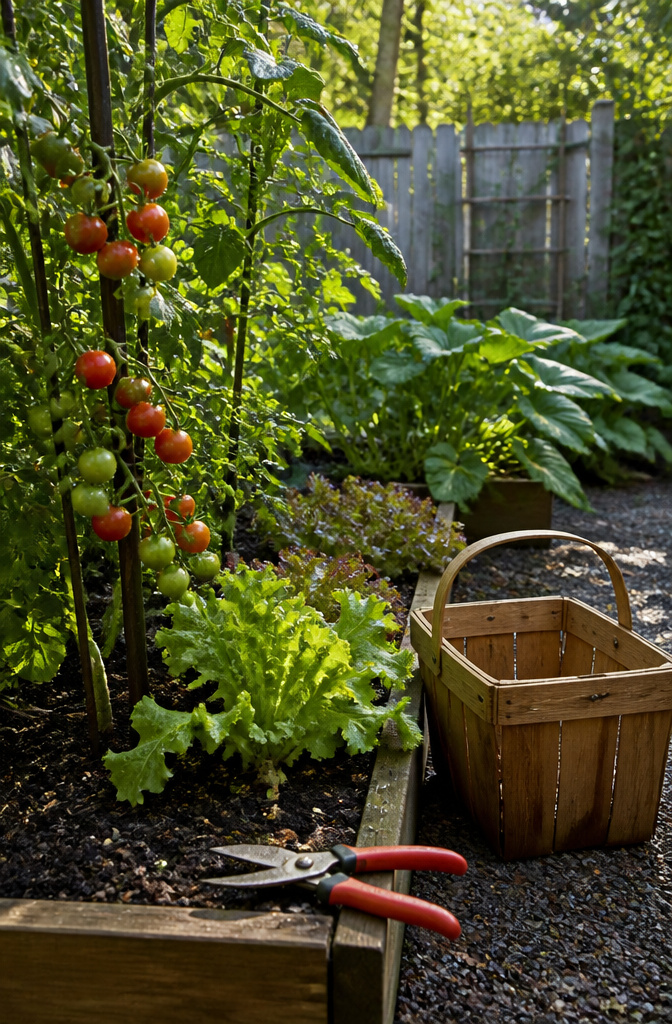
Picking ripe vegetables is the signal that keeps a plant producing. The moment a fruit or vegetable sits past prime, the plant reads that as the season ending and slows down. I learned this the hard way with cherry tomatoes. Sweet 100 and Sungold clusters went from perfect to split-skinned in a single hot afternoon when I left them too long, and the vines that followed those neglected fruits never rebounded to their earlier pace.
Lettuce rewards the opposite habit. The cut-and-come-again method means trimming outer leaves with shears and letting the center keep growing. A shallow container or the edge of a raised bed can keep a single planting alive through spring and into fall, when heat-stressed tomatoes are resting.
The numbers back up the discipline. A single 4×4 bed, planted densely with lettuce, carrots, spinach, beets, beans, zucchini, cucumber, and two tomato plants, can yield up to 120 pounds in one season. That figure collapses fast if harvesting stops. My September slump, three weeks of ignoring the bed after vacation, cut production by more than half. The plants did not wait for my attention.
Container Gardening for Patios and Balconies
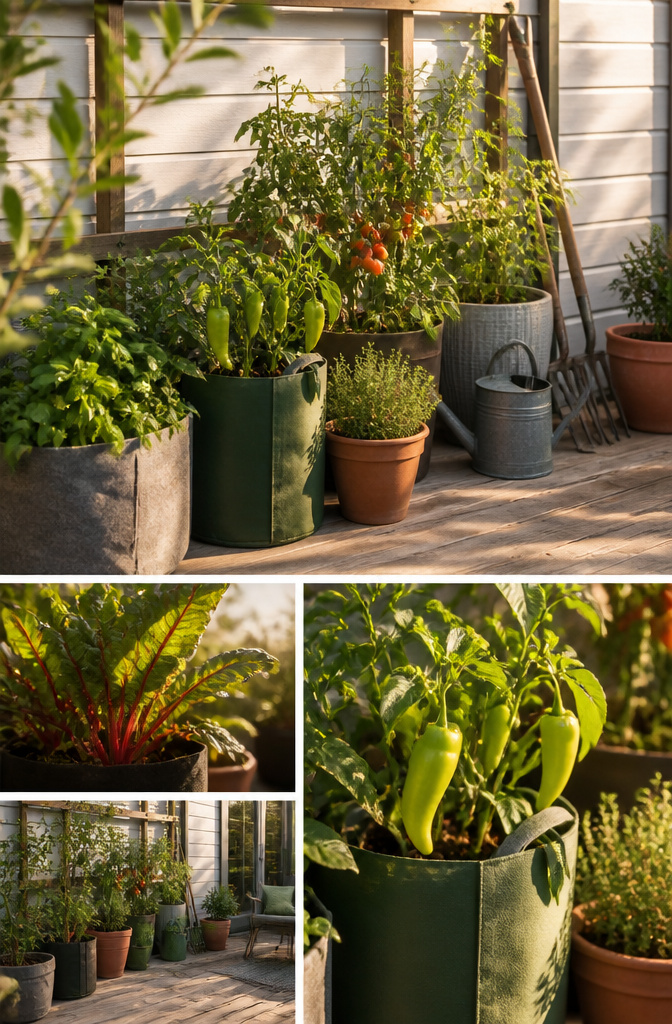
Containers solve the ground-access problem outright for renters whose lease ends at the soil line. Almost any vegetable will grow in a pot if the pot is deep enough: at least 8 inches of soil, which means an 8- to 10-gallon container at minimum. A 5-gallon pail works in a pinch, though the smaller volume dries faster and needs more babysitting.
Material matters less than drainage, but it does matter. Terracotta breathes well and looks sharp on a patio, yet it weighs enough that moving it takes planning. Fabric grow bags are light, cheap, and store flat when the season ends; stock tanks look great but swallow enough potting mix to make the cost sting. Whatever the vessel, drainage holes at the bottom are non-negotiable; drill them if they are missing. Waterlogged roots kill more container plants than pests ever will, and the first sign of trouble looks identical to underwatering: wilting. The difference is the finger test and the heft of the pot. Dry mix is light. Saturated mix is heavy. Learn the difference once and you have it for the season.
Mobility is the real advantage. A container that tracked the sun across my patio one summer held tomatoes, peppers, and basil in a trio that fed two people from June through September. When a storm rolled in, the whole garden rolled against the wall. That setup cost under a hundred dollars, took one morning to arrange, and left no trace when the lease ended.
Vertical Gardening With Trellises
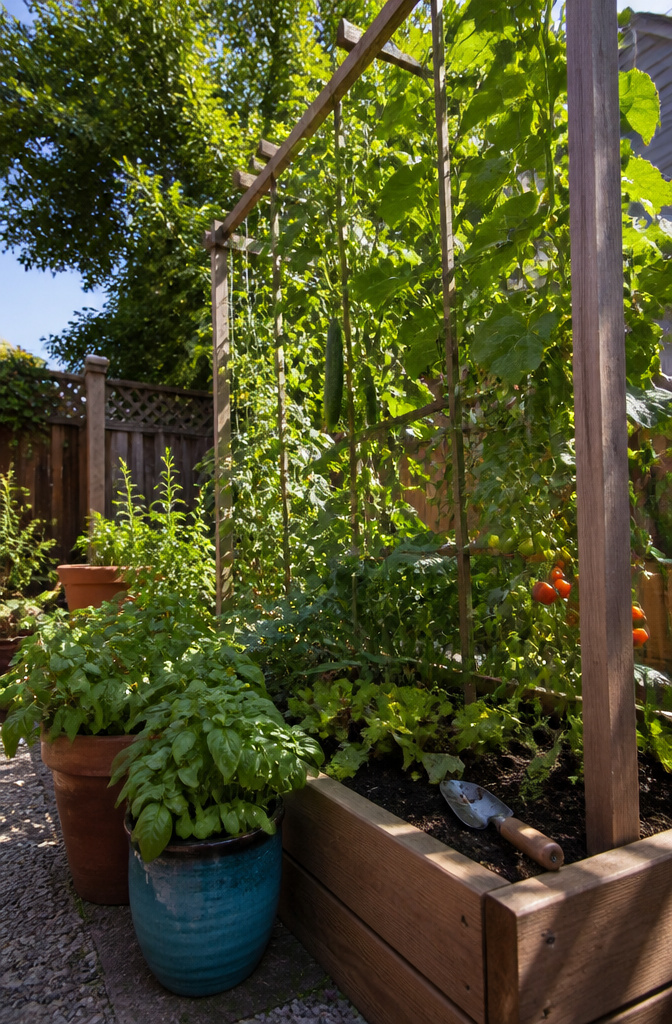
Cattle panel, twine strung on a frame, even a repurposed ladder will get cucumbers, pole beans, and indeterminate tomatoes off the ground and into the air. That second layer of growing room effectively doubles the usable square footage in a small backyard veggie garden without expanding the footprint.
The fence around the bed can pull double duty if you rotate what climbs it year to year. Wood or metal supports both work, though whatever you build needs to be up before the plants need it, not after.
Twine on a frame was my cheapest option one spring, and it held fine through June. Then a week of steady July rain rotted it through, and the whole row of pole beans collapsed into the dirt. By August the vines had tangled so badly I couldn’t untangle them. Cattle panel costs more upfront but does not dissolve.
Companion Planting Combinations
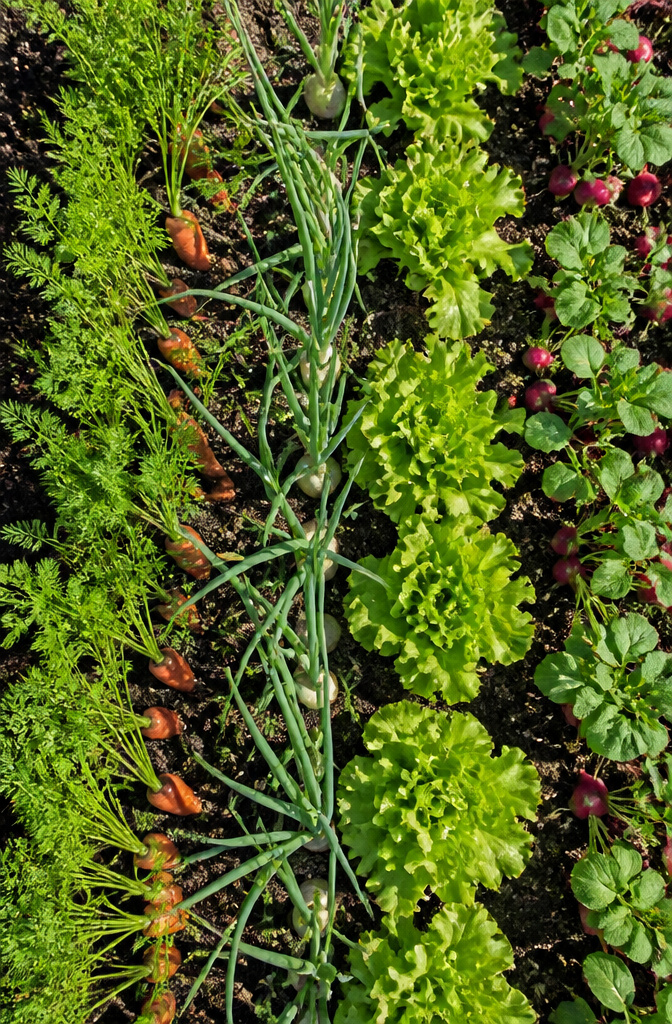
Some pairings in a small backyard veggie garden do more than save space. They actively protect each other.
- Carrots with onions: Onion smell confuses the carrot rust fly, which hunts by scent. The carrot row stays cleaner without a single spray. I plant them in alternating bands, not mixed, so thinning either one stays simple.
- Lettuce with radishes: Radish seed germinates fast while carrot seed sits slow, but the same logic works for lettuce. Radishes mark the row, then come out in three to four weeks right when the lettuce needs elbow room. Pulling the radishes loosens the soil for the lettuce roots that remain.
- Beans with corn, if space allows: This is the three sisters logic stripped to two. Corn gives the beans a living trellis; beans pull nitrogen from air to soil and feed the heavy-feeding corn. The catch is density. In a bed under four feet across, the corn shades everything and the bean haulm tangles harvest. I skip it below that width.
One pairing failed outright. Dill planted beside tomatoes drew swallowtail butterflies, which was the point, but the dill roots released something into the soil that stunted the tomato plants within eighteen inches. The tomatoes stayed dark green and stubby all July. I moved the dill to the far end the next year and both crops recovered. Companion planting works; proximity still has limits.
Soil Health and Compost
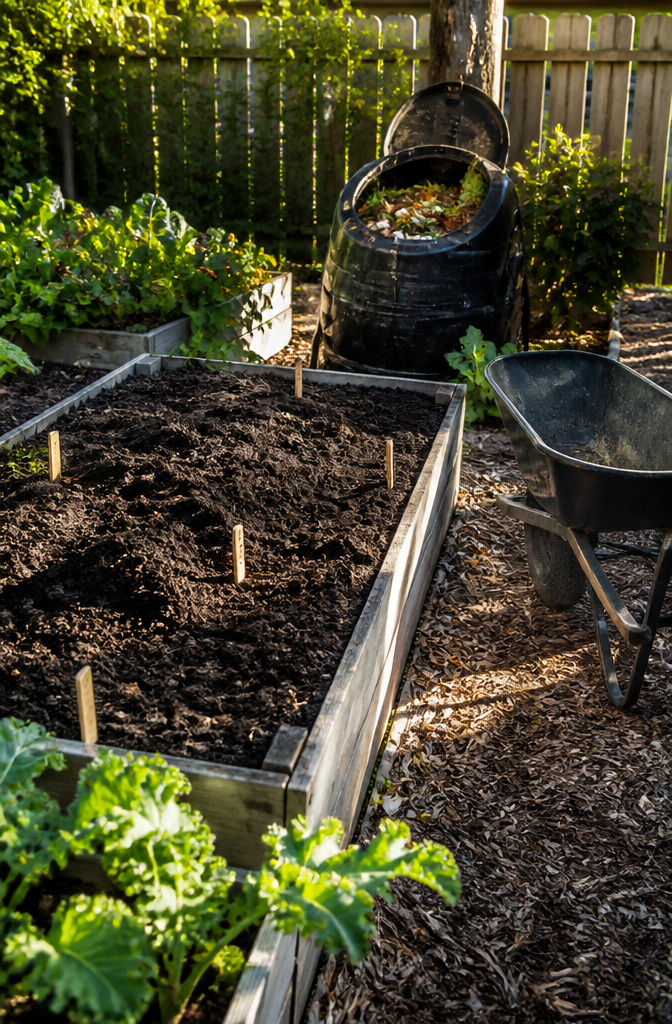
Organic matter does the heavy lifting in a small backyard veggie garden, not the fertilizer bag. The first season I layered kitchen scraps into a 5-gallon bucket with a lid, drilled holes for drainage, and buried it in the corner of my rental yard. Landlords never noticed, and the compost it made was darker and looser than anything I bought.
Store-bought compost can run hot enough to burn seedlings, especially the cheap bags that list "composted manure" without a finished date. I learned that after tomato starts yellowed and stalled; the bag had been sitting in sun, still cooking inside. Now I only top-dress with bagged compost in fall, letting winter settle it, or I stick to my own.
The seasonal routine is simple: spread an inch of finished compost over beds each spring and fall. Kitchen scraps cost nothing. The $8 bags are insurance, not the main event.
Succession Planting Calendar

Succession planting turns a small backyard veggie garden into a harvest that lasts all season instead of a single glut in June. I sow radishes every two weeks because they finish in about three to four weeks, and lettuce gets a fresh round monthly so the cut-and-come-again beds never turn bitter in the heat. Beans go in two rounds, early and mid-summer, which keeps the vines productive without overwhelming the kitchen.
The gap that always gets me is late July. Spring lettuce and radishes have bolted or been pulled, tomatoes and peppers are still green and small, and the fall broccoli and kale transplants are weeks away from size. That empty bed space is lost money in a small plot. Bush beans, beets, and a quick sowing of summer lettuce fill that hole perfectly. They mature fast enough to harvest before the frost-hardy crops need the room, and they keep the soil working instead of sitting bare.
Frequently Asked Questions
How do I start a small vegetable garden?
Pick a spot that gets at least six hours of direct sun and sits close to a hose spigot. Build or buy containers or raised beds with drainage holes, then fill them with a mix of one part compost, one part vermiculite or perlite, and one part garden soil. Choose compact varieties and plants suited to your light, then sow seed or set out starts after your last frost date.
What vegetables can I grow in a small backyard?
Compact bush varieties work best: ‘Tiny Tim’ tomatoes, ‘Bush Blue Lake’ beans, ‘Patio Princess’ cucumbers, plus lettuces, spinach, radishes, carrots, beets, and herbs. Cherry tomatoes like Sweet 100 and Sungold also do well in tight spaces or containers. Leafy greens manage with only three to five hours of sun, opening up shadier corners.
How much sunlight do vegetables need?
Most vegetables need six hours of direct sunlight, and fruiting plants like tomatoes, peppers, and squash do better with eight. Lettuce, spinach, arugula, and most herbs tolerate three to five hours. Morning sun alone is not enough if afternoon shade takes over by early afternoon; the plants will grow but may never produce.
What is companion planting?
Companion planting means growing different plants together for mutual benefit, such as pest control, pollination, or better use of space. In a small backyard veggie garden, tomatoes and basil share light needs while basil seems to repel certain tomato pests. Carrots and onions planted in alternating rows confuse carrot rust flies, and lettuce with radishes uses the same row twice since radishes come out just when lettuce needs room.
How do I maintain a container garden?
Water daily, sometimes twice when temperatures spike, and check drainage holes stay open. Lift the pot to learn its weight when properly watered; a sudden lightness means thirsty roots, while persistent heaviness signals drowning. Check for pests every morning, and move containers against a wall before storms. Stick with pots of at least 8 to 10 gallons for tomatoes so roots do not cramp by midsummer.