

The span runs from twenty-minute googly-eye fixes to four-hour felt sculptures, and the deciding factor is how many days you have before the doorbell starts ringing. Humidity is the trap most people miss: paper pupils on balloons curl within an hour in damp air, and ping pong ball irises peel at the edges after two humid afternoons unless you seal them with matte spray. I learned both the hard way.
1. Eyeball Garlands
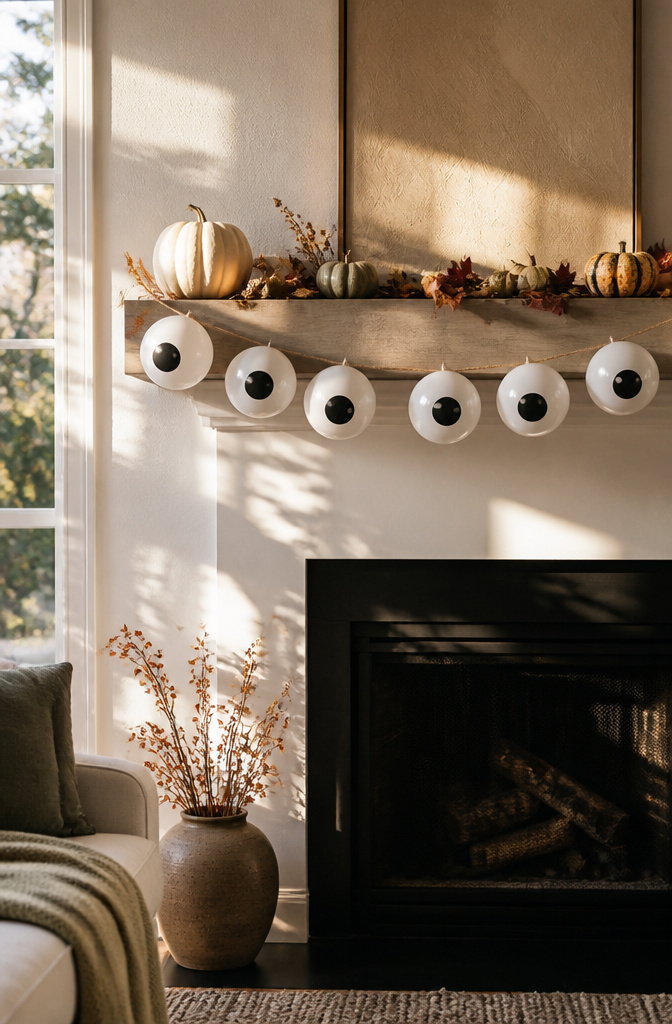
White balloons with black paper pupils are the fastest way to build an eyeball garland, though the paper curls the second humidity hits. I learned that the hard way after taping cut-out circles to a dozen balloons and watching the edges peel up within an hour. Switching to a glue stick with a quick press-and-hold solved it, or skip paper entirely and draw pupils on with a permanent marker once the balloon is inflated.
Felt and wooden beads hold their shape better if you want something reusable. String large wooden beads along twine and paint an iris on each, or sew felt circles into a strand that drapes flat against a mantel. The mantel placement matters more than the material, honestly, a garland hung too high reads as random circles; let it sag slightly below the shelf edge so the eyes catch light at sitting height.
2. Eyeball Wreaths
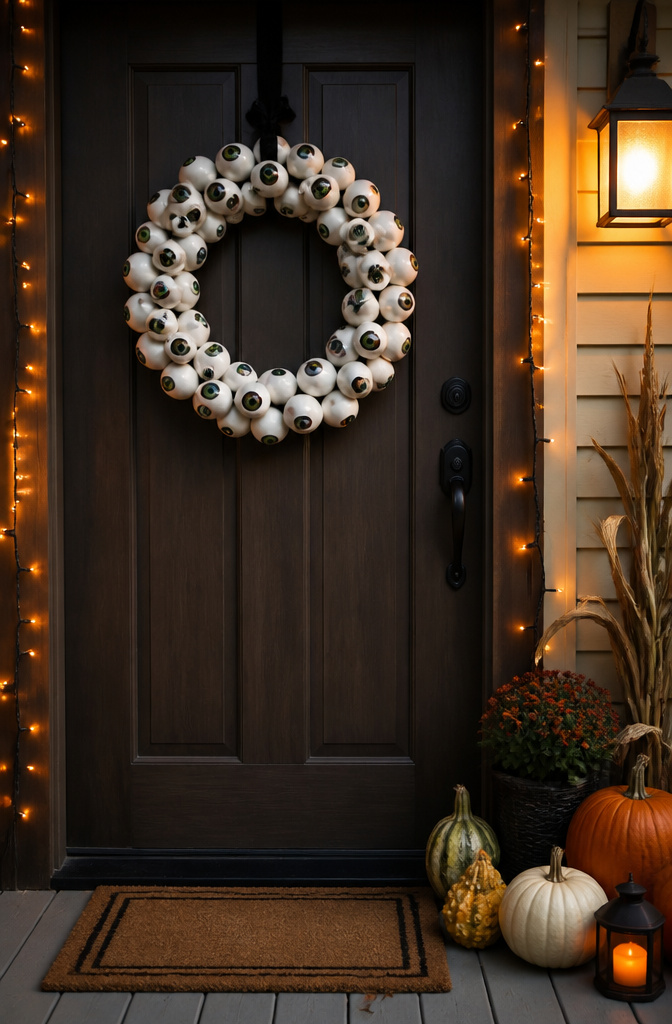
Ping pong balls make the lightest, roundest eyeball blanks you can find, and a pack of them from the dollar store near the pharmacy section runs about a dollar per dozen. The first batch I tried used stickers shaped as circles for the irises, which worked fine in dry October air but peeled at the edges after two humid afternoons. Switching to a thin layer of craft glue under the paper pupils, then sealing the whole ball with matte spray, kept them intact through the season.
For the wreath form itself, a vine base from any craft store takes the weight without sagging. String the finished eyeballs on fishing line or hot-glue them directly; spacing them every three inches or so keeps the look dense without crowding. A vine wreath with googly eyes hot-glued straight on takes twenty minutes if you are tight on time, and the plastic pupils wobble when the door opens, which reads as more silly than scary. That tradeoff suits a household with younger kids better than the hand-painted ping pong version, which lands closer to unsettling.
Front door placement puts the wreath at the height where trick-or-treaters actually face it, roughly eye level with an average ten-year-old. The motion of the googly eyes catches porch light better than static paint, so if your door sits back from the street, that movement helps.
3. Eyeball Pumpkins
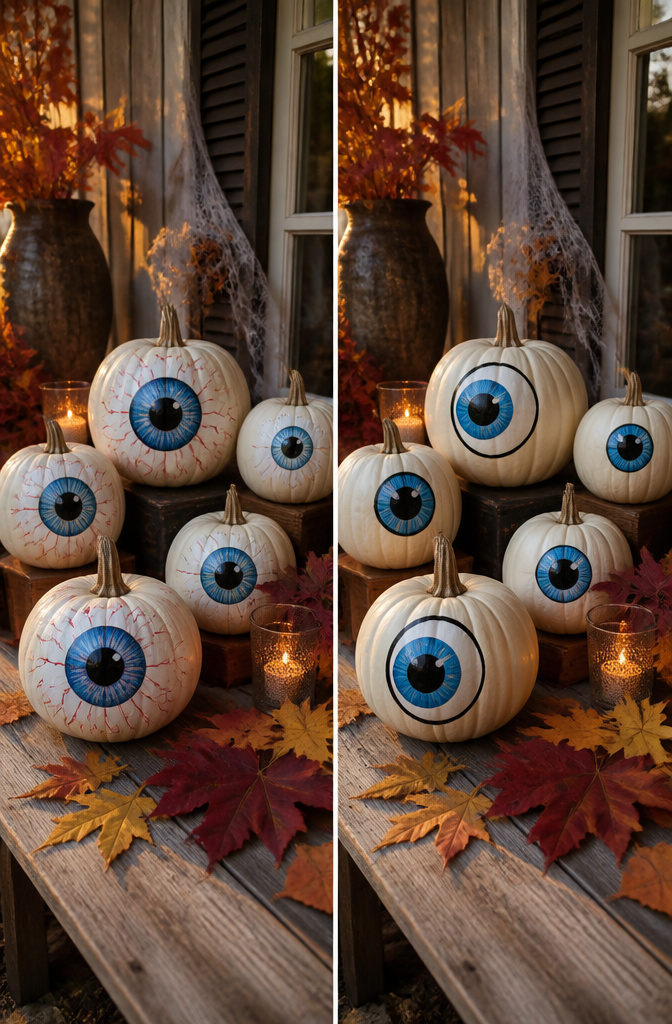
Painted eyes on pumpkins hold up better than you’d expect, but the rind matters. Medium sugar pumpkins, the kind sold for pie filling, have smoother skin than the giant field varieties. That smooth surface takes acrylic craft paint without the cracking you get on deep ridges. I learned the hard way that a base coat of white, left to dry overnight, keeps the iris colors from sinking into the orange and turning muddy.
Googly eyes need a glue that flexes, not school glue that turns brittle. A 15–20 mm eye sits flat enough on a curved pumpkin to grip with hot glue or a thick craft adhesive. Anything larger than 25 mm tends to rock and peel at the edges by night three. The mini ones, under 10 mm, are nearly impossible to place straight without tweezers and more patience than I have the week before Halloween.
This is the project most readers start mid-October when time runs short. Painting takes two sessions because of dry time. Googly eyes take twenty minutes and a glue gun. If the pumpkin still has a week until carving, paint wins for durability. If you’re dressing the porch the morning of the 30th, stick-on eyes look ridiculous in exactly the right way, and nobody cares that they wobble.
4. Eyeball Sculptures
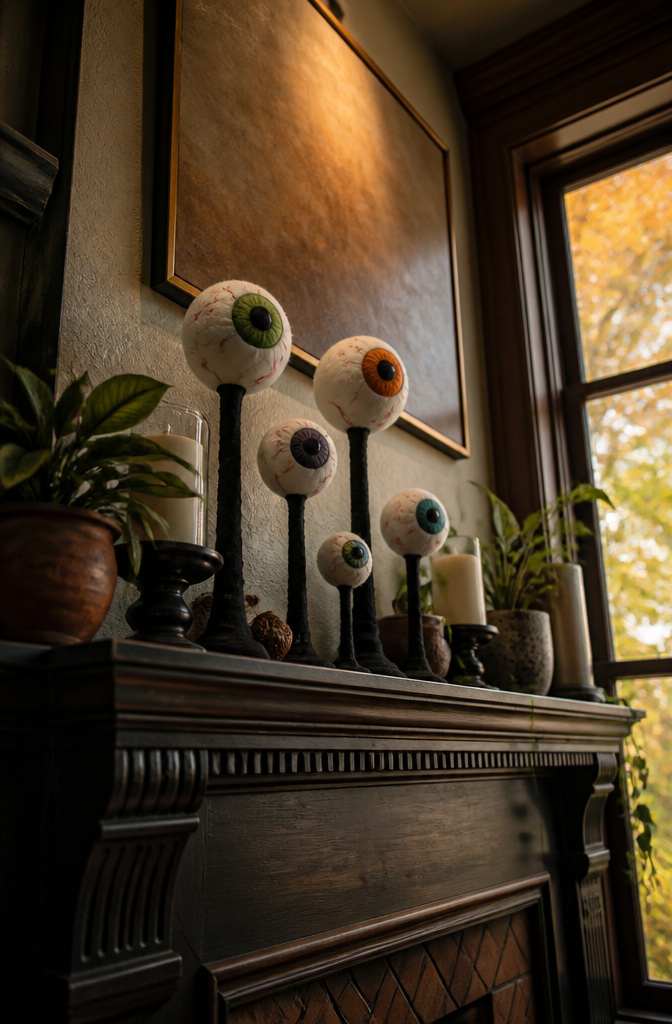
Felt and plastic eyeballs from the craft aisle at Michaels can become small sculptures if you build an armature that actually holds. My first attempt used 16-gauge wire from the floral section, bent into a tripod base with a vertical spine. The wire looked stiff enough in the package, but once the felt layers and glue went on, the spine bowed forward over three days until the thing leaned like a tired flamingo. Rebuilding with two crossed wires zip-tied at the center, plus a ring at the base, gave it the rigidity the single spine lacked. The second version took about four hours total, not counting the failed first build, which makes this the longest project in the set by a fair margin. A dab of hot glue behind each plastic eyeball, pressed into a slit cut in the felt, keeps them from popping off when the sculpture gets moved. If your mantel is narrow, keep the base under six inches wide or the weight distribution fights you.
5. Eyeball Centerpieces
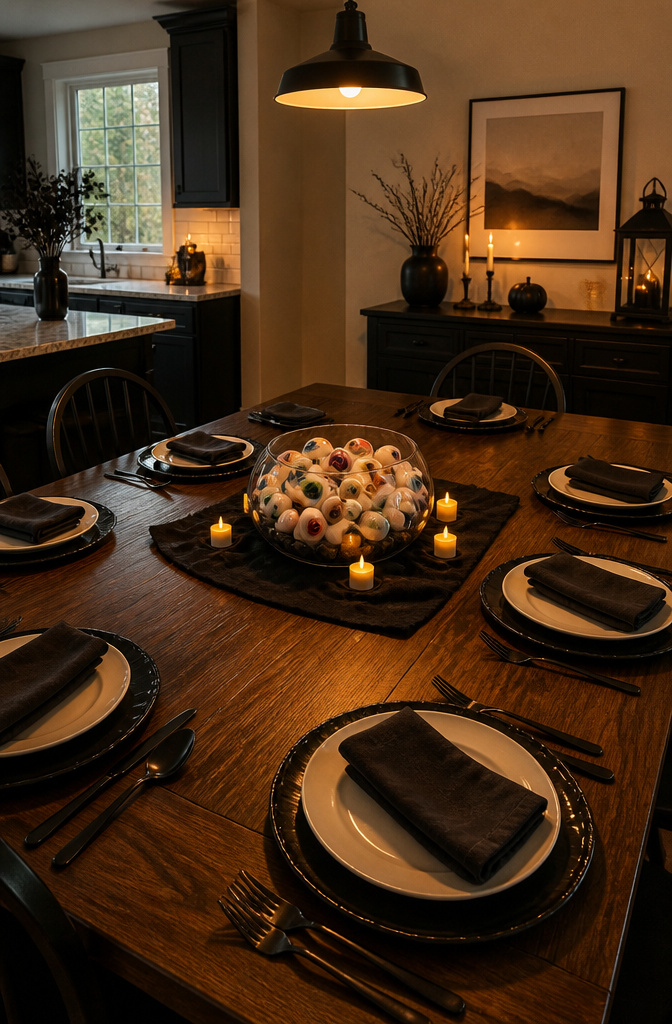
A centerpiece lives at a fixed point and has to survive the meal, which means height below chin level and a base that does not tip when someone reaches for the rolls. Scattered eyeball decor can sit anywhere; a centerpiece competes with plates and serving dishes for the same real estate.
Last October I set a tall cylinder vase in the center of my table and filled it with dollar-store eyeballs from a 12-count pack. The vase looked dramatic for exactly ten minutes, then blocked sight lines and forced guests to lean around it to pass the potatoes. I swapped it for a low glass bowl, 4 inches tall, and spread the same eyeballs across the bottom with a few LED tea lights tucked between them. That version lasted the whole party and took thirty seconds to lift off when we needed the space for a pie.
Cleanup matters more than the photos suggest. Painted foam eyeballs shed flakes when they knock against glass, so I now line the bowl with a black cloth napkin I already owned. The cloth catches debris and lifts out with the decor, leaving the bowl ready for food.
Materials That Actually Work

Balloons stretch too much for anything that needs to hold a shape, but that same softness makes them perfect for garlands you tuck into corners. Ping pong balls read as real eyeballs from about three feet, then the seam gives them away. Wooden beads are the only material that looks finished from across a room, though you will spend an evening painting pupils by hand. Felt is the cheapest route and the fastest to look like it, bunching up at edges and catching light flat.
| Material | Best Use | Cost per Project |
|---|---|---|
| Balloons | Garlands, clusters in dim corners | $3–$5 |
| Ping pong balls | Wreaths, anywhere viewed up close | $4–$8 |
| Wooden beads | Sculptures, centerpieces, mantel pieces | $8–$15 |
| Felt | Kids’ crafts, one-night party props | $2–$4 |
I have tried the ping pong ball route twice, and both times the hot glue left a yellow ring that the paint would not fully cover. If you go that direction, gel super glue sets cleaner and buys you back that professional edge you are after.
Where to Put Them So People See Them
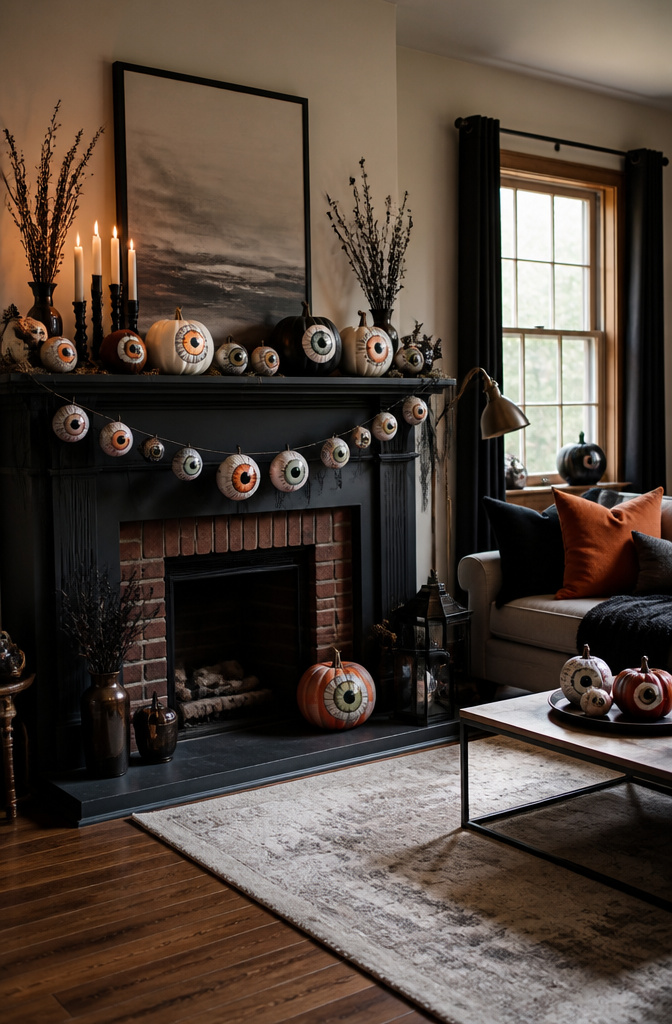
The mantel gets the first claim because guests already look there, but height under a porch light changes everything after dark. Eyeball garlands hung too high catch the bulb’s glare and flatten into white disks; lower them to about six inches above the mantle ledge and the pupils catch shadow instead. Front doors work best with a wreath at eye level for adults, which puts it roughly forehead-high for trick-or-treaters. A table centerpiece needs to sit low enough that seated guests can talk across it, though I once clustered too many foam eyeballs in a glass bowl on my coffee table and the arrangement read as a medical specimen jar instead of playful Halloween decor. Moved the same pieces to a windowsill behind the sofa where they caught passing headlights, and the effect finally worked. Daylight favors matte finishes; glossy pupils need that artificial angle to gleam.
Last-Minute Googly Eye Fixes

Peel-and-stick googly eyes are the only Halloween decoration that ships in a bag and covers a whole room in twenty minutes. The backing works on painted drywall, glass, and the slick plastic of store-bought pumpkins; it fails on anything dusty or textured like stucco or unfinished wood. Last October I pressed a handful onto the bathroom mirror and the kitchen cabinet fronts, and half the batch in the hallway slid off by morning. The adhesive on the cheap packs dries out fast, especially if the bag has been opened before. What saved the second round was a tube of gel super glue with a brush-on applicator, which let me dot the center of each eye without squeezing the whole thing out sideways. A single pack of 200 costs about four dollars, and the ones that stayed up came down clean with a thumbnail after the holiday.
Frequently Asked Questions
How do I make eyeball decorations for Halloween?
White balloons with black paper pupils are the fastest way to build an eyeball garland, though a glue stick works better than tape in humid weather. For something reusable, string large wooden beads along twine and paint an iris on each, or sew felt circles into a strand that drapes flat against a mantel. Ping pong balls make the lightest, roundest eyeball blanks for wreaths, and painting rocks or using Christmas ornaments are other options if you want variety.
What materials can I use for Halloween eyeball decorations?
Balloons work for garlands you tuck into corners, ping pong balls read as real eyeballs from about three feet, wooden beads look finished from across a room, and felt is the cheapest route though it bunches at edges. The article also mentions painted rocks, Christmas ornaments, and plastic eyeballs from craft store aisles as workable options. Each material suits a different project: balloons for garlands, ping pong balls for wreaths, wooden beads for sculptures and centerpieces, and felt for kids’ crafts or one-night props.
Where can I place eyeball decorations in my home?
The mantel gets first claim because guests already look there, but hang garlands slightly below the shelf edge so the eyes catch light at sitting height rather than reading as random circles. Front doors work best with wreaths at adult eye level, which puts them roughly forehead-high for trick-or-treaters. For centerpieces, keep height below chin level and use a base that does not tip when someone reaches for food; low glass bowls beat tall cylinder vases for actual meals.