
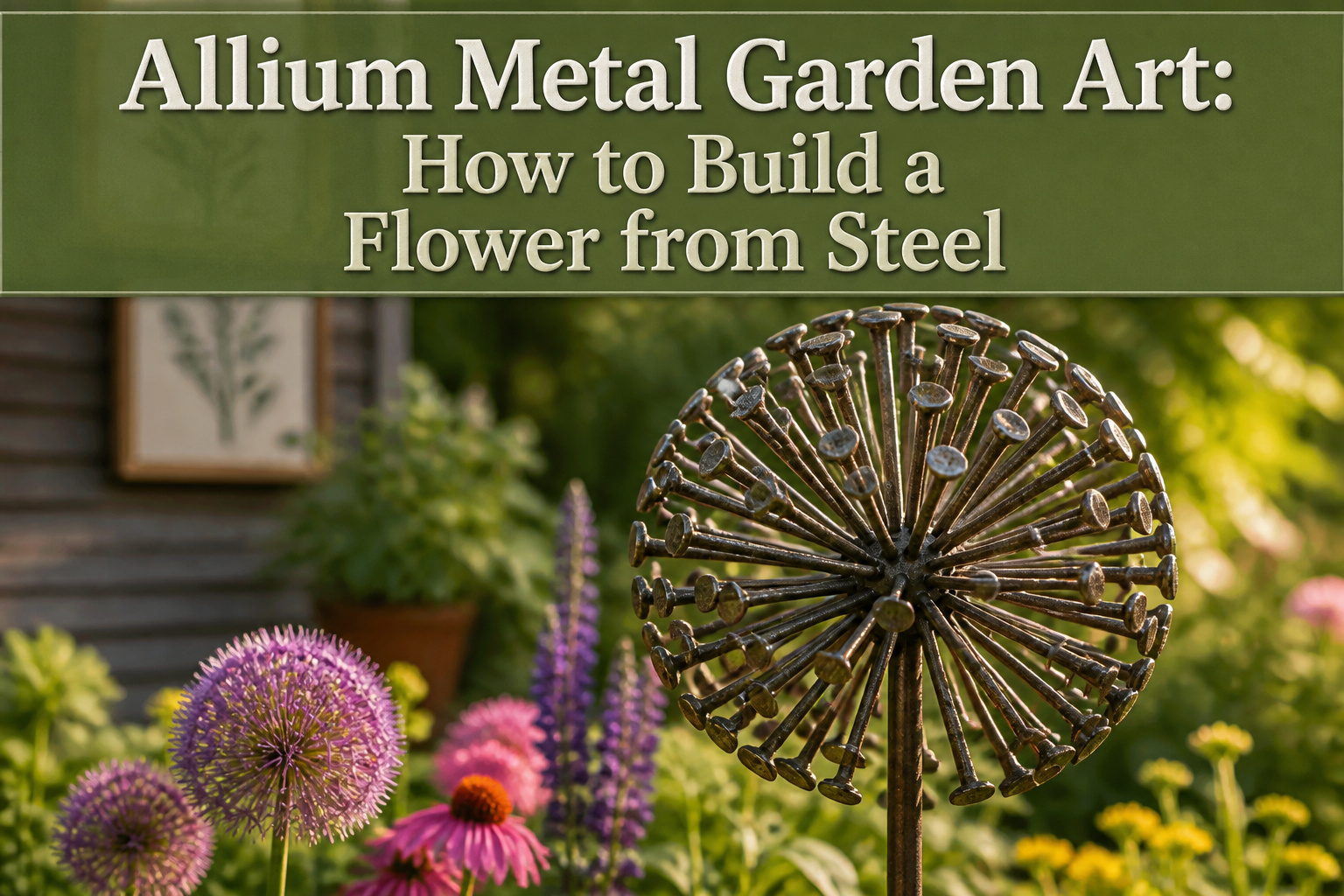
Allium metal garden art is a steel sculpture built from a softball, nails, and threaded rod that mimics the tall, spherical bloom of the allium flower. The form works because the living plant’s silhouette is already geometric; your eye reads a welded sphere on a rod as a flower without any petal detail. A complete flower costs about $20, takes an hour to assemble, and stands three feet high on a stem you sink directly into garden soil.
What Alliums Are and Why They Work in Metal

An allium in bloom is one of the most architectural shapes in a garden. A thin, upright stem lifts a rigid sphere of tiny star-shaped flowers into the air, and from a distance the whole head reads as a single clean ball floating above the foliage. That geometry is what makes the form so forgiving in steel. You do not need to render petals or leaves convincingly. The eye accepts a welded sphere on a rod as an allium because the silhouette is already right.
The natural flower also carries its weight high, which means a metal version plays well at the scale garden art demands. A globe that sits four or five feet off the ground catches light and casts shadow across a bed the way the living plant does. Lower flowers get lost behind borders. The allium’s elevation lets you place a metal piece where people will actually see it against a hedge, a fence line, or the side of a house.
The sphere itself is structurally simple to build from the inside out. A hollow ball built on a core, with rods or nails radiating from a center, automatically gives you the radial symmetry the real flower grows. That is why this project works for a Saturday build rather than a metalwork course.
Materials That Make Up One Flower

A full allium metal garden art flower comes together from seven items that cost about $20 total and take roughly an hour to assemble. The softball matters more than it sounds: a 12-inch circumference ball, not a baseball, gives the right spherical density for 120 nails to read as petals rather than spikes. Those 120 flat-head nails run 3 to 4 inches each, and the heads catch light the way allium florets do. A 3-foot metal threaded rod at 1/8-inch diameter forms the stem; rebar works but reads heavier and less botanical.
- Spray paint in purple and green, or whatever color matches the bed where this will sit
- Cordless drill with a 1/8-inch bit, sized so nails fit snug after a test hole
- Safety gloves and eye protection; clothes worth covering too
- Cardboard box large enough to contain overspray during painting
The threaded rod is the one place where a little extra length helps. Three feet sinks deep enough to stand upright in most beds without staking, and the 1/8-inch diameter keeps the stem visually slender against the softball’s bulk. Flat-head nails matter more than finishing nails would; the heads create the allium’s characteristic pom-pom texture when the light hits.
Drilling the Softball Core

A 1/8-inch drill bit, or anything slightly smaller, is the right starting point for the test hole. Drill once into an inconspicuous spot on the softball, then push a nail in to check the fit. You want it snug enough that the nail stays put on its own, but not so tight that the core splits. If the nail slides in loose, step down a bit size and try again.
Once the fit is right, mark out your pattern and drill the remaining holes straight through at a 90-degree angle to the surface. The softball material will grab the bit differently than wood, so steady pressure and a sharp bit matter more than speed. Rushing this part is how the core cracks. Drill all the way through, keep the spacing even, and stop to clear chips before the bit binds. A bound bit twists the core and ruins the whole piece.
Assembling the Stem and Nails
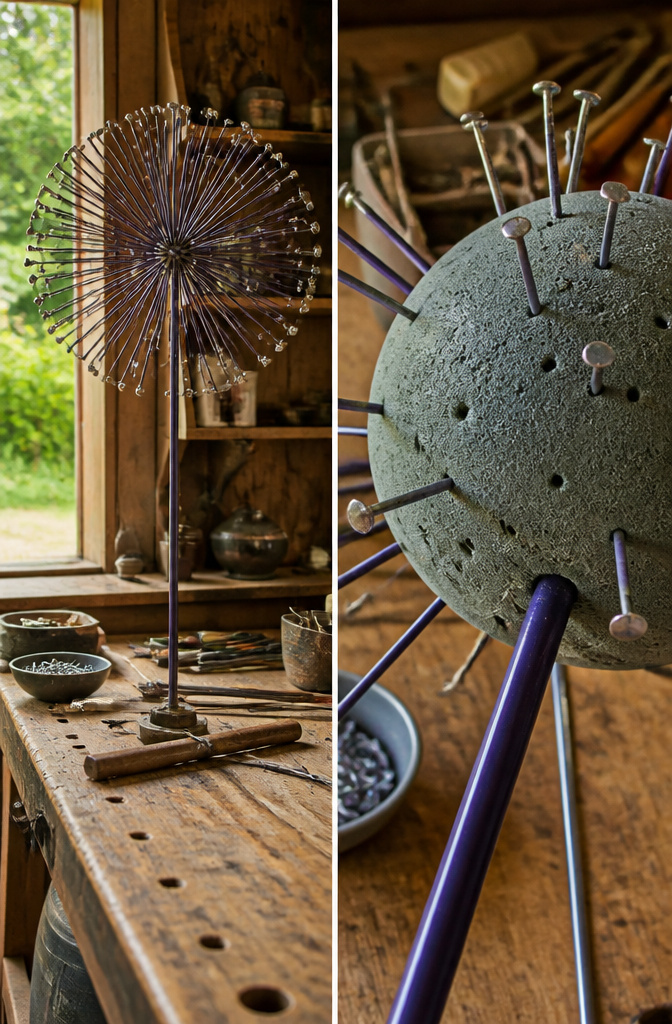
- Insert the painted rod straight through the softball so it exits the opposite side like a stem. The hole needs to grip tight; if you drilled the rod hole slightly undersized, the foam will compress around it. Tap it in firmly and do not pull it back out to check, or the fit loosens.
- Work the 120 flat-head nails into the 1/8-inch holes one at a time. Push each nail to the same depth so the heads sit flush with the ball’s surface, not staggered at different heights. By nail sixty or so, the heel of your palm starts to ache from the repeated pressure. Switch to the fleshy base of your thumb, or wrap a scrap of cloth around the nail head and press with a block of wood.
- Step back every twenty nails and look at the ball from a few angles. The spacing should read as even from a distance; up close you will spot clumps where three holes landed too near each other. Those nails still hold, but the silhouette looks crowded. If you catch it early, you can angle the next nails slightly toward the sparse zones to balance the visual weight.
Painting Without Overspray

- Stand the flower head inside a big cardboard box before spraying, with the stem poking through a slit in the bottom so the cardboard catches the overspray.
- Mask the stem below the flower head with paper or tape; any paint on the metal rod will chip faster than the head and look worse than bare steel.
- Choose a color that reads from the curb. Silver or copper spray paint catches light the way real allium seed heads do; matte black disappears against soil and reads as a hole in the garden.
- Plan on repainting every spring. Outdoor display fades the finish within a year, and a quick refresh in the cardboard box takes ten minutes before the season starts.
Where to Place Them for Scale

A single allium on a flat lawn disappears the same way a real dandelion does: your eye slides right over it. Cluster three or five at staggered heights, and suddenly the grouping reads as one intentional shape from twenty feet back or from the kitchen window. The tallest should sit slightly behind so the shorter ones do not block it; even a six-inch difference in rod length changes what the silhouette reads as.
Height matters more than spread. The softball-sized bloom sits on a three-foot rod, which puts the flower head roughly at thigh level on most adults. In a bed of low ground cover, that is enough to catch light and cast a small shadow. Against tall perennials or a fence, the same piece sinks. I place mine where the surrounding growth stays under eight inches through midsummer, or I accept that the art becomes a late-season feature once the neighbors’ daylilies die back.
The rod needs real anchoring. A three-foot steel stake driven twelve inches into loose compost will lever itself sideways by August. I set the base into undisturbed subsoil if I can find it, or I pour a coffee-can sized collar of concrete just below the mulch line and sink the rod into that while it is still wet. The metal is light enough to ship flat, but once assembled it catches wind like a small sail. One good thunderstorm bent my first attempt into a question mark; the concrete collar fixed that, and I have not had to reset one since.
Safety Gear That Saves the Project

Drilling through a hollow steel ball sends metal shavings everywhere, and the bit can grab the thin wall and spin the whole piece if your clamp slips. Leather work gloves with a snug wrist keep the ball from torquing against your palm when that happens; I learned that after a cheap gardening glove snagged on the drill press table and nearly pulled my hand into the bit. Eye protection matters just as much during painting. Enamel overspray drifts in a breeze you do not feel, and a fleck in the corner of your eye at 9 a.m. turns into a weeping blur by noon. I now wear sealed goggles, not the vented kind, whenever the rattle can comes out. The thirty seconds of fog while they adjust to humidity beats losing an afternoon to flushing paint from your eye.
Frequently Asked Questions
How do you make giant garden art alliums?
Start with a 12-inch circumference softball as the core, drill 120 holes sized for flat-head nails, and insert a 3-foot threaded rod through the center to form the stem. Push all 120 nails into the holes so the heads sit flush with the surface, paint the flower head with spray paint, and anchor the stem twelve inches into undisturbed subsoil or a small concrete collar to withstand wind.
What materials do you need for allium garden art?
You need a softball, 120 flat-head nails 3 to 4 inches long, a 3-foot 1/8-inch metal threaded rod, spray paint, a cordless drill with a 1/8-inch bit, safety gloves and eye protection, and a large cardboard box to catch overspray. The total cost runs about $20, and assembly takes roughly one hour.
How do you maintain allium garden art?
Refresh the paint every spring, since outdoor display fades the finish within a year. A quick touch-up inside the cardboard box takes about ten minutes before the growing season starts. The nails and rod themselves hold up for years; the paint is the only annual upkeep needed.