
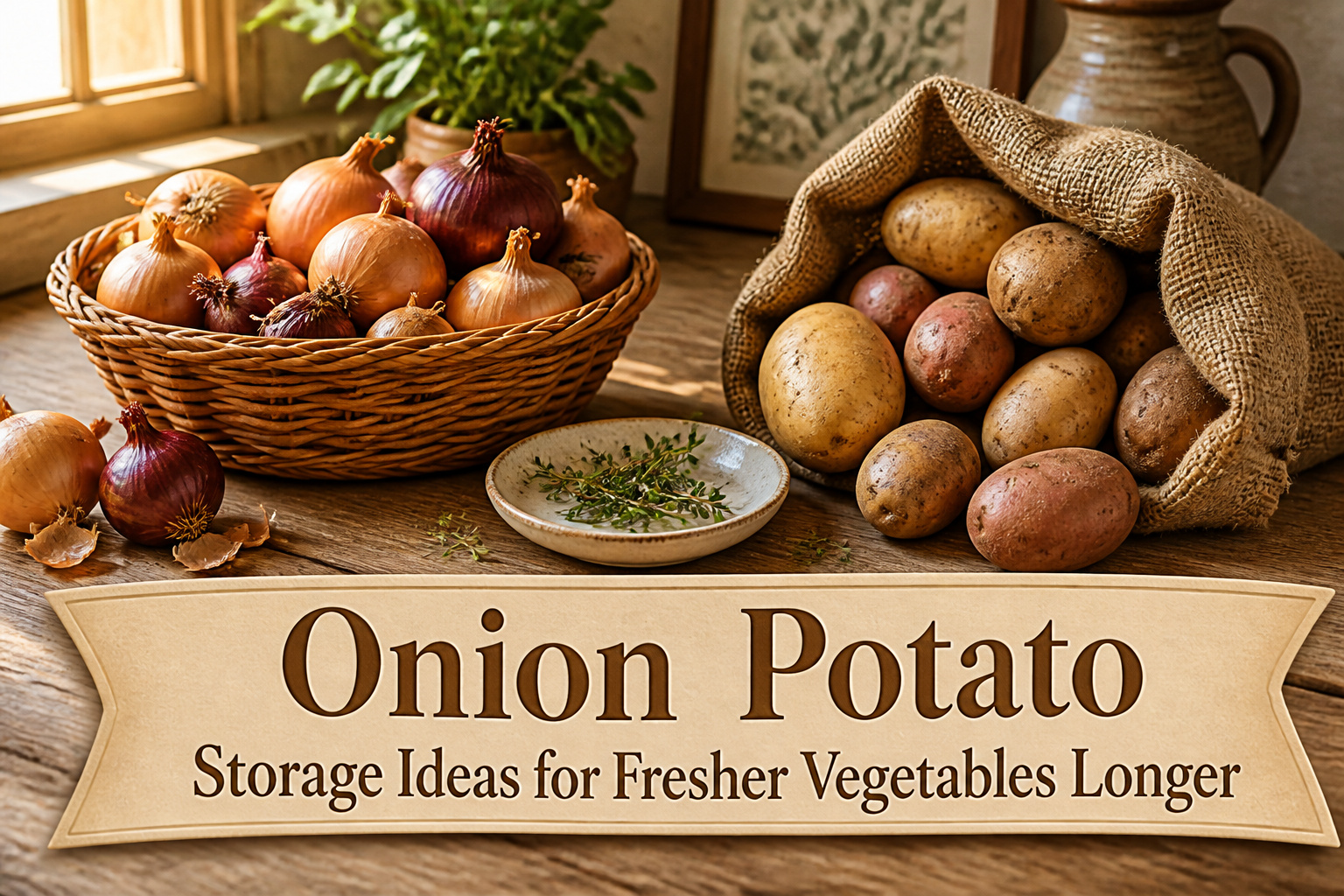
The best onion potato storage ideas range from a free paper bag to a lidded ceramic crock, and the right choice depends on one thing: whether you can keep the two vegetables in different spots. Even a perfect ventilated basket fails if onions sit close enough for their ethylene gas to hit the potatoes. A wire basket on a pantry shelf, with a second basket across the room for onions, gives you the full five weeks a potato can last.
1. Ventilated Containers

Mesh baskets and wire crates work because onions and potatoes keep respiring after harvest. They release moisture steadily, and any container that traps that humidity speeds up soft spots and mold. A sealed bin is basically a greenhouse for rot.
The same principle applies to a cardboard box with holes punched in it, or any crate that lets air move through. What matters is that excess moisture evaporates instead of settling back onto the skins.
I keep mine in a wire basket that sits on a pantry shelf. The gaps between the wires are wide enough that air circulates on all sides, and any condensation drips through instead of pooling. A covered crate blocks the light that triggers sprouting and greening, but the cover itself needs to be loose or perforated so it does not undo the ventilation.
The only catch is proximity. Even with perfect airflow, onions and potatoes should not share the same basket. Onions release ethylene gas as they age, which pushes potatoes toward sprouting faster. Two separate containers side by side solves it.
2. Opaque Containers
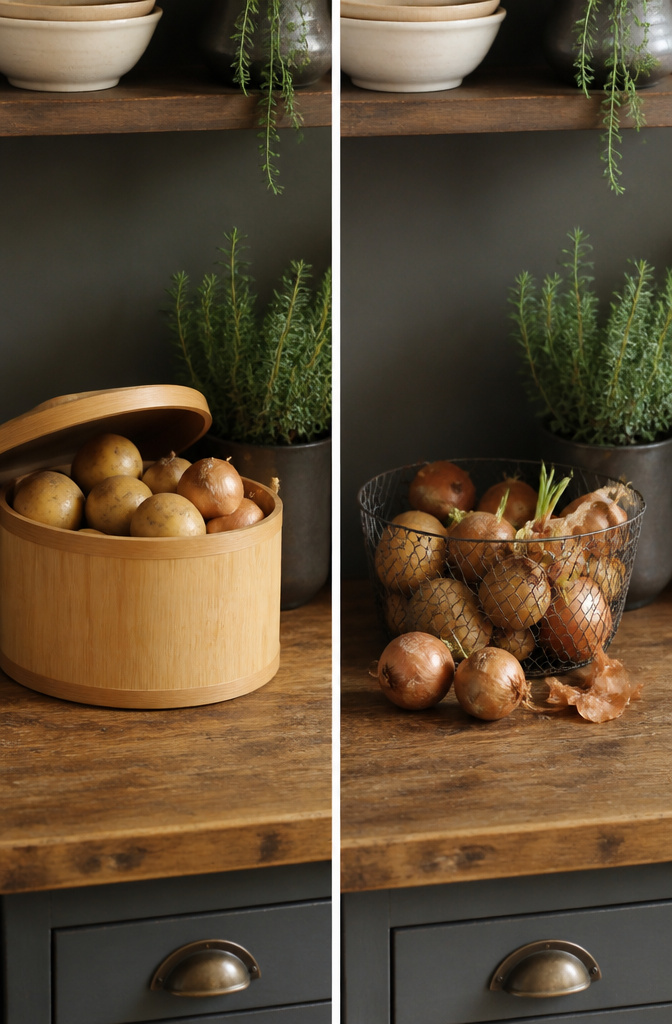
Light turns potatoes green and pushes onions toward early sprouting. The greening happens because potatoes exposed to light produce solanine, a compound that builds under the skin and leaves a bitter taste; those green patches have to be trimmed away or the potato gets tossed. Onions respond to light and warmth by breaking dormancy and sending up shoots. Darkness signals both vegetables to stay dormant, which makes the container itself part of the storage strategy.
Bamboo tubs, acacia bins, and ceramic crocks all block light completely while sitting out on a counter or inside a cabinet. A crate or cardboard box works too if you keep the lid on. The material matters less than the opacity: anything that stops light from reaching the contents will slow greening in potatoes and keep onions from sprouting before their time. Mesh baskets only work here if they sit in a dark pantry; in a lit kitchen, their open weave lets light through and loses the advantage.
3. Separate Storage
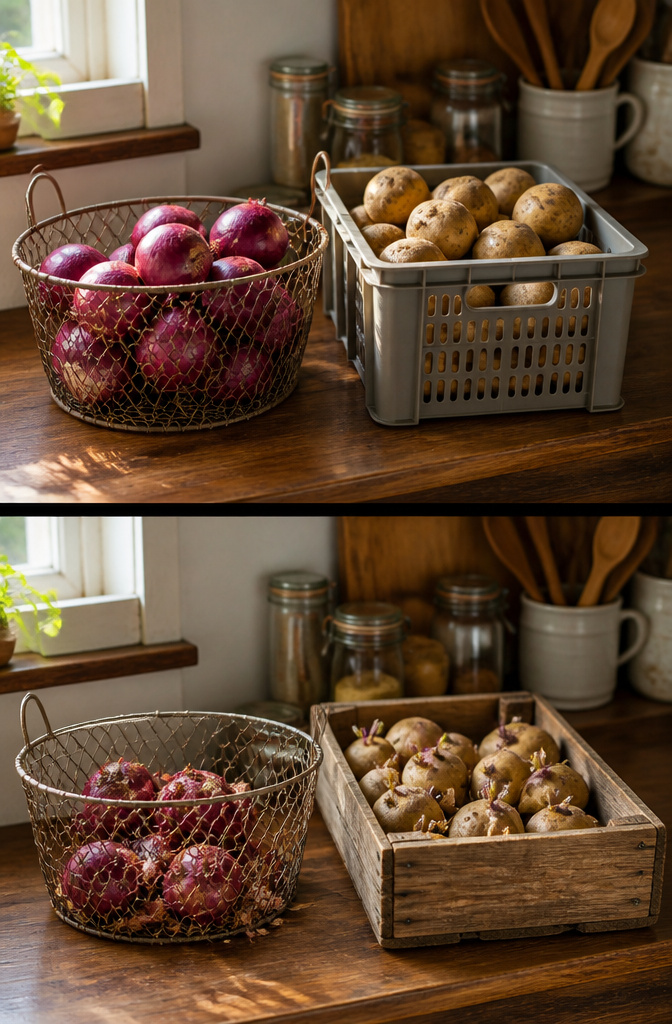
Onions release ethylene gas as they age, a plant hormone that acts like a ripening signal to anything nearby. Potatoes pick up on it and respond by sprouting faster and softening sooner. The practical result is straightforward: store them in different containers, and if your space allows, put them on different shelves or in different rooms entirely. Two baskets sitting side by side in the same cupboard still lets the gas do its work.
That separation matters even more than whether the container itself is perfect. Mesh baskets or ventilated bins are the right call for both vegetables, but only if they are not the same bin. The gas slips through gaps and mesh without trouble, so proximity is the problem, not the packaging.
Onions produce and emit ethylene gas, which speeds up the ripening process and can cause nearby potatoes to rot and spoil more quickly.
For a small kitchen, this means finding two spots instead of one: a low pantry shelf for potatoes, a counter basket for onions, or whichever arrangement puts real distance between them.
4. Cool, Dark Locations
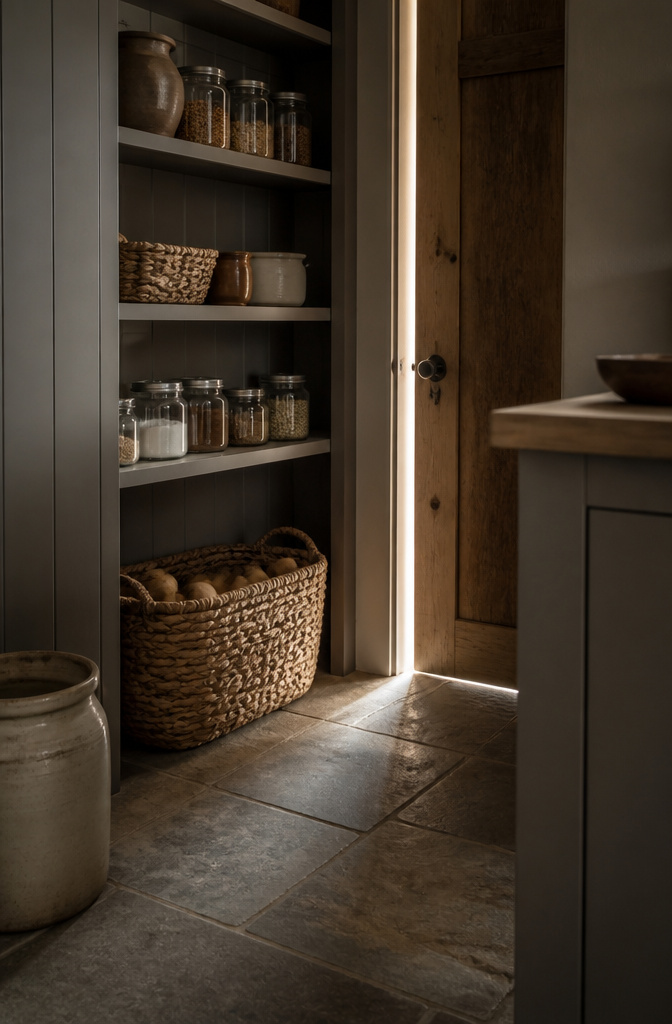
The corner of a pantry shelf that never catches afternoon light is where potatoes hold up best. Heat from the stove or oven speeds up sprouting, and even indirect sunlight through a nearby window triggers greening that ruins the whole batch. A low cupboard or basement spot works if the pantry is full, but keep it away from the water heater or any appliance that cycles warm. Between 45°F and 50°F is the range to aim for; much warmer and the eyes open faster, much cooler and the starches shift toward sugar in ways that fry up wrong. Light does damage before you notice it, so a solid-wall basket or a lidded crate sitting in shadow buys you the full five weeks a potato can last.
5. Avoid Refrigeration

Cold below roughly 45°F sets off two different kinds of damage. In potatoes, the starch begins converting to sugar, which changes how they cook. The same potato that roasts up fluffy and mealy at room temperature can turn gummy or brown too fast in a pan. Onions soften and lose their snap, then go limp and moldy faster than they would in a cool pantry.
The fridge also traps moisture in its sealed drawers, which speeds up rot in both vegetables. What looks like protection actually shortens the window you have to use them.
Keep both vegetables out of the refrigerator entirely. A mesh basket on a low pantry shelf, or even under the sink, does more for longevity than the crisper drawer ever will. The tradeoff is finding a spot that stays cool and dark without drifting into refrigerator territory. In most kitchens, that means the cabinet farthest from the stove and the oven’s heat cycles.
6. Paper Bags for Onions

Paper bags cost next to nothing and let onions breathe about as well as anything fancier. The loose weave of the paper lets air move through, which matters because onions keep releasing moisture and ethylene gas after harvest. Trap that humidity and you get soft spots and mold.
A bag on the counter works for up to three months, same as a wire basket would. The difference is what happens when you bump it or stack a second bag on top. Paper tears. One ripped seam and your onions scatter across the floor, rolling under the stove where you will find them three weeks later by smell alone. I keep mine in the top layer of a cabinet, single-bagged, where nothing sits on them.
If you already have a wire basket, the basket wins for durability. The bag wins for starting today with what is in the pantry. Either way, the point is the ventilation, not the container itself.
7. Check for Spoilage
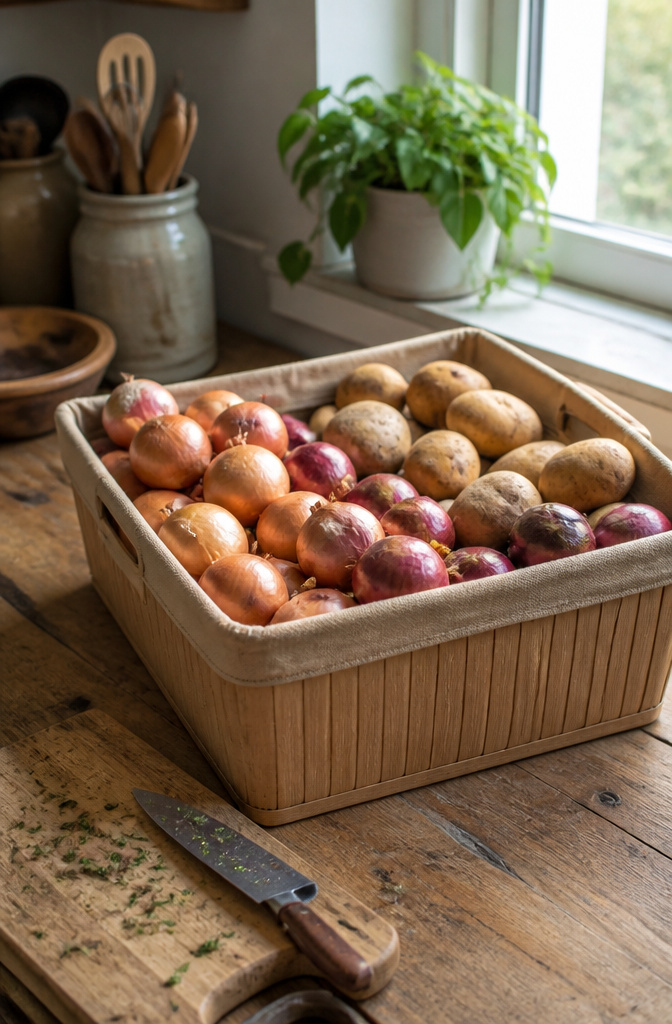
A weekly check catches what a monthly one misses, and one soft potato can ruin the whole batch in under a week. I pull the bin forward every Sunday and handle each onion and potato in turn, looking for the same four things: give under pressure, skin that wrinkles when you pinch it, pale sprouts poking through, and any surface that feels damp or shows dark patches.
Moisture is the first warning. Potatoes release humidity as they keep respiring after harvest, and trapped dampness breeds the soft spots that spread fast. Onions do the same, plus they emit ethylene gas that accelerates trouble in anything nearby. If a vegetable is merely starting to soften or wrinkle, it goes straight to the cutting board that evening; if it smells off or the dark patch runs deeper than the skin, it hits the compost. The rest go back into their separate, ventilated containers with a quick wipe of the bin to remove any condensation.
Why Proper Storage Matters
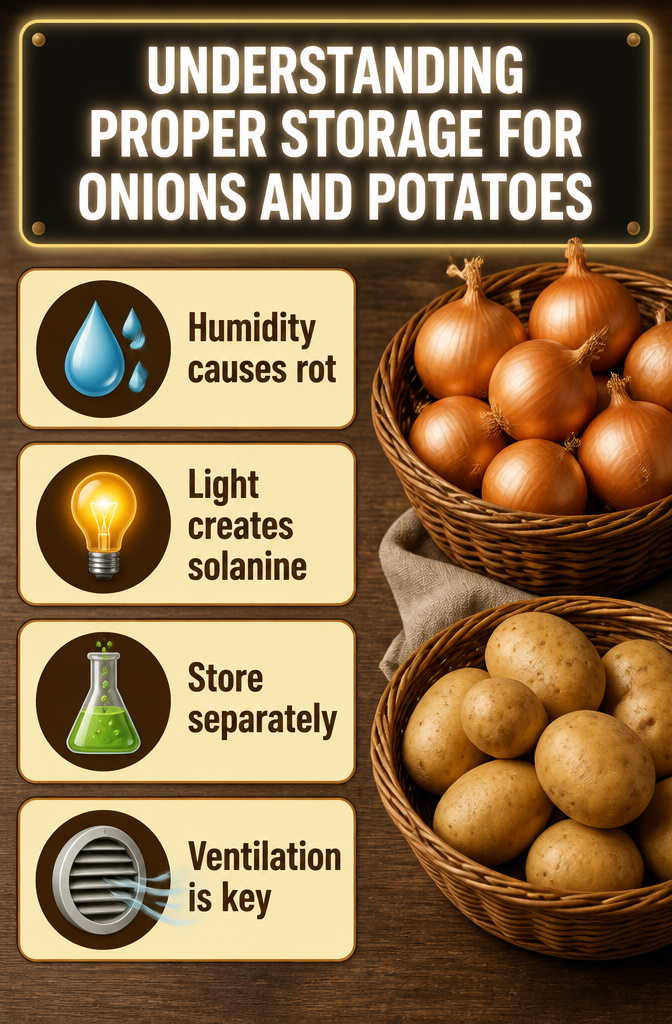
Both onions and potatoes keep living after they leave the field. They respire, releasing moisture and, in the case of onions, ethylene gas. That chemistry is what makes storage matter.
Trapped humidity is the first enemy. A sealed bin holds in the moisture these vegetables exhale, and that wet air softens them into rot. Light is the second. Potatoes exposed to light produce solanine and turn green; onions under light and warmth push out shoots faster. The third problem comes from pairing them together. Onions release ethylene gas as they age, and that gas speeds up potato sprouting. Store them in separate baskets, even if those baskets sit side by side in the same cupboard.
The seven methods below work because each one interrupts at least one of these three processes. Ventilation handles the moisture. Opaque containers block the light. Separation breaks the ethylene chain. Get two of the three right and your potatoes and onions outlast the week; get all three and they last weeks longer than a countertop pile ever would.
How Long They Last

A fresh onion from the store, kept cool and dry, will usually hold up for up to three months before it softens or sprouts. Potatoes stretch a little shorter, generally four to eight weeks under the same conditions. Those ranges assume the vegetables started in good shape and stayed in a consistent spot, not shuffled between warm counters and chilly corners.
The three-month mark for onions is optimistic for sweet varieties, which contain more moisture and tend to break down faster. Storage potatoes like russets lean toward the longer end, while thin-skinned new potatoes often clock in closer to four weeks no matter how carefully you handle them.
Temperature swings wreck both timelines. A pantry that hits 75°F for a week in August will shave days or weeks off, even if the rest of the year it stays ideal. Starting with bruised or already-sprouting stock shortens things further, which is why I always sort through the bag before it goes into the bin.
Signs Your Vegetables Have Gone Bad

Potatoes give themselves away in stages. The first sign is a soft or wrinkled texture where the skin used to hold firm pressure. Sprouted eyes are still usable if the shoots stay small, but once those sprouts push past a few centimeters and you spot green flesh underneath, that potato is done. A sour smell seals it.
Onions rot differently. They go soft or moist first, often with translucent patches spreading through layers that should stay opaque and crisp. The smell shifts too: sharp and clean turns into something acrid and off, closer to ammonia than the bite of a fresh onion. Trust that change. A strong acrid odor means the onion has turned, no matter how the outer skin looks.
Frequently Asked Questions
Can you store potatoes and onions together?
No. Onions release ethylene gas as they age, which speeds up sprouting and softening in nearby potatoes. Even two baskets sitting side by side in the same cupboard lets the gas do its work, so putting real distance between them is the safer move.
Should onions and potatoes be stored in the fridge?
No. Cold below roughly 45°F converts potato starch to sugar, which changes how they cook and can make them gummy or prone to browning too fast. Onions soften and turn limp and moldy faster in the fridge than in a cool pantry. The crisper drawer also traps moisture, speeding up rot in both vegetables.
How long do onions and potatoes last in proper storage?
Onions typically hold up for up to three months in cool, dry conditions, though sweet varieties break down faster. Potatoes generally last four to eight weeks, with russets leaning toward the longer end and thin-skinned new potatoes often closer to four weeks. Temperature swings and starting with bruised stock will shrink both windows.