
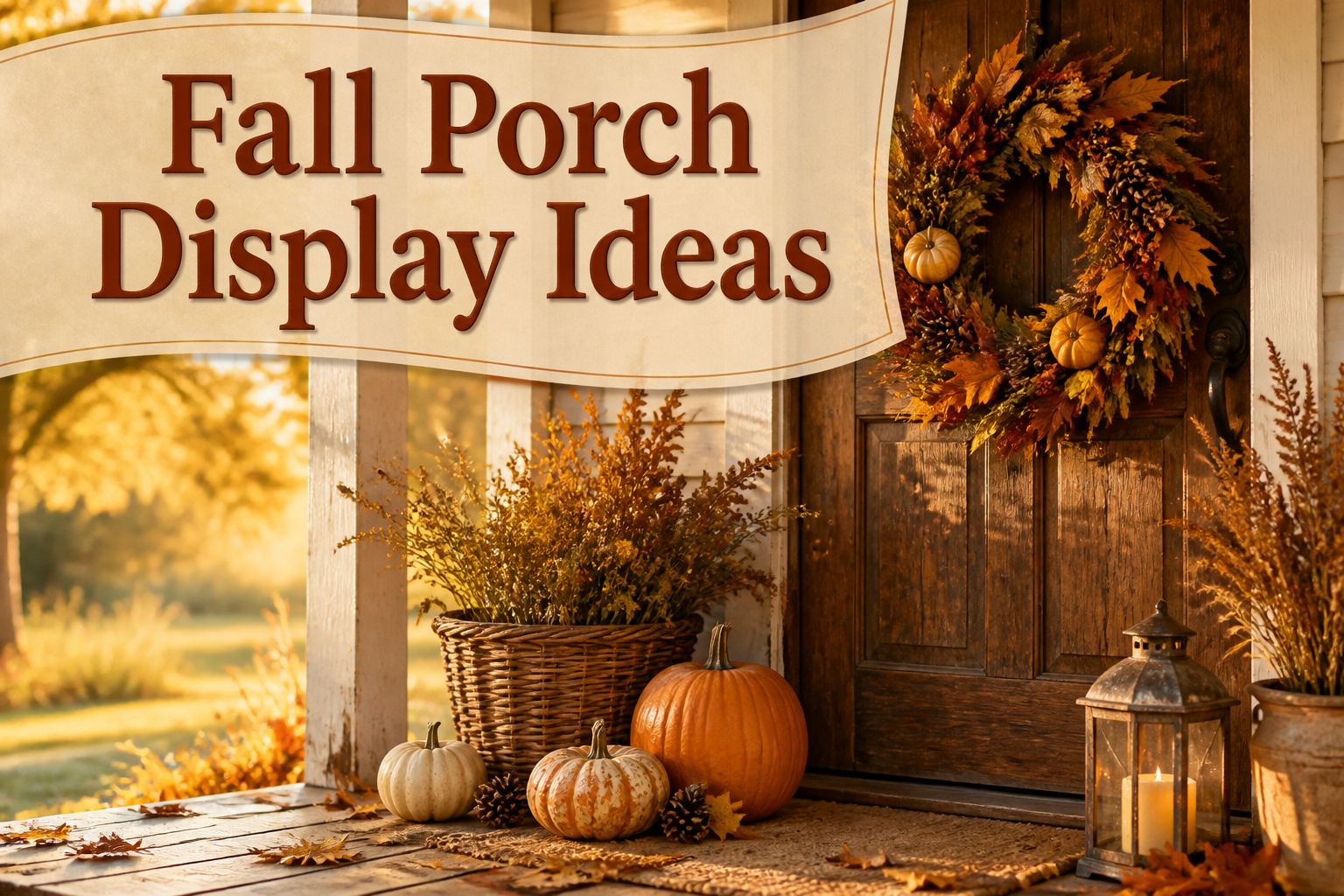
A fall porch display works or fails on one condition: whether you have a four-foot stoop or a wraparound farmer’s porch to build on. The same hay bale that anchors a grand entry becomes clutter on a small landing, and the difference is not how much you spend but how you translate height and breathing room to the space you actually have. The $40 build I put together last season used nothing but roadside goldenrod and a thrifted basket, yet the trick only works if you start foraging in late August, before the ditches are stripped bare.
1. Traditional Decor with Pumpkins and Mums
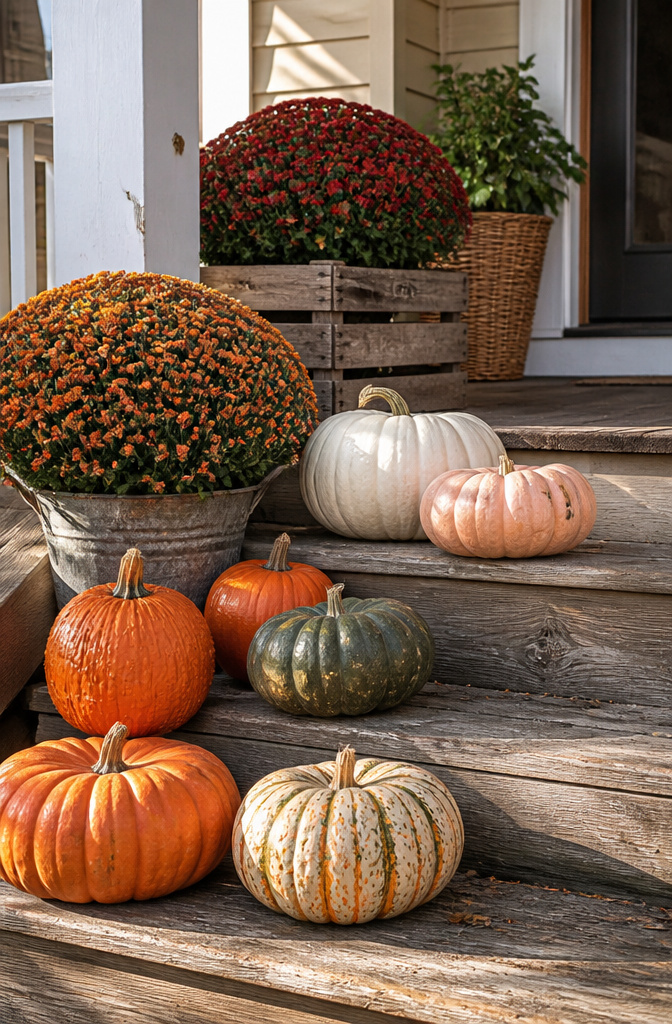
Real pumpkins in green, orange, and white sit better on a porch than anything molded from resin, and the cabbages and edible squash last just as long if you pick them firm. I group them on the step in threes, flat ones forward and tall necked ones behind, so the shape carries the eye up without needing a riser.
Mums are the plant that makes this read as autumn instead of harvest market. Buy them tight, before the yellow center opens, and they stay full for six or eight weeks in cool weather. Water from the bottom if they sit in a basket, or the stems rot where the bushel weave traps moisture. I learned that the year I set them out in old apple crates and found the bottom blooms dropping after ten days.
The color against weathered wood or a stoneware crock is what warms the entry, not the objects themselves. A galvanized pail works the same if baskets feel too farmhouse. Keep the palette to two mum colors and let the pumpkins bring the third tone, or the stoop starts to look like a display at a garden center rather than yours.
2. Rustic and Vintage Accents
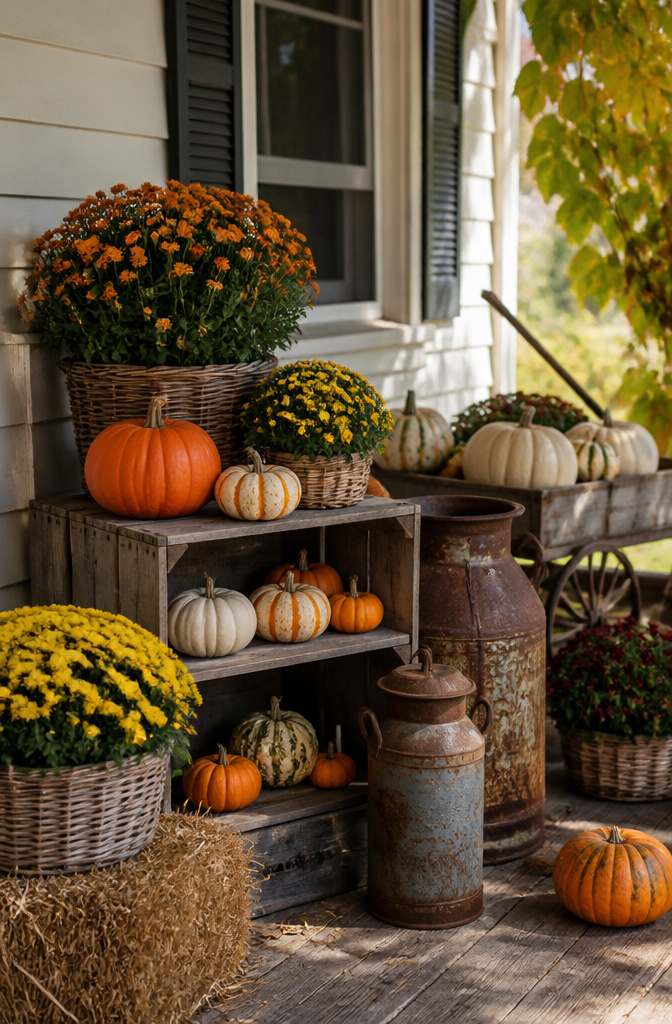
Old wooden crates, weathered metal, and flea-market finds carry a patina that new decor spends years trying to fake. An old apple crate or a chippy wicker basket holds mums or mini pumpkins at uneven heights, which keeps a small porch from looking staged. The rust and dents are the point, not something to fix.
Vintage milk cans and galvanized buckets left over from summer plantings transition straight into fall without a purchase. Estate sales and weekend flea markets are where these pieces surface for a few dollars instead of boutique markup. A wonky wagon that no longer rolls straight still anchors a stair-step display of white pumpkins and gourds. The radio flyer I spotted in one setup gets emptied when grandkids visit, then filled back in after.
Metal spheres that started silver and turned rusted now read as intentional, not neglected. Barn-wood benches and old ladders lean against porch rails to hang bittersweet or faux leaf garlands. The trick is stopping before it becomes a junkyard: one or two statement pieces, then let the pumpkins and mums do the rest.
3. Cozy Seating Areas
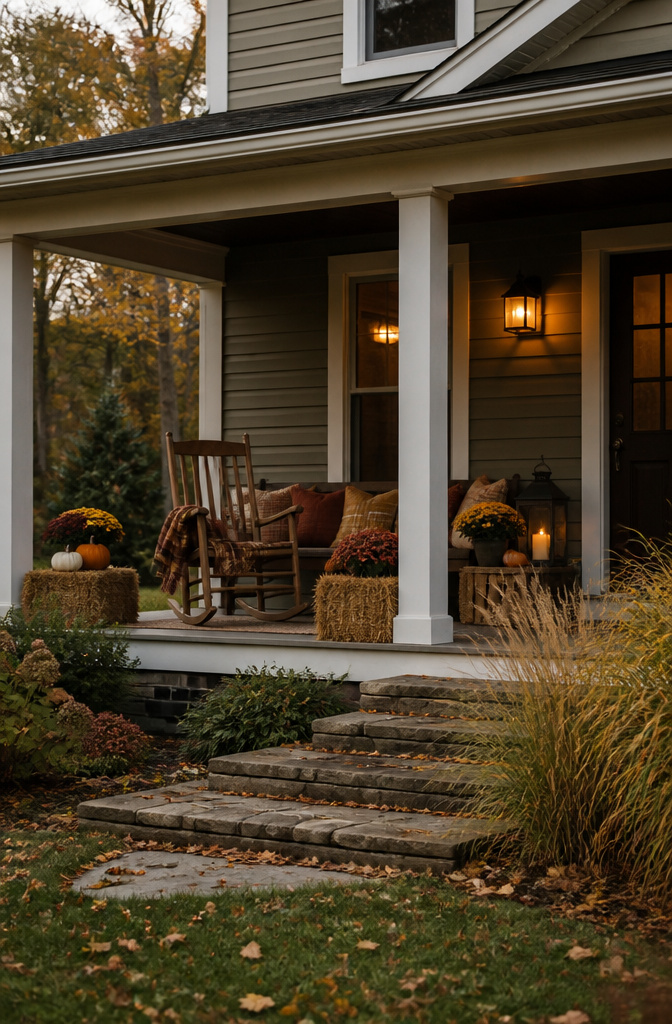
A porch seating area only earns its keep if someone actually sits in it after dark. I start with what I already own: a rocking chair dragged from the living room, a wool blanket I bought two winters ago, and a bench that spends summer holding pots. The blanket matters more than the chair; temperatures drop fast in October, and a throw in berry or gold against neutral cushions reads fall without trying too hard.
Hay bales work if you treat them as furniture, not props. Lay a thick board across two bales and pile on outdoor cushions in autumn tones. The board keeps the seat flat; without it, you sink and the whole thing becomes a photo op nobody uses. Add a lantern with an LED candle nearby. The sources mention LED candles specifically, and I follow that: real flame on a porch with dry hay is a risk that outweighs the flicker.
Small porches need vertical thinking. A wreath on the door sets the tone before anyone steps in, and stacking crates or a single hay bale gives height without eating floor space. A couple of mums in rustic baskets frame the entry. The mistake is treating seating as decoration. If you would not curl up there with coffee at 7 p.m. in mid-October, it is not seating. It is clutter with ambition.
4. Cornstalks and Hay Bales
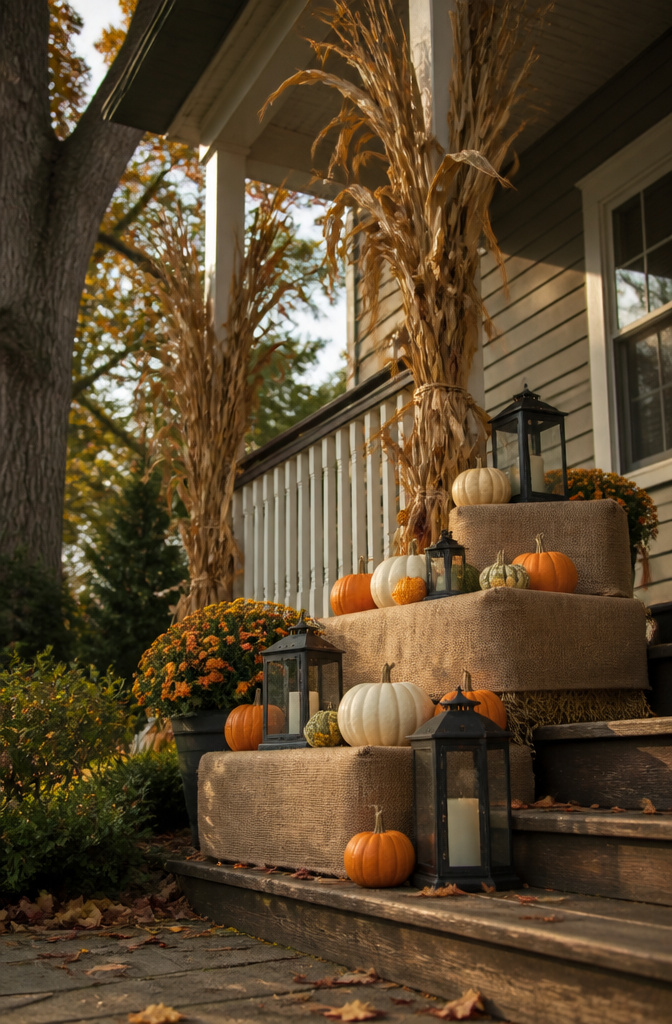
Cornstalks are the vertical element that makes a fall porch read instantly from the street. Tie them to a porch pillar or railing and the whole entry feels finished. I have never paid for mine, though I cut them from a field across the street years back and still cannot bring myself to buy them at market price. Most farm stands, garden centers, and local farmers carry bundles through October if you are not lucky enough to have a source for free.
Hay bales work as seating, as a platform for pumpkins and lanterns, or both stacked with crates for staggered height. The shedding is the real problem. Set each bale on a tarp or old moving blanket before you bring it onto the porch, and wrap the visible sides in burlap or an old bedsheet if you want a cleaner look. I learned the hard way about moisture: a bale that gets rained on and stays damp turns sour fast, and the smell lingers in the fibers even after the surface dries. Store them under an overhang, or plan to replace them mid-season.
5. Colorful and Whimsical Displays
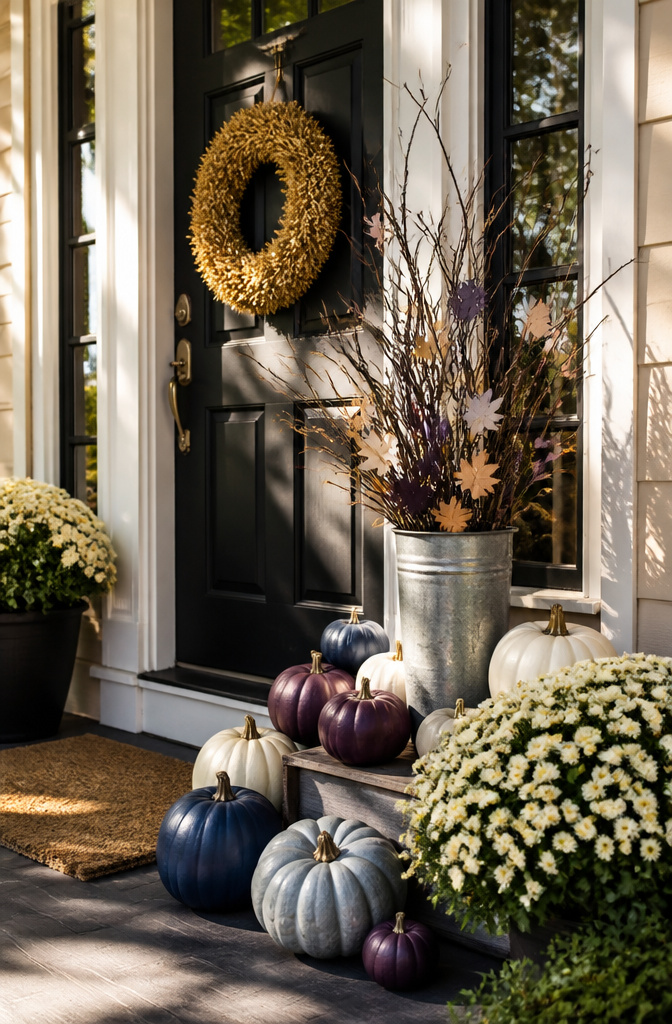
Deep plum and dusty blue read as fall colors once you step away from the expected orange and yellow. The year I tried a monochrome white-and-green scheme, the porch photographed better than I expected; cream mums against painted white pumpkins and trailing ivy looked intentional rather than unfinished. Painted pumpkins hold up longer than carved ones, and flat interior paint in plum or black covers the waxier skin better than spray paint, which beads. Galvanized buckets in muted blue, stacked with leafless branches and paper oak leaves, give the same height as a hay bale without the mess a renter has to haul away. A gold wreath on a black door still reads seasonal without defaulting to literal autumn tones. Two ways to play this: let the unconventional color be the whole statement, or use it as a counterweight to one traditional piece so the eye has somewhere to land.
6. Seasonal Wreaths

A fall wreath on the front door sets the tone before anyone steps onto the porch, which is exactly why I start there every year. The question is whether to buy or build. Store-bought wreaths run anywhere from craft-store cheap to florist expensive, and the mid-range ones often hide their plastic stems poorly. Making one takes an afternoon but lets you control what goes in.
Materials that survive a real weekend without turning brown: dried grasses, seed heads, and faux foliage. I clip whatever sage and weeds the yard offers, then bulk out the shape with fake leaves so the whole thing reads as full from the street. A vintage grain sifter wired with floral foam works as an unexpected base, or a plain grapevine form from any craft aisle does the job without the hunt.
A 24-inch wreath hangs proportional on a standard 36-inch door. Smaller gets lost; larger starts to feel like a hat on a small head. That one measurement saves you from the return line.
Real berries and acorns look rich for about ten days. After that, the squirrels finish what the weather started. Faux berries glued in place keep their color until you pack the wreath away in November.
7. Faux Decor Elements
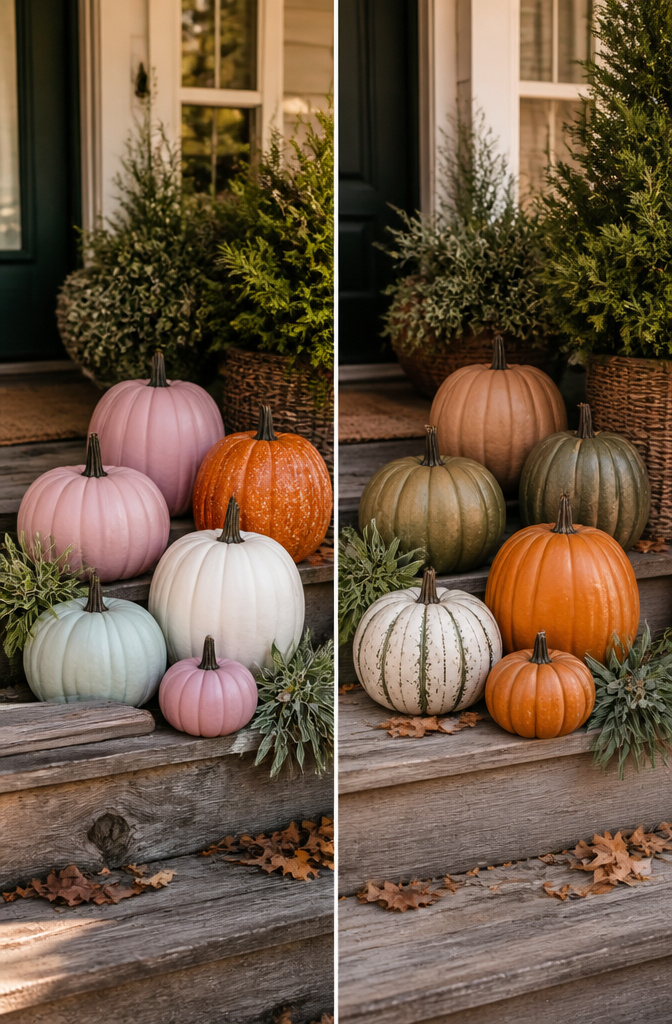
Real pumpkins in Texas heat turn to sludge before Halloween, which is why I switched to foam versions years ago. The upfront cost stings: a decent foam pumpkin runs $8–$15 against $3–$5 for the real thing. But foam amortizes over three to five years if you store it dry, while real ones get replaced twice a season in warm climates. That math flips hard for renters who pack décor into bins each November rather than composting.
UV-resistant finishes matter more than the shape. Plain foam chalks and cracks by year two in direct sun; the coated stuff holds its color through actual winters. I look for the slightly waxy surface and the weight that feels closer to ceramic than pool noodle. Plastic hollow pumpkins are cheaper still, but the seam line kills the illusion from three feet away and they collapse under a hot porch light.
Mixing is what saves it. A few clipped weeds or sage sprigs tucked around foam pumpkins breaks the uniform fake sheen. The eye reads the real greenery and assumes the rest follows. That trick costs nothing and buys back the texture you lose going artificial.
8. Layering Textures and Heights
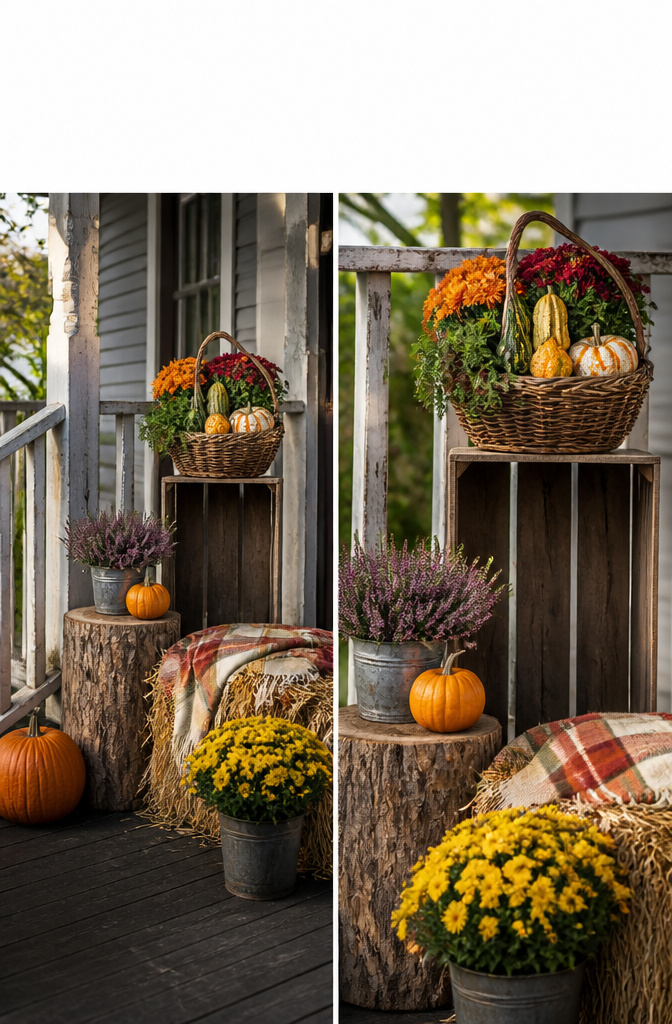
Small porches die by clutter, not by emptiness. The fix is three distinct heights running at once: ground level, mid, and eye level, each carrying different material so the eye reads layers instead of piles.
On my own stoop, that meant a hay bale and wood stump sitting right on the boards for the base, an old apple crate turned on its end for the middle shelf, and a wreath or a lantern hook drawing the gaze up to the door. The crate did the heaviest work: stacked with a fruit basket of mums on top, smaller gourds tucked underneath, it became architecture instead of decoration.
Wood against metal against plant matter is what keeps the stack from looking like a shelf at a big-box store. An overturned terracotta pot becomes a pedestal for a single fat pumpkin; a stack of hardcover books under a basket raises it three inches and breaks the flat line. These are the moves that cost nothing if you already own the pieces, and they matter more on a four-foot-deep landing than on a wraparound.
The mistake I see most is treating height as a single tall thing in the center. That reads as a obstacle you walk around. Spread the vertical across the width, keep a clear path, and the porch feels larger than the tape measure says.
9. Natural Elements

The best fall porch display ideas start with what is already on the ground outside. Branches with leaves that have just turned, pinecones, seed pods, dried grasses, and fallen acorns cost nothing and read as more intentional than anything shipped from a store.
Timing matters more than most people think. Collect leaves after they have turned but before a hard rain, which strips the bright color and leaves you with brown mush. That rain rule goes for cones and pods too; damp ones mold fast in a display.
Pinecones need a quick oven treatment before they come inside or sit in a covered porch. Spread them on a baking sheet and run them at a low temperature for half an hour. The heat drives out moisture and kills the insects you do not want hatching in your entryway.
I learned the hard way that even dry-looking material can fail. One year I filled a galvanized tub with fallen maple leaves that looked perfect the morning I gathered them. By week three they had crumbled to dust, and the wind had scattered the remains across my steps. Dried grasses and woody branches hold their structure far longer. Leaves work best tucked into a wreath form where they are handled less, or pressed flat under glass where they cannot crumble.
Small Porch Layering Without Overcrowding
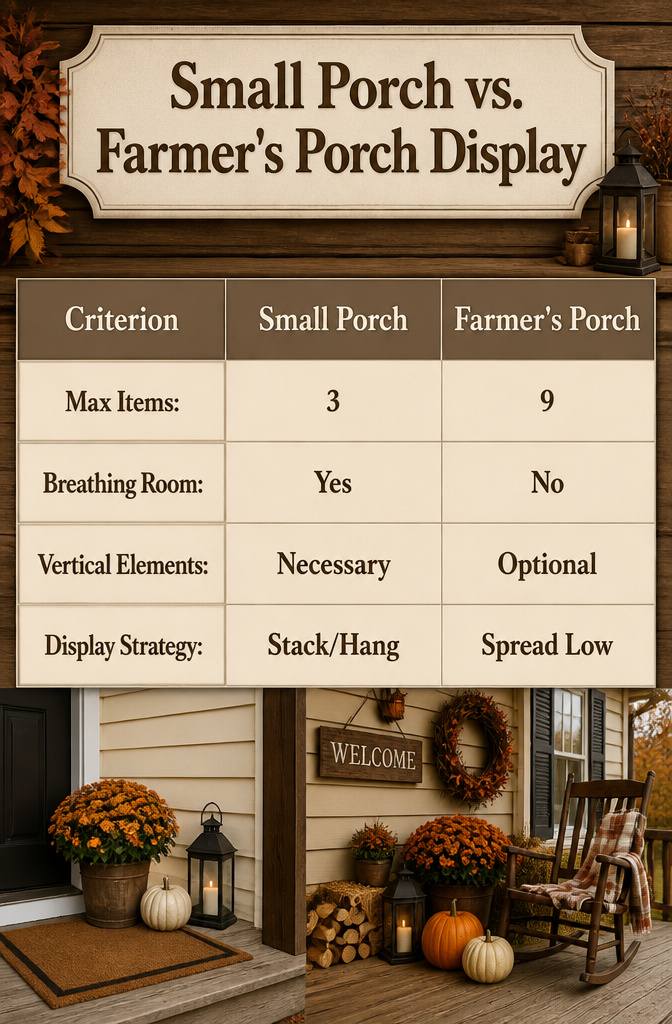
A 4×6 porch and a 10-foot-deep farmer’s porch wear the same nine items completely differently. On the smaller footprint, three pieces max before it reads as junk, and that includes the doormat. The farmer’s porch can absorb two pumpkins, a mum, a lantern, a wreath, a chair, a throw, a stacked wood element, and a hanging sign without breaking a sweat.
I learned this the hard way on my own stoop, which is maybe five feet deep. I started with a symmetrical pair of everything: two mums, two lanterns, two hay bales. From the sidewalk it looked like a garage sale had tipped over. Removing one of each pair and sliding the single lantern to the corner opposite the mum gave each piece actual breathing room. The eye needs somewhere to rest, and on a small porch that resting place is often the floor itself.
Height is the piece that saves you. A tall narrow element, a hanging piece, or something vertical on the wall draws the eye up and off the limited square footage. On the deep porch you can spread low; on the shallow one, you stack or you hang. The same wooden sign that sits propped against a hay bale on the farmer’s porch gets a hook or a leaning spot against the siding on the small one. The trick is not shrinking the idea but translating it.
Budget Breakdown for a Weekend Build
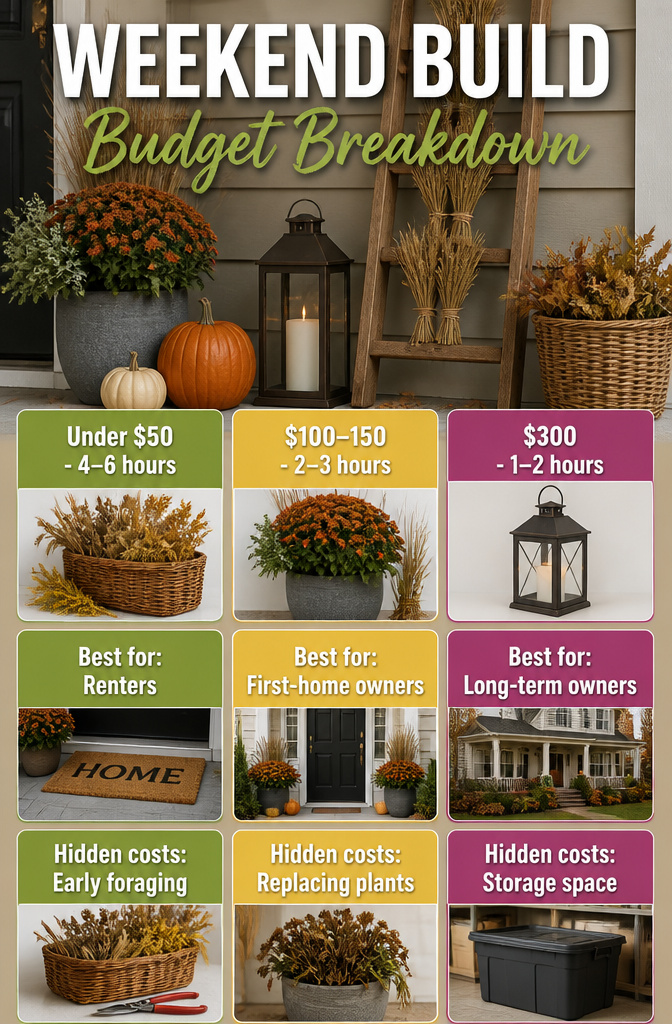
The cheapest fall porch display I have built came in around $40, almost entirely from roadside finds and a thrifted basket. The trick is starting the hunt in late August, before everyone else strips the ditches of dried goldenrod and seed heads. What reads expensive, a weathered wooden ladder propped with twine-wrapped bundles, costs nothing if you ask a neighbor whose paint job is overdue.
My middle budget, $130 last year, went mostly to one oversized planter and a bag of potting soil. I always overspend here, telling myself the perennials will live on the stoop through winter. They do not. The soil and container are reusable; the mums were compost by December.
At $300, you are buying quality faux stems and a weatherproof lantern meant to store in a bin for five seasons. That upfront cost stings until year three, when you are not racing to the garden center in a panic.
| Price Point | Time Spent | Best For | Hidden Cost |
|---|---|---|---|
| Under $50 | 4–6 hours | Renters, short leases | Early foraging trips |
| $100–150 | 2–3 hours | First-home owners | Replacing live plants |
| $300 | 1–2 hours | Long-term owners | Storage space |
The $100–150 tier is where I land most often, and where I most often regret it.
What I Skip and Why
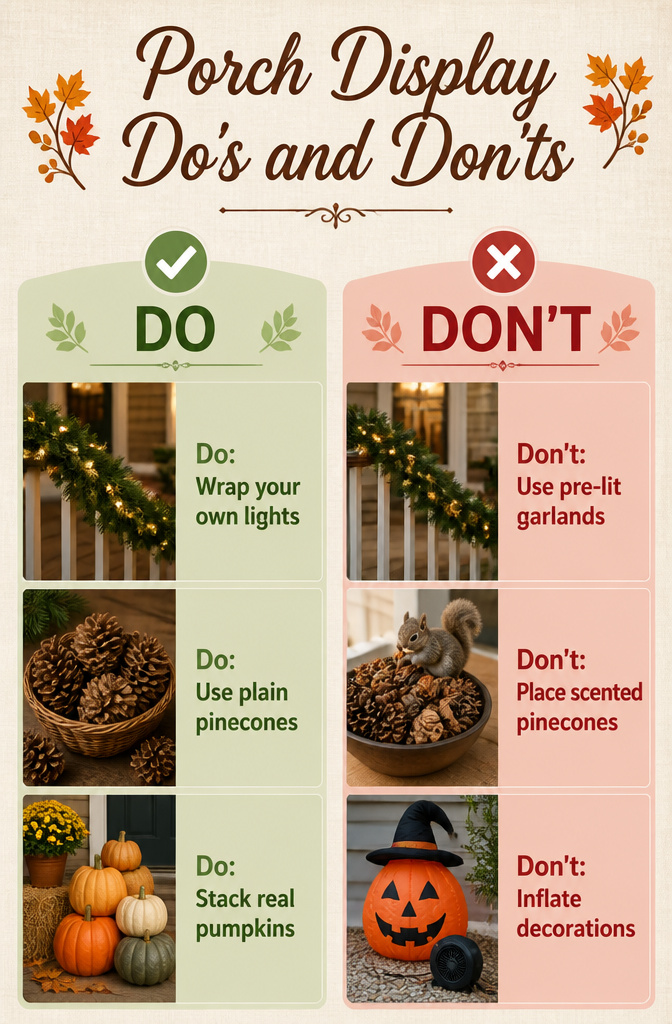
Pre-lit garlands are the first thing to walk past. The wiring in the cheap ones frays where the plastic needles pinch it, and by year two half the strand is dark. I buy plain garland and wrap my own string lights, the kind with replaceable bulbs, so a single burnout does not trash the whole piece.
Scented pinecones belong indoors. On a porch they draw squirrels that shred the display and leave teeth marks in the finish. Plain cones, gathered or bought by the bag, cost less and stay where you put them.
Inflatable decorations puncture on porch railings, gravel, or the first branch that swings in a storm. The blower motor dies next. A stack of real pumpkins and a wooden sign last the season without a power cord.
The money saved on those three items covers the mums, the hay bales, and the wreath with enough left for coffee while you set it up.
Frequently Asked Questions
How do you make a small front porch look nice?
Layer three distinct heights, ground level through eye level, using different materials at each so the eye reads layers instead of piles. On a small porch, three pieces maximum before it starts to look like clutter, including the doormat. Draw the eye upward with a hanging wreath or lantern hook to take attention off the limited floor space.
What is the best color for a small porch?
Classic autumn colors like burnt orange, mustard yellow, and deep red work, but unconventional palettes like white-and-green or deep plum and dusty blue photograph well and read intentional. Limit mum colors to two and let pumpkins bring the third tone, or the stoop starts looking like a garden center display rather than yours.
Can you decorate a small porch without pumpkins?
Yes. Use gourds, potted mums in rustic baskets, lanterns with LED candles, and fall foliage like dried grasses or branches with turned leaves. A wreath on the door sets the tone before anyone steps in, and a single hay bale or stacked crates gives height without eating floor space.
How to cheaply decorate for fall?
The cheapest builds run around $40, built from roadside goldenrod, seed heads, a thrifted basket, and a neighbor’s weathered ladder. Start foraging in late August before the ditches get stripped, and ask before taking items like old wood that looks abandoned. The only purchase might be a mum or two from a farm stand.