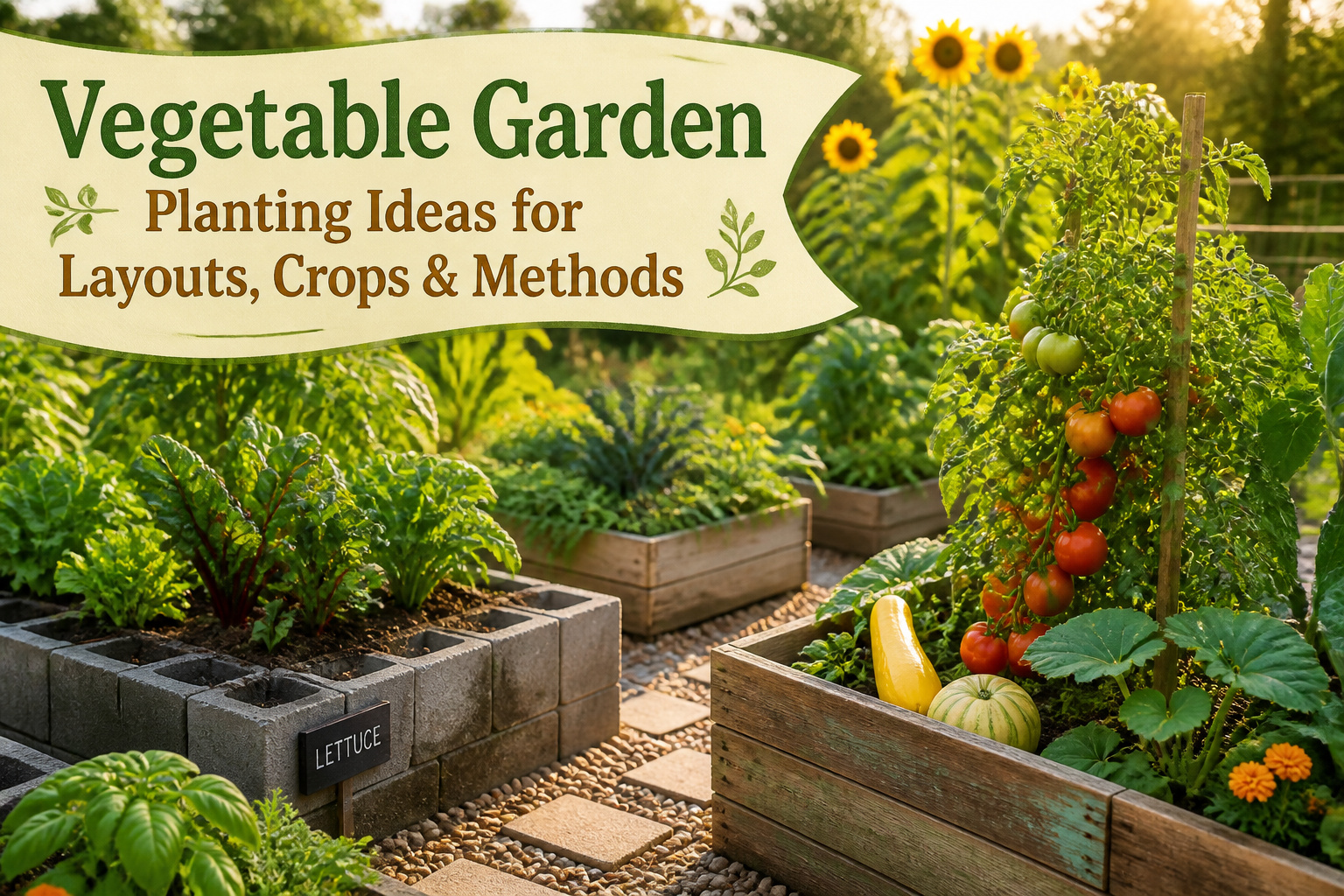
A vegetable garden planting idea succeeds or fails on sunlight hours before it ever touches soil. Most vegetables demand six to eight hours of direct light, with tomatoes and squash pushing toward ten, so the right layout is the one that fits your brightest patch. That single constraint shapes whether you build raised beds from $100 kits or loose-stacked stones you can carry to your next rental, and it decides if block planting or row gardening earns the space back from walking paths.
The materials do not need to match; cinder blocks on one bed and salvaged wood on another read as unified garden if the paths between them stay consistent.
1. Unique Vegetable Garden Ideas
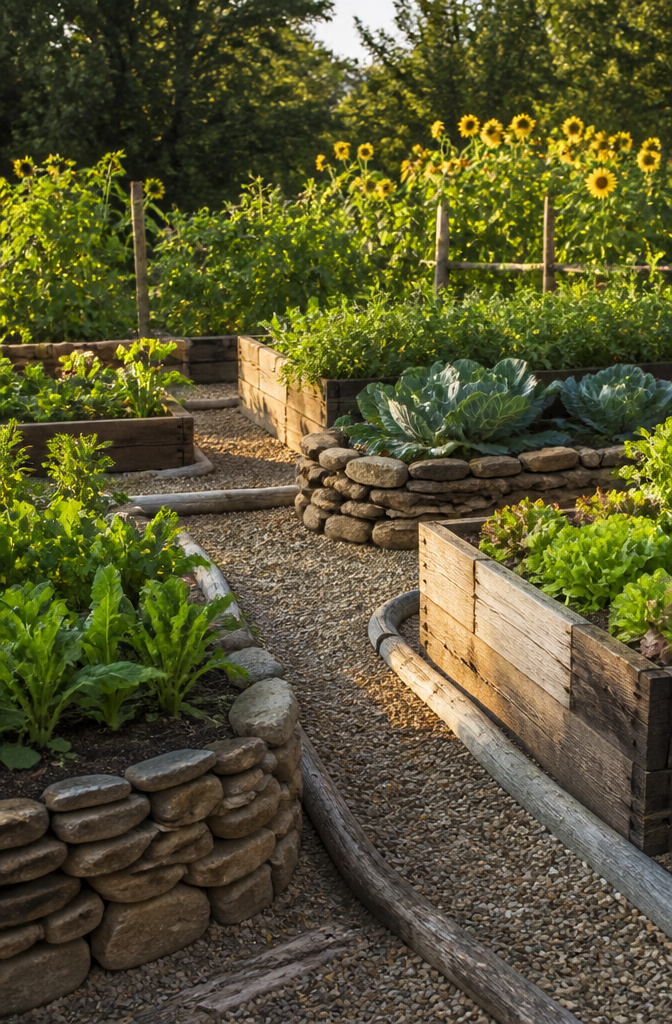
A vegetable garden does not have to choose between looking good and producing food. The permanent structure of beds and paths is what turns a tilled-up patch into something that reads as intentional design, and that backbone can be built from what you already have access to or can source cheaply. Logs, stones, or mounds of your own soil work as well as dimensional lumber for defining edges, and a 4×4-foot raised bed kit runs about $100 to $200 if you want to start there.
What convinced me, reading through a dozen of these builds, is that the materials do not need to match. Cinder blocks on one bed and salvaged wood on another still read as a unified garden if the paths between them are consistent. The paths are the quiet trick; they let your eye rest and make the beds feel arranged rather than scattered.
For renters, this matters because a raised bed built from loose-stacked stones or blocks can be dismantled when the lease ends and rebuilt at the next place. No posts in the ground, no sawed lumber to fit a truck. The weekend timeline holds because you are not waiting on deliveries or perfect cuts; you are fitting what you found to the space you have and filling it with good soil. The productivity comes from that soil and the sun hours, not from how expensive the walls look.
2. Vegetable Garden Layout Ideas

Most vegetables need at least six to eight hours of direct sunlight, with fruiting plants like tomatoes and squash doing better at ten hours or more. That single requirement shapes every layout decision before you put a single seed in the ground.
Row gardening is the arrangement most people picture first: long single lines of like plants grouped by what they need. It works, but it eats space with all those walking paths between every row. For a small plot, block planting trades those corridors for rectangular clusters about three or four feet across. Plants with similar requirements stay grouped, and you gain back the ground you were losing to aisles.
Intensive spacing pushes that efficiency further by filling the block edge-to-edge at the spacing each vegetable actually needs, not the generous gaps row gardening assumes. Inter-cropping fits quick growers like radishes between slower, larger neighbors, and succession planting keeps the block full as harvests finish. The payoff is measurable: more food from the same footprint, and weeds have fewer bare spots to colonize.
Raised beds pair naturally with either block or intensive methods. The contained edge defines your cluster, and the improved soil depth lets you plant a little tighter than ground-level dirt often allows.
3. Easy-to-Grow Vegetables

Leafy greens and root vegetables are the most forgiving starting point for anyone short on time and money. I scatter radish seed right alongside slower carrot seed in the same block; the French Breakfast variety pulls in 28 days, and yanking those roots loosens soil for the carrot seedlings still growing below. Radishes need about 2 to 3 inches between seeds and six hours of sunlight, which is also the minimum lettuce, spinach, and leafy greens tolerate before fruiting plants take over.
Tomatoes and cucumbers demand more: eight hours minimum, ten ideally. One tomato plant can deliver 12 pounds in a season; a single cucumber plant hits 5–10 pounds if you train it up a fence or cage. Bush beans fit the same vertical logic and yield at least a pound per plant.
Carrots need roughly 60 days but hold for months in the ground or fridge. Sixteen fit per square foot. That patience pays against the instant gratification of radishes, and both root camps forgive thin soil and skipped waterings better than anything that has to flower and set fruit.
4. Companion Planting
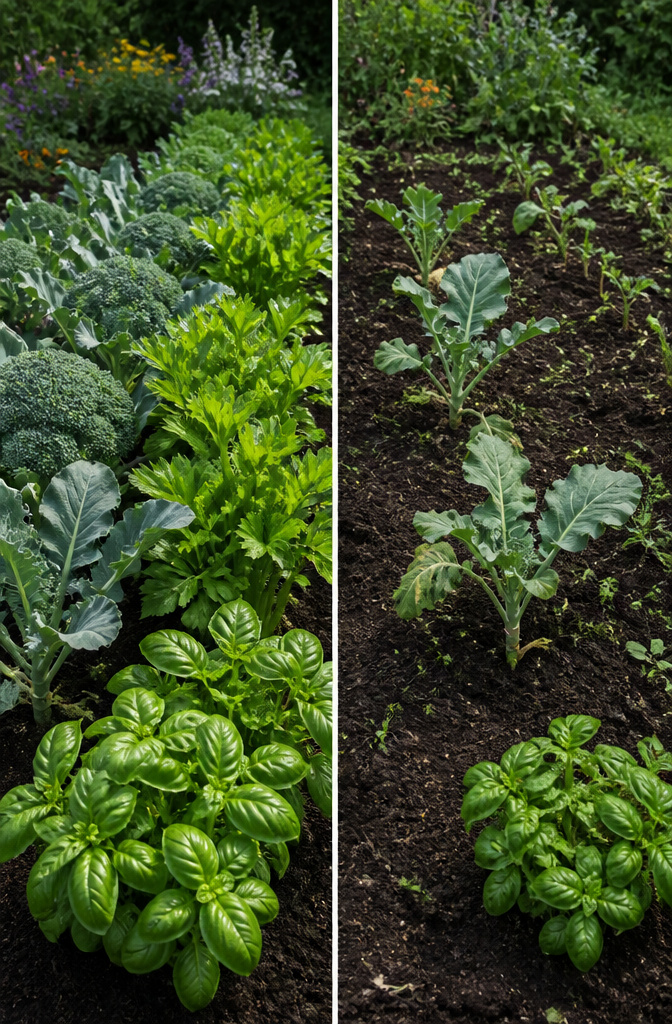
Some vegetable pairings simply outperform others, and the difference shows up in leaf size and pest damage within a few weeks. Broccoli grows markedly better wedged between celery and basil; the celery’s shallow roots leave the deeper soil for broccoli’s taproot, while basil’s scent masks the brassica smell that draws cabbage moths. I noticed this arrangement first on a square-foot chart I sketched over coffee one March, and the resulting bed needed exactly zero spraying all season.
Companion planting works as pest management without the cost of bottles or the schedule of reapplication. The USDA notes these combinations also suppress weeds and pull in pollinators, which means the benefit runs past the paired rows to the whole garden. Squash, pole beans, and corn, the Three Sisters method, operate the same way: the squash leaves shade out weeds, the beans fix nitrogen the corn devours, and the corn gives the beans something to climb. It is ancient, low-maintenance, and productive enough that I keep coming back to it despite the planning it takes. The plan matters. One season I dropped pumpkins too close to broccoli and watched both struggle for the same space and light; the chart exists precisely to prevent that kind of competition.
5. Succession Planting

Succession planting turns one bed into three harvests if you time it right. Cool-season crops planted in spring finish before summer heat peaks, leaving room for warm-season vegetables that need the longer days.
- Start early with radishes, lettuce, spinach, carrots, kale, and peas. These tolerate cold soil and mature in weeks, not months.
- Harvest and replant the same ground with tomatoes, peppers, cucumbers, zucchini, squash, pumpkins, beans, and eggplants as soil warms. Summer vegetables run taller and broader, so build in trellises or arbors now if the spring crop did not need them.
- In late summer, sow another round of cool-season crops for fall. Shade cloth can bridge the gap if August still scorches.
- Carry cold-hardy greens like kale, collards, and turnip greens through winter with a cold frame or frost cloth where hard freezes arrive.
Two charts keep this honest: one for spring-to-fall spacing, one for summer placement. Mark planting dates and projected harvest dates on a calendar or right on the garden diagram. Knowing when a bed frees up is what lets you fill it again without guessing.
6. Container Gardening

A pot of cherry tomatoes on a balcony railing is the vegetable garden planting idea that fits a rental lease with no yard at all. The pot needs to be at least 12 inches deep and 12 inches wide for the roots to support the plant once it fruits. I have watched containers dry out by mid-afternoon on a hot day, and the smaller the pot, the faster it happens. Anything in a container needs watering more often than the same plant in the ground, especially once the roots fill the soil and the leaves start pulling hard. A drip line on a timer saves the daily guesswork, but a watering can works if you are consistent. Leafy greens like kale or lettuce handle smaller pots and a little less sun, so they pair well with tomatoes on a narrow balcony. Railing planters add square footage without taking floor space, though they suit herbs and greens better than a full tomato vine.
7. Raised Bed Gardening

Raised beds drain faster than flat ground, which matters more than I expected the first spring my backyard turned to soup after a rain. Soil in a frame warms earlier too, so lettuce and peas go in sooner while the neighbor’s row garden waits for workable dirt.
Wood is the usual starting point. Cedar or redwood lasts longer but costs enough that I built my first boxes from common pine and accepted the five-year tradeoff. Cinder blocks run cheaper per foot if you have a truck to haul them, and the hollow cores hold herbs or trailing strawberries. Stone looks permanent and is, which becomes a problem when you want to move it; budget for this like a fence, not like a planter you will rearrange.
The weeding claim is real but overstated. You still get weeds, just fewer, and the ones that blow in sit on top of loose bought soil instead of deep-rooted clay. The back-saving height is the part I would not give up. Kneeling beside a 10-inch wall beats ground level by forty, and 18 inches means a chair edge works for most of the season.
A weekend builds two or three 4-by-8 frames if the lumber is precut. The cost stings once, but dividing it across five years of use puts it near the price of bags of soil amendment for a flat plot. For renters, stick to wood screwed rather than nailed; take it with you or cut it up for disposal.
Site Selection

Most vegetables need 6–8 hours of direct sunlight daily, with leafy greens and root vegetables tolerating the lower end and fruiting plants like tomatoes and squash pushing toward 10. The spot that gets that light might not have perfect soil, which is where a container or raised setup earns its keep on rental ground where digging beds is off the table.
Drainage matters as much as sun. Poor drainage shows up fast: water pools after rain, seedlings yellow and stall. If the only sunny patch is compacted clay or pavement, a pot with a drainage hole and a saucer underneath solves it without changing the property. Cherry tomatoes want at least 12 inches of depth and width to root properly; chives manage in half that. Railing planters work for herbs and greens where floor space is gone.
The real mistake is waiting for ideal conditions. Six hours of sun and a container you can move beats eight hours of wishful thinking in ground you cannot amend.
Soil Preparation
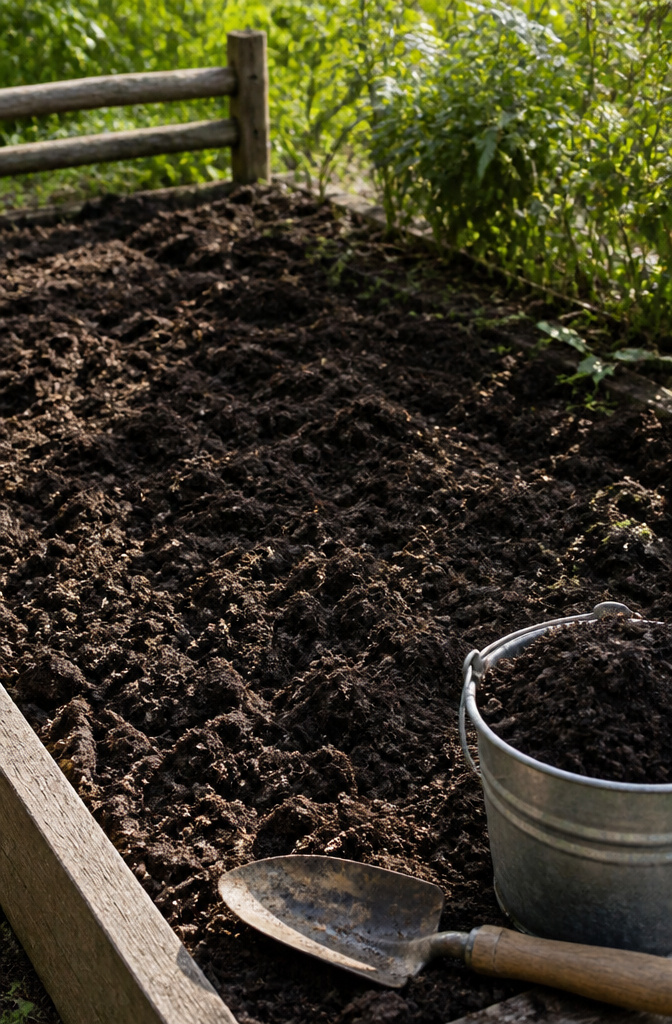
The soil you start with decides whether this garden becomes something you tend or something you replace. Last spring I watched a neighbor plant tomatoes directly into clay-heavy fill dirt; by July the roots had rotted and the stems never fruited. Compost is the single amendment worth buying if you buy nothing else, worked into the top six to eight inches whether you are filling a raised frame or breaking ground in place.
A soil test kit from your county Cooperative Extension runs cheap and saves the guesswork. Most vegetables want a pH between 6.0 and 6.8, and the report comes back with exact lime or sulfur rates rather than the blanket advice that leaves you two points off. Drainage matters as much as fertility. If water stands for more than an hour after a hard rain, your beds need raising or your site needs changing, because no amount of fertilizer rescues roots sitting in suffocated ground.
For renters or anyone working a weekend, bagged certified compost from a garden center beats waiting on a homemade batch. A compost tumbler speeds the next season’s supply, but the batch you need now should already be finished and dark enough to crumble.
Watering Needs
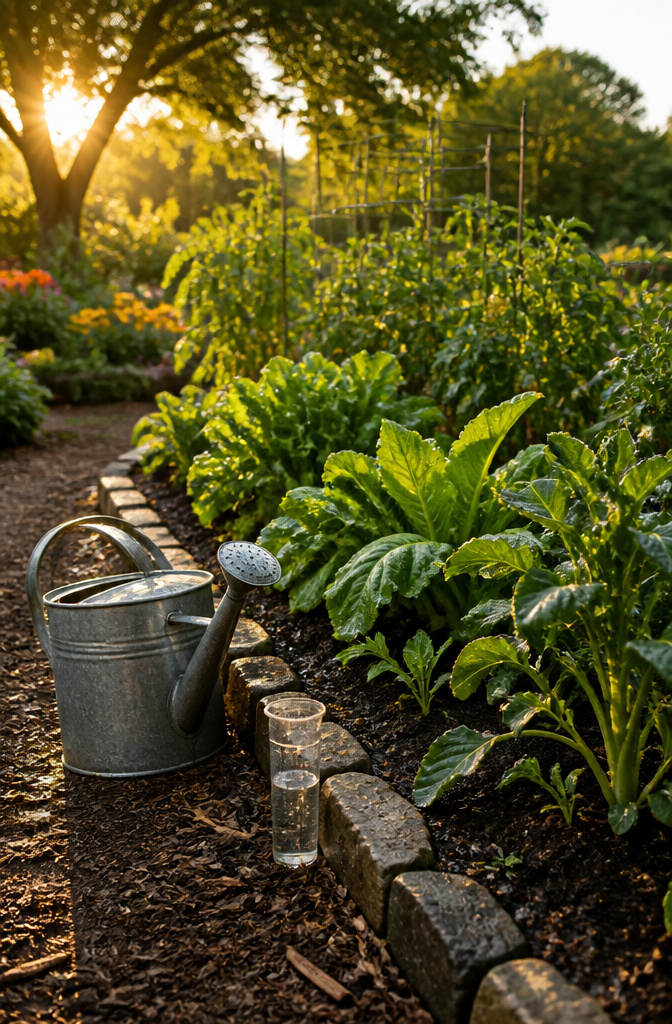
Vegetables are roughly ninety percent water by weight, which is why the one-inch-per-week baseline matters more than I expected when I started out. That figure covers what rain does not, and in practice it means checking soil with a finger before reaching for the hose. Dry to the first knuckle means water; damp means wait. Overwatering splashes soil onto leaves and invites disease, plus it leaches nutrients straight through the bed.
Containers change the math entirely. A tomato in a five-gallon pot on a July patio can need water twice daily, because the limited soil mass heats up and dries out fast. One inch per week is for in-ground beds; containers need more frequent, lighter applications.
For scheduling without gadgets, a straight-sided can or jar left in the bed works as a rain gauge and sprinkler gauge in one. I check it after watering to see whether I have actually delivered half an inch or just dampened the surface. Morning watering, before the sun climbs high, gives plants time to take it up without the loss to evaporation that comes with midday spraying.
Planting Techniques

Direct sowing works for anything that doesn’t mind a little cold soil and isn’t racing against a short season. Beans, carrots, and squash all get planted where they’ll stay, two to three times as deep as the seed’s widest diameter. Cover them, firm the soil lightly so the seed actually meets the dirt, and walk away. Overcrowding is the mistake that waits for you here, because seed packets written for commercial growers assume rows wide enough for machinery. Most home gardeners can plant more densely than the label says, pulling carrots early as thinning so the rest size up. That only holds if you remember airflow, though. Leave room for mature plants to breathe or disease finds the still, wet center of a packed bed.
Transplanting buys time for tomatoes, peppers, and anything else that needs warm soil to fruit before frost. Seedlings grown in peat pots need the rim torn away or buried completely, otherwise the dry peat wicks moisture out of the ground like a candle. Give them two or three days of temporary shade after setting out; the shock of full sun on tender leaves wilts them faster than roots can drink.
Spacing rules are the guardrail, not the decoration. The mature size of the plant is what matters, not the cute seedling you’re holding now. Plan for that spread, leave paths you can actually walk on, and the garden stays workable all season instead of becoming a jungle you abandon by July.
Pest Management

Healthy plants handle pests on their own a lot better than stressed ones, so the real work is in the setup. Six to eight hours of sun, steady water, and decent soil fertility matter more than any spray. When I choose seeds, I look for labels that actually tell me something: a tomato marked VFN already has resistance to verticillium wilt, fusarium wilt, and nematodes built in, which means one less thing to fight later.
Companion planting fits into this the same way. Radishes and carrots seeded together have worked well for me because the radishes mature before the carrots need the space, and pulling them loosens soil around the slower crop. The idea that certain plants support beneficial insects while others repel troublemakers is useful, though I have learned to ignore the more theatrical claims floating around online. A science-based companion planting chart from a university extension is worth more than the pretty graphics.
Watering at the root zone, not over the leaves, keeps foliage diseases from getting a foothold. Soaker hoses or drip line do this automatically, and they keep soil from splashing up where it should not be. I still check the undersides of leaves every few days, and a flashlight after dark catches slugs and snails before they do real damage. Catching it early is always easier than catching up.
Frequently Asked Questions
What are some easy vegetables to grow?
Leafy greens like lettuce, spinach, and kale are the most forgiving starting point, along with root vegetables such as radishes and carrots. Radishes can mature in just 28 days, while carrots need roughly 60 days but hold for months in the ground. For fruiting plants, bush beans, tomatoes, and cucumbers deliver strong yields if you can give them eight to ten hours of sunlight.
How do I design a small vegetable garden?
Use raised beds, containers, or block planting to pack more production into limited space. Block planting arranges vegetables in rectangular clusters about three to four feet across, eliminating the walking paths that row gardening wastes. Intensive spacing fills each block edge-to-edge at the spacing each vegetable actually needs, and inter-cropping quick growers like radishes between slower neighbors keeps every inch productive.
What is companion planting?
Companion planting grows certain vegetables together so they support each other through shared root zones, pest masking, or nutrient exchange. Broccoli grows markedly better between celery and basil; celery’s shallow roots leave deeper soil for broccoli’s taproot, while basil’s scent masks the brassica smell that draws cabbage moths. The Three Sisters method, pairing corn, pole beans, and squash, works the same way and has stayed productive for centuries.
How often should I water my vegetable garden?
In-ground beds need about one inch of water per week, beyond what rain provides. Check soil with your finger first; dry to the first knuckle means water, damp means wait. Containers dry out much faster, often needing water twice daily in July heat, since the limited soil mass heats up and loses moisture quickly. Morning watering, before the sun climbs high, cuts evaporation loss compared to midday spraying.
What are the benefits of raised bed gardening?
Raised beds drain faster and warm earlier in spring, so lettuce and peas go in sooner while flat ground stays muddy. The contained edge defines your planting space, and the improved soil depth lets you plant tighter than compacted ground often allows. The back-saving height matters too; kneeling beside a 10-inch wall beats ground level, and 18 inches lets you sit on a chair edge for most of the season.