
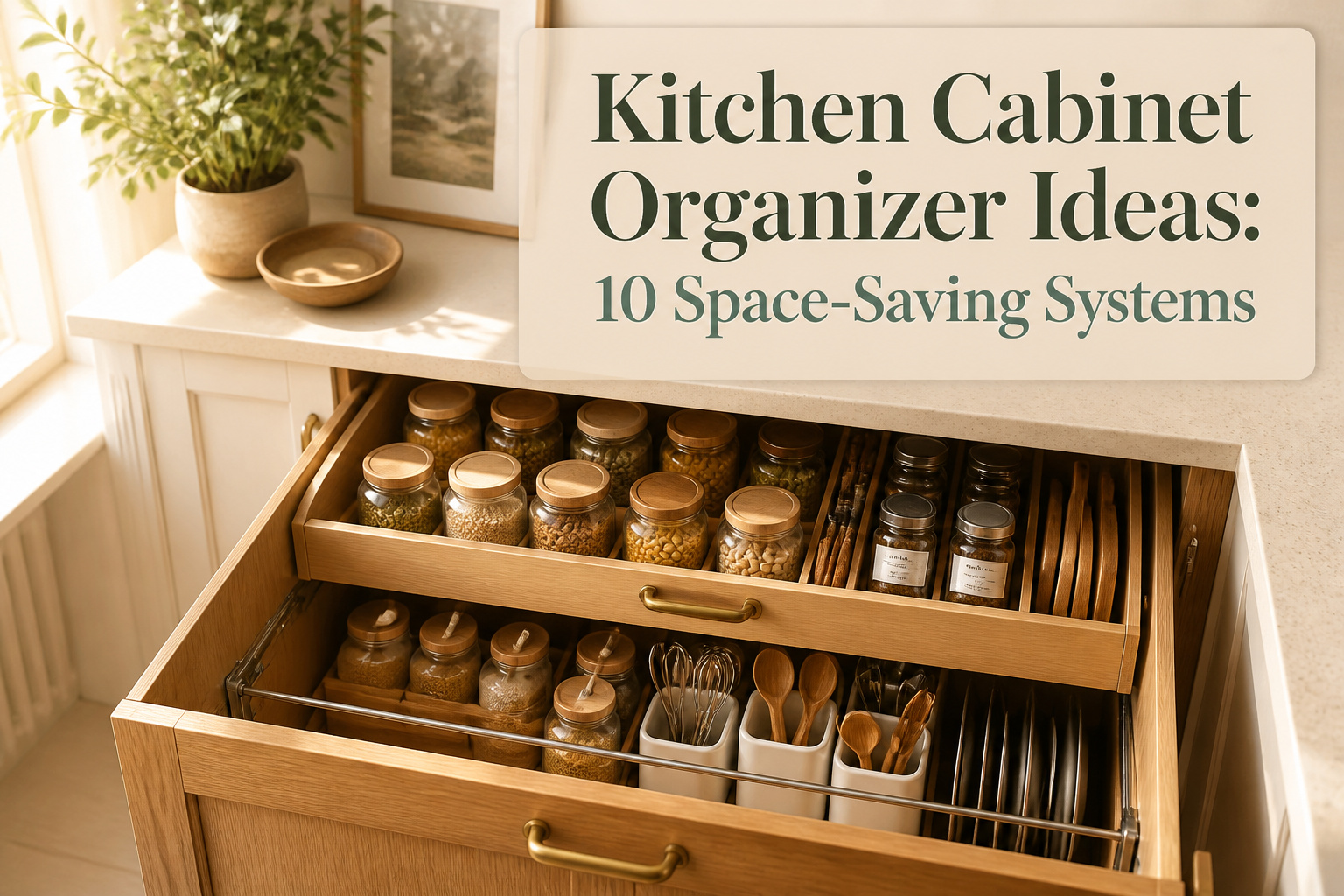
The most useful kitchen cabinet organizer ideas share a single pattern: they bring the contents to you instead of sending you crawling after them. Pull-out drawers on standard slides do this for under $300 in a weekend retrofit, but only if you already own the cabinet box; renters can take the hardware with them when they leave, patching a few screw holes. A two-tier pull-out that handles blind corners runs about $270 on the low end, or $672 for the custom build, yet both solve the same deep-cabinet reach problem.
Pull-Out Cabinet Drawers
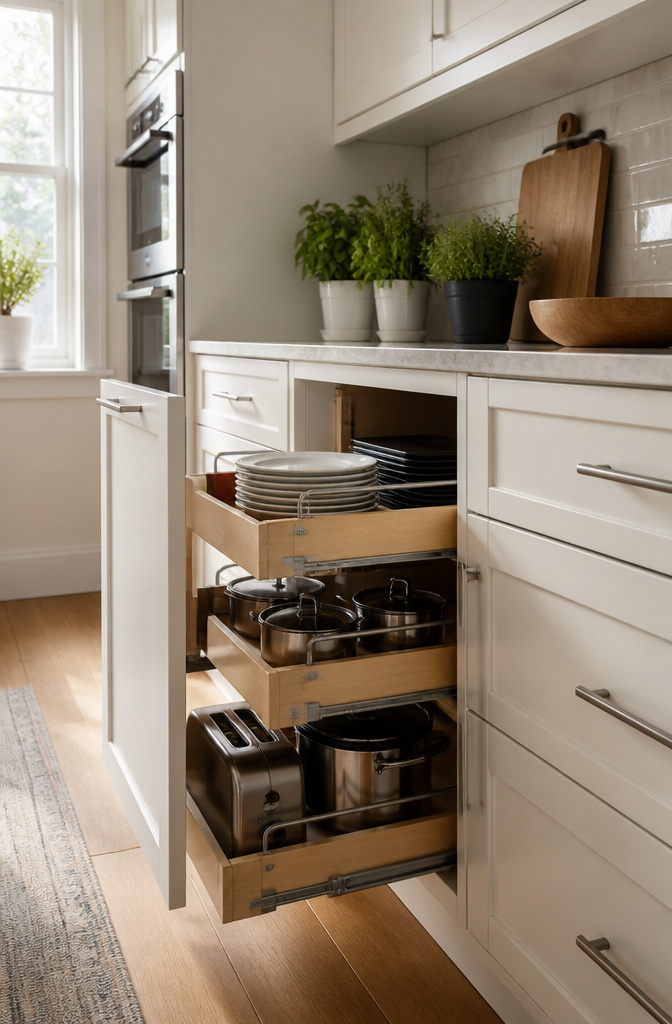
Pull-out cabinet drawers mount on standard drawer slides inside your existing cabinets, so the whole shelf rolls forward instead of forcing you to kneel and reach into the back corner for a stock pot or Dutch oven. The vertical layers move independently, which means you can store pots on one level and a toaster or waffle iron on another without lifting the top layer to get at the bottom. For renters, this matters because the hardware screws into the cabinet frame you already have; you take it with you when you leave and patch a few holes.
The deep-cabinet reach problem is what sells these systems. A base cabinet that is 24 inches front to back wastes half its space because items drift to the rear and stay there. A pull-out brings the full depth forward in one motion. I have seen two-tier versions run about $270 for a blind corner application, and a more custom two-tier shelf pull-out at $672 on sale from $850. The price spread is wide, but even the lower end solves the same reach problem.
Accessibility is the quieter benefit. Bending and reaching disappear when the contents roll to you, which is why this style shows up more consistently across storage roundups than almost any other organizer type. If you are deciding between a full replacement and a retrofit, the retrofit on drawer slides wins for any timeline under a weekend and any budget that needs to stay under a few hundred dollars.
Lazy Susans
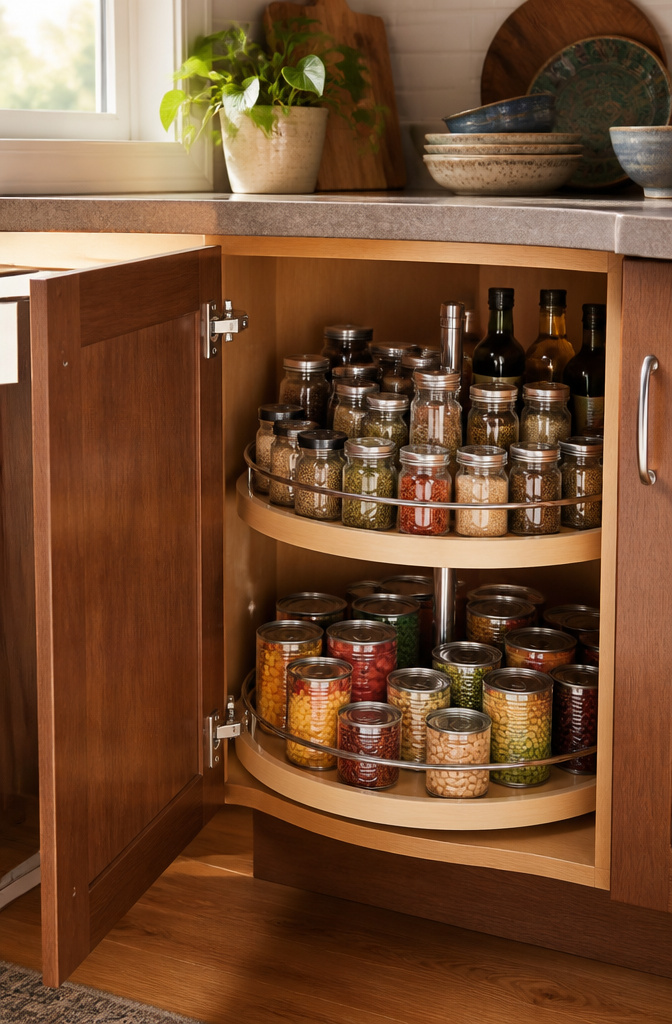
Corner cabinets swallow up square footage without giving much back. A rotating tray fixes that by bringing the back corner to you instead of sending you crawling after it. Canned goods, pots, and small appliances stay grouped and reachable on a single spin, which is why Lazy Susans still dominate the conversation even though corner drawers exist as an alternative.
Tiered versions do the most with vertical space. In a shallow pantry only nine inches deep, stacking cans and spices on two levels turns dead air into storage that would otherwise sit empty behind a single row.
What tips over defeats the whole purpose. Tall bottles and narrow jars wobble on a spinning platform unless they sit in a ring or against a raised lip. Low, wide items, solid bins, and anything with a flat base wider than its height stays put. The turntable works for you when the load stays put for the ride.
Vertical Dividers for Bakeware
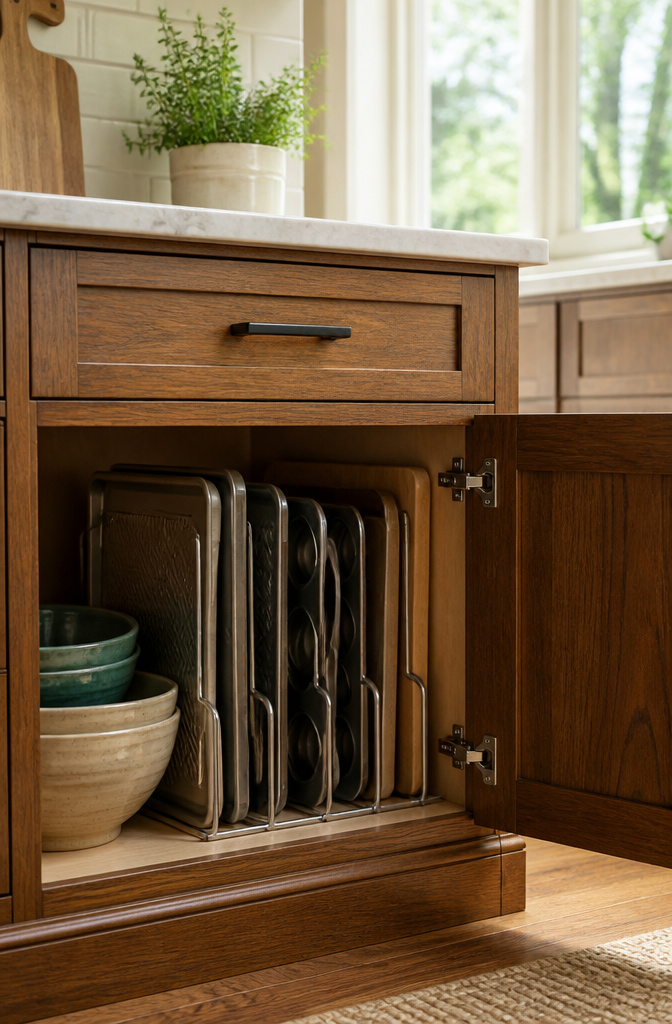
Cookie sheets have a way of becoming a single heavy slab the moment you stack more than three. The same goes for cutting boards, muffin tins, and that one oversized pizza stone you use twice a year. Upright storage breaks the pile apart so you can pull one item without the rest sliding out onto the floor.
Metal dividers screw into the cabinet base and back, letting you set spacing every 3–4 items. They come individually, so you tailor the layout to whatever mix of bakeware you actually own. A free-standing rack drops in without hardware if you are renting or just want to test the layout first.
Standing items upright rather than lying flat is what makes deep cabinets workable. Everything stays visible and grab-able; you see the full edge of each sheet or board instead of unstacking half the cabinet to reach the one on the bottom.
Door-Mounted Organizers
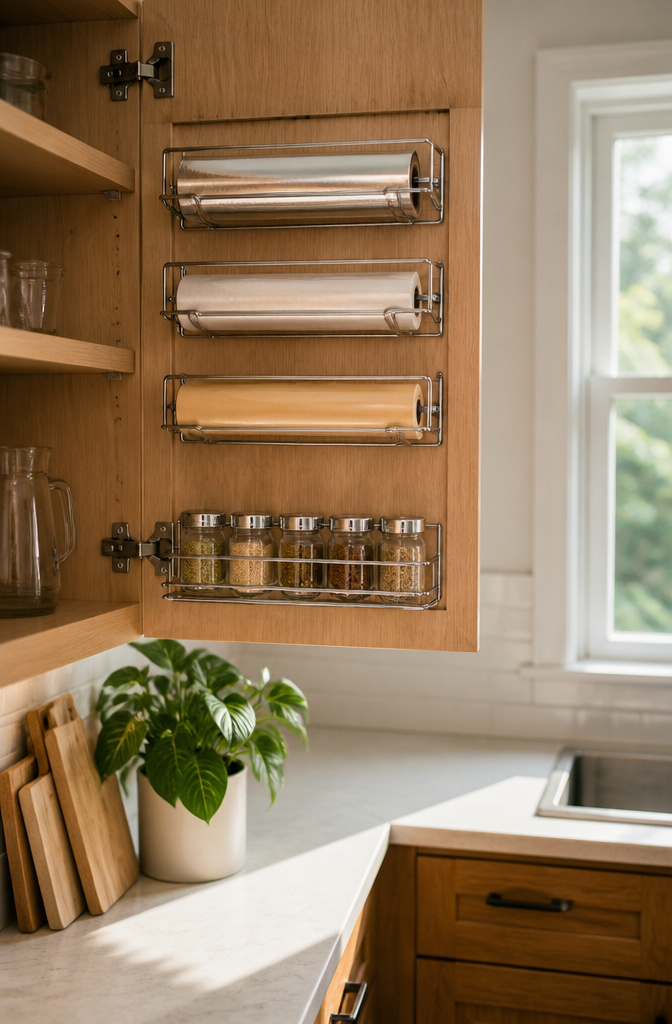
The inside of a cabinet door is dead space until you mount something to it. A slim rack for aluminum foil or plastic wrap puts those items exactly where your hand is already reaching, and the same rail can hold a small spice organizer so jars stop getting lost behind cereal boxes. Cleaning tools fit here too, if the cabinet sits under the sink. The principle is simple: items you use often belong where you can reach them immediately, not behind a stack of plates you moved twice to get there. I learned this the hard way after installing a door rack too low and knocking it every time I grabbed the trash bin. Measure for swing clearance before you buy; a full overlay door leaves almost nothing, while an inset frame gives you a couple of inches. Most racks need only a drill and the screws that come in the kit, though a strip of 3M adhesive works on painted doors if you are renting and patching later sounds like a weekend you do not want to spend.
Stackable Bins and Tiered Shelves
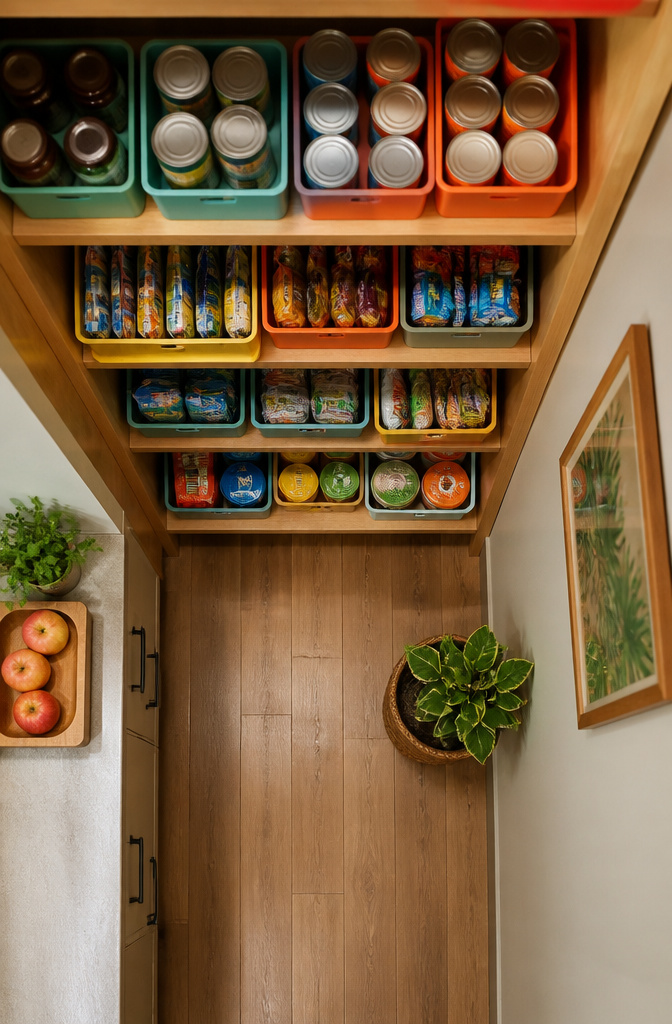
Vertical layers change everything in a cabinet that is only fourteen inches deep but twenty-four inches wide. Cans stacked three deep disappear behind each other; you buy a second can of diced tomatoes because the first one is hiding. A tiered shelf lifts the back row so you can read every label without unloading the front, which is the whole point of the exercise.
I tried the single-line method first, the grocery-store approach where everything stands in one row from front to back. It works for a pantry with depth to spare. In a standard wall cabinet, that line wastes the sides and leaves you one can wide. Tiered risers and stackable bins let you keep the line but run two or three of them side by side, each on its own step.
For snacks and dishware, the math is the same. A bin on a riser holds the small stuff that tips over when you reach past it: sauce packets, tea bags, the lid collection that breeds in corners. Pull the bin, grab what you need, slide it back. No more rooting around with a flashlight in your mouth.
The Container Store’s drawer bins run 6 by 16 by 5 inches deep for the large size, 4 by 16 by 5 for the medium. Those depths matter: anything over five inches and you are stacking again, losing the visibility you paid for.
Under-Sink Organizers

The cabinet under the kitchen sink collects half-used cleaners and spare sponges faster than any other zone, partly because the P-trap and disposal unit make it awkward to reach the back. Pull-out wire shelving that tiers around the plumbing fixes this without custom carpentry. A two-level system, with the lower tray sliding out beneath the pipes and a smaller top tier for bottles and scrubbers, turns that dead space into usable depth. I have seen these listed for around $38, which puts the fix within a single project weekend budget. Tension rods added to the cabinet walls give towels and washcloths a place to hang out of sight until needed. For renters, the whole setup installs with screws that can be patched later, and the same trays transfer to a bathroom vanity if the lease ends.
Spice Organizers
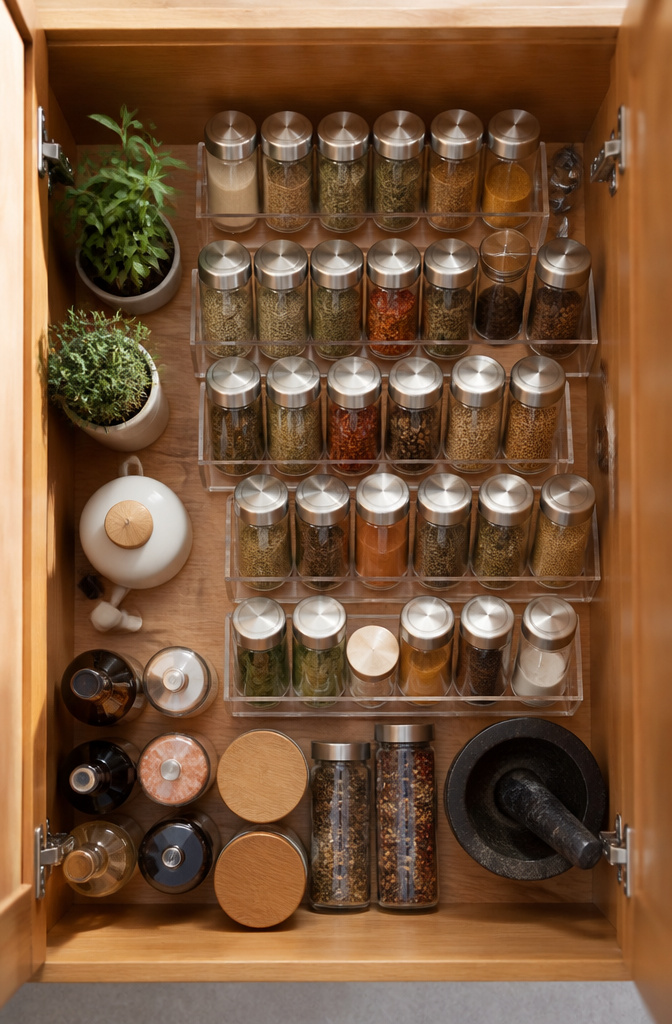
Spice risers and angled inserts turn a jumbled cabinet into something you can actually read at a glance. The stepped tiers lift each row above the one in front, so labels face you instead of hiding behind the jar in front. I finally stopped buying a second cumin because the first one had vanished behind the oregano.
A drawer insert works the same way flat, tilting jars so the labels run toward you as you pull the drawer open. Either setup keeps the short jars from tipping into an avalanche when you reach for the one in back. The visibility matters more than the container style. You want to know whether that jar is basil or bay leaves without lifting three neighbors to check.
Labeling is what keeps the system honest. Even a neat riser falls apart once someone drops an unmarked bag of cloves into the gap. A printed label, or even tape and a marker, makes the alphabetical order stick and respects the hour you spent sorting. The team that alphabetizes spices on risers has the right idea: function first, then the alphabet. The aesthetic payoff is real, but it only follows the logic.
Double Trash Can Pull-Outs
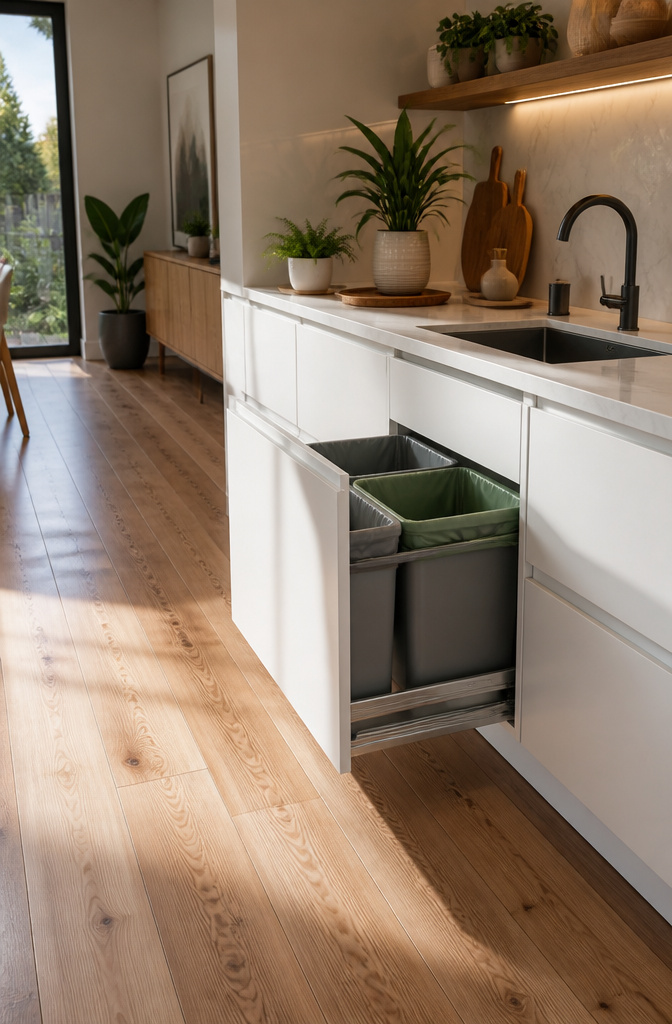
A double trash can pull-out slides out on drawer hardware like any base drawer, except the box is sized to hold two bins side by side, one for trash and one for recycling. That setup clears the floor of the standalone can that always seems to migrate three inches left of where you kicked it last, and it keeps waste out of sight behind a cabinet face.
The catch is you have to sacrifice a full base cabinet to get it. These replace a standard 15-inch or wider base, so you lose that storage permanently. Installation runs about an hour if the kit includes a template, and the hardware itself is straightforward drawer-slide work. The Rev-a-Shelf double unit runs $165, which undercuts the integrated cabinet-route pricing I have seen by half. Either way, budget for losing that cabinet’s original function, because once the pull-out is in, there is no sliding a mixer or a stockpot back there.
Riser Shelves

Riser shelves turn one cabinet shelf into two without a single tool. A wire or solid platform sits on the existing surface and raises half your plates, mugs, or spice jars so you can slide a second row underneath. The vertical space most cabinets waste, usually the top third of every shelf, suddenly earns its keep.
The wire versions are cheapest and let water drain if you park damp mugs there, but solid risers feel sturdier for heavier dinner plates and keep small spice bottles from tipping through the gaps. For renters especially, this matters: no drilling, no adhesive, no landlord conversation. You buy it, drop it in, and the cabinet holds twice as much by tonight.
Spice cabinets are where risers prove their worth most visibly. Without one, you are reading labels from above and knocking bottles forward to see the back row. With a riser, the back row sits higher; every label faces you straight on. The same logic holds for coffee cups above a breakfast station or canned goods above taller bottles in a pantry. A $10 riser often outperforms a $200 custom pull-out for the simple reason that you will actually install it this weekend instead of adding it to a someday list.
Baskets for Categorization
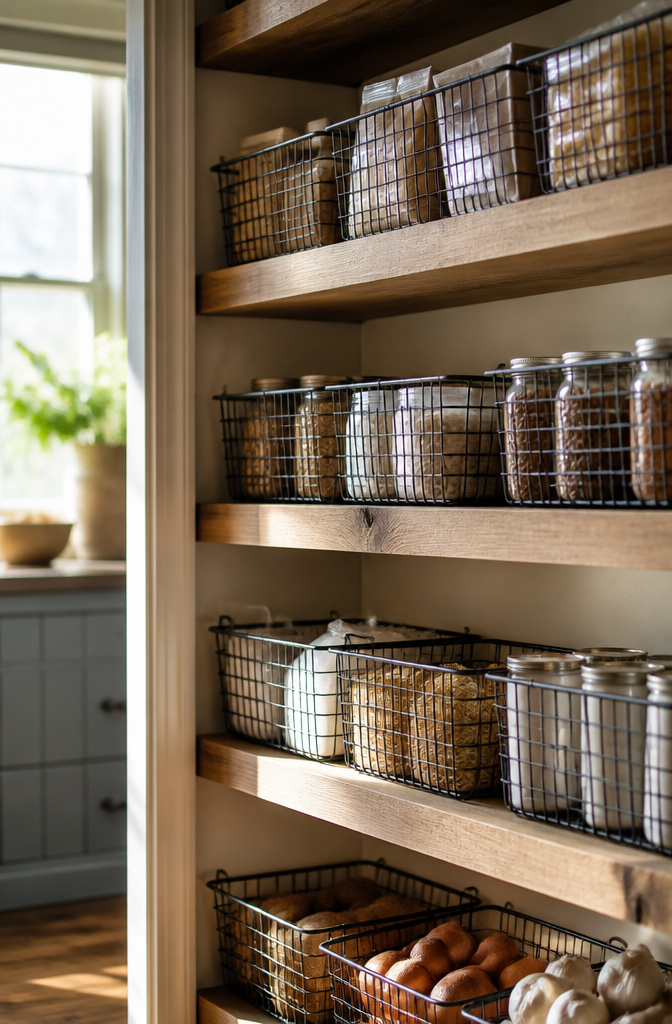
Labeled baskets do the last mile of work that shelves alone cannot. Wire baskets keep small items grab-and-go ready; larger baskets with removable dividers let you pair two related categories without them bleeding together. The basket itself is only half the system. A label on the front is what makes the time investment stick, because a household will respect categories they can read at a glance. Without that step, the same pouches and packets scatter back into chaos inside a week. I learned this the hard way after my first pantry reset: the bins looked tidy for about ten days, then became expensive clutter camouflage. Decluttering has to happen before the baskets go in, or you are just sorting stuff you will never use into prettier containers. The real finish is not the matching set on the shelf; it is the labeled basket that lets everyone put the right thing back in the right place without thinking.
Why Declutter Before You Organize
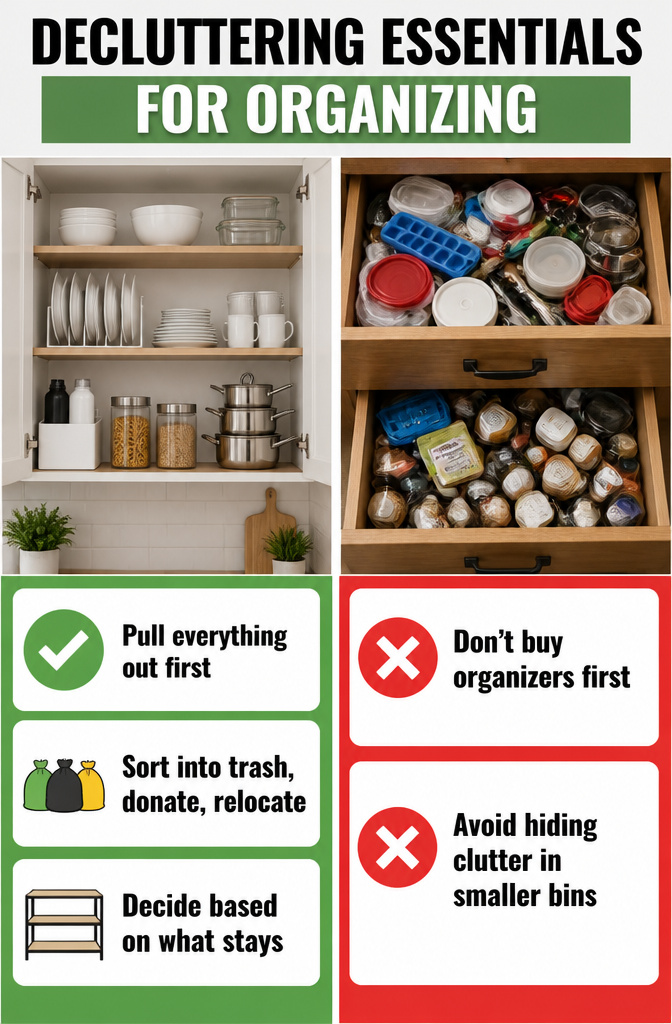
A drawer insert looks like a solution until you realize half the contents are lids without pots and spices bought three years ago for a recipe you never made again. The bins and trays that rank high on Pinterest will still hold the clutter; they just hide it in smaller compartments until the whole system collapses under weight it was never meant to carry.
Pull everything out before buying a single organizer. The rule that changed how I size these projects: if I have not used it in a year, it does not go back in. Three bags on the floor, labeled trash, donate, and relocate, handle the sorting. The relocate bag matters most in kitchens, where action figures, mail, and tools migrate into cabinet space that should hold cookware.
What stays determines the organizer, not the other way around. A cabinet that held forty items needs a different insert than one that holds twenty, and the difference is often a tiered shelf versus a simple riser, or nothing at all.
Labeling Systems That Stick

Labeling is where most kitchen cabinet organizer ideas either hold up for years or quietly fall apart. I learned this after watching a spice drawer I had sorted alphabetically slowly revert to chaos because nobody else in the house knew the system existed.
Vinyl labels on adhesive backing survive steam and grease better than paper or chalkboard tags, which smudge the first time someone reaches for olive oil with damp hands. Clip-on labels work well for bins that get pulled out regularly, though they can catch on neighboring items in crowded cabinets.
How specific the label gets depends on who else needs to read it. "Baking" is enough for a household of adults, but "flour / sugar / brown sugar" prevents the wrong canister from being grabbed during a rushed dinner prep. If kids or guests use the kitchen, specificity is not fussiness; it is the difference between the system lasting and the system becoming your private project that everyone else ignores.
The time investment in organizing cabinets only pays off if the people sharing them respect where things go. Labels make that respect possible by removing the guesswork. Without them, even the best pull-out drawer or tiered shelf eventually becomes a junk pile, because finding the "right" spot takes just enough extra thought that most people skip it.
Custom Inserts for Drawers
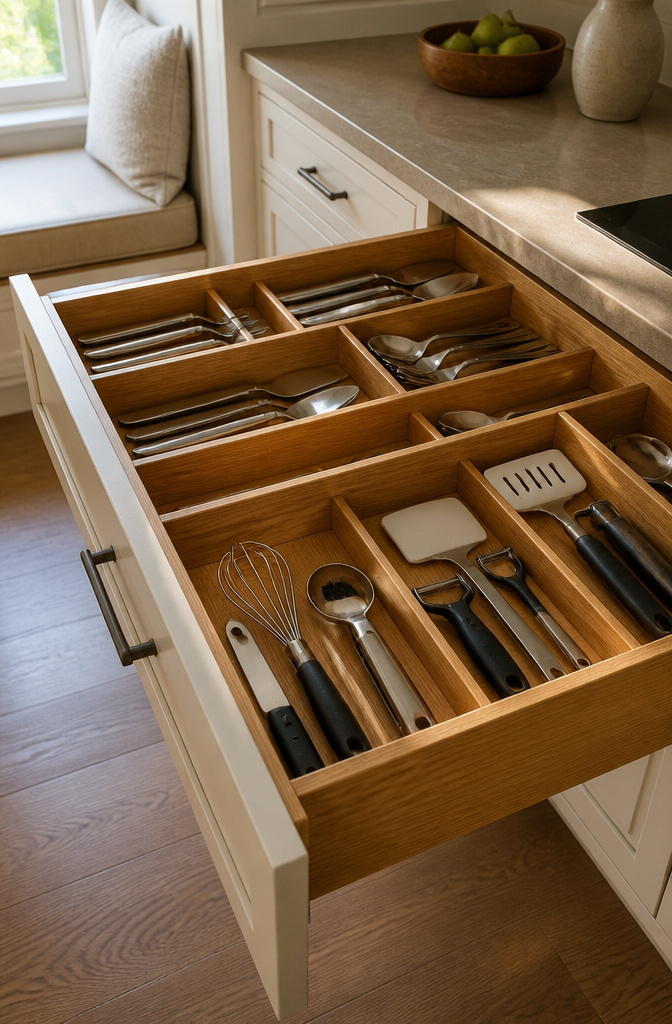
Custom inserts turn a messy drawer into something that actually fits what you own, but the material choice matters more than most people expect. Wood dividers stay put and take abuse; plastic trays slide around and crack at the corners after a year of slamming. The catch is that prefab organizers are built to average dimensions, and almost no rental kitchen has average drawers. Measure the interior width, depth, and height at three points each, because cabinet boxes warp and drawer slides eat space you cannot see from the opening.
Utensil trays and knife blocks are the obvious wins here, but the less obvious one is gadget collections: the peeler, zester, and three spatulas you use weekly. Those need shallow cells, not deep bins, or they tangle into the same mess the insert was supposed to solve. A two-tiered cutlery divider can double silverware storage in the same footprint, with everyday forks on top and steak knives below, but only if the drawer’s interior height clears the stacked track hardware. If it does not, the bottom tier binds and the whole thing becomes a single-level tray with extra parts rattling underneath.
Bread drawers and other single-purpose inserts look appealing in photos, but they commit a whole drawer to one item. For a first kitchen with limited cabinets, that space usually earns more keeping mixed tools sorted than keeping bread pristine.
Corner Drawers Versus Lazy Susans
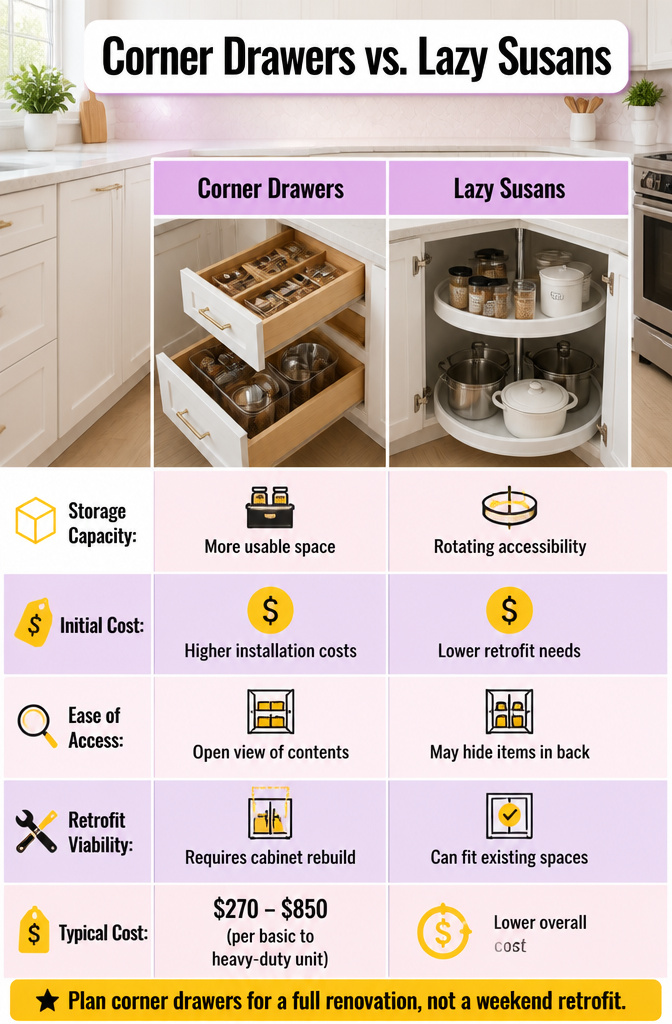
Corner drawers pull straight out, which means nothing hides in the back behind a spinning tray. A full-extension corner drawer set, one shallow over two deep, can take two 6-by-15-inch shallow organizers up top and several 6-by-6-by-6-inch bins below for spices and measuring cups. That layout beats the single deep pile of utensils that used to drive my husband and me nuts in our old drawer.
The catch is the retrofit. A blind-corner pull-out shelf runs about $270 for a basic two-tier unit, or up to $850 for the heavy-duty version that handles stock pots and Dutch ovens. Corner drawers, by contrast, need the cabinet box rebuilt; they are not a drop-in fix for a standard blind corner. If you are already replacing cabinets, the upcharge over a basic drawer bank is worth it for the access. If you are keeping the boxes, the rotating tray or a pull-out shelf is the practical move. Plan corner drawers for a full renovation, not a weekend retrofit.
Frequently Asked Questions
How can I organize deep kitchen cabinets?
Install pull-out cabinet drawers on standard drawer slides so the whole shelf rolls forward, bringing items from the rear within easy reach. A base cabinet 24 inches front to back wastes half its space because things drift to the back; a pull-out brings the full depth forward in one motion. Two-tier versions for blind corners run about $270, while custom two-tier shelf pull-outs can reach $672 on sale from $850.
What’s the best solution for organizing spices in cabinets?
Use stepped spice risers or angled drawer inserts that lift each row above the one in front so labels face you instead of hiding behind the jar ahead. This stops the short jars from tipping into an avalanche when you reach for the back row, and it ends the ritual of buying a second cumin because the first one vanished behind the oregano. Label every jar, because even a neat riser falls apart once an unmarked bag of cloves drops into the gap.
How can I maximize space in small kitchen cabinets?
Use riser shelves to turn one cabinet shelf into two without tools, letting water drain under wire versions for damp mugs or choosing solid platforms for heavier plates. A $10 riser often outperforms a $200 custom pull-out because you will install it tonight instead of adding it to a someday list. For spices specifically, the back row sits higher and every label faces you straight on. Making use of vertical storage gets the most out of minimal available space and makes accessing what you need much easier.