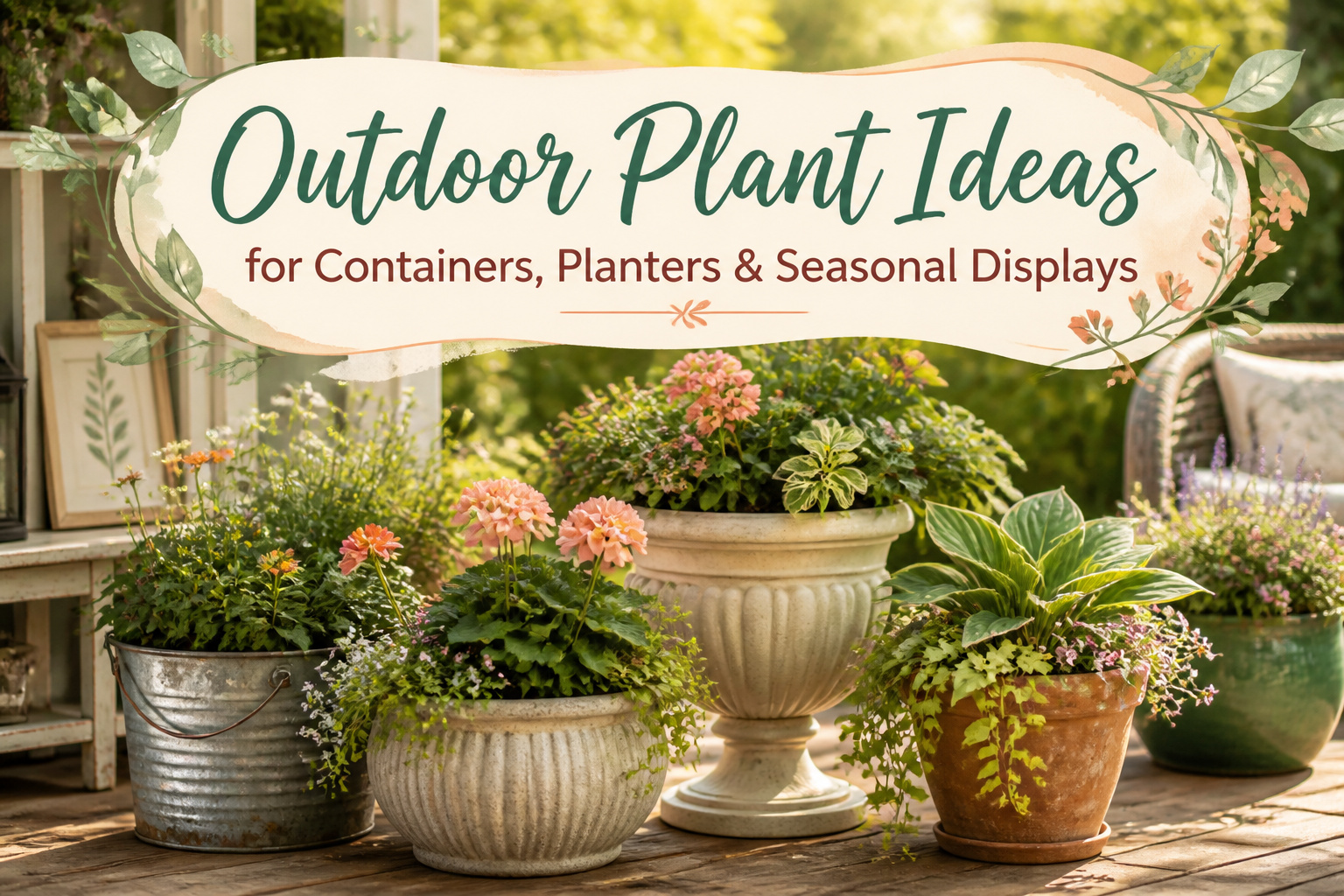
Outdoor plant ideas run from galvanized buckets that weather into something better than they started to resin urns that read as carved stone without the backache. The difference that actually matters is drainage, because a pot without holes is a planter in name only and wet roots rot fast. The 100% recycled resin urns from the My Texas House line solve this with knockout holes built in, not an afterthought you drill yourself. Whether you are renting and need something you can move when the season changes or staking out a permanent porch spot, the decision hinges on weight versus weatherproofing more than on price.
1. Thrillers, Fillers, and Spillers

Most planters that look professionally styled follow a three-part formula whether the designer planned it or not. Tall focal plants go in the back against a wall, or dead center for a 360-degree view, with mid-height fillers tucked around them and trailing spillers draped over the edges to soften the line of the container. Sweet potato vine works as a spiller if you want bold lime foliage that makes flower colors pop; Wave petunias or alyssum do the same job with blooms. The trick is reading the plant tag before you buy. Mounded compact forms will behave as fillers, while anything described as draping belongs on the rim where it can spill. I have seen the difference between a planter that follows this and one that does not, and the structured one wins every time at the curb.
2. Container Gardening Tips

Commercial potting soil makes or breaks a container. Garden soil compacts in a pot, choking roots and holding water like a soaked sponge. A peat-based, soilless mix breathes better and carries the drainage container plants depend on. I learned that one the hard way after a summer of tomatoes that sat wet and rotted at the stem.
Replace the soil completely every one to two seasons, or at minimum lift the old root ball, clear out the spent roots, and fold in compost or fresh potting mix to bring nutrients and structure back. That refresh buys you another season without starting from scratch. Mix in slow-release fertilizer at planting time, and leave an inch of headspace below the rim so water stays in the pot instead of running off the deck.
3. Unique Containers

Galvanized buckets from HomeGoods or online stores run cheap and weather into something better than they started. The soft gray steel against bright annuals or leafy spillers gives a grouping instant contrast, and the rust that creeps in after a season of watering looks intentional rather than worn out. I set a square one by my steps last spring with seasonal flowers that carried through summer, then added a smaller copper pot beside it so the pairing did not feel like a matched set.
A wrought-iron bicycle plant holder works the same way, mixed in with a galvanized watering can to break up the expected shapes. Willow cloches and obelisks are not containers exactly, but oregano or trailing plants pushed through the slats read as a planted piece rather than a pot with an accessory stuck in it. The trick is treating non-planters as the main event, not tucking them around standard nursery pots where they disappear.
4. Classic Urn Planters

The urn planters I keep coming back to are the ones from the My Texas House line at Walmart, and the reason is simple: they read as carved stone without the backache. Each one is 100% recycled resin, which means you get the beaded detail and hefted look of a traditional cast piece at a weight you can actually move when the season changes or the landlord asks you to clear the porch.
That portability also makes them forgiving across styles. A pair flanking a front door works for a formal Colonial look; the same planter tucked into a corner of a rental patio softens the edges without fighting the architecture. The knock-out holes in the bottom seal it. Drainage keeps roots from sitting in water, and if you have ever lifted a pot after a week of rain to find the soil sour and the plant limp, you know why that matters. You can punch the holes out before you fill, or leave them sealed if you are dropping in a nursery pot with its own drainage and just want the shell. Either way, the option is built in, not an afterthought you have to solve with a drill bit that might crack real stone.
5. Lattice Design Planters

A 14.75 by 14.75 inch square footprint sits at the sweet spot for porch steps or flanking a doorway without blocking traffic. The lattice pattern reads as texture from the street, breaking up a solid wall of siding or brick without demanding attention the way carved urns do. Structurally, the openwork lets air move through to the plant at center, which matters more than it sounds on a humid July afternoon when stagnant air can cook the roots of a tight-packed boxwood sphere.
The set-of-two format solves the symmetry problem for renters who want matching flanks but do not want to hunt a second piece later. I would fill the base with ivy to soften the transition to the porch floor, then let a simple topiary or sphere carry the height. The lattice does the visual work; the plant does not have to.
6. White Stone Planters

White stone planters carry a cool, clean look that works almost anywhere, but that pale surface comes with a catch most people notice too late. Light-colored stone reflects heat upward, which can bake the roots of anything you plant and dry the soil out faster than dark containers left in the same spot. I learned to work around this by choosing plants that tolerate the extra warmth: succulents, lavender, or trailing rosemary all handle it well, and their gray-green foliage looks intentional against the white rather than washed out.
Keeping that crisp color takes more than rain. Hard water leaves mineral stains, and potting soil splashes during watering turn into dark streaks that do not rinse off on their own. A scrub with a weak vinegar solution every few weeks keeps the surface bright without the elbow grease of waiting until spring. I skip sealants; most turn yellow within a season and trap moisture that cracks the stone in freeze-thaw cycles.
7. Tall Column Planters

A tall column planter carries a lot of visual weight on a porch or patio, but 28 inches of empty depth below the root ball turns into a water trap and a waste of potting mix. The ones worth buying have a false bottom you can set at three different heights, riding on ridges molded into the planter walls. Flip the tray one way for a shallow soil layer under a tall plant, flip it the other for more depth under something shorter, or drop it to the base when you want the full column for a small tree or a layered spring bulb display.
That adjustability matters most when you are swapping plants season to season. A summer grass that needs 6 inches of soil sits on the highest shelf in May; in October the same planter drops to mid-height for a stack of kale and ornamental cabbage with deeper roots. You are not locked into one planting profile for the life of the planter, and you are not hauling home twice the bagged mix to fill a void the roots will never reach. For renters especially, that is one heavy object that does not get heavier than it has to every time you move it.
8. Square Lion’s Head Planters

The lion’s head relief on these planters reads formal without tipping into garden-center kitsch, and that restraint makes them useful for specific house styles. A white colonial with black shutters, a brick Georgian with limestone trim, or any place with existing iron hardware on the door or lantern mounts: the classical reference ties together rather than shouting for attention.
Concrete keeps the price reasonable and the planter upright in wind, though at 10.2 inches square these are smaller than they photograph. That dimension matters more than the weight. Two flanking a front door look underscaled unless your entry is narrow; one centered on a porch step or grouped in threes along a walk works better. The molded face does limit placement slightly. Turned straight out, the detail competes with whatever you plant inside. Angled fifteen or thirty degrees toward the approach path, the relief catches light and the greenery stays the focus. I would skip these entirely for a ranch or a clean-line contemporary place. The ornament has nothing to speak to there, and the concrete heft reads as leftover rather than intentional.
9. Basket Planters

Basket planters split cleanly into two jobs: hanging from a hook or standing on legs. The hanging kind swings in the breeze and dries out fast; the standing kind sits on a patio and behaves more like a regular pot. Both use a liner, and that liner is where the real decisions start.
Coconut coir liners look the part and drain aggressively, which sounds good until a July afternoon hits 95 degrees and the whole basket wilts before dinner. Moss liners hold moisture longer but break down in a season or two. Plastic liners with built-in reservoirs exist, and they help, yet they also add weight that a shepherd’s hook may not handle. A standing basket with a water-retention liner is the safer bet for anyone who travels on summer weekends, because the hanging version punishes missed watering days hard enough to kill a whole planting.
Plants that hate wet feet, like lavender or most succulents, rarely belong in baskets at all. The liner that breathes enough to keep their roots healthy is usually the same liner that lets the soil dry to dust in August. Annuals bred for containers, the ones labeled as trailing or mounding, are the practical choice. They root shallowly and recover from slight underwatering better than perennials do.
Rigid containers hold moisture in the center even when the surface looks dry. Baskets, especially hanging ones, dry from the outside in and from the bottom up. That difference means checking a basket means pushing a finger deep into the side, not just touching the top inch. The habit feels fussy until it saves a basket from crisping on the first hot week of June.
10. Black Urn Planters

Black urn planters pull the same trick as the stone-colored ones, but the finish changes what reads as expensive. The dark surface soaks up heat on a south-facing porch, so the potting mix dries faster and the root ball runs warmer than it would in the lighter resin. That matters in July, less so in spring and fall. The 15-inch height and 13-inch width sit at the scale where a single draping plant, something that spills over the rim, fills the visual space without looking crowded. A geranium or sweet potato vine trained to cascade turns the planter into a shape that reads heavier and more custom than the planter actually is. The recycled resin construction still applies here, carved detail and all, so the weight stays manageable for a renter who might need to haul them inside for a hard freeze. The black reads formal against brick, modern against painted siding, and slightly funereal only if you let the planting go sparse. My preference is to pack them fuller than I would the lighter colors, since the dark frame swallows green and needs volume to balance it.
11. Set of Two Metal Planters

Matched pairs of metal planters do more than double your planting space; they create instant architecture on a rental patio or a first home’s narrow entry. Two identical containers, set to frame a doorway or mark the edges of a seating area, give the eye a place to rest and make a small footprint feel intentional rather than crowded.
Metal brings a clean, modern line that terracotta or resin rarely match, but it also carries two practical limits worth weighing before you buy. Rust prevention matters more outdoors than anywhere else: powder-coated or galvanized finishes hold up through wet seasons, while raw steel will stain whatever sits beneath it within a single year of rain. Weight is the second calculation. A 31-inch planter with a metal base reads as substantial and resists tipping in wind, yet that same heft makes relocation a two-person job once soil and mature plants settle in. For renters who may move every few years, the balance tilts toward lighter materials or smaller matched pairs that one person can still lift onto a truck.
12. DIY Monogrammed Planters

The monogrammed planters I keep coming back to started as plain wood boxes built for a gatehouse years ago, then got initials added, then got those initials painted black after someone pointed out the contrast would read better from the road. They still hold up. Paint the monogram black, not the box, and the letterform pops without the whole thing turning busy.
Resin urns that look like carved stone run about $30–$40 at big-box stores and already come with knockout drainage holes. Building wood planters from 1×6 boards and adding a vinyl letter or a routed initial takes a Saturday and roughly the same money if you already own a drill and a jigsaw. The advantage is the shape and the mark are yours; the catch is you are now maintaining wood instead of hosing off resin. For renters or anyone who moves pots seasonally, resin wins on weight. For a permanent porch spot you plan to keep years, wood and a painted monogram age into the house in a way pre-made never quite does.
13. Seasonal Front Door Planters

A pair of oversized urns flanking the front door sets the rhythm for the whole year, but the plants inside them have to earn their keep across four very different seasons. In summer, I lean on long-blooming flowers mixed with foliage that carries the design when the blooms pause, a combination that holds up through heat without looking spent by August. Come fall, the faded annuals get pulled and replaced with chrysanthemums in whatever shades the nursery has that week, usually set against gourds or a stray pumpkin the kids picked up. The mums need full sun, so I shift the urns outward a few inches if the porch overhang has grown too generous with shade.
Winter is where the real swap happens. I pull the root balls entirely, knock the soil into a wheelbarrow, and store the emptied pots in the garage before they freeze and crack. The urns themselves get filled with cut evergreen branches, birch poles, or last year’s dried hydrangeas from the backyard, whatever reads as intentional rather than abandoned. The soil you save goes into a plastic bin and gets refreshed with compost in spring, not dumped. Three seasons of rotation from two containers sounds like more work than it is; the whole exchange takes maybe an hour once you have the stored material ready. The mistake I made early was treating each season as a fresh purchase. Now the base structure stays, only the contents move.
Full Sun Plants for Containers
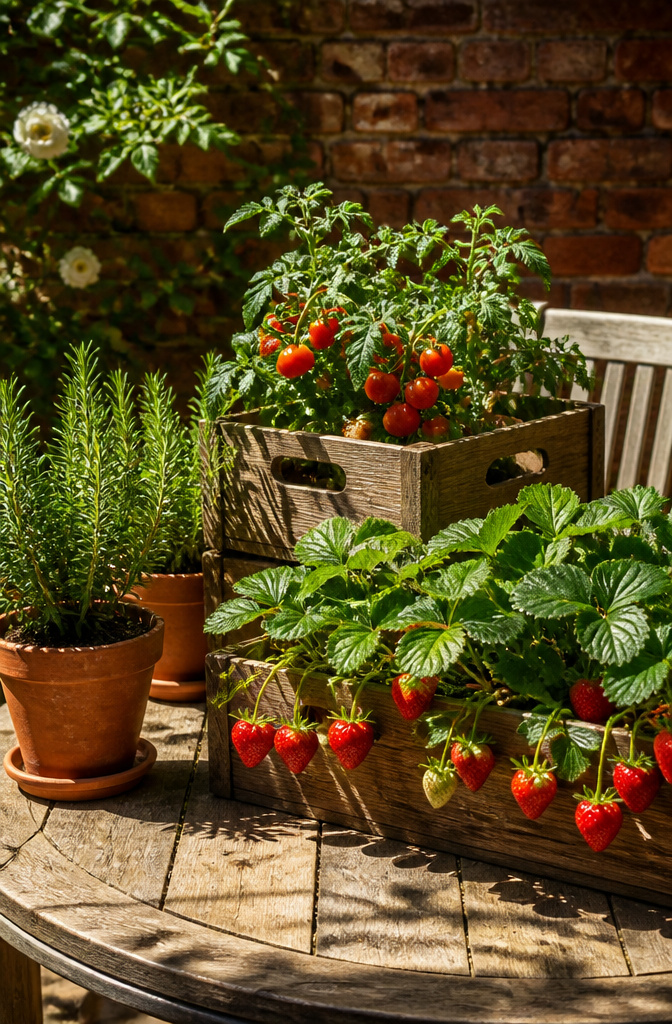
Compact cherry tomatoes, strawberries, and shrub roses will all take as much sun as a container can give them. Six hours is the minimum for fruit set on tomatoes, and more is better for all three.
Cherry tomatoes reward the cramped roots of a pot if you skip the heirloom sprawlers and pick a variety bred to stay bushy. Those vines will stay neat enough for a patio table without staking hardware.
Roses in containers need winter protection that the pot itself provides. Ceramic and terra cotta crack when temperatures freeze; plastic or wood survives the cycle. Shrub or landscape types handle the restriction better than climbers, and they still give the repeat bloom that justifies the space.
Strawberries spill over the edges in a way that softens the hard lines of any planter, and the fruit hangs clear of soil where slugs find it harder to reach. Morning sun with some afternoon shade keeps the berries from cooking on the stem in July heat, though full sun works if you are watering daily in high summer.
Shade Plants for Containers

Cilantro and parsley are the two herbs that actually prefer a break from direct sun, which makes them practical choices for balconies or patios tucked under eaves. Most herbs sulk in shade; these two will produce usable leaves with as little as three hours of filtered light, though growth slows noticeably below that threshold.
The real trick is judging what kind of shade you have before you buy plants. Morning sun with afternoon shade is the gentlest combination for leafy herbs. Hot afternoon sun, even filtered through a screen, reads as "part sun" to a plant and will crisp cilantro within a week. Stand outside at 3 p.m. and note whether the light still carries heat. If the air feels cool where your containers sit, you have workable shade; if it still warms your skin, shift to part-sun plants like thyme and accept that cilantro will bolt early there.
Parsley lasts longer in low light than cilantro, which goes to flower the moment it feels stressed. I replant cilantro every four to six weeks in shade to keep harvestable leaves coming, while a single parsley pot carries me through a season on the same north-facing step.
Drainage and Watering
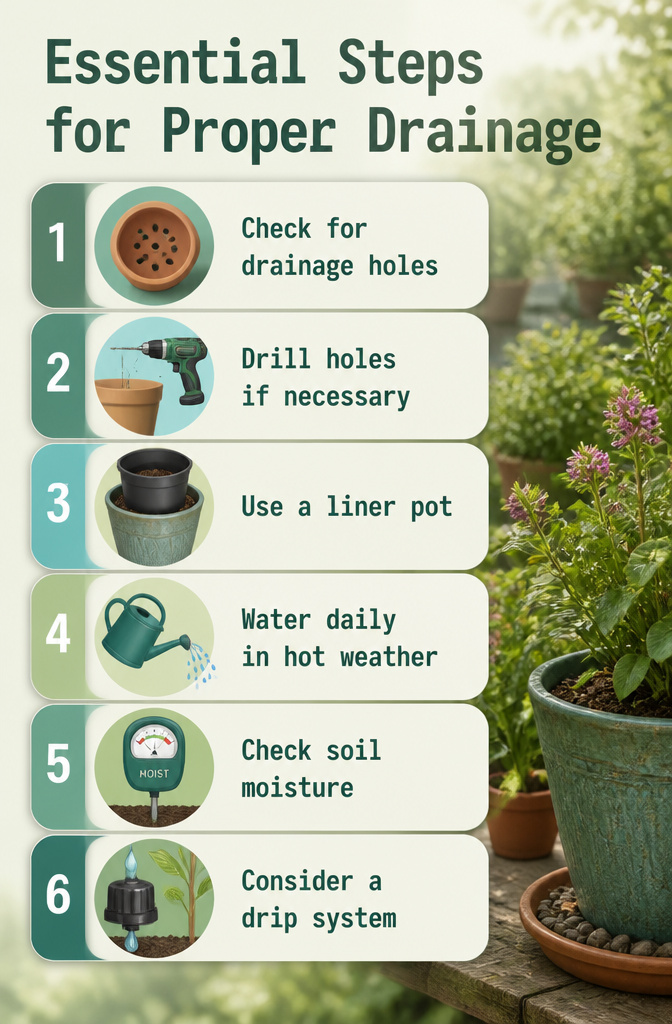
A pot without drainage holes is a planter in name only. Water sits against the roots, and roots that stay wet rot fast. If the container you want to use lacks holes, either drill them yourself or slip a liner pot with proper drainage inside the decorative shell.
In hot weather, most containers need watering once a day, especially smaller pots that dry out fastest. The top inch of soil is the test: dry to the touch means it is time to water. A soil moisture meter removes the guesswork if your finger is not reliable, and a drip system automates the whole routine for days when you are not home to check.
Container Size and Root Room

A pot that looks generous on the patio often turns out to be too small once roots hit the sides. 12 inches wide is the floor for most flowers or vegetables, and that measurement matters more than height. Skinny tall pots leave roots crowded while the soil bakes dry in an afternoon.
I learned this the hard way with a set of ten-inch planters that needed water twice a day by July. The lettuce bolted early, and the petunias never filled out. Bigger pots dry out more slowly, which buys forgiveness if you miss a morning or the weekend gets hot. For a renter or first-time gardener, that buffer is worth the extra soil cost upfront.
Weight is the tradeoff. A 12-inch terracotta pot filled with damp mix runs heavy fast, so think through where you’ll set it before you commit.
Frequently Asked Questions
What are the best plants for container gardening?
The best outdoor plant ideas for containers depend on your light. Full sun suits cherry tomatoes, strawberries, and shrub roses; shade calls for cilantro and parsley. Match the plant to the hours of direct light your spot receives, and read tags for growth habits so thrillers, fillers, and spillers each land where they belong.
Do containers need drainage holes?
Yes. Waterlogged roots rot fast, so drill holes or slip a liner pot with drainage inside a decorative shell that lacks them. Knockout holes built into planters like the My Texas House urns seal this without extra tools.
How often should I water container plants?
Most containers need watering once a day in hot weather, especially smaller pots. Check the top inch of soil; dry to the touch means water now. A soil moisture meter or drip system removes guesswork if you travel weekends.
What size container do I need?
Twelve inches wide is the floor for most flowers or vegetables. Skinny tall pots crowd roots and bake dry; wider pots hold moisture longer and forgive a missed morning. Weight rises fast with damp mix, so plan placement before you fill.