

A rabbit needs 32 square feet outdoors to move, graze, and stop pacing in circles, but that space only works if every wall is predator-grade hardware cloth and the roof sheds both rain and summer sun past 85 degrees. The most common setup, a raised wooden hutch attached to a wire run, starts around $130 and still forces you to climb inside or remove lids just to clean.
1. Hutch and Run

A raised wooden hutch attached to a ground-level wire run is the setup most people picture when they think of outdoor rabbit housing, and it still works because it matches what rabbits actually need: an enclosed sleeping area and open space to move.
The sleeping hutch should sit 6 to 7 feet long by 2 feet wide as a minimum, with at least 2 feet of headroom so a rabbit can stand on its hind legs without hitting its ears. Keeping that box raised off the ground matters for predator protection; it adds a barrier against anything digging or pushing in from below, and it keeps rain and snow from pooling against the floor. The wire run connects directly so rabbits can choose between sleeping or stretching their legs without waiting for someone to move them.
Access is the practical downside. Reaching into a raised hutch often means leaning across a run wall that sits 2 feet high or more, and cleaning means either climbing in or removing lids. For two rabbits, a basic 6-by-2-foot hutch starts around $130, with the run adding to that total. If you are housing more than three rabbits, the hutch-and-run format stops being practical and a small shed or barn becomes the better move.
2. Playhouse Conversion
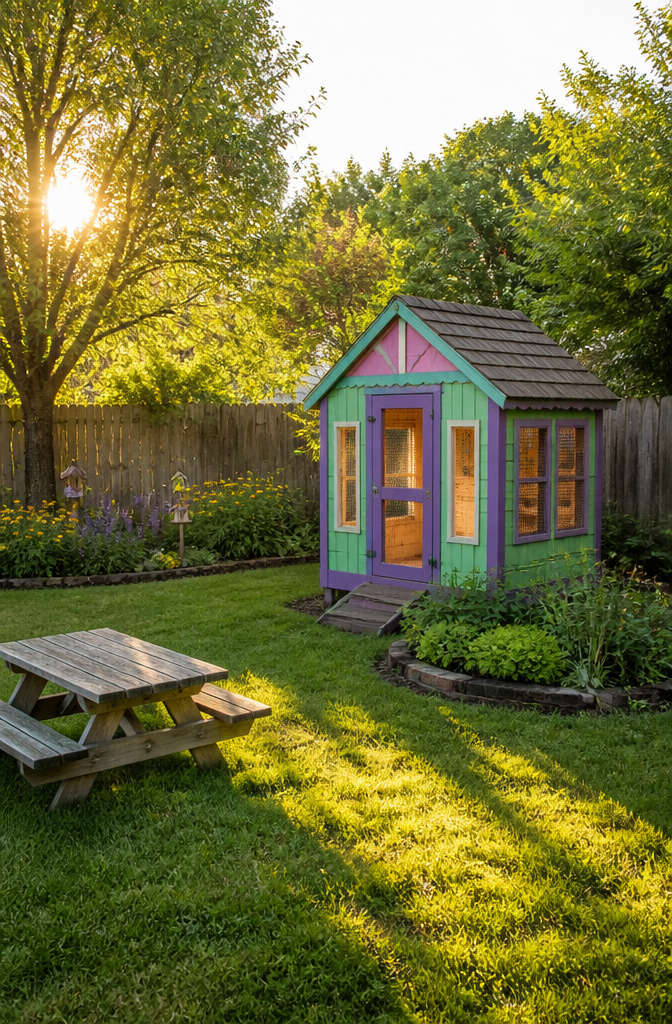
A converted children’s playhouse gives more height and floor space than standard hutches, which matters more than most people realize. Rabbits live in three dimensions when they have the chance; mine use vertical space for perching and full stretches in ways a low cage never allows. Standing headroom changes how you interact with them too, no more hunched cleaning sessions or awkward reach-ins.
The 4×4 foot footprint sits at a practical sweet spot for two rabbits. At roughly $210, the cost lands between a premium hutch and a shed build, though that number assumes you find a used playhouse and do the modifications yourself. Solid floor replacement is non-negotiable, wire mesh destroys hocks over time. Cover the windows with hardware cloth, not chicken wire, and seal every gap larger than half an inch. Predators test the seams you ignore.
What convinced me, reading through builds, was how often people kept the cute decorative gaps under eaves. Those become entry points. The aesthetic sacrifice of sealing them is the tradeoff that actually keeps rabbits alive.
3. Shed Setup

A small garden shed starts around $460 as a bare conversion, and that figure assumes you already own the shed. What you get for the money is standing height for yourself and enough floor space for rabbits to actually move. A 10×4 foot footprint is the practical minimum; anything smaller and you are crouching again, which defeats the point.
Ventilation is the make-or-break detail. Rabbits handle cold better than heat, so a shed needs windows that open and mesh that stops predators without stopping airflow. I have seen people use standard window screens, then lose stock to raccoons. Hardware cloth, 1/2 inch, fastened on the outside of the frame, is the only setup I would trust.
Inside, divide the floor into zones. A sleeping area with deep straw, a feeding station on something wipeable, and open floor for exercise. A single rabbit gets claustrophobic in a shed meant for tools; two or three do better, provided each has roughly six square feet of individual space and a shared run area.
The real advantage is human posture. You visit more often, you notice ear position and appetite sooner, and the rabbits learn to approach at eye level rather than flinching from overhead hands.
4. Aviary Build
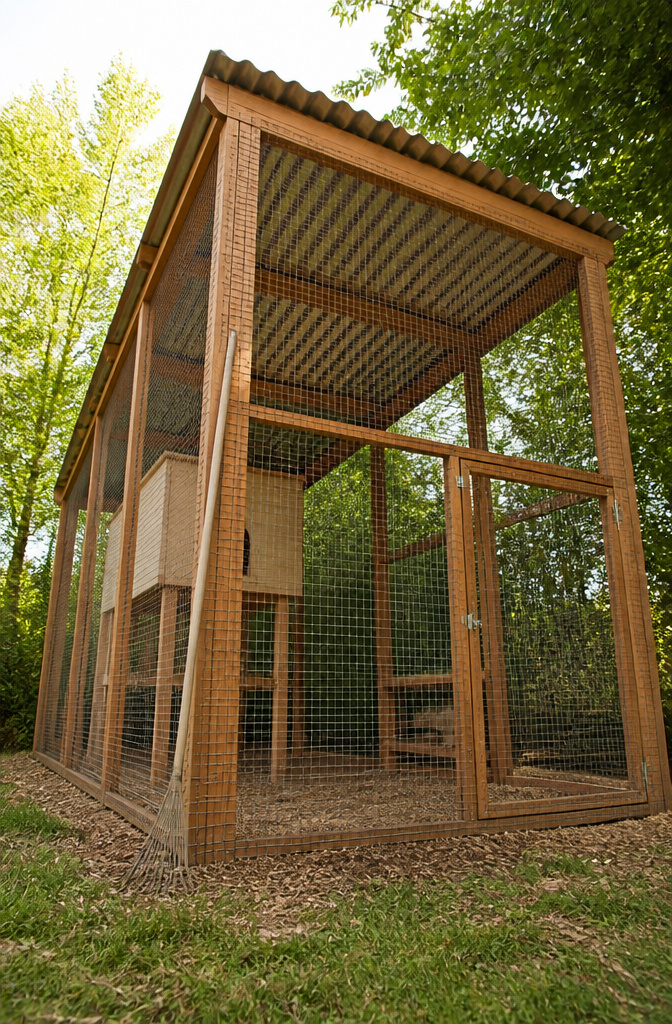
A walk-in aviary gives rabbits room to move and gives you room to stand. Six feet of height means you can refill water bowls and sweep corners without crouching or lifting lids off hutches.
The mesh matters. Standard aviary wire is too open for young rabbits or determined diggers. 12 mm × 12 mm weldmesh around the bottom meter stops escapes and keeps predators out. Metal cable ties or C-clips hold up better than plastic ones, which rabbits chew through.
A solid roof is non-negotiable. Polycarbonate twinwall or corrugated tin sheds rain and blocks summer sun. Some people try UV-stable tarps, but even heavy-grade ones sag and flap within a year or two unless mesh supports them underneath.
Inside, a separate enclosed sleeping box on long legs creates a hiding spot while leaving the floor beneath open for grazing. The wide aviary door changes daily maintenance completely. You walk in with a rake and a bucket rather than reaching through small hutch openings that strain your back and scatter bedding everywhere.
5. Kennel and Exercise Run

Prebuilt dog kennels with attached runs land on your driveway as a welded steel frame with panels already squared, which cuts assembly to an afternoon instead of a weekend of wrestling with lumber. A 10-by-4 foot unit runs about $460, giving 40 square feet at roughly $11.50 per square foot. What arrives works for dogs first, so the wire spacing on the run panels may need swapping or overlaying with hardware cloth to stop a rabbit from slipping through. The floor is another mismatch: most kennel floors are open grid or dirt, and rabbit feet need solid resting surfaces, so plan on laying down vinyl, plywood, or a deep layer of straw. The welded frame saves time because nothing has to be plumbed or leveled from scratch, but the tradeoff is working around an enclosure shaped for an animal that stands two feet taller and weighs ten times as much.
6. C and C Grid Enclosures

The 14×14 inch wire grid panels are the bones of a C and C system, sold in packs with plastic connectors that snap into the corners so you can build straight walls, L-shapes, or multi-level condos without cutting anything. Corrugated plastic sheeting, the same material used for yard signs, drops in as a waterproof base that keeps bedding off the ground and hosing out simple. What hooked me, reading through setups people actually live with, is the reconfiguration: expand a tunnel onto new grass, break it down for a move, add a second story once you see how the rabbit uses the first.
There is a learning curve. The connectors grip well enough indoors but outdoor wind loads need reinforcement at corners and any height above two grids tall; cable ties through the grid intersections solve this, though it stops being pretty. The panels themselves are not the cheapest option for a single static hutch, and the open grid walls offer no predator protection without hardware cloth added separately. Where this system wins is for the renter or first-home owner who wants a shape that adapts, not a footprint that locks in.
7. Exercise Pens
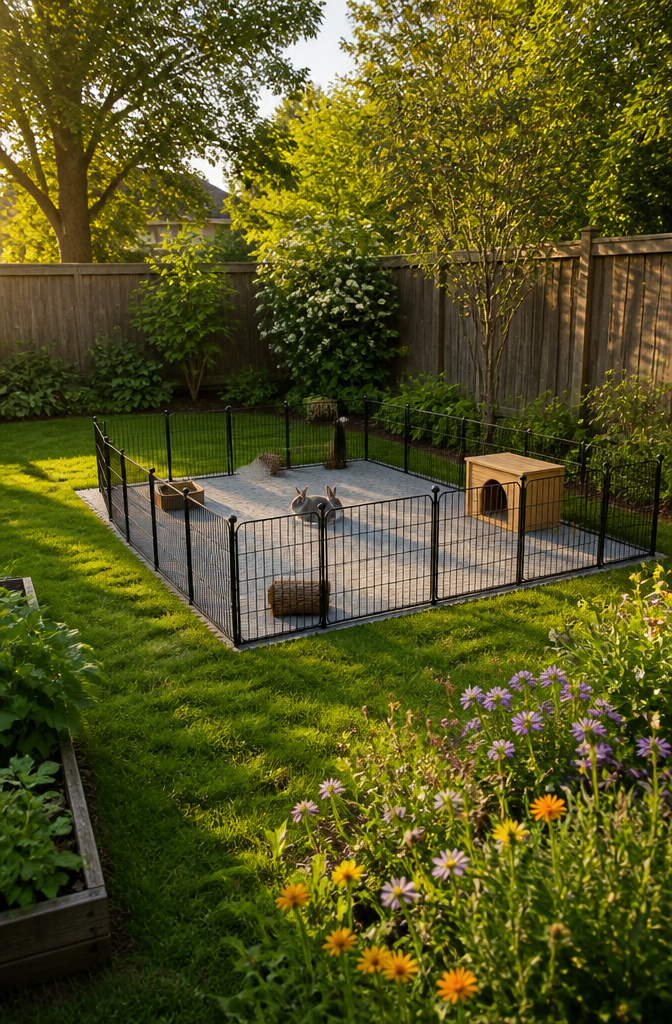
A single rabbit needs 32 square feet minimum, though more room is always better if you can secure it. That number rules out most prefab pet-store pens right away.
Portable x-pens built from modular wire panels are the fastest way to hit that footprint. The standard 27-inch and 30-inch heights work for calm jumpers, but a rabbit that hops well or one with boxes pushed against the edge needs 36 inches outdoors, where an escape means a loose bunny in open space. These setups move with you, which matters if you are renting or still deciding where the garden layout settles.
Fixed perimeter fencing costs more labor upfront and stays put, but it frees you from the wobble of lightweight panels and lets you build exactly the run shape your yard allows. Either way, flooring is what makes the pen livable. Textured vinyl cut to size from a hardware store roll cleans easiest. Tile works if your pen sits on an existing patio. Foam puzzle mats are softer on joints but invite digging and chewing, so they need more supervision.
The shelter goes inside the pen, not attached to it. A detached hutch or box set toward one end gives the rabbit a retreat while keeping the full run open for actual movement. The whole point of this setup is uninterrupted floor space; once you start dividing it with walls or narrow doors, you are back to housing that only technically qualifies as exercise room.
8. Bunny Village
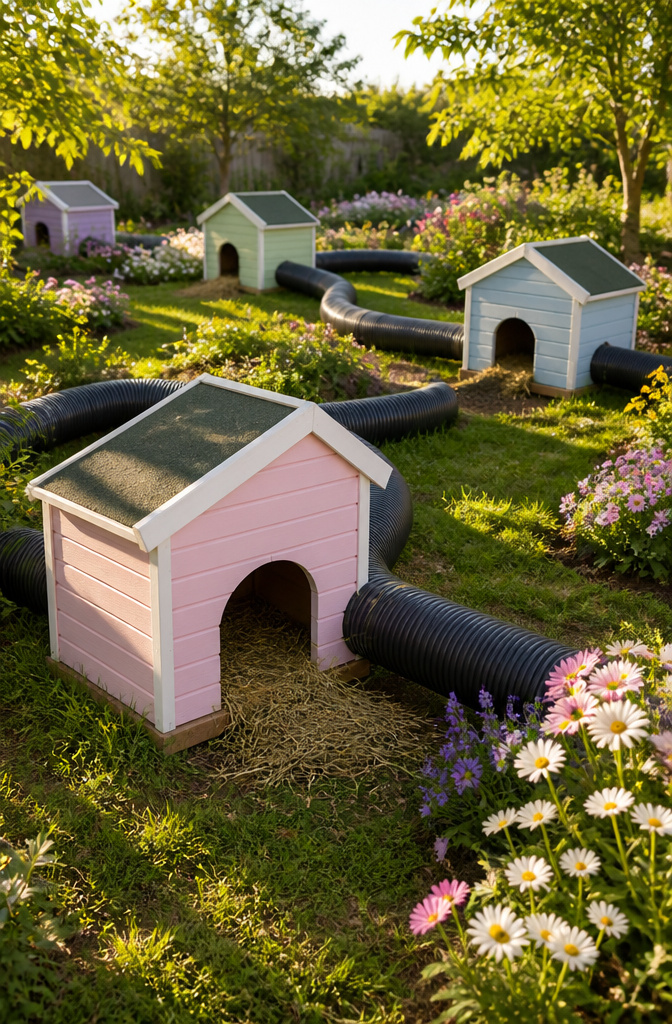
A single hutch rarely stays single for long once you start watching how rabbits actually move. The tunnel idea changes everything: two or three standard hutches linked by buried pipe become one habitat, with separate sleeping boxes, feeding stations, and open runs that let each rabbit claim territory without forcing anyone into a corner.
The pipe needs to stay at 150 mm diameter or wider so a full-grown rabbit can pass without hesitation. Anything narrower and they will sit at the entrance weighing the option until you doubt their sanity. Solid plastic tunnels hold up better than drainage coil, which stretches your budget fast at the lengths required. I have seen setups where the connections failed first, either from chewing or frost heave, so weatherproofing the joints matters as much as weatherproofing the hutches themselves. Metal cable ties beat plastic where a chewer lives.
Building the links yourself takes a weekend if the ground cooperates and the runs are already sitting level. Buying a system like Zippi Tunnels costs more upfront but saves the trial and error of making pipe ends mate cleanly with wire mesh. Either path works; the real decision is whether your rabbits need separate space because of temperament or because you are adding a bonded pair slowly. Multiple levels joined by ramps help, though I would put the digging-prone rabbit on ground level and let the climber take the loft.
Space Requirements
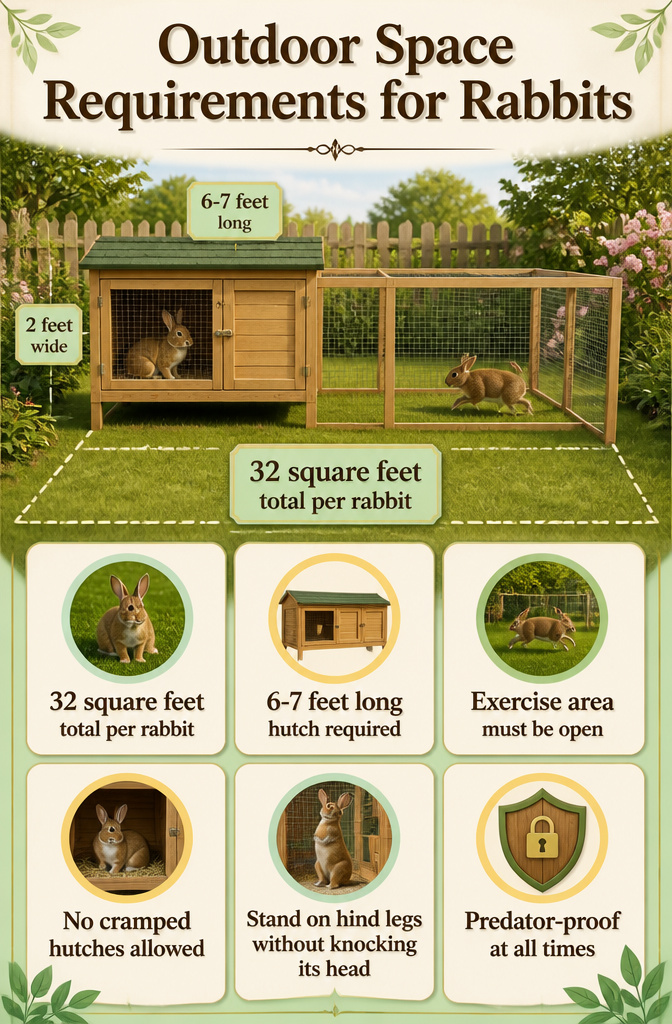
A rabbit in a cramped hutch paces, thumps, or just shuts down. Give it room and you get the difference: bolder movement, more grazing, less stress behavior. 32 square feet per rabbit is the floor for outdoor setups, though more space only helps if you can still predator-proof it.
That 32 square feet splits between two jobs. The enclosed shelter, where they sleep and retreat, eats up part of it. A 6–7 foot by 2 foot hutch covers that shelter portion and gives a single rabbit enough length to hop and enough height to stand on hind legs without knocking its head. But that hutch alone does not satisfy the total. The rest of the 32 square feet needs to come from an open exercise area permanently connected to the shelter, not a run you only attach on weekends. Rabbits kept in hutches without daily access to a larger run show the same cramped behaviors, just slower.
Predator Protection

Chicken wire keeps chickens in, not predators out. Raccoons pull it apart with their hands. Hawks, owls, foxes, and neighborhood dogs all get through it eventually. Hardware cloth with half-inch openings is the material that actually works, and it belongs on all six sides of an enclosure, not just the four walls most people build.
Bury the wire two feet underground around the entire perimeter, or line the floor with hardware cloth and cover it with straw or dirt so the rabbits can still dig without tunneling out. A roof is non-negotiable. Raccoons open simple latches, so spring-loaded or carabiner-style fasteners are worth the extra trip to the hardware aisle.
The real protection comes from routine. Walk the perimeter weekly, push on every joint, and look for gaps where the wire meets the frame. A stressed rabbit will chew a hole wider than you’d expect, and a determined predator will find it by morning.
Weatherproofing

A solid roof over the run lets rabbits stay outside through drizzle or light snow, and the shade it throws in July is the difference between a relaxed bunny and one in trouble. The threshold to watch is 85 degrees; above that, heat distress sets in fast. Heavy breathing and a damp nose are early warnings, but by then you are already behind. Shade sails work, or planting a deciduous tree on the south side gives summer cover without blocking winter sun.
Windbreaks matter more than most first-timers think. Plastic sheeting or a tarp lashed to the mesh on the upwind side turns an exposed run into a pocket of still air when temperatures drop, and rabbits handle cold far better than heat. The sleeping area, not the run, is where waterproofing counts. Bedding stays dry, body heat stays put, and a rabbit that can retreat to a dry nest loses less energy to damp ground.
Raised flooring, even six inches off the grade, breaks the capillary draw that wicks soil moisture up into straw or wood shavings. Most seasonal adjustments between setups take about an hour — swapping the windbreak panel, shifting a shade cloth, checking corner gaps — and that hour pays out across months of healthier rabbits.
Hiding Places
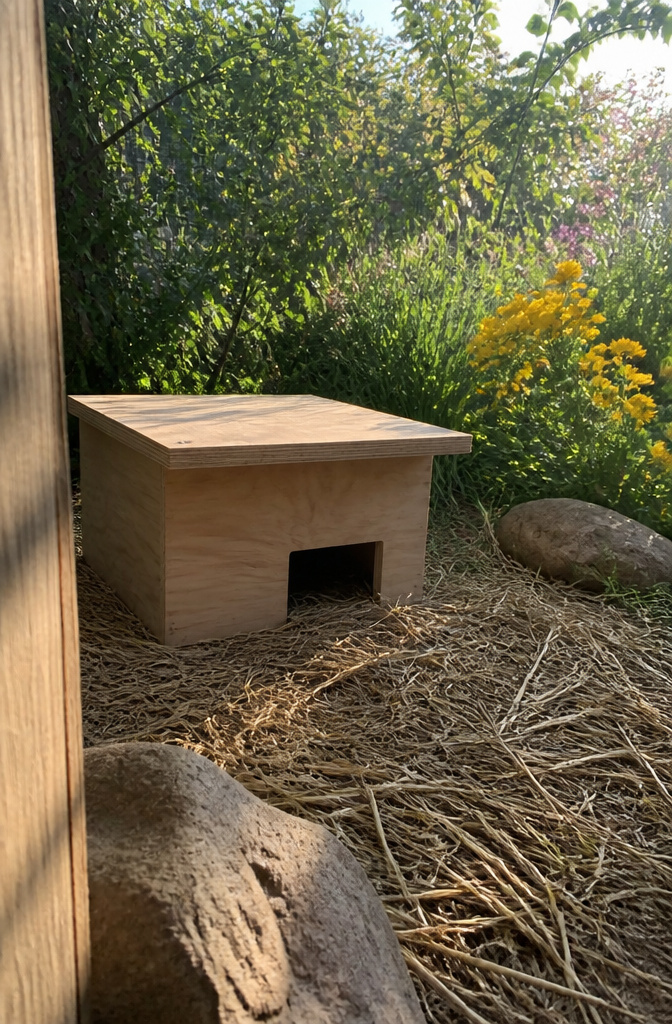
Rabbits sleep better when they can press their backs against something solid. A hide box with three walls and a roof, placed away from the main traffic path but within a few hops of food and water, gives them that burrow-like enclosure their instincts expect. In the wild they live underground; even a predator-safe run feels exposed without a place to duck out of sight.
A single rabbit needs a hide roughly 12 by 18 inches on the floor, while bonded pairs do better with separate exits so one cannot block the other. The size matters less than the construction: plywood or thick plastic sheds rain where cardboard turns to pulp, and a small entrance cut low keeps drafts from slicing straight across the floor. I have seen builders leave a back window, a three-inch gap at rabbit eye level, and the animals use it constantly. They want to know what is coming before it arrives. A hide that is blind on all sides gets ignored; one with a view of the run becomes their default sleeping spot.
Hay or straw inside finishes the job, though skip the old blankets unless you enjoy laundering soggy fleece after every rain.
Cleaning and Maintenance

Soiled bedding left more than a day turns ammonia sharp fast, and rabbits sitting in it pick up urine scald before you notice. I pull out wet spots each morning, which takes maybe three minutes once the house is set up for it. A removable tray slides out without dismantling the frame, and that single feature matters more than any cute trim.
Wire mesh fatigues at stress points, usually where the frame corners meet or where a rabbit kicks repeatedly. I run my hand along the inside weekly, feeling for sharp protrusions or sagging. Catching a frayed edge early means five minutes with pliers; missing it means a torn ear and a vet trip.
Vegetation creeps up the sides through summer, trapping moisture against wood and giving cover to anything that digs. I keep a shovel-width clear around the perimeter, more out of habit now than effort.
Hinged roof sections beat fixed tops for deep cleans. I lift mine, prop it with a stick, and rake old bedding straight into a wheelbarrow. Without that hinge, the job becomes unscrewing panels, and I have skipped seasonal scrubs for exactly that reason.
Frequently Asked Questions
What is the best outdoor rabbit housing?
A hutch paired with a ground-level run remains the most practical starting point for most owners, since it gives rabbits both an enclosed sleeping area and open space to move. Converting a children’s playhouse or a small garden shed works better for two or more rabbits, and a walk-in aviary or dog kennel with modified panels suits anyone who wants standing room for cleaning. The right choice depends on how many rabbits you keep, your budget, and how much time you can spend on assembly.
How much space do rabbits need outdoors?
Each rabbit needs at least 32 square feet in an outdoor setup, split between an enclosed shelter and a permanently connected exercise area. A 6 to 7 foot by 2 foot hutch covers the sleeping portion for one rabbit, but that hutch alone is not enough; the remaining square footage must come from an open run the rabbit can access whenever it wants, not just on weekends.
How can I protect my rabbits from predators?
Cover every side of the enclosure, including the floor and roof, with half-inch hardware cloth, not chicken wire, since raccoons can pull chicken wire apart with their hands. Bury the perimeter wire two feet underground, or line the entire floor with hardware cloth and cover it with straw or dirt so rabbits can still dig safely. Check latches weekly; spring-loaded or carabiner-style fasteners beat simple hooks, and raccoons have learned to open basic latches.
What should I include in my rabbit’s outdoor setup?
Every setup needs a weatherproof shelter with a solid roof, a separate exercise area, at least one hiding box with three walls and a view of the run, and hardware cloth on all six sides of the enclosure. Inside the shelter, divide the floor into zones: deep straw for sleeping, a wipeable surface for food and water, and open floor for movement. Add a windbreak or shade cloth seasonally, since rabbits handle cold better than heat and distress sets in fast above 85 degrees.