
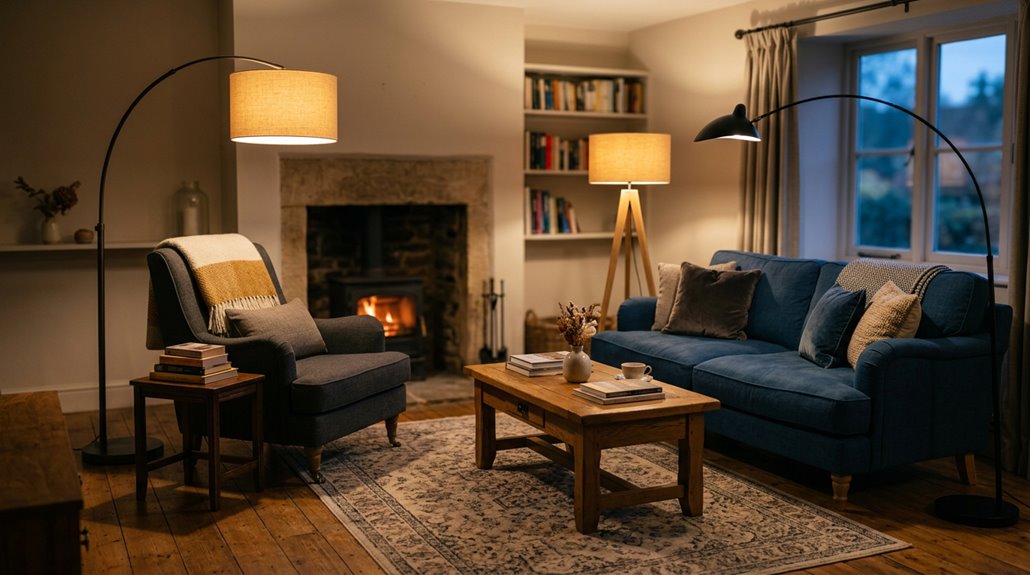
I’d place floor lamps strategically to transform your living room.
First, measure your space and calculate you’ll need roughly one lamp per 100 square feet.
Position them beside seating for reading, in dark corners to brighten shadowy spots, and behind your TV to reduce eye strain.
Layer ambient and task lighting with dimmable bulbs, keeping lamps at eye level (about 60 inches) for comfort.
Match your lamp styles to your décor for a polished look.
Proper lamp placement and layering creates functional, comfortable lighting throughout your space.
Map How Floor Lamps Create Light
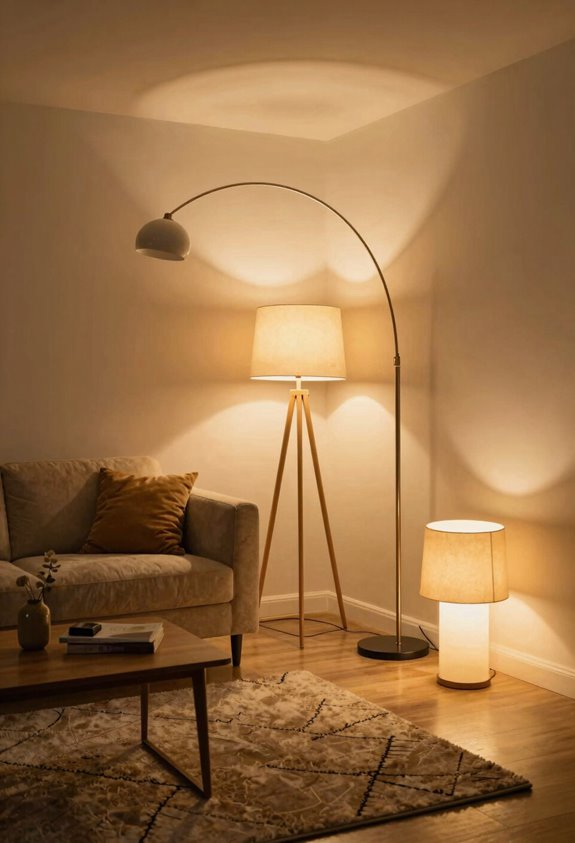
How do floor lamps brighten your living room? Floor lamps create illumination through bulbs that shine downward or outward, depending on your shade design. When you’re building layered lighting, you’re combining ambient lighting (that soft, diffused glow from translucent shades) with task lighting (focused beams for reading). These aren’t competing forces; they work together effectively. Your ambient lighting spreads 20-30 lumens per square foot throughout your space, while task lighting delivers 50-75 lumens where you need it most. By positioning lamps strategically, you’ll create a focal point that guides the eye while eliminating harsh shadows. Strategic lamp placement transforms any living room into a well-lit space.

Modern Fully Dimmable(0-100%) Floor Lamp & Convenient Rotary Switch: Compared with traditional Non-dimmable floor lamps for living room, our floor lamp is fully Stepless Dimmable, which suitable for all the room style and using situation ,find the perfect light for your needs. This standing lamp is very easy to turn on and off. Just simply twist it and then you can adjust the arc floor lamps brightness what you want. 4.1FT rotary switch, which is very convenient for you to adjust it.

Super Brightness and Dimmable Floor Lamp : SUNMORY’s new LED floor lamp for living room supports stepless dimming brightness (5%-100%) and color temperature (3000K-6000K). And this is a super bright floor lamp with 32W/3000LM, providing sufficient lighting for your living room or bedroom. Whether you're reading, writing, standing lamp provide soft, bright light that's easier on the eyes. The 69" LED lights for bedroom has a slim profile that blends perfectly into any style of room decor.

120 LED High Brightness: Equipped with 120 high-brightness LED beads, the PACOVY floor lamp delivers a powerful 18W / 1800-lumen output, providing brightness equivalent to a traditional 120W bulb while saving up to 85% energy. This led floor lamp effectively illuminates the entire workspace, making activities such as working, reading, crafting, sewing, beauty treatments, nail art, tattooing, and puzzles easier and more enjoyable
Measure Your Room and Check Natural Light
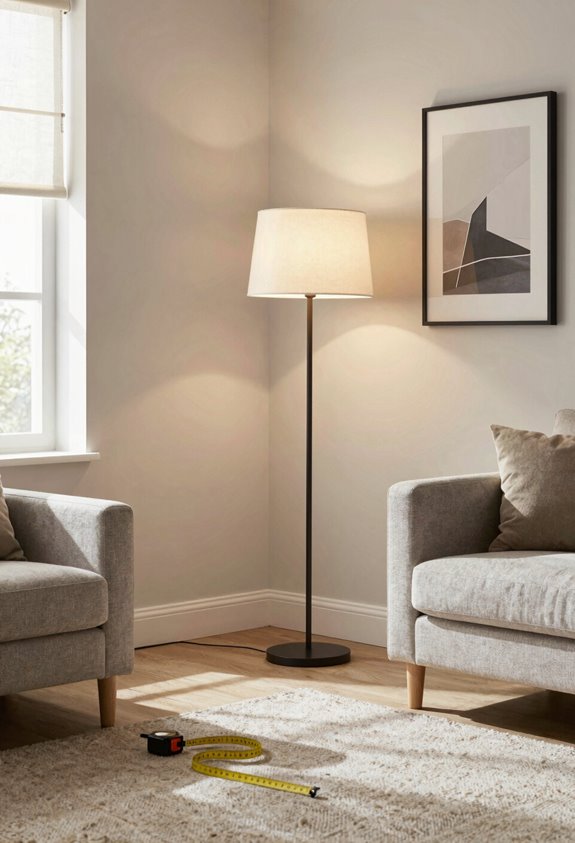
Now that you’ve got a solid understanding of how floor lamps work, it’s time to measure your space. Grab a tape measure and record your room measurements: length, width, and height. These dimensions help you choose lamp sizes that fit your area appropriately.
Next, track natural light patterns throughout your day. Notice where sunlight streams in from windows and doors, then identify the darker corners that need additional lighting. By understanding how natural light shifts, you’ll develop an effective lighting layering strategy. You’re essentially mapping ambient versus task lighting needs, which means you’ll know exactly where floor lamps create the most impact. This assessment ensures your living room receives adequate illumination.
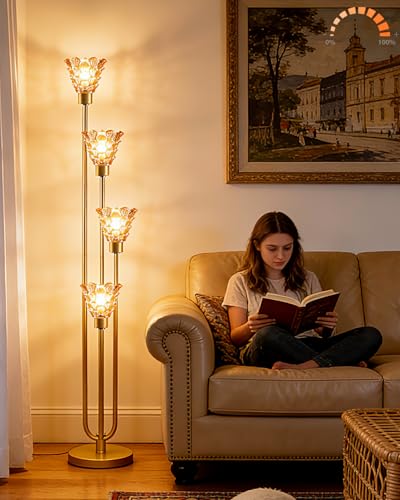
Unique & Exquisite Design: The gold floor lamp measures 63IN high. 4 lights are scattered on U-shaped 4 metal pole, combined with elegant and minimalist metal structure, which can match various home decor styles

Unique & Exquisite Modern Design ✨ This 63-inch black floor lamp boasts a mid-century inspired silhouette with three globe lights artfully arranged on a U-shaped triple metal frame. The elegant minimalist structure blends seamlessly with contemporary, vintage, or industrial decor, adding a touch of sophistication to living rooms, bedrooms, or offices.

White Modern Floor Lamp: This floor light fits in any room from industrial to modern or traditional décor. Its simple and elegant design can make it easy to place in any room of the house.
Calculate Lumens Needed for Your Room Size
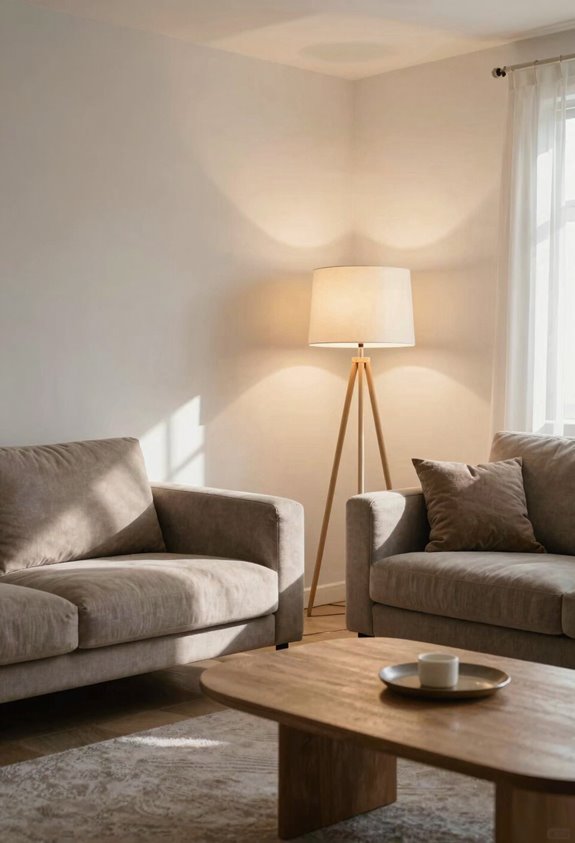
What’s the magic number that’ll transform your living room from dim and dreary to perfectly lit? It’s all about calculating the lumens you’ll actually need. Multiply your room’s length by its width to get the total square footage. For ambient lighting, target 20-30 lumens per square foot, which equals about 215-320 lux brightness. If your living room measures 15 by 20 feet, that’s 300 square feet. You’d need roughly 6,000 to 9,000 lumens total for comfortable everyday lighting. Wall colors also affect your calculations. Lighter walls reflect more light, so you actually need fewer lumens to achieve the desired brightness level.

Bright RGB+IC Ambient Lighting – No Dark Corners:This tall lamp fills your room with rich, dynamic color using advanced RGB+IC technology. 16 million colors create a sunset lamp glow or cinema-like immersion, delivering vibrant floor-to-ceiling radiance without a single dull spot.

100% Hand-Woven Paper Cord Shade with Mesmerizing Light & Shadow: Our living room floor lamp features 3-tier, staggered lamp heads and premium, durable vertical-ribbed hand-braided paper cord shades. The woven floor lamp casts stunning soft vertical striped shadows, diffuses warm glare-free brightness, delivers eye-friendly light for living room, bedroom, dining room, nursery, coffee shop, bistro corner, study, office, and instantly creates a cozy home atmosphere. NOT main overhead lighting

Magnetic Remote & Foot Control: GOEBLESON floor lamps for living room comes with a remote and a foot switch. The magnetic remote sticks onto the pole or any metal surface for easy access. The foot switch provides a convenient backup option to turn on/off quickly without reaching for the remote. The remote control standing lamp is such convenient for setting the smart lighting from the comfort of your couch or bed
Decide How Many Floor Lamps You Need
I’m excited to help you figure out the perfect number of floor lamps for your living room, since getting this right transforms how your space feels. Consider your room’s actual size and layout, plus how you’re planning to layer different types of lighting together. These factors work together to create that balanced, inviting glow. Once you understand these key elements, strategically placed lamps will eliminate those frustrating dark corners and make your whole room feel more connected and comfortable.

Note: This floor lamp is 53.7 inches tall and offers a maximum brightness of 1,000 lumens, making it best suited for corners and small spaces. The official app download link is provided on the package in the form of QR code. Please make sure to download and use the genuine App for the full experience. It supports 2.4GHz network only. Remote control is not included.

Create Your Perfect Atmosphere - With 16 million color options and 68 dynamic lighting modes, this RGB floor lamp lets you customize your lighting to match any mood or occasion. Adjust the speed and brightness to bring your space to life in exciting new ways.

Advanced RGB+IC Color Technology: Our corner floor lamp is equipped with cutting-edge RGB+IC technology and high-quality built-in LEDs. Enjoy stunning color accuracy and a 30% brightness boost over traditional lamps. Create the perfect ambiance with a wide range of vibrant colors, perfect for any occasion—whether it's Christmas decorations or adding a modern touch to your living space.
Room Size And Coverage
What determines whether a living room feels perfectly lit or too bright or too dim? The answer lies in matching your floor lamp placement to your room size coverage. For every 100 square feet, you’ll want roughly one floor lamp. In a 12×12-foot living room (144 square feet), positioning 1–2 lamps strategically around the space provides adequate coverage. Layered lighting works best when you combine ambient lighting from overhead fixtures with floor lamps positioned 6–8 feet apart. This spacing creates even light distribution without harsh shadows. Position lamps in dark corners and near seating clusters while keeping pathways completely clear. Varied heights and shades allow you to adjust the mood as needed.
Layering Light Strategically
Now that you’ve figured out your room’s size and how to space lamps for even coverage, it’s time to think about layering your light. Combining ambient, task, and accent lighting creates the perfect atmosphere for spending time in your space. I place lamps in dark corners for ambient glow, position adjustable brightness lamps beside seating for reading, and highlight artwork with accent lighting. By mixing different lamp styles, arc, tripod, and torchiere, I create varying heights that distribute light beautifully throughout my space. For most living rooms, two to three floor lamps in different zones provide adequate coverage. This strategic placement prevents over-lighting and gives you complete control over your room’s mood.
Choose the Right Height for Reading and Comfort
Getting your floor lamp height right is key to comfortable reading. You’ll want to measure from the floor to about eye level when you’re sitting down, usually around 60 inches, so the shade bottom aligns with your eyes and cuts out glare. Before you buy anything, measure your specific seating spot and ceiling height, since a lamp that works well in one room might not be suitable in another.

3 Color Temperature Bulb Included: Dimension of this floor lamp is 60” height, diameter and height of lampshade is 10.04” and 7.87”, diameter of base is 8.66”. Includes a 9W LED bulb which has 3 different color adjustable temperature setting: 3000K/5000K/4000K. You can easily change the color temperature to set the overall ambiance of the room.

[Bright Comfortable Lighting] With 1300LM brightness and 4 adjustable color temperatures (2700K–6500K), this modern LED floor lamp delivers diverse light from cozy living rooms to focused home offices; stepless dimming (10%–100%) lets you fine-tune the light to suit your mood or task

UPGRADED FLOOR LAMP 90% BRIGHTER THAN OTHERS: Our strong R&D team has upgraded the brightness and performance based on the same product on the market. Compared with other old model lamp 12W/1000lm, our new lamp 18W/1800lm is the first one to adopt LED technology with a light guide plate, which increases its brightness to 90% brighter than others. A best bright Lamp for living room bedroom, Also for LED lash light, nail light, tattoo lamp,sewing light, craft lamp and puzzle light.
Eye Level Alignment Matters
When you’re settling in with a good book or working on a project, the height of your floor lamp makes all the difference between comfort and frustration. Eye level alignment directly impacts your reading experience.
Here’s what works best:
- Align your shade height with your eyes when seated—aim for about 60 inches from the floor for most chairs
- Measure your seating height first, then subtract the lamp’s shade height to find the perfect lamp size
- Choose adjustable-arm lamps that let you direct light exactly where you need it, reducing glare instantly
When the light falls just above your shoulder height, neck strain disappears. Swiveling heads help you maintain consistent illumination across different spots in your living room. Proper lamp positioning eliminates the common discomfort that comes from poorly angled reading light.
Adjusting For Seated Positions
Once you’ve nailed the basics of eye-level alignment, you’re ready to fine-tune your lamp placement for your actual seated position. Where you sit matters just as much as how tall your lamp stands. Adjustable-arm lamps work well for different seating positions because they let you pivot the light exactly where you need it, whether you’re curled up in a deep sofa or perched on an armchair. By positioning your lamp slightly behind or to the side, you’ll achieve effective glare control that protects your eyes. This thoughtful placement improves your reading comfort. For those sinking into plush furniture, choose a taller lamp with extended reach to avoid leaning forward awkwardly. You can create your ideal reading environment with proper lamp positioning.
Measuring Before You Purchase
The secret to finding your perfect floor lamp requires measurement rather than guesswork. Taking time to measure before purchasing makes a significant difference in creating a functional reading corner.
Here’s what I recommend:
- Measure your seating level – Find where your eyes naturally rest when seated, typically around 60 inches from the floor
- Calculate lamp height – Choose a lamp that’s 1.5 to 2 times taller than your surrounding furniture for perfect proportions
- Check placement clearance – Use a tape measure to ensure the lamp’s base and shade won’t bump tables or walls
When you test different heights in your actual space and simulate real reading distances, you’ll achieve comfortable illumination. This measurement strategy ensures your living room functions as an effective, welcoming space for reading and relaxation.
Position Lamps Beside Sofas and Chairs
Where should you actually place a floor lamp for the best reading light? Positioning floor lamps beside your seating creates better task lighting. Place the lamp next to your sofa or chair rather than directly in front, which keeps your legroom comfortable and uncluttered. Position it slightly behind or to the side to create ambient task lighting without harsh shadows across your book or face.
Adjustable arms or swivel heads allow you to direct light exactly where you need it. Aim the light over your shoulder for optimal visibility and warmth. Match your lamp’s base and shade size to your furniture so everything looks balanced and intentional. This side placement strategy transforms your seating area into a functional reading nook.

【50FT Through-wall Remote & Touch Control & Works with Smart Plug】With convenience of remote control, you can effortlessly set the floor lamp with remote from across the room, offering comfort and flexibility during relaxation time. Simple touch is easier for the elderly and kids. Also compatible with Smart Plug, seamless voice control adds a new modernity to your living space.

Sturdy Elegance Floor Lamp: 64.6" floor lamp blends minimalist elegance with sturdiness. Its heavy-duty matte iron base ensures stability and prevents tipping, while the premium beige shade adds timeless charm. Highly versatile, it complements modern, Nordic, and industrial decor seamlessly. Its compact form fits living room, bedroom, or corner, infusing spaces with understated luxury without mess.
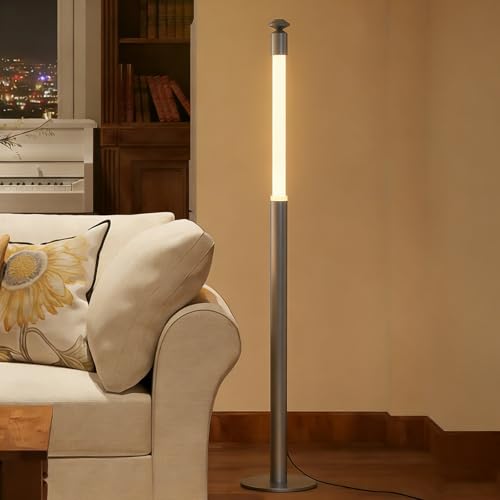
【Slim & Space-Saving Modern Design】This slim LED tall lamp takes up minimal space and fits perfectly beside sofas, corners, beds, or desks, upgrading your home with a clean, modern aesthetic. With fine surface treatment and strict quality control, it combines practical function and stylish appeal to match any contemporary room decor.
Brighten Dark Corners With Strategic Placement
While positioning lamps beside your seating creates wonderful reading zones, you’ll also want to tackle those shadowy corners that make your living room feel smaller and less inviting.
Strategic corner lighting transforms dark spaces into welcoming areas. These methods work effectively:
Strategic corner lighting transforms dark spaces into welcoming areas that make your living room feel larger and more inviting.
- Place arc or tripod lamps in corners – their slim bases won’t clutter your space while delivering broad light reach across walls and ceilings.
- Choose lamps with wide shades or multiple bulbs – these distribute light effectively, creating wall illumination that eliminates shadowed zones and makes rooms feel more expansive.
- Layer your lighting – combine corner lighting with ambient lighting like overhead fixtures or wall sconces for layered illumination that eliminates persistent darkness.
This approach transforms your living room into a bright, cohesive space with proper visibility throughout.
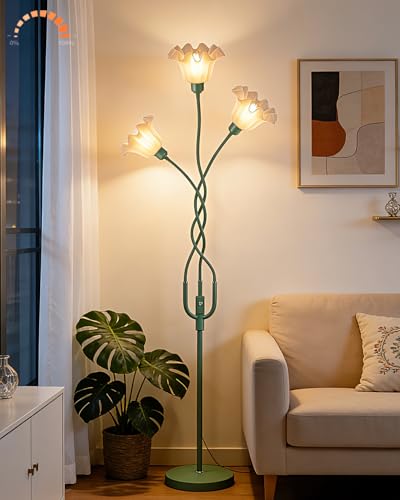
Unique & Exquisite Modern Design ✨ This 66-inch modern floral floor lamp boasts a mid-century inspired silhouette with three flower lights artfully arranged on a U-shaped triple metal frame. The elegant minimalist structure blends seamlessly with contemporary, vintage, or industrial decor, adding a touch of sophistication to living rooms, bedrooms, or offices.

【Super Bright & Save Energy】Yikuneng bright floor lamp used advance high brightness LED, 18W LED floor lamp equivalent to traditional 200W halogen lamp, provide excellent lighting for reading, do homework, working, and breastfeeding without hurting your eyes. Save 90% energy mean save your money on electricity bill.

Modern Floor Lamp with 0-100% Fully Dimmable Brightness :Compared to traditional non-dimmable living room floor lamps, our unique floor lamp offers a full stepless dimming function(0 - 100%), making it adaptable to various room styles and lighting requirements you need. This gold floor lamp has a convenient knob switch – simply twist it to customize your favorable lights of floor lamps for living room and bedrooms
Balance Light Behind Your TV
Ever noticed how your eyes feel tired after watching TV in a dark room? The solution is ambient lighting behind your TV to combat eye strain. Position an arc lamp slightly to the side and behind your seating area for effective results.
Choose a lamp with a dimmable feature so you can adjust brightness based on what you’re watching. Make sure your lamp’s shade directs light downward to avoid TV glare on the screen. Arc lamps work well because they fit snugly in corners without blocking your view. When you balance that softer light with your screen’s brightness, your eyes feel more comfortable.

A FULLY FUNCTIONAL, STYLISH AND MODERN FLOOR LAMP: A fantastic product. The floor lamp is of very good quality, sturdy and durable, with rich color changes, bright and soft light, which is soothing to look at. When you light up one of these ambient lamps in your home or party, it will attract a lot of attention, a great product to recommend to friends, neighbors and family

Compact Size: The modern floor lamp measures only 7.9"L x 7.9"W x 64.6"H, fitting into tight and narrow corners without taking up extra space. It is perfect for use next to sofas, couches, recliners and side tables, providing warm and cozy lighting to brighten up your corner space

【3 color temperatures】Gupuzm lamp holder built-in 9 watt 3 color temperature energy-saving LED bulb, can emit (3000K warm light, 4500K natural light, 6500K white light), using non-dazzling cloth lamp shade, emitted light will not harm the eyes. And can manually switch the light freely to create a perfect atmosphere for different scenes. So you don't need to buy extra bulbs.
Highlight Artwork and Architectural Features
How can you make your favorite paintings or architectural details shine? Strategic floor lamp placement transforms your space into a gallery.
- Position adjustable spotlight-style lamps 2–3 feet from your pieces at or slightly below eye level to illuminate surfaces evenly without glare on frames.
- Choose warm color temperatures around 2700–3000K to preserve true colors and avoid harsh reflections on glass or protective acrylic fronts.
- Use wall-wash designs for large pieces to evenly brighten them while reducing contrast with surrounding walls.
Combine these techniques with dimmers and smart bulbs for flexible ambient illumination. This approach highlights what you love and allows others to fully appreciate your space.

[7 CCT Adjustable and Dimmable] You may adjust the dimmable floor lamp to meet your requirement for home or business by adjusting the brightness between 10 to 100%. There are 7 color temperatures from 2700 to 6000K to go from warm, white light to cool light, creating opulent ambiances for your family

【Upgraded Wobble-Free Design & Secure Assembly】We've upgraded the connection with a secure plug-and-screw design, ensuring your corner floor lamp stands perfectly straight without leaning. Combined with a broader 7-inch base and a taller 59-inch profile, this modern floor lamp delivers vibrant, stable illumination while remaining lightweight and easy to move for your living room or bedroom decor.

Ultra Bright Lighting: Unlike other traditional floor lamps which are not bright enough, our bright floor lamp up to 2000 lumens is enough for reading and working in the living room or bedroom, illuminating any corner of your room. 20 watts LED arc floor lamps(100W Equivalent), with 50000hrs Long lifespan, you don't need to bother to replace any bulbs, bringing more convenience and brightness to your daily needs.
Layer Multiple Lamps for Depth and Versatility
Now that you’ve mastered spotlighting your favorite artwork, it’s time to expand your lighting strategy across the entire room by layering multiple floor lamps.
Combining one overhead ambient lighting source with two or three floor lamps creates real depth and eliminates shadows. Position floor lamps strategically beside seating for reading, tuck them into dark corners for accent highlights, and place them behind consoles for balanced contrast. Using different lamp sizes and styles gives your space personality while offering mood flexibility.
The key is pairing dimmable lamps so you can switch between task lighting, cozy ambient glow, and dramatic highlights. After installation, test everything carefully, adjusting positions and dimmer levels until coverage feels even and glare-free.
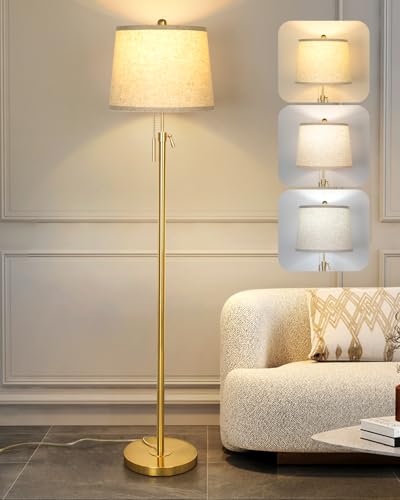
Adjustable Height Modern Floor Lamp: This tall standing lamp can be adjusted between 55-65" to adapt to the best lighting in any situation, meeting the needs of different age groups, such as children, adults and the elderly. With the most flexible adjustable height pole, this gold floor lamps illuminate a larger area of your space, whether at home or in the office, perfect for lighting in different scenarios

【Stepless Dimmable & Touch Control】You can long-pressing the button can continuously adjust the brightness, and easily switch colors by just tapping the button. Allowing your floor lamps for living room and floor lamp for bedroom to change according to your need and create a personalized lighting environment.

Modern Floor Lamp: This floor light fits in any room from industrial to modern or traditional décor. Its simple and elegant design can make it easy to place in any room of the house.
Decide Between Statement and Subtle Designs
When you’re picking out a floor lamp, you’ve got a choice to make: do you want it to steal the spotlight or blend quietly into the background.
This decision shapes your whole room. Consider these options:
- Statement lamps feature bold colors, tripod bases, or oversized shades that become your focal point and spark conversation with visitors.
- Subtle designs use simple bases with understated shades, letting other furniture shine while still providing essential light.
- Balanced contrast combines a muted base with a flamboyant shade, giving you the best of both worlds.
Your space matters too. A large corner benefits from a statement lamp that creates dramatic impact. A crowded room calls for a low-profile floor lamp instead. Consider what makes you feel at home, and select a design that suits your specific needs and preferences.
Coordinate Lamp Bases and Shades With Your Décor
Your floor lamp’s base and shade work together like a coordinated outfit for your room. Matching your lamp bases and shade coordination to your color palette creates an intentional, connected look. If you have warm brass fixtures elsewhere, choose a brass base with a soft linen shade. For modern spaces, pair matte black bases with metallic shades to achieve that sleek aesthetic.
Material finishes deserve attention too. Mixing textures matters when you pair ceramic or wood bases with fabric shades, creating tactile contrast that complements your furniture. One effective approach involves repeating one shade style across multiple lamps while varying the bases. This method keeps your space cohesive without monotony and results in a polished, pulled-together room.
Build Your Layered Lighting Plan
Have you ever noticed how a room feels completely different depending on which lights you turn on? This is the result of a layered lighting plan, and you can create one that transforms your space.
Here’s what makes this work:
- Combine three lighting types: Start with ambient lighting from overhead fixtures, add task lighting from arc floor lamps for reading areas, and finish with accent lighting to highlight your favorite art or architectural features.
- Mix lamp styles strategically: Use torchiere lamps for indirect glow, adjustable-arm lamps for flexibility, and arc floor lamps for dramatic reach across your room.
- Install dimmers everywhere: They let you balance brightness levels perfectly, so you’re never stuck with one harsh setting.
Test different positions throughout the day to discover exactly where your room shines brightest.
Test and Adjust for Optimal Results
Now for the practical testing phase: make sure everything works perfectly for your actual life. Test brightness at typical seating heights (around 40–42 inches from the floor) and adjust with dimmers or bulbs to avoid glare. Move your lamps to different positions; beside seating, in corners, near focal points; and reassess for even coverage and no shadowing. Check how natural daylight interacts with your placement throughout the day, observing light levels at different times and adjusting accordingly. Using a light meter or smartphone app, confirm recommended levels: 20–30 lumens per square foot for ambient lighting and 50–75 for task areas. Document your changes and re-check after 24–48 hours of typical use to verify the setup supports reading, watching TV, and socializing comfortably.