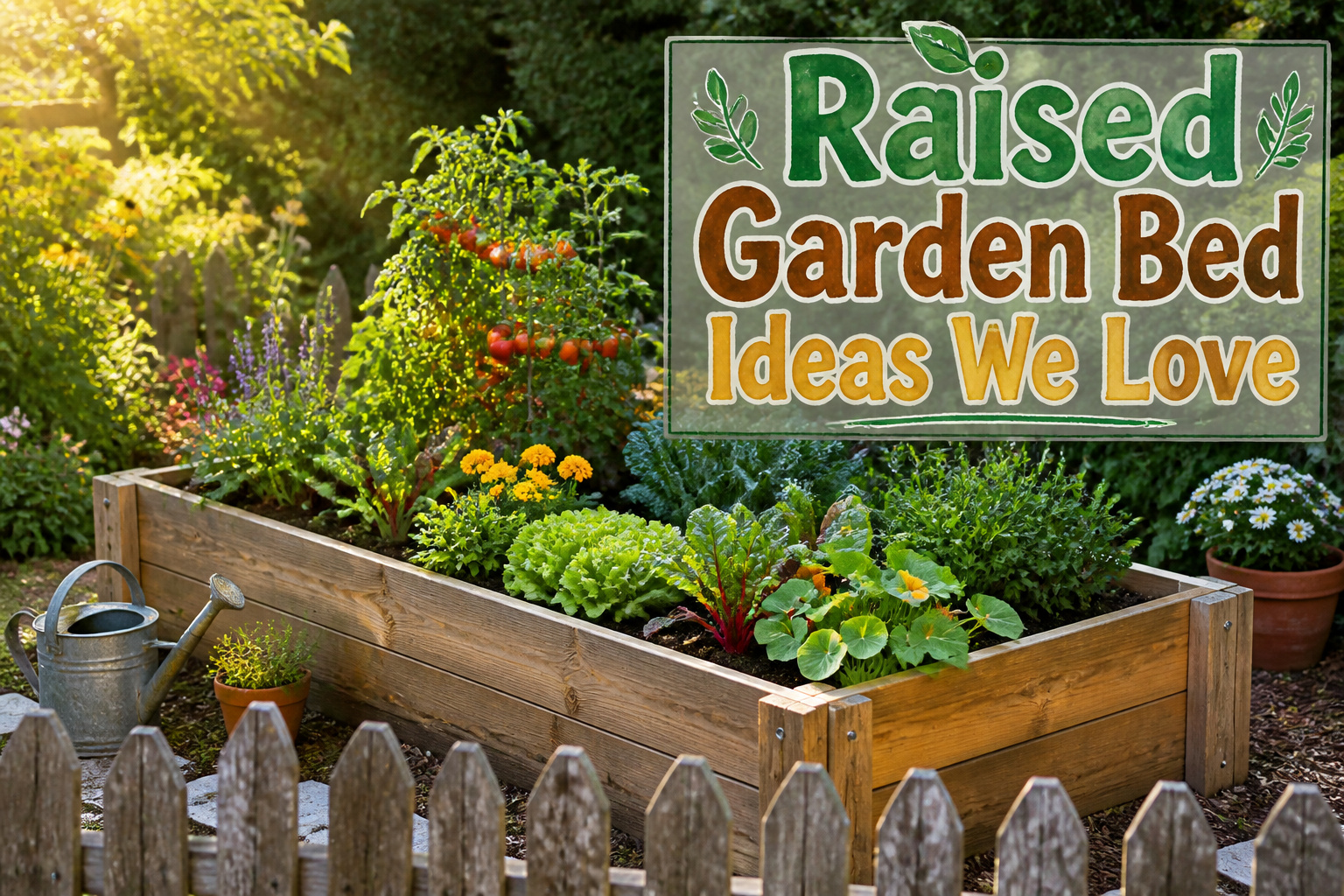
Raised garden ideas run from a few dollars in scavenged pallet wood to several hundred for cedar or metal kits, and the deciding factor is usually how many seasons you need the bed to last before rebuilding. The cheap options rot; the permanent ones weigh too much to move. What trips most builders up is not the frame at all, but the first fill: bagged mix from the garden center runs about $240 for a 4-by-8 bed, while bulk topsoil and compost cut that in half if you do the cubic-yard math upfront.
1. Wooden DIY Raised Garden Bed
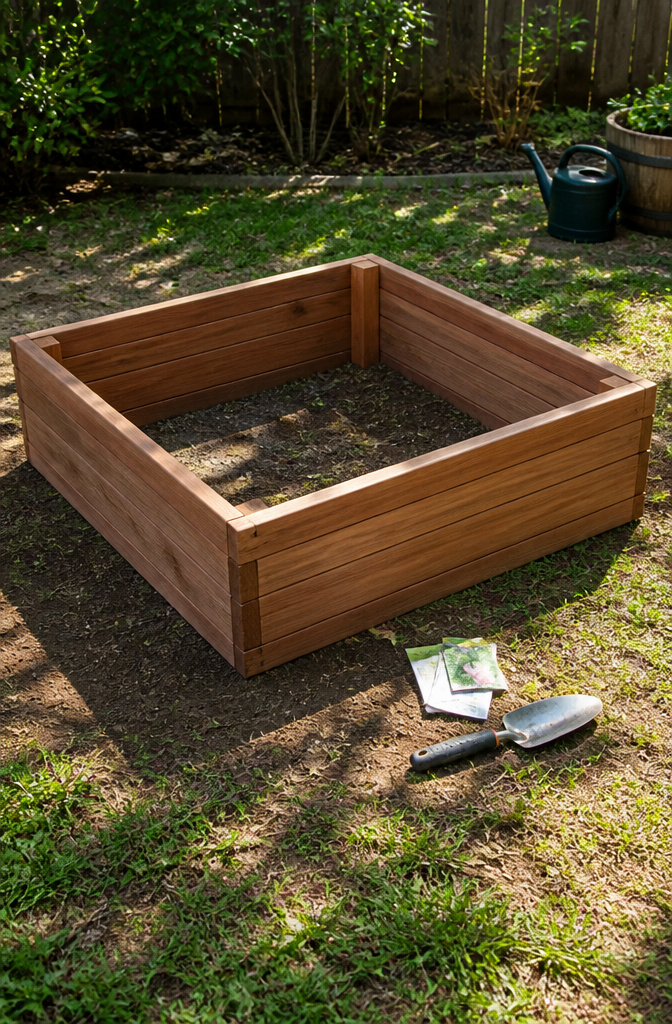
Wood drains well, shapes to whatever footprint you have, and still costs less than most alternatives if you build it yourself. Cedar is the untreated wood that lasts, since its natural oils fight rot without the chemicals you may not want near food. A 4-by-4 or 4-by-8 footprint is what most people end up with; four feet across is the widest you should go if you want to reach the middle without stepping in and compacting the soil.
I built a 4-by-4 cedar bed last spring after spotting boards at a local hardware store. The stack was labeled "cedar," the price came to a little over $100, and I figured the project would take an afternoon. It did, mostly because I cut the first corner joint wrong. I had set the saw at what looked like 45 degrees, but the resulting gap was wide enough to slide a finger through. A second pass, slower and with the miter gauge actually locked, fixed it. The bed is holding soil fine now, though I still notice that first corner when I walk by.
2. Cinder Block Raised Garden Bed
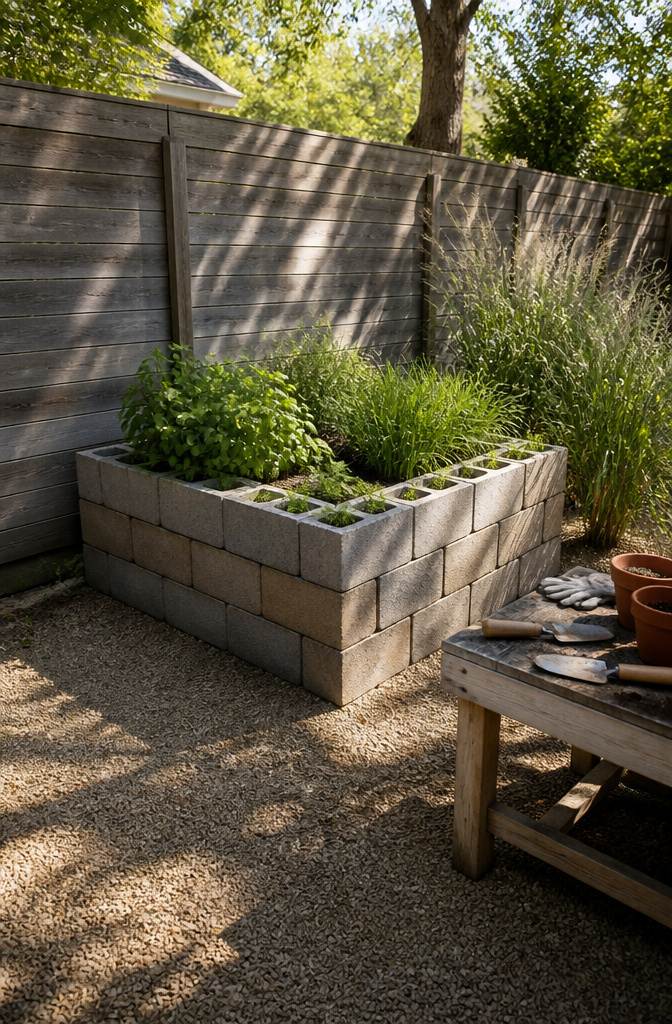
Cinder blocks run $1.50 to $5 apiece at most landscaping yards, and that price holds whether you are building a small herb border or a full four-course bed. The weight is the tradeoff: each block sits at about thirty pounds, so you are not rearranging them on a whim, but they also do not shift once they are down.
Stacking works without mortar if you keep the wall to three or four blocks high. Double-layering the first course buys more stability if you are in a windy spot or you bump the bed with a mower. The cores can be filled with soil for deep-rooted vegetables or left open and packed with potting mix for herbs; either way, you gain growing space that solid-wall beds do not give you.
I lost an entire afternoon to the first course because I did not check for level. The back corner sat an inch low, and by the third block I had a wobble that telegraphed all the way up. Pulling them, scraping out soil, and relaying on a bed of paver sand fixed it, but the job went from two hours to five. Start level, or start twice.
3. Galvanized Metal Raised Garden Bed

Galvanized metal beds arrive in snap-together kits with clean, rolled edges that won’t slice a glove or a shin. The panels lock rigid once assembled, and the seams sit tight enough that a rabbit would need tools to get through. A layer of half-inch hardware cloth across the bottom stops tunneling voles and moles without trapping water; roots still find their way through the mesh.
The downside is July heat. Metal in full sun can push soil temperature past what lettuce roots tolerate, so the bed wants afternoon shade or a thick mulch cap if you’re growing cool-season crops. I priced a 4-by-8 galvanized kit at about sixty percent of what the same footprint in cedar would run, and the metal won’t rot out from ground contact the way buried 4x4s eventually do.
4. Corrugated Metal Raised Garden Bed
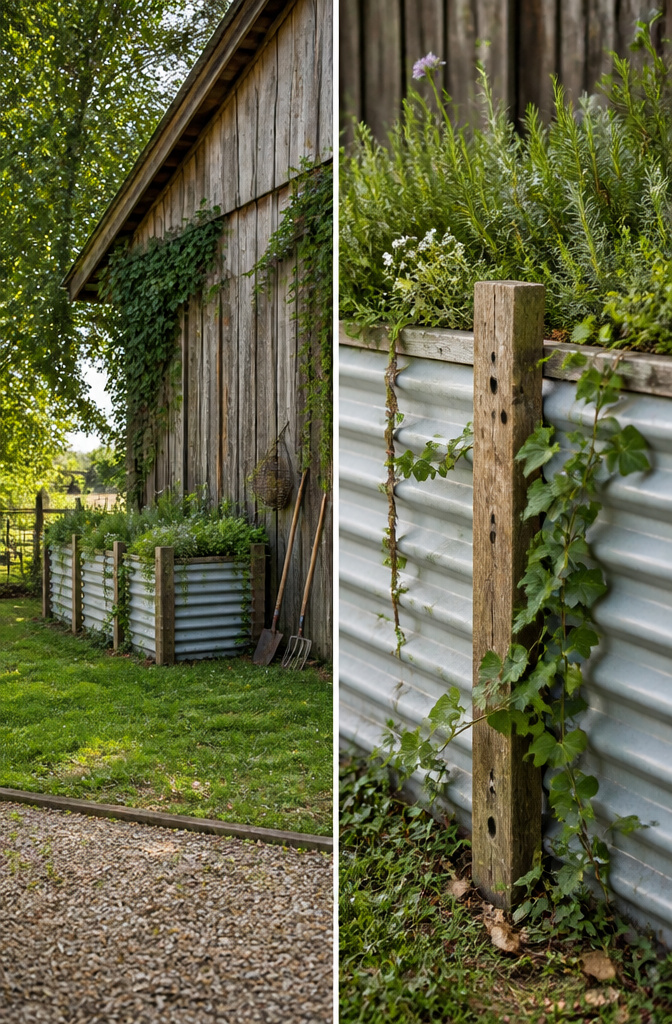
Corrugated metal roofing panels run about $3 to $5 per linear foot at most hardware stores, which is why they show up in so many farmhouse-style raised beds on Pinterest. The sheets are thin enough to bow once soil goes in, so most builds pair them with a wood frame for rigidity rather than trying to go frameless. That lumber addition eats into the savings, but the mixed material still costs less than all-wood construction with lumber prices where they are.
The cut edges are the part no one photographs. My first sheet left a jagged line where the tin snips wandered, and the burr caught my palm hard enough to draw blood. I now wear the goatskin gloves I resented buying, and I put them on before the metal leaves the truck bed. The look is rougher than galvanized steel beds, more shed roof than garden boutique, which is either the point or a reason to spend more on powder-coated panels that arrive with rolled edges and bolt-together corners.
5. Raised Garden Bed With Legs
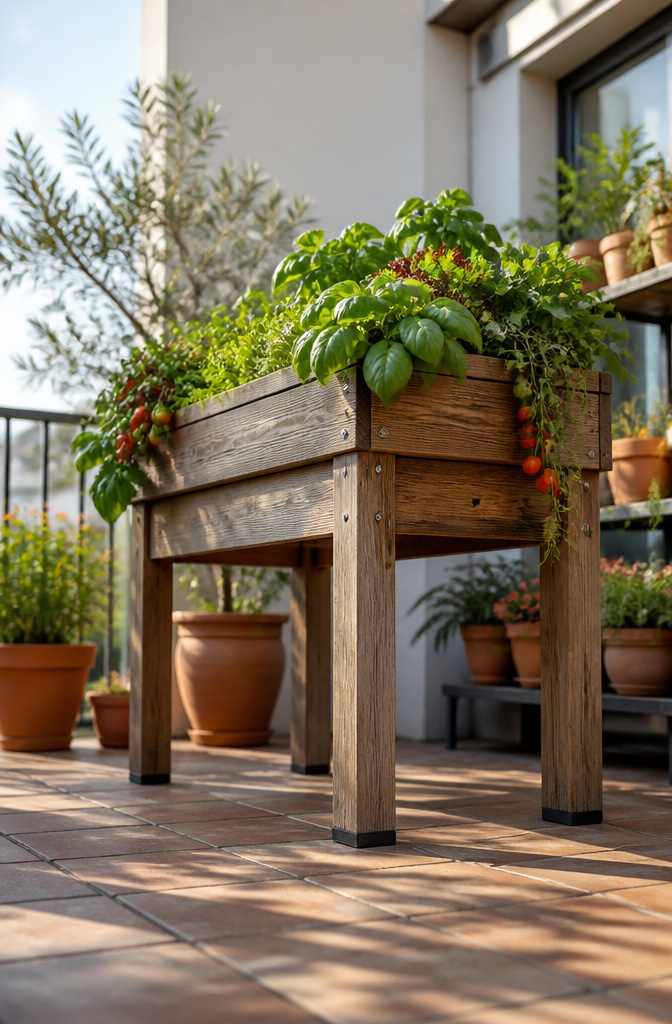
A raised bed on legs brings the soil surface up to about waist height, which removes the bending and kneeling that turns a half-hour of weeding into a back issue. For renters, the real appeal is that the whole unit can move with you, unlike a bed dug into the lawn you will not see again.
The catch is soil volume. These planters hold far less dirt than a ground-level bed, so the mix dries out faster and the plants run through nutrients quicker. In August heat, mine needed water every morning or the top two inches turned to dust and the lettuce wilted by noon. I grew cherry tomatoes, basil, and a few shallow-rooted greens that first summer. The tomatoes did fine until the fruit load got heavy; the bracket on one corner bent because I had packed the box fuller than the frame was meant to carry. Cedar models run under $250 if you are buying rather than building, though the construction gets trickier once you are attaching a bottom and raising it off the ground. The height does help with rabbits and small burrowing pests, but the tradeoff is vigilance: you are essentially container gardening, and container gardening rewards the person who checks it daily.
6. Pallet Wood Raised Garden Bed
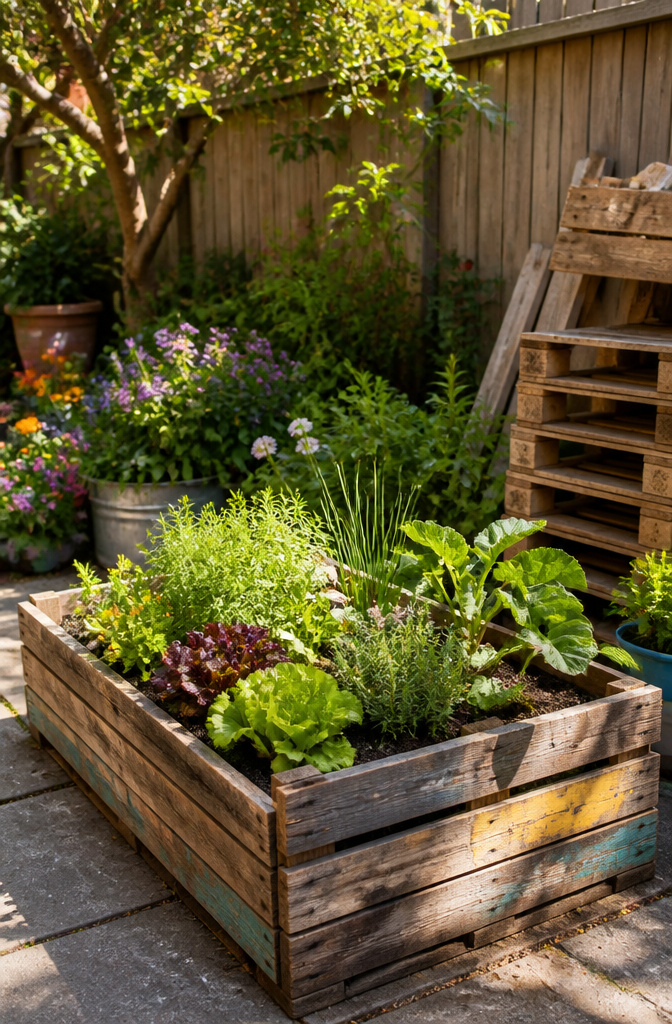
Pallet wood checks every box for a weekend build that costs next to nothing. The trick is knowing which pallets are safe to use. Heat-treated lumber carries an "HT" stamp and nothing else; avoid anything marked "MB" for methyl bromide, a pesticide that does not belong near vegetables. Most big-box stores and warehouses stack HT pallets out back, and asking Saturday morning usually gets you a few for free.
The splinter risk is real. Running a quick pass with a sander on the top edges takes twenty minutes and saves your knuckles all season. I skip sanding the interior faces; soil contact rots them anyway, and smooth inner walls do not slow decay by any measurable amount.
Three to four seasons is the honest lifespan in most climates. The bottom boards go first, sitting in damp soil, but by then you have grown a lot of food for the price of screws and a Sunday afternoon filling the box with compost and topsoil. When the frame finally softens, the wood is already half-composted; break it up and toss it into the next bed you build.
7. Bricks or Stones for Raised Beds
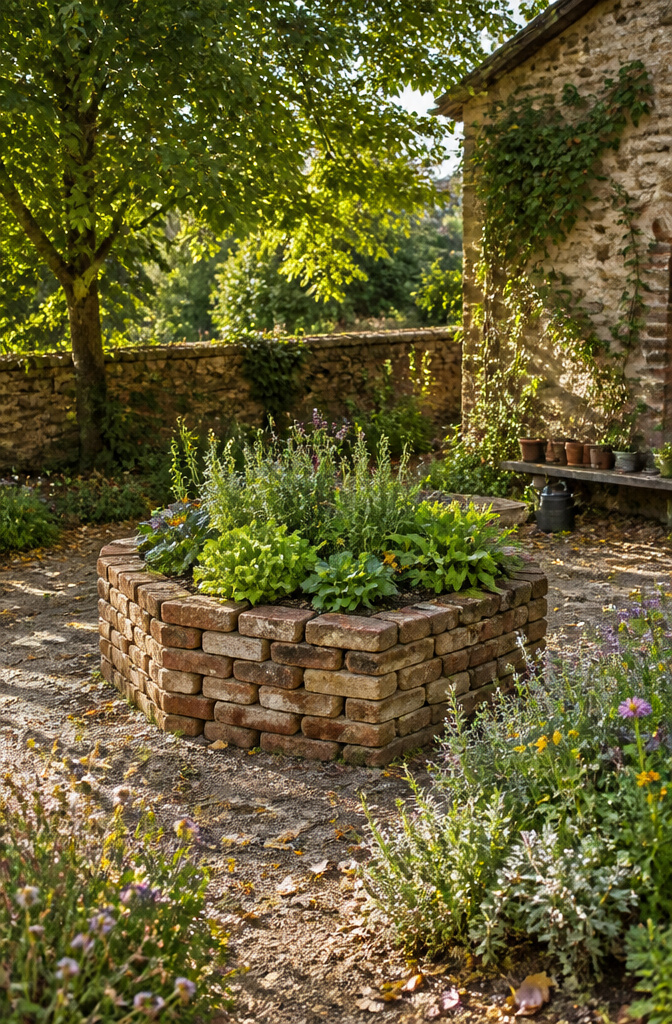
Bricks or stones age better than anything else in a garden, but the labor cost is not in the materials. Dry-stacking takes no mortar and no curing time, yet the wall will shift season after season as the ground freezes and thaws. Three or four courses high is the practical ceiling before the lean becomes a collapse risk.
The stone pile I found was free, sitting behind a demolished farmhouse a county over. It took three trips in a borrowed truck to haul enough for a 4-by-6 herb bed, and that bed still leans two inches to the south after four winters. I check it each spring and kick the worst offenders back into line. Double-layered walls add stability, but every extra row eats growing space you will miss come May.
New concrete blocks run $1.50 to $5 apiece if you buy instead of scavenge, and recently made cinder blocks use food-safe concrete. Older materials carry real risk: fireplace bricks hold creosote, and old mortar can contain toxic adhesives. If you paint, use exterior-grade products rated for masonry and give them a full cure before soil goes in.
8. Vertical Raised Garden Bed
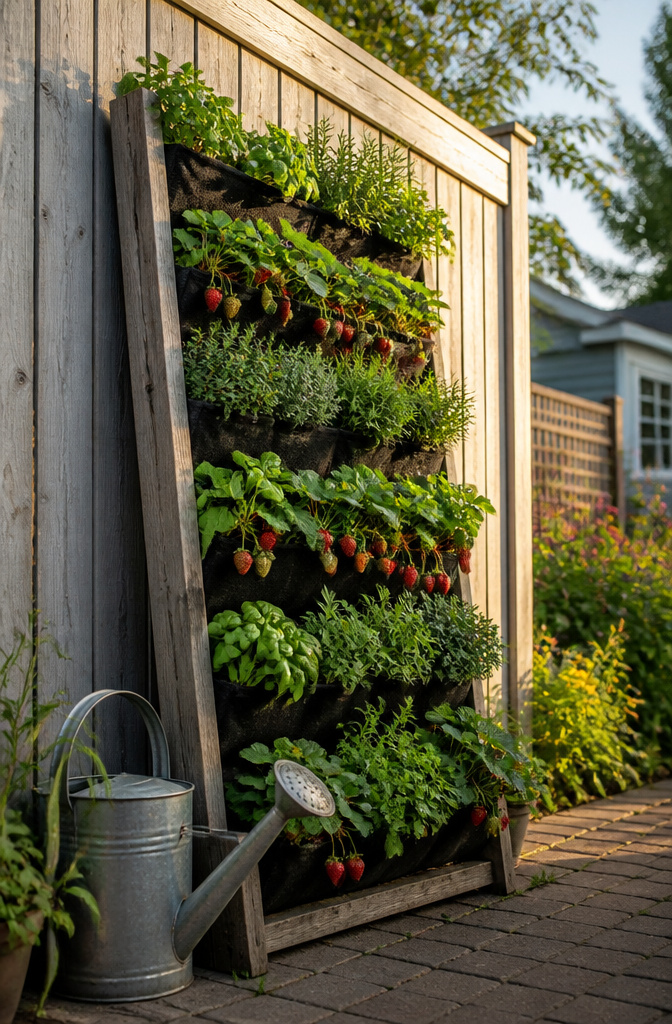
A vertical raised garden bed turns a wall or balcony railing into growing space that a standard box would never fit. The usual build is a frame of pocketed rows, each one holding six to eight inches of soil depth, enough for greens, herbs, or strawberries. Watering happens from the top pocket down, which means the lowest rows stay wet longest and can rot out if drainage holes are too small or missing entirely.
I learned that the hard way with a strawberry wall I built against a narrow side yard fence. The top six pockets drained fine. The bottom two sat in soggy soil through a wet spring, and white mold climbed the roots before the fruit ever set. The fix was boring larger holes and adding a half-inch gap between the backing board and the fence so air could move through. Six inches of soil depth per pocket is the workable minimum, but the drainage at the bottom matters as much as the soil you put in. On a balcony, expect some runoff and soil fines to wash out the first few waterings; a tray or a gap above the railing line saves the mess below.
9. Raised Garden Bed With Trellis
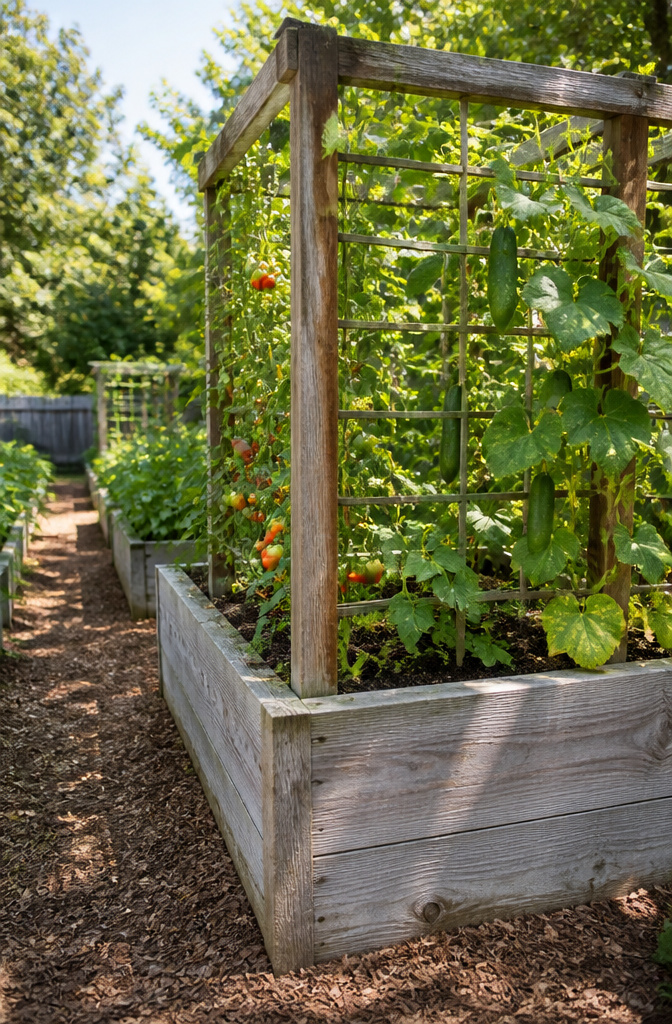
A 6–8 foot trellis changes what you can grow in a raised bed. Tomatoes, peas, and cucumbers all climb willingly, but only if the support is tall enough and stiff enough to take the weight when the vines are wet. Anything under six feet leaves indeterminate tomatoes folding over the top by midsummer.
I built my first trellis from electrical conduit and wire mesh after copying the setup at a farm stand I pass on weekend drives. The conduit slides down into pockets of hardware cloth that I screwed to the inside corners of the bed before I filled it. That way the trellis is removable for winter cleanup, but it does not wobble. My second attempt used zip ties to lash the conduit to the bed frame. They went brittle in the sun and snapped in August, dropping six tomato plants across the peppers below. Hose clamps, the kind with a worm screw, have held for three seasons now. They cost a few cents more and take thirty seconds longer to tighten, which is time I wish I had spent the first time around.
You can add a trellis after the bed is built, but the attachment points matter more than the timing. A bracket bolted through the bed wall beats anything that grips from the outside; soil pressure works against exterior mounts all season long.
10. Upcycled Items as Raised Beds

Old dressers, claw-foot tubs, stock tanks, and even worn tires show up in backyards as raised beds because they solve the soil problem fast and they read as free. The catch is that drainage holes are the make-or-break step, and they are never where you need them. Interior plywood drawer bottoms look solid in April and turn to oatmeal by year two once damp soil presses against them. I learned that after a mid-century dresser I converted for greens held up through one season, then sagged and split when the untreated ply finally gave way. Metal stock tanks usually ship with a plug already in the floor, which is one less thing to solve. Tires and bathtubs need holes drilled, sometimes with a high-speed steel bit if the surface is enamel or steel. Soil volume catches people off guard: a deep vessel takes far more than bags of raised-bed mix suggest, and the calculator matters more than the aesthetic. The projects that last pair the right container with the right bit, not the right look with wishful thinking.
What Raised Beds Fix and What They Do Not

Raised beds solve the problems you can reach with a shovel and a weekend, not the ones that require a different yard. Well-built frames drain faster than flat ground, which matters when spring rains sit on clay and rot the roots you just planted. Soil control is the real draw: instead of fighting whatever compacted, stony, or contaminated ground came with the lease, you fill the box with potting mix, compost, and leaf mold that you actually chose. Narrow beds up to four feet wide let you work from both sides without stepping in, so the soil structure stays loose and your knees stay cleaner.
What they do not do is run themselves. Weeds still arrive on wind and birds; the bed just gives you a smaller perimeter to patrol. Watering does not become automatic, and a box in full shade is still a box in full shade. I have seen the disappointment when someone expects Fort Knox and gets a frame that still needs mulch, still needs hose time, still needs the same sun their tomatoes wanted before. The bed is a container, not a cure.
Picking Material for Your Yard
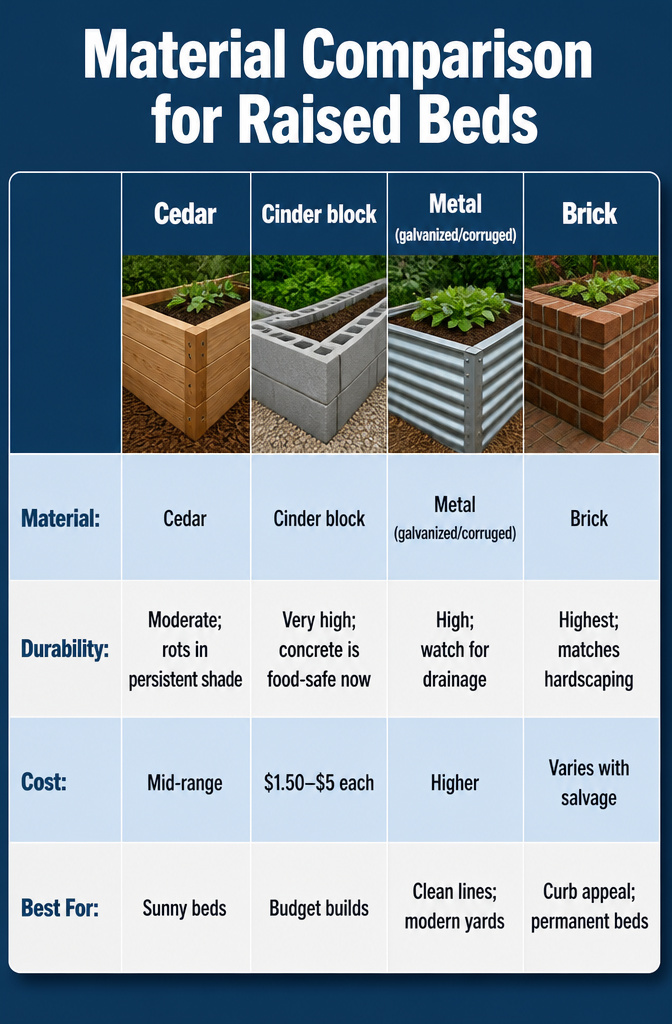
Cedar rots faster than I expected in the shaded corner of my yard, while the same boards held up fine against the fence where afternoon sun baked them dry. That split taught me to match material to microclimate, not just zip code.
For durability, cost, and looks, four choices cover most builds:
| Material | Durability | Cost | Best For |
|---|---|---|---|
| Cedar | Moderate; rots in persistent shade | Mid-range | Sunny beds; natural aesthetic |
| Cinder block | Very high; concrete is food-safe now | $1.50–$5 each | Budget builds; thermal mass |
| Metal (galvanized/corruged) | High; watch for drainage | Higher | Clean lines; modern yards |
| Brick | Highest; matches hardscaping | Varies with salvage | Curb appeal; permanent beds |
New cinder blocks beat old ones. Older blocks may carry fly ash or other compounds you do not want near vegetables, and bricks pulled from a fireplace can harbor creosote. I would repeat the galvanized beds I set in full sun, but only after drilling drainage holes. The one I skipped that step on held soggy soil all spring.
Brick and stone dress up a yard more than wood or metal, though the weight means calling in help or renting equipment. For renters, that permanence is a liability, not a selling point.
Filling the Bed the First Time

A bed 18–24 inches deep gives roots room to stretch and buys you a longer growing season, since the soil warms faster and drains better than ground-level dirt. The first time I filled one, I hauled home nothing but bagged raised-bed mix from the garden center. The bags ran $8 each, I needed thirty of them for a 4-by-8 frame, and I never did the cubic-yard math that would have sent me straight to a bulk supplier. Bulk topsoil at $35 a yard plus compost at $40 would have halved the bill.
The mix that actually performs is 50% topsoil, 30% compost, and 20% organic material like straw or shredded leaves. Those organics break down slowly, feeding the biology that keeps soil alive.
"You want living soil, you want everything working together from the fungi, to the bacteria, to the earwigs, all working symbiotically to bring life to that soil… Feeding the soil so the soil can feed the plants."
That living-soil idea is what saves you from buying new bags every spring. The upfront mix matters more than the frame you built it in.
Spacing and Layout That Actually Works
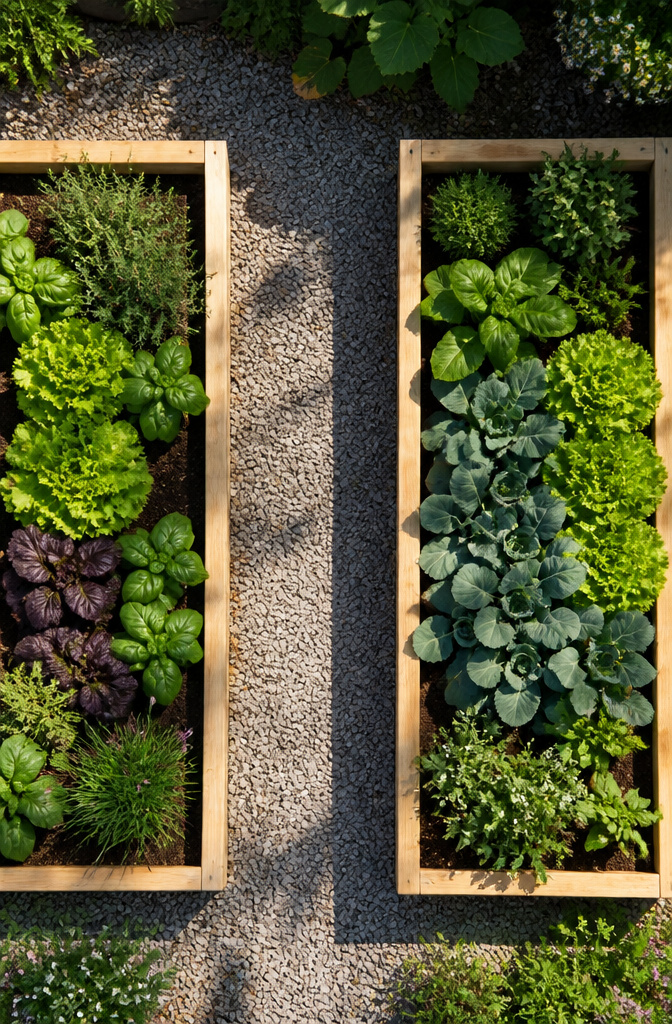
A 4 ft. by 8 ft. bed is the dimension that lets you reach the middle from either side without stepping in, but the spacing around it matters just as much. I squeezed my first two beds too close together, thinking I would save on path material, and 30 to 36 inches between beds is the minimum that lets a wheelbarrow through with any reliability. Mine were closer to 24 inches. The wheelbarrow fit only if I tipped it sideways, which meant compost spilled every third trip and I stopped bothering.
Sunlight came next. Six to eight hours of direct light is what most vegetables want, so I watched the yard for a full day before placing anything, not just the morning. The south corner looked open at 10 a.m. but fell under tree shadow by 3 p.m.; I moved the beds six feet west and gained two usable hours.
For the paths themselves, I tried mulch first, which broke down into mud within one season. Cardboard underneath bought me a few months before it dissolved. Gravel over landscape fabric has lasted three years now with only occasional raking to even it out. The upfront cost was higher, but replacing mulch annually was not cheaper in the end.
Planting Strategies I Use
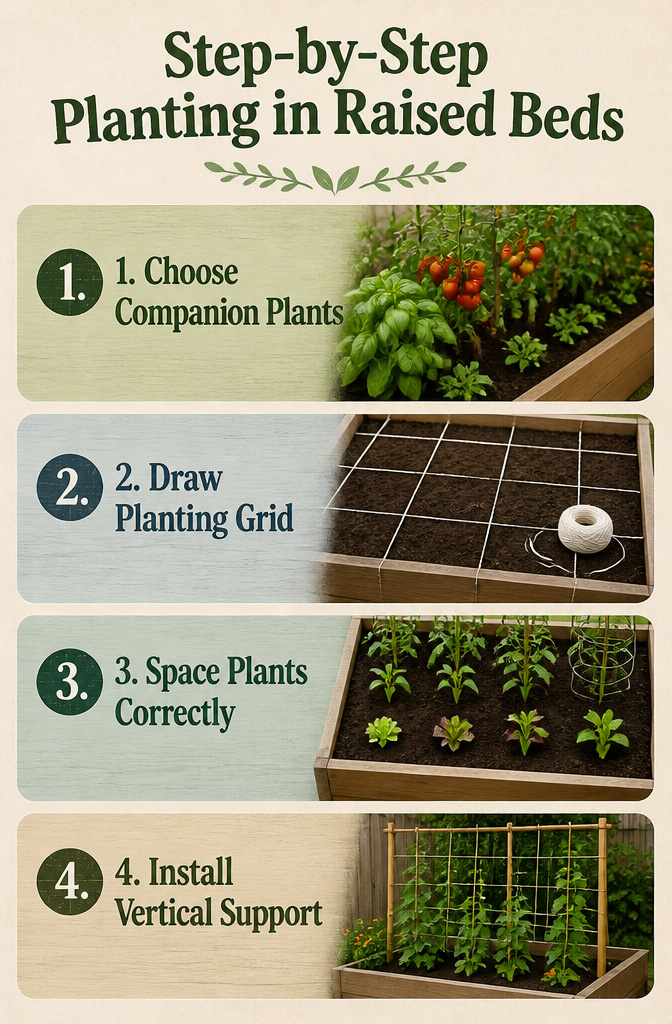
Companion planting in a raised bed is less about folklore and more about what you can actually reach without stepping on soil. I keep basil tight against tomatoes, not because of any magic between them, but because the basil fills gaps while the tomatoes climb, and both want the same afternoon sun. Beans go near corn if I am growing corn, though in a 4-by-4 bed that rarely happens. What I do separate are onions and peas; the onions stunt the peas enough that I have learned to put one in the north corner and the other in the south.
Square-foot gardening sounds tidy on paper. I drew the 12-inch grid with string my first spring, then ignored it by June when a determinate tomato I had labeled "compact" took over two squares and part of the path. The grid still matters at planting time. One pepper per square, four lettuces, sixteen carrots. But tomatoes need 24 inches minimum, not the 12 the seed packet suggests if you want airflow and actual fruit. After two seasons of pruning fungal leaves off crowded vines, I now give them half the bed and let everything else squeeze in around the edges.
Vertical growth is where raised beds earn back their footprint. A simple trellis of bamboo or PVC pipe lashed to the north side of the box keeps beans, cucumbers, or small melons off the ground. String works for a season; wood lasts longer but shades the bed behind it if you angle it wrong. I place trellises on the north edge so the climbing crop does not steal light from the shorter plants in front. The result is more harvest from the same 16 square feet, which matters when your weekend project budget is going to soil and lumber, not acreage.
Frequently Asked Questions
What are the benefits of raised garden beds?
Raised beds drain faster than flat ground, which keeps spring rains from rotting roots in clay soil. They also give you full control over soil quality, letting you fill the frame with a custom mix instead of fighting whatever compacted or contaminated ground came with your yard. Working from the outside keeps the soil loose, since you never have to step inside and compact it.
What materials should I use for raised garden beds?
Untreated cedar works well in sunny spots where its natural oils resist rot, but it breaks down faster in persistent shade. Cinder blocks cost $1.50 to $5 each and last indefinitely. Galvanized or corrugated metal gives clean lines but can overheat soil in summer without shade or mulch. Brick and stone age the best but require the most labor to set.
How deep should a raised garden bed be?
Eighteen to twenty-four inches is the depth that gives roots room to stretch while also warming faster and draining better than ground-level soil. A shallower bed dries out too quickly and limits what you can grow; much deeper adds cost without proportional benefit for most vegetables.
How do I plan my raised garden bed layout?
Keep beds no wider than four feet so you can reach the center from either side without stepping in. Leave 30 to 36 inches between beds for a wheelbarrow to pass. Watch your yard for a full day before placing anything; a spot that looks sunny at 10 a.m. may fall into shade by afternoon, so time your observations accordingly.
What plants grow well in raised garden beds?
Tomatoes, peppers, lettuce, herbs, and compact greens are the most reliable choices. Root vegetables like carrots and radishes also do especially well because the loose soil lets them expand without hitting stones. On a balcony or in a narrow yard, vertical beds can hold strawberries and shallow-rooted greens in pocketed rows.