
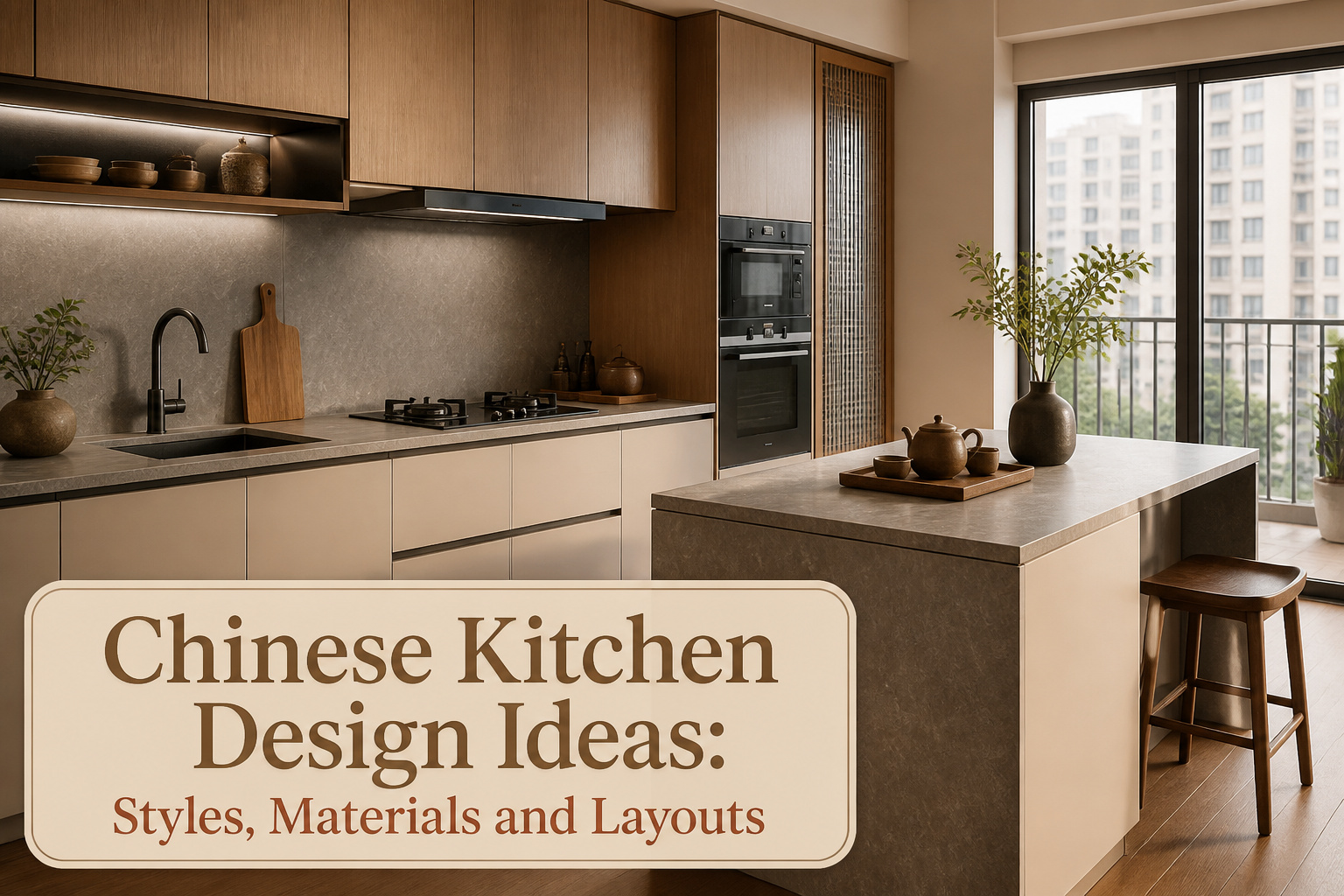
Chinese kitchen design ideas are kitchen layouts, material choices, and styling approaches shaped by contemporary Chinese homes rather than traditional Western templates. The styles that work best borrow restraint from modern minimalism but keep the warmth of wood grain and matte stone that Chinese homeowners actually live with, not the glossy show kitchens that dominated a decade ago. A 70-square-foot apartment kitchen in Beijing runs on flat-panel cabinets with mattePET finishes and sintered stone counters that cost less than marble but need no sealing, and thatFoshan factory-direct pricing is what makes the look affordable outside China too.
1. Modern Minimalist Kitchen
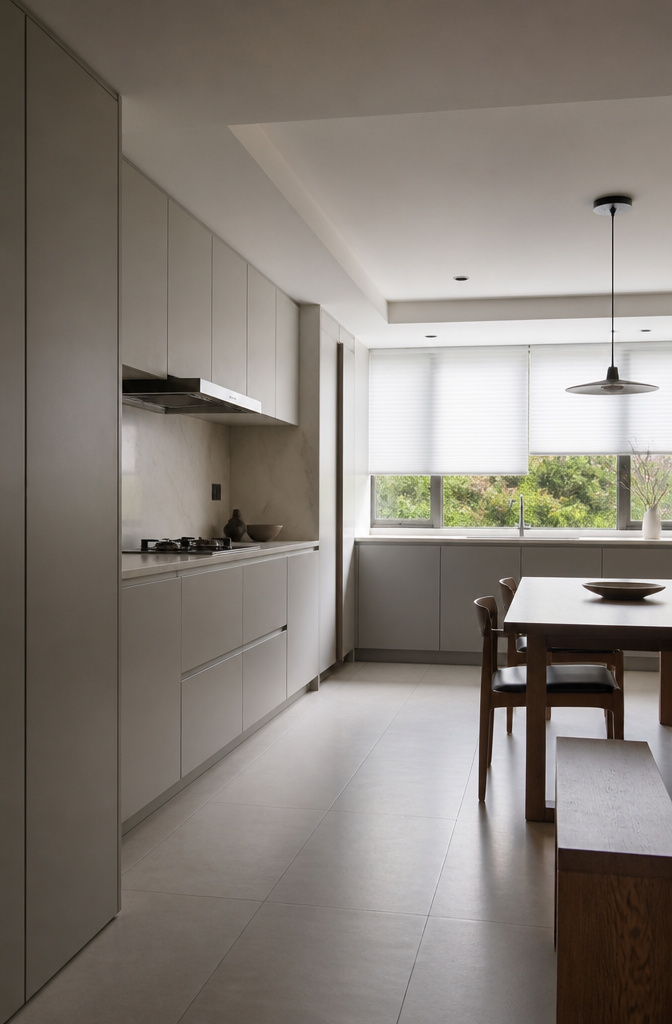
Modern minimalist kitchens dominate urban Chinese apartments for a reason. Flat-panel cabinets with matte finishes in white, gray, or warm neutrals strip away visual noise, and that restraint makes a 70-square-foot kitchen feel larger than it is. Handleless doors or recessed pulls keep the lines unbroken, which matters when every inch of wall counts.
The shift away from high-gloss surfaces toward matte PET or melamine changed what is affordable. Ten years ago, the glossy look signaled newness; now greige and white oak tones read as calmer and more expensive than they cost. Sintered stone countertops carry the same clean aesthetic without the maintenance anxiety of marble.
For a weekend budget, plywood or MDF cabinets with a matte laminate finish get you most of the way there. The factory aesthetic from Foshan manufacturers, built for both domestic and export markets, proves that flat-panel construction does not require custom pricing. Skip the integrated appliances if the numbers do not work; consistent hardware and a restrained palette do more of the heavy lifting than a flush refrigerator ever will.
2. Modern Chinese Zen Style
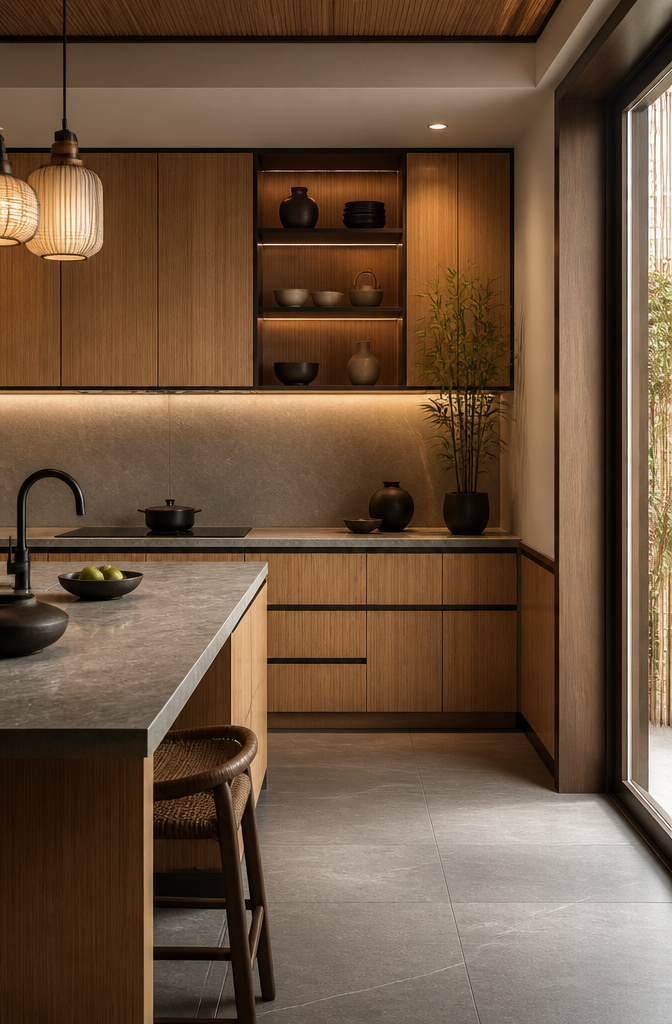
Warm wood grain against thin black metal lines is what makes this style feel current rather than themed. Bamboo veneer gives the same organic warmth as solid hardwood for a fraction of the cost, and most big-box lumber yards now stock it in 4-by-8 sheets or can order it within a week. The trick is using it as an accent, not a wall-to-wall treatment: one run of uppers, a single island face, or the interior of glass-front cabinets keeps the look grounded.
Stone paired with that wood needs to read quiet, not busy. I would skip high-contrast veining and go for something with a soft, almost concrete-like movement. Soft lighting matters more here than in most kitchens because the materials do the visual work; recessed cans alone will flatten everything. Under-cabinet LED strips at 2700K, or pendants with rice-paper diffusers, keep the calm mood intact without turning the room into a spa display.
For renters, bamboo veneer on removable panels or applied over existing flat doors gets the look without cabinet replacement. First-home owners building from scratch can source the same materials through Chinese manufacturers working in contemporary styles; the cost base runs lower than domestic equivalents, though you will wait longer on shipping. Budget about $200–$400 per linear foot for veneer and hardware, not installation, and order samples before you commit. The metal lines are just trim strips, 1/2 inch or narrower, in matte black aluminum; any supplier with modern cabinet hardware carries them.
3. Light Luxury Kitchen
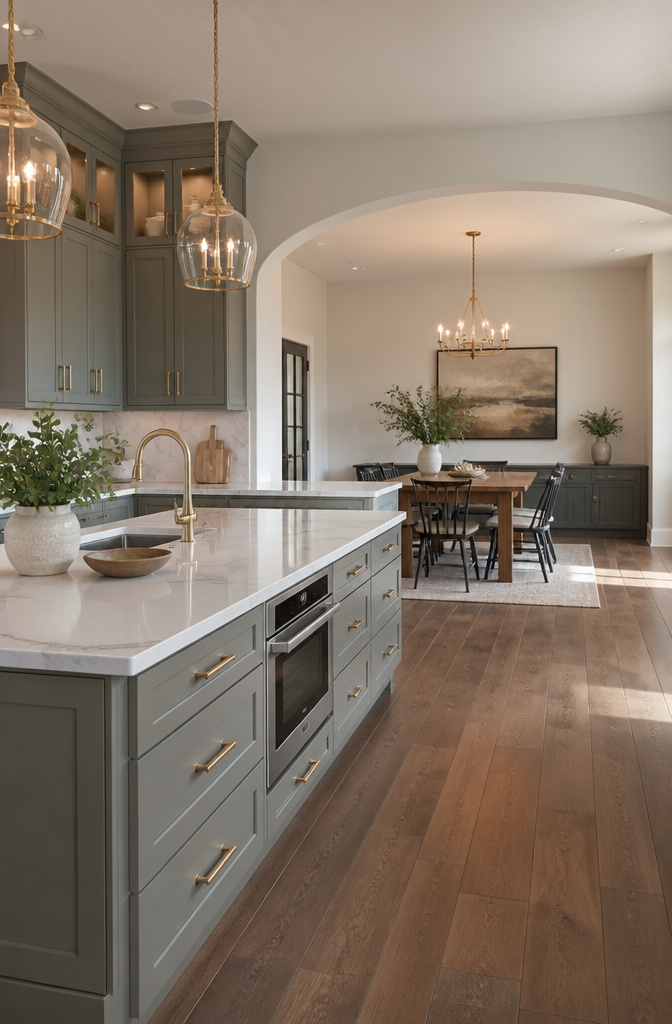
Brushed gold hardware and marble-look quartz read expensive without requiring the maintenance budget of actual marble. The finish on affordable pulls and knobs has improved enough that the difference shows only after years of hard use, and even then the wear tends to collect on the spots you touch most, which is its own honest patina.
Quartz with veining engineered to mimic Calacatta or Statuario runs roughly 40% below what local stone yards quote for comparable natural slabs once fabrication and install are folded in. My own countertop came from a regional wholesaler that sells to fabricators direct; the slab itself was in the lower third of that semi-custom cabinet range, measured by the square foot, and the brushed gold bar pulls I ordered online landed under two dollars each in a bulk pack of twenty. The holes matched standard 128 mm spacing, so swapping later takes a screwdriver and ten minutes.
Stock cabinets in a shaker profile, painted soft gray-green, carried the rest of the look. The semi-custom upgrade would have added panel details I did not need and pushed the whole run past what a weekend refacing could justify.
4. Natural Wood Kitchen

Lighter oak and ash tones have largely replaced the reddish, heavily lacquered finishes that once dominated Chinese kitchen cabinetry. The shift makes sense for anyone working with a smaller space: too much strong grain on every surface fragments the room, so wood-grain base cabinets paired with plain uppers keeps the warmth without the clutter.
Plywood holds up better than most people expect, and the cost gap against solid wood is significant enough that the savings can cover a decent quartz counter. The passages note oak, maple, cherry, birch, and walnut as workable species, with walnut pairing especially well against warm gray or off-white. Where I misjudged was the stain. I aimed for richness and landed on a dark walnut that swallowed the grain entirely and turned the cabinets nearly black in evening light. The LED strips beneath the uppers, which should have revealed texture, instead just lit up flat shadow. A lighter matte finish would have done the actual work.
For a quieter look, low-contrast grain reads as texture rather than pattern. For something richer, keep the walnut but stay a shade or two lighter than you think you need. The natural matte appearance wins over anything that looks processed, and the warmth survives even when the rest of the kitchen stays extremely simple.
5. Wabi-Sabi Kitchen

Wabi-sabi has become increasingly visible in Chinese interior design as part of a broader preference for calm, tactile, and nature-inspired spaces. Rather than pursuing a perfectly polished look, this style embraces subtle irregularity, muted colors, and materials that feel natural and understated.
The overall feeling of a Zen Asian kitchen is calm. Natural tones like tan, black, gray, brown, and green are used to create a sense of serenity and balance in the kitchen. The color palette reflects this with the use of whites and soft neutrals. Accent colors are darker ones that add depth to the room but never compete with the design. Gold or silver accent features highlight the contrast in these kitchens.
For example, jade green walls, bamboo flooring, black kitchen cabinets, and natural stone blend natural materials while keeping a soothing, neutral color palette. Pops of color can be used sparingly in the space, but bright colors are those found in nature, such as green, blue, orange, or red. In this instance, a little goes a long way because the rest of the space is so calming.
Homeowners who only draw upon Chinese influence might choose black and red for a dramatic room. In fact, red is a symbolic color in many Asian cultures, signifying good fortune. Asian décor is mostly monochromatic but will sometimes use small red accents. Asian kitchen commonly features monochromatic décor.
This space is rich with organic texture—as I think any modern Japanese kitchen should be—from the grasscloth wallpaper that swathes the walls behind the banquet to the swirls cut into the tile backsplash to the hammered copper sinks and hood to the raw wood breakfast table. My goal was to make an impact with materials, and we definitely did that. Even the ceiling has texture: It’s a dark, copper-colored foil wallpaper. Countertops contribute texture, too. The quartzite countertops are called "golden lightning," and they are a green color that mirrors the landscape outside. We went with honed and leathered countertops, which have a bit of rise under the fingertips. (In a space like this, it’s best to avoid polished or shiny surfaces.) The countertop ended up being one of the prettiest things in the room.
6. Industrial Modern Kitchen

Dark charcoal cabinets and smoked glass can make a kitchen feel like a nightclub lounge instead of a place where you actually cook. The young professional crowd in Chinese cities leans hard into this look, but the trick is letting one dramatic element do the work while everything else stays functional.
I would keep the cabinets matte rather than high-gloss. Ultra-matte anti-fingerprint finishes in charcoal black or olive green hide the daily wear that glossy surfaces broadcast. Pair them with stone or butcher block countertops to keep the space grounded; concrete and glass read as too cold when you are standing there at 6 a.m. making coffee. Granite or quartz handles the practical side, and a dark slab against those cabinets gives you the mood without the warehouse echo.
Warm lighting inside glass cabinets or under shelves matters more here than in lighter kitchens. The light carves out actual workspace and keeps the room from flattening into one dark plane. Metallic trims on cabinet fronts or the island base catch that light and add the refined detailing that separates industrial modern from unfinished industrial.
If you are renting, stick to the countertops and lighting as your moves. Cabinet replacement rarely survives a lease, but a dark stone-look quartz overlay on existing counters and a few LED strips turn a basic kitchen toward this style without the landlord conversation.
7. Smart Tech-Integrated Kitchen
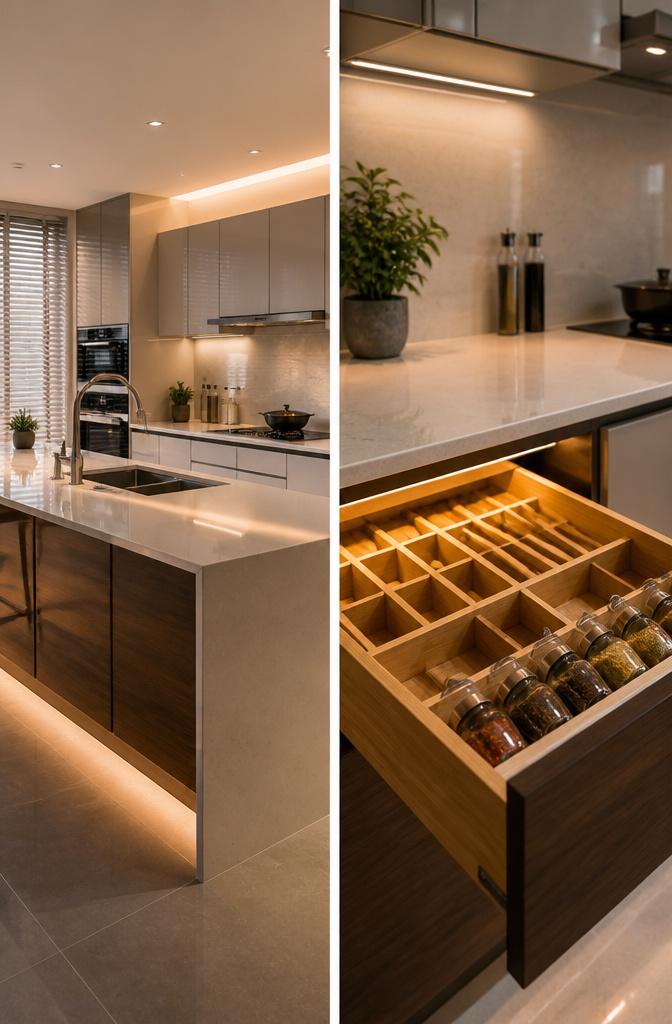
Motion-sensor faucets belong in a Chinese kitchen design for the same reason they belong anywhere: your hands are covered in dumpling dough or garlic paste and you do not want to touch anything. I installed one last spring after watching my mother-in-law balance a wok on one hip while trying not to smear the handle with soy sauce. The sensor sits right where a natural hand wave happens, about six inches from the spout, and the temperature preset means no more fumbling for the lever with an elbow.
Under-cabinet lighting strips are the other afternoon project that actually changes how you cook. I ran LED tape along the underside of my wall cabinets, peeling and sticking the channel in place, then wired it to a switch by the door. The light falls straight onto the cutting board now, not onto your shadow. Budget about $40–60 for a decent motion faucet adapter kit and $25–35 for a six-foot LED strip with the driver included. Both install with a screwdriver and patience. The faucet took me three hours because I kept dropping the basin wrench; the lighting took forty minutes.
The mistake to skip is buying the cheapest sensor you find. Mine false-triggered for two weeks until I swapped in one with a narrower detection field.
8. New Chinese Style Kitchen
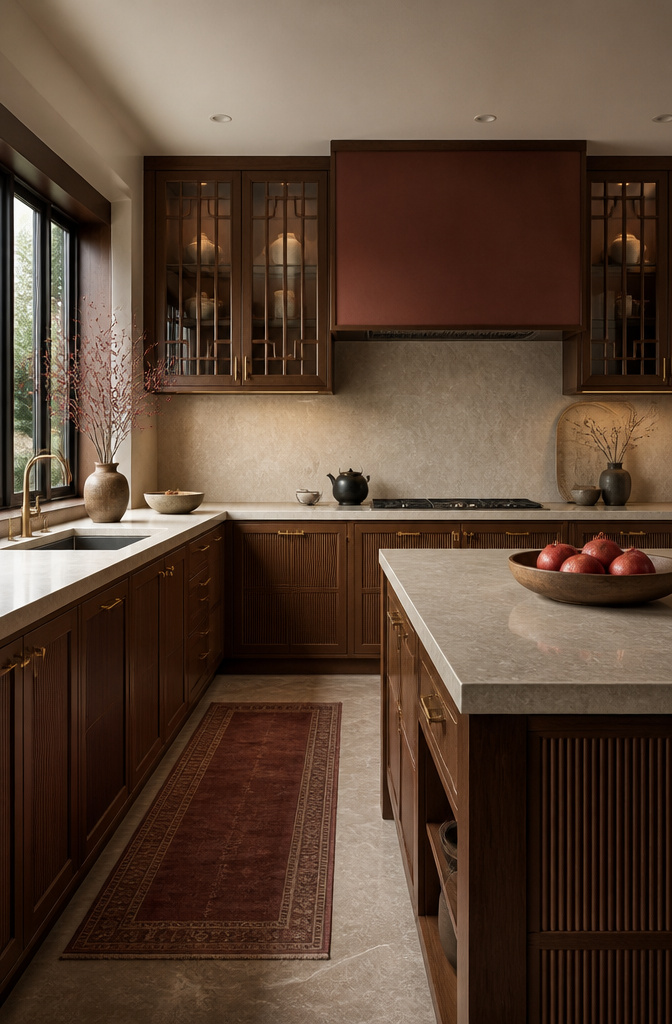
Walnut or dark oak cabinets with slim vertical detailing can read as quiet furniture until the lattice shows up. A glass cabinet door that borrows the rhythm of a traditional screen, not the pattern itself, does the cultural work without looking like a theme park. The lattice should feel like a texture you almost missed, not a symbol you can’t miss.
Round motifs need restraint. One circular brass pull on a drawer, or a single moon-gate arch over a narrow pantry door, is enough. Two and the kitchen starts narrating itself.
Color carries more than hardware ever could. Deep brown, ink black, muted red, tea green, warm beige, stone gray. These create the Eastern mood without the risk of a decorative dragon. Pair them with flat stone countertops and modern built-in appliances so the eye has somewhere neutral to rest.
The mistake is making every surface participate. I spent an afternoon once swapping out a geometric backsplash for plain tile after the first install fought the cabinet lattice for attention. Negative space is the element most people skip, and the one traditional Chinese interiors depend on most.
9. French-Inspired Kitchen
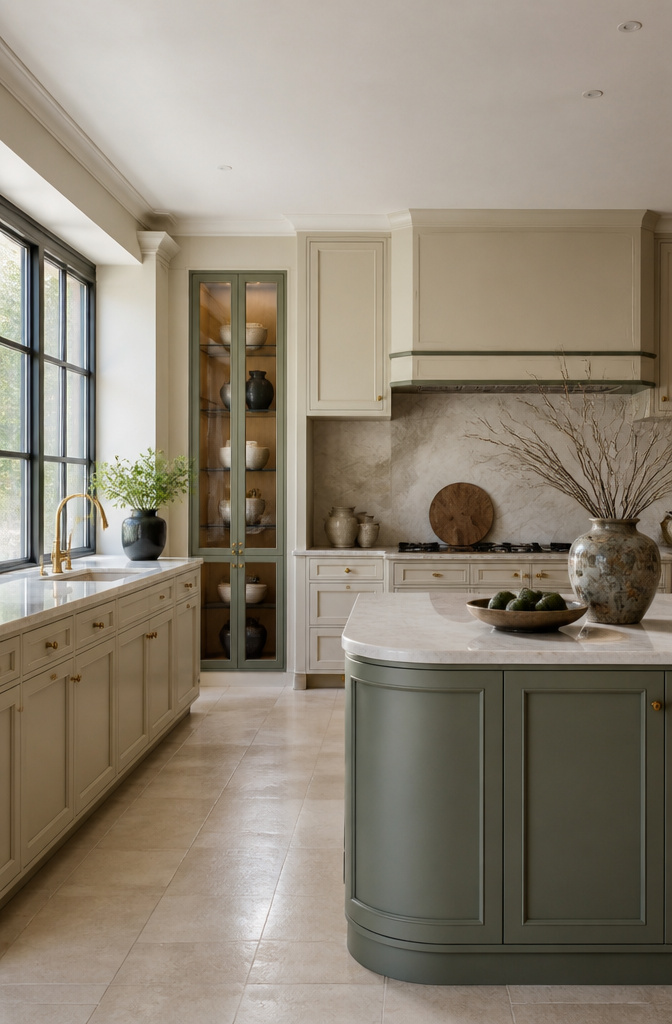
French-inspired kitchens keep showing up in Chinese design roundups, and at first the pairing felt like a stretch. The more I looked at it, the more it made sense: both traditions value restraint, a few well-chosen details, and a sense of occasion around a meal. The difference is that French kitchens lean soft where Asian ones can run stark.
What works is the light French style, not the carved-palace version. Cabinet doors get a slim frame instead of heavy moldings. Cream, warm white, pale taupe, or muted green do the work without shouting. Curved transitions between surfaces help the room feel more elegant, especially when the kitchen opens straight into the dining area.
The trick is keeping the two sensibilities from fighting. Warm metal hardware and a stone backsplash read French; clean proportions and visible wood grain pull Asian. A framed glass cabinet or a delicate pendant light gives decorative character without adding complication to cooking and cleaning. Where this goes wrong is proportion: if the frame rails and stiles are too wide or the detailing too deep, the cabinetry turns traditional and heavy fast. Narrower rails keep the same idea contemporary.
For a renter or first-time owner, this is a style that travels well. Soft colors and elegant details feel intentional even on a weekend timeline and a few hundred dollars.
10. Mid-Century Modern Kitchen
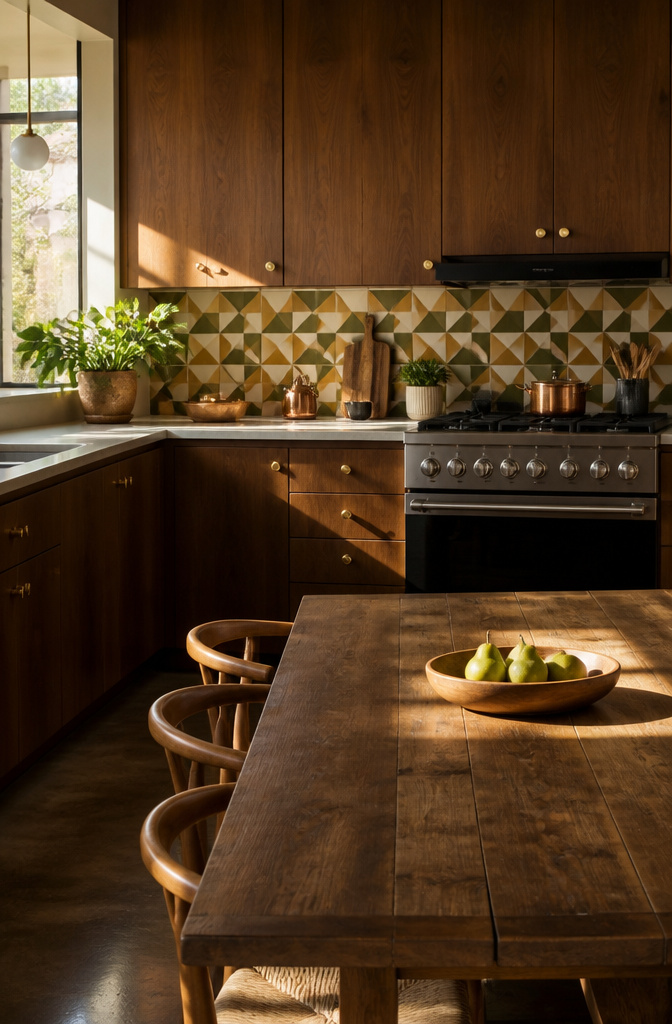
Rich wood tones and geometric patterns carry the vintage warmth that makes a mid-century modern kitchen feel lived-in rather than staged. Teak and walnut cabinets set that tone, but the hardware is where budgets usually collapse under reproduction markup.
Brass pulls and cone-shaped knobs from the 1950s–60s turn up at estate sales and Habitat ReStores for a few dollars each, not the $40–$60 per piece that specialty vintage shops charge for identical pieces with fresh polish. The trick is knowing what to call them: search "drawer bail pulls" or "atomic cabinet hardware" rather than the broader "mid-century," which algorithmic sellers have learned to price up.
Geometric tile backsplashes in repeating diamonds or offset rectangles complete the look without requiring custom fabrication. Standard 4-inch ceramic field tile in caramel or moss green, laid in a rotated bond pattern, reads as period-appropriate at about a third the cost of imported reproductions. The pattern does the work; the provenance does not matter.
Where this style can go wrong is mixing too many authenticating details at once. A kitchen that announces every decade it references starts to feel like a set. Two strong vintage elements against otherwise simple cabinetry is usually enough to carry the idea.
Materials That Hold Up
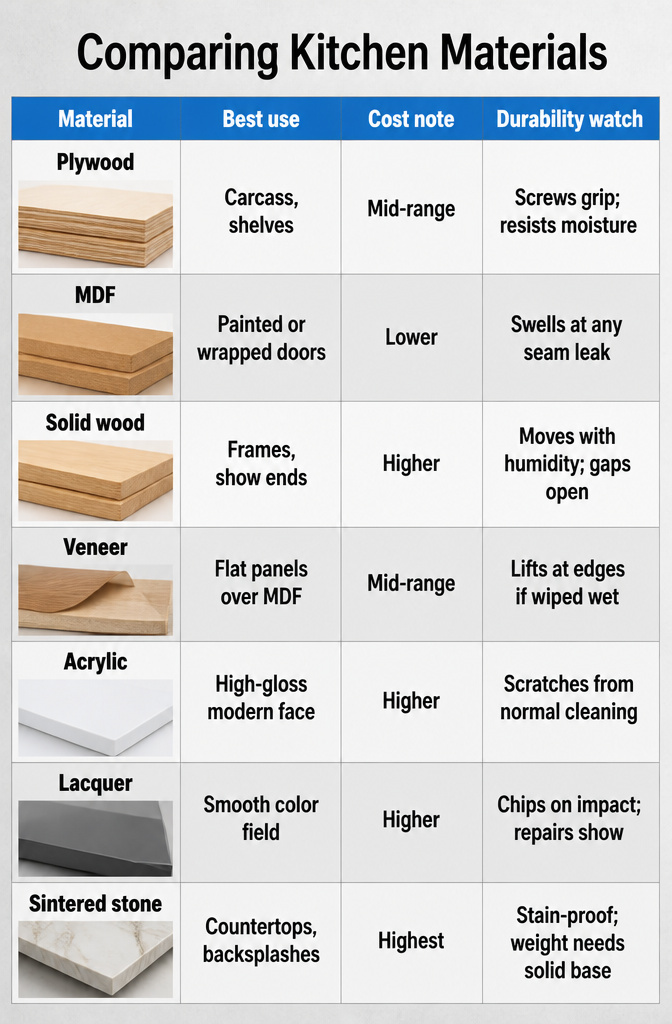
Plywood and MDF eat up most of the budget in a Chinese kitchen build, but the finish determines whether the cabinets survive year two. I have used plywood carcasses with lacquer doors, solid wood frames with veneer panels, and once, chasing a glossy look, acrylic fronts on an MDF box. The acrylic scratched inside four months; the lacquer held but chipped at the corner a cabinet door catches. Sintered stone for the counter ran the highest per square foot and stayed flawless, though the install cost hurt.
| Material | Best use | Cost note | Durability watch |
|---|---|---|---|
| Plywood | Carcass, shelves | Mid-range | Screws grip; resists moisture |
| MDF | Painted or wrapped doors | Lower | Swells at any seam leak |
| Solid wood | Frames, show ends | Higher | Moves with humidity; gaps open |
| Veneer | Flat panels over MDF | Mid-range | Lifts at edges if wiped wet |
| Acrylic | High-gloss modern face | Higher | Scratches from normal cleaning |
| Lacquer | Smooth color field | Higher | Chips on impact; repairs show |
| Sintered stone | Countertops, backsplashes | Highest | Stain-proof; weight needs solid base |
Factory-direct pricing from China shifts the math, but shipping distance and finish choice still drive the final number. My plywood-and-lacquer kitchen stayed flat; the acrylic doors were a lesson in surface hardness over real toughness.
Color Palette Rules
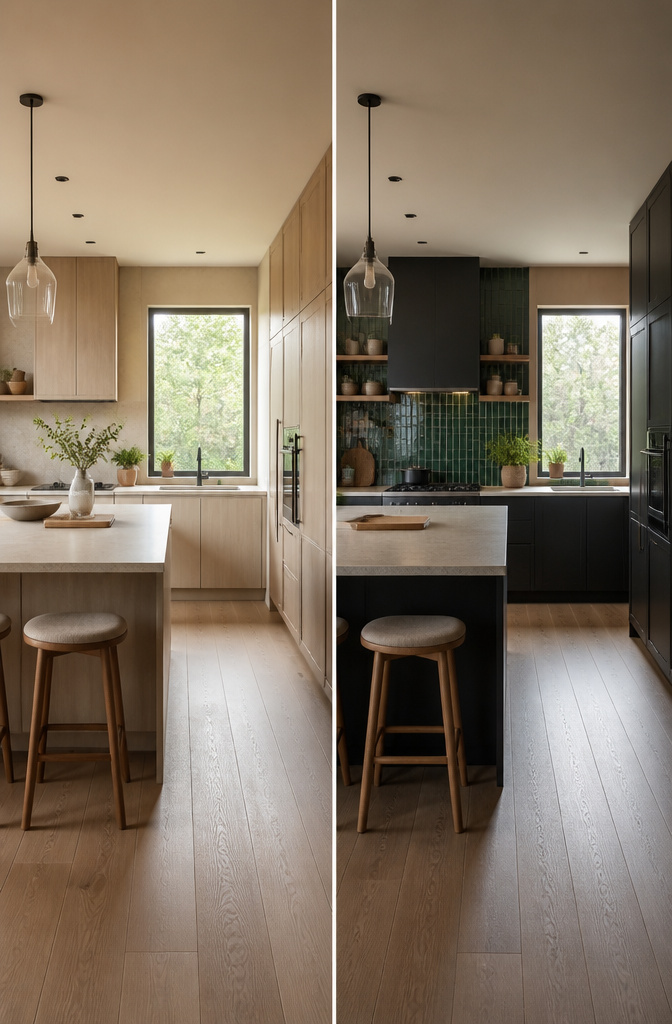
The 60-30-10 rule still works for Chinese kitchen palettes, just with different anchors than the usual white-and-navy formula. Sixty percent goes to tan or warm gray on walls and cabinets. Thirty percent lands on wood tones or matte black for lower cabinets, flooring, and the range hood surround. Ten percent is your green, maybe celadon tile behind the cooktop or a jade accent on hardware.
I tried breaking that last slice with red, a lacquered panel beside the refrigerator. The color itself was fine, but the proportion was wrong. Red that close to the food prep zone stopped feeling intentional and started reading as emergency, like a restaurant exit sign. Two weekends later I painted over it with the same warm gray as the upper walls, and the kitchen finally settled.
Brown and green together need restraint or they turn a space dim and dated. My fix was keeping the brown in the flooring only, letting the green live in smaller, shinier surfaces where light can hit it. The result reads as calm rather than heavy, which is what most of us are actually after in a kitchen we use every day.
Cabinet Styles and Layout

Shaker and flat-panel cabinets both read clean against the ornament-heavy side of Chinese kitchen design ideas, but they work for opposite reasons. Shaker frames bring a quiet grid that echoes traditional joinery without shouting; flat-panel doors let the layout itself do the talking. Either way, symmetry matters. A run of cabinets centered on the cooktop, matching widths flanking a window, pairs of drawers at equal heights: these are the moves that signal intention without adding carved detail.
Standard cabinet boxes run 34–1/2 inches tall by 24 inches deep, plus a 1–1/2 inch toe-kick, and widths step in 3-inch increments from 9 to 48. Your existing boxes probably follow this, but the “probably” is where renters get burned. Measure height from finished floor to underside of countertop, depth from wall to front edge of face frame, and width inside the stiles where the door actually closes. Write those three numbers down before you order a single replacement door. I learned that last part the hard way watching a friend stack 22 mis-measured slab fronts in her garage because she trusted the nominal size stamped on the old hinges.
Lighting Layers
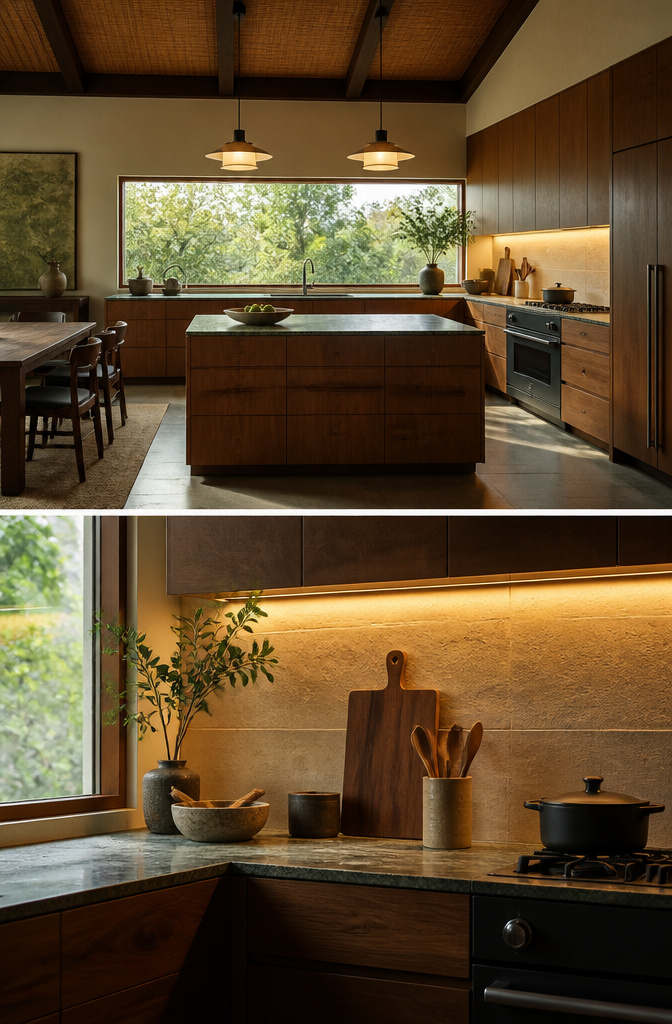
Natural light matters more in a Chinese kitchen than most people assume. The wood tones and matte surfaces that anchor the style go flat under a single overhead bulb, so I started by swapping a standard double-hung for a wider horizontal window above the sink. That single change did more for the room than anything I wired afterward.
For the hours after sunset, I layered in two systems. A single black pendant over the island cost me about $180 and looked right, but the $22 LED strip tucked under the wall cabinets changed how the whole kitchen functioned. The pendant threw a pool of light downward; the strip erased shadows across the counter where I actually chop and measure. I wired the strip to a dimmer, not a switch, because full brightness after eight feels like a hospital and ruins the atmosphere the wood grain was supposed to give.
If the budget only stretches to one electrical change, skip the statement fixture. The window and the under-cabinet strip together cost less than most pendants alone, and you will use the strip every single evening.
Storage Without Clutter
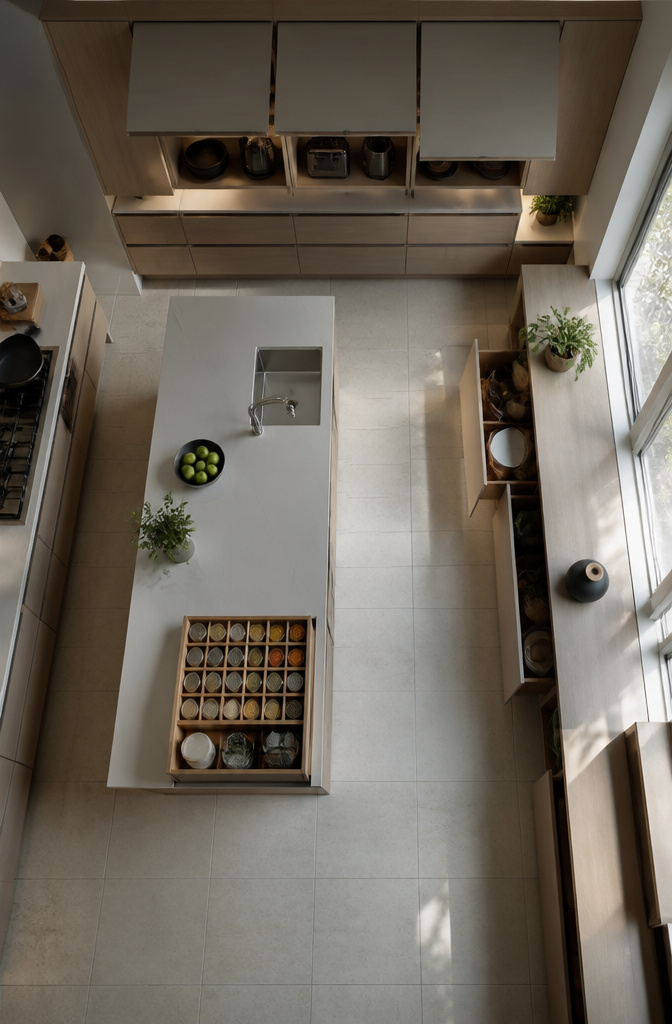
Built-in cabinets keep the visual noise down in a Chinese-inspired kitchen where the goal is calm, not clutter. I like the ones with lift-up doors that hide the rice cooker and electric kettle behind the same paneling as the rest of the run. No appliance garage on the counter, no cords snaking across stone. The cabinet depth matters more than the door style; 15 inches front-to-back is enough for a standard multicooker without pushing the whole run into the walkway.
My spice drawer used to be the shame of the kitchen. Jars rattled, labels peeled, I bought duplicates because I could not see what I had. A bamboo insert with angled tiers fixed it, the kind where each jar sits on a little ramp so you read the lid from above. The drawer itself is only 4 inches high, which forces the single-layer layout that makes everything visible. I spent maybe $25 and an hour fitting it, and it has outlasted two apartment moves.
Multi-functional pieces save space in the tight galley layouts common in older Chinese homes. A bench with a hinged top stores bulk rice and the seldom-used steamer trays. The seat cushion comes off, the lid lifts, and you are in. I would skip anything that requires removing five items to reach the one you need; the best storage is the kind you actually open.
Frequently Asked Questions
Are Chinese kitchen cabinets good quality?
Yes. Leading Chinese brands like George Cabinetry, Oppein, and ZBOM produce durable cabinets that meet U.S. and European standards, with automated manufacturing and consistent quality control. The factory-direct pricing from manufacturers in places like Foshan does not mean lower standards; it reflects scalable production and lower domestic cost bases rather than corner-cutting.
What materials are commonly used in Chinese kitchen design?
Plywood, MDF, solid wood, veneer, acrylic, lacquer, and sintered stone are the most common. Plywood and MDF form the bulk of cabinet carcasses and doors; solid wood and veneer add warmth and visible grain; acrylic and lacquer create smooth, modern faces; sintered stone covers countertops and backsplashes with stain-proof durability. Each carries different cost and durability tradeoffs, with MDF lowest in price but vulnerable to moisture at seams, and sintered stone highest but nearly maintenance-free.
How much do kitchen cabinets from China cost?
Costs vary widely by customization level, materials, and shipping, but factory-direct sourcing from China generally runs below comparable Western suppliers. For context within a full kitchen, bamboo veneer and hardware for a Modern Chinese Zen style runs about $200–$400 per linear foot before installation, while a complete project can range from $100 to $1,000 or more per linear foot depending on specification. The savings come from manufacturing scale, not material shortcuts.