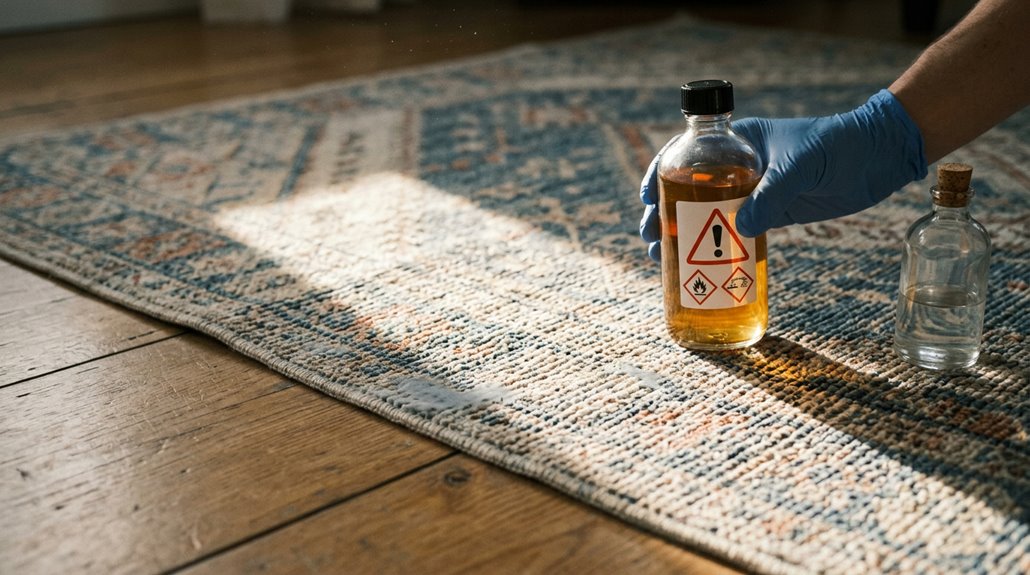
I’d check for third-party certifications like GREENGUARD Gold or OEKO-TEX Standard 100, which are recognized standards for identifying safe rugs. Request the Safety Data Sheet from manufacturers to identify VOCs, PFAS, and flame retardants in your rug. Watch out for vague labeling, synthetic latex backings, and that strong chemical smell within 72 hours of installation. Natural fibers like wool and organic cotton avoid these toxins entirely. Additional protective measures include improving ventilation during and after rug installation, using air purifiers with activated carbon filters, and periodically airing out rugs in sunlight to off-gas remaining chemicals.
What Polyester Rugs Are Actually Made Of
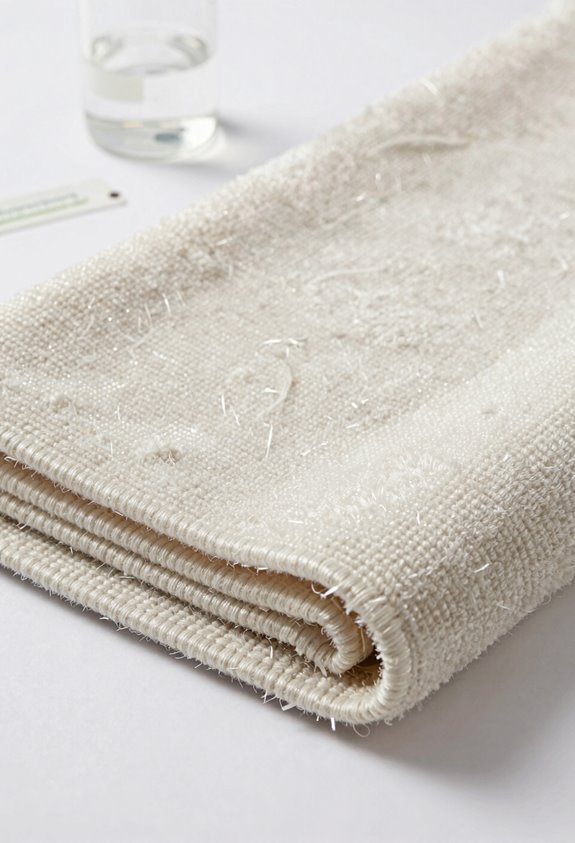
Ever wonder what’s really in that soft, colorful rug under your feet? Most polyester rugs are made from PET, a plastic polymer derived from petroleum. That vibrant color comes from synthetic dyes applied during manufacturing. Manufacturers also treat rugs with flame retardants and PFAS-based stain protectors for durability. The backing uses adhesives that can release VOCs into your home. Each manufacturing step, from petroleum extraction through chemical treatment, introduces potential residues. Some rugs use recycled PET from bottles, though the composition remains similar. These chemicals can off-gas over time, meaning you’re breathing them into your lungs. Understanding what’s actually in your rug helps you make informed choices for your families and homes.

Machine Washable: Say goodbye to worries about spills or stains! This neutral area rug is designed to be stain-resistant and incredibly easy to clean. Slim enough to wash. Simply toss in cold water, hang or air dry. For everyday maintenance, you can use a robot vacuum, broom, or just wipe it clean. If your vacuum has adjustable power settings, set it to low.

Durable Materials: Our area rug is meticulously crafted from 100% Polyester and made in Turkey, ensuring exceptional quality. With this rug’s power-loomed construction, you can trust in its durability.

German Quality and Elegant Design: Meticulousness in details with elegant beige design, stylish ribbed piping, and silky velvet texture fill the space with light and visual softness. It is both a functional accessory and a full-fledged decor element. Cute and fluffy comfort, orthopedic support, and sound insulation create the household members' favorite spot
The Three Toxin Categories: Chemicals You Need to Know
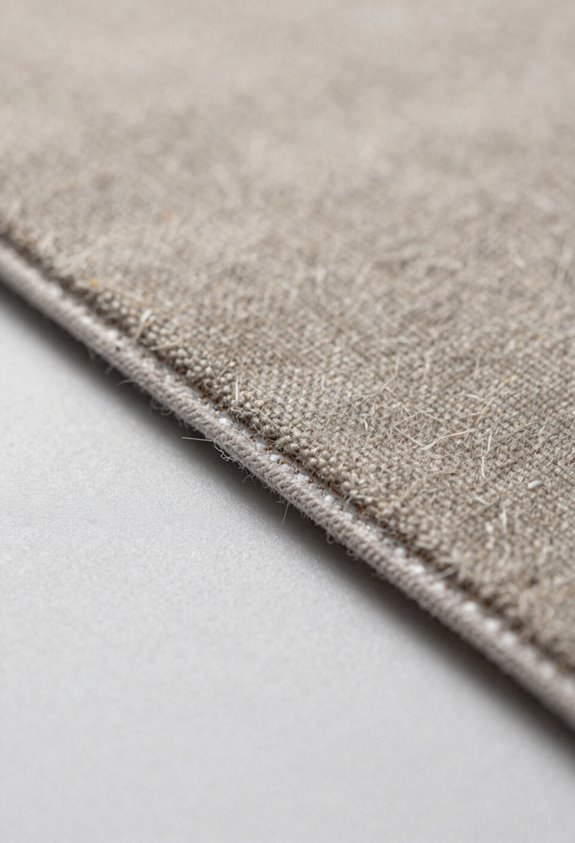
What’s actually releasing that new-rug smell into your home? Three major toxin categories are responsible.
First, there’s VOCs (volatile organic compounds) including formaldehyde and benzene that off-gas right at room temperature. Peak emissions happen within days to weeks after installation, though they can persist for years.
Second, PFAS chemicals provide stain resistance but persist in your body and environment, linking to cancer and fertility concerns. California designated PFAS-containing carpets as priority products in 2021.
Third, flame retardants meet flammability standards yet disrupt hormones and reproductive health. Since dust carries these chemicals, children inhale and ingest them more easily.
Beyond these three, dyes, adhesives, and synthetic backings release additional VOCs, compounding your exposure. Understanding these categories allows you to make informed decisions about your family’s indoor environment.

MACHINE WASHABLE: Our rug can be washed directly in washing machine in cold water and dried without heat. Daily maintenance is simple and convenient

FUN & FUNCTIONAL MAT: This unique cushioned crawling mat will fascinate little ones with its brightly design. Use this mat as a spot for games, active play, or just reading a book

1. Soft and Cozy: Modern Rugs made of faux wool fibers, this geometric-inspired area rug is super soft and comfortable for your feet. Its 5x7 size is perfect for any living space and adds warmth and relaxation to your home.
What VOCs Are and How They Off-Gas From Rugs
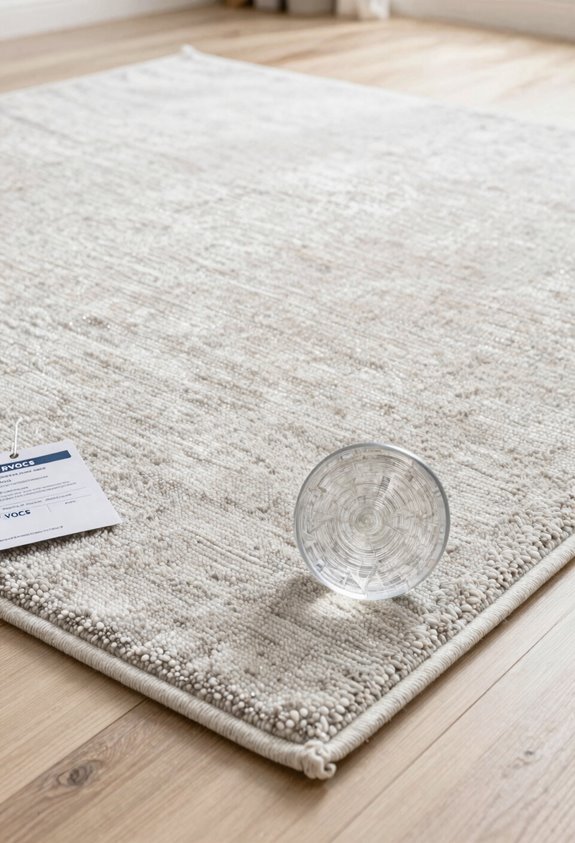
When you bring a new polyester rug home, you’re exposing yourself to toxic chemicals called volatile organic compounds (VOCs) that literally evaporate into your air. These substances, including formaldehyde, benzene, and styrene, don’t disappear after a few days. They continue releasing into your home for up to five years, with the most intense off-gassing occurring in the first weeks and months. Understanding this timeline and how these chemicals affect your eyes, nose, throat, and overall health is essential for making informed choices about the rugs in your space.

SAFE, ODORLESS AND NON TOXIC FABRIC PROTECTOR : protectME is a non-flammable, odorless upholstery fabric protector spray that will not alter the natural look, feel, or scent of the material. It features a water-based amorphous silicon dioxide formula, contains no forever chemicals, won’t release fumes and is safe to use around your family and pets.
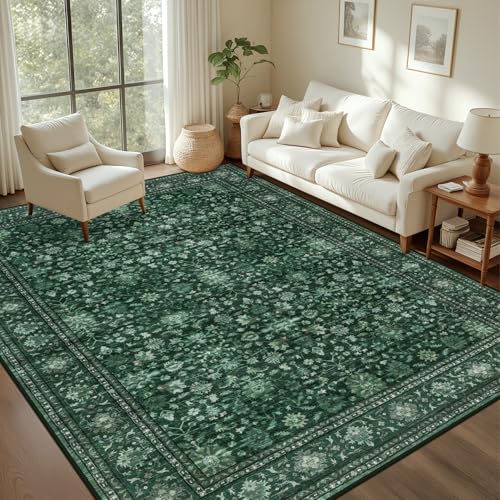
Timeless Classic Design Rug: Featuring an elaborate traditional pattern and harmonious color palette, these 5x7 area rugs bring artistic elegance to the interior. The versatile design works with various decor styles from vintage and bohemian to contemporary, making it suitable for living room, bedrooms, dining room, hallway, kids' playrooms, or home offices. Built to withstand daily use while maintaining its visual appeal, these rugs for living room 5x7 combines durability with timeless beauty

PROTECT COUCHES, UPHOLSTERY AND FABRICS FROM WATER AND STAINS Creates an invisible barrier that helps repel spills, dirt and everyday stains so furniture and fabrics stay cleaner for longer.
Understanding Volatile Organic Compounds
Have you considered why a brand-new rug smells so distinctive and sometimes overwhelming? That unmistakable odor comes from VOCs, volatile organic compounds, that your new polyester rug releases into your indoor air. When we talk about off-gassing, we’re describing chemicals like formaldehyde and benzene that escape from the rug’s fibers at room temperature. These emissions happen strongest during the first days and weeks after installation, though they can continue for up to five years. Understanding these invisible culprits matters because they’re not just unpleasant; they’re chemicals affecting your home’s environment. By recognizing what VOCs are and how off-gassing works, you’re taking the first crucial step toward protecting your family’s health and creating a safer living space.
Off-Gassing Timeline And Effects
Now that you understand what VOCs are, let’s look at exactly how and when they escape from your polyester rug, because the timeline significantly impacts indoor air quality. VOC emissions peak dramatically during the first days to weeks after installation, creating that distinctive “new rug smell” you’ve probably noticed. Off-gassing continues beyond this initial period; low-level chemical treatments release VOCs into your indoor air for up to five years. This means even after airing out your polyester rugs, they continue emitting benzene, formaldehyde, and other compounds. Ventilation and HEPA cleaning help reduce peak exposure, yet they cannot completely eliminate these stubborn emissions. Understanding this timeline allows you to implement effective protective measures for your home and family.
PFAS: The “Forever Chemicals” in Stain-Resistant Treatments
Why do some rugs seem to repel spills like magic? PFAS chemicals are applied to polyester rugs to protect them. These stain-resistant treatments are called “forever chemicals” because they never break down in our environment or bodies.
When you bring PFAS-treated rugs home, dust particles carrying PFAS settle throughout your space, affecting your indoor air quality. Kids playing on these rugs absorb PFAS through their skin and lungs, and studies show it accumulates in their bloodstreams over time.
California recognized this concern in 2021, designating PFAS-containing carpets as priority products needing attention. The chemical bonds in PFAS are so strong that they resist degradation completely, meaning exposure risks persist indefinitely. Making informed choices about PFAS-treated products directly impacts your family’s health outcomes.

Enhanced Safety Features: InPlais rug backing reduces the risk of slips and falls, crucial for homes with active seniors. Proven to help prevent accidents commonly caused by sliding rugs.

GRIZZLY GRASS INDOOR & OUTDOOR PERFORMANCE: Engineered for high traffic areas, this durable area rug is ideal for patios, decks, balconies, living rooms, and commercial spaces, offering long-lasting use in both residential and business environments.

GRIZZLY GRASS INDOOR & OUTDOOR PERFORMANCE: Engineered for high traffic areas, this durable area rug is ideal for patios, decks, balconies, living rooms, and commercial spaces, offering long-lasting use in both residential and business environments.
Why Flame Retardants Are Added to Rugs
Manufacturers add flame retardants to polyester rugs because they’re required to meet federal flammability standards that reduce the risk of fires starting from cigarettes, lighters, and heat sources. The concern is that they’re using brominated compounds and organophosphorus compounds that can seriously affect our health. These chemicals don’t just sit on the rug’s surface; they release volatile organic compounds (VOCs) into your indoor air quality throughout the rug’s entire life. Manufacturers rarely disclose this treatment on labels, so consumers are often unaware of what chemicals they’re bringing into their homes. The dust these flame retardants create can travel into our lungs and our kids’ bodies, raising legitimate reproductive health questions. This represents a tradeoff between fire safety and chemical exposure that deserves transparent consumer understanding.

Machine Washable: Say goodbye to worries about spills or stains! This neutral area rug is designed to be stain-resistant and incredibly easy to clean. Slim enough to wash. Simply toss in cold water, hang or air dry. For everyday maintenance, you can use a robot vacuum, broom, or just wipe it clean. If your vacuum has adjustable power settings, set it to low.

CloudSoft 3-Layer Comfort – Designed for everyday comfort and support, this extra-large 60 x 80 x 1-inch baby floor mat features a soft coral velvet top, high-density memory foam core, and a non-slip backing to keep it securely in place. Ideal for tummy time, crawling, yoga, or home workouts.
Machine Washable: Say goodbye to worries about spills or stains! This neutral area rug is designed to be stain-resistant and incredibly easy to clean. Slim enough to wash. Simply toss in cold water, hang or air dry. For everyday maintenance, you can use a robot vacuum, broom, or just wipe it clean. If your vacuum has adjustable power settings, set it to low.
How Synthetic Dyes and Adhesives Release Toxins
Beyond the flame retardants sitting on your rug’s surface, there’s another serious source of toxins: the synthetic dyes and adhesives that hold polyester rugs together. Azo dyes can break down over time, releasing harmful amines into your home. Meanwhile, the adhesives emit VOCs that off-gas for weeks or even months after installation, peaking those first few days but lingering for years. Some manufacturers add PFAS water-repellent treatments too, which settle into your household dust. Most labels don’t disclose exactly what’s inside. Third-party certification labels like Greenguard or OEKO-TEX verify what manufacturers won’t disclose. These certifications provide documented assurance of product composition and safety standards.
MAXIMUM SAFETY: Keeping in mind the safety of your child, the Dream On Me Travel Lite Mini Foam Playmat is phthalate & lead-free and meets the Federal Flammability Standard 16 CFR 1632.

Nonstudded, protective vinyl to safeguard uncarpeted floors

MACHINE WASHABLE & EASY TO CLEAN: One of the standout features of our rugs is their washable and foldable design, making cleaning and storage simple and convenient. They work seamlessly with vacuum cleaners and robot vacuums. For any food or drink spills, just blot quickly with a paper towel for effortless cleanup.
Certifications Decoded: What Greenguard Gold and OEKO-TEX Actually Guarantee
When you’re shopping for a polyester rug, those certification labels on the tag serve a concrete purpose beyond marketing. Both Greenguard Gold and OEKO-TEX require third-party testing, meaning independent labs verified the results.
- Greenguard Gold monitors emissions during your rug’s entire life, ensuring low VOC release into your indoor air quality
- OEKO-TEX Standard 100 tests finished textiles for prohibited toxic substances and harmful chemicals
- Both certifications demand transparency and ongoing compliance, not just one-time approval
- Neither guarantees zero chemicals, but both significantly reduce your exposure risks
These certifications provide measurable assurance beyond marketing claims, enabling informed decisions about safer rugs for your home.

Fit for Dining Chairs:20" x 20" x 3.1" cushion fits most dining chairs, kitchen chairs, desk chairs, and accent chairs. Please measure your seating area to ensure proper fit.

ULTRA SOFT LOW PILE PET & KID FRIENDLY AREA RUG: Made of faux wool & recycled polyester microfiber, cloud soft barefoot touch. Odor-free safe for toddlers, kids, dogs and cats. Tight low pile resists pet hair buildup and claw scratches. Fix cold hard floor pain for big families. Works as playroom rug, bedside bedroom rug, apartment living room rug.

SAFE, ODORLESS AND NON TOXIC FABRIC PROTECTOR : protectME is a non-flammable, odorless upholstery fabric protector spray. Unlike waterproofers, it creates a breathable coating around each individual fabric fibre, which will not alter the natural look, feel, or scent of the material. It features a water-based amorphous silicon dioxide formula, contains no forever chemicals, won’t release fumes and is safe to use around your family and pets.
Five Red Flags on Rug Labels and Product Descriptions
How can you spot a truly safe rug when manufacturers are hiding behind confusing language? Vague terms like “poly blend” mask dangerous chemical additives, so demand explicit material lists. Watch for suspicious “stain-resistant” or “flame-retardant” claims lacking certification details, as they often hide PFAS and brominated flame retardants. Check backings and adhesives carefully; synthetic latex or PVC-backed rugs emit harmful VOCs and phthalates, while natural latex options are safer alternatives. Seek third-party certifications like GREENGUARD Gold to verify low emissions. Avoid AZO dyes entirely, and look for undyed or plant-dyed alternatives instead. Any product refusing transparent ingredient information is a red flag. Trustworthy manufacturers disclose all materials and chemicals used in their products.

Enhanced Safety Features: InPlais rug backing reduces the risk of slips and falls, crucial for homes with active seniors. Proven to help prevent accidents commonly caused by sliding rugs.
GRIZZLY GRASS INDOOR & OUTDOOR PERFORMANCE: Engineered for high traffic areas, this durable area rug is ideal for patios, decks, balconies, living rooms, and commercial spaces, offering long-lasting use in both residential and business environments.

GRIZZLY GRASS INDOOR & OUTDOOR PERFORMANCE: Engineered for high traffic areas, this durable area rug is ideal for patios, decks, balconies, living rooms, and commercial spaces, offering long-lasting use in both residential and business environments.
Requesting Test Reports and Safety Data Before You Buy
Before I buy any polyester rug, I’m going to ask the seller directly for test reports and safety data sheets that show exactly what chemicals are in it: things like VOC levels, PFAS, and flame retardants. I’ll also look for third-party certifications like OEKO-TEX Standard 100 or Greenguard Gold right on the packaging, because those seals mean the rug has been independently tested and verified as safer. When I compare different rugs side-by-side using their actual lab reports, I can identify which one has lower levels of chemicals like formaldehyde or benzene, rather than relying on marketing claims without supporting data.

German Quality and Elegant Design: Meticulousness in details with elegant beige design, stylish ribbed piping, and silky velvet texture fill the space with light and visual softness. It is both a functional accessory and a full-fledged decor element. Cute and fluffy comfort, orthopedic support, and sound insulation create the household members' favorite spot

SAFETY CERTIFIED: Made from non-toxic polyester with OEKO-TEX Standard 100 certification, ensuring no harmful chemicals. The low-pile surface is soft and safe for toddlers, while the thickened latex backing (1.3x thicker than standard) keeps the rug firmly in place during play.

CloudSoft 3-Layer Comfort: Designed for everyday comfort and support, this extra-large 80 x 110 x 1-inch baby floor mat features a soft coral velvet top, high-density memory foam core, and a non-slip backing to keep it securely in place for tummy time, crawling, yoga, or home workouts
Request Safety Data Sheets
What’s the single best way to know exactly what’s in your polyester rug before it enters your home? Request the Safety Data Sheet (SDS) directly from the manufacturer or retailer for complete ingredient documentation.
An SDS reveals everything you need to know:
- All chemicals present, including VOCs, PFAS, and flame retardants
- Specific information about dyes and backing adhesives used
- Health hazards and safe exposure guidelines
- Proper handling and storage instructions
Compare multiple SDSs across the same product line to verify consistency. You’ll identify discrepancies when low-VOC claims don’t match the documentation. Ask specific questions about treatments and restricted chemicals rather than accepting vague answers. Requesting this documentation allows you to make informed decisions about products entering your home and protects your family’s health.
Verify Third-Party Certifications
When you’re standing in a showroom or scrolling through online listings, third-party certifications provide verification of what you’re bringing home. Look for badges like OEKO-TEX Standard 100 and GREENGUARD Gold because they’ve tested the rugs for harmful substances. These certifications mean an independent organization checked for VOCs, PFAS, and other chemicals that can affect indoor air quality.
| Certification | What It Tests | Why It Matters |
|---|---|---|
| OEKO-TEX | Harmful substances | Safety across all materials |
| GREENGUARD | Low emissions | Healthier indoor air |
| GOTS | Organic standards | Chemical-free production |
Request manufacturers provide their full Safety Data Sheets (SDS) and test reports. Transparency in documentation establishes accountability. Brands that renew certifications regularly demonstrate ongoing compliance with safety standards and chemical regulations.
Why Children Absorb More Rug Toxins Than Adults
Your child’s body isn’t just a smaller version of yours. It’s actually far more vulnerable to the chemicals hiding in your polyester rug.
Children absorb more rug toxins than adults because:
- They breathe faster per pound of body weight, inhaling more VOCs from polyester rugs into their developing lungs
- They spend 50-60% more time on floors, rolling around and crawling directly through dust-bound chemicals and flame retardants
- Their nervous and immune systems are still developing, making them susceptible to endocrine-disrupting PFAS and other toxins
- Hand-to-mouth behavior puts chemicals directly in their bodies, since kids touch rugs constantly then eat without washing hands
Emissions peak after installation, but PFAS and flame retardants persist for years, continuously exposing your child. Making informed flooring choices based on these vulnerabilities reduces your family’s chemical exposure during critical developmental years.

Works With Multiple Floors – Laminate, wood, tile; floating, glue-down, thin-set; compatible with pre-attached pads.

【Tips】: There may be wrinkles during long-term transportation. You can use heavy objects to press or low-temperature ironing to remove the wrinkles. Due to differences in screens and lighting, the actual color of the 5x7 carpet for bedroom may slightly differ from the product image
How Long Polyester Rugs Continue Releasing Chemicals
That “new rug smell” fading doesn’t mean the chemicals stop coming. Your polyester rug can keep releasing volatile organic compounds (VOCs) like formaldehyde and benzene for up to five years after you bring it home, with the heaviest releases happening in those first intense days and weeks. Even after months pass and you’ve stopped noticing the odor, the rug continues emitting chemicals at lower levels. Flame retardants and water-resistant PFAS compounds keep seeping into your household dust throughout the rug’s entire life.
Off-Gassing Timeline And Duration
How long does that new-rug smell actually stick around, and what’s happening after it fades?
Off-gassing doesn’t stop when the odor disappears. Consider this timeline:
- Peak release occurs within 72 hours, when VOC emissions are strongest and most noticeable
- Chemicals continue for 3–5 years, gradually declining but never fully stopping, especially in homes with limited ventilation
- PFAS and flame-retardants persist long-term, contributing to indoor air quality concerns even after initial smells fade
- Ventilation helps but doesn’t eliminate emissions, reducing peak concentrations while long-term chemical release continues
Children spend considerable time on floors with higher inhalation rates per body weight, making them especially vulnerable to these emissions. Regular air exchange improves indoor air quality, yet these chemicals remain part of your home’s environment for years. Understanding this timeline allows you to make informed decisions based on your family’s specific health needs and living situation.
Long-Term Exposure Health Impacts
Persistence is the real problem with polyester rugs. Even after that new rug smell fades, your carpet keeps releasing harmful chemicals. VOC off-gassing continues for up to five years, while PFAS treatments linger in dust particles you’re breathing. Flame retardants don’t stop either; they gradually release throughout the rug’s entire life.
| Chemical | Duration | Risk Level |
|---|---|---|
| VOCs | 5 years | High (peaks early) |
| PFAS | Indefinite | Sustained exposure |
| Flame retardants | Lifetime | Continuous release |
This long-term exposure becomes especially concerning for children’s safety. Kids spend more floor time, breathe in more chemicals per pound of body weight, and put hands in their mouths constantly. You create indoor air pollution that persists invisibly, affecting your family’s health long after installation day.
Natural Fiber Rugs That Eliminate Chemical Exposure
Why settle for rugs that quietly release harmful chemicals into your home? Natural fibers offer healthier alternatives.
Natural-fiber rugs reduce VOC emissions and chemical exposure. Here’s what makes them effective:
- Wool rugs naturally resist flames without needing toxic additives, keeping your family safer
- Jute and sisal come plant-based without synthetic adhesives and backings that off-gas harmful chemicals
- Organic cotton (GOTS-certified) uses restricted dyes, eliminating formaldehyde and PFAS concerns
- Third-party certifications like GREENGUARD and OEKO-TEX guarantee you’re buying genuinely PVC-free products
When shopping, prioritize rugs with minimal backing adhesives and verified certifications. This choice reduces chemical exposure in your home while protecting your family’s health.
Safer Practices If You Already Own a Polyester Rug
If you’ve already got a polyester rug at home, you can take action through three practical approaches: improving your ventilation and air quality with the right tools, establishing regular cleaning methods that won’t trigger more off-gassing, and implementing mitigation strategies that reduce your exposure to lingering chemicals. Each of these approaches addresses a specific aspect of managing your indoor environment.
Ventilation And Air Quality
Once you’ve brought a polyester rug into your home, you can dramatically reduce the toxic chemicals it releases into your air. Combining smart ventilation strategies with quality air purification makes a measurable difference in your home’s air quality and your family’s health.
What works best:
- Air out thoroughly for 2–3 weeks while opening windows to combat VOC emissions
- Install a high-quality air purifier with activated carbon to trap off-gassing chemicals effectively
- Vacuum regularly using a HEPA-filter model to capture dust-bound microplastics and residues
- Ventilate during cleaning to prevent heat or harsh chemicals from accelerating VOC release
While off-gassing persists for years, these practices significantly minimize your exposure and keep your indoor air fresher and healthier.
Regular Cleaning Methods
Beyond the air purifiers and open windows we’ve covered, your daily cleaning routine is your most powerful tool for keeping your polyester rug safe and your home healthier. Vacuuming frequently with a HEPA-filter vacuum removes settled dust and particulate-bound chemicals before they become airborne VOCs. Use a high-suction setting to lift fibers effectively, and tackle spills immediately with non-toxic, mild detergents. Harsh solvents should be avoided entirely, as they’ll add more chemicals to your indoor air quality. These cleaning methods directly reduce off-gassing and create a measurably healthier space for your household.
Mitigation Strategies Available
What’s the best move when you’ve already brought a polyester rug into your home. You’ve got excellent options to protect your family.
- Air it out for 2–3 weeks in a well-ventilated garage to reduce VOC off-gassing and flame retardants
- Invest in an air purifier featuring activated carbon and HEPA filtration to capture VOCs and PFAS particles
- Vacuum weekly with a HEPA-filter vacuum to minimize microplastics and indoor pollutants
- Remove shoes at the door to prevent outdoor contaminants from transferring onto rug fibers
These strategies considerably lower your chemical exposure. When you’re ready for a replacement, seek rugs certified by GREENGUARD or OEKO-TEX standards. Natural-fiber alternatives like wool or cotton eliminate synthetic chemical concerns and provide measurable long-term health benefits.
Making the Healthiest Choice for Your Home
Understanding what’s actually in your polyester rug allows you to make smarter decisions that protect your family’s health right now. Checking for third-party certifications provides verification that VOC emissions stay low and harmful PFAS treatments aren’t present. When shopping, ask manufacturers about their backings and glues; synthetic options often release additional VOCs off-gassing into your home. Look for rugs labeled as flame retardant-free, since those chemicals accumulate in household dust where kids play and breathe. Choose natural fiber rugs when possible, or select polyester products with certifications proving they’ve tested safe. Your family deserves a space where everyone can thrive.